20 Air Fryer Cleaning Hacks for Grease and Odor
You just pulled out a batch of perfectly crispy fries, but now you're staring at a greasy, crusted basket. Air fryers make cooking a breeze, but cleaning them can feel like a chore. The good news?
You don't need fancy products or hours of scrubbing. With a few smart tricks, you can cut through baked-on grease and neutralize odors fast. Most of these hacks use items you already have in your pantry.
That means less effort, less spending, and more time enjoying your favorite crispy foods. Ready to make air fryer cleaning a five-minute job? Let's dive into 20 practical hacks that actually work.
1. Use a Silicone Liner for Easy Cleanup
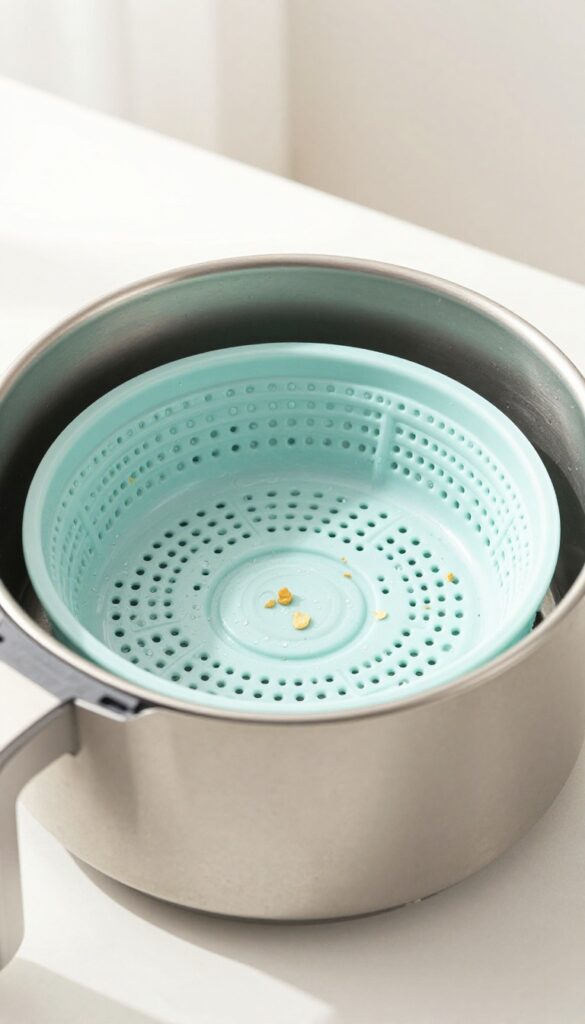
If you dread scrubbing the air fryer basket after every meal, a silicone liner is your new best friend. These flexible mats sit at the bottom of the basket and catch all the grease and crumbs before they bake onto the surface. The best part?
You just rinse it off or toss it in the dishwasher, and your basket stays nearly spotless.
Silicone liners are reusable, non-stick, and heat-safe up to 450°F, so they handle high air fryer temperatures without melting or warping. They also help with even air circulation, so your food still comes out crispy. Just make sure to get one with small holes or a perforated design to allow hot air to flow properly.
Why Silicone Beats Parchment Paper
Parchment paper works in a pinch, but it can blow around in the fan or catch fire if not weighed down. Silicone liners stay put and last for hundreds of uses. They also create a barrier that stops grease from seeping through, so your basket stays cleaner longer.
How To Pick The Right Liner
Measure your air fryer basket diameter before buying. Most liners are round and come in sizes from 5 to 8 inches. Look for BPA-free, food-grade silicone with a slight rim to catch drips.
A good liner will fit snugly without covering the edges where air needs to escape.
Cleaning The Liner Itself
After cooking, let the liner cool, then rinse it under hot water. A quick scrub with a soft sponge and dish soap removes any stuck-on bits. For stubborn grease, soak it in warm soapy water for a few minutes.
You can also run it through the top rack of the dishwasher.
2. Deglaze with Hot Water Right After Cooking
The easiest way to prevent a greasy, crusted basket is to act while it's still hot. Right after you dump out your food, pour a cup of hot tap water directly into the warm basket. The residual heat helps loosen stuck-on bits and dissolve grease before it hardens.
Let it sit for a few minutes while you plate your meal, then dump the water and give the basket a quick wipe. This simple step cuts down scrubbing time dramatically.
Deglazing with hot water is a game-changer because it tackles grease and food residue at the perfect moment—when they're still soft. The heat from the basket works with the water to release baked-on oils and particles, making them slide off easily. This method is especially effective after cooking fatty foods like bacon, chicken wings, or frozen snacks that leave behind stubborn residue.
Plus, it reduces the need for harsh cleaners or excessive scrubbing, which can damage the nonstick coating over time.
Why Hot Water Works Best
Hot water is a natural degreaser because heat lowers the viscosity of oils and softens food particles. When you pour it into a warm basket, the combination creates steam that penetrates stuck-on grime. Cold water, on the other hand, can cause grease to congeal and become harder to remove.
So always use hot tap water, not boiling, to avoid warping the basket.
How To Do It Right
Immediately after removing food, fill the basket with enough hot water to cover any residue—usually about a cup. Let it sit for 2 to 5 minutes. Don't soak longer, as prolonged exposure to water can affect the nonstick coating.
Then, carefully pour the water down the sink (watch for splashes) and wipe the basket with a soft sponge or cloth. For extra stubborn spots, use a silicone brush to gently scrub while the water is still in the basket.
When To Skip This Hack
Avoid deglazing if you've cooked something with a lot of breading or batter that might turn into a pasty sludge. In those cases, let the basket cool slightly and scrape off dry crumbs first. Also, never pour cold water into a hot basket—thermal shock can damage the nonstick surface.
Stick to hot water and a gentle touch.
3. Scrub with a Non-Abrasive Sponge
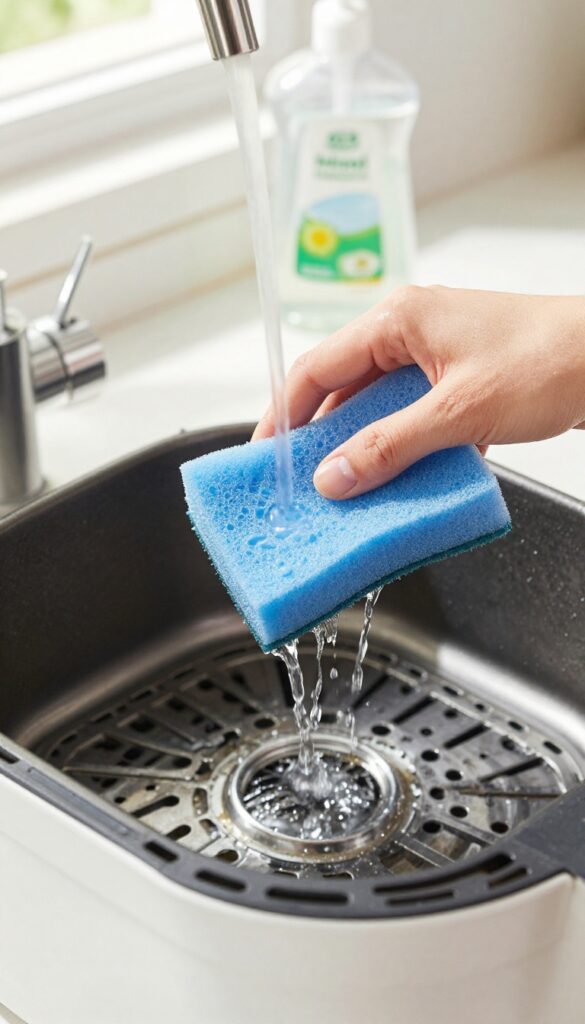
The non-stick coating on your air fryer basket is a blessing while cooking, but it can be a curse if you use the wrong scrubber. Harsh steel wool or abrasive pads will scratch that slick surface, making food stick more and cleaning harder over time. A soft sponge or nylon brush is all you need to get the job done without damaging the coating.
Using a non-abrasive sponge is one of the simplest yet most effective hacks for preserving your air fryer's non-stick surface. Here's how to do it right and what to avoid.
Why Soft Sponges Work Best
Non-stick coatings are delicate. Even a single scrub with a rough pad can create micro-scratches that trap grease and food particles. A soft sponge or a nylon brush lifts residue without harming the surface.
Look for sponges labeled "non-scratch" or "safe for non-stick. " They're usually blue or white and have a gentle texture.
The Best Technique For Cleaning
Start by rinsing the basket with warm water to remove loose debris. Apply a drop of dish soap to your damp sponge and work in circular motions, focusing on greasy spots. For stubborn bits, let the basket soak in warm soapy water for 10 minutes before scrubbing.
Avoid using excessive pressure—let the soap and water do the work.
What To Avoid At All Costs
Never use steel wool, metal scrubbers, or abrasive cleaning pads. Also skip harsh chemical cleaners or bleach, which can degrade the coating. Stick to mild dish soap and a soft sponge.
If you prefer a brush, choose one with nylon bristles. Your air fryer will stay non-stick longer and be much easier to clean after each use.
4. Soak in Dish Soap and Warm Water
Sometimes the simplest method works best. When grease has hardened into a stubborn layer, a good soak can do the heavy lifting for you. All you need is warm water and a few drops of dish soap—no elbow grease required.
Fill the air fryer basket with warm water and add a few drops of dish soap. Let it soak for 15–20 minutes. The soap breaks down grease, while the warm water helps loosen stuck-on food.
After soaking, rinse thoroughly and wipe clean. This hack works great for both the basket and the tray, and it's safe for non-stick coatings.
Why Soaking Works
Heat and time cause grease to polymerize, forming a tough film. Dish soap contains surfactants that lift grease away, and warm water speeds up the process. Soaking rehydrates burnt-on bits, making them easy to rinse off without scrubbing.
Best Practices For A Deep Soak
Use warm—not hot—water to avoid damaging the non-stick coating. Add just a few drops of soap; too much can leave residue. For extra tough spots, add a tablespoon of baking soda before soaking.
After rinsing, dry the basket immediately to prevent water spots.
5. Use Baking Soda Paste for Stubborn Grease
Baked-on grease can feel impossible to remove, but a simple paste of baking soda and water does the trick. Unlike harsh chemicals, it's gentle on the non-stick coating yet tough on grime. This hack is perfect for those spots that just won't budge after a regular wash.
Mix three parts baking soda with one part water to form a thick paste. Apply it generously to the greasy areas of your air fryer basket or tray. Let it sit for 10 minutes to break down the residue, then scrub gently with a soft sponge or brush.
Rinse thoroughly and dry. The paste lifts stubborn grease without scratching the surface.
Why Baking Soda Works
Baking soda is mildly abrasive, so it scrubs away grime without damaging the coating. It also reacts with grease to help lift it off the surface. Plus, it's a natural deodorizer, so it tackles any lingering smells at the same time.
Best Application Tips
For extra tough spots, let the paste sit for up to 20 minutes. If the paste dries out, spritz a little water to reactivate it. Use a non-scratch scrubber or an old toothbrush for crevices.
Avoid steel wool or harsh pads that can ruin the non-stick layer.
When To Use This Method
This hack works best for baked-on grease that doesn't come off with soap and water. Use it after cooking fatty foods like bacon, chicken wings, or frozen snacks. It's also great for the heating element if it gets splattered—just make sure the air fryer is unplugged and cool.
6. Wipe Down the Heating Element
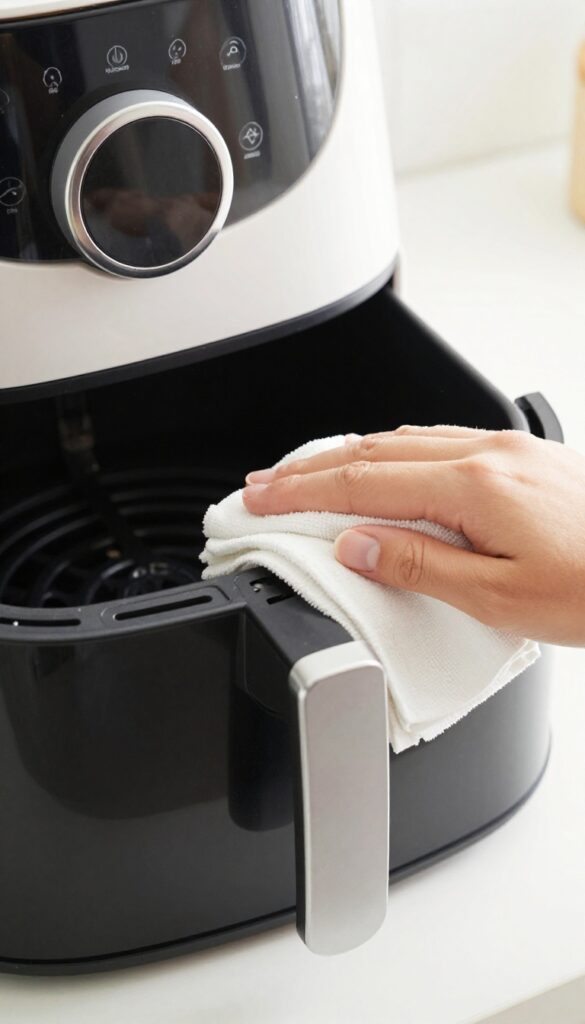
The heating element is easy to forget, but it collects grease splatter over time. When that grease burns during your next cook, it creates smoke and nasty odors. A quick wipe keeps things fresh and prevents those burnt smells from ruining your food.
Why It Matters
Grease on the heating element doesn't just smell bad—it can actually affect performance. Burnt residue reduces heat efficiency and may cause uneven cooking. Keeping it clean also lowers the risk of smoke alarms going off mid-recipe.
How To Do It Safely
Always unplug the air fryer and let it cool completely. Use a damp microfiber cloth or a soft brush to gently wipe the coil. Avoid abrasive scrubbers or dripping water into the unit.
For stubborn spots, a little vinegar on the cloth helps cut through the grime.
How Often To Clean
Make this a monthly habit if you use your air fryer a few times a week. If you cook fatty foods often, consider wiping the element every two weeks. A quick check before each use also helps you catch buildup early.
7. Deodorize with Lemon and Water
Lingering odors from fish, garlic, or burnt spices can make your air fryer less appealing. Instead of masking smells with sprays, use natural steam to clean and freshen at the same time. A simple bowl of water and lemon does double duty: it loosens stuck-on grease and leaves a clean citrus scent.
This method is incredibly easy and requires no scrubbing. The steam softens any dried food particles while the lemon oil neutralizes odors. It works best when done right after cooking, but you can also use it to refresh the basket between uses.
How To Do It
Fill an oven-safe bowl or ramekin with about 1/2 cup of water. Add 3 to 4 slices of fresh lemon or a tablespoon of lemon juice. Place the bowl in the air fryer basket and set the temperature to 300°F.
Run the air fryer for 5 minutes. Let it cool slightly before removing the bowl, then wipe the interior with a damp cloth.
Why It Works
The hot steam penetrates baked-on grease, making it easier to wipe away. Lemon contains citric acid, which breaks down grease and neutralizes alkaline odor molecules. The result is a clean, fresh-smelling basket without harsh chemicals.
When To Use This Hack
Use this method after cooking strong-smelling foods like salmon, broccoli, or heavily spiced dishes. It's also great for a quick refresh between deep cleans. If odors persist, repeat the process or add a splash of white vinegar to the water for extra deodorizing power.
8. Clean the Exterior with Vinegar Solution
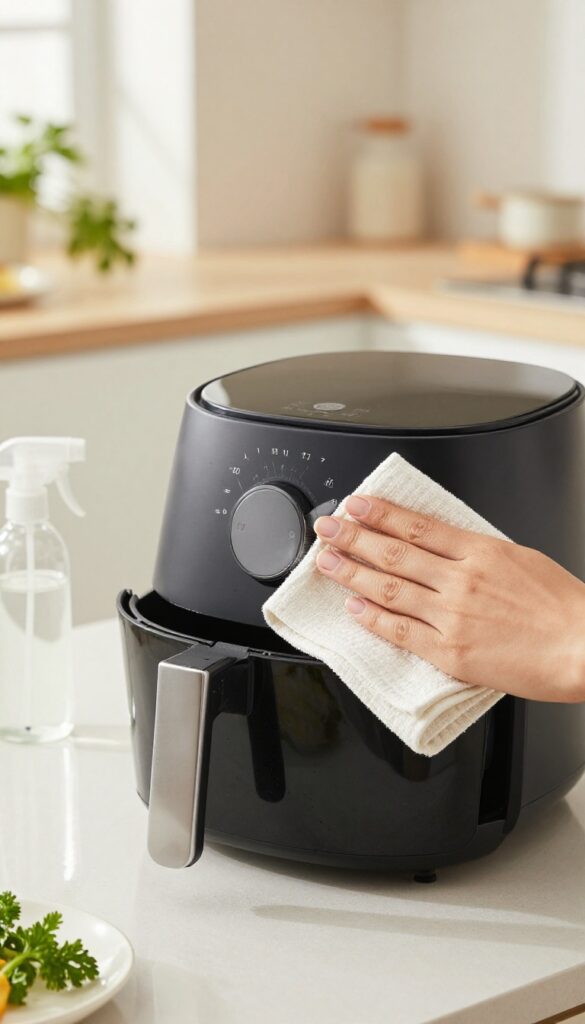
Your air fryer's exterior takes a beating from greasy fingers and splatters. A vinegar solution is a simple, non-toxic way to keep it looking like new. It cuts through grime without damaging the finish.
Mix equal parts white vinegar and water in a spray bottle. Lightly mist a soft microfiber cloth—never spray directly on the appliance to avoid moisture seeping into vents. Wipe down the entire exterior, including the handle and control panel.
The vinegar evaporates quickly and leaves no residue. For stubborn spots, let the solution sit for a minute before wiping. Avoid abrasive sponges that can scratch the surface.
Why Vinegar Works So Well
White vinegar is mildly acidic, which breaks down grease and fingerprints on contact. It's also a natural deodorizer, so it helps neutralize any lingering cooking smells on the outside. Unlike chemical cleaners, it's safe for stainless steel, plastic, and painted finishes.
A Few Precautions
Always unplug the air fryer before cleaning. Don't oversaturate the cloth—damp is plenty. If your air fryer has a matte or textured finish, test the vinegar solution on a hidden spot first to make sure it doesn't dull the surface.
For shiny stainless steel, follow up with a dry cloth to prevent water spots.
9. Use a Toothbrush for Crevices
An old toothbrush is surprisingly effective for cleaning those tight spots in your air fryer. The heating element vents and basket corners are notorious for trapping grease and food particles. A toothbrush's small head and firm bristles can reach where sponges and cloths can't.
Dip the toothbrush in warm, soapy water and gently scrub the vents and corners. Be careful not to press too hard on the heating element to avoid damage. For stubborn grease, add a little baking soda to the brush.
Rinse with a damp cloth afterward.
Why A Toothbrush Works Best
The bristles are stiff enough to dislodge baked-on grease but soft enough not to scratch the non-stick coating. The narrow head fits into the grooves around the heating element and the basket's wire mesh. Plus, it's disposable, so you can toss it after a few uses.
Step-by-step Cleaning
Start by unplugging the air fryer and letting it cool completely. Dip the toothbrush in a mixture of warm water and mild dish soap. Scrub the vents in a circular motion, then move to the basket corners.
Wipe away loosened debris with a damp microfiber cloth. Repeat if needed.
Avoid These Mistakes
Don't use a toothbrush with hard bristles that could scratch the coating. Never scrub the heating element while it's still hot. And avoid getting excess water into the vents—dampen the brush, don't soak it.
Dry everything thoroughly before using the air fryer again.
10. Run a Vinegar Steam Cycle
Steam cleaning isn't just for ovens and microwaves. Your air fryer can benefit from a quick vinegar steam cycle that loosens stubborn grease and tackles lingering smells. This method is especially handy after cooking fish, garlic, or anything heavily seasoned.
It's a set-it-and-forget-it hack that does the heavy lifting for you.
Fill the basket with 1 cup water and 2 tablespoons white vinegar. Run the air fryer at 350°F for 5 minutes. The steam will soften baked-on residue and neutralize odors without harsh chemicals.
After the cycle, let it cool slightly, then wipe the basket and interior with a damp cloth. For extra freshness, repeat with plain water to remove any vinegar smell.
Why Vinegar Works So Well
White vinegar is acidic, which helps break down grease and mineral deposits. The steam carries the vinegar into every nook and cranny, including the heating element area. It's also a natural deodorizer, so it neutralizes smells rather than just covering them up.
Step-by-step Instructions
- Pour 1 cup water and 2 tablespoons white vinegar into the air fryer basket. 2.
Set temperature to 350°F and timer to 5 minutes. 3. Let the cycle run; you'll see steam rising.
- After it finishes, unplug and let cool for a few minutes. 5.
Remove basket and wipe all surfaces with a soft cloth or sponge. 6. Rinse the basket with water and dry thoroughly.
When To Use This Hack
Use the vinegar steam cycle after cooking strong-smelling foods like fish, broccoli, or heavily spiced dishes. It's also great for routine maintenance every few weeks to prevent grease buildup. Avoid using this method if your air fryer has a non-stick coating that's damaged, as the acid could worsen peeling.
11. Freeze Grease for Easy Removal
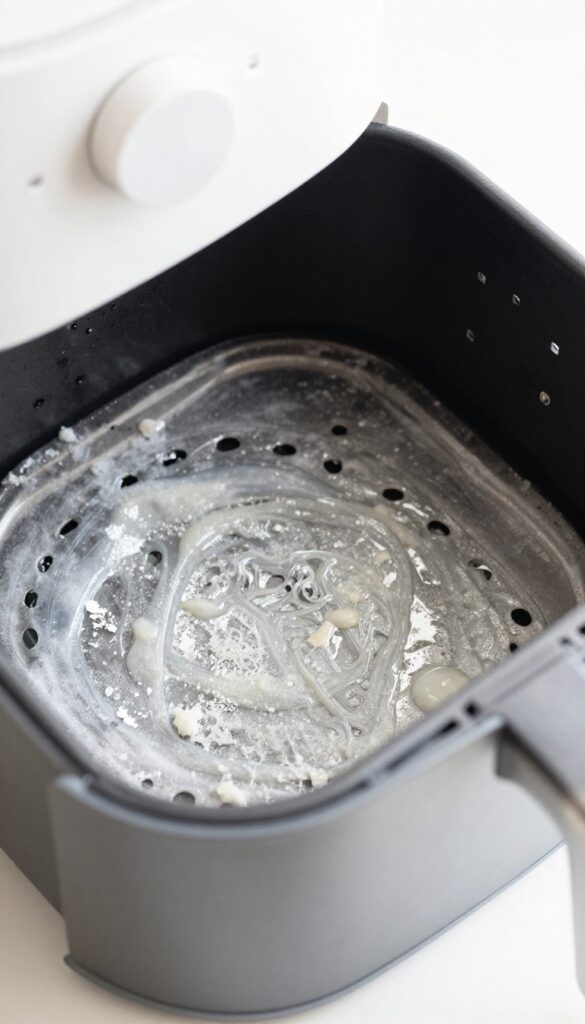
Grease that has baked onto your air fryer basket can feel impossible to scrub off. But here's a trick that turns that stubborn grime into a solid layer that practically falls off. The freezer method works because grease contracts and hardens when cold, making it brittle and easy to peel away.
No elbow grease required.
After your air fryer has cooled down, place the greasy basket and tray in the freezer for about 30 minutes. The cold temperature solidifies the oil and food residue. Once hardened, take a paper towel or a soft spatula and gently lift the frozen grease.
It should come off in large flakes or sheets. This method is especially effective for baskets with non-stick coatings, as it avoids scratching. For best results, scrape off any loose debris before freezing, and avoid overfilling the freezer with other items that might transfer odors.
Why Freezing Works On Grease
Grease is a fat that solidifies at low temperatures. When you chill the basket, the fat molecules lock together, turning the sticky residue into a solid, brittle crust. This makes it easy to break apart and wipe away without soaking or scrubbing.
It's the same principle behind chilling soup to remove fat from the surface.
Step-by-step Freezer Hack
Let the basket cool completely to avoid thermal shock. Place it in the freezer on a flat surface, uncovered, for 30 minutes. Remove and immediately use a paper towel to peel off the hardened grease.
For tough spots, use a soft nylon brush or your fingers (with gloves) to flake off remaining bits. Then wash normally with soap and water.
When To Avoid This Method
Do not freeze the basket if it's still hot, as sudden temperature changes can warp metal or damage non-stick coatings. Also, avoid this hack for baskets with plastic handles that might crack in extreme cold. If your air fryer has a glass tray, check the manufacturer's guidelines before freezing.
12. Use Coffee Grounds to Absorb Odors
Leftover fish, garlic, or burnt popcorn can leave your air fryer smelling funky long after the food is gone. Scrubbing alone might not fully erase those stubborn odors. That's where coffee grounds come in.
Dry, used coffee grounds are excellent natural deodorizers. They trap and neutralize airborne smell molecules without any harsh chemicals or extra effort.
Instead of reaching for scented sprays or baking soda, try this zero-effort trick. After you've cleaned the basket and dried it thoroughly, place a small bowl filled with dry coffee grounds inside. Leave it overnight or for at least a few hours.
The grounds will absorb lingering odors, leaving your air fryer smelling fresh and neutral. This works especially well after cooking strong-smelling foods like salmon, broccoli, or curry.
Why Coffee Grounds Work So Well
Coffee grounds contain nitrogen, which helps neutralize sulfur-based odors (the kind found in fish and garlic). Their porous structure also traps odor molecules effectively. Unlike baking soda, coffee leaves behind a mild, pleasant coffee scent rather than a neutral or chemical smell.
Plus, it's a great way to reuse grounds that would otherwise go to waste.
How To Do It Right
Use dry grounds—either fresh or used but fully dried out. Spread them in a shallow dish or bowl to maximize surface area. Place the bowl in the clean, dry air fryer basket.
Close the drawer and let it sit for 6–12 hours. For extra stubborn smells, leave it for a full day. When you're done, simply discard the grounds.
No rinsing or wiping needed.
A Few Pro Tips
Don't use wet grounds, as they can introduce moisture and promote mold. If you don't have coffee grounds, activated charcoal works similarly but is less common in homes. For a quick refresh, you can also run the air fryer empty at 200°F for a few minutes with a bowl of grounds inside—just make sure the grounds are secure and won't tip over.
13. Clean the Fan with Compressed Air
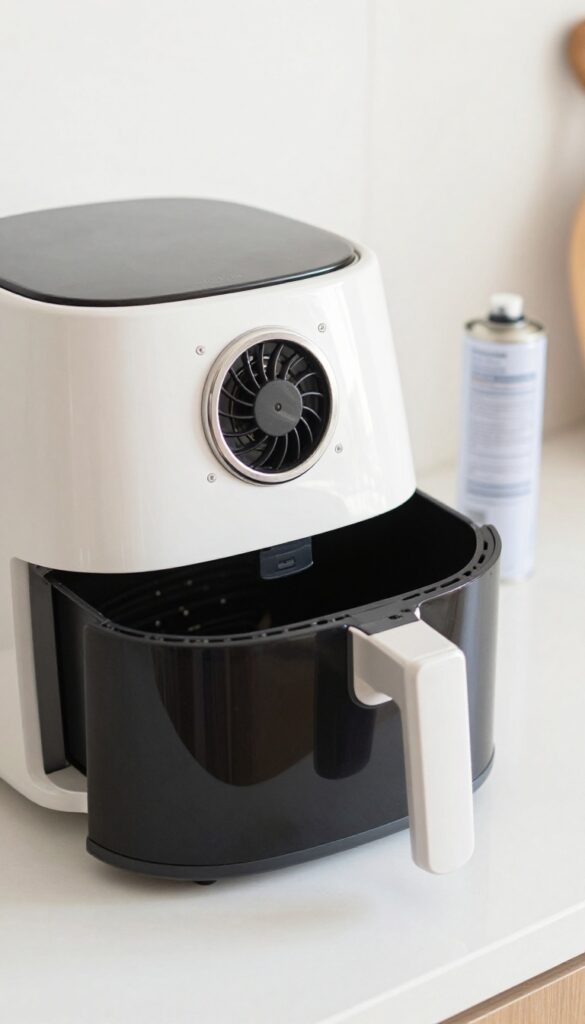
Your air fryer's fan works hard to circulate hot air, but it also pulls in grease and dust over time. When that buildup gets thick, it can block airflow and make your machine smell like burnt oil every time you use it. A quick blast of compressed air can clear out that gunk without any disassembly.
Using compressed air is one of the easiest ways to maintain your air fryer's performance. It targets the fan vent and internal crevices where grease and dust accumulate, restoring proper airflow and reducing smoky odors. This hack is especially useful if you use your air fryer frequently or cook fatty foods like bacon or chicken wings.
Why The Fan Gets Grimy
As hot air circulates, it carries tiny grease particles and food debris into the fan housing. Over time, these particles stick to the fan blades and vents, creating a sticky layer that traps more dust. This buildup not only smells bad when heated but also forces the fan to work harder, potentially shortening its lifespan.
How To Do It Safely
First, unplug your air fryer and let it cool completely. Hold the nozzle of a compressed air can about 2–3 inches from the fan vent (usually located on the back or side). Give short bursts, moving the can around to cover the entire vent area.
Avoid tilting the can too much to prevent moisture from escaping. For stubborn buildup, use a soft brush to loosen debris before blowing it out.
When To Use This Hack
Perform this cleaning every few weeks or whenever you notice a burnt smell during cooking. It's also a good idea after cooking particularly greasy foods. Combine it with a regular wipe-down of the interior for best results.
Just remember: never spray compressed air into the fan while the unit is plugged in or still hot.
14. Try a Dishwasher Tablet Soak
Dishwasher tablets aren't just for your dishwasher. They're packed with powerful degreasers that can dissolve even the toughest baked-on residue in your air fryer basket. This hack is perfect for those times when scrubbing just isn't cutting it.
Drop half a dishwasher tablet into the basket and fill it with warm water until the tablet is submerged. Let it soak for 20 minutes—the effervescent action will loosen grease and food particles. After soaking, dump the water, scrub lightly with a soft sponge, and rinse thoroughly.
Make sure no residue remains before using the air fryer again.
Why It Works So Well
Dishwasher tablets contain enzymes and surfactants that target grease and starch. The warm water activates these ingredients, creating a soaking solution that penetrates crusted layers. This chemical action does the heavy lifting so you don't have to.
Best Practices For Safety
Only use half a tablet to avoid excessive suds. Never use this method on non-stick coatings that are already peeling or scratched. Rinse the basket multiple times to ensure no soapy taste lingers.
For stubborn spots, repeat the soak or finish with a vinegar rinse.
When To Skip This Hack
Skip the dishwasher tablet soak if your air fryer basket has a delicate non-stick coating that's prone to damage. Also avoid if the basket is aluminum, as harsh chemicals can cause discoloration. Stick to gentler methods for those cases.
15. Use Rubbing Alcohol for Sticky Residue
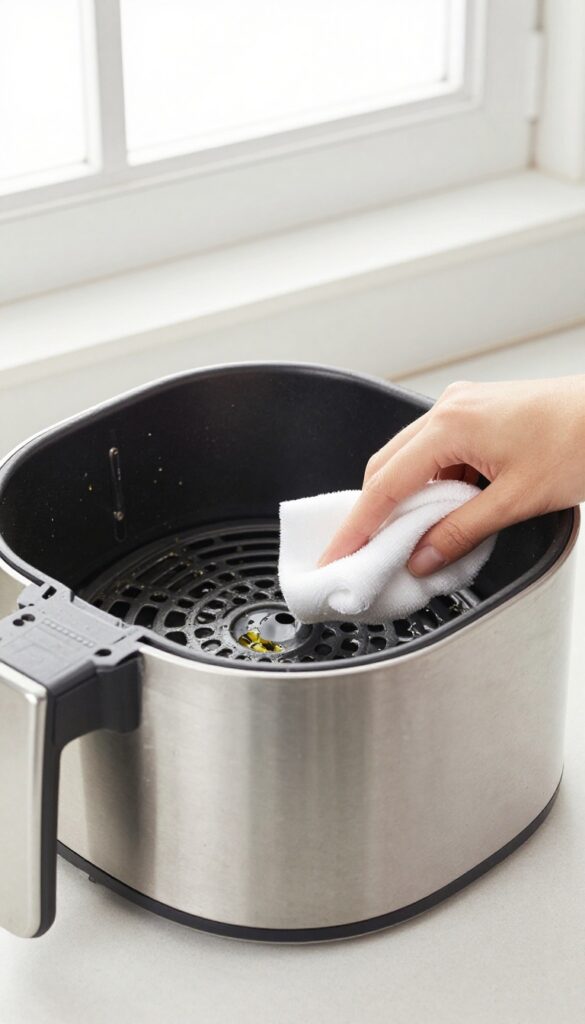
Sticky spots on your air fryer basket or tray can be stubborn, especially after cooking sugary marinades or sauces. Rubbing alcohol cuts through that tacky residue without harsh scrubbing. It evaporates fast, so you won't have to worry about leftover moisture or chemical smells.
Grab a cotton ball or soft cloth, dampen it with isopropyl alcohol, and wipe the sticky areas. The alcohol dissolves the gunk almost instantly. For tough spots, let it sit for a minute before wiping.
Rinse with warm soapy water afterward to remove any alcohol trace, then dry thoroughly.
Why It Works So Well
Rubbing alcohol is a solvent that breaks down sticky sugars and oils without damaging the nonstick coating. It evaporates completely, so no residue is left behind. Plus, it's safe for most air fryer parts—just avoid prolonged soaking on plastic handles.
Best Uses And Precautions
Use this hack for sticky spots from barbecue sauce, honey glaze, or melted cheese. Avoid using it on painted or printed surfaces, as alcohol can strip them. Always test on a small hidden area first, and keep the air fryer unplugged while cleaning.
16. Line the Tray with Foil (Carefully)
Aluminum foil is a quick fix for messy air fryer trays, but it's not a set-it-and-forget-it solution. When used correctly, foil catches drips and crumbs, turning cleanup into a simple toss. The trick is knowing where to place it and where to avoid.
Lining the bottom tray with foil protects the surface from grease and food residue. Just make sure the foil stays under the basket and doesn't extend up the sides or cover the heating element. That's a fire hazard waiting to happen.
Also, never line the basket itself—it blocks airflow and ruins the crisp. Stick to the drip tray and you'll save minutes of scrubbing.
Why The Bottom Tray Only
The bottom tray catches drips, so it's the perfect spot for foil. Air fryers rely on rapid air circulation, and covering the basket or the heating element disrupts that flow. Keep foil flat and trimmed to fit the tray without overlapping the edges.
This way, grease pools on the foil instead of baking onto the tray.
How To Swap It Out Quickly
Once you're done cooking, let the foil cool, then carefully lift it off. Fold the edges inward to trap any grease, and toss it in the trash. No soaking, no scrubbing.
For extra messy foods like bacon or fatty meats, swap the foil after each batch to prevent smoke and lingering odors.
17. Clean After Every Use to Prevent Buildup
Wiping down your air fryer right after cooking is the single best habit you can adopt. It takes less than a minute and saves you from scrubbing hardened grease later. Think of it as brushing your teeth after a meal — a quick rinse prevents bigger problems down the road.
When you clean immediately, the residual heat helps loosen food particles and grease. A damp cloth or sponge can easily wipe away soft residue before it bakes on. This simple step also stops odors from setting in, so your next batch of fries doesn't taste like last night's salmon.
The Right Tools For A Quick Wipe
Keep a microfiber cloth or a soft sponge near your air fryer. Avoid abrasive scrubbers that can damage the non-stick coating. If you prefer, use a paper towel with a drop of dish soap — just make sure to rinse thoroughly.
Don't Forget The Heating Element
While the basket and tray get most of the attention, the top heating element can also collect grease splatters. Once the unit cools slightly, use a damp cloth to gently wipe the interior ceiling and coil area. This prevents smoke and burnt smells during future use.
Make It A Routine
Set a reminder or keep a cleaning checklist on your fridge. After a few times, it becomes automatic. You'll notice your air fryer stays fresher longer, and you'll never dread cleaning day again.
18. Use a Steam Cleaner for Deep Cleaning
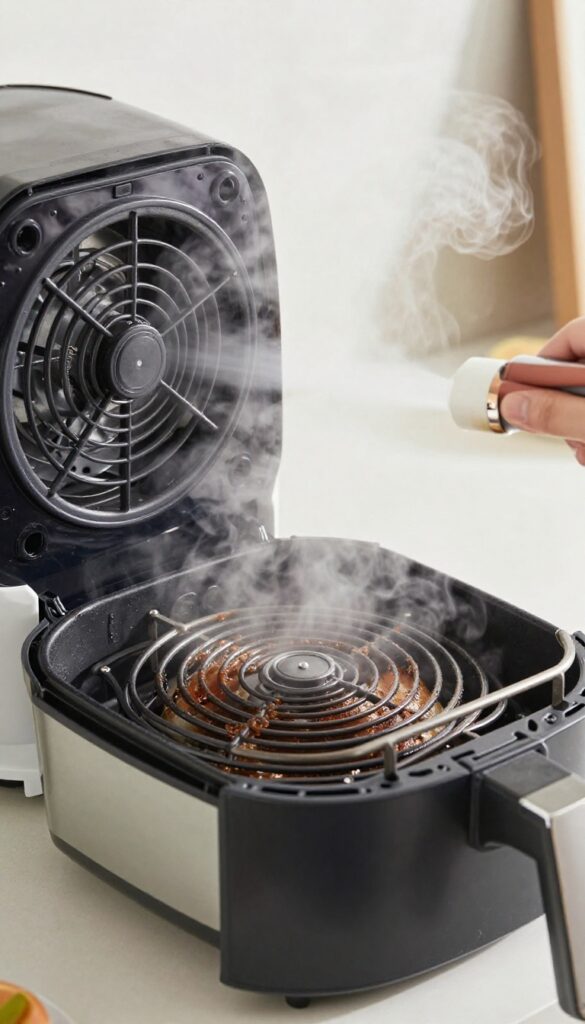
When scrubbing and soaking aren't cutting it, steam can be your secret weapon. A handheld steam cleaner blasts away baked-on grease without any chemicals. The high heat loosens grime in hard-to-reach spots like the heating coil and fan, making deep cleaning a breeze.
Steam cleaning is perfect for tackling the greasy buildup that regular washing misses. It's especially effective on the heating element and around the fan, where grease tends to accumulate and burn. Plus, it sanitizes without harsh fumes.
How It Works
A handheld steam cleaner heats water to produce pressurized steam. Direct the steam nozzle at greasy areas inside the air fryer—the heat and moisture soften the crust, which then wipes away easily. No soaking or scrubbing required.
Best Spots To Target
Focus on the heating coil, fan blades, and the top interior where grease splatters. These are the hardest areas to reach with a sponge. Steam also works well on the basket and tray for a final sanitizing blast.
Safety Tips
Always unplug the air fryer and let it cool completely before steaming. Avoid directing steam at electrical components or the control panel. Use distilled water to prevent mineral buildup in the steamer.
19. Soak in Denture Tablets
Denture tablets aren't just for false teeth—they're surprisingly effective at cutting through grease and stains in your air fryer. The fizzing action helps lift stubborn residue without scrubbing. Try this trick when your basket needs a deep clean.
How It Works
Drop two denture tablets into the air fryer basket filled with warm water. The tablets fizz and release oxygen bubbles that penetrate and lift grease, baked-on food, and discoloration. Let it soak for 15–20 minutes, then rinse thoroughly.
The result is a sparkling clean basket with minimal effort.
Best For Stubborn Stains
This hack works wonders on baskets that have developed a yellowish tint from repeated use. It's also great for removing stuck-on bits after cooking sticky foods like teriyaki chicken or sugary glazes. The fizzing action reaches crevices that a sponge might miss.
Safety Notes
Make sure to rinse the basket very well after soaking. Denture tablets are not food-safe, so any residue could affect the taste of your next meal. Also, avoid using this method on non-stick coatings that are already peeling—the fizzing might worsen the damage.
20. Maintain with Regular Deep Cleans
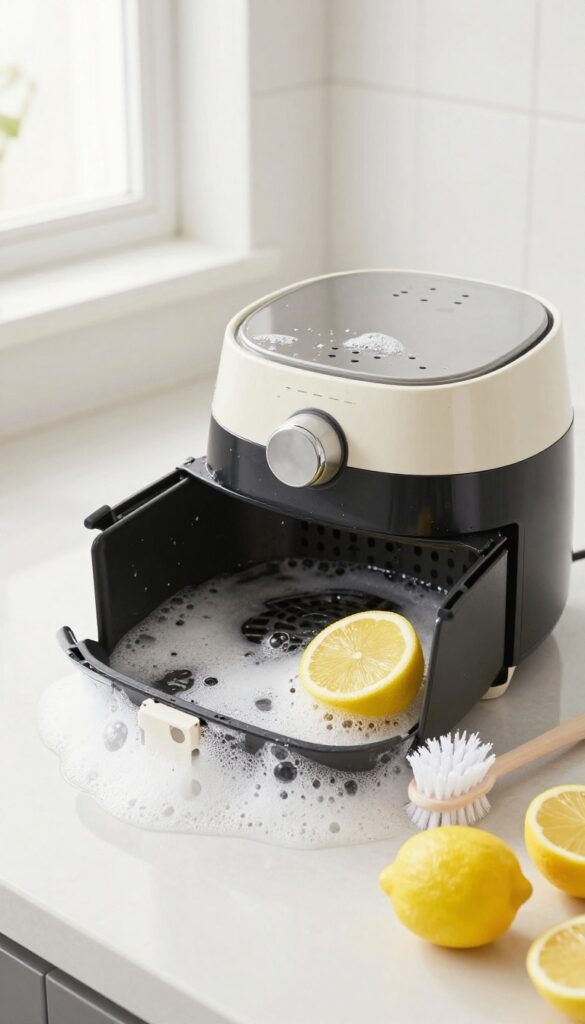
Even with daily wipe-downs, grease and odor can build up over time. A monthly deep clean resets your air fryer, keeping it performing like new. This isn't about scrubbing for hours—it's a simple soak, scrub, and deodorize routine that takes less than 30 minutes.
Consistent deep cleaning prevents stubborn residue from forming and keeps odors from lingering. It also extends the life of your air fryer by preventing buildup on the heating element and fan. Make it a habit, and you'll notice your food cooks more evenly and smells fresher.
The Soak: Loosen Grease With Hot Water And Dish Soap
Start by removing the basket and tray. Fill your sink or a large bowl with hot water and a few squirts of grease-cutting dish soap. Submerge the parts and let them soak for 15-20 minutes.
This softens baked-on food and grease, making scrubbing effortless. For extra stubborn spots, add a quarter cup of white vinegar to the soak.
The Scrub: Use A Non-abrasive Brush
After soaking, scrub with a soft-bristle brush or a non-scratch sponge. Avoid steel wool or harsh scouring pads—they can damage the nonstick coating. Focus on corners and crevices where grease hides.
For the heating element, use a damp cloth to gently wipe away any splatters, but never submerge the main unit.
The Deodorize: Neutralize Odors With Lemon And Baking Soda
Once clean, tackle lingering smells. Mix a paste of baking soda and water, apply it to the basket and tray, and let it sit for 10 minutes before rinsing. Alternatively, rub the interior with a cut lemon and let it sit for a few minutes.
Both methods naturally absorb and neutralize odors without harsh chemicals.
FAQ
Can I put my air fryer basket in the dishwasher?
Most air fryer baskets are dishwasher-safe, but check your manual. The non-stick coating can wear down over time with dishwasher detergents, so hand washing is gentler.
How do I get rid of burnt smell in my air fryer?
Run a steam cycle with water and lemon or vinegar. For persistent odors, leave a bowl of baking soda or coffee grounds inside overnight.
Is it safe to use metal utensils on the non-stick coating?
No, metal utensils can scratch the non-stick surface. Use silicone, wood, or plastic tools to protect the coating.
How often should I deep clean my air fryer?
Deep clean every month if you use it frequently. Wipe down after each use to prevent buildup, and do a thorough cleaning when you notice smoke or odor.
Can I use oven cleaner on my air fryer?
Avoid oven cleaners as they are too harsh and can damage the non-stick coating. Stick to mild dish soap, baking soda, or vinegar.
Conclusion
Keeping your air fryer fresh doesn't require expensive cleaners or endless scrubbing. With these 20 hacks, you can tackle grease and odors using simple household items you probably already have. A quick wipe after each use makes a huge difference.
Pick a couple of methods that fit your routine and stick with them. Your air fryer will perform better, your food will taste cleaner, and you'll avoid the dreaded buildup that ruins appliances over time. Happy cooking!