
11 Black White Living Room Ideas with Crisp Modern Balance
You finally have a living room that gets great light, but every time you sit down, it feels a little flat. Black and white might be the fix, though it can go wrong fast if you treat it like a strict two-color rule.
The trick is contrast with breathing room. You want sharp lines and bold anchors, but also softness, texture, and a few surprises that keep the room from feeling like a showroom.
These 11 ideas focus on real rooms, real budgets, and choices you can actually pull off. Pick a few, mix them, and make the space feel like yours.
1. Start with a Black Accent Wall Behind the Sofa
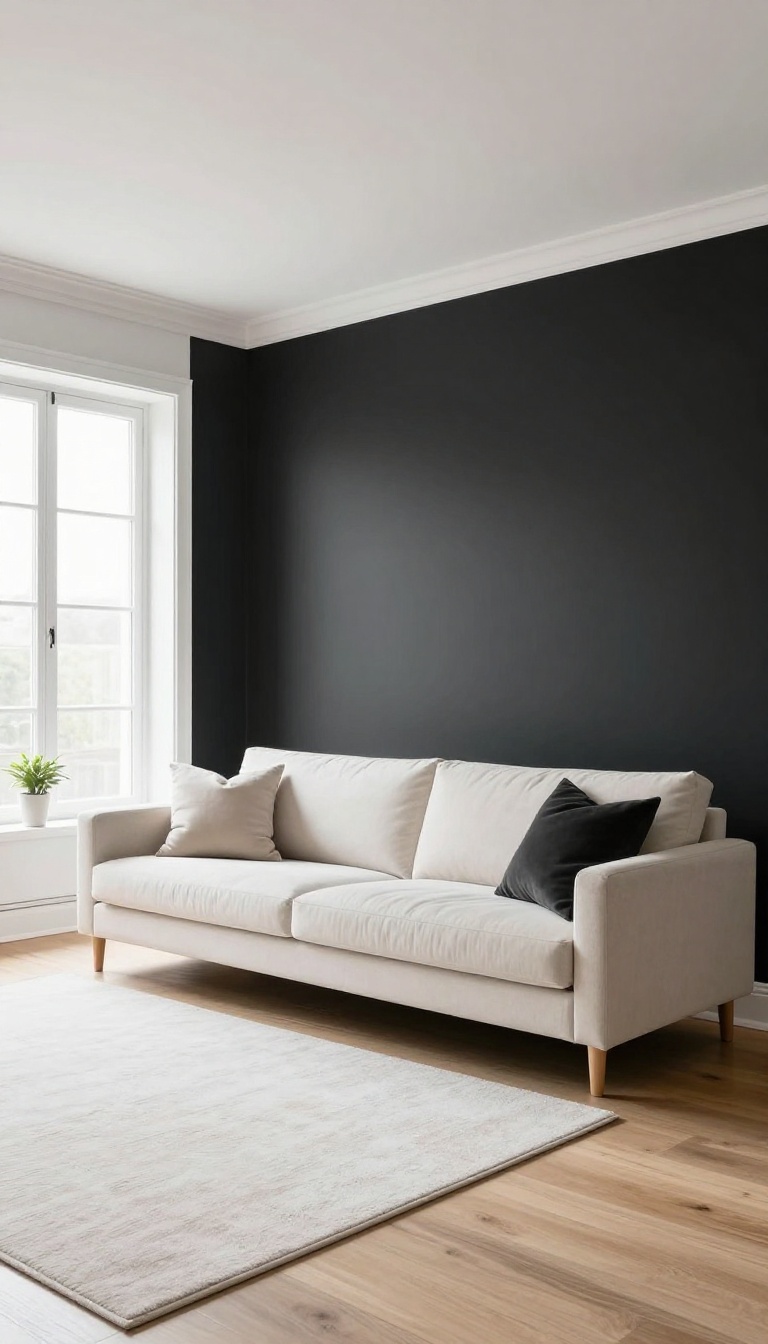
A black wall behind your sofa instantly gives the room a focal point. It grounds the seating area and makes the rest of the space feel intentional. But without balance, it can turn into a dark cave.
The key is to pair it with plenty of white and light elements so the contrast feels crisp, not heavy.
Painting one wall black is the easiest way to commit to the black-and-white look without overwhelming the room. The wall behind the sofa is a natural choice because it frames the seating area and adds depth. You get a bold backdrop that makes your furniture pop, especially if you choose a light-colored sofa.
The trick is to keep the rest of the room airy so the black feels like a deliberate accent, not a black hole.
Pick The Right Shade Of Black
Not all blacks are created equal. A pure black can feel harsh, while a soft charcoal or off-black adds warmth and depth. For a modern look, go with a matte finish to avoid glare.
If your room gets little natural light, choose a black with a hint of gray or blue to keep it from feeling flat. Test a sample on the wall and check it at different times of day.
Balance With White Trim And Light Floors
White baseboards, crown molding, and window frames create a crisp border that keeps the black wall from feeling like a void. Light wood or white floors reflect light and make the room feel larger. If your floors are dark, add a large light-colored rug to break up the darkness.
The goal is to create a clear contrast that feels intentional.
Choose A Sofa That Stands Out
A pale sofa—white, cream, or light gray—will pop against the black wall and become the star of the room. If you want a softer look, go for a light fabric with texture, like linen or boucle. Add a few black and white pillows to tie it together.
Just make sure the sofa doesn't blend into the wall; you want that contrast to be obvious.
2. Choose a White Sofa and Ground It with Black Legs
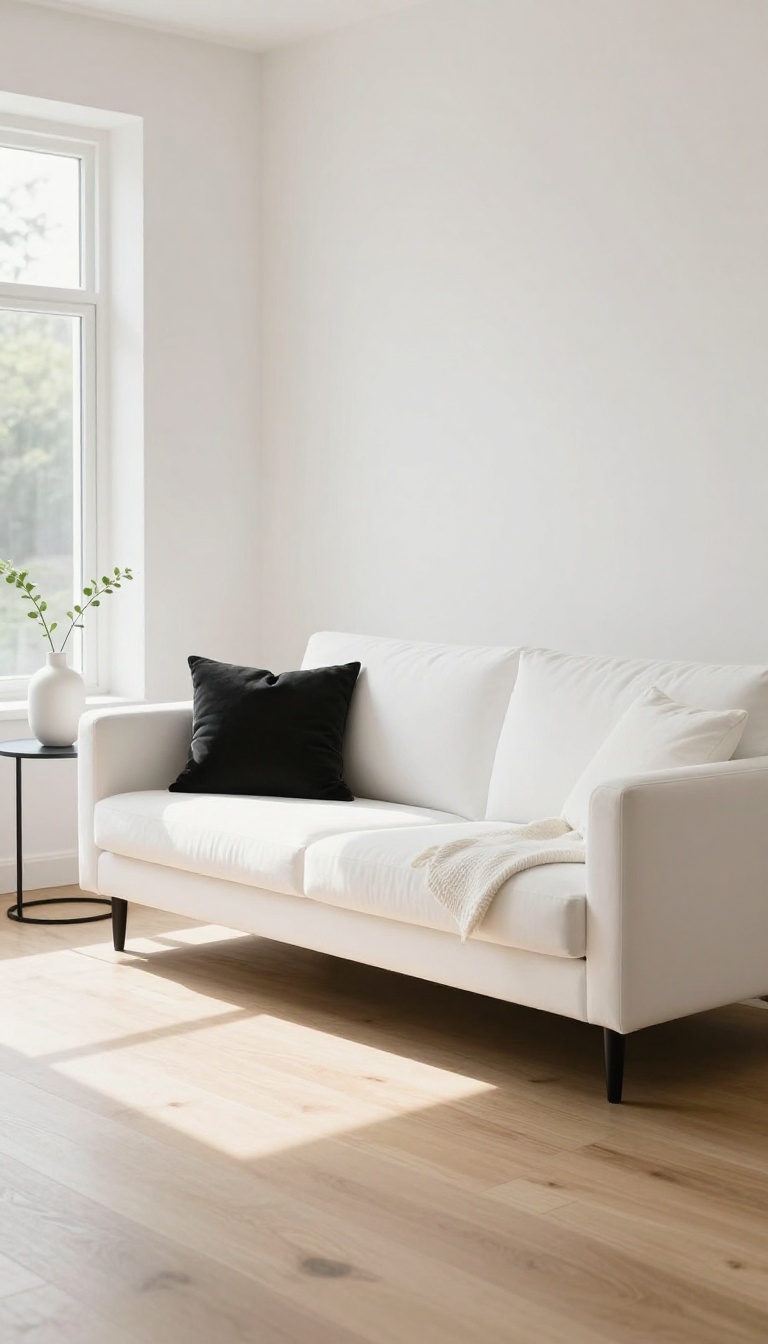
A white sofa is the ultimate blank canvas for a black-and-white living room. It bounces light around and keeps the space feeling open and airy. But without a little weight underneath, it can float away like a cloud.
That's where black legs come in. They anchor the sofa to the floor and give it a crisp, modern edge. The contrast is instant and satisfying, like a fresh sheet of paper with a bold signature at the bottom.
The beauty of this pairing is its simplicity. You get the best of both worlds: the lightness of white upholstery and the grounding effect of black. It's a classic combo that works in almost any style, from mid-century to minimalist.
And because it's so clean, you can layer in other black and white elements without the room turning into a chaotic mess. Just remember, the goal is balance, not a rigid formula. A white sofa with black legs is a strong start, but you'll want to tie it into the rest of the room so it doesn't look like a lone island.
One thing to keep in mind: not all white sofas are created equal. Fabric choice matters. A linen or cotton blend feels casual and breathable, while a tight weave or performance fabric holds up better to daily life.
And the black legs? They can be wood, metal, or even acrylic with a black finish. The shape matters too.
Tapered legs feel more elegant, while blocky legs read more modern. Pick what fits your vibe, but don't overthink it. The contrast will do the heavy lifting.
Now, let's talk about how to make this idea work in your space. Below are a few practical tips to get the look right.
Pick The Right White
White isn't just white. You've got warm whites with yellow or beige undertones, cool whites with a hint of blue or gray, and stark whites that are almost blinding. For a black-and-white room, a crisp cool white or a pure white usually works best because it creates a sharper contrast with the black.
Warm whites can look a little muddy next to true black. But if your room gets tons of natural light, a warm white can soften the edge and keep things from feeling too clinical. Test a few swatches against your black legs or a black pillow before you commit.
Choose Legs That Speak Your Style
The legs are like the jewelry of your sofa. They can be subtle or make a statement. Tapered mid-century legs in black wood give a retro, airy feel.
Slim metal legs in matte black feel industrial and sleek. Chunky block legs in black are more contemporary and solid. Even a black plinth base can work if you want a monolithic look.
The key is to match the leg style to the overall design of your room. If your space is minimalist, go slim. If it's more traditional, a turned leg in black could be a nice twist.
Just make sure they're actually black, not dark brown. The contrast should be clear.
Tie It Together With A Dark Rug Or Coffee Table
A white sofa with black legs is a great start, but it can feel a bit isolated if it's the only black-and-white moment in the room. That's where a dark rug or coffee table comes in. A black or charcoal rug under the sofa creates a visual base that connects the legs to the floor.
It also adds warmth and texture. If you prefer a lighter rug, choose one with a black pattern or border to echo the legs. For the coffee table, a black one—whether wood, metal, or glass with a black frame—will mirror the legs and create a cohesive look.
Just don't go overboard. One or two black anchors are enough. You want the room to feel balanced, not heavy.
3. Layer a Black and White Rug for Instant Pattern
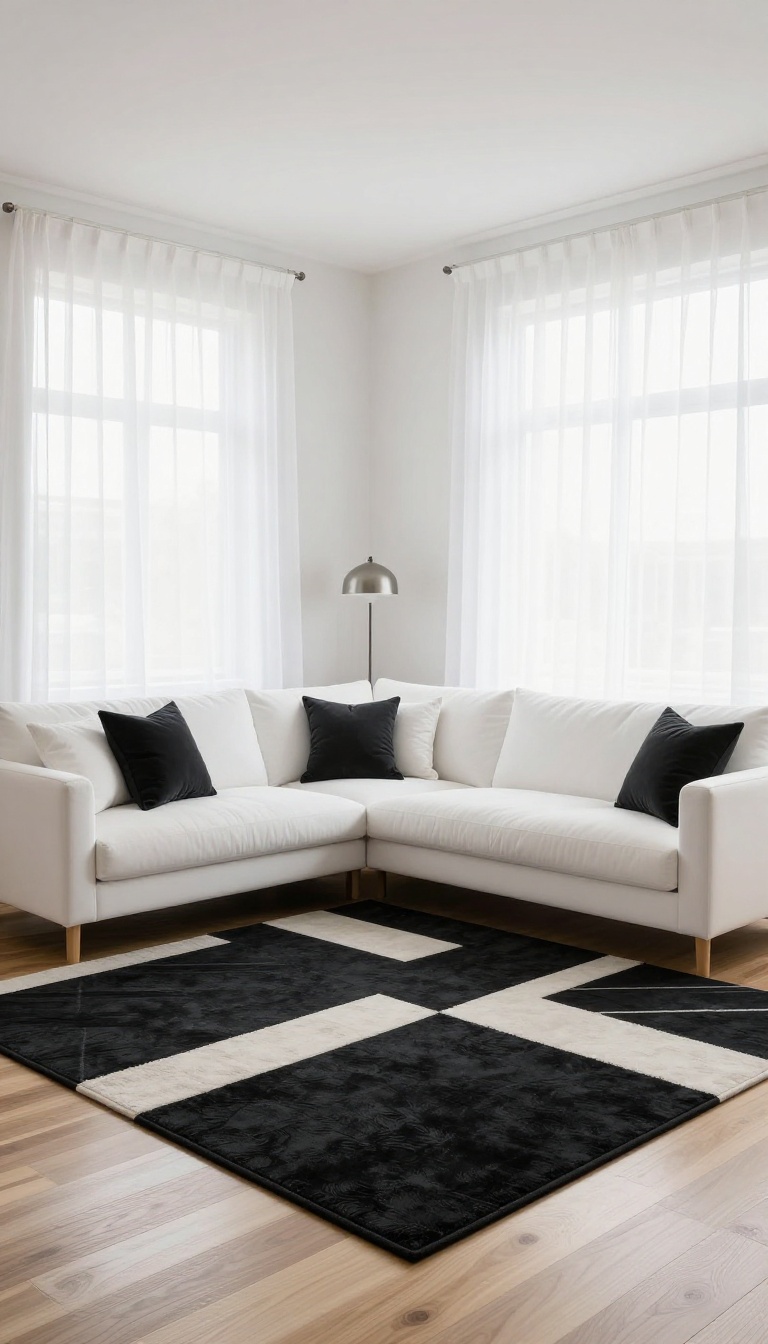
A rug can make or break a black and white living room. Choose one with a bold geometric or striped pattern, and it instantly adds energy while defining your seating area. The key is to let the rug be the star, so keep the rest of the room relatively simple.
When you want to add pattern without overwhelming the space, a black and white rug is a smart move. It grounds the room and gives your eye a place to land. Plus, it's an easy way to introduce texture and interest without committing to wallpaper or bold art.
Just remember: the rug should do the talking. If your rug is busy, tone down other patterns in the room. Solid sofas, plain walls, and simple curtains will let the rug shine.
Pick A Pattern That Fits Your Style
Geometric designs like chevrons or hexagons feel modern and energetic. Stripes, on the other hand, can make a room feel wider or longer, depending on their direction. If you prefer a softer look, try a subtle Moroccan trellis pattern.
Whatever you choose, make sure it complements the room's overall vibe.
Size Matters For Balance
A rug that's too small can make the room feel disjointed. Aim for a rug that's large enough to fit under the front legs of your sofa and chairs. In a typical living room, an 8×10 or 9×12 rug works well.
If you're unsure, tape out the size on the floor before you buy.
Keep The Rest Calm
With a patterned rug, simplicity is your friend. Stick to solid-colored furniture and minimal accessories. A black sofa on a white rug, or vice versa, creates a crisp contrast.
Add a few textured pillows or a throw for comfort, but avoid competing patterns.
4. Mix Black Metal and White Upholstery in Your Seating
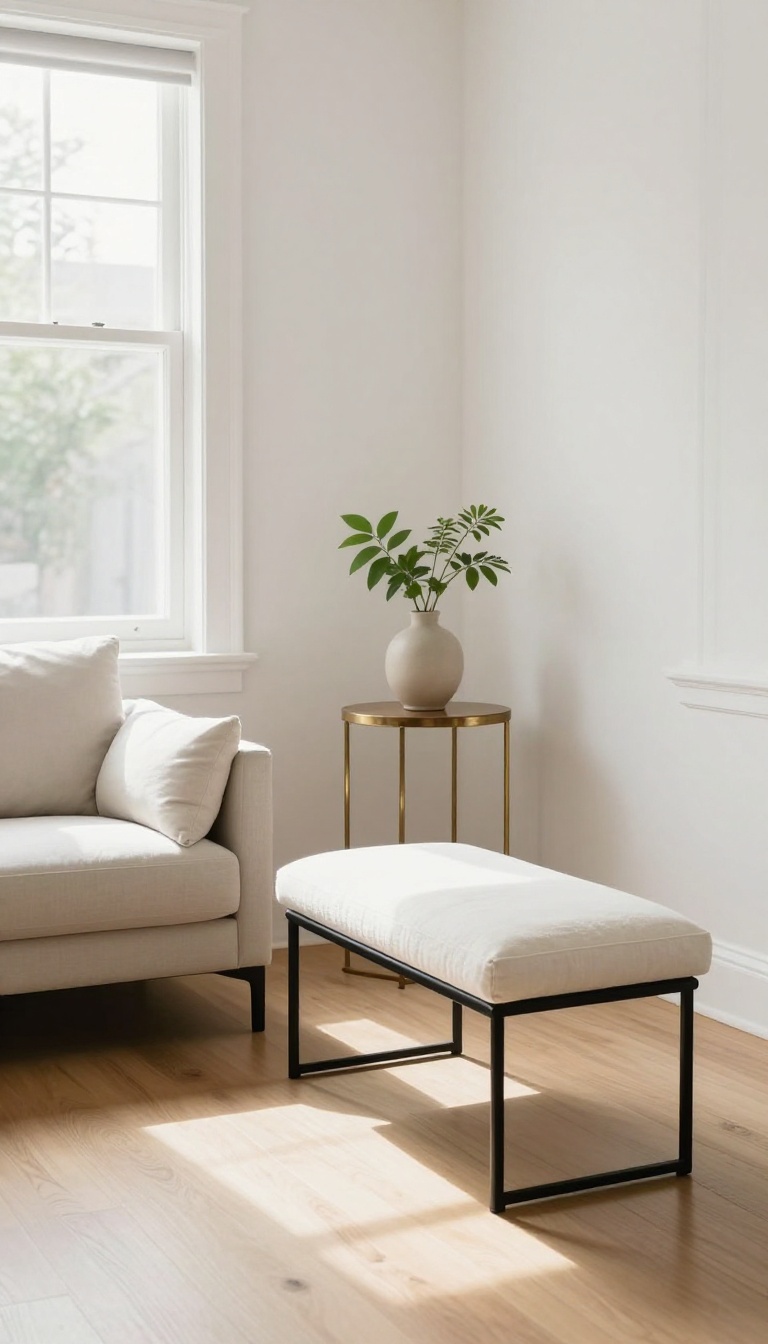
Seating is where black and white can either feel stiff or surprisingly inviting. A black metal frame paired with white cushions does both jobs at once: it adds structure and keeps things soft. The contrast is instant, but the comfort is what makes you want to stay.
Think of a black metal chair with a white seat pad, or a bench with a slim black frame and thick white cushions. The hard lines of the metal give the room a modern edge, while the white upholstery brings in warmth and light. It’s a simple swap that changes the whole mood of a seating area.
You don’t need to replace everything. One or two pieces are enough to make the point. A pair of black metal counter stools with white seats at a kitchen island, or a single accent chair by a window, can anchor the palette without overwhelming the space.
Chairs That Do The Work
A black metal-framed chair with a white slipcover or cushion is a classic combo. Look for clean lines and a seat that’s actually comfortable. If you want a softer look, choose a white fabric with a little texture, like linen or boucle.
The metal keeps it from feeling too precious.
Benches And Stools
A black metal bench with a white cushion works in entryways, at the foot of a sofa, or under a window. For stools, black legs and a white seat keep things light. These pieces are small, but they repeat the black-and-white story in a subtle way.
Mixing Metals And Materials
You can mix black metal with other finishes, like brass or wood, as long as white upholstery ties them together. A black metal chair with white cushions next to a wood side table looks collected, not matchy. Just keep the metal finishes to two or three max.
5. Use a Black Coffee Table as a Sculptural Focal Point
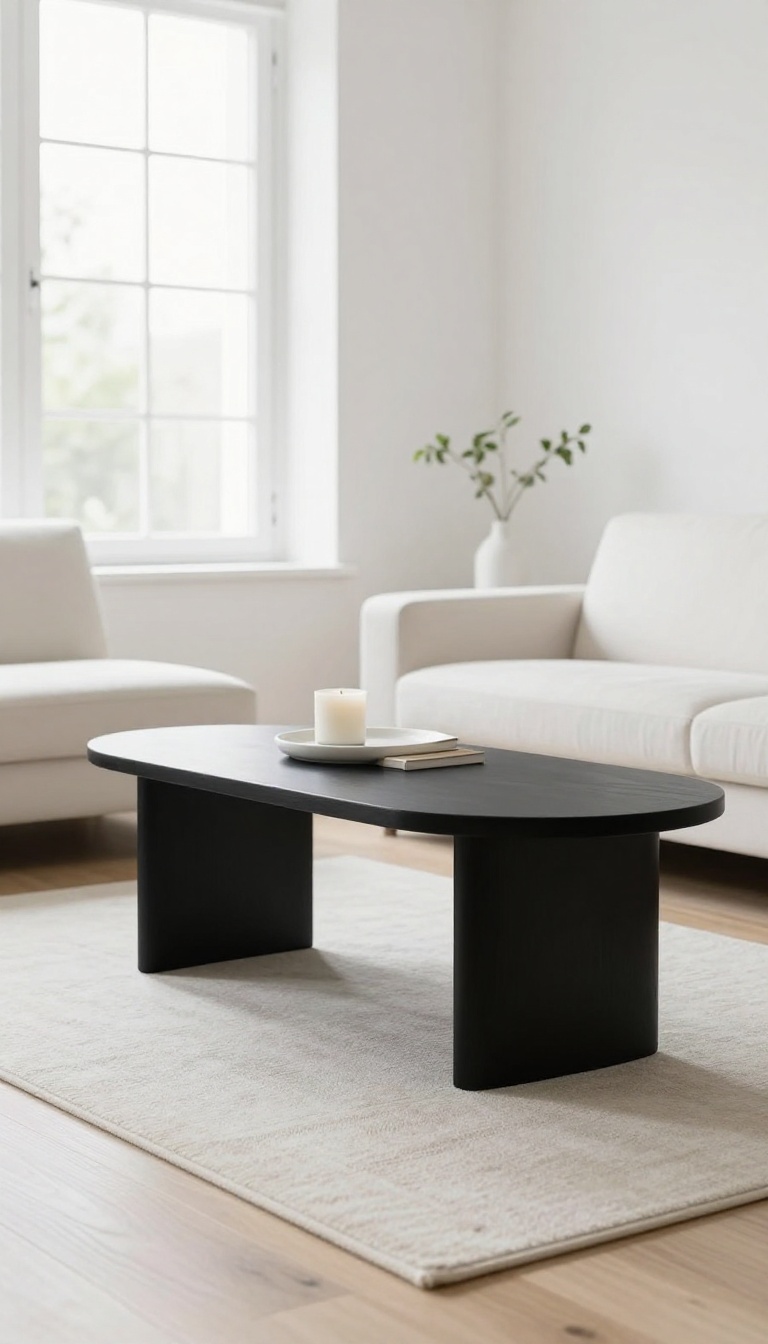
A black coffee table does more than hold your remote and a mug. It becomes a piece of sculpture in the middle of the room, especially when it sits on a light rug or in front of a pale sofa. The contrast draws the eye without trying too hard.
But a solid black surface can also read as a void if you leave it empty. The fix is simple: pick a table with clean lines, then add a white tray or a small stack of books to break up the darkness. That way it feels intentional, not like a missing piece of furniture.
Think of your coffee table as the anchor of your seating area. In a black and white room, it's the easiest place to go bold without repainting walls or replacing a sofa. A matte black finish absorbs light and adds weight, which balances airy white walls and light floors.
The key is shape—go for something with a clear silhouette, like a round drum, a slim rectangle, or a geometric hexagon. Avoid fussy details or heavy ornamentation; clean lines keep the look modern and crisp. Once you've got the table, style it with intention.
A white tray corrals remotes and candles while adding a bright pause. A stack of white or light-spined books does the same. Even a single white vase with a few stems can keep the surface from feeling like a black hole.
The goal is contrast in small doses, so the table reads as a deliberate focal point rather than a dark spot.
Pick A Shape That Holds Its Own
Round tables soften the hard edges of rectangular sofas and rugs. Rectangular or oval tables echo the lines of your seating for a more tailored look. If you want drama, try a hexagonal or triangular table—it adds angles without clutter.
Just make sure the scale fits your sofa; a tiny table next to a big sectional looks lost, and an oversized one crowds the walkway.
Style It So It Doesn't Swallow The Room
Start with a white tray—it's the fastest way to add a bright layer. Add a small stack of books with light covers, or a white bowl for keys. Keep it to three items max so the surface stays clean.
If you have a black table and a black sofa, break them up with a light rug or a white throw pillow on the sofa. That separation keeps the black from feeling like one big mass.
Match The Finish To The Mood
Matte black feels modern and calm; it hides fingerprints and blends with textured fabrics. Glossy black adds shine and can look more glam, but it shows dust and smudges faster. For a crisp modern balance, matte is usually the safer bet.
If you already have shiny black accents, like a lamp base, a matte table keeps things from getting too reflective.
6. Add Warmth with Natural Wood and Black Accents
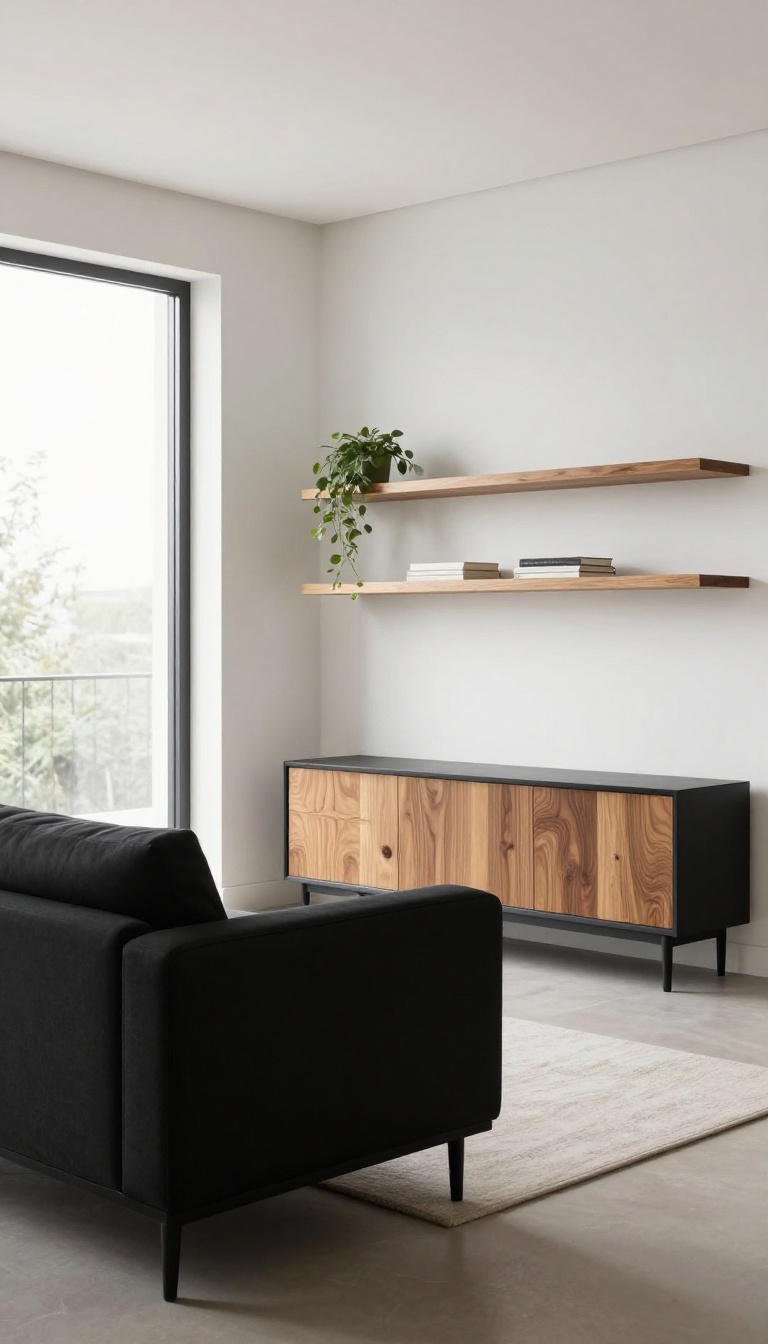
Black and white can start to feel cold after a while, like a hotel lobby that never quite warms up. Natural wood fixes that without muddying the crisp contrast you worked for. A single wood piece paired with black details brings in texture, depth, and a little life.
You do not need to replace everything. One or two wood elements are enough to shift the mood. The goal is balance, not a cabin makeover.
Pick Wood Tones That Play Well With Black
Medium and dark woods like walnut, oak, and teak hold their own next to black without disappearing. Pale woods like ash or birch can work too, but they read softer and more Scandinavian. If your black is very glossy, a matte wood finish keeps things from feeling too polished.
If your black is matte, a slightly richer wood grain adds welcome shine.
Use Wood Where You Touch And Look Most
A wood side table next to a black sofa gives your eye a place to rest. Floating wood shelves on a white wall break up empty space and give you a spot for books or a small plant. A media console in wood with black hardware ties the TV area together without turning it into a black box.
Balance The Mix So It Still Feels Modern
Keep the wood pieces simple in shape, with clean lines and no heavy carving. Let black stay the accent on hardware, legs, or frames rather than covering every surface. If you add wood, remove one small black or white item so the room does not get cluttered.
Two or three wood moments in a living room is usually plenty.
7. Hang Curtains That Go Floor to Ceiling in White
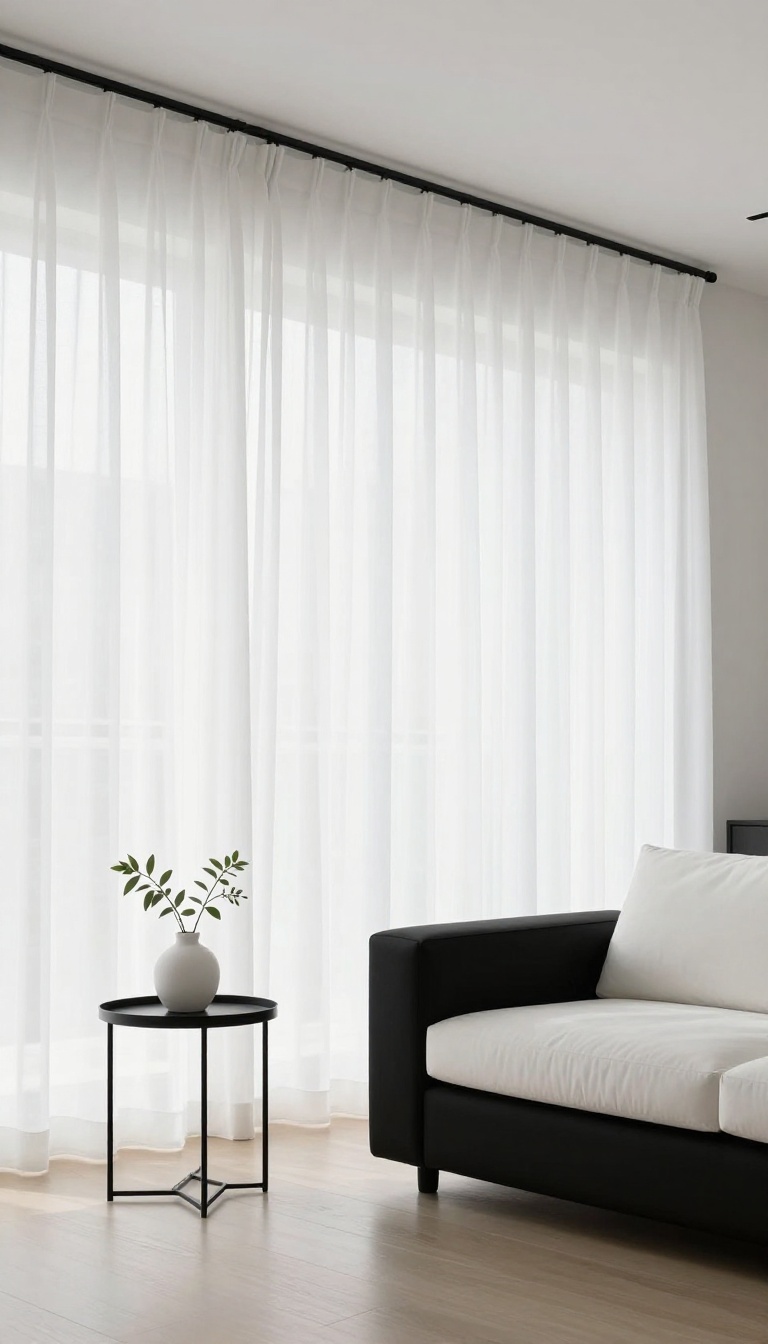
Curtains are the easiest way to make a black-and-white room feel taller without touching a single wall. Hang them in white from the ceiling all the way down to the floor, and the whole space stretches upward. The white keeps things airy and soft, while the height adds a quiet drama you barely notice at first.
It's one of those moves that looks expensive but costs almost nothing extra.
Most people hang curtains just above the window frame, which chops the wall into sections and makes the ceiling feel lower than it is. Move the rod up to the ceiling line or within an inch or two of it, and the eye reads one continuous vertical plane. White fabric in a plain weave or a light linen blend works best here.
It reflects the light coming in, softens the hard edges of black furniture, and never competes with your other pieces. The result is a room that feels open, calm, and taller than it actually is.
Mount The Rod High, Not At The Window
Measure from the ceiling down to the floor, then add a couple of inches so the fabric just kisses the ground. Mount the brackets at the ceiling line or as close as your ceiling allows. This single change does more for height than any paint color ever will.
If you have crown molding, hang the rod just below it so the curtains still read as full height. Skip the short, stubby rods that stop at the window trim — they break the vertical line you're trying to create.
Use Black Rods Or Rings For A Crisp Edge
A black curtain rod or a set of black rings gives you that graphic line the rest of the room is already speaking. It ties the white curtains back to your black accents without adding visual weight. Keep the hardware slim and simple.
A thin matte black rod with small finials looks modern, while chunky ornate hardware fights the clean look you're after. The contrast should feel intentional, not heavy.
Pick A White That Matches Your Walls
Not every white plays nicely together. If your walls are warm white, choose a curtain fabric with a similar undertone so the panels blend instead of clashing. Hold a swatch against the wall in daylight before you buy.
A slightly warmer or cooler white can make the curtains look dingy or stark against the wall, and that's the opposite of the soft, seamless look you want.
Let Them Pool Slightly Or Graze The Floor
Floor-length doesn't have to mean perfectly hemmed. A gentle break where the fabric touches the floor looks relaxed and intentional, while a full puddle adds a touch of luxury. Just avoid the floating look — curtains that stop two inches above the floor make the room feel unfinished.
Aim for a kiss or a small break, and steam the panels so they hang straight.
8. Create a Gallery Wall with Black Frames and White Mats
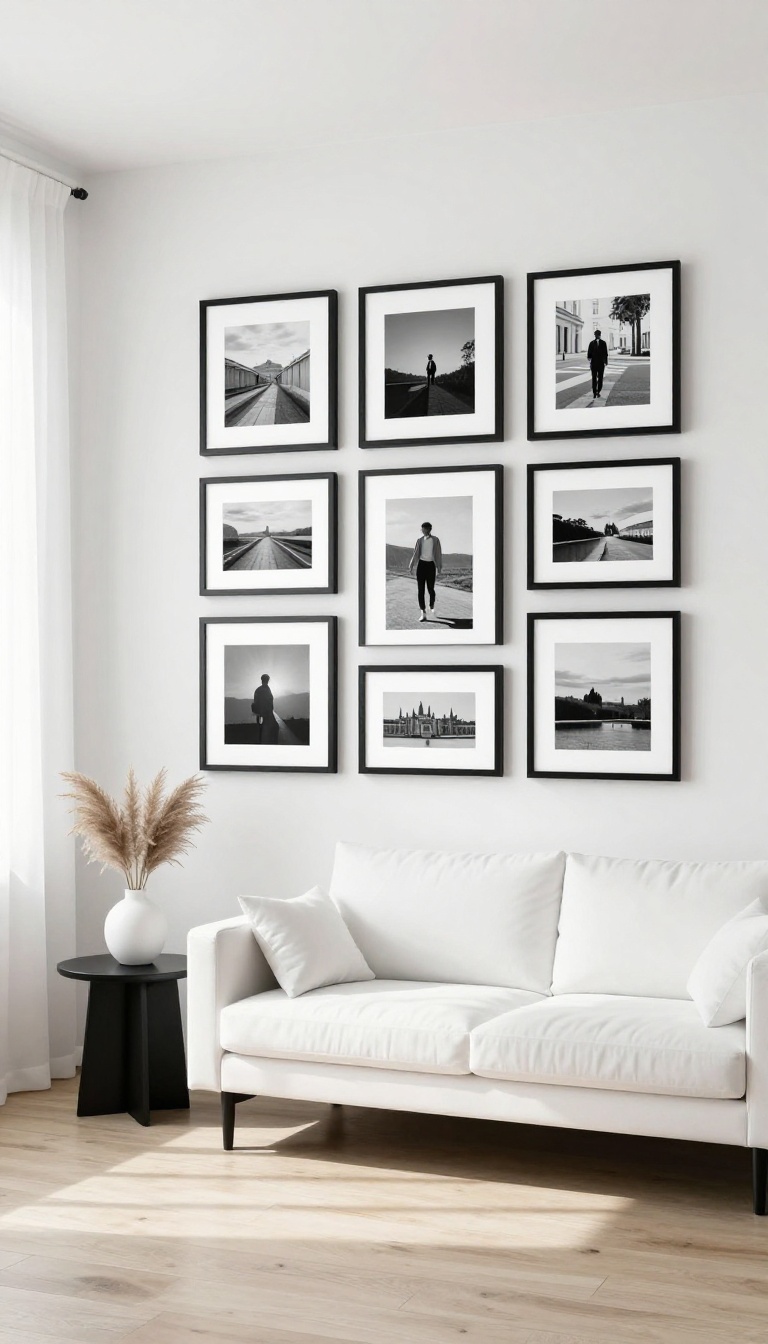
A gallery wall is one of those projects that looks intimidating until you realize the secret is consistency, not perfection. Black frames paired with wide white mats do the heavy lifting for you. They turn a random mix of prints, photos, and sketches into a display that feels intentional and calm.
The white mat is the real hero here. It gives each piece breathing room and keeps the black frames from feeling like a heavy grid. Together, they create a crisp modern rhythm that plays perfectly with the rest of your black and white living room.
Start by gathering everything you might want to hang. Family photos, art prints, postcards, even a ticket stub from a concert you loved. The subject matter can be totally different.
The frames and mats are what tie it all together. Pick one frame finish and stick with it. Matte black is the obvious choice, but a soft satin black works too if you want less glare.
For mats, go bright white or an off-white that reads white against your wall. Skip cream or beige unless your walls are warm-toned. Wide mats matter more than you think.
Aim for at least two to three inches of white space around each image. That border is what makes a small print feel important and a busy photo feel calm. If you are framing something tiny, go even wider.
Lay the whole arrangement on the floor first. Move pieces around until the edges feel balanced and the spacing looks even. Two to three inches between frames is a good default.
Once you like it, take a photo with your phone so you can recreate it on the wall.
Mix Sizes Without Making It Messy
A gallery wall with all the same frame size can look a little flat. Mix in one or two larger pieces to anchor the group, then fill around them with smaller frames. Keep the mats the same width across every frame, even if the frames themselves are different sizes.
That shared white border is what makes the mix look deliberate instead of random.
Center It Above A Sofa Or Console
The tightest, most polished look comes from centering the whole arrangement over a piece of furniture. Measure the width of your sofa or console, then keep the gallery about two-thirds of that width. Hang the bottom row so the lowest frame sits six to ten inches above the furniture.
That gap keeps the display from feeling like it is crushing the sofa. It also gives you room for a lamp or a few books on a console.
Keep The Spacing Tight And Even
Loose spacing makes a gallery wall feel scattered. Tight, even gaps make it feel like one cohesive piece of art. Two to three inches between frames is the sweet spot for most rooms.
Use painter's tape on the wall to map out your layout before you commit. It takes ten minutes and saves you from a dozen unnecessary nail holes. Once the tape looks right, hang the frames one by one and step back often.
9. Balance Bold Black Built-Ins with White Walls
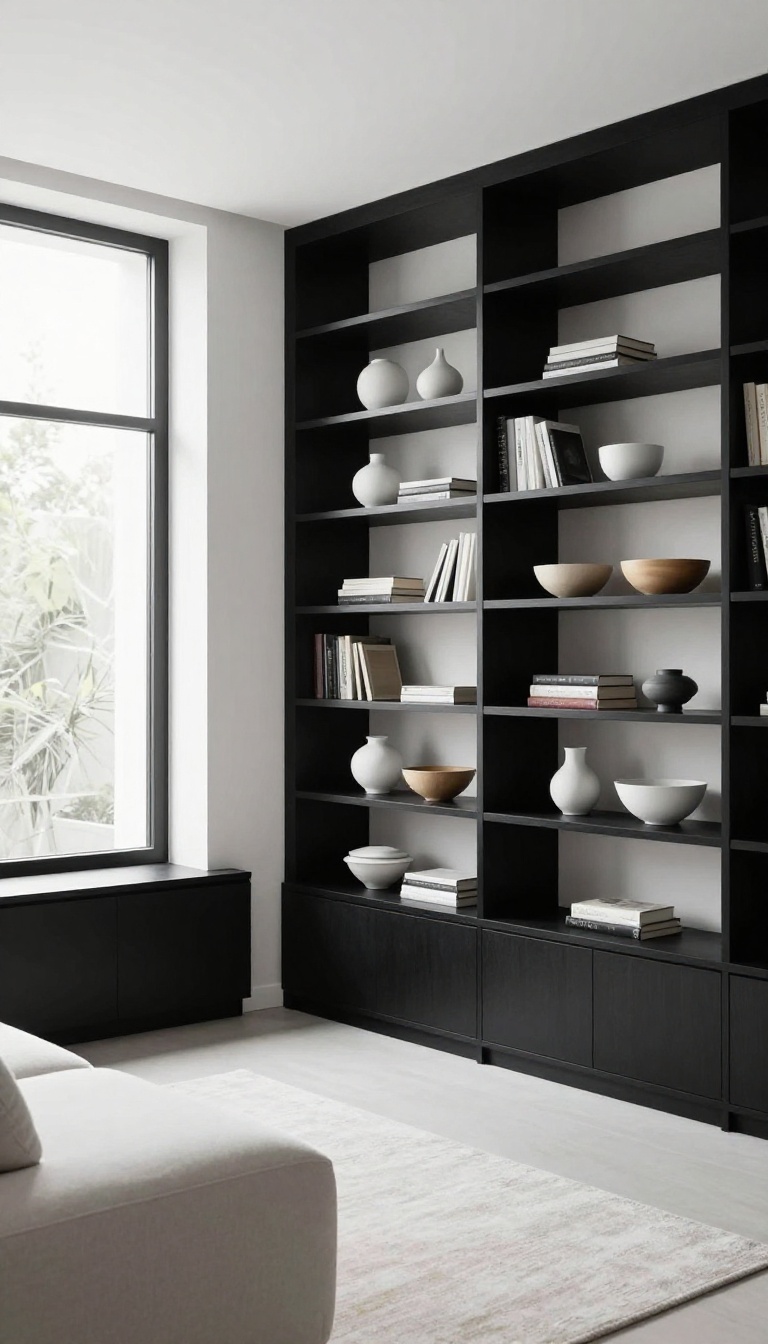
Built-ins are the workhorses of a living room, but they can also be the showpiece. When you paint them black and set them against white walls, you get storage that looks intentional and a backdrop that keeps everything from feeling heavy. The key is treating the shelves as a display, not just a place to stash stuff.
Black built-ins bring instant architecture to a plain room. They frame the space, add depth, and make whatever you put on them pop. But without the right balance, they can turn into a dark void.
White walls solve that by bouncing light around and giving your eye a place to rest. The contrast is sharp, but it's also clean and modern. Start by deciding on the scale.
A full wall of black shelves makes a statement, while a single black media unit feels more subtle. Either way, paint the wall behind and around it white—pure white or a soft off-white both work. This isn't just about color; it's about creating a frame that makes the black look deliberate.
Styling is where you bring in warmth and personality. You don't need to fill every shelf. Leave some empty space so the black can breathe.
Mix books, ceramics, and a few light-colored objects to break up the dark. A white vase, a pale wood bowl, or a stack of light-spined books will catch the light and keep things from feeling like a cave.
Choose The Right Black
Not all blacks are the same. A matte black absorbs light and feels cozy, while a satin or semi-gloss finish reflects a bit and looks more polished. For a modern edge, go matte.
If you want a little shimmer, try satin. Just avoid high-gloss unless you're after a lacquered, high-drama look.
Style With Contrast
The objects you place on black shelves need to stand out. Light-colored ceramics, brass accents, and books with white or bright spines work well. Group items in odd numbers and vary heights.
A few small plants add life without cluttering. Leave at least a third of the shelf space empty to keep it airy.
Light It Up
Black shelves can swallow light, so add a few small lamps or LED strip lights. A picture light above the built-ins highlights the display and adds a warm glow. If you have can lights, aim them toward the shelves.
The goal is to make the black feel rich, not gloomy.
10. Add a Black Floor Lamp and White Shade for Soft Light
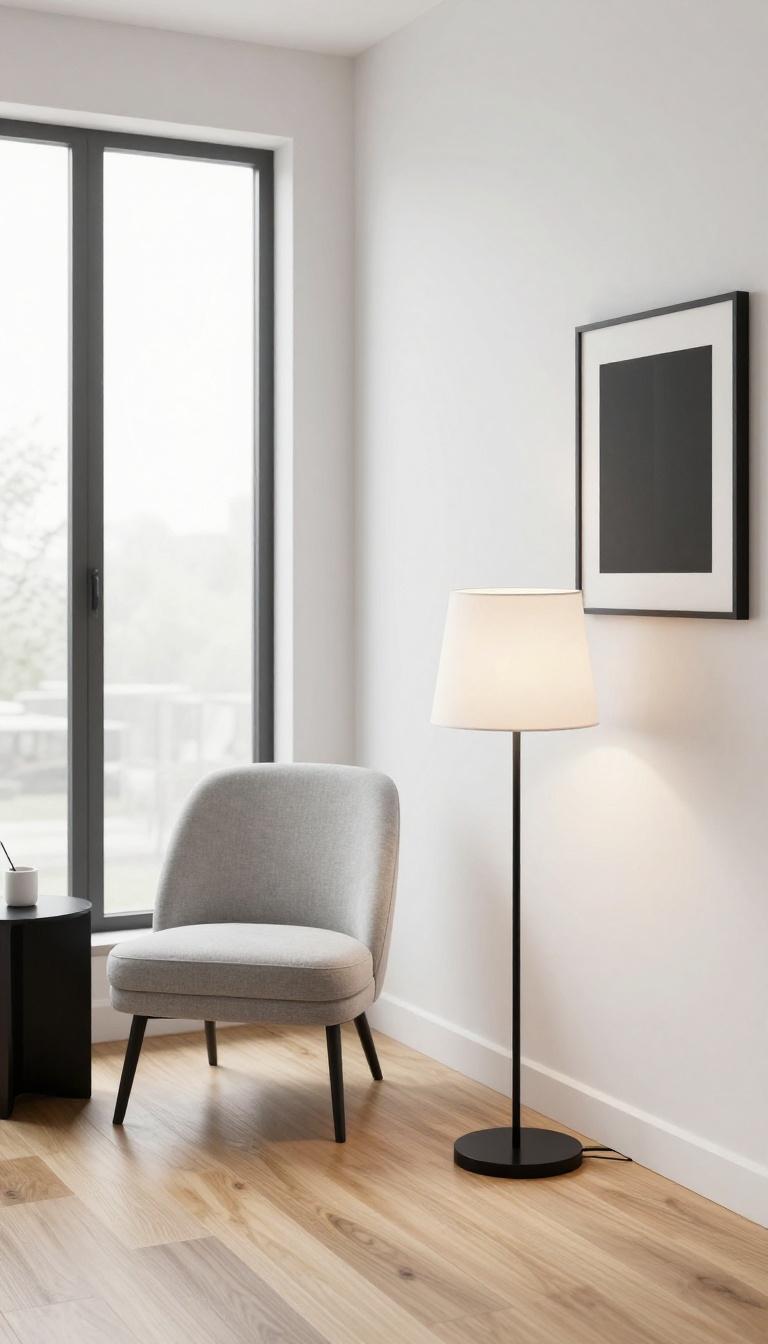
A floor lamp might not be the first thing you notice in a black and white living room, but it quietly does a lot of heavy lifting. The black stand adds a vertical line that draws the eye up, while the white shade softens the light and keeps the contrast from feeling harsh. It's a simple addition that makes the room feel more layered and lived-in.
Place it next to a reading chair or the end of your sofa, and suddenly you have a corner that invites you to sit down. The lamp becomes both a functional light source and a sculptural element that ties the palette together. Plus, it's an easy way to add warmth without breaking the black and white theme.
Floor lamps are often overlooked, but they're one of the most versatile pieces you can bring into a black and white space. They don't take up floor space the way a side table does, and they can move with you if you rearrange the furniture. A black base with a white shade is a classic combo that feels modern and crisp, yet still cozy.
The key is to think about where you need light and where you want a moment of contrast. A lamp can highlight a dark corner, create a reading nook, or simply balance out a heavy piece of furniture. And because the shade is white, it diffuses light softly, so the room never feels like a cave.
Why A Black Base Works
A black floor lamp base acts like a bold punctuation mark in the room. It stands out against light walls and ties in with other black accents, like a coffee table or picture frames. Because it's slim, it doesn't visually clutter the space, but it still makes a statement.
If your room already has a lot of black, a black base won't feel like overkill as long as you balance it with white or light textures. The lamp becomes part of the rhythm rather than a random addition.
The Magic Of A White Shade
A white shade is what makes the lamp feel soft instead of stark. When you turn it on, the light glows through the fabric and casts a warm, even glow. That warmth is crucial in a black and white room, which can otherwise feel cool and clinical.
Choose a shade that's slightly tapered or drum-shaped for a clean look. Avoid shades with busy patterns or colored trims if you want to keep the palette strict. The white shade also reflects light back into the room, making the space feel brighter overall.
Where To Place It For Maximum Impact
The most natural spot is beside a reading chair or at the end of a sofa. That way, it serves a purpose and fills an empty corner. If you have a dark wall, placing the lamp in front of it will make the black base disappear and the white shade pop.
You can also use two matching lamps to frame a console table or a large piece of art. Just make sure they're not too tall or too short for the furniture they're next to. A good rule of thumb is to keep the shade at eye level when you're seated.
Style And Bulb Choices
For a modern look, go with a slim metal base and a simple fabric shade. If your room leans more industrial, a tripod base or an adjustable arm can add character. The bulb matters too: a warm white LED around 2700K will give you that cozy glow without turning the shade yellow.
Consider a dimmer switch or a smart bulb so you can adjust the brightness depending on the time of day. That flexibility lets the lamp work as task lighting when you read and as ambient lighting when you're just hanging out.
11. Finish with Textiles: Black Throw, White Pillows, and a Soft Blanket
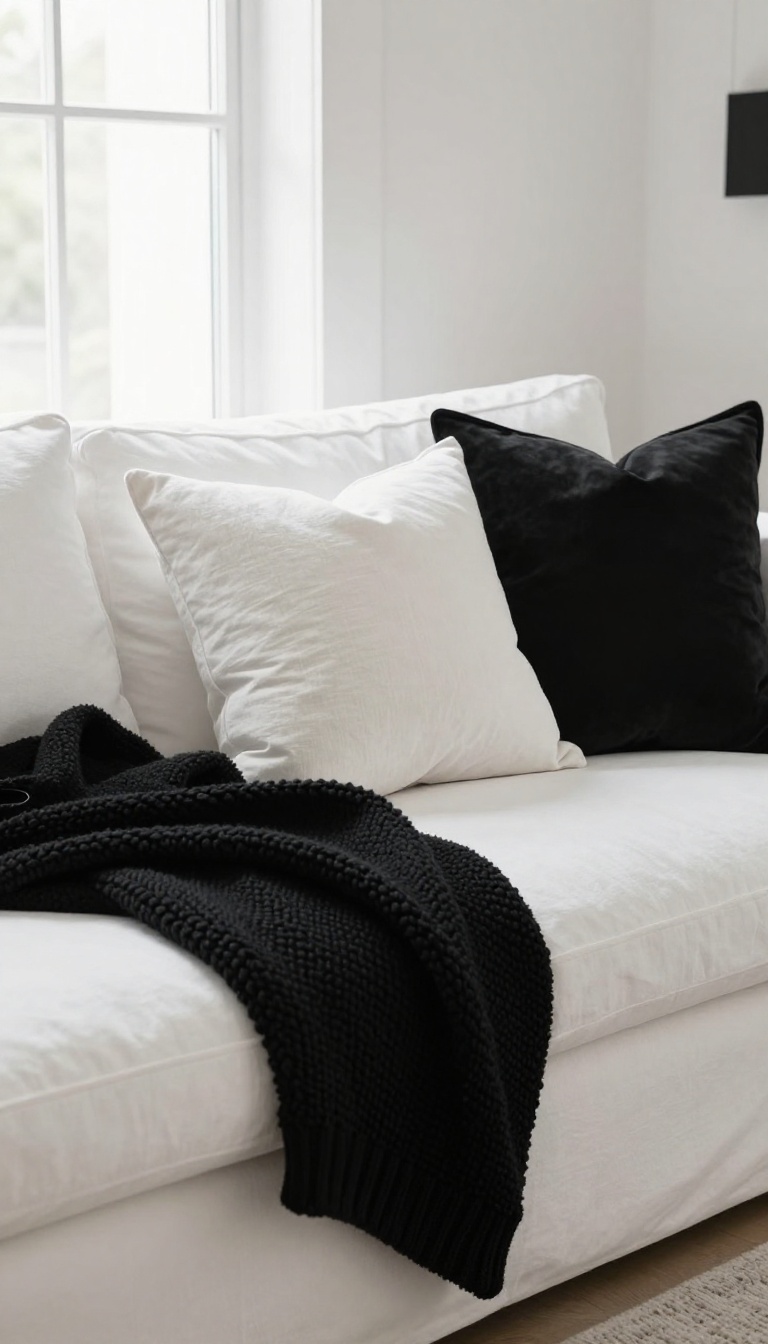
Hard surfaces and sharp contrast need something soft to land on. That's where textiles come in. A black throw, white pillows, and a chunky knit blanket add instant comfort and make the room feel like people actually live there.
Think of textiles as the final layer that turns a styled room into a livable one. Without them, black and white can feel like a furniture showroom. With them, you get warmth, texture, and a reason to sink in.
Pick A Throw That Does Two Jobs
A black throw draped over a white sofa or chair adds contrast and invites you to curl up. Choose a chunky knit or woven cotton for texture. Drape it casually—over an arm or across the back—so it looks relaxed, not staged.
White Pillows Keep It Crisp
White pillows on a black sofa or chair keep the palette clean and bright. Mix sizes and shapes for interest. A couple of large squares, a lumbar, and maybe a round one.
Stick to white or off-white so the contrast stays sharp.
Add A Soft Blanket For Layering
A soft blanket in a light gray or cream can bridge the gap between black and white. Fold it neatly over the back of a sofa or chair. It adds warmth without breaking the color scheme.
Bonus: it's there when you need it.
Mix Textures, Not Just Colors
Velvet, linen, wool, and cotton all read differently. Use a mix to keep the room from feeling flat. A black velvet pillow next to a white linen one creates depth.
Just keep the colors consistent so the texture does the talking.
FAQ
Can a black and white living room feel cozy?
Yes, if you add texture and warm lighting. Use soft throws, pillows, a rug, and lamps with warm bulbs. Wood tones and layered fabrics also help balance the contrast.
What color should the walls be in a black and white living room?
White or off-white walls keep the room bright and let black accents stand out. If you want more drama, paint one accent wall black or charcoal behind the main seating area.
How do I keep a black and white room from looking cold?
Bring in natural materials like wood, leather, or woven baskets. Add a few plants, soft textiles, and warm light. The goal is contrast with comfort, not a sterile showroom.
Is black and white still modern in 2025?
Absolutely. The palette is timeless, but the modern twist comes from clean lines, matte finishes, and mixing textures. Avoid overly ornate pieces if you want a crisp, current look.
What accent colors work with a black and white living room?
Warm neutrals like tan, camel, or blush add softness. A touch of green from plants or a muted olive pillow also works well. Keep accents minimal so the black and white stays the star.
Conclusion
Black and white does not have to feel cold or staged. Pick one idea from this list that solves your biggest complaint, whether that is a flat wall, a dark corner, or a room that feels stiff. Try it for a week before buying anything else.
Small moves stack up faster than one big overhaul.
Add contrast where you need energy, soften where you need warmth, and stop once the room feels balanced. Crisp does not mean cold, and modern does not mean empty. Your room just needs a little intention.