10 Easy Coastal Shower Tile Ideas for a Smart Summer Upgrade
Summer is the perfect time to give your bathroom a fresh, airy feel. Coastal style isn't just about seashells and driftwood—it's about creating a calm, spa-like atmosphere that makes every shower feel like a mini vacation. And the easiest way to achieve that?
Tile. Whether you're planning a full remodel or just a quick refresh, the right tile can instantly transform your shower into a serene escape.
You don't need a huge budget or a designer's eye—just a few smart choices that echo the ocean's palette and texture. In this guide, we'll walk through 10 easy coastal shower tile ideas that are both beautiful and practical.
1. Classic White Subway Tile with a Twist
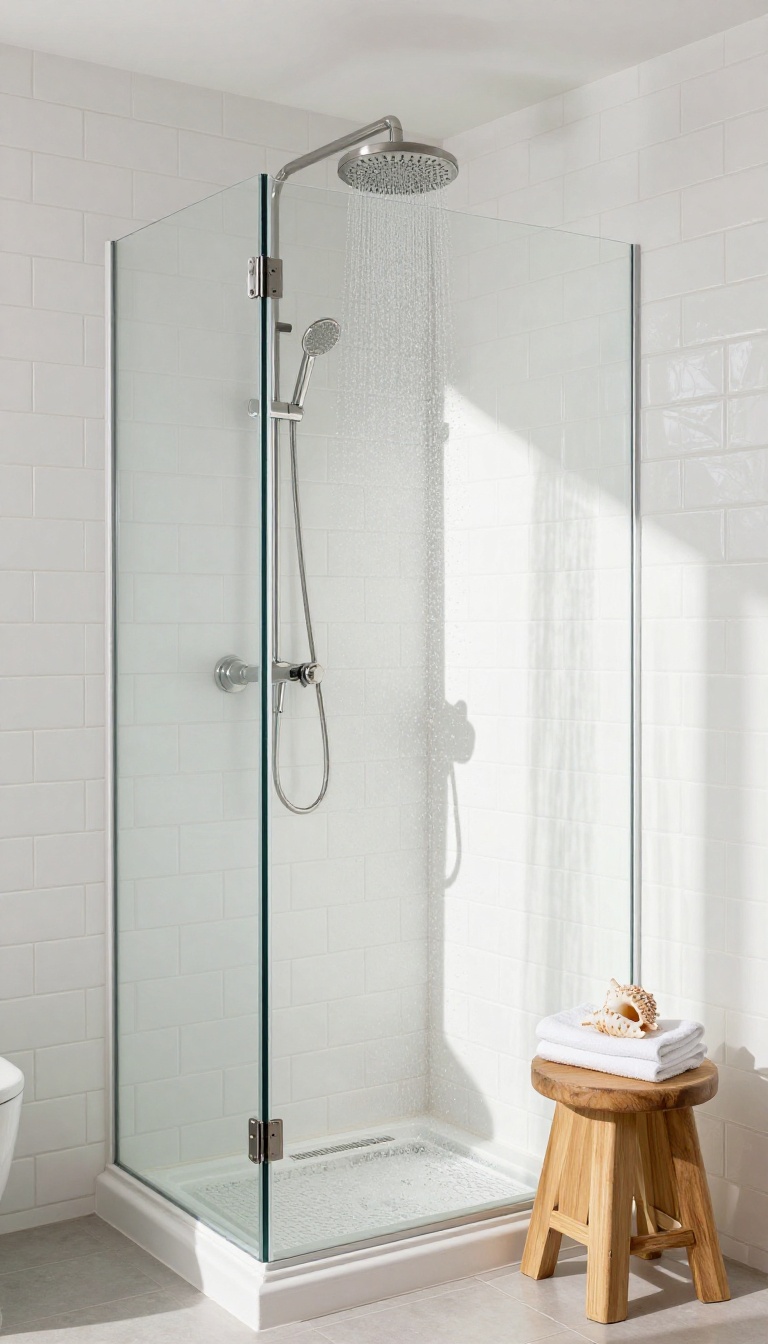
White subway tile is a timeless choice that never goes out of style. But for a coastal twist, consider a textured or beveled version. The subtle play of light across the surface mimics the shimmer of water, adding depth and interest without overwhelming the space.
Plus, it's easy to clean—perfect for the busy summer months.
Subway tile has been a bathroom staple for decades, and for good reason. It's versatile, affordable, and brightens up any space. To give it a coastal feel, look for tiles with a beveled edge or a handcrafted texture.
These small details catch the light in a way that flat tiles don't, creating a gentle, watery ripple effect on your shower walls. The result is a classic look with a fresh, seaside vibe.
Why Beveled Or Textured Tiles Work
Beveled tiles have a raised center that creates subtle shadows, while textured tiles might have a rippled or pebbled surface. Both add dimension and mimic the natural movement of water. They also hide water spots and soap scum better than flat tiles, making them a practical choice for a busy family bathroom.
Choosing The Right Grout
The grout color can make or break the coastal look. For a seamless, watery effect, choose a grout that closely matches the tile color. If you want to emphasize the tile pattern, go with a contrasting grout, like a soft gray or blue.
Just avoid stark white grout if your tiles are off-white, as it can look too harsh.
Installation Tips For A Polished Finish
When installing subway tile, consider a herringbone or vertical stack pattern instead of the traditional brick layout. This adds visual interest and a modern coastal feel. Also, make sure to use a high-quality waterproof adhesive and grout sealer to protect against moisture in the shower environment.
2. Ocean Blue Glass Mosaic Accent
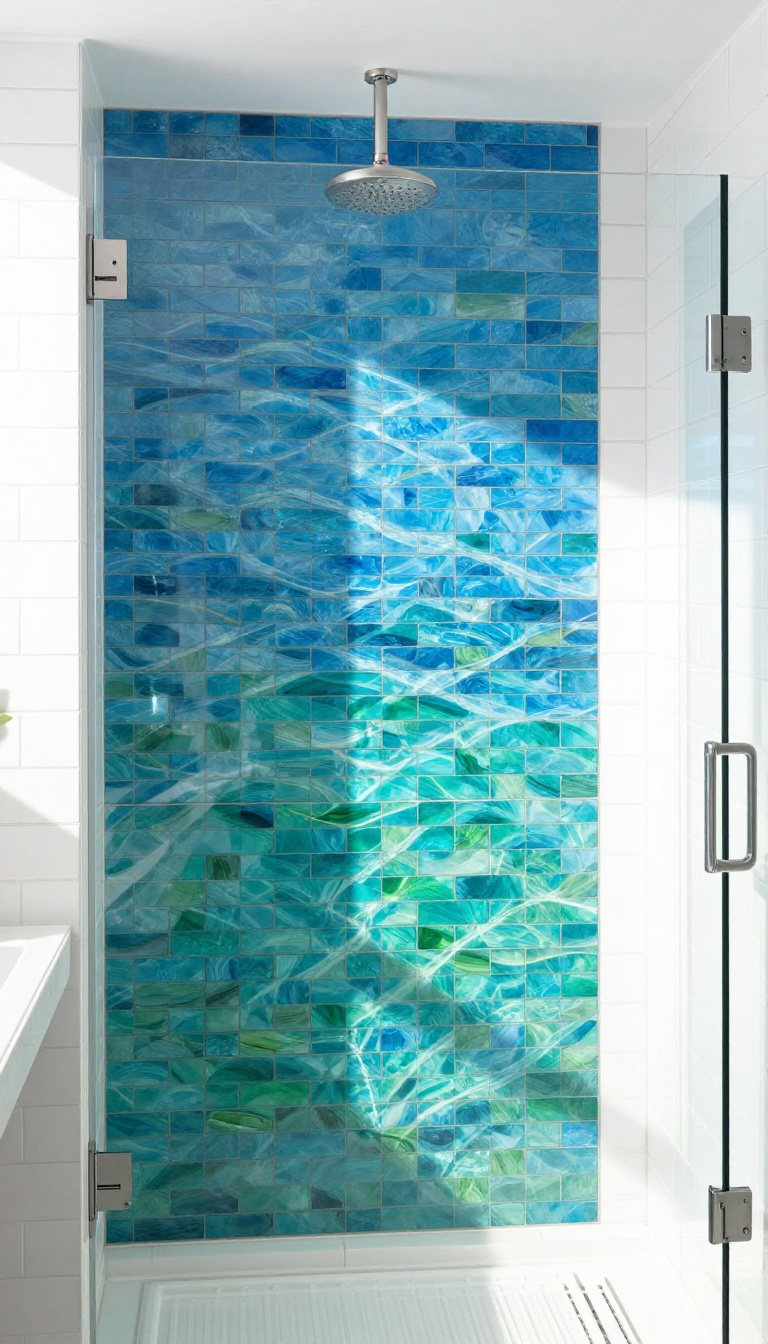
If you want to bring the ocean's colors into your shower without committing to a full theme, a glass mosaic accent is the perfect middle ground. These small tiles come in a mix of blues and greens that mimic the sea, and they catch the light in a way that makes the whole space feel alive. You can use them sparingly or go bold with a feature wall—either way, they add instant coastal charm.
A glass mosaic accent is one of the most flexible ways to introduce coastal color. Because the tiles are small, they work well in curved areas or as a subtle stripe. Plus, the glass surface reflects light, which can make a small shower feel larger and brighter.
You don't need to redo the entire shower—just adding a mosaic strip at eye level can change the whole vibe.
Where To Place The Accent
Think about where your eye naturally goes when you step into the shower. A horizontal band around the middle of the wall, a niche behind the shampoo bottles, or a full back wall behind the showerhead are all great options. If you're on a budget, a single vertical strip from floor to ceiling can still make a statement without covering a large area.
Choosing The Right Blue And Green Mix
Not all glass mosaics are the same. Look for tiles that combine several shades of blue, teal, and green—this creates a more natural, ocean-inspired look than a single solid color. Some mosaics come on mesh sheets, which make installation easier and help you achieve a seamless pattern.
Consider the overall lighting in your bathroom: if it's darker, choose lighter shades; if it's bright, you can go deeper.
Pairing With Other Tile Styles
Glass mosaic works beautifully alongside classic white subway tile or large-format porcelain. Use the mosaic as an accent in a shower niche or as a border above the main tile. For a more cohesive coastal look, pair it with matte white or light gray tiles to let the color pop.
Avoid mixing too many patterns—keep the rest of the tile simple so the mosaic remains the focal point.
3. Sand-Inspired Beige Tiles
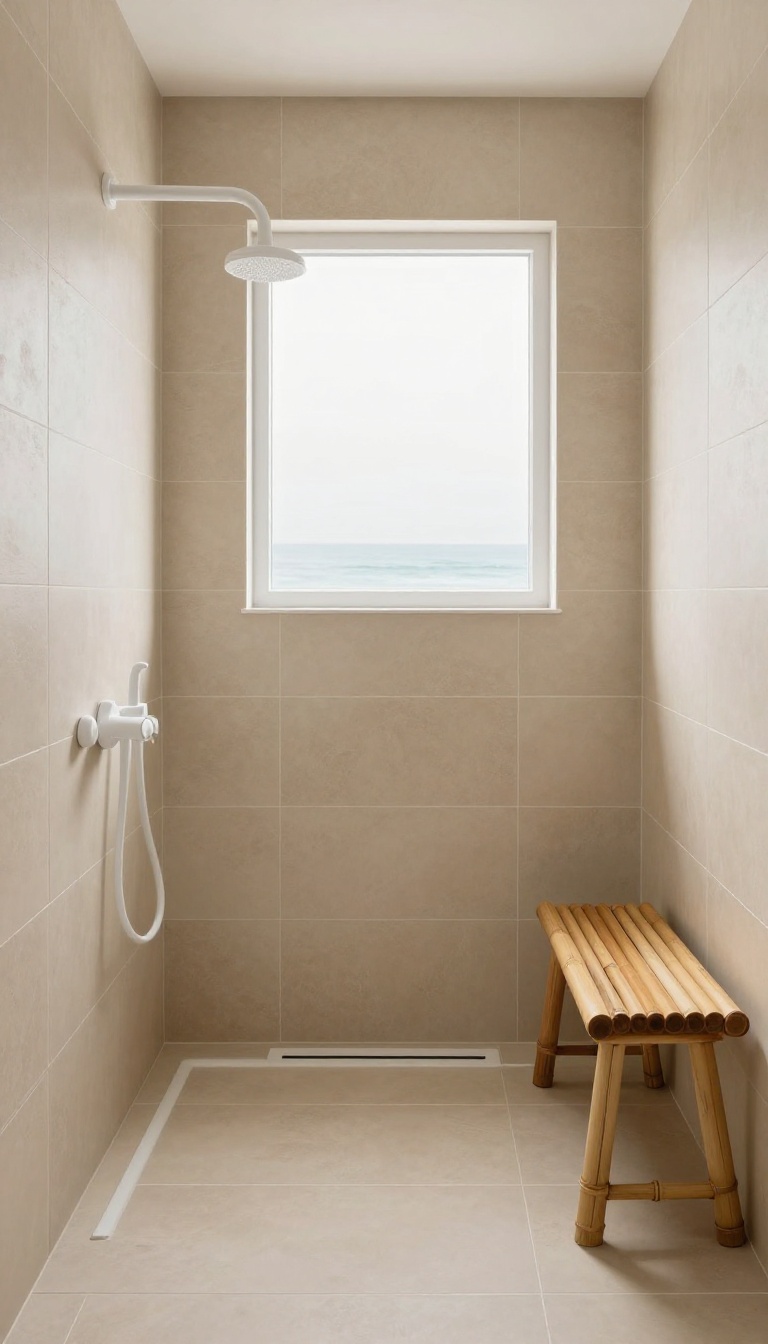
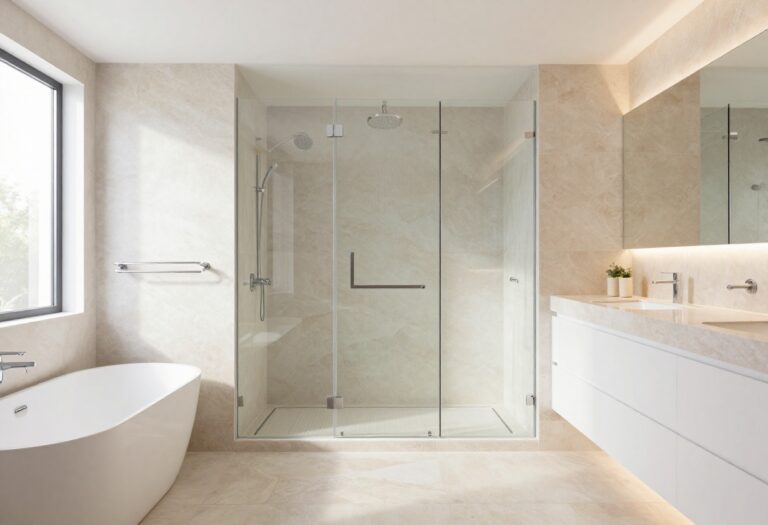
Warm, neutral beige tiles can bring the beach to your shower without a single seashell. Sand tones create a soft, grounding backdrop that feels both natural and spa-like. They also pair beautifully with white fixtures and wood accents for that effortless coastal look.
Sand-inspired tiles are a smart choice for a coastal bathroom because they're versatile and forgiving. They hide water spots and soap scum better than darker shades, and they don't clash with other colors. Whether you choose a matte finish for a more natural feel or a glossy one for easier cleaning, beige tiles add warmth without overwhelming the space.
Why Beige Works
Beige tiles mimic the soft, sun-washed tones of sandy beaches, instantly making your shower feel more relaxed. Unlike stark white, beige adds warmth and depth, so the space doesn't look flat. It also serves as a neutral canvas, letting you switch up accessories like towels and bath mats without retiling.
Pairing With Other Elements
For a cohesive coastal look, team beige tiles with white grout and white fixtures to keep things bright. Add natural wood accents—like a teak bench or bamboo stool—to echo driftwood and enhance the beachy vibe. You can also mix in a few textured tiles, like a pebble strip, for extra visual interest.
Choosing The Right Shade
Not all beiges are the same. Lighter, sandy tones work best in small showers to keep the space feeling open. If you have a larger bathroom, you can go a bit deeper—like a warm tan or greige—without making it feel cramped.
Always test a sample in your actual lighting, because the same tile can look different under warm or cool bulbs.
4. Weathered Wood-Look Planks
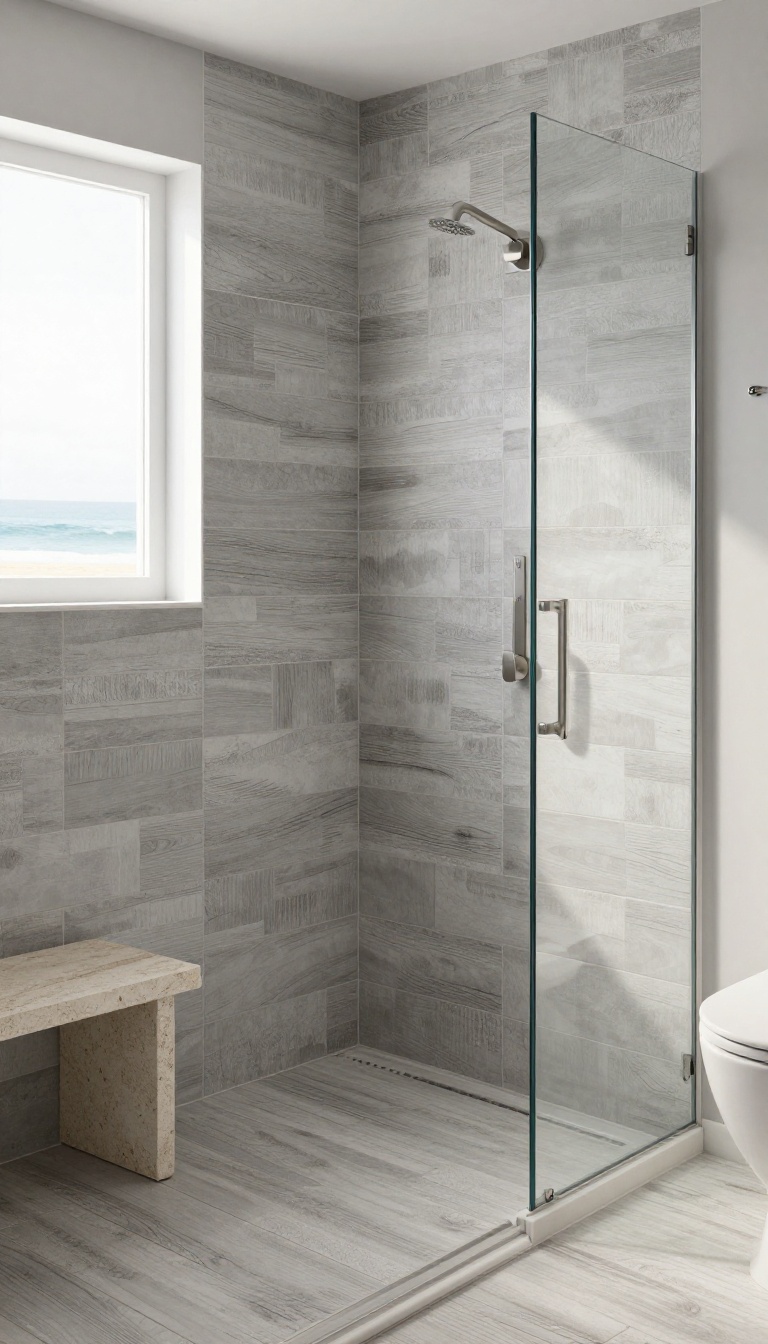
Wood in a shower? It sounds risky, but wood-look porcelain tiles give you that cozy, beach-cottage vibe without the warping or rot. The weathered gray or driftwood tones mimic sun-bleached boards, adding instant warmth and texture.
Plus, they're tough enough for daily use and surprisingly slip-resistant.
Why Wood-look Tile Works In A Shower
Wood-look porcelain is a practical alternative to real wood. It's waterproof, resists moisture, and won't swell or crack. The textured surface provides better traction underfoot, making it safer for a wet shower floor.
And because it's porcelain, it's easy to clean and maintain—just a quick wipe and it looks new again.
Choosing The Right Shade And Finish
For a coastal feel, stick to lighter, weathered tones like driftwood, pale oak, or soft gray. These shades reflect light and make the space feel larger. Avoid high-gloss finishes—they can be slippery and look less natural.
Instead, opt for a matte or satin finish with subtle grain patterns for a realistic wood look.
Installation Tips For A Seamless Look
To mimic real wood planks, use a staggered or offset layout. This creates a natural, random appearance. Use a grout color that blends with the tile—like a warm beige or gray—to keep the focus on the wood texture.
Consider larger planks (like 6×24 inches) for fewer grout lines and a more streamlined look.
5. Sea Glass Pebble Floor
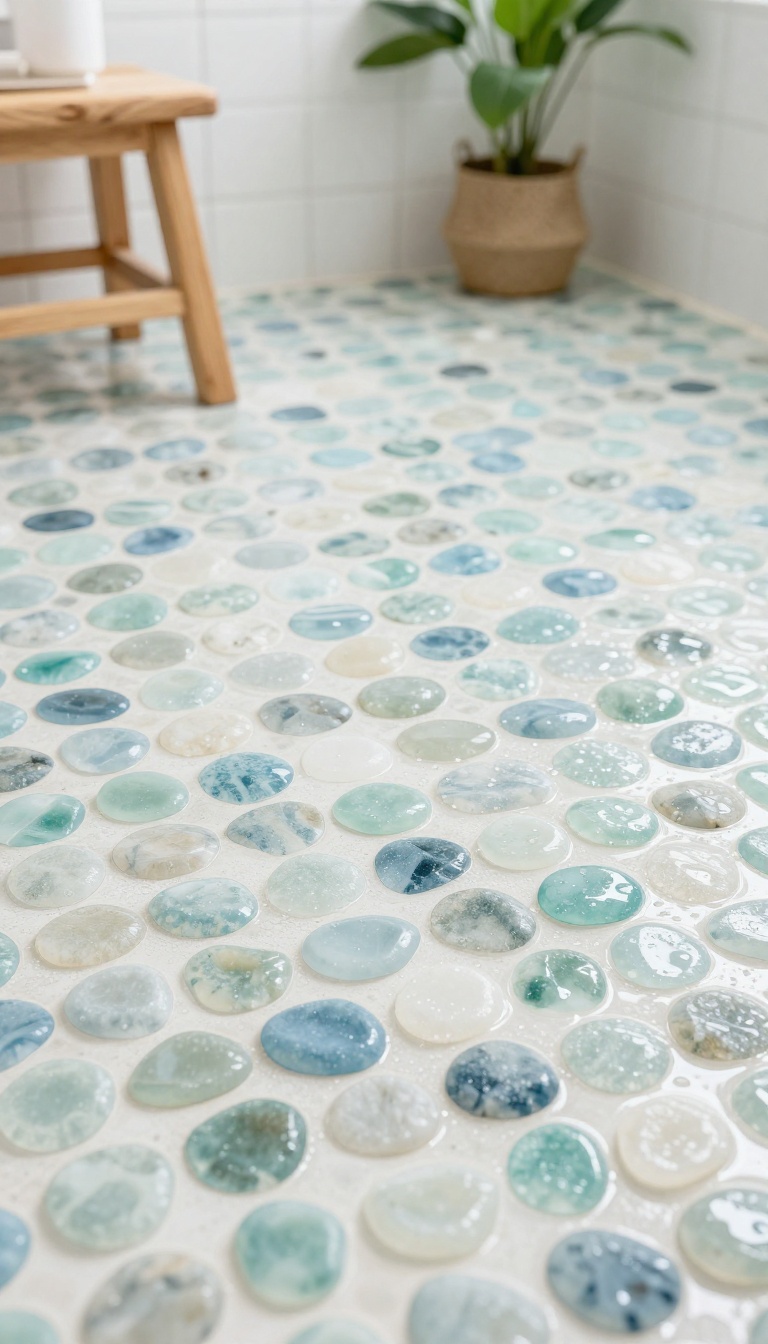
Stepping onto a sea glass pebble floor is like walking along a shore where the waves have polished every stone. These tiles bring a tactile, organic feel that instantly relaxes you. The mix of soft blues, greens, and whites mimics the colors you find in real sea glass, creating a serene, coastal vibe.
Sea glass pebble floors are more than just a pretty surface. The varied shapes and sizes of the pebbles create a natural, uneven texture that provides gentle traction underfoot, making them a safe choice for a shower floor. Plus, the smooth, rounded stones feel wonderful on your feet, adding a spa-like touch to your daily routine.
Why Choose Pebble Tiles?
Pebble tiles are incredibly durable and naturally slip-resistant, which is essential for a shower floor. They also hide soap scum and hard water spots better than smooth tiles, so they look cleaner for longer. And because each pebble is unique, your floor will have a one-of-a-kind pattern that adds character to your bathroom.
Color Combinations That Work
For a classic coastal look, stick to a palette of soft blues, seafoam greens, and creamy whites. You can find pebble mats that blend these colors together, or you can mix and match individual sheets to create your own custom pattern. If you prefer a more neutral look, choose pebbles in shades of gray and beige, which still evoke a beachy feel without being too colorful.
Installation Tips
Pebble tiles come in mesh-backed sheets, making installation easier than you might think. You can lay them directly over a mortar bed, and the flexible mesh allows the sheet to conform to the contours of your shower floor. Be sure to use a grout that matches the pebbles to keep the look seamless, and seal the grout to protect it from moisture and stains.
6. Nautical Stripe Border
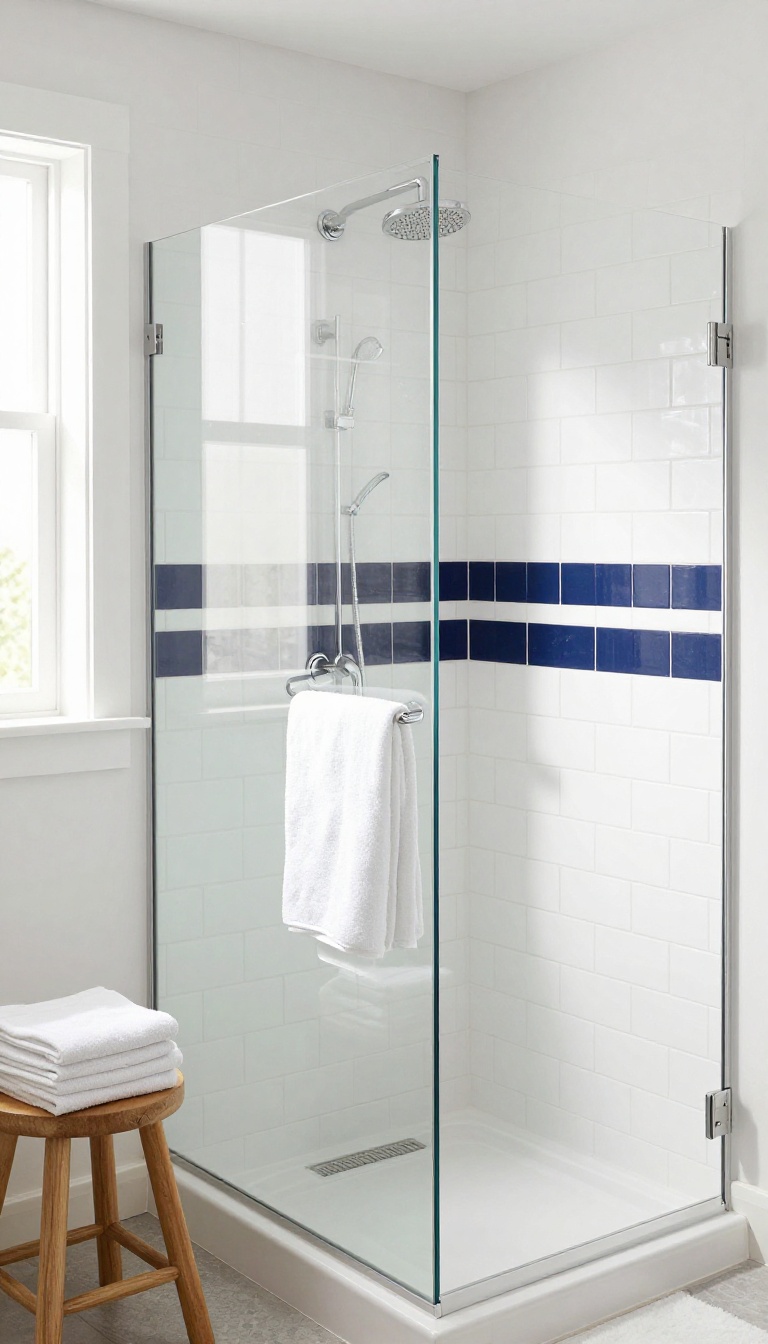
A classic nautical stripe is one of the easiest ways to channel coastal charm without going overboard. A simple border of blue and white tiles can frame a plain wall or add a subtle pop of interest around a shower niche. It's a timeless look that feels fresh and crisp, just like a summer day by the sea.
Think of a nautical stripe as the perfect finishing touch. It doesn't demand a full redesign—just a few rows of tile that echo the classic sailor's shirt. The key is to keep it simple: a clean white background with a stripe in navy, cobalt, or even a soft sky blue.
This approach works beautifully in both modern and traditional bathrooms, and it pairs well with other coastal elements like natural wood or matte black fixtures.
Where To Place The Stripe
The most common spot is right at the midpoint of the shower wall, which instantly draws the eye and adds visual structure. You can also run the stripe horizontally just below the ceiling or above the tile wainscot for a subtle architectural detail. Another clever idea is to use the stripe to outline a shower niche, making it stand out as a deliberate design feature rather than an afterthought.
Choosing The Right Tiles
For the stripe, you don't need anything fancy—basic ceramic or porcelain tiles in a contrasting color work perfectly. If you want a bit more texture, consider a matte finish for a softer, more organic look. For the background, white subway tile is a no-fail choice, but you could also use large-format white tiles for a more seamless appearance.
The contrast between the two colors is what creates that crisp, nautical vibe.
Mixing With Other Coastal Elements
A nautical stripe is surprisingly versatile. It can hold its own as the only pattern in the shower, or it can complement other coastal touches like pebble flooring or a driftwood vanity. To keep the look cohesive, stick to a limited palette of blues and whites, and let the stripe be the star.
You can also echo the stripe in your shower curtain or bath mat for a pulled-together feel.
7. Soft Gray and White Chevron
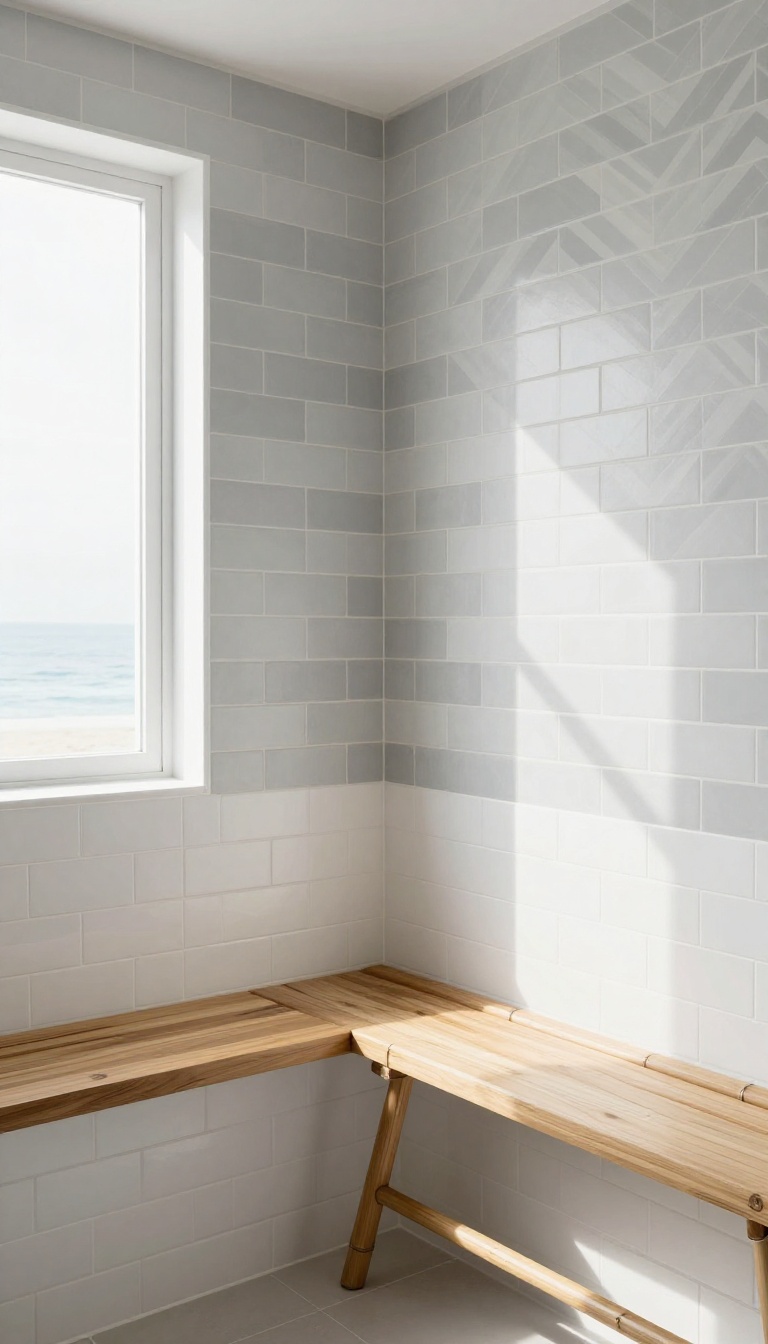
Chevron might sound bold, but in soft gray and white it feels surprisingly calm and coastal. The pattern adds a subtle sense of movement, like waves lapping the shore, without shouting for attention. It's a smart pick if you want a modern look that still keeps that breezy, beach-house vibe.
The key to making chevron work in a coastal shower is restraint. Instead of covering every wall, use it as a single accent wall behind the showerhead or on the main wall you see when you step in. That way, the pattern adds interest without making the space feel busy or overwhelming.
Why Soft Gray And White Works
Soft gray mimics the color of sea mist or weathered driftwood, while white keeps things fresh and bright. Together, they create a neutral backdrop that pairs well with natural textures like teak or bamboo. Plus, gray is forgiving when it comes to water spots and soap scum, so it stays looking clean longer.
Choosing The Right Tile Size
For chevron, tile size matters more than you might think. Smaller tiles, like 3×6 inches, make the pattern feel delicate and refined, perfect for a compact shower. Larger format chevron tiles, say 4×12 inches, create a bolder statement and can make a small shower feel more expansive.
Think about your shower's proportions and pick a size that complements them.
Tips For Installation And Grout
Chevron requires precise alignment, so hiring a professional installer is often worth the cost. If you're doing it yourself, use spacers and check your lines frequently. For grout, choose a light gray or white to blend with the tiles and keep the pattern seamless.
Avoid dark grout, which can make the chevron look heavy and less airy.
8. Shell and Starfish Motif
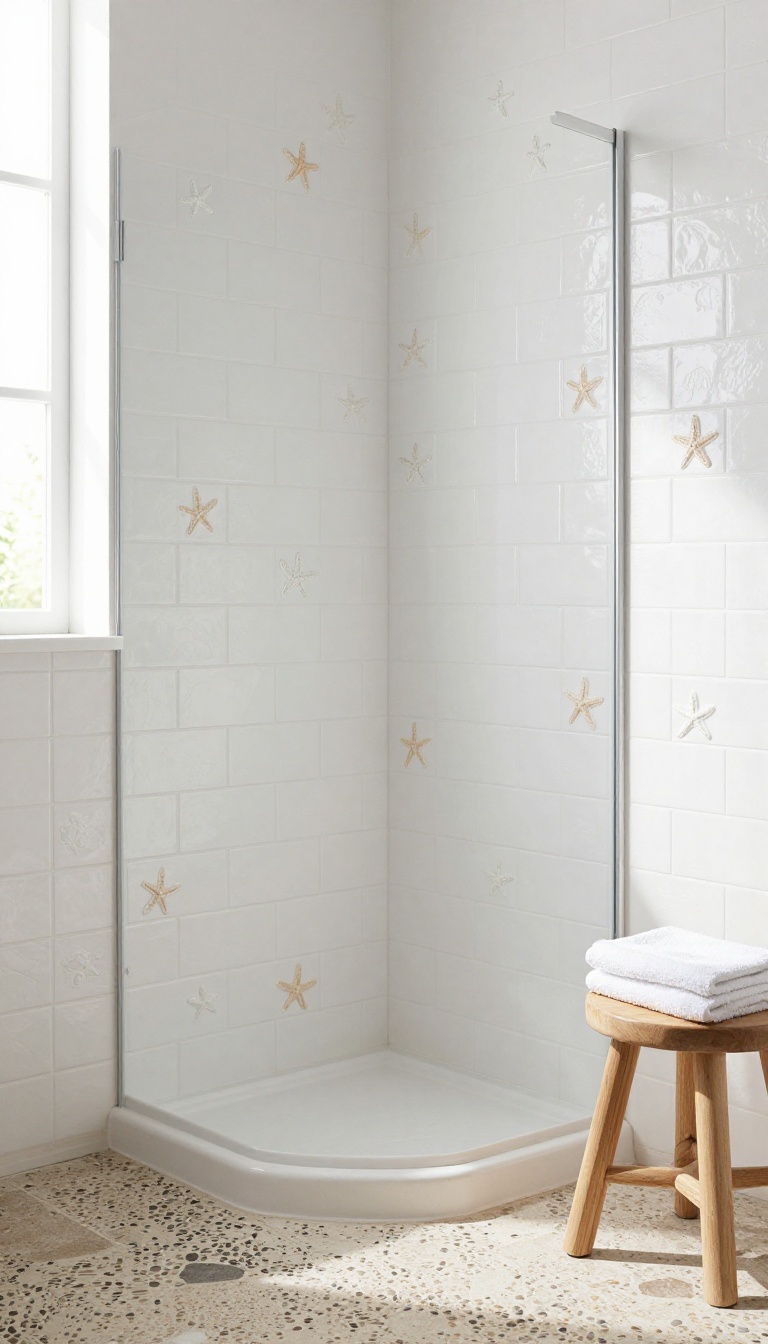
Sometimes you want your shower to feel like a direct nod to the ocean, and shell and starfish motifs deliver that charm without trying too hard. These tiles come in a range of styles—from subtle embossed patterns to vivid, hand-painted designs—so you can dial the whimsy up or down. They work beautifully as a full wall or as a sprinkle of accent pieces among plain tiles.
Shell and starfish tiles are a playful way to bring coastal character into your shower. The key is to balance them so they don’t feel kitschy. Use them as a border, a niche feature, or a random scatter on a neutral background.
For a more subtle look, choose tiles with a low-relief texture in soft whites and sandy beiges. If you want a bolder statement, opt for glossy ceramic with bright turquoise or coral accents.
Pick Your Motif Style
Decide on the overall feel you want. Classic white tiles with a single starfish relief in each corner give a clean, beachy vibe. Hand-painted tiles with detailed shells and starfish in blues and corals add a more artistic, Mediterranean touch.
For a modern twist, look for geometric tiles that incorporate shell shapes into a repeating pattern.
Where To Place Them
You don’t have to cover every inch. A row of shell tiles along the top of the shower wall or a vertical strip behind the faucet can be enough. Another idea: use a few starfish tiles as a random splash among plain subway tiles.
This creates a playful surprise without overwhelming the space.
Mix With Natural Textures
Pair shell and starfish tiles with natural stone or matte ceramic to keep the look grounded. A pebble floor or a wood-look tile on one wall can balance the detailed motifs. Add brushed nickel or matte black fixtures to keep the focus on the tile pattern.
9. Textured Stone Look
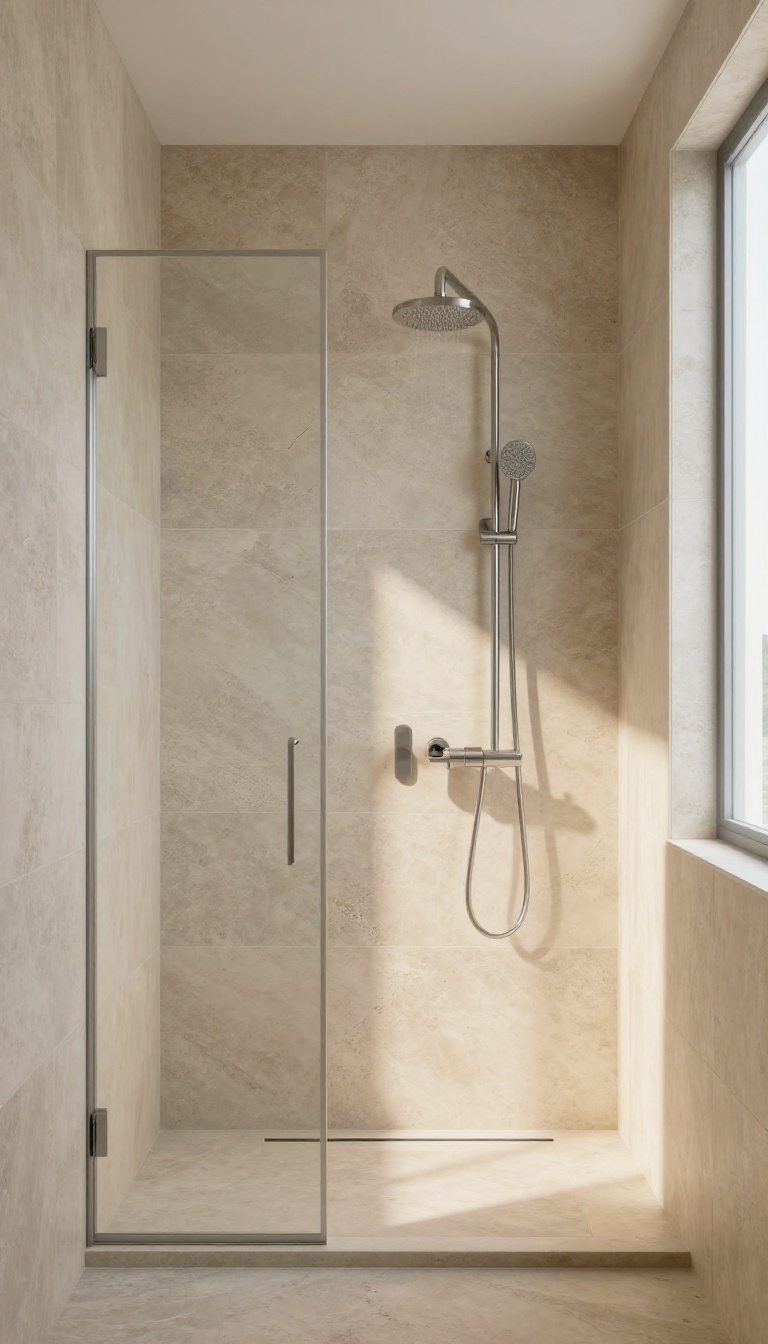
Natural stone brings an earthy, grounded feel that pairs beautifully with coastal airiness. Large-format tiles that mimic travertine, slate, or limestone in soft grays and warm beiges add quiet luxury without the upkeep of real stone. The subtle texture catches light and creates gentle shadows, making the shower feel more dimensional and spa-like.
Textured stone-look tiles offer the perfect balance between organic warmth and modern simplicity. They read as timeless and high-end, yet they’re surprisingly easy to live with. The neutral palette keeps the space calm, while the tactile surface adds just enough interest to prevent the shower from feeling flat.
Why Texture Matters In A Coastal Bath
Coastal style thrives on layers—think driftwood, woven baskets, and nubby linens. In a shower, smooth glossy tiles can feel sterile, but a textured stone finish brings that same collected, natural vibe. It also helps hide water spots and soap scum, which is a practical bonus for busy mornings.
Choosing The Right Shade
Stick with soft grays, warm greiges, or pale sand tones that echo the shoreline. Avoid anything too dark or busy, as it can make a small shower feel cramped. A light, uniform stone look keeps the space open and airy, while the texture does the heavy lifting visually.
Grout And Layout Tips
Use a grout color that closely matches the tile to let the texture shine without visual interruptions. For large-format tiles, a linear or stacked layout emphasizes the stone’s natural veining. If you want a bit more movement, a running bond or offset pattern adds subtle rhythm without feeling chaotic.
10. High-Gloss White with Blue Grout
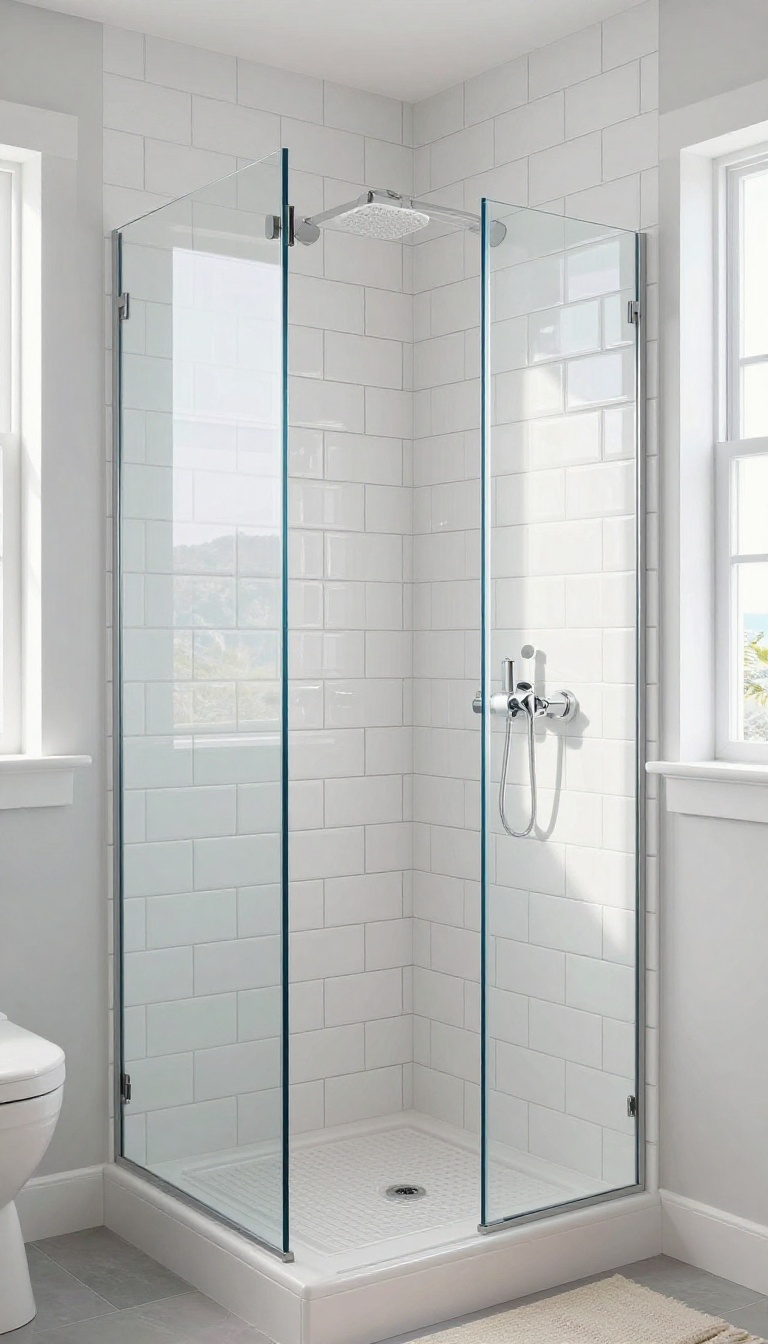
This last idea is a classic that never misses, and it’s perfect for a weekend project. High-gloss white subway tile is timeless, but the real trick is the grout. Swap the usual white or gray for a deep navy or sky blue, and suddenly your shower feels like a crisp, coastal retreat.
The contrast is sharp and clean, with a playful nod to the sea without being kitschy.
The beauty of this idea is its simplicity. You get the bright, airy feel of white tile, but the blue grout adds just enough color to make the walls pop. It’s a look that works in both modern and traditional bathrooms, and it’s surprisingly easy to achieve.
Plus, the high-gloss finish reflects light, making even a small shower feel larger and more open.
Why Blue Grout Works
Blue grout isn’t just a style choice—it’s a smart one. The color hides dirt and soap scum better than white grout, so your shower stays looking fresh longer. And because the grout lines are thin (usually 1/8 inch), the blue reads as a subtle accent rather than an overwhelming statement.
It’s the perfect balance of playful and polished.
Choosing The Right Shade Of Blue
Not all blues are created equal. For a more traditional coastal feel, go with a navy or deep indigo—it adds depth and a touch of sophistication. If you want something lighter and more airy, a sky blue or pastel blue keeps things breezy.
Test a few shades on a sample board before you commit, because the grout color will look different once it’s surrounded by white tile.
Diy Tips For A Flawless Finish
If you’re tackling this as a DIY project, take your time with the grout application. Use a grout float to press it firmly into the joints, then wipe away the excess with a damp sponge in a circular motion. Work in small sections so the grout doesn’t dry too quickly.
And don’t forget to seal the grout once it’s fully cured—it’ll protect the color and make cleaning easier.
FAQ
What is the best tile for a coastal shower floor?
Pebble tiles or textured stone-look tiles are great for coastal shower floors because they offer natural traction and a beachy feel. Avoid glossy tiles that can be slippery when wet.
Can I mix different coastal tile styles?
Yes, mixing styles can create a unique look. For example, pair a classic white subway tile with a blue glass mosaic accent. Just keep a consistent color palette to maintain cohesion.
How do I choose the right grout color for coastal tiles?
For a coastal look, consider white, light gray, or a soft blue grout. White grout keeps things bright, while blue grout adds a subtle pop of color. Dark grout can define the tile pattern but may feel less airy.
Are wood-look tiles safe for shower walls?
Yes, wood-look porcelain tiles are safe for shower walls as they are waterproof and durable. They are also slip-resistant, making them a good choice for floors as well.
What is the easiest coastal tile idea to DIY?
Using white subway tile with blue grout is one of the easiest DIY projects. It's straightforward to install and the blue grout adds a coastal touch without much extra effort.
Conclusion
Upgrading your shower with coastal tile doesn't have to be a heavy lift. Even one wall of soft blue or sandy neutral can bring that breezy, resort-like feel right into your daily routine. Choose the idea that fits your space and budget, then let the texture and color do the rest.
Start small if you're unsure, and build from there. The best part is how these tiles make the bathroom feel cooler and more open, even on the hottest days. Pick a favorite, grab a sample, and enjoy the refresh.