15 Small Cozy Living Room Decor Ideas for Snug Corners
A small living room with an awkward corner can feel more like wasted space than a place to relax. The problem usually isn't the square footage, it's how the room is arranged and lit. A few targeted moves can turn that dead zone into the coziest spot in your home.
You don't need to knock down walls or buy a whole new furniture set. Layering light, choosing the right shapes, and using vertical space do most of the work. Each idea below is simple, affordable, and renter-friendly.
Start with one change or stack several for a bigger shift. The goal is a room that hugs you back instead of feeling cramped and cold.
1. Layer Lighting with a Corner Floor Lamp
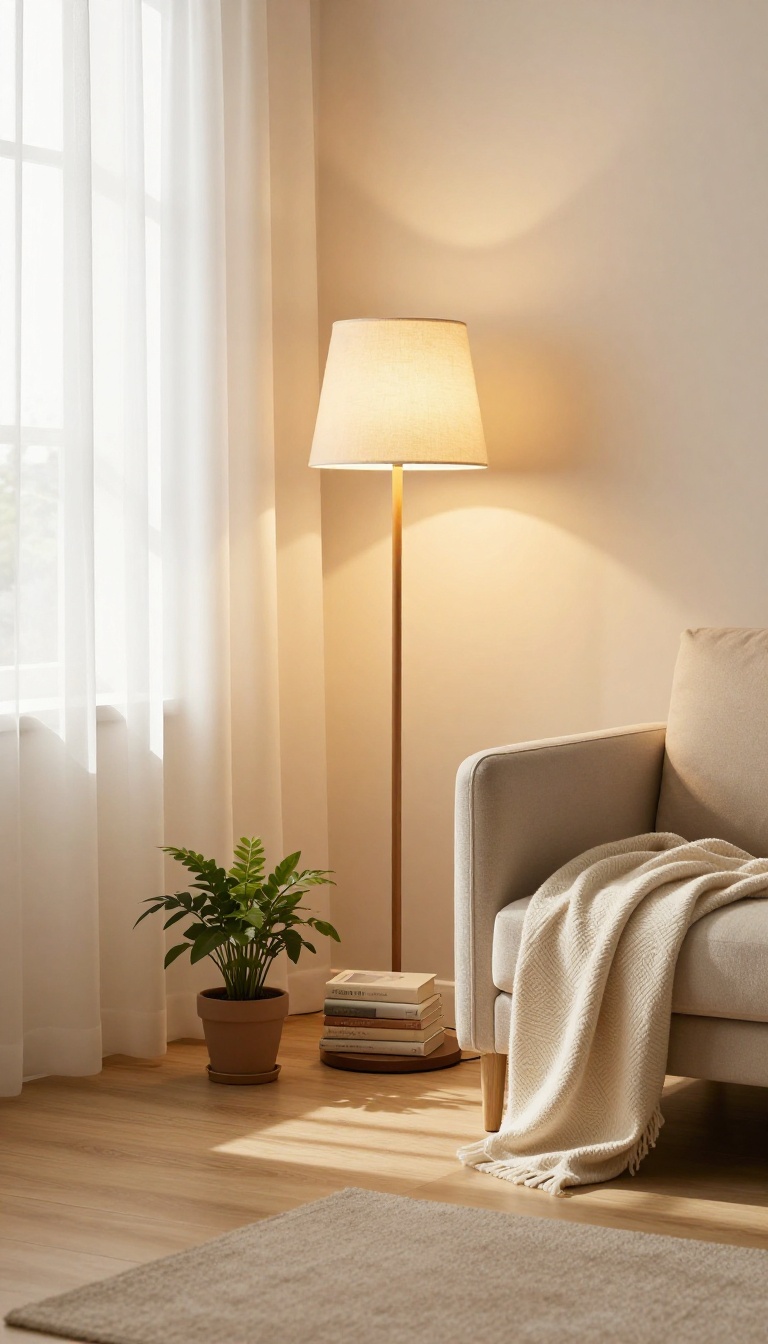
Corners go dark fast, and dark corners make a small living room feel smaller. A slim floor lamp tucked into that shadowy spot fixes the problem without stealing an inch of table or shelf space. It also gives you a reason to actually use the corner instead of ignoring it.
The real trick is layering. Overhead light alone flattens a room, but a warm pool of light at floor level adds depth and makes the space feel intentional. Pair the lamp with a dimmable bulb and you get two rooms in one: bright enough to read by during the day, soft enough to wind down at night.
## Pick a Lamp That Fits the Gap Measure the corner before you shop. Slim bases and narrow shades slip into tight spots where a bulky lamp won't fit. Look for a footprint under 12 inches so the lamp feels like part of the wall, not an obstacle.
A height around 58 to 62 inches works for most seating. The shade should sit just below eye level when you're seated so the light lands on your lap or a book, not in your face. ## Choose the Right Light Temperature Warm white bulbs in the 2700K range give that cozy amber glow. Cool white bulbs fight the snug mood you're after, so skip anything labeled daylight for this corner.
A dimmable LED bulb costs a few dollars more and changes everything. Turn it up for tasks, drop it low for evenings, and the same lamp does double duty. ## Place It to Flatter the Room Angle the shade toward the wall behind it. Bouncing light off the wall softens the glow and makes the corner feel deeper than it is.
Add a small plant or a stack of books at the base if the lamp still looks lonely. Just keep the base clear enough that the light reads as the star of that corner.
Pick A Lamp That Fits The Gap
Measure the corner before you shop. Slim bases and narrow shades slip into tight spots where a bulky lamp won't fit. Look for a footprint under 12 inches so the lamp feels like part of the wall, not an obstacle.
A height around 58 to 62 inches works for most seating. The shade should sit just below eye level when you're seated so the light lands on your lap or a book, not in your face.
Choose The Right Light Temperature
Warm white bulbs in the 2700K range give that cozy amber glow. Cool white bulbs fight the snug mood you're after, so skip anything labeled daylight for this corner. A dimmable LED bulb costs a few dollars more and changes everything.
Turn it up for tasks, drop it low for evenings, and the same lamp does double duty.
Place It To Flatter The Room
Angle the shade toward the wall behind it. Bouncing light off the wall softens the glow and makes the corner feel deeper than it is. Add a small plant or a stack of books at the base if the lamp still looks lonely.
Just keep the base clear enough that the light reads as the star of that corner.
2. Float a Narrow Console Behind the Sofa
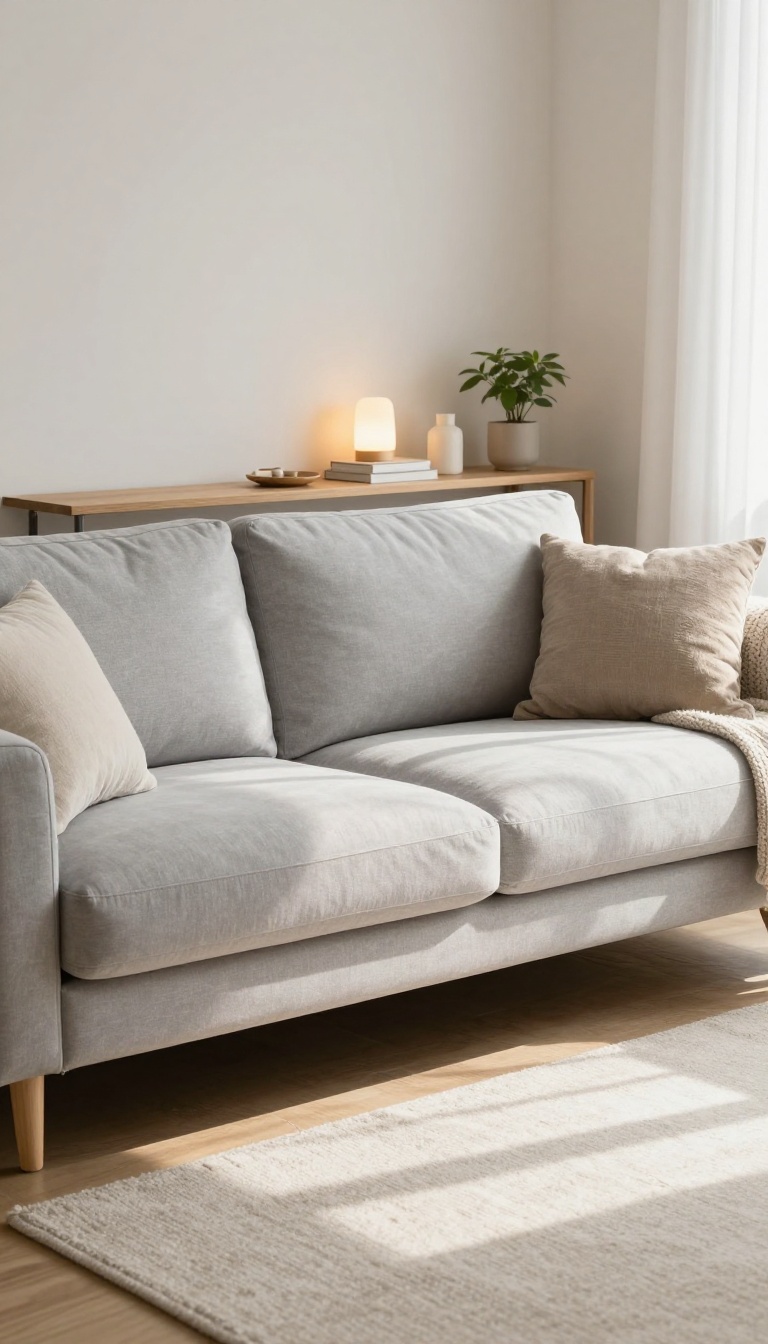
Pushing your sofa against the wall is the default move in a small room, but it often creates a dead zone behind it. Floating the sofa a few inches forward lets you slide a narrow console table into that gap. The console adds storage and a surface for lamps or books without stealing floor space you actually walk on.
This setup also softens the room's layout. Instead of one big block of furniture, you get a layered look that feels intentional. And because the console is shallow, usually 10 to 14 inches deep, it doesn't block traffic or make the room feel tighter.
A floating sofa with a console behind it works in almost any small living room, even rentals. You just need a few inches of clearance and a table that's slim enough to disappear visually. The payoff is a spot for everyday items and a cozier, more defined seating area.
Pick The Right Console Depth
Measure the gap between your sofa back and the wall. Most sofas need 4 to 6 inches of breathing room, so a console that's 10 to 12 inches deep fits comfortably. Anything deeper starts to feel like a wall itself.
Look for open frames or thin legs. They let light pass through, which keeps the room feeling airy. A solid, chunky console will visually chop the space in half.
Use It For Light And Layers
A pair of small table lamps on the console adds warm, eye-level light exactly where you need it. That glow bounces off the wall and makes the whole corner feel softer at night. Stack a few books or a small tray for remotes and coasters.
Keep it light. The console is a supporting player, not the star, so a couple of well-chosen pieces are plenty.
Keep Cords And Clutter Hidden
Cords are the quickest way to ruin a clean floating setup. Use a slim cable raceway or a fabric cord cover along the baseboard. Or choose a console with a built-in shelf or drawer to tuck small items out of sight.
If you rent, adhesive cord clips work fine and come off without damage. A little planning here keeps the space looking tidy instead of improvised.
Make It Work In Rentals
You don't need to drill into the wall. A freestanding console stays put on its own, and you can anchor it with rubber furniture pads if you're worried about sliding. If your sofa has a low back, add a narrow behind-the-sofa shelf that hooks over the frame.
It's a renter-friendly alternative that gives you the same layered effect without a full table.
3. Choose a Round Coffee Table to Soften Edges
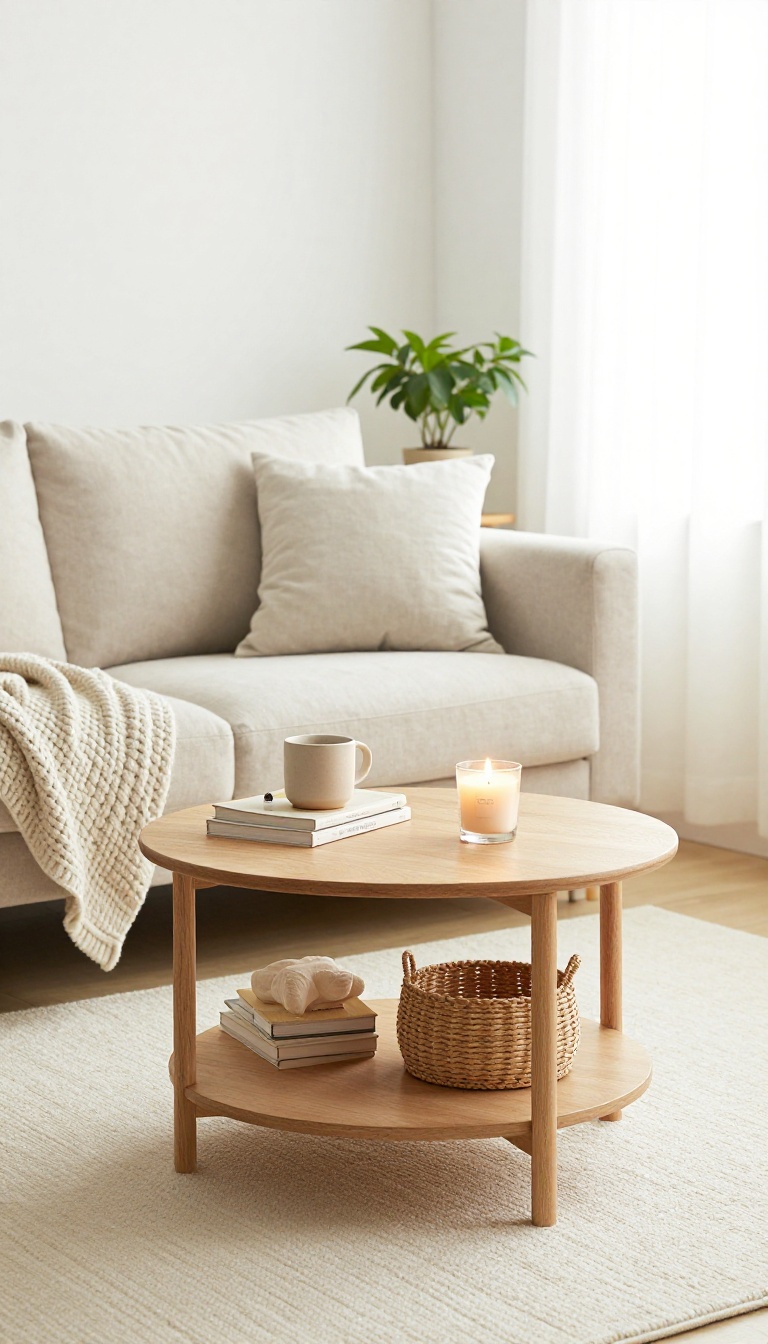
Square and rectangular coffee tables add hard lines to a small room. Those corners create visual friction, making the space feel more cramped than it actually is. A round table removes that friction instantly.
It also lets you slide past without banging your shin, which matters when every inch counts.
Round coffee tables do more than look pretty. They change how you move through the room. With no sharp corners, you can walk around them without turning sideways.
That small shift makes a tight layout feel more open. And because circles have no starting or ending point, they blend into the background instead of dominating the floor plan. A lower shelf adds hidden storage for remotes, magazines, or a throw blanket.
That keeps the top surface clear for a candle, a mug, or your feet after a long day.
Why Round Works In Tight Spots
A round table has a smaller footprint than a square one of the same width. You gain inches on every side. Those inches add up to easier traffic flow and less bruised furniture.
In a small living room, that's a real win.
Look For A Lower Shelf
A shelf underneath doubles your usable space without adding bulk. Stack books, a basket, or a small plant there. The top stays open for daily use.
Just don't overload it—keep the shelf tidy so the table still feels light.
Pick The Right Size And Material
Measure your seating area first. A table around 30 to 36 inches across works for most small sofas. Glass or light wood keeps things airy.
Dark wood or metal adds coziness but can feel heavy, so balance it with a lighter rug.
4. Use an Ottoman as Coffee Table and Extra Seat
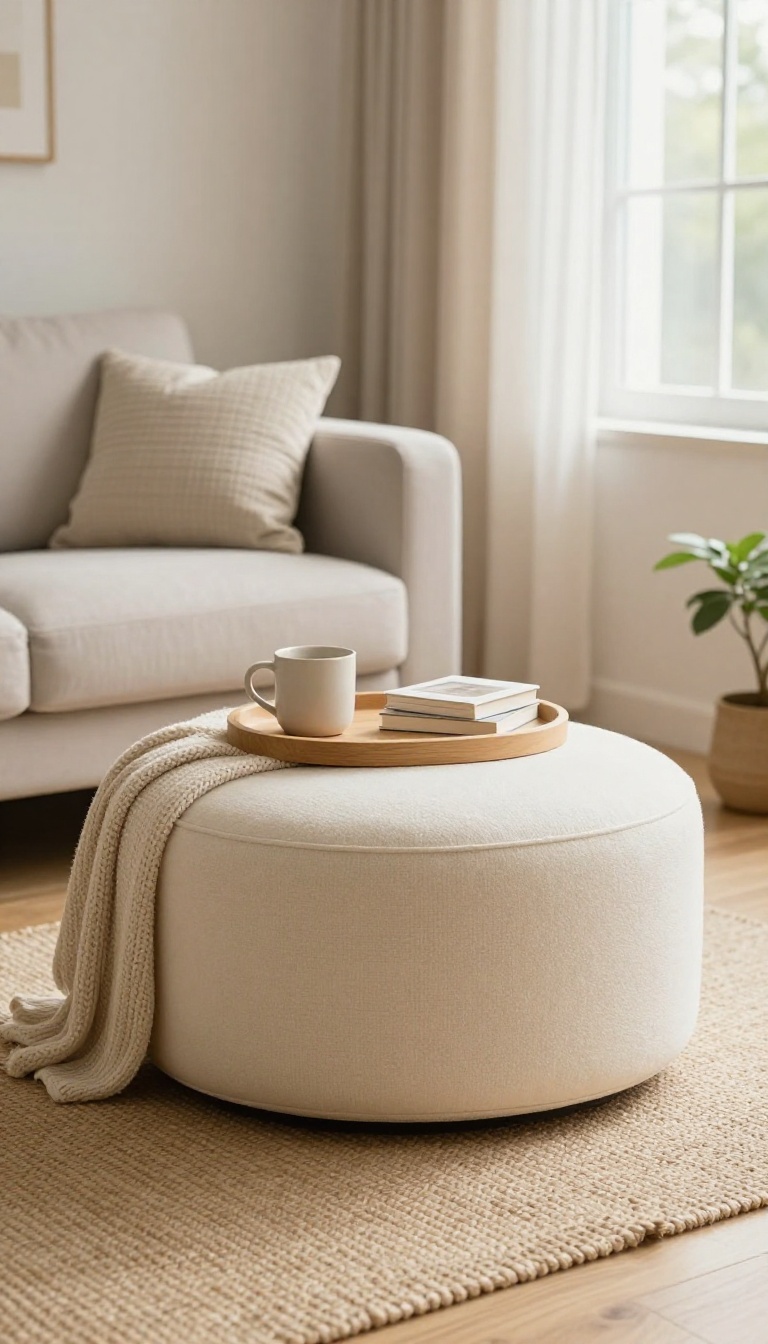
A storage ottoman pulls triple duty in a small living room: it's a table for your coffee, a footrest for movie night, and a hiding spot for blankets and remotes. When floor space is tight, one piece that does three jobs beats three pieces that each do one. Best of all, you can move it out of the way when you need room to stretch or host a few friends.
The trick is picking an ottoman that feels intentional, not like a leftover from your old apartment. Look for a size that fits your seating area without blocking walkways, and a material that can handle a tray, a book, and the occasional pair of feet. With the right pick, your ottoman becomes the hardest-working piece in the room.
Pick The Right Size And Shape
Measure the space between your sofa and the nearest wall or chair. You want at least 14 to 18 inches of walking room on all sides. A round or oval ottoman softens tight corners, while a rectangular one lines up neatly with a sofa.
If your room is really small, go with a single large ottoman instead of two small ones—it reads as a coffee table and keeps the floor clearer.
Make It Work As A Table
An upholstered top isn't flat enough for drinks on its own. Add a sturdy tray with a lip, and suddenly you have a stable surface for mugs, snacks, and the TV remote. Choose a tray that matches your room's metal or wood tones so it looks like part of the design, not an afterthought.
When you need the table space gone, just lift the tray and set it aside.
Use The Hidden Storage
The real magic is inside. A lift-top or removable-lid ottoman swallows throw blankets, extra pillows, magazines, and charging cables. That means less clutter on shelves and fewer baskets taking up floor space.
Keep the items you use most on top, and store seasonal stuff underneath. Bonus: you can clear the top in seconds when guests arrive.
Double It As A Seat
A firm ottoman can handle an extra guest without sagging. Look for one with a sturdy frame and dense foam, and test it before you buy. When you're not using it as a seat, tuck it under a console table or slide it against the wall.
That flexibility is what makes it perfect for a snug corner that changes purpose throughout the day.
5. Hang Curtains High and Wide to Fake Height
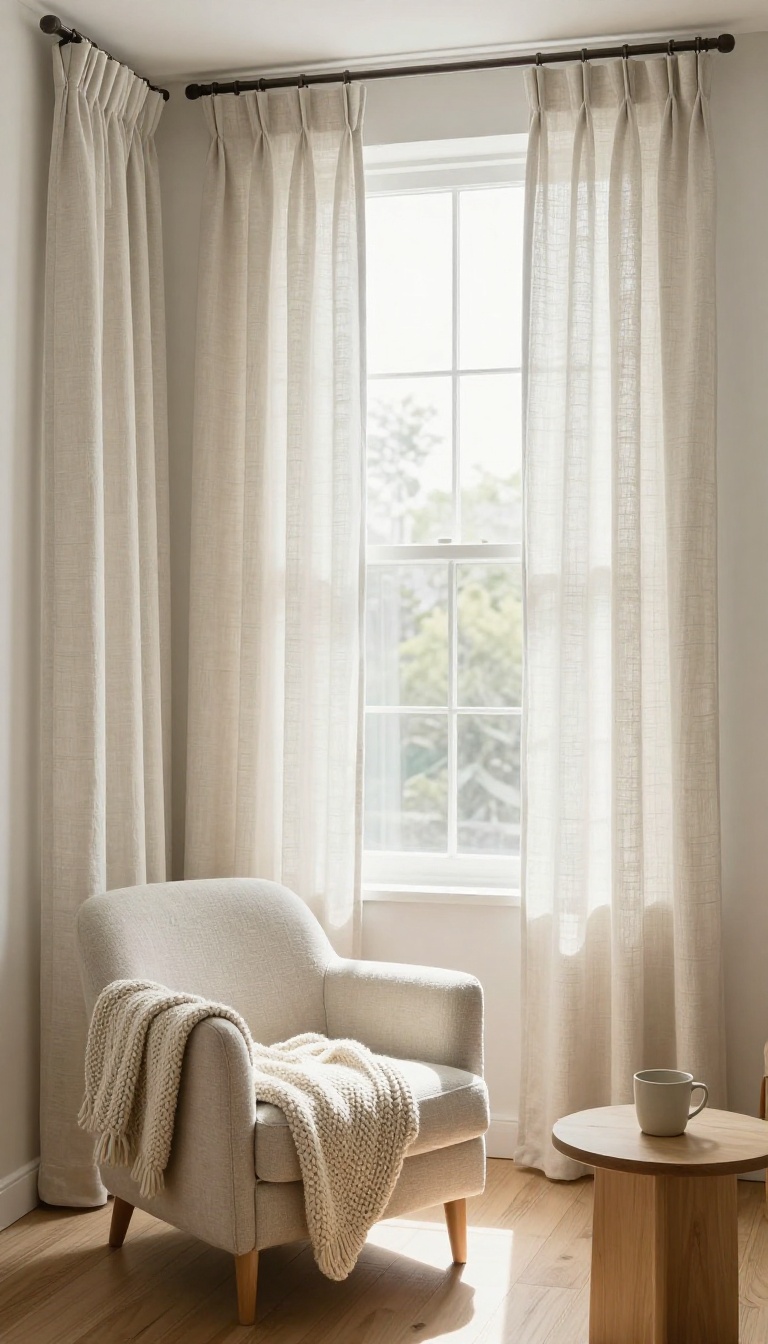
Curtains can either shrink a room or stretch it, and the difference comes down to where you mount the rod. Most people hang them just above the window frame, which chops the wall into sections and makes the ceiling feel lower. Move that rod up near the ceiling and out past the window edges, and suddenly the whole room breathes.
The trick is simple: treat the wall, not the window, as your guide. When curtains start at the ceiling and extend wider than the glass, they create one long vertical line that pulls the eye upward. Your brain reads that line as height, even if the actual ceiling hasn't moved an inch.
This works in any small living room, but it's especially powerful in corners where a window sits close to the ceiling. A high, wide curtain panel can make that snug nook feel intentional and airy instead of cramped.
Pick The Right Rod Length
Measure your window width and add 8 to 12 inches on each side. That extra length lets the curtains hang partly over the wall, which makes the window look bigger and the room feel wider. For height, mount the rod 2 to 4 inches below the ceiling, or right at the ceiling line if you have crown molding.
Choose Curtains That Reach The Floor
Curtains that stop mid-window or puddle on the floor break the vertical illusion. Look for panels that just kiss the floor or hover a half-inch above it. If you're handy with a needle and thread, hemming a longer pair is an easy fix.
Keep The Color And Fabric Light
Heavy, dark curtains can feel like a wall in a small space. Go with light neutrals, soft pastels, or even a sheer layer to let light through. A breezy fabric like linen or cotton keeps things cozy without blocking the sense of openness.
6. Add a Mirror Opposite a Window
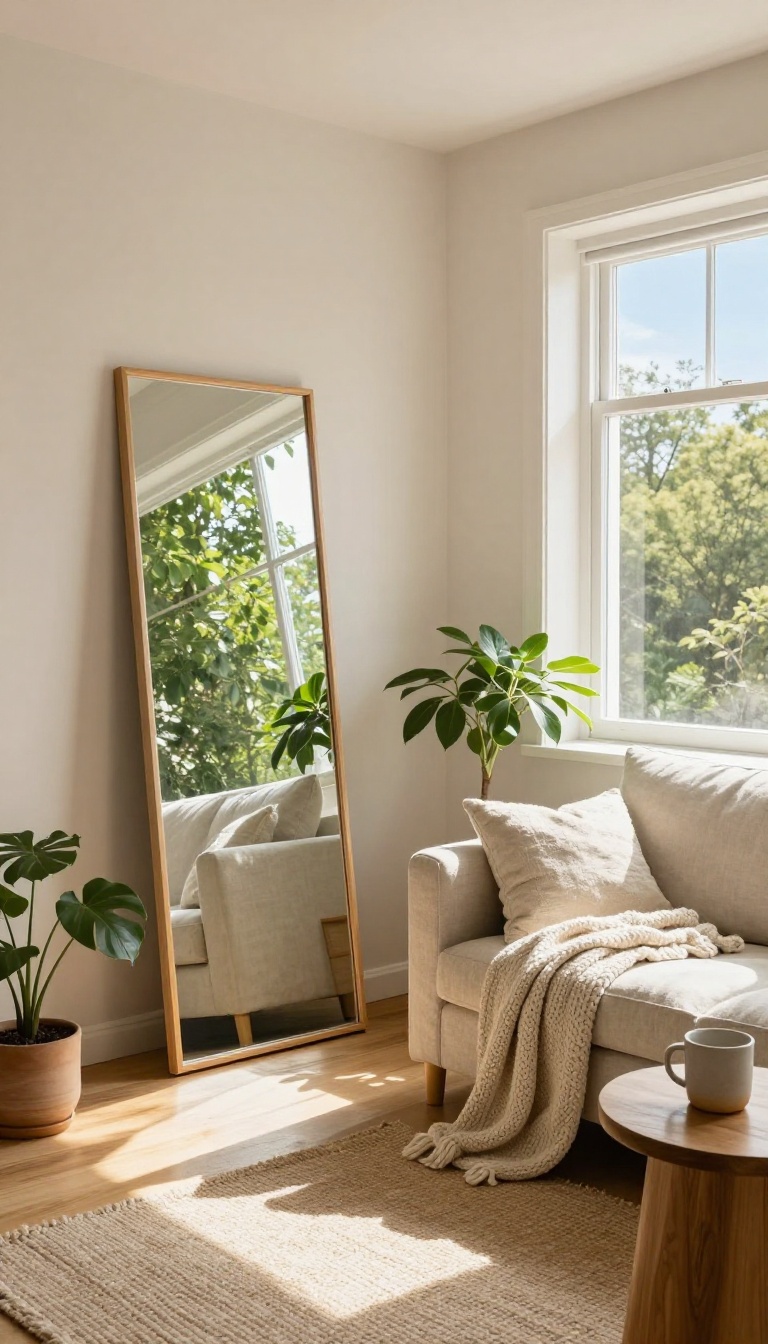
Hang or lean a large mirror directly across from your brightest window and watch the room change. It catches all that natural light and throws it back into the space, making even a tiny corner feel open and airy. The mirror also doubles the view outside, so you get a second look at the trees or sky without adding a single square foot.
A mirror isn't just a practical piece for checking your outfit. In a small living room, it's a light multiplier and a space expander rolled into one. Position it opposite a window and you get the biggest payoff with the least effort.
Why It Works
Natural light is the best tool for making a small room feel bigger. When you place a mirror across from a window, it bounces that light deeper into the room instead of letting it fade into the shadows. The reflection also creates a fake window effect, so your brain reads the room as having more depth than it actually does.
It's a simple trick that costs nothing extra in electricity.
How To Place It
Lean a full-length mirror against the wall opposite your main window if you want a relaxed, casual look. Just make sure it's stable and won't tip over. For a cleaner feel, hang it at eye level so the reflection shows the view outside, not the ceiling.
In a tight corner, a tall, narrow mirror works better than a wide one because it draws the eye upward and makes the walls seem taller.
Style Tips
Pick a frame that matches your room's vibe—thin metal for modern spaces, chunky wood for cozy ones. Avoid placing the mirror where it reflects clutter or a dark hallway; you want it to catch light and pretty views. If you have a lamp near the window, the mirror will bounce that glow at night too, doubling the coziness after sunset.
7. Create a Reading Nook with a Corner Chair
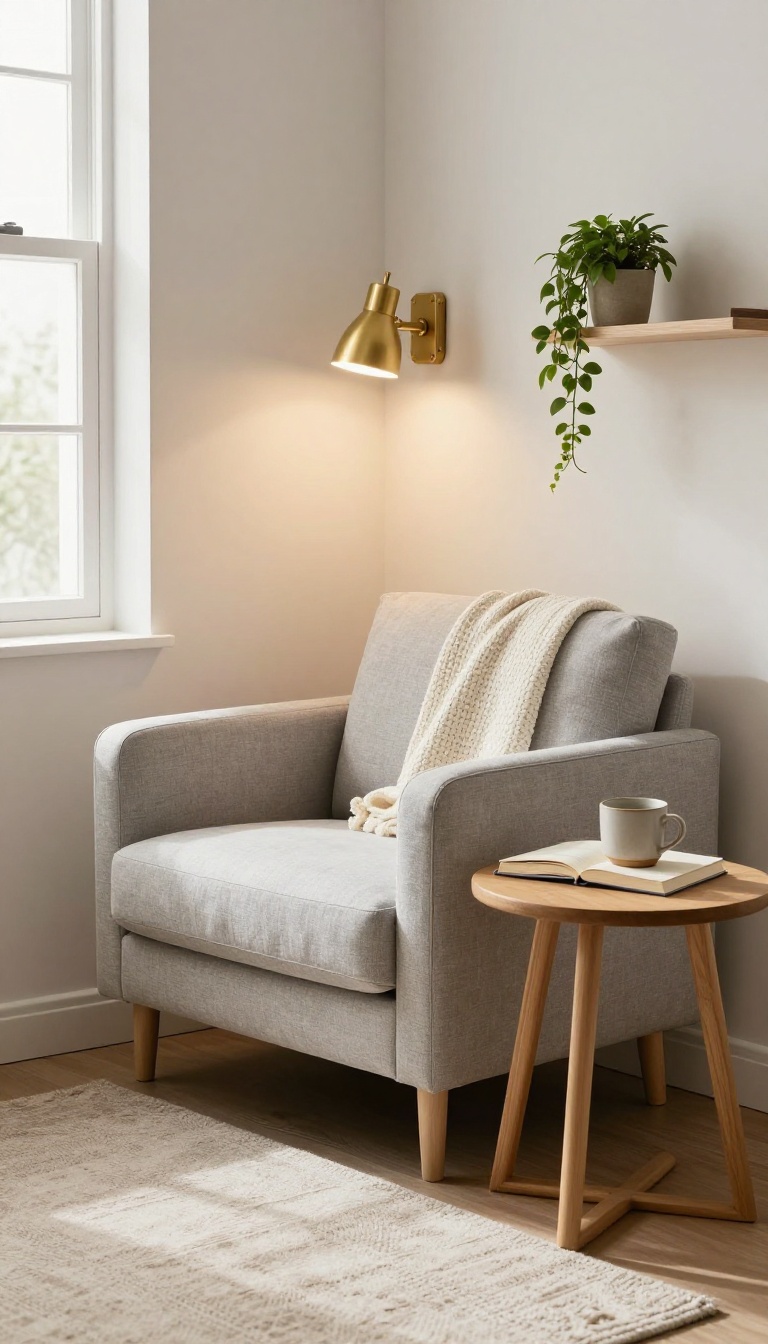
Every living room has that one corner that just sits there. Maybe it collects dust, a dying plant, or a pile of mail you keep meaning to sort. Instead of ignoring it, give it a job.
A small armchair tucked into that spot instantly turns dead space into a destination. It's the kind of change that makes you actually want to sit down with a book instead of scrolling on the couch.
The magic of a corner chair is that it doesn't fight for floor space the way a sofa does. It slots into a spot that's already there, and suddenly the room feels bigger because every zone has a purpose. You're not adding clutter, you're adding a reason to use the corner.
You don't need a huge chair either. A compact accent chair with a small footprint works better than a bulky recliner. Pair it with a slim side table and a wall sconce, and you've got a full setup without crowding the rest of the room.
Pick A Chair That Fits The Corner
Measure the corner before you shop. You want a chair that leaves a few inches of breathing room on each side so it doesn't look wedged in. A swivel chair can be great because you can angle it toward the room or the window without moving it.
If the corner is tight, look for a slipper chair or a petite club chair with a low back. Skip anything with a wide skirt or oversized arms, they eat up visual space even if the seat is small.
Add A Side Table That Earns Its Keep
A tiny round table or a C-shaped table that slides over the chair arm gives you a spot for a mug, a book, and your phone. Keep it small, no bigger than 18 inches across. If you don't have room for a table, a wall-mounted shelf at arm height does the same job.
Just make sure it's sturdy enough to hold a drink without wobbling.
Light It Like A Pro
A wall sconce plugged into the nearest outlet is the easiest win. It frees up table space and casts light right where you need it for reading. If you can't hardwire anything, choose a plug-in sconce with a cord cover, or use a slim floor lamp tucked behind the chair.
Aim for a warm bulb around 2700K so it feels cozy, not clinical. Add a dimmer if you can, so you can go from bright reading light to soft evening glow.
Make It Feel Like A Destination
A throw blanket draped over the chair back and a small lumbar pillow make it look inviting. If the corner has a window, hang a sheer curtain to soften the light. A tiny rug under the chair helps define the nook without taking over the room.
And if you have a pet, this is the perfect spot for their bed too, they'll claim it anyway.
8. Use a Room Divider to Zone a Multi-Use Space
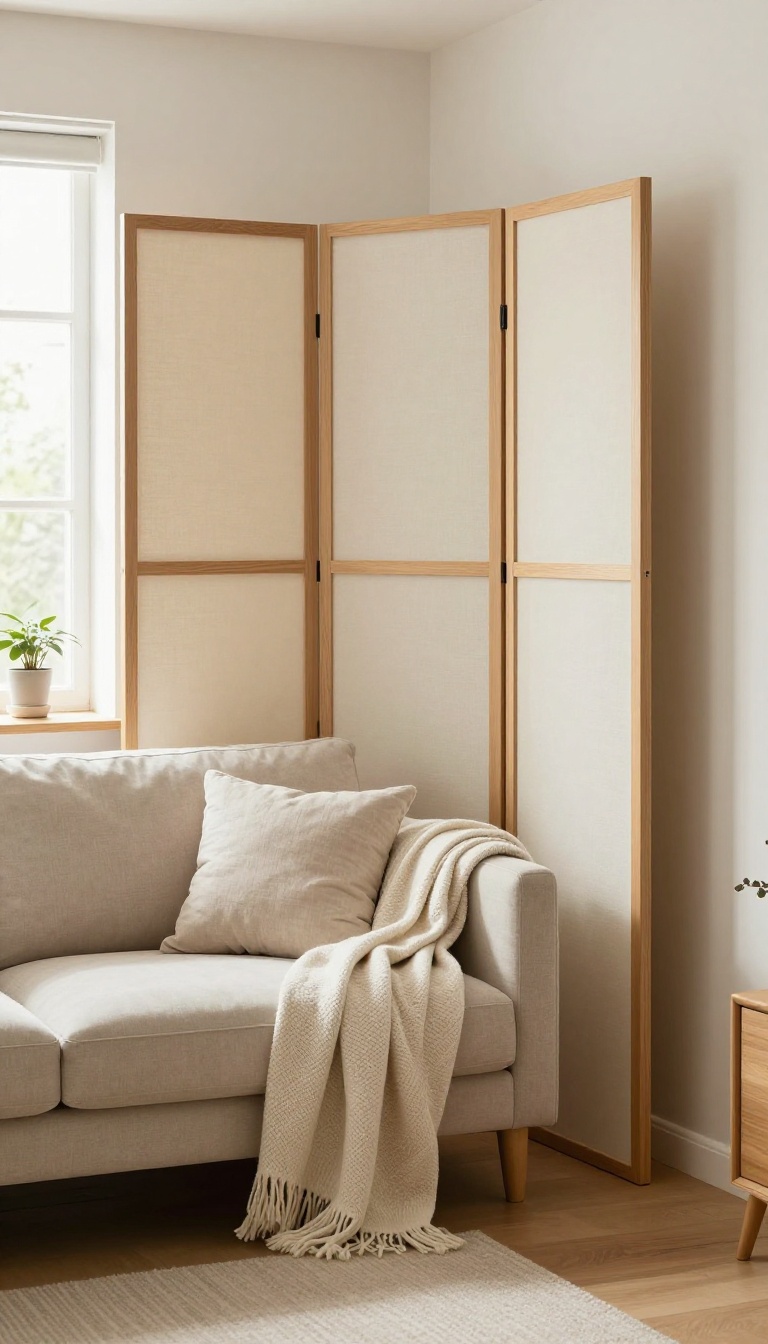
Not every small living room gets to be just a living room. Maybe your desk lives in one corner, or your dining table doubles as a workbench. A room divider lets you carve out separate zones without building a single wall.
The trick is picking a divider that adds coziness instead of clutter. A folding screen or an open shelving unit can define the living area while still letting light and air move through. That way, your home office doesn't stare you down while you're trying to watch a movie.
You don't need a permanent remodel. Just a smart piece that tells your brain where one space ends and the next begins.
A room divider works because it gives your eye a place to rest. In a small living room, everything bleeds together—the couch, the desk, the pile of mail. A divider creates a soft boundary that makes each zone feel intentional.
And when you're done working, you can fold it up or slide it aside. That flexibility is what keeps a small space from feeling like a cage. Start by measuring the space you want to separate.
You don't need to block the entire opening—just enough to signal a change. A three-panel screen often does the job. If you need storage too, an open shelving unit can hold books and plants while dividing the room.
Just keep the shelves styled lightly so it doesn't feel like a wall. Placement matters more than the divider itself. Angle it slightly instead of running it parallel to a wall.
That small turn makes the space feel larger and more dynamic. It also lets you peek through to the other side, which keeps things open and airy.
Pick The Right Divider For Your Space
Folding screens are the classic choice. They're lightweight, easy to move, and come in dozens of styles. Look for one with a solid lower half and a slatted or sheer upper half.
That combo gives you privacy where you need it and light where you want it. Open shelving units are another solid option. A low bookshelf—around waist height—can separate zones without blocking sightlines.
Just avoid tall, dense units in a tiny room. They'll make the ceiling feel lower and the walls feel closer. If you rent, go with a freestanding screen.
No drilling, no damage, and you can take it with you when you move.
Style It To Blend, Not Battle
A divider should feel like part of the room, not a barricade. Choose a material that matches your existing vibe. Wood tones warm up a cool space.
Metal and glass keep things modern and light. Woven rattan or cane adds texture and a cozy, natural feel. Color matters too.
A bold divider can become a focal point, but in a small room, it might overwhelm. Stick with neutral tones or soft pastels if you want it to recede. If you want a pop of personality, go for a muted pattern or a single accent color.
And don't forget the back side. If your divider is visible from both zones, make sure it looks good from every angle. A finished back or a consistent finish keeps things polished.
Make The Zones Work Together
Once the divider is in place, treat each side as its own mini-room. The living side gets the cozy stuff: a throw blanket, a lamp, a small side table. The work side gets task lighting and a clear surface.
That separation helps your brain switch modes. Lighting can reinforce the zones. Use a warm floor lamp on the living side and a brighter desk lamp on the work side.
The contrast signals "relax" versus "focus" without you having to think about it. Finally, keep the path between zones clear. You should be able to walk from one side to the other without sidestepping furniture.
A divider that blocks traffic will make the room feel smaller, not cozier.
9. Go Vertical with Floating Shelves
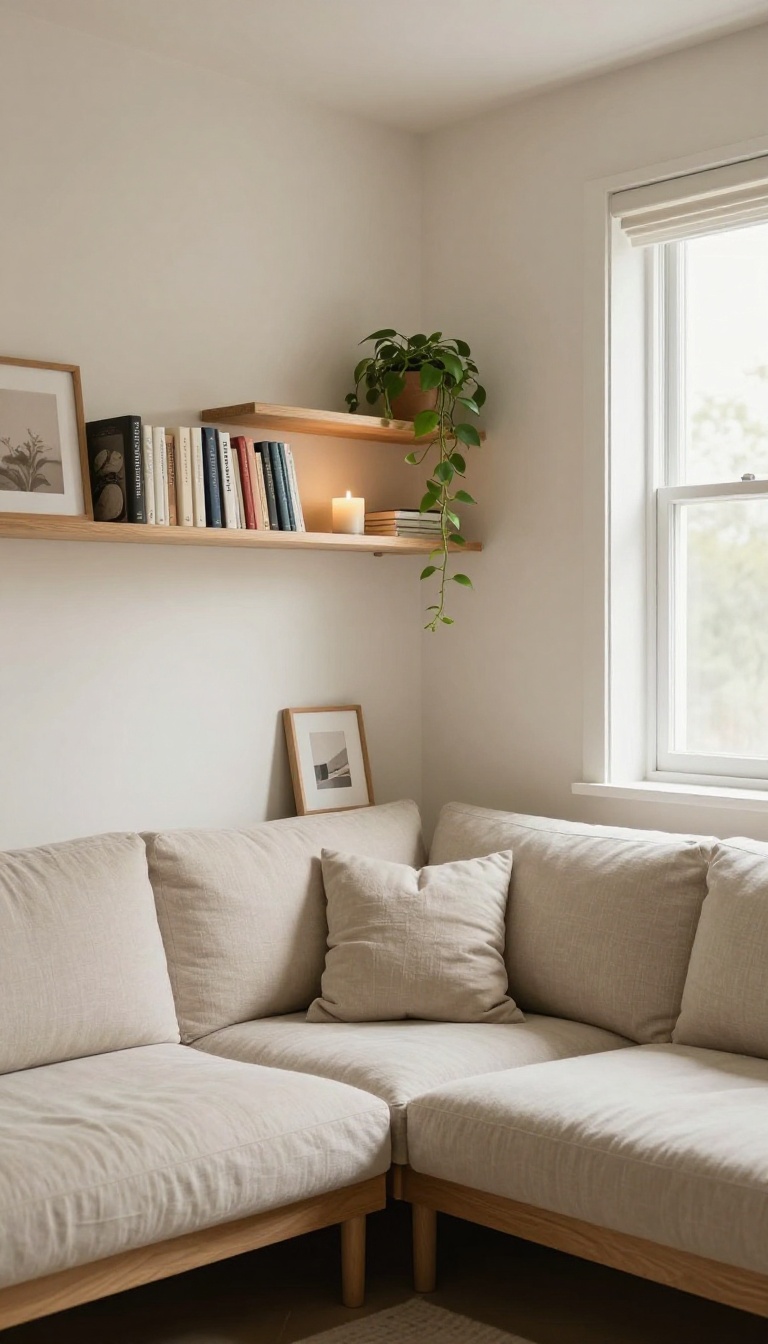
Floor space disappears fast in a small living room, but your walls are basically empty real estate. Floating shelves let you use that space without adding bulky furniture. They also draw the eye upward, which makes the ceiling feel higher and the room feel less packed.
You can install a single long shelf above the sofa or stack two or three in a corner. Either way, you get display space for books, candles, and small plants without stealing an inch from the floor. The result is a cozier room that feels curated instead of cluttered.
Pick The Right Spot
Above the sofa is the classic choice because it fills that blank wall and keeps essentials within reach. A corner works just as well, especially if you have a reading nook or a spot that currently holds nothing but a floor lamp. Avoid hanging shelves where they'll crowd your head when you sit down.
Leave at least 18 to 24 inches of clearance above the sofa back. In a corner, stack them from about knee height up to eye level so they feel balanced.
Style Without The Clutter
Treat each shelf like a tiny display, not a storage bin. Mix a few books with one or two decorative objects, and leave some breathing room between items. Group things in odd numbers for a natural look.
Lean a small framed print against the wall, add a tiny trailing plant, or set out a candle you actually use. Rotate pieces every few months so the shelves stay interesting instead of becoming visual noise.
Installation Tips For Renters
Renters can use adhesive shelves rated for a few pounds, but keep them light with paperbacks and small decor. If you can drill, anchor into studs whenever possible for a sturdier hold. Floating shelves come in many depths, so measure your items first.
A 4-inch shelf holds books and candles, while a 6-inch shelf gives you room for small plants. Check the weight limit before you load them up.
10. Choose a Loveseat Instead of a Full-Size Sofa
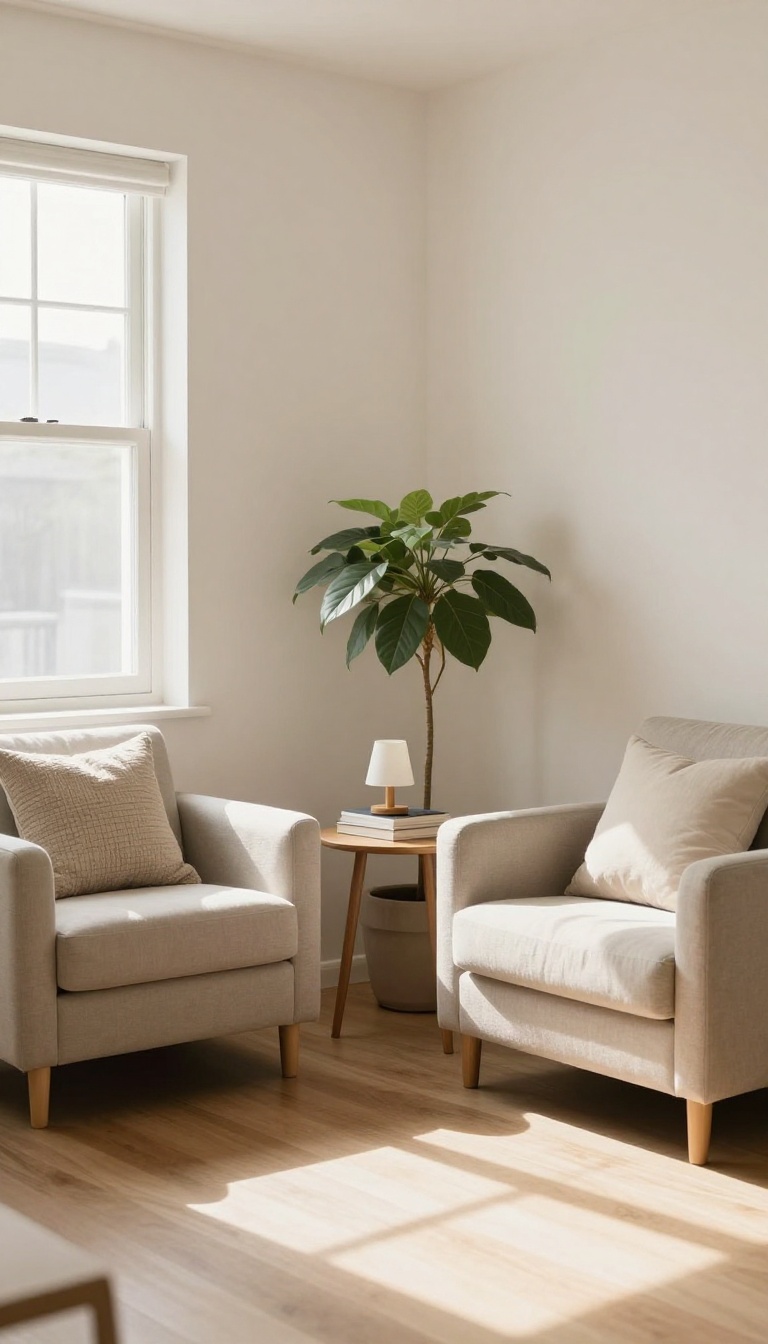
A full-size sofa can swallow a small living room whole. A loveseat seats two comfortably but takes up noticeably less floor space. That extra room lets you add a side table, a plant, or just a little breathing room.
The trade-off is simple: you lose a seat or two, but you gain a room that actually works. Loveseats come in dozens of styles, from mid-century to slipcovered, so you won't feel stuck with one look. And because they're smaller, they're often cheaper and easier to move through tight doorways.
Measure Before You Commit
Grab a tape measure and mark the footprint on your floor with painter's tape. Aim for at least 14 inches between the loveseat and your coffee table so you can walk through. A loveseat that's 50 to 60 inches wide usually fits where a 78-inch sofa won't.
Pick A Style That Fits The Corner
A curved or rounded loveseat softens tight corners better than a boxy one. If your room is narrow, look for a loveseat with a low back or no arms. That keeps sightlines open and makes the space feel bigger.
Arrange For Conversation
Angle the loveseat slightly toward a chair or a second small seat. That creates a natural conversation zone without blocking traffic. Add a slim side table between them for a lamp, a drink, or a book.
11. Add a Gallery Wall to Draw the Eye Upward
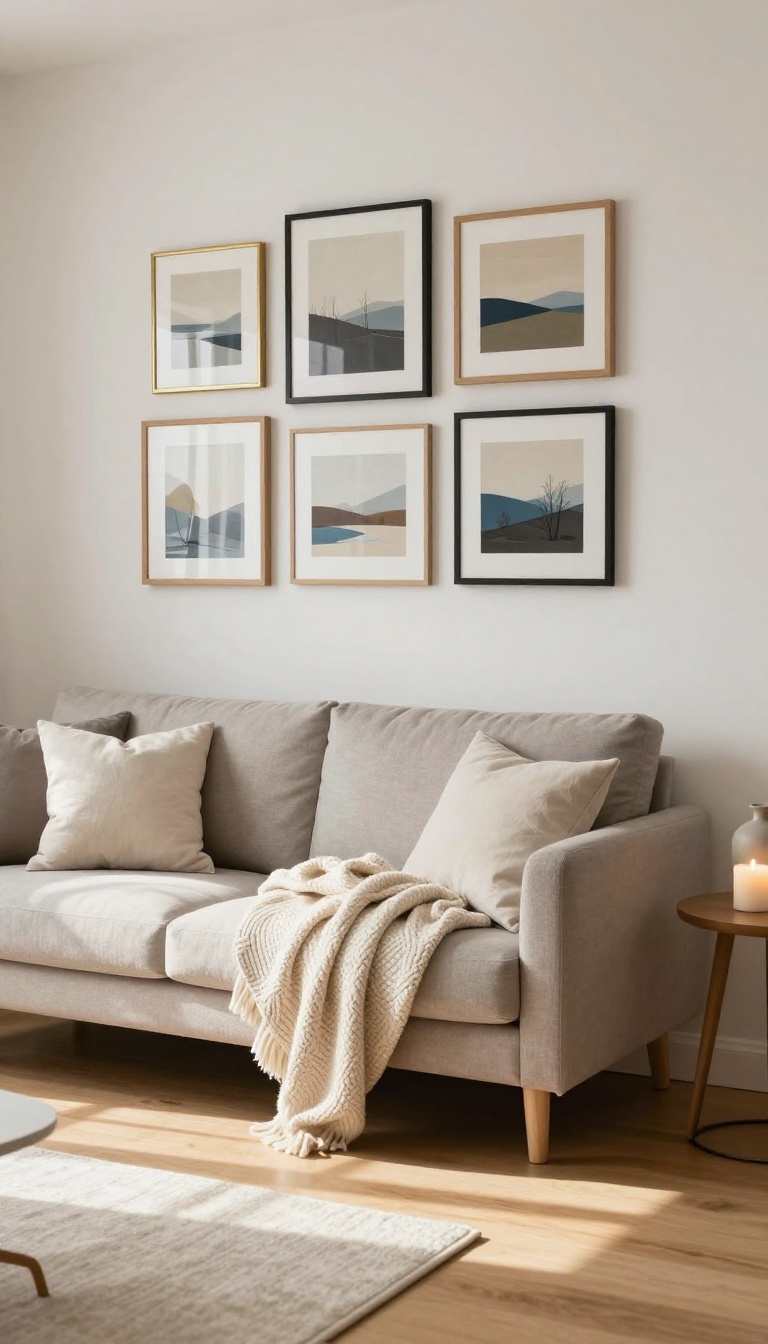
Blank walls above eye level make a small living room feel taller than it is — and a little unfinished. A gallery wall fixes both problems by giving your gaze somewhere interesting to land. You don't need pricey art or a perfect eye.
You just need a plan, a level, and a few hours.
Start by deciding on a shape. A tight grid feels calm and orderly, while an organic cluster feels collected and relaxed. Both work in small rooms, so pick the one that matches your vibe.
Then map it out on the floor or with paper templates before you hammer anything.
Pick A Layout That Fits Your Wall
For a tight grid, use matching frames and equal spacing — usually two to three inches apart. This works best above a sofa or console where you want a clean, anchored look. For an organic cluster, start with the largest piece in the center and build outward with smaller frames.
Keep the overall shape roughly rectangular so it doesn't feel chaotic.
Mix Frames And Art Without Chaos
Stick to two or three frame finishes, like black, brass, and natural wood. Repeat those finishes across the wall so your eye has a rhythm to follow. For art, mix portraits, landscapes, and abstract prints, but tie them together with a common color — say, warm neutrals or muted blues.
Thrifted frames and printable downloads keep the cost low.
Hang It Right The First Time
Use paper templates or painter's tape to test your arrangement on the wall. Step back and check it from your usual seat. Mark nail holes with a pencil, then hang the center piece first and work outward.
Keep the bottom edge about six to eight inches above your furniture so the wall feels connected, not floating.
12. Use a Basket to Corral Blankets and Pillows
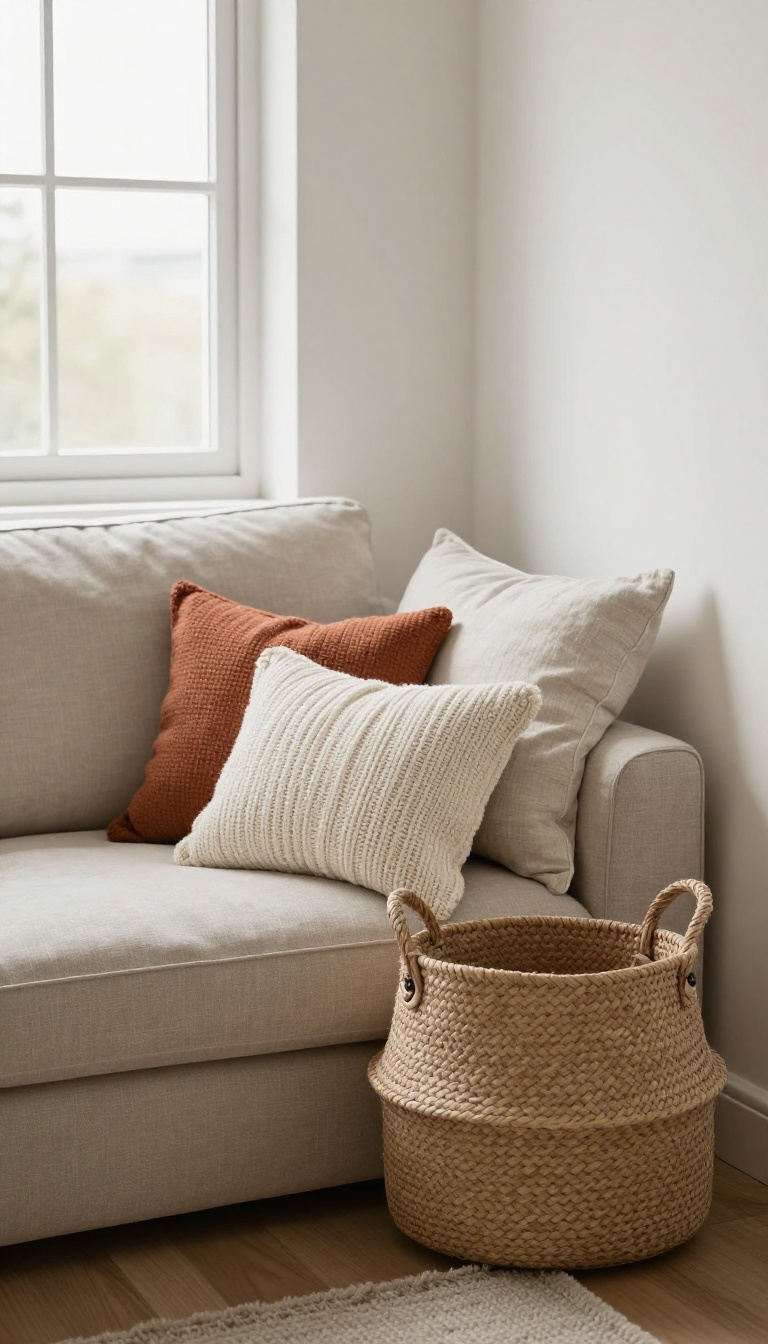
Throw blankets and extra pillows are the unsung heroes of a cozy living room, until they end up in a pile on the floor. A woven basket tucked into the corner gives all that softness a home without hiding it away. It's the kind of fix that looks intentional, not like you gave up on tidying.
The basket does two jobs at once: it keeps clutter contained and adds a natural, textured element that warms up the room. Unlike a closed storage ottoman, a basket keeps your blankets and pillows visible and easy to grab when you want to snuggle in. That accessibility matters in a small space, because you don't want to dig through a bin every time the temperature drops.
Choose a basket that fits the corner's scale. Too small and it overflows; too large and it eats the floor space you're trying to preserve. A good rule is to pick one that's roughly knee-high and wide enough to hold two or three folded throws plus a couple of pillows.
Round or oval shapes soften tight corners better than sharp squares.
Pick The Right Size And Shape
Measure the corner before you buy. You want a basket that leaves a few inches of breathing room on each side so it doesn't look wedged in. A tall, narrow basket works well in tight spots, while a wide, low one suits a corner that's already a bit open.
Round baskets tend to look more relaxed and take up less visual weight than rectangular ones.
Style It Without Overstuffing
Fold throws loosely and stack them upright so you can see the colors and textures. Roll smaller pillows and place them on top, or tuck them along the sides. Leave a little space at the rim so the basket looks curated, not crammed.
If you want a pop of color, let one patterned blanket peek over the edge.
Keep It Functional And Tidy
A basket only works if you actually use it. Train yourself to drop blankets back in when you get up, and give pillows a quick fluff before they go in. Once a week, pull everything out, refold, and rotate items so the basket doesn't become a black hole.
This tiny routine keeps the corner looking styled with almost no effort.
13. Swap Heavy Drapes for Light, Airy Fabrics
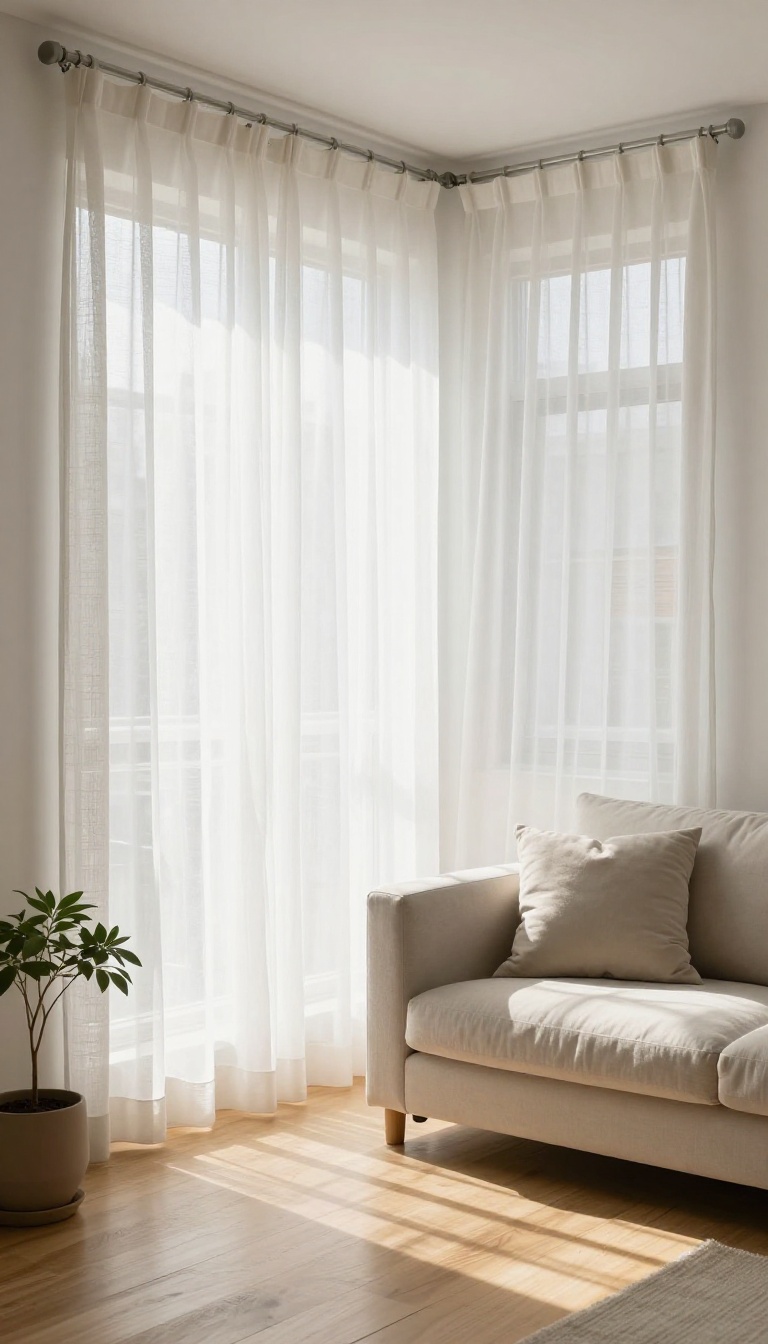
Heavy drapes can make a small living room feel like a cave, especially if they block the main light source. Switching to sheer or lightweight curtains lets daylight flood in, making the space feel larger and more open. You still get privacy and warmth by layering a woven shade underneath.
It's a simple swap that instantly brightens and softens the room.
The right window treatments can transform a snug corner from gloomy to glowing. Sheer fabrics diffuse light beautifully, while a woven shade adds texture and control. Together, they create a flexible setup that works day and night.
Why Sheers Work In Small Spaces
Sheer curtains are made from lightweight, semi-transparent fabrics like voile or linen. They let in natural light while softening the view outside, so your room feels airy instead of exposed. In a small living room, that extra light tricks the eye into seeing more space.
Plus, they come in tons of colors and patterns to match your style.
Layer With A Woven Shade For Privacy
A woven shade—like bamboo, rattan, or jute—adds warmth and texture. Install it close to the glass, then hang sheers on a rod in front. During the day, keep the shade up and let the sheers filter light.
At night, lower the shade for privacy and a cozy, enclosed feeling. This combo gives you the best of both worlds.
Hanging Tips For A Polished Look
Mount your curtain rod high and wide—near the ceiling and extending past the window frame. This draws the eye upward and makes the window appear larger. For sheers, choose a rod with a smooth glide so they open and close easily.
And don't forget to steam or iron them; wrinkles kill the airy vibe.
14. Paint the Ceiling a Soft Color
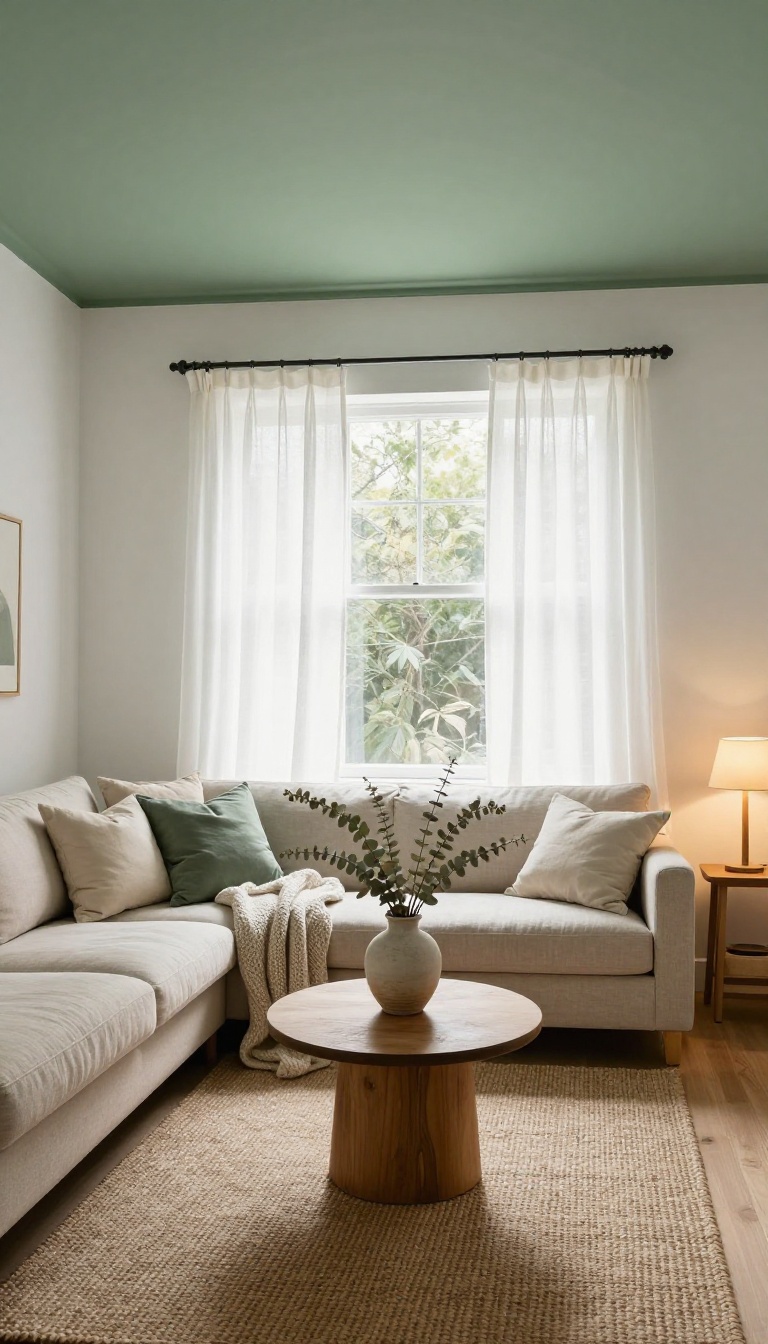
Most people treat the ceiling as a default white surface and never think about it again. In a small living room, though, that blank white plane can make the room feel flat and boxy. Painting it a soft color pulls the walls and ceiling together, so the whole space feels like one warm, enclosed cocoon.
It's one of the cheapest changes you can make, and it takes an afternoon.
The ceiling is the largest uninterrupted surface in the room, and it sets the emotional temperature more than you'd expect. A soft tint drops the visual ceiling height just enough to feel snug without making the room feel like a basement. The trick is choosing a color that already lives in your palette, then letting the ceiling echo it in a lighter, dustier version.
Pick A Shade That Plays Nice With Your Walls
Start with your wall color and imagine it diluted with a spoonful of gray or beige. That muted version is usually the sweet spot for a ceiling. If your walls are warm white, try a pale clay, soft sage, or dusty blush overhead.
Cool gray walls pair well with a whisper of blue-gray or pale lavender above. The goal is a gentle shift in tone, not a contrast. You want people to notice the room feels calmer, not to notice the ceiling itself.
Get The Finish Right
Flat or matte paint is the move here. Shiny finishes bounce light around and highlight every little bump and seam, which is the opposite of cozy. A flat finish absorbs light softly and makes the color read deeper and richer.
It also hides imperfections in older ceilings, which is a nice bonus in a small room where you're looking up more often than you think.
Handle The Edges And Trim
Where the ceiling meets the wall, you have a choice. Crisp white trim keeps things tidy and traditional, but painting the crown molding the same soft color as the ceiling makes the room feel taller and more seamless. In a really tight space, that seamless approach works best.
Tape carefully, use a small angled brush, and cut in slowly. A clean line between ceiling and wall is what makes the whole thing look intentional instead of accidental.
Mind The Light Before You Commit
Ceilings catch light differently than walls, so a color that looks perfect on a swatch can shift once it's overhead. Paint a test patch on a piece of foam board, hold it up against the ceiling, and check it at morning, afternoon, and night. If it turns muddy or gray under your lamps, go a shade warmer.
If it looks too bright and chalky, go a touch deeper. Five minutes of testing saves a whole weekend of repainting.
15. Add a Small Indoor Plant or Tree
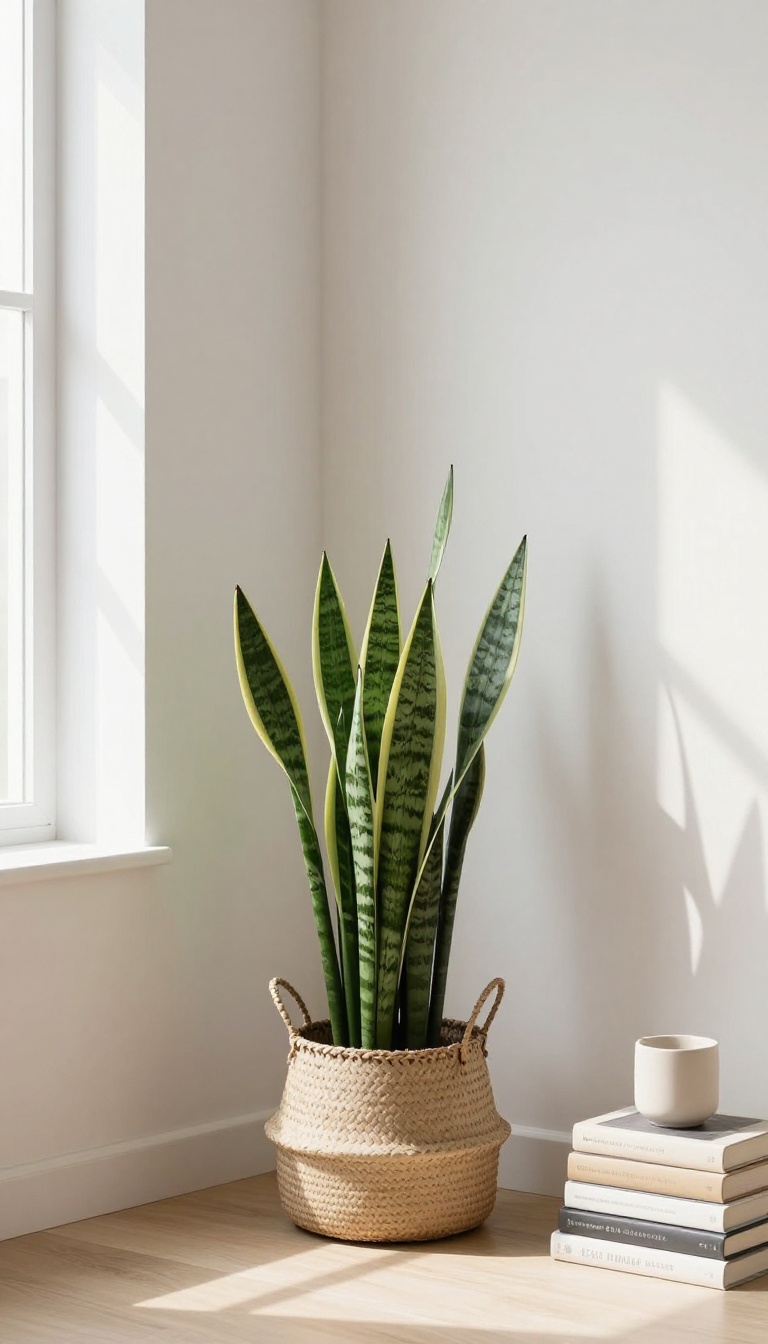
A bare corner reads as empty no matter how nice your furniture is. A single potted plant fills that gap, adds a hit of green, and softens the hard lines where two walls meet. It also makes the room feel alive instead of staged.
You do not need a giant fiddle leaf fig that eats half the floor. A compact plant or small tree does the job in a tight corner, and it gives your eye somewhere soft to land. Pick a variety that tolerates lower light, since corners rarely get direct sun.
Then choose a pot that matches your room's palette so the plant feels intentional, not like an afterthought.
Pick A Plant That Fits The Light
Corners are usually dim, so go with low-light champions like a snake plant, pothos, or a small rubber tree. These handle shade and still look full. If your corner gets a little indirect light, a parlor palm or dracaena works too.
Skip anything that demands bright sun, or you will just watch it struggle.
Choose The Right Pot And Height
A plant that sits too low disappears behind the sofa arm. Aim for something that reaches at least a third of the way up the wall. A simple ceramic or woven basket pot keeps things cozy.
If the floor feels crowded, set a smaller plant on a slim stand to lift it into view.
Style It Without Clutter
One plant is enough for a small corner. Add a single textured element nearby, like a small stack of books or a floor lamp, and stop there. Too many extras turn a calm corner into a catch-all.
Keep the leaves dusted and the pot clean so it always looks cared for.
FAQ
How do I make a small living room feel cozy without making it feel cramped?
Focus on multi-functional pieces and vertical storage. Use warm lighting and soft textures, and keep the floor as clear as possible.
What's the best lighting for a small living room?
Layer your lighting with a mix of ambient, task, and accent lights. Dimmable bulbs and warm white temperatures create a cozy glow.
Can I use a large rug in a small living room?
Yes, a large rug can actually make the room feel bigger by unifying the space. Just make sure it fits the seating area without touching the walls.
How do I choose a coffee table for a tight space?
Go for a round or oval shape with a glass top or open base. These styles take up less visual weight and are easier to move around.
What colors work best for a small cozy living room?
Soft neutrals, warm earth tones, and muted greens or blues create a calm, cozy feel. Avoid stark whites and dark, heavy colors on all walls.
Conclusion
Making a small living room cozy doesn't require a big budget or a major renovation. Small shifts in lighting, layout, and texture can change how the whole room feels. Start with one or two ideas that solve your biggest pain point, like a dark corner or a lack of storage.
As you add pieces, keep an eye on how they work together. The goal is a space that feels warm and lived-in, not packed to the brim. With a little intention, even the tightest corner can become your favorite spot.