11 Polished Rainfall Shower Ideas with Smart, Stylish Appeal
Stepping into a rainfall shower feels like a mini escape, but choosing the right setup can be tricky. You want that gentle, soaking spray without turning your bathroom into a maintenance nightmare. The good news?
Modern rainfall showers are more adaptable than ever, with options that fit any style and budget. Whether you're planning a full remodel or just swapping out a showerhead, the details matter. Finish, size, and extra features like handheld sprayers or thermostatic valves can make or break the experience.
A polished look isn't just about aesthetics—it's about how the shower feels and functions every day. Let's walk through 11 smart, stylish rainfall shower ideas that balance luxury with practicality.
1. Ceiling-Mounted Rainhead for a True Downpour
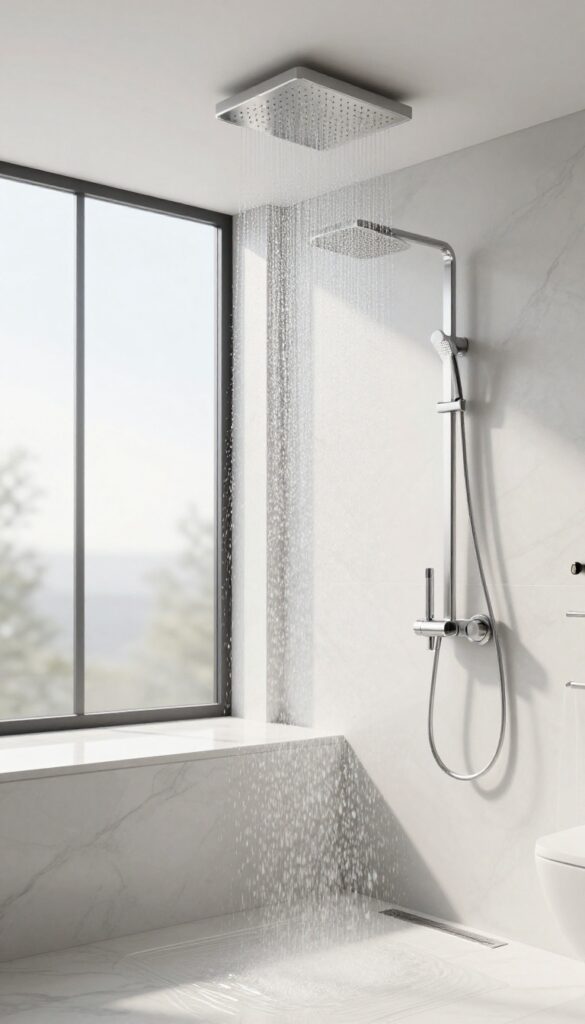
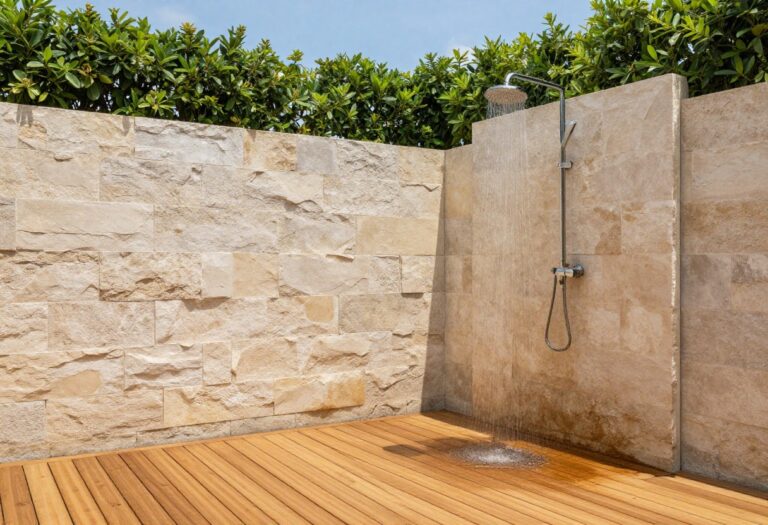
A ceiling-mounted rainhead is the closest you can get to standing under a natural downpour without getting drenched by a storm. The water falls straight down from above, wrapping you in a steady, even spray that feels both refreshing and calming. Beyond the experience, this setup brings a sleek, minimalist look to your bathroom, with the showerhead tucked neatly into the ceiling and only the water visible.
When you mount a rainhead on the ceiling, you instantly elevate the shower experience. The water drops from a greater height, picking up a gentle momentum that mimics real rain. This type of showerhead is perfect for anyone who loves that immersive feeling—like stepping outside into a warm summer shower, but in the comfort of your own home.
Plus, the clean lines and unobtrusive design make your bathroom feel more open and spa-like.
Choosing The Right Size
Size matters more than you might think. A larger rainhead, say 12 to 16 inches in diameter, covers more of your body, so you don't have to shuffle around to get wet. But bigger isn't always better—make sure your water pressure can handle it.
If you have low water pressure, a smaller head might actually give you a more satisfying spray. Also, consider the ceiling height: you want the water to fall at least 6 feet before hitting you, so a higher ceiling works best.
Installation Considerations
Installing a ceiling-mounted rainhead isn't a DIY project for most people. It requires running pipes through the ceiling and possibly reinforcing the area to support the weight of the head. You'll also need to think about insulation and waterproofing to prevent condensation and leaks.
Hiring a professional plumber is usually worth it, especially if you're not comfortable with drywall and plumbing work. The result is a seamless look that feels custom-built.
Water Pressure And Flow
A common concern with rain showers is that they feel weak compared to traditional handhelds. But that's often just a matter of flow rate and pressure. Look for a rainhead with a flow rate of at least 2.
5 gallons per minute (gpm) for a strong downpour. If your home's water pressure is on the lower side, you might need a pressure-boosting pump or a rainhead with built-in flow regulators. Some models even have adjustable nozzles that let you fine-tune the spray intensity.
Matching Your Bathroom Style
The beauty of a ceiling-mounted rainhead is that it blends into almost any bathroom design. For a modern, industrial look, go with a matte black or brushed nickel finish. If you prefer a warmer, more organic feel, consider a bronze or copper tone.
The trim plate that covers the ceiling connection can also be customized—some are flush, others have a slight lip, and you can choose from round or square shapes to match your shower fixtures.
2. Wall-Mounted Rainfall Showerhead with Adjustable Arm
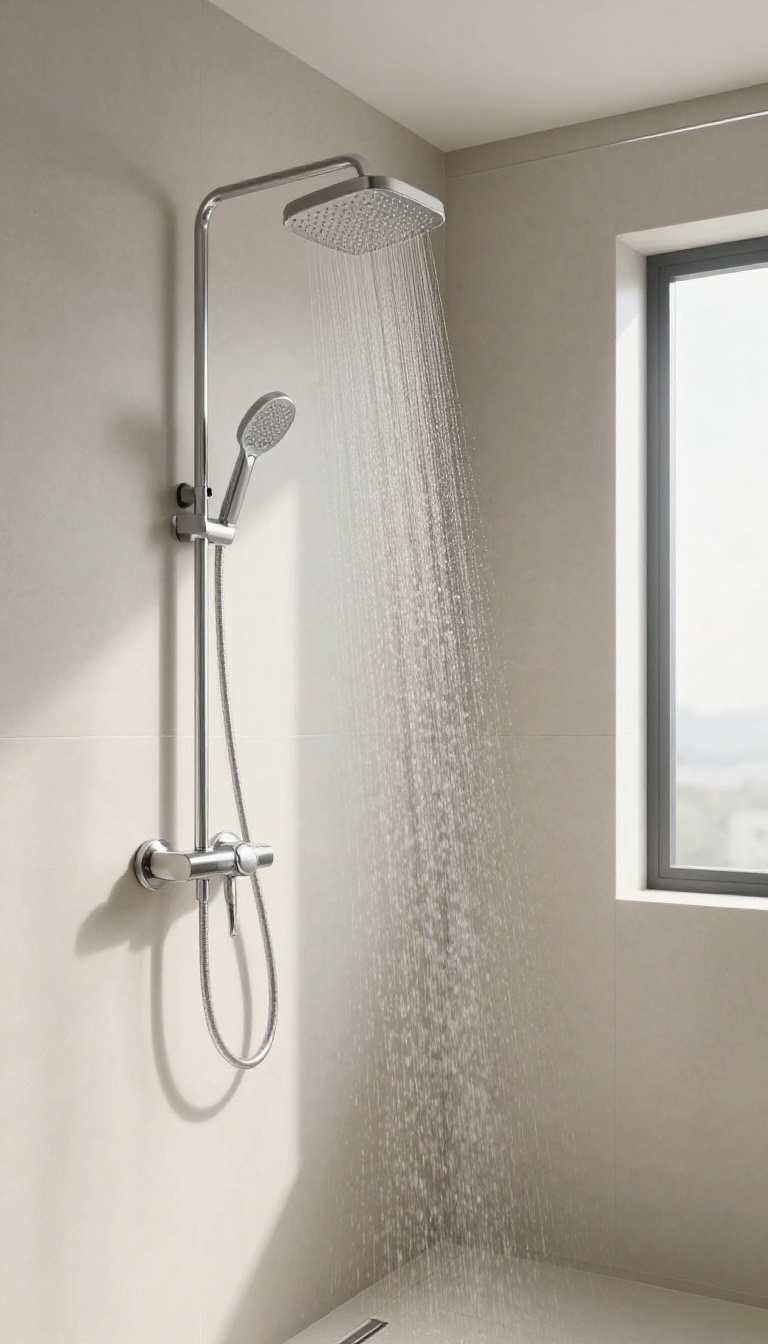
Not everyone wants to cut into the ceiling or deal with the hassle of a fixed overhead fixture. A wall-mounted rainhead with an adjustable arm gives you that luxurious rainfall feel without the commitment. You can tilt the head to aim the water exactly where you need it, which is a game-changer in shared bathrooms.
This setup is all about flexibility. The arm lets you pivot the showerhead up or down, so whether you're tall or short, you can find a comfortable angle. It's also a smart pick for renters or anyone who wants a quick upgrade without a major renovation.
Plus, the wall mount keeps the ceiling free for other fixtures or just a cleaner look.
Why An Adjustable Arm Wins
The biggest perk is customization. You can point the spray directly at your shoulders for a massage-like effect or angle it more overhead for that rainfall sensation. If you share your bathroom, everyone can set it to their preferred position in seconds.
It's a small feature that makes a big difference in daily comfort.
Installation And Compatibility
Most wall-mounted rainheads use a standard 1/2-inch pipe connection, so they're easy to swap with your existing showerhead. The arm usually extends 10 to 16 inches from the wall, giving you plenty of reach. Just make sure your shower arm is properly supported, especially if you choose a larger head, to avoid any sagging over time.
Choosing The Right Size And Finish
Rainheads come in diameters from 6 to 12 inches. A larger head covers more surface area but needs better water pressure. For finishes, brushed nickel and matte black are popular for their modern look and resistance to water spots.
Pick one that matches your other bathroom fixtures for a cohesive, polished feel.
3. Rainfall Shower with Integrated Handheld Sprayer
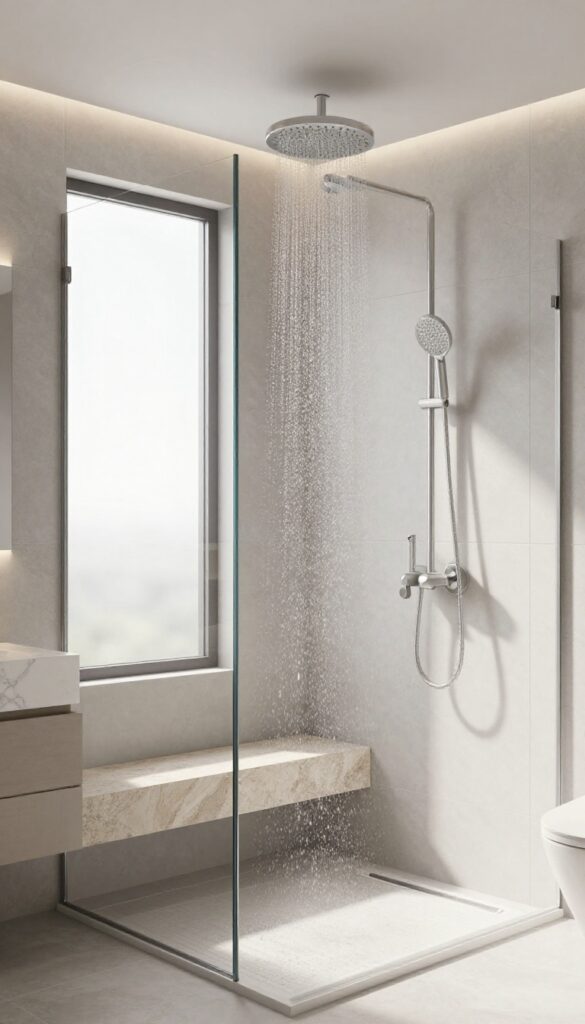
A rainfall showerhead delivers that dreamy, full-coverage soak, but it doesn't have to be a one-trick pony. Adding a handheld sprayer gives you the best of both worlds: the indulgence of a ceiling or wall-mounted rainhead with the flexibility to direct water exactly where you need it. This combo is a game-changer for busy households, pet owners, and anyone who values convenience without sacrificing style.
The integrated handheld sprayer is more than just a backup—it's a multitasking tool that makes your shower smarter and more functional. Whether you're rinsing shampoo out of a toddler's hair, cleaning the shower after a deep scrub, or giving your dog a bath, having a detachable sprayer saves time and reduces mess. Plus, modern designs keep the handheld tucked neatly into the wall or ceiling mount when not in use, so it doesn't disrupt the clean, minimalist look of your rainfall shower.
Why You Need A Handheld Sprayer
The handheld sprayer adds a level of control that a fixed rainfall head simply can't match. It's perfect for targeted rinsing, like washing away conditioner from long hair or spraying down the corners of the shower where grime tends to build up. For families, it makes bath time easier for kids who might be scared of a big overhead spray, and for pet owners, it turns the shower into a convenient washing station.
Even for everyday use, a handheld is handy for quickly rinsing the shower walls after using a cleaning spray.
Design Options That Keep It Sleek
You don't have to sacrifice aesthetics for function. Many rainfall shower systems come with a handheld sprayer that matches the finish and style of the main head, so the whole setup looks cohesive. Some models feature a slide bar that lets you adjust the height of the handheld, while others have a discreet dock that keeps the sprayer flush against the wall.
If you're working with a smaller bathroom, a compact handheld that clips onto the main shower arm is a space-saving option that still delivers the convenience you need.
Installation And Practical Tips
Adding a handheld sprayer to an existing rainfall shower is usually a straightforward upgrade. You'll need a diverter valve that lets you switch between the overhead rainhead and the handheld, or you can opt for a system that runs both simultaneously. If you're installing from scratch, consider placing the handheld on the opposite side of the shower from the rainfall head for maximum coverage.
Also, think about the hose length—longer hoses offer more flexibility, but they can look cluttered if not stored properly. Look for models with a weighted hose or a magnetic dock to keep everything tidy.
4. Thermostatic Valve for Consistent Water Temperature
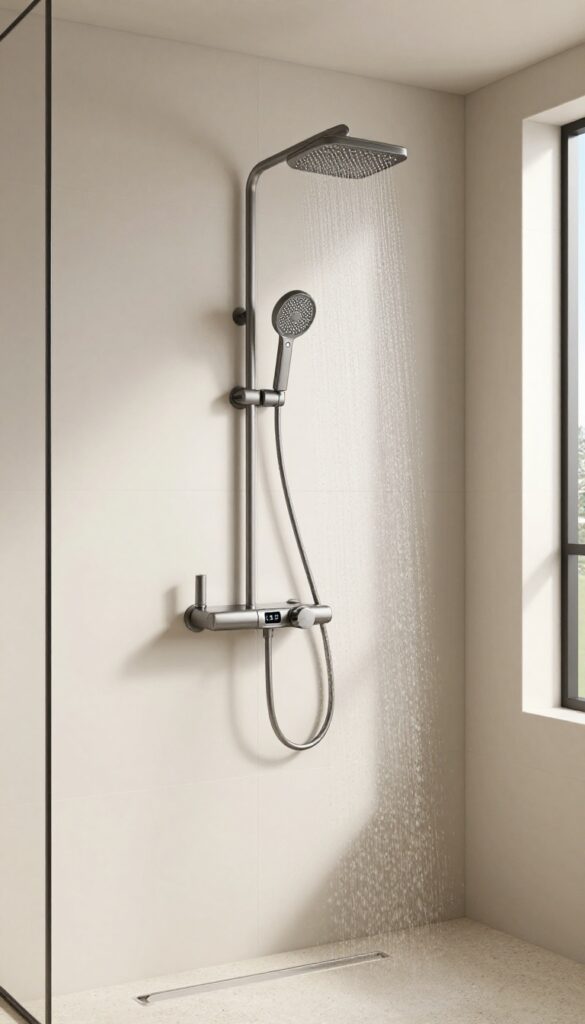
Few things ruin a relaxing shower faster than a sudden blast of cold water when someone flushes a toilet or runs a sink. A thermostatic valve solves that by keeping the temperature rock-steady, no matter what else is happening in the house. It's a small upgrade that makes a big difference in comfort and safety.
A thermostatic valve mixes hot and cold water to maintain a set temperature, automatically adjusting to pressure changes. It's especially valuable in households with kids or elderly members, as it prevents scalding and sudden temperature swings. Plus, it adds a touch of modern convenience—you set it once and forget it.
Why It Matters
Standard shower valves can let temperature fluctuate wildly, especially in older plumbing. A thermostatic valve uses a wax thermostat or similar mechanism to respond instantly to changes, keeping the water within a degree or two of your chosen setting. That means no more jumping back from a freezing spray or a too-hot surprise.
Safety First
For families, the safety angle is huge. Many thermostatic valves come with a built-in anti-scald feature that limits the maximum temperature, usually around 120°F (49°C). This protects little ones and older adults who might have slower reactions or sensitive skin.
It's peace of mind that's worth every penny.
Smart Integration
Some thermostatic valves can connect to smart home systems, letting you control temperature remotely or set presets. Imagine starting your shower from bed and having it hit the perfect temperature by the time you walk in. That's the kind of luxury that feels futuristic but is totally doable today.
5. Rainfall Shower with LED Lighting for a Spa Vibe
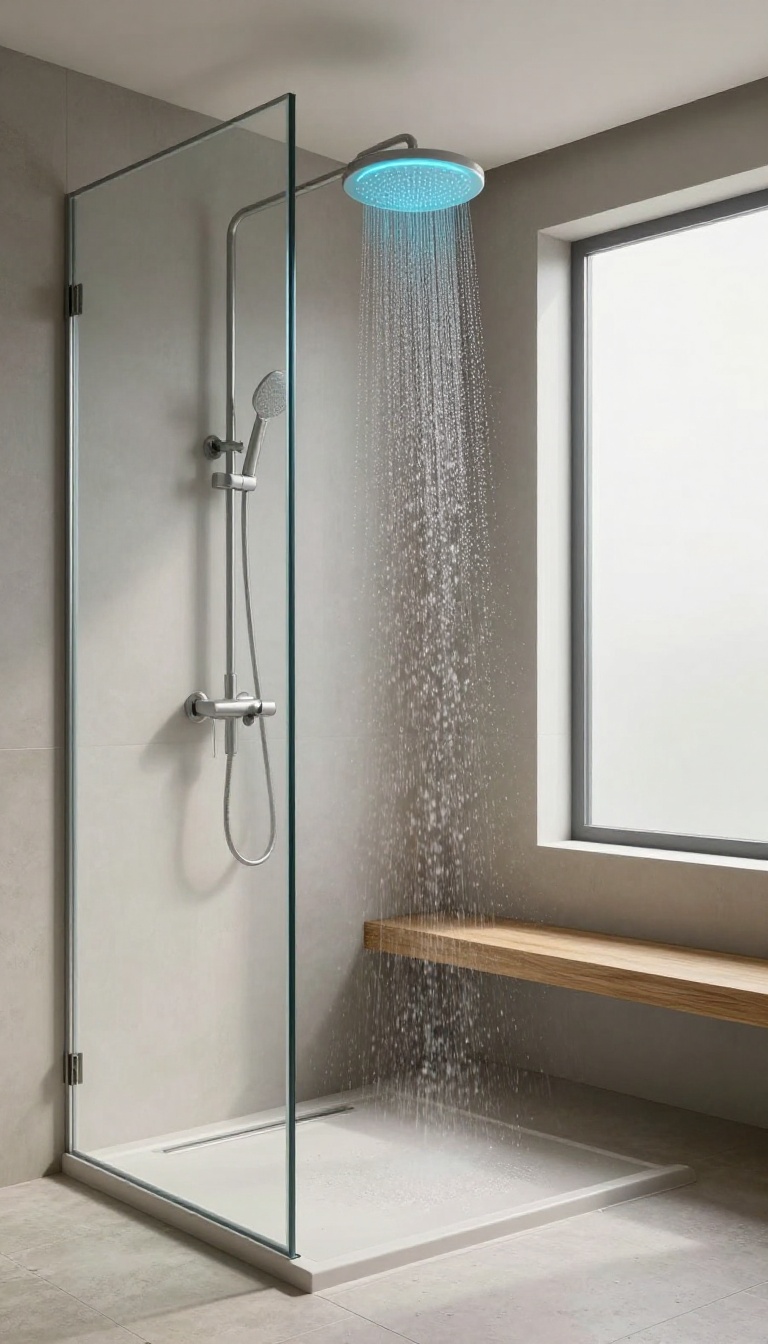
Color can completely change how a space feels, and your shower is no exception. An LED-lit rainfall showerhead adds a layer of ambiance that turns a routine rinse into a moment of calm. Whether you prefer a soft blue glow for evening wind-downs or a warm amber for morning energy, the right lighting makes all the difference.
These aren't just novelty fixtures anymore. Modern LED showerheads are built to last, with waterproof components and energy-efficient bulbs that handle daily use. You get the full rainfall experience plus a customizable light show that matches your mood or decor.
Adding LED lighting to your rainfall shower is an easy way to bring a spa-like atmosphere into your bathroom. Many models feature multiple color options and brightness settings, so you can switch things up anytime. It's a small upgrade that makes a big visual impact, especially in an otherwise neutral bathroom.
When shopping for an LED rainfall showerhead, look for one with a durable finish and a reliable LED system. Some come with a remote or wall switch, while others use a simple twist mechanism to cycle through colors. You'll also want to consider the size of the showerhead—larger ones provide better coverage but need more ceiling or wall space.
Proper installation is key to getting the most out of your LED shower. If you're replacing an existing head, the process is usually straightforward. For a ceiling-mounted version, you may need a professional to ensure the wiring is safe and up to code.
Once it's in, you can enjoy a shower that feels both luxurious and personalized.
Choosing The Right Led Showerhead
Not all LED showerheads are created equal. Some offer a fixed single color, while others let you cycle through a full spectrum. Think about how you want to use the lighting—do you want a constant relaxing blue, or do you prefer to change colors based on your mood?
Look for models with multiple light modes and adjustable brightness. Also, check the LED lifespan and whether the bulbs are replaceable. A quality LED system should last for years without flickering or dimming.
Installation Tips For Led Models
Most LED rainfall showerheads are designed to be a direct replacement for your existing fixture. If you're handy, you can usually install it yourself in under an hour. Just make sure the power is off and the water supply is shut off before you start.
For ceiling-mounted units, you'll need to access the space above the ceiling to connect the wiring. If you're not comfortable with electrical work, it's best to hire a licensed electrician. Also, consider adding a diverter or a thermostatic valve so you can control water temperature and flow independently from the LED settings.
Creating The Full Spa Experience
Pair your LED rainfall shower with other spa-like touches to maximize the effect. Use a shower bench or a teak stool for seating, and add a few eucalyptus branches or a waterproof speaker for soothing music. Dim the main bathroom lights and let the shower's glow take center stage.
You can even set a timer to enjoy a longer, more mindful shower. The key is to make the experience feel intentional and relaxing, not just a quick wash.
6. Dual Rainfall Showerheads for a Luxury Feel
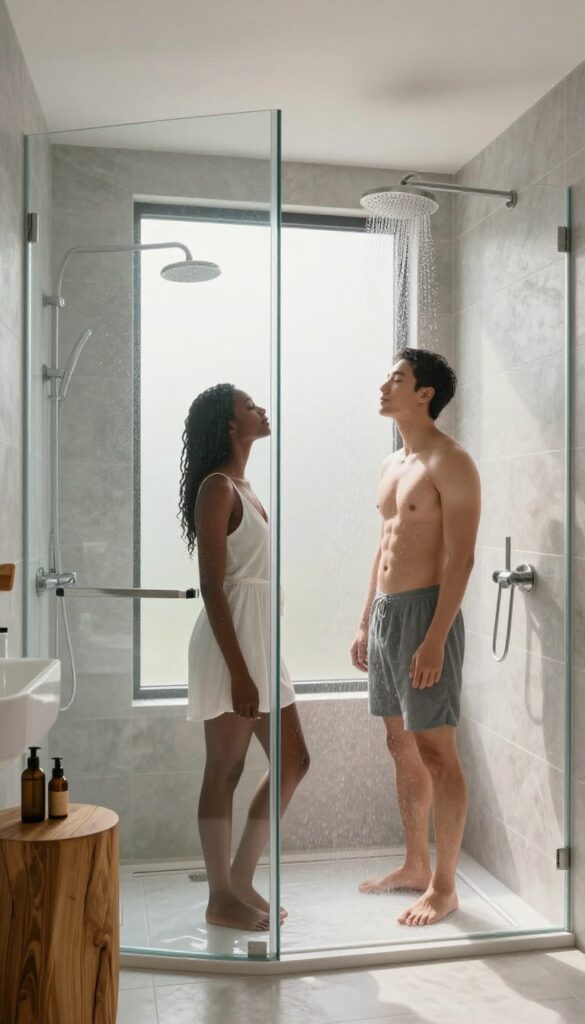
Showering together can be a test of patience when you're sharing a single stream. Dual rainfall showerheads flip that script, turning a cramped routine into a spa-like moment for two. With independent controls and full-body coverage, they make the shower feel more like a personal rain room than a utilitarian fixture.
Dual setups aren't just about doubling the water—they're about creating a more balanced, immersive experience. Whether you mount them side by side on the ceiling or position one overhead and one on the wall, you get a wider spray pattern that wraps around you. For couples, this means no more negotiating over who gets the main head.
For solo bathers, it's a way to enjoy a truly enveloping soak from head to toe.
Ceiling-mounted Pairs
Two ceiling-mounted rainheads placed about 12 to 18 inches apart create a broad, even downpour that covers the entire body. This setup works best in larger showers with at least 6 feet of ceiling height. You'll need a higher-flow valve or a dedicated supply line to keep pressure strong on both heads.
For a seamless look, choose matching finishes and keep the heads flush with the ceiling when not in use.
Wall-mounted Duo For Flexibility
If your ceiling isn't an option, mount two rainheads on opposite walls at shoulder height. This creates a horizontal spray that feels like standing in a gentle cross breeze. It's perfect for smaller spaces or alcove showers where overhead plumbing is tricky.
Go for adjustable arms so you can angle each head independently—point one down for a direct soak and the other slightly outward for a softer mist.
Pairing With A Handheld Shower
Combine one fixed rainhead with a handheld unit on a slide bar. This gives you the best of both worlds: a luxurious overhead spray and a flexible option for rinsing off or cleaning the shower. Look for a diverter valve that lets you run both at once or switch between them.
It's a smart choice for families or anyone who wants practical versatility without sacrificing the rainfall feel.
7. Rainfall Shower with Built-In Water Filtration
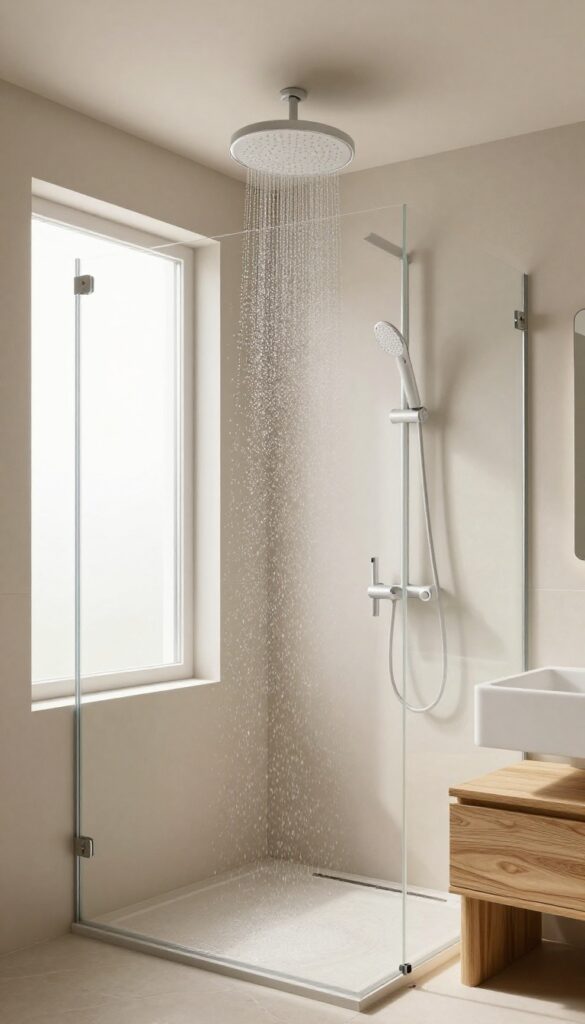
Hard water and chlorine can leave your skin tight and your hair dull, no matter how luxurious your showerhead feels. A rainfall shower with a built-in filter tackles that problem right at the source, so every drop that hits you is cleaner and softer. It's a quiet upgrade that pays off every single day, especially if you've noticed dryness or irritation after showers.
Filters in rainfall showerheads typically use a combination of activated carbon, vitamin C, or KDF media to reduce chlorine, chloramine, and other impurities. Some models also soften water by introducing minerals that help balance pH. The result is water that feels silkier on your skin and leaves hair looking shinier and more manageable.
Plus, many filtered showerheads are easy to install—just unscrew your old head and screw on the new one, with no plumbing changes needed.
Why Filtered Rainfall Showers Matter
Chlorine is added to municipal water to kill bacteria, but it can also strip natural oils from your skin and hair. Over time, that leads to dryness, itchiness, and frizz. A built-in filter reduces these effects, making your shower feel more like a spa treatment.
For anyone with eczema, psoriasis, or sensitive skin, the difference can be noticeable from the first use.
What To Look For In A Filtered Showerhead
Check the filter type and how often it needs replacing—most last about six months or 10, 000 gallons. Look for a model with a large rain head (at least 8 inches) to keep that full-coverage feel. Also consider whether the filter is easy to access and replace, and whether the unit includes a handheld sprayer or adjustable settings for extra versatility.
Installation And Maintenance Tips
Most filtered rainfall showerheads install in under 15 minutes with basic tools. Wrap plumber's tape on the shower arm threads to prevent leaks. When it's time to replace the filter, follow the manufacturer's instructions—some require you to soak the cartridge before use.
Keep a spare filter on hand so you're never without clean water.
8. Oversized Rainhead for Full Coverage
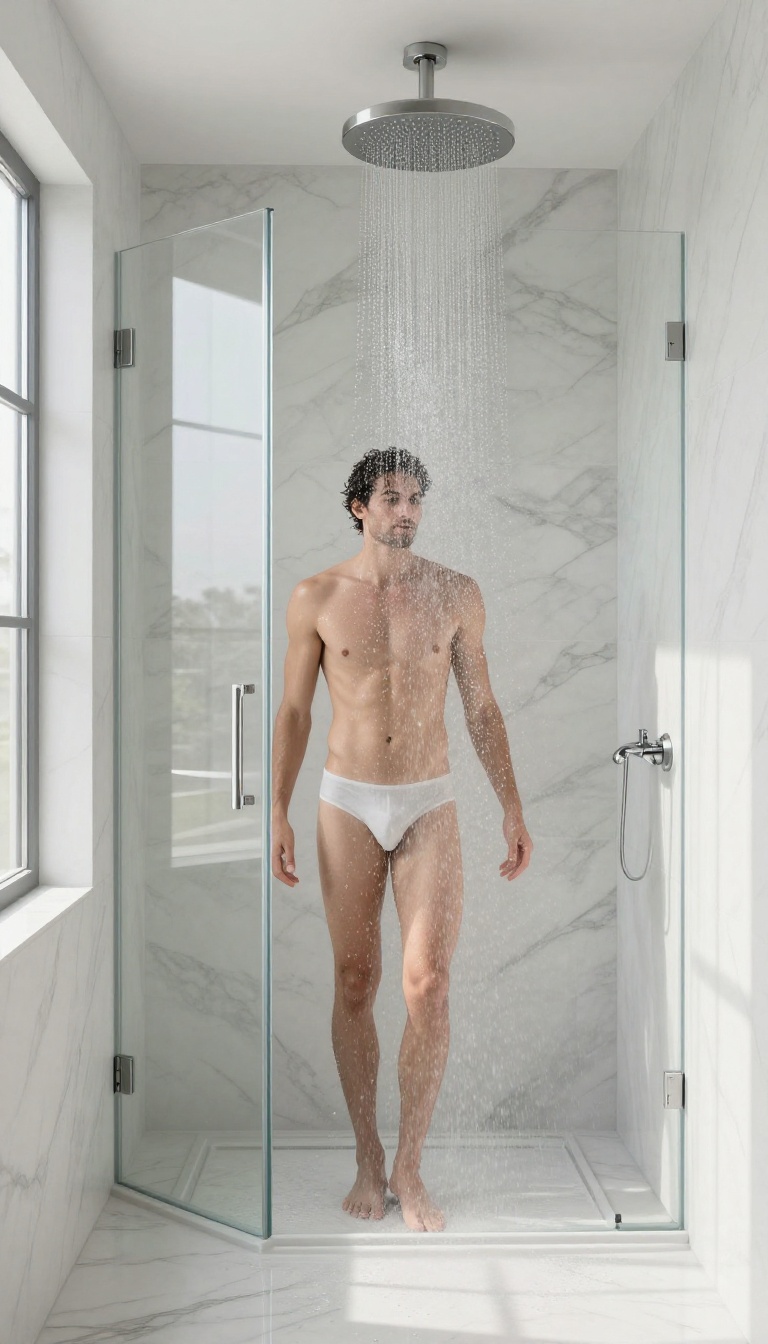
Bigger isn't always better, but when it comes to rainfall showerheads, it kind of is. An oversized model—think 12 inches or more—doesn't just look impressive; it changes the whole feel of your shower. Instead of a focused stream, you get a wide, even cascade that wraps around your shoulders and covers you from head to toe.
It's the closest thing to standing under a warm, natural downpour, and the sensation is genuinely relaxing.
Oversized rainheads are a statement piece that instantly upgrades the look of any bathroom. They create a spa-like focal point and make even a small shower feel more luxurious. But beyond aesthetics, the practical benefit is full-body coverage.
You don't have to shuffle around to get wet—the water reaches you no matter where you stand. That makes it a favorite for couples who share a shower, as both people can stay under the spray at once.
What Size Is Right?
Most standard rainheads are 8 to 10 inches, but oversized models start at 12 inches and go up to 16 or even 20 inches. The size you choose should match your shower space. A 12-inch head works well in most standard showers, while a 16-inch or larger needs a bigger enclosure to avoid water splashing out.
Measure your shower ceiling or wall area before buying, and keep in mind that larger heads require higher water pressure to perform at their best.
Installation Considerations
Oversized rainheads are heavier than standard ones, so they need proper support. If you're mounting it on the ceiling, make sure the ceiling can handle the weight. Most models come with a swivel ball joint that lets you angle the head, which helps direct water where you want it.
You'll also need to check your plumbing—some oversized heads require a 3/4-inch supply line instead of the standard 1/2-inch to deliver enough water flow. If you're not comfortable with plumbing, hiring a professional is a smart move.
Material And Finish Options
Oversized rainheads come in a range of materials, from stainless steel to ABS plastic with a chrome or brushed nickel finish. Stainless steel is durable and resists corrosion, while ABS plastic is lighter and more affordable. For a seamless look, choose a finish that matches your other fixtures.
Matte black and brushed gold are popular choices for a modern, high-end feel, while chrome and brushed nickel offer timeless versatility.
9. Rainfall Shower with Digital Controls
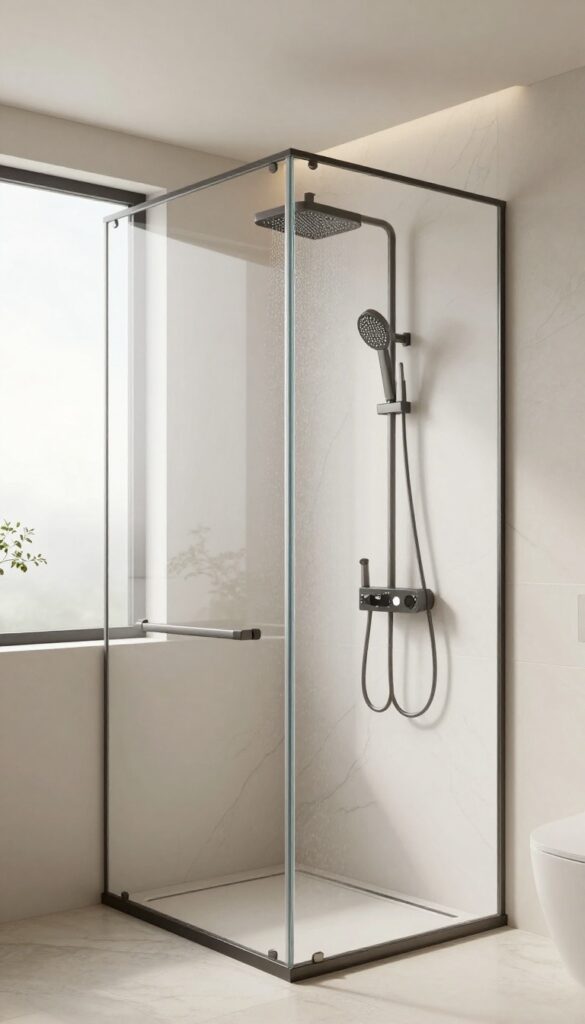
Digital controls turn your shower into a command center, letting you dial in the perfect temperature and flow with a tap. No more fiddling with knobs while you wait for the water to warm up—just set it and step in. It's the kind of convenience that feels futuristic but is surprisingly easy to install.
A digital rainfall shower isn't just about looking sleek; it's about making your routine smoother. With a digital valve and controller, you can preset your ideal water temperature and pressure, so every shower starts exactly how you like it. Some systems even let you save profiles for different family members, so everyone gets their perfect shower without adjusting a thing.
Why Go Digital?
The main draw is precision. Traditional valves can be finicky, especially if you're sharing a bathroom with someone who likes a different temperature. Digital controls eliminate guesswork, maintaining a steady water temp even if someone flushes a toilet or runs a washing machine.
Plus, many models come with a sleek touchscreen or a wireless remote that you can mount anywhere—even outside the shower for pre-set convenience.
Features To Look For
When shopping, pay attention to the flow rate and whether it's compatible with your existing plumbing. Look for systems with a thermostatic valve that prevents scalding, and check if the controller offers multiple presets. Some advanced models have voice control via smart home assistants, letting you start your shower with a simple command.
Also, consider the display: a backlit LCD is easier to read in low light.
Installation And Cost
Installation is more involved than swapping a showerhead, since you'll need to wire the controller and valve. It's best to hire a licensed electrician and plumber, especially if you're retrofitting. Expect to pay a premium—digital systems typically range from $500 to $1, 500, not including installation.
But the convenience and energy savings (you can set a timer) often make it worth the splurge.
10. Matte Black or Brushed Gold Finish for a Modern Look
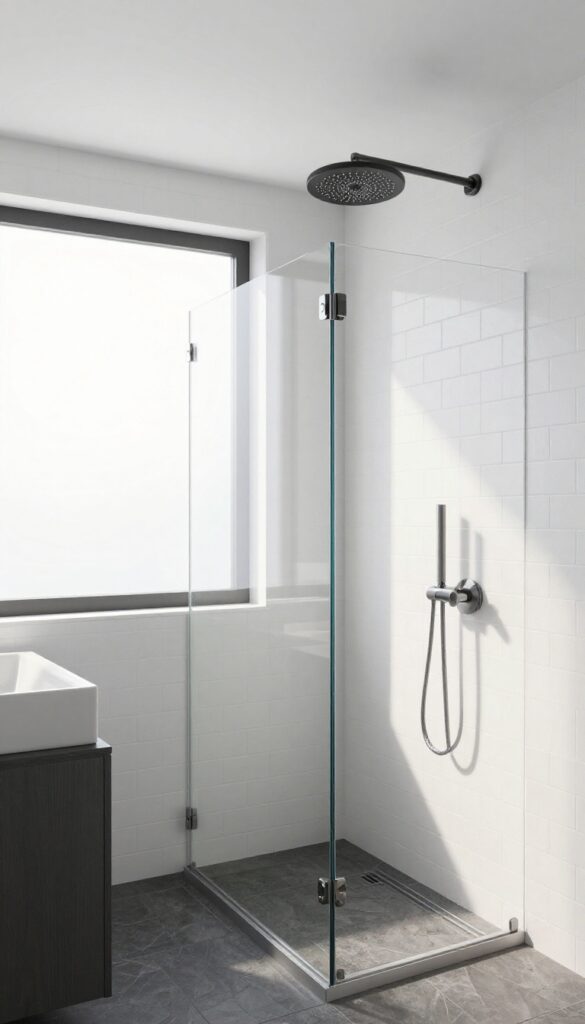
The finish of your rainfall shower can dramatically change the look of your bathroom. Matte black offers a sleek, contemporary vibe, while brushed gold adds a touch of warmth and luxury. Choose a finish that complements your existing fixtures and tile.
When you're picking out a rainfall shower, the finish is often an afterthought—but it's actually one of the first things you'll notice every time you step in. A matte black finish gives your bathroom a bold, modern edge that pairs beautifully with white subway tile or dark slate. Brushed gold, on the other hand, brings a soft, elegant glow that feels both upscale and inviting.
The key is to make sure the finish works with the rest of your space, not against it.
Match The Finish To Your Bathroom's Personality
Think about the overall vibe you're going for. Matte black feels grounded and industrial—perfect for a minimalist or urban-style bathroom. Brushed gold leans more classic and warm, ideal for a traditional or transitional space.
If you're unsure, look at your faucets, cabinet hardware, and light fixtures. Repeating the same finish across all of them creates a cohesive, intentional look.
Consider Maintenance And Durability
Both finishes are fairly easy to care for, but they do show water spots differently. Matte black can show hard water stains more easily, so you might need to wipe it down occasionally. Brushed gold is more forgiving with fingerprints and water marks, but it can scratch if you're not careful.
Choose a high-quality finish with a protective coating to keep it looking fresh for years.
Mix And Match With Confidence
You don't have to match every single metal in the room. A brushed gold showerhead can look stunning against matte black fixtures if you balance them properly. The trick is to use one finish as the main accent and the other as a subtle complement.
For example, pair a matte black showerhead with brushed gold handles or a gold-framed glass door. Just keep the mix intentional—too many competing finishes can feel chaotic.
11. Rainfall Shower with a Built-In Shelf or Niche
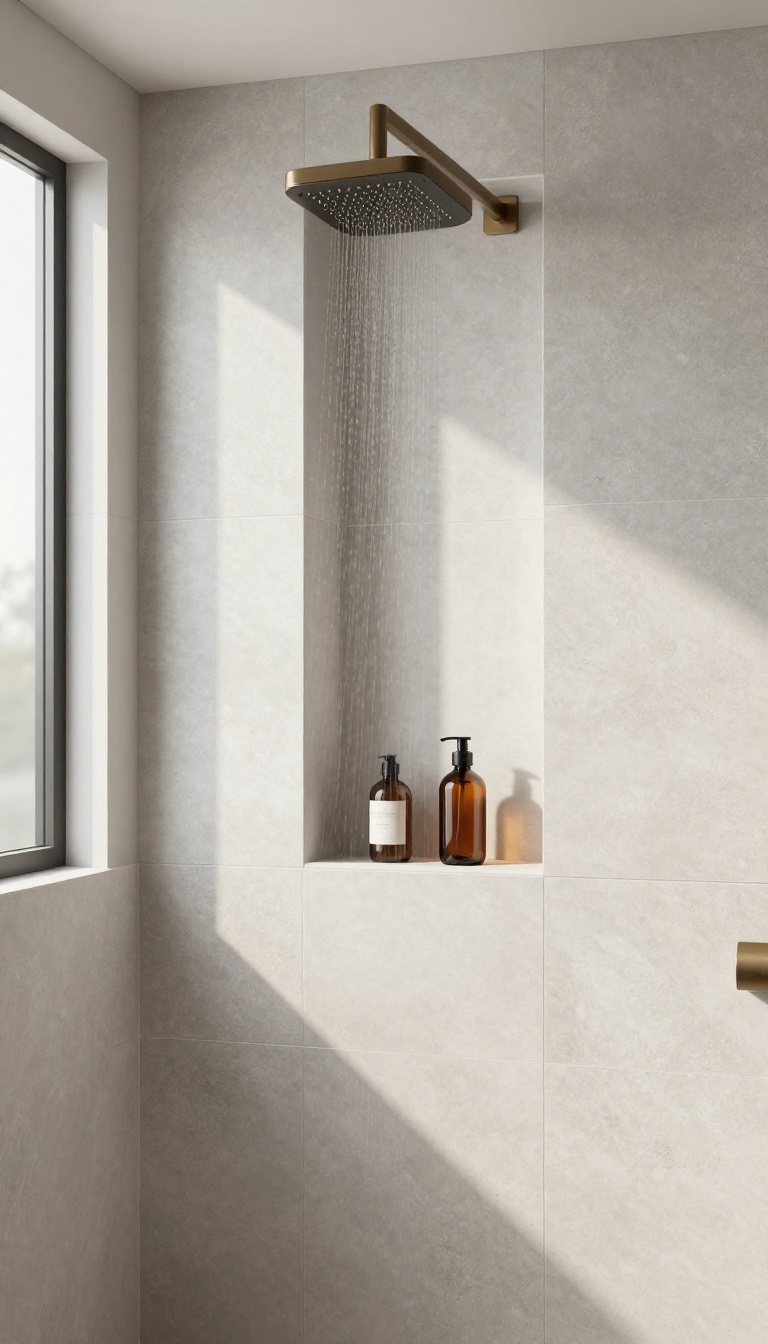
A rainfall shower feels amazing, but where do you put your shampoo? A built-in shelf or niche solves that problem without breaking the clean, minimalist look you're going for. It's a small addition that makes a big difference in daily use.
Adding a recessed niche or shelf to your shower wall keeps everything within arm's reach while maintaining a sleek, uncluttered aesthetic. You can customize the size, shape, and placement to fit your routine perfectly. It's a practical upgrade that also adds value to your bathroom.
Why A Niche Beats A Caddy
Shower caddies can rust, slip, and look messy over time. A built-in niche is permanent, easy to clean, and blends seamlessly with your tile. It also frees up floor space and reduces visual clutter, making your rainfall shower feel more open and spa-like.
Placement And Size Tips
Think about what you'll store—shampoo, conditioner, soap, maybe a razor. Place the niche at chest height so everything is easy to grab. A depth of 3 to 4 inches is usually enough for standard bottles.
If you have a larger family, consider two niches at different heights.
Styling And Materials
Match the niche material to your shower walls for a seamless look, or use a contrasting tile or metal accent to make it a design feature. Add a small ledge or lip to prevent water from pooling. You can even install a niche with a built-in shelf for extra storage.
FAQ
What is the ideal height for a ceiling-mounted rainfall showerhead?
The ideal height depends on the tallest user, but a common recommendation is to install it about 7 to 8 feet above the shower floor. This allows for a comfortable downpour without water splashing excessively.
Do rainfall showerheads use more water than regular showerheads?
Not necessarily. Many rainfall showerheads are designed to be water-efficient, with flow rates of 2. 5 gallons per minute or less.
However, the larger surface area can make it feel like more water is being used.
Can I install a rainfall showerhead on my existing shower arm?
Yes, you can. Most rainfall showerheads come with a standard 1/2-inch connection that fits onto a typical shower arm. However, for ceiling-mounted or larger models, you may need to adjust the plumbing.
How do I clean a rainfall showerhead to prevent clogging?
To prevent mineral buildup, soak the showerhead in a solution of white vinegar and water for about 30 minutes. Then, use a soft brush to gently remove any remaining deposits. Regular cleaning will keep the spray pattern even.
Are rainfall showers suitable for low water pressure?
Some rainfall showerheads are designed to work well with low water pressure, but it's important to check the specifications. Look for models with a high flow rate or those that use air-infusion technology to maintain a satisfying spray.
Conclusion
Upgrading to a rainfall shower doesn’t have to mean a full remodel. Small, thoughtful choices—like the right head, valve, or lighting—can make a big difference in how the space feels and functions. Pick the ideas that solve your biggest everyday annoyances and build from there.
Focus on what matches your routine and style, then let the details do the heavy lifting. A polished shower is about the daily experience, not just the look. Start with one change, and you’ll likely find a few more worth making along the way.