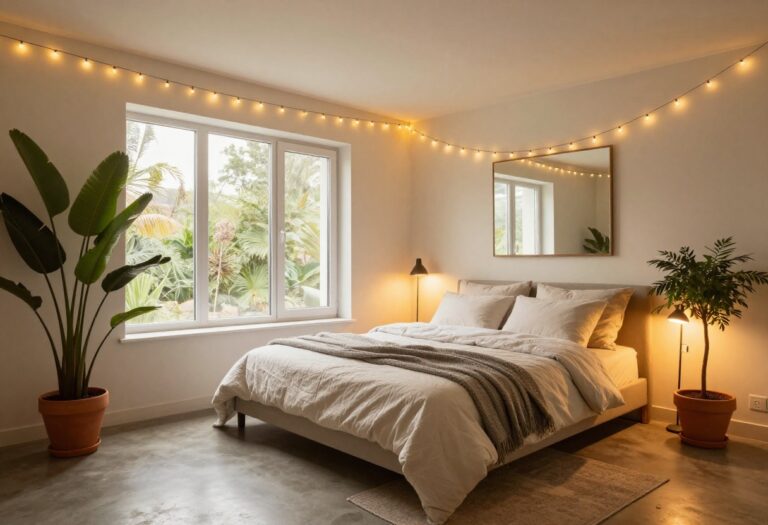
11 Book Shelf Ideas Bedroom Spaces Can Use Beautifully
A bedroom shelf earns its keep the moment it clears a cluttered nightstand, lifts books off the floor, or gives you a spot for the lamp and the water glass. The right one also happens to look good, which is a bonus you notice every night before lights out. What works in a living room rarely fits a bedroom.
Sleeping quarters are tighter, walls are interrupted by doors and windows, and you still need a clear path to the bed. That's why these eleven ideas lean on slim profiles, corners, and vertical space instead of bulky furniture.
Some options mount flush to the wall. Others stack, tuck under a window, or wrap around a headboard.
1. Floating Shelves That Save Floor Space
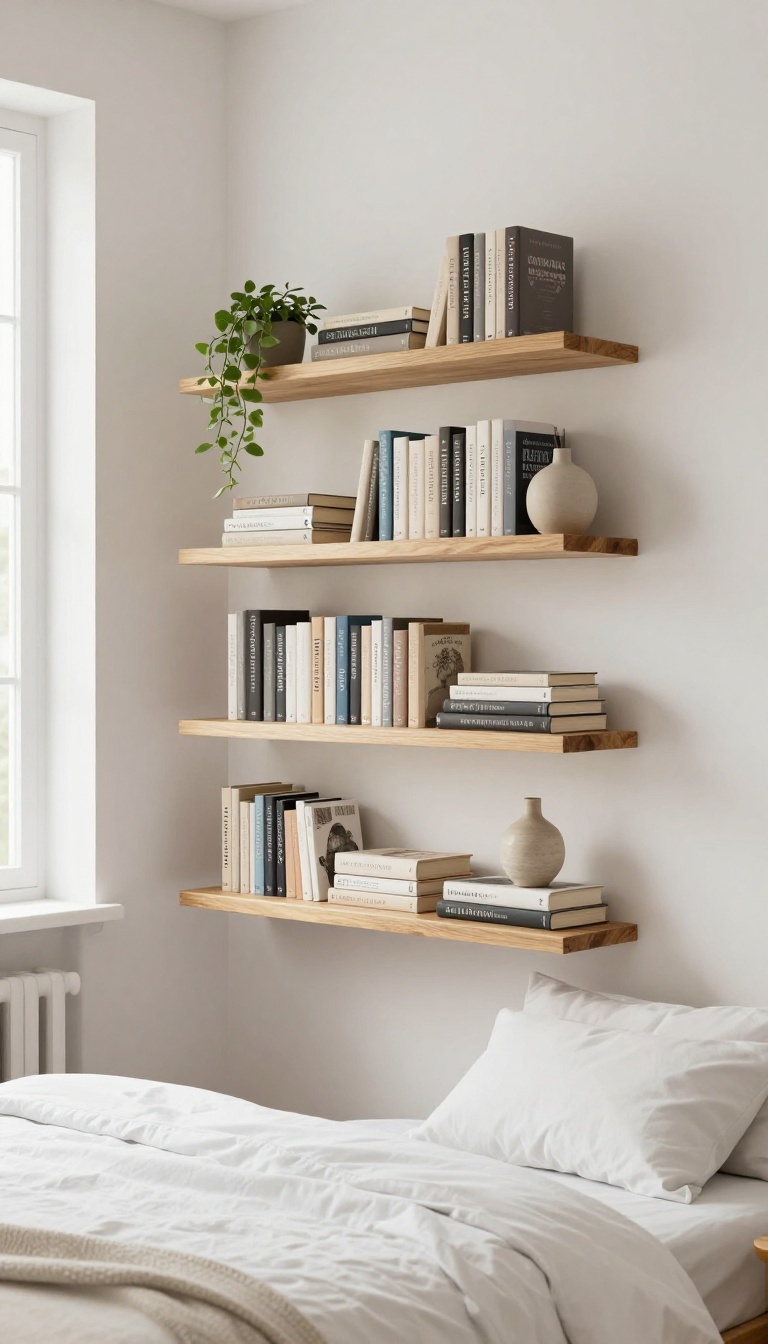
Floor space in a bedroom disappears fast. Between the bed, a dresser, and the path you actually walk, there's rarely room for a bookcase. Floating shelves solve that by moving your books up onto the wall.
They mount directly to studs or heavy-duty anchors, so nothing touches the floor. That keeps the room feeling open even when you're storing a decent stack of reads.
The trick is placement. A single long shelf above the headboard works, but it can feel heavy. Staggered shelves at different heights do more for the room.
They break up the wall, draw the eye upward, and let you mix book sizes without a rigid lineup. You also get flexibility. Put taller shelves near the ceiling for overflow and shorter ones at reach height for the books you actually read at night.
Keep the depth between 6 and 10 inches. Anything deeper starts to feel like a ledge and eats into your walking space. Mount them so the bottom shelf sits at least 18 inches above the mattress if it's over the bed.
That gives you room to sit up without bumping your head.
Pick The Right Wall
The wall behind the bed is the obvious spot, but it's not the only one. A narrow strip beside the window or the space above a dresser works just as well. Avoid walls with doors that swing toward them.
You want a clear zone where nothing gets knocked off when you move around.
Stagger For Interest
Line up three shelves in a row and the wall looks flat. Offset them instead. Put one high on the left, one lower in the middle, and one at mid-height on the right.
The uneven pattern feels intentional and keeps the eye moving. It also lets you work around outlets and light switches without awkward gaps.
Keep The Load Light
Floating shelves hold more than people expect, but they have limits. Spread weight across the bracket and avoid stacking heavy hardcovers on a single spot. If you're renting, use removable adhesive strips for lightweight paperbacks only.
For anything heavier, find the studs or use toggle bolts rated for the weight.
2. A Low Profile Bookshelf Under the Window
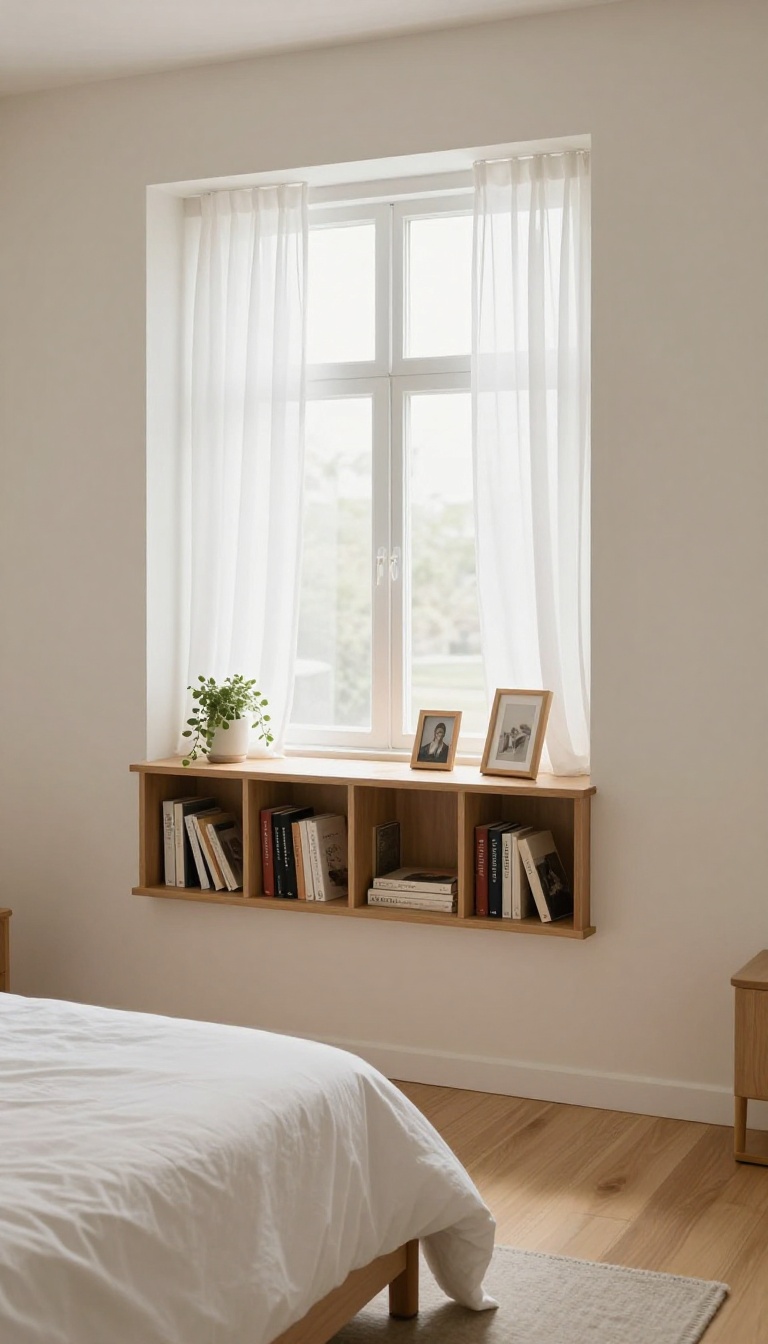
A low bookshelf tucked under a window turns dead space into a functional display without blocking the view. It keeps the room feeling open because the shelf stays below the sill, so light and sightlines flow right over it. This is a smart move for bedrooms with sloped ceilings or walls that are mostly doors and windows.
The key is to match the shelf height to the window trim. You want the top of the shelf to sit just below the sill, so it looks intentional rather than crammed in. Measure the space, then look for a unit that's no taller than 30 inches or so.
If you can't find the perfect fit, a custom built-in or a pair of low cubbies pushed together can work just as well.
Why It Works In Tight Bedrooms
Low shelves don't compete with the bed for vertical space. They stay out of the way when you're walking around, and they don't make the room feel closed in. In a sloped-ceiling room, a low unit under the window is often the only spot that makes sense.
It also gives you a place for books, a small plant, or a few framed photos without adding a bulky piece of furniture.
Pick The Right Depth And Style
A depth of 10 to 12 inches is plenty for most books and keeps the shelf from jutting into the room. Open-backed designs let the wall color show through, which makes the shelf feel lighter. If you need hidden storage, choose a low cabinet with doors, but keep the top clear for display.
Floating shelves under the window can work too, as long as they're anchored securely.
Style It Without Blocking Light
Keep the top surface low-profile. A row of books, a small clock, or a trailing plant won't block much light. Avoid tall items that creep above the sill.
Use the shelf for things you actually want to see every day, like current reads or a favorite candle. The goal is a tidy, useful surface that doesn't fight the window for attention.
3. Corner Shelves That Turn Dead Space Into Storage
Every bedroom has at least one corner that does nothing but collect dust and maybe a stray sock. Those 90-degree angles are awkward for regular furniture, so they usually sit empty while you cram books onto a nightstand. Corner shelves solve that problem by using the angle instead of fighting it.
They slide into the gap beside a bed or dresser and hold far more than you'd expect.
A corner unit doesn't need much floor space to make a real difference. Most designs are triangular or L-shaped, which means they hug the wall and leave the rest of the room open. You can stack two or three tiers and suddenly have room for a small library.
The best part? They look intentional, like you planned the whole thing.
Why Corners Work So Well
Corners are naturally strong spots for shelves because two walls meet there, giving you built-in support. You don't need brackets or a stud finder for most freestanding units. And because the shelf is tucked away, it doesn't interrupt the flow of the room.
It just quietly holds your stuff.
Pick The Right Height And Depth
Measure the corner before you buy anything. A tall, narrow unit works beside a bed, while a low, wide one fits under a window or next to a dresser. Depth matters too: 10 to 12 inches holds most hardcovers without sticking out too far.
If the corner is tight, go with a slim three-tier design.
Style It Without The Clutter
Corner shelves can turn into junk piles fast if you're not careful. Group books by size or color, and leave a little breathing room on each tier. Add a small plant or a framed photo to break up the rows.
The goal is a display that happens to store things, not a storage unit that happens to be in the corner.
4. A Headboard Bookshelf Combo for Nighttime Reading
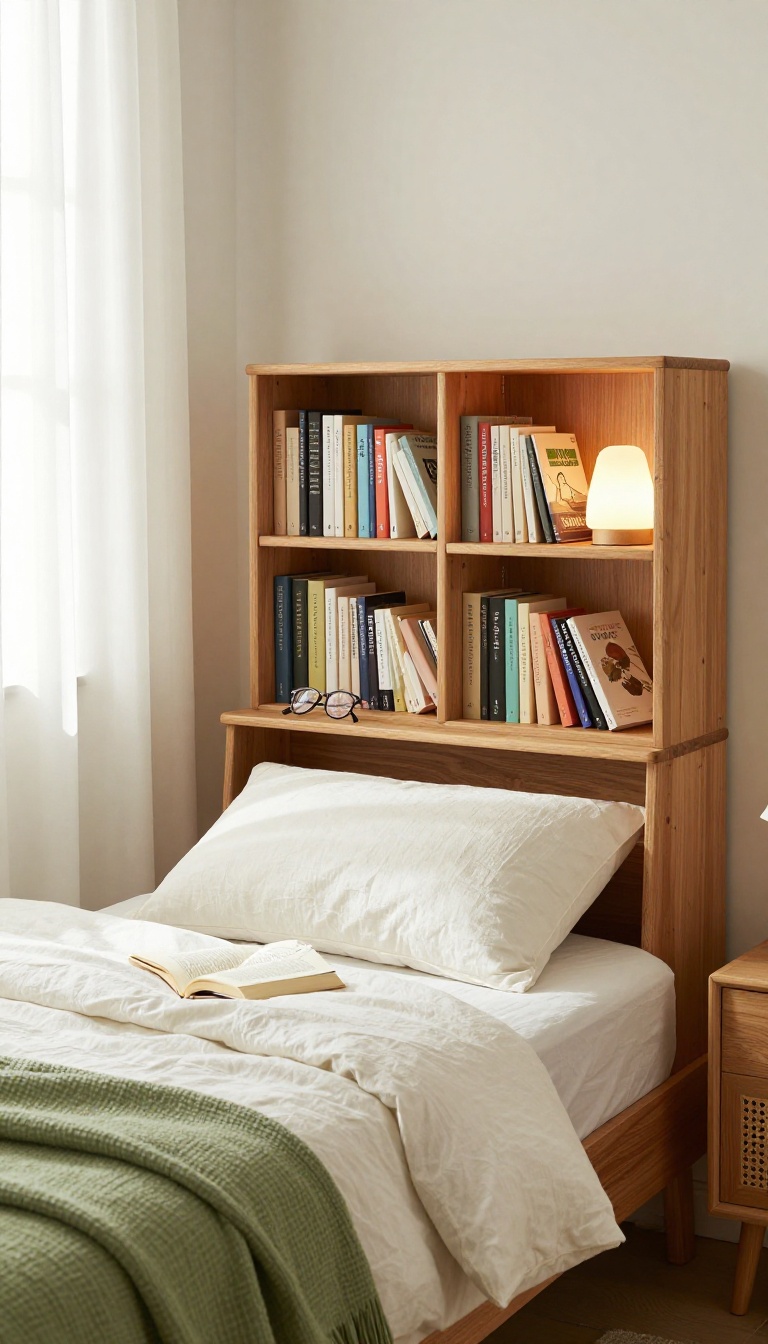
A headboard that doubles as a bookshelf solves a problem most readers know too well: nowhere to put the book when you finally stop reading. Built-in or attachable shelves around the headboard keep everything you need within arm's reach. It also turns the wall behind your bed into a functional focal point instead of wasted space.
The idea works because it uses vertical real estate you already have. You're not adding furniture to the floor or squeezing a nightstand into a tight corner. The headboard becomes the storage, and the bed wall becomes the library.
This setup suits renters and homeowners alike. Some versions mount directly to the wall, while others clamp onto an existing bed frame. Either way, you get a dedicated spot for books, glasses, and a small lamp without adding clutter.
A headboard bookshelf combo is exactly what it sounds like: shelving built into or attached around the head of your bed. It can be as simple as a floating shelf above the headboard or as custom as a full surround with cubbies and a reading light. The goal is to keep your nighttime essentials close without a nightstand.
This approach shines in small bedrooms where floor space is tight. It also works in guest rooms that need to function as reading nooks. And if you're a serious reader, it keeps your current stack organized instead of piled on the floor.
You don't need a carpenter to make it happen. Plenty of ready-made options exist, from over-the-bed shelves to headboard inserts with built-in storage. The key is picking a style that matches your bed and your budget.
Built-in Vs. Attachable Options
Built-in headboard shelves are permanent and often custom. They offer the most storage and a seamless look, but they require installation and can be pricey. Attachable shelves, on the other hand, are removable and renter-friendly.
They might clamp onto the headboard or lean against the wall. If you own your home and plan to stay, built-ins add value and function. If you rent or like to rearrange, attachable is the smarter bet.
Both keep your book, glasses, and lamp within reach.
What To Keep Within Arm's Reach
The whole point is convenience, so stock it with things you actually use at night. A book or e-reader, reading glasses, a small lamp, and maybe a coaster for water. Keep it minimal to avoid visual clutter.
Avoid storing heavy items up high. You don't want anything falling on your head while you sleep. Stick to lightweight books, a soft-backed journal, and maybe a small clock.
Rotate your reading material every few weeks so it doesn't become a dusty pile.
Lighting And Wiring Tips
A headboard shelf is the perfect spot for a reading light. Choose a wall-mounted sconce or a clip-on lamp that attaches to the shelf. Battery-operated puck lights work if you don't want to deal with cords.
If you use a plug-in lamp, plan your cord route. You can hide it behind the headboard or use cable clips to keep it tidy. A smart plug lets you turn the light off without getting out of bed.
Small details like this make the setup feel intentional.
Style And Material Choices
Match the shelf to your bed frame or your room's vibe. Wood tones feel warm and traditional. Metal or painted finishes lean modern.
You can also mix materials, like a wood shelf with black metal brackets. Think about depth. Shallow shelves look sleek but won't hold much.
Deeper shelves hold more but can feel bulky. Measure your space and your book sizes before you buy or build. A good rule: leave at least a few inches of clearance above the tallest book.
5. Ladder Shelves for a Light, Airy Look
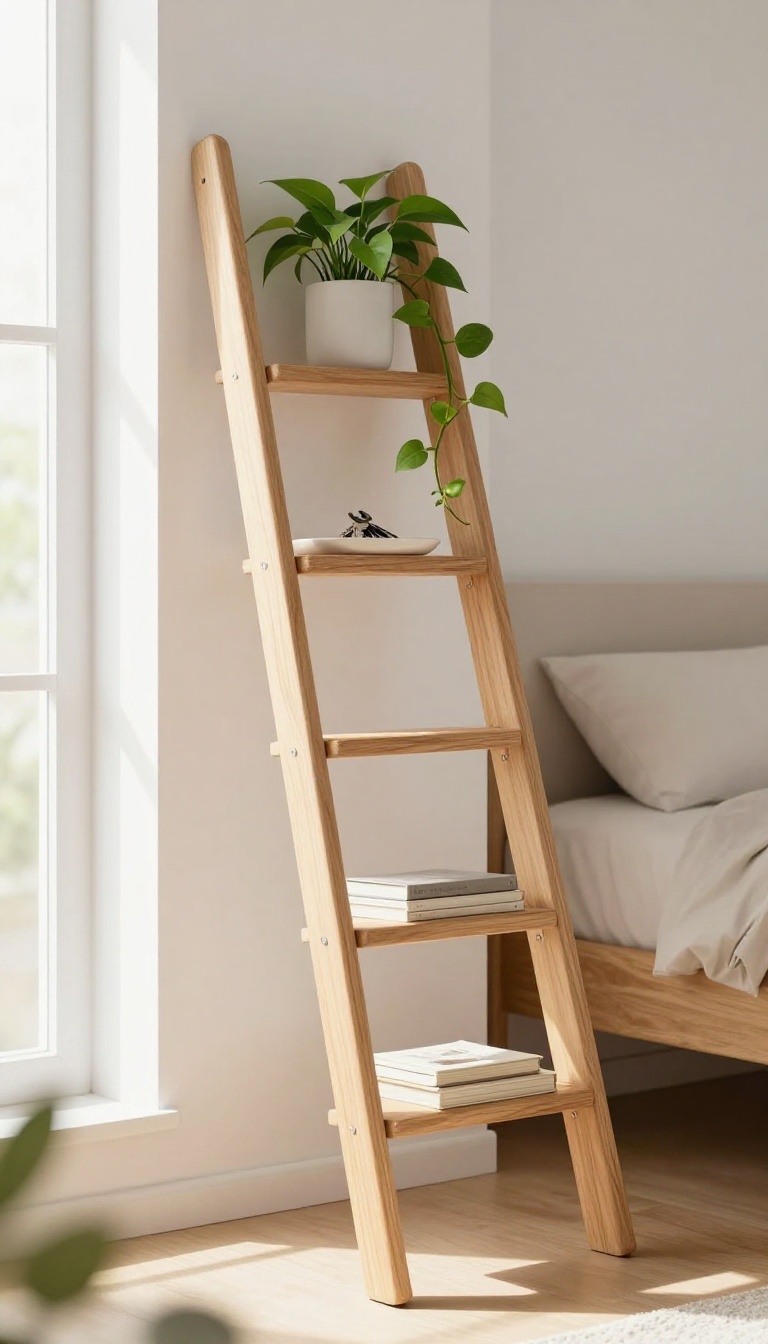
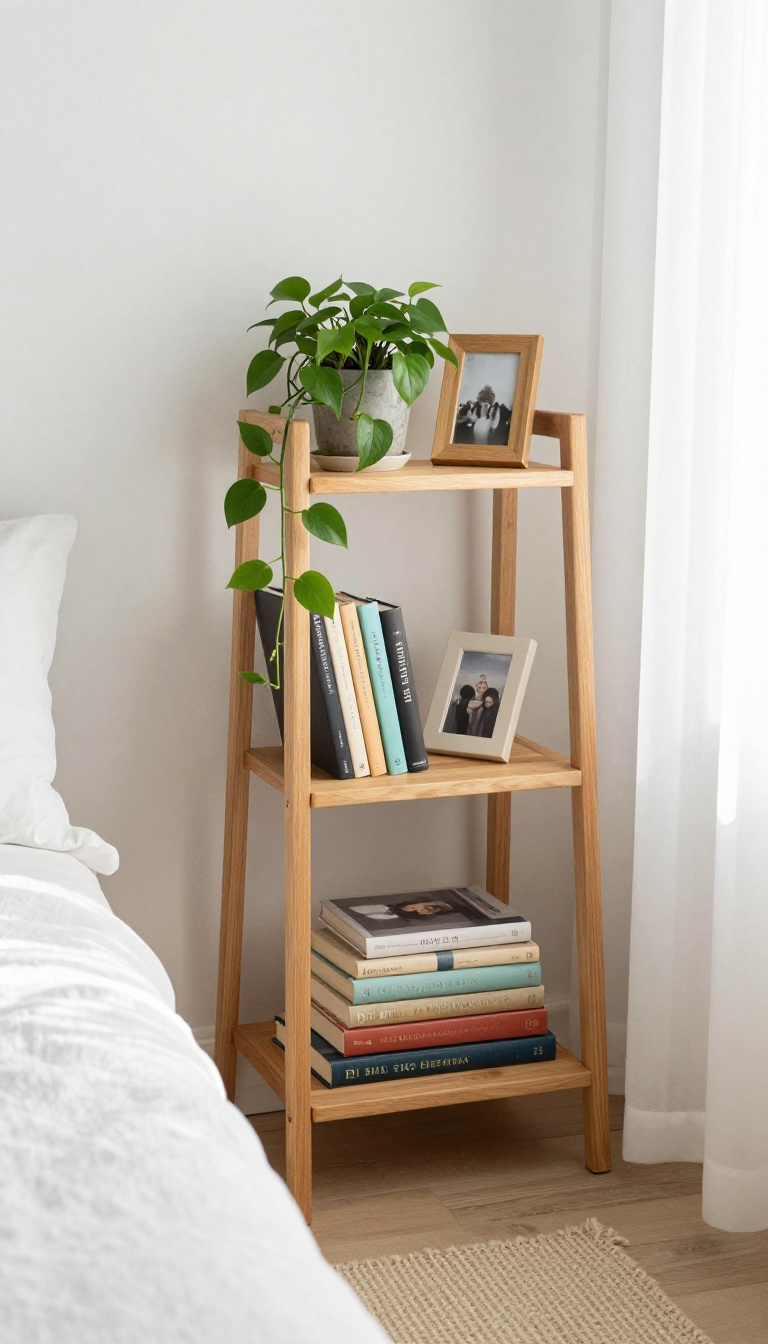
Ladder shelves lean against the wall at a slight angle, so they add height without the visual weight of a traditional bookcase. They're a smart pick for renters because they don't need mounting hardware and can move from room to room without leaving holes. In a bedroom, that airy profile keeps the space feeling open even when you're using every rung.
Most ladder shelves rest on the floor and lean back, which means you can set one up in minutes. The open sides and slim frame let light pass through, so the shelf doesn't turn into a dark block in the corner. You get storage for books, a small plant, and a charging station without crowding the room.
Why Renters Love Them
No screws, no anchors, no landlord emails. A leaning ladder shelf stays put through friction and gravity, so you can install it the day you move in. When lease renewal comes around, you just pick it up and carry it to the next place.
Styling Without The Clutter
Because the shelves are open, every item shows. Stick to a few books, one small tray for keys or glasses, and maybe a trailing plant. Leave a rung or two empty to keep that light, airy feel you bought the shelf for.
Placement Tips That Work
Lean it in a corner beside the bed or next to a window where the wall is clear. Keep the bottom rung free of heavy items so it stays stable. If you have pets or kids, choose a model with a wider base or a wall strap for extra safety.
6. Cube Organizers That Double as a Nightstand
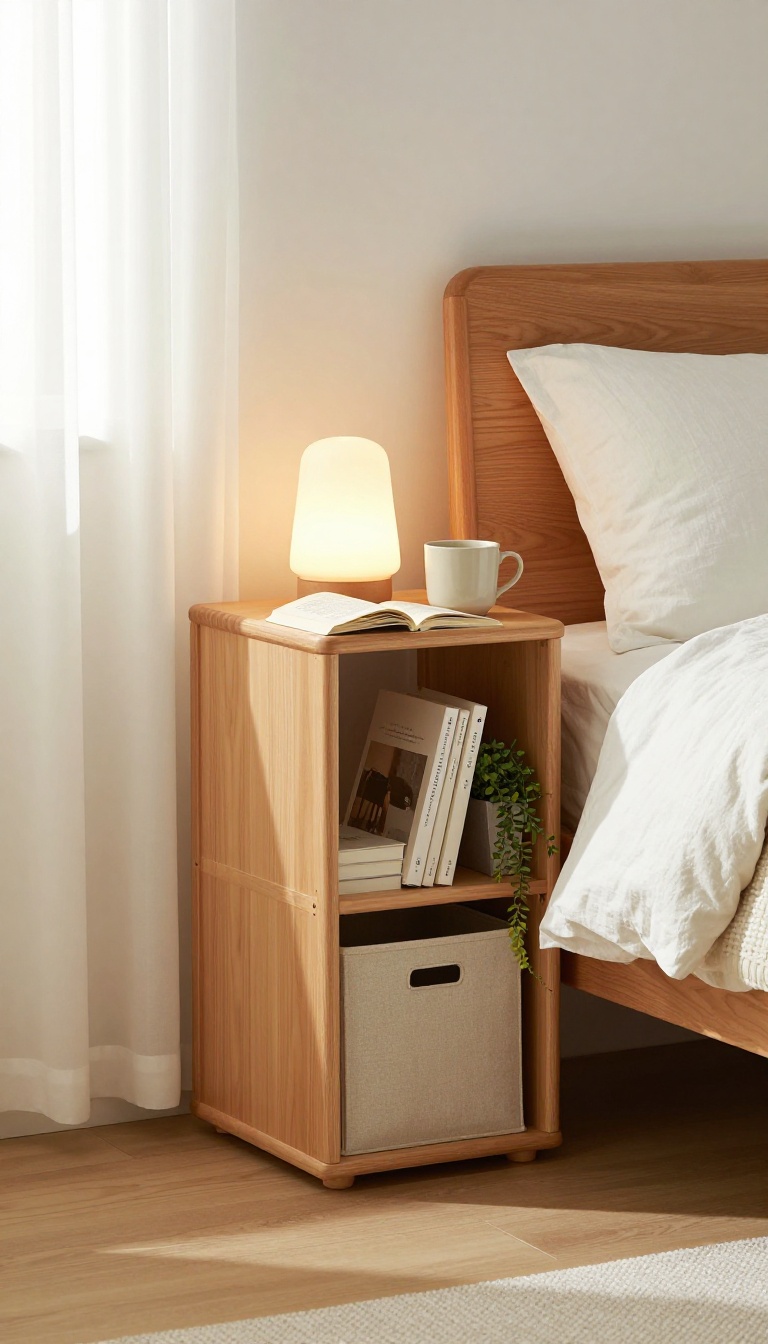
Cube organizers are the quiet multitaskers of small bedrooms. A single unit beside the bed gives you a flat top for a lamp and a book, while the cubbies below swallow the clutter that usually ends up on the floor. It's a nightstand and a bookshelf in one footprint, which is exactly what tight spaces need.
The trick is picking a cube size that matches your bedside needs. A two-cube unit sits low and wide, perfect for a lamp and a stack of current reads. A four-cube version stands taller and adds real storage without taking more floor space.
Either way, you get a surface and hidden compartments in one piece. Bins are what make this work. Open cubbies look tidy for about a week, then they become a catch-all for receipts, chargers, and whatever else lands there at bedtime.
Sliding in fabric or woven bins turns those cubbies into drawers you can pull out and push back without thinking. Placement matters more than you'd expect. Tuck the unit right against the bed frame so the top lines up with your mattress height.
That way you can reach the lamp without stretching, and the bins stay accessible from the side you actually sleep on.
Pick The Right Cube Count
Two cubes work if you only need a lamp, a book, and a place for your phone. Four cubes give you room for bins plus a shelf for display. Six cubes start to feel like a full bookcase, which can overwhelm a small room.
Measure the wall next to your bed before you buy.
Use Bins To Hide The Mess
Fabric bins in a neutral color keep the look calm and let you toss in odds and ends without fuss. Label them if you share the room, so your partner knows which bin holds the extra charger. Woven baskets work too, but they can snag on rough edges, so check the cubby interior first.
Style The Top Without Clutter
A small lamp, one or two books, and a coaster are plenty. Anything more and you lose the surface you need for a glass of water. If you want a little personality, lean a framed photo against the wall or set a tiny plant in a low pot.
Keep it simple.
7. Built-In Shelves That Blend With the Wall
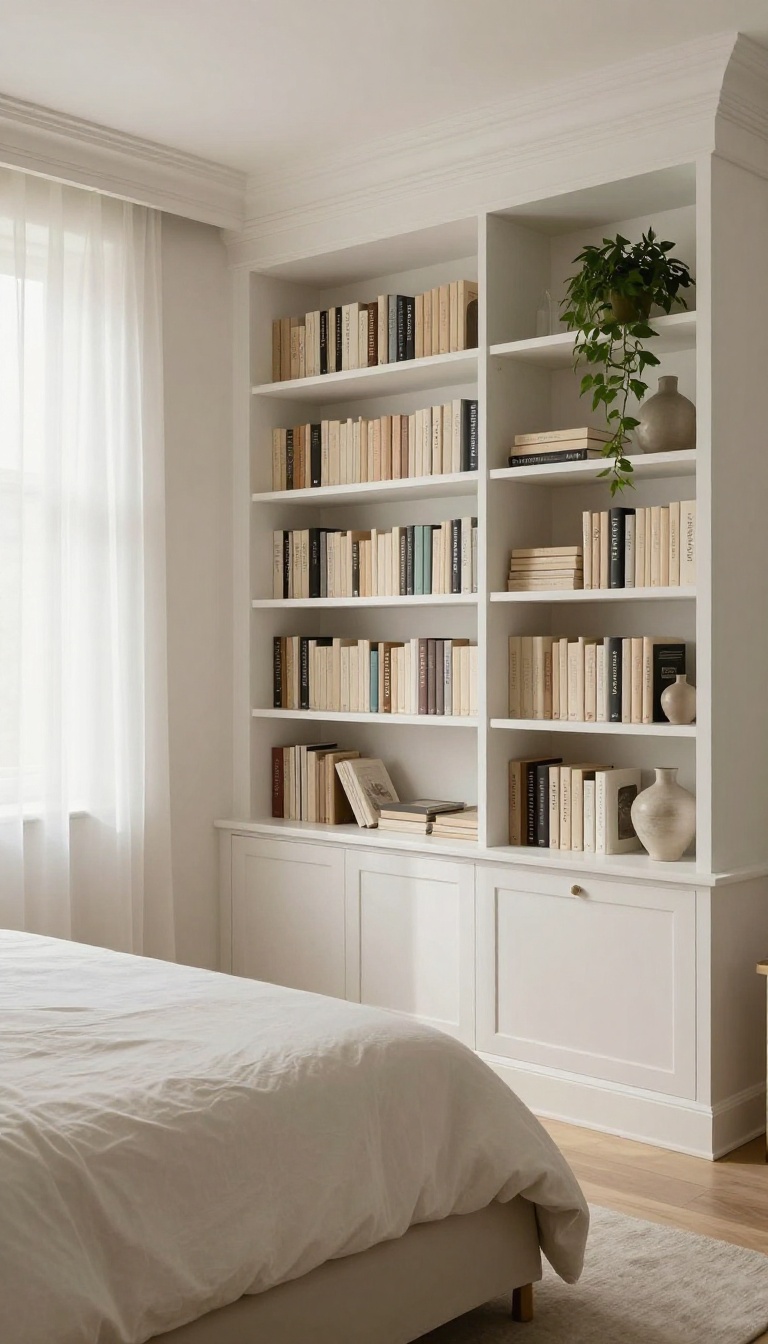
Built-in shelves disappear into the architecture when you handle them right. Instead of a piece of furniture sitting in the room, you get storage that reads as part of the wall itself. Paint everything the same color and the whole wall becomes a calm, unified feature.
This approach works especially well in bedrooms where you want quiet, not visual noise. Recessed or flush-mounted units keep the footprint tiny while adding real architectural interest. The trick is committing to the blend rather than fighting it.
Custom built-ins don't have to mean a full renovation. You can fake the look with ready-made units, a little trim, and a coat of paint. The goal is simple: make the shelves look like they grew out of the wall.
Start by choosing a spot where the wall already has some depth or a natural niche. A recessed area beside a chimney breast, a shallow alcove, or the space between two closets all work. If you don't have a recess, you can build out slightly and trim the edges so the unit looks intentional.
Paint is your best friend here. Match the shelf color to the wall exactly, including the trim and the back panel. That single move erases the lines between furniture and architecture.
Suddenly the shelves feel like part of the room's bones.
Why Same-color Painting Works
When shelves and walls share the same color, your eye stops separating them. The room feels larger because there's no visual break. It also keeps the focus on what's on the shelves rather than the shelves themselves.
A soft, matte finish helps the blend even more.
Planning The Layout
Mix open shelves with a few closed cabinets or drawers at the bottom. That gives you hidden storage for clutter and open display for books and decor. Keep the depth shallow, around 10 to 12 inches, so the unit doesn't crowd the bed.
Measure your books and baskets before you commit.
Lighting And Trim Details
Add slim LED strips under a few shelves for a soft glow that doesn't break the seamless look. Trim the edges with simple, flat casing that matches your baseboards. Skip ornate moldings if you want a modern, quiet feel.
The simpler the trim, the better the blend.
8. A Skinny Tower Shelf for Narrow Walls
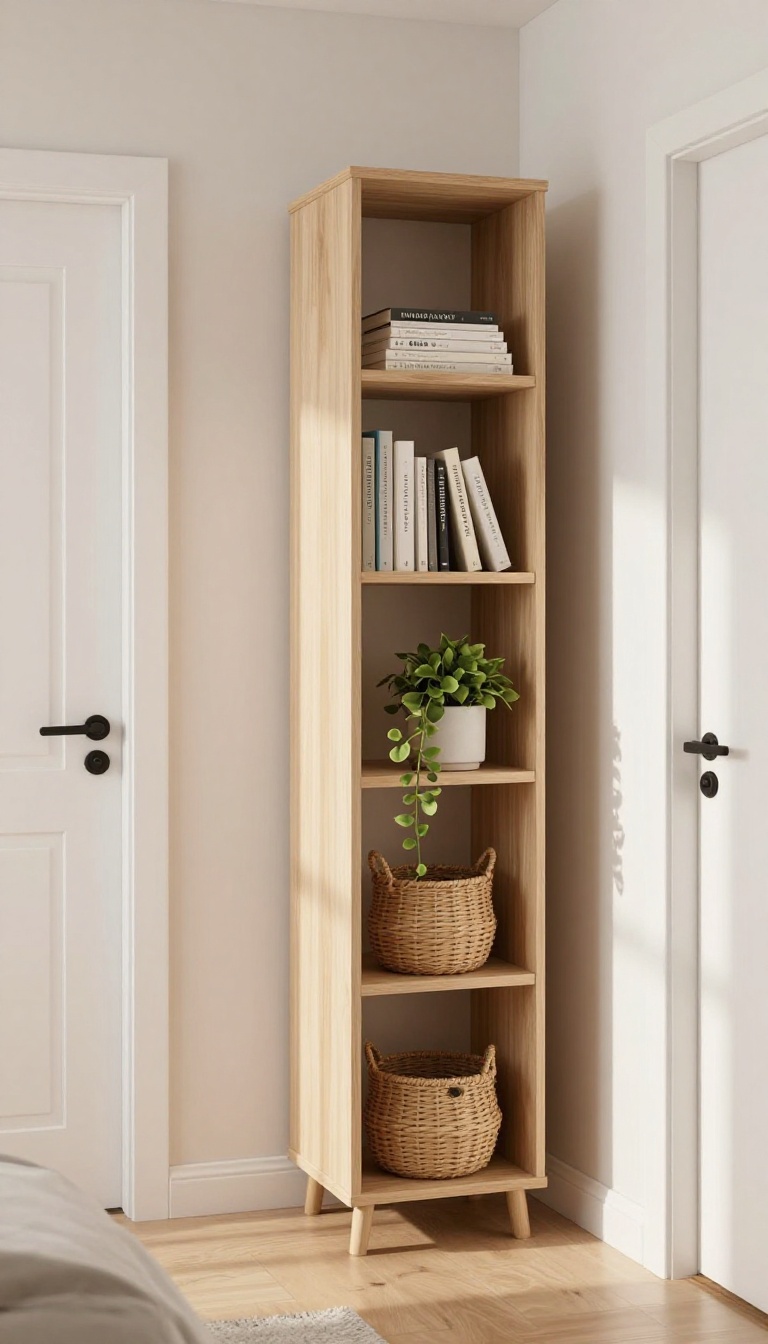
Narrow walls are the most wasted real estate in a bedroom. You know the spot—that slim strip between the door frame and the dresser, or the gap beside the closet that's too thin for anything useful. A skinny tower shelf turns that dead space into storage that actually works.
It's tall, it's narrow, and it does something clever: it pulls your eye upward, which makes the whole room feel taller than it is.
A tower shelf usually measures somewhere between 10 and 16 inches wide, which means it can slip into places a standard bookcase never could. You're not rearranging furniture to make it fit. You're using the wall you already have.
The vertical design also keeps the floor clear, so the room still feels open instead of crowded. And because it reaches toward the ceiling, it adds a sense of height that low, wide furniture tends to flatten out.
Where To Put It
Look for gaps you've been ignoring. The space between the door and the wall, the strip beside a window, or the corner next to the bed all work. Measure twice and leave a little breathing room so it doesn't look crammed in.
If the tower sits near the bed, keep the bottom shelves for things you reach for at night and save the top for display.
What To Put On It
Mix it up so the tower doesn't look like a boring column. Stack a few books horizontally on one shelf, stand a small plant on another, and leave a shelf mostly empty for breathing room. Baskets or small bins on the lower shelves hide charger cables and random clutter.
The idea is to make it useful without turning it into a junk pile.
Style And Sturdiness
Skinny towers can wobble if they're cheap, so look for one with a wall-anchor kit or a solid base. A metal frame reads modern, while wood blends into warmer rooms. If you rent, a freestanding tower is easier to move than a built-in.
Just anchor it to the wall—especially in bedrooms where someone might bump it in the dark.
9. Repurposed Crates or Boxes Stacked as Shelves
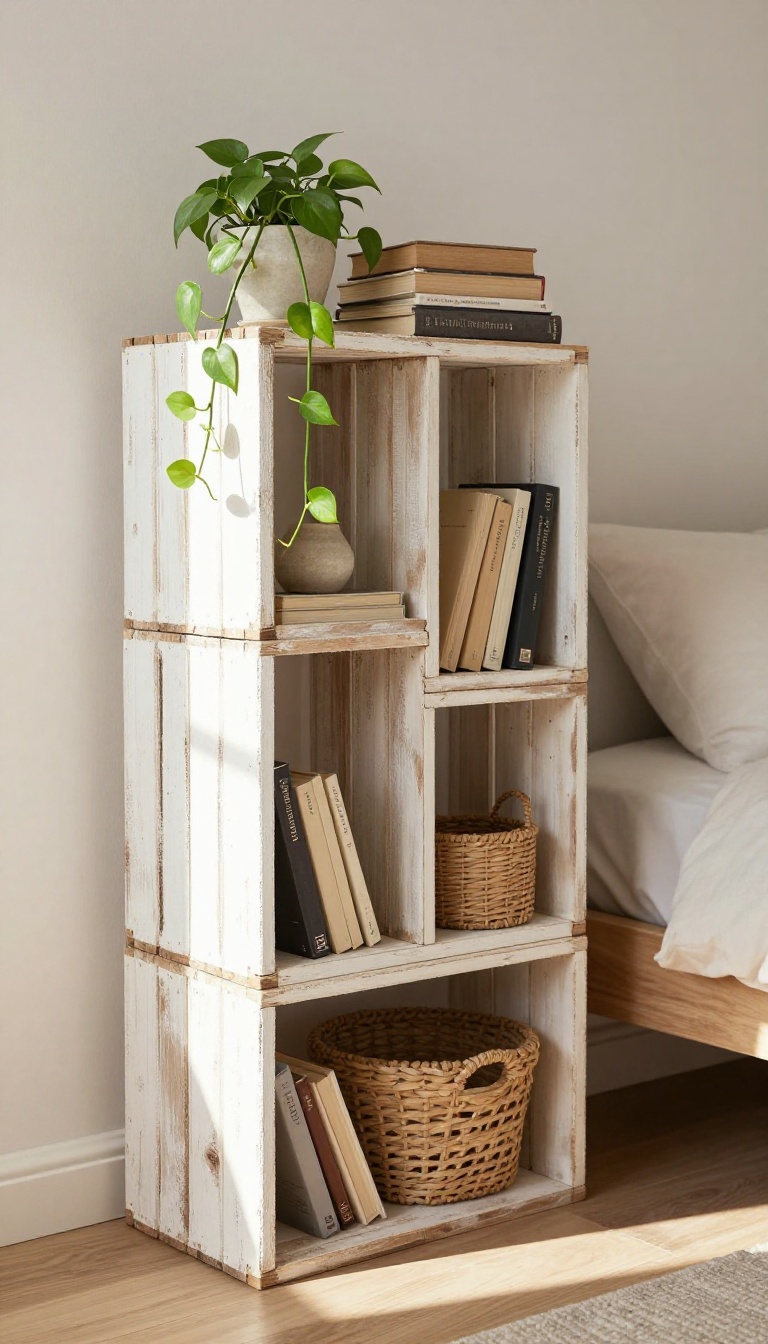
Wooden crates have a way of showing up at flea markets, garage sales, and the back of your own storage closet. Stack a few on their sides and you've got instant shelves with a built-in rustic look. The best part?
You can rearrange them whenever the mood strikes, and nobody will guess you spent almost nothing.
Crates work because they're already box-shaped, sturdy, and open on one side. Flip them sideways, and that opening becomes a shelf cubby. Stack two or three high, and you've got a vertical unit that holds books, plants, and small baskets without taking up much floor space.
Renters love this setup because it moves with you and doesn't require a single nail hole.
Choosing The Right Crates
Not all crates are built the same. Look for solid wood or thick plywood versions, not the flimsy slatted ones that splinter. Wine crates are a classic pick because they're shallow and look great stacked.
Apple crates are deeper and hold more weight. If you're buying new, check that the wood is sanded smooth so it won't snag books or blankets. A quick coat of paint or stain can unify mismatched crates, but leaving them raw adds that worn, collected-over-time charm.
Stacking And Securing Your Setup
Stack crates in a staggered pattern to keep the tower from feeling top-heavy. Alternate the direction of the openings so you get shelves at different heights. For safety, especially in a bedroom where you might bump into it at night, use small L-brackets or zip ties to connect the crates.
If you're renting and can't drill, heavy-duty velcro strips or non-slip pads between layers add stability. A stack of three crates is usually the sweet spot for a nightstand-height shelf.
Styling And Practical Uses
Treat each crate opening like a mini shelf. Line one with a small basket for charging cables and odds and ends. Use another for a row of paperbacks or your current read.
The top crate can hold a lamp, a clock, or a small plant. Because crates are deep, they hide clutter well. Just don't overload them with heavy hardcovers on the top layer.
Keep the heaviest items in the bottom crate to maintain balance.
Where It Works Best In A Bedroom
Tuck a two-crate stack beside the bed as a nightstand alternative. A taller stack in a corner becomes a reading nook shelf. If you have a window seat, crates can slide underneath for extra storage.
They also work as a low console behind a bed that floats in the room. The rustic texture warms up plain walls, and the open design keeps the space from feeling closed in.
10. A Reading Nook Shelf With a Built-In Seat
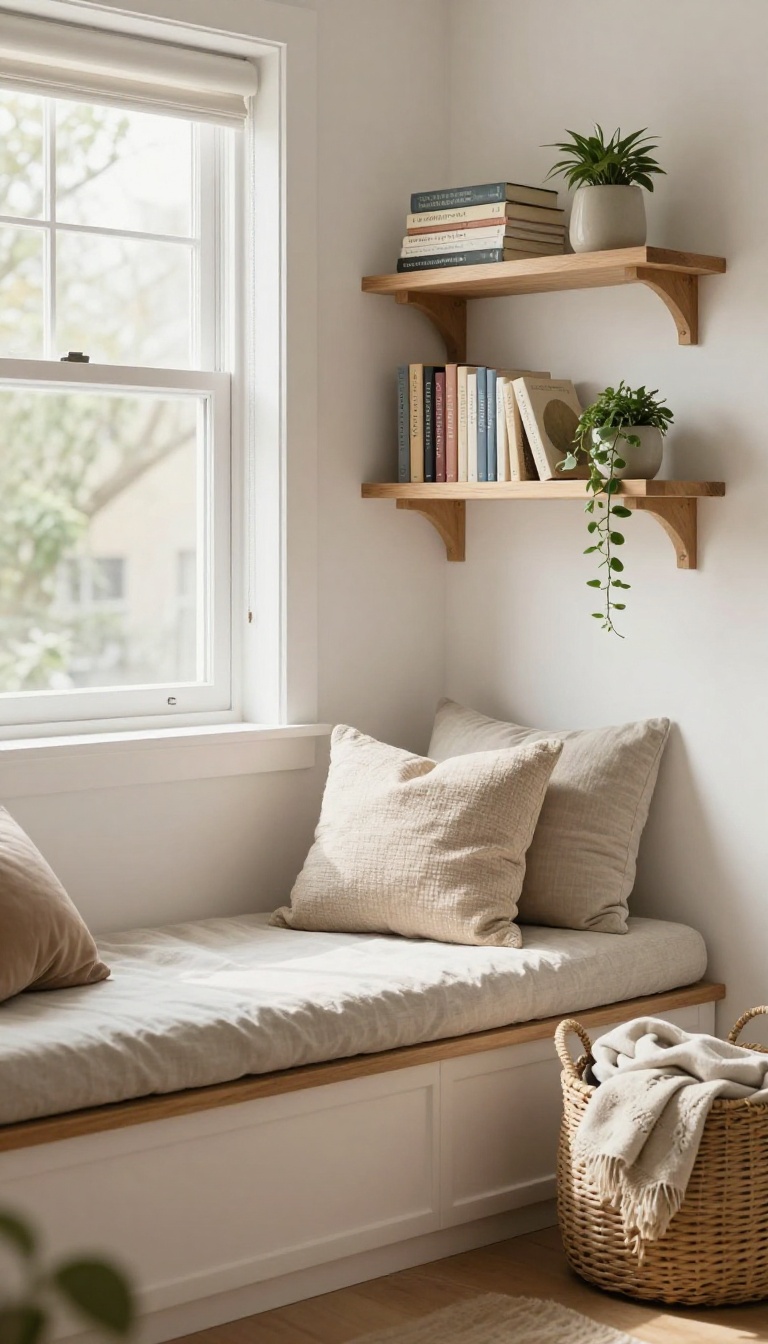
A shelf that doubles as a seat turns an unused corner into the best spot in the room. You get storage above and a place to sit below, all in one footprint. It feels deliberate, like the room was designed around your reading habit.
This works best where you have a window, a blank wall, or a corner that collects nothing but dust. The seat can be a simple bench, a window seat, or a cushioned box. Shelves go above it, beside it, or both.
The key is keeping the seat shallow enough to walk past and the shelves high enough to avoid head bumps.
Pick The Right Spot
Windows are the obvious choice because natural light makes reading easier. But a blank wall near an outlet works too, especially if you add a wall sconce. Corners are great because they feel cozy and use space that would otherwise go to waste.
Just make sure the seat doesn't block a door swing or a closet.
Build Or Buy The Seat
You can build a simple bench from plywood and paint it to match the wall. Or buy a storage bench and add shelves above it. Window seats often have hidden storage underneath, which is perfect for blankets or off-season clothes.
If you're not handy, a cushioned storage ottoman pushed against the wall can work as a temporary seat.
Add Shelves That Fit The Space
Floating shelves above the seat keep the look clean and modern. If you need more storage, go with a tall bookcase on one side and shelves on the other. Asymmetrical arrangements feel more custom.
Just keep the shelves within arm's reach so you can grab a book without getting up.
Make It Comfortable
A seat is only as good as its cushion. Use a thick pad or a few pillows for back support. Add a small throw blanket for chilly evenings.
A clip-on reading light or a floor lamp nearby solves the evening light problem. And don't forget a small side table or a shelf ledge for your tea or phone.
11. Open Shelving With Baskets for Hidden Storage
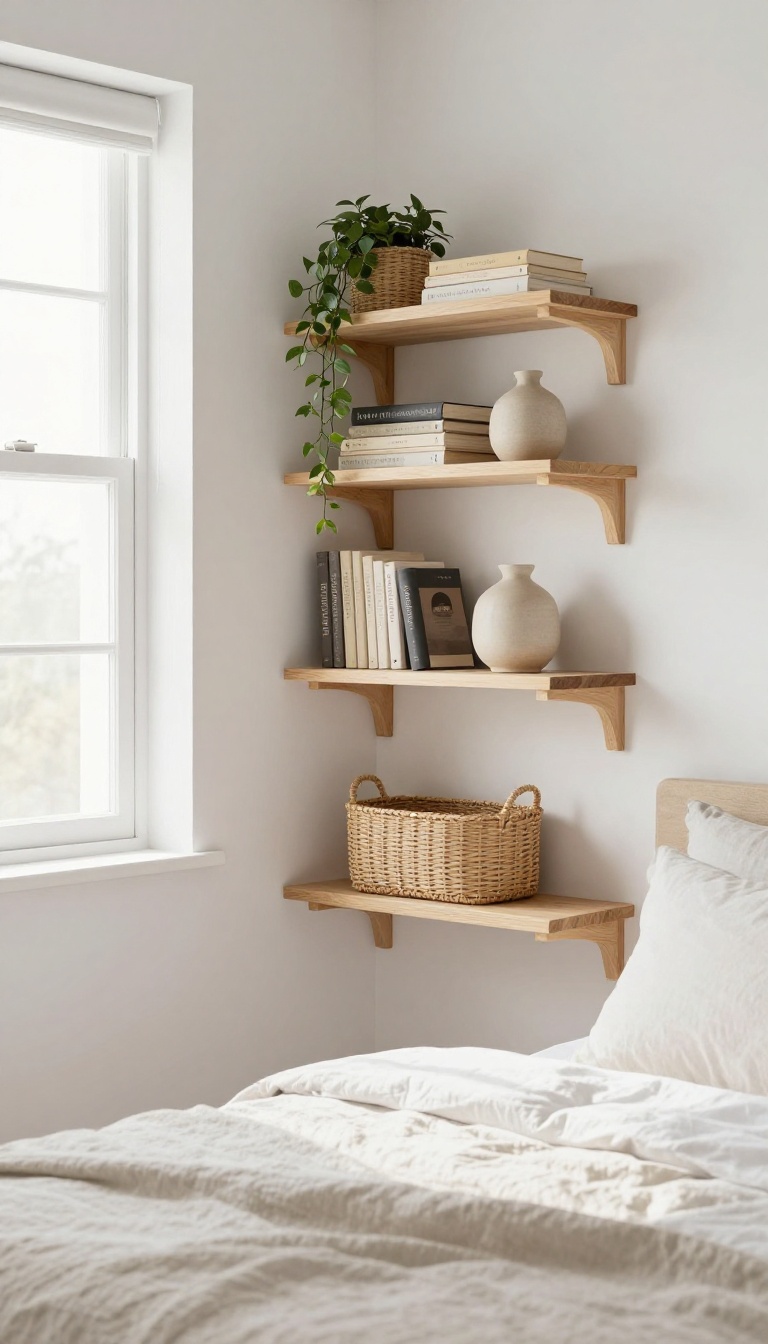
Open shelves show off your books, but they also show off every stray charger, hair tie, and receipt you toss on them. Woven baskets solve that problem without closing everything behind a cabinet door. You get the airy look of open shelving and a place to hide the small stuff that never had a home.
The mix works because baskets add texture and warmth that plain shelves lack. They also break up long rows of books, which keeps the wall from feeling like a library aisle. In a bedroom, that softness matters more than in almost any other room.
This setup suits renters, too. Brackets and baskets come down without wrecking the wall, and you can rearrange the whole thing in an afternoon.
Open shelving with baskets is less a style choice and more a system. The shelves hold what you want to see, and the baskets hold what you don't. Once you sort your things into those two groups, the wall basically runs itself.
The trick is picking baskets that fit your shelf depth and height with a little breathing room. Too tight and they scrape the shelf above. Too loose and they look like they wandered in from another room.
Measure first, then shop.
Pick Baskets That Fit The Shelf
Measure the gap between shelves before you buy anything. You want at least an inch of clearance above the basket so you can lift it out without wrestling it. Depth matters just as much, since a basket that hangs over the front edge looks sloppy from across the room.
Woven baskets come in every size, so bring your measurements to the store or keep them on your phone. Rectangular baskets use shelf space better than round ones. Round baskets look softer, but they leave dead corners you can't fill.
If you can't find the exact size, go slightly smaller rather than larger. A little empty space around a basket reads as intentional. A basket jammed into a shelf reads as a mistake.
What Goes In The Baskets (and What Doesn't)
Baskets are for the awkward stuff: charging cables, sleep masks, journals, loose photos, medication, and the pile of things that collects on a nightstand. Toss them in, and the shelf instantly looks calmer. Keep books, a small plant, and one or two decorative objects out in the open.
Those are the things you actually enjoy looking at. If you hide everything, the shelves lose the point of being open in the first place. One basket per shelf level is usually enough.
Two side by side can work on a long shelf, but three starts to look like storage units instead of a bedroom display.
Mounting And Spacing Tips
Standard shelf brackets work fine, but make sure they're rated for the weight of a full basket. Baskets get heavier than you expect once they're packed with books or electronics. Anchoring into studs is worth the extra effort.
Space shelves 12 to 15 inches apart if you plan to use baskets. That gives you room for a medium-sized one plus a row of books above it. Tighter spacing looks neat but limits what you can store.
Leave the bottom shelf a bit higher off the floor, around 18 inches, so a laundry basket or a larger tote can slide underneath. It's a small detail that adds a lot of function.
Styling So It Doesn't Look Like A Closet
Alternate baskets with open stacks of books to keep the eye moving. A row of identical baskets across every shelf looks like a storage room, not a bedroom. Mix in a candle, a framed photo, or a small vase to break the pattern.
Stick to two or three basket materials at most. Seagrass, jute, and cotton rope all play well together. Adding metal, plastic, and wicker in the same unit gets busy fast.
Finally, don't fill every basket to the brim. Leave a little air inside so you can actually dig around when you need something. A basket you dread opening defeats the purpose.
FAQ
What is the best bookshelf for a small bedroom?
Floating shelves and corner units work best because they use vertical space and keep the floor clear. A skinny tower or cube organizer beside the bed also saves room.
Can I install a bookshelf in a rental without damaging walls?
Yes. Ladder shelves, stacked crates, and freestanding cube units need no drilling. If you want wall shelves, use removable adhesive strips designed for renters.
How do I style a bedroom bookshelf without it looking cluttered?
Mix books with a few decorative items like a small plant, a candle, or a framed photo. Leave some empty space on each shelf so the eye can rest.
Should a bedroom bookshelf match the furniture?
Not necessarily. Matching wood tones creates a cohesive look, but a contrasting finish can add character. Just keep the overall style consistent with the room.
How high should I hang floating shelves in a bedroom?
Leave about 12 to 18 inches between shelves and keep the lowest one at least 18 inches above the bed or furniture. This keeps them reachable and balanced.
Conclusion
A bedroom bookshelf does not have to be big or expensive to make a difference. The right setup keeps your books organized, adds warmth, and makes the room feel more like yours. Pick one idea that fits your space and start there.
You can always add more shelves later as your collection grows. With a little thought, your bedroom can become a cozy reading retreat that works for you every day.