10 Floating Shelves Living Room Mounted TV Decorating Ideas for TV Walls
A wall-mounted TV doesn't have to leave your living room looking bare. Floating shelves can turn that empty space into a stylish, functional focal point.
They add storage, display space, and visual balance without eating up floor area. The right shelf setup can hide cable clutter, showcase your favorite decor, and make the TV feel like part of the room instead of an afterthought.
Whether you want a clean, modern look or a cozy, layered vibe, there's a shelf arrangement that works. Here are 10 floating shelf ideas for living room TV walls that you can actually pull off, no matter your budget or DIY skills.
1. Symmetrical Shelves on Both Sides of the TV
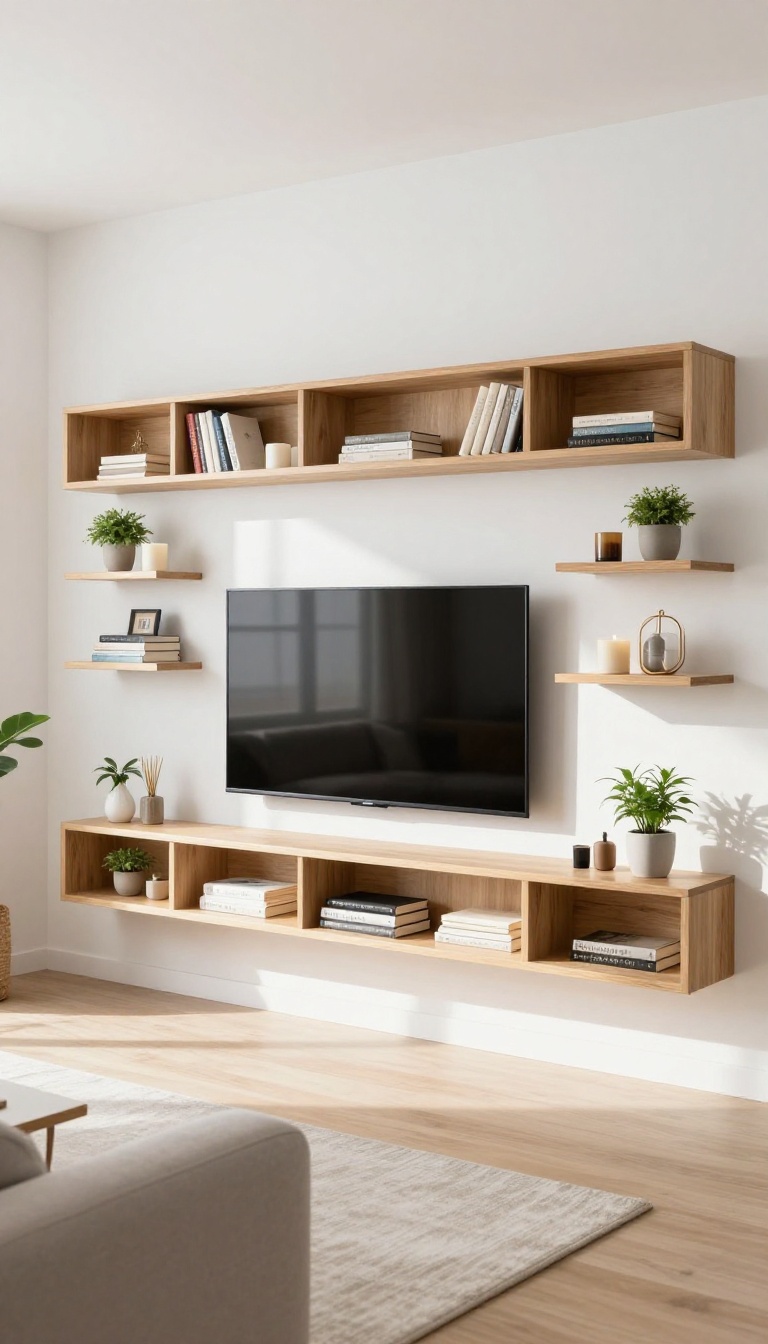
Symmetry is one of the easiest ways to make a TV wall look intentional. When you place matching floating shelves on both sides of the screen, you create a balanced frame that draws the eye to the center without letting the TV dominate the room. It's a classic layout that works in almost any space, from small apartments to large family rooms.
The key is to keep both sides similar in size, height, and spacing. You don't need identical decor, but the overall visual weight should feel even. This approach turns a plain wall into a cohesive display that feels both stylish and functional.
Symmetrical shelves are a go-to for a reason. They bring order to the wall and make the TV feel like part of a designed space rather than a black box stuck on drywall. You can use them to store books, show off small plants, or display a few favorite decorative pieces.
The goal is to frame the screen, not compete with it. When both sides mirror each other, the eye naturally rests on the TV area, but the shelves add interest and softness. This setup also gives you a place to stash remotes, cables, or small accessories that would otherwise clutter your coffee table.
It's practical and polished at the same time. You can adjust the look by changing what you put on the shelves. Keep it minimal with a few books and a candle, or go fuller with layered decor.
Just remember that too much stuff can make the wall feel heavy. A little breathing room goes a long way.
Choosing The Right Shelf Size And Spacing
Measure the distance from the TV to the wall edges. You want the shelves to sit at least a few inches away from the screen so they don't crowd it. A good rule is to leave 6 to 12 inches of space between the TV and the nearest shelf.
For height, align the shelves with the middle or lower half of the TV. Placing them too high can make the wall look top-heavy. Two or three shelves per side usually works best, depending on your ceiling height.
Keep the gap between shelves consistent on both sides. This creates a clean, rhythmic look that feels deliberate. If you're unsure, use a level and measure twice before drilling.
Decorating Without Overdoing It
Start with a few larger items to anchor each shelf, like a small stack of books or a medium-sized plant. Then add one or two smaller pieces, such as a candle or a tiny sculpture. Odd numbers tend to look more natural.
Vary the height of your objects to keep things interesting. A tall vase next to a short bowl creates a nice contrast. But don't mix too many colors or styles—stick to a palette that complements your room.
Leave some empty space on each shelf. Negative space helps the display feel airy and prevents the wall from looking cluttered. You can always rotate items seasonally to keep it fresh.
Hiding Cables And Clutter
Symmetrical shelves can double as a hiding spot for unsightly wires. Run cables behind the shelves or use cable clips to keep them tidy. If your shelves are open, consider woven baskets or decorative boxes to stash small electronics.
Mount a power strip behind the TV or inside a shelf if possible. This keeps cords out of sight and makes it easier to plug in devices. Just make sure you're not overloading any outlets.
For a cleaner look, choose shelves with a back panel or a lip that can conceal cords. Even a simple cable raceway painted to match the wall can make a big difference.
2. A Single Long Shelf Above the TV
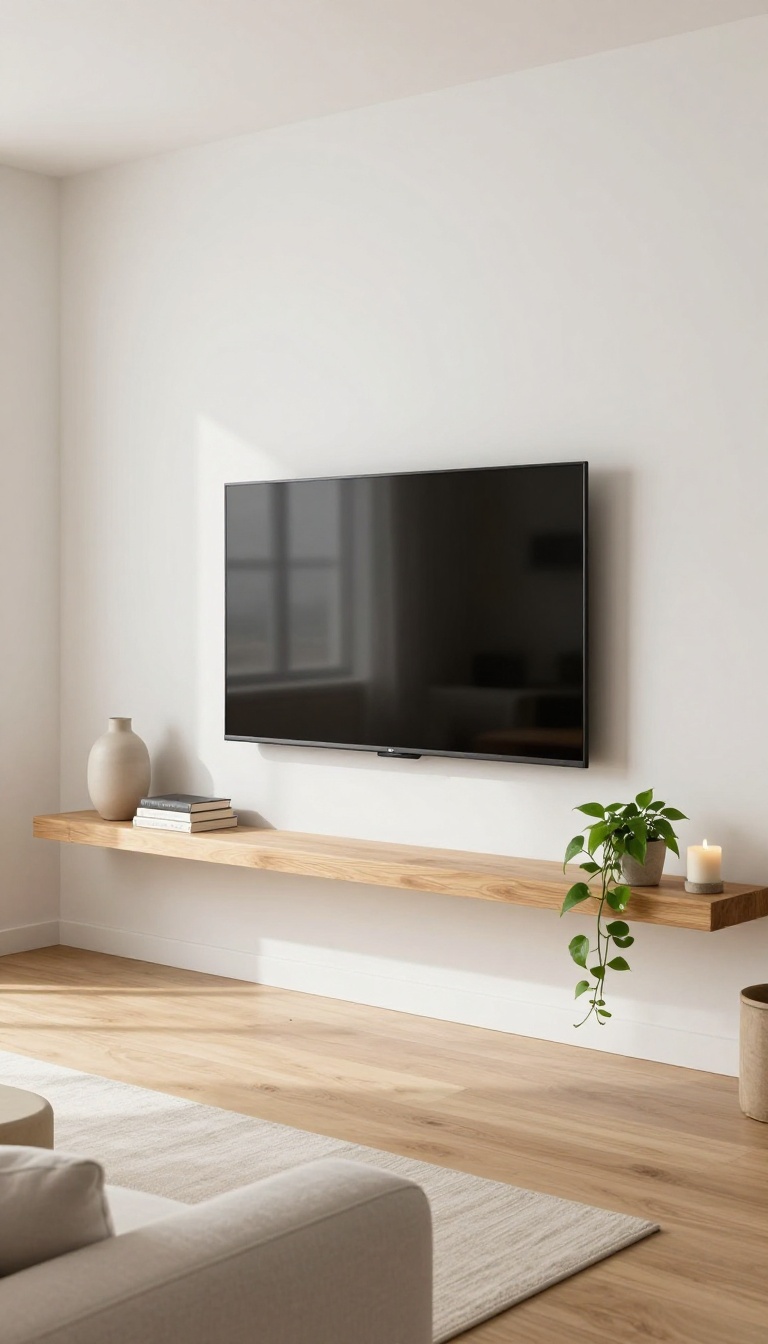
One long floating shelf above the TV keeps things clean and uncluttered. It gives you a spot to display a few favorite pieces without overwhelming the wall. The key is to keep the styling light so the TV still feels like the main event.
A single wide shelf works best when it spans at least the width of your TV, or a few inches wider on each side. That extra length makes the TV feel anchored instead of floating alone. Install it high enough that it doesn't crowd the screen, but low enough that it still feels connected to the setup.
A good rule of thumb is 8 to 12 inches above the top edge of the TV. Styling is where this idea really shines. You don't need much.
A couple of tall vases, a small sculpture, or a trailing plant can draw the eye upward and add life to the wall. The goal is to create a gentle vertical line that balances the horizontal shape of the TV below.
Choosing The Right Shelf Length
Measure your TV first. If it's 55 inches wide, look for a shelf that's at least 60 inches. Wider is usually better here because it creates a stronger visual base.
Just make sure the shelf doesn't extend past the edges of any furniture below, or the whole thing can feel top-heavy.
What To Put On It
Less is more. Pick three to five items max. Mix heights and textures: a tall vase, a small stack of books, a trailing pothos, a candle.
Avoid anything too busy or colorful that competes with the screen. Neutral tones and natural materials tend to work best.
Installation Tips For A Clean Look
Use a floating shelf with a hidden bracket for that seamless look. Anchor it into studs if you can. If you're not handy, a heavy-duty toggle bolt works for lighter decor.
Keep cords hidden by running them behind the wall or using a cable channel painted the same color as the wall.
3. Staggered Shelves for a Modern, Artsy Vibe
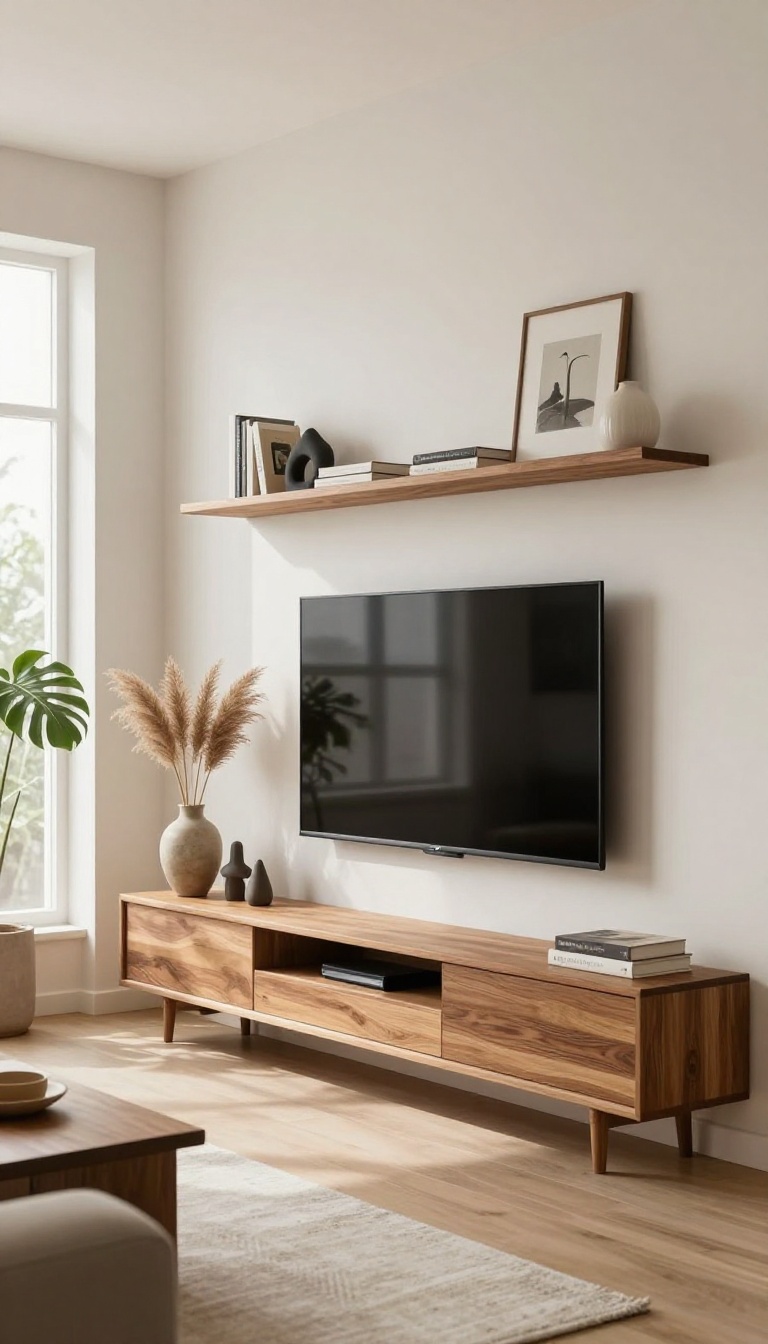
Staggered shelves bring an artistic, modern edge to your TV wall. Instead of matching everything perfectly, you mix shelf lengths and heights to create a dynamic, asymmetrical look. This approach adds visual interest and works especially well in contemporary spaces where a little controlled chaos feels intentional.
Staggered floating shelves are all about breaking the rules—just enough to look cool, not messy. You place shelves at different heights and lengths on one or both sides of the TV. The goal is to guide the eye around the wall in a pleasing, unpredictable way.
This style shines in modern, minimalist, or industrial rooms. It also gives you flexibility to display items of various sizes, from tall vases to small sculptures. The asymmetry keeps things from feeling too rigid or boring.
How To Plan Your Layout
Start by deciding if you want staggered shelves on one side or both sides of the TV. One side keeps things simpler and works well in smaller rooms. Both sides create a bold, gallery-like feel but need more careful balancing.
Sketch your TV wall on paper first. Mark the TV location, then play with shelf sizes and positions. Aim for a mix of long shelves (3–4 feet) and shorter ones (1–2 feet).
Place them at varying heights, but keep the overall arrangement balanced—if you go high on one side, go low on the other.
Picking The Right Shelves
Choose shelves that are at least 1. 5 inches thick for a substantial look. Thin shelves can work, but they might look flimsy with heavier decor.
Floating shelves with hidden brackets are ideal for a clean, modern vibe. Consider the material. Wood shelves add warmth, while metal or glass keep things sleek.
You can also mix materials—like a wood shelf above a metal one—to enhance the artsy feel.
Decorating Without Clutter
Less is more with staggered shelves. Treat each shelf as a mini display. Group items in odd numbers (3 or 5) and vary heights.
Use books stacked horizontally or vertically to add structure. Leave some empty space. Negative space is your friend here—it keeps the look modern and prevents the wall from feeling crowded.
Rotate decor seasonally to keep things fresh.
Installation Tips For A Clean Look
Use a level for every shelf—even staggered ones should be perfectly horizontal. Mark studs or use heavy-duty anchors for secure mounting. If you're not handy, hire a pro; crooked shelves ruin the effect.
Hide cords with cable channels or zip ties. For a truly polished look, consider in-wall cord management. It's worth the effort to keep the focus on your stylish shelves.
4. Corner Shelves to Maximize Awkward Spaces
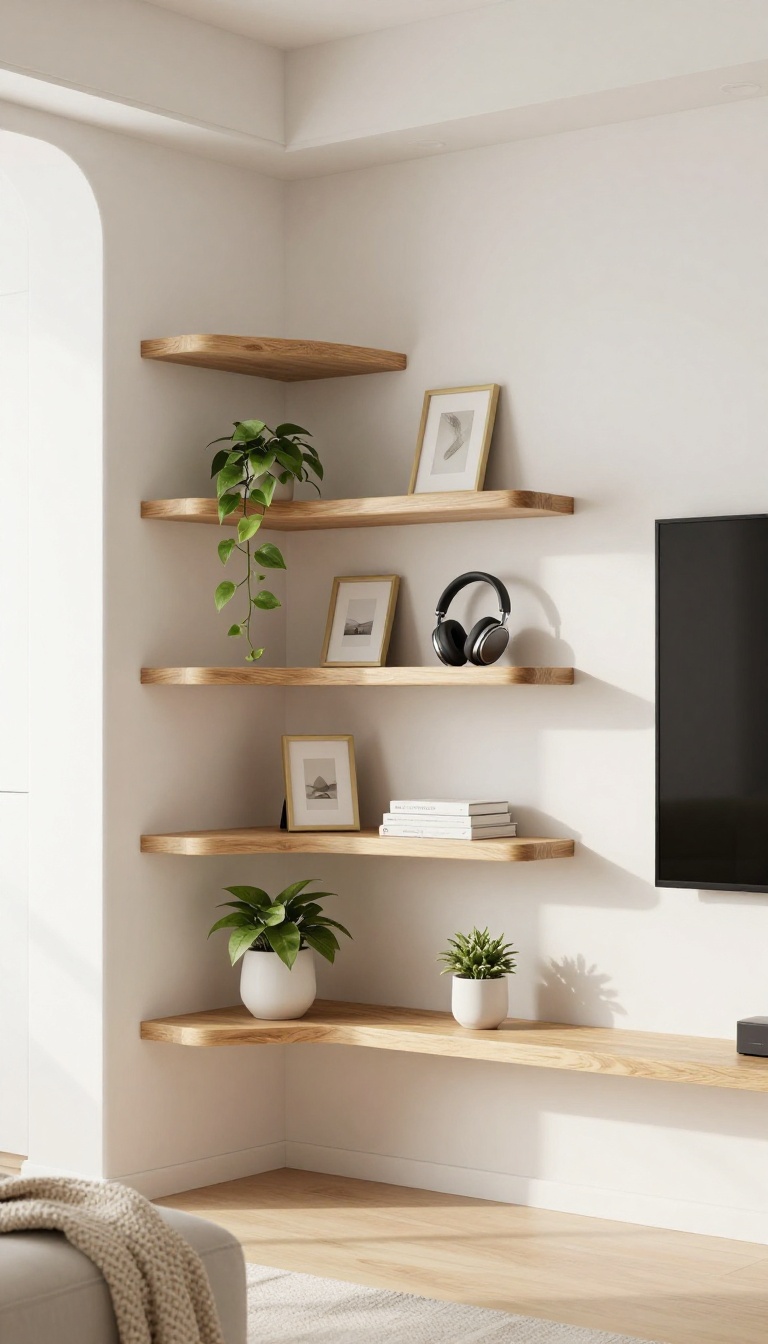
Corners are often the most underused spots in a living room, especially when a wall-mounted TV dominates the main wall. Floating corner shelves turn those awkward angles into smart display areas that don't interfere with your TV setup. They're a game-changer for small spaces where every inch of storage and style counts.
Unlike standard shelves that need a flat wall, corner shelves are designed to fit snugly into 90-degree angles. This makes them perfect for flanking a TV or filling the gap between the TV wall and an adjacent wall. You can use them to hold small plants, picture frames, or even media accessories like remotes and headphones.
Because they sit higher or lower than the TV, they won't block your view or create visual clutter. They also draw the eye outward, making the room feel larger and more balanced. If you have a corner that's just collecting dust, a few floating shelves can transform it into a functional focal point.
Choosing The Right Corner Shelves
Look for shelves with a curved or angled design that matches your corner's angle. Most corner shelves are either 90-degree wedges or quarter-circle shapes. Consider the depth: deeper shelves hold more, but shallow ones look sleeker.
Material matters too—wood adds warmth, while metal or glass keeps things modern.
Placement Tips For Tv Walls
Mount corner shelves at least 12 inches away from the TV to avoid visual crowding. Stagger heights if you're using multiple shelves to create a dynamic look. For a balanced feel, mirror the arrangement on both sides of the TV if you have two corners available.
Keep the shelves level with each other or with nearby wall decor for a cohesive look.
Styling Your Corner Shelves
Less is more in corners—overloading them can make the space feel cramped. Use a mix of tall and short items, like a small vase with dried flowers and a stack of books. Add a tiny trailing plant to soften the corner.
If the shelves are near the TV, avoid bright or reflective items that might distract from the screen.
5. Shelves That Hide Cables and Devices
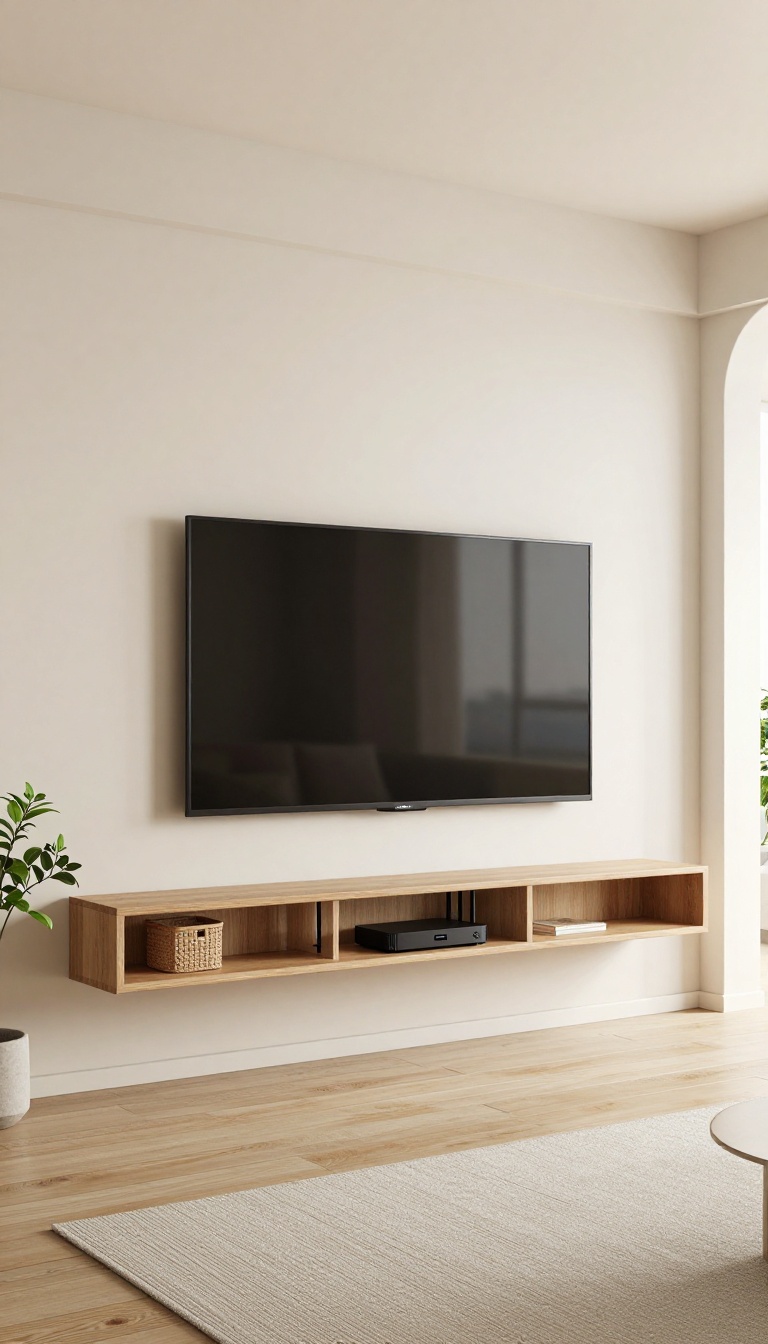
A wall-mounted TV looks sleek until you notice the tangled mess of cords dangling below it. Floating shelves can solve that problem by giving all those cables and gadgets a place to hide. With a little planning, your TV wall stays clean and clutter-free.
The trick is to choose shelves that either have built-in cable management or are positioned to conceal your devices. You don't need to be a tech wizard to pull this off. A few smart choices will keep the focus on your TV, not the wires.
Pick Shelves With Cable Channels
Some floating shelves come with hollow cores or pre-drilled holes designed for routing cables. These let you run power cords, HDMI cables, and internet lines directly through the shelf and out of sight. Look for shelves marketed as 'cable management' or 'wire-friendly' when you shop.
If you already have solid shelves, you can drill your own holes in the back or underside. Just make sure you don't weaken the shelf's structure. A simple grommet or rubber ring around the hole keeps cables from fraying.
Hide Routers And Streaming Boxes
Routers, cable boxes, and streaming sticks are ugly but necessary. Place a floating shelf just below or beside the TV to hold them. To keep them hidden, choose a shelf with a lip or a small basket that fits underneath.
You can also use a shelf with a solid front panel that opens like a drawer. Make sure your devices still get airflow so they don't overheat. Leave a little space around them and avoid enclosing them completely.
Use Baskets And Boxes For Extra Cover
Even if your shelf doesn't have built-in cable management, you can fake it. Woven baskets, decorative boxes, or fabric bins can hold remotes, extra cords, and small devices. Tuck them on the shelf and no one will know what's inside.
Choose containers that match your room's style so they look intentional. This also makes it easy to grab what you need without digging through a mess.
Route Cables Along The Wall
For cables that run from the TV to the shelf, use adhesive cable clips or a raceway kit. These stick to the wall and blend in with your paint color. You can also run cables behind the shelf itself if there's a gap.
Just keep them tight and straight for a neat look. If you're renting, go for damage-free clips that peel off cleanly. A little effort here goes a long way.
6. Floating Shelves with Under-Shelf Lighting
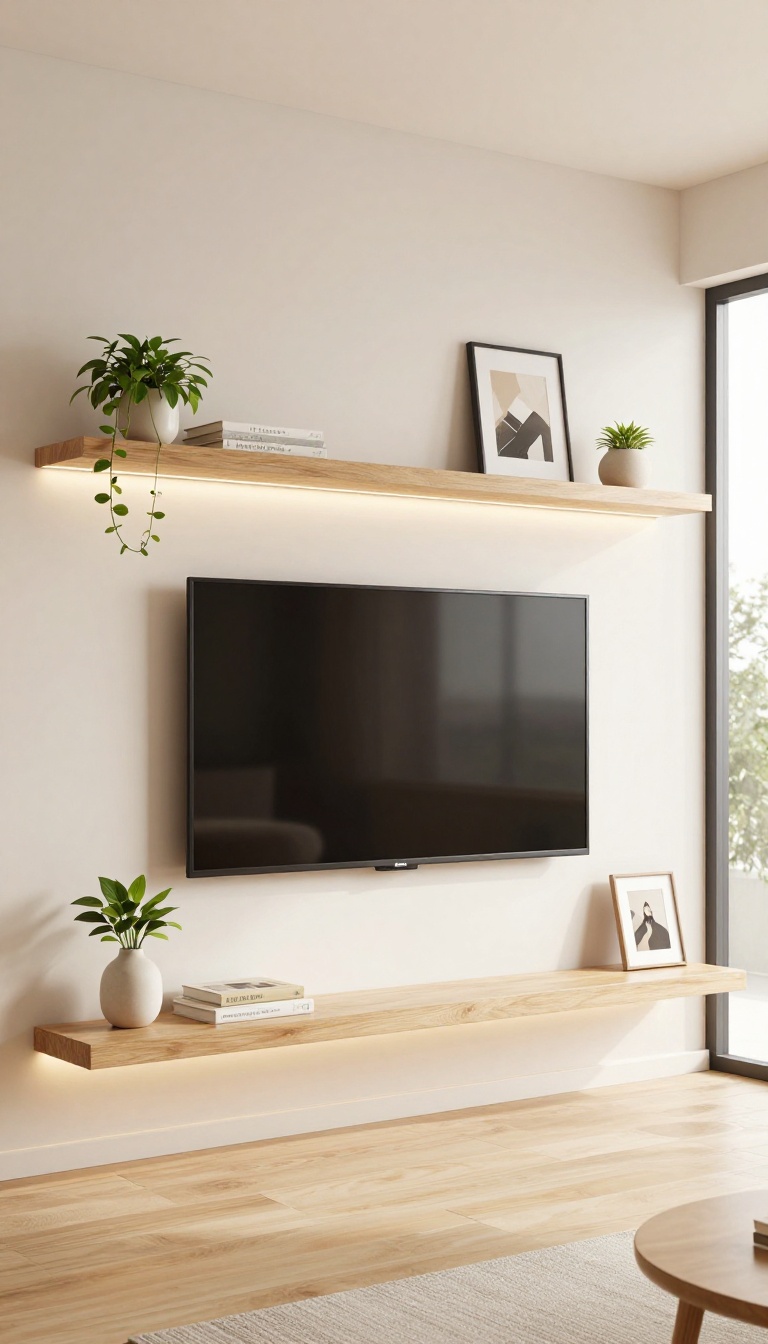
Under-shelf lighting is one of those upgrades that looks expensive but costs very little. You mount a thin LED strip to the underside of your floating shelves, and suddenly your decor gets a soft, even glow. It's practical, too—no harsh reflections on the TV screen, just a warm wash of light that makes movie nights feel intentional.
The magic here is in the contrast. Your TV screen stays bright and clear while the shelves around it get a gentle halo. That separation keeps your eyes comfortable and makes the whole wall feel layered instead of flat.
Plus, you can change the color or brightness depending on your mood or the time of day.
Choosing The Right Led Strip
Look for a warm white or tunable white strip—around 2700K to 3000K—so it feels cozy, not clinical. Dimmable and remote-controlled options are worth the few extra dollars. Avoid anything too bright or cool-toned, which can clash with the screen and create glare.
Installation Tips That Actually Work
Stick the strip near the front edge of the shelf's underside, not the back. That pushes light outward and down, highlighting objects below. Use cable clips or a channel to hide the wiring along the wall, and plug everything into a smart plug so you can control it with your voice or phone.
Styling Decor With A Glow
Backlit shelves make small items pop. Think ceramic vases, framed photos, or a trailing plant. Keep the arrangement simple—three to five pieces per shelf—so the light does the talking.
And if you have a soundbar, place it on a lower shelf and let the under-glow frame it nicely.
7. A Gallery Wall of Shelves and Art
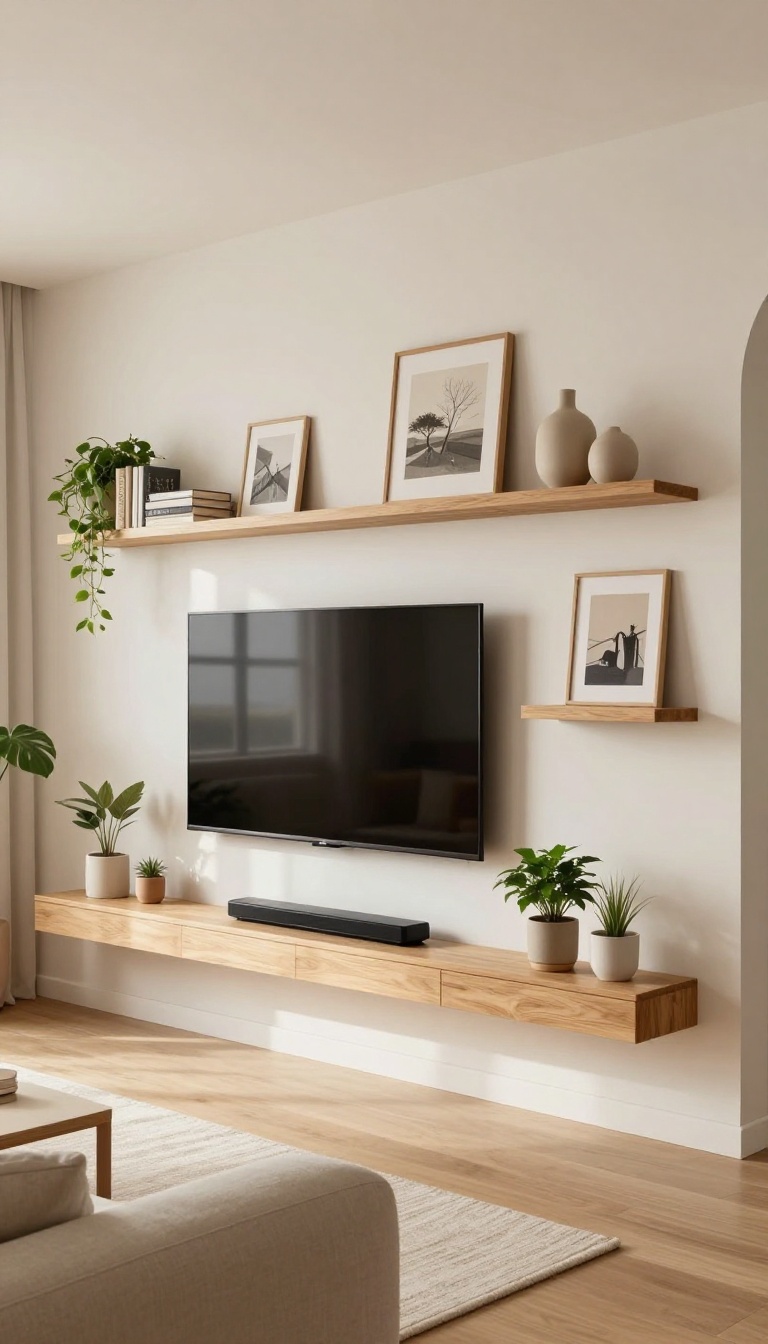
A gallery wall doesn't have to be just frames. Mixing floating shelves into the arrangement gives you a place to set small items, stack books, or lean a print. Around a TV, this approach softens the screen's black rectangle and makes the whole wall feel intentional.
The trick is treating shelves and art as one composition. You're not just hanging stuff; you're building a balanced layout that draws the eye across the wall. Done right, it looks collected over time, not bought in one afternoon.
Start by laying out your gallery on the floor or using paper templates on the wall. Place the TV as your anchor, then arrange shelves and frames around it. Aim for a mix of sizes and shapes, but keep spacing consistent—about two to three inches between pieces works well.
Shelves can sit above, below, or beside the TV. A short shelf under the TV can hold a soundbar and a few small plants. Taller shelves on one side can balance a lopsided arrangement.
The goal is to make the TV feel like one piece of the puzzle, not the only thing on the wall.
Mix Heights And Depths
Don't line everything up at the same level. Let some frames sit higher than shelves, and let shelves project a bit more than flat art. This creates depth and keeps the wall from looking flat.
Use a mix of frame sizes—large statement pieces next to smaller ones. If you have a long shelf, break it up with a tall vase or a stack of books to add vertical interest.
Keep The Tv Visible
The TV is still the main event, so don't bury it. Leave breathing room around the screen. Avoid placing tall objects directly in front of it or crowding the sides too tightly.
If your TV sits low, put most of the gallery above it. If it's centered, spread pieces evenly on both sides. The wall should feel balanced, not heavy on one side.
Choose A Cohesive Palette
A gallery wall can get busy fast. Stick to a loose color story—maybe black-and-white photos with wood shelves, or warm tones with brass frames. This ties the shelves and art together.
You can also repeat a material or shape. For example, use all round frames or all light wood shelves. Consistency makes the mix look deliberate.
8. Chunky Wood Shelves for a Rustic Feel
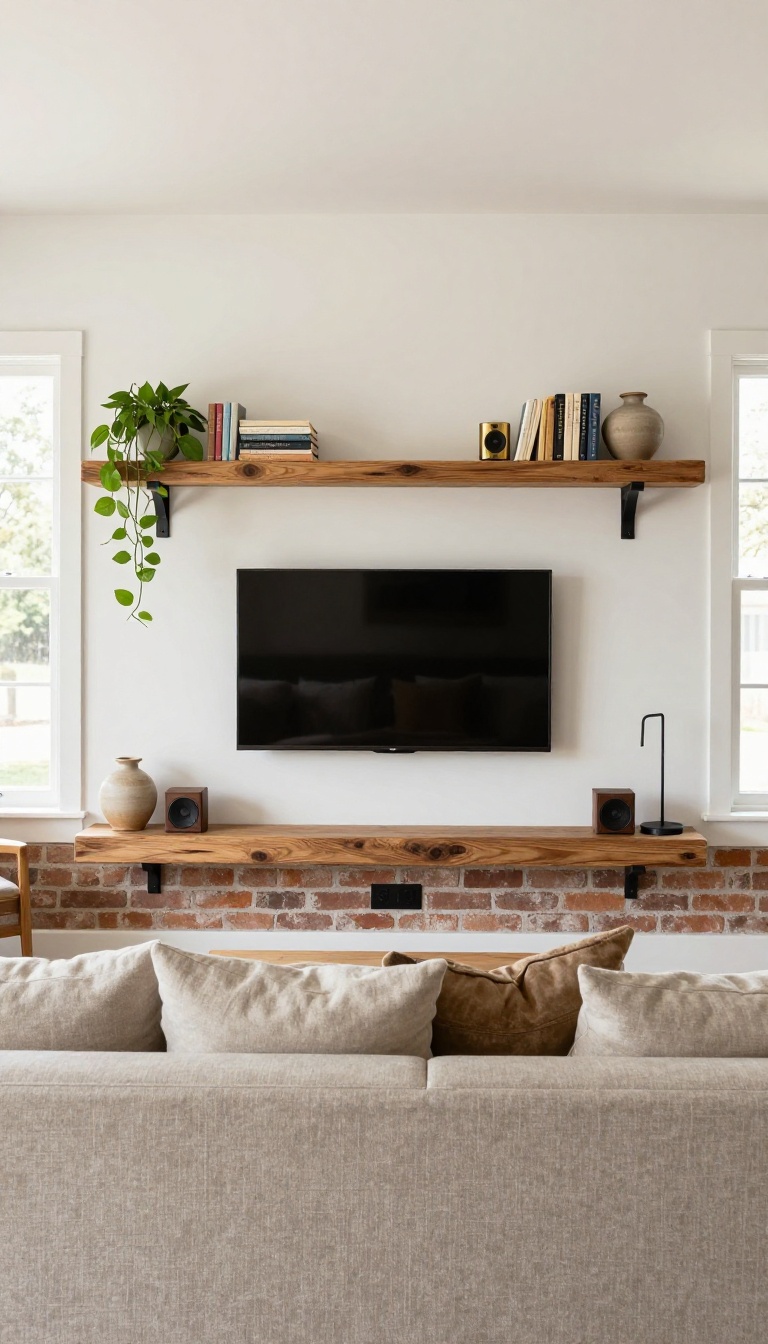
Thick, chunky wood shelves have a way of softening the sharp lines of a modern TV wall. They bring warmth and texture that skinny, painted shelves just can't match. If your living room leans industrial or farmhouse, these shelves will feel right at home.
They're also surprisingly practical because they can hold heavier decor without sagging. Here's how to make chunky wood shelves work on your TV wall without making the space feel heavy or cluttered.
Chunky wood shelves are usually made from reclaimed lumber, thick beams, or solid hardwood. The key is the depth and thickness—think 2 to 3 inches thick and 8 to 12 inches deep. That gives them a substantial, grounded look.
They pair beautifully with exposed brick, metal accents, and neutral walls. And because they're so sturdy, you can style them with books, plants, and even small speakers without worrying about bowing. Just be mindful of scale.
A massive shelf on a small wall can overwhelm the TV. Balance is everything.
Choosing The Right Wood
Reclaimed barn wood is the classic choice for that weathered, rustic look. It comes with natural knots, grain patterns, and imperfections that add character. If you want something a bit cleaner but still warm, go with thick walnut or oak.
These hardwoods stain beautifully and age well over time. Avoid thin veneer shelves—they won't give you the chunky look and can't handle much weight. Solid wood is worth the investment here.
Mounting Heavy Shelves Safely
Chunky shelves are heavy, so you need proper hardware. Use heavy-duty floating shelf brackets or a cleat system that attaches directly to studs. If you can't hit studs, use toggle bolts rated for the weight.
And always check the weight limit of your brackets before loading up the shelf. A level is your best friend here. These shelves are too heavy to adjust later, so get it right the first time.
Styling For Rustic Warmth
Keep it simple and earthy. Stack a few vintage books, add a small potted plant, and maybe a wooden bowl or candle. Mix in a bit of metal or glass to break up all the wood.
A black metal frame or a glass vase adds contrast without stealing the show. Don't overcrowd. Chunky shelves make a statement on their own, so a few well-chosen pieces go a long way.
9. Glass or Acrylic Shelves for a Light, Airy Look
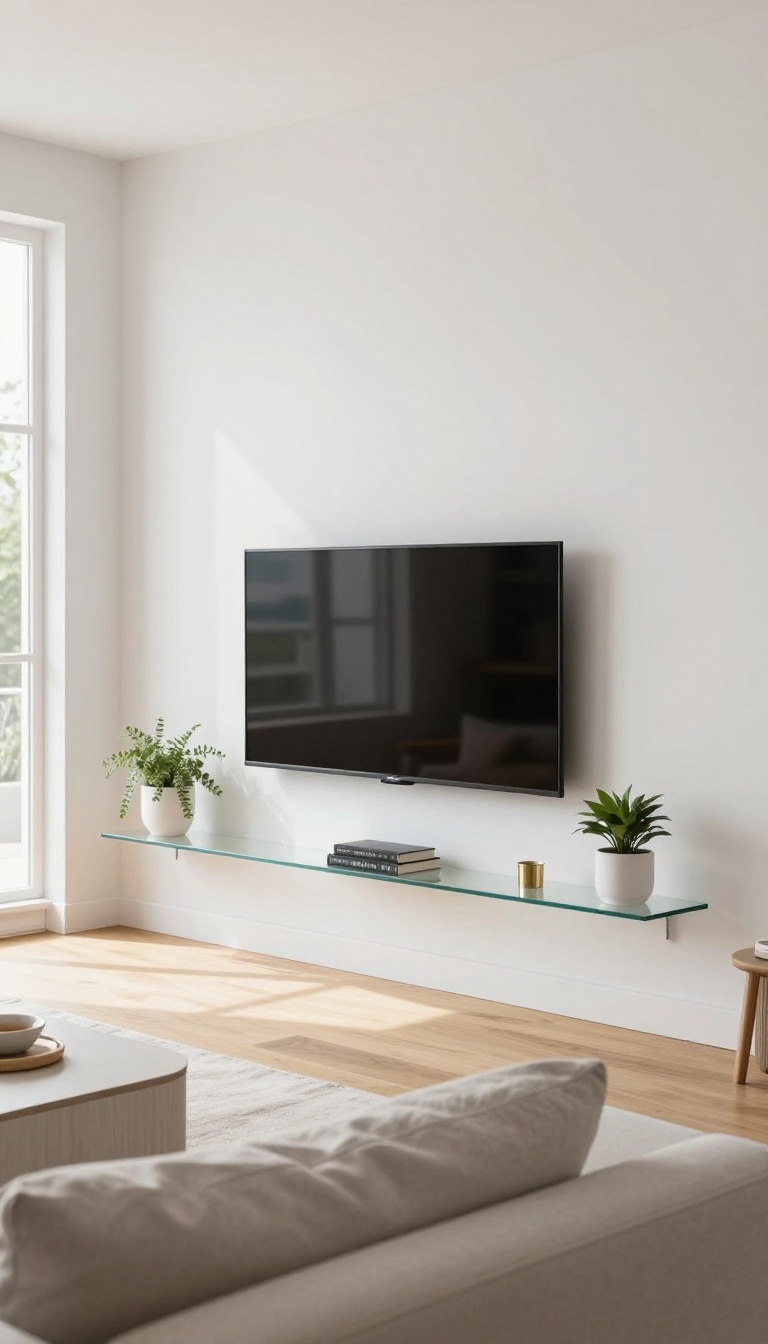
Glass and acrylic shelves almost disappear against the wall, which keeps your TV wall feeling open instead of heavy. They reflect light, so small living rooms look brighter and less cramped. And because they're transparent, your TV stays the star of the show.
These shelves work with almost any decor style, from modern to coastal to minimalist. They're also a smart pick if you rent and want something that won't visually overwhelm the space. Just know they show dust and fingerprints more than wood or metal, so a quick wipe now and then keeps them looking sharp.
Glass and acrylic shelves bring a clean, modern edge to a TV wall without adding visual bulk. They're especially handy in apartments or smaller living rooms where every inch counts. The see-through design means your eye goes straight to the TV and the decor on the shelves, not the shelf itself.
You can mount them in a simple row under the TV, stagger them for a floating effect, or use them to frame the screen on both sides. Clear shelves also pair beautifully with LED strip lighting, since the light passes right through and creates a soft glow. If you want a polished, uncluttered look, this is one of the easiest ways to get it.
Why Transparent Shelves Work So Well
Clear shelves don't block sightlines, so the wall feels bigger and less busy. They bounce natural light around the room, which is a huge plus in darker spaces. And they let your TV and decor do the talking instead of competing with chunky shelf frames.
They're also surprisingly versatile. A glass shelf can look sleek and high-end in a modern room, while acrylic gives a more casual, budget-friendly vibe. Either way, the effect is the same: a lighter, more open wall.
Glass Vs. Acrylic: Which Should You Pick?
Glass is heavier, more scratch-resistant, and has a premium feel. It's ideal if you're placing heavier items like small plants or books. Just make sure you install it with proper anchors and check the weight limit.
Acrylic is lighter, cheaper, and easier to drill into drywall. It can scratch more easily, but it's a great choice for renters or anyone on a tight budget. Both come in clear, tinted, or frosted finishes, so you can tweak the look to match your room.
Styling Tips For A Clean, Airy Wall
Keep the decor light and simple. A small trailing plant, a few candles, or a couple of framed photos work better than heavy stacks of books. Too much stuff defeats the purpose of clear shelves.
Use them to hold your streaming device, remote, or soundbar if it's small enough. Add a subtle LED strip underneath for a floating glow at night. And clean them regularly with a microfiber cloth so they stay crystal clear.
10. Shelves as a Room Divider or Zoning Tool
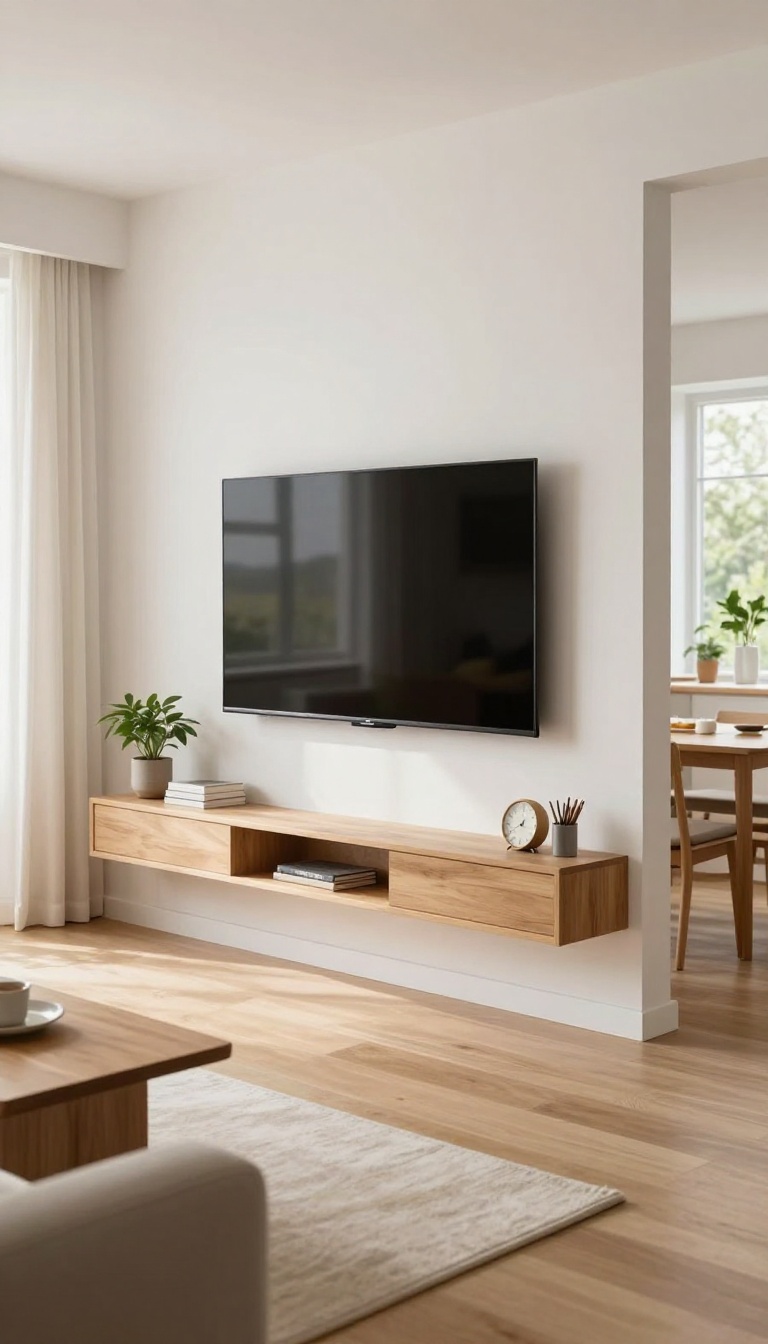
Open floor plans are great until everything starts to blur together. Your couch, your dining table, and your home office can all feel like one big, undefined space. A floating shelf that extends past the TV can quietly fix that.
It draws a soft line in the room without walling anything off.
The trick is to run the shelf wider than the TV itself, so it reaches into the open area beside it. That extra length becomes a visual marker. Your eye reads it as the edge of the living zone, even though air and light still move freely underneath.
You get separation without losing the open feel. This works best when the shelf sits at a height that lines up with the TV's center or just below it. Too high and it feels like a random ledge.
Too low and it disappears behind furniture. Once it's placed right, the shelf does two jobs at once: it holds decor and it quietly tells the room where one space ends and the next begins.
Pick A Shelf That Reaches Past The Tv
Measure your TV width first, then add at least 12 to 18 inches on the side facing the open room. That overhang is what creates the zoning effect. A single long shelf reads cleaner than two short ones here.
If your TV is 55 inches, look for a shelf around 70 to 80 inches.
Style Each Side For Its Zone
Treat the shelf like two mini displays. On the TV side, keep it simple with a small plant or a stack of books. On the far side, lean into whatever that area needs.
A row of cookbooks hints at dining. A small clock and pen cup signal a workspace. The decor itself reinforces the divide.
Keep The Sightline Open
Skip tall, bulky items that block the view across the room. Low bowls, trailing plants, and slim candles work well. You want the shelf to suggest a boundary, not build a wall.
Leave plenty of empty space along the top so light and air pass through.
Match The Shelf To Both Sides
Since this shelf lives between two zones, pick a finish that suits both. Warm wood tones bridge a cozy couch and a modern desk. Matte black or white keeps things neutral.
Avoid anything too rustic or too glossy if the two areas have different vibes.
FAQ
How high should I mount floating shelves above a TV?
Leave at least 12 to 18 inches of space between the top of the TV and the bottom shelf. This prevents visual crowding and keeps the screen from feeling boxed in.
Can floating shelves hold heavy items like books?
Yes, if they're installed into studs or with heavy-duty anchors. Check the weight limit of your brackets and distribute weight evenly across the shelf.
What's the best way to hide cables with floating shelves?
Run cables behind the wall if possible, or use cable raceways and clips. You can also place decor in front of cables to disguise them.
Do floating shelves look good with a wall-mounted TV?
Absolutely. They add texture, storage, and balance. Just keep the styling simple so the TV remains the focal point.
How many floating shelves should I put around my TV?
It depends on the wall size and your needs. Two to four shelves total is usually enough to make an impact without overwhelming the space.
Conclusion
The wall behind your TV can do more than hold a screen. It can hide the cables, add storage, and make the whole room feel finished. Pick one shelf idea that solves your biggest eyesore, whether that is a tangle of wires or a bare stretch of drywall.
Try it for a week before adding another layer. Two or three well-placed shelves will always beat a rushed shopping spree. Let the wall work for you, and stop when it feels balanced.