13 English Cottage Bedroom Ideas Full of Timeless Charm
You want a bedroom that feels like a warm hug—soft, inviting, and full of character. English cottage style delivers exactly that, mixing vintage finds with cozy layers and a relaxed, lived-in vibe. It's not about perfection; it's about charm that grows over time.
Maybe you've inherited a quilt from your grandmother or scored a weathered dresser at a flea market. Those pieces are the heart of this look. The trick is knowing how to pull them together without the room feeling like a museum.
These 13 ideas will help you create a bedroom that's timeless, personal, and effortlessly comfortable. Pick a few that speak to you, and let the rest inspire your own twist.
1. Start with a Soft, Muted Color Palette
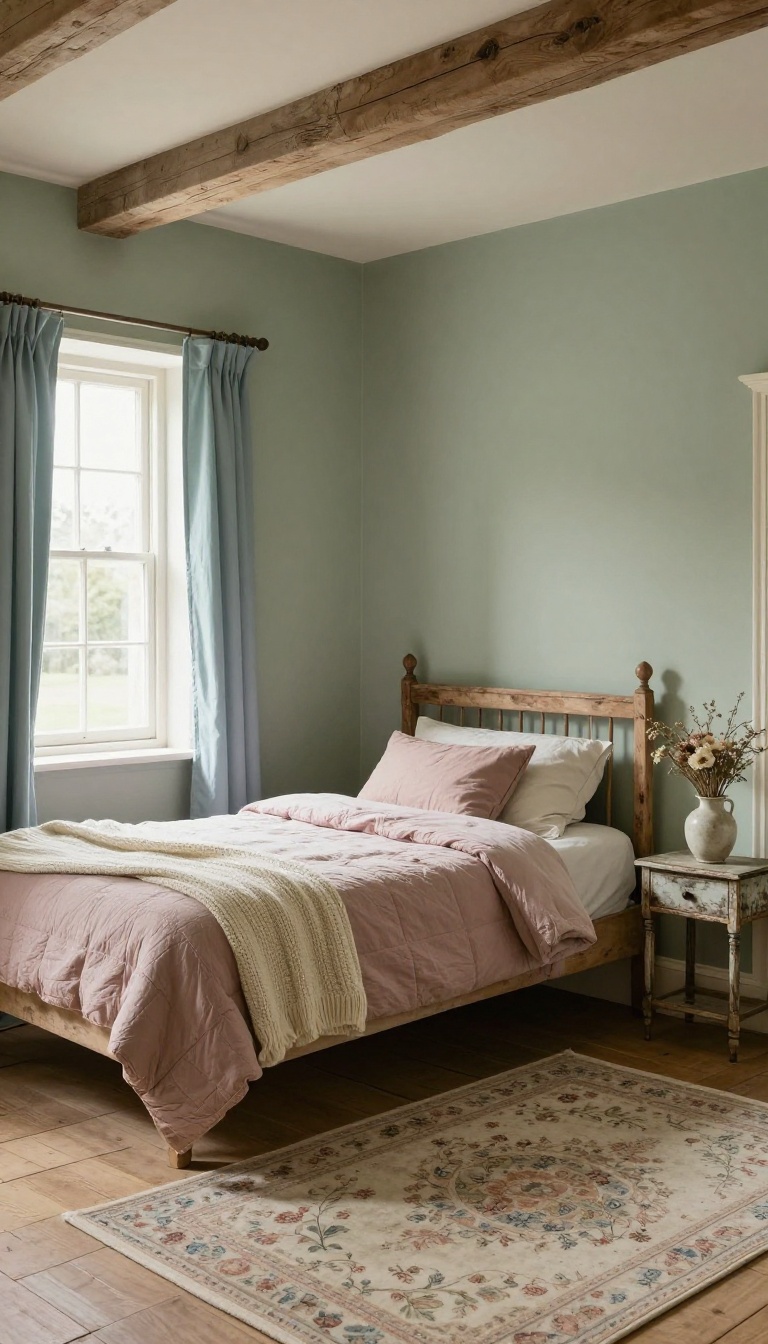
Color sets the mood before you add a single piece of furniture. For an English cottage bedroom, you want shades that feel like a gentle morning—soft, faded, and easy on the eyes. Think of colors that have been washed by time: sage green, dusty rose, cream, pale blue, and warm gray.
These tones create a calm backdrop that lets your vintage finds shine without competing for attention. They also make the room feel timeless, not trendy, so you won't want to repaint in a year.
A muted palette works because it mimics the natural aging of English cottages. Walls in these homes often started bright and faded over decades. You can recreate that look with paint that has a chalky or matte finish.
Avoid anything too saturated or shiny—it breaks the soft, lived-in feel. Instead, choose colors that look like they've always been there. Pair them with white or off-white trim to keep things crisp but not stark.
The goal is a room that feels collected, not decorated.
Pick Your Base: Walls And Trim
Start with the walls. A soft sage green or warm cream makes the room feel instantly cozy. If you want a bit more depth, try a dusty blue on the walls and keep the trim in a creamy white.
For trim, avoid pure white—it can look too modern. Instead, use an off-white or antique white that feels gently aged. This combination creates a seamless, airy feel that's perfect for a cottage bedroom.
Layer In Faded Accents
Once your base is set, bring in muted accents through textiles. A quilt in dusty rose, curtains in pale blue, or a rug with faded floral patterns all work beautifully. These pieces add warmth without overwhelming the space.
Look for fabrics that look slightly worn or washed—they add to the cottage charm. Don't be afraid to mix patterns, as long as the colors stay within the same soft family.
Keep It Consistent
Consistency is key to a timeless look. Carry your muted palette through every layer—from bedding to lampshades to artwork. If you introduce a new color, make sure it's a softer version of something already in the room.
This keeps the space feeling harmonious. And remember, you can always add a pop of deeper color in small doses, like a single pillow or a vase, but keep the overall tone gentle.
2. Layer Vintage Floral Prints Without Going Overboard
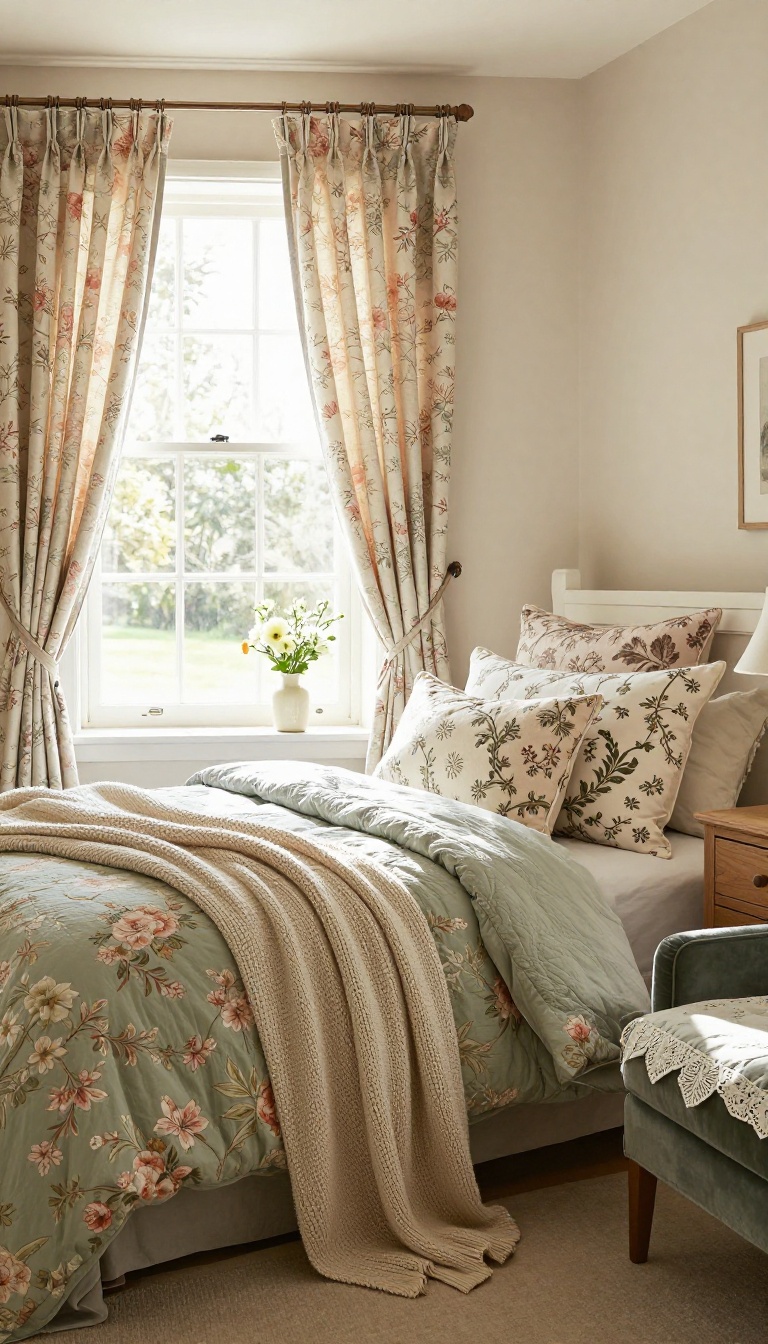
Florals can turn a plain bedroom into a storybook retreat, but pile on too many and you're suddenly sleeping in a wallpaper sample book. The secret is layering prints in a way that feels collected, not chaotic. Think of it like arranging a bouquet—you want variety, but every stem should belong.
Start by choosing a color palette that ties everything together. Pull two or three shades from your favorite floral fabric and repeat them in different patterns. A dusty rose and sage green, for example, can show up in a large-scale curtain print, a small-scale pillow, and a solid quilt.
That repetition is what makes the mix look intentional. Scale is your best friend here. If every floral is the same size, the room feels flat.
Combine a bold, oversized bloom with a ditsy print and a medium-scale vine. The contrast keeps the eye moving and prevents any one pattern from dominating. Don't forget texture.
Vintage florals often come on cotton or linen, but you can add velvet, lace, or even a chunky knit to break up the visual repetition. A floral duvet with a textured throw at the foot of the bed adds depth without adding another print. Finally, give the patterns some breathing room.
Solid-colored walls, neutral furniture, and simple accessories act like a palate cleanser. They let the florals shine without competing for attention. If you're nervous, start with just two floral elements and build from there.
Pick A Base Palette
Choose two or three colors that appear in your main floral fabric. Use those same colors in other patterns and solids throughout the room. This instantly creates a cohesive look, even if the prints are wildly different.
Mix Up The Scale
Pair a large-scale floral with a small-scale print and a medium one. The size difference keeps the eye interested and stops the patterns from blurring together. A big cabbage rose on curtains, tiny daisies on pillowcases, and a medium vine on a throw blanket is a winning combo.
Add Texture For Depth
Layer in non-floral textures like lace, velvet, or woven wool. A crocheted afghan or a linen bed skirt adds tactile contrast. It makes the florals feel like part of a richer whole, not the only act in town.
3. Add a Quilt or Coverlet for Instant Cottage Charm
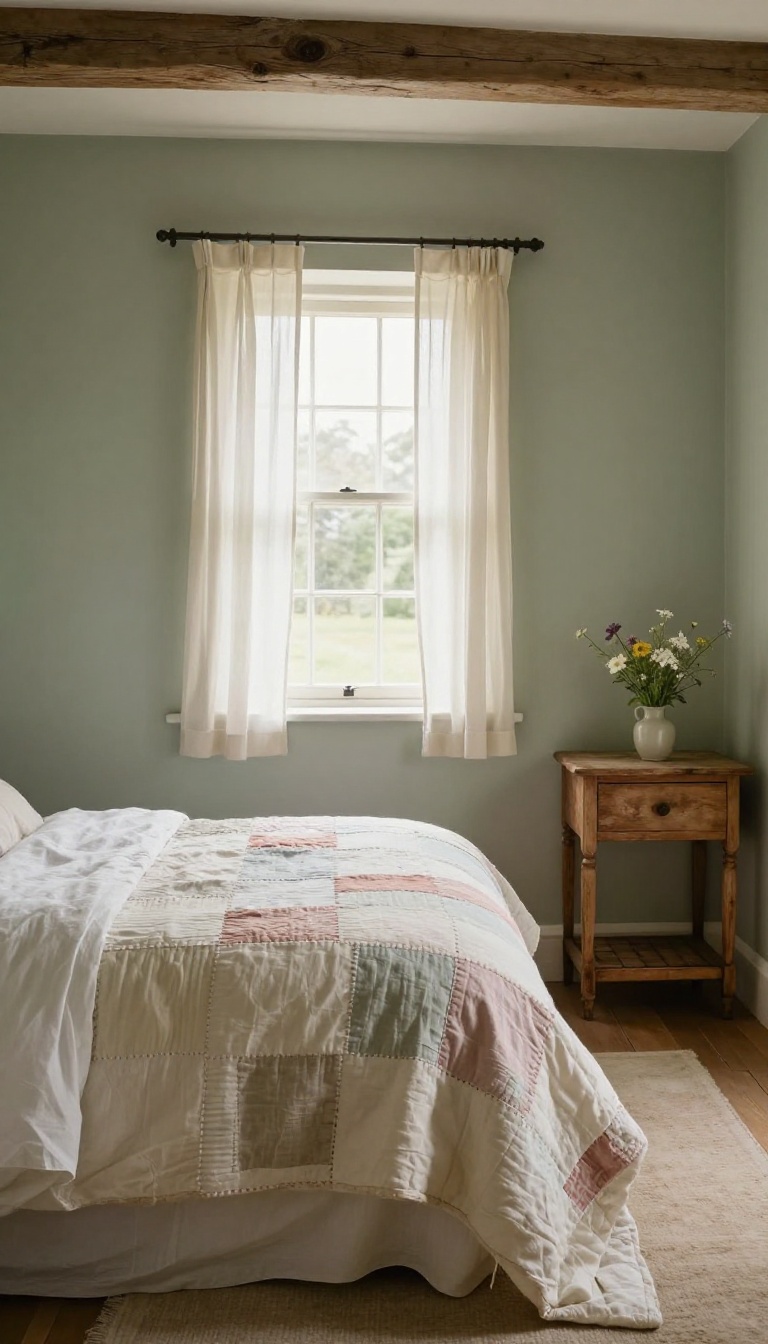
A patchwork quilt or textured coverlet does more for a cottage bedroom than any other single layer. It brings warmth, history, and that lived-in softness you can't fake with new bedding. Whether it's a family heirloom or a thrifted find, it instantly makes the bed feel like the heart of the room.
The best part? You don't need to hunt down a priceless antique. A simple coverlet in the right texture or a quilt with a few worn spots can be just as charming.
The goal is character, not perfection.
Quilts and coverlets are the workhorses of cottage style. They add color, pattern, and texture without trying too hard. And because they're often handmade or vintage, they carry a story that makes your bedroom feel personal.
You can layer them over a plain duvet or use them alone in warmer months. Either way, they soften the look of the bed and tie together mismatched linens. If you're starting from scratch, a quilt is one of the easiest ways to inject instant cottage charm.
Choose The Right Texture And Weight
For a true cottage feel, look for natural fibers like cotton, linen, or wool. A lightweight quilt works well in summer, while a heavier coverlet or wool blanket adds cozy warmth in winter. Mixing weights lets you layer throughout the year.
Texture matters as much as color. A nubby linen coverlet or a quilt with visible stitching adds depth to the bed. If your room feels flat, a textured quilt can wake it up without adding busy patterns.
Mix Patterns Without The Chaos
Patchwork quilts are already a mix of patterns, so keep the rest of the bed simple. Pair a busy quilt with a solid duvet or plain sheets. If you want to layer another pattern, choose a small-scale print that shares a color with the quilt.
A good rule: let the quilt be the star. Add one accent pillow in a complementary pattern, and stop there. Too many prints and the bed starts to feel cluttered instead of collected.
Where To Find Quilts And Coverlets
Thrift stores, estate sales, and flea markets are goldmines for vintage quilts. Check for loose stitching or stains, but don't shy away from a little wear—it adds to the charm. Online marketplaces often have handmade quilts at reasonable prices.
If you want something new, look for quilted coverlets from brands that specialize in cottage-style bedding. Etsy is another great source for handmade quilts in traditional patterns. And don't overlook your own family—a relative might have a quilt tucked away in a closet.
Styling Tips For A Relaxed Look
Don't make the bed too perfectly. Let the quilt hang slightly uneven, and fold back the top edge to show off a contrasting sheet or blanket. A quilt draped over the foot of the bed works well if you prefer a simpler look.
In summer, use just the quilt with a lightweight blanket underneath. In winter, layer it over a duvet and add a throw at the end. The goal is effortless, not fussy.
4. Choose a Wooden Bed with Character
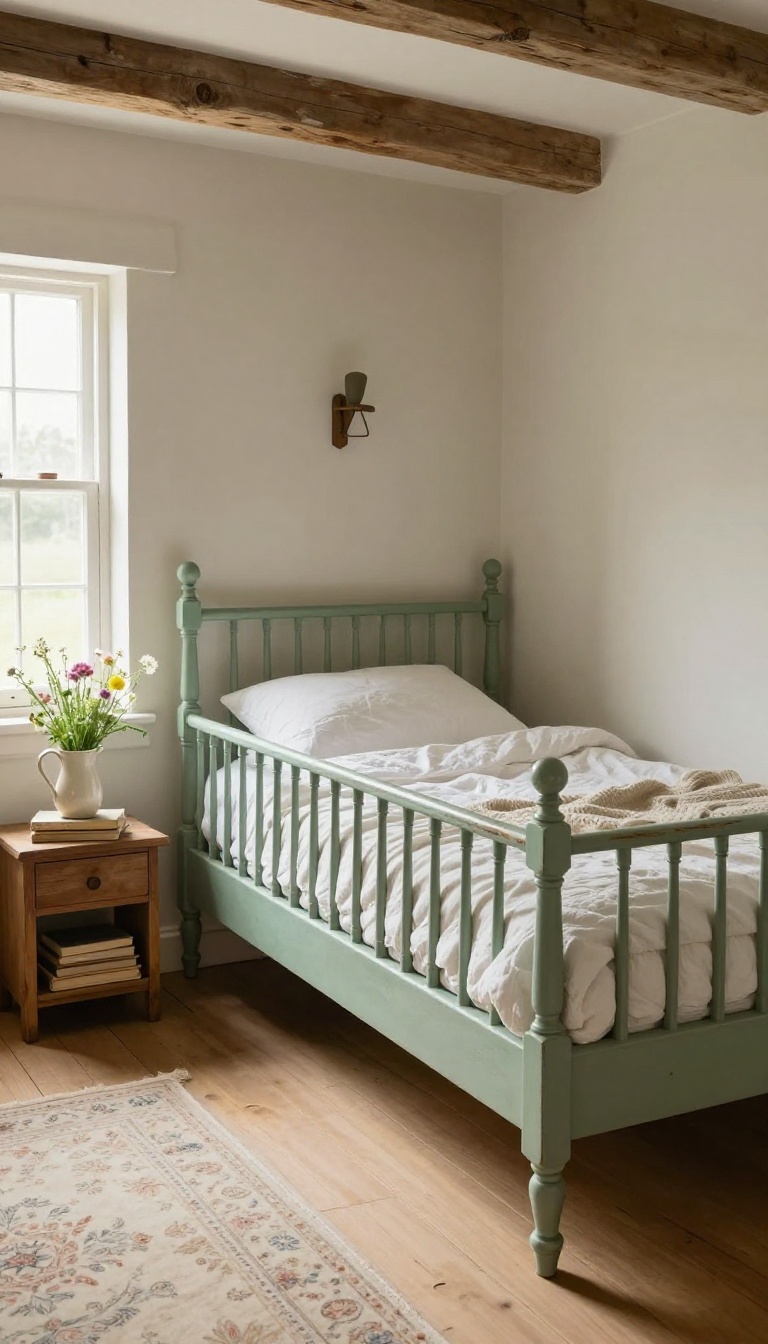
Your bed is the anchor of the room, so it should feel like it belongs in a storybook cottage. A wooden frame with a little age and personality sets the tone better than anything else. Think painted spindles, weathered oak, or a brass frame that's seen a few decades.
The right bed doesn't just hold a mattress—it tells a story. In an English cottage bedroom, you want something that looks like it's been passed down or discovered in a dusty attic. New furniture can work, but it needs to have that same handcrafted, lived-in feel.
Look for details like turned legs, hand-painted finishes, or a slightly uneven patina. These imperfections are what make the room feel cozy and real, not staged.
Painted Spindle Beds
A spindle bed painted in a soft, muted color—think sage green, dusty blue, or creamy white—instantly adds cottage charm. The vertical spindles create a light, airy look that keeps the room from feeling heavy. You can often find vintage ones at flea markets or estate sales, or paint a newer frame to get the same effect.
Just make sure the paint job looks slightly worn, not perfect. A little sanding on the edges goes a long way.
Weathered Oak Frames
Oak is sturdy and timeless, but it's the weathered finish that makes it cottage-worthy. Look for a frame with visible grain and a matte, aged surface. If you find a piece that's too shiny, you can tone it down with a coat of wax or a diluted paint wash.
The goal is to make it look like it's been in the family for generations. Pair it with a patchwork quilt or a linen duvet to soften the look.
Antique Brass Beds
A brass bed adds a touch of vintage elegance without feeling stuffy. The warm metal tones complement both cool and warm color palettes. Antique brass often has a dull, mellowed finish that's perfect for cottage style—avoid anything too polished or new-looking.
If you find one with a little rust or tarnish, don't worry; it just adds to the character. Top it with a floral or striped duvet, and you're done.
5. Use Ruffles and Pleats on Bedding and Curtains
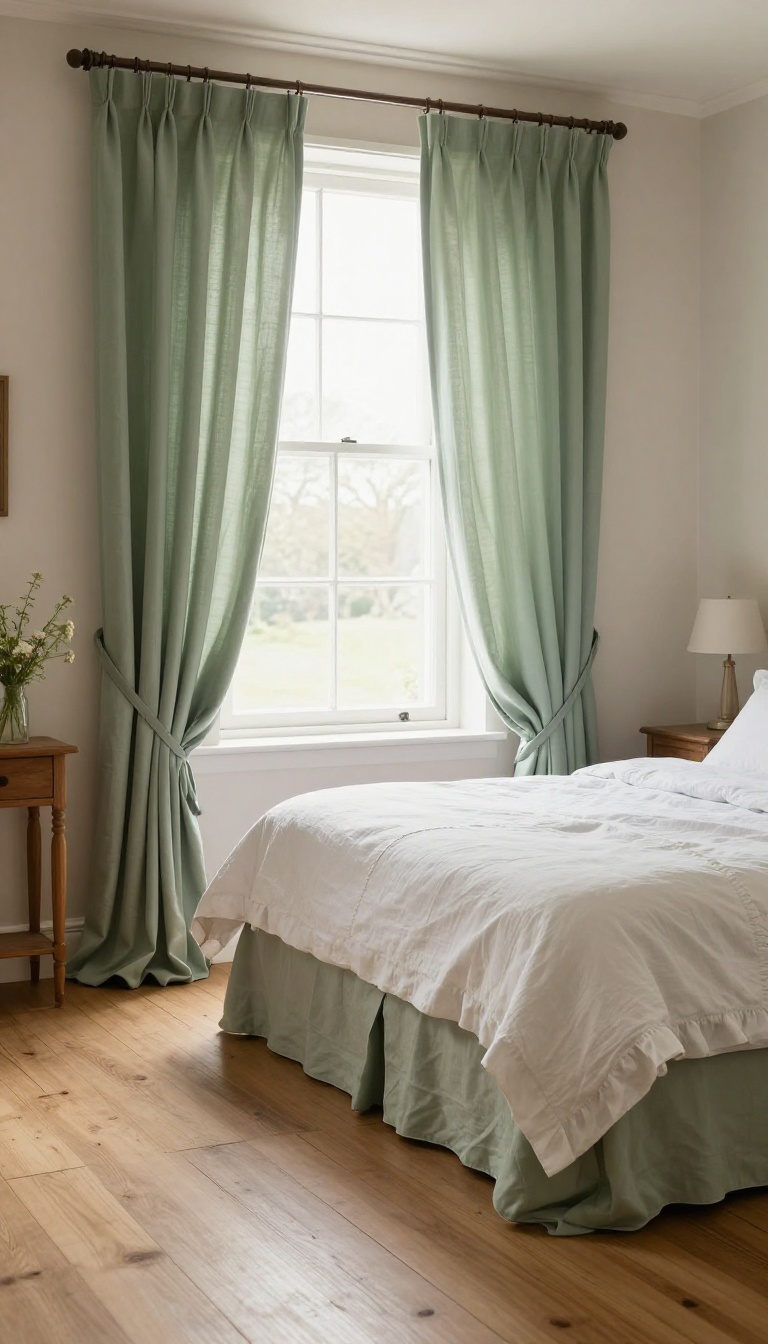
Ruffles and pleats add a layer of softness that flat fabrics just can't match. They catch the light, create gentle shadows, and make even a simple bed feel like a cozy retreat. You don't need to go full Victorian to get the effect—just a few well-placed details will do it.
The trick is to use ruffles and pleats where they'll have the most impact without overwhelming the room. Start with your bedding and curtains, since those are the largest fabric surfaces. A little texture here goes a long way.
Ruffled Pillowcases
Swap your plain pillowcases for ones with a delicate ruffle edge. It's a small change that instantly softens the bed. Look for cotton or linen with a narrow ruffle—too wide and it starts to feel fussy.
Mixing ruffled shams with smooth ones keeps the look balanced.
Pleated Bed Skirt
A pleated bed skirt hides storage and adds a tailored touch. Choose a fabric that matches your curtains or duvet for a cohesive look. Box pleats are classic, while knife pleats feel a bit more modern.
Either way, it's an easy way to dress up the base of your bed.
Gathered Linen Curtains
Linen curtains with a gentle gather bring a relaxed, romantic feel to windows. They filter light beautifully and add softness to the room. Hang them high and let them pool slightly on the floor for that effortless cottage look.
Avoid heavy linings—you want them to feel airy.
6. Mix Old and New Furniture for a Collected Feel
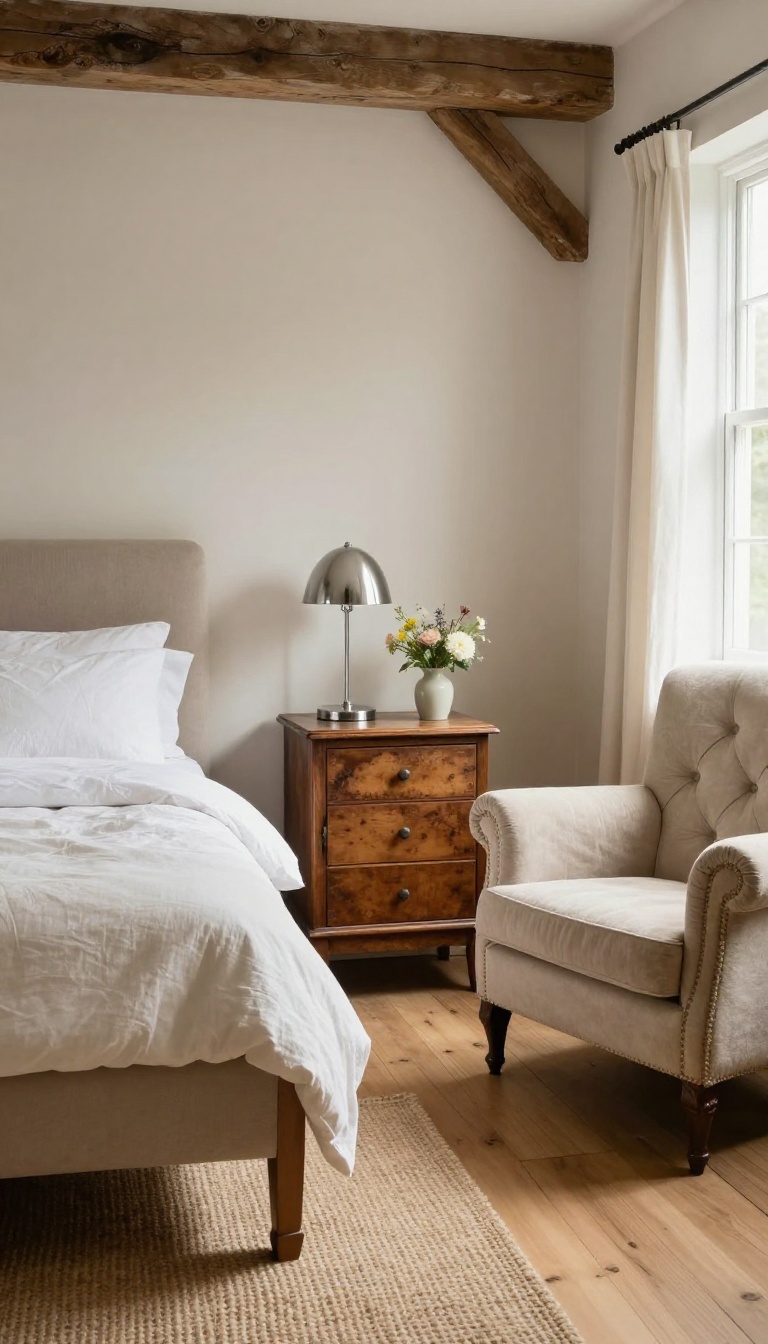
A room that's all antiques can feel like a time capsule, and a room that's all new can feel like a showroom. The sweet spot is somewhere in between. Mixing old and new pieces gives your cottage bedroom a layered, collected look that feels personal and lived-in.
You don't need a designer's eye to pull it off. The trick is balancing eras, textures, and finishes so nothing feels too matchy. A vintage nightstand next to a modern lamp, or an antique chair with a fresh cushion, instantly adds depth without a full overhaul.
Start with what you already own. Then add one or two new pieces that speak to you. The contrast is what makes the room interesting.
When you mix old and new, you're not just filling space—you're telling a story. Each piece brings its own history, and together they create a room that feels curated over time. Here's how to get the balance right.
Start With A Vintage Anchor
Pick one or two vintage pieces that you love and build around them. A worn wooden dresser or a tufted antique chair can set the tone for the whole room. These pieces don't have to be perfect—a little patina adds character.
Once you have your anchors, choose modern items that complement rather than compete. A sleek metal lamp or a simple linen headboard can modernize the space without stealing the spotlight.
Contrast Materials And Textures
Pair rough with smooth, shiny with matte. An old wooden nightstand looks great with a glossy ceramic lamp. A velvet antique settee pops against a woven jute rug.
Mixing textures keeps the room from feeling flat. It also makes each piece stand out more. Try combining metal, wood, glass, and fabric in different combinations until it feels right.
Keep The Color Palette Cohesive
Even with mixed eras, a consistent color palette ties everything together. Stick to soft, muted tones like cream, sage, dusty blue, or blush. Then let your vintage pieces bring in deeper, richer hues.
If you love a bold color, use it sparingly—maybe on a cushion or a throw. That way, the room feels collected, not chaotic.
Edit As You Go
A collected look doesn't happen overnight. Live with your mix for a week or two and see what feels off. Maybe that modern lamp is too shiny, or the antique chair needs a different cushion.
Don't be afraid to swap things out. The goal is a room that feels like you, not a catalog. Trust your instincts and adjust until it feels just right.
7. Bring in Natural Materials Like Wicker and Rattan
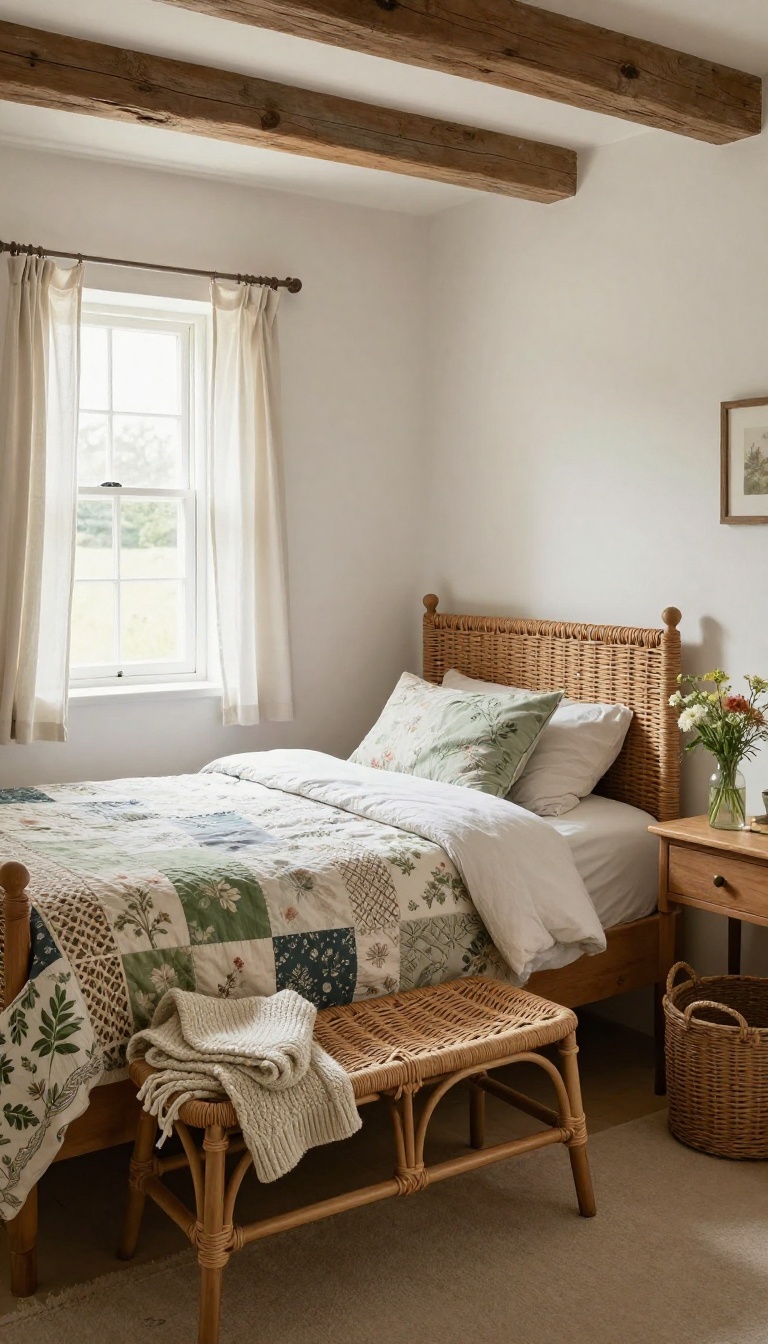
Natural materials have a way of softening a room without trying too hard. Wicker, rattan, and woven fibers bring in an earthy texture that feels relaxed and organic, which is exactly what cottage style is all about. They also add warmth and depth that you just can't get from sleek, modern finishes.
You don't need to overhaul your furniture to make this work. A single wicker headboard, a rattan bench at the foot of the bed, or a few woven baskets can shift the whole mood. These pieces look collected over time, not bought in one trip, and that's part of their charm.
Best of all, they play nicely with everything else you already love—quilts, florals, vintage wood, and soft linens. Think of them as the finishing touch that makes the room feel grounded and lived-in.
Natural materials have a way of softening a room without trying too hard. Wicker, rattan, and woven fibers bring in an earthy texture that feels relaxed and organic, which is exactly what cottage style is all about. They also add warmth and depth that you just can't get from sleek, modern finishes.
You don't need to overhaul your furniture to make this work. A single wicker headboard, a rattan bench at the foot of the bed, or a few woven baskets can shift the whole mood. These pieces look collected over time, not bought in one trip, and that's part of their charm.
Best of all, they play nicely with everything else you already love—quilts, florals, vintage wood, and soft linens. Think of them as the finishing touch that makes the room feel grounded and lived-in.
Start With A Wicker Or Rattan Headboard
A woven headboard instantly adds texture and a handcrafted feel to your bed. Choose a simple arched or rectangular shape in a natural honey or warm brown tone. It pairs beautifully with white or cream bedding, letting the texture do the talking.
If you already have a solid headboard, you can layer a rattan screen or panel behind it for a similar effect. Just make sure it's securely attached and sits flush against the wall.
Add A Rattan Bench Or Stool
A small rattan bench at the foot of the bed is both practical and pretty. It gives you a spot to set a tray, fold a throw, or sit while you put on shoes. Look for one with a cushioned top if you want extra comfort.
A single rattan stool works well as a bedside table alternative, too. It's light enough to move around and adds a casual, organic touch that keeps the room from feeling too formal.
Use Woven Baskets For Storage And Style
Woven baskets are the easiest way to bring in natural texture. Use them to corral extra blankets, store slippers, or hold books and magazines. A large floor basket beside the bed looks intentional and keeps clutter out of sight.
Mix sizes and shapes for a collected look. A set of nesting baskets in different weaves adds visual interest without feeling busy. Just keep the tones within the same warm family—think honey, wheat, and soft brown.
Mix Natural Materials With Soft Textiles
The magic happens when you contrast rough and smooth. Pair a wicker headboard with a linen duvet, or set a rattan bench next to a quilted coverlet. The mix of textures makes the room feel layered and cozy.
Don't be afraid to add a woven jute rug or a seagrass pendant light for extra warmth. Just balance the natural fibers with plenty of soft fabrics so the room stays inviting, not scratchy.
8. Hang a Vintage Mirror or Framed Botanical Prints
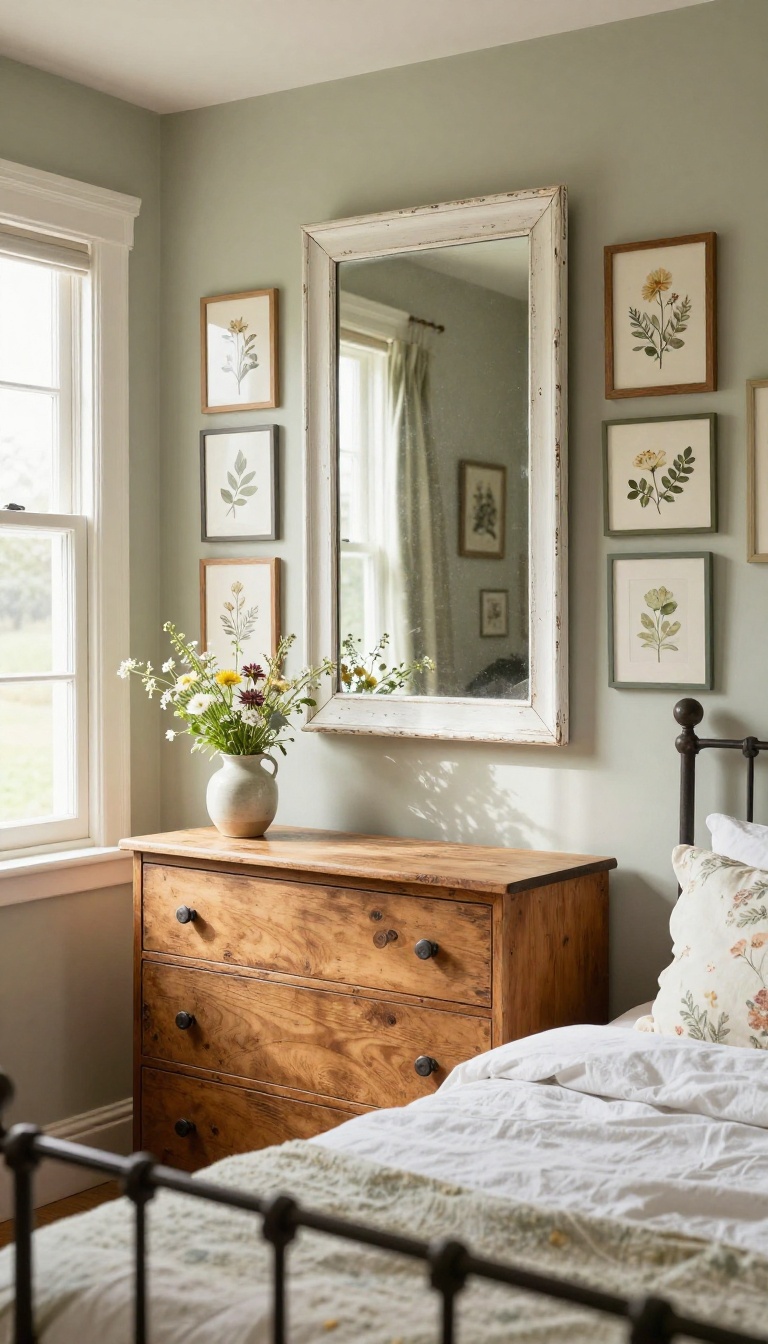
Blank walls can make even the coziest cottage bedroom feel unfinished. A vintage mirror or a collection of framed botanical prints solves that problem while adding light and personality. Both options bring that timeless, collected-over-time feel that defines English cottage style.
The key is to choose pieces that look like they've been there for years. A mirror with a distressed frame or a set of botanical prints in mismatched frames will do more for the room than a single mass-produced artwork. You want the wall to tell a story, not just fill space.
Why A Vintage Mirror Works
A vintage mirror does double duty: it bounces natural light around the room and makes the space feel larger. Look for one with a chippy paint finish, a gilded frame, or a simple wood design. Hang it opposite a window to maximize the light, or above a dresser to create a focal point.
The slight imperfections in an old mirror add character that a new one just can't match.
The Charm Of Botanical Prints
Framed botanical prints bring a touch of the garden indoors, which fits the cottage aesthetic perfectly. You can find vintage reproductions or even tear pages from an old book. Arrange them in a grid or a loose gallery wall.
Mix frame styles—some wood, some metal, some painted—to keep it from looking too matched. The subtle colors and delicate details add a soft, romantic touch.
How To Hang Them
Don't overthink the arrangement. For a mirror, center it at eye level or slightly higher. For prints, lay them out on the floor first to play with spacing.
Keep gaps consistent—about two to three inches apart—so it feels intentional but not rigid. If you're renting, use removable hooks. And don't be afraid to lean a mirror against the wall instead of hanging it; that relaxed approach fits the cottage vibe.
9. Soften the Room with a Cozy Rug
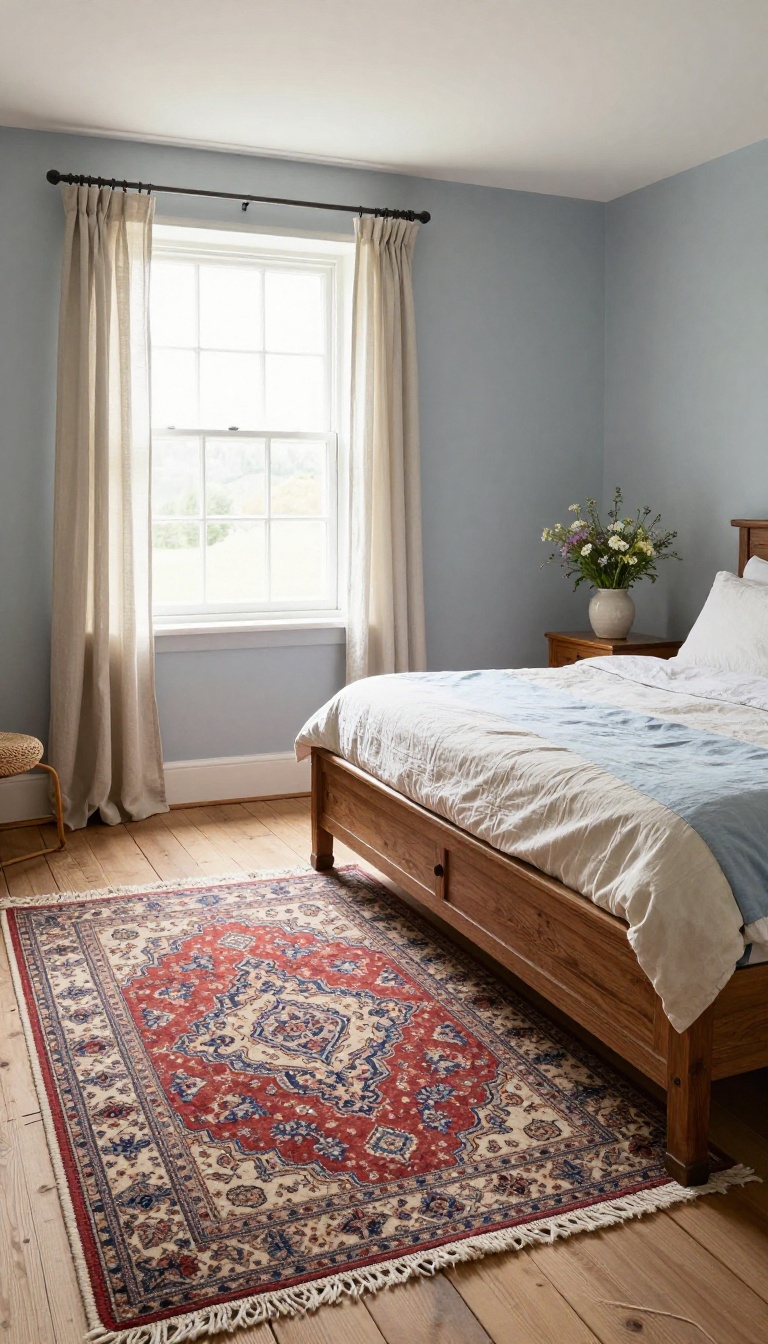
A rug does more than cover bare floorboards—it sets the tone underfoot and pulls the whole room together. In an English cottage bedroom, the right rug adds warmth, texture, and a sense of history. It's the layer that makes cold mornings feel gentler and ties your colors and patterns into one cohesive story.
Think of your rug as the foundation of comfort. It should feel good to step on and look like it's always been there. Whether you choose a faded Oriental or a simple braided jute, the goal is to anchor the bed and soften the space.
Choose A Style That Feels Collected
A vintage Oriental rug with muted reds, blues, and creams brings instant age and character. Look for one with worn spots—they only add to the charm. If you prefer something simpler, a braided jute or wool rug offers natural texture and a casual, country feel.
Both work beautifully in cottage bedrooms.
Get The Size And Placement Right
A rug that's too small can make the bed look like it's floating. Aim for a rug that extends at least 18 to 24 inches beyond the sides and foot of the bed. If you have a large rug, place the bed entirely on top.
For smaller rugs, position them so the front legs of the bed rest on the edge. This creates a cozy island around the bed.
Layer For Extra Softness And Interest
Don't be afraid to layer a smaller patterned rug over a larger neutral one. A kilim or Persian runner over a sisal base adds depth and lets you mix patterns without overwhelming the room. Just keep the colors related—maybe pull one hue from your bedding or curtains to tie it all together.
10. Add a Reading Nook with a Comfy Chair and Throw
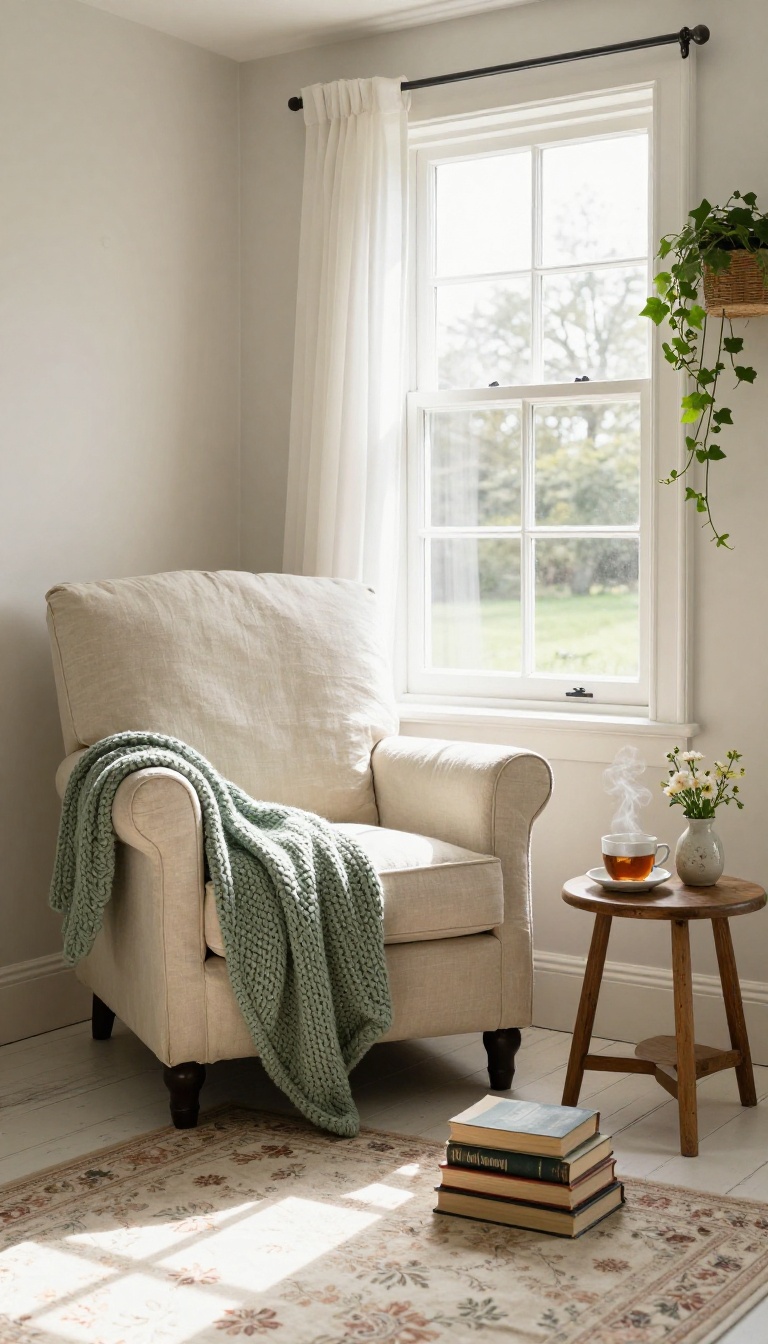
Every cottage bedroom deserves a spot where you can sink in with a good book and forget the time. A reading nook doesn't need a whole room—just a corner, a comfortable chair, and a few soft touches. It's the kind of detail that makes the space feel lived-in and loved.
The best part? You can pull this together with pieces you already own or find secondhand. A slipcovered armchair, a small side table, and a throw blanket are all it takes.
Once it's set up, you'll wonder how you ever lived without it.
Creating a reading nook is about layering comfort and function in a small footprint. Start by choosing a corner that gets good light—natural if possible, or near a lamp you can switch on in the evening. The chair should be deep enough to curl up in but not so bulky that it swallows the room.
A slipcover is your friend here. It keeps things casual and washable, which matters in a cottage where nothing is too precious. Add a side table just big enough for a cup of tea, a stack of books, and maybe a small vase of flowers from the garden.
Finally, drape a soft throw over the back of the chair. It invites you to stay a while and adds a layer of texture that makes the corner feel intentional. This isn't about creating a formal library—it's about carving out a tiny retreat that's all yours.
Pick The Right Corner
Look for a spot that's out of the main traffic path but still feels connected to the room. A corner near a window is ideal, but even a blank wall can work if you add a floor lamp. The goal is to create a sense of enclosure without feeling cramped.
Choose A Chair That Hugs You
Slipcovered armchairs are perfect because they're soft, forgiving, and easy to clean. Look for a shape with a low back and wide seat so it doesn't block sightlines. Vintage wingbacks or club chairs work well too—just make sure the fabric feels good against your skin.
Layer In The Soft Stuff
A throw blanket is non-negotiable. Choose one in a natural fiber like cotton or wool, and don't be afraid to mix patterns. Add a small lumbar pillow for extra back support, and keep a basket nearby for magazines or knitting projects.
Keep It Functional
A tiny side table or even a stack of books can serve as a surface for your tea. If space is tight, a wall-mounted shelf works just as well. The point is to have what you need within arm's reach so you can truly relax.
11. Use Wallpaper or a Stenciled Accent Wall
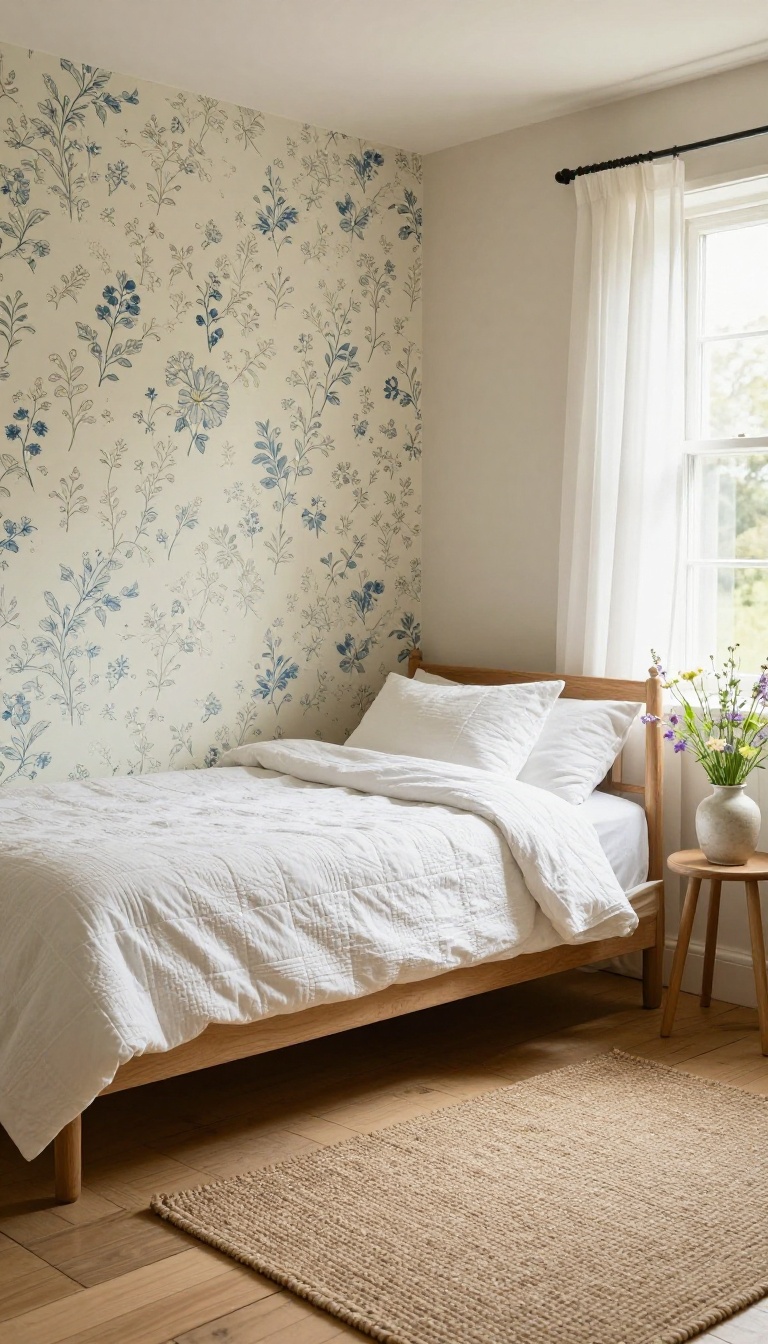
A single wall can carry a whole lot of cottage charm if you dress it right. Wallpaper or a stenciled pattern gives you the look of a hand-finished English bedroom without committing to a full-room makeover. The key is keeping it subtle—think soft florals, faded stripes, or a repeating motif that feels collected rather than brand new.
Done well, it adds depth and personality while the rest of the room stays calm and breathable.
The trick with cottage style is restraint. You want the accent wall to feel like a happy discovery, not a shout. Pick a pattern that echoes the colors already in your quilt, rug, or curtains, and let it live on the wall behind the bed or across from it.
That way the eye lands there first, then relaxes into the rest of the room.
Choosing A Pattern That Feels Collected
Small-scale prints work best in cottage bedrooms because they read as texture from a distance. Think tiny sprigs, ditsy florals, or a faded toile in muted blues, soft greens, or warm creams. If you love bold pattern, go for it—but keep the rest of the room quiet so the wall can breathe.
Vintage-inspired papers with a slightly worn look feel more authentic than crisp, high-contrast designs.
Stenciling For A Handmade Touch
Stenciling gives you the same charm with a more personal, hand-painted feel. You can repeat a simple motif—a small flower, a leaf, a diamond—across one wall in a tone just a shade deeper than your base paint. It's forgiving, affordable, and easy to touch up later.
Use a level and painter's tape to keep rows straight, but don't stress over tiny imperfections; they're part of the appeal.
Where To Put The Accent Wall
The wall behind the headboard is the natural choice because it frames the bed and adds instant coziness. But a wall opposite the bed works too, especially if you want a pretty backdrop for a dresser or reading chair. Avoid accenting every wall—one is enough to make a statement without overwhelming the space.
If your room is small, a single patterned wall can actually make it feel larger by adding depth.
12. Display Personal Collections and Heirlooms
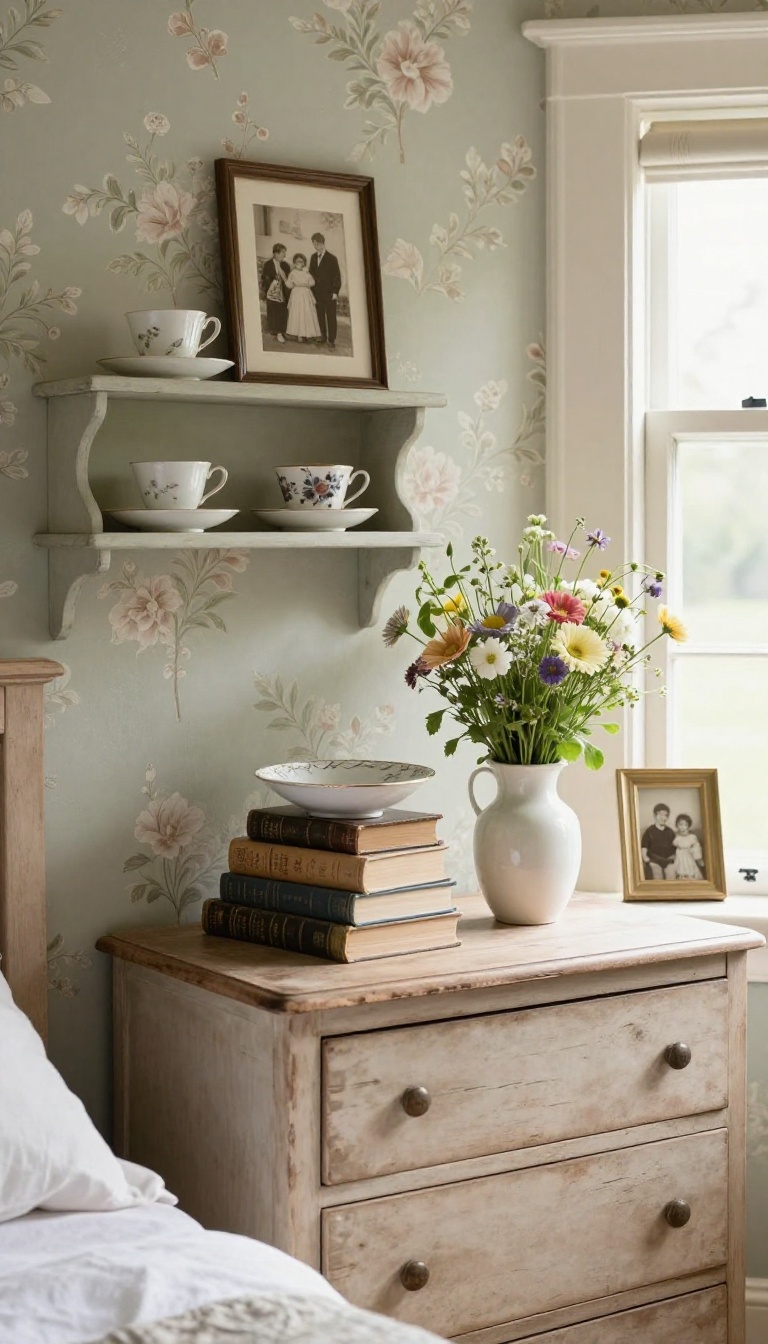
Your bedroom shouldn't look like a catalog. It should look like you. That's why displaying personal collections and heirlooms works so well in an English cottage bedroom.
A shelf of vintage teacups, a stack of old books, or a framed family photo adds a layer of charm that no store-bought decor can match. These pieces tell your story. They make the room feel lived-in and loved.
And they fit the cottage aesthetic perfectly, because cottage style celebrates the imperfect, the old, and the meaningful. You don't need a lot of items. A few well-placed treasures are enough to make the space feel authentic.
The key is arranging them so they look intentional, not cluttered.
Start by gathering items that mean something to you. Maybe it's your grandmother's teacup collection, a set of vintage postcards, or a pocket watch that belonged to your grandfather. These are the things that make your bedroom uniquely yours.
Once you have your items, think about where to put them. A dresser top, a wall shelf, or a small side table all work well. You want the display to be visible but not overwhelming.
A little breathing room between objects helps each piece stand out. Mixing heights and textures keeps the display interesting. A tall vase next to a small trinket dish, a stack of books under a delicate teacup—these small contrasts create visual appeal.
And don't be afraid to rotate items seasonally or when you tire of the arrangement. The goal is to create a vignette that feels personal and cozy. It should invite you to pause and remember, not just fill empty space.
Choose Items That Mean Something
Not everything vintage is worth displaying. Pick pieces that have a story or a connection to you. A chipped teacup from your mother's china set is more charming than a random flea market find.
When you choose meaning over perfection, the display feels genuine. If you don't have family heirlooms, start your own collection. Look for vintage brooches, old keys, or antique bottles.
The point is to curate items you love, not just fill a shelf.
Style A Shelf Or Dresser Top
A shelf or dresser top is prime real estate for a cottage-style display. Start with a base layer: a runner, a lace doily, or a stack of old books. Then add your larger items, like a framed photo or a small vase.
Fill in gaps with smaller pieces, like teacups or trinkets. Keep the arrangement loose and organic. Symmetry can feel too formal for a cottage bedroom.
Instead, aim for balance—a tall item on one side, a cluster of small items on the other. Step back and adjust until it feels right.
Mix Old And New
You don't have to stick to only antiques. Mixing old and new keeps the display from feeling dusty. Pair a vintage teacup with a modern candle, or place an old book next to a fresh flower.
The contrast makes both stand out. This approach also makes the room feel current while still honoring the past. It's a balance that English cottage style does so well.
Keep It Tidy But Not Perfect
A little imperfection is part of the charm. Don't worry if things aren't perfectly aligned. A slightly crooked frame or a casually draped scarf adds to the relaxed vibe.
Just make sure the display doesn't become a dumping ground for clutter. Dust regularly and edit your collection now and then. If something no longer brings you joy, pass it on or store it.
The goal is a display that feels curated, not chaotic.
13. Finish with Soft, Warm Lighting
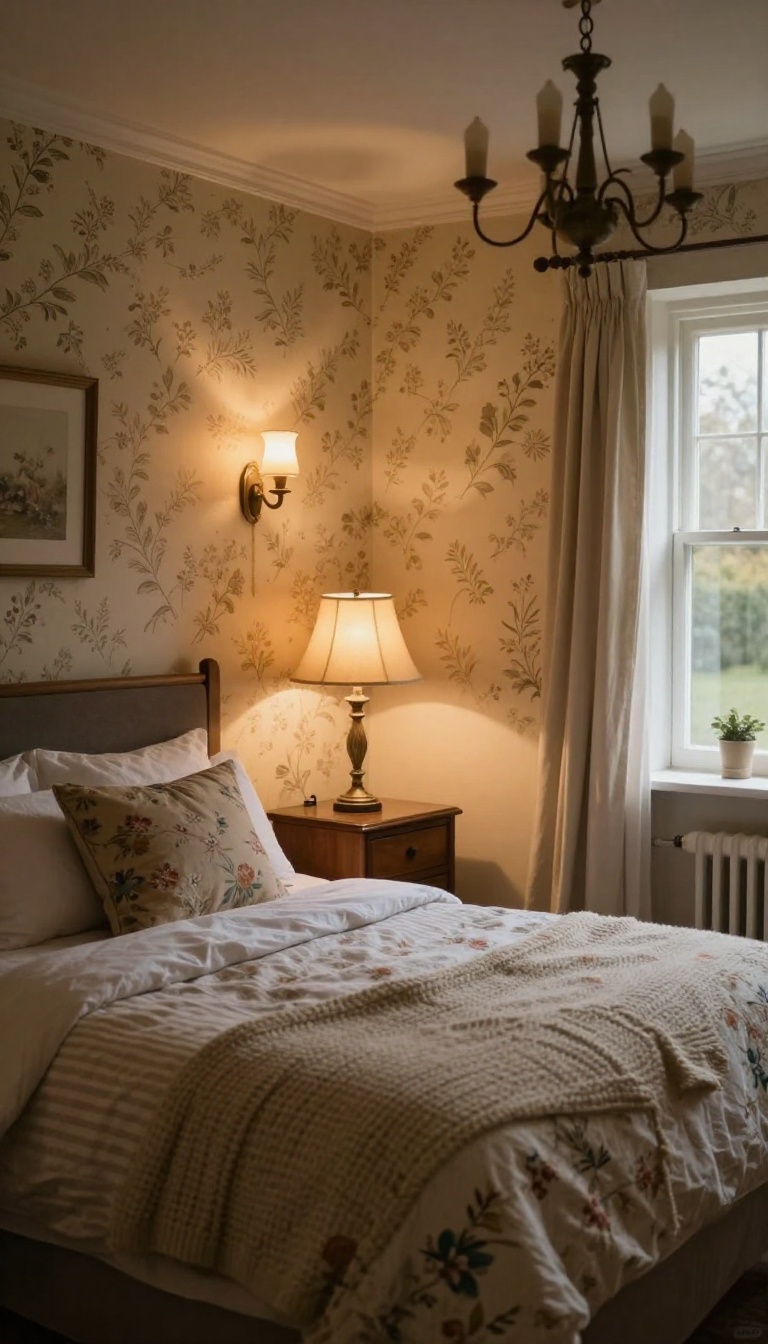
The right lighting can make or break the cozy factor in your cottage bedroom. Swap out harsh overheads for softer options that cast a warm, inviting glow. This final touch pulls everything together and makes the room feel like a retreat.
Lighting is often an afterthought, but in an English cottage bedroom, it's a key player. You want layers of light that you can adjust to suit your mood—bright enough for reading, dim enough for winding down. The goal is to avoid any harsh, clinical brightness that kills the charm.
Choose Warm Bulbs
Bulbs with a color temperature around 2700K emit a soft, yellowish light that feels like candlelight. Avoid cool white or daylight bulbs—they make the space feel sterile. Look for dimmable LEDs so you can control the intensity.
Layer Your Light Sources
Instead of one central fixture, use a mix of table lamps, wall sconces, and maybe a floor lamp. Place them at different heights to create depth. A vintage chandelier over the bed or in the center of the room can add a touch of elegance while still feeling cozy.
Add Dimming And Smart Controls
Dimmers are your friend—they let you shift from task lighting to ambient glow with a simple slide. Smart bulbs can also be set to warm tones and scheduled to mimic natural light patterns. This small upgrade makes a big difference in how the room feels at different times of day.
FAQ
What colors work best for an English cottage bedroom?
Soft, muted tones like cream, sage green, dusty blue, and blush pink work best. They create a calm, timeless base that lets vintage patterns and natural textures shine.
Can I achieve English cottage style on a budget?
Absolutely. Thrift stores, flea markets, and online marketplaces are goldmines for vintage quilts, wooden furniture, and floral fabrics. Mixing affordable finds with what you already own keeps costs down.
How do I mix patterns without making the room look chaotic?
Stick to a consistent color palette and vary the scale of your patterns. Pair a large floral with a small stripe or a subtle check. Repeating colors across different patterns ties everything together.
Is English cottage style the same as farmhouse style?
They're similar but not identical. English cottage leans more romantic and vintage, with floral prints, ruffles, and antique pieces. Farmhouse style tends to be more rustic and neutral, with galvanized metal and shiplap.
What kind of lighting suits an English cottage bedroom?
Warm, soft lighting is key. Use table lamps with fabric shades, wall sconces, or a vintage chandelier. Avoid bright white bulbs; opt for warm white or soft glow to keep the atmosphere cozy.
Conclusion
Creating an English cottage bedroom is about embracing imperfection and layering pieces you love. You don't need a big budget or a designer—just a willingness to mix old and new, play with textures, and let the room evolve over time.
Start with one or two ideas that resonate, like a vintage quilt or a soft color palette. As you add personal touches, your bedroom will become a cozy retreat that feels uniquely yours.