11 Dark Wood Floor Bedroom Ideas with Warm Cozy Appeal
Dark wood floors bring instant richness to a bedroom, but they can also make the space feel heavy if you don't balance them right. The good news is that a few smart choices turn that deep tone into a warm, inviting backdrop.
You don't need a full renovation to get that cozy feel. Simple swaps like a plush rug, layered lighting, and the right paint color can transform the room.
Below are 11 ideas that work in real homes, from small apartments to spacious master suites. Each one focuses on practical ways to keep dark floors feeling warm instead of cold.
1. Layer a Plush Area Rug to Soften the Floor
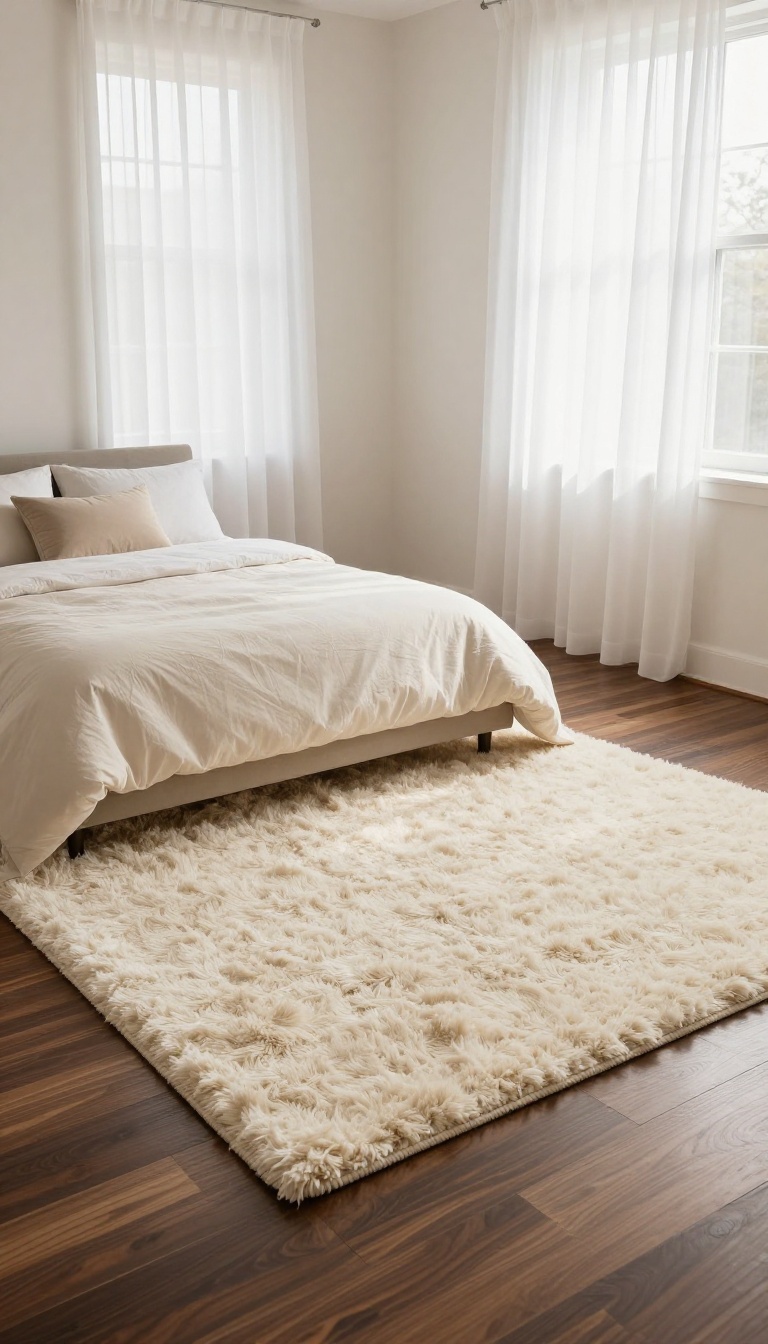
A thick, high-pile rug is the quickest way to warm up a dark wood floor. It adds softness underfoot and absorbs sound, so the room feels calmer and cozier. The key is choosing a size that leaves a border of wood visible for contrast.
Start by measuring the area where you want the rug to sit. For a bedroom, a rug that extends at least 18 to 24 inches beyond the bed on all sides works well. This creates a soft landing spot when you get out of bed and visually anchors the furniture.
Material matters as much as size. Wool and wool blends are durable and naturally temperature-regulating, while synthetic fibers like polypropylene offer affordability and easy cleaning. High-pile or shag rugs feel the plushest, but they need regular vacuuming to stay fresh.
Color and pattern can either blend with the dark floor or stand out. A light, neutral rug brightens the room and makes the wood grain pop. A patterned rug adds personality without overwhelming the space.
Just keep the wood border visible so the floor still feels like part of the design.
Choosing The Right Size
A rug that's too small makes the room feel disjointed. Aim for at least 18 inches of wood showing around the edges. In larger rooms, you can use two smaller rugs on either side of the bed for a balanced look.
Picking The Best Material
Wool is a classic choice for warmth and longevity. If you want something softer and more budget-friendly, consider a microfiber or shag rug. Just avoid jute or sisal if you're after maximum coziness—they're rougher underfoot.
Styling With Color And Pattern
Light tones like cream, beige, or soft gray create a gentle contrast with dark wood. If you prefer more depth, try a rug with muted patterns in warm colors like rust or olive. A rug pad underneath prevents slipping and adds extra cushioning.
2. Choose Warm Paint Colors for the Walls
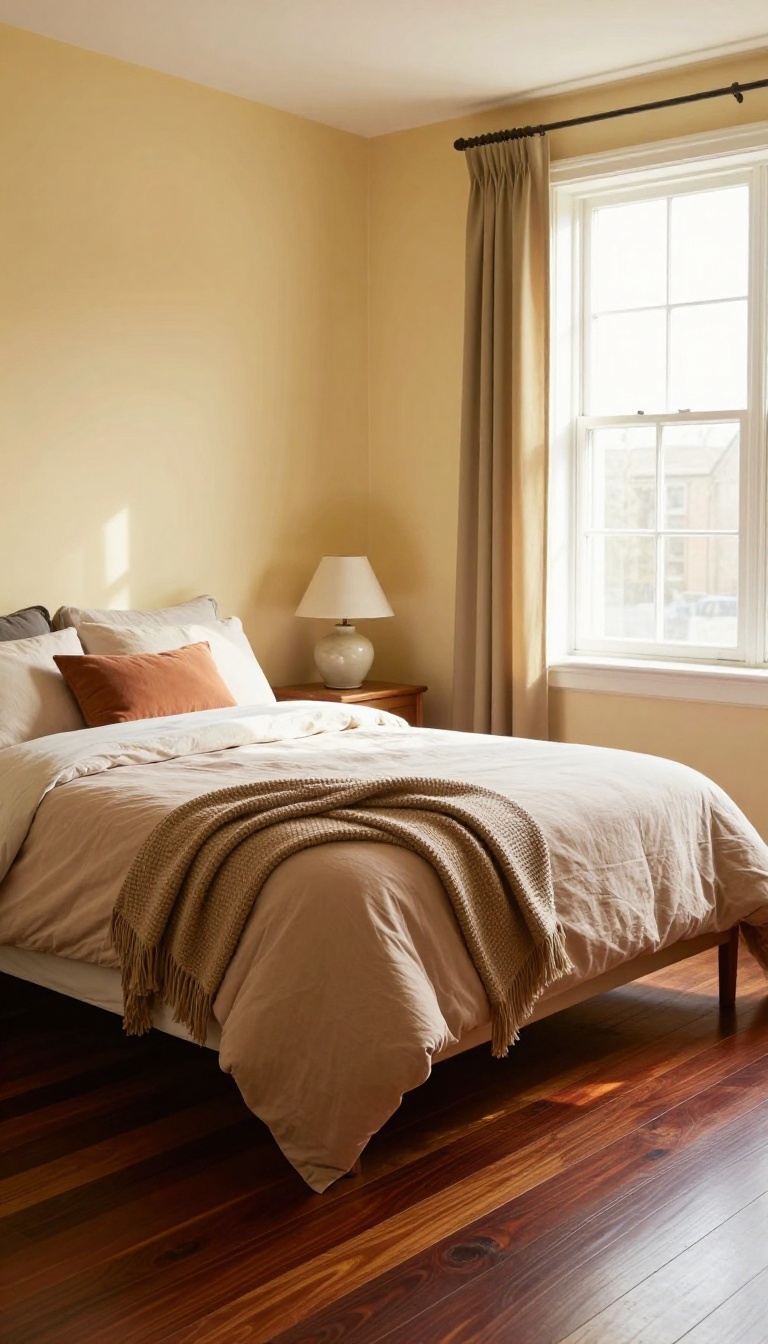
Dark wood floors already bring a lot of depth and richness to a bedroom. The wall color you choose can either amplify that warmth or fight against it. Cool grays and stark whites often make dark floors look almost black and the whole room feel chilly.
Warm paint colors, on the other hand, pull out the golden and reddish undertones in the wood. They create a soft glow that makes the space feel inviting. You don't have to go dark or bold—just lean toward hues with a touch of yellow, red, or orange underneath.
The trick is to pick colors that share the same warm DNA as your floors. Think soft whites with yellow undertones, warm greiges, or muted terracotta. These shades blend with dark wood instead of competing with it.
Avoid anything with a blue or violet base, like cool gray or icy white. Those tones clash with the natural warmth of wood and can make the room feel like a cave. Test a few samples on the wall next to your floor to see how they play together in different light.
Soft Whites With Yellow Undertones
Whites like cream, ivory, or warm vanilla keep the room bright without turning cold. They reflect light and let the dark floor stand out as a grounding element. Look for paint swatches labeled 'warm white' or with a yellow base.
These shades work especially well in small bedrooms because they open up the space. Pair them with white trim for a clean, airy look that still feels cozy.
Warm Greiges And Mushroom Tones
Greige—a mix of gray and beige—is a safe bet when you want something more interesting than plain white. Warm greiges have a brownish or greenish undertone that complements dark wood beautifully. Mushroom or putty colors add subtle depth without overwhelming the room.
They create a soft, enveloping feel that's perfect for a bedroom. Just make sure the greige leans warm, not cool.
Muted Terracotta And Clay Hues
If you're ready for a bit more color, try a muted terracotta or clay shade. These earthy tones echo the red and orange undertones in many dark woods. They bring a southwestern or Mediterranean vibe that feels instantly warm.
Keep the saturation low—think dusty rose or burnt sienna rather than bright orange. Use them on an accent wall or all four walls for a cocooning effect. They pair well with natural fabrics and warm lighting.
3. Add a Cozy Reading Nook with a Wingback Chair
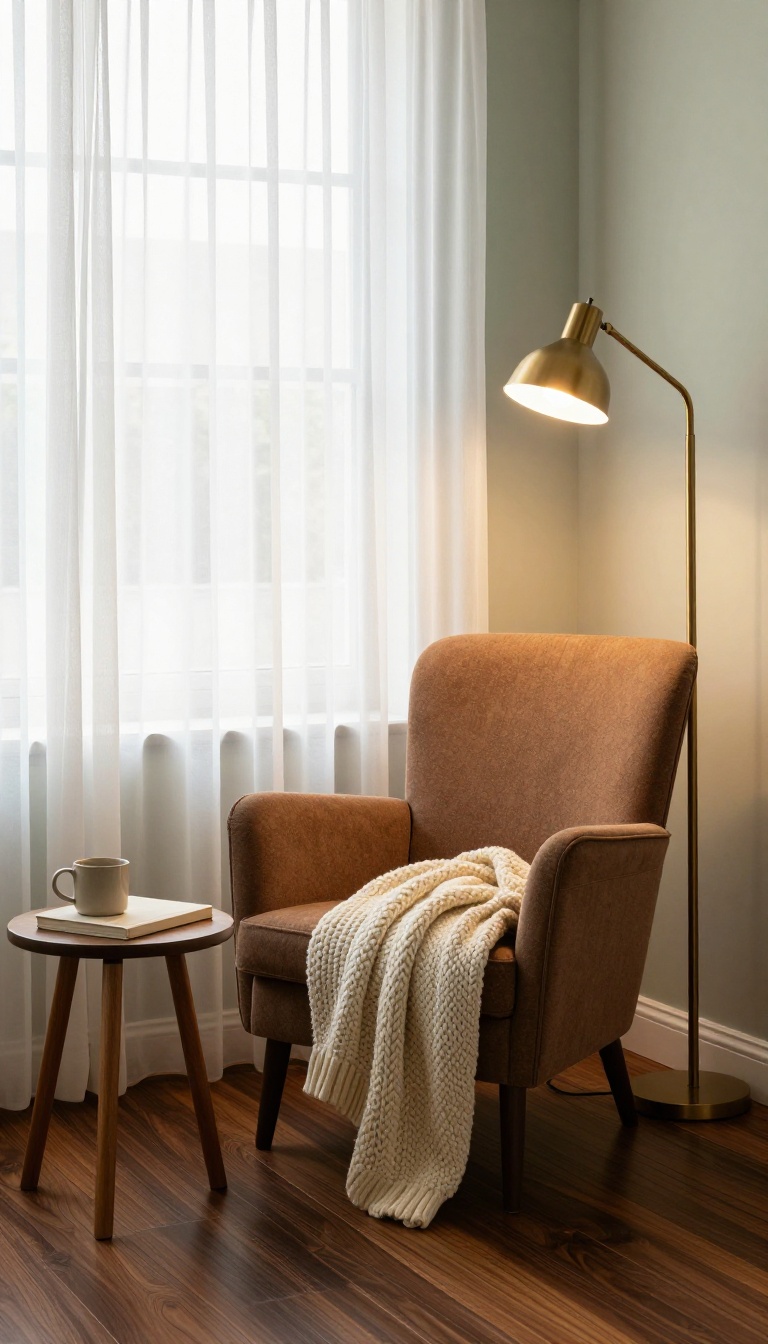
A wingback chair tucked into a corner gives you a dedicated spot to read, sip coffee, or just decompress. The high back and side wings wrap around you, which feels especially nice against the coolness of dark wood floors. Pair it with a throw blanket and a floor lamp, and you've got a mini retreat without remodeling anything.
The key is placement. Put the chair near a window if you can, so you get natural light during the day and a view at night. If your room doesn't have a good window spot, a corner works just as well—especially if you angle the chair slightly outward.
That small turn makes the nook feel intentional instead of shoved aside. Once the chair is in place, layer in warmth. A chunky knit throw over one arm adds texture and invites you to sit.
A floor lamp with a warm bulb (think 2700K) casts a soft glow that balances the dark floor. You can also add a small side table for your mug and a book, which keeps the area functional. Don't worry if the chair doesn't match your bed perfectly.
A slight mismatch in style or color actually makes the nook feel collected over time. Just keep the tones in the same family—warm browns, creams, or muted greens all work well with dark wood.
Pick The Right Spot
Windows and corners are your best bets. A window gives you daylight and a view; a corner gives you privacy and a natural boundary. If you have neither, create a nook by pulling the chair away from the wall and adding a small rug underneath.
That defines the space without any construction.
Layer In Warmth
A throw blanket and a floor lamp do most of the work. Choose a blanket with a bit of texture—chunky knit, faux fur, or waffle weave—to contrast the smooth floor. For the lamp, go with a shade that diffuses light, like linen or paper, so it feels soft rather than harsh.
Keep It Functional
Add a small side table or a slim bookshelf nearby. You want a place to set your drink, phone, or current read. A tiny tray on the table can corral remotes and candles.
The goal is to make the nook self-sufficient so you actually use it.
4. Use Layered Lighting to Create a Warm Glow
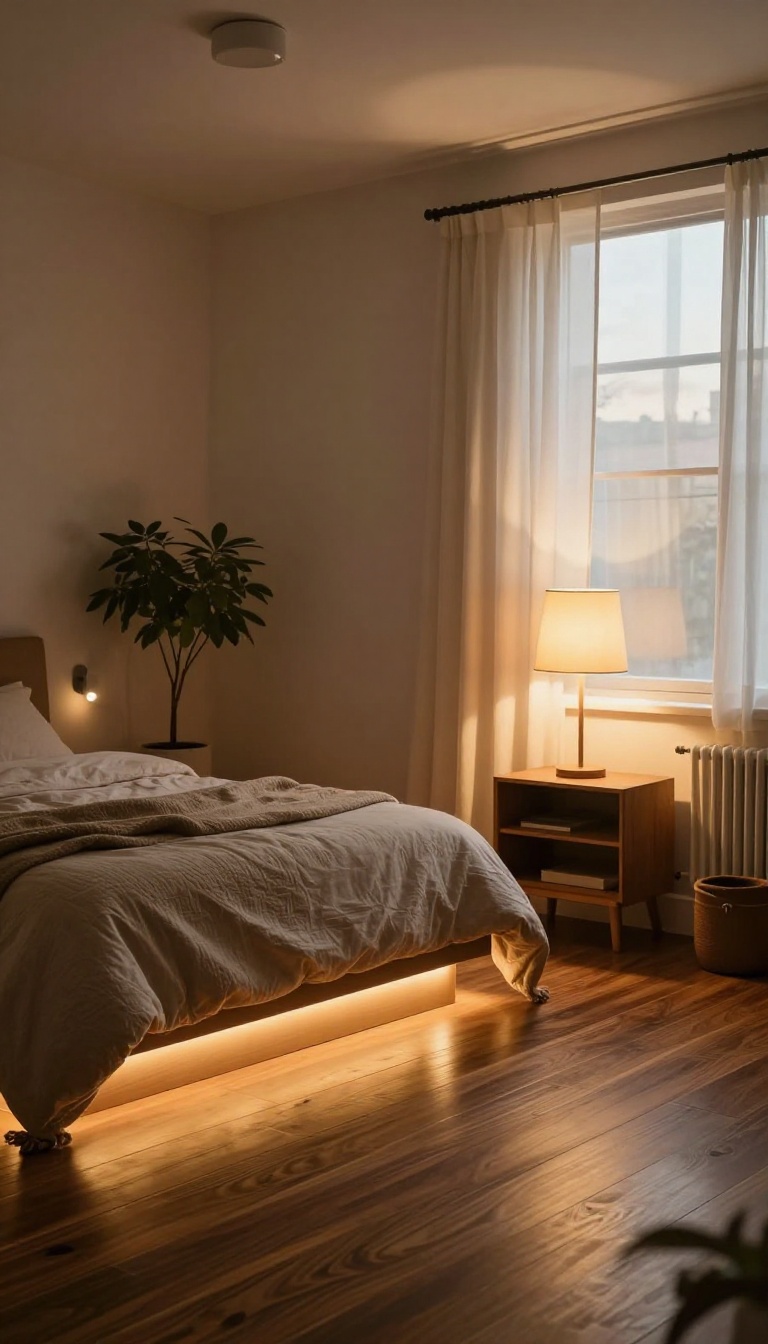
One overhead light in a dark-floored bedroom usually gives you two options: harsh and bright, or off and gloomy. Layering your lighting fixes that. You get soft pools of light where you need them, and the dark wood picks up a golden glow instead of looking flat.
The trick is mixing three types of light—ambient, task, and accent—and keeping the color temperature warm.
Start with ambient light as your base. A dimmable ceiling fixture or a pair of wall sconces works well, but skip the cool-white bulbs. Look for 2700K to 3000K, which gives off a cozy, yellowish warmth that flatters dark wood.
Then add task lighting for reading or getting ready. A bedside lamp with a fabric shade softens the glare and casts light downward, so it doesn't wash out the floor. Finally, accent lighting adds depth.
A small uplight behind a plant or a strip of LED tape under the bed frame creates a gentle glow that makes the room feel bigger and warmer. Put everything on dimmers—or use smart bulbs—so you can go from bright morning energy to a soft evening wind-down without touching a single lamp.
Pick The Right Bulbs
Bulb color makes or breaks the cozy factor. Anything above 3000K starts to look blue and clinical against dark wood. Stick with 2700K for a classic warm glow, or 3000K if you want slightly crisper light for tasks.
Also check the CRI (color rendering index)—90 or higher helps the wood's natural tones show through instead of looking muddy.
Mix Your Light Sources
Don't rely on one fixture. Combine a dimmable ceiling light, two bedside lamps, and one or two accent lights. That way you can turn on just the lamps for a movie night, or everything for cleaning.
The mix of heights and directions keeps shadows soft and the room feeling balanced.
Use Dimmers Everywhere
A dimmer is the cheapest way to make any light feel custom. Install them on your main switch and on plug-in lamps with a smart plug or inline dimmer. Being able to slide from 100% down to 20% lets you shift the mood from energetic to sleepy in seconds.
It also saves energy and extends bulb life.
5. Mix in Natural Wood Tones for Harmony
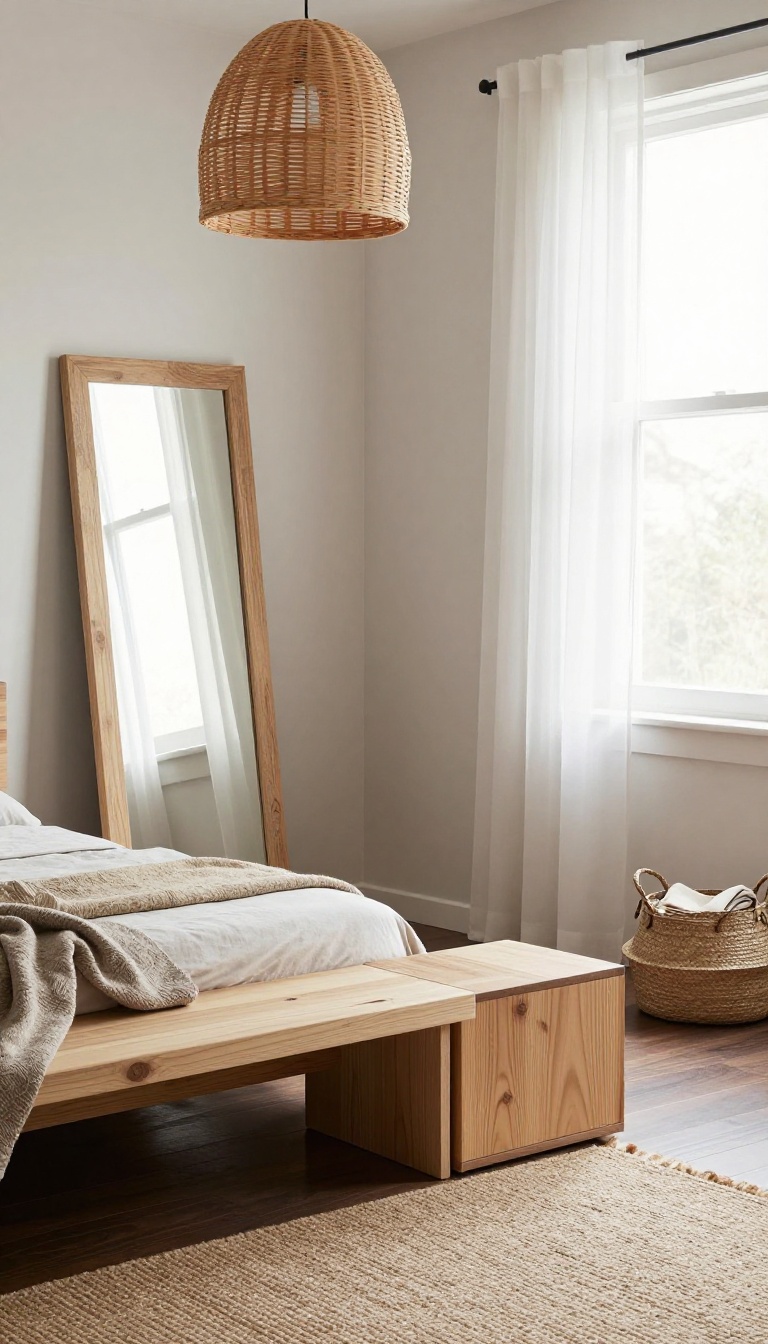
When your floors are dark, adding lighter wood pieces keeps the room from feeling like a cave. A mix of tones reads as collected over time, not matchy-matchy. It's an easy way to bring warmth without fighting the floor.
The trick is to treat your dark floor as the anchor and layer in woods that are a few shades lighter. Think honey oak, ash, or even weathered pine. These tones reflect light and add visual contrast, so the room feels balanced instead of bottom-heavy.
You don't have to replace big furniture. Start with smaller pieces like a nightstand, a bench at the foot of the bed, or a leaning mirror with a light wood frame. Each lighter element breaks up the dark expanse and adds a subtle glow.
Woven accents count too. A rattan pendant, a seagrass basket, or a jute rug brings in natural texture and a lighter hue that plays well with dark floors. The goal is harmony, not uniformity.
Choose Furniture With Visible Grain
Light wood furniture with visible grain adds character and warmth. Look for pieces in oak, ash, or maple with a clear or matte finish. The grain pattern catches light and creates a soft contrast against the dark floor.
Avoid heavily painted or glossy finishes, which can look flat and cheap next to rich wood.
Layer In Woven And Natural Textures
Woven materials like rattan, cane, and jute bring in a lighter, organic feel. A rattan headboard or a pair of cane nightstands instantly lifts the dark floor. Add a jute rug under the bed or a seagrass basket for throws.
These textures soften the room and make it feel more collected.
Balance With Mid-tone Accents
If you're not ready for full-on light wood, try mid-tone accents like walnut or teak. They bridge the gap between dark floors and lighter walls. A walnut dresser or a teak stool adds depth without disappearing into the floor.
The mix feels intentional and layered.
6. Hang Floor-to-Ceiling Curtains for Softness
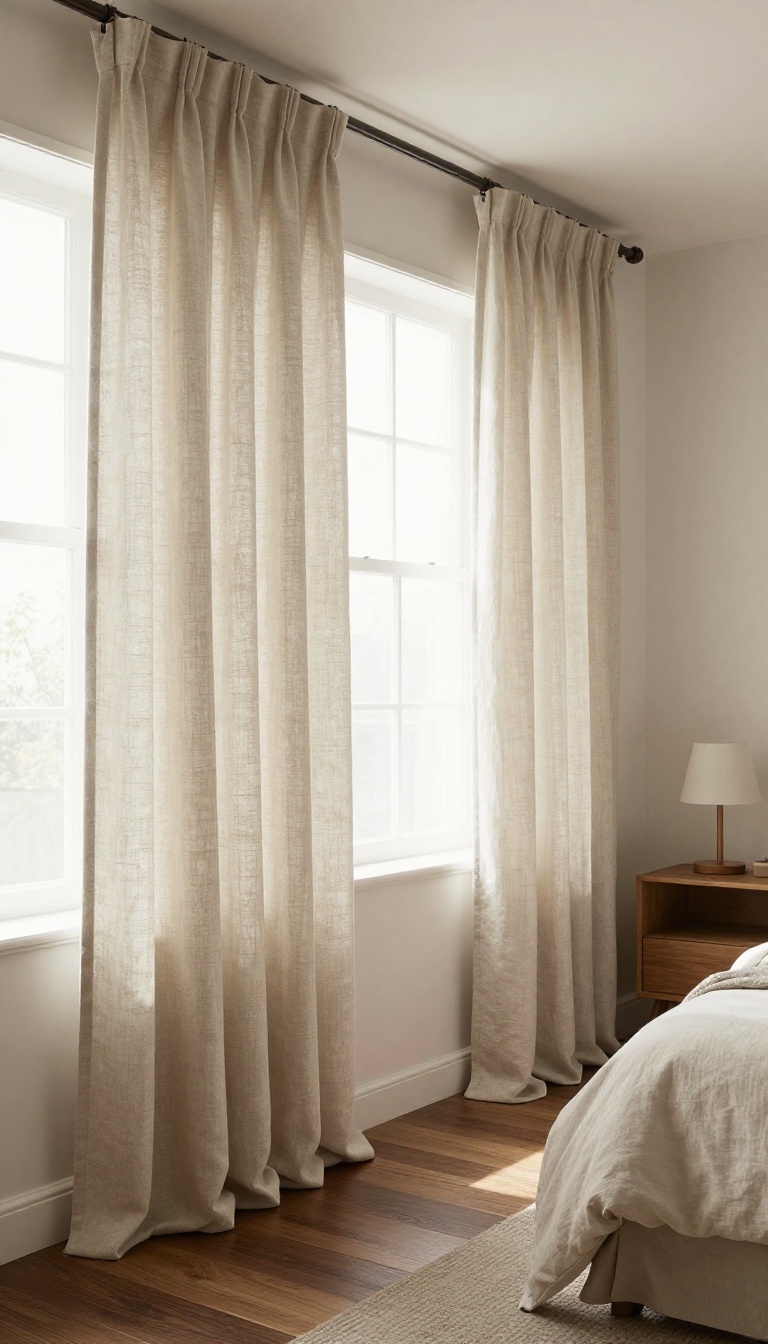
Curtains that stretch from the ceiling to the floor do more than dress a window. They soften the hard edges of dark wood, add a layer of warmth, and can make a small bedroom feel surprisingly grand. The trick is all in how you hang them.
Get the rod placement right, pick a fabric that feels cozy, and you'll wonder why you didn't do it sooner.
Curtains are one of those upgrades that quietly change everything. They don't compete with your floors; they complement them. And when they run floor to ceiling, they create a seamless look that makes the whole room feel more intentional.
Here's how to pull it off without overthinking it.
Mount The Rod High And Wide
Skip the standard window-frame mount. Instead, attach the rod a few inches below the ceiling and extend it several inches past the window on each side. That extra height draws the eye upward, making the ceiling feel taller.
The added width lets curtains stack neatly without covering the glass, so you get maximum light when they're open.
Choose A Warm, Textured Fabric
You want something that feels substantial but still hangs softly. Linen blends, velvet, or a heavy cotton in a warm neutral like oatmeal, camel, or soft taupe work beautifully with dark floors. Avoid stiff, shiny fabrics.
They fight the cozy vibe and make the room feel cold. A little texture goes a long way.
Let Them Puddle Slightly
For a relaxed, custom look, let the curtains just kiss the floor or break by an inch. A slight puddle adds softness and hides uneven floors. Just don't go overboard.
Too much fabric pooling on dark wood can look messy and collect dust.
Layer For Drafts And Privacy
If your bedroom gets chilly, add a liner or choose a thermal fabric. It blocks drafts and helps keep the room warm, which is a bonus when your floors are cool to the touch. Sheer curtains behind the main panels give you daytime privacy without losing light.
It's a small addition that makes the whole setup more functional.
7. Incorporate Warm Metals and Textures
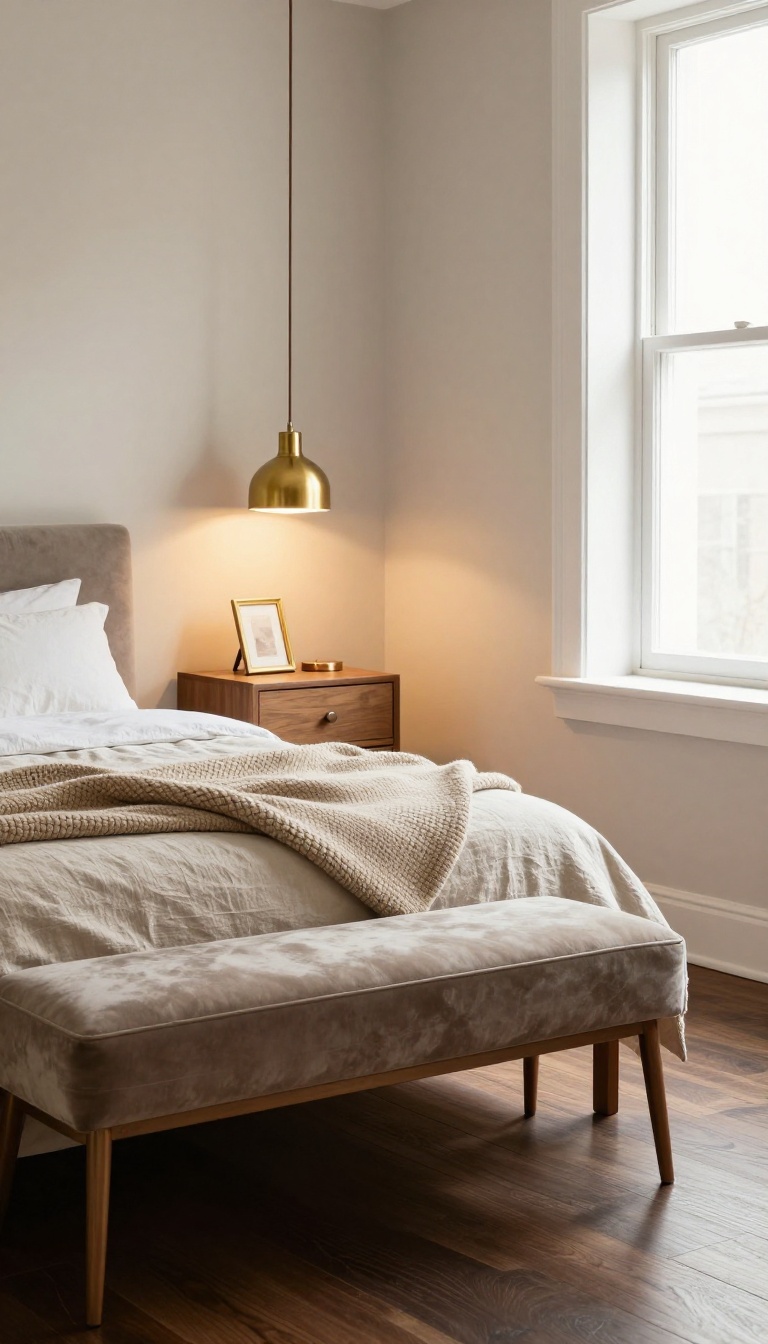
Warm metals like brass, copper, and bronze have a way of catching light and throwing it back into the room with a soft, golden glow. Against dark wood floors, that glow feels almost like candlelight, even when you're using regular bulbs. The trick is to mix in a few key pieces and then layer soft textures around them so the room stays inviting, not flashy.
You don't need to replace every fixture or go full glam. A few well-placed warm metal accents will do the heavy lifting, and they play especially well with dark floors because the contrast keeps things interesting without feeling cold. Pair them with velvet, wool, or linen, and you get a bedroom that begs you to stay in bed a little longer.
Start With Lighting
Swap out any chrome or nickel fixtures for brass or copper versions. A brass pendant light over a nightstand or a copper floor lamp in the corner instantly warms up the space. If you rent and can't change hardwired fixtures, look for plug-in sconces or table lamps with warm metal bases.
The light they cast on dark floors creates a cozy, amber pool that feels like a hug.
Add Metal In Small Doses
You don't need matching everything. A bronze drawer pull on a dresser, a brass picture frame on the wall, or a copper tray on the nightstand adds just enough shine. Mixing metals is fine as long as they all lean warm.
Skip anything too shiny or silver-toned, which can make dark floors look stark.
Layer In Soft Textures
Metals alone can feel a bit hard, so balance them with fabrics that invite touch. A velvet bench at the foot of the bed, a chunky wool throw, or linen curtains in a warm neutral will soften the whole room. These textures also absorb sound, which makes the bedroom feel quieter and more restful.
The combination of warm metal and soft fabric is what turns a dark-floored room from dramatic to downright cozy.
8. Paint the Ceiling a Soft, Warm Tone
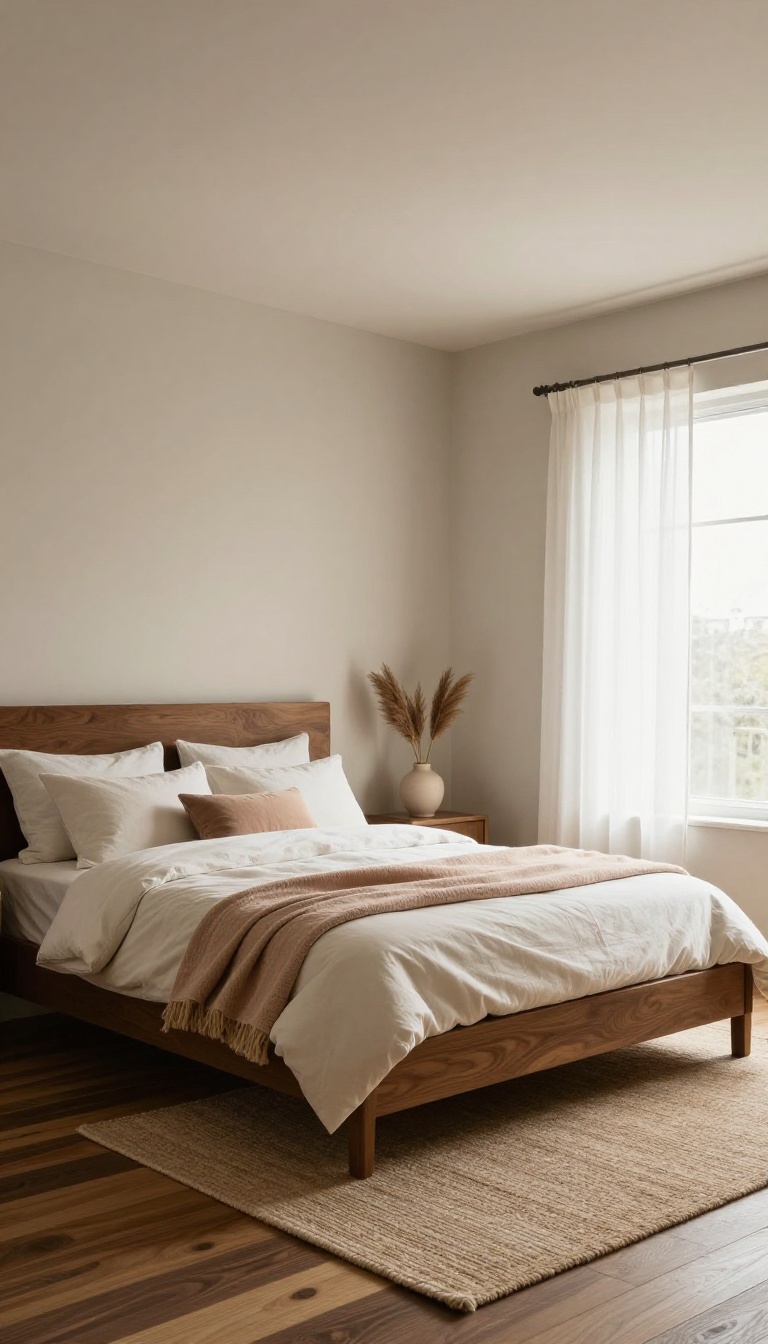
Most people never think about their ceiling until they're staring at it from bed, wondering why the room feels so closed in. With dark wood floors, a plain white ceiling can actually make the contrast feel harsh, while a dark ceiling turns the whole space into a cave. Painting it a soft, warm tone—think cream, blush, or pale sand—bounces light around and pulls your eye upward, which makes the room feel taller and airier.
It's one of the cheapest changes you can make, and it might be the one guests notice without knowing why.
A warm ceiling works because it reflects light instead of swallowing it. Dark floors absorb a lot of brightness, so you need surfaces that give some back. Pale warm colors do that without competing with your floors or furniture.
They also soften the transition between wall and ceiling, so the room feels wrapped rather than boxed in. And because the ceiling is usually the largest uninterrupted surface in the room, even a subtle shift in color changes the whole mood.
Pick A Shade That Flatters Your Floors
Cream, ivory, pale blush, and soft greige all work well with dark wood because they share a warm undertone. Cool whites and grays can make dark floors look almost black by comparison, which kills the cozy vibe. Hold paint chips next to your floor in daylight and at night—the color should feel like a gentle hug, not a spotlight.
If you're unsure, go one shade warmer than you think you need.
Use The Right Finish For The Job
Flat or matte paint hides ceiling imperfections and gives a soft, velvety look that suits a bedroom. But it doesn't bounce light as much as eggshell or satin. A good compromise is a matte finish in a lighter tint, or eggshell if your ceiling is smooth and you want maximum brightness.
Avoid high-gloss unless you're going for a retro, lacquered look—it can feel cold and show every flaw.
Tie It To The Rest Of The Room
Your ceiling color doesn't have to be an exact match to your walls. In fact, it often looks better when it's a slightly lighter or warmer version of the wall color. That creates a gentle gradient that draws the eye up without a hard line.
You can also pull a hint of the ceiling tone into your bedding, curtains, or a rug to make the whole scheme feel intentional.
9. Add an Upholstered Headboard for Comfort
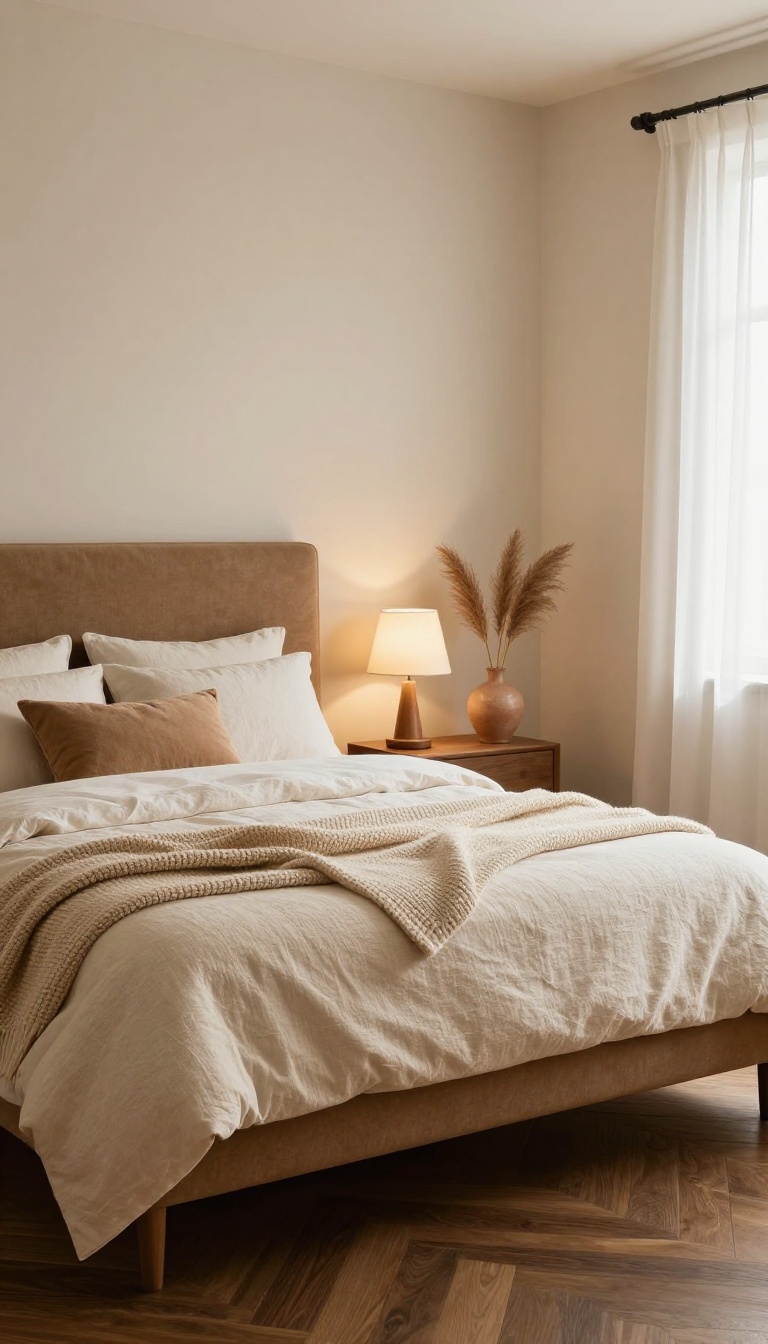
A dark wood floor already gives your bed a strong foundation, but the wall behind it can feel a little bare and hard. An upholstered headboard fixes that fast. Fabric brings softness where wood and drywall leave off, and it gives your eye a comfortable place to land when the floors run deep and dark.
This is one of the easiest upgrades in the whole room. You can swap out an old wooden headboard, mount a padded panel straight to the wall, or buy a full bed frame with fabric already built in. Either way, you get instant warmth without touching the floors.
The trick is picking fabric that works with dark wood instead of fighting it. You want something that feels cozy to the touch and reads as a soft contrast against the floor. That contrast is what keeps the room from turning into one heavy block of brown.
You also want the headboard to feel intentional, not like an afterthought. Size, shape, and texture all matter here, and a few small decisions make a big difference in how the finished bed looks.
Pick A Fabric That Warms The Room
Linen, boucle, velvet, and woven cotton all soften a bedroom instantly. Linen and cotton feel casual and breathable, while velvet and boucle add a richer, more plush look that suits dark floors beautifully. For color, lean toward warm neutrals like cream, oatmeal, camel, or soft terracotta.
These shades lift the dark floor without creating a harsh contrast. A muted pattern, like a subtle stripe or a small geometric print, can also work well if you keep the palette warm.
Get The Height And Shape Right
A headboard that's too short gets lost against the wall, especially in a room with tall ceilings. Aim for something that rises at least a few inches above your pillows so it frames the bed properly. Rounded or arched tops feel softer than sharp rectangles and pair nicely with the organic warmth of wood.
If your room is small, a lower profile keeps things from feeling crowded. In a larger bedroom, a taller, wider headboard anchors the space and makes the bed the clear focal point.
Mount It Without Breaking The Wall
You don't need a new bed frame to get this look. A wall-mounted upholstered panel works just as well and often costs less. Most come with hardware, and you can install one in an afternoon with basic tools.
If you rent, look for headboards that lean against the wall or attach with removable adhesive strips rated for the weight. Just double-check the weight limit before you trust a fabric panel to stay put. A floating mount also lets you set the exact height you want, which is handy when your mattress sits higher or lower than standard.
10. Use a Warm Color Palette for Bedding

Dark wood floors already do a lot of the heavy lifting in a bedroom, so the bedding doesn't need to compete. Warm, earthy tones settle into that deep brown instead of fighting it. Think rust, mustard, olive, terracotta, and camel.
These colors pick up the undertones in the wood and bounce a soft glow back into the room. The bed is the biggest soft surface in the space, which means it sets the mood faster than almost anything else you'll change.
## Why Earthy Tones Work So Well Dark floors usually carry red, orange, or golden undertones, even when they read as plain brown. Warm bedding colors share those undertones, so the two blend instead of clashing. Cool bedding does the opposite.
Icy blues, grays, and stark whites can make dark wood look almost black by comparison, and the whole room goes cold. You don't have to ditch every cool color. Just keep the largest surfaces warm and let the cool tones show up in small doses. ## Colors That Pull Their Weight Rust and burnt orange are the easiest wins.
They feel rich without being loud, and they flatter almost every shade of dark wood. Mustard and ochre add a little brightness without going pastel. They work especially well in rooms that don't get much natural light.
Olive and moss green keep things calm and grounded. Pair them with cream sheets so the bed doesn't turn into one solid block of color. Terracotta and clay lean a touch pinker, which softens the harder edges of espresso or walnut floors. ## How to Layer Without Going Overboard Start with a warm neutral base, like oatmeal or warm beige, for your sheets.
Then add one earthy color as the duvet and a second as a throw or accent pillows. Stick to two or three warm tones total. More than that and the bed starts to feel busy instead of cozy.
Texture matters as much as color here. A chunky knit throw or a linen duvet in the same rust tone reads completely different from a shiny, flat fabric. If you want a little contrast, add a single deep charcoal or navy pillow.
It gives the eye a place to rest without cooling the whole room down.
Why Earthy Tones Work So Well
Dark floors usually carry red, orange, or golden undertones, even when they read as plain brown. Warm bedding colors share those undertones, so the two blend instead of clashing. Cool bedding does the opposite.
Icy blues, grays, and stark whites can make dark wood look almost black by comparison, and the whole room goes cold. You don't have to ditch every cool color. Just keep the largest surfaces warm and let the cool tones show up in small doses.
Colors That Pull Their Weight
Rust and burnt orange are the easiest wins. They feel rich without being loud, and they flatter almost every shade of dark wood. Mustard and ochre add a little brightness without going pastel.
They work especially well in rooms that don't get much natural light. Olive and moss green keep things calm and grounded. Pair them with cream sheets so the bed doesn't turn into one solid block of color.
Terracotta and clay lean a touch pinker, which softens the harder edges of espresso or walnut floors.
How To Layer Without Going Overboard
Start with a warm neutral base, like oatmeal or warm beige, for your sheets. Then add one earthy color as the duvet and a second as a throw or accent pillows. Stick to two or three warm tones total.
More than that and the bed starts to feel busy instead of cozy. Texture matters as much as color here. A chunky knit throw or a linen duvet in the same rust tone reads completely different from a shiny, flat fabric.
If you want a little contrast, add a single deep charcoal or navy pillow. It gives the eye a place to rest without cooling the whole room down.
11. Bring in Plants and Natural Elements
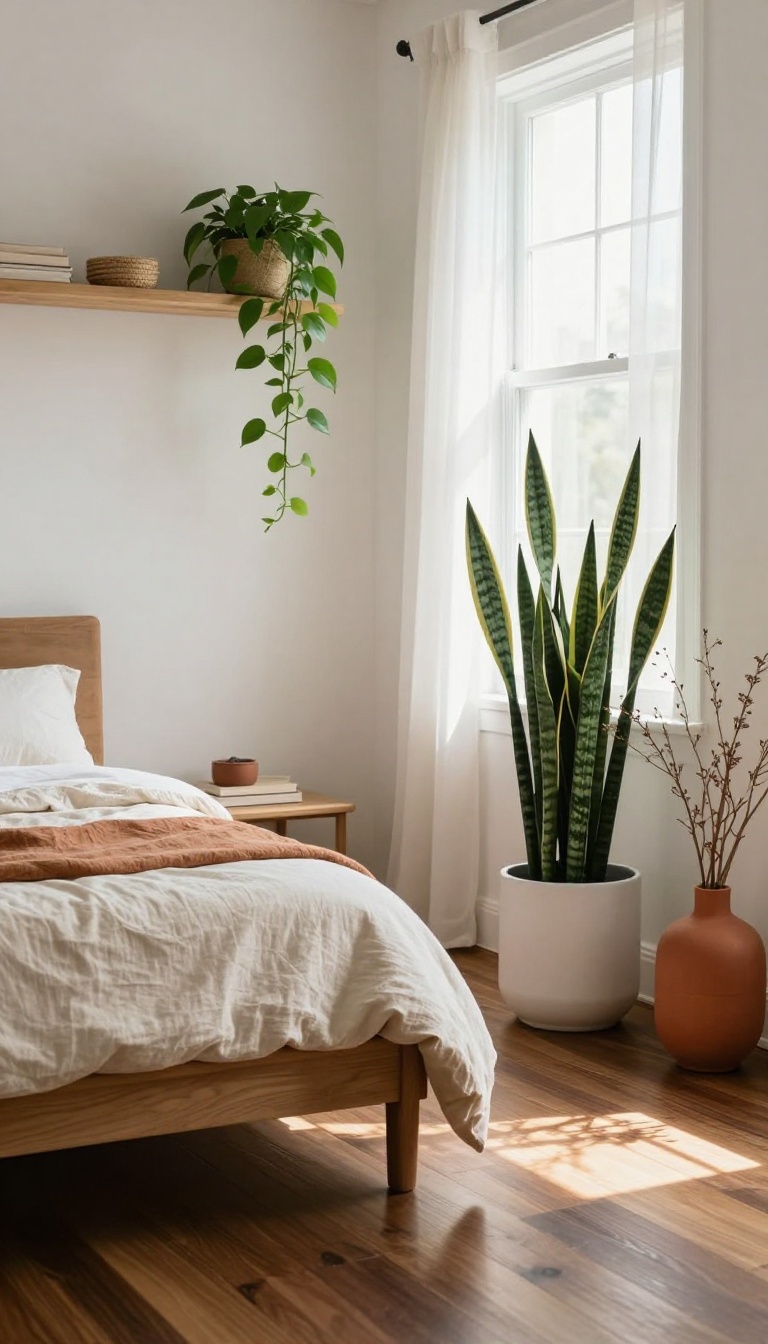
A dark wood floor can feel a little serious, even moody, until you add something alive. Plants do that instantly. They soften the hard edges of the room, soak up some of that heavy darkness, and make the whole space breathe a little easier.
You don't need a jungle. One well-placed plant or a few dried branches can shift the mood from cold and formal to warm and lived-in. The trick is picking the right greenery and giving it a home that feels intentional.
Below are a few simple ways to work natural elements into a dark-floored bedroom without overdoing it.
Pick Plants That Thrive In Low Light
Dark floors often come with darker rooms, especially if you're working with smaller windows or north-facing light. That doesn't mean you're stuck with fake plants. Snake plants, ZZ plants, and pothos all handle low light like champs and look great against deep wood tones.
A tall snake plant in a simple ceramic pot adds vertical interest without blocking light. Pothos can trail from a shelf or hang in a corner, softening the transition between floor and wall. If you want something fuller, a rubber tree or philodendron works well near a window that gets indirect sun.
The key is to match the plant to the light you actually have, not the light you wish you had. That way, your greenery stays healthy and your room stays warm.
Use Woven Baskets And Natural Textures
The pot matters as much as the plant. A woven basket, a chunky jute planter, or a raw terracotta pot adds texture that plays beautifully against smooth dark wood. It's a small detail that makes the whole setup feel more organic.
Try a seagrass basket tucked beside a reading chair or a set of nested baskets holding a fern near the bed. The mix of natural fibers and rich wood creates a layered, earthy look that feels cozy instead of cluttered. You can also use a wooden stool or a low bench as a plant stand.
It ties the greenery to the floor and makes the arrangement feel deliberate rather than random.
Add Dried Branches For Easy, Long-lasting Warmth
Fresh flowers are lovely, but they don't last. Dried branches, pampas grass, or eucalyptus stems give you the same natural feel with zero maintenance. They're perfect for a dark bedroom because their muted tones blend instead of compete.
A tall vase of dried branches in the corner draws the eye upward and adds a sculptural element. A small bundle of dried lavender on the nightstand brings a subtle scent and a soft pop of color. You can even hang a few eucalyptus stems from the headboard for a relaxed, spa-like vibe.
Swap them out seasonally if you like, or keep the same arrangement year-round. Either way, they add life without asking for anything in return.
Keep It Simple And Balanced
Too many plants can make a dark room feel crowded, so edit as you go. One large statement plant plus a smaller accent piece is usually enough. Group them in odd numbers for a natural look, and vary the heights so your eye moves around the room.
Make sure your plants don't block walkways or natural light. The goal is to enhance the warmth of the dark floor, not fight it. A little greenery goes a long way, and the right placement makes the whole room feel more inviting.
If you're unsure, start with one plant. Live with it for a week. You'll quickly see where it belongs and whether you want more.
FAQ
Do dark wood floors make a bedroom look smaller?
They can make a room feel smaller if the space lacks light. Balance them with warm, light-colored walls, a large rug, and plenty of layered lighting to keep the room feeling open.
What color rug works best on dark wood floors?
Warm neutrals like cream, beige, or soft gray work well. You can also choose a rug with warm patterns in rust or gold to add interest without clashing.
How can I make dark floors feel cozier in a small bedroom?
Use a plush rug that covers most of the floor, add warm lighting with dimmers, and choose bedding and curtains in soft, warm fabrics. Mirrors can also help bounce light around.
Are dark wood floors hard to maintain?
They show dust and scratches more easily than light floors, but regular sweeping and a microfiber mop keep them looking good. Use felt pads under furniture to prevent scratches.
Can I mix dark wood floors with cool-toned furniture?
Yes, but balance is key. If you love cool tones, warm them up with textiles, wood accents, and lighting. Otherwise, stick to warm or neutral furniture for a cohesive look.
Conclusion
Dark wood floors already do most of the heavy lifting, so you do not need to overhaul the whole room. Pick one idea that solves your biggest gripe, whether that is a cold-looking space, harsh overhead light, or a bed that floats without purpose. Try it for a week before adding more.
Warmth builds in layers, not in one weekend. A rug, a softer lamp, or a richer wall tone can change how the wood reads without touching the floor itself. Start small, live with it, and let the room tell you what it wants next.