17 Cast Iron Cleaning Tips for Skillets and Pans
You just finished a perfect sear on a steak, and now your cast iron skillet is covered in browned bits and grease. It's tempting to reach for soap and a scrub brush, but that could ruin the seasoning you've built up over time. Cleaning cast iron doesn't have to be a mystery—it just takes a few simple techniques.
Whether you're dealing with stuck-on food, rust spots, or a dull finish, the right approach makes all the difference. These 17 tips cover everything from everyday cleaning to restoring a pan that's seen better days.
No need for fancy tools or harsh chemicals. With a little know-how, your cast iron will stay non-stick, rust-free, and ready for your next meal.
1. Scrape While It's Still Warm
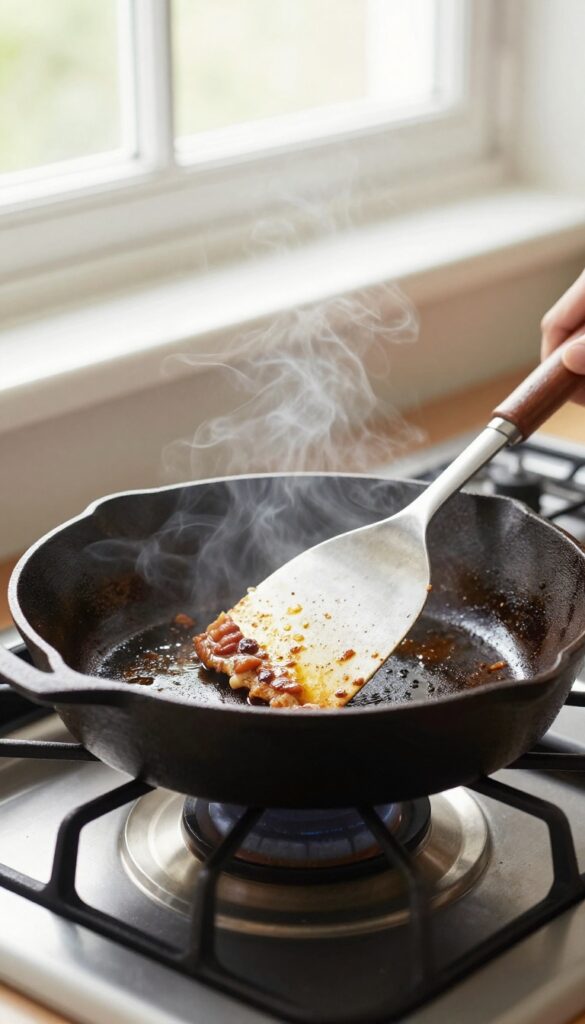
You don't need to scrub like a maniac if you catch the mess early. Right after cooking, let the pan cool for a minute or two—enough so you don't burn yourself, but while it's still warm. Grab a metal spatula or a dedicated cast iron scraper and gently scrape off any stuck-on bits.
The heat keeps the residue soft, so it comes off in seconds. Letting it cool completely turns those bits into concrete.
Scraping while warm is the single easiest way to keep your pan clean without damaging the seasoning. It's fast, requires no soap, and prevents buildup that can lead to rust or flaking. Always use a metal tool—plastic or wood won't cut it.
A chainmail scrubber works great too if you prefer that over a flat scraper.
Why Warm Matters
When food cools, proteins and starches bond tightly to the iron. Warmth keeps them loose. Think of it like caramel on a baking sheet—much easier to remove while still soft.
Best Tools For The Job
A flat metal spatula, a dedicated cast iron scraper, or a chainmail scrubber. Avoid anything abrasive like steel wool unless you're stripping seasoning. Metal won't hurt your pan's surface if you're gentle.
What To Do With The Scrapings
Scoop them into the trash or compost. Never down the sink—grease and bits can clog pipes. Wipe the pan with a paper towel afterward to remove any remaining oil or residue.
2. Rinse With Hot Water Only
Hot water is your best friend when cleaning cast iron. It loosens food residue without stripping the seasoning. Most of the time, that's all you need.
Start by rinsing the pan under hot running water as soon as it's cool enough to handle. Use a stiff brush or a non-scratch scrub pad to gently remove stuck bits. For tough spots, fill the pan with water and bring it to a boil, then scrape with a wooden spatula.
This method lifts debris without damaging the seasoning. After rinsing, dry the pan thoroughly with a towel or place it on low heat to evaporate any remaining moisture.
Why Hot Water Works Best
Hot water expands the metal slightly, helping release food particles. Cold water can cause thermal shock and warp the pan. Plus, hot water cuts through grease better, leaving a cleaner surface.
When To Skip Soap
Modern dish soaps are milder than old lye-based ones, but they can still degrade seasoning over time. Reserve soap for pans that are greasy or have been used for fish or strong-smelling foods. For daily cleaning, hot water and a brush are enough.
Boiling Water For Stubborn Bits
If food is welded on, fill the pan with water and bring it to a boil. Let it simmer for a few minutes, then use a spatula to scrape off the loosened bits. Pour out the water, rinse, and dry.
This technique preserves seasoning while removing even burnt-on residue.
3. Use Coarse Salt as a Gentle Abrasive
Salt isn't just for seasoning food—it's a powerhouse for cleaning cast iron. Coarse kosher salt works as a gentle abrasive that lifts stuck-on bits without scratching your seasoning. It's cheap, natural, and always in your kitchen.
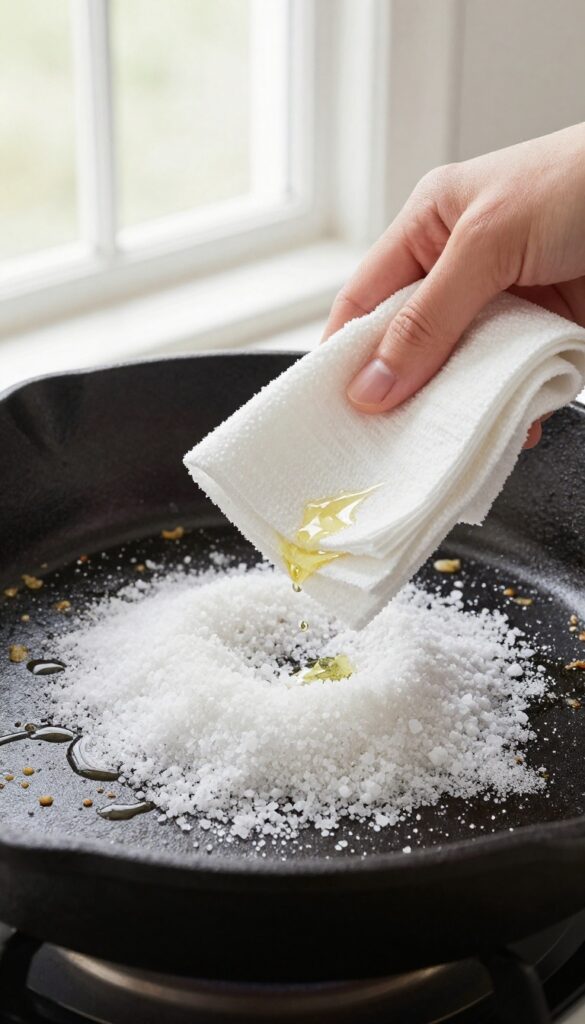
When you've got food residue that won't budge, reach for the salt shaker. Sprinkle a generous layer of coarse kosher salt into the pan, add a splash of oil, and scrub with a paper towel or a soft cloth. The salt crystals act like tiny scrubbers, breaking down grime while the oil helps everything glide.
Rinse with hot water and dry immediately. This method is perfect for everyday cleaning and keeps your seasoning intact.
Why Coarse Salt Works
Coarse salt is hard enough to scrape away food particles but soft enough to leave your seasoning untouched. Unlike steel wool or harsh scrubbers, it won't strip the polymerized oil layer. The salt also absorbs grease, making cleanup even easier.
Step-by-step Salt Scrub
Start with a cool or warm pan—not hot. Add 2-3 tablespoons of coarse kosher salt and a teaspoon of oil. Use a folded paper towel or a lint-free cloth to scrub in circular motions, focusing on stubborn spots.
Rinse with warm water and wipe clean. For extra tough residue, let the salt sit for a minute before scrubbing.
When To Skip The Salt
Avoid salt scrubs on a pan with flaking or damaged seasoning, as the abrasion could worsen it. Also, don't use salt on enameled cast iron—it can scratch the coating. Stick to this method only for bare cast iron with healthy seasoning.
4. Skip the Dishwasher
The dishwasher might seem like a time-saver, but it's the fastest way to ruin your cast iron. The combination of harsh detergents, high heat, and prolonged moisture strips away seasoning and invites rust. Hand washing is the only safe method—and it's quicker than you think.
Dishwashers are designed to blast away grease and food residue, which is exactly what seasoning is. The high heat cycles also cause thermal shock, potentially cracking your pan. Plus, the damp environment promotes rust.
Stick to hand washing with minimal soap and immediate drying.
Why Dishwashers Destroy Seasoning
Seasoning is a layer of polymerized oil that bonds to the iron. Dishwasher detergents contain strong alkalis and enzymes that break down this layer. Even a single cycle can leave your pan patchy and dull.
Over time, repeated dishwasher use will leave you with a bare, rusty skillet.
The Rust Factor
Cast iron is prone to rust when exposed to moisture for long periods. Dishwashers trap steam and water inside, keeping your pan wet for hours. Even if you run a drying cycle, residual moisture can cause orange spots.
Hand washing and thorough drying prevent this entirely.
How To Hand Wash Properly
Use hot water and a stiff brush or non-abrasive scrubber. A small amount of mild dish soap is fine for tough residue—modern soaps won't strip seasoning if used sparingly. Avoid steel wool unless you plan to reseason.
Dry immediately with a towel, then heat on the stove for a minute to evaporate any remaining moisture.
5. Dry Immediately to Prevent Rust
Rust is the enemy of cast iron, and moisture is its best friend. After washing, you might think air-drying is enough, but that lingering dampness can quickly turn into orange spots. A thorough drying routine is the simplest way to keep your pan in top shape.
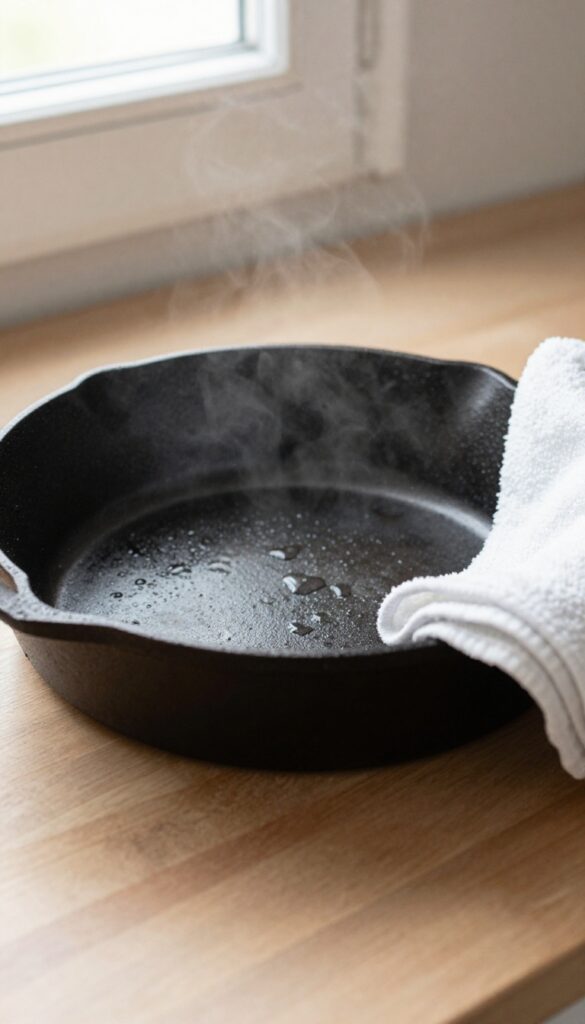
Once you've washed your skillet, grab a clean towel and dry it completely inside and out. Don't stop there—place it on a low burner for a few minutes to evaporate any hidden moisture in the pores of the iron. This extra step ensures no water is left to cause rust, especially in humid climates.
Why Towel Drying Isn't Enough
A towel can get the surface dry, but it can't reach every tiny crevice or the microscopic layer of water that clings to the iron. Even a few droplets left behind can start oxidation overnight. That's why the stovetop step is key—it drives off every last bit of moisture.
The Stovetop Technique
After towel drying, set your pan on a burner over low heat for about 2-3 minutes. You'll see steam rising as the last water evaporates. Keep an eye on it so it doesn't get too hot—just warm enough to dry, not hot enough to damage the seasoning.
Then turn off the heat and let it cool.
When To Oil After Drying
If your seasoning looks a bit thin or patchy, now is the perfect time to apply a light coat of oil. While the pan is still warm, rub a tiny amount of vegetable oil or flaxseed oil over the surface with a paper towel, then buff off the excess. This adds a protective layer against rust and keeps the pan ready for next use.
6. Apply a Thin Layer of Oil After Drying
Drying your cast iron is only half the battle. The next step—applying a thin layer of oil—is what keeps that seasoning strong and prevents rust from forming. It's a quick habit that pays off every time you cook.
Once your pan is completely dry, it's time to oil it. This step seals the pores of the metal, reinforces the non-stick surface, and creates a protective barrier against moisture. You only need a tiny amount—think of it as a whisper of oil, not a bath.
Choose The Right Oil
Vegetable oil, canola oil, and flaxseed oil are all great choices. Flaxseed oil is especially good because it polymerizes into a hard, durable layer. Avoid olive oil or butter—they can turn sticky or rancid over time.
How To Apply It
Put a few drops of oil on a paper towel or lint-free cloth. Rub it all over the pan, inside and out, including the handle and bottom. Then grab a clean towel and wipe off as much as you can.
The goal is a barely-there sheen, not a greasy residue.
When To Reapply
Do this after every wash and dry. If your pan looks dull or feels dry to the touch, it's time for another coat. Regular oiling keeps the seasoning healthy and your pan ready for anything.
7. Tackle Rust With Steel Wool
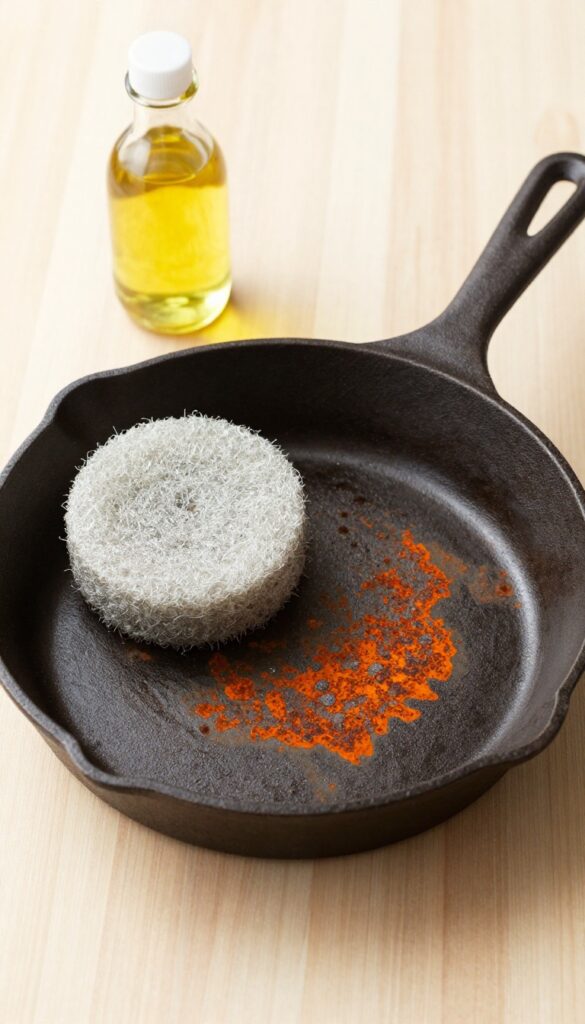
Rust happens. Even if you're careful, a little moisture left behind or a long stretch without use can bring on those orange spots. The good news is that light rust is easy to fix, and heavier rust isn't a death sentence for your pan.
The key is acting quickly and using the right abrasive.
Light Rust: Fine Steel Wool And Oil
For surface rust that hasn't pitted the metal, grab a fine-grade steel wool (like 0000). Add a few drops of cooking oil or a little water to the pan and gently scrub the rusted areas in a circular motion. The oil helps lift the rust without scratching the seasoning too much.
Wipe away the residue with a paper towel and check your progress. Repeat until the rust is gone.
Heavy Rust: Coarse Steel Wool Or Rust Eraser
When rust has built up into a rough, flaky layer, you need something more aggressive. Use coarse steel wool (grade 0 or 1) or a dedicated rust eraser. Scrub firmly with a bit of water to keep the dust down.
You might need to work in sections, rinsing and drying as you go. Once the rust is removed, the pan will look bare—that's normal.
Re-season Immediately After Rust Removal
After scrubbing away rust, your cast iron's protective layer is gone. Don't let it sit exposed or it will rust again within hours. Wash and dry the pan thoroughly, then apply a thin layer of oil (flaxseed, vegetable, or canola work well).
Heat it upside down in a 400°F oven for an hour to build a fresh seasoning. Your pan will be back in action, better than before.
8. Re-Season in the Oven for a Fresh Start
Sometimes a pan just needs a reset. Maybe the seasoning is patchy, food is sticking, or you've stripped it down to bare metal. Oven re-seasoning is the most reliable way to build a durable, non-stick layer from scratch.
This method works best on clean, dry cast iron. It's the same process used to season new pans, and it can revive an old one that's lost its mojo. The key is a thin oil layer and steady heat.
Oven re-seasoning is straightforward but requires patience. The goal is to polymerize the oil, creating a hard, slick surface. Here's how to do it right.
Prep The Pan Right
Start with a completely clean pan. Scrub off any rust or old seasoning using steel wool and soap, then dry it thoroughly. Apply a very thin layer of oil—flaxseed, grapeseed, or vegetable oil work well.
Use a paper towel to rub it all over, then try to wipe it off again. The pan should look almost dry, with only a faint sheen.
Bake Upside Down
Place the pan upside down on the top oven rack. Put a baking sheet or foil on the lower rack to catch any drips. This prevents oil from pooling inside the pan, which can create sticky spots.
Bake at 450°F for one hour.
Cool Slowly Inside The Oven
After the hour is up, turn off the oven and leave the pan inside to cool completely. This gradual cooling helps the seasoning bond firmly. Don't rush it—opening the door too soon can cause cracking or uneven results.
9. Use a Chainmail Scrubber for Tough Gunk
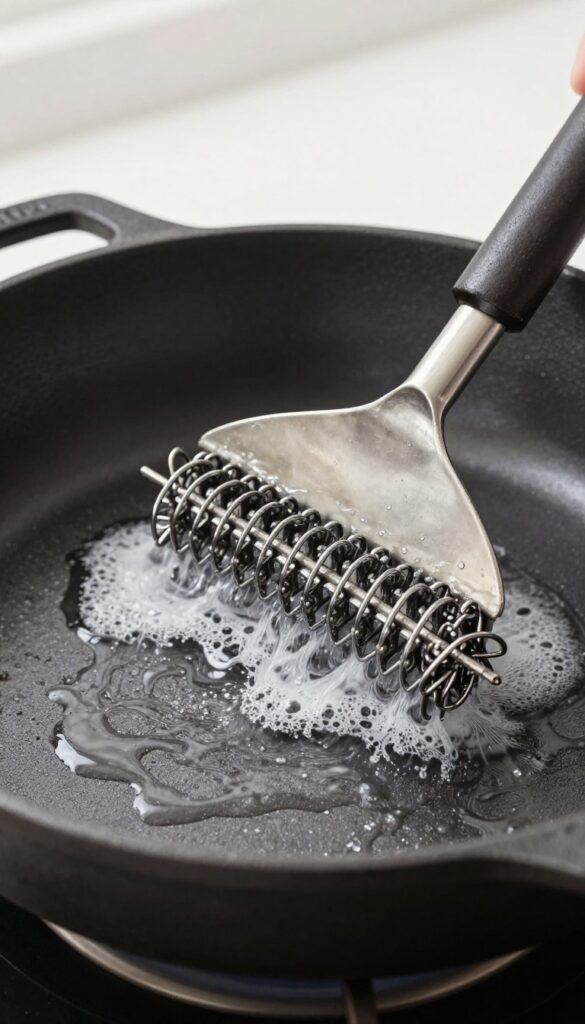
When a soft sponge or brush won't cut it, a chainmail scrubber is your best friend. Those burnt-on bits from searing or baking can be stubborn, but chainmail lifts them off without damaging the seasoning. It's a simple tool that works like magic on tough messes.
A chainmail scrubber is essentially a mesh of stainless steel rings. It's abrasive enough to scrape off stuck food but gentle on the seasoning layer. Use it with hot water—no soap needed for most jobs.
Apply moderate pressure and scrub in circular motions. Rinse and dry immediately. For extra-sticky spots, add a pinch of coarse salt as a mild abrasive.
Why Chainmail Works So Well
The rings create many small scraping edges that dislodge food particles without scratching the polymerized oil. Unlike steel wool, which can strip seasoning, chainmail glides over the surface. It's also easy to clean—just rinse and hang to dry.
How To Use It Right
Always start with a hot pan and hot water. The heat helps loosen debris. Scrub gently at first, then increase pressure if needed.
Avoid using chainmail on a cold pan or with cold water, as thermal shock can warp the iron. After scrubbing, rinse thoroughly and dry on the stove.
When To Skip It
If your pan has a weak or patchy seasoning, stick to a soft brush or salt scrub until you build up more layers. Chainmail is for well-seasoned pans. Also, don't use it on enameled cast iron—it can scratch the coating.
10. Avoid Soaking the Pan
It might seem harmless to let your cast iron sit in the sink with soapy water while you deal with other dishes, but that's a fast track to rust and ruined seasoning. Water is cast iron's biggest enemy, and even a short soak can cause damage. The golden rule is to keep it dry and clean it quickly after use.
If you have stubborn stuck-on food, don't resort to soaking. Instead, fill the pan with a little water and bring it to a boil on the stove. The boiling water will loosen the debris in minutes, making it easy to scrape off with a spatula or brush.
After that, dry the pan thoroughly and apply a thin layer of oil to protect the seasoning.
Why Soaking Is Risky
Cast iron is porous, and prolonged exposure to water allows moisture to seep into the metal. This can cause rust spots to form, especially if the pan isn't dried immediately. Even well-seasoned pans can develop pitting or flaking if left to soak overnight.
The Boiling Water Trick
For tough, crusted-on bits, add about half an inch of water to the pan and bring it to a boil. Let it bubble for a minute or two, then use a wooden spatula or stiff brush to scrape the residue loose. Pour out the water, rinse briefly, and dry the pan right away.
When Soaking Might Be Okay
If you absolutely must soak (for example, to remove burnt carbon), limit it to 10–15 minutes maximum. Use hot water and no soap. After soaking, scrub immediately and dry the pan on the stove over low heat to evaporate any remaining moisture.
11. Clean After Cooking Acidic Foods
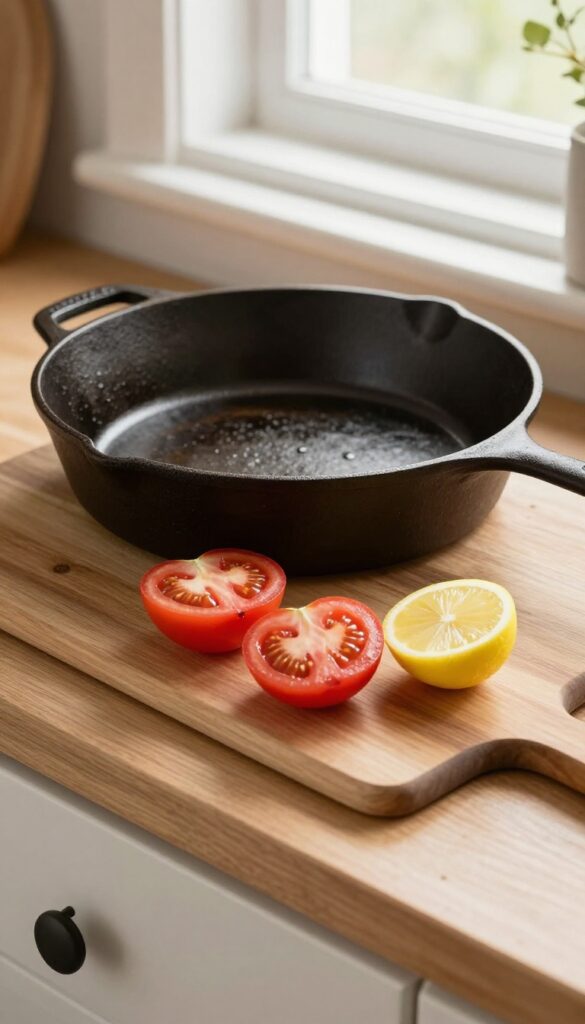
Acidic ingredients like tomatoes, vinegar, or citrus can react with bare iron, causing metallic flavors to leach into your food and potentially damaging the seasoning. It's not a disaster, but it does require prompt attention. The key is to clean the pan right after cooking and re-season if the surface looks compromised.
Why Acidic Foods Are Tricky
Acids break down the polymerized oil layer that makes cast iron non-stick. Over time, frequent exposure can lead to dull spots, rust, or off-flavors. This doesn't mean you should avoid acidic dishes—just be mindful of how you handle the pan afterward.
How To Clean After Acidic Meals
Wash the pan with hot water and a stiff brush as soon as you're done eating. If needed, use a small amount of mild soap—it's fine for occasional use. Dry thoroughly over low heat on the stove, then rub a thin layer of oil onto the cooking surface to protect it.
When To Re-season
If the pan looks patchy, dull, or feels sticky after cleaning, it's time for a quick stovetop re-season. Apply a thin coat of oil, heat until it smokes, then let it cool. This restores the barrier and prevents future issues.
12. Use a Plastic Scraper for Non-Stick Surfaces
A well-seasoned cast iron pan is naturally non-stick, but that slick surface can be delicate. Metal scrapers or abrasive pads can scratch or strip the seasoning, leaving you with a patchy finish. A plastic scraper is a gentle yet effective tool for lifting stuck-on bits without damaging the coating.
Plastic scrapers are cheap, durable, and widely available in kitchen supply stores or online. They work best on warm pans—heat softens residues, making them easier to dislodge. Simply hold the scraper at a slight angle and push gently across the surface.
For stubborn spots, a few drops of water can create steam that helps release food. Rinse and dry as usual.
Why Plastic Over Metal
Metal scrapers can gouge seasoning, especially on newer pans. Plastic is soft enough to protect the finish but firm enough to handle baked-on cheese, egg residue, or caramelized bits. It's also safe for enameled cast iron, where metal can leave gray marks.
How To Use A Plastic Scraper
After cooking, let the pan cool slightly but stay warm. Run warm water over it, then scrape in one direction. Avoid back-and-forth sawing, which can spread residue.
Rinse and wipe with a soft cloth. For extra cleaning, follow with a salt scrub or a quick rinse and dry.
When To Skip The Scraper
If your pan has heavy carbon buildup or rust, a plastic scraper won't be enough. In those cases, use a chainmail scrubber or a deep clean with vinegar and baking soda. Reserve the plastic scraper for regular maintenance between seasonings.
13. Remove Sticky Residue With Baking Soda Paste
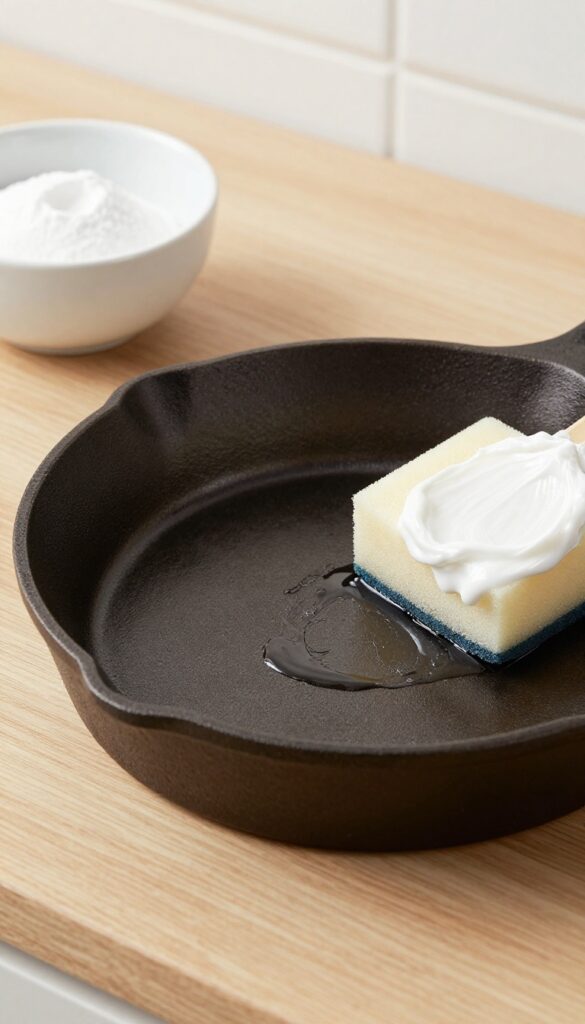
Greasy buildup can make your cast iron feel tacky or look uneven. Before you reach for harsh scrubbers, try a gentle paste made from baking soda and water. It's a simple, non-abrasive way to break down sticky residue without damaging the seasoning.
Mix three parts baking soda with one part water to form a thick paste. Apply it to the sticky spots and scrub gently with a soft sponge or cloth. The mild alkalinity of baking soda helps lift grease without stripping the pan's seasoning.
Rinse thoroughly with warm water and dry immediately with a towel. For stubborn areas, let the paste sit for a few minutes before scrubbing. This method works wonders on pans that have been used for high-fat cooking or have residue from marinades.
Why Baking Soda Works
Baking soda is a mild alkali that reacts with grease and oils, making them easier to lift away. Unlike harsh detergents, it doesn't attack the polymerized oil layer that gives cast iron its non-stick quality. It's also fine enough to provide gentle abrasion without scratching the surface.
Step-by-step Application
Start by rinsing the pan with warm water to remove loose debris. Sprinkle baking soda directly onto the sticky areas, then add a few drops of water to create a paste. Use a soft sponge or your fingers to work the paste into the residue.
Rinse with warm water and check the surface. Repeat if needed, then dry thoroughly and apply a thin layer of oil to protect the seasoning.
When To Avoid This Method
If your pan has rust or the seasoning is already flaking, a baking soda paste might not be enough. In those cases, consider a full reseasoning instead. Also, avoid using this method on enameled cast iron, as baking soda can be too abrasive for the enamel coating.
14. Store With a Paper Towel Inside
Even after you've dried your cast iron thoroughly, humidity in the air can still cause rust to form over time. A simple paper towel placed inside the pan acts as a moisture sponge, keeping the cooking surface dry and protected. This trick is especially useful if you live in a humid climate or don't use your cast iron every day.
After cleaning and drying your pan, fold a paper towel and lay it flat inside. The towel will absorb any residual moisture that might condense inside the pan. If you stack pans, the towel also prevents metal-on-metal contact that can scratch the seasoning.
Check the towel every few weeks and replace it if it feels damp. This small habit can extend the life of your seasoning significantly.
Why It Works
Paper towels are highly absorbent and inexpensive. By placing one inside your pan, you create a dry microclimate that discourages rust formation. The towel also catches any stray crumbs or dust, keeping the pan clean between uses.
When To Change The Towel
If you store your pan for weeks or months, swap out the paper towel every month or so. If the towel feels damp or smells musty, replace it immediately. For pans used weekly, a single towel can last until the next use.
A Note On Stacking
If you stack multiple cast iron pans, place a paper towel between each one. This prevents the pans from rubbing against each other and damaging the seasoning. It also helps absorb moisture from the entire stack.
15. Don't Use Metal Scouring Pads on Seasoned Pans
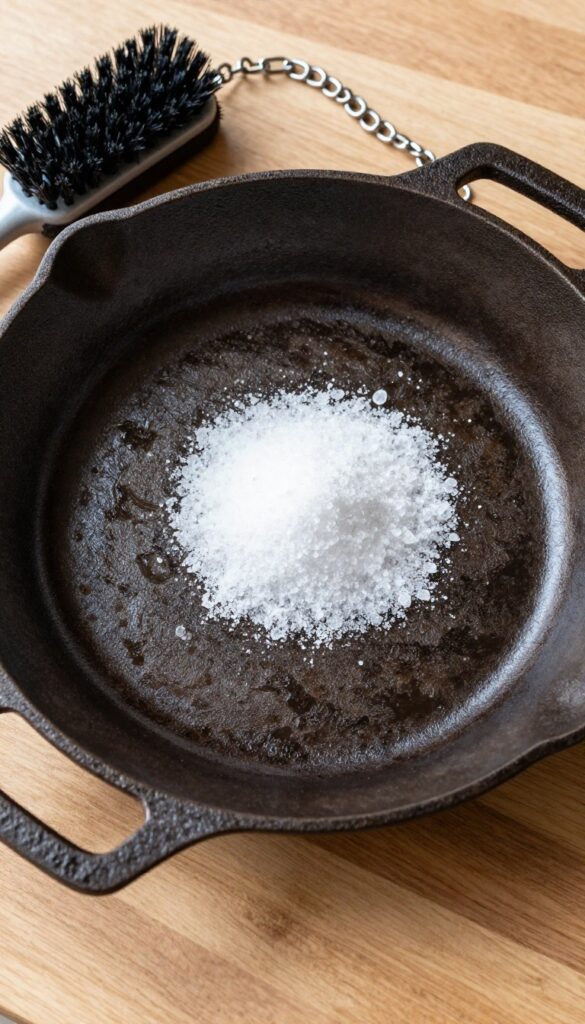
Scrubbing away stuck-on food with a metal scouring pad might feel satisfying, but it's one of the fastest ways to wreck your seasoning. Those abrasive pads scrape off the polymerized oil layer that makes cast iron non-stick. Once that layer is gone, you're back to square one with a sticky, rusty mess.
The fix is simple: switch to gentler tools that clean without stripping the pan's hard-earned patina.
Metal scouring pads, like steel wool or coarse scrubbers, are too harsh for seasoned cast iron. They physically remove the seasoning, leaving bare iron exposed. Even a single aggressive scrub can create thin spots that lead to uneven cooking and rust.
Instead, reach for tools designed to work with cast iron's delicate surface. Soft brushes, non-abrasive sponges, and chainmail scrubbers are all effective without damaging the seasoning. Chainmail scrubbers, in particular, are great for dislodging stubborn bits without scratching the polymerized layer.
They're made of linked stainless steel rings that are gentle on seasoning but tough on food residue. If you don't have a chainmail scrubber, a stiff nylon brush or a plastic scraper works well too. The key is to avoid anything that feels rough or scratchy against the pan's surface.
When in doubt, test a small area first. Your cast iron will thank you with years of reliable non-stick performance.
Why Metal Pads Are So Damaging
Seasoning is a thin layer of oil that has been heated to form a hard, non-stick coating. Metal scouring pads act like sandpaper on this layer, scraping it off in patches. Once the seasoning is compromised, food starts sticking, and rust can take hold.
Even if you can't see the damage right away, microscopic scratches can weaken the seasoning over time. That's why it's best to avoid metal pads entirely, even on older, well-seasoned pans.
Better Alternatives For Tough Stuck-on Food
For burnt-on bits that won't budge with a sponge, try these methods before reaching for a metal pad. First, add a little water to the pan and bring it to a simmer. The steam will loosen the food, making it easy to scrape off with a wooden or silicone spatula.
For extra stubborn spots, sprinkle coarse salt into the pan and scrub with a paper towel or soft brush. The salt acts as a mild abrasive that won't harm the seasoning. Chainmail scrubbers are another excellent option—they're designed to be gentle on seasoning while still providing enough friction to remove residue.
How To Maintain Your Seasoning While Cleaning
After each clean, dry the pan thoroughly and apply a thin layer of oil to protect the seasoning. Use a paper towel or cloth to rub oil into the surface, then wipe off any excess. This simple step helps maintain the non-stick layer and prevents rust.
If you notice the seasoning looking dull or patchy, it might be time for a quick stovetop seasoning. Heat the pan, add a drop of oil, and rub it in until it smokes. Let it cool, and your seasoning will be refreshed.
16. Clean the Exterior Too
The outside of your pan works just as hard as the inside, but it often gets ignored. Over time, grease and food residue can build up on the sides and bottom, making the pan look grimy and feel sticky. A quick exterior clean keeps your cast iron looking its best and prevents that gunk from burning onto the stovetop next time you cook.
Don't neglect the outside of your cast iron. Grease splatters and drips can accumulate, leading to a sticky, discolored surface. Wash the exterior with hot water and a stiff brush, just like the inside.
For stubborn buildup, use a paste of coarse salt and water. Rinse well, dry immediately, and apply a thin layer of oil to maintain the finish.
Why The Exterior Matters
The outside of your pan is exposed to the same heat and grease as the inside. A dirty exterior can smoke when heated, transfer grime to your stovetop, and even affect how evenly the pan heats. Keeping it clean also prevents rust from forming on the bare iron.
How To Clean The Outside
Start by rinsing the pan with hot water. Use a stiff nylon brush or a chainmail scrubber to remove stuck-on bits. For tough spots, make a paste with coarse salt and a little water, then scrub gently.
Avoid soap if you're worried about the seasoning, but a tiny drop of mild dish soap is fine for occasional deep cleans.
Drying And Oiling
After washing, dry the pan thoroughly with a towel, then place it on a warm burner for a few minutes to evaporate any remaining moisture. While the pan is still warm, rub a very thin layer of cooking oil all over the exterior. This seals the surface and keeps it looking smooth and non-stick.
17. Know When to Strip and Start Over
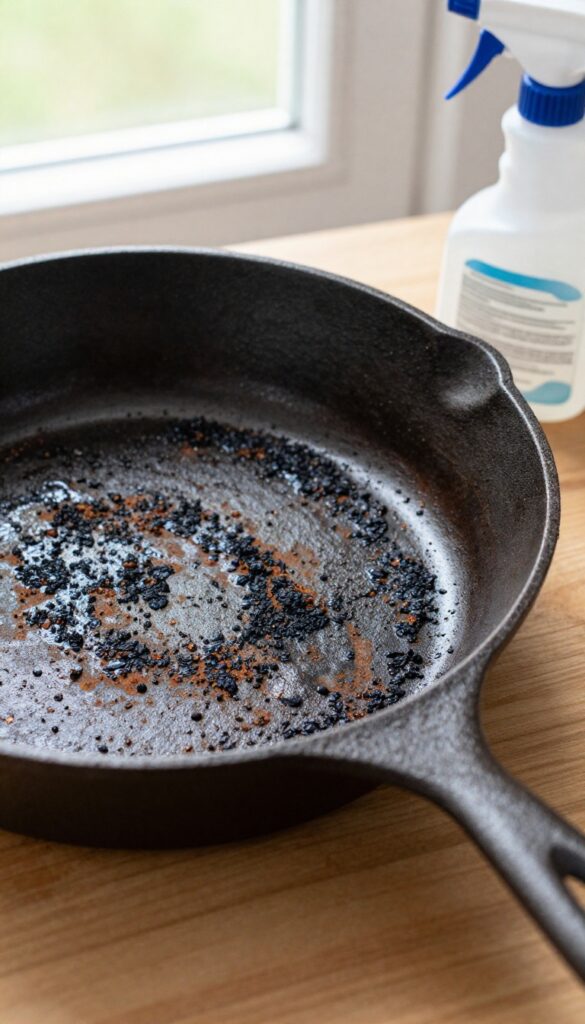
Sometimes a pan is beyond saving with a simple scrub or a quick stovetop reseason. If the seasoning is flaking off in chunks or rust has taken hold across the cooking surface, it's time to hit the reset button. Stripping your cast iron down to bare metal might sound drastic, but it's the only way to bring a badly damaged pan back to life.
Stripping removes all old seasoning, rust, and gunk, giving you a clean slate. Once stripped, you can build fresh seasoning that's even and durable. The two most effective methods are using oven cleaner or electrolysis.
Both require some patience and safety precautions, but the results are worth it.
When To Strip
Look for signs like large patches of flaking seasoning, widespread rust that won't scrub off, or a sticky, uneven surface that won't smooth out. If your pan has a funky smell or the seasoning feels tacky even after cleaning, stripping may be the answer.
Oven Cleaner Method
Spray the pan with a heavy-duty oven cleaner containing lye, place it in a plastic bag, and let it sit for 24-48 hours. Then scrub off the softened seasoning with a nylon brush and rinse thoroughly. Wear gloves and work in a well-ventilated area.
Electrolysis Setup
For a more hands-off approach, build a simple electrolysis tank using a plastic container, a battery charger, a piece of steel, and washing soda. Submerge the pan and let the current do the work. This method is gentle on the iron and removes rust and seasoning without scrubbing.
Re-seasoning After Stripping
Once stripped, wash the pan with soap and water, dry it immediately, and apply a thin layer of oil. Bake it upside down in a 450°F oven for an hour. Repeat this process 3-4 times to build a solid base layer of seasoning.
FAQ
Can I use soap on cast iron?
Yes, a small amount of mild dish soap is fine for occasional deep cleaning, especially if the pan has sticky residue. Modern soaps are not as harsh as old lye-based ones, so they won't ruin seasoning if used sparingly.
How do I remove rust from cast iron?
Use fine steel wool or a rust eraser to scrub the rust away, then wash, dry, and re-season the pan immediately. For heavy rust, you may need to strip and re-season completely.
Why does my cast iron food taste metallic?
A metallic taste usually means the seasoning is too thin or has worn off, exposing the bare iron. Re-season the pan with a few layers of oil to build up a protective coating.
How often should I season my cast iron?
Season after each use if you notice food sticking or the surface looking dull. For well-seasoned pans, a light oil rub after cleaning is enough. Deep oven seasoning is needed only when stripping or restoring.
Can I use cast iron on glass-top stoves?
Yes, but be careful. Cast iron can scratch glass if slid around. Lift the pan instead of sliding, and avoid dropping it.
Some manufacturers recommend using a flat-bottomed pan for even contact.
Conclusion
Cast iron care doesn't have to be intimidating. Once you get the hang of these simple techniques—like using salt for scrubbing and always drying thoroughly—your skillet will reward you with years of reliable cooking. Start with one or two tips that fit your routine, and you'll build confidence fast.
Remember, a well-seasoned pan is built over time, not overnight. Keep this list handy for those moments when you're unsure about a stuck-on mess or rust spot. With a little practice, cleaning your cast iron will feel like second nature.