23 Stove Top Cleaning Hacks for Burnt Food and Grease
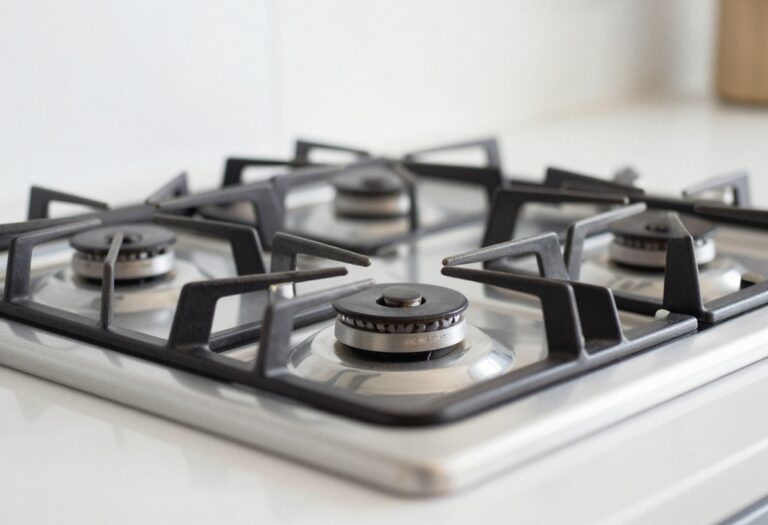
Burnt-on food and stubborn grease can turn a quick stovetop cleanup into a real chore. Instead of scrubbing for hours, you probably have most of what you need already sitting in your pantry or under the sink.
These 23 stove top cleaning hacks use everyday ingredients to tackle tough messes without harsh chemicals or expensive products.
From baking soda pastes to surprising solutions like ketchup and denture tablets, each tip targets a specific problem so you can get back to cooking sooner.
1. Baking Soda Paste for Burnt-On Food
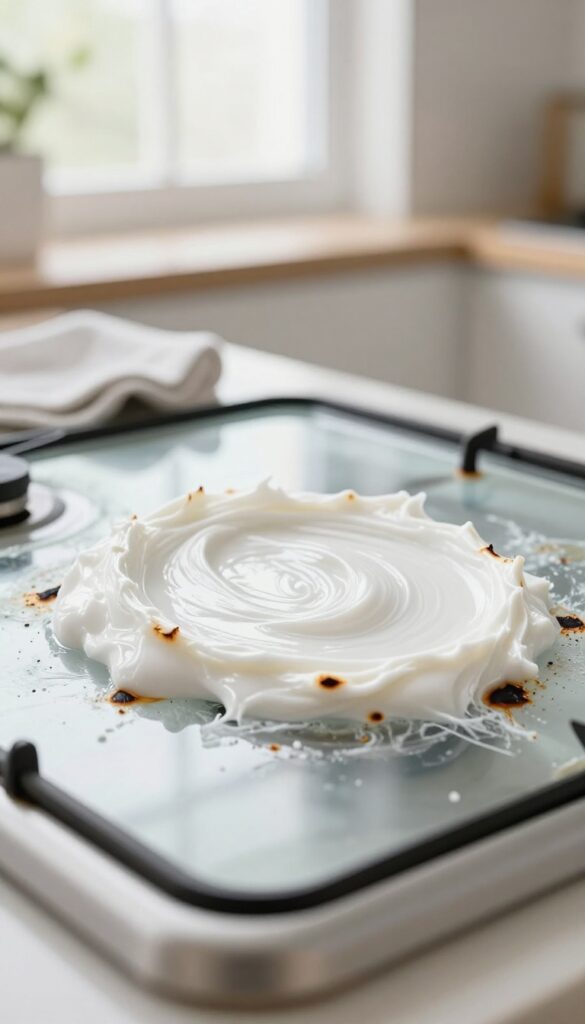
When food gets welded to the stove top, a simple baking soda paste can be your best friend. This gentle abrasive lifts carbonized bits without scratching the surface. It's cheap, non-toxic, and probably already in your cupboard.
For tough burnt-on spots, baking soda paste is a go-to solution. It works on glass, ceramic, and enamel stove tops, as well as drip pans. The key is letting it sit long enough to soften the gunk before scrubbing.
How To Make The Paste
Mix three parts baking soda with one part water in a small bowl. Stir until it forms a thick, spreadable paste. It should be like toothpaste—not too runny.
Add more baking soda if it's too thin, or a few extra drops of water if it's too dry.
Application And Wait Time
Spread the paste over the burnt areas in a thick layer. Let it sit for 15 to 20 minutes. For extra stubborn spots, cover with a damp cloth to keep the paste from drying out.
This gives the baking soda time to break down the burnt residue.
Scrubbing And Rinsing
After the wait, scrub gently with a non-abrasive sponge or soft cloth. Use circular motions to lift the softened food. Rinse with a damp cloth to remove all paste.
Repeat if needed—some tough spots may require a second application.
Safety And Surface Tips
Avoid using baking soda paste on unfinished cast iron or aluminum, as it can dull the finish. For glass stove tops, make sure no paste gets into the burner gaps. Always test a small hidden area first if you're unsure about your surface.
2. Vinegar and Baking Soda Fizz
If you've ever watched a baking soda volcano erupt in science class, you already know how powerful this combo can be. On your stove top, that same fizzing action works like a gentle scrubber, lifting burnt food and grease without any elbow grease. It's cheap, non-toxic, and smells way better than chemical cleaners.
Start by sprinkling a generous layer of baking soda over the entire stove top, focusing on the worst spots. Then fill a spray bottle with white vinegar and spritz it over the baking soda until it starts to bubble. Let the fizz sit for about 5 minutes—longer if the mess is really caked on.
The chemical reaction helps break down the bond between the grime and the surface. After the bubbling stops, wipe everything down with a damp microfiber cloth. For stubborn residue, scrub gently with a soft sponge or brush.
Rinse with clean water and dry with a towel to prevent streaks.
Why It Works So Well
Baking soda is mildly abrasive, which means it can scrub away stuck-on food without scratching your stove top. Vinegar is acidic, so it cuts through grease and dissolves mineral deposits. When they combine, the carbon dioxide bubbles physically push dirt away from the surface.
It's a one-two punch that's safe for glass, ceramic, and enamel stove tops.
Best For Light To Medium Buildup
This method works best on everyday stains and moderate burnt-on food. If you're dealing with a thick layer of charred gunk, you might need to let the fizz sit longer or repeat the process. For extra tough spots, make a paste with baking soda and a little water, apply it directly, then spray vinegar on top.
Tips For Best Results
Always use white vinegar—apple cider or balsamic can leave sticky residue. Make sure your stove top is cool before you start. Avoid using this on aluminum or unsealed cast iron, as vinegar can cause discoloration.
If you have a gas stove, remove the grates first and clean them separately.
3. Lemon Juice for Grease Cutting
Lemons aren't just for lemonade or adding zest to your favorite dish. Their natural acidity makes them a powerhouse for cutting through stubborn grease on your stovetop. Instead of reaching for a chemical spray, grab a lemon from the fridge and put it to work.
Cut a lemon in half and rub it directly over greasy spots. The citric acid breaks down grease naturally. Follow up with a damp cloth to remove any sticky residue.
Why Citric Acid Works
Citric acid is a natural degreaser that dissolves the bonds in grease molecules, making them easy to wipe away. It's gentle on most stovetop surfaces but tough on grime.
Best Surfaces For Lemon
This hack works great on glass, ceramic, and stainless steel stovetops. Avoid using it on unsealed cast iron or aluminum, as the acid can cause discoloration.
Extra Scrubbing Power
For tougher spots, dip the cut lemon in a little baking soda before rubbing. The combination creates a mild abrasive paste that lifts burnt-on food without scratching.
4. Dish Soap and Hydrogen Peroxide
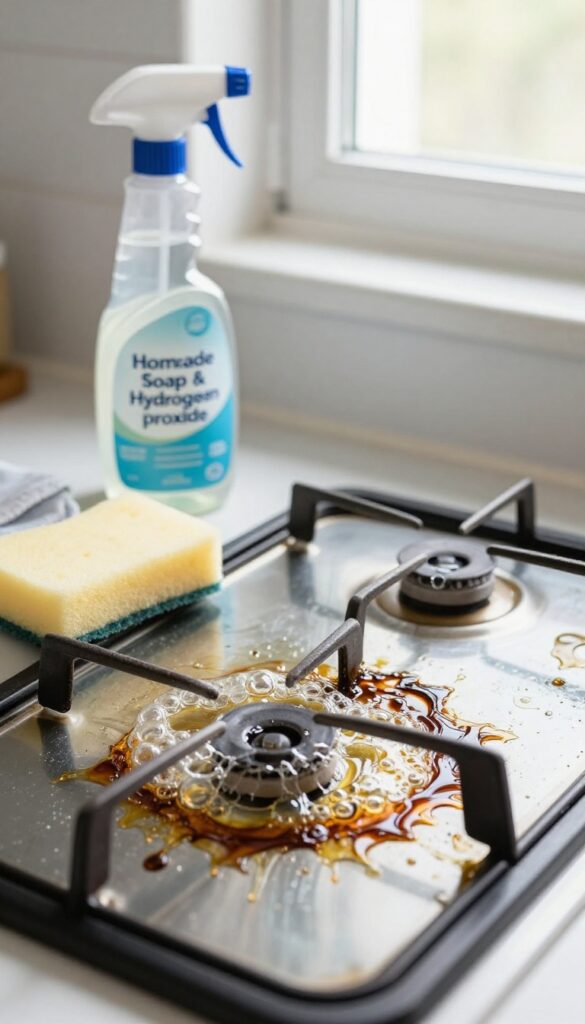
Sometimes the best degreaser is already hiding in your bathroom cabinet. Hydrogen peroxide mixed with a squirt of dish soap creates a fizzing, bubbling solution that cuts through burnt grease like magic. It's gentle enough for glass cooktops but tough enough to lift layers of baked-on grime.
This two-ingredient hack works because hydrogen peroxide breaks down organic residue while dish soap grabs onto grease particles. Together, they form a powerful cleaner that loosens burnt food without harsh scrubbing. It's especially effective on glass and ceramic stovetops where you don't want to scratch the surface.
How To Mix And Apply
In a small spray bottle, combine equal parts hydrogen peroxide (3% solution) and liquid dish soap. Shake gently to mix without creating too many suds. Spray the mixture generously over burnt areas and let it sit for 10 to 15 minutes.
You'll see it start to bubble and lift the grime.
Scrubbing Without Damage
After the solution has soaked, use a non-abrasive sponge or a soft cloth to wipe away the loosened residue. For stubborn spots, sprinkle a little baking soda on the sponge for extra grit. Rinse with a damp cloth and dry with a microfiber towel for a streak-free shine.
Safety And Storage Tips
Always test on a small hidden area first, especially on colored or coated surfaces. Hydrogen peroxide can bleach some materials if left too long. Store the mixture in a dark bottle away from sunlight, as light breaks down peroxide.
Label it clearly and keep it out of reach of children.
5. Denture Tablets for Stubborn Stains
Denture tablets aren't just for cleaning false teeth—they're surprisingly effective at lifting burnt-on stains from stove burners and drip pans. The fizzing action works like a gentle scrub, reaching into crevices where a sponge can't. Give this hack a try next time you're facing a crusty mess that won't budge.
Drop a denture tablet into a small bowl of warm water and place it on a stained burner or drip pan. Let it fizz for 30 minutes, then rinse. The effervescence lifts baked-on stains without harsh scrubbing.
How It Works
Denture tablets contain sodium bicarbonate, citric acid, and other cleaning agents that react with water to create bubbles. These bubbles penetrate baked-on food and grease, loosening them from the surface. It's a chemical reaction that does the scrubbing for you.
Best For Removable Parts
This method works best on removable burner caps, drip pans, or grates. Submerge the parts in a sink or bowl with warm water and two tablets. Let them soak for 30 minutes, then rinse and dry.
For non-removable parts, place a bowl with the solution directly on the stain.
Tips For Maximum Effect
Use hot water to activate the tablets faster. For extra tough stains, let the solution sit for up to an hour. After soaking, wipe away residue with a soft cloth.
Avoid using this on aluminum surfaces, as the fizzing can cause discoloration.
6. Ketchup for Copper and Stainless Steel
That bottle of ketchup in your fridge isn't just for fries. Thanks to its vinegar and tomato base, it's acidic enough to cut through tarnish and light burnt-on residue on copper and stainless steel surfaces. This hack is especially handy for burner grates and cooktop trim that have lost their shine.
How It Works
Ketchup contains acetic acid (from vinegar) and citric acid (from tomatoes). These mild acids react with oxidized metal, loosening tarnish and baked-on grease without harsh scrubbing. The thick texture also helps the ketchup cling to vertical surfaces like burner grates.
Step-by-step Application
Squeeze a generous layer of ketchup directly onto the tarnished area. Spread it evenly with a spatula or your fingers (wear gloves if you prefer). Let it sit for 15–20 minutes—longer for heavy tarnish.
Then wipe off with a damp cloth and rinse with warm water. Dry immediately to prevent water spots.
Best Surfaces To Use It On
This works great on copper-bottom pans, stainless steel burner grates, and chrome or nickel-plated trim. Avoid using it on aluminum, cast iron, or uncoated carbon steel, as the acid can damage those materials. Always test a small hidden area first.
7. Club Soda for Glass Cooktops
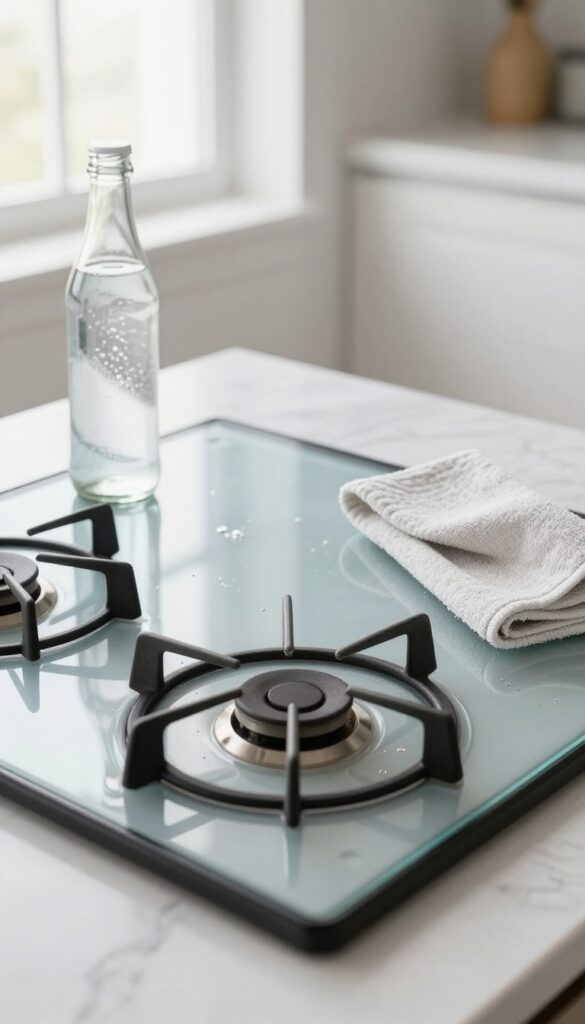
Glass cooktops look sleek, but they show every bit of burnt food and grease. Club soda offers a gentle, fizz-powered way to lift stubborn residue without scratching the surface. The carbonation helps break down stuck-on grime while the mild acidity cuts through grease.
Pour a generous amount of club soda directly onto the cool glass cooktop, focusing on the burnt areas. Let it sit for a few minutes—the bubbles will work to loosen the debris. Then wipe with a soft, damp cloth.
For tougher spots, use a non-abrasive sponge. Repeat if needed. This method is safe for daily use and leaves the surface streak-free.
Why Club Soda Works
The carbonation in club soda creates tiny bubbles that help lift burnt food particles from the glass. The mild acidity (from carbonic acid) also helps dissolve grease without damaging the surface. Unlike harsh cleaners, club soda won't dull or scratch your cooktop.
Best Practices For Glass Cooktops
Always let the cooktop cool completely before applying club soda. Use a soft microfiber cloth or a sponge specifically designed for glass cooktops. Avoid abrasive scrubbers or paper towels, which can leave micro-scratches.
For extra shine, follow up with a dry cloth.
When To Avoid This Hack
Club soda is not recommended for heavily caked-on, baked-on spills that have been there for days. In those cases, try a baking soda paste first. Also, avoid using club soda if your cooktop has cracks or chips, as moisture could seep underneath.
8. Ammonia Overnight Soak for Burners
Ammonia is a powerful degreaser that works wonders on baked-on grease without any scrubbing. This method uses the fumes to break down grime, so you just rinse away the mess the next morning. It's almost like magic—but it's just chemistry.
For burner grates and drip pans that look beyond saving, this overnight soak can restore them to near-new condition. The key is letting the ammonia fumes do the heavy lifting while you sleep.
What You'll Need
Grab a large resealable plastic bag (a garbage bag works too), a small bowl or cup, and household ammonia. Make sure the bag is big enough to hold your grates or pans without touching the ammonia bowl directly.
Step-by-step Instructions
Place the dirty burner parts inside the bag. Pour about 1/4 cup of ammonia into the small bowl and set it in the bag next to the parts. Seal the bag tightly and leave it in a well-ventilated area (or outside) overnight.
The next day, remove the parts, rinse them with water, and wipe away any remaining grease. No scrubbing needed.
Safety Tips
Work in a well-ventilated space and avoid inhaling fumes. Wear gloves if you have sensitive skin. Never mix ammonia with bleach or other cleaners—it creates toxic gas.
Keep the bag away from kids and pets.
9. Bar Keepers Friend for Tough Grime
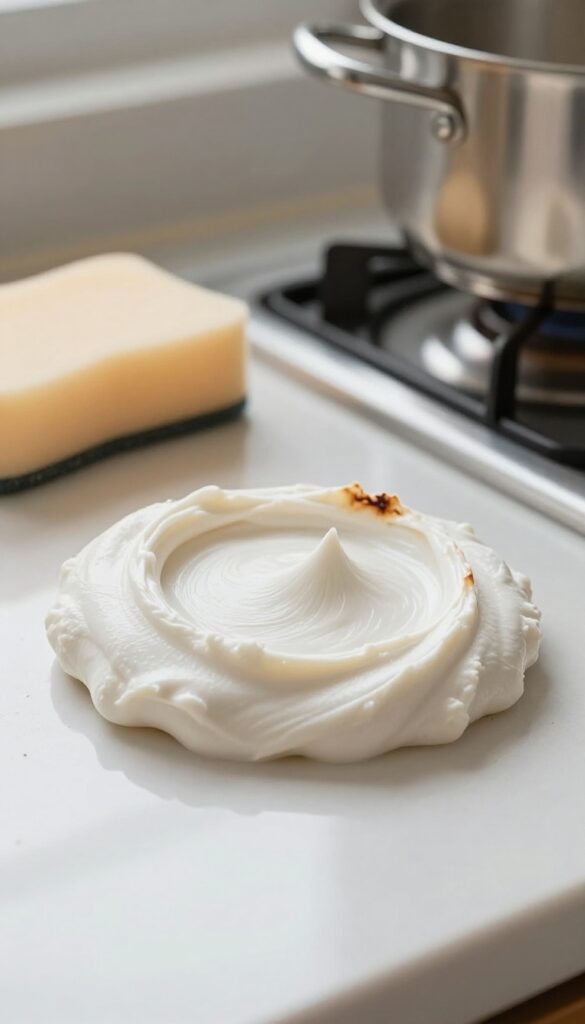
When baking soda isn't cutting it, Bar Keepers Friend steps in. This powdered cleaner contains oxalic acid, which breaks down burnt-on food without scratching your cooktop. It's a go-to for ceramic and stainless steel surfaces.
Bar Keepers Friend is a mild abrasive that handles tough grime without damaging delicate surfaces. To use it, sprinkle the powder directly onto the burnt area, then add just enough water to form a thick paste. Let it sit for 5 minutes to let the oxalic acid work into the burnt residue.
After that, scrub gently with a soft sponge or cloth. Rinse thoroughly with water and dry with a clean towel. For extra stubborn spots, you can let the paste sit a bit longer or apply a second round.
Always test on a small hidden area first, especially on colored or coated surfaces.
How To Make The Paste
Mix equal parts Bar Keepers Friend powder and water in a small bowl until you get a spreadable paste. Adjust the ratio if needed—a thicker paste stays put on vertical surfaces like stovetop edges. Use a non-abrasive sponge or a soft cloth to apply it.
Application Tips For Best Results
Focus on the worst spots first. Spread the paste evenly over the burnt areas, then let it sit for 5 to 10 minutes. Don't let it dry completely, as that can make it harder to rinse off.
Scrub in a circular motion with gentle pressure, then wipe away with a damp cloth.
Safety And Surface Care
Bar Keepers Friend is safe for ceramic, glass, and stainless steel, but avoid using it on aluminum, copper, or painted surfaces. Wear gloves to protect your hands, and keep the area well-ventilated. Rinse thoroughly to remove all residue, and dry the surface to prevent water spots.
10. Steam Cleaning with a Microwave Bowl
If scrubbing burnt-on food feels like a workout, let steam do the heavy lifting. This hack uses your microwave to create a gentle, chemical-free steam that loosens grime in minutes. It's especially handy for glass and ceramic cooktops, but works on any stovetop that can handle moisture.
Fill a microwave-safe bowl with 1 cup of water and 1 tablespoon of white vinegar. Microwave on high for 5 minutes, then let it sit inside for another 2 minutes—don't open the door yet. The steam builds up and softens burnt food particles.
Carefully remove the bowl (it's hot! ) and immediately wipe down the stovetop with a damp cloth or sponge. For stubborn spots, repeat the process or let the steam sit a bit longer before wiping.
Why Vinegar?
Vinegar is a mild acid that cuts through grease and helps break down burnt residue. When heated, its steam penetrates dried-on food more effectively than plain water. Plus, it deodorizes the kitchen as it works.
Best For Glass And Ceramic Cooktops
This method is safe for smooth cooktops because there's no abrasive scrubbing. The steam softens spills so they wipe away without scratching the surface. Just avoid using it on unsealed cast iron or rust-prone surfaces.
Quick Safety Tips
Always use a microwave-safe bowl and handle it with oven mitts. Don't microwave for longer than 5 minutes—excess steam can damage the microwave. Wipe the stovetop while it's still warm for best results.
11. Cream of Tartar for Aluminum Grates
Aluminum burner grates can develop a dull, oxidized look over time, especially after repeated exposure to high heat. Cream of tartar, a mild acid, gently removes that layer without scratching the metal.
Mix cream of tartar with a little water to form a paste. Apply to aluminum burner grates, let sit for 10 minutes, then scrub. It removes oxidation and burnt residue.
Why It Works
Cream of tartar is acidic enough to break down mineral deposits and oxidized layers on aluminum. Unlike harsh abrasives, it won't scratch the surface, making it ideal for restoring shine.
How To Apply
Combine 2 tablespoons cream of tartar with just enough water to make a thick paste. Spread it evenly over the grates, focusing on discolored spots. Let it sit for 10 minutes, then scrub with a soft brush or sponge.
Rinse thoroughly and dry.
Extra Tips
For heavy oxidation, let the paste sit for 15–20 minutes. If the grates are greasy, wipe off excess oil first so the paste can work directly on the metal. This method also works on aluminum pots and pans.
12. WD-40 for Sticky Grease
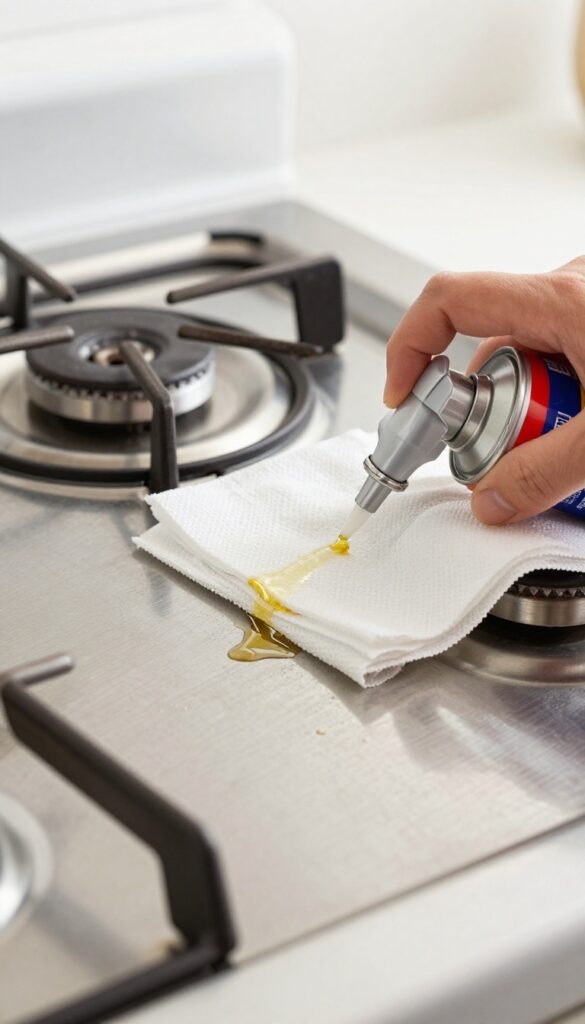
You might know WD-40 as a tool for squeaky hinges, but it’s also a surprisingly effective degreaser for your stove top. When grease has baked on and turned tacky or sticky, a quick spray can save you from scrubbing yourself raw. The solvents in WD-40 break down the greasy residue, making it easy to wipe away.
Spray WD-40 directly on the greasy or sticky areas, let it sit for about 5 minutes, then wipe clean with a paper towel. The grease dissolves almost instantly, and the leftover film actually helps repel future grime. Just be sure to rinse the surface with soapy water afterward if you’ll be cooking directly on that area, since WD-40 isn’t food-safe.
Why It Works So Well
WD-40 contains petroleum-based solvents that are excellent at cutting through heavy grease. Unlike some kitchen degreasers that require elbow grease, WD-40 penetrates and loosens the bond between the grease and the stove surface. It also leaves behind a thin protective layer that makes future cleaning easier.
Where To Use It (and Where Not To)
This hack works best on stainless steel, ceramic, and enamel stove tops. Avoid using it on unfinished cast iron or any surface that might absorb the chemical. For burner grates and drip pans, remove them first and spray in a well-ventilated area.
Always do a spot test in an inconspicuous area first.
Safety Tip: Rinse Thoroughly
Since WD-40 is not meant for food contact, it’s crucial to wash the stove top with warm soapy water after using it. A simple wipe with a damp cloth isn’t enough. Use a mild dish soap and a sponge to remove any residue, then dry with a clean towel.
This ensures no chemical film transfers to your cookware.
13. Magic Eraser for Scuff Marks
A melamine sponge, often sold under the brand name Magic Eraser, is a surprisingly effective tool for cleaning glass and ceramic cooktops. Its micro-abrasive texture lifts scuff marks and light burnt spots without scratching the surface, as long as you use it correctly. This hack is perfect for those times when a quick wipe with a cloth just doesn't cut it.
Dampen a melamine sponge (Magic Eraser) and gently rub scuff marks or light burnt spots on glass or ceramic cooktops. Rinse and dry. Avoid using on textured surfaces.
How It Works
Melamine foam acts like ultra-fine sandpaper. When dampened, it creates a mild abrasive action that lifts dirt and stains from smooth surfaces. It's especially good for removing light discoloration from spills that have been baked on.
Step-by-step
First, make sure the cooktop is cool. Dampen the sponge with water and wring out excess so it's just moist. Gently rub the scuff mark or burnt spot in a circular motion.
You'll see the mark start to fade. Rinse the area with a clean damp cloth and dry with a soft towel.
What To Avoid
Never use a melamine sponge on textured surfaces like stainless steel or painted finishes, as it can dull or scratch them. Also, avoid applying too much pressure—let the sponge do the work. Test on a small inconspicuous area first if you're unsure.
14. Coca-Cola for Burnt-On Crust
You might reach for a soda to drink, but it can also help you clean. Coca-Cola's phosphoric acid is great at breaking down burnt-on food. It's a simple trick that works surprisingly well on stubborn crust.
Don't pour out that flat cola just yet. The acidity in Coca-Cola helps dissolve carbonized food without harsh scrubbing. Just apply it to the burnt areas and let it sit.
Rinse well afterward to remove any sticky residue.
How To Apply It
Pour a small amount directly over burnt spots on your stovetop. For removable parts like burner grates or drip pans, submerge them in a bowl of Coke. Let everything soak for about 30 minutes.
Why It Works
The phosphoric acid in cola reacts with the carbon in burnt food, loosening it from the surface. This chemical reaction makes wiping away crust much easier than scrubbing alone.
Rinsing Is Key
After soaking, scrub gently with a sponge and rinse thoroughly with water. Any leftover sugar can attract dirt or cause stickiness, so make sure all traces are gone.
15. Salt and Oil for Cast Iron Grates
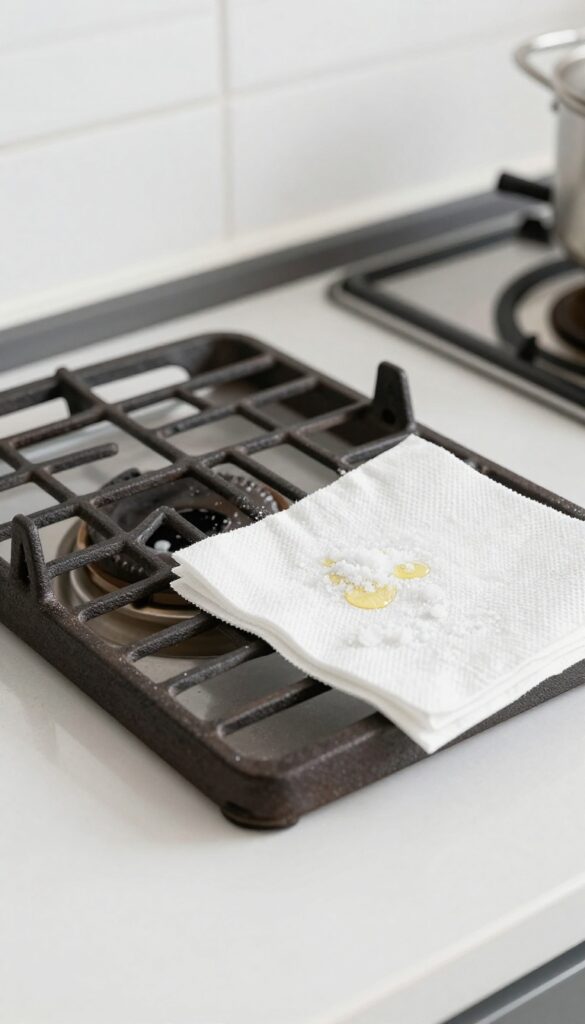
Cast iron grates can be tricky to clean without stripping their seasoning. A simple combination of coarse salt and cooking oil cuts through burnt-on residue while protecting the metal. This method is gentle enough to use regularly and leaves your grates ready for the next cook.
Why Salt And Oil Work
Coarse salt acts as a mild abrasive that scrubs away carbonized food without scratching the cast iron. Oil helps dissolve grease and lifts stubborn bits. Together, they create a paste-like action that breaks down grime without harsh chemicals.
How To Do It
Make sure the grates are cool to the touch. Sprinkle a generous amount of coarse salt over the surface. Dip a folded paper towel or clean cloth in a high-smoke-point oil like vegetable or canola.
Rub the salt into the grates using circular motions, applying light pressure. The salt will darken as it picks up residue. Continue until the grates look clean.
Finishing And Seasoning
Wipe away the salt and oil mixture with a dry paper towel. If the grates look dry or patchy, apply a thin layer of oil and heat them on the stove for a few minutes to restore the seasoning. This step prevents rust and keeps the surface non-stick.
16. Razor Blade Scraper for Glass Cooktops
A single-edge razor blade isn't just for box cutters—it's a precision tool for glass cooktops. When burnt-on food forms a stubborn crust, a scraper can lift it off without the elbow grease. The trick is using the right angle and keeping the blade flat to avoid scratches.
Why It Works On Glass
Glass cooktops are smooth and hard, so a sharp blade can slide under burnt residue without damaging the surface. The 45-degree angle creates a slicing motion that separates the gunk from the glass. Always use a brand-new blade to ensure it's sharp and free of nicks.
Step-by-step Technique
First, let the cooktop cool completely. Hold the scraper at a 45-degree angle and push it gently forward—don't drag it back and forth. Keep the blade flat against the glass to prevent gouging.
Work in small sections, wiping away debris as you go.
Finishing Up
After scraping, spray the cooktop with a glass cleaner or a vinegar-water solution. Wipe with a soft cloth to remove any remaining residue. Your cooktop will look streak-free and shiny.
Store the blade safely for future use.
17. Baking Soda and Vinegar Foam for Coils
Electric coil burners take a real beating. Food drips, grease splatters, and burnt-on bits build up fast. Instead of scrubbing them in place, pull them off and let chemistry do the heavy lifting.
Remove the coils from the stove and place each one inside a large zip-top bag. Sprinkle a generous amount of baking soda over the coils, then pour in enough white vinegar to create a fizzing foam. Seal the bag and let it sit for 30 minutes.
The reaction helps loosen carbonized food and grease. After the soak, take out each coil and scrub with a stiff brush or an old toothbrush. Rinse thoroughly under warm water and dry completely with a clean cloth before plugging them back in.
Why This Works So Well
Baking soda is a mild abrasive that breaks down grease without scratching metal. Vinegar's acidity dissolves mineral deposits and reacts with the baking soda to create carbon dioxide bubbles. Those bubbles physically lift gunk away from the surface, making scrubbing much easier.
Safety First
Always make sure the coils are unplugged and completely cool before removing them. Never submerge the connector end in liquid—only the coil part should touch the cleaning solution. Dry every nook and cranny to prevent any electrical issues when you reattach them.
When To Skip This Method
If your coils are heavily rusted or the heating element is exposed, avoid soaking them. In that case, a dry scrub with a baking soda paste is safer. Also, never use this method on gas burner caps or sealed burners.
18. Dishwasher Tablet for Drip Pans
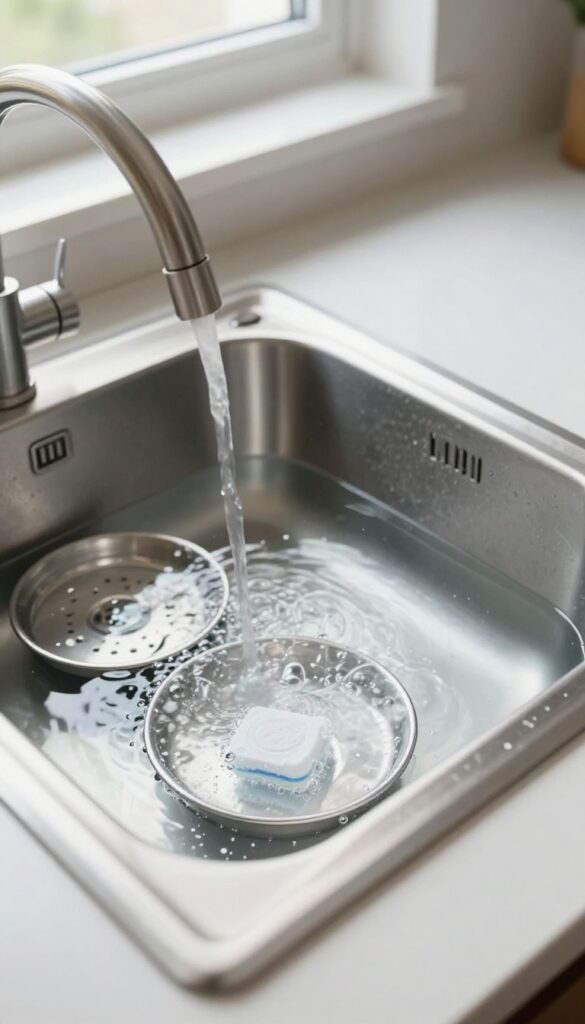
Dishwasher tablets aren't just for your machine. Drop one into a sink of hot water and let your drip pans soak for 30 minutes. The enzymes and surfactants break down baked-on grease and burnt food without any scrubbing.
Rinse and dry—they'll look almost new.
This hack works because dishwasher tablets contain powerful degreasers and enzymes that target tough food residue. The hot water activates the tablet, creating a cleaning solution that penetrates burnt layers. After soaking, simply rinse off the loosened grime.
It's a set-it-and-forget-it method that saves elbow grease.
Why It Works
Dishwasher tablets are formulated to dissolve grease and starch at high temperatures. When you drop one into hot water, it releases surfactants that surround and lift grease particles. The enzymes break down protein-based burnt food, making it easy to rinse away.
No harsh fumes or scrubbing required.
Step-by-step
Fill your sink or a large basin with the hottest tap water possible. Drop in one dishwasher tablet and stir to dissolve. Place your drip pans in the water, ensuring they're fully submerged.
Let them soak for 30 minutes. For extra stubborn spots, use a soft sponge to wipe them clean before rinsing with fresh water and drying thoroughly.
Tips For Best Results
For heavily burnt pans, scrape off loose debris first. If the water cools during soaking, add more hot water. Don't use this method on aluminum drip pans as the heat and chemicals can discolor them.
Always dry pans immediately to prevent rust. This trick also works for oven racks and baking sheets.
19. Essential Oils for Deodorizing
Your stove top might look clean, but lingering odors from burnt food or grease can stick around. Instead of masking them with chemical sprays, try essential oils. A few drops added to your cleaning solution not only help cut grease but also leave a fresh, natural scent.
Lemon essential oil is a powerhouse for cutting through grease thanks to its high limonene content. Tea tree oil brings antimicrobial properties that tackle bacteria and odors at the source. Together, they make your stovetop smell as clean as it looks.
How To Use Essential Oils For Cleaning
Mix 1 cup of white vinegar with 1 cup of water in a spray bottle. Add 10 drops of lemon essential oil and 5 drops of tea tree oil. Shake well and spray onto your cool stovetop.
Let it sit for 2-3 minutes, then wipe with a microfiber cloth. The vinegar cuts grease, while the oils deodorize and add a pleasant scent.
Best Essential Oils For Grease And Odor
Lemon, orange, and grapefruit oils are excellent for grease because of their citrus properties. Tea tree, lavender, and eucalyptus work well for odor control and antimicrobial action. You can also blend them—try lemon and lavender for a fresh, calming scent.
Safety Tips For Using Essential Oils
Always dilute essential oils in a carrier like vinegar or water—never apply them directly to surfaces. Test on a small, hidden area first, especially on ceramic or glass cooktops, to avoid any residue. Keep oils away from heat sources until the surface is fully dry.
20. Cornstarch for Grease Absorption
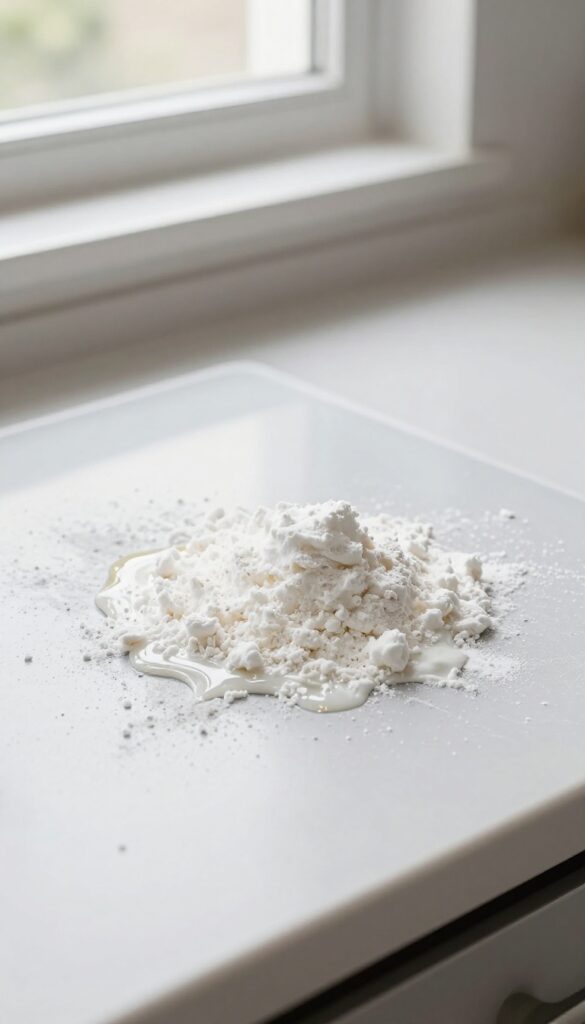
Grease spills that sit too long can turn into a baked-on nightmare. Cornstarch steps in as a quick absorber that lifts fresh grease before it hardens. This pantry staple works like a charm on both gas and electric stovetops, saving you from heavy scrubbing later.
When you spill grease on the stovetop, act fast. Sprinkle a generous layer of cornstarch directly over the fresh spill. Let it sit for about 10 minutes—the cornstarch will soak up the grease and form a paste.
Then, wipe it away with a damp cloth or paper towel. For stubborn residue, follow up with a mild dish soap solution.
Why Cornstarch Works
Cornstarch is a fine powder with a high absorbency rate. It clings to grease molecules and pulls them away from the surface. Unlike flour, it doesn't leave a sticky residue, making cleanup easier.
Best Surfaces To Use It On
This hack works best on ceramic, glass, and stainless steel stovetops. Avoid using it on porous surfaces like unsealed stone or cast iron, as the powder can get trapped. Always test a small area first.
Pro Tips For Maximum Effectiveness
For large spills, use a thick layer and let it sit longer—up to 15 minutes. If the grease has already started to bake on, make a paste with cornstarch and water, apply it, let it dry, and then scrub gently. This method lifts burnt-on spots without scratching.
21. Rubbing Alcohol for Sticky Residue
Sticky spots from spilled syrup, honey, or sugary sauces can be a pain to wipe off. Water often just smears them around, and scrubbing hard might scratch the surface. Rubbing alcohol cuts through that tacky mess instantly, making cleanup a breeze.
Rubbing alcohol is a powerful solvent that dissolves sticky residues without leaving behind any film or moisture. It evaporates quickly, so you don't have to worry about water spots or lingering dampness on your stovetop. Just a small amount on a cloth does the trick.
How To Use It
Dampen a soft cloth or paper towel with rubbing alcohol (isopropyl alcohol works best). Wipe the sticky area gently; the residue should lift off almost immediately. For tougher spots, let the alcohol sit for 10–15 seconds before wiping.
Why It Works So Well
Alcohol breaks down the sugars and other organic compounds that make sticky residues cling to surfaces. Unlike water, it doesn't activate the stickiness further—it dissolves it. Plus, because it evaporates fast, there's no need to dry the area afterward.
Safety Tips
Rubbing alcohol is flammable, so keep it away from open flames or hot burners. Always let the stovetop cool completely before using it. Ventilate the area if you're sensitive to fumes, and avoid using it on painted or unsealed surfaces.
22. Pumice Stone for Ceramic Cooktops
Ceramic cooktops are sleek, but they show every burnt-on spill. A pumice stone offers a gentle yet effective way to lift stubborn stains without damaging the glass surface. It's a simple tool that works like magic on tough spots.
Before you start, make sure your cooktop is cool and clean of loose debris. Wet the pumice stone thoroughly—this is crucial to avoid scratching. Gently rub the stone over the burnt area using light pressure.
The porous texture of the stone gradually wears away the burnt residue. Rinse the area with a damp cloth and dry it. Repeat if needed.
Always test on a small, hidden spot first. This method is best for ceramic or glass cooktops, not for enamel or stainless steel.
Why Pumice Works
Pumice is a natural volcanic rock with an abrasive but soft texture. When wet, it becomes gentle enough for glass surfaces but still effective at scraping off carbonized food. It's a chemical-free alternative to harsh cleaners.
Step-by-step Tips
Start with a clean, cool cooktop. Wet the pumice stone and rub in a circular motion over the stain. Rinse frequently to check progress.
Wipe the area clean with a damp cloth. Dry thoroughly to prevent water spots.
What To Avoid
Never use a dry pumice stone—it will scratch. Avoid using it on painted or coated surfaces. Don't apply too much pressure; let the stone do the work.
If you see scratches, stop immediately.
23. Regular Maintenance with a Daily Wipe
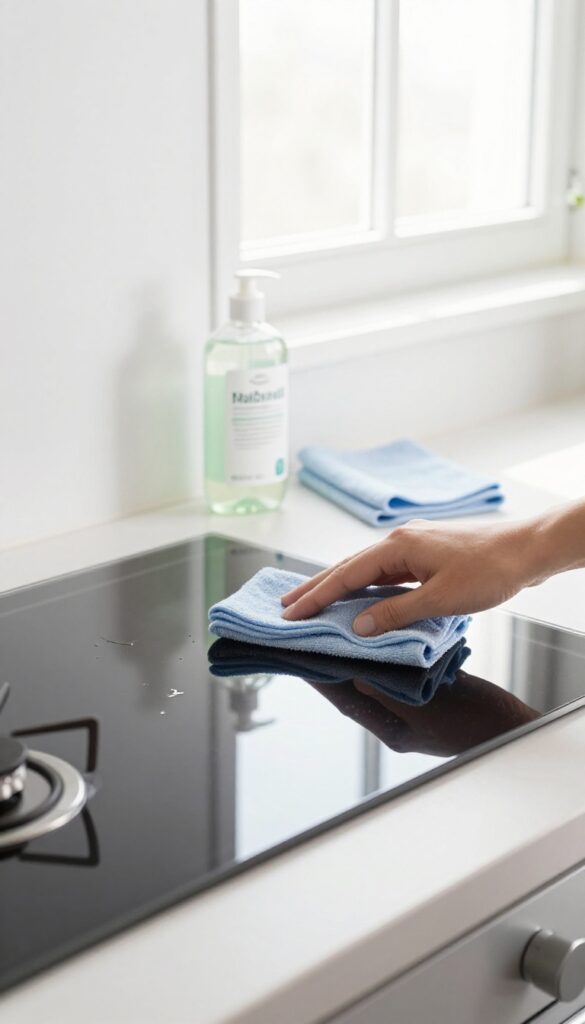
You don't need a deep clean every time you cook. A quick daily wipe keeps grime from building up and saves you serious scrubbing later. This habit takes less than a minute and makes your stove top look consistently clean.
What You Need
Grab a soft microfiber cloth and a drop of mild dish soap. Microfiber lifts grease without scratching, and soap cuts through fresh spills easily. Keep a dedicated cloth near the stove for convenience.
How To Do It
After the burner has cooled, spray or dampen the cloth with warm water and a tiny bit of soap. Wipe the entire surface, paying attention to areas around knobs and burner grates. Rinse the cloth and do a final wipe with plain water to remove any soap residue.
Why It Works
Fresh spills haven't had time to bake on, so they come off effortlessly. Daily wiping also prevents grease from forming a sticky film that attracts more dirt. Over time, this means fewer deep cleans and less elbow grease.
FAQ
Can I use baking soda on a glass cooktop?
Yes, baking soda is safe for glass cooktops when used as a paste. Avoid scrubbing too hard to prevent scratches.
How do I clean burnt milk off my stove?
Apply a baking soda paste and let it sit for 15 minutes, then gently scrub. For stubborn spots, use a razor blade scraper on glass cooktops.
Is it safe to use ammonia on stove burners?
Yes, but only on removable parts and in a well-ventilated area. Never mix ammonia with bleach.
What's the best way to clean between the burners?
Use a small brush or an old toothbrush dipped in a baking soda and vinegar solution to scrub crevices.
How often should I deep clean my stove top?
Deep clean every 2-4 weeks, depending on usage. Daily wiping helps reduce the need for heavy cleaning.
Conclusion
With these 23 hacks, you can tackle even the toughest burnt food and grease without expensive cleaners or endless scrubbing. Most use items you already have at home, making them budget-friendly and effective. Pick the methods that suit your stove type and stubborn spots.
A little regular maintenance goes a long way in keeping your stove top looking its best. Try a few of these tips today and enjoy a cleaner, more inviting kitchen.