11 Walk-In Tile Shower Ideas with a Crisp and Unbroken View
A walk-in shower with a crisp, unbroken view sounds like a dream, but busy grout lines, bulky frames, and visual clutter often stand in the way. The trick is to strip away anything that interrupts the eye, letting the tile and space do the talking.
These 11 ideas focus on seamless surfaces, subtle transitions, and clean sightlines so your shower feels open and calm.
Whether you're planning a full remodel or just tweaking the details, each tip helps you achieve that smooth, uninterrupted look you're after.
1. Large-Format Tiles for Fewer Grout Lines
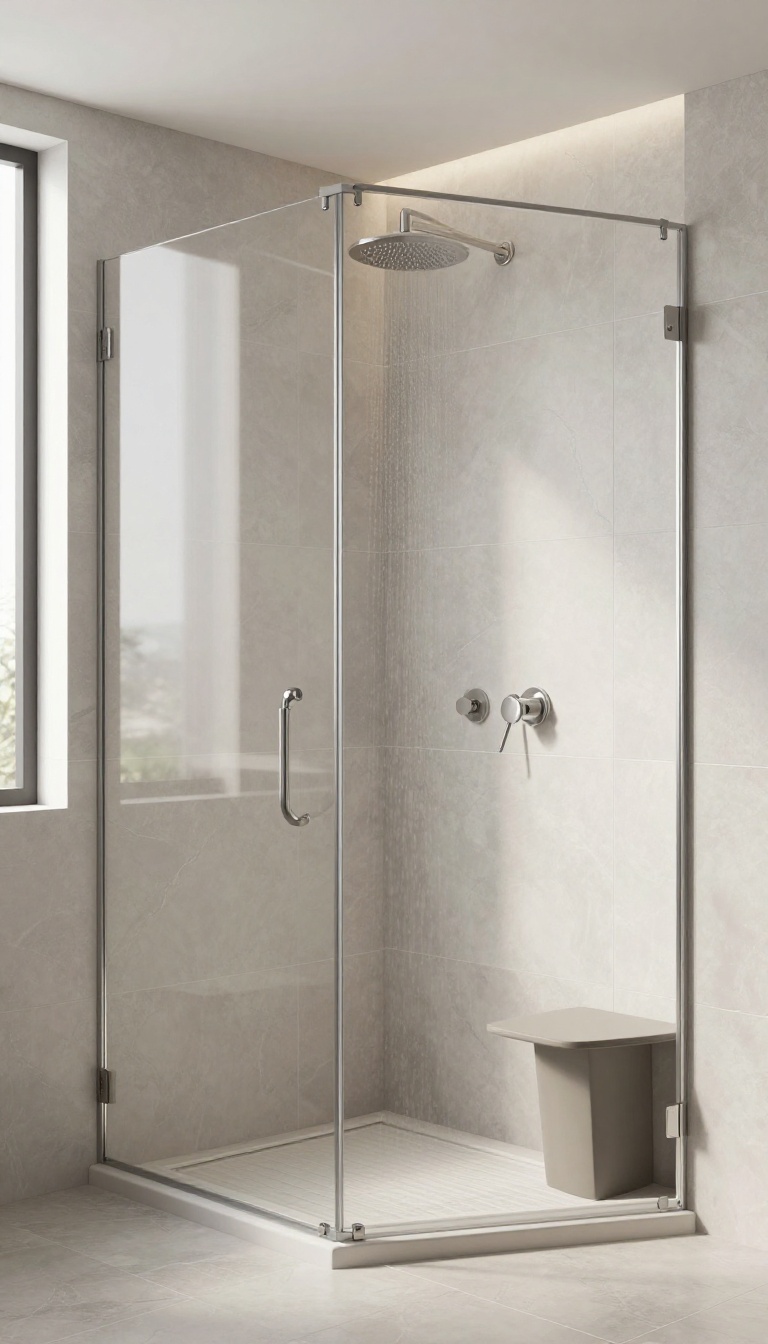
Grout lines are the visual noise that breaks up a shower wall. The more lines you have, the busier the space feels. Large-format tiles solve this by covering more area with fewer joints, creating a smooth, almost monolithic surface that lets the eye travel without interruption.
Large-format tiles, typically 12×24 inches or larger, are a game-changer for achieving that crisp, unbroken view. They reduce the number of grout lines by up to 75% compared to standard subway tiles. This not only looks cleaner but also makes the shower feel more spacious and modern.
Plus, with fewer grout lines, there's less maintenance and fewer places for mold to hide.
Why Size Matters For Visual Flow
Think of your shower walls as a canvas. Small tiles create a patchwork of lines that fragment the surface. Large tiles, on the other hand, act like large brushstrokes, creating a seamless backdrop.
This is especially important in a walk-in shower, where the goal is to have an unobstructed view from the bathroom into the shower area.
Installation Tips For A Seamless Look
To maximize the effect, use a thin-set mortar that allows for minimal lippage, and consider a rectified tile for tighter joints. You can also opt for a larger grout joint color that matches the tile, making the lines nearly invisible. A pro tip: have the installer use a leveling system to ensure a perfectly flat surface.
Design Ideas To Complement Large Tiles
Pair large-format tiles with a minimal frameless glass enclosure to keep the view clear. You can also extend the same tile from the shower floor to the walls for a continuous look. If you want a subtle accent, use a contrasting niche or a linear drain to add interest without breaking the visual flow.
2. Curbless Entry for a Seamless Floor Transition
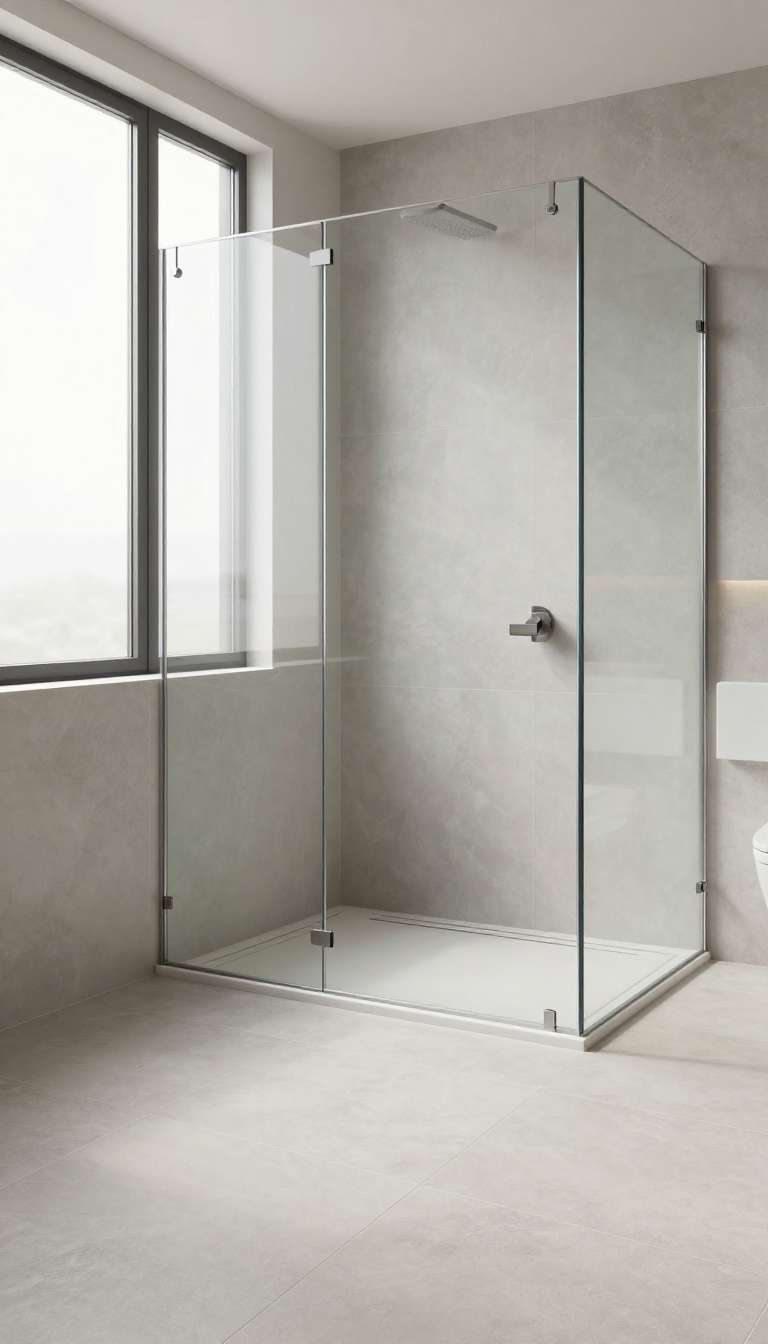
A curbless shower is the ultimate way to keep your sightlines clean. With no step to climb over, the floor extends right into the wet area, making the whole space feel larger and more open. It's a simple change that has a big visual payoff.
When you remove the curb, the tile can flow continuously from the bathroom floor into the shower. This creates a smooth, uninterrupted surface that's easy on the eyes and easy to clean. You'll also avoid the awkward transition that often breaks up the design.
Why A Linear Drain Makes It Work
A linear drain is key to a curbless design. It sits flush with the floor, so water can easily flow into it without needing a slope that would create a visible bump. This keeps the surface perfectly flat and visually seamless.
Choosing The Right Tile For Continuity
To get that unbroken look, use the same large-format tile on both the bathroom floor and the shower floor. Big tiles mean fewer grout lines, which helps the eye travel smoothly from one area to the next. Pick a matte finish to reduce glare and keep the surface feeling calm.
Planning For Proper Drainage
Even with a curbless entry, you still need proper drainage. The floor should slope slightly toward the linear drain, but the slope can be subtle and hidden. Work with a professional to ensure the water flows correctly without compromising the flat look.
Glass Panels For A Subtle Separation
If you want to keep water from splashing out, a frameless glass panel can define the shower area without blocking the view. Choose a clear glass with minimal hardware to maintain that crisp, unobstructed sightline.
3. Floor-to-Ceiling Tile for a Monolithic Look
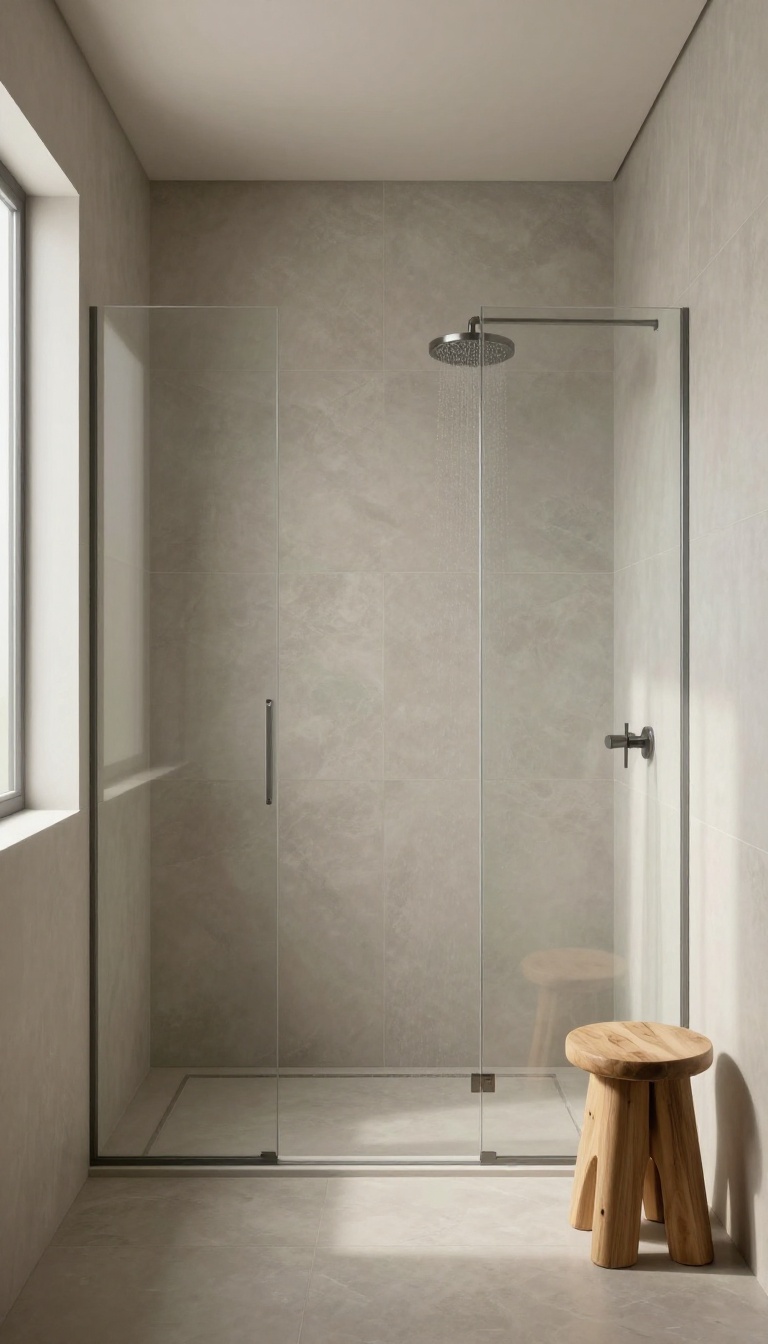
When you use the same tile from the floor all the way up to the ceiling, the eye glides over the surface without stopping. That continuous sweep is what gives a shower that calm, seamless feel. It also makes the space look taller, since there’s no horizontal line to chop it in half.
Floor-to-ceiling tiling is a simple concept with a big payoff. By eliminating the transition between wall and ceiling, you create a smooth, uninterrupted surface that feels more like a spa than a standard shower. The key is to choose a tile that’s large enough to minimize grout lines, which can otherwise break up the visual flow.
Porcelain slabs or large-format tiles in a neutral tone work especially well for this look.
Choose Large-format Tiles
Large-format tiles—think 12×24 inches or bigger—mean fewer grout lines, which keeps the surface looking clean and continuous. They also reduce the chance of lippage, so the wall stays flat and smooth. For a truly monolithic effect, go with a matte finish that doesn’t reflect light in distracting ways.
Match The Grout Color
Even with big tiles, grout lines can still break the illusion if they contrast too much. Pick a grout that closely matches the tile color, or use a color-matched epoxy grout that blends in seamlessly. This small detail makes a huge difference in how uninterrupted the surface appears.
Carry The Tile Onto The Ceiling
Don’t stop at the wall—extend the same tile onto the ceiling. This creates a cocoon-like effect that makes the shower feel more intimate and luxurious. It also eliminates the shadow line where the wall meets the ceiling, which can be a visual interruption.
4. Book-Matched Slab Tile for a Continuous Vein
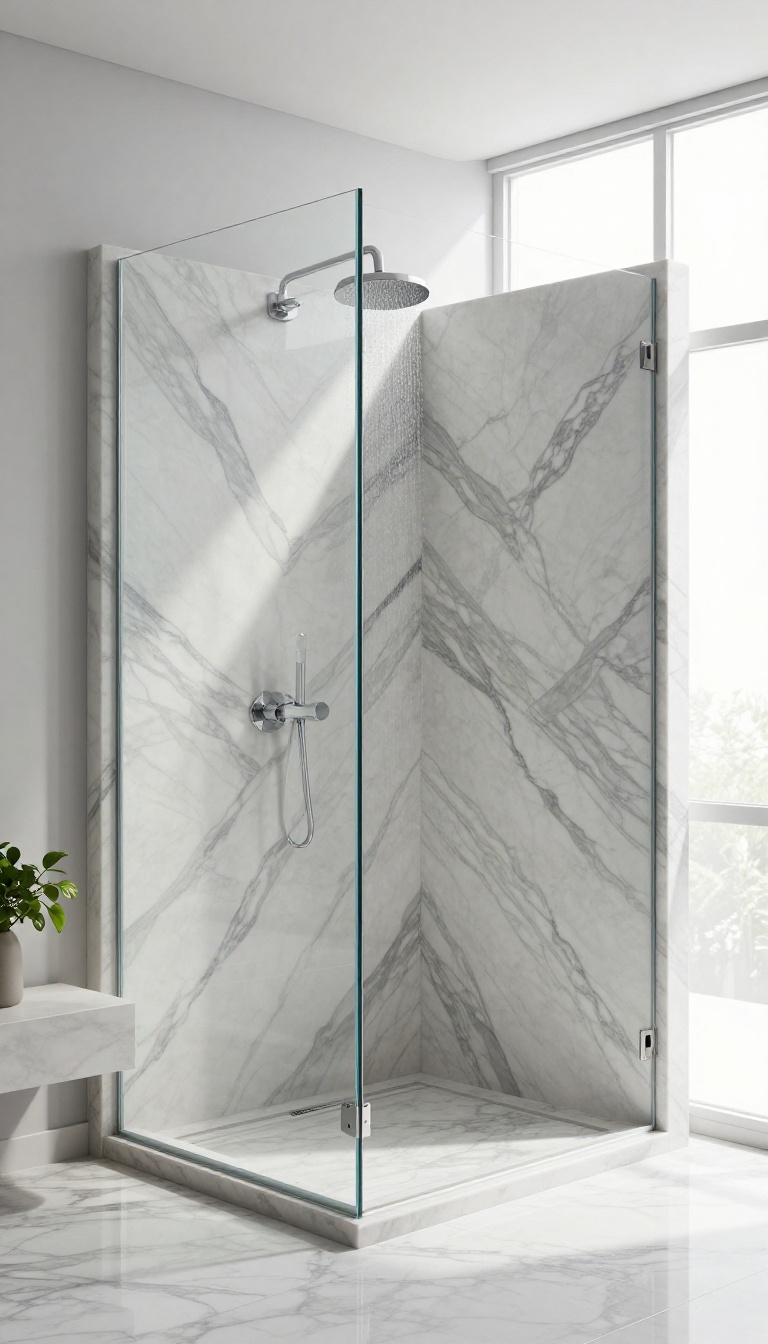
If you want a shower that feels like a single piece of stone, book-matched slabs are the way to go. This technique mirrors two large-format tiles or slabs side by side, so the natural veining lines up perfectly across the seam. The result is a continuous, flowing pattern that makes the wall look like one massive, unbroken surface.
The magic here is in the mirror effect. When you book-match, you're essentially taking two slices from the same block and flipping one over, like opening a book. The veins line up and create a symmetrical, almost kaleidoscopic pattern that draws the eye across the whole wall without any visual interruption.
It's a bold statement that works especially well in a walk-in shower, where the lack of a door or curtain lets the full effect shine.
Choosing The Right Slab
Not all stone or porcelain is created equal when it comes to book-matching. You want slabs with dramatic, flowing veining—think marble, quartzite, or high-end porcelain that mimics natural stone. Avoid busy, speckled patterns that don't have a clear direction.
The more pronounced the veins, the more striking the mirrored effect. Also, consider the size of your shower wall. Larger slabs mean fewer seams, which enhances the continuous look.
Installation Matters
This is not a DIY-friendly job. Book-matching requires precise cutting and careful alignment to get the veins to line up perfectly. A professional installer will know how to handle the weight of large slabs and use the right adhesives and backing.
They'll also plan the layout so the most dramatic part of the pattern lands where your eye naturally goes—like the main shower wall or the niche area.
Finishing Touches
To keep the view truly unbroken, use minimal grout lines. Opt for a grout color that matches the slab's background, or even better, use a thin-set adhesive that allows for butt joints. Also, skip the bulky shower caddy and go for recessed niches that are lined with the same slab.
That way, the pattern flows right through the niche, and you don't lose the visual continuity.
5. Minimalist Grout Color to Blend with Tile
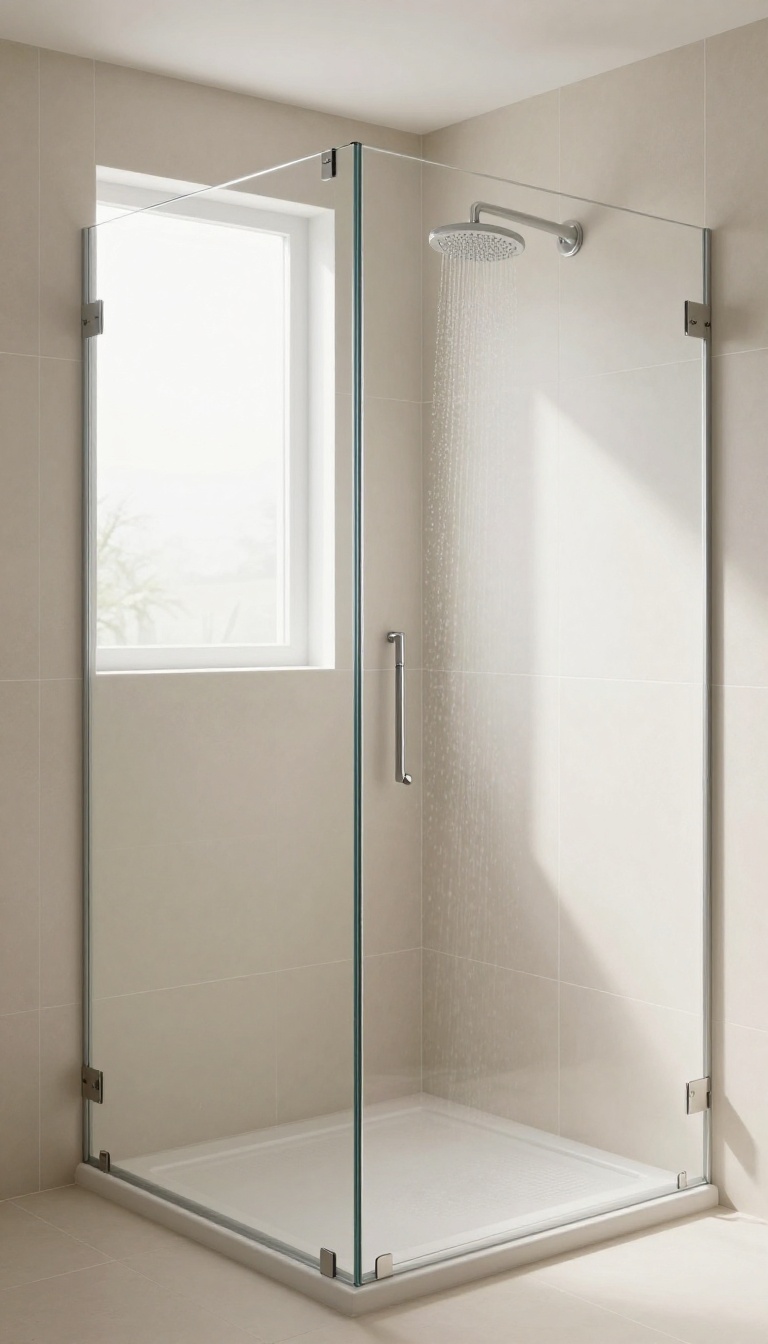
Grout lines often go unnoticed until they start stealing the show. When the grout color contrasts sharply with the tile, every seam becomes a visual interruption. That's the opposite of the crisp, unbroken view you're aiming for.
A simple fix is to match your grout to the tile as closely as possible. This trick works wonders in any walk-in shower, making the surface look like one continuous piece rather than a patchwork of individual tiles.
When grout blends with the tile, the eye skips over the joints and focuses on the overall texture and color. The result is a cleaner, more spacious feel. This approach is especially effective with large-format tiles, where fewer grout lines already exist.
But even with smaller tiles, the right grout color can make a huge difference. Here's how to put this idea into practice and avoid common pitfalls.
Why Matching Grout Works
Contrast draws attention. When grout is lighter or darker than the tile, it creates a grid pattern that breaks up the surface. Matching the grout tone eliminates that grid, allowing the tile's natural color and texture to shine.
This is particularly useful if you want a seamless, spa-like look without the cost of large slabs.
Choosing The Right Grout Shade
The goal is to get as close to the tile color as possible, but you don't have to be perfect. A shade slightly lighter or darker can still blend well, especially if the tile has natural variations. For a foolproof match, bring a sample of your tile to the store and compare grout colors in natural light.
Remember that grout dries lighter than it looks when wet, so test a small area first.
Grout Types That Blend Best
Epoxy grout is a great choice for blending because it's available in a wide range of colors and is less porous than cement-based grout, so the color stays true. Unsanded grout is another option for narrow joints, but it may not be as durable. For a truly seamless look, consider a grout that matches the tile's finish—matte with matte, glossy with glossy.
6. Glass Panels Instead of Framed Enclosures
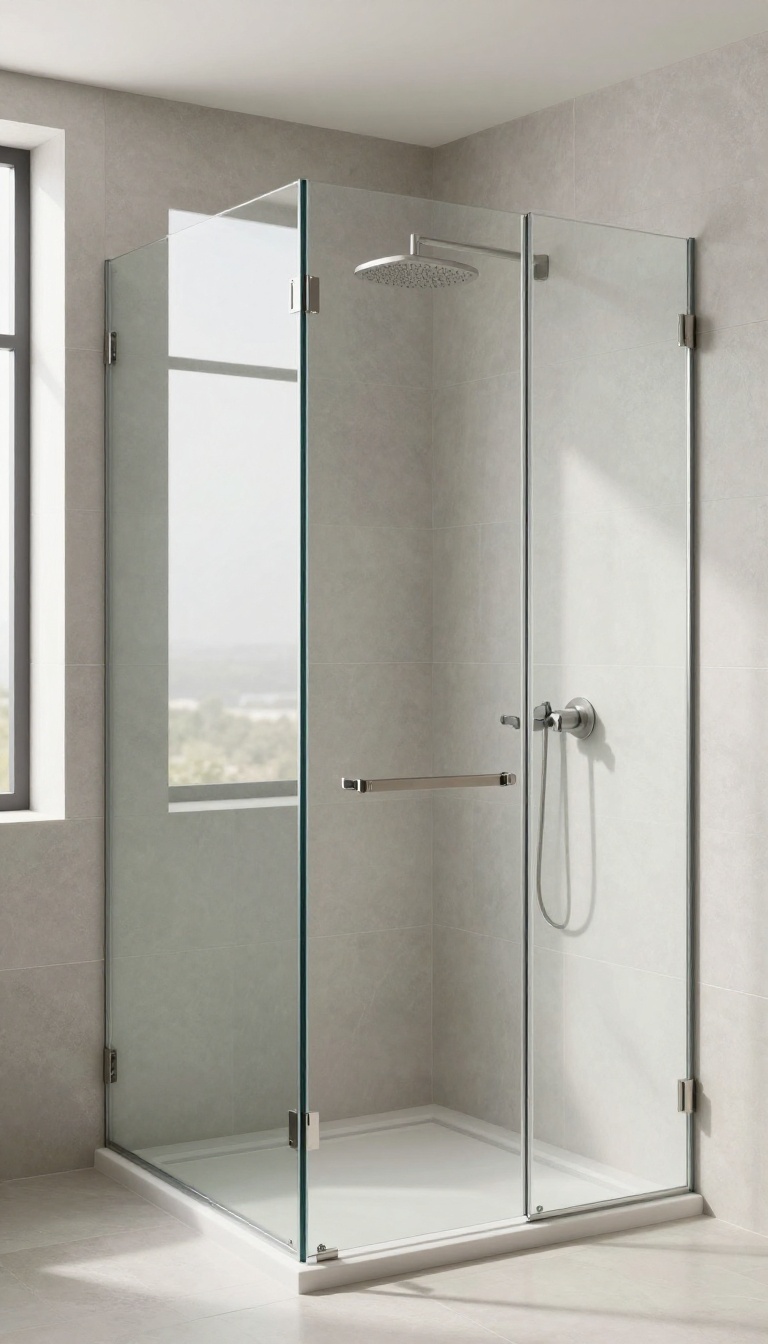
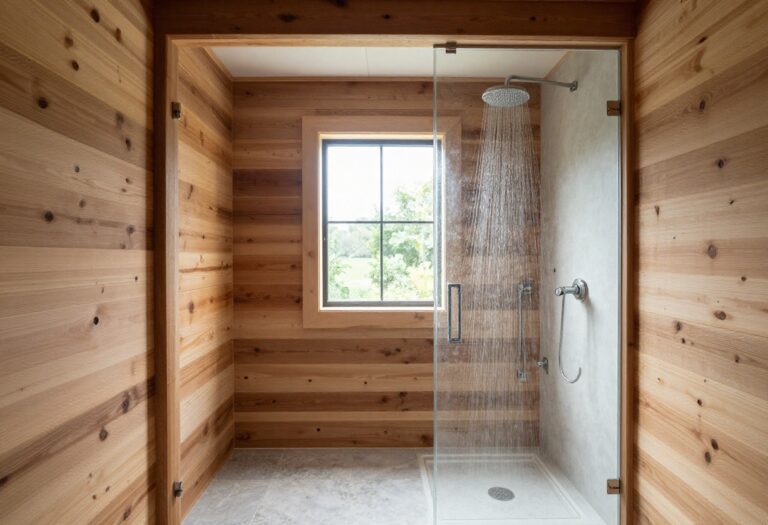
Framed enclosures bring a lot of visual weight into a bathroom, with their thick metal edges and busy hardware drawing the eye away from the tile. A frameless glass panel flips that script, letting the shower melt into the rest of the room. The result is a crisp, unbroken view that makes the space feel larger and more open.
The whole point of a walk-in shower is to feel open and seamless, and a frameless glass panel delivers exactly that. Without a frame, there's nothing to interrupt the line of sight from the tile to the rest of the bathroom. The glass becomes almost invisible, so the star of the show stays on the shower walls and floor.
Plus, frameless panels are easier to clean since there are no tracks or metal edges where soap scum and grime like to hide.
Choose The Right Glass Thickness
Frameless glass panels rely on their thickness for stability. Most use 3/8-inch or 1/2-inch tempered glass, and the thicker option feels more substantial and luxurious. Thicker glass also reduces any slight wobble you might feel with thinner panels, making the shower feel solid and well-built.
If you're going for that crisp, high-end look, 1/2-inch glass is worth the extra cost.
Keep Hardware Minimal And Sleek
The hardware you do use should blend into the background. Choose slim hinges and a simple door pull in a finish that matches your bathroom fixtures, like brushed nickel or matte black. Avoid bulky handles or oversized hinges that grab attention.
The goal is to make the glass feel like it's floating, not like it's held up by a metal skeleton.
Consider A Fixed Panel With A Small Opening
You don't always need a full door. A fixed glass panel with a narrow opening at one end can be enough for a walk-in shower, especially if you're working with a smaller space. This setup keeps the view almost completely unobstructed while still containing water.
It's a smart compromise that gives you the open feel without sacrificing practicality.
7. Recessed Niches and Shelves to Keep Walls Flat
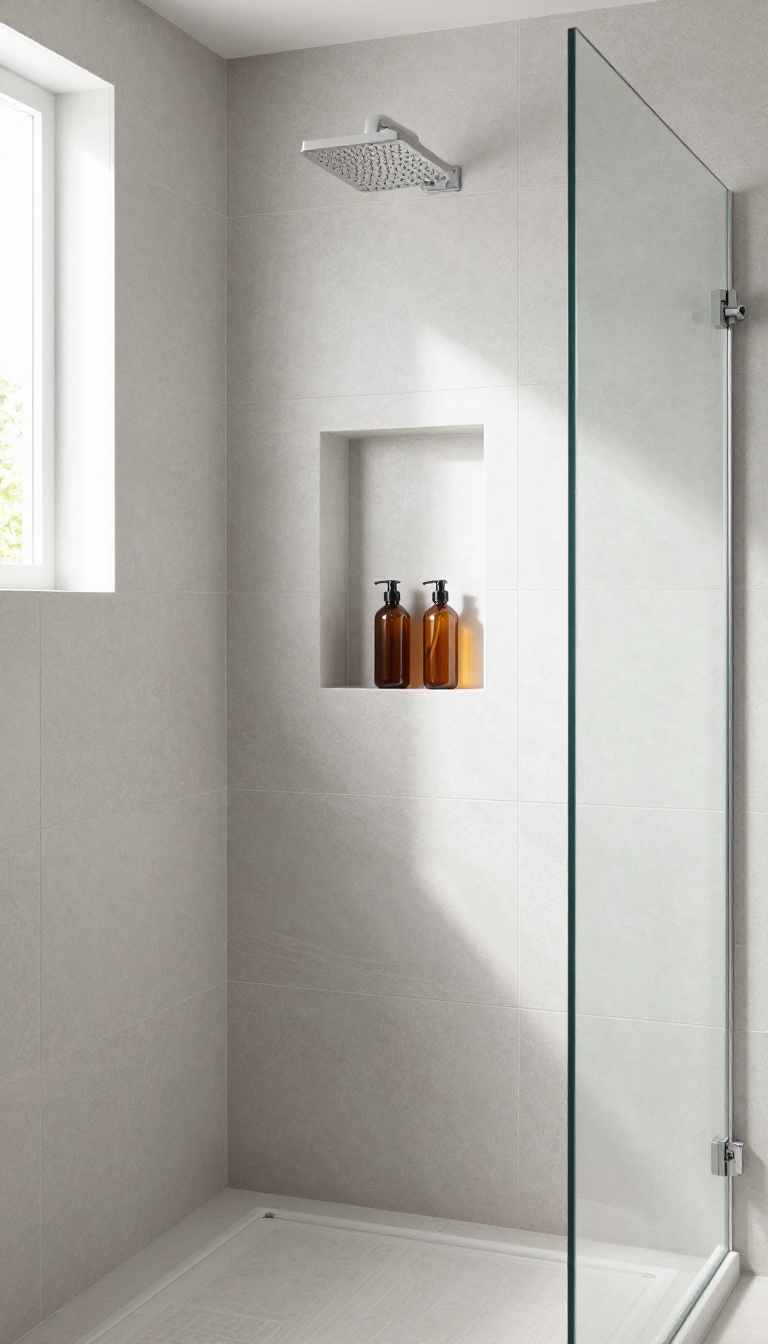
Even the sleekest tile can feel busy when you bolt on a corner caddy or hang a wire shelf. Those add-ons break the visual flow and make the wall look cluttered. Recessing storage into the wall keeps everything flush, so the tile reads as one continuous surface.
Built-in niches and recessed shelves are the quiet workhorses of a seamless shower. They hide your shampoo and soap without sticking out, which means the eye travels straight across the tile without snagging on a metal bracket or plastic tray. Plus, they give you a spot for everything without sacrificing that open, airy feel.
Choose The Right Size And Placement
Think about what you actually use in the shower—shampoo, conditioner, body wash, maybe a razor. A single 12-by-12-inch niche might be plenty, or you might want a taller one for bottles. Place it at chest height, away from the showerhead, so water doesn't pool inside.
If you can, line it up with the grout lines so it looks intentional, not random.
Match The Tile For A Seamless Look
The easiest way to keep the niche from standing out is to use the same tile inside as on the wall. That way, the niche almost disappears. If you want a subtle contrast, you can use a slightly different shade or a complementary tile, but keep it low-key.
Avoid busy mosaics or bold patterns inside the niche—they'll draw the eye right to the storage spot.
Add Lighting Or A Shelf For Extra Function
A recessed niche can double as a mini display shelf if you add a small LED strip or a low-voltage light inside. It's a nice touch that highlights the tile and makes the shower feel more luxurious. You can also install a thin glass shelf inside the niche to create two levels, but make sure it's tempered glass and properly supported.
8. Linear Drain at the Edge for a Flat Floor
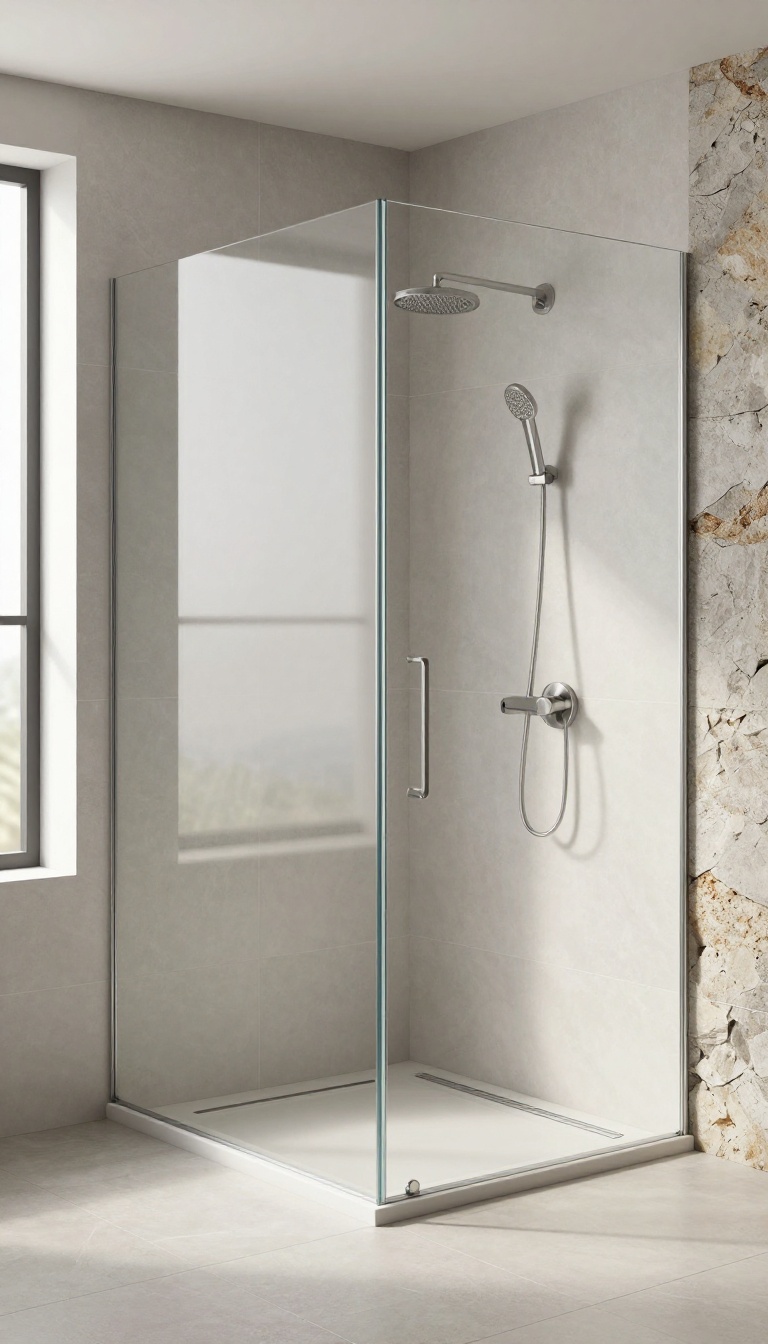
A traditional shower floor slopes toward a central drain, which often means cutting tile or adding a subtle but visible pitch. That slope can interrupt the clean, continuous look you're after. Placing a linear drain along the edge of the shower—usually at the entrance or against a wall—lets the entire floor stay perfectly flat.
With a linear drain, the tile runs in one uninterrupted plane from wall to wall. No more cutting corners or dealing with a raised pan that breaks the visual flow. The result is a crisp, level surface that feels more like a wet room than a conventional shower.
Why A Flat Floor Feels More Open
When the floor is completely level, your eye travels across the tile without any bumps or dips. That flatness makes the shower feel larger and more seamless, especially when you use large-format tiles or continuous stone. The lack of slope also means fewer grout lines and less visual clutter.
Placement Options For The Linear Drain
You can install the linear drain at the entrance of the shower, creating a subtle threshold that keeps water inside. Or tuck it along the back wall, where it's nearly invisible. Some designs even put it under a bench or niche, so the drain disappears entirely while still doing its job.
Tile Choices That Enhance The Effect
Large porcelain tiles or natural stone slabs work best with a flat floor because they minimize grout lines and emphasize the uninterrupted surface. If you prefer smaller tiles, choose a rectified edge and a matching grout color to keep the focus on the floor's smoothness. A linear drain also pairs well with heated floors, adding comfort without breaking the visual line.
9. Matching Tile on Walls and Floor for Continuity
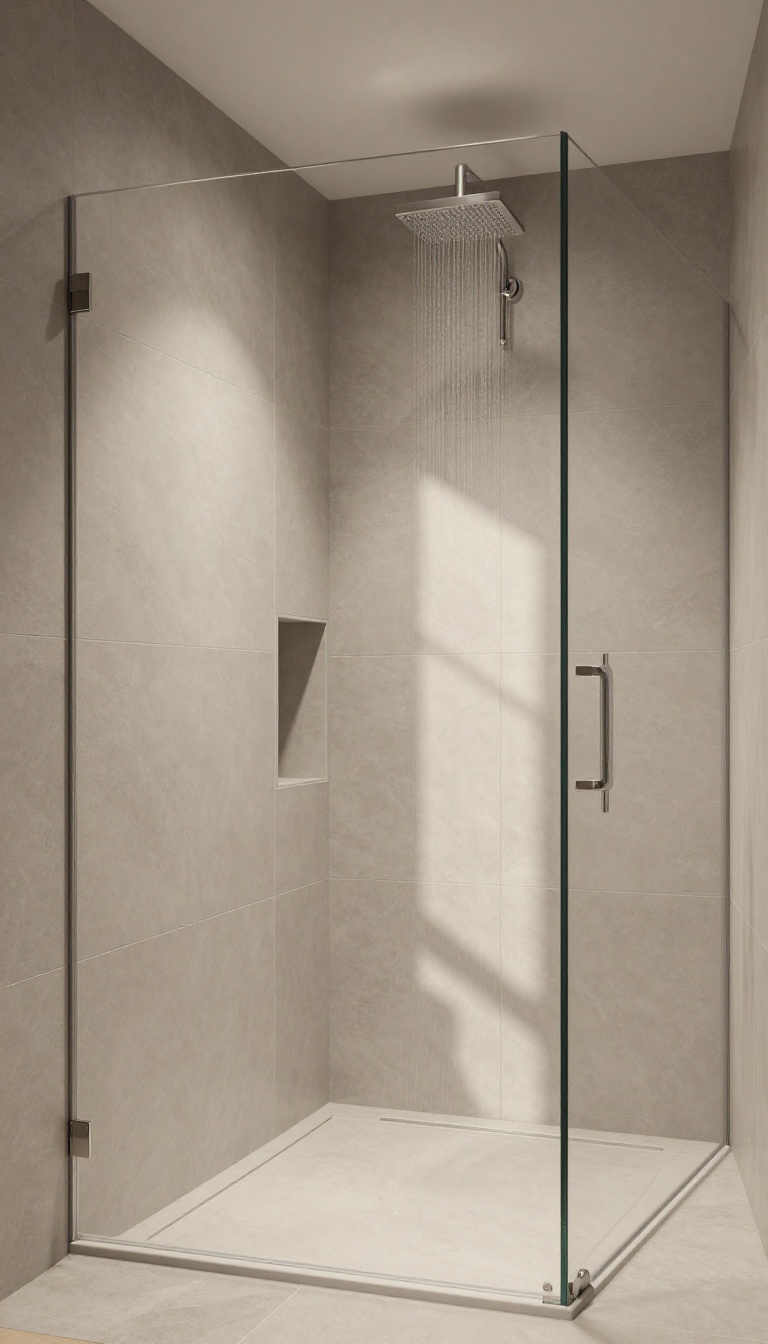
When the same tile flows from the walls onto the floor, the eye travels without interruption. This trick blurs the boundaries of the shower, making the space feel larger and more deliberate. It's a simple concept, but the payoff in visual calm is huge.
Using one tile throughout eliminates the visual break where wall meets floor. That seamless transition is exactly what creates that crisp, unbroken view you're after. It also simplifies your material list and makes the shower feel like a single, sculpted volume rather than a collection of parts.
Why It Works So Well
The brain interprets a continuous surface as a larger space. When you remove the contrast between floor and wall, the eye doesn't stop to compare textures or colors. This is especially effective in small bathrooms, where every bit of perceived space counts.
Pick The Right Tile
Large-format porcelain or stone tiles with a matte or subtle texture work best. They have fewer grout lines, which keeps the surface quiet. Avoid high-gloss finishes if you want to minimize reflections and keep the look grounded.
Don't Forget The Grout
Match your grout color to the tile as closely as possible. Contrasting grout lines will break up the continuity and draw attention to the seams. A slightly darker grout can help hide dirt, but it will also create a visible grid.
10. Matte Finish to Reduce Glare and Distractions
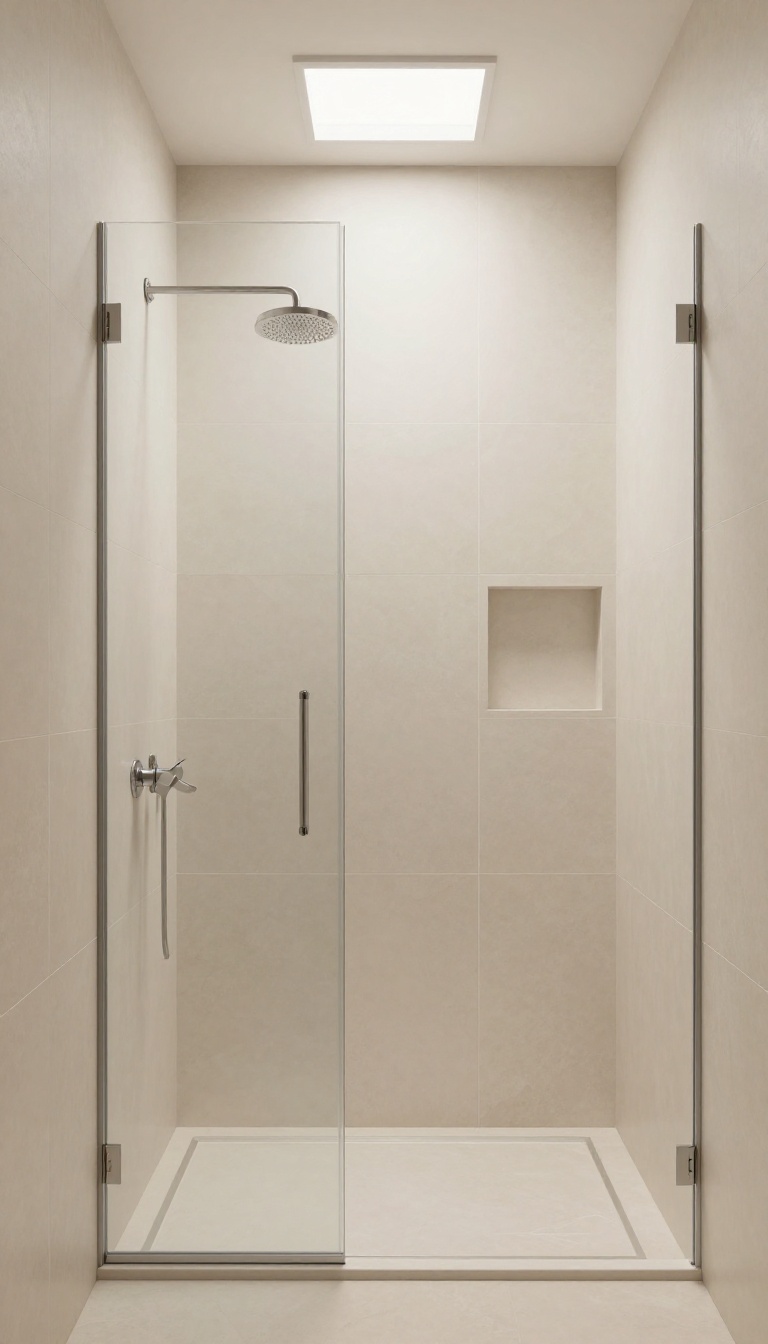
Glare from glossy tiles can bounce light around the shower, drawing the eye to every reflection and smudge. A matte or honed finish softens that effect, letting the tile’s color and texture take center stage. The result is a calmer, more focused space that feels open and uninterrupted.
Choosing a matte finish doesn’t mean sacrificing style. Honed porcelain, matte ceramic, and natural stone with a satin sheen all offer a low-luster look that’s both practical and elegant. The subtle surface also hides water spots and soap scum better than high-gloss options, so the shower stays looking crisp with less effort.
Why Glare Breaks The Visual Flow
Shiny tiles act like mirrors, reflecting light and creating bright spots that compete with the view. Even a beautiful large-format tile can feel busy when glare highlights every edge and variation. A matte finish absorbs light instead of bouncing it, so the eye moves smoothly across the surface without stopping on distracting reflections.
Best Tile Types For A Matte Look
Porcelain and ceramic tiles come in a wide range of matte finishes, from soft gray to warm beige. Natural stone like limestone or slate often has a naturally honed surface that fits the bill. For a truly seamless look, consider matte large-format tiles with minimal grout lines, which reduce visual interruptions even further.
Pairing Matte Tiles With Lighting
Lighting plays a big role in how matte finishes appear. Soft, diffused lighting—like recessed fixtures or a skylight—works beautifully with matte surfaces, creating an even glow. Avoid harsh spotlights that can still create shadows or highlight imperfections.
The right lighting enhances the calm, unbroken aesthetic you’re going for.
11. Simple Layout with No Accent Strip or Border
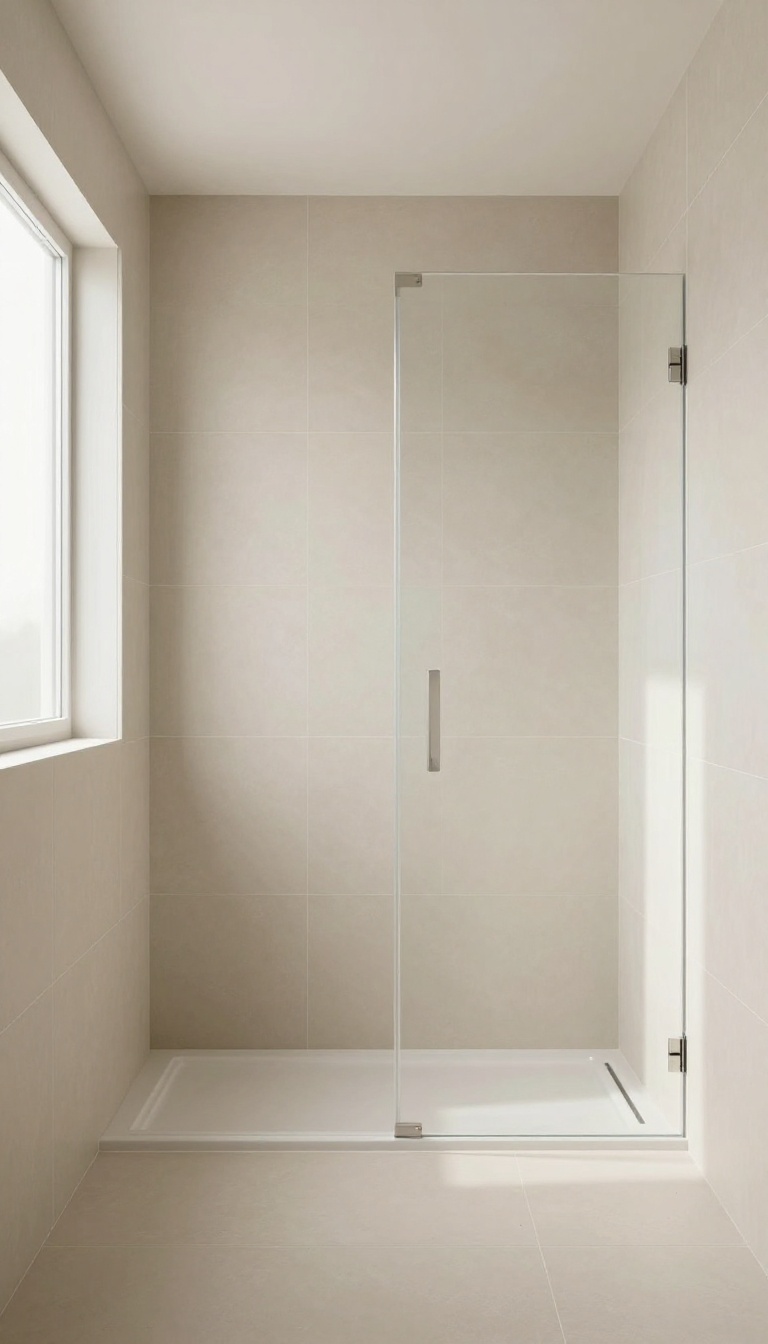
Some showers beg for a little extra flair, but a crisp, unbroken view thrives on restraint. Skipping the accent strip or border tile is one of the easiest ways to keep the eye moving smoothly across the walls and into the open space. It's a design choice that feels calm, modern, and timeless—no visual interruptions, just clean lines and uninterrupted tile.
When you remove accent strips and borders, the tile becomes the star. The lack of visual breaks makes the shower feel larger and more cohesive. Plus, you'll save on materials and labor, since there's no need to plan for specialty pieces or extra cuts.
The result is a space that feels intentional and serene, with every tile contributing to a seamless whole.
Let The Tile Pattern Speak
Without an accent strip, the tile pattern itself takes center stage. Choose a large-format tile in a soft neutral tone to minimize grout lines and enhance the sense of openness. If you prefer a bit of texture, consider a subtle herringbone or vertical stack layout—these patterns add interest without breaking the visual flow.
Keep Grout Lines Subtle
Grout color plays a huge role in how seamless the shower looks. Match the grout to the tile as closely as possible, or go slightly darker for a hint of definition. Avoid high-contrast grout, which can create a busy grid effect and distract from the unbroken view.
Use The Same Tile On All Walls
For a truly uninterrupted look, use the same tile on every wall, including the niche and bench if you have them. This creates a continuous surface that feels like one smooth plane. If you want a little variation, stick to the same color family but switch up the finish—like matte on the main walls and glossy in the niche—for a subtle, elegant touch.
FAQ
What is the best tile size for a walk-in shower to get a seamless look?
Large-format tiles, such as 12×24 inches or larger, are ideal because they have fewer grout lines, which creates a smoother and more continuous surface.
How can I make my walk-in shower feel more spacious?
Use a curbless entry, floor-to-ceiling tile, and a glass enclosure to eliminate visual barriers. Matching the tile on walls and floor also helps the space feel larger.
What grout color should I choose to keep the view crisp?
Choose a grout color that closely matches your tile. This reduces contrast and makes the tile appear more seamless, keeping the overall look clean.
Are curbless showers practical?
Yes, curbless showers are practical and accessible. They require proper waterproofing and a linear drain to manage water flow, but they offer a seamless transition and are easier to enter.
Can I use natural stone in a walk-in shower?
Absolutely. Natural stone like marble or travertine can be used, but it requires sealing and regular maintenance. Large-format porcelain that mimics stone is a low-maintenance alternative.
Conclusion
Achieving a crisp, unbroken view in a walk-in shower comes down to smart tile choices and thoughtful design details. By minimizing grout lines, eliminating curbs, and keeping the layout simple, you can create a space that feels open and serene.
These ideas are practical and adaptable, so you can mix and match to fit your bathroom's style and your personal taste. Start with one or two changes, and you'll notice the difference immediately.