13 Ideas for 2 Shower Curtains with Fresh, Functional Style
Two shower curtains might sound like double the hassle, but they can actually solve real problems—think wider openings, better light control, and a custom look without a full remodel. Whether you're dealing with a long tub, an odd alcove, or just want to add texture and depth, layering curtains opens up styling options a single rod can't match.
You'll find practical setups that keep water off the floor, plus a few playful tricks for color and pattern.
From spa-like calm to bold contrast, these 13 ideas show how a second curtain can make your bathroom feel more polished and personal.
1. Layer Sheer and Opaque for Depth
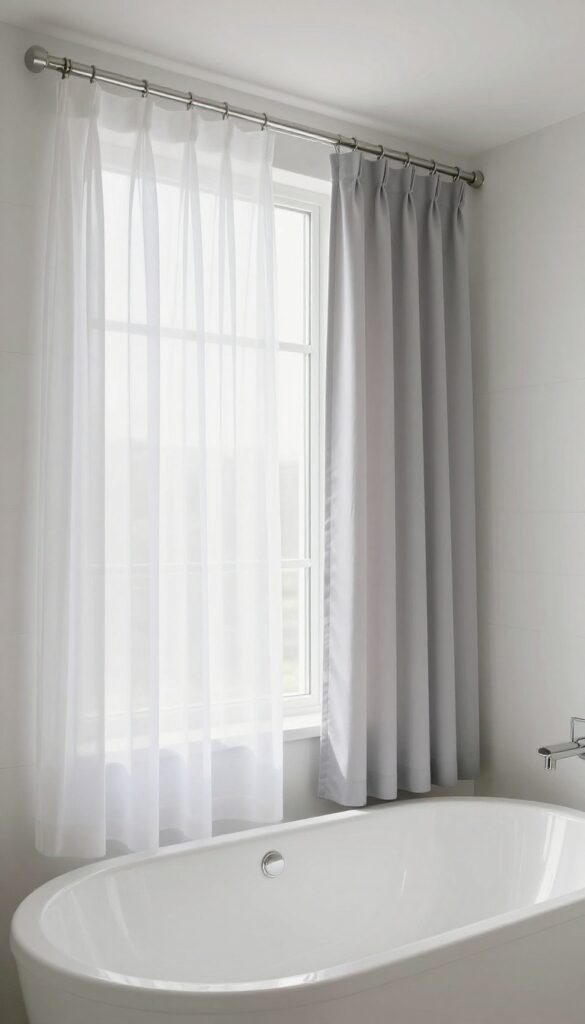
Mixing a sheer curtain with a solid one is a simple way to give your bathroom a layered, expensive feel. The sheer panel softens the light and adds a touch of airiness, while the opaque curtain handles the real job of keeping water in and giving you privacy. It’s a practical combo that also looks like you put thought into the design.
Start by hanging both curtains on the same rod, with the sheer one closest to the tub or shower. This way, the sheer fabric catches the light first and creates a gentle, diffused glow. The solid curtain in front (or behind, depending on your preference) provides the coverage you need.
You can also use two rods—one for each—if you want to adjust them independently, but a single rod works fine for most setups.
Choosing The Right Fabrics
For the sheer curtain, go with a lightweight polyester or voile that lets light through but still offers a bit of privacy. Avoid anything too flimsy that might cling to you when wet. For the opaque layer, pick a heavier fabric like cotton or a water-repellent polyester.
Make sure it’s machine washable, because it’ll see more wear.
Playing With Color And Pattern
Keep the sheer neutral—white, ivory, or a soft gray—so it doesn’t compete with the main curtain. Then use the opaque curtain to bring in color or a pattern you love. This way, you get a bold statement without overwhelming the space.
If you prefer a monochrome look, choose a sheer that’s a shade lighter than the solid curtain for a subtle, tonal effect.
Hanging And Maintenance Tips
Use rust-proof hooks or rings to avoid stains, and make sure the rod is sturdy enough to hold both curtains. When it comes to cleaning, remove the sheer curtain and wash it on a gentle cycle every couple of weeks—it tends to collect dust and soap scum. The opaque curtain can be washed less often, but always check the care label.
2. Mix Patterns with a Neutral Base
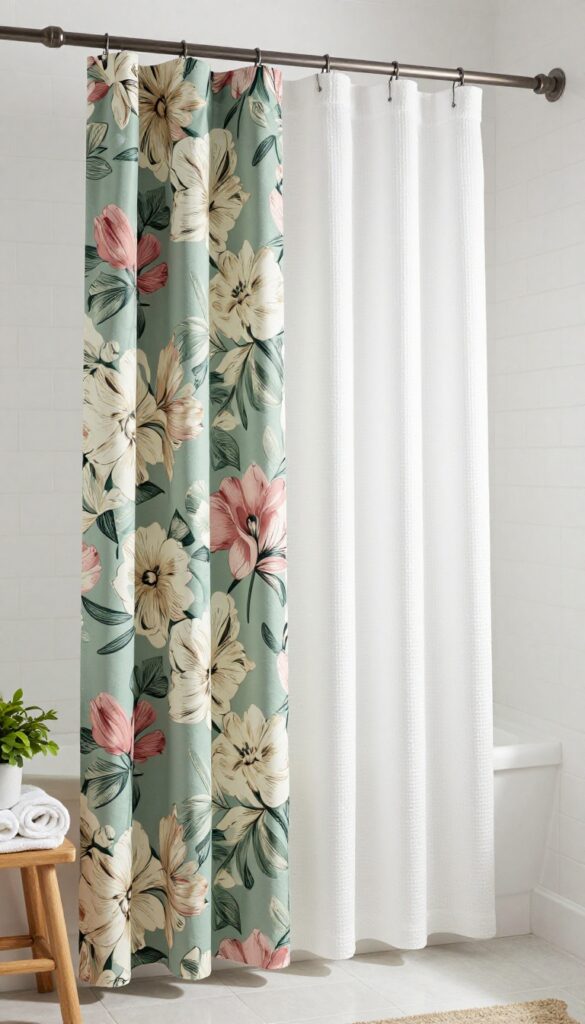
Bold patterns can feel overwhelming when they cover the entire shower, but pairing them with a neutral solid curtain changes the whole dynamic. The patterned side brings personality and visual interest, while the solid side gives the eye a place to rest. This combo works especially well in bathrooms where you want a statement without committing to a full patterned wall.
The key is to let the pattern be the star and keep the neutral curtain simple. Choose a pattern that includes one of the neutral colors (like white, beige, or gray) so the two curtains feel connected. Hang the patterned curtain on the outside and the solid one on the inside, or vice versa depending on which side you see most when entering the bathroom.
Choosing The Right Pattern
Look for patterns that aren't too busy—large-scale florals, geometric shapes, or abstract designs work well. If your bathroom has existing decor, pick a pattern that pulls in one of those accent colors. Avoid patterns that clash with the wall color or tile; instead, aim for a pattern that complements them.
Picking The Neutral Shade
The solid curtain should be in a shade that matches the background of the pattern or the dominant color in your bathroom. White, beige, light gray, or even a soft taupe are safe bets. If you want a bit more depth, choose a textured neutral like waffle weave or ribbed fabric—it adds subtle interest without competing with the pattern.
Hanging And Layering Tips
Use two shower rods or a double rod to hang the curtains at different depths. The patterned curtain can be placed on the rod closer to the tub, and the solid one on the outer rod, or vice versa. Make sure both rings slide smoothly and the liners are used underneath to keep water in.
You can also swap the order seasonally to change the look.
3. Create a Spa-Like Retreat with Earth Tones
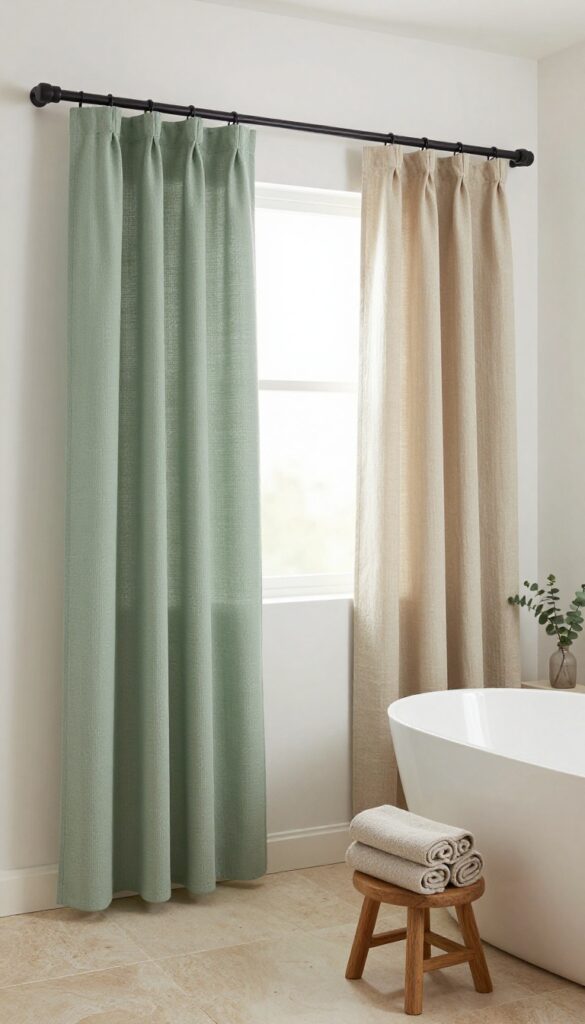
There’s something about earthy colors that instantly calms a room. Sage green, warm beige, soft clay—these tones bring a natural, grounded feel that turns an everyday bathroom into a quiet escape. Using two shower curtains in these shades isn’t just about covering more space; it’s about building a layered, soothing backdrop that feels intentional and serene.
Think of it as creating a mini spa at home. You don’t need fancy fixtures or a renovation—just two curtains that work together to soften the light, add texture, and make the whole space feel more cohesive. Whether you go for a matte fabric or a subtle waffle weave, the effect is immediate and relaxing.
Start by choosing two curtains that share the same undertone, even if they’re not identical. A sage green curtain paired with a warm beige one creates a balanced, organic look. You can also mix textures—one smooth and one textured—to add depth without introducing new colors.
This approach keeps the palette simple, which is key to that spa-like feel. Another trick is to use the second curtain to control light. Hang a sheer linen curtain behind a heavier one; during the day, you can pull back the outer layer and let soft, filtered light in.
At night, close both for privacy and warmth. The combination feels airy, not heavy, and the earth tones keep everything visually calm.
Why Earth Tones Work
Earth tones are naturally soothing because they mirror the outdoors. Greens, browns, and tans have a grounding effect that reduces visual noise. In a bathroom, where you start and end your day, this can make a real difference in how you feel.
Unlike bright or cool colors, earth tones don’t compete for attention—they recede gently, letting the space feel larger and more peaceful.
Mixing Textures For Depth
To keep the look from feeling flat, pair a smooth, matte curtain with one that has texture, like a waffle weave or a subtle ribbed fabric. The contrast adds visual interest without breaking the calm color story. You can also use a linen-look curtain for a more organic, airy vibe.
The key is to keep the colors close in tone so the texture does the work, not the hue.
Light Control And Privacy
A second curtain gives you more control over light and privacy. Use a sheer or semi-sheer curtain as the inner layer, and a more opaque one on the outside. During the day, you can leave the outer curtain open to let in natural light while still having some coverage.
At night, close both for full privacy. This flexibility is especially useful in bathrooms with windows or shared walls.
4. Use Two Curtains for a Wide Shower
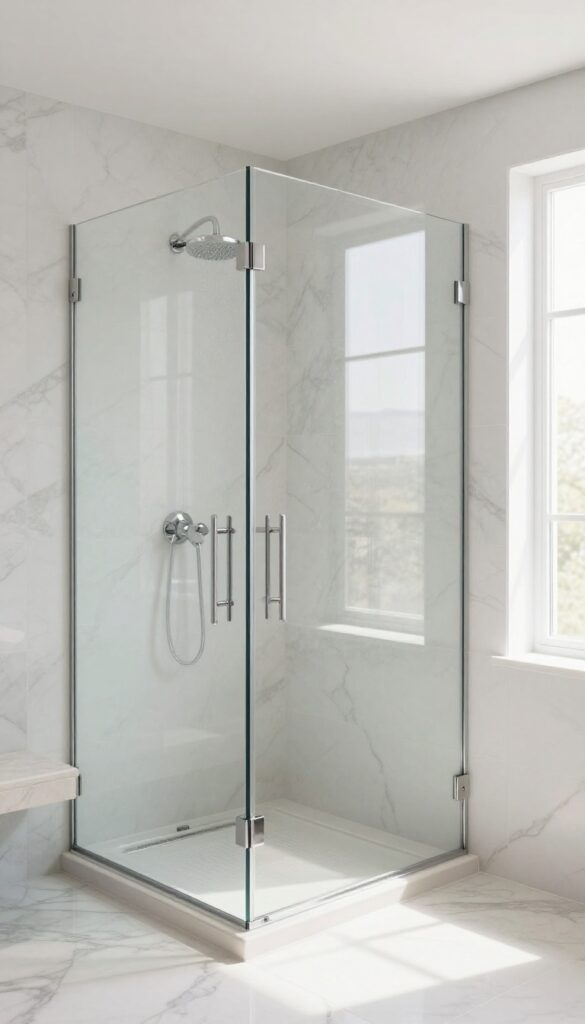
Extra-wide showers are a luxury, but they come with a practical headache: standard shower curtains just don't cover the full opening. You end up with gaps at the ends or a curtain that sags in the middle, and water finds its way onto the floor. The fix is simpler than you might think—just use two curtains on separate rods.
Two curtains on separate rods let you cover the entire width without any gaps. Each curtain can be pulled independently, so you can open just one side when you need to reach the faucet or grab a towel. This setup also makes it easier to replace one curtain if it gets worn or stained, and it gives you more flexibility with colors and patterns.
Why Two Rods Work Better
A single rod spanning a wide opening often bows under the weight of a heavy curtain, leaving gaps at the corners. With two rods, each curtain is supported evenly, so the fabric hangs straight and stays in place. You can also overlap the curtains slightly in the middle to create a watertight seal, which is especially useful if your shower is prone to splashing.
Choosing The Right Rods
For this setup, you'll need two tension rods or two fixed rods that fit your shower's width. Tension rods are easy to install and adjust, but they may not hold up well with heavy fabrics. Fixed rods mounted to the wall are more secure and can support thicker curtains.
Make sure each rod is long enough to extend a few inches beyond the shower opening to prevent water from dripping onto the floor.
Styling Tips For Dual Curtains
Since you have two separate curtains, you can play with contrast or keep things cohesive. Use the same fabric for a seamless look, or mix a solid with a pattern to add visual interest. You could also use a liner on one rod and a decorative curtain on the other, giving you both function and style.
Just remember to keep the overlap in mind when positioning the rods.
5. Add a Pop of Color with a Contrasting Liner
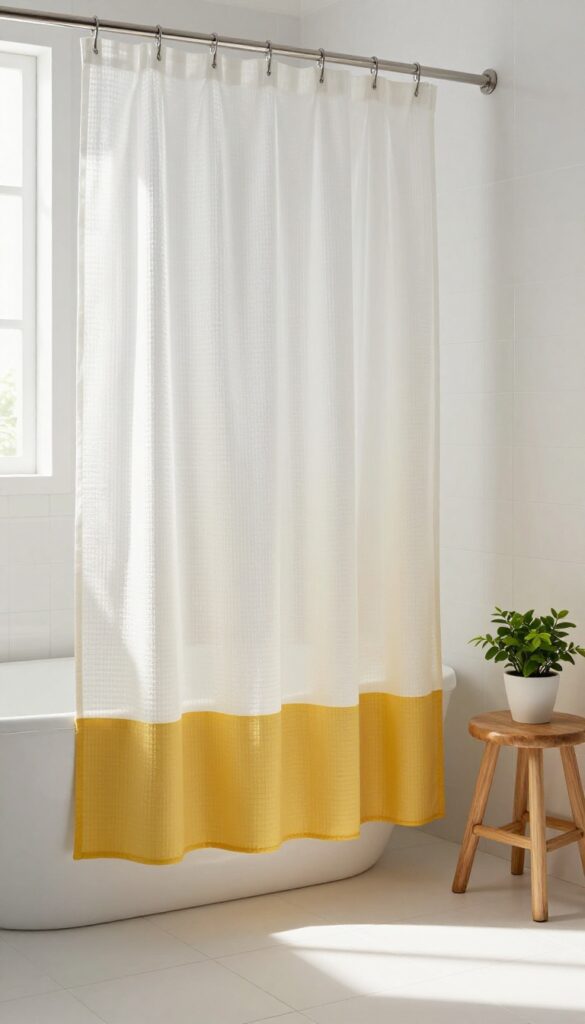
Sometimes the easiest way to refresh a bathroom is to let a little color sneak in where you least expect it. A contrasting liner does exactly that—it adds a playful accent without overwhelming the space. This trick works especially well if your outer curtain is neutral, like white, gray, or beige.
Choose a liner in a bold hue—think mustard yellow, deep teal, or terracotta—and let it peek out from behind the main curtain. The effect is subtle but noticeable, giving your shower a custom, layered look. It's also a low-commitment way to test a color trend before committing to a full curtain change.
Pick The Right Color
Look at the existing colors in your bathroom—towels, rugs, or wall art—and pick a liner that complements them. If you're feeling bold, go for a contrasting shade like orange with blue, or keep it harmonious with a deeper tone of your main color.
Play With Lengths
For a more dramatic effect, choose a liner that's slightly longer than the outer curtain, so it pools on the floor or hangs a few inches lower. This adds visual interest and can make the shower feel taller. Just make sure it doesn't drag through water.
Mix Textures
Don't limit yourself to solid colors—try a waffle-weave liner or one with a subtle stripe. The texture adds another layer of depth, making the contrast even more appealing.
6. Go Monochrome with Different Textures
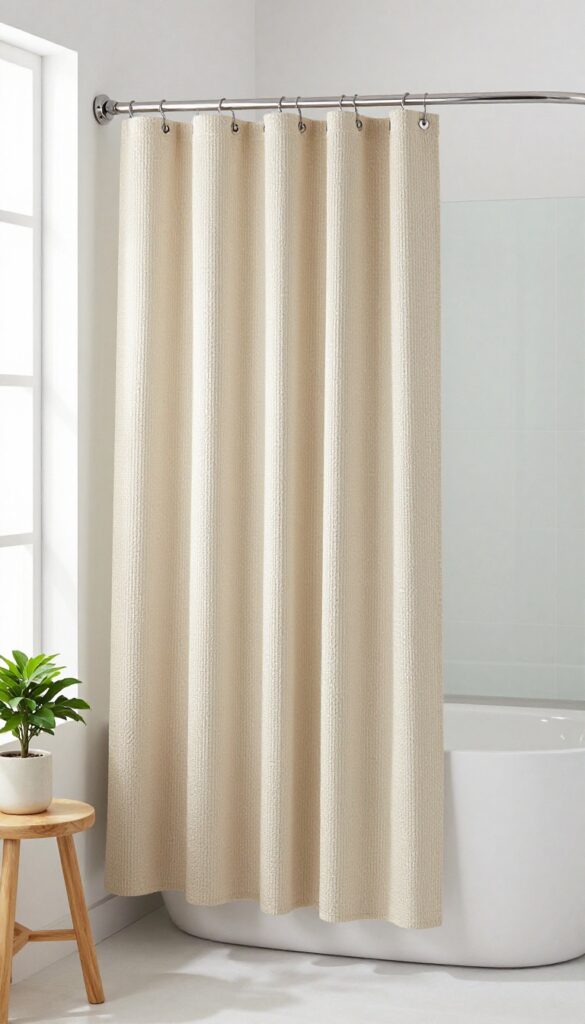
Sometimes the simplest change makes the biggest impact. Choosing two shower curtains in the same color but different fabrics adds depth without introducing a new hue. It’s a subtle upgrade that feels intentional and polished, like you thought about every detail.
Texture does the heavy lifting here. A waffle weave next to a smooth, matte finish creates visual interest that changes with the light. You get a layered, custom look that still feels calm and cohesive.
When both curtains share a color, the eye moves across the texture instead of the pattern. This makes the shower area feel more dynamic without being busy. It’s a great option for bathrooms that already have a lot going on—like bold tile or a statement mirror—because it adds richness without competing.
Texture also affects how the curtains hang and move. A heavier fabric, like a waffle weave or a ribbed knit, drapes differently than a lightweight polyester. That contrast in movement and weight makes the whole setup feel more alive.
Plus, you can play with opacity: one curtain could be sheer, the other solid, giving you privacy and light control in one look.
Mix Waffle And Smooth
Pair a waffle-weave curtain with a smooth, matte one in the same shade. The nubby texture catches light and adds dimension, while the smooth curtain keeps things clean and modern. This combo works especially well in neutral tones like white, beige, or gray, because the texture becomes the star.
Try Sheer + Solid In The Same Hue
If you want more light control, use a sheer curtain as the inner layer and a solid one on the outside. Both in the same color—like a soft sage or dusty blue—creates a soft, layered effect. The sheer lets light filter through when the solid is pulled back, and the solid gives you privacy when you need it.
Play With Fabric Weight
Choose one lightweight curtain and one heavier, like a cotton duck or a linen blend. The heavier fabric hangs with more structure, while the lighter one flows. This contrast adds depth and makes the window treatment feel more custom.
It also helps with insulation, keeping the shower area warmer in cooler months.
7. Frame the Shower with a Curved Rod
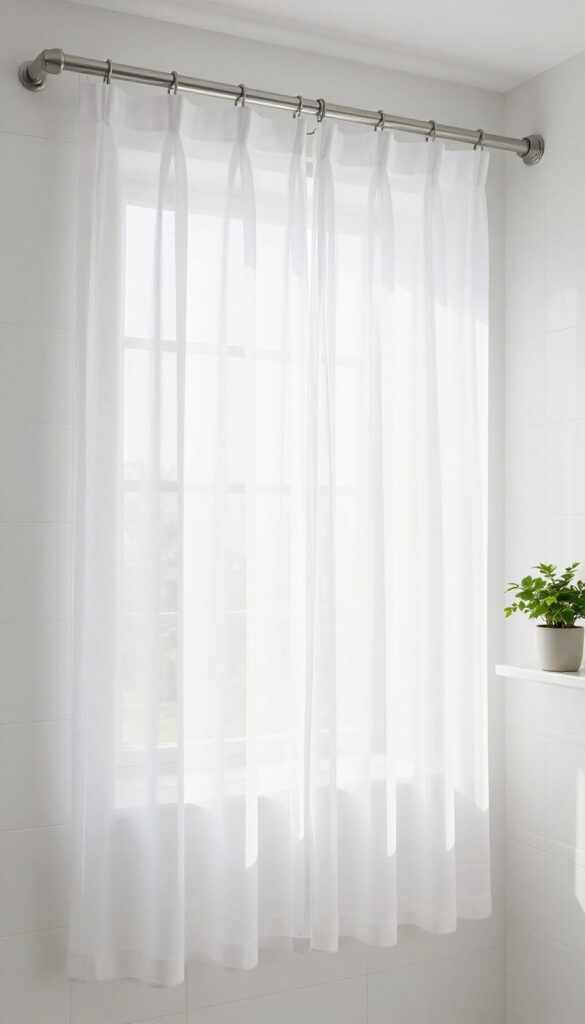
A curved rod is one of those small upgrades that makes a big difference in how a shower feels. It bows outward, giving you extra elbow room inside while keeping water from sneaking out the sides. Pairing it with two curtains isn't just about looks—it's a practical way to cover the wider opening and add a layer of flexibility.
Why Two Curtains On A Curved Rod?
A curved rod extends the shower space by several inches, which means a standard single curtain might not fully cover the opening. Two curtains can overlap in the middle or meet at the ends, ensuring full coverage without gaps. Plus, having two panels lets you open just one side for easy access or ventilation.
Choosing The Right Curtains
For a curved rod, opt for curtains that are slightly wider than the rod length to avoid pulling. Lightweight fabrics like polyester or cotton blends work well because they don't drag on the rod. If you want to keep the space feeling airy, go with sheer or semi-sheer panels that let light through while still providing privacy.
Installation Tips For A Curved Rod
Make sure the rod is installed securely—use anchors if you're drilling into tile. The curve should face outward, away from the tub or shower floor. When hanging the curtains, place the hooks or rings so they slide smoothly around the bend.
Test the movement before you finish to ensure they open and close without catching.
Styling Ideas For A Curved Rod
Since the rod adds a subtle arch, you can play with that shape in your curtain choice. A solid neutral on the outside and a patterned inner curtain creates depth. Or use two complementary colors that tie into your bathroom's palette.
For a spa-like vibe, try a white sheer behind a textured waffle curtain.
8. Hang Two Curtains at Different Heights
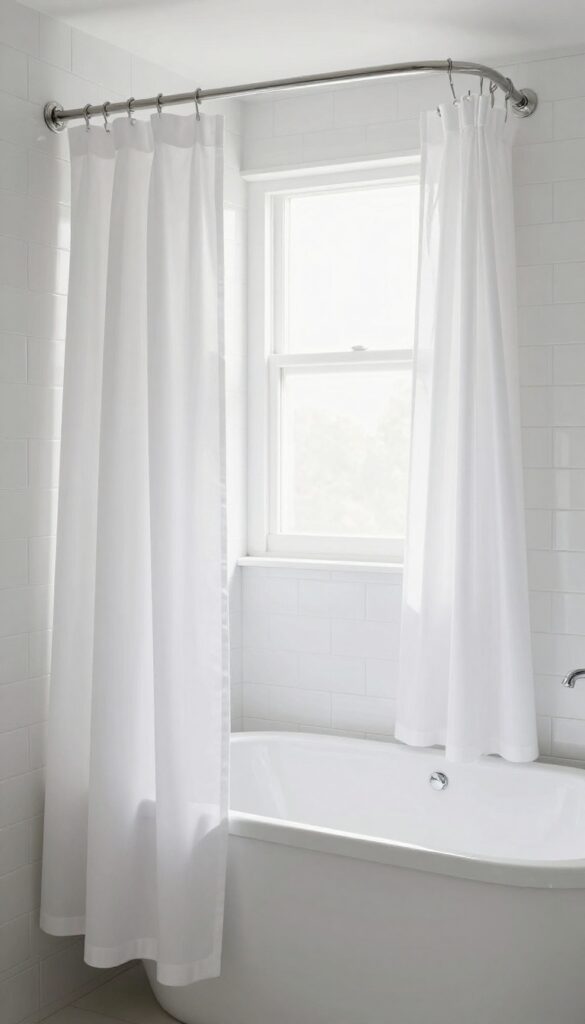
Matching curtain rods at the same height can feel a bit flat, especially if you're working with a standard alcove. Raising one rod a few inches and dropping the other creates a subtle asymmetry that instantly adds visual interest. It's a simple tweak that makes the whole setup feel more intentional and custom.
This trick works best when you have two separate rods or a double rod system. The higher curtain draws the eye upward, making the ceiling feel taller and the space more open. The lower curtain grounds the look and can be positioned to catch any splashes, so you get style without sacrificing function.
Why Different Heights Work
Our eyes naturally follow lines, so a staggered curtain line breaks up the monotony of a single straight edge. It adds a dynamic, layered feel that's more interesting than a uniform row. Plus, it gives you the freedom to play with proportions—maybe one curtain is longer, or you use different lengths to create a cascading effect.
How To Set It Up
You'll need two adjustable rods or a tension rod system that allows independent height settings. Mount the higher rod about 3 to 4 inches above the lower one, and make sure both are level. For a cohesive look, use curtains with similar fabric or pattern, but you can also mix solids and prints as long as they share a color palette.
Styling Tips For The Layered Look
Keep the lower curtain slightly shorter so it skims the tub edge, while the higher curtain can hang closer to the floor for a more dramatic drape. Use clip rings to make adjustments easy, and consider a liner behind the lower curtain to keep water contained. This setup also works well with sheer and opaque combos, letting you control light and privacy.
9. Use Two Curtains for a Closet or Nook
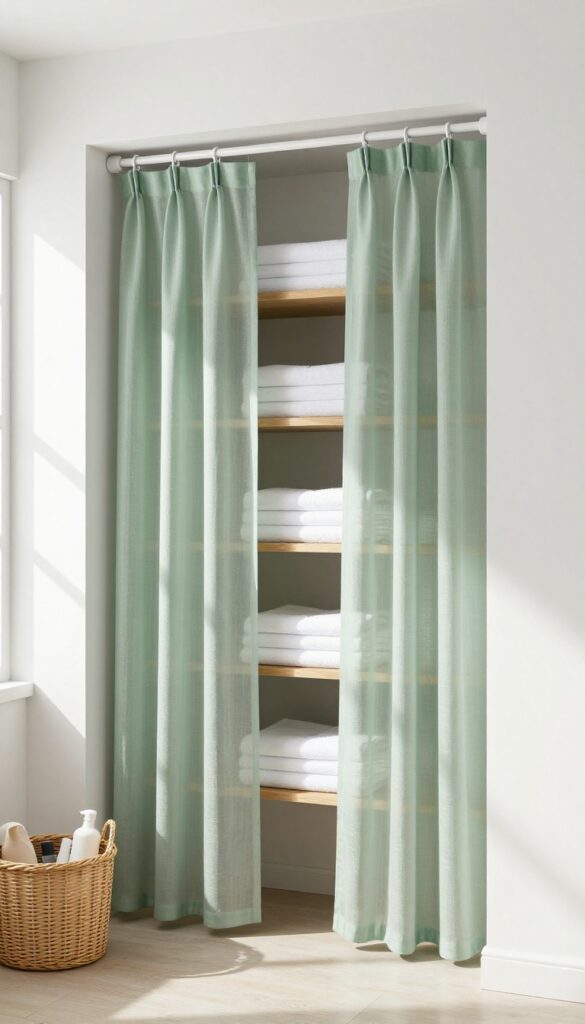
That second shower curtain doesn't have to stay in the shower. If you have a bathroom closet or a recessed nook, a pair of curtains can hide shelving, laundry, or cleaning supplies while adding a soft, finished look. It's a clever way to bring the same style you love into the rest of the room.
A curtained closet feels more intentional than a door, and it's easier to install than you might think. You can use a tension rod or a lightweight curtain rod inside the opening, then hang two panels that meet in the middle. This setup works especially well for narrow spaces where a swinging door would be in the way.
Pick The Right Hardware
For a closet or nook, you don't need a heavy-duty rod. A tension rod is perfect for a standard opening, but if the space is wider, opt for a spring-loaded rod or a simple curtain rod with brackets. Make sure the rod can support the weight of your curtains—two panels can get heavy, especially if they're lined.
Choose Fabric That Fits The Job
Think about what you're hiding. For linens and towels, a light cotton or linen blend works well. If you're storing cleaning supplies or less pretty items, a heavier fabric or an opaque liner will keep things out of sight.
You can also mix and match—use a patterned curtain on the outside and a solid liner behind it.
Style It Like A Window
Treat the curtained opening like a window. Hang the rod a few inches above the opening to make the ceiling feel taller, and let the curtains just kiss the floor. Add a tieback on one side to show off a stack of towels or a basket, and you've got a styled nook that feels deliberate, not makeshift.
10. Alternate Curtains for a Custom Look
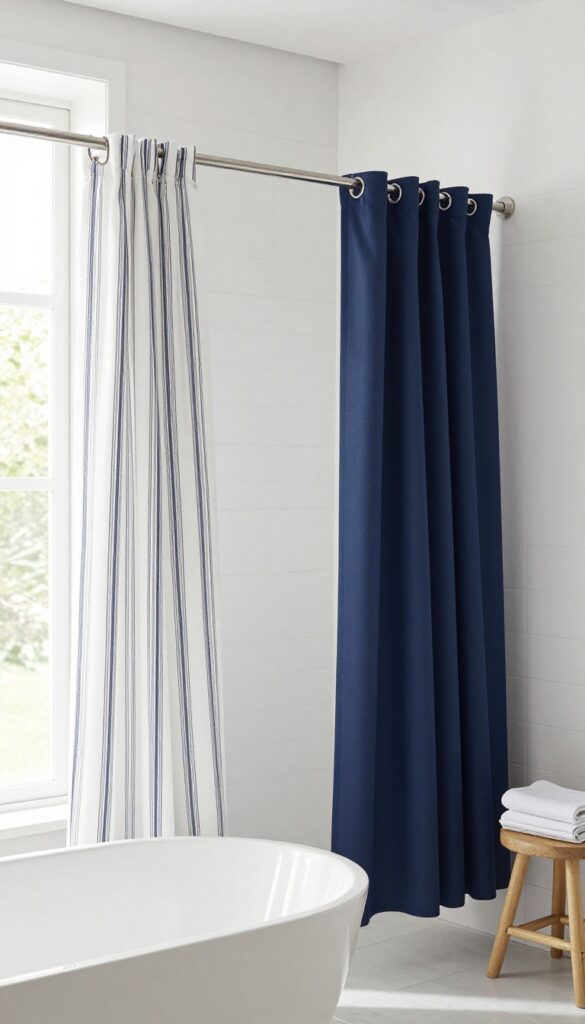
Mixing two different curtains might feel risky, but when they share a common color, the result looks intentional and polished. This approach lets you play with patterns and textures while keeping the overall scheme cohesive. It’s a simple way to make your bathroom feel more personal without a full redesign.
Start by picking a base color that appears in both curtains. This could be a neutral like white or gray, or a bolder hue if you’re feeling adventurous. Then choose one curtain with a pattern and the other solid, or go for two different patterns that share that same color.
The key is to keep the shared color prominent so the combination reads as deliberate.
Pick A Common Color
The easiest way to make two different curtains work together is to find a color they both have. For example, a white curtain with navy stripes pairs beautifully with a solid navy curtain. Or a floral curtain with sage green accents can be matched with a plain sage green one.
This common thread ties them together visually, so the mix looks like a choice, not an accident.
Balance Pattern And Solid
If you’re new to mixing, start with one patterned curtain and one solid that picks up a color from that pattern. This gives you visual interest without overwhelming the space. You can also use the solid curtain on the side that gets more wear, since it’s easier to replace if needed.
The pattern adds personality, while the solid keeps the look grounded.
Try Two Different Patterns
Once you’re comfortable, experiment with two patterns that share a color. For instance, a geometric print and a botanical print can work if they both include the same shade of blue. Keep the scale similar—avoid pairing a tiny print with a huge one—so the eye doesn’t get confused.
This approach adds depth and makes your bathroom feel curated.
11. Add a Liner with a Decorative Bottom
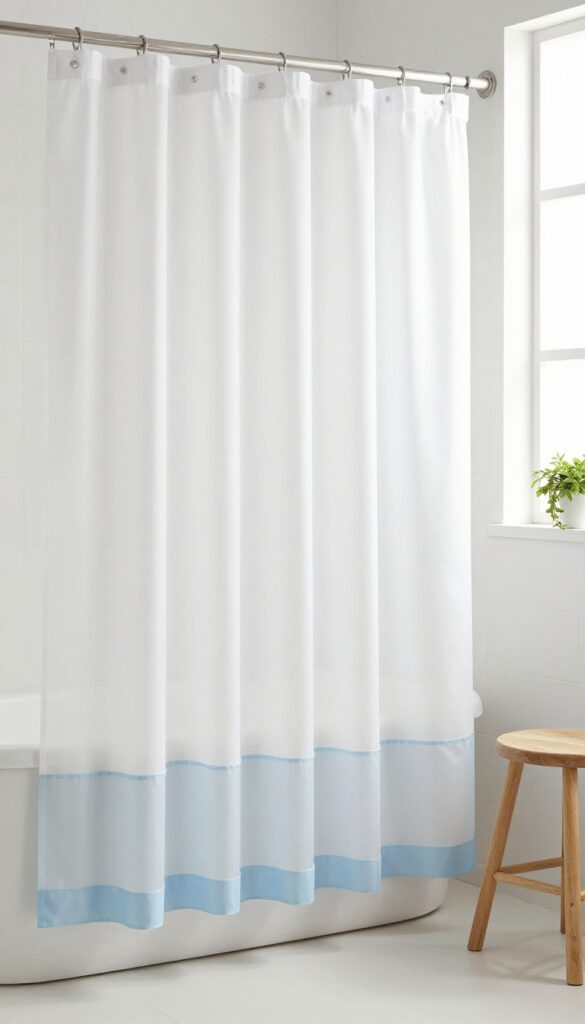
The liner is often the unsung hero of the shower curtain duo, but it doesn't have to be plain. By choosing a liner with a decorative hem or pattern, you can add a subtle layer of style that shows just below your outer curtain. It's a simple trick that gives your bathroom a finished, designer look without much effort.
When you hang a liner that peeks out from under your main curtain, you create depth and visual interest. It's like adding a rug that frames a room—it ties everything together. Plus, it's a practical way to introduce a pop of color or pattern if your outer curtain is solid.
Why The Liner Matters
Most liners are purely functional, but they don't have to be. A liner with a decorative bottom adds a touch of elegance that's visible even when the curtain is closed. It's an easy upgrade that makes your shower look more intentional and polished.
Choosing The Right Liner
Look for liners with a contrasting hem, a scalloped edge, or a subtle pattern that complements your outer curtain. If your outer curtain is bold, keep the liner neutral; if your outer curtain is plain, go for a liner with a fun print. The key is to coordinate, not match exactly.
Installation Tips
Hang the liner on the inside of the outer curtain, but make sure it's slightly shorter so the decorative bottom shows. You can also use clip rings to adjust the length. If your liner is too long, hem it or use fabric tape for a no-sew solution.
12. Create a Faux Roman Shade Effect
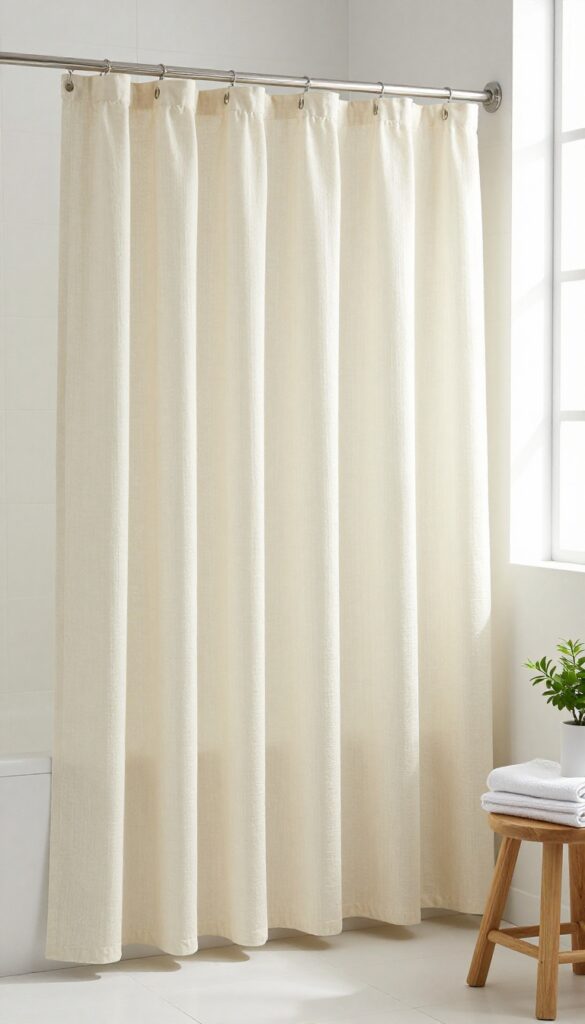
If you love the tailored look of a Roman shade but don't want the hassle of installation, two shower curtains can fake it beautifully. By hanging them with ties or rings and pulling them up in soft folds, you get that elegant, soft appearance without any sewing or mounting. It's a simple trick that adds instant charm and a custom feel to your bathroom.
This approach works best with fabric curtains that have some weight, like cotton or linen blends. You'll want to use two separate curtains on the same rod, each tied up at the sides to create a gathered, scalloped effect. The key is to adjust the ties so the curtains hang evenly and the folds look intentional, not messy.
It's a quick change that can make your shower area feel more like a spa retreat.
Choosing The Right Fabric
Opt for curtains with a bit of body, like cotton duck or a linen-cotton blend. Sheer or flimsy fabrics won't hold the folds well and will look limp. Also, consider the pattern—a subtle stripe or a solid color with texture works best to highlight the Roman shade effect.
Avoid busy prints that might get lost in the folds.
Tying It Up: Techniques And Tips
Use fabric ties, ribbon, or even decorative curtain rings to gather each curtain. Start by pulling the curtain to one side and securing it about a third of the way down from the top. Adjust the fabric to create soft, even folds.
You can also use a hook on the wall to hold the tie in place, ensuring it stays put. Experiment with different heights to find the most flattering drape.
Pairing With A Liner
Since you're using two decorative curtains, you'll still need a waterproof liner behind them. Choose a white or clear liner that won't distract from the faux Roman shade look. Make sure the liner is slightly shorter than the outer curtains so it stays hidden.
This setup keeps the elegance while ensuring your bathroom stays dry.
13. Use Two Curtains to Zone a Large Bathroom
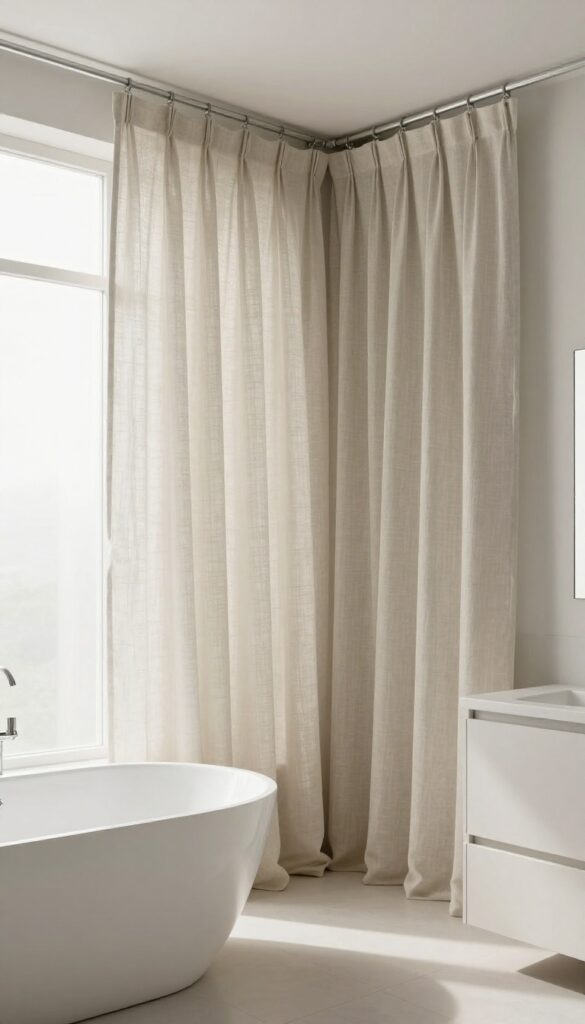
A big bathroom can feel like one giant open space, which isn't always practical. You might have the tub over there and the vanity here, but nothing visually separates them. Adding a second shower curtain can create a simple, flexible divider that breaks up the room without building walls.
Think of it as a soft partition. Instead of using a permanent screen or a pocket door, hang a curtain on a ceiling-mounted track or a tension rod between zones. It gives you privacy when you need it and opens up the space when you don't.
This works especially well in bathrooms where the toilet is tucked near the shower, or where you want a little separation between a soaking tub and the rest of the room.
Pick The Right Rod And Curtain
For this to work, you need a rod that can span the width of the room or at least a good portion of it. A ceiling-mounted track is the most stable option, especially if you're covering a wide gap. Choose a curtain that's easy to slide—grommet tops or clip rings work best.
A fabric curtain with a bit of weight will hang nicely and won't billow around as much as a lightweight liner.
Create A Cohesive Look
Since the curtain is acting as a room divider, it should blend with the bathroom's overall style. Pick a neutral tone that matches the walls or a subtle pattern that echoes the shower curtain. This keeps the space feeling connected rather than chopped up.
If you want a bolder look, choose a curtain that adds a pop of color but still complements the other textiles in the room.
Keep It Functional
Remember, this curtain will be pulled open and closed regularly, so make sure the track is smooth and the curtain isn't too heavy. A simple tie-back can keep it out of the way when you want the room to feel open. Also, consider using a water-resistant fabric if the curtain is near the shower, so it doesn't get damp and musty.
FAQ
Can I use two shower curtains on one rod?
Yes, you can use two shower curtains on a single rod, but they may bunch up. Using two separate rods or a double rod is easier and looks cleaner.
How do I clean two shower curtains?
Most shower curtains are machine washable. Check the care label, and wash them in cold water with mild detergent. Hang them back up to dry.
Will two shower curtains make the shower feel smaller?
Not necessarily. If you use sheer or light-colored curtains, they can make the space feel airy. Heavy or dark curtains might close in the space, so choose wisely.
What's the best way to layer shower curtains?
Start with a liner closest to the tub, then hang a decorative curtain on the outside. For a layered look, use a sheer or lighter curtain behind a solid one.
Are there any functional benefits to using two shower curtains?
Yes, two curtains can provide better water containment, especially for wide showers. They also offer extra privacy and allow you to change the look without replacing everything.
Conclusion
Dual shower curtains give you a chance to mix function with personality without overcommitting to one look. Whether you layer textures, split colors, or use a liner as a style accent, the setup stays flexible and easy to refresh. Start with the combination that solves your biggest bathroom annoyance, then tweak it as your taste evolves.
A small change like this can make your daily routine feel a bit more intentional, and that’s worth the effort. Pick a pairing that fits your space, and enjoy the fresh vibe every time you step in.