
15 Living Room Ideas Black Couch Owners Can Easily Try
You bought the black couch because it looked sharp in the showroom, and now it anchors your living room like a heavy shadow. The fix isn't replacing it. It's layering warmth, light, and texture around it until the black reads as intentional instead of accidental.
Most black sofa rooms fail for the same reason: everything else is dark too. Add a chunky knit throw, a pale rug, or one bright pillow and the whole room shifts. Small moves, big payoff.
These 15 ideas are renter-friendly, budget-aware, and doable in an afternoon. Pick the ones that fit your space, or stack a few for a full reset.
1. Warm Up the Room with a Chunky Knit Throw

A black couch can feel cold and uninviting, especially in a room with lots of hard surfaces. A chunky knit throw is the quickest way to soften that edge. Drape one over an arm or across the back, and the texture instantly makes the sofa feel more welcoming.
You don't need to spend a lot or rearrange furniture. Just one thick, textured throw can change how the whole seating area feels. It adds a layer of coziness that balances the sleekness of black upholstery.
Why Chunky Knit Works
Chunky knit has a visual weight that matches the boldness of a black couch. The thick yarn creates soft shadows and highlights, breaking up the solid dark surface. It also invites touch, making the couch feel more like a place to curl up.
How to Style It
Fold the throw loosely over one arm, letting it cascade down the side. Or drape it across the back cushions, slightly off-center. Avoid spreading it flat—you want that bunched, relaxed look.
If you have two throws, use one on each arm for symmetry.
Choosing The Right Throw
Pick a color that contrasts with black: cream, oatmeal, soft gray, or even a muted blush. Stay away from dark shades that blend in. Look for wool or cotton blends for warmth and durability.
A throw with a bit of fuzz or variation in stitch adds extra texture.
2. Add a Pair of Bright Pillows for Instant Pop

Two bright pillows can change how your black couch reads in seconds. They break up the dark upholstery and give the eye a place to land. The trick is picking colors that feel intentional, not random.
Mustard, rust, and emerald work because they warm up black without fighting it. Stay away from neon shades that look like an afterthought. A pair is enough—one on each end—so the couch still feels balanced.
Pick A Color That Warms The Room
Mustard adds a golden glow that softens black's edge. Rust brings earthy depth and pairs well with wood tones. Emerald feels rich and a little dramatic, especially against charcoal walls.
Choose one and repeat it once more in the room—a candle, a book spine, a small vase—so it looks deliberate.
Get The Size And Fill Right
Go bigger than you think: 20 to 22 inches for a standard sofa. Down or down-alternative inserts hold a soft chop and look relaxed. If your couch has a low back, stick with a slightly smaller pair so they don't swallow the frame.
Style Them Without Fuss
Place one pillow in each corner, angled slightly toward the center. Give each a quick chop in the middle to break up the square shape. If you want a layered look, add a smaller neutral pillow in front—but keep the bright pair as the star.
3. Layer a Light Area Rug Underneath
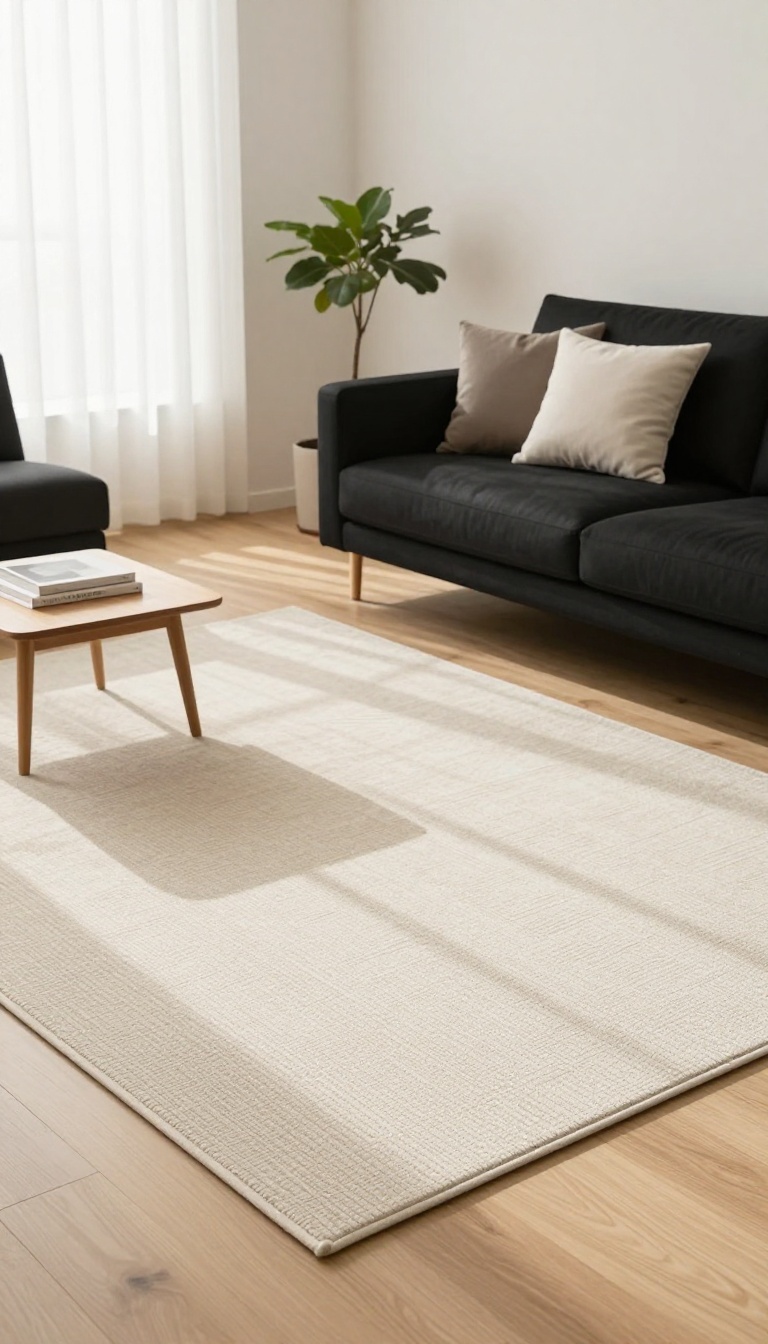
A black couch sitting directly on a dark floor turns into a visual anchor that drags the whole room down. Sliding a light-colored or patterned rug underneath changes that instantly. The rug lifts the seating area, adds softness underfoot, and gives the black sofa a clear boundary so it reads as a deliberate choice instead of a heavy block.
You do not need to spend a fortune. A simple cream flatweave or a vintage-inspired pattern in muted tones does the job. The goal is contrast and texture, not perfection.
The rug does two things at once: it brightens the floor and it frames the couch. Without it, the black fabric can feel like it is floating in a sea of darkness. With it, the eye gets a resting place and the room feels finished.
Size matters more than color here. A rug that is too small makes the couch look oversized and awkward. You want at least the front legs of the sofa sitting on the rug, and ideally the whole thing if your room allows it.
That creates a cohesive zone instead of a random rectangle. Pattern is your friend if you want to hide stains or add personality. A subtle geometric or faded Persian design breaks up the solid black without competing with it.
Just keep the base color light so the contrast stays strong.
Pick The Right Size
Measure your seating area before you buy. For a standard three-seat sofa, an 8×10 rug usually works, but a 9×12 gives you more breathing room in larger spaces. If you have a sectional, go bigger or consider two runners layered side by side.
The front legs should always sit on the rug, and the back legs can stay off if needed. That rule alone prevents the most common rug mistake.
Choose A Light Base
Cream, ivory, light gray, or soft beige all work. You want the rug to reflect light and contrast with the dark couch. If you worry about spills, look for a polypropylene or washable cotton rug.
They clean up easily and still look good. A light base does not mean boring—patterns in pale blues, warm rusts, or faded charcoals add interest without darkening the floor.
Add A Rug Pad
A pad keeps the rug from sliding and adds a layer of cushion. It also protects your floors and makes vacuuming easier. Look for a low-profile pad if you have a thinner rug, or a thicker one for flatweaves.
This small extra step makes the whole setup feel more expensive and comfortable.
4. Hang a Large Mirror to Reflect Light

A black couch can make a room feel like a cave, especially if the walls are dark or the windows are small. A large mirror is one of the simplest fixes. It doesn't just decorate—it doubles the light you already have and tricks the eye into seeing more space.
Place a big mirror opposite a window. Sunlight hits the glass, bounces back into the room, and suddenly your black sofa looks intentional instead of heavy. The mirror also reflects whatever is across from it, so if you have a colorful rug or a bright piece of art, that gets amplified too.
Pick The Right Spot
The best wall for a mirror is the one facing your main light source. If your window is on the left, hang the mirror on the right wall. Avoid putting it opposite another mirror or a dark corner—you'll just bounce shadows around.
Size Matters
Go big or go home. A tiny mirror won't do much for a black couch. Aim for something at least two-thirds the width of your sofa.
A full-length leaner or a large round mirror works well and feels less formal than a framed rectangle.
Style Without Breaking The Bank
You don't need a custom piece. Thrift stores, discount home stores, and even online marketplaces have oversized mirrors for cheap. If the frame is ugly, paint it.
A coat of matte black or warm gold can tie it to your couch or add a pop of contrast.
5. Go Bold with an Accent Wall Behind the Couch
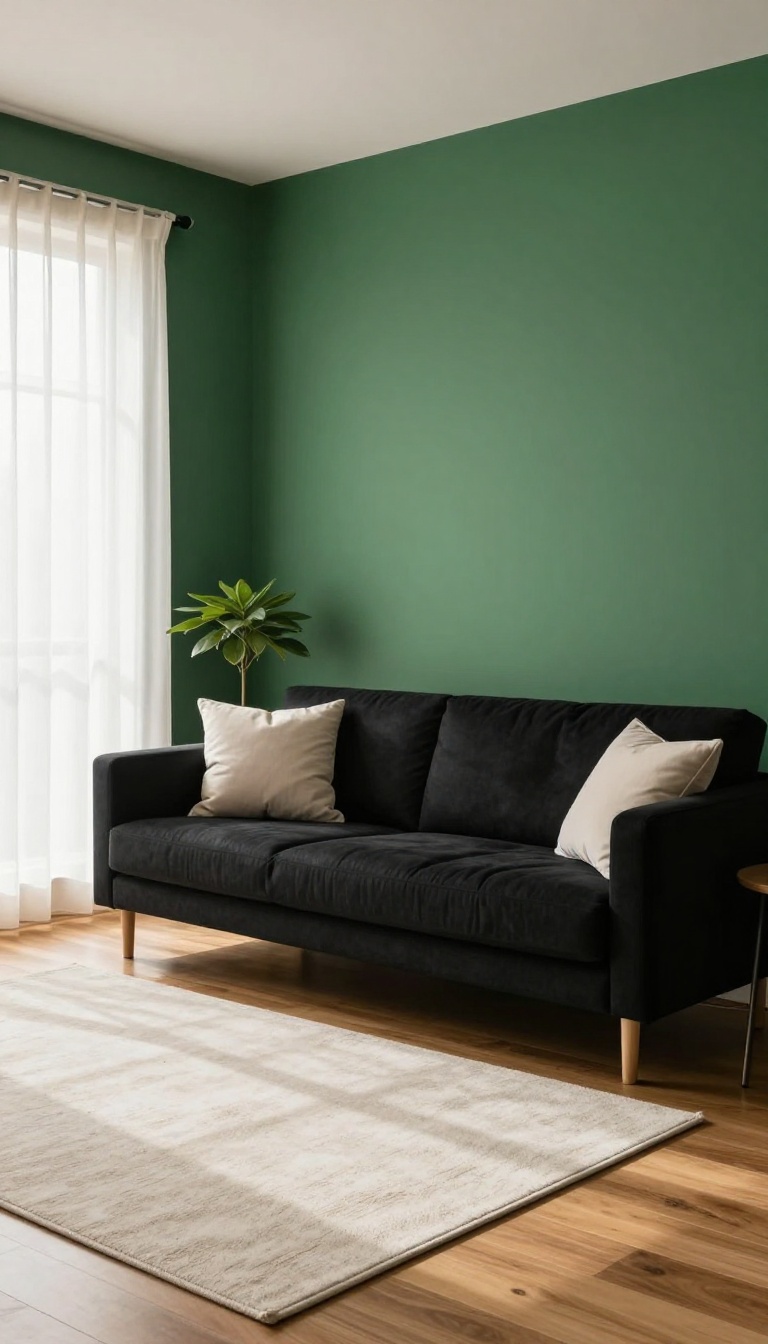
The wall behind your couch is prime real estate. Right now, it's probably beige, white, or whatever the builder slapped on. That blank backdrop does nothing for your black sofa.
Paint it a deep jewel tone or a warm neutral, and suddenly the black has a frame. It's the easiest way to make your couch look deliberate instead of like a dark blob.
An accent wall behind the couch does two things at once. It gives the black a rich background to pop against, and it adds depth so the room doesn't feel flat. You don't need to paint all four walls.
One is enough. And you don't need to hire a pro. A weekend and a gallon of paint will do it.
Pick A Color That Plays Nice With Black
Jewel tones like emerald, sapphire, or amethyst look amazing with black. They're dark enough to feel cozy but saturated enough to add life. Warm neutrals like terracotta, camel, or deep olive also work.
They soften the black without competing with it. Avoid pastels and bright whites unless you want a stark, high-contrast look. Test a few swatches on the wall first.
Paint looks different at night than it does in daylight.
How To Pull It Off Without Overdoing It
Keep the rest of the room simple. Let the accent wall be the star. If you go bold on the wall, stick with neutral curtains and a light rug.
If you choose a warm neutral, you can add a few colorful pillows or a throw. Also, consider the finish. Matte or eggshell hides imperfections and feels more modern.
Glossy finishes reflect light and can make the color look cheaper. And don't forget the trim. Painting the baseboards the same color as the wall makes the room feel taller.
Renter-friendly Alternatives
Can't paint? No problem. Peel-and-stick wallpaper comes in tons of jewel tones and textures.
It's easy to remove and won't damage the wall if you follow the instructions. Another option is a large fabric tapestry or a series of framed panels. Hang them behind the couch to create a similar framing effect.
Even a tall room divider or a folding screen can add that pop of color without a single drop of paint.
6. Mix in Natural Wood Furniture

Black fabric and wood are a classic pairing for a reason. The wood brings warmth and organic texture that softens the sleekness of your couch without fighting it. You don't need to overhaul your room—just one or two wooden pieces can change the whole vibe.
A wooden coffee table is the easiest place to start. It sits right in front of the couch, so the contrast is immediate. The grain and tone of the wood break up the solid black and make the seating area feel more grounded and inviting.
If you already have a coffee table you love, try a wooden side table or a pair of wooden stools. They add the same warmth on a smaller scale. You can also mix in a wooden frame for art or a mirror above the couch to tie it together.
Why Wood Works
Wood has a natural warmth that balances cool black. It also adds subtle texture and variation, which keeps the room from feeling flat. Even a small wooden accent can make the black couch look more deliberate and less heavy.
Best Wood Tones For Black Couches
Medium to dark woods like walnut or teak create a rich, cohesive look. Lighter woods like oak or ash add more contrast and brightness. Avoid very red or orange woods if you want a calm, modern feel—they can clash with the black.
Mixing Wood With Other Materials
Wood pairs well with metal, glass, and leather. A wood-and-metal coffee table, for example, adds both warmth and an industrial edge. Just keep the mix intentional—two or three materials max in one piece.
7. Add Greenery with a Tall Floor Plant

A tall plant next to your black couch works like a breath of fresh air. It softens the dark fabric and adds a pop of living color that makes the whole setup feel intentional. You don't need a green thumb—just one well-placed plant can do the heavy lifting.
The trick is picking a plant that's tall enough to balance the visual weight of your sofa. Something that reaches at least halfway up the backrest will create a nice vertical line and draw the eye upward. It also breaks up the solid block of black, so the couch doesn't feel like a monolith.
Best Plants For Black Couch Rooms
Fiddle leaf figs and snake plants are the go-to choices, and for good reason. Fiddle leaf figs have big, glossy leaves that catch light and add a sculptural element. Snake plants are nearly indestructible and their upright leaves add a sharp, modern edge.
Both handle indoor conditions well and look great against dark upholstery.
Where To Place It
Put the plant to one side of the couch, not directly in front of it. A corner spot works wonders, especially if it's near a window. If your couch sits against a wall, place the plant at the end, slightly behind the arm.
That way it frames the seating area without blocking conversation.
Pots That Pull It Together
The pot matters as much as the plant. A woven basket adds texture and warmth, while a ceramic pot in white or cream creates contrast. If you want a cohesive look, choose a pot that echoes another color in the room—like a throw pillow or a piece of art.
Just make sure it has drainage to keep your plant happy.
8. Use a Gallery Wall to Add Personality
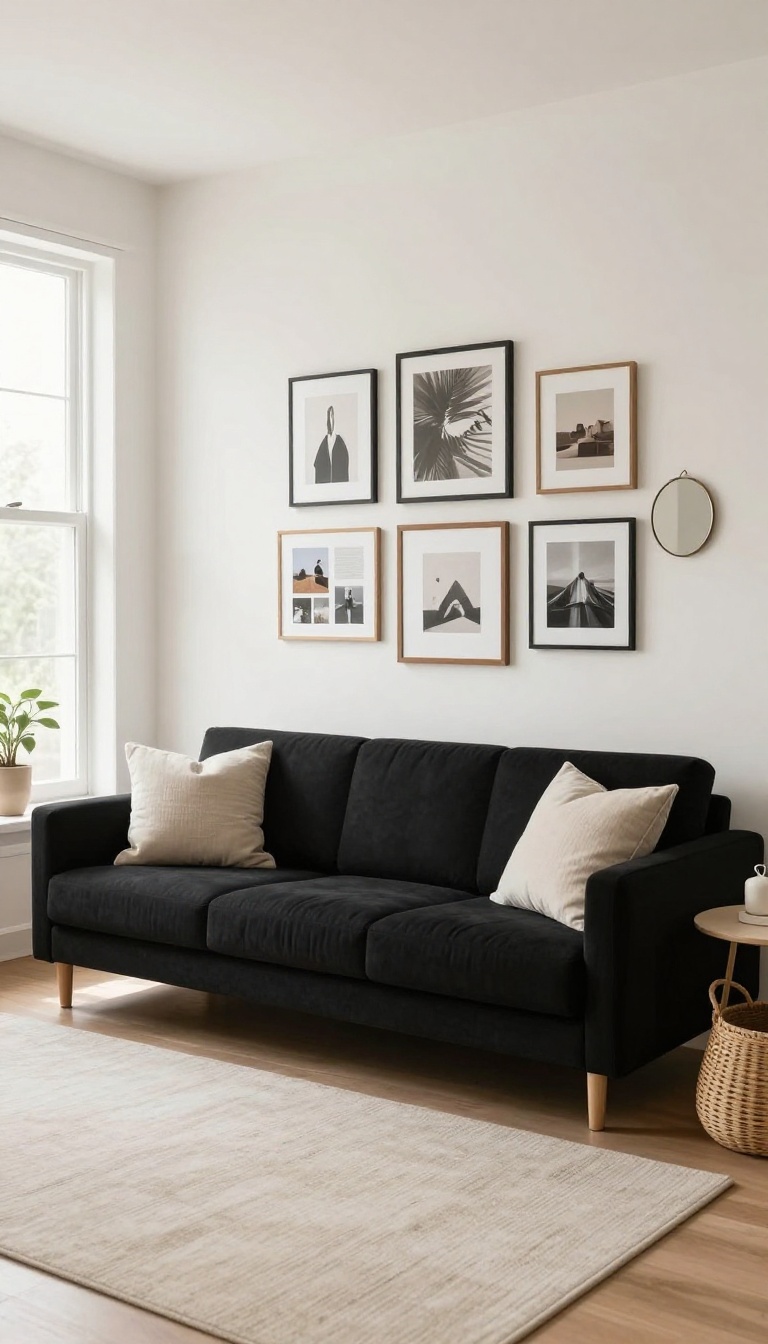
A gallery wall above your black couch gives the eye somewhere to land. Instead of seeing one dark block, people notice the art first. That shift changes how the whole room feels.
You don't need a designer or a big budget. You need a plan, a few frames, and a free afternoon. The goal is simple: create a cluster of pieces that pulls attention up and away from the sofa's heavy silhouette.
Start With A Layout That Fits Your Wall
Measure the width of your couch, then keep the gallery about two-thirds of that width. Center it so the art feels connected to the sofa, not floating. For a casual look, mix frame sizes and shapes.
For a cleaner vibe, stick to same-size frames in a neat grid. Either way, lay everything on the floor first. It's the easiest way to tweak spacing before you make holes.
Mix Art, Photos, And Objects
Variety keeps a gallery wall from feeling flat. Combine framed prints with personal photos, a small mirror, or even a woven basket. Different textures break up the black and add warmth.
Keep the color palette somewhat cohesive, but don't stress about matching everything perfectly. A little contrast is what makes it interesting.
Hang At The Right Height
The center of your gallery should sit about 57 to 60 inches from the floor. That's roughly eye level for most people. If your couch has a high back, leave 6 to 10 inches of space between the top of the sofa and the bottom of the lowest frame.
Too high and the art looks disconnected; too low and it feels crowded.
Light It Up
A picture light or a pair of wall sconces above the gallery makes the art pop and adds a soft glow. It also draws the eye upward, which is exactly what you want with a dark couch. Battery-operated options exist if you don't have wiring.
Even a simple clip-on lamp can work in a pinch.
9. Swap in a Light-Colored Coffee Table
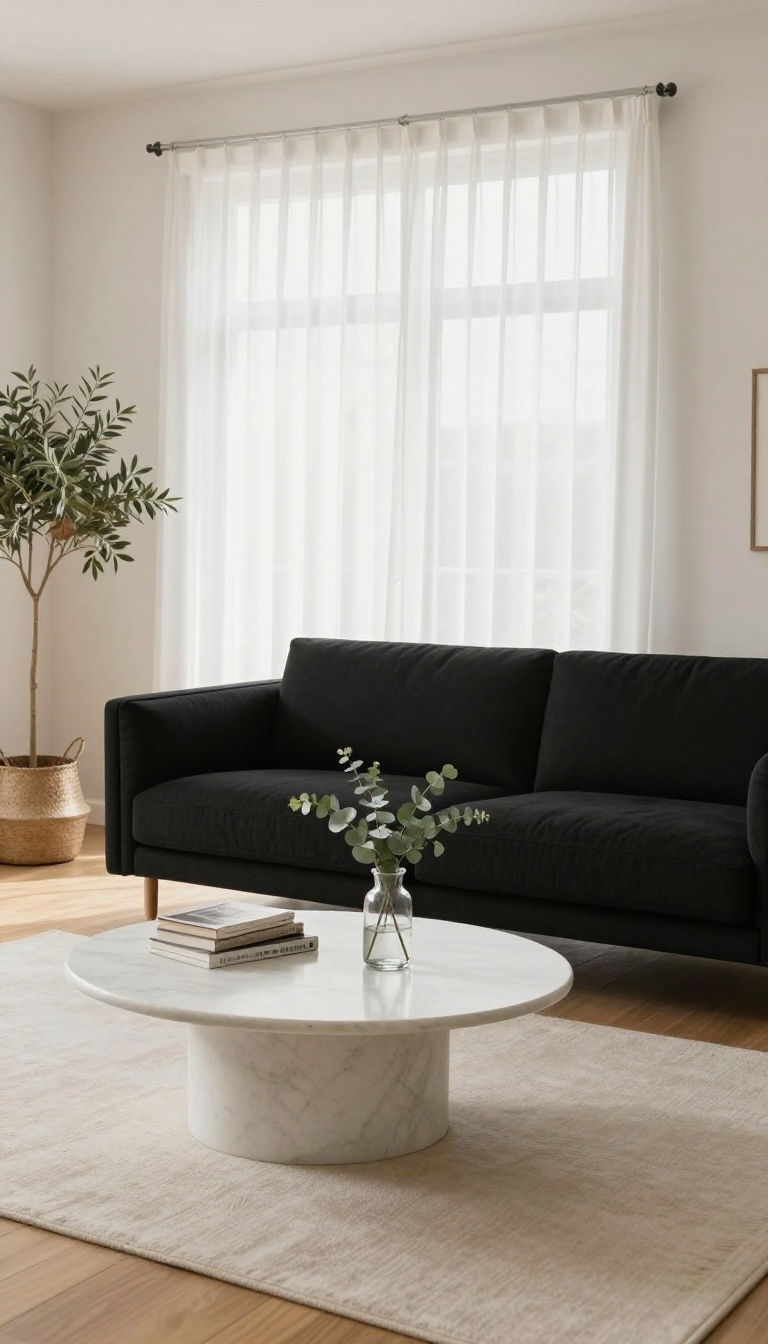
Your black couch is a heavy hitter, and that's a good thing. But if the coffee table in front of it is also dark, the whole seating area turns into one big black hole. Swapping in a light-colored table—white, glass, or marble—flips that instantly.
It becomes a bright focal point that breaks up the darkness and makes the room feel open.
A light coffee table does two jobs at once. It contrasts with the black sofa so the couch looks intentional, not like a mistake. And it reflects light around the room, which is a game-changer if your space doesn't get much sun.
You don't need to spend a fortune. Plenty of budget-friendly options exist, and you can even paint or refinish a thrifted table. The goal is simple: lighten the center of the room without fighting the sofa.
Here's what to consider so you get it right the first time.
Why It Works
Black absorbs light; white and glass bounce it around. That's why a light table makes such a difference. It also creates a clear visual break between the sofa and the floor, so your eye isn't stuck in a dark blob.
If your room feels small or dim, this is one of the fastest fixes. You're not changing the layout or the walls—just the piece in the middle.
Best Materials To Try
Glass is the chameleon. It disappears visually, so the room feels bigger and airier. A glass table with a slim metal frame keeps things modern and won't block sightlines.
White lacquer or painted wood gives you a crisp, clean look. It's easy to wipe down and works with almost any style. Marble—real or faux—adds a luxe touch and pairs beautifully with black.
Just seal real marble to avoid stains. Avoid heavy, ornate designs. Simple shapes keep the contrast sharp.
Styling Tips That Keep It Balanced
Once the table is in, don't cover it with dark clutter. A small stack of light-colored books, a white bowl, or a clear vase keeps the brightness going. Add one black accent—like a candle holder—to tie it back to the sofa.
If you have a dark rug, a light table will pop even more. And if your floors are dark, a glass table with a light base prevents a heavy look. The key is to let the table be the lightest thing in that zone.
10. Add a Floor Lamp for Warm Pooled Light
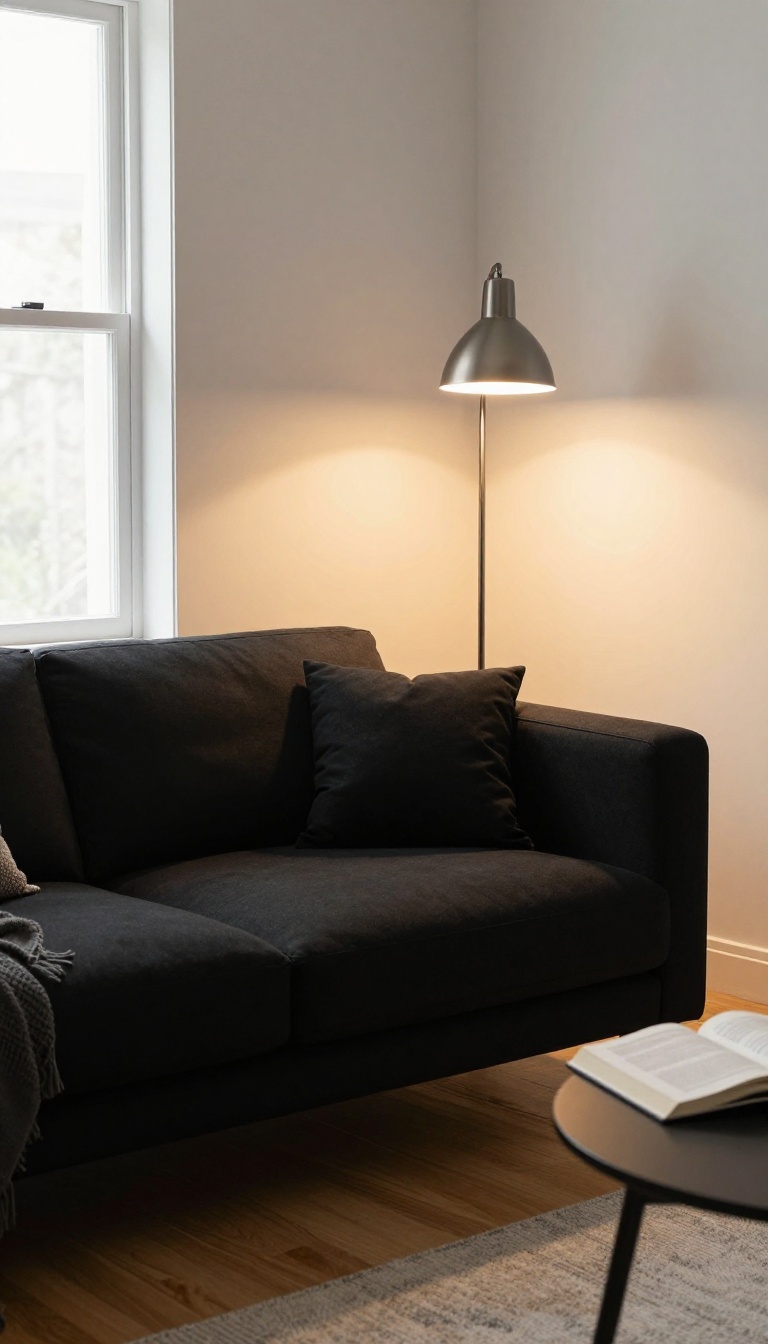
Overhead lights flatten a room, and black fabric shows every harsh shadow they throw. A floor lamp tucked beside the couch does the opposite. It drops a soft circle of warm light right where you sit, and the black sofa suddenly looks rich instead of heavy.
This is one of the cheapest mood shifts on the list. You do not need an electrician or a new ceiling fixture. One lamp, one warm bulb, one outlet, done.
The trick is placement and bulb temperature, not price. A lamp that arcs over the seat or stands just behind the armrest puts light exactly where you read and scroll. Warm bulbs around 2700K keep that glow golden rather than blue-white.
Pick The Right Bulb Temperature
Grab a bulb labeled 2700K or "soft white" and skip anything that says daylight. Daylight bulbs run cool and make black upholstery look gray and clinical. A warm bulb pulls out the depth in the fabric and makes the corner feel lived-in.
If your lamp has a dimmer, even better. You can push it bright for reading and drop it low for movie nights without touching the ceiling switch.
Angle It Toward The Couch, Not The Room
Point the shade down and slightly toward the seat. Light that spills across the whole room just adds glare, but light aimed at the cushions creates that cozy pool effect. Keep the bulb below eye level when you are seated so it never hits you directly.
A lamp with an adjustable arm or a swing neck gives you room to fiddle until it feels right. Ten seconds of adjusting beats buying three lamps to test.
Match The Metal To The Room
Black couch owners usually have some black or dark accents already. A matte black or brass lamp base ties into that without disappearing. If your room leans light and airy, a slim brass or brushed nickel stand adds a little shine against the dark sofa.
Do not overthink the shade. A simple drum or cone in linen or paper diffuses the light softly and keeps the look clean.
Pair It With A Small Side Table
A lamp alone floats. Add a narrow side table or a stack of books under it and the corner reads as a real nook. That gives you a spot for a mug, a phone, or a small plant, and it anchors the light so it feels intentional.
Keep the table low and slim so it does not crowd the couch. The lamp should feel like part of the seating area, not a separate piece of furniture.
11. Layer in a Second Seating Option

One black couch can carry a room, but it can also leave the space feeling one-note. Adding a second seat breaks up the visual weight and gives the layout a clear purpose. It doesn't have to match, and it shouldn't.
A contrasting armchair is the easiest way to make the whole setup feel finished.
Think of your black couch as the anchor and the second chair as the counterweight. Without it, guests hover, conversations stall, and the room reads more like a waiting area than a living space. A single armchair solves all three problems at once.
Pick A Contrasting Material
Leather next to black fabric adds instant depth. A caramel or cognac leather chair warms up the cool tones of a black sofa without fighting it. If leather feels too heavy, try a woven fabric chair in oatmeal, rust, or sage.
The texture difference matters as much as the color.
Angle It, Don't Line It Up
Push the chair in at a slight angle instead of squaring it off with the couch. That small turn makes the seating feel conversational rather than formal. It also opens up the floor plan so the room doesn't feel like a furniture showroom.
Keep The Scale In Check
A tiny accent chair gets swallowed by a large black sofa. Look for a chair with a substantial back and seat, but not so bulky that it competes. If you're short on space, a swivel chair or a slipper chair works without crowding the room.
12. Style the Couch with a Textured Blanket Ladder

A blanket ladder leaning against the wall next to your black couch does two things at once: it fills empty vertical space and makes the room feel lived-in. Instead of hiding throws in a basket, you display them like art. The mix of textures also softens the hard, dark lines of the sofa.
You don't need a fancy ladder. A simple wooden one from a thrift store or a DIY build works fine. Lean it against the wall at a slight angle, then drape folded blankets over the rungs.
The key is variety: a chunky knit, a soft cotton, maybe a patterned one. This adds warmth and invites people to grab a layer when they curl up.
Pick The Right Spot
Place the ladder where it balances the couch, not where it blocks traffic. A corner beside the sofa or the wall opposite often works best. If your couch sits against a window, try the adjacent wall so the ladder doesn't compete with the view.
Keep it within arm's reach so blankets are easy to grab.
Choose Blankets That Pop
Since your couch is black, use the ladder to introduce lighter or brighter tones. Cream, mustard, rust, or soft gray all stand out against dark fabric. Mix in one patterned throw for interest.
Fold each blanket neatly over a rung so the stack looks intentional, not messy.
Keep It Functional
A blanket ladder isn't just decor. Rotate throws seasonally: heavy knits in winter, lightweight cotton in summer. If you have pets or kids, secure the ladder to the wall with a furniture strap.
That way it stays put even when someone tugs a blanket off.
13. Choose Curtains in a Soft, Flowing Fabric

Curtains do more than block light. They frame your windows, soften the room's edges, and give your black couch a gentle backdrop that keeps it from feeling like a boulder in the corner. Pick a fabric that moves.
Linen, velvet, or a lightweight blend will drape and pool in a way that feels relaxed, not stiff. That softness is exactly what a hard-edged black sofa needs to balance out.
When you hang curtains, you're adding a vertical layer that breaks up the boxy shape of the couch. A flowing fabric catches light and creates shadows that shift throughout the day, so the room never feels static. Go for a color that's a few shades lighter than the couch—think warm gray, cream, or dusty blue.
If you want contrast, a deep jewel tone like emerald or burgundy works, but keep the fabric light so it doesn't compete with the black. Hang the rod high and wide. Mount it close to the ceiling and extend it a few inches past the window frame on each side.
This makes the window look bigger and draws the eye up, away from the heavy sofa. Let the curtains kiss the floor. A slight break or a small pool adds a touch of luxury without looking sloppy.
Avoid choppy lengths—they make the room feel unfinished. If you're renting, use tension rods or removable hooks. No holes, no stress.
You can still get the soft, framed look without losing your deposit.
Fabric That Moves
Linen, velvet, and rayon blends have a natural drape that feels effortless. Steer clear of stiff synthetics or heavy blackout panels—they'll make the room feel rigid and cold. If you need privacy, layer a sheer under a heavier curtain.
Color That Complements
You don't have to match the couch. A warm neutral like oatmeal or taupe softens the black without fighting it. For a bolder look, try a muted green or blush pink.
Just keep the fabric light so the color doesn't overwhelm.
Hang High And Wide
Mount the rod near the ceiling and extend it past the window frame. This trick makes ceilings look taller and windows look larger. It also pulls attention upward, so the black couch feels less dominant.
14. Add Metallic Accents for a Touch of Glam

Black fabric absorbs light, which can make even a well-decorated room feel a little flat. Metallic accents—brass, gold, or warm silver—bounce light back into the space and give your black couch a polished, upscale look. You don't need much; a few well-placed pieces are enough to shift the whole vibe.
The trick is to treat metallics like jewelry for your room. They catch the eye, add sparkle, and make the black couch feel intentional rather than heavy. Stick to one or two metal tones so the look stays cohesive, and place them where they'll reflect light from windows or lamps.
Start With A Tray Or Two
A brass tray on your coffee table or ottoman instantly adds shine and gives you a spot to corral remotes, candles, or a small plant. Look for trays with a hammered or brushed finish—they hide fingerprints and look more expensive than they cost.
Swap Your Lamp Bases
If your current lamps are dark or neutral, try a gold or brass base instead. When the lamp is on, the metal glows and casts a warm light that flatters black upholstery. Even a simple brass task lamp on a side table can do the trick.
Add Small Sculptural Pieces
Candle holders, small bowls, or a geometric object in a metallic finish work like little mirrors. Place one on a stack of books or a side table where it can catch the light. You don't need a collection—one or two pieces are enough to make the room feel styled.
15. Keep the Rest of the Room Light and Airy
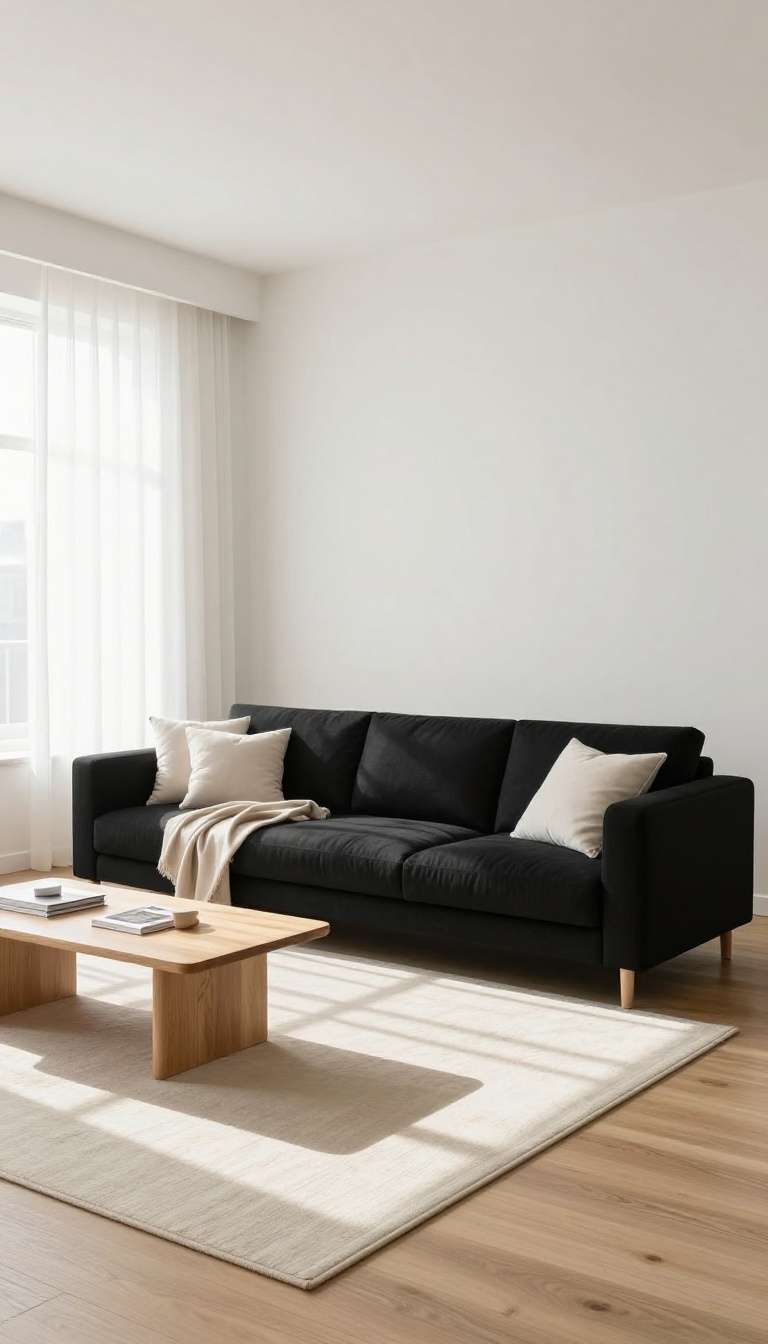
A black couch doesn't need competition. It needs breathing room. When the walls, floors, and surfaces around it stay pale and uncluttered, the sofa reads as a deliberate focal point instead of a heavy anchor dragging the whole room down.
The trick is contrast without chaos. You're not stripping the room bare. You're just letting light do most of the decorating so the black fabric has something bright to push against.
This is one of the easiest ideas on the list because it's mostly about subtraction. Fewer dark objects, more open space, and a room that feels twice as big by dinner.
Start with the biggest surfaces. Walls, floors, and ceilings cover more square footage than anything else, so they set the tone before you even hang a picture. Then work outward.
Clear the clutter, lighten the furniture around the couch, and let a few intentional pieces carry the personality. The black sofa stays the star. Everything else just supports it. ### Let the Walls Breathe White walls aren't boring when a black couch is sitting in front of them.
They're the frame. A soft warm white, like an off-white with a hint of cream, keeps the room from feeling clinical while still bouncing light around. If pure white feels too stark, try a pale greige or a very light warm gray.
Both read as neutral but add a little softness that pairs beautifully with black upholstery. Skip the accent wall behind the sofa unless it's also light. A dark feature wall plus a dark couch equals a cave.
Let the couch be the only bold moment on that side of the room. ### Go Pale Underfoot A light rug does more for a black couch than almost any other single change. It creates a bright base that lifts the sofa visually and makes the whole seating area feel grounded instead of sunken. Choose a rug in ivory, sand, light gray, or even a faded vintage wash.
A flatweave or low-pile style keeps things casual and easy to clean, which matters if you actually use the room. If you have dark hardwood floors, a pale rug is almost mandatory. It breaks up the dark-on-dark effect and gives the eye a place to rest between the floor and the sofa. ### Clear the Surfaces Clutter makes any room feel heavier, and that goes double when a black couch is already pulling visual weight.
Clear off the coffee table, the side tables, and the shelves near the sofa. You don't need empty surfaces forever. You need fewer things on them.
One book, one small tray, one candle. That's plenty. Rotate pieces instead of piling them up.
Open shelving looks best when it's about two-thirds empty. Negative space is a design choice, not a sign that you gave up. ### Choose Light, Airy Furniture Around It The furniture surrounding your black couch shouldn't match its weight. Swap heavy dark wood tables for light oak, glass, or acrylic.
Choose chairs in cream, beige, or soft linen instead of charcoal or espresso. Metal finishes in brass, nickel, or matte black work well as accents, but keep them small. A thin-legged side table in a light tone will make the room feel open even if the sofa is bulky.
If you have a dark media console or bookshelf, consider painting it a light color or replacing it with something open and airy. The goal is to let the black couch stand alone as the darkest thing in the room.
Let The Walls Breathe
White walls aren't boring when a black couch is sitting in front of them. They're the frame. A soft warm white, like an off-white with a hint of cream, keeps the room from feeling clinical while still bouncing light around.
If pure white feels too stark, try a pale greige or a very light warm gray. Both read as neutral but add a little softness that pairs beautifully with black upholstery. Skip the accent wall behind the sofa unless it's also light.
A dark feature wall plus a dark couch equals a cave. Let the couch be the only bold moment on that side of the room.
Go Pale Underfoot
A light rug does more for a black couch than almost any other single change. It creates a bright base that lifts the sofa visually and makes the whole seating area feel grounded instead of sunken. Choose a rug in ivory, sand, light gray, or even a faded vintage wash.
A flatweave or low-pile style keeps things casual and easy to clean, which matters if you actually use the room. If you have dark hardwood floors, a pale rug is almost mandatory. It breaks up the dark-on-dark effect and gives the eye a place to rest between the floor and the sofa.
Clear The Surfaces
Clutter makes any room feel heavier, and that goes double when a black couch is already pulling visual weight. Clear off the coffee table, the side tables, and the shelves near the sofa. You don't need empty surfaces forever.
You need fewer things on them. One book, one small tray, one candle. That's plenty.
Rotate pieces instead of piling them up. Open shelving looks best when it's about two-thirds empty. Negative space is a design choice, not a sign that you gave up.
Choose Light, Airy Furniture Around It
The furniture surrounding your black couch shouldn't match its weight. Swap heavy dark wood tables for light oak, glass, or acrylic. Choose chairs in cream, beige, or soft linen instead of charcoal or espresso.
Metal finishes in brass, nickel, or matte black work well as accents, but keep them small. A thin-legged side table in a light tone will make the room feel open even if the sofa is bulky. If you have a dark media console or bookshelf, consider painting it a light color or replacing it with something open and airy.
The goal is to let the black couch stand alone as the darkest thing in the room.
FAQ
What colors go best with a black couch?
Almost anything works, but warm neutrals like cream, tan, and blush, plus bold jewel tones like emerald and mustard, tend to look especially good.
How do I make a black couch look less boring?
Add texture and contrast. Throw pillows, a chunky knit throw, a light rug, and a few plants go a long way.
Should I put a black couch in a small living room?
Yes, as long as you balance it with light walls, a pale rug, and good lighting. A black couch can actually make a small room feel more grounded.
What kind of rug works under a black couch?
A light-colored or patterned rug works best. It creates contrast and keeps the seating area from feeling too dark.
Can I mix a black couch with wood furniture?
Absolutely. Natural wood tones add warmth and texture that pair beautifully with black upholstery.
Conclusion
A black couch already does the heavy lifting in your living room, so you do not need to rebuild the whole space around it. Pick one idea from this list that solves your biggest headache, whether that is a dark corner, a flat wall, or a room that feels cold. Try it for a week before you buy anything else.
Small moves add up faster than one big overhaul. Layer in a rug, a warm bulb, or a single brass accent, then stop and see how it feels. Your couch is not the problem.