10 Modern Bedroom Wardrobe Ideas with Sleek Storage
A bedroom wardrobe shouldn't just hold clothes. It should make the room feel calmer, cleaner, and easier to live in every single day.
The good news is you don't need a custom renovation budget to get there. Plenty of smart options, from sliding doors to open shelving, deliver sleek storage without tearing the room apart.
Below are ten wardrobe ideas that mix function with real style. Some suit tight corners, others fit whole walls, and a few work around whatever space you already have.
1. Built-In Wardrobes with Flush Doors
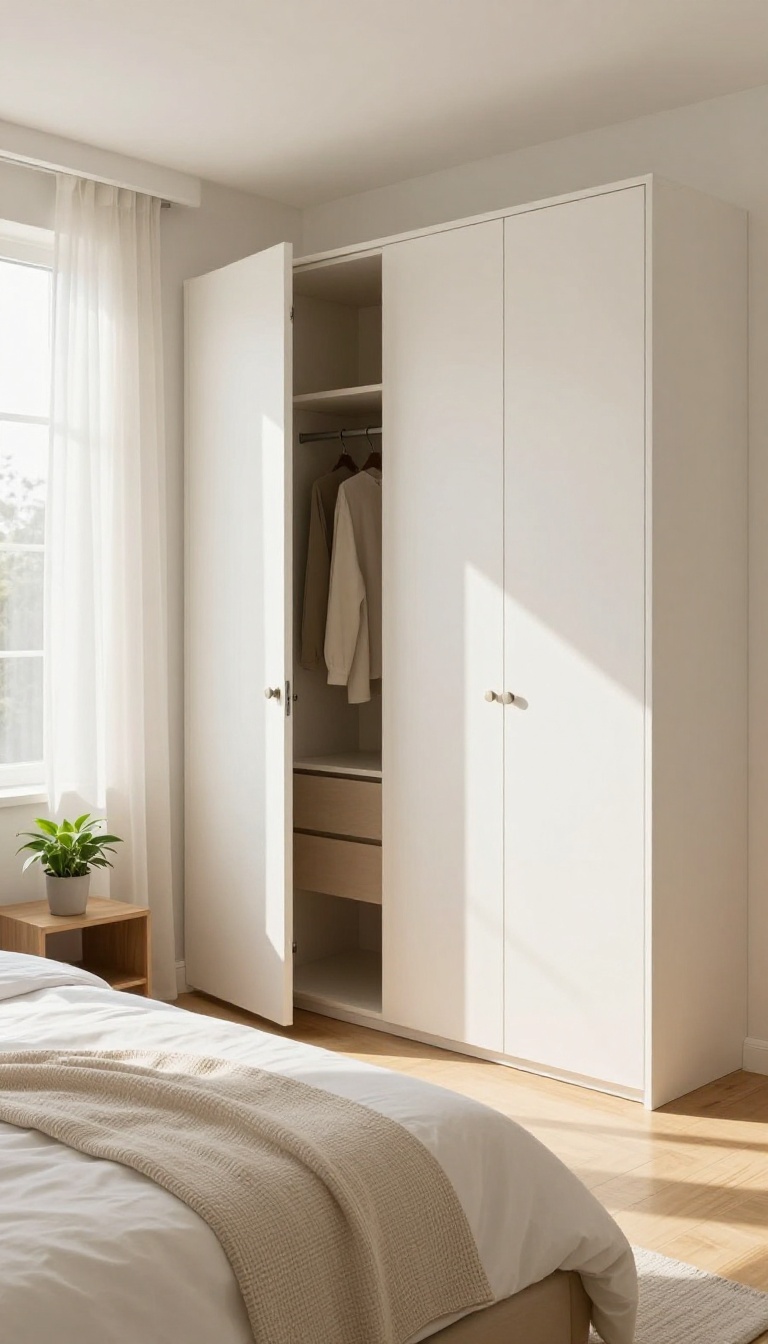
Built-in wardrobes with flush doors sit level with your walls, so they practically disappear into the room. That seamless look makes even a small bedroom feel more open and architectural. And because they don't stick out, you get maximum storage without sacrificing an inch of floor space.
The magic of a flush-door built-in is how it turns a bulky necessity into a quiet design feature. Instead of a piece of furniture shouting for attention, you get a smooth surface that blends right in. You can paint the doors to match your walls or go for a subtle contrast—either way, the result is clean and intentional.
Inside, you're not stuck with a basic rod and shelf. You can customize the layout with drawers, adjustable shelves, and dedicated hanging sections for short and long items. That means everything from folded tees to winter coats has a proper home, and nothing gets lost in a jumble.
For a truly seamless finish, consider handleless doors with push-to-open latches. They keep the surface uninterrupted and add a modern touch that feels high-end without the fuss.
Why Flush Doors Work So Well
Flush doors eliminate the visual noise of protruding frames and knobs. They create a flat, continuous plane that makes your walls look longer and your room feel larger. Plus, there's no dust-catching ledge on top, so cleaning is a breeze.
Customizing The Inside
Start by mapping out what you actually own. A mix of full-extension drawers for folded clothes, adjustable shelves for shoes and bags, and double-hang rods for shirts and pants covers most needs. Add a few deep drawers at the bottom for bulky items like sweaters or bedding.
Getting The Seamless Look
For the most seamless result, have the doors made from the same material as your wall and paint them the same color. If you prefer a subtle contrast, choose a matte finish in a tone that's one shade lighter or darker. Handleless designs with push latches keep the surface perfectly smooth.
2. Sliding Door Wardrobes for Tight Spaces
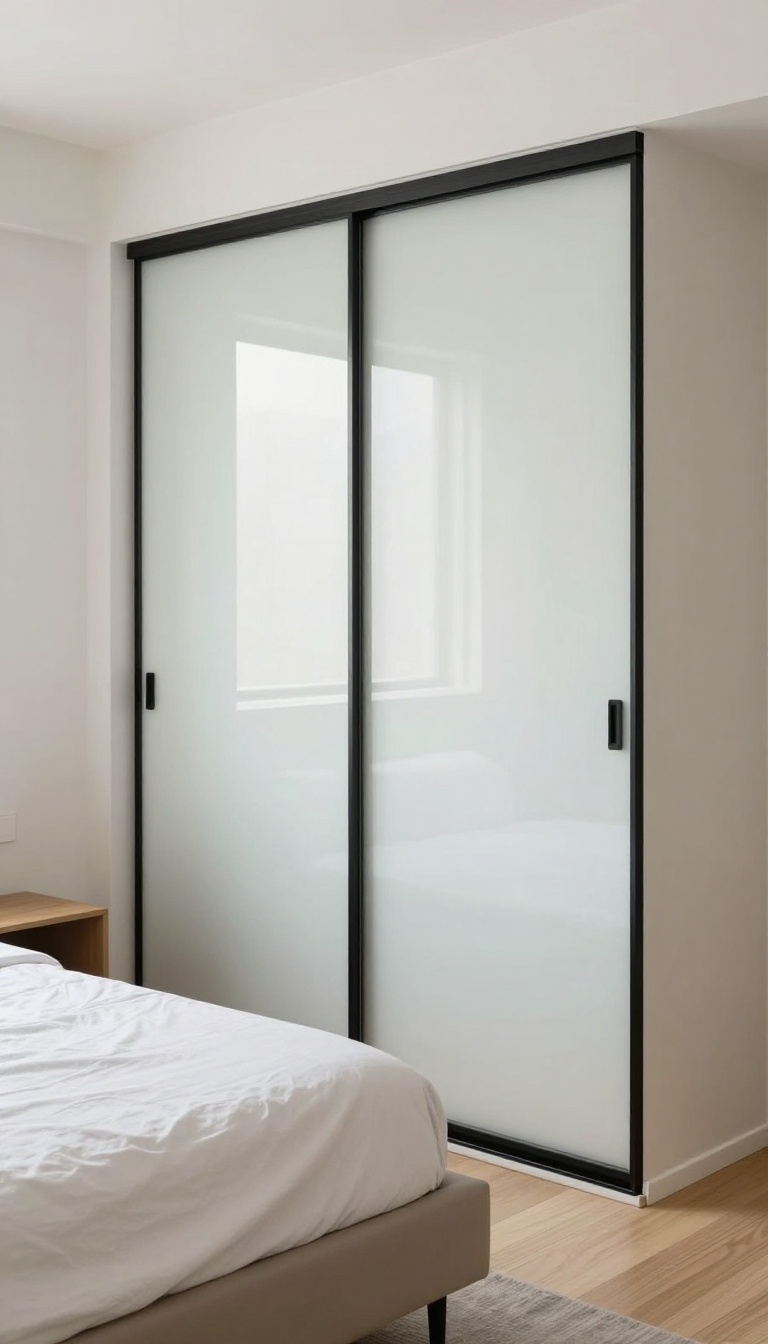
Sliding doors glide side to side instead of swinging out, so they free up precious floor space. That makes them a smart pick for small bedrooms or any spot where furniture sits close to the closet. Modern versions come in sleek finishes like mirrored or frosted glass that bounce light around and make the room feel bigger.
Sliding door wardrobes solve a simple problem: traditional hinged doors need clearance to open. In a tight bedroom, that swing space can eat up a foot or more of usable floor. Sliding doors eliminate that issue entirely.
They also look clean and modern, with panels that sit flush against the wardrobe frame. You can choose from wood, glass, mirror, or a mix. The track system runs along the top and bottom, so the doors stay aligned and move smoothly.
Installation is straightforward, and many kits fit standard closet openings. If you want a custom look, you can order panels cut to your exact measurements. The result is a wardrobe that feels built-in without the built-in price.
Why They Work In Small Rooms
In a cramped bedroom, every inch counts. A hinged door can block a dresser, a bed, or a walkway. Sliding doors avoid that conflict because they never protrude into the room.
They also let you place furniture right up against the wardrobe. That extra flexibility can make a small layout feel much more open. Plus, the smooth glide feels satisfying and quiet, especially with soft-close rollers.
Mirrored And Frosted Glass Options
Mirrored panels do double duty: they hide your clothes and reflect light, which makes the room feel larger and brighter. Frosted glass offers privacy while still letting some light through. Both materials wipe clean easily and resist fingerprints if you choose the right coating.
For a sleek look, go with full mirror or a mix of mirror and matte panels. Just avoid heavy frames that add visual bulk.
Installation And Maintenance Tips
Measure your opening carefully before buying. The track needs to be level, or the doors will stick. Most kits include shims and screws, but you might need a helper to lift the panels into place.
Clean the tracks regularly with a vacuum brush to keep things sliding smoothly. A little silicone spray on the rollers once a year keeps them quiet. If you have a low ceiling, look for slim track profiles that don't add height.
3. Walk-In Closet with Open Shelving
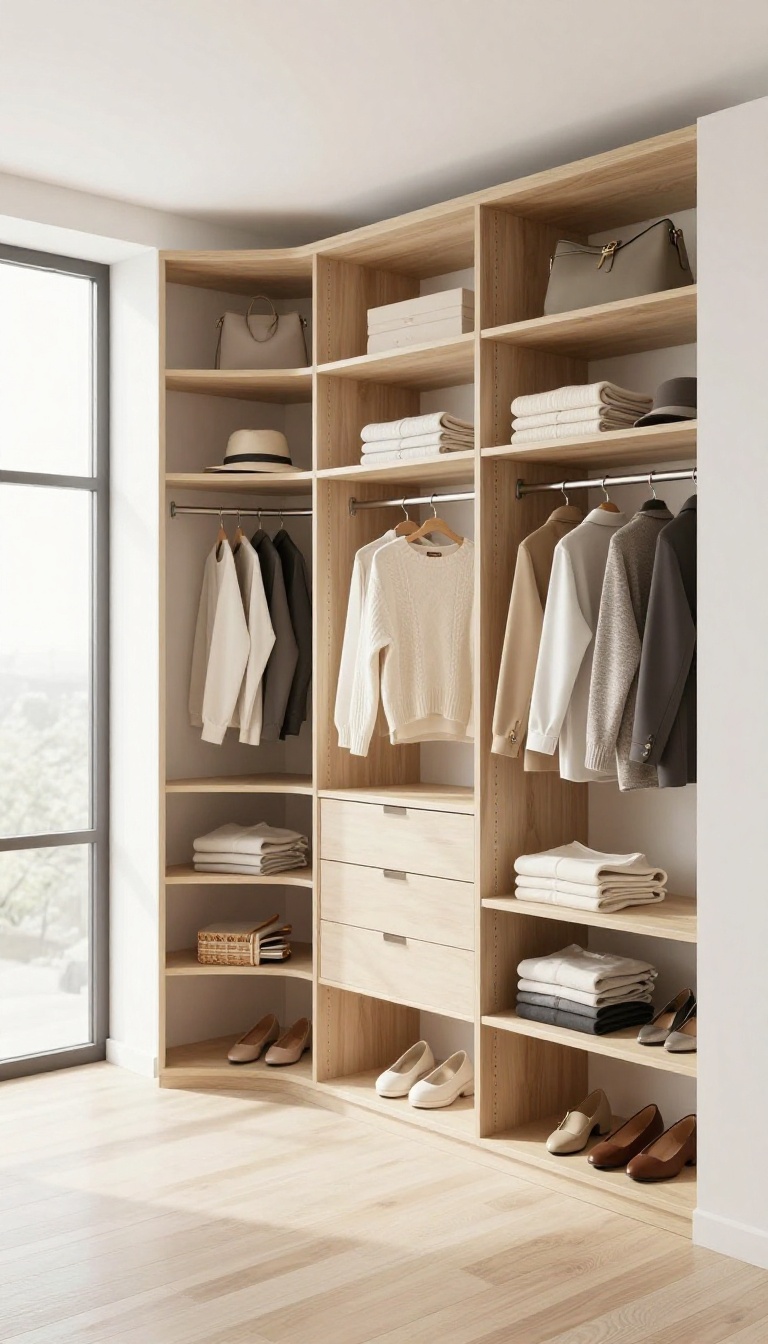
A walk-in closet with open shelving turns getting dressed into a calm, easy routine. Instead of digging through closed doors, you see everything at a glance and grab what you need. It works best when you have a spare corner, a small room, or even a wide alcove to claim as your own.
Open shelving does more than store clothes—it puts your wardrobe on display. That means you'll want to keep things tidy, but the payoff is a space that feels airy and organized. The key is mixing hanging rods, shelves, and drawers so every item has a clear home.
You don't need a huge footprint; even a 5-by-7-foot area can work if you plan the layout well. Start by measuring your space and sorting your clothes by category. Then decide how much hanging space, shelf space, and drawer space you actually need.
Most people overestimate hanging and underestimate shelves, so watch for that. Once you have a plan, you can install a system that fits your routine and your budget.
Plan Your Zones
Divide the closet into zones based on how you get dressed. Keep everyday items at eye level, and put occasional pieces up high or down low. A double-hang section for shirts and a single rod for longer items like dresses or coats saves space.
Add shelves for folded clothes, bags, and shoes. If you have the depth, a small island or a pull-out drawer unit adds valuable surface area. The goal is to make each zone obvious so you never have to think twice.
Mix Open And Closed Storage
Not everything needs to be on display. Use open shelves for items you love looking at—folded sweaters, hats, or a nice bag collection. Tuck away less attractive items like socks, underwear, or workout gear in drawers or baskets.
A few closed cabinets or bins keep clutter out of sight while still being easy to reach. This balance keeps the closet looking styled without feeling like a store display.
Keep It Tidy With Smart Habits
Open shelving stays beautiful only if you maintain it. Adopt a one-in, one-out rule to prevent overflow. Fold clothes neatly and use shelf dividers to keep stacks from toppling.
Baskets or bins corral small items and add texture. A quick five-minute tidy each week keeps the space inviting. When everything has a spot, staying organized becomes second nature.
Lighting And Finishing Touches
Good lighting makes a walk-in closet feel like a boutique. Add LED strip lights under shelves or a small pendant overhead. A full-length mirror helps you check your outfit and bounces light around.
Consider a bench or stool for putting on shoes. These small touches make the space more functional and enjoyable to use every day.
4. Floating Wardrobe Units for a Minimalist Look
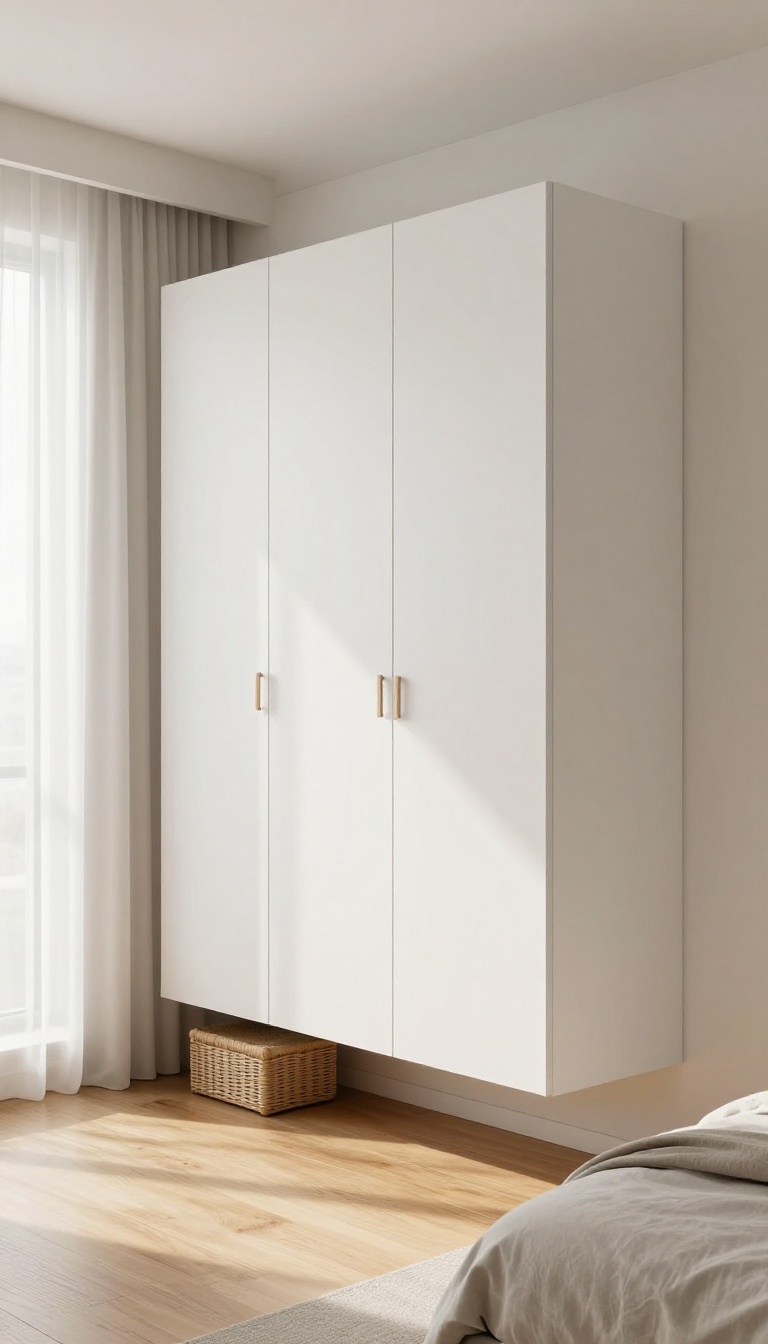
Floating wardrobes attach directly to the wall, leaving the floor completely open underneath. That gap makes the whole room feel lighter and more spacious, even if the square footage hasn't changed. They're a natural fit for modern bedrooms where clean lines and open space matter.
You get full storage without the visual weight of a traditional freestanding piece. Small rooms benefit the most. When the floor stays clear, your eye travels further, and the room instantly feels less cramped.
A floating wardrobe is exactly what it sounds like: a storage unit mounted to the wall so it hovers above the floor. No legs, no base, no bulk at the bottom. The result is a piece that feels almost architectural, like it's part of the wall rather than sitting in the room.
Most floating wardrobes use a cleat system or heavy-duty brackets that bolt into wall studs. That means they can hold real weight, not just a few folded shirts. You can hang clothes, stack bins, and still trust the unit to stay put.
The open space underneath isn't wasted, either. It's where the real magic happens for small bedrooms.
Why The Open Floor Matters
When a wardrobe touches the floor, it creates a visual block. Your eye stops there. A floating unit removes that block, so the room reads as one continuous space.
That's huge in tight bedrooms. You can slide a bench, a laundry basket, or even a small stool underneath without feeling like you're cramming things in. It also makes cleaning easier.
No dust bunnies hiding in dark corners behind heavy furniture. A quick sweep or robot vacuum handles the whole floor.
Pairing With Under-bed Storage
Floating wardrobes and under-bed drawers are a natural team. The wardrobe handles hanging clothes and daily items. The bed handles off-season gear, extra linens, and things you don't need every day.
Together, they cover almost all your storage needs without adding a single bulky piece to the room. The floor stays open, and the walls do the heavy lifting. Just make sure the under-bed storage matches the wardrobe's finish or stays neutral.
A cohesive look keeps the minimalist vibe intact.
Installation And Weight Limits
You can't mount a floating wardrobe on drywall alone. It needs to anchor into studs or use proper wall anchors rated for the load. If you're not comfortable finding studs, hire a pro.
Most ready-made floating units come with a weight limit. Check it before you load up on heavy coats or stacked bins. Exceeding it can pull the unit away from the wall.
For larger floating wardrobes, consider a French cleat system. It distributes weight evenly and makes the unit easier to level during install.
Style And Finish Choices
Matte white and light wood finishes keep the airy feel going. Glossy fronts can work too, but they show fingerprints more easily in a bedroom. Handleless push-to-open doors are popular for this style.
They keep the front completely smooth, which fits the minimalist look perfectly. If you want a bit of warmth, try a wood grain floating unit against a painted wall. The contrast adds depth without adding visual clutter.
5. Corner Wardrobes to Use Dead Space
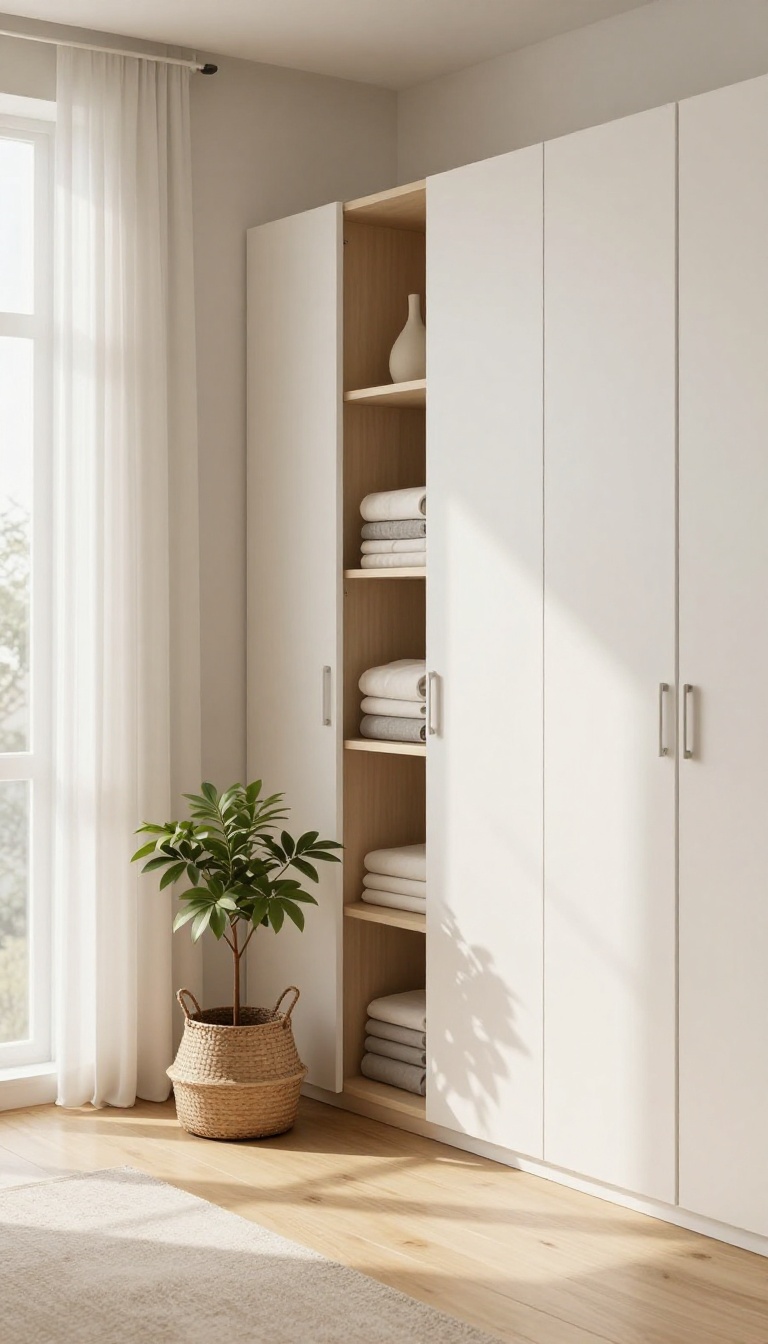
Corners are the most wasted real estate in a bedroom. You can't put a bed there, a nightstand looks awkward, and a regular wardrobe leaves a gap. A corner wardrobe solves that by turning an odd angle into serious storage.
It's one of the smartest ways to gain space without losing any wall.
The trick is matching the shape to your room. L-shaped units wrap around the corner and give you two full runs of hanging space. Triangular designs tuck into tighter angles and still hold a surprising amount.
Both options keep the rest of your walls free for art, a desk, or a reading chair.
L-shaped Vs. Triangular
L-shaped wardrobes work best when you have a clear 90-degree corner and a bit of room to spare. They give you a long side and a short side, so you can split hanging, shelves, and drawers. Triangular units are the space-savers.
They fit into sharp corners and often come with a single door or a angled front. Pick L-shaped for maximum capacity, triangular for tight spots.
Custom Fit For Odd Angles
Not every corner is a perfect right angle. Older homes often have slightly off walls, and custom-built corner wardrobes handle that without gaps. A carpenter can measure the exact angle and build doors that sit flush.
That means no dust traps and no wasted inches. It costs more than a flat-pack, but the fit looks intentional and clean.
Storage That Works Harder
Corner wardrobes can hold more than you think. Use the deep back for seasonal items or suitcases. Add a pull-out rail on the short side for shoes or ties.
Some designs include a mirrored door to make the room feel bigger. With the right internal layout, a corner unit can replace a dresser and a chest combined.
6. Wardrobes with Integrated Lighting
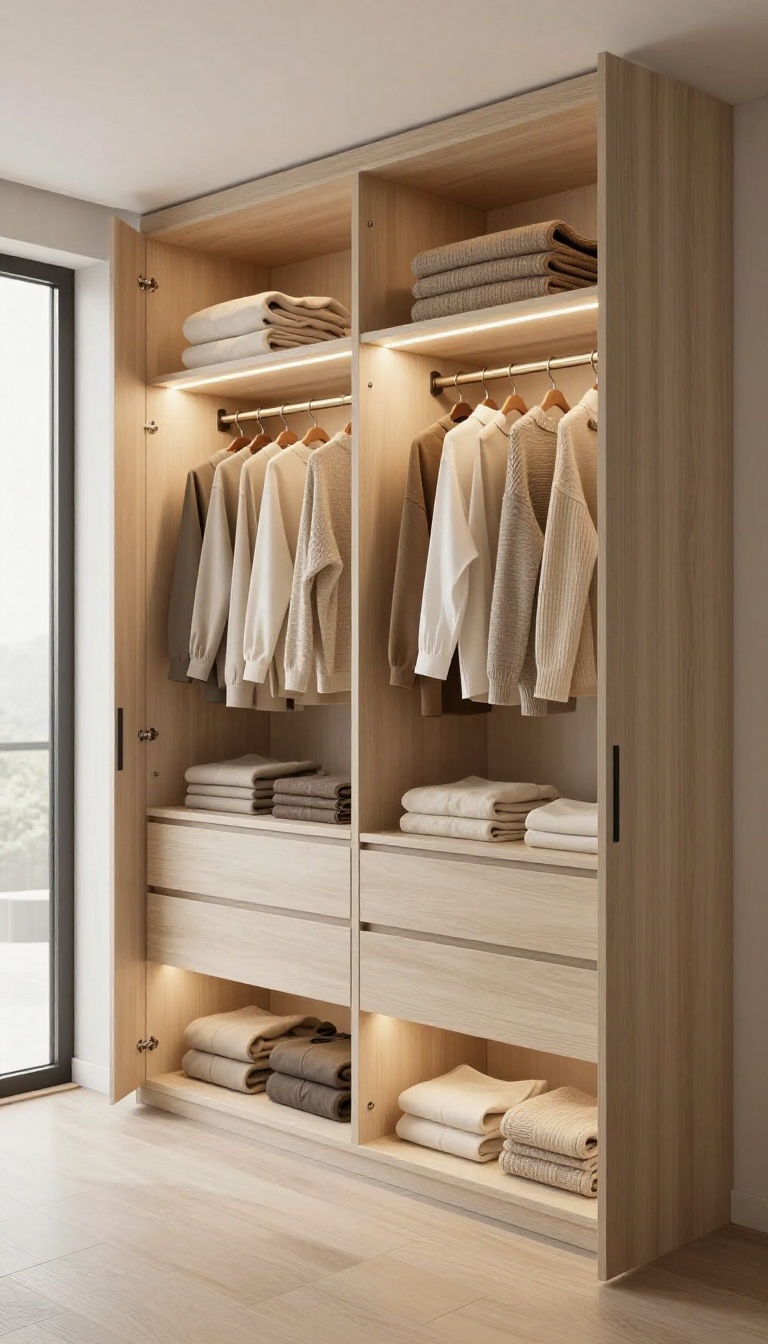
A dark wardrobe is a daily annoyance. You squint, dig around, and still grab the wrong sweater. Integrated LED lighting fixes that in one move.
It turns a basic closet into something that feels intentional and high-end. And it’s easier to add than you might think.
Motion-sensor strips are the simplest upgrade. They click on the moment you open the door and shut off when you close it. No switches to hunt for, no wasted power.
You can stick them inside a cabinet or along a shelf edge in minutes. The result is a closet that feels welcoming instead of like a black hole.
Why It Makes A Difference
Good lighting does more than help you see. It makes your wardrobe feel like a display, not a storage bin. Colors look truer, so you stop second-guessing whether that shirt is navy or black.
And a softly lit interior adds a modern touch that guests notice when they peek inside. It’s a small detail with a big payoff.
Easy Ways To Add It
You don’t need an electrician for most setups. Battery-powered LED strips with adhesive backs are the go-to for renters. For a more permanent look, hardwired strips can be installed along shelves or hanging rods.
Puck lights are another option—they’re round, bright, and easy to mount. Pick a warm white tone (around 3000K) for a cozy glow, or cool white for a crisp, modern feel.
Smart Features To Consider
Motion sensors are the standard, but you can also find lights with dimmers or timers. Some connect to smart home systems, so you can control them with your phone or voice. If you want a truly custom feel, look for strips that change color temperature.
That way you can switch from bright task lighting to a soft evening glow. It’s a small splurge that makes your routine smoother.
7. Mirrored Wardrobes for Style and Function
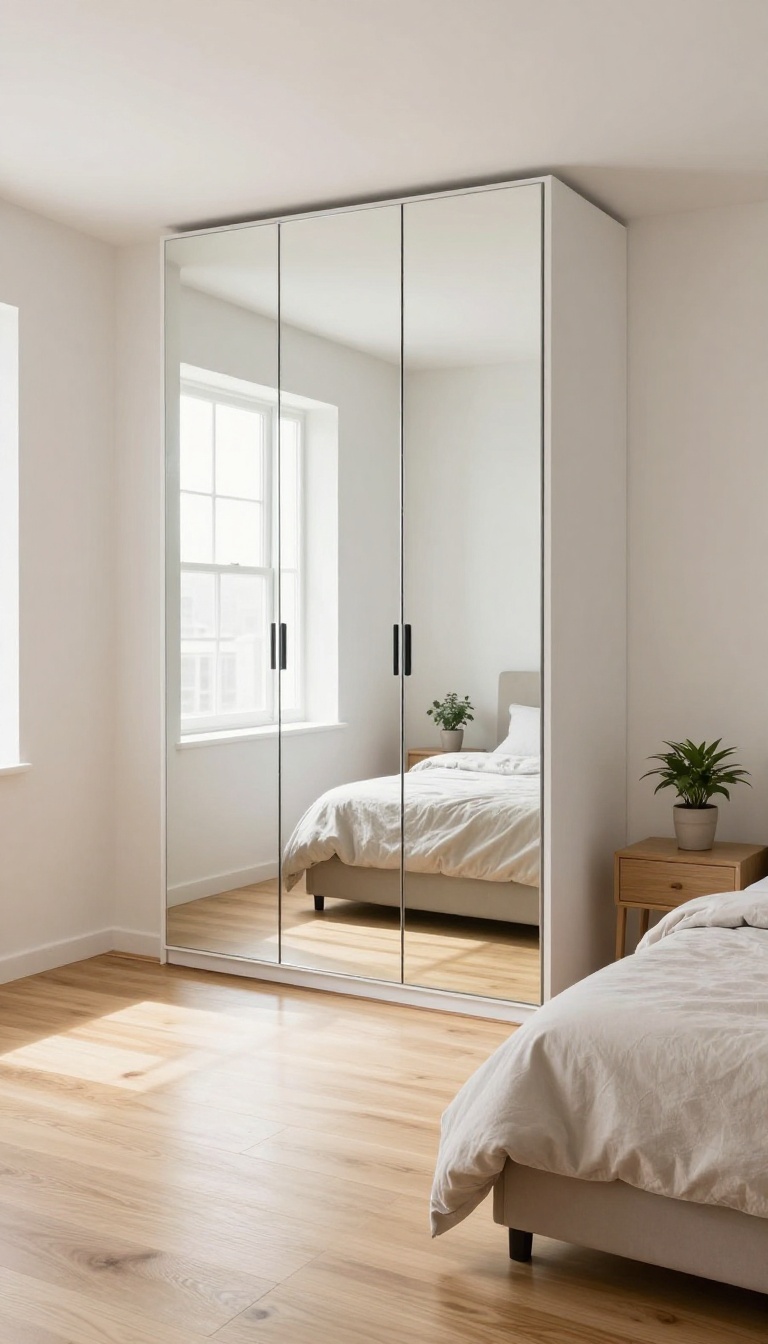
Mirrored wardrobes pull double duty in a way few pieces of furniture can. They store your clothes and give you a full-length mirror without taking up an extra inch of wall space. That alone makes them a smart pick for smaller bedrooms.
But the real magic is how they handle light. A big reflective surface bounces daylight around the room, so everything feels brighter and more open. Even a dark corner can suddenly feel less cave-like.
You can go full mirror on every door or mix mirrored panels with wood, matte, or gloss finishes. Either way, you get a wardrobe that looks intentional and works hard.
Why Mirrored Doors Work So Well
Mirrors are basically free square footage. They trick your eye into seeing more depth, which makes a tight bedroom feel less cramped. And because they reflect light instead of absorbing it, you can often get away with fewer lamps or a dimmer bulb.
Functionally, you get a full-length view every time you get dressed. No more leaning over a tiny bathroom mirror or propping a cheap full-length one against the wall. It's all built right in.
Just keep in mind that mirrors show everything—including fingerprints and smudges. A quick wipe with a microfiber cloth once a week keeps them looking sharp.
Full Mirror Vs. Mixed Panels
Full-mirror doors make a bold, clean statement. They work best in modern or minimalist rooms where you want the wardrobe to almost disappear into the wall. If your bedroom gets good natural light, the effect is stunning.
Mixed panels are a little more forgiving. You might do a mirrored center panel with wood frames on either side, or alternate mirror and matte doors. This breaks up the reflection so it feels less like a gym wall and more like a design choice.
Wood tones like oak or walnut add warmth, while matte white or gray keeps things crisp. Pick based on the mood you want—cozy or cool.
Placement Tips For Best Results
Put your mirrored wardrobe where it can catch light from a window. That way it reflects the view and brightens the whole room. Avoid placing it directly opposite a cluttered area, because the mirror will double the mess.
If your bed faces the wardrobe, consider a mixed-panel design instead of full mirror. Some people find a big reflection facing the bed distracting at night. A few mirrored sections still give you the light boost without the full-on mirror wall.
Finally, make sure the doors can open fully. Sliding mirrored doors are great for tight spots, while hinged doors need a clear swing zone.
8. Modular Wardrobes That Grow with You
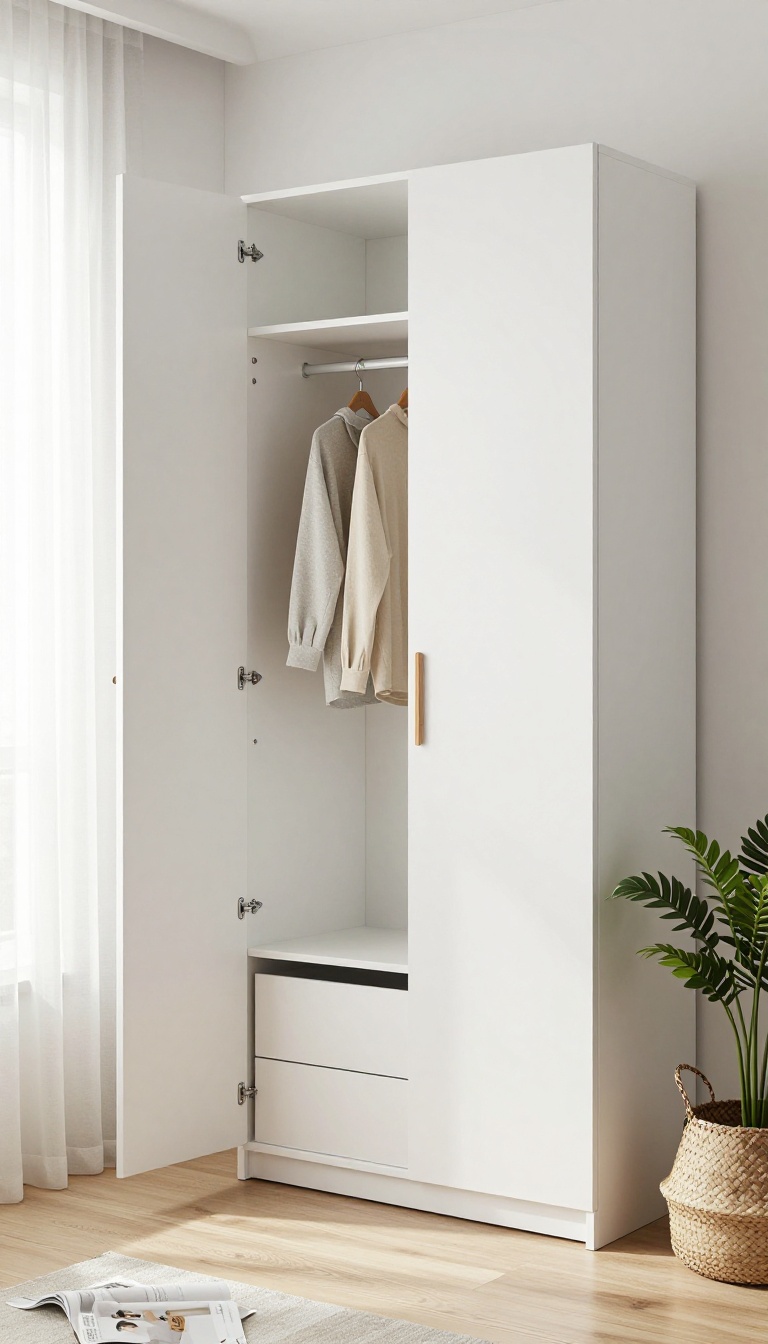
Modular wardrobes are built from separate pieces you can rearrange, stack, or add to whenever your storage needs change. You start with a basic unit and expand it over time, so you never have to replace the whole thing. It's a budget-friendly approach that adapts to your life instead of forcing you to adapt to it.
Most people don't buy a wardrobe once and keep it forever. Life shifts—you move, downsize, take up a new hobby, or suddenly need space for a partner's clothes. Modular systems handle that reality better than fixed furniture because they're designed to be reconfigured.
You can swap a shelf for a drawer, add a hanging section, or stack another unit on top without hiring a carpenter. The result is sleek storage that stays useful year after year.
Start Small, Add Later
A single modular unit can handle the basics: a hanging rod, a few shelves, and a drawer or two. That's enough for one person's everyday wardrobe. When you need more room, you buy another unit that matches the first one and connect them side by side.
No special tools, no custom measurements—just click or bolt them together. This keeps your initial cost low and lets you spread the investment over months or years.
Rearrange Without Replacing
The real magic of modular wardrobes is that you can change the inside layout without buying a new frame. Need more shoe storage? Swap a shelf for a tilted rack.
Hanging space feeling tight? Move a drawer unit to the bottom and add a second rod up top. Because the pieces are standardized, you can shuffle them around as often as you like.
That flexibility means your wardrobe stays in sync with your actual habits, not the habits you had three years ago.
Mix And Match Finishes
Many modular lines offer different door styles, colors, and finishes that all fit the same frame. You can start with plain white doors and later add a wood-grain section for contrast. Or keep everything uniform and let the hardware do the talking.
This mix-and-match approach lets you update the look without tossing out the entire system. It's a smart way to refresh a bedroom on a small budget.
9. Wardrobes with Hidden Compartments
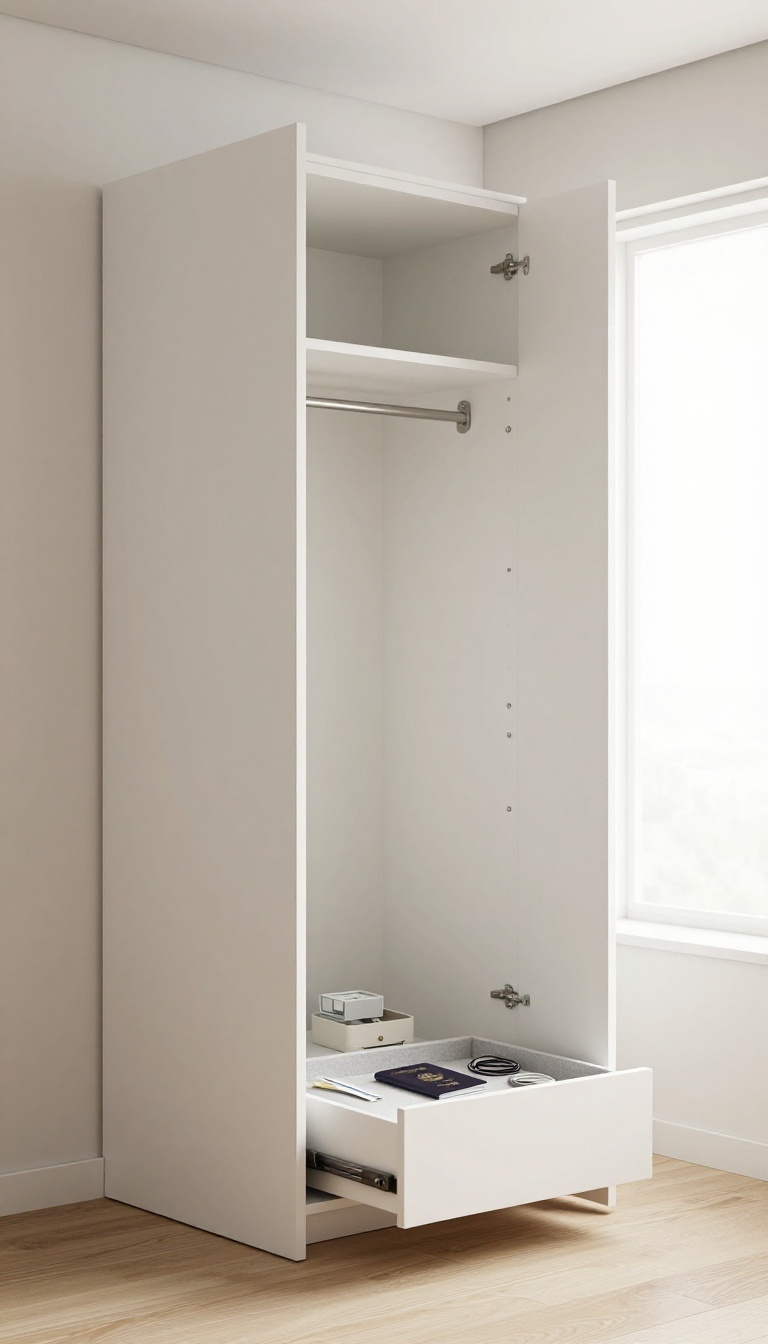
Not everything in your bedroom needs to be on display. Hidden compartments let you stash valuables, documents, or everyday clutter without sacrificing the clean lines of a modern wardrobe. These compartments can be built into drawers, tucked behind sliding panels, or slipped under shelves.
The result is a wardrobe that looks minimal on the surface but works harder than you'd expect. Adding a hidden section doesn't mean a major remodel. Plenty of ready-made and semi-custom options already include them, and simple add-ons can do the trick too.
A wardrobe with hidden storage solves a problem most people don't talk about: where to put the stuff you don't want guests to see. Passports, jewelry, spare cash, tax papers, even that pile of chargers and cables that never seems to have a home. When these items live in plain sight, your bedroom feels busier than it needs to.
Hidden compartments give them a place to disappear into, so the rest of your wardrobe can stay organized and visually calm. The best part? You don't need a secret agent-style setup to make it work.
A few smart design choices will do it.
Where Hidden Storage Usually Goes
Most hidden compartments live in one of three spots: inside a drawer, behind a false panel, or under a shelf. Drawer inserts are the easiest to add. You can buy felt-lined trays or lockable boxes that drop right in.
False panels work well on the side or back of a wardrobe, especially if you have a deep unit. Under-shelf compartments are great for flat items like documents or jewelry, and they stay out of the way until you need them. Pick the spot that matches what you're storing and how often you need to reach it.
Built-in Vs. Add-on Options
If you're buying a new wardrobe, ask about built-in hidden compartments. Many modern units offer them as an upgrade, and they blend seamlessly with the design. If you already have a wardrobe, add-on solutions are your friend.
Lockable drawer inserts, magnetic panels, and under-shelf boxes are affordable and easy to install. They won't fool a determined snoop, but they'll keep everyday clutter out of sight and add a basic layer of privacy. For valuables, look for a compartment with a key or combination lock.
Keeping It Practical
A hidden compartment only works if you actually use it. Don't make it so hidden that you forget what's inside. Label the compartment lightly or keep a mental note of what goes where.
Also, think about access. If you have to move three boxes to reach it, you'll stop using it. Put the compartment where you can get to it without a struggle.
And if you're storing documents, consider a fire-resistant pouch for extra peace of mind. Small touches like that make the feature genuinely useful, not just a gimmick.
10. Open Wardrobe Systems for Easy Access
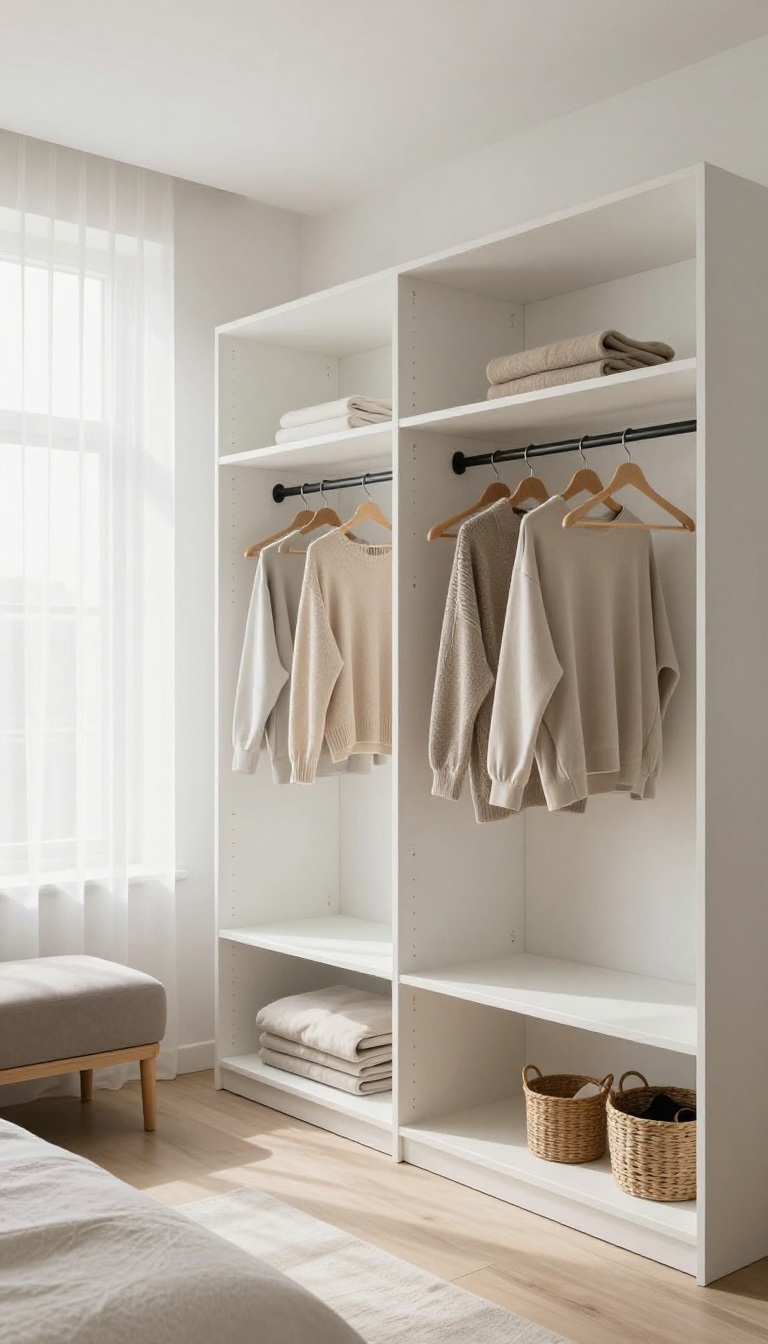
Open wardrobes ditch the doors and put everything on display. You get instant access to your clothes, and the room feels bigger because there's no bulky cabinet blocking the view. This setup works best in modern, industrial, or minimalist bedrooms where clean lines and a relaxed vibe matter more than hiding every sock.
Open systems rely on a mix of racks, shelves, and bins to keep things tidy. Since everything is visible, you're naturally motivated to stay organized. It's a practical choice for anyone who wants a wardrobe that feels more like a boutique display than a closed-off box.
Why Open Storage Works
When you can see your clothes, you actually wear them. No more forgetting about that sweater at the back of the pile. Open wardrobes also make small bedrooms feel less cramped because they don't add visual weight.
Plus, grabbing an outfit is faster when there's no door to slide or swing.
Building Your Open Setup
Start with a sturdy hanging rod or two at different heights. Add shelves for folded items and baskets for smaller things like socks or accessories. Use matching hangers and bins to keep the look cohesive.
A simple bench or stool underneath gives you a spot to sit while getting ready.
Keeping It Tidy
The key to open storage is a little daily maintenance. Take a minute each night to hang things back up and straighten shelves. A quick weekly once-over prevents clutter from taking over.
If you struggle with mess, stick to a capsule wardrobe so every piece has a clear place.
FAQ
What is the most space-efficient wardrobe design for a small bedroom?
Sliding door wardrobes or floating units are usually best for small bedrooms. They save floor space and don't require clearance for swinging doors. Corner wardrobes also help you use awkward angles that would otherwise go to waste.
How can I make my wardrobe look sleek without spending a lot?
Choose flush doors, handleless designs, or a consistent color that matches your walls. You can also add simple LED strip lighting inside. These small changes make a big difference without a full custom build.
Are built-in wardrobes worth the investment?
Yes, if you plan to stay in your home for a while. Built-ins add property value, maximize storage, and give a custom look. They cost more upfront but save space and look better than freestanding units.
What should I look for in a modern wardrobe?
Focus on clean lines, quality hardware, and smart interior organization. Adjustable shelves, soft-close drawers, and integrated lighting are key features. Also consider the finish—matte or wood tones tend to look more modern.
Can I install a walk-in closet in a small room?
It's possible if you have at least 5 by 5 feet of space. You can also create a 'walk-in feel' with an open wardrobe system or a reach-in closet with good lighting and organization. Every inch counts, so plan carefully.
Conclusion
You do not need to rebuild your whole bedroom to get that sleek, clutter-free look. Pick one idea that solves your biggest daily annoyance, whether that is a closet that overflows or a floor that never stays clear. Try it for a week and see how it actually feels.
Then layer in the next piece, like better lighting or a slimmer door. Small, steady upgrades tend to stick better than a rushed overhaul, and your wardrobe will keep earning its keep long after the novelty wears off.