
10 Small Shower Organization Ideas for a Neater Daily Setup
A cluttered shower makes even a quick rinse feel like a chore. Bottles crowd the floor, razors disappear behind shampoo, and you spend half your morning shuffling things around just to find the soap. None of that requires a renovation to fix.
Small tweaks handle most of the mess. A tension rod, a corner shelf, or a caddy with real shelves can double your storage without touching the tile. Renters get options too, since many of these ideas skip drilling altogether.
The ten setups below range from five-minute fixes to weekend projects. Pick the ones that match your space, and your daily routine gets noticeably calmer.
1. Add a Tension Rod for Instant Shelf Space
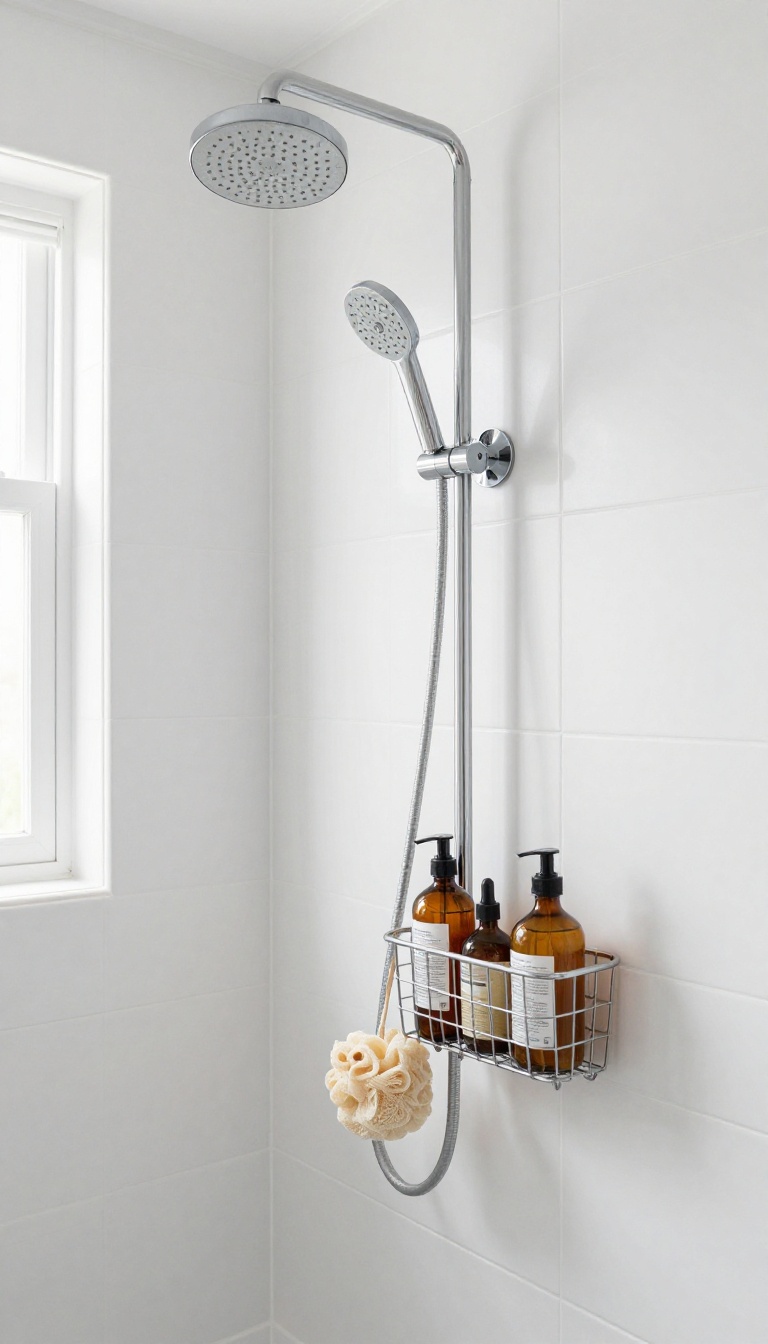
A tension rod is one of the simplest upgrades you can make in a shower. It wedges between two walls without screws, so you get a sturdy spot for lightweight items in minutes. No tools, no damage, and no landlord headaches.
Most people think of tension rods for curtains, but they work just as well in a wet environment. As long as the walls are smooth and the rod is rust-resistant, it holds up fine. You can place it high for overflow or low for everyday reach.
A tension rod gives you a horizontal bar that turns empty air into usable storage. It's perfect for hanging loofahs, mesh sponges, or travel-sized bottles with hooks. You can also rest a small caddy or basket on top if the rod is thick enough.
The key is choosing the right rod and placing it where it won't get knocked down. Rubber ends grip better than plastic, and stainless steel or coated aluminum resists rust. Once it's up, you'll wonder why you didn't do it sooner.
Pick The Right Rod
Look for a tension rod labeled for bathroom use. It should have rubber or silicone pads on both ends to grip tile or glass without slipping. Avoid cheap plastic rods that bow under weight.
Diameter matters too. A thicker rod (1 inch or more) holds more weight and feels sturdier. If you only hang light items, a standard 0.
5-inch rod is fine. But for a small basket, go thicker.
Where To Place It
Mount the rod high enough that it doesn't hit your head or interfere with the showerhead. A good spot is just below the showerhead or on the opposite wall. Make sure both ends press firmly against a flat surface.
Avoid placing it where water pools or where you'll constantly bump it. If your shower has a niche, you might not need a rod at all. But for blank walls, it's a game-changer.
What To Hang On It
Use S-hooks to hang loofahs, back brushes, or a small bag for razor and soap. You can also hang a mesh shower caddy if it's lightweight. Just don't overload it with heavy bottles.
Travel bottles with hooks are ideal because they're small and won't weigh down the rod. If you want to store full-size bottles, use a separate corner shelf instead.
2. Use a Hanging Shower Caddy with Adjustable Shelves
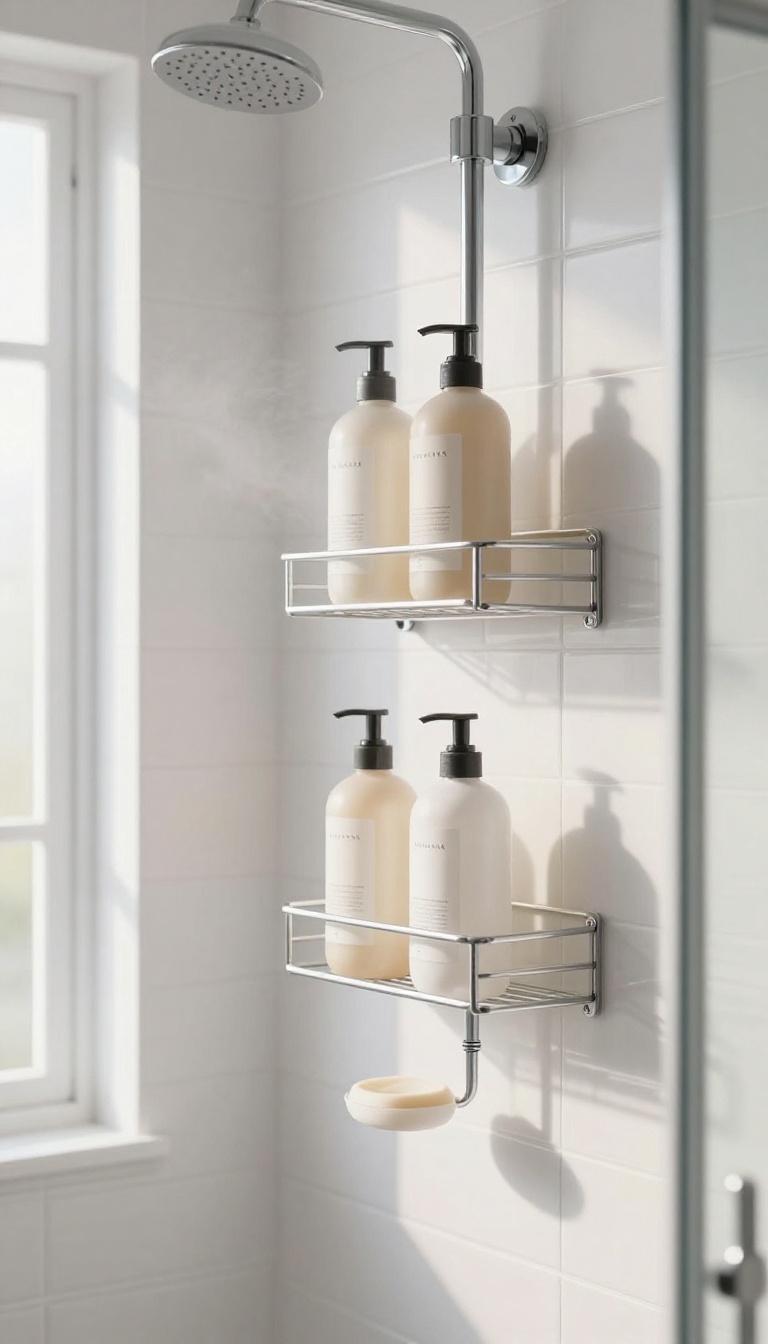
A hanging caddy turns the showerhead into a storage anchor, so you stop bending down for bottles. It keeps everything at arm's reach and clears the built-in ledges for the stuff you actually want to display. The best versions let you move the shelves up or down, which matters more than most people realize.
Most caddies come with two or three tiers, and the adjustable ones let you set the spacing yourself. That means a tall pump bottle can sit on the bottom shelf without knocking into the one above it. You tighten the shelves once, and they stay put through daily use.
Look for coated wire or rust-resistant metal, since bare steel starts flaking within a few months in a wet environment. A caddy with a built-in razor hook and a small soap dish saves you from adding extra accessories later.
Shelf Spacing That Fits Real Bottles
Measure your tallest bottle before you buy. Standard caddies often cap out around eight inches between shelves, which is short for family-size shampoo. Adjustable tiers solve this because you can drop the top shelf low for a few small items and leave a tall gap below.
If you share the shower, set one shelf for your products and one for your partner's, so nothing gets buried.
Hang It Without Damaging The Showerhead
The hook should rest over the pipe, not the spray head itself. A hook that sits on the head can shift every time you adjust the angle. Look for a caddy with a rubber or silicone grip on the back, which keeps it from sliding down the pipe.
If your showerhead is oversized or handheld, a tension-pole caddy might fit better than a hang-over model.
Keep It From Getting Gross
Water pools on flat shelves, so pick a design with drainage slots or a wire grid. Once a week, rinse the whole caddy under warm water and wipe the shelves with a diluted vinegar spray. That takes about a minute and stops soap scum from turning into a crusty layer.
If you see rust spots starting, replace the caddy instead of scrubbing them, since the coating is already compromised.
3. Install Corner Shelves to Use Dead Space
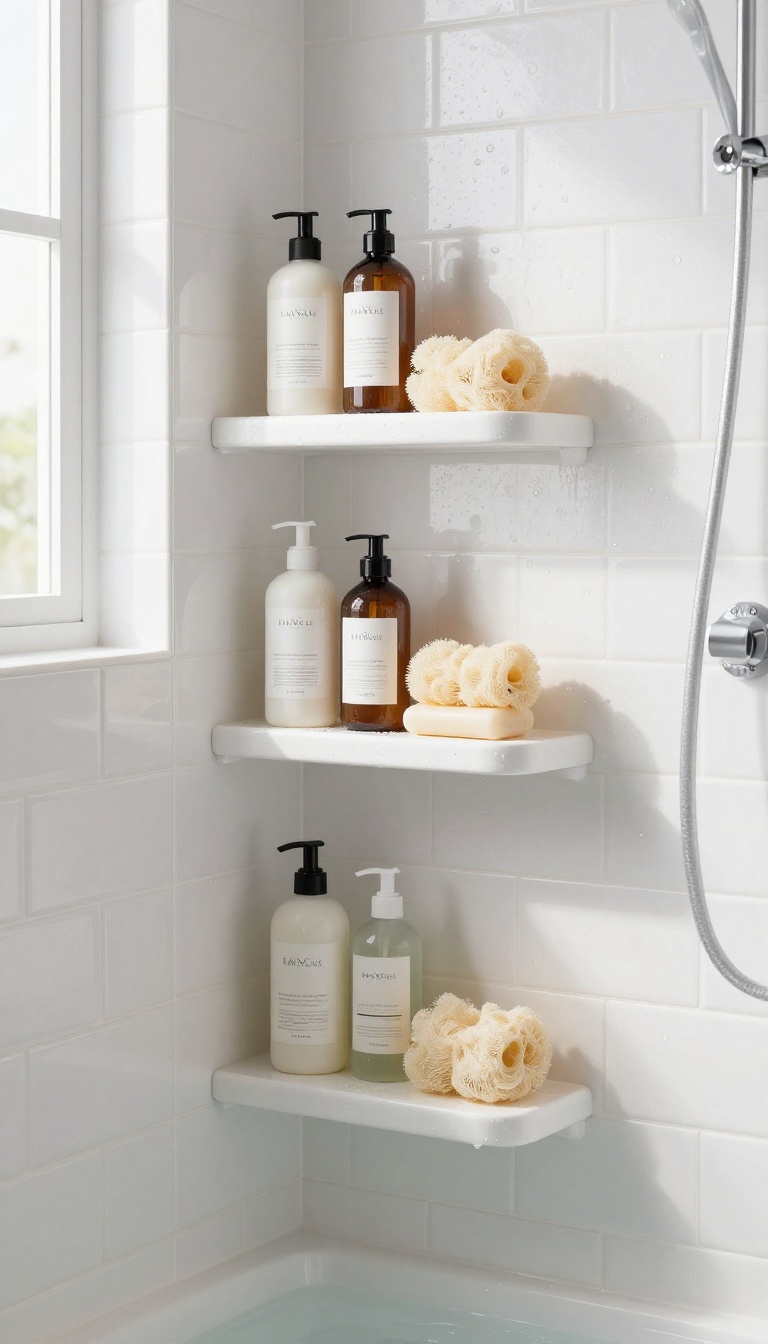
Those 90-degree corners in your shower are basically wasted real estate. They collect water spots and stray hairs while your shampoo bottles fight for space on the floor. Corner shelves change that by turning awkward angles into handy storage that stays out of your way.
You don't need a big remodel to make this work. A few well-placed shelves can hold everything you reach for daily, and they keep the floor clear so you're not tripping over bottles. The best part?
Most options install in minutes with tools you already own.
Pick The Right Shelf Type
Corner shelves come in three main styles: tension pole, adhesive, and drill-mounted. Tension pole shelves wedge between floor and ceiling, so they're perfect for renters. Adhesive shelves stick to tile and hold surprisingly well if you clean the surface first.
Drill-mounted shelves are the sturdiest, but save those for when you own the place or don't mind patching later.
Place Them For Easy Reach
Put your most-used items on the middle shelf, around chest height. That's where your hand naturally falls when you're rinsing. Reserve the top shelf for backups or things you use less often, like a deep conditioner or a face scrub.
The bottom shelf can hold a bar of soap or a loofah, but keep it high enough that water doesn't pool around it.
Keep It Clean And Stable
Corner shelves collect soap scum faster than you'd think. Wipe them down once a week with a vinegar spray to keep them from getting gross. If you use adhesive shelves, check the stick every few months, especially in humid bathrooms.
A loose shelf can send bottles crashing, so give each one a gentle tug now and then to make sure it's still secure.
4. Try a Suction-Cup Basket for Razors and Small Items
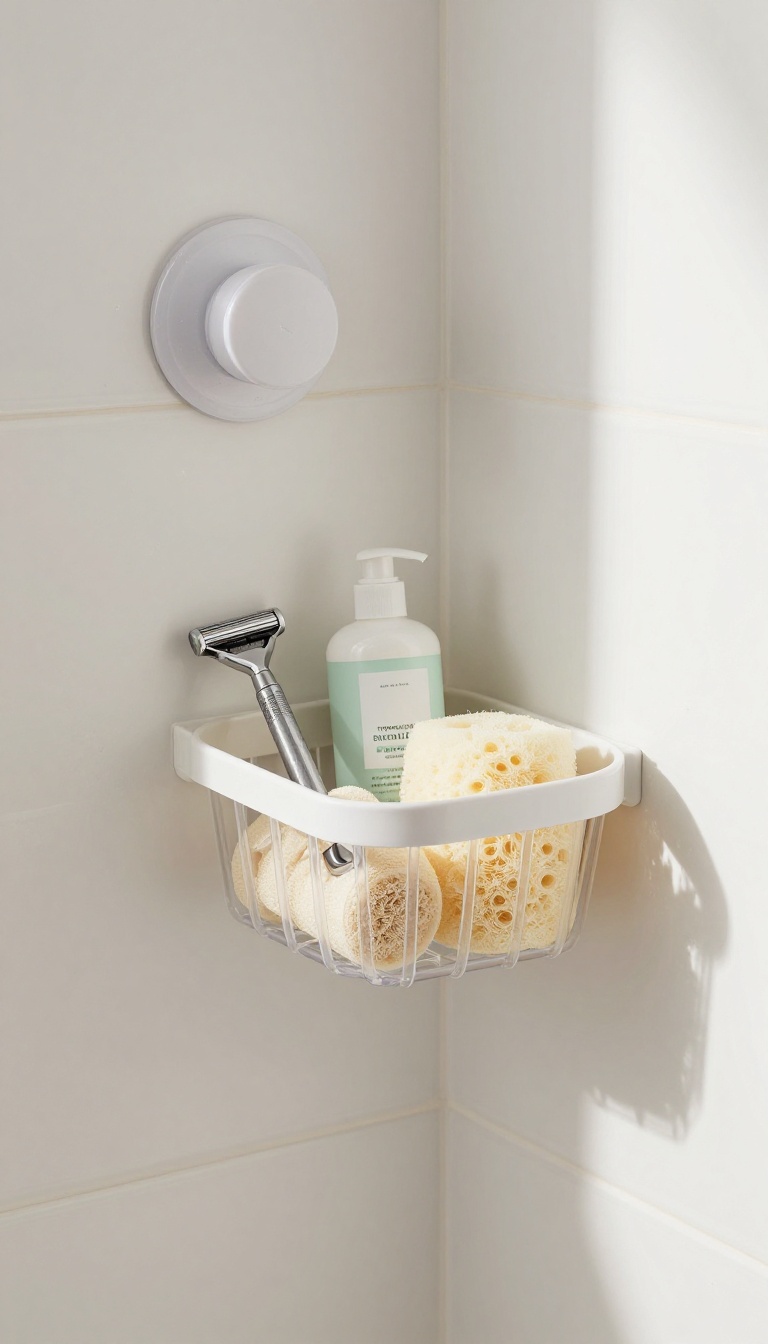
Suction-cup baskets give you a spot for the little stuff that usually ends up on the shower floor. They stick right to smooth tile, so you can put them at whatever height works for you. Razors, sponges, and travel-size bottles stay within reach instead of getting lost behind bigger products.
The best part is that you don't need tools or a landlord's permission. Just clean the tile, press the suction cups firmly, and give them a few hours to set before loading the basket. Once it's up, you've got a dedicated home for items that would otherwise clutter your shelves or sit in a puddle.
Where Suction-cup Baskets Work Best
These baskets hold tightest on smooth, non-porous surfaces like glazed ceramic, porcelain, and glass. Textured tile, grout lines, and natural stone make it harder for the cups to keep a seal. If your shower has a smooth panel or a glass door, that's the ideal spot.
For rougher walls, look for baskets that combine suction cups with a light adhesive patch for extra grip.
What To Put In Yours
Razors are the obvious win, since they dry better when they're not sitting in water. But you can also stash a loofah, a nail brush, a small bottle of shaving cream, or even a pair of shower shoes. Keep it light—suction cups hold better when you don't overload them.
A few small items per basket is the sweet spot.
Keeping It Stuck
Suction cups lose their grip when soap scum builds up underneath. Every couple of weeks, peel the basket off, rinse the cups, and wipe the tile with a damp cloth. Press it back on and you're good to go.
If a cup keeps popping off, try warming it with a hair dryer for a few seconds before pressing—it softens the rubber and helps it seal.
5. Mount a Magnetic Strip for Metal Grooming Tools
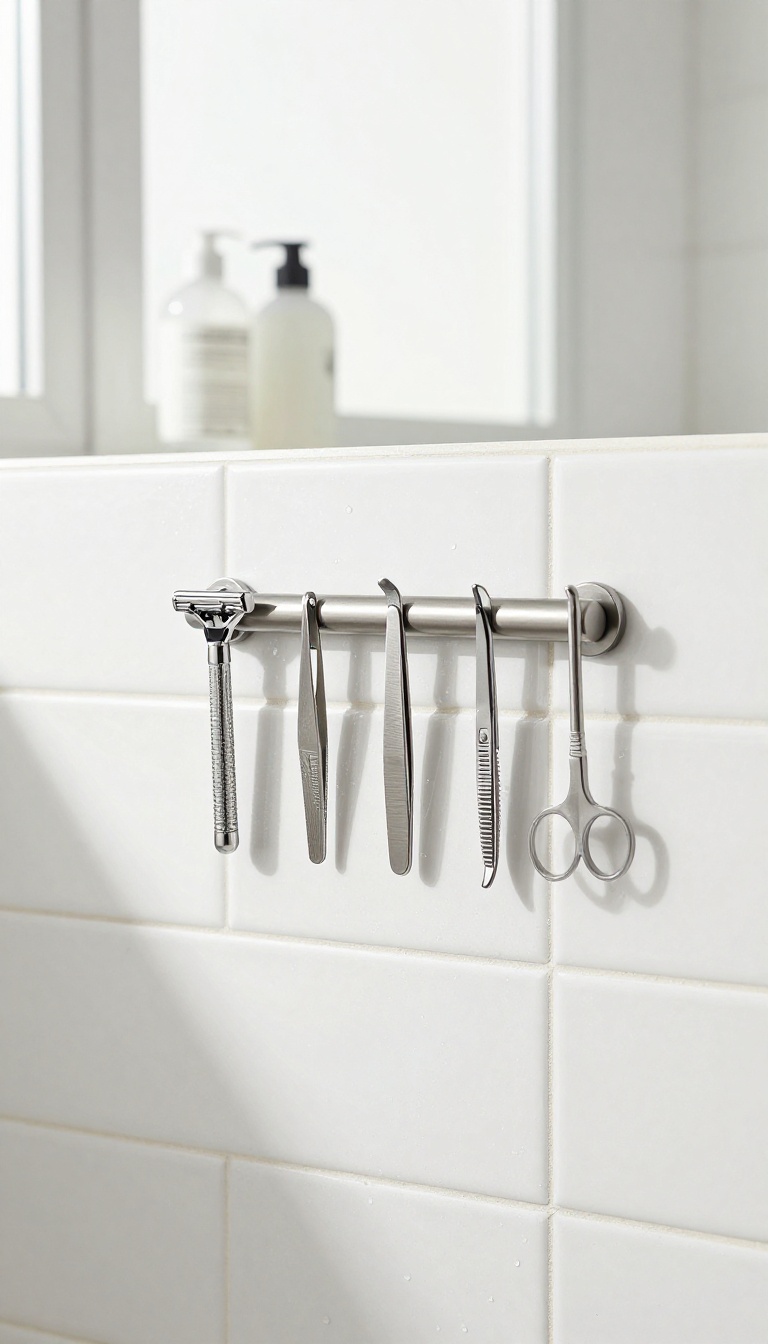
Metal grooming tools tend to vanish in a shower. Tweezers, nail clippers, and razors get buried under bottles or left on a ledge where they collect water and rust. A magnetic strip gives those little metal items a dedicated spot on the wall, so they stay dry, visible, and ready to grab.
The setup works because most grooming tools contain steel or iron. A strong magnetic strip holds them in place without clips, hooks, or trays. You just stick the strip to the tile, press your tools against it, and they stay put until you need them.
It also clears the clutter that builds up on shelves and corners. Instead of a pile of small metal objects sliding around, everything hangs in one neat row. That makes your shower feel more organized and your morning routine a little smoother.
Pick The Right Strip And Mounting Method
Not all magnetic strips are shower-friendly. Look for one with a waterproof or rust-resistant coating, since plain steel can corrode in a damp environment. A strip rated for bathrooms or kitchens usually holds up well.
Mounting depends on your tile and whether you rent. Adhesive strips work on smooth, clean tile and come off with a little heat and dental floss. If you can drill, small screws and wall anchors give you a more permanent hold.
Either way, press the strip firmly and let it set for a few hours before adding tools.
What Sticks And What Doesn't
Stainless steel razors, tweezers, nail clippers, and small scissors usually stick without a problem. Some tools have plastic handles or aluminum bodies that magnets won't grab. Test each item before you commit to a spot.
If a tool won't stick, don't force it. Keep those pieces in a small caddy or on a shelf. The magnetic strip works best when you only put truly magnetic items on it, so nothing falls off mid-shower.
Placement Tips For Daily Use
Mount the strip at eye level or slightly below, where you can reach it without bending or stretching. Keep it away from the direct spray of the showerhead so tools stay drier and last longer. Leave a little space between items so you can grab one without knocking others off.
If you share the shower, give each person a small section of the strip. That way everyone knows where their tools live and nothing gets mixed up.
Keeping It Clean And Rust-free
Even with a good strip, metal tools need a quick wipe now and then. After you finish showering, give your razor a shake and pat it dry with a towel. That one habit prevents most rust spots.
Once a week, take everything off the strip and wipe it down with a damp cloth. Check for any signs of rust or loose adhesive. If the strip starts to slide, remount it before it falls and takes your tools with it.
6. Use a Shower Curtain with Built-In Pockets
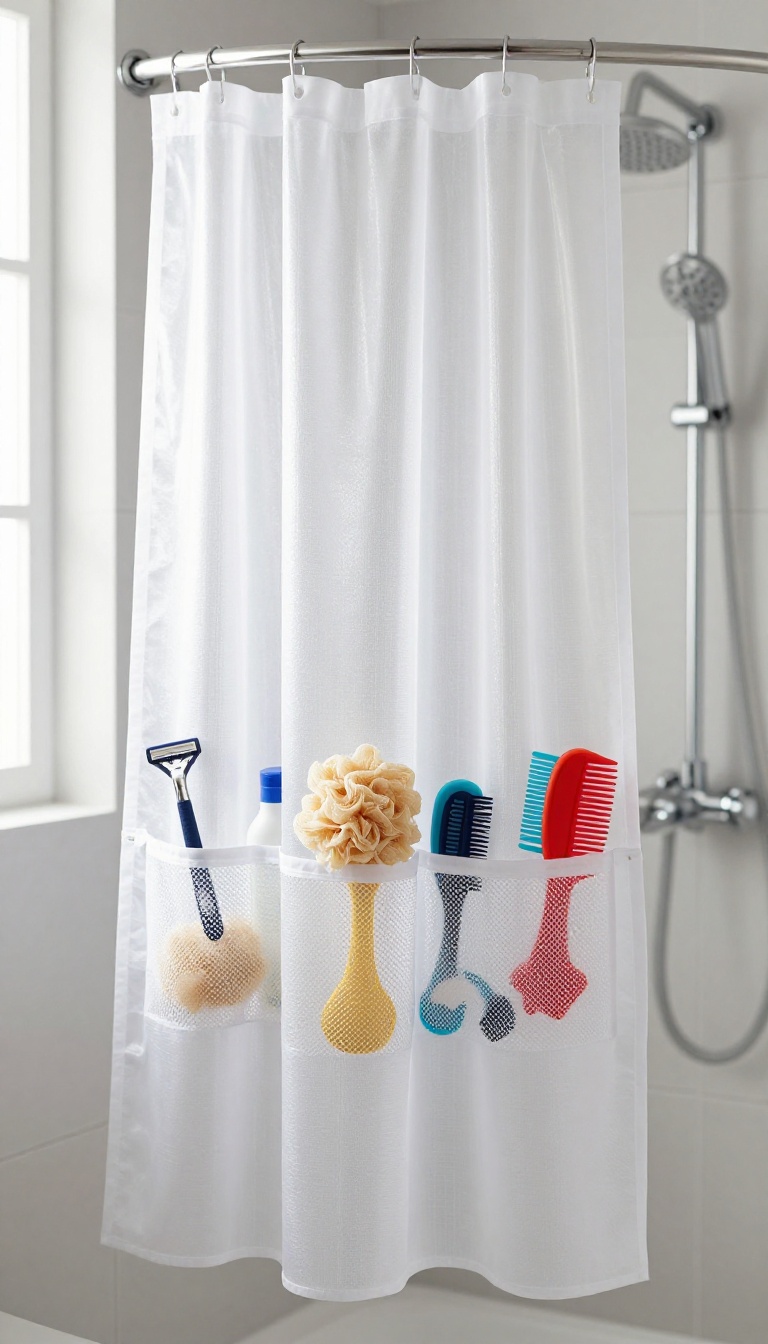
Shower curtains already hang in your shower, so why not let one do double duty? Curtains with mesh pockets sewn into the liner or fabric give you instant storage without adding a single hook, rod, or shelf. It's one of those upgrades that feels obvious once you see it.
The pockets are best for lightweight stuff: razors, loofahs, travel bottles, combs, and kids' bath toys. Heavier bottles can drag the curtain down or stretch the mesh, so keep those on a shelf or caddy. Used right, this setup keeps daily items within arm's reach and off the floor.
What Fits And What Doesn't
Mesh pockets handle small, light items best. Think a razor, a washcloth, a bar of soap in a holder, or a bottle of face wash under eight ounces. Kids' toys and bath crayons also work well here because they're light and easy to grab.
Skip anything heavy or bulky. Family-size shampoo, conditioner, and body wash will pull the curtain off balance and stretch the pockets over time. If you need those within reach, pair this curtain with a corner shelf or a hanging caddy and split the load.
Picking The Right Curtain
Look for a curtain with pockets made from mesh or quick-dry fabric, since solid plastic pockets trap water and get slimy fast. A clear or frosted liner-style curtain with pockets works well because you can still see through it and it wipes clean. Check the pocket count and placement before you buy.
Pockets near the top stay dry and hold items you use less often, while lower pockets are easier to reach mid-shower. Also confirm the curtain fits your rod length, since a too-long curtain will bunch up and hide the pockets.
Keeping It Clean And Mold-free
Pockets collect soap residue and moisture, so give them a quick rinse during your regular curtain cleaning. A mix of warm water and a little vinegar handles most buildup, and a soft brush gets into the mesh corners. Let the curtain hang fully open after each shower so air moves through the pockets.
If your bathroom stays damp, run the fan a few extra minutes. Replacing a pocket curtain every year or so is normal, and it's cheaper than adding hardware.
7. Add a Shower Door Hook for a Squeegee and Towel
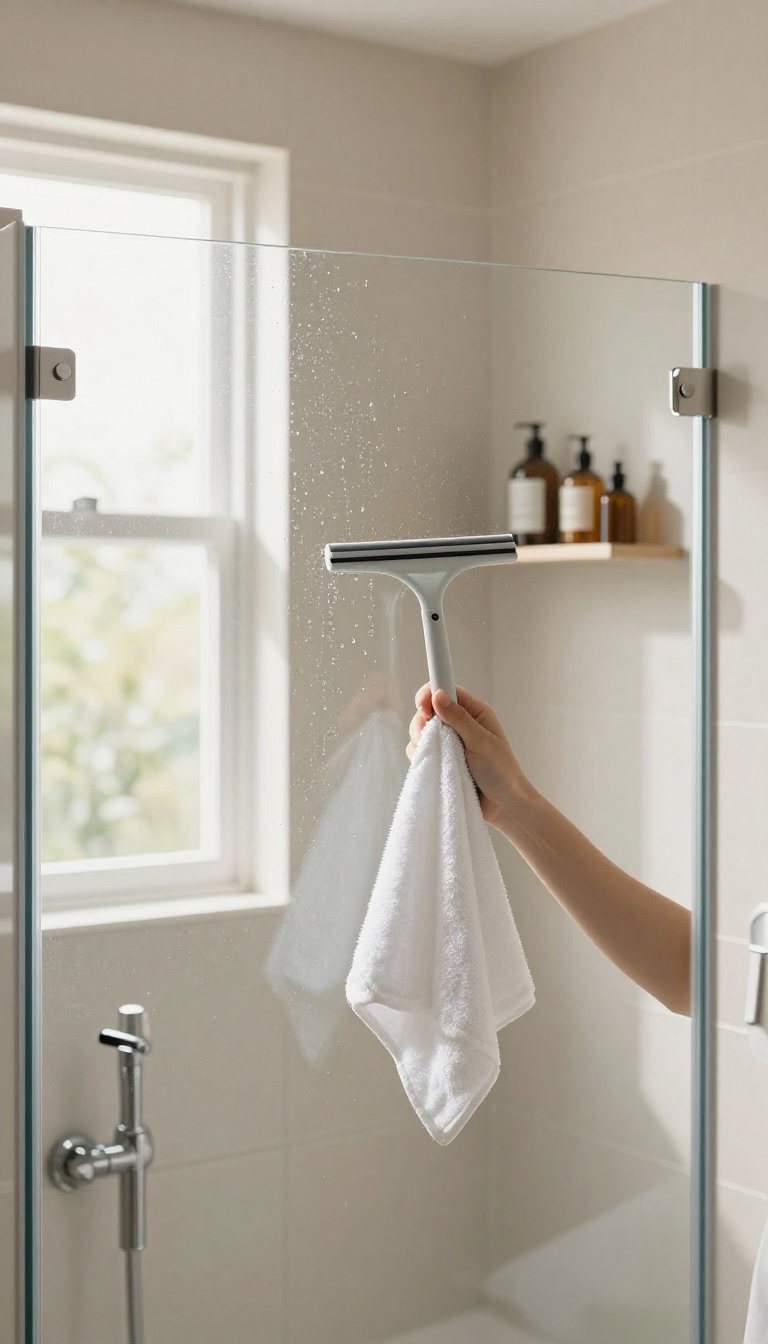
Glass shower doors look great until they're covered in water spots and soap scum. A squeegee fixes that, but only if you actually use it. When it's buried under bottles or hiding on a shelf, you won't.
An over-the-door hook solves the problem by putting the squeegee right where you need it: on the door itself.
These hooks are simple, cheap, and take about ten seconds to install. They slip over the top edge of the glass or frame, no tools or drilling required. That makes them perfect for renters or anyone who doesn't want to put holes in their tile.
You can hang a squeegee, a washcloth, or a small towel so everything dries without sitting in a puddle. The door stays clear, and your daily wipe-down becomes automatic.
Why The Door Is The Best Spot
The squeegee needs to be within arm's reach the moment you step out. If it's across the bathroom or on a shelf behind you, you'll skip it. Hanging it on the door means you grab it, wipe the glass, and hang it back in one motion.
No extra steps, no excuses. A small towel on the same hook lets you dry your hands or give the door a final buff. Everything stays contained on the door, so the rest of your shower feels less crowded.
What To Hang (and What To Skip)
A lightweight squeegee is ideal. Look for one with a handle that fits the hook without wobbling. A washcloth or hand towel works great for quick drying, but skip heavy bath towels that could pull the hook down.
If your hook has multiple prongs, you can hang both a squeegee and a small towel. Just don't overload it. The goal is easy access, not maximum capacity.
Picking The Right Hook For Your Door
Measure the thickness of your door or frame before you buy. Most over-the-door hooks fit standard glass doors up to about half an inch thick. If your door is frameless, look for hooks with rubber padding to protect the glass and prevent slipping.
For framed doors, a simple metal hook works fine. Some hooks come with adhesive backing, but the over-the-top style is more secure and won't leave residue. Stainless steel or coated metal resists rust better in a steamy bathroom.
A Two-second Habit That Keeps Glass Clear
The real win is making the squeegee part of your routine. After you turn off the water, grab the squeegee and give the door three quick passes: top to bottom, left to right, and along the bottom edge. It takes seconds, but it stops hard water spots before they set.
Hang the squeegee back on the hook, and you're done. No scrubbing later, no cloudy glass. The hook just makes that habit easier to keep.
8. Decant Products into Matching Containers
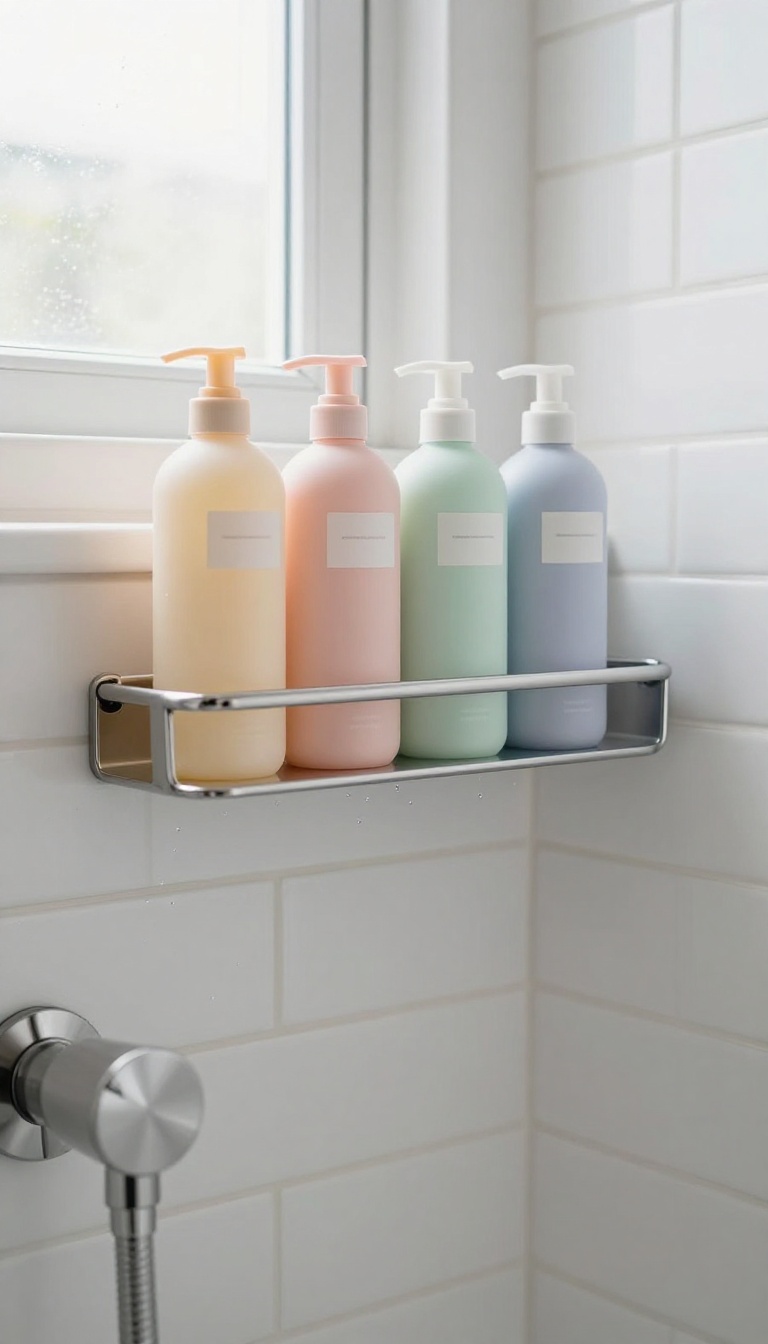
A row of mismatched shampoo and body wash bottles is one of the biggest sources of visual clutter in a shower. Decanting those products into a set of uniform containers instantly calms the look and makes your daily routine feel more intentional. It also solves the practical problem of bulky bottles that never fit neatly on a shelf or caddy.
You don't need a fancy dispenser system to get the benefit. Any set of matching bottles with clear labels will do, and you can refill them from larger, cheaper bulk sizes. The result is a shower that looks tidy even when it's in use, and a setup that's easier to wipe down and keep clean.
Pick A Container Style That Works For You
Clear or frosted bottles with simple pump tops are the most versatile. They let you see when you're running low, and they don't clash with any tile or fixture color. If you prefer a more spa-like look, amber glass or matte plastic in a single color works just as well.
Just make sure the bottles are shatterproof if you have a slippery shower floor.
Label Everything Clearly
A matching set only stays organized if you can tell the products apart. Use waterproof labels or a paint pen to mark each bottle: shampoo, conditioner, body wash. Write in small, neat letters so the labels don't become their own visual noise.
If you have family members with different products, add initials or a color-coded dot.
Refill In Seconds, Not Minutes
Buy your favorite products in the largest size you can find, then keep a small funnel handy for refills. A funnel with a narrow neck fits most bottle openings and prevents spills. Once a month, top off each dispenser and wipe the bottles down.
That five-minute task keeps the whole setup looking fresh and saves you from last-minute store runs.
9. Install a Shower Niche or Recessed Shelf
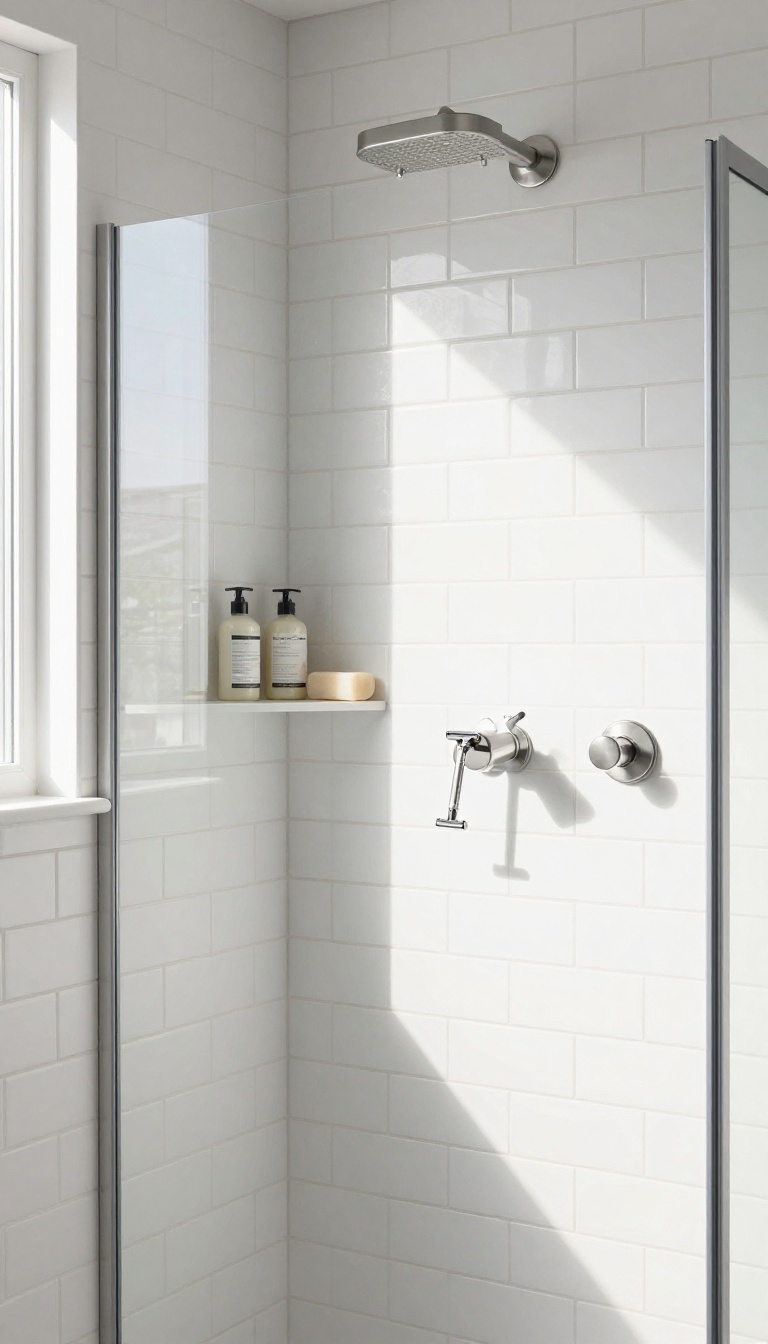
A recessed niche turns dead wall space into storage that sits flush with the tile. Nothing sticks out, nothing falls down, and your shower looks cleaner because the shelf disappears into the wall. It's a bigger project than a suction cup, but the payoff is a permanent spot for everything you use daily.
The idea is simple: you cut a hole between the studs, line it with a waterproof box, and tile over the edges. The result is a built-in cubby that holds bottles, razors, and soap without eating into your standing room. Because it's recessed, you never bump your elbow on it or knock things off a ledge.
This works in almost any shower, but the wall type matters. A interior wall gives you about 3. 5 inches of depth, which fits most bottles.
An exterior wall may be thinner, so you'd need a shallow niche. Either way, the niche has to be fully waterproofed before tile goes on. If you're handy, you can buy a preformed niche insert and install it yourself over a weekend.
If not, a tile contractor can do it during a remodel. The cost ranges from about $150 for a DIY insert to $500 or more for a pro install, depending on tile work.
Pick The Right Spot
Place the niche where you naturally reach, usually at chest height on the wall opposite the showerhead. Avoid putting it directly under the spray, or water will pool inside. A vertical niche works well for tall bottles, while a horizontal one handles bars of soap and razors.
Measure your tallest shampoo bottle before you commit to a size.
Waterproofing Matters
A niche is a hole in your waterproof layer, so you have to seal it properly. Use a liquid waterproofing membrane or a foam board system around the inside and edges. Skip this step and you risk mold and rot behind the tile.
If you're not confident, hire a pro for this part.
Rental-friendly Alternative
Can't cut into the wall? A corner tension pole with adjustable shelves gives you a similar vertical storage look without drilling. It won't be flush, but it keeps bottles off the floor and out of the way.
Look for one with rust-proof shelves and a small footprint.
10. Use a Shower Floor Rack for Large Bottles
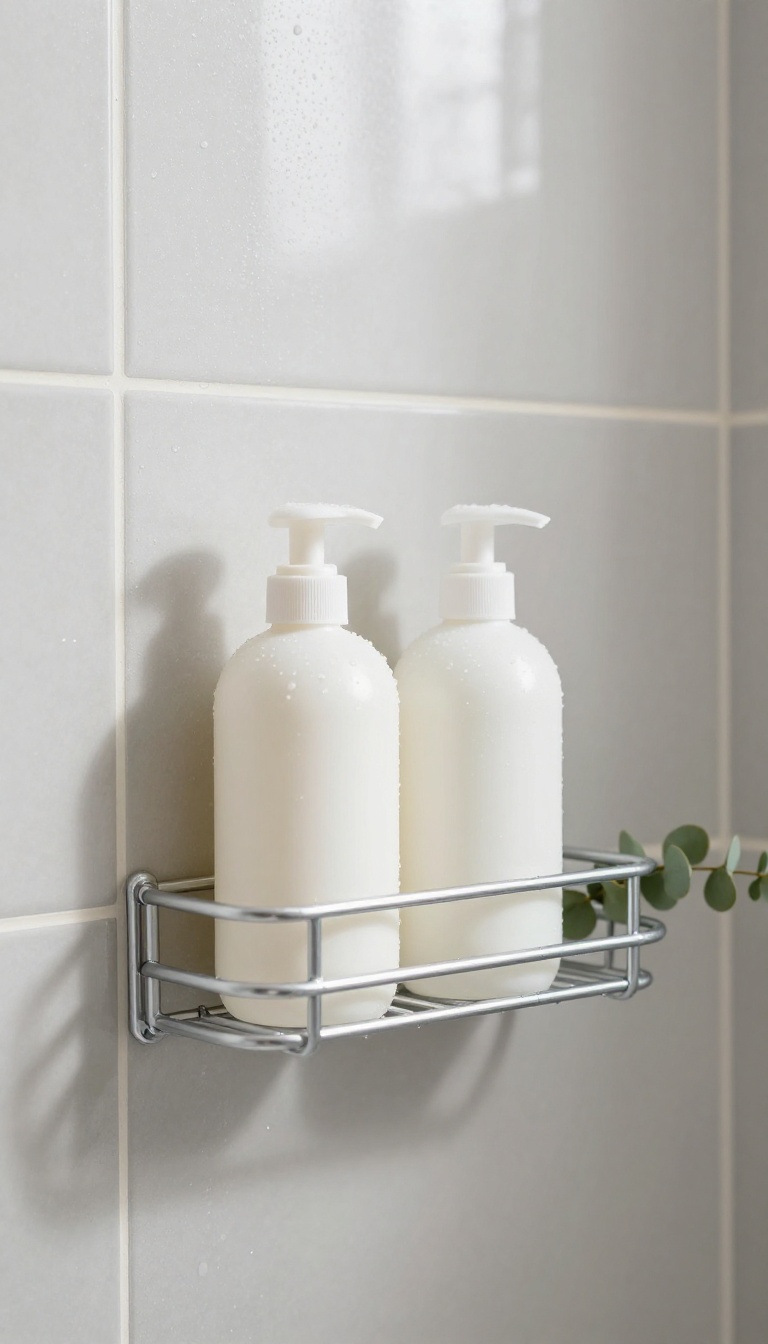
Large shampoo and body wash bottles never seem to fit anywhere. They're too tall for most shelves and too heavy for suction cups. So they end up on the shower floor, where they tip over, collect water, and get in the way of your feet.
A shower floor rack gives those oversized bottles a dedicated spot. It's a low-profile frame that sits directly on the floor of your shower, holding bottles upright and slightly off the tile. No drilling, no mounting, and no more kicking a jug of conditioner across the stall.
This works especially well in smaller showers where wall space is already spoken for. You keep the big stuff contained at the bottom, and everything stays stable.
Most shower organizers focus on the walls, but the floor is where the real problem lives. A floor rack solves that by turning the least useful part of your shower into a stable base for the heaviest items. The rack itself is simple.
It's usually a metal or plastic frame with a few slots or a shallow tray. You set it on the shower floor, load it up, and that's it. Because it sits low, it doesn't crowd your standing space or block the spray.
The key benefit is stability. A one-liter bottle of shampoo standing on a slick tile floor is an accident waiting to happen. Inside a rack, it stays put.
Water drains underneath instead of pooling around the cap, which keeps the bottle cleaner and the floor less slippery.
Why The Floor Makes Sense For Big Bottles
Large bottles are heavy, and heavy things belong low. Putting them on a high shelf invites a crash every time you reach for them. A floor rack keeps the weight at the bottom, where it can't knock anything else over.
It also frees up your shelves for smaller items. Once the giant bottles move down, your wall shelves can hold soap, a razor, and a face wash without looking stuffed. The whole shower feels less top-heavy.
Picking The Right Rack
Look for a rack with a low profile and a wide base. You want it stable enough that it won't slide when you step near it. Rust-proof materials like coated steel or plastic are the safe bet for a wet environment.
Check the height of your bottles before you buy. Some racks have dividers that only fit standard sizes. If you use bulk refill bottles, measure first so you don't end up with a rack that can't hold them.
Keeping It Clean And Tidy
A floor rack collects soap scum and hair over time, just like any shower surface. Rinse it weekly and give it a quick scrub when you clean the shower floor. Most models lift right out, so you can clean underneath without much effort.
Don't overload it. Two or three big bottles are plenty. If the rack starts looking like a storage unit, you've defeated the purpose.
Keep it minimal and it stays useful.
FAQ
What is the best way to organize a small shower without drilling?
Use tension rods, suction-cup baskets, over-the-door hooks, and hanging caddies. These options require no drilling and are rental-friendly.
How can I keep my shower products from getting moldy?
Choose quick-drying caddies with drainage holes, avoid leaving bottles in standing water, and clean your shower regularly. Decanting into smaller bottles also helps.
Are shower caddies worth it for small spaces?
Yes, a hanging or tension caddy maximizes vertical space and keeps essentials within reach without taking up floor area.
What should I do with large bottles that don't fit on shelves?
Use a floor rack or a corner shelf designed for heavy items. You can also decant into smaller bottles to save space.
How often should I clean my shower organization tools?
Clean caddies, baskets, and hooks every two weeks to prevent soap scum and mildew. A quick rinse with warm water and vinegar works well.
Conclusion
A tidier shower rarely comes from one big overhaul. It comes from small moves that stack: a caddy that drains, hooks at the right height, a squeegee you actually reach for. Pick two or three ideas from this list and live with them for a week before adding more.
Start with whatever annoys you most each morning, whether that is clutter on the floor or bottles crowding the corner. Fix that first, then build outward. The setup gets calmer fast, and you can keep tweaking until it fits your routine.