11 Design-Forward Ideas for Shower Seats and Benches
You're standing in a half-finished shower, tile set, plumbing roughed in, and one question keeps stalling the job: where does the bench go? Skip it and you're balancing on one leg to shave. Bolt in the wrong one and you've wasted a corner you'll stare at for a decade.
A good shower seat earns its footprint. It holds towels, props up a foot, gives kids and older knees a safe place to sit, and can pull a whole bathroom's look together.
The trick is matching the seat to your tile, your budget, and how you actually use the space. Below are eleven design-forward directions, from a floating wood bench to a heated tile perch with hidden light.
1. Floating Wood Bench
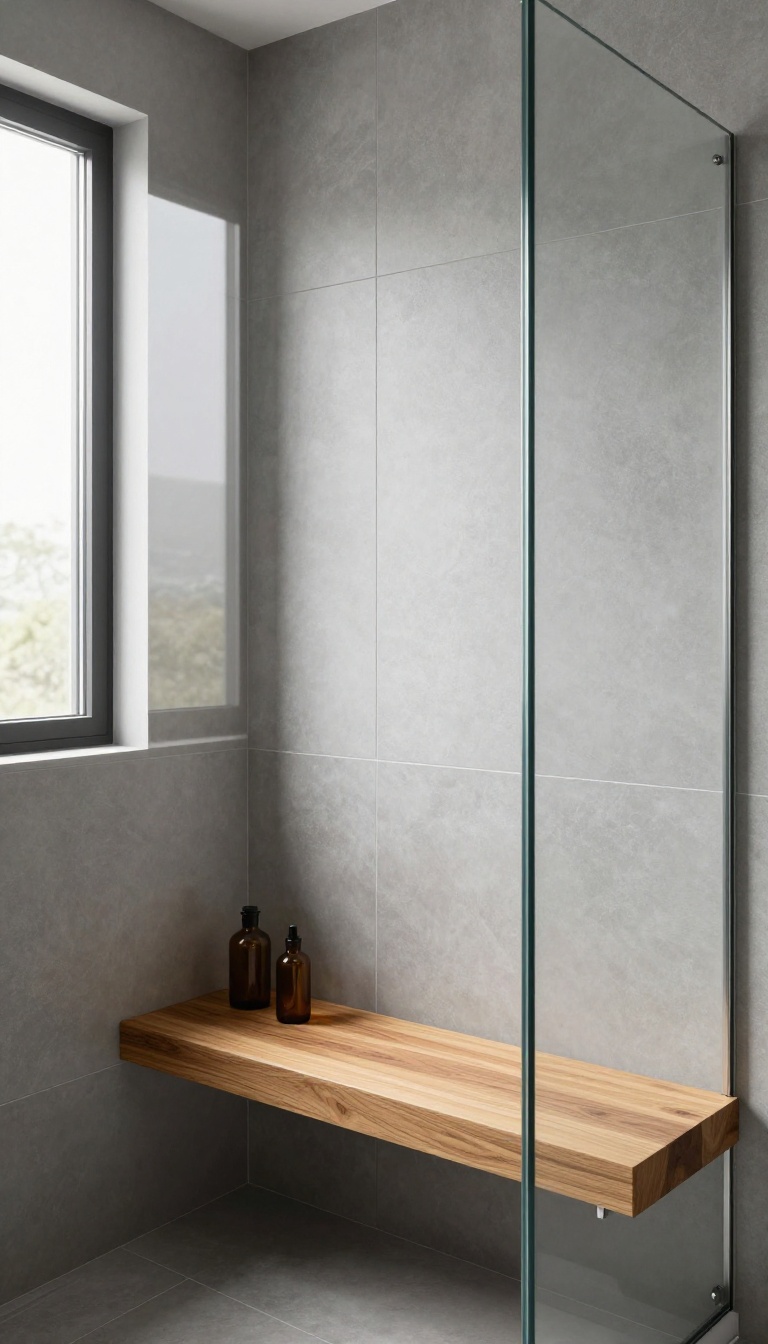
A floating wood bench skips the legs entirely and mounts straight to the wall framing, so the floor stays open and the whole shower reads bigger. Teak and cedar handle wet rooms better than most woods, and their grain softens all that tile and glass. It works best in a walk-in shower with at least four feet of width, where there's room to sit without bumping the opposite wall.
The appeal is simple: nothing touches the floor, so mopping takes seconds and the bench looks like it grew out of the wall. You get a seat, a shelf for shampoo, and a spot to prop a foot while you shave. It also changes how the shower feels.
A chunk of warm wood against cool stone or porcelain adds contrast that plain tile can't match. Done right, it looks less like a bathroom fixture and more like furniture.
Pick The Right Wood
Teak and cedar are the two names you'll hear most, and both earn it. Teak is denser and more rot-resistant, which is why it costs more. Cedar is lighter, smells great, and holds up well if you seal it.
Skip pine, oak, and anything unfinished. They soak up water, warp, and grow mildew fast in a shower. If you want a budget option, look at thermally modified ash or a marine-grade hardwood instead.
Mounting It So It Stays Put
A floating bench needs blocking in the wall, not just anchors into tile. Plan it before the walls close up, because retrofitting solid blocking later means tearing out tile. Use stainless steel brackets rated for the load, and aim for at least 300 pounds of support.
Seal every screw hole and end grain with a penetrating oil or marine varnish, then re-oil it once or twice a year.
Sizing And Placement
Eighteen inches deep and 14 to 18 inches tall covers most adults comfortably. Go 24 to 36 inches wide if one person uses the shower, wider if two do. Place it opposite the showerhead so spray hits it at an angle, not straight on.
That keeps the wood drier between uses and cuts down on standing water.
2. Built-In Stone Perch
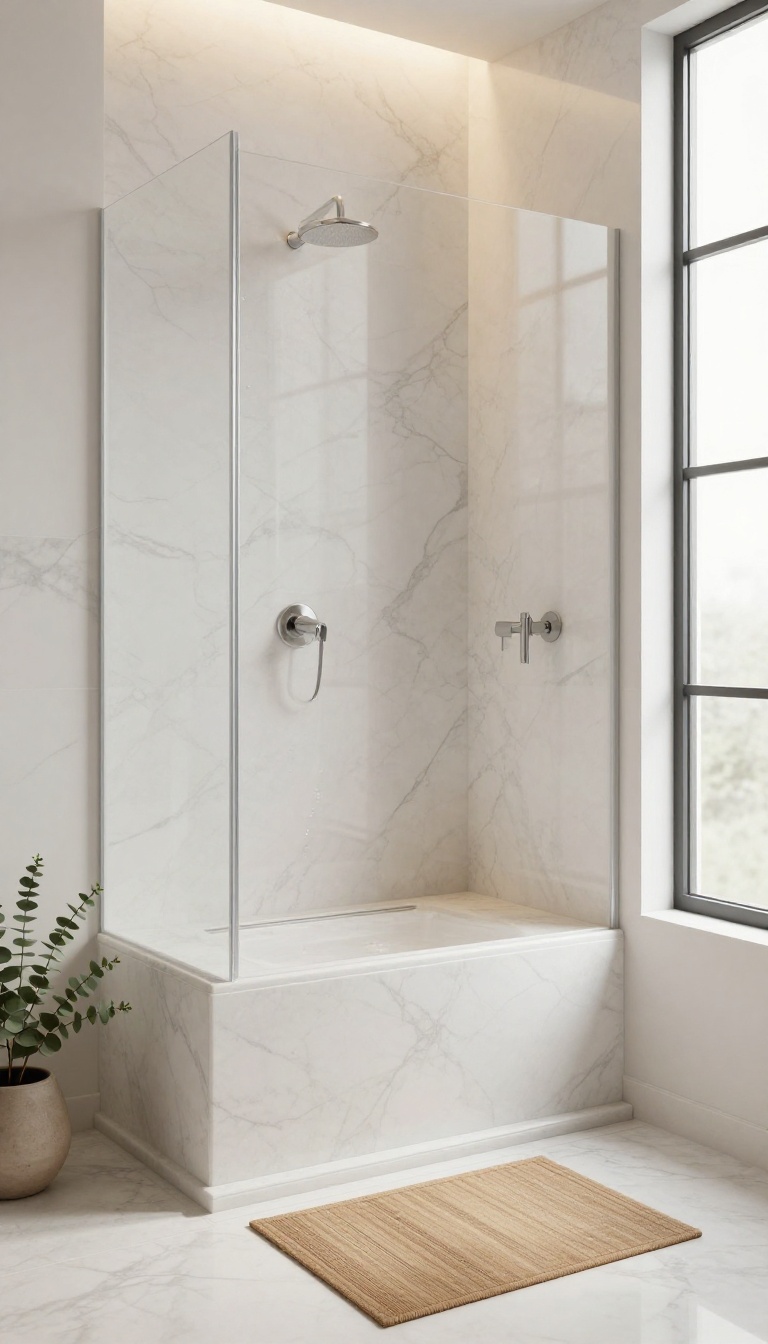
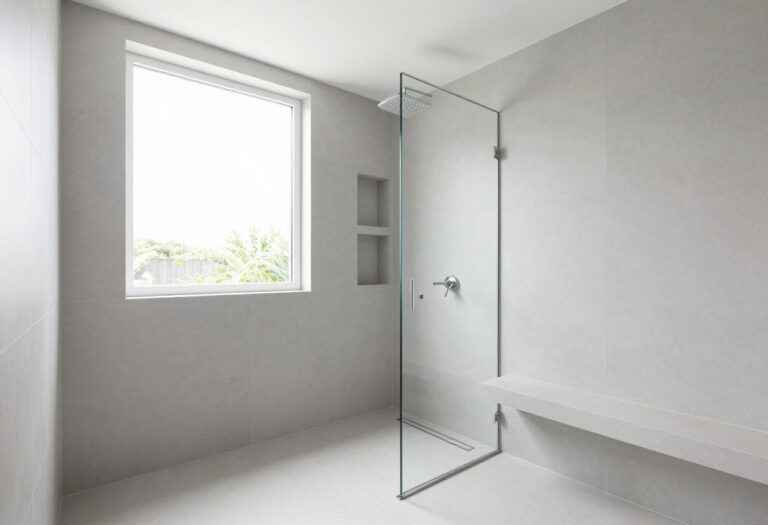
A built-in stone perch turns your shower wall into the seat itself. Instead of adding a separate piece, you extend the same stone or tile from the wall to form a solid bench. The result looks like it was always meant to be there, because it was.
No gaps, no brackets, no visual clutter—just one continuous surface that happens to be at sitting height.
This approach works best when you're already tiling the shower or using large-format stone slabs. The bench becomes part of the wall assembly, so it feels architectural rather than added on. It's durable, easy to clean, and gives the whole shower a custom, high-end feel without looking busy.
How It's Built
The bench is typically framed with concrete board or waterproof foam, then covered with the same stone or tile as the walls. A slight slope toward the drain keeps water from pooling. The front edge can be mitered or bullnosed for a clean look.
Because it's tied into the waterproofing, it's as solid as the wall itself.
Material Matters
Marble, quartzite, and porcelain slab are popular choices. Natural stone brings unique veining, while porcelain offers durability with less maintenance. Match the bench to the wall for a seamless look, or use a contrasting stone as a subtle accent.
Just make sure the material is rated for wet areas and isn't too slippery when soapy.
Why It Works
A stone perch handles daily use without wobbling or rotting. It won't tip, and there are no legs to trip over. The continuous surface makes the shower feel larger and more cohesive.
It also gives you a spot to shave, store bottles, or just sit and let the hot water run.
3. Corner Triangle Seat
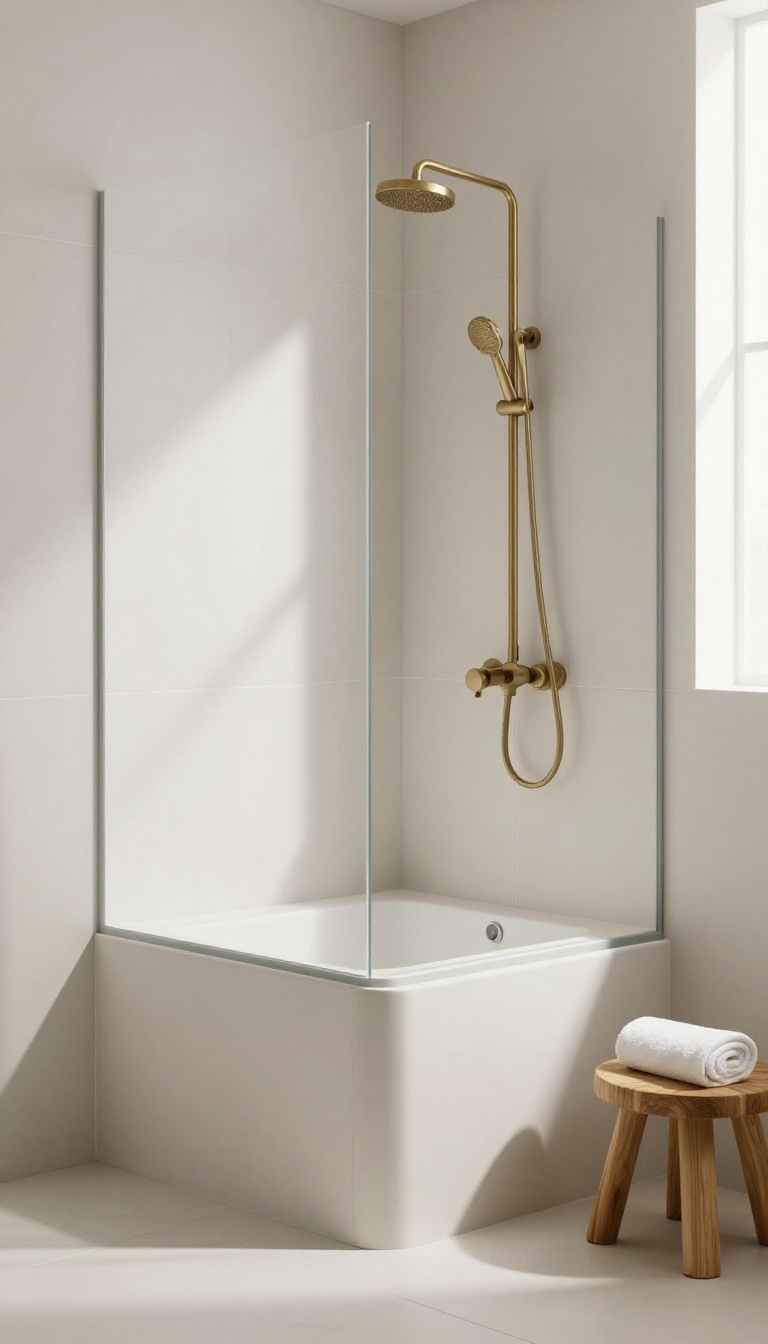
Corners are the most wasted real estate in a small shower. A triangular seat drops right into that dead angle and turns it into something you actually use. The geometry does the work.
The long edge mounts flat against one wall, the point tucks into the corner, and the front face angles out just far enough to sit or prop up a foot. Nothing juts into your walking path. It's the kind of move that makes a tight stall feel planned instead of cramped.
You gain a perch without losing a single inch of standing room.
## Why the Shape Wins A triangle follows the corner's natural lines, so there's no awkward gap behind it and no dead space to scrub. Square benches in corners leave a sliver you can't reach with a sponge. The angled front also softens the look.
Instead of a blocky slab, you get a shape that reads intentional, almost sculptural. ## Materials That Fit the Angle Corner triangles come in a few flavors, and each one changes the vibe. – Tile-over-framed: Build a plywood and cement board wedge, then wrap it in the same tile as the walls. It disappears into the design. – Solid stone: A single cut slab of quartz or marble needs no grout lines and wipes clean in seconds. – Teak or ipe: A wood triangle on hidden brackets warms up an all-tile shower fast. Match the material to how much maintenance you'll tolerate.
Stone and tile are near-zero effort. Wood needs occasional oiling. ## Sizing It Right A corner seat usually runs 14 to 18 inches along each wall, with the front edge sitting about 15 to 17 inches off the floor. That's comfortable for most adults.
Go deeper if you plan to actually sit and shave. Go shallower if it's mainly a footrest or a spot for bottles. Check your local code before you frame.
Some areas want a minimum seat depth for accessibility, and it's easier to build to spec than to rebuild later.
Why The Shape Wins
A triangle follows the corner's natural lines, so there's no awkward gap behind it and no dead space to scrub. Square benches in corners leave a sliver you can't reach with a sponge. The angled front also softens the look.
Instead of a blocky slab, you get a shape that reads intentional, almost sculptural.
Materials That Fit The Angle
Corner triangles come in a few flavors, and each one changes the vibe. – Tile-over-framed: Build a plywood and cement board wedge, then wrap it in the same tile as the walls. It disappears into the design. – Solid stone: A single cut slab of quartz or marble needs no grout lines and wipes clean in seconds. – Teak or ipe: A wood triangle on hidden brackets warms up an all-tile shower fast. Match the material to how much maintenance you'll tolerate.
Stone and tile are near-zero effort. Wood needs occasional oiling.
Sizing It Right
A corner seat usually runs 14 to 18 inches along each wall, with the front edge sitting about 15 to 17 inches off the floor. That's comfortable for most adults. Go deeper if you plan to actually sit and shave.
Go shallower if it's mainly a footrest or a spot for bottles. Check your local code before you frame. Some areas want a minimum seat depth for accessibility, and it's easier to build to spec than to rebuild later.
4. Teak Folding Shower Seat
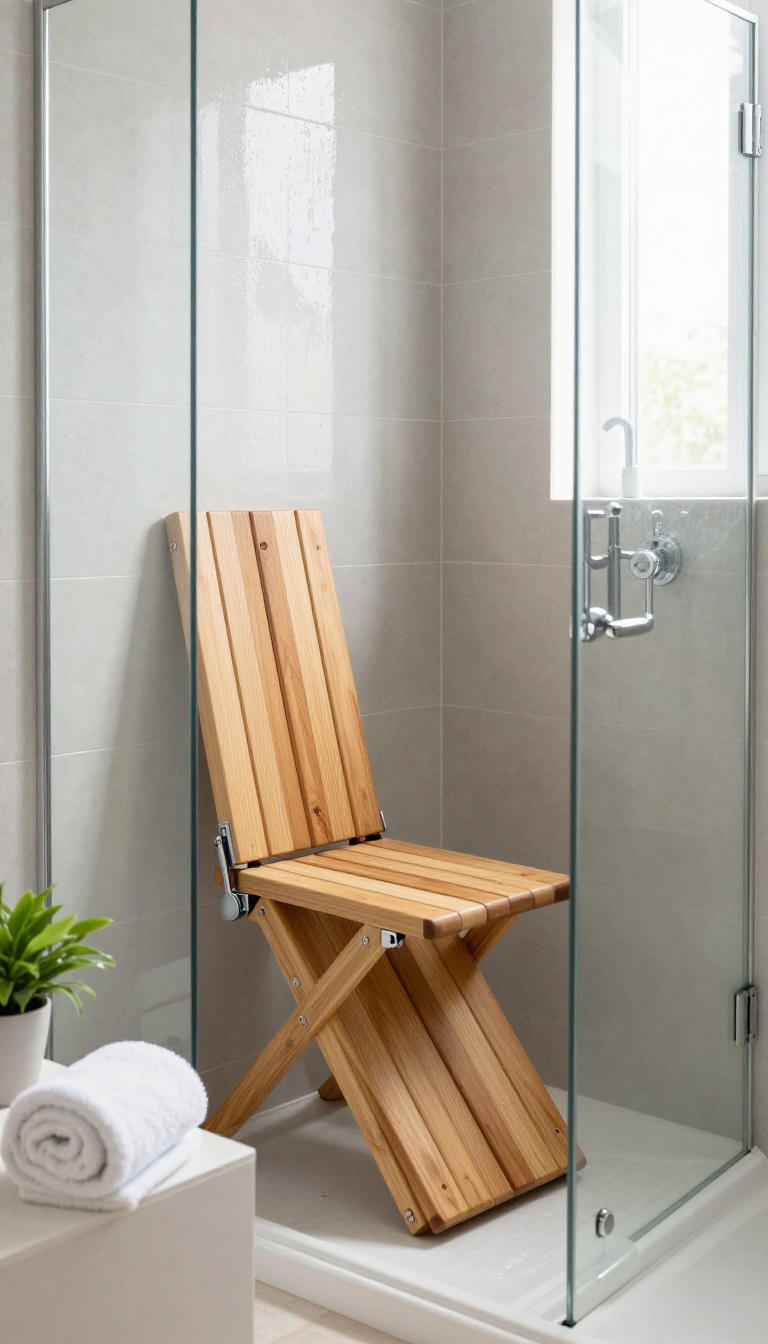
Teak has been the go-to wood for boats and spas for decades, and for good reason. It handles moisture better than almost any other species, and its warm grain softens the cold look of tile and glass. A folding version takes that appeal one step further: it swings down when you need it and tucks flat against the wall when you don't.
That means you get the spa vibe without permanently eating into your standing room.
The mechanism is simple. A pair of brackets mounts to the wall studs, and the seat panel hinges between them. When it's up, it's only a couple of inches deep, so it barely registers in the room.
When it's down, it locks into place and holds weight like a fixed bench. Most folding teak seats are rated for 250 to 400 pounds, which covers everyday use with plenty of margin. The wood itself is naturally resistant to rot, and a light oiling once or twice a year keeps it looking rich instead of gray.
You'll want to mount it into solid framing, not just tile and backer board. If you're remodeling, plan the blocking before the walls close up. If you're retrofitting, a stud finder and a few stainless lag bolts will do the job.
Why Teak Works In Wet Rooms
Teak's natural oils make it naturally water-resistant, so it won't swell, warp, or rot the way oak or pine would. It also stays cooler to the touch than stone or tile, which matters when you're sitting down on a warm day. The grain gives you a bit of grip, too, even when it's wet.
Space-saving Mechanics
The folding hardware is the whole point here. A seat that flips up frees the floor for wheelchairs, walkers, or just a wider stance when you're rinsing off. Look for brackets with a smooth hinge and a positive lock, so the seat doesn't wobble when it's down.
Installation And Care
Mount the brackets into studs or add blocking behind the tile. Stainless or marine-grade hardware will outlast standard steel in a shower. Wipe the wood down weekly, and re-oil it every few months to keep the color and water resistance intact.
5. Concrete Bench with Storage
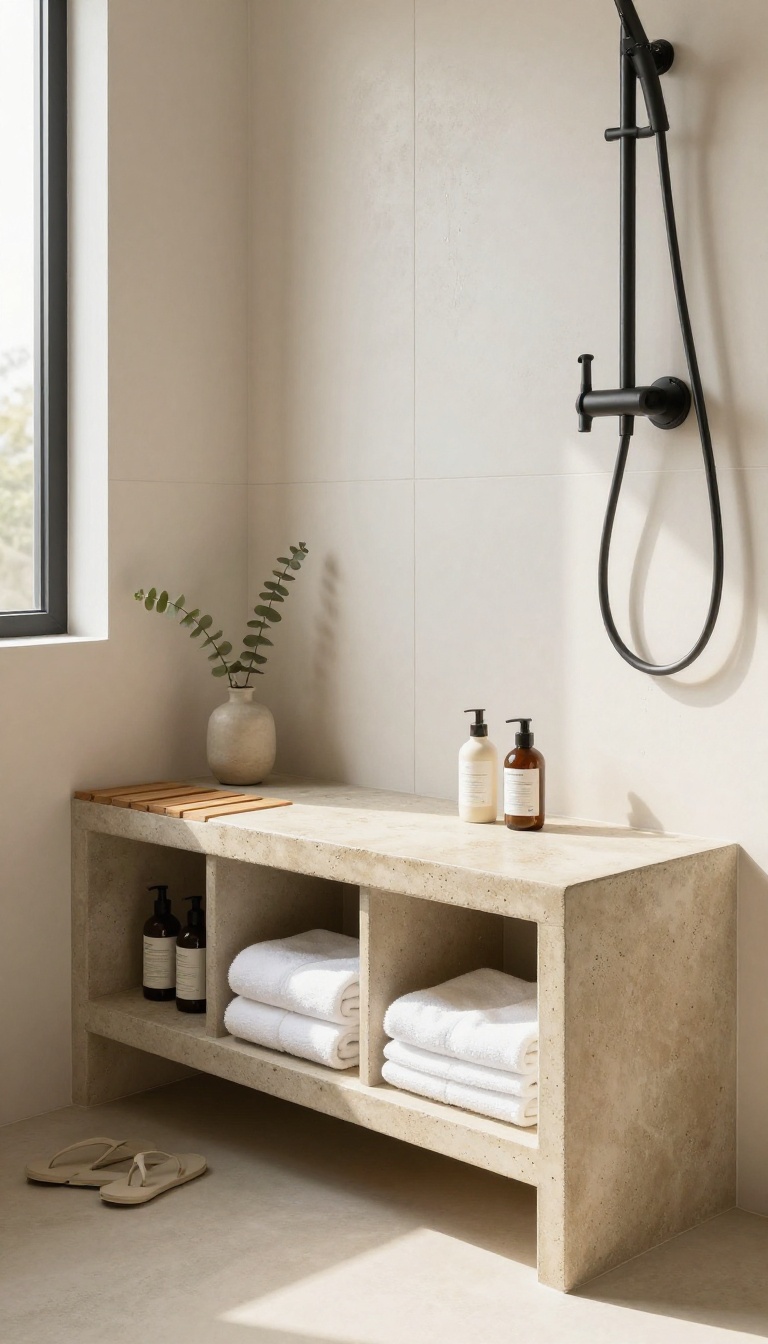
Concrete brings a raw, architectural edge to a shower, and it doesn't mind getting wet. When you cast it with open niches underneath, you get a bench that holds your towels and bottles instead of just sitting there. It's heavy, permanent, and surprisingly practical once you plan the storage around how you actually shower.
A concrete bench works best when you treat it like built-in furniture, not a slab dropped in a corner. The material handles steam and splashes without swelling or peeling, so it's a natural fit for a wet zone. The real payoff is the space below: instead of a solid block, you leave gaps for folded towels, shampoo, or a basket of kids' toys.
How The Niches Work
You form the openings during the pour using foam blocks or plywood boxes, then strip them out once the concrete cures. Each niche can be sized to what you store: a tall slot for bottles, a wide cubby for towels, a low shelf for flip-flops. Line the inside faces with the same mix so they look intentional, not like an afterthought.
Getting The Finish Right
Concrete in a shower needs a sealer that stands up to daily water and soap. A penetrating sealer keeps the surface breathable while blocking stains, and a light polish or troweled finish makes it easier to wipe down. If you want less gray, mix in a pigment or go with a warm sand tone that plays off tile and wood.
Making It Comfortable
Bare concrete can feel cold and hard, so plan for a cushion or a teak slat top that lifts off for cleaning. A slight slope on the seat surface keeps water from pooling, and rounded front edges are kinder on the backs of your legs. Pair it with a handheld shower head so you can rinse the bench and the niches without soaking the whole room.
6. Curved Tile Bench
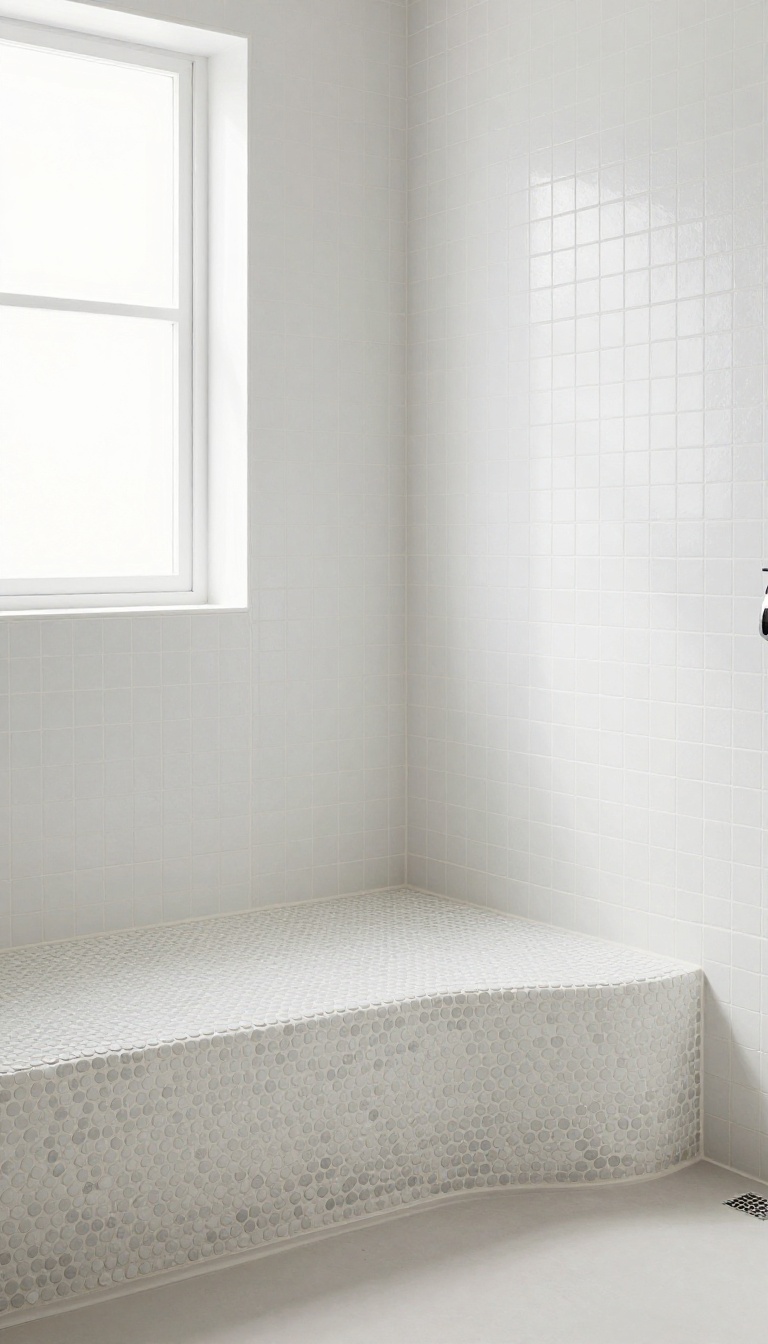
Straight lines dominate most showers, which is exactly why a curved tile bench stands out. The gentle arc softens the whole enclosure, so the space feels less like a box and more like something designed. It also happens to be comfortable, since the curve cradles you instead of digging into your back.
You can build the curve with a few different methods. The most common is framing a curved base with plywood ribs, then covering it in cement board and waterproofing before tile. Another route is a preformed foam bench that you cut to shape and tile over.
Either way, the goal is a smooth, continuous surface that sheds water and looks intentional.
Choosing Your Tile
Mosaic sheets are the easiest way to follow a curve because the small pieces flex with the shape. Penny rounds, hexagons, and 1×1 squares all work well. Subway tile can also wrap a gentle bend if the radius is wide enough, but tight curves will fight you.
Pick a tile that matches the shower walls for a seamless look, or go contrasting for a focal point.
Getting The Curve Right
A shallow arc reads as elegant; a deep one can feel like a bathtub. Aim for a radius that matches the shower's scale, usually between 12 and 24 inches. Sketch the curve on cardboard first and hold it up in the space.
Once you commit, build the framing so the top surface slopes slightly toward the drain.
Waterproofing And Comfort
Curved benches have more seams than straight ones, so waterproofing matters extra. Use a liquid membrane or a sheet membrane over the whole bench and up the wall a few inches. For comfort, round the front edge with a bullnose tile or a piece of stone.
A heated mat under the tile is a nice upgrade if you want a warm seat on cold mornings.
7. Glass Shelf Seat
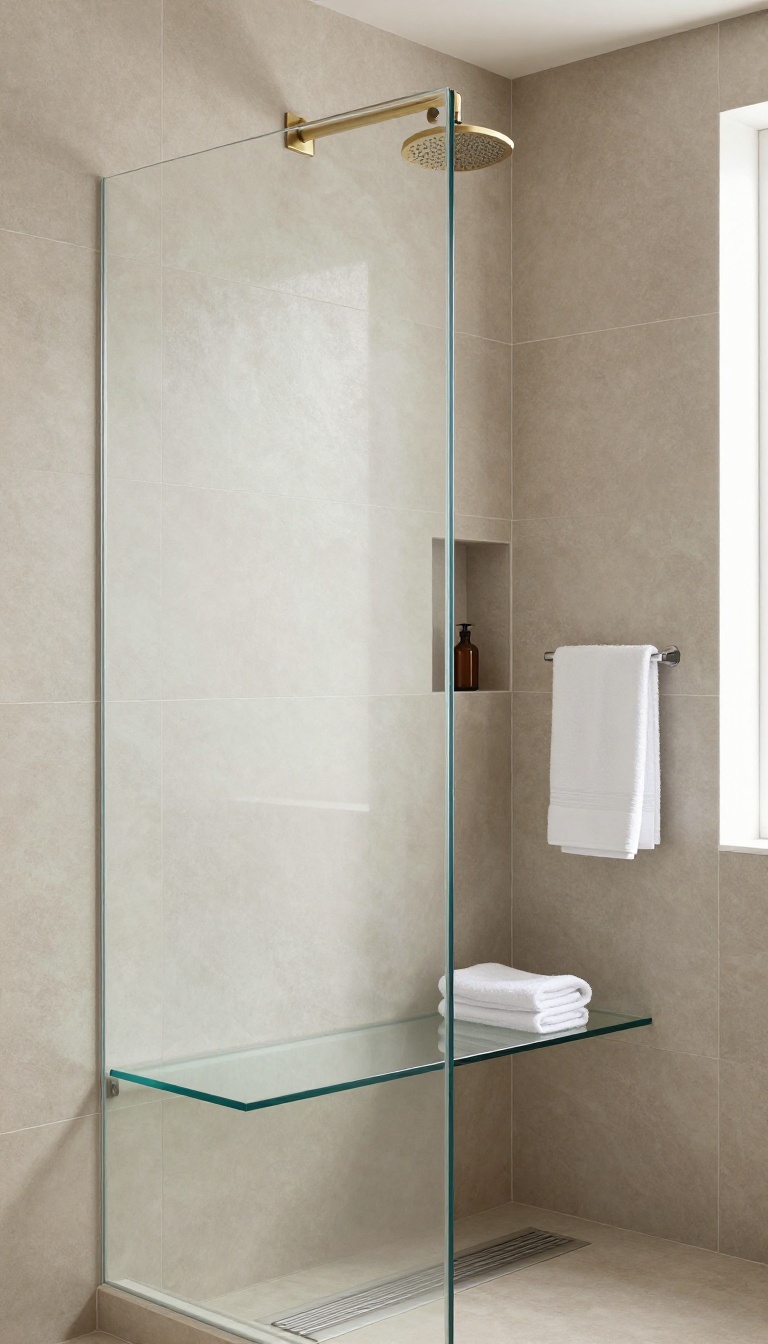
Glass in a shower sounds like a cleaning nightmare until you see how thick tempered glass actually behaves. A 3/4-inch or 1-inch slab, polished on every edge, can carry a grown adult without flexing or clouding over. Mount one at seat height and you get a bench that all but disappears into the room.
The trick is the mounting, not the glass itself. Hidden steel brackets or a recessed channel in the tile do the load-bearing work, so all you see is a clean pane floating off the wall. Done right, it reads as sculpture first and furniture second.
Glass earns its place in modern bathrooms because it refuses to visually crowd anything. A glass shelf seat keeps sightlines open, which matters most in narrow showers where a solid bench would chop the space in half. It also plays well with large-format tile, since there's no wood grain or stone veining competing for attention.
You can spec it clear, low-iron, or lightly frosted. Clear and low-iron keep the room bright and let floor tile run underneath. Frosted or reeded glass softens the look and hides water spots a little better, which is worth considering if you'd rather not squeegee a seat every morning.
Cost sits in the middle of the pack. The glass itself isn't outrageous, but fabrication, polishing, and engineered brackets add up fast. Treat it as a splurge piece you build the rest of the shower around, not an afterthought you tack on at the end.
Thickness And Span
For a seat, don't go thinner than 3/4 inch, and step up to 1 inch if the span runs past about 30 inches. Tempered glass is mandatory, not optional. A glass fabricator can tell you the safe span for your exact dimensions in a few minutes, and that number should drive the design, not the other way around.
Brackets And Anchors
The hardware carries the weight, so buy brackets rated well above the load you expect. Wall-mounted steel pins or a continuous channel set into the tile look cleanest. Blocking goes in behind the wall before tile, so decide on this seat early in the build.
Retrofits are possible but rarely as tidy.
Keeping It Clear
Hard water leaves marks on glass faster than on tile or stone. A squeegee kept in the shower and a quick pass after each use handles most of it. For heavier buildup, a mild acid cleaner made for hard water works without scratching.
Skip abrasive pads, which dull the surface over time.
8. Adjustable Height Stool
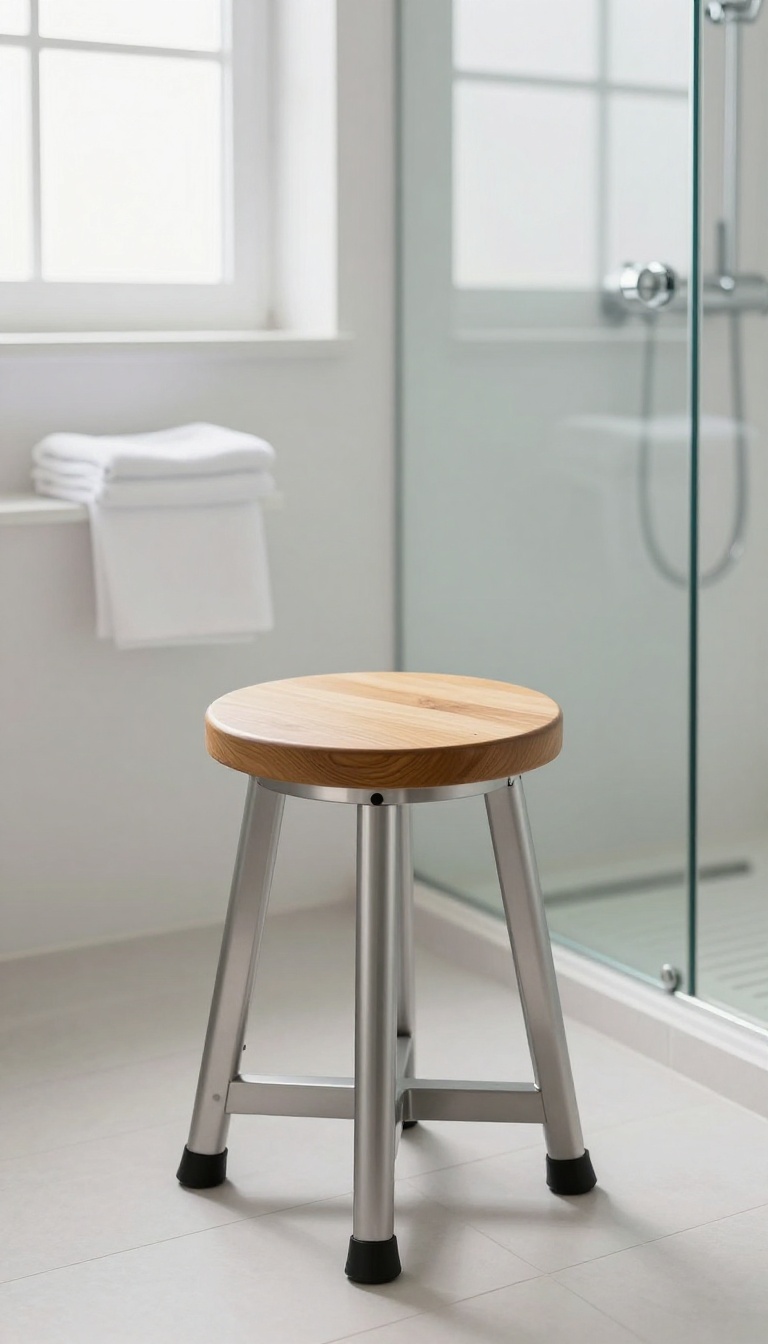
A fixed bench commits you to one height forever. An adjustable stool lets you change your mind. It's a freestanding seat that moves where you need it and rises or drops to fit the person using it.
That flexibility matters more than most people realize until they share a shower with someone a foot shorter.
Most shower seats are built for one body. An adjustable stool treats height as a dial, not a decision. Crank it low for a kid or a foot prop, raise it for an adult who wants to sit upright.
When you're done, it tucks into a corner or slides out of the way entirely. The trade-off is stability. A pedestal stool with a wide base and rubber feet grips wet tile better than a four-legged version.
Look for marine-grade aluminum or stainless hardware so rust never becomes the reason you replace it.
Why Height Matters
A seat that's two inches too low puts pressure on your knees. Two inches too high leaves your feet dangling. Adjustability solves both problems without a remodel.
It also helps if you're recovering from surgery or just prefer to sit while you shave.
Pick The Right Base
Screw-style height adjustment is simple and cheap, but the threads can strip over time. A gas-lift or pin-lock system holds up better in a wet room. Whatever you choose, test the base width.
A narrow footprint looks sleek and tips easily.
Materials That Survive
Skip anything with exposed mild steel. Powder-coated aluminum, teak, and marine-grade polymer all handle daily spray. Wipe the feet dry once a week to keep soap scum from turning into a slip hazard.
9. Integrated Step-Bench Combo
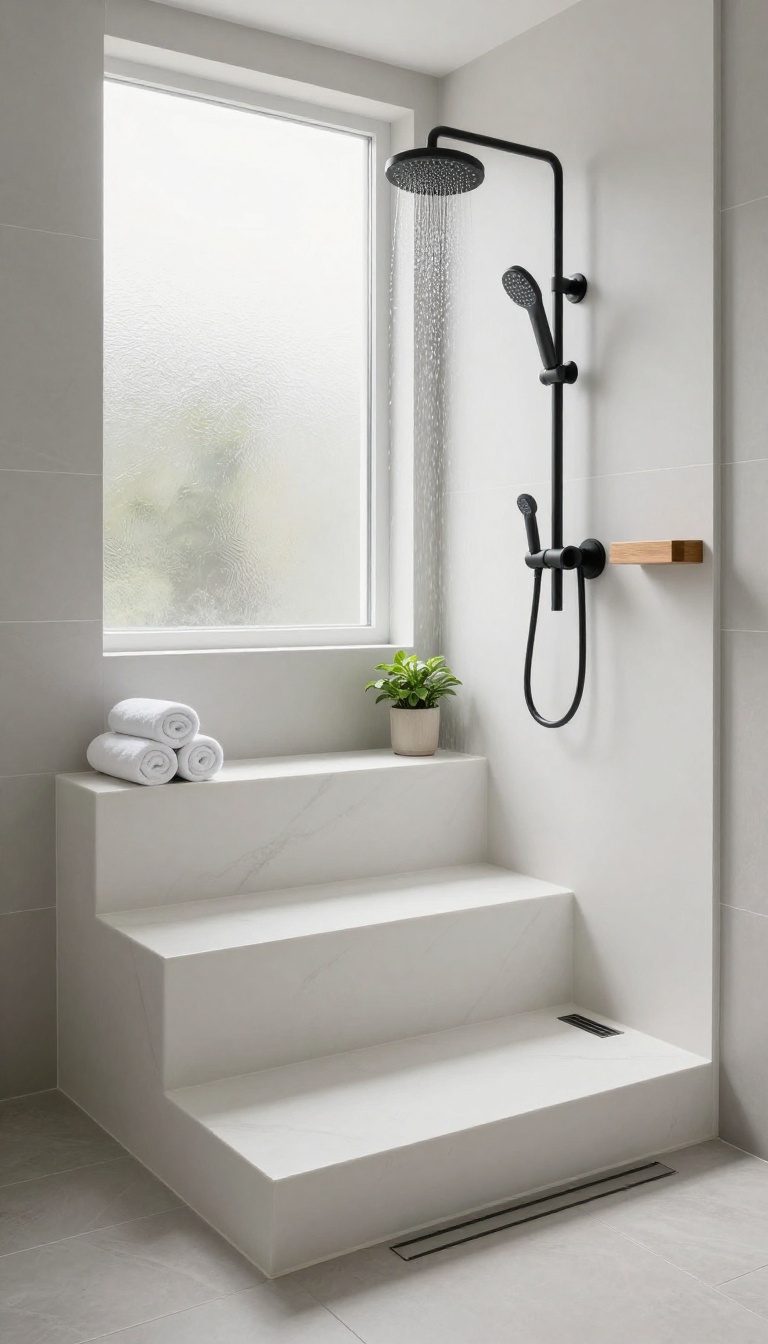
A two-tier step-bench combo solves two problems with one footprint. The lower tier works as a step for kids reaching the showerhead or for anyone stretching to clean high tile. The upper tier gives you a proper seat at a comfortable height.
It's a smart pick for families because everyone gets a spot that fits.
The idea is simple: instead of choosing between a step and a bench, you build both into one unit. A low platform sits at the front, then rises to a deeper seat behind it. That stepped profile reads as intentional design, not a workaround.
In a family shower, it means a four-year-old can climb up to rinse off while a parent sits down to shave. Nobody's balancing on a slippery floor, and nobody's dragging in a plastic stool that never looks right.
How To Size The Two Tiers
The step tier usually lands around 8 to 10 inches high, which is a natural rise for small feet. The bench tier sits at 17 to 19 inches, the sweet spot for most adults. Keep the step depth at least 10 inches so it feels stable underfoot.
If you have the room, push the bench depth to 15 inches for real comfort.
Materials That Handle Both Jobs
Whatever you choose has to take standing weight and sitting weight, plus constant water. Solid surface and quartz are great because they're non-porous and easy to wipe. Tiled units work too, but use a slab or a well-sealed edge on the step so grout lines don't wear down.
Wood can work if it's teak or another marine-grade species, sealed and sloped to drain.
Drainage And Safety Details
Slope the step slightly toward the drain so water never pools where kids stand. Add a subtle texture or a few grip strips to the step surface, especially if you use tile or stone. Round the front edge of the bench tier so nobody catches a shin on a sharp corner.
These small moves keep the combo safe without making it look clinical.
Who It Works Best For
Families with young kids get the most obvious win, since the step grows with them. Households with mixed heights also benefit, because short and tall users each get a usable level. And anyone who wants a bench but worries about losing floor space will like how the step tier earns its keep.
It's one build that quietly does the work of two.
10. Heated Tile Bench
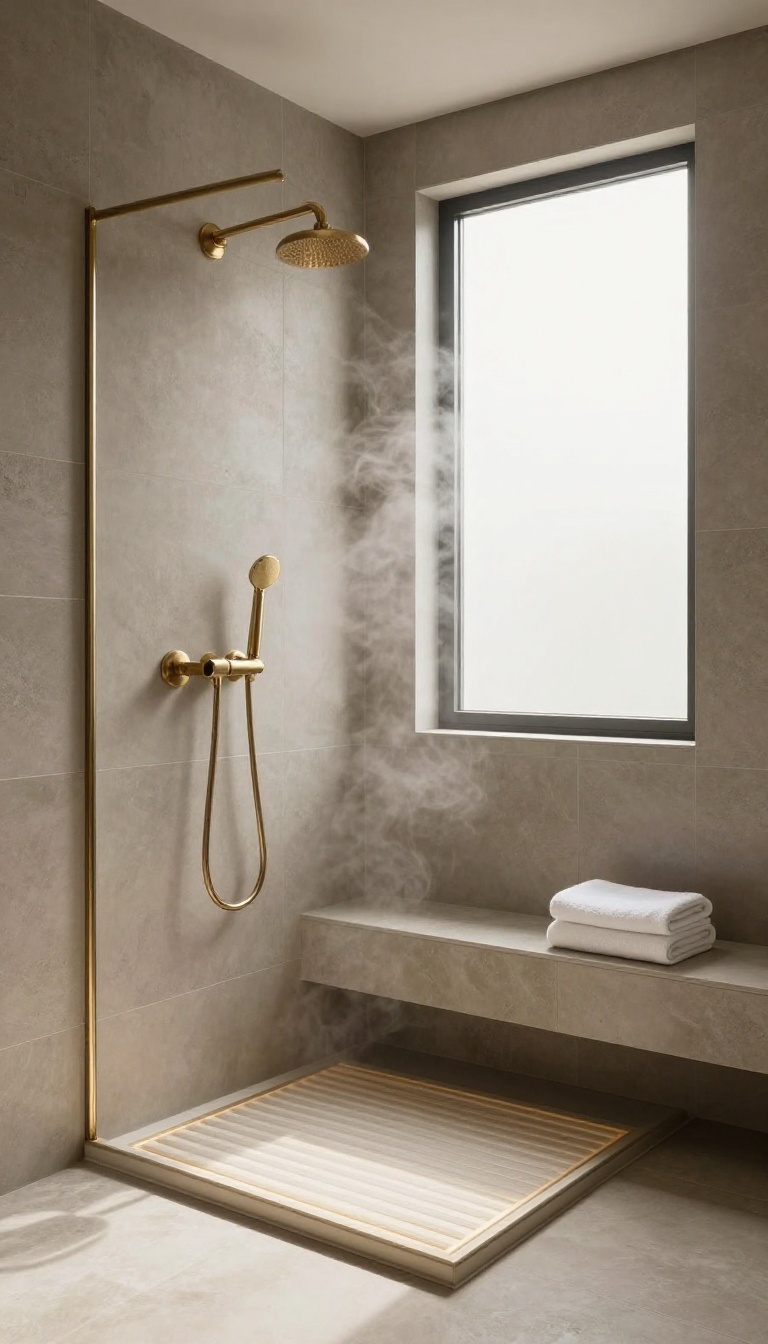
A tile bench that warms up under your feet sounds like a spa upgrade, but it's really just smart plumbing. Radiant heating elements sit beneath the tile, so the surface stays warm and dry instead of cold and clammy. That warmth does more than feel nice—it helps moisture evaporate, which keeps mold and mildew from getting a foothold.
Most shower benches end up cold, wet, and a little gross by day three. You drape a towel on them, and it never quite dries. A heated tile bench flips that script.
The heat runs through a thin mat or cable system installed under the tile, wired to a thermostat you can set and forget. It's the same technology used for heated bathroom floors, just scaled down to a bench. The result is a seat that feels dry the moment you touch it, even after a long shower.
And because the surface stays warm, water doesn't linger in the grout lines the way it does on an unheated bench.
How The Heat Gets In
You've got two main options: electric radiant mats or hydronic loops. Electric mats are thinner and easier to retrofit into a bench build, and they heat up fast. Hydronic systems run warm water through tubing, which takes longer to warm but costs less to operate if you already have a boiler.
Either way, the heating element goes down before the tile, covered by a waterproof membrane and a layer of thinset. A programmable thermostat lets you set a schedule so the bench is warm when you shower and off when you don't.
Why It Stays Cleaner
Mold needs three things: moisture, warmth, and food. A heated bench removes the lingering moisture part. The surface dries faster, so grout and caulk lines stay drier between showers.
That doesn't mean you can skip cleaning, but it does mean fewer black spots creeping along the edges. If you live in a humid climate or have a shower with poor ventilation, this is a quiet upgrade that pays off in less scrubbing.
What To Watch For
Heated benches cost more upfront—think a few hundred dollars for the mat and thermostat, plus the electrician's time. You also need to plan for it during the build; you can't easily add heat later without tearing out tile. Make sure your bench is properly waterproofed before the heating element goes in, and use a thermostat with a floor sensor so it doesn't overheat.
And if you're on a tight budget, a heated bench is a luxury, not a necessity. But if you've ever winced at a cold tile seat in winter, it's one you'll appreciate every single day.
11. Floating Bench with LED Lighting
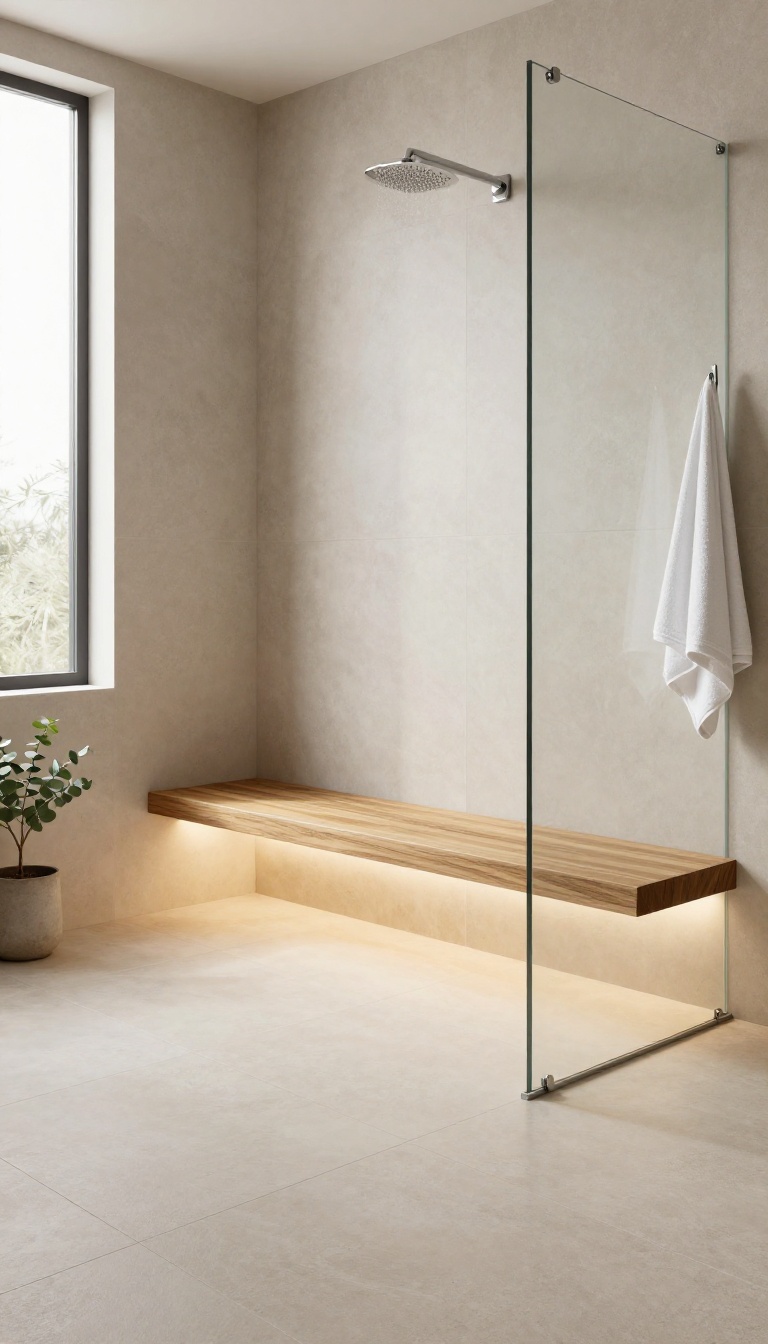
A floating bench already looks sleek, but add LED lighting underneath and it becomes the star of your shower. The glow spills across the floor and tile, turning a simple seat into a dramatic focal point. It's not just about looks—the light also helps you see where you're stepping, which is a win for safety.
Floating benches are mounted to the wall with heavy-duty brackets, so there are no legs to clutter the floor. That open space underneath is prime real estate for a strip of LEDs. When you turn them on, the bench appears to hover, and the light washes over the shower floor.
It's a high-end spa trick that you can pull off with a little planning.
Why It Works
The floating design keeps your shower floor visually open, which makes even small showers feel bigger. LEDs add a soft, ambient glow that's perfect for late-night showers or early mornings when you don't want harsh overhead lights. Plus, the under-bench light acts as a nightlight, so you can navigate without blinding yourself.
Lighting Choices
You'll want waterproof LED strips rated for wet locations. Look for IP65 or higher. Warm white (2700K–3000K) gives a cozy spa vibe, while cool white (4000K–5000K) feels crisp and modern.
You can also get RGB strips if you want to change colors with a remote or app. Just make sure the power supply is tucked away in a dry spot.
Installation Tips
Plan the wiring before you close up the walls. Run a conduit from the bench location to a accessible spot for the driver. The LED strip itself should be mounted on the underside of the bench, facing down.
Use aluminum channels with diffusers to protect the LEDs and spread the light evenly. And always connect everything to a GFCI circuit for safety.
FAQ
What is the best material for a shower bench?
Teak, cedar, and stone are excellent choices because they resist moisture and mold. Tile and concrete are also durable options.
How do I clean a shower bench?
Use a mild cleaner and a soft brush. For wood, avoid harsh chemicals and re-oil occasionally. For stone, use a pH-neutral cleaner.
Can I install a shower bench in a small shower?
Yes, corner seats and fold-down benches are great space-savers. You can also use a floating bench to keep the floor clear.
Are floating benches sturdy?
When properly installed into studs or with heavy-duty brackets, floating benches can support significant weight, but always check weight limits.
Do I need a permit to add a shower bench?
Usually not for a simple bench, but if you're altering plumbing or structure, check with your local building department.
Conclusion
A shower seat only earns its place if you actually use it. So pick the idea that solves your real routine, whether that is shaving, soaking, or just sitting down after a long day. Install it, live with it for a week, and notice what still bugs you.
Then tweak from there.
Swap the hardware, adjust the height, or add a towel hook nearby. You do not need every idea on this list, just the one that fits your space and your budget. Get that right, and the rest of the shower feels finished.