13 Unique Master Shower Tile Ideas for a Smart, Stylish Look
Choosing the right tile for your master shower can feel like a high-stakes decision. It's the first thing you see in the morning and the last thing at night, so it needs to look great and hold up to daily use.
But with so many options, where do you start? These 13 ideas go beyond the ordinary, offering smart solutions that add personality and function to your space.
Whether you're planning a full remodel or just refreshing the look, you'll find a tile approach that fits your style and budget.
1. Large-Format Slabs for a Seamless, Spa-Like Feel
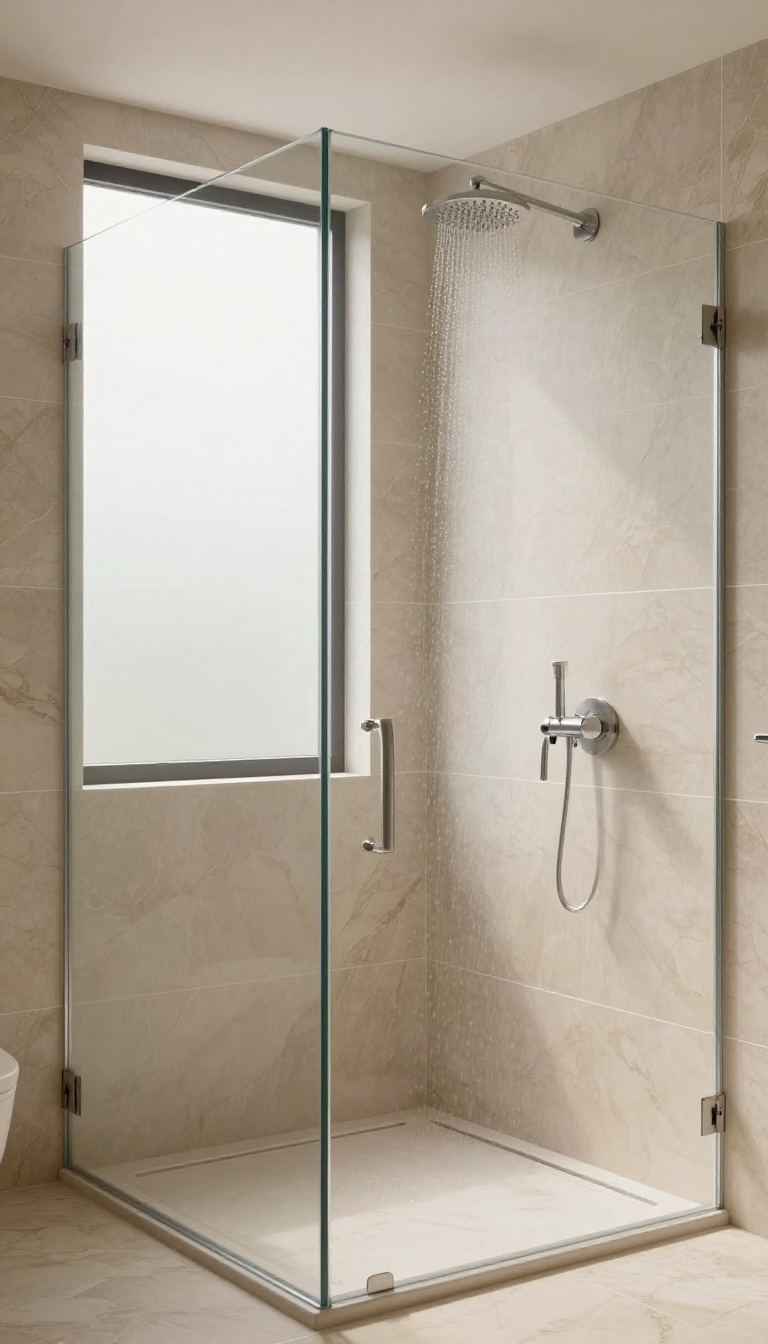
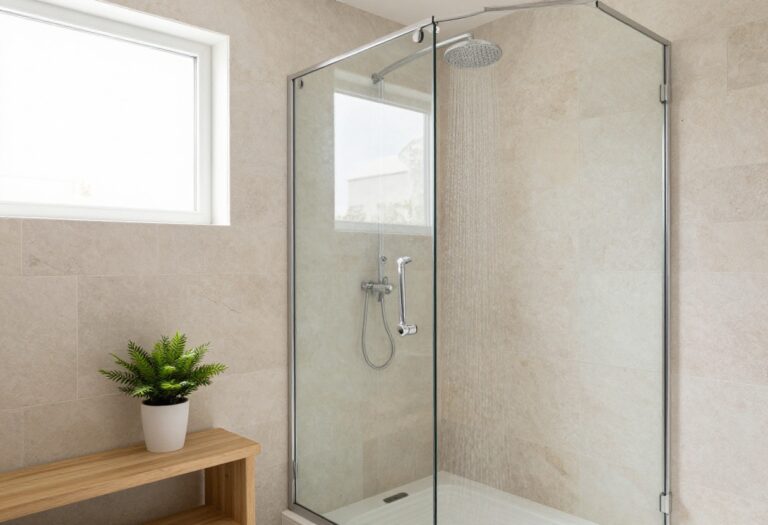
Large-format tiles—think 24×48 inches or even bigger—are a game-changer for master showers. They dramatically reduce grout lines, creating a smooth, continuous surface that instantly feels more upscale and serene. If you're aiming for that high-end spa aesthetic, this is your shortcut.
Beyond the looks, large slabs are a practical win. Fewer grout lines mean less scrubbing and fewer places for mold and mildew to hide. Plus, they make a small shower appear larger because the eye isn't broken up by busy patterns.
It's a simple swap that delivers a big visual impact.
Why Less Grout Is A Smart Choice
Grout lines are a magnet for soap scum and hard water stains. With large-format tiles, you cut down on those maintenance headaches. The smooth surface also feels nicer underfoot and makes cleaning a breeze—just a quick wipe and you're done.
Picking The Right Material
Porcelain is a top pick because it's durable, water-resistant, and comes in countless finishes. Natural stone like marble or travertine adds a luxurious touch, but it needs more sealing and care. If you want the look of stone without the upkeep, porcelain that mimics it is a smart compromise.
Installation Tips For A Flawless Finish
Large tiles require a perfectly flat substrate—any imperfection will show. Make sure your contractor uses a leveling system to keep everything even. Also, consider a rectified edge for tighter joints, and plan the layout carefully to avoid awkward small cuts at the edges.
2. Textured Hexagon Tiles for Subtle Depth
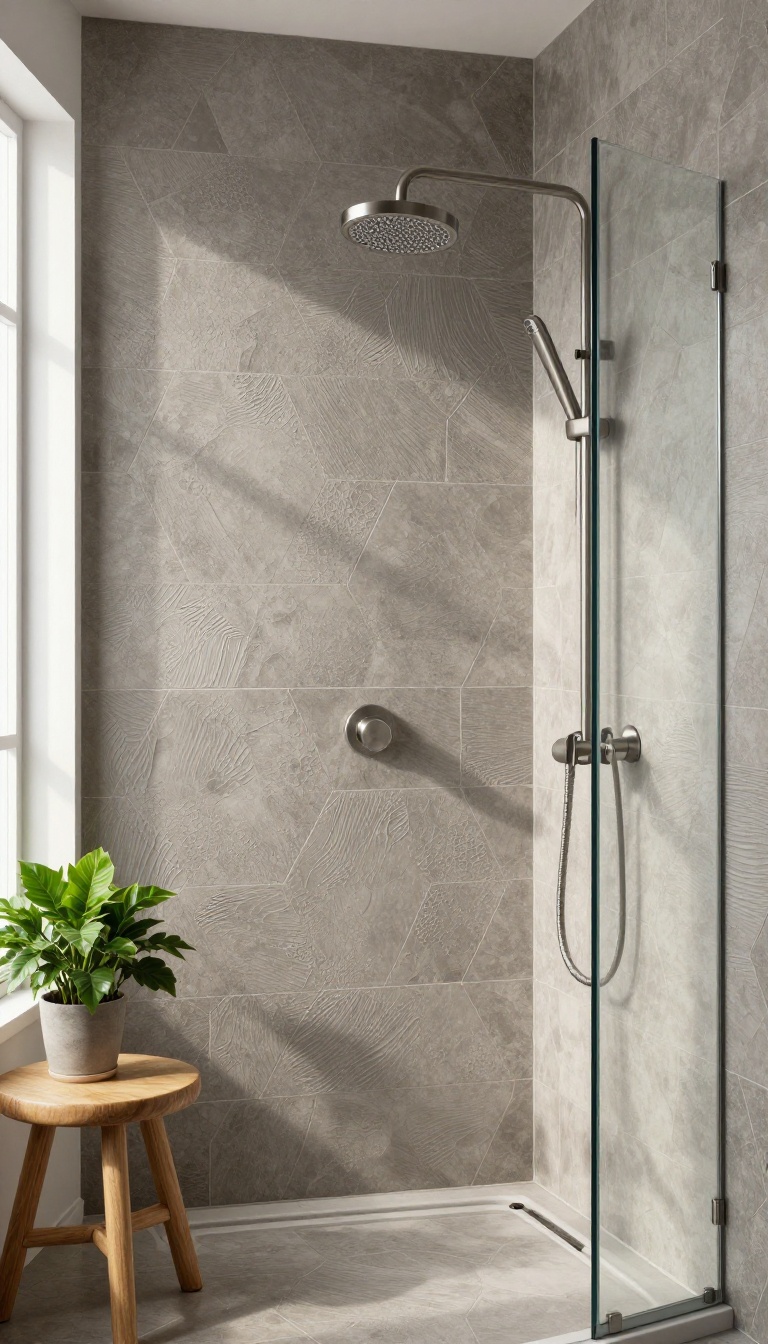
Hexagon tiles are a classic choice, but when you add texture, they become something else entirely. The raised surface catches light in interesting ways and provides a tactile experience that flat tiles just can't match. Plus, the texture adds grip, making the shower floor safer without sacrificing style.
Textured hexagon tiles are a smart pick for master showers because they combine visual appeal with practical benefits. The honeycomb shape creates a dynamic pattern that feels modern yet timeless, and the texture adds depth that makes the wall or floor feel more dimensional. Whether you choose a subtle ripple or a more pronounced ridge, these tiles bring a touch of sophistication to your space.
Why Texture Matters
Texture isn't just about looks—it's about safety. In a wet shower, smooth tiles can be slippery, but a textured surface provides traction underfoot. This is especially important if you have kids, elderly family members, or just want peace of mind.
Plus, the tactile feel under your feet adds a spa-like sensation that makes every shower feel more luxurious.
Choosing The Right Finish
Matte finishes are your best bet for textured hexagon tiles. They hide water spots and soap scum better than glossy options, and they don't glare under bright bathroom lights. Neutral tones like warm gray, beige, or soft white keep the look understated and versatile, so you can easily pair them with other design elements like wood vanities or brushed nickel fixtures.
Placement Ideas
You can use textured hexagon tiles on the shower floor for a non-slip surface, or on an accent wall to create a focal point. If you're feeling bold, cover the entire shower in them for a cohesive, immersive look. Mixing them with smooth tiles in complementary colors adds contrast and visual interest without overwhelming the space.
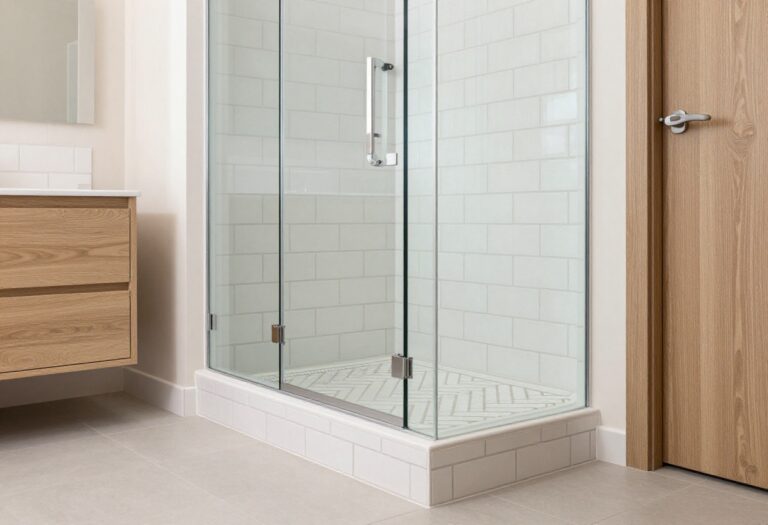
3. Vertical Stacked Subway Tile for a Modern Twist
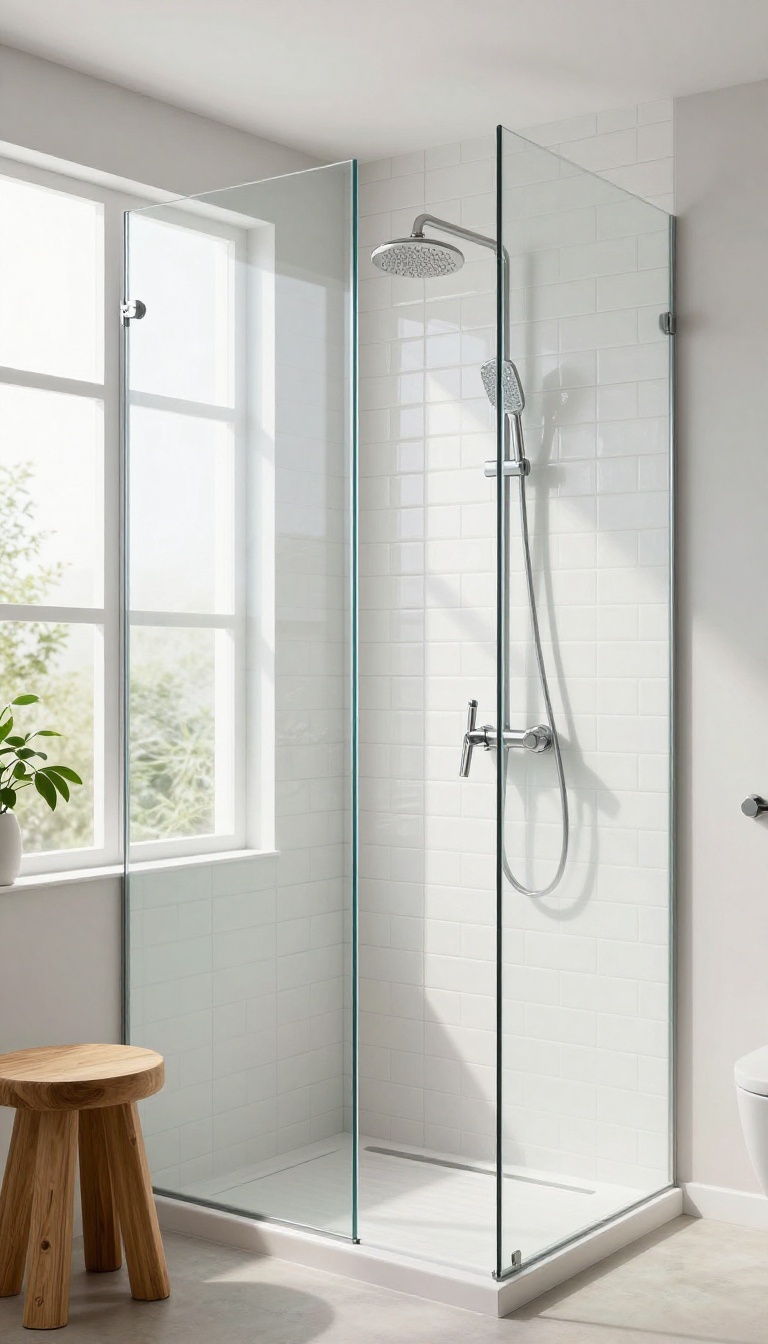
Subway tile is a timeless favorite, but the classic brick pattern can start to feel a little predictable. Flipping those same tiles on their end changes everything. Vertical stacking creates clean, continuous lines that pull the eye upward, making your shower feel taller and more open.
It's a simple swap that delivers a surprisingly fresh, contemporary look.
Vertical stacked subway tile is all about clean lines and a sense of height. By setting rectangular tiles in a straight grid, you create uninterrupted vertical lines that visually lift the ceiling. This is especially effective in showers with standard 8-foot ceilings, as it adds the illusion of more space.
The style works beautifully with both glossy and matte finishes, and it pairs well with a variety of grout colors—from subtle matching tones to bold contrasts that emphasize the grid.
Why Vertical Stacking Works
The vertical orientation draws the eye upward, making the ceiling feel higher than it is. This is a clever trick for smaller or lower bathrooms. The uninterrupted lines also add a sense of order and calm, which fits perfectly with the spa-like vibe many people want in a master shower.
Choosing The Right Tile Size
While standard 3×6 subway tiles work well, consider larger formats like 4×12 or even 3×12 for a more streamlined look. Longer tiles emphasize the vertical line even more and reduce the number of grout lines, making the surface easier to clean. For a bold statement, try extra-long 2×12 tiles.
Grout Color And Finish Ideas
To keep the focus on the vertical lines, choose a grout color that closely matches the tile. For a more graphic, modern look, use a contrasting grout—like dark gray with white tiles—to highlight the grid pattern. A matte finish on the tile can soften the overall effect, while a glossy finish adds a touch of luxury.
Pairing With Other Materials
Vertical stacked subway tile doesn't have to cover the entire shower. Use it on the main wall and pair it with a complementary material, like natural stone or large-format porcelain, on the accent wall or floor. This adds depth and prevents the space from feeling too uniform.
4. Herringbone Pattern with a Twist: Mix Two Tones
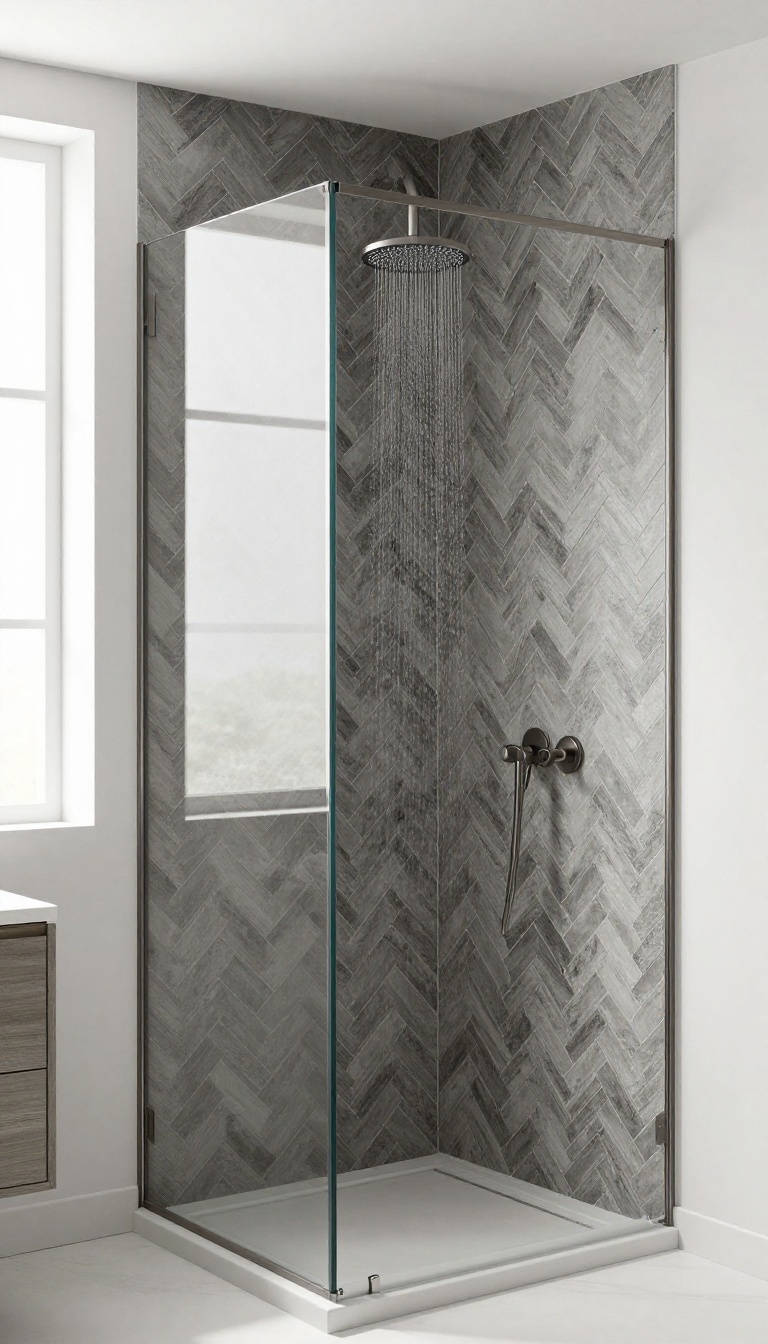
Herringbone is a classic pattern that instantly elevates a shower, but the traditional single-color approach can feel a bit safe. Mixing two complementary tones in that zigzag layout changes everything. You get the movement and visual interest of herringbone without the visual noise of too many patterns.
It's a clever way to add depth and a custom feel to your master bath without going overboard.
The beauty of this idea is its versatility. You can go subtle with two shades of the same color, like soft gray and charcoal, or make a bolder statement with contrasting hues like navy and white. The key is to keep the colors in the same family or choose two that naturally complement each other.
This approach works especially well on an accent wall behind the vanity or in a shower niche, where the pattern can shine without overwhelming the whole space.
Why Two Tones Work
Mixing two tones in a herringbone pattern adds dimension and a sense of custom design. The contrasting shades draw the eye and create a focal point, making the shower feel more intentional and designed. It also breaks up the monotony of a single color, adding subtle texture that catches light and shadow in interesting ways.
Choosing The Right Colors
For a cohesive look, pick two colors from the same color family—like light and dark gray, or beige and taupe. If you're feeling braver, go for complementary colors like blue and orange, but keep them muted to avoid a jarring effect. Neutral tones like white and black are timeless and pair well with almost any bathroom fixture.
Where to Use It
This pattern is ideal for a single accent wall or a shower niche. It can also be used as a border or a strip behind the bench. If you love the look but want to keep it subtle, use it on a smaller area like the floor or a backsplash.
The key is to balance it with solid, larger tiles elsewhere so the pattern doesn't compete for attention.
Installation Tips
Herringbone requires precise cutting and layout, so it's best left to a professional unless you're experienced. Plan the layout carefully to avoid awkward cuts at the edges. Use a contrasting grout to enhance the pattern, or match the grout to one of the tones for a more seamless look.
Make sure the tiles are properly back-buttered to prevent lippage.
5. Pebble Tile Floor for a Natural Foot Massage
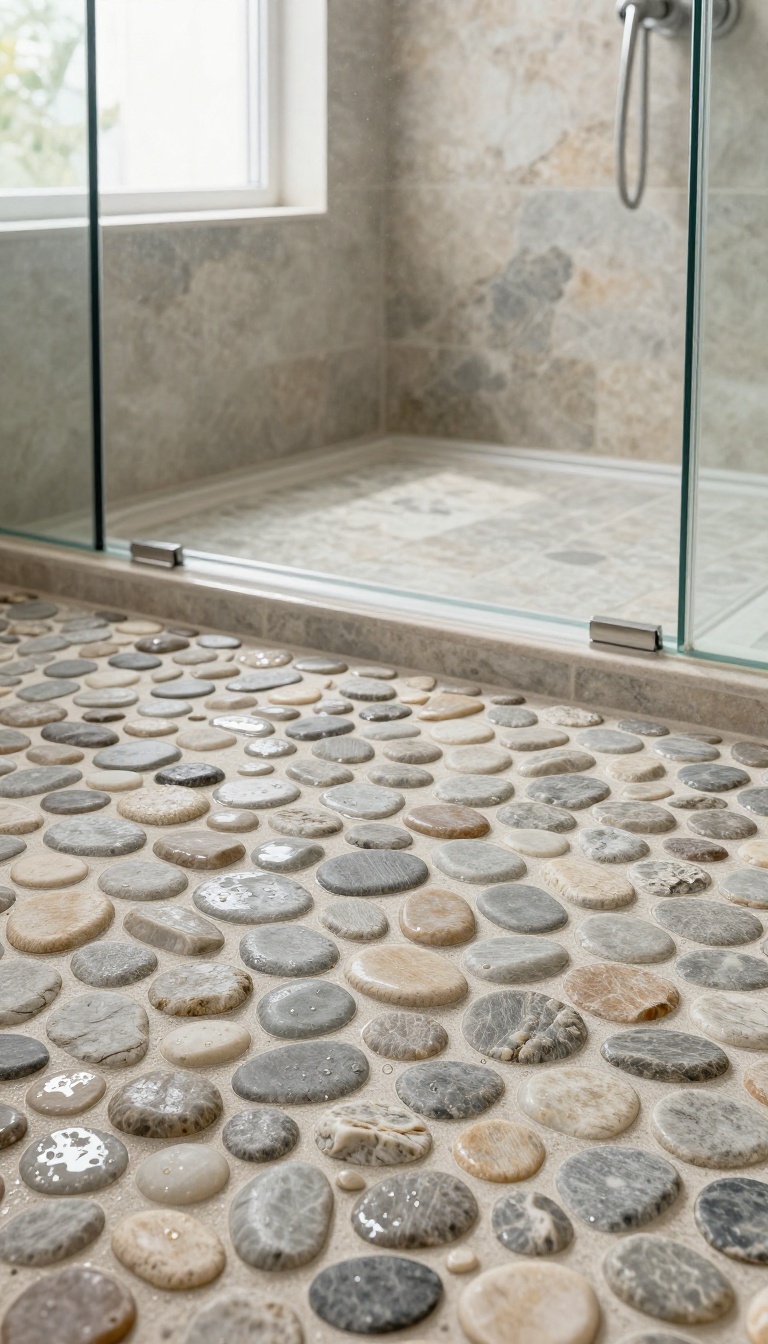
Stepping onto a pebble tile floor is like getting a mini foot massage every time you shower. The smooth, rounded stones feel amazing underfoot and provide a natural, non-slip surface that's perfect for a wet environment. Plus, the organic look instantly brings a spa-like calm to your master bath.
Pebble tiles are more than just a pretty surface—they're a functional choice that adds texture and safety. The uneven surface stimulates pressure points in your feet, which can improve circulation and reduce stress. And because the stones are naturally textured, they offer excellent traction even when wet, making them a smart pick for a shower floor.
Why Pebble Tiles Work So Well In Showers
The main reason pebble tiles shine in showers is their slip resistance. Unlike smooth porcelain or marble, the natural variation in stone height creates a grippy surface that helps prevent falls. Plus, the drainage is excellent—water flows between the stones, so puddles are less likely to form.
And let's not forget the comfort factor: the gentle massage effect is a daily treat.
Choosing Between River Stones And Sea Glass
When you decide on pebble tiles, you'll typically choose between river stones and sea glass. River stones are smooth, rounded, and come in earthy tones like gray, tan, and brown—they give a rustic, natural vibe. Sea glass, on the other hand, has a frosted, translucent look in soft colors like green, blue, or white, offering a more coastal, polished feel.
Think about the overall style of your bathroom and pick the one that complements it best.
Installation And Grout Tips
Pebble tiles come in mesh-backed sheets, which makes installation easier, but the grout lines need special attention. Use a sanded grout that matches the stone color to create a seamless look, and make sure the grout is well-sealed to prevent moisture damage. Also, be prepared for a slightly textured surface—it's part of the charm, but it does require a bit more cleaning effort to keep the crevices free of soap scum.
6. Geometric Patterned Tiles for a Bold Statement
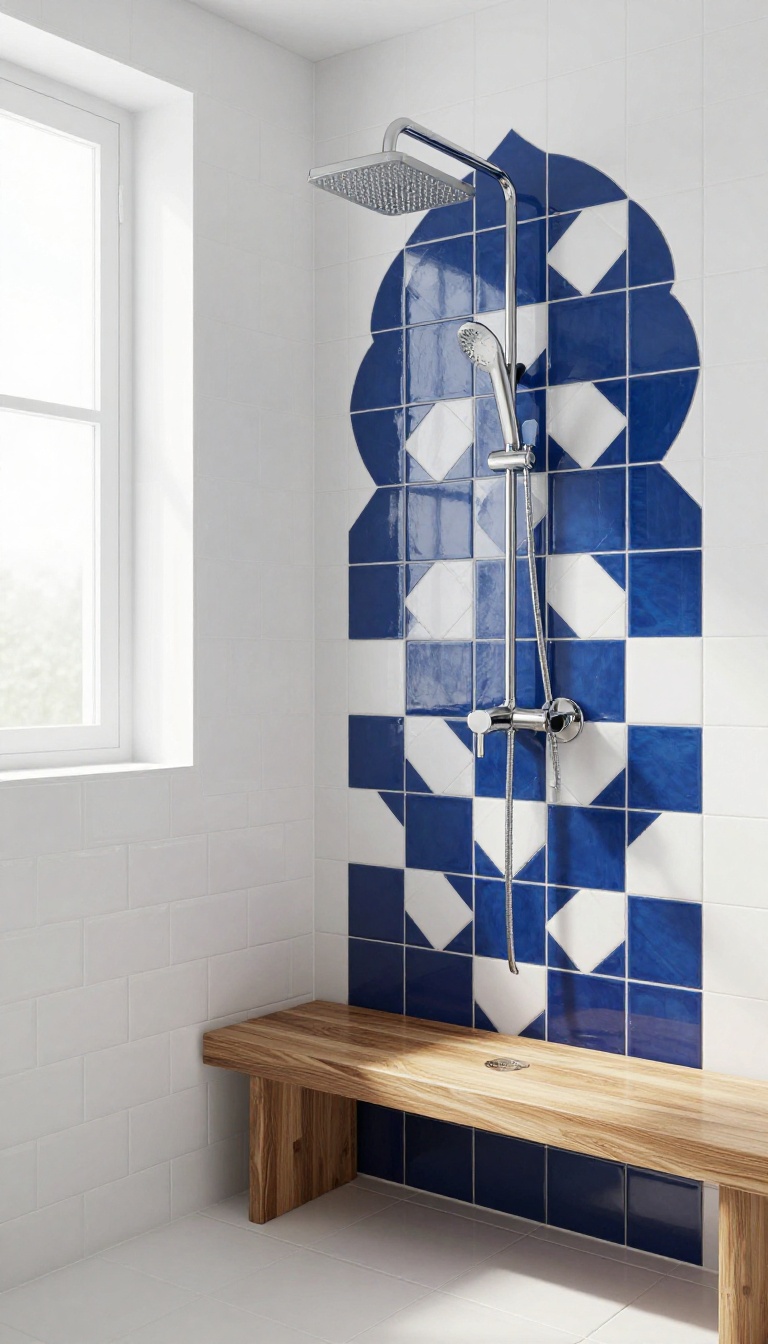
If you're ready to make a splash, geometric tiles are your ticket. They bring energy and movement to the shower, turning a functional space into a focal point. The key is balance—use them strategically so they enhance rather than overwhelm.
Geometric tiles come in a variety of shapes and patterns, from Moroccan-inspired star and cross designs to Art Deco fans and chevrons. They can be bold and colorful or subtle and monochromatic. The trick is to choose a pattern that complements your overall bathroom style and use it in a way that feels intentional.
Pick The Right Pattern
Start by considering the mood you want. Moroccan patterns, like the classic Zellige star, add a bohemian, handcrafted feel. Art Deco designs, with their fan and sunburst motifs, bring a touch of vintage glamour.
If you prefer a modern look, go for a large-scale geometric shape like a hexagon or a triangle in a matte finish.
Where To Use Them
A full wall of geometric tile can be stunning, but it's not for everyone. For a more subtle approach, use them on a single accent wall, like the one behind the shower bench or the niche. You can also create a border or a band of geometric tile at eye level to break up solid colors.
Balance With Solids
To keep the space from feeling busy, pair geometric tiles with solid-colored tiles in complementary hues. For example, if your geometric tile has blue and white, use a solid white or blue for the other walls. This creates a cohesive look that lets the pattern shine without competing for attention.
7. Subway Tile with a Glossy Finish for Light Reflection
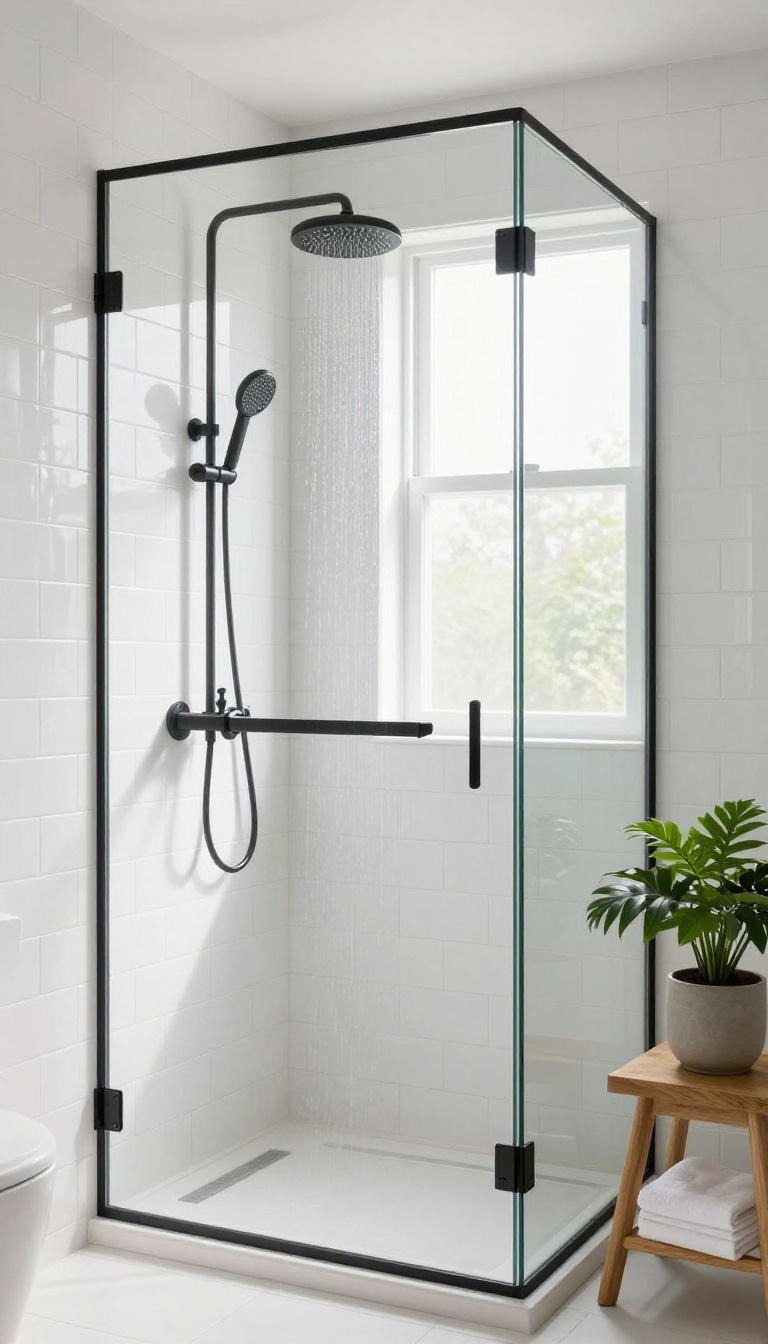
Glossy subway tile is a simple upgrade that changes how your shower feels. The shiny surface bounces light around, making even a compact master bath seem airier and more open. It’s a timeless look that pairs well with almost any design, from modern to traditional.
Beyond the light boost, the glossy finish is surprisingly practical. It resists water spots and soap scum better than matte options, so it stays looking fresh with less effort. If you want a bright, clean aesthetic that never feels dated, this is a reliable choice.
The glossy finish on subway tile does more than just shine. It acts like a mirror for light, reflecting both natural and artificial sources to brighten every corner of the shower. This can make a small master bath feel more spacious and welcoming.
Plus, the smooth surface is easy to wipe down, which helps keep grout lines cleaner for longer. Choosing a glossy subway tile doesn’t mean you’re stuck with plain white. You can pick soft pastels, warm neutrals, or even deep jewel tones that still reflect light beautifully.
The key is to pair the tile with a grout color that complements the finish—lighter grout keeps the look airy, while darker grout adds contrast and hides stains better. To get the most out of glossy subway tile, think about how you lay it. The classic brick pattern is always safe, but vertical stacking can make ceilings feel higher.
You can also experiment with a herringbone layout for a more dynamic look that still benefits from the reflective surface.
Why Glossy Beats Matte For Small Showers
In a compact master bath, every bit of light counts. Glossy tiles reflect more light than matte ones, which visually expands the space. They also create a smoother surface that doesn’t trap grime as easily.
If you’re working with limited square footage, this simple swap can make the room feel twice as large.
Pairing Glossy Subway Tile With Grout Colors
The grout you choose can make or break the glossy look. White or light gray grout keeps the shower feeling seamless and bright. For a more defined, graphic look, go with a darker grout that contrasts with the tile.
Just remember that darker grout will show less dirt, but it can make the tile appear more segmented.
Creative Layouts That Maximize Light Reflection
Don’t limit yourself to the standard brick pattern. A vertical stack draws the eye upward and makes the ceiling feel higher. A herringbone or diagonal layout adds visual interest while still reflecting light from multiple angles.
You can also mix glossy and matte tiles in the same color for a subtle texture play that keeps the space bright.
8. Wood-Look Planks for Warmth Without the Worry
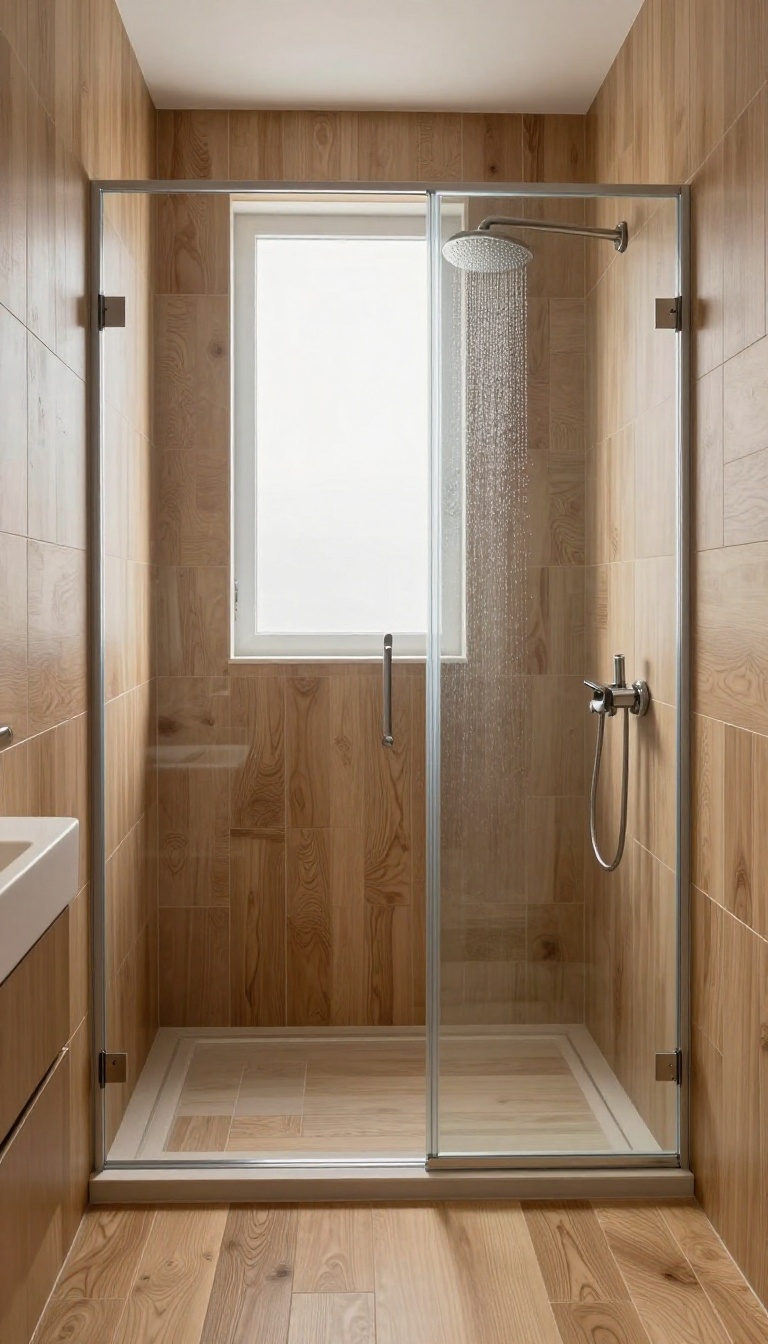
Craving the cozy feel of a spa-like wooden shower but dreading the upkeep? Wood-look porcelain planks give you that warm, natural aesthetic without the mold, warping, or sealing that real wood demands. They're a smart swap that brings instant character to your master bath.
Wood-look tile has come a long way, and today's options are remarkably realistic. You can find planks that mimic oak, walnut, teak, and even reclaimed barn wood, complete with grain texture and varied tones. The best part?
They're completely waterproof and built to handle the steamiest showers without a second thought.
Why Choose Porcelain Over Real Wood?
Real wood in a shower is a high-maintenance dream. It needs regular sealing, can warp with moisture, and is prone to mold in the grout lines. Porcelain planks skip all that.
They're non-porous, stain-resistant, and won't fade or rot. Plus, they're more durable than most natural stone, so they'll look great for years with just a wipe-down.
Picking The Right Plank Size And Finish
For a more authentic wood look, go with longer planks—think 6×24 inches or even 8×48 inches. The longer the plank, the more seamless the grain pattern appears. Choose a matte or textured finish to mimic real wood's feel and avoid slippery surfaces.
If you're worried about slip resistance, look for a tile with a higher COF (coefficient of friction) rating.
Layout Patterns To Showcase The Wood Grain
The way you lay the planks can change the whole vibe. A classic straight stack creates a clean, modern look, while a running bond (staggered) pattern feels more traditional. For a touch of drama, try a herringbone or chevron pattern—it turns your shower into a focal point.
Just keep in mind that more complex patterns may require more cuts and a skilled installer.
9. Zellige Tiles for Handcrafted Charm
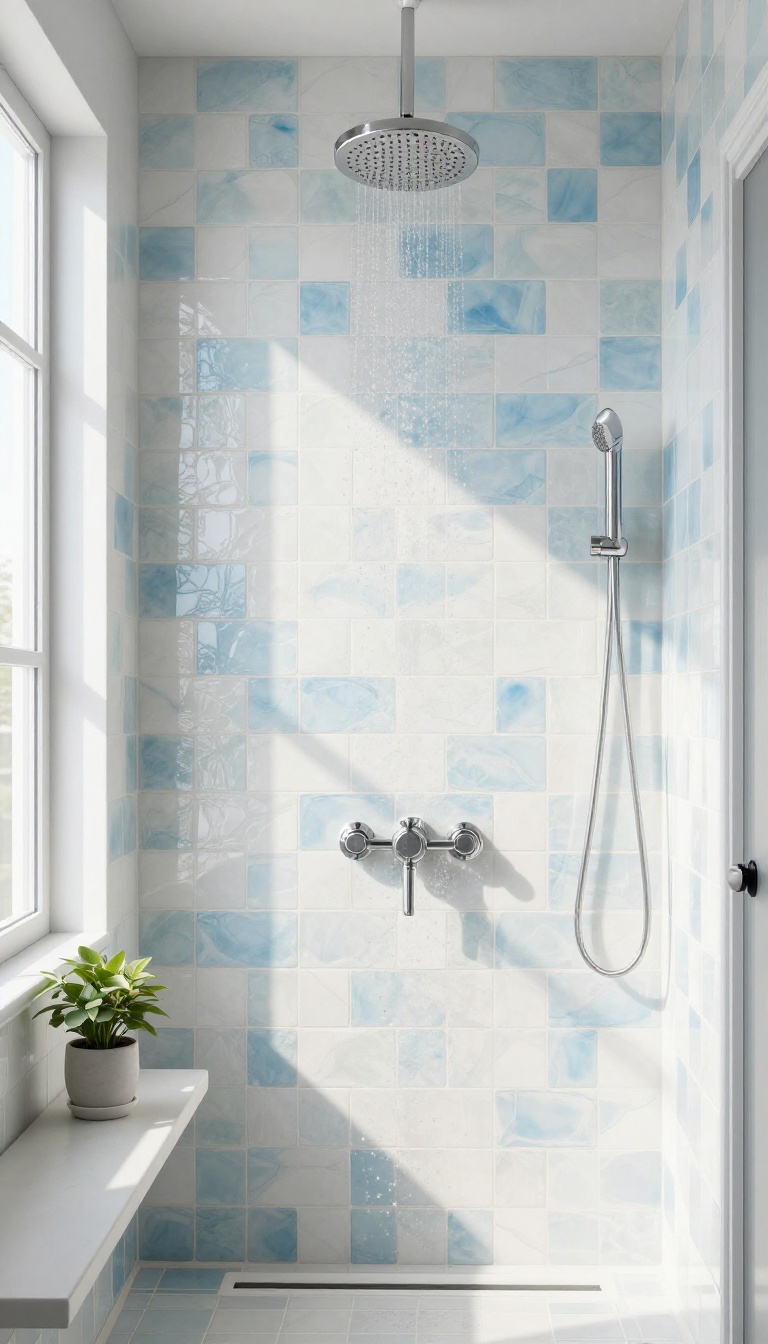
If you want a shower that feels like it was made by hand, zellige tiles are a fantastic choice. These Moroccan tiles have irregular edges and a glossy, hand-glazed surface that catches light in a way that feels alive. They bring an artisanal, one-of-a-kind character to your space, making your shower feel like a piece of art rather than just a functional area.
Zellige tiles are known for their imperfections, which are actually their charm. Each tile is slightly different in size, shape, and color, so the final wall has a natural, organic look that's impossible to replicate with mass-produced tiles. The glossy finish reflects light beautifully, adding warmth and depth to your shower.
However, because of their irregular edges, installation requires more skill and patience. You'll need a contractor who's familiar with zellige to ensure the grout lines are even and the surface is waterproof. But the result is worth it—a shower that feels custom and truly unique.
Why Zellige Stands Out
Unlike uniform tiles, zellige tiles have a handcrafted feel that adds warmth and texture. The subtle variations in color and shape make each installation one of a kind. Plus, the glossy surface reflects light, making your shower feel brighter and more inviting.
It's a great way to add personality without going overboard.
Installation Tips
Zellige tiles need a skilled installer who knows how to handle their irregularities. Use a white or matching grout to minimize contrast, and seal the tiles properly to prevent water damage. Take your time with the layout—the charm comes from the imperfections, so don't try to make it too perfect.
Design Pairings
Pair zellige with natural materials like wood or stone for a spa-like vibe. Use them on a feature wall or the shower floor to create a focal point. They work well with neutral colors, so let the tiles be the star.
Add warm lighting to enhance the glossy finish.
10. Penny Tile Accent Wall for Vintage Flair
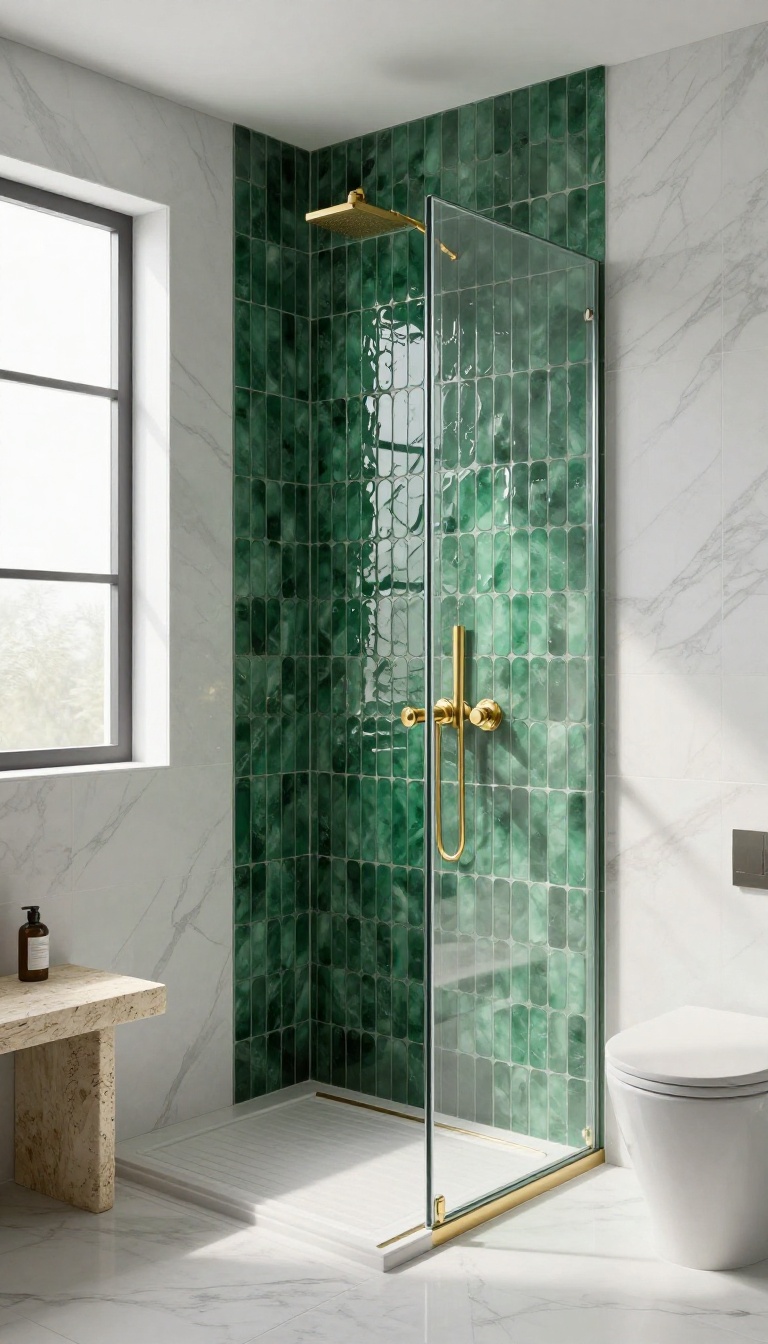
Penny tiles are having a moment, and it's easy to see why. Those small, round tiles bring a playful, retro vibe that feels both nostalgic and fresh. They're not just for floors anymore—using them on an accent wall or in the shower niche adds a unique texture that breaks up larger tiles beautifully.
What's great is that penny tiles come in a rainbow of colors, from classic white and black to bold blues and greens. They're also surprisingly durable, standing up to moisture and daily wear without losing their charm. If you want a shower that feels personal and a little bit quirky, this is a fantastic route to take.
Penny tiles are a versatile choice that can transform a plain shower into a statement. Their small size makes them perfect for curved surfaces, niches, and accent walls, giving you creative freedom. Plus, they're easy to clean and maintain, so you get style without the hassle.
Why Penny Tiles Work In A Shower
The round shape and small scale of penny tiles create a textured surface that adds depth and interest. They're naturally slip-resistant, which is a bonus for shower floors, but they really shine on walls. The grout lines become part of the design, so you can play with contrast—dark grout with white tiles gives a bold, graphic look, while matching grout creates a seamless, modern feel.
Where To Place Them
An accent wall behind the shower bench or along the back wall is a classic spot. You can also line the inside of a shower niche to make your shampoo bottles pop. For a more subtle touch, use penny tiles as a border or in a vertical strip.
The key is to balance them with larger tiles so the space doesn't feel too busy.
Color And Grout Ideas
White penny tiles with black grout give off a vintage diner vibe, while soft pastels like mint or peach add a playful, retro feel. If you prefer something more modern, go for matte black or deep navy. For grout, consider a contrasting color to highlight the pattern, or choose a similar tone for a smoother look.
Don't be afraid to mix penny tile colors in a random pattern for a truly custom design.
11. Large Hexagon Tiles for a Modern Classic
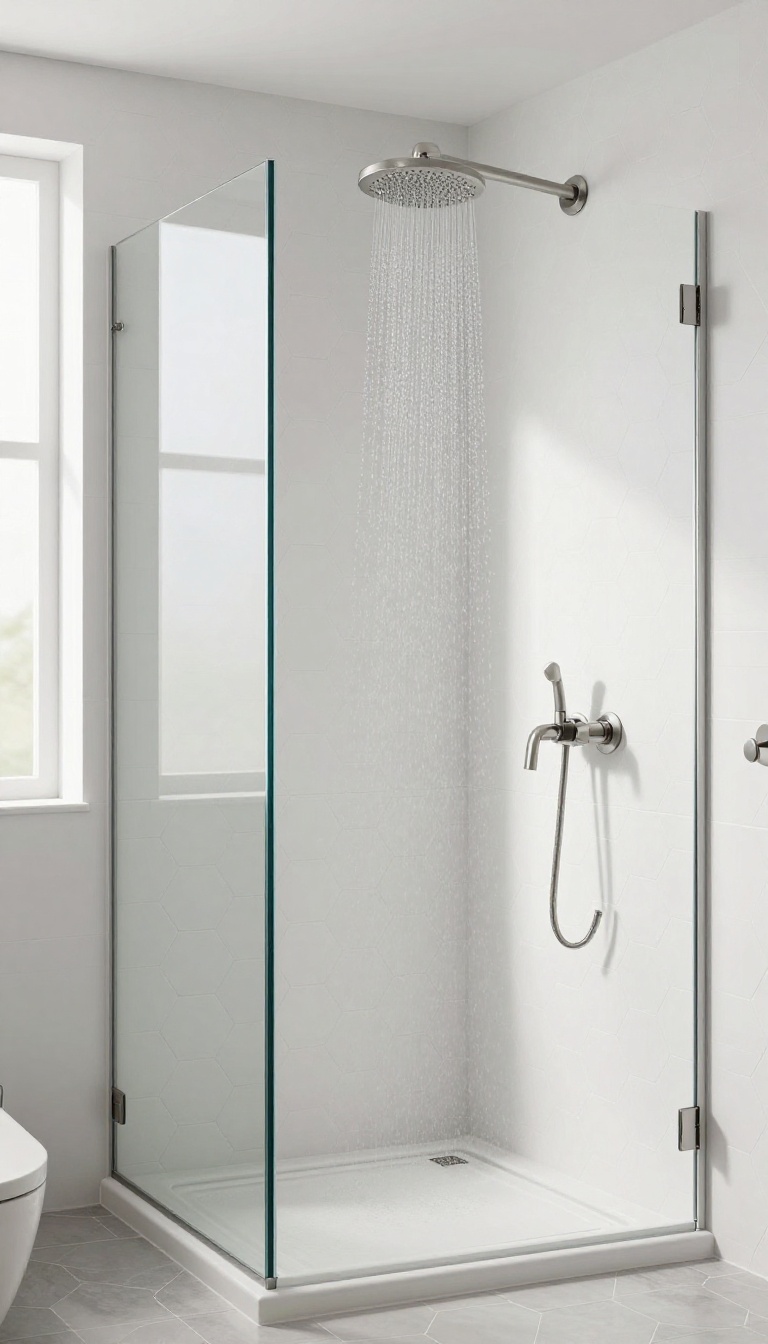
Hexagon tiles have been around forever, but the large-format version feels completely fresh. Instead of the tiny mosaic look, these big six-sided tiles create a bold, clean geometry that anchors the whole shower. They're a smart pick if you want pattern without the busyness.
Large hexagon tiles give you the best of both worlds: a classic shape with a modern scale. The bigger size means fewer grout lines, which makes the shower easier to clean and visually calmer. You can use them on the floor for grip, on the walls for a statement, or both for a cohesive look.
The key is to pick a finish and color that match your overall vibe—matte white for a crisp feel, or a soft gray for something more grounded.
Why Scale Matters
The size of the hexagon changes the entire mood. Small hexes feel busy and traditional, while large ones feel contemporary and airy. With fewer grout lines, the tile pattern reads as a solid surface with subtle texture.
That's why large hexagons work so well in modern bathrooms—they add interest without overwhelming the space.
Floor Vs. Wall Placement
On the floor, large hexagons provide excellent traction and a soft, geometric look underfoot. On the walls, they create a seamless, almost monolithic surface that makes the shower feel bigger. You can mix and match—use large hex on the floor and a complementary subway tile on the walls—or keep it uniform for a more dramatic effect.
Color And Finish Ideas
White or off-white large hexagons are the most versatile, but don't shy away from pale blues, greens, or even black for a bold statement. Matte finishes hide water spots and are safer for floors, while glossy finishes reflect light and add a touch of luxury. Pick a finish that balances style with everyday practicality.
12. Mosaic Tiles with Metallic Accents for a Touch of Glam
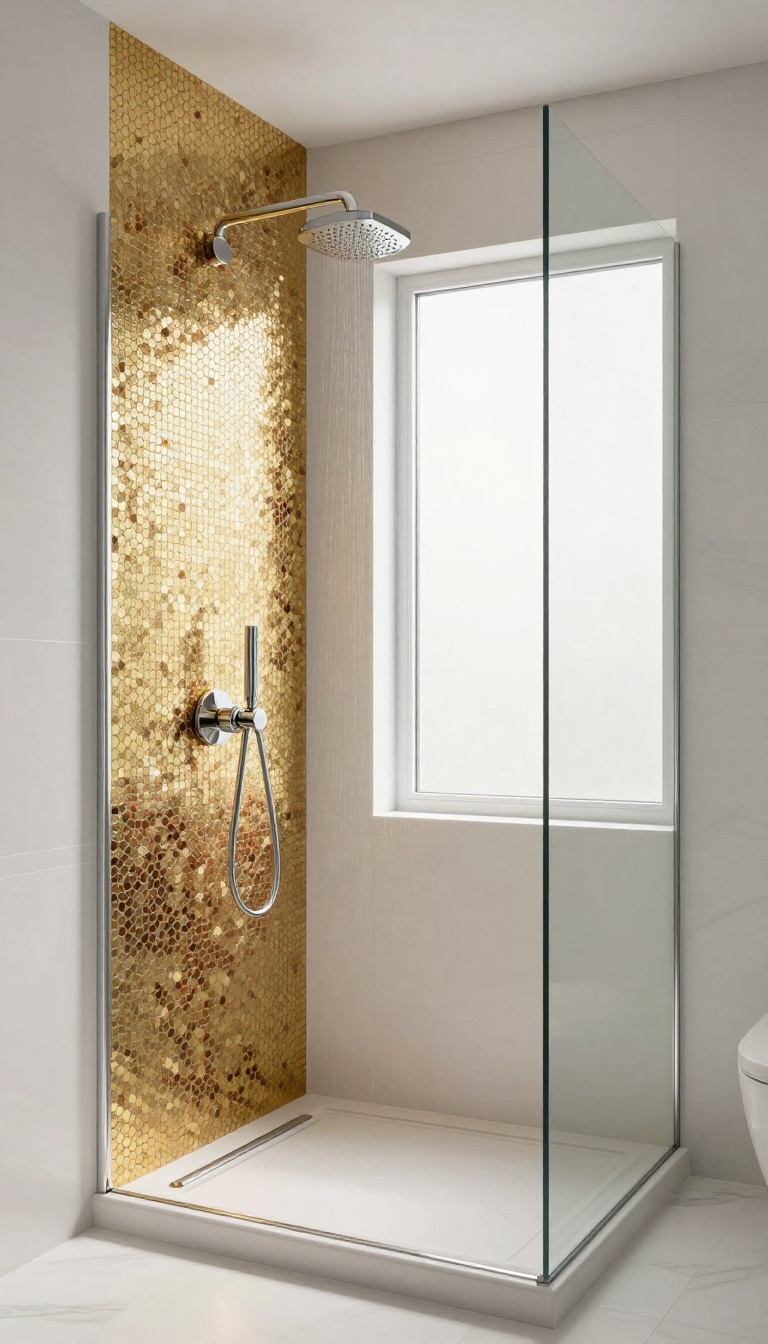
A little shimmer can go a long way in a master shower. Metallic mosaic tiles, whether brass, copper, or gold, add a touch of luxury without making the space feel overdone. Use them sparingly to catch the light and create a focal point that feels intentional and refined.
Metallic accents in tile form are a smart way to introduce glamour. They work beautifully as a border, a niche insert, or a vertical strip that draws the eye. The key is restraint—let the metallic pieces highlight, not overwhelm.
Why Metallic Mosaics Work
Metallic tiles reflect light, making the shower feel brighter and more spacious. They also add warmth, especially when paired with neutral or cool-toned tiles. The contrast creates visual interest without needing a full wall of shiny surfaces.
Where To Place Them
A classic spot is a horizontal band at eye level or a framed niche for your shampoo bottles. You could also run a thin vertical line from floor to ceiling to elongate the space. Keep the metallic area small to maintain a sophisticated look.
Pairing With Other Tiles
Metallic mosaics pair well with large-format porcelain, marble-look ceramic, or even simple subway tile. For a cohesive palette, choose metals that complement your fixtures—brass with warm tones, chrome with cool, and copper for a rustic twist.
Care And Maintenance
Metallic tiles are durable but need gentle cleaning. Avoid harsh abrasives that can scratch the finish. Use a mild cleanser and a soft cloth to keep the shine intact.
With proper care, they'll stay glamorous for years.
13. Contrasting Grout to Highlight Your Tile Shape
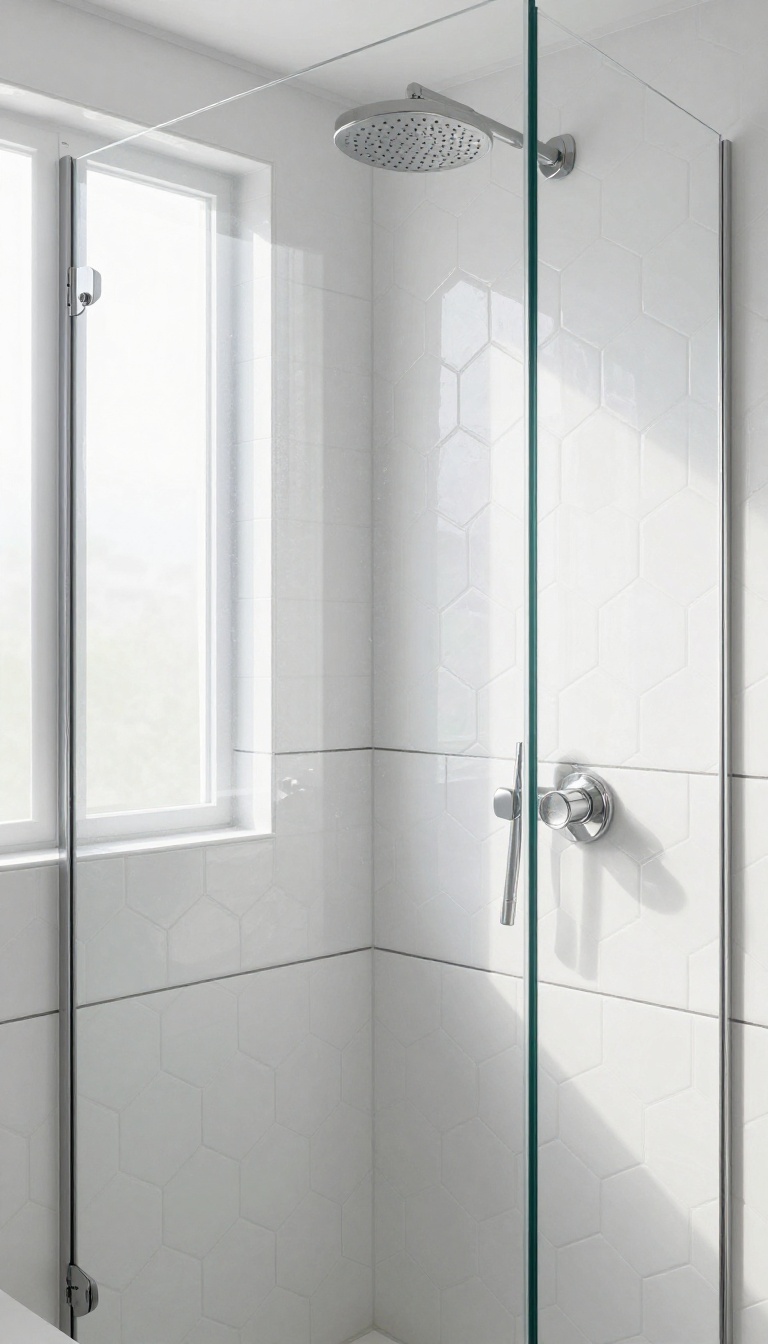
Grout often plays second fiddle to the tile itself, but it deserves more credit. The color and width of your grout lines can completely transform how your tile reads in the shower. A simple swap from matching to contrasting grout can turn a flat, uniform surface into a striking focal point.
When you pick a grout color that contrasts with your tile, you're essentially drawing a grid across the wall. This works especially well with geometric shapes like hexagons, arabesques, or fish scales, as the lines emphasize the pattern's rhythm. On the other hand, matching grout blends everything together, creating a smooth, monolithic look that lets the tile's texture or subtle color variations shine.
The choice isn't just about aesthetics—it also affects maintenance. Darker grout hides dirt better, while lighter grout can make the space feel airier.
Why Contrast Works
Contrasting grout adds definition. If you've chosen a tile with an interesting shape, like a scallop or a star, a contrasting grout color will make that silhouette stand out. It also adds depth, making the wall feel more dimensional.
For a modern, graphic look, pair white subway tile with black grout. For something softer, try a warm cream tile with a terracotta grout.
When To Go Monochromatic
If your tile has a busy pattern or a textured surface, matching grout is your friend. It lets the tile be the star without visual competition. This approach also works well for large-format tiles, where you want the surface to feel like one continuous slab.
Use a grout color that's a close match to the tile's base tone to achieve a seamless effect.
Grout Width Matters Too
The thickness of your grout lines plays a role in the overall look. Thin lines (1/8 inch or less) create a more refined, modern feel, while wider lines (1/4 inch or more) give a more rustic, traditional vibe. When using contrasting grout, thinner lines can make the pattern look crisp and precise, while thicker lines add a bolder, more graphic element.
FAQ
What is the best tile size for a small master shower?
Large-format tiles (like 12×24 or larger) are ideal for small showers because they minimize grout lines, making the space feel more open and less busy. They also have fewer places for grime to build up.
Are textured tiles harder to clean?
Textured tiles can be slightly more challenging to clean than smooth ones, but they offer better slip resistance. Choose a matte finish with a subtle texture, and use a soft brush to keep grout lines clean.
Can I mix different tile styles in my shower?
Absolutely! Mixing tile styles can add depth and interest. For example, pair large-format slabs on the main walls with a pebble floor or a mosaic accent strip.
Just keep the color palette cohesive.
What is the most durable tile for a shower?
Porcelain tile is one of the most durable options for showers because it's dense, water-resistant, and less porous than ceramic. Look for tiles with a PEI rating of 3 or higher for floor use.
How do I choose the right grout color?
Choose grout that either blends with your tile for a seamless look or contrasts to highlight the pattern. For light-colored tiles, a white or light gray grout works well. For dark tiles, consider a darker grout to avoid staining.
Conclusion
Your master shower should be a personal retreat, and the right tile can make all the difference. Whether you prefer the sleek look of large slabs or the playful charm of penny tiles, there's an option that balances style and practicality.
Take your time to explore these ideas and imagine how they'll feel underfoot and in your daily routine. With a little planning, you can create a shower that's both smart and stylish for years to come.