15 Living Room Divider Ideas Small Spaces Can Use Well
A small living room can handle a lot, but it can't handle everything at once. When your couch doubles as an office and your dining table lives three feet from the TV, a divider starts to sound less like decoration and more like a rescue plan.
The good news is you don't need a renovation or a big budget to make one work. From tension rods to thrifted shelving, there are plenty of ways to carve out zones without making the room feel cramped.
Here are 15 divider ideas that actually fit small spaces, along with what each one costs, how hard it is to install, and who it works best for.
1. Tension Rod and Curtain Divider
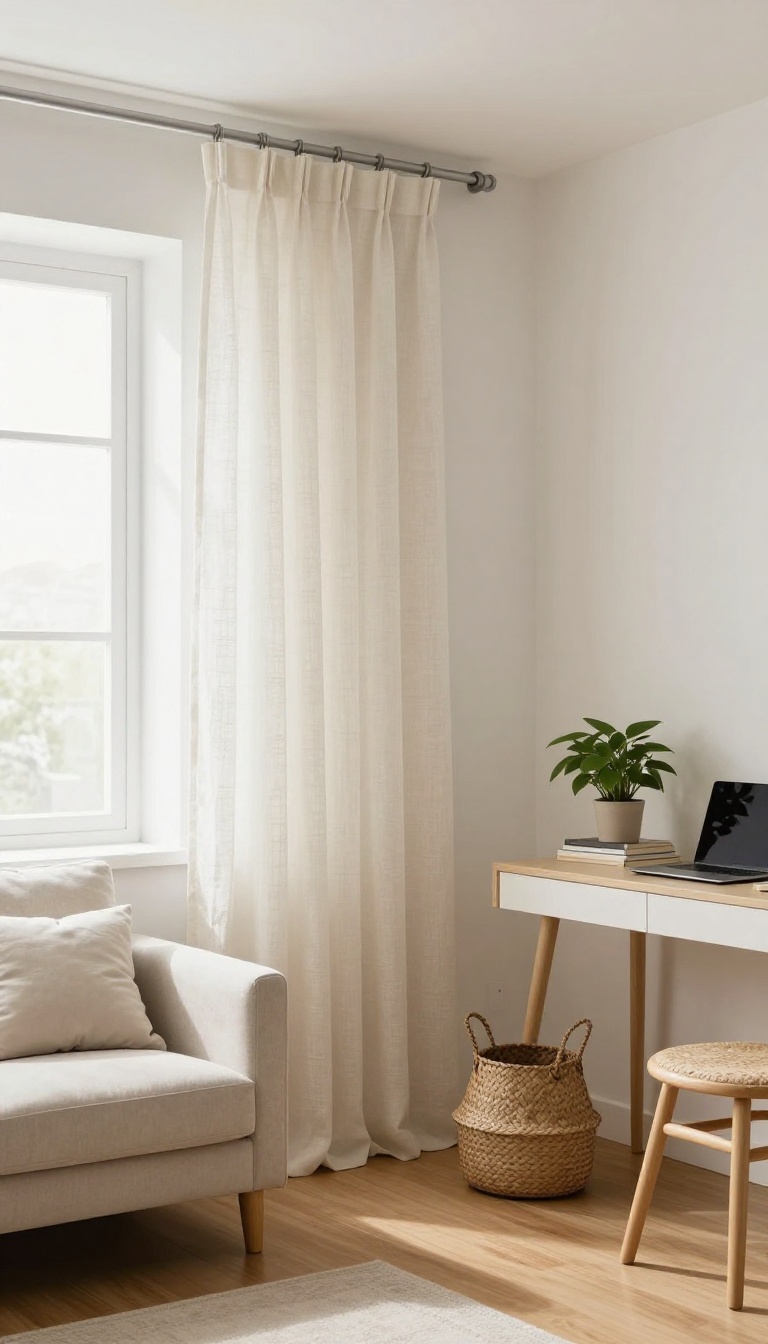
A tension rod and curtain might be the simplest divider you can set up without touching a drill. It wedges between two walls, and the curtain slides open or closed whenever you need to switch between hanging out and getting work done. For renters especially, this is a win because it leaves zero holes behind.
The whole setup usually costs under $40, and you can take it down in seconds if you need the space back. That low commitment makes it perfect for small living rooms where the layout might change with the seasons or your roommate situation. Just make sure the rod has enough tension to hold the curtain without bowing in the middle.
What You'll Need
A tension rod that fits your wall-to-wall distance, a lightweight curtain, and maybe a couple of curtain rings if your rod doesn't come with them. Skip heavy blackout curtains unless your rod is extra sturdy. A cotton or linen blend curtain works best because it's easy to push aside.
Where It Works Best
This divider shines in doorways, between a couch and a desk, or along the back of a sofa that faces a kitchenette. It's also great for hiding a cluttered corner without blocking light completely. If your walls are textured or fragile, test the rod first with a gentle push.
Installation Tips
Measure the width at the exact height you want the rod, since walls can be uneven. Twist the rod until it feels snug, then give it a light tug to check it won't slip. Hang the curtain and slide it open and closed a few times to make sure it glides smoothly.
2. IKEA Kallax as a Room Divider
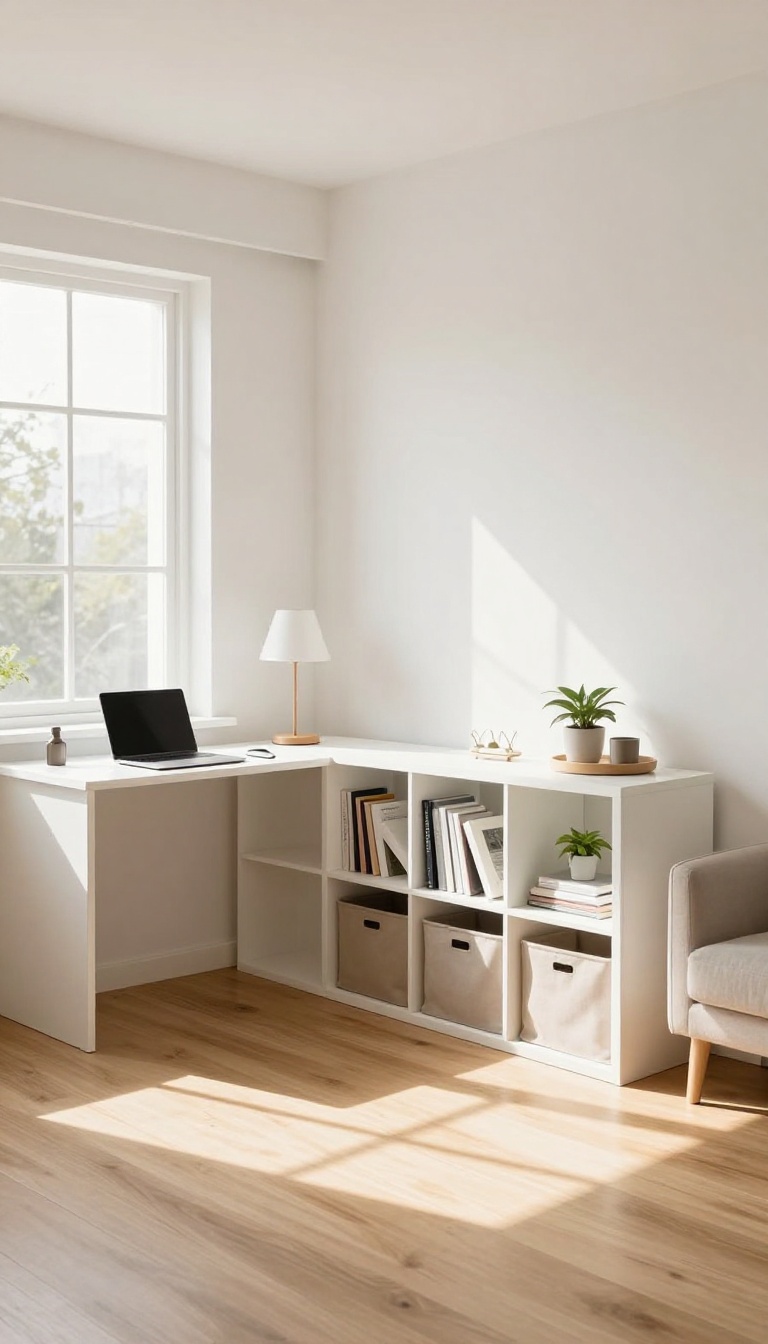
The Kallax is probably the most popular shelving unit on the planet, and for small-space renters, it pulls double duty as a room divider. You can place it on its side to create a low visual wall, or stand it tall for a more dramatic separation. Either way, you get storage for books, baskets, and board games while carving out distinct zones in your living room.
What makes the Kallax so useful here is its open-back design. Light passes through, so the room doesn't feel like a cave, but the shelves still block sightlines enough to define a seating area from a workspace or entryway. You can also add legs or casters to lift it off the floor, which makes the space feel airier and lets you move it when you need to reconfigure.
Orientation: Sideways Or Standing Tall
A 4×2 Kallax on its side makes a waist-high divider that keeps conversations open across the room. It's great if you want separation without a full wall. A 2×4 standing tall gives you more privacy and vertical storage, but it can block light, so place it where it won't cut off your main window.
For very small rooms, a 1×4 or 2×2 unit works as a subtle boundary without eating up floor space.
Storage That Earns Its Keep
Fill the cubes with fabric bins for clutter you don't want to see, or leave some open for books and plants. The top surface is prime real estate for a lamp, a small speaker, or a tray for keys. If you're using it as a divider between a living area and a home office, assign the bottom cubes to office supplies and the top ones to living room stuff, so each side has its own dedicated storage.
Stability And Safety
A tall Kallax can tip if someone leans on it or a kid tries to climb. Always use the included wall anchor, especially if you have pets or children. If you're renting and can't drill into walls, look for tension-based anti-tip straps or place the unit between two pieces of furniture to wedge it in.
Adding a non-slip pad under the legs also helps it stay put on hard floors.
Styling So It Doesn't Look Like A Dorm Shelf
Group items in odd numbers and vary heights to avoid a flat look. Mix baskets, books, and a few decorative objects, but leave at least one or two cubes empty for breathing room. You can also paint the back panel or add wallpaper behind it to make it feel custom.
A small plant or a sculptural lamp on top draws the eye up and makes the divider feel intentional.
3. Sliding Barn Door on a Track
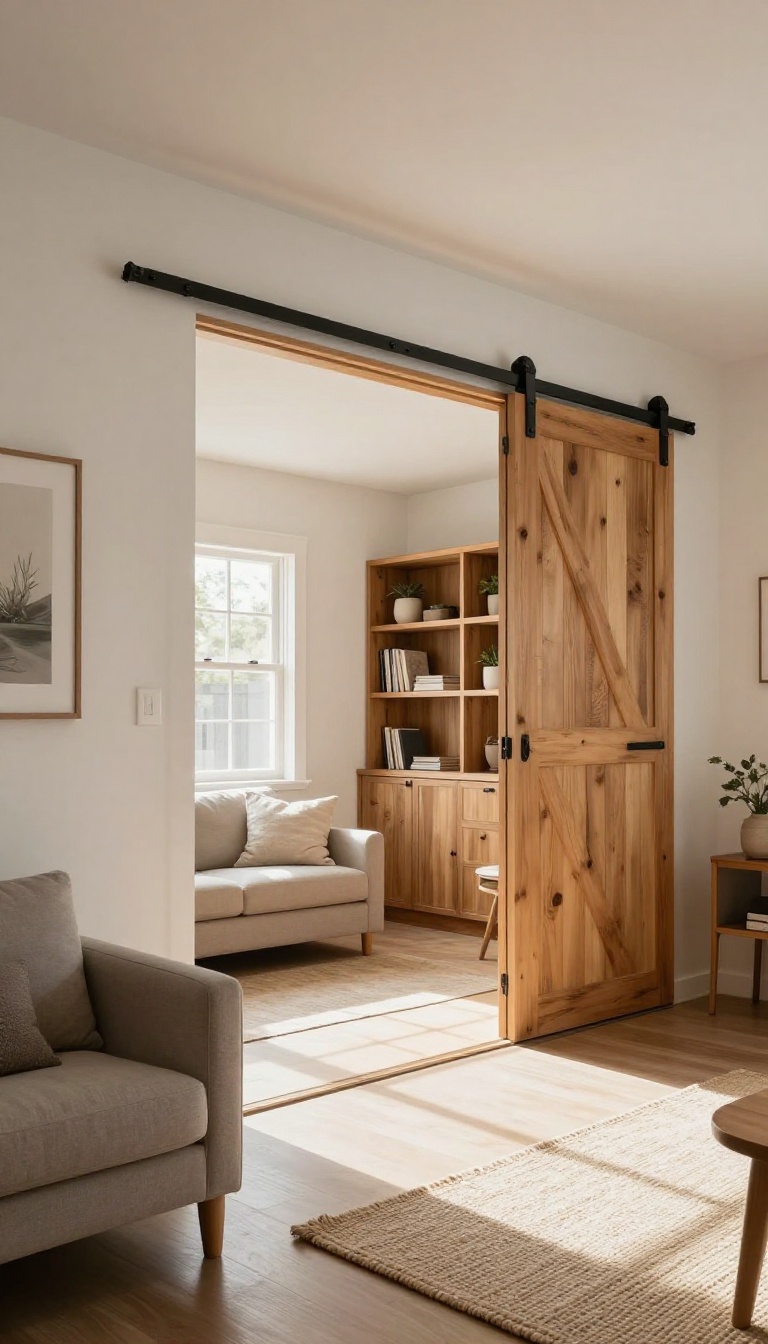
A barn door slides along the wall instead of swinging into the room, so you get a real door without losing floor space. That matters in a small living room where every inch counts. It's also a stylish way to close off a home office, guest nook, or anything else you want to hide when company comes over.
The hardware does most of the work here. You mount a metal track above the opening, hang the door on rollers, and it glides side to side. No door swing means you can place furniture right up to the frame.
The trade-off is that the door needs wall space to slide onto, so plan for that before you buy.
What It Costs
A basic barn door kit with track and hardware runs $150 to $300. The door itself can be a plain slab for around $80, or you can spend $200+ on a reclaimed wood or paneled style. If you already have a door, you can buy just the track kit for $60 to $120.
Installation Basics
You'll need a drill, a level, and a stud finder. The track must attach to wall studs or solid blocking, so if you hit drywall only, add a wood backer board first. Most DIYers finish in two to three hours.
Renters should check with their landlord before drilling.
Best Spots For It
Use a barn door to close off a closet-turned-office, a guest alcove, or a pass-through to the kitchen. It works best on openings up to 36 inches wide. For wider gaps, consider a double-door setup or a different divider.
Style And Sound
Barn doors add a rustic or modern-farmhouse touch, but they don't seal tightly. If you need sound blocking, add weatherstripping or a felt strip along the edges. That helps with privacy without killing the look.
4. Bookshelf with Open Back
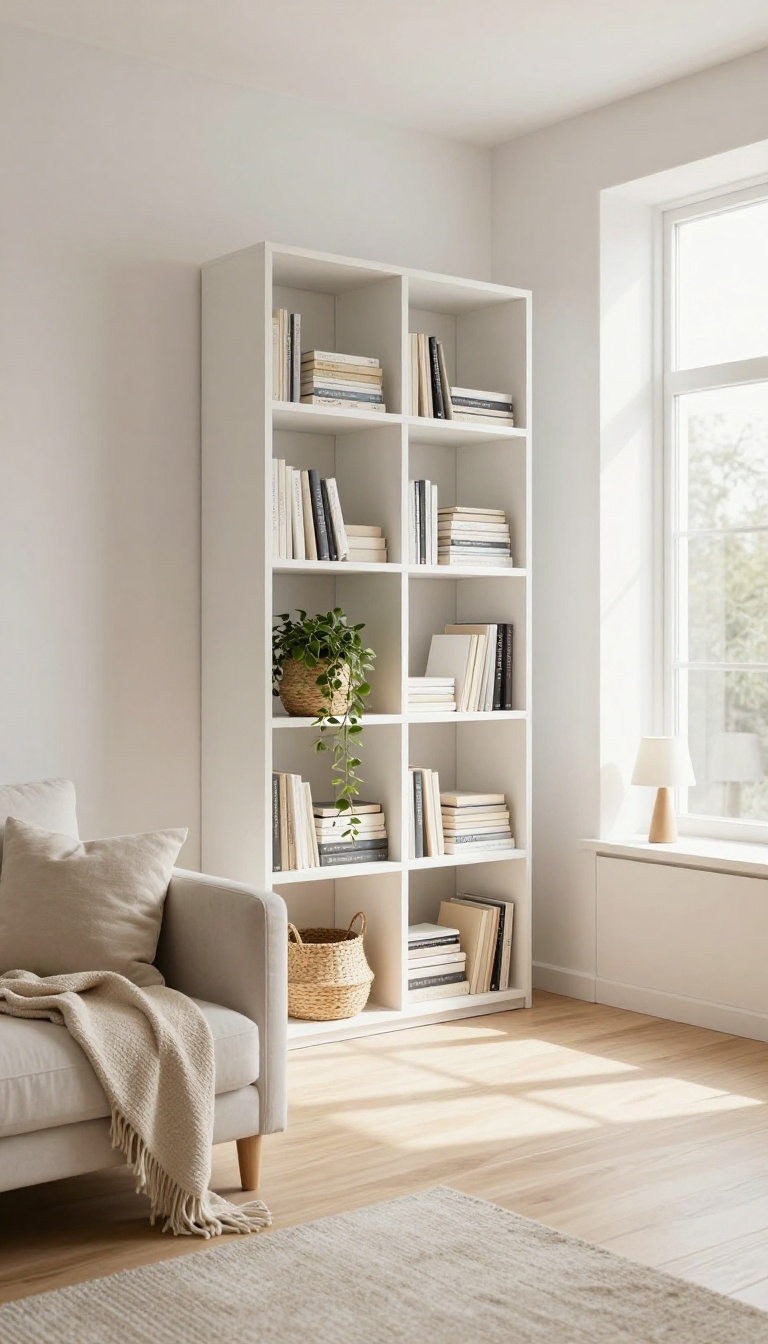
A regular bookshelf blocks light and makes a small room feel like two closets. An open-back version flips that problem on its head. You still get storage and a clear boundary, but daylight and sightlines pass right through.
The room stays bright, and your zones still read as separate spaces.
Open-back shelving works because it doesn't ask you to choose between function and light. You get a real divider that holds books, baskets, and plants, but it never turns into a wall. In a small living room, that difference is huge.
The space feels intentional instead of chopped up. You can buy open-back units, or you can make one from a standard bookshelf by leaving the back panel off. Either way, the setup is renter-friendly and easy to move later.
Pair it with a few woven baskets to hide clutter, and you've got a divider that looks deliberate from both sides.
Why Open-back Works In Small Rooms
Light travels through the shelves, so the room doesn't get darker on one side. That keeps your living area feeling like one big space, just with a soft border. You also get a two-sided view, which means the divider looks good from the couch and from the entryway.
No more staring at a plain panel.
How To Set One Up Without Heavy Tools
Start with a freestanding open-back shelf, or remove the back panel from a basic bookcase. Place it perpendicular to the wall so it defines a walkway or separates the TV from the seating area. If you need extra stability, use a simple anti-tip strap.
That's it. No drilling into rental walls required.
Styling Tips That Keep It Useful
Keep the lower shelves for storage you don't need to see every day. Baskets, bins, and stacked magazines work well there. Use the upper shelves for a few plants, a small lamp, or a couple of books.
Leave some empty space so the light can move through. The goal is balance, not a packed shelf.
Who This Divider Suits Best
This is a great pick if you rent and want something you can take with you. It also works for anyone who needs storage but can't sacrifice natural light. If your living room has only one window, an open-back shelf keeps that light working for the whole room.
Just avoid it if you need total privacy or sound blocking.
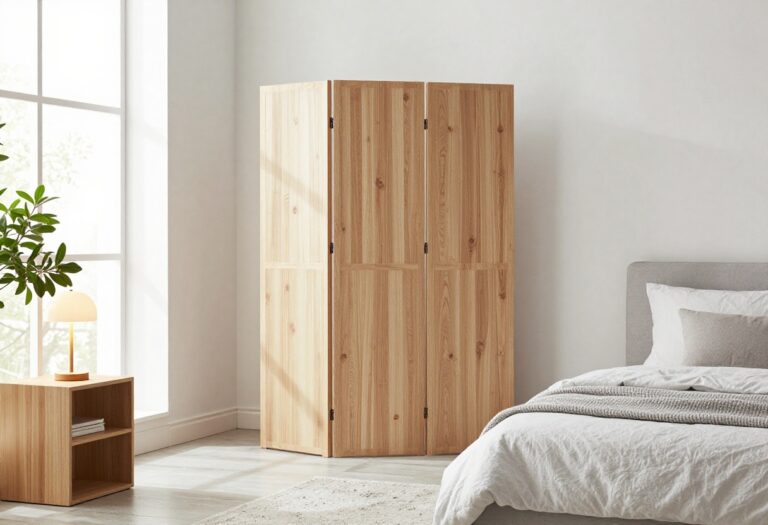
5. Folding Screen with Fabric Panels
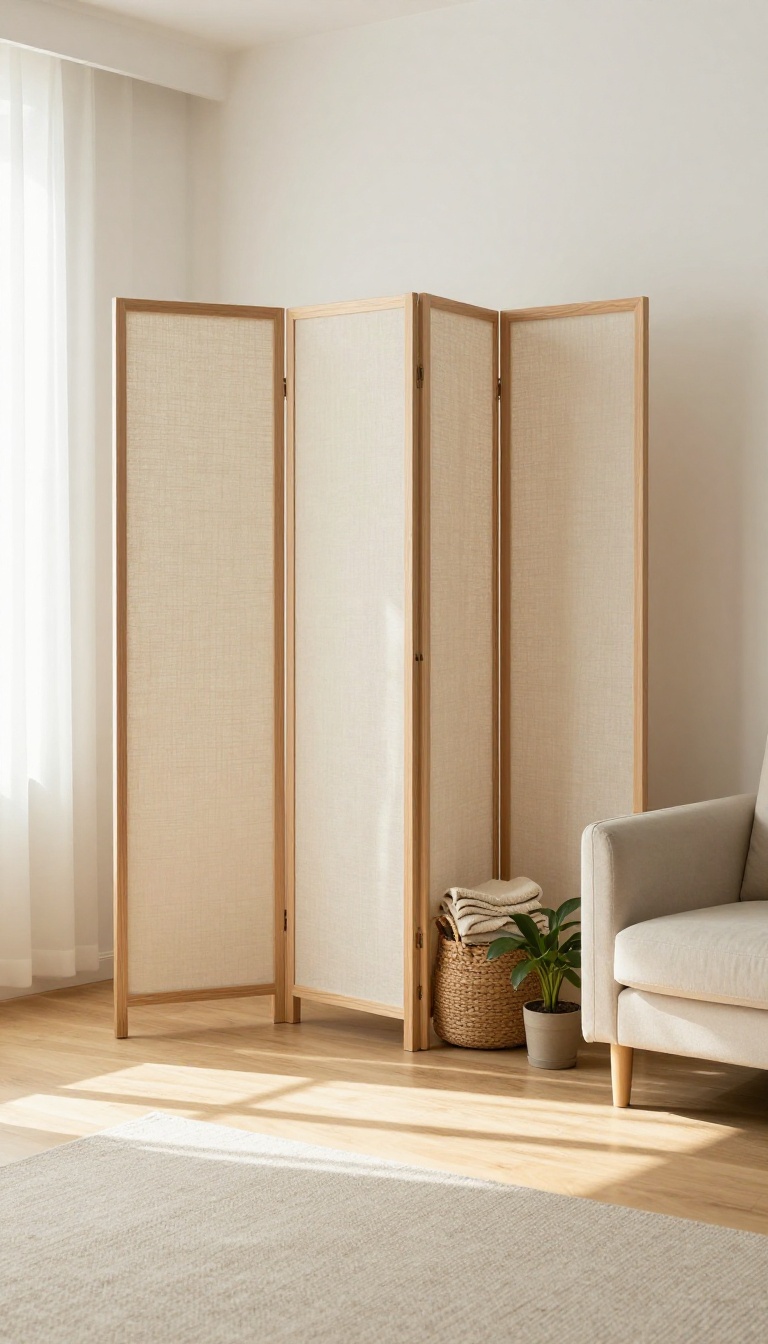
A folding screen gives you a wall you can move with one hand. Three hinged panels, usually fabric stretched over a light wood or metal frame, stand up on their own and fold flat when you're done with them. Most versions land between $40 and $60, which makes this one of the cheapest ways to divide a room without drilling a single hole.
You just unfold it, angle the panels, and you've got instant privacy.
The appeal here is speed and flexibility. You don't measure, you don't anchor, and you don't need a landlord's permission. If you hate where it ends up, you drag it somewhere else.
That said, a folding screen isn't a real wall. It blocks sightlines, not sound, and it won't hold shelves or a TV. Treat it as a soft boundary and it works great.
What It's Actually Good At
Hiding clutter is the number one job. Park it in front of a laundry pile, a cat litter box, or the corner where chargers and cables breed. It also shines as a dressing screen.
If your bedroom is basically a bed and a closet rod, a folding screen gives you a spot to change without giving the neighbors a show. And because it's only about six feet tall, light still moves over the top, so the room doesn't go dark.
Pick The Right Panel Material
Fabric panels are the classic choice because they're lightweight and come in every color. Canvas and linen blends feel sturdier than thin polyester, and they hold up better if you're moving the screen often. If you want something a little more solid, look for a screen with a woven rattan or bamboo insert.
Those let air through and add texture, though they cost a bit more. Skip anything with flimsy plastic hinges, since those are the first thing to snap.
Where It Fits Best
Tuck it at the end of a sofa to separate the seating area from a home office nook. Angle it near a window to soften glare without losing the view. In a studio, place it between the bed and the kitchenette so you're not staring at dishes from your pillow.
Just leave a gap on one side. A screen that touches two walls starts to feel like a cage, and you want the room to breathe.
Small Upgrades That Help
Add stick-on felt pads to the bottom of each panel so it slides without scratching wood floors. A clip-on spotlight aimed at the screen turns it into a backdrop instead of a blocker. If the fabric looks plain, drape a throw blanket over one panel or pin a few postcards to it.
That's the whole trick. You get a divider, a display, and a bit of personality for under sixty bucks.
6. Hanging Beaded Curtain
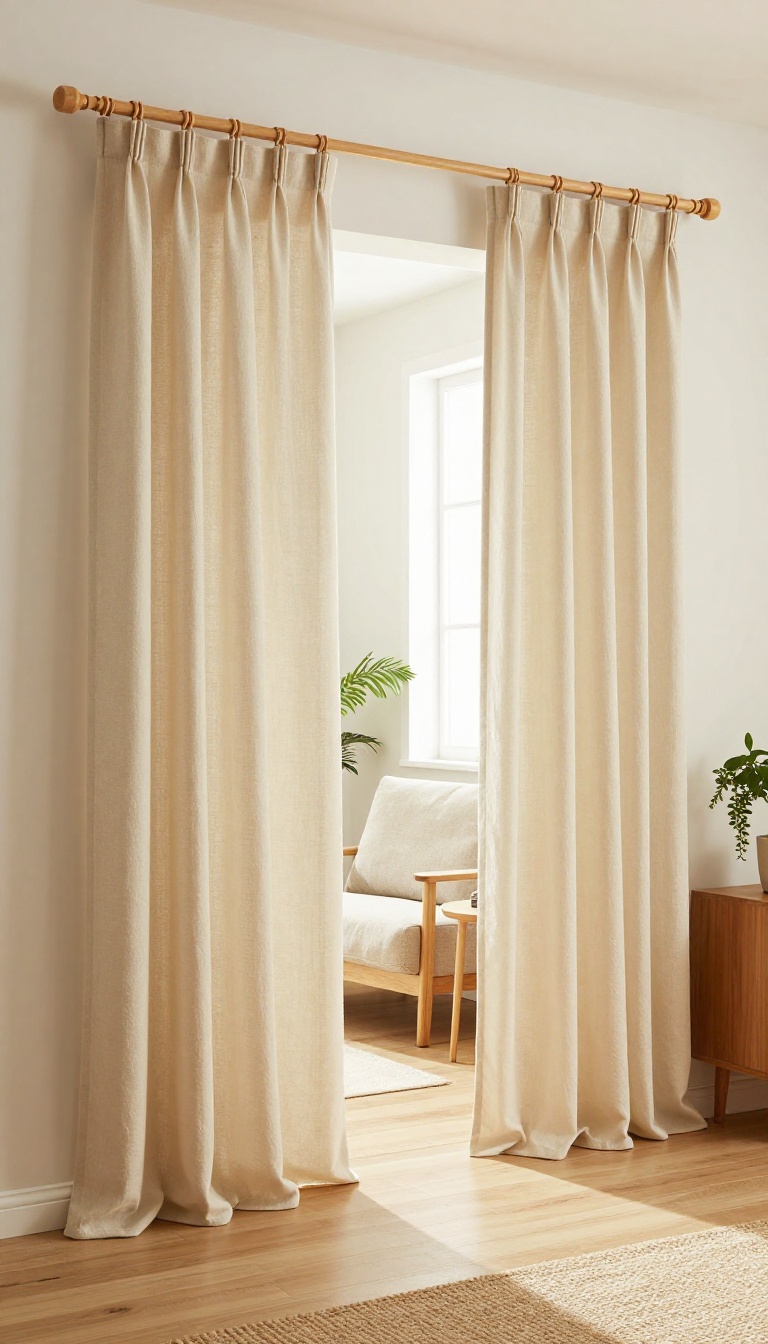
A beaded curtain brings a soft, bohemian vibe to a small living room without blocking light or air. It separates spaces just enough to define zones, but it never makes the room feel closed off. Plus, it adds a playful texture that plain walls or plain doors can't match.
Beaded curtains are one of the easiest dividers to install. Most come with a rod pocket or loops that slide onto a tension rod or a simple hook. You don't need tools beyond a screwdriver, and you can take it down in seconds if you change your mind.
They work best in doorways, between a living room and a hallway, or as a soft boundary around a reading nook. Because you can see through them, they keep sightlines open, which is key in a small space. And when you walk through, the beads part and sway back into place, adding a bit of motion and charm.
You'll find beaded curtains in a range of materials, from bamboo and wood to glass and acrylic. Each gives a different look and feel, so you can match your style. They're also affordable, often under $30, making them a low-commitment way to try a divider.
Where They Work Best
Use a beaded curtain in a doorway to separate the living room from a bedroom or hallway. They're also great for zoning off a home office corner without walls. Just make sure the opening is at least 30 inches wide so you can pass through comfortably.
Installation Tips
Hang the curtain so the bottom sits about an inch above the floor. That prevents tangling and lets it swing freely. If you're renting, use a tension rod—no holes required.
For a more permanent look, a simple curtain rod with brackets works fine.
Style And Maintenance
Choose beads that complement your room's colors. Wood and bamboo add warmth, while glass or acrylic bring a bit of sparkle. To clean, dust with a dry cloth or use a vacuum brush attachment on low.
Avoid getting them wet, as some materials can warp or tarnish.
7. Tall Indoor Plants as a Natural Wall
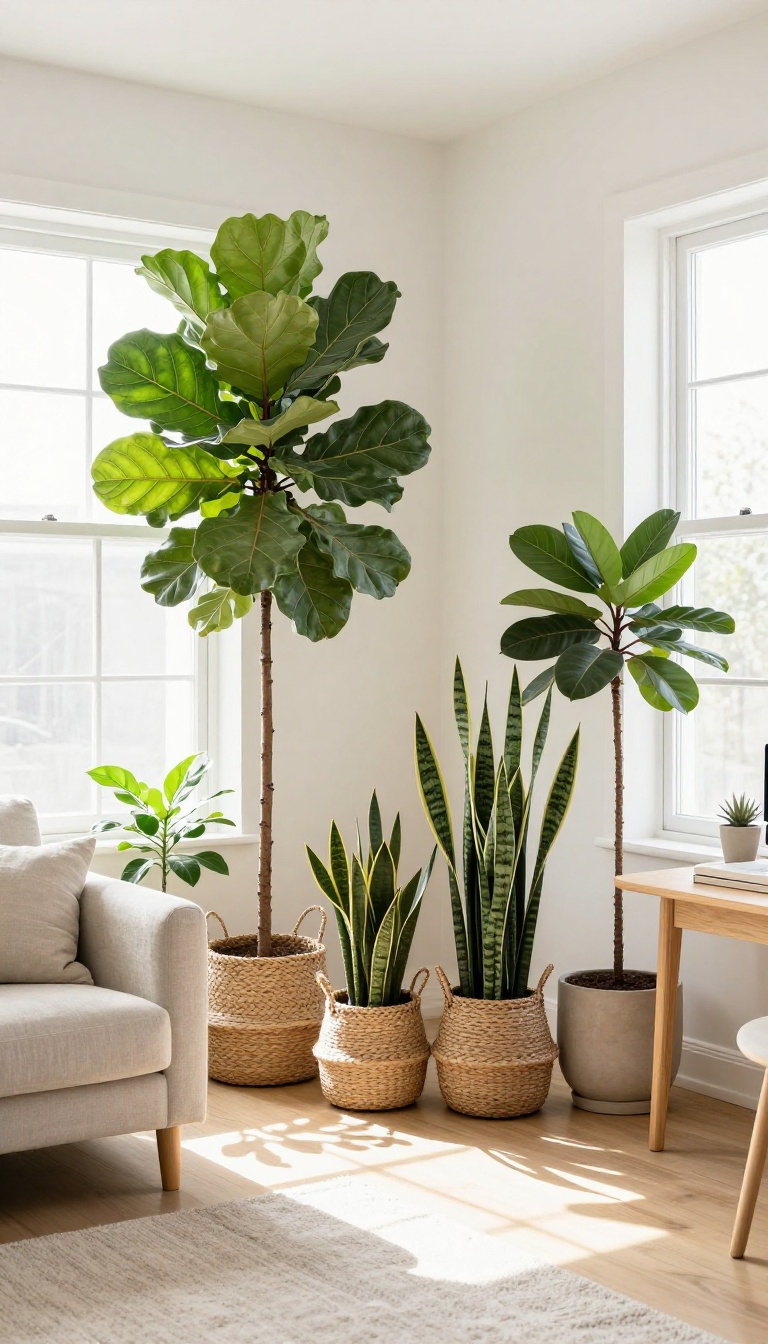
A row of tall plants does what a solid divider can't: it splits the room while still letting light and air move through. Think fiddle leaf figs, snake plants, or rubber trees lined up between your couch and your desk. The result feels less like a wall and more like a garden that happens to keep your zones apart.
Plants bring a softness that furniture usually can't. Instead of a hard edge cutting your living room in half, you get leaves and stems that blur the boundary. That alone makes a small space feel bigger, because your eye keeps traveling instead of hitting a stop sign.
And as a bonus, many of these plants clean the air while they're at it. You're not just dividing a room; you're making it healthier.
Which Plants Actually Work
Fiddle leaf figs are the classic choice because they grow tall and have big, dramatic leaves. Snake plants are nearly indestructible and stay upright without much fuss. Rubber trees and monsteras also work well, especially if you give them a moss pole to climb.
Pick two or three of the same plant for a consistent look, or mix heights for a more organic feel. Just make sure they can handle the light in that spot.
How To Arrange Them Without Blocking The Room
Don't line them up like soldiers. Stagger the pots slightly forward and back so the row feels natural. Use matching planters to keep it tidy, or go with woven baskets for a warmer vibe.
Leave a gap somewhere in the middle so people can still walk through. If you're renting, keep them in pots so you can move the whole divider when you rearrange.
Cost, Care, And Who It's Best For
You can spend $30 on a snake plant or $200 on a mature fiddle leaf fig. Care depends on the plant, but most need water every week or two and a spot with decent light. This idea suits anyone who wants a divider that feels alive and doesn't mind a little maintenance.
If you travel a lot, go with snake plants or ZZ plants instead.
8. Room Divider with Built-In Shelves
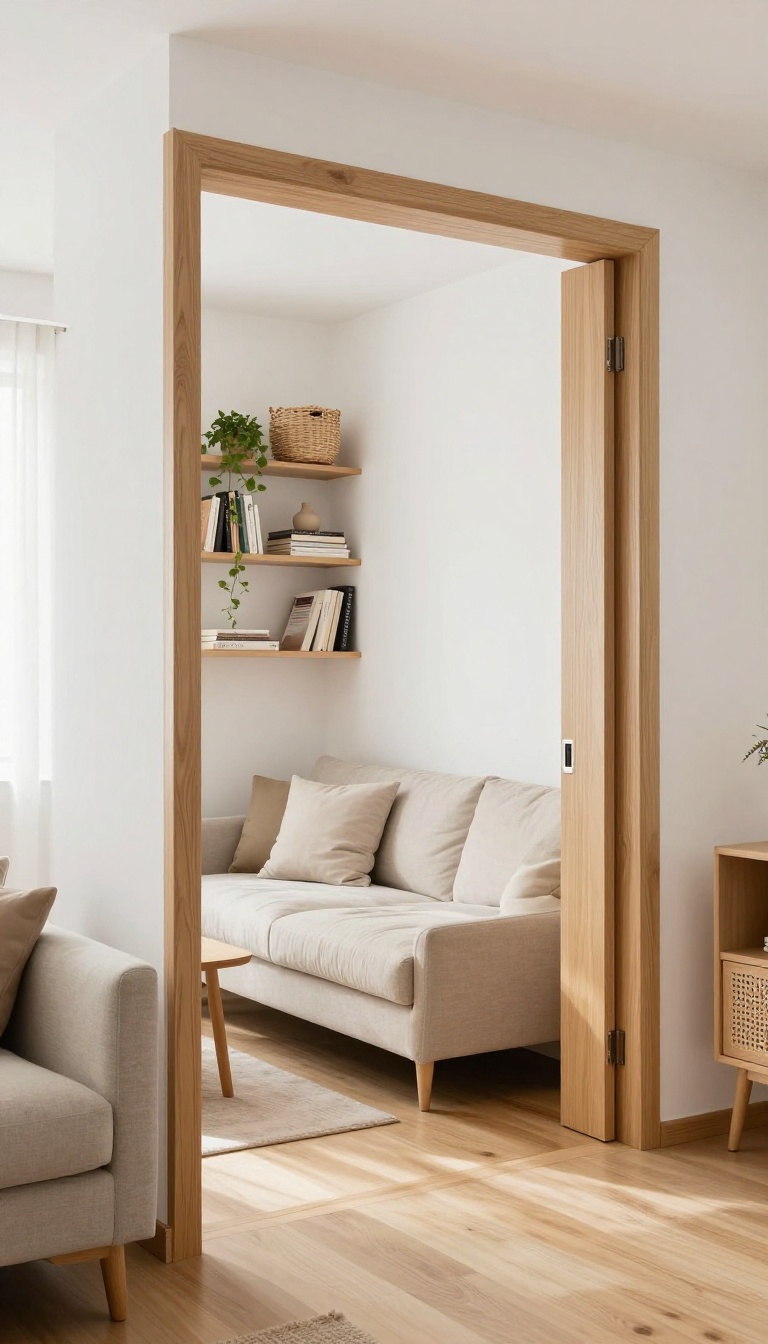
A freestanding divider that includes shelves gives you storage and separation in one piece, which is a smart move when floor space is tight. Instead of adding a separate bookcase and a screen, you get both in a single footprint. That means more room for actual living and less clutter creeping into your zones.
Built-in shelves turn a divider into a workhorse. You can stash books, baskets, and decor on the side facing the couch, while the back stays clean for the dining area or entryway. It’s a two-for-one that doesn’t feel like a compromise.
Why It Works In Small Rooms
Every piece of furniture in a small living room has to earn its spot. A shelving divider does double duty: it blocks sightlines and holds your stuff. That means you can skip a separate bookcase, which frees up wall space and keeps the floor plan open.
Picking The Right Shelving Divider
Look for units that are tall but not deep—around 12 to 15 inches. Open-back designs let light pass through, so the room doesn’t feel walled off. If you need more privacy, choose a model with a mix of open shelves and solid panels.
Styling And Placement Tips
Place it perpendicular to a wall to define two zones without cutting off traffic flow. Keep the shelves about 70% full—overstuffing makes the room feel heavy. Use baskets on lower shelves to hide clutter and keep the look tidy.
9. Glass or Acrylic Panel Divider
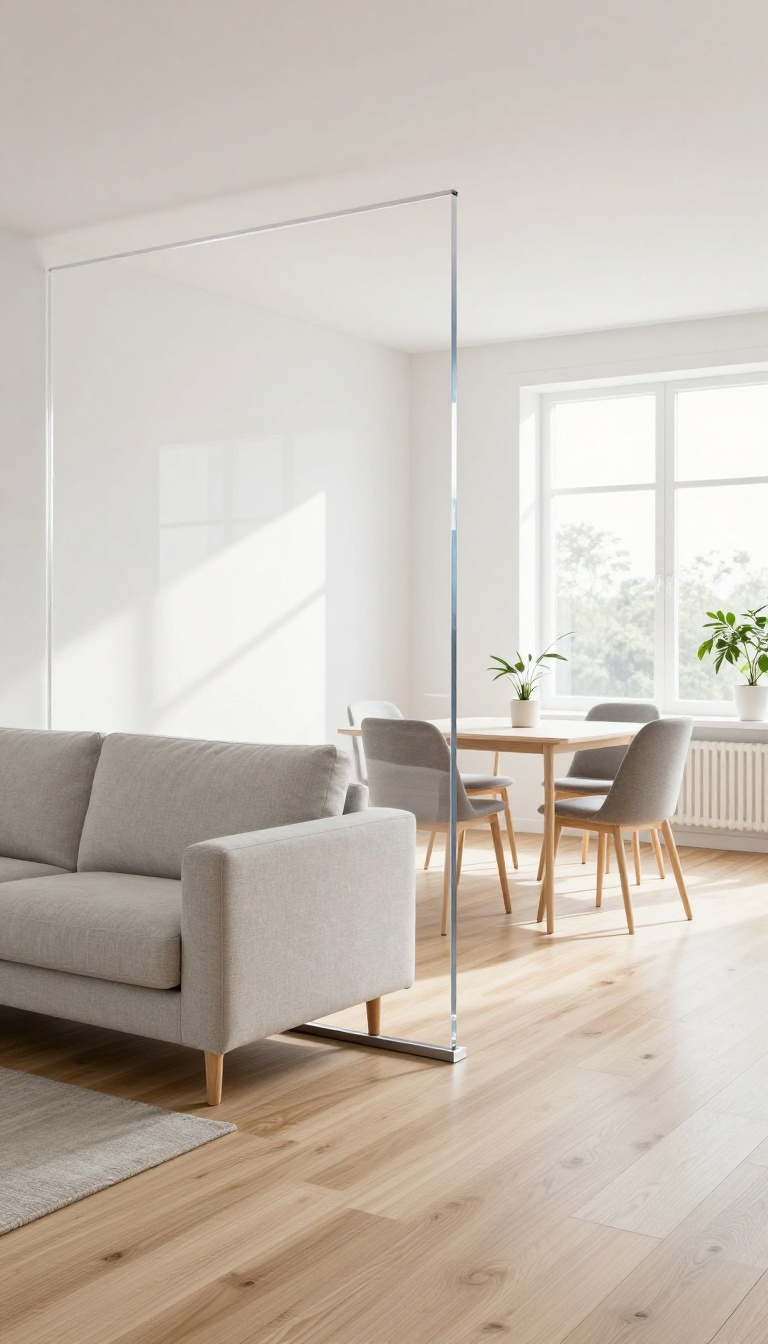
Glass and acrylic panels split a room without stealing its light. They create a visual boundary that tells your brain "this is a different zone" while your eyes still see the whole space. For a small living room, that's a rare combination: separation and openness in the same move.
These dividers work like a window you can walk around. You get a clear edge between the couch and the dining table, but the room never feels chopped into dark little boxes. The result is a space that reads as one big room with smart zones, not two cramped ones.
The biggest fear with any divider is that it will make a small room feel smaller. Glass and acrylic flip that fear on its head. Because light passes straight through, the room keeps its depth and brightness even after you add a boundary.
You're not building a wall. You're drawing a line. There are two main routes: framed panels or frameless sheets.
Framed glass looks more finished and architectural, while frameless acrylic feels modern and light. Both come in clear, frosted, or ribbed finishes. Frosted gives you more privacy and a softer look.
Clear keeps everything visible and makes the room feel widest. Cost and effort vary a lot. A basic acrylic sheet with a simple floor stand can run under $100 and takes minutes to set up.
A custom glass partition with a metal frame can cost several hundred dollars and usually needs professional installation. In between, you'll find ready-made panel dividers that slot into a base and lean or stand on their own. Safety matters, especially with kids or pets.
Tempered glass is the standard for a reason: if it breaks, it crumbles into small dull pieces instead of sharp shards. Acrylic is lighter and harder to shatter, but it scratches more easily. If you go acrylic, look for a thicker sheet so it doesn't bow or wobble.
Placement is everything. A single panel placed perpendicular to a wall can define a reading nook or a workspace without closing it off. Two or three panels in a row create a longer screen that still lets you see through.
Just leave a clear path on at least one side so the room doesn't feel like an obstacle course. Cleaning is simple but worth mentioning. Glass shows fingerprints and dust, so keep a microfiber cloth handy.
Acrylic attracts static and can haze over time, so use a plastic-safe cleaner and avoid paper towels that can scratch. A quick wipe every week keeps either option looking sharp. One more perk: these panels play well with others.
You can pair a glass divider with a low plant stand or a slim console table to add function without bulk. The panel does the separating, and the furniture does the storing. That combo keeps a small living room practical and pulled together.
Why It Works In A Small Room
Light stays in the room, so the space feels bigger, not smaller. You get a clear boundary without a solid wall blocking the view. It's the least claustrophobic way to divide a tight area.
Clear Vs. Frosted
Clear panels maximize openness and make the room feel widest. Frosted panels add privacy and soften harsh lines, which helps if your divider sits near a bed or a desk. Ribbed or fluted glass splits the difference with texture and partial privacy.
Setup And Safety
Frameless acrylic is the easiest DIY route and usually needs no tools. Framed glass looks more built-in but often requires a pro. Always choose tempered glass, and anchor freestanding panels so they can't tip.
10. Repurposed Ladder as a Divider
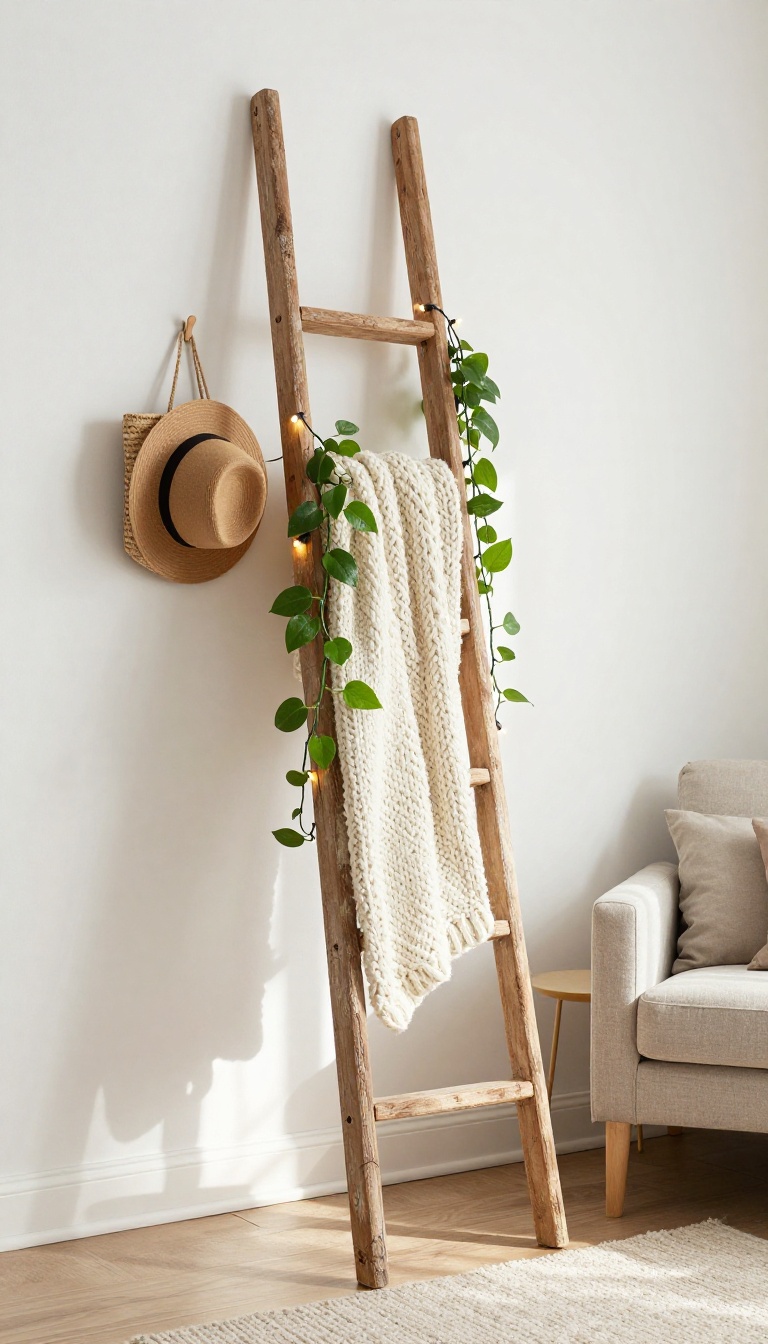
An old wooden ladder can do more than gather dust in the garage. Lean it against the wall or hang it from the ceiling, and it becomes a slim divider that holds blankets, throws, and string lights while marking off a reading nook or a quiet corner. It's a clever way to add separation without adding bulk, and it costs almost nothing if you already have a ladder lying around.
The beauty of a ladder divider is its narrow footprint. Unlike a bookcase or a folding screen, it barely takes up any floor space, which matters when every inch counts. You can position it perpendicular to a wall to create a subtle boundary, or place it parallel to define a zone without blocking sightlines.
It's especially handy for renters who can't drill into walls or hang curtains.
How To Set It Up
If you're leaning the ladder, make sure it's stable. Use a rubber grip or a small bracket to keep it from sliding, especially if you have kids or pets. For a more permanent look, hang it from the ceiling with sturdy hooks and chain.
That keeps the floor completely clear and turns the ladder into a floating display. Either way, angle it slightly so it feels intentional, not just propped up.
What To Put On It
Drape a cozy blanket over one rung and hang a few trailing plants from another. Clip on some battery-operated fairy lights for a warm glow in the evening. You can also use small S-hooks to hang baskets, hats, or even a lightweight mirror.
Just keep the items light so the ladder doesn't tip. The goal is to add texture and function without turning it into a cluttered mess.
Where It Works Best
This divider shines in a reading corner or beside a desk that's tucked into the living room. It gives you a visual break from the main seating area without cutting off conversation. In a studio apartment, it can separate the bed from the couch, especially if you pair it with a rug to anchor each zone.
Skip it if you need privacy or sound blocking—this is more about visual cues than solid walls.
11. Curtain Track Mounted on the Ceiling
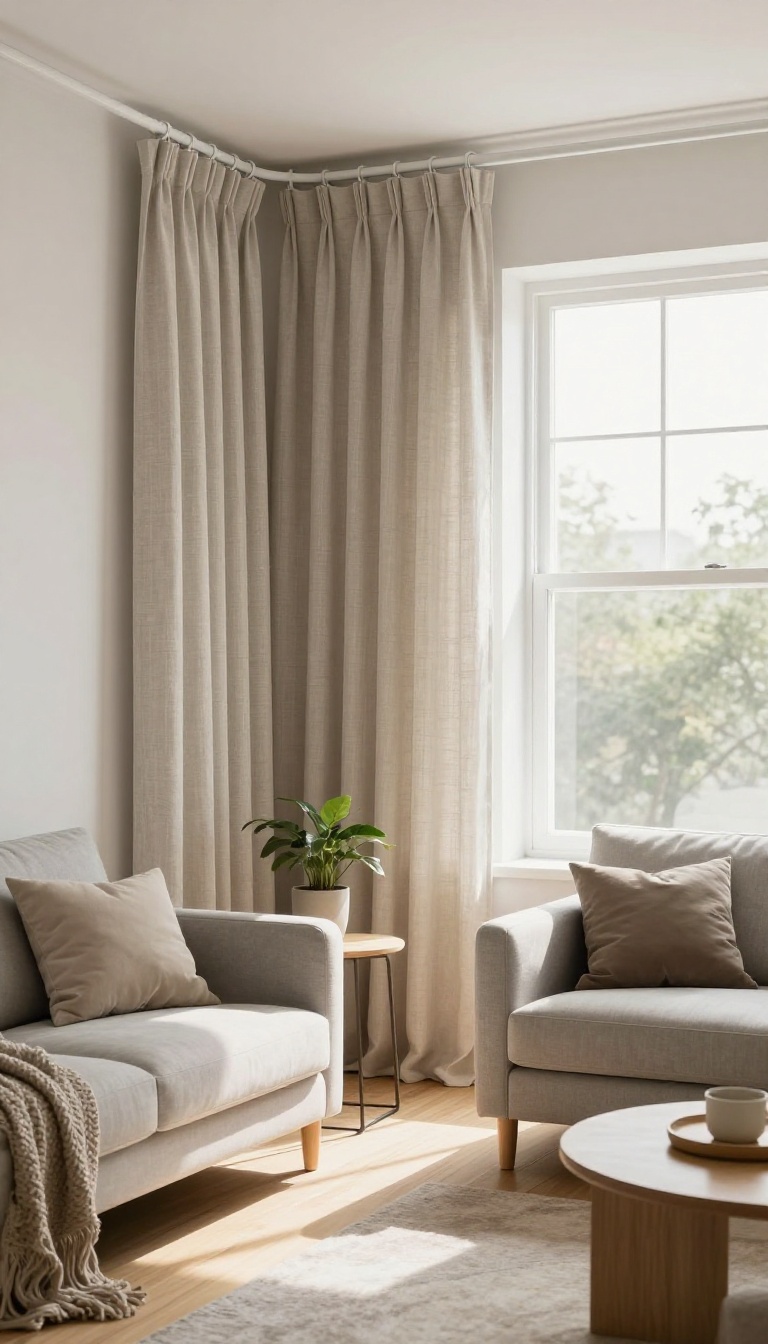
A curtain track screwed into the ceiling gives you a divider that follows whatever path you need, even around a corner. Unlike a rod that only stretches in a straight line between two walls, a track can bend, curve, or turn, so you can wrap a curtain around a reading nook or section off an L-shaped zone. And because it goes into the ceiling, you don't have to drill into walls or worry about patching holes later.
The track itself comes in flexible or straight sections, and you can usually cut it to length with a hacksaw. Most kits include brackets, gliders, and end stops, so you're not hunting for extra parts. Installation is a two-person job if you're working with a long piece, but the concept is simple: mark your path, screw the brackets into ceiling joists or use drywall anchors, snap the track in, and hang your curtain.
The whole thing can be done in an afternoon with a drill and a ladder.
Picking The Right Track
Flexible tracks are your best bet for corners or curves, while straight tracks work fine for a simple straight line. Look for a track that matches your curtain weight—heavier fabrics need sturdier gliders. Most home improvement stores sell kits that include everything you need, and some even come with a bendable metal core you can shape by hand.
Hanging The Curtain
You can use a standard curtain with hooks or a panel with a rod pocket, but make sure the top fits your gliders. For a clean look, choose a curtain that just kisses the floor. If you want to be able to open it fully, leave a few extra inches on each end of the track so the fabric can stack out of the way.
When To Choose This Over Other Dividers
This is a great option if you rent and can't put big holes in the walls, or if your ceiling is the only surface that makes sense. It's also ideal for odd room shapes where a freestanding divider would look awkward. Just avoid it if you have popcorn ceilings or a ceiling that's too high to reach comfortably.
12. Low Console Table with Baskets
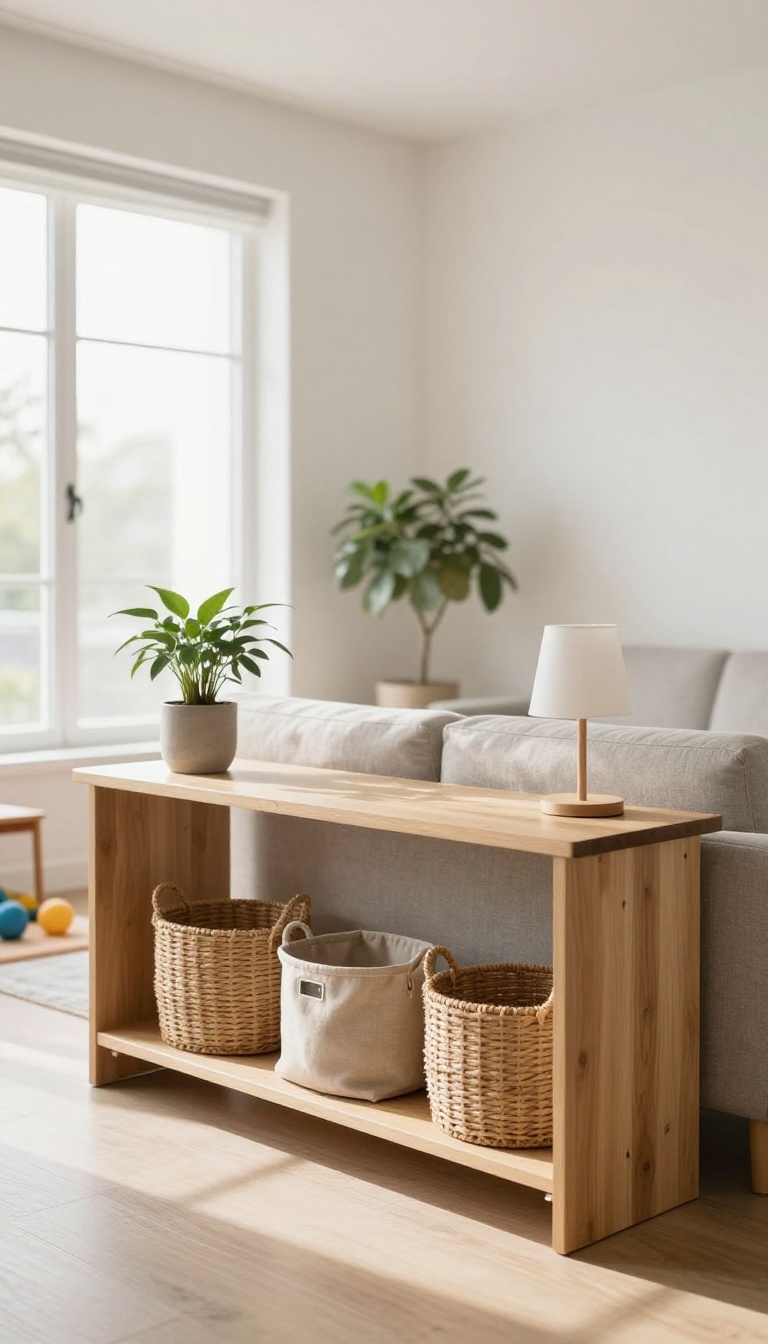
A low console table lined up behind your sofa can pull double duty as a divider and a catch-all. It splits the seating area from whatever lives behind it—a play zone, a home office, or a walkway—without blocking sightlines. And because the table sits low, it keeps the room feeling open instead of walled off.
The real magic happens when you add baskets. A row of woven or fabric bins on the lower shelf gives you a spot for remotes, chargers, and the small toys that always seem to migrate toward the couch. Everything stays within arm's reach but out of sight, so the room reads tidy even on a busy Tuesday.
Why It Works In Small Rooms
A console table is only about a foot deep, so it hugs the back of the sofa without eating up much floor space. That shallow footprint means you can still walk behind it in most rooms. It also gives you a flat surface for a lamp or a plant, which helps define the two zones without a solid barrier.
Picking The Right Table And Baskets
Look for a table that's roughly the same height as the back of your sofa—usually 28 to 32 inches—so it doesn't stick up awkwardly. Narrow is better than wide here. For baskets, choose ones that fit the shelf height with a little room to spare.
Fabric bins are quiet and soft; wire or wicker baskets add texture and let air move through.
Keeping It Tidy
Label the baskets if you have kids, or just assign one bin per person. A quick toss at the end of the day keeps the table from becoming a junk pile. Every few weeks, clear out anything that doesn't belong.
The goal is a system that's easy to maintain, not perfect.
13. Pegboard or Grid Wall Panel
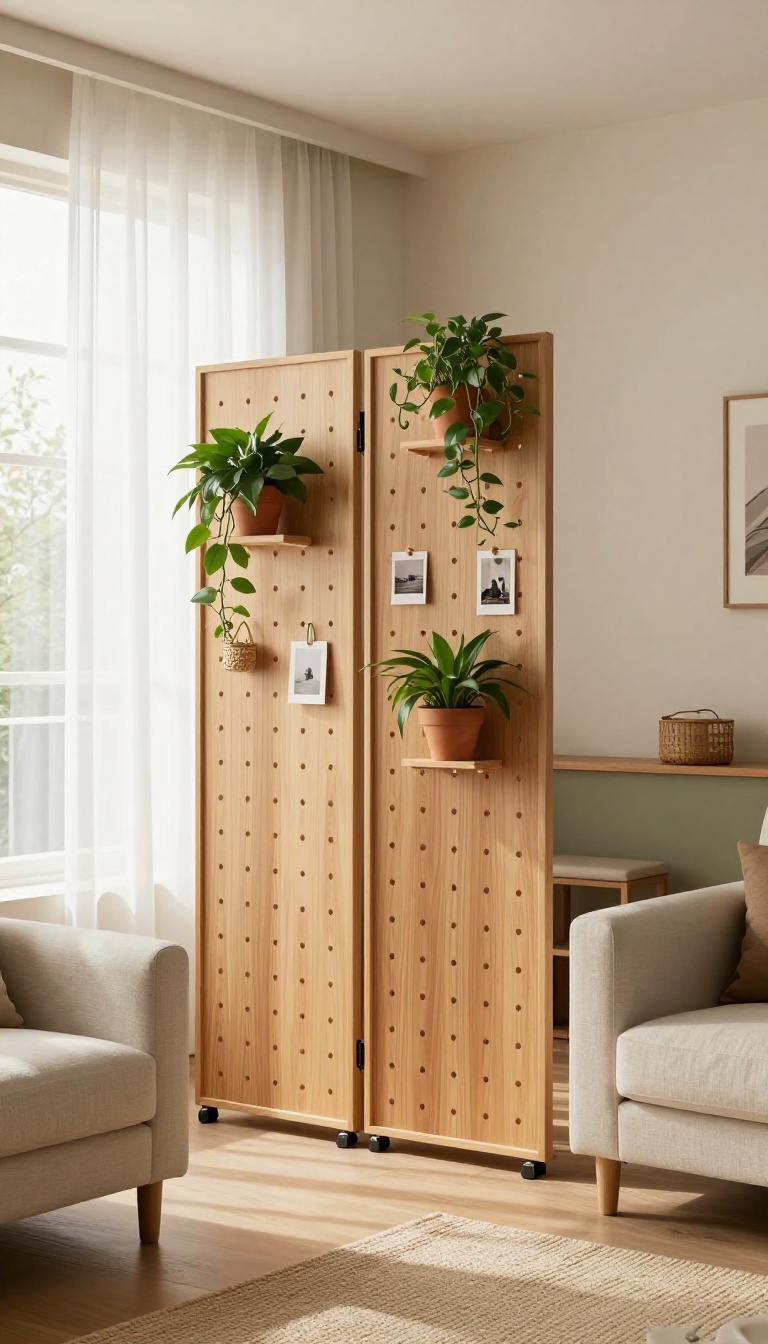
A pegboard panel on a stand does two jobs at once: it separates space and gives you a place to hang things. Because it's mostly open, it blocks sightlines just enough to define a zone without turning your living room into a maze. The best part is how flexible it is.
You can move the whole panel when you rearrange, and you can rearrange the pegs whenever you get bored. It works as a plant wall, an art display, or a spot for keys and mail near the entry. This is a good pick if you want something modern and a little industrial, and you don't mind a divider that shows off what's behind it.
Why It Works In Small Rooms
Pegboard is thin, so it eats up almost no floor space. A freestanding version with a simple base or casters slides out of the way when you need the room open. It also adds vertical storage without another shelf unit.
That matters in a small living room where every surface tends to collect clutter.
How To Set It Up
Buy a ready-made pegboard panel or build one from a sheet of pegboard and a frame. Add feet, a base, or locking casters so it stands on its own. Keep the panel around 5 to 6 feet tall for a good balance of privacy and openness.
If you rent, a freestanding version means no wall damage.
What To Hang On It
Small potted plants, framed photos, and lightweight art are the easy wins. Use peg hooks and small baskets to corral remotes, chargers, and mail. Just watch the weight.
Pegboard holds plenty, but a heavy item on a cheap stand can make the whole panel tip.
14. Slatted Wood Screen
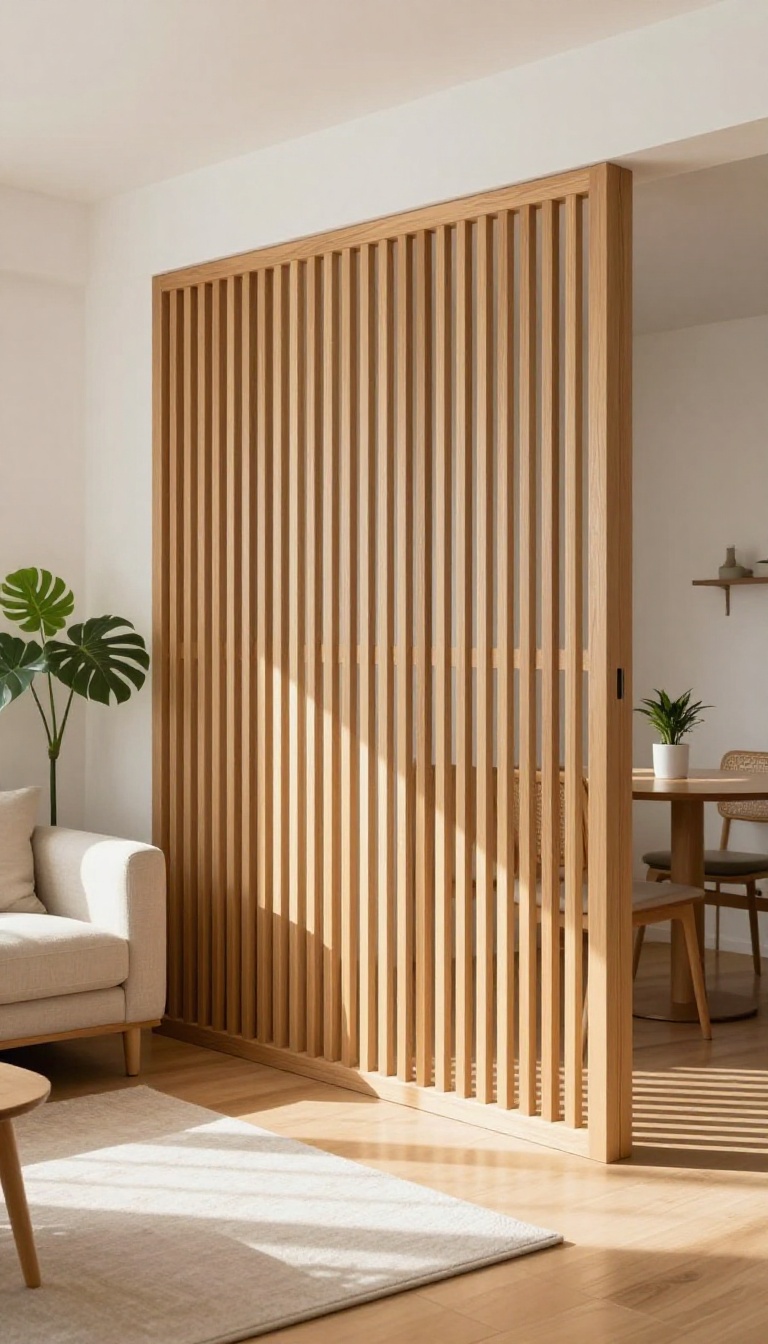
Slatted wood screens bring a mid-century vibe and let light and air pass through, so your small living room stays bright and breathable. Unlike solid partitions, they create separation without making the space feel boxed in. They're a favorite for renters and homeowners who want a warm, natural look with practical function.
A slatted screen is basically a series of thin wood strips set in a frame, with gaps between them. Those gaps are the magic—they give you visual privacy while keeping the room open and airy. You can buy ready-made versions or build your own with a few supplies.
Most are freestanding or mount to the wall or ceiling, and they come in finishes from natural oak to walnut to painted white.
Why It Works In Small Rooms
Slatted screens break up sightlines without blocking light, so your room feels divided but not dark. They also allow airflow, which matters in tight spaces where stale air can build up. And because they're not solid, they don't visually shrink the room the way a bookcase or wall would.
Placement And Setup
Use a slatted screen to separate a seating area from a dining nook or a home office. Freestanding versions are easy to move when you need a change. If you want something more permanent, mount it to the ceiling with a track or attach it to a wall with brackets.
Just make sure it's stable—especially if you have kids or pets.
Cost And Diy Options
Ready-made slatted screens range from $80 to $300, depending on size and material. For a budget-friendly DIY, grab a few 1×2 boards and a frame kit from a hardware store. You can customize the height and width to fit your space exactly.
A simple stain or paint job gives it a custom look without the custom price.
15. DIY Pipe and Wood Shelving Divider
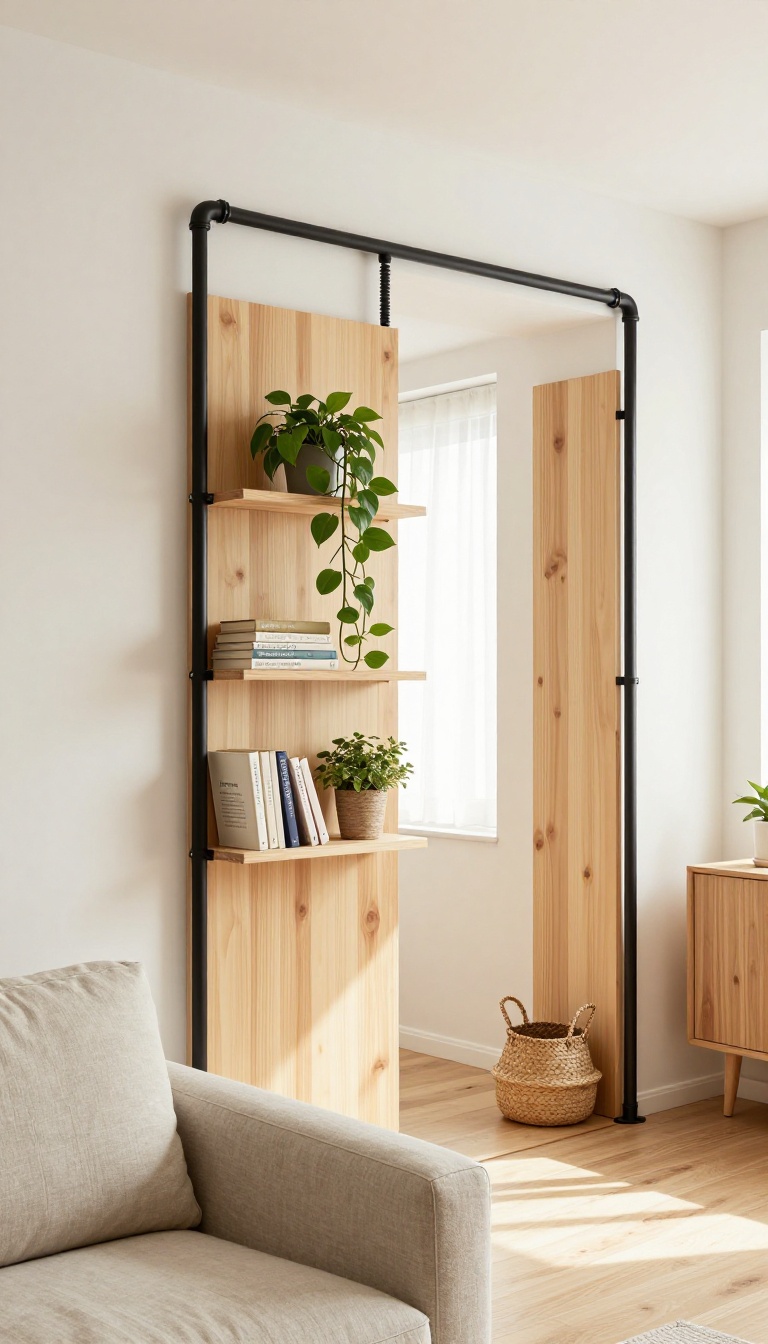
Black steel pipe and a few wood planks can turn a blank corner into a custom room divider that holds books, plants, and whatever else you need to stash. You cut the pipe to size, so it fits your exact space instead of forcing you to work around a store-bought unit. The whole thing costs less than most ready-made shelving, and you can build it over a weekend with basic tools.
The build starts with two floor-to-ceiling pipe frames. Each frame uses threaded pipe, elbows, and flanges to create a vertical support. Once those are standing, you slide wood planks across at whatever heights you want.
The shelves become the divider, and the open gaps keep light moving through the room. Because pipe and wood are both easy to cut and adjust, this divider works in rooms with sloped ceilings or awkward nooks. You can also make it wider or narrower by adding more vertical runs.
That flexibility is why it beats a fixed bookshelf in a tight living room.
What You'll Need
You'll need 3/4-inch black steel pipe, floor flanges, elbows, and tees. For wood, go with 1-inch thick pine or oak boards. A pipe cutter or hacksaw, a drill, and a level round out the tool list.
Most hardware stores will cut and thread the pipe for you if you bring your measurements.
How To Build It
Measure your ceiling height and subtract an inch for the flanges. Cut your vertical pipes to that length. Assemble each frame on the floor: flange, pipe, tee, pipe, flange.
Stand the frames up and secure the top and bottom flanges to the ceiling and floor with screws. Then lay your wood planks across the tees and check for level. Add a few screws through the tees into the wood to keep shelves from sliding.
Cost And Effort
Expect to spend $80 to $150 depending on wood type and pipe length. The build takes about four to six hours, plus a trip to the hardware store. You don't need special skills, but you do need to measure carefully so the frames stand straight.
Who It Works Best For
This divider suits renters who can patch small screw holes, and homeowners who want a built-in look without the built-in price. It's also great if you need display space more than privacy. The open shelves show off your stuff while still marking the boundary between zones.
FAQ
What is the cheapest way to divide a small living room?
A tension rod with a curtain is usually the cheapest option, often under $30. You can also use a thrifted folding screen or a repurposed ladder you already own.
Will a room divider make my small living room feel smaller?
Not if you choose something open or light. Glass, acrylic, slatted wood, and open shelving let light and sightlines pass through, so the room still feels airy.
Can I use a room divider in a rental without damaging walls?
Yes. Tension rods, freestanding screens, and ceiling-mounted tracks with adhesive or tension options are all renter-friendly. Just check your lease before drilling.
How do I keep a room divider from looking cluttered?
Stick to one divider style and keep what's on it intentional. Use baskets or bins to hide small items, and leave some open space so it doesn't feel heavy.
What height should a room divider be?
For visual separation, aim for at least 5 to 6 feet tall. Anything shorter can still work as a subtle boundary, but it won't block much view or sound.
Conclusion
You do not need a bigger apartment to get more usable living space. You need one divider that solves your actual problem, whether that is noise, clutter, or a couch that never feels separate from the kitchen. Pick the idea that fits your budget and your lease, then live with it for a week.
If it works, keep it.
If it does not, swap it for another. Renting-friendly options like shelves, screens, and curtains mean you can test ideas without losing a deposit. Start with one, and let the room tell you what it needs next.