15 Light Blue Couch Living Room Ideas That Feel Serene
A light blue couch is one of those purchases that feels risky right up until it lands in your living room. Then the room exhales, and suddenly everything looks calmer than it did before. The trick is not the sofa itself.
It is what you put around it.
The shade matters less than the company it keeps. Warm whites, natural wood, and soft textures keep pale blue from drifting into cold or washed-out territory. Skip those layers and even a beautiful couch can feel flat.
These fifteen ideas cover the small moves that make the biggest difference. Most cost very little, and none require a designer. Pick two or three to start, then build from there.
1. Pair with Warm White Walls for an Airy Backdrop
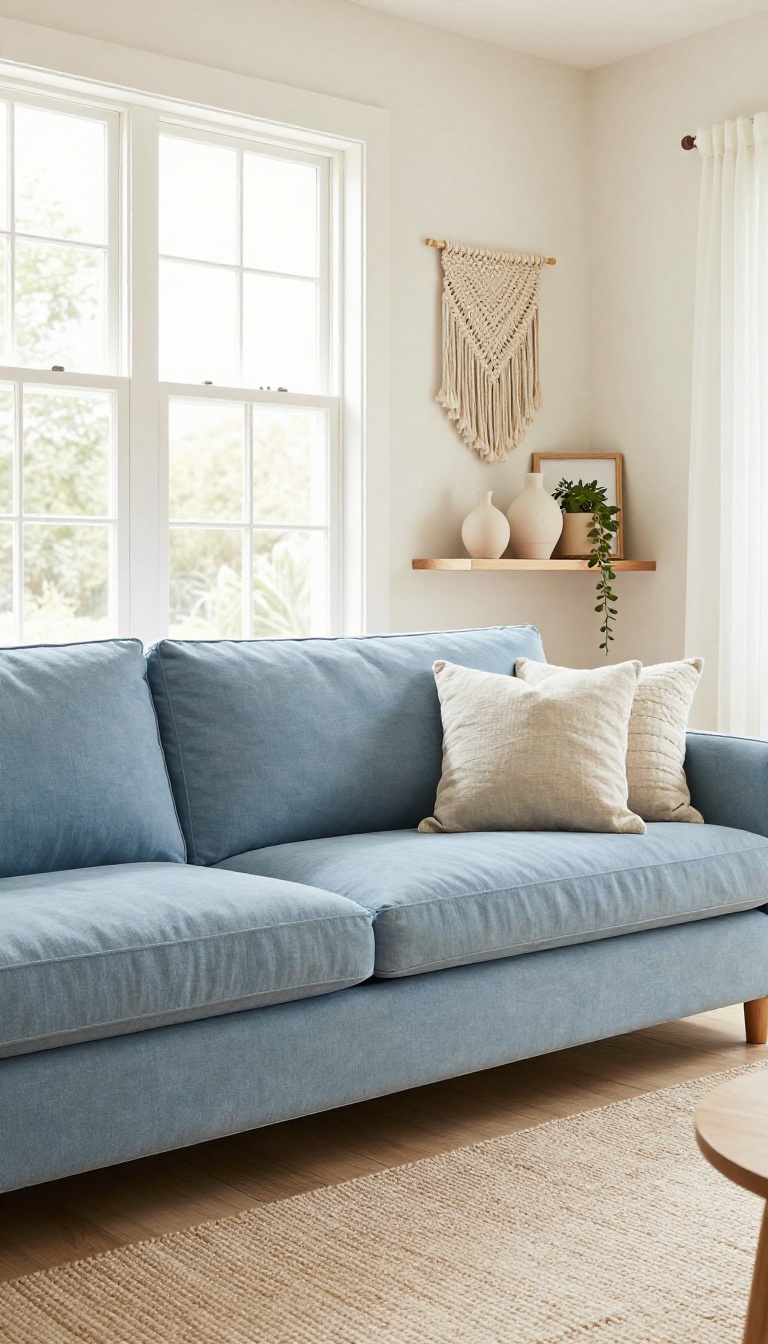
Warm white walls do more for a light blue couch than almost any other single choice. They bounce daylight around the room and keep the blue reading as soft and breezy instead of icy. The right white also gives the sofa a clean edge, so it looks intentional rather than accidental.
The catch is that not every white behaves the same way. Cool whites with gray or blue undertones will pull your couch toward cold, especially in north-facing rooms. Warm whites with a touch of cream, ivory, or beige keep the whole space feeling sunlit and easy.
Once the walls are set, the room still needs a little depth. Flat white on every surface can start to feel like a blank page, and your couch ends up doing all the work. A woven wall hanging, a floating shelf, or a simple wood frame adds just enough texture to hold the eye without competing with the blue.
Pick The Right Warm White
Swatch at least three warm whites on the actual wall before you commit. Look at them in morning light, afternoon light, and at night with lamps on. Whites that look identical in the store can split into yellow, pink, or gray once they are up.
Add Texture Without Busyness
A woven wall hanging softens the space and echoes the calm mood of the couch. A floating shelf with a few ceramics or a trailing plant does the same job with less commitment. Keep the palette quiet so the texture reads as interest, not clutter.
Watch The Trim And Ceiling
If your trim is a stark builder white, it can fight a warmer wall color. Painting trim a half-shade warmer ties everything together. The same goes for the ceiling if it currently reads cold or gray.
2. Layer in Soft Neutrals with a Chunky Knit Throw
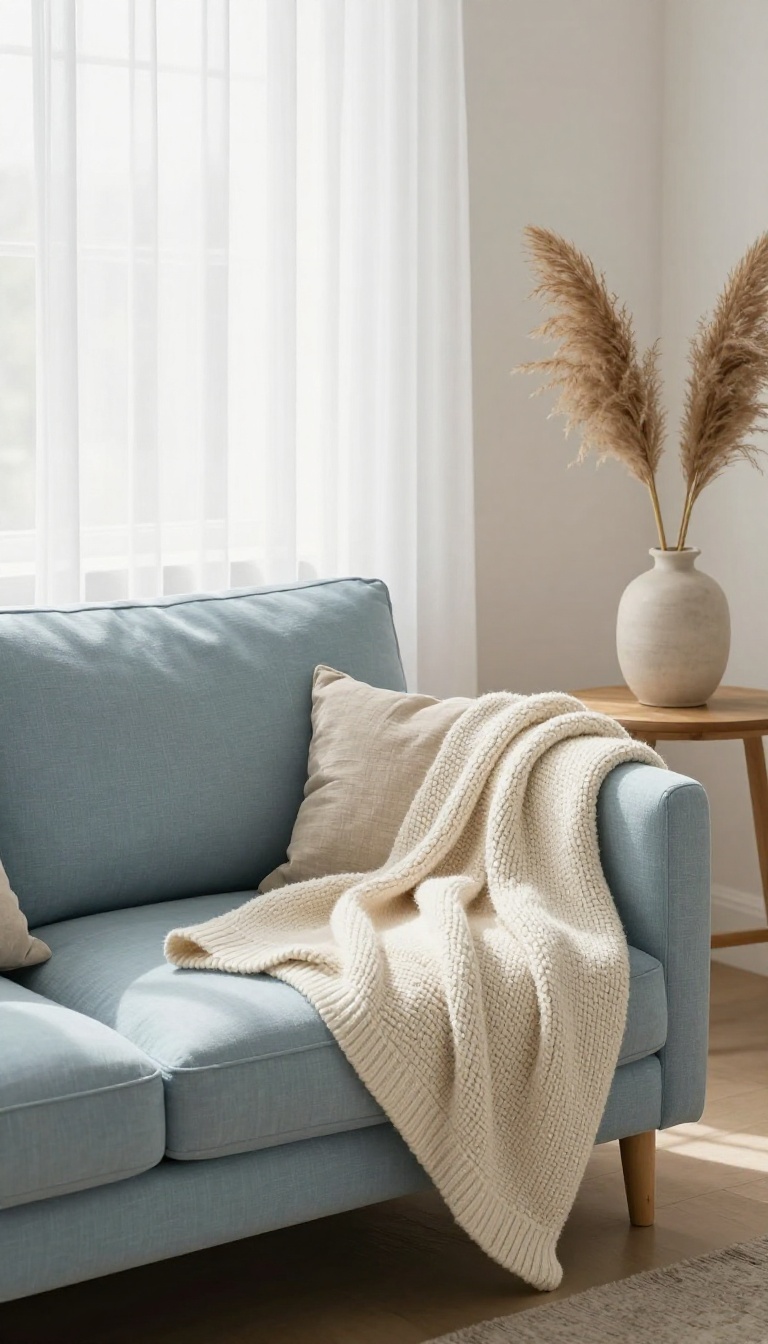
A light blue couch can sometimes feel a little too cool on its own, like a clear sky without any clouds. That's where a chunky knit throw comes in. Draped casually over one arm, it adds instant warmth and texture, making the whole seating area feel more inviting.
The key is to choose a neutral shade that complements the blue without competing with it.
Cream, oatmeal, or soft beige are your best bets. These colors soften the coolness of the blue and create a cozy contrast. The chunky knit itself adds a tactile element that invites you to curl up.
It's a simple addition, but it changes the entire mood of the room. You don't need to spend a lot. A single throw can transform the look.
Just make sure it's visible and touchable, not folded away in a basket. Let it look a little undone—that's part of the charm.
Why Neutral Throws Work
Neutral tones act as a bridge between the blue couch and the rest of your decor. They keep the palette calm and cohesive. Plus, they're easy to swap out if you want a different feel later.
How to Style It
Drape the throw over one arm or across the back of the couch. Let it pool slightly for a relaxed look. If you have two couches, use the same throw on both for a pulled-together vibe.
Choosing The Right Knit
Look for a chunky knit that's soft but substantial. Wool blends or cotton work well. Avoid anything too scratchy or too thin—you want it to feel cozy and look substantial.
3. Choose a Jute or Sisal Rug to Ground the Space
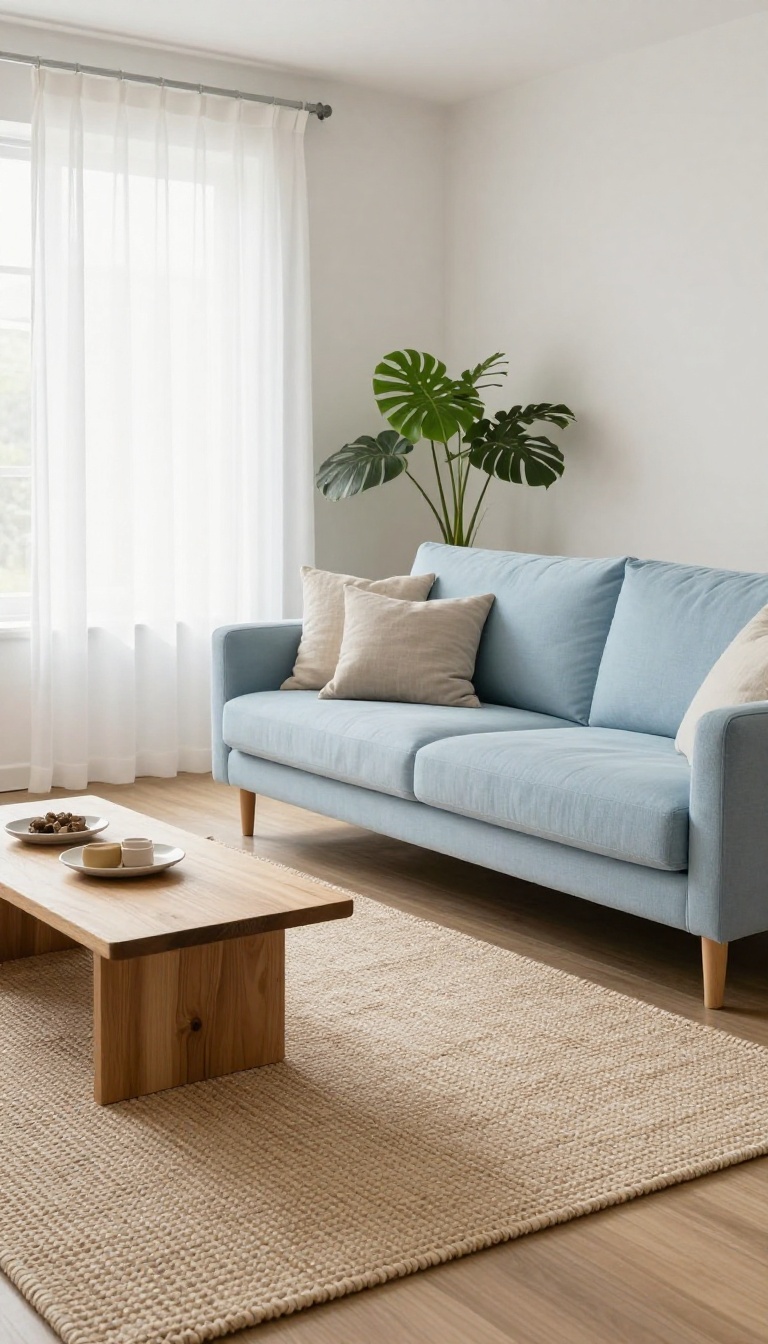
A light blue couch can float in a room if nothing anchors it. A natural fiber rug fixes that fast. Jute and sisal bring warm, earthy texture that keeps the palette light while adding a sense of weight and order.
These rugs are also tough. They handle daily traffic, vacuum easily, and hide crumbs better than you'd expect. That makes them a smart pick for living rooms that actually get used.
Just as important, they protect your floors and define where the seating zone begins and ends. That visual boundary makes a light blue couch feel intentional instead of accidental.
Pick The Right Size
Go big enough that at least the front legs of the couch sit on the rug. A 5×8 works in small rooms, but 8×10 or 9×12 is safer for most living rooms. Too small and the room looks choppy.
Layer For Softness
Jute and sisal are not plush. Add a smaller, softer rug on top near the coffee table or under your feet. A flat weave or low-pile wool in cream or pale gray works well without fighting the blue.
Keep The Edges Neat
Natural fiber rugs can curl at the corners. A good rug pad stops slipping and adds a little cushion. It also keeps the rug from scratching wood floors.
4. Add Wood Tones for Natural Warmth
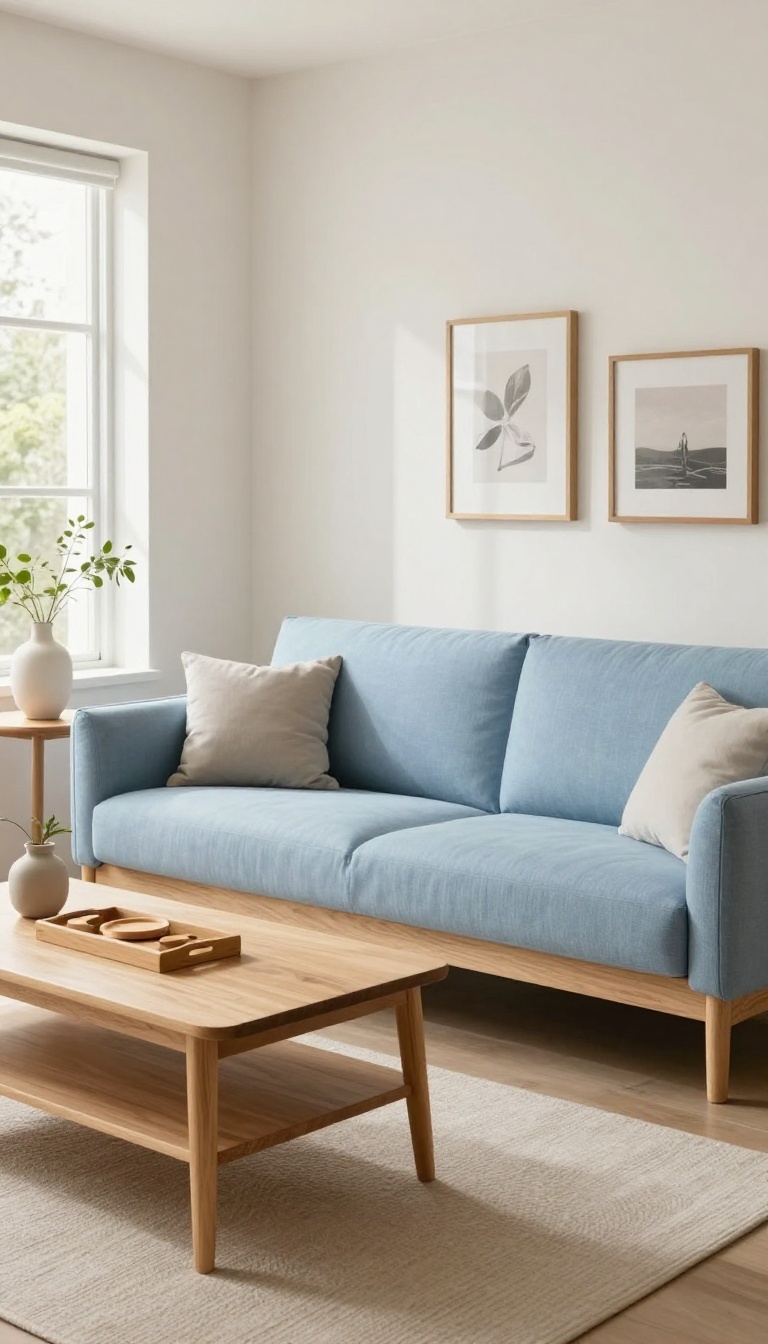
Light blue tends to pull a room toward cool, and that's usually a good thing. But without something warm to push back, the whole space can start to feel a little clinical. Wood is the easiest fix.
A single oak side table or a walnut coffee table gives the blue something organic to lean against, and the room instantly feels lived-in instead of staged.
You don't need to match every wood piece in the room. In fact, mixing tones looks more natural. The goal is simply to introduce one or two warm, grainy surfaces that break up the cool wash of blue.
Think of wood as the bridge between your couch and the rest of the room. It connects the sofa to the floor, the walls, and whatever else you've got going on. Start with the piece you use most.
A coffee table sits right in front of the couch, so it's the first thing people see. A side table is smaller but still noticeable. Either one works.
Just pick a wood tone that feels warm, not orange, and not so dark that it swallows the light. Medium oak, ash, or a light walnut are safe bets. Once you have that first wood piece, you can repeat the tone in small doses.
A wooden picture frame, a tray on the coffee table, or even a set of wooden coasters. These little echoes tie the room together without making it look like a furniture showroom. The blue stays the star, but the wood keeps it from feeling lonely.
Why Wood Works With Light Blue
Blue and wood are a classic pair for a reason. Blue sits on the cool side of the color wheel, while wood brings warm yellows, reds, and browns. Together they balance each other out.
Without wood, a light blue couch can make a room feel like a waiting room. With it, the space feels grounded and comfortable. You get the calm of blue plus the coziness of natural material.
Pick The Right Wood Tone
Not all wood tones play nicely with light blue. Very dark woods, like espresso or black walnut, can create too much contrast and make the blue look pastel by comparison. Very orange woods, like some cherries or honey oaks, can clash.
Aim for medium tones: white oak, ash, maple, or a light walnut. These have enough warmth to balance the blue without fighting it. If you already have dark wood floors, choose a lighter wood for furniture to keep things from getting heavy.
Where To Add Wood First
The coffee table is the obvious starting point. It's central, useful, and easy to swap out later. A round wood coffee table softens the straight lines of a sofa.
A rectangular one adds structure. If you don't need a coffee table, try a wood side table next to the couch. Or a slim console behind it.
Even a wooden stool used as a plant stand counts. The point is to get one warm, grainy surface near the couch. Once that's in place, the room will already feel more balanced.
Keep It From Feeling Rustic
Wood can tip into cabin territory if you're not careful. To keep things modern, choose pieces with clean lines and minimal carving. A simple parsons-style table or a sleek mid-century piece works better than something with heavy turned legs.
Also, don't overdo it. One or two wood pieces are enough. If you add too many, the room starts to feel like a lodge.
Pair the wood with smooth textures like glass, metal, or ceramic to keep the look fresh.
5. Use Sheer Curtains to Soften the Light
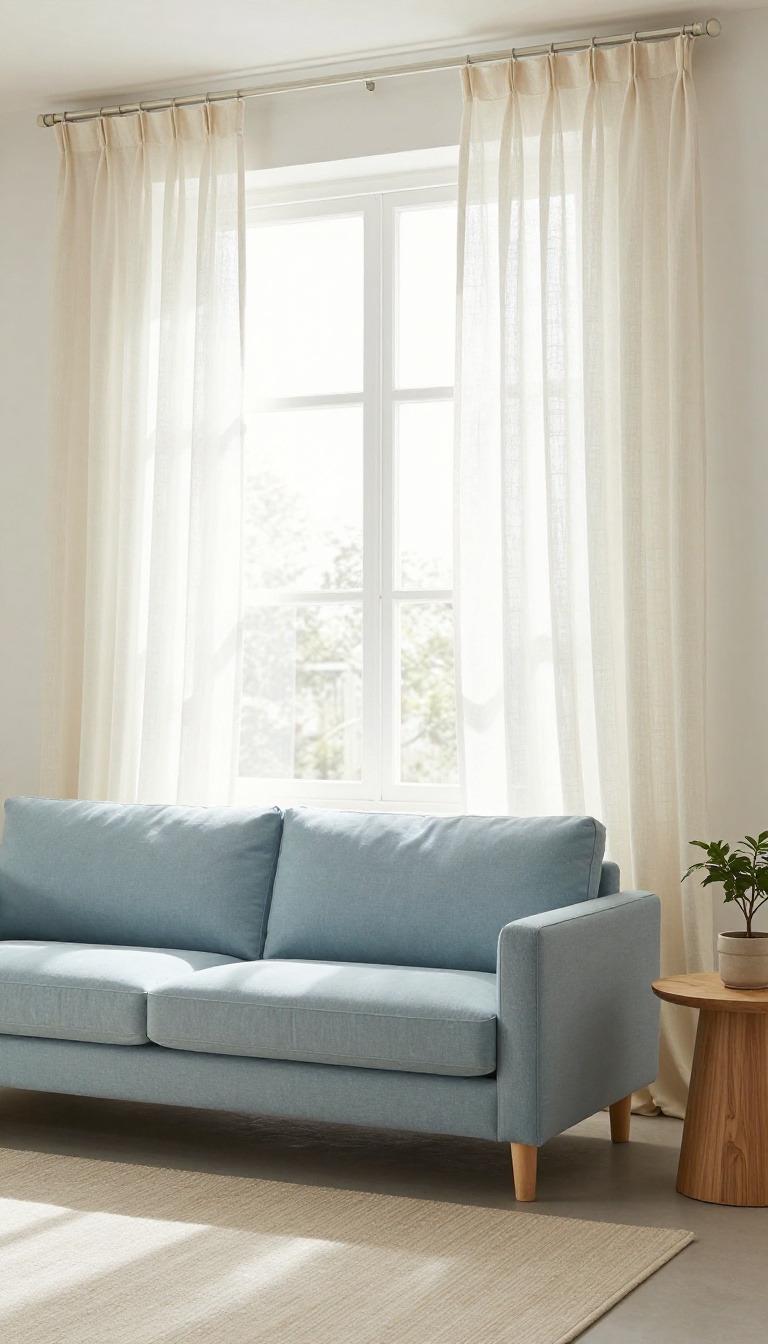
Sheer curtains might be the most underrated player in a light blue living room. They don't shout for attention, but they change how every other color reads. Hang them right and your couch looks softer, your walls look warmer, and the whole room feels like it's glowing from the inside.
The magic is in the filter. Sheer fabric takes hard daylight and spreads it around, so you never get those harsh stripes across the sofa. That even wash of light is what makes pale blue look dreamy instead of clinical.
You also get privacy from the street without losing the open, airy feeling that made you pick this couch in the first place.
Pick The Right White
Pure white sheers can turn icy against light blue, especially in north-facing rooms. Ivory, cream, or soft oatmeal keeps things warm and blends better with natural wood and beige textiles. Hold a swatch next to your couch in daylight before you commit.
The wrong white is the only real mistake here.
Hang Them High And Wide
Mount the rod a few inches below the ceiling and extend it past the window frame on both sides. This makes windows look bigger and lets light spread across the whole wall. Floor-length panels that just kiss the floor look intentional and elegant.
Short, choppy sheers kill the softness you're after.
Layer For Control
Sheers alone are perfect for daytime, but you might want a heavier curtain on a second rod for evenings or movie nights. A linen or cotton panel in a warm neutral pulls closed over the sheers and adds another layer of texture. Just make sure the heavier curtain doesn't block the light completely during the day.
You want options, not a blackout cave.
6. Mix in Metallic Accents for a Touch of Shine
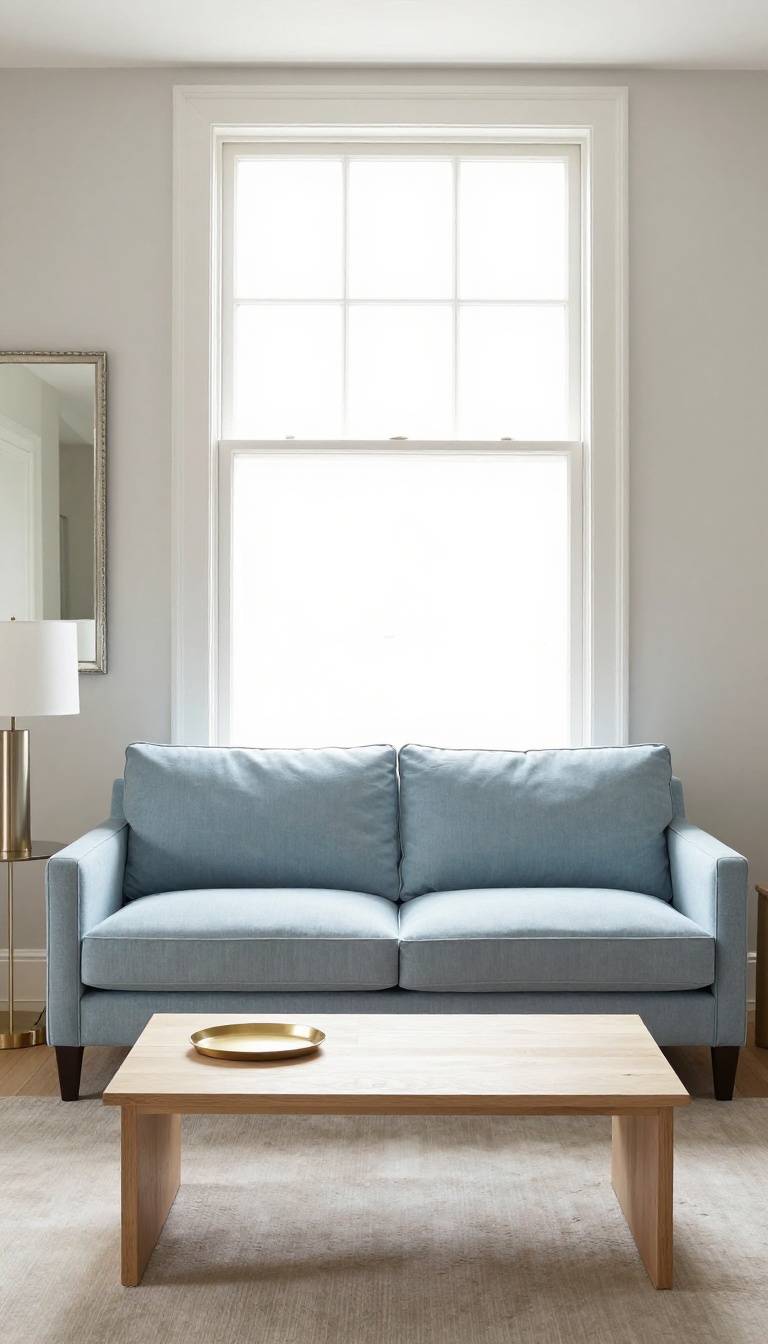
Metallic accents can wake up a light blue couch without stealing the show. The right finish catches light and adds a little sparkle, but it never fights the blue for attention. Think of metals as jewelry for the room: a few well-placed pieces make everything feel more polished.
The key is restraint. One or two metallic moments per sightline is plenty. A brushed nickel lamp on a side table, a silver picture frame on the wall, or a soft gold tray on the coffee table can each do the job.
When metals are scattered everywhere, the room starts to feel busy and the blue gets lost. Keep the shine low-key and let it work in the background.
Pick A Finish That Plays Nice
Brushed nickel and matte silver feel cool and modern, which pairs naturally with light blue. Soft gold or brass adds warmth and keeps the palette from turning icy. You can mix two finishes if they share a similar sheen, but stick to one as your main metal and use the other sparingly.
Test a few finishes near the couch in daylight before you commit.
Place Metals Where They Catch Light
Metals look best when they have something to reflect. Put a metallic lamp near a window, or hang a silver-framed mirror opposite a light source. A gold tray on an ottoman will pick up the glow from a floor lamp.
Avoid tucking shiny pieces into dark corners where they just look dull.
Keep The Rest Of The Room Calm
Metallic accents stand out more when the surrounding materials are quiet. Stick with matte textiles, natural wood, and soft rugs so the shine has room to breathe. If your couch already has nailhead trim or a chrome base, you can go even lighter on extra metals.
The goal is a subtle glint, not a disco ball.
7. Bring in Indoor Plants for a Fresh, Calm Feel
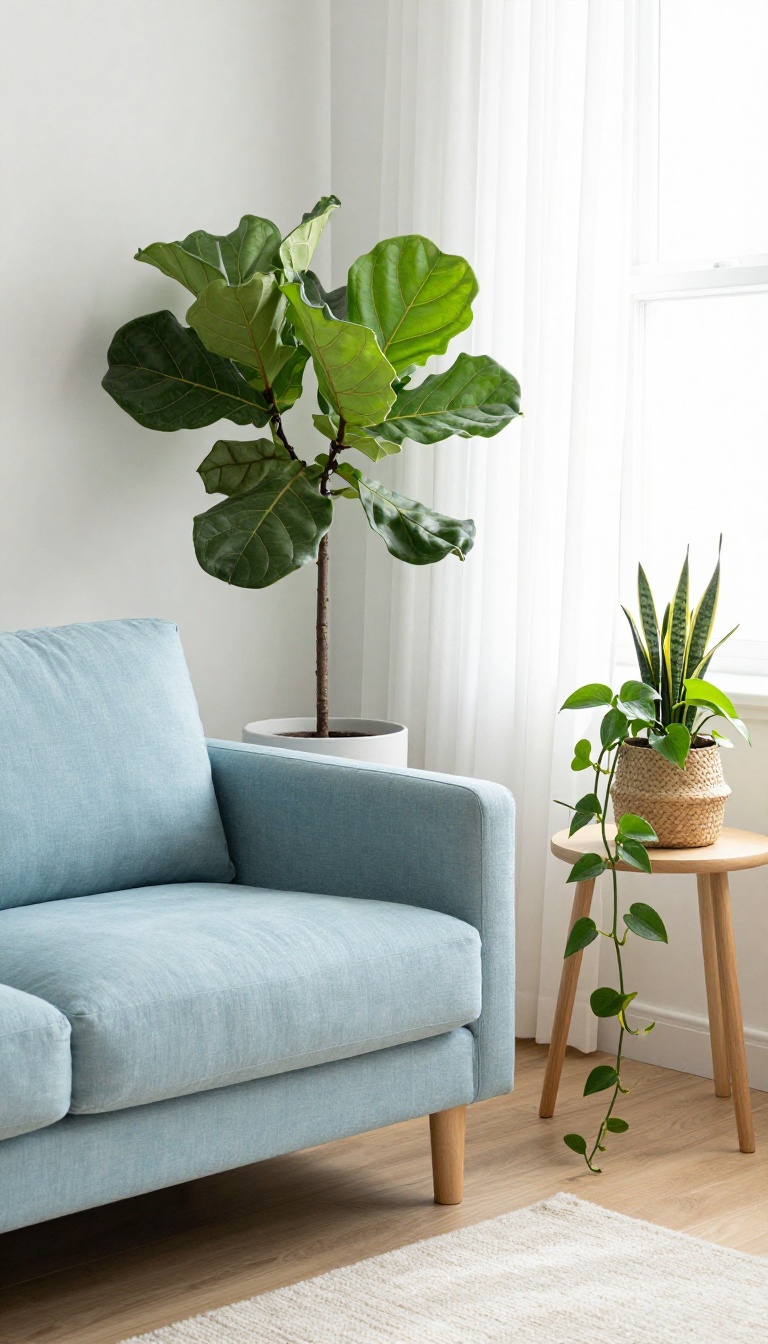
Plants and light blue are a natural pair. The green brings warmth and life, while the blue keeps things cool and collected. Together they make a room feel like a quiet corner of the outdoors.
You do not need a jungle. One good plant in the right spot can change the whole mood. And the bonus is real: plants clean the air and give your eyes a soft place to land.
A fiddle leaf fig near the couch makes a bold, sculptural statement. Its large leaves add height and texture without competing with the blue. If you want something lower-maintenance, a snake plant or ZZ plant works just as well.
For a softer look, group small succulents or trailing pothos on a side table or shelf. The variety of shapes and shades of green keeps the room interesting. Just make sure the pots match the calm vibe—think matte ceramic, woven baskets, or simple terracotta.
Placement matters more than quantity. A plant should feel like it belongs, not like an afterthought. Tuck one beside the couch, hang one in a corner, or line a few along a windowsill.
The goal is balance, not clutter.
Pick Plants That Fit Your Light
Not every plant thrives in every room. Check how much natural light your living room gets before you buy. Low-light spaces do well with pothos, philodendron, or snake plants.
Bright, sunny spots can handle a fiddle leaf fig or a rubber tree. Matching plant to light keeps them healthy and your room looking good.
Choose Pots That Blend In
The pot is part of the design. A busy or bright pot can fight with your light blue couch. Stick to neutral tones like white, gray, or natural clay.
Woven baskets add texture and warmth. If you want a pop of color, pick a shade that already appears in the room, like a soft navy or sage green.
Keep It Low-maintenance
You do not need a green thumb to make this work. Fake plants have come a long way, and a high-quality faux fiddle leaf fig looks surprisingly real. If you go with real plants, set a reminder to water once a week.
A little care goes a long way, and the payoff is a room that feels alive.
8. Create a Gallery Wall with Soft Blue and White Art
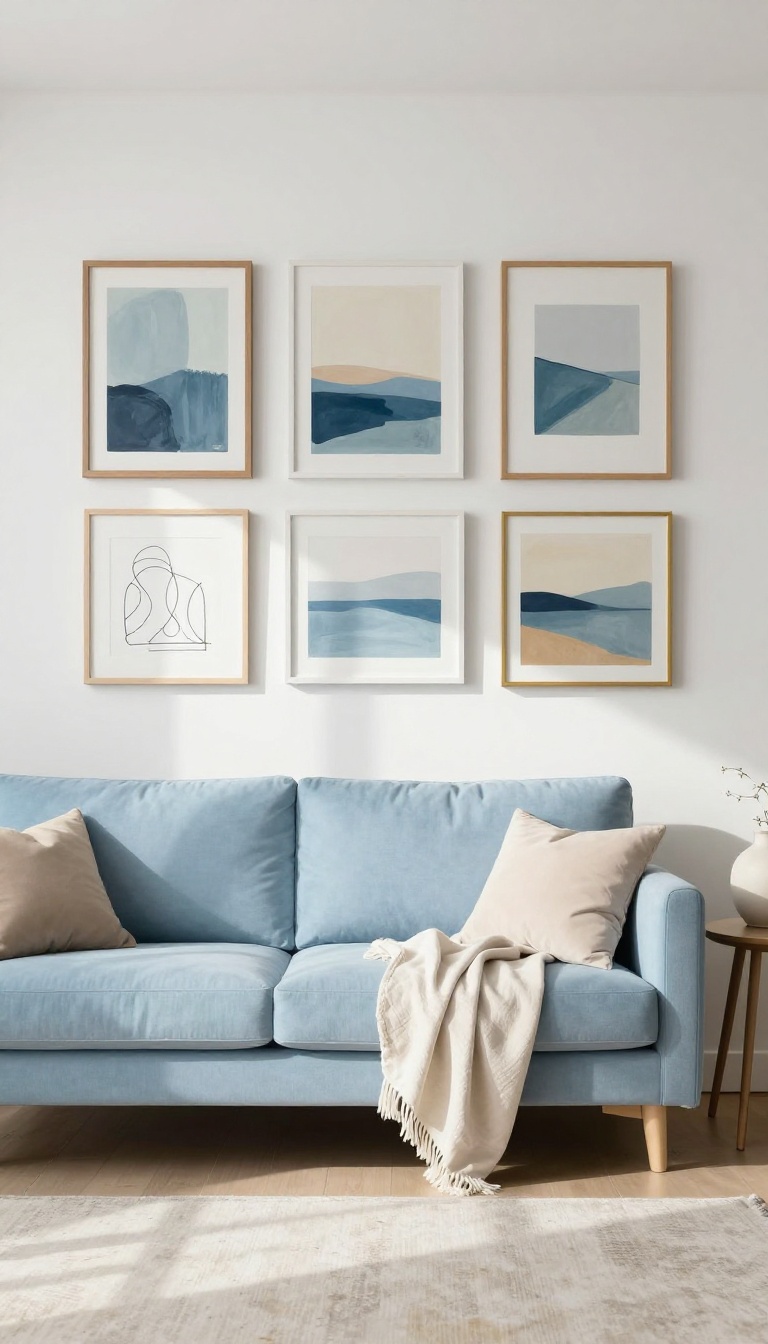
A bare wall above a light blue couch is a missed chance. It leaves the sofa sitting there with nothing to talk to. A gallery wall fixes that fast, and it does not have to be expensive or perfectly planned.
The trick is sticking to a tight palette. Blues, whites, and sandy neutrals keep the arrangement calm instead of busy. That way the art supports the couch instead of competing with it.
You also get to sneak in personal stuff, which is what makes a room feel lived in rather than staged.
Start by pulling together frames in a few sizes, then lay everything on the floor before you touch a nail. This step saves you from a wall full of unnecessary holes.
Pick A Palette That Stays Soft
Stick to art in shades of blue, white, cream, and sand. A little black or charcoal is fine as an accent, but too much of it will make the wall feel harsh against pale blue upholstery. Mix abstract washes, simple line drawings, and soft landscape prints.
Variety in subject keeps it interesting, while the shared color story keeps it cohesive.
Mix Frames Without The Mess
Use two or three frame finishes at most, like natural oak, white, and thin brass. More than that and the wall starts to look like a flea market booth. Thrift stores, printable art shops, and even your own photos work here.
Matting a small print in a large frame gives it more presence for very little money.
Lay It Out Before You Hang
Arrange everything on the floor first and snap a photo with your phone. The camera flattens the layout and shows you gaps or clumps you would miss standing right in front of it. Keep about two to three inches between frames.
Hang the center of the arrangement roughly eight to ten inches above the back of the couch so it feels connected to the seating, not floating near the ceiling.
Keep It From Feeling Cluttered
A gallery wall above a couch already carries visual weight, so leave the surrounding wall mostly empty. Skip extra shelves or sconces right next to it. If the arrangement starts feeling heavy, swap one busy print for a plain white mat or a simple blue line drawing.
Breathing room is what keeps the whole thing serene.
9. Add a Floor Lamp with a Linen Shade for Warm Light
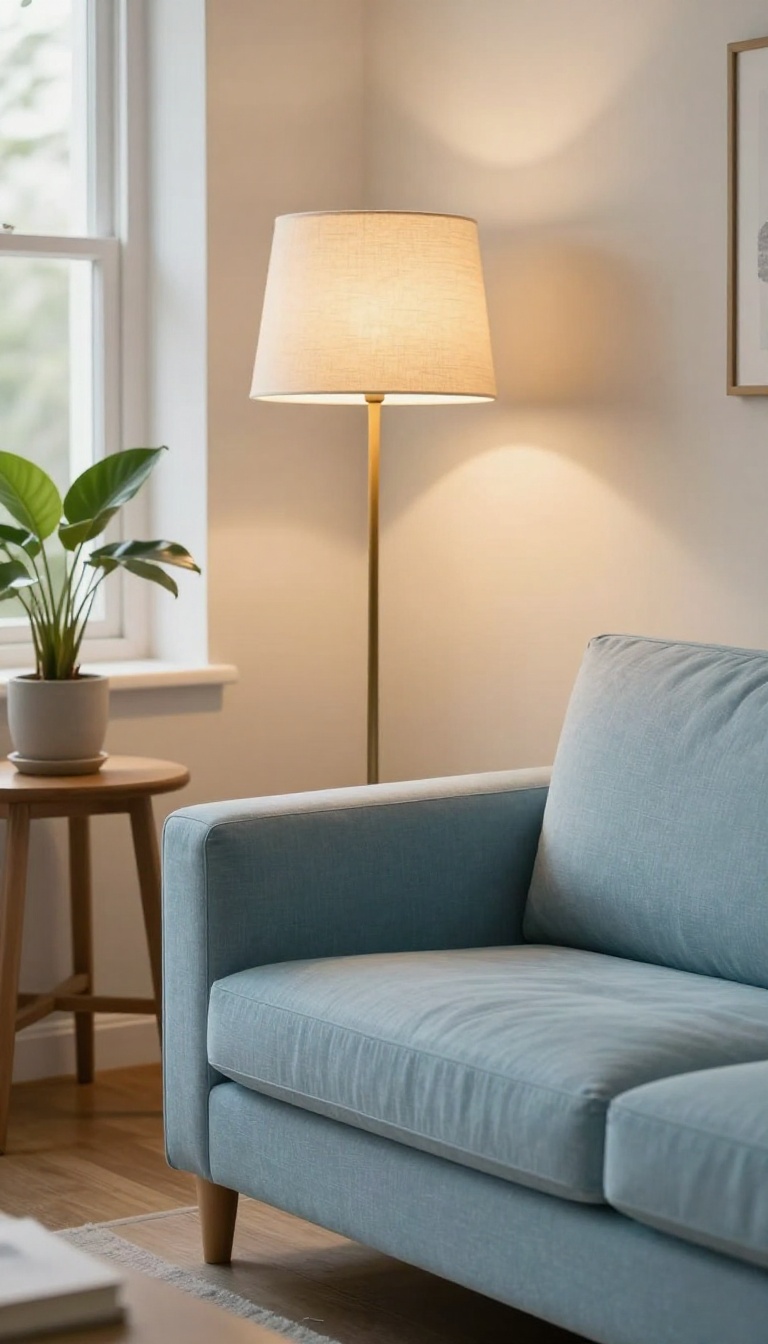
Overhead lights flatten a room. They blast everything with the same harsh brightness and leave no shadows, no depth, and no mood. A floor lamp with a linen shade does the opposite.
It pools warm light exactly where you want it and lets the rest of the room soften into the background.
Linen is the secret. The fabric diffuses the bulb's glow into something amber and gentle, nothing like the blue-white sting of an LED ceiling fixture. Place the lamp beside the couch, slightly behind the arm, so the shade sits around eye level when you are seated.
That angle gives you enough light to read without glaring into your face. It also grazes the light blue upholstery with a soft wash that makes the color look richer and more inviting. Choose a base in brass, black metal, or natural wood to tie the lamp into the rest of the room.
A slim tripod or a simple column silhouette keeps the look airy and won't crowd the sofa.
Pick The Right Bulb
A warm bulb makes or breaks the effect. Look for 2700K to 3000K and around 800 lumens. Anything cooler turns the linen shade gray and kills the cozy factor.
A dimmable bulb gives you options from bright reading light to a low evening glow.
Place It For Balance
If your couch sits against a wall, tuck the lamp in the corner behind one arm. In an open layout, float it on the side where you need light most. Pair it with a small side table or a floor plant on the opposite end to keep the arrangement from feeling lopsided.
Keep The Shade Simple
A tapered drum or classic empire shape in natural linen works with almost any decor. Skip shiny or patterned shades. The texture should feel woven and matte, not glossy.
That subtle roughness is what makes the light look soft instead of synthetic.
10. Use a Mirrored or Glass Coffee Table to Reflect Light
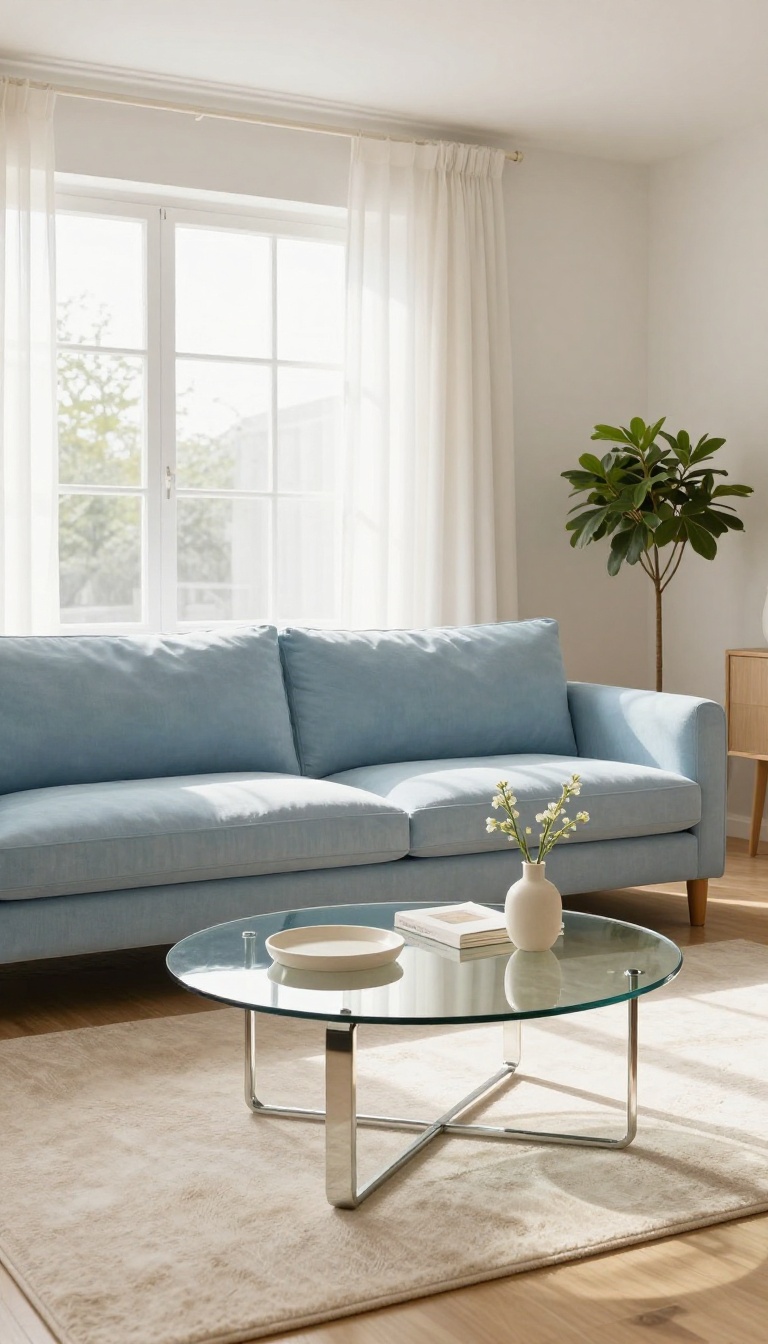
A mirrored or glass coffee table does more than hold your coffee. It bounces light around the room, making the whole space feel brighter and bigger. And because it's see-through or reflective, it doesn't compete with your light blue couch—it lets the couch stay the star.
Think of it as a quiet helper. It catches whatever light comes in from windows or lamps and sends it back into the room. That extra bounce keeps pale blue from looking flat and adds a subtle sparkle.
Most people pick a coffee table for storage or style. But in a light blue living room, the surface matters just as much as the shape. A reflective top multiplies the light you already have, so you don't need to add more lamps or brighter bulbs.
It's an easy swap that changes the whole mood. Here's how to make it work without making the room feel cold or fragile.
Why Reflective Surfaces Work With Light Blue
Light blue already leans cool and airy. A mirror or glass table picks up that airiness and doubles it. The reflection also softens the line between the couch and the floor, so the room feels more open.
If your space gets limited natural light, this trick is almost like adding a window.
Pick The Right Shape And Size
A round or oval glass table keeps things soft and avoids sharp corners that can feel harsh. Rectangular mirrors work well in longer rooms. Just make sure the table isn't wider than two-thirds of your couch.
Too big and it overwhelms; too small and it looks lost.
Style It Without Hiding The Reflection
Keep the top mostly clear. A small tray, one book, or a single vase is plenty. Anything tall or bulky blocks the light and defeats the purpose.
If you want a lamp, choose a slim one with a clear glass base so it doesn't interrupt the bounce.
Watch For Glare And Fingerprints
Mirrored tables show every smudge, so keep a microfiber cloth nearby. If direct sun hits the table and creates harsh glare, angle it slightly or add a sheer curtain. A little glare is fine—it's just another way light moves through the room.
11. Incorporate a Subtle Pattern with Pillows
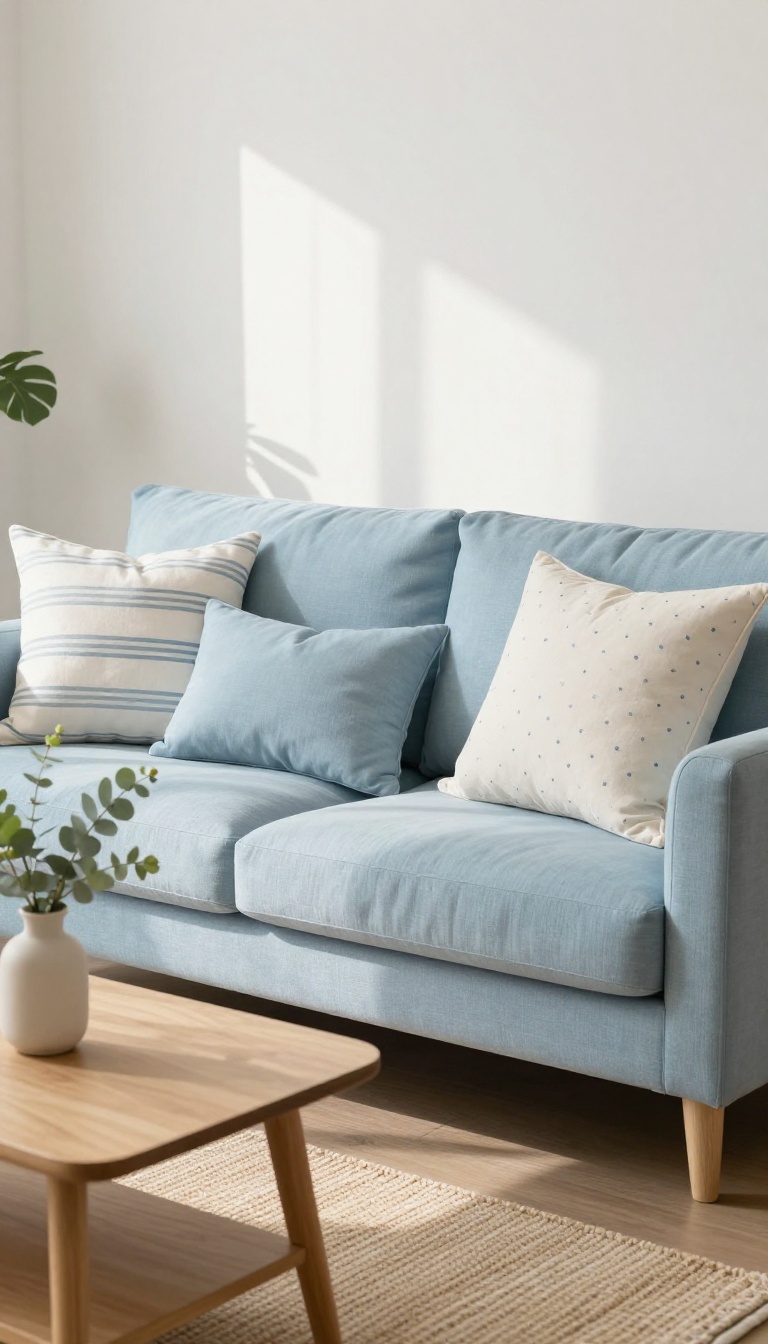
Solid pillows on a light blue couch look clean, but they can also look a little sleepy. A quiet pattern wakes up the seating without breaking the calm. The key is keeping the pattern small, the contrast soft, and the palette tight.
Think of pattern as seasoning. A pinch of stripes or a scatter of tiny dots adds flavor. A bold geometric print in four colors?
That is the whole spice rack dumped into the pot. Stick with blue and white, or blue and cream, and let the pattern do the talking at a whisper instead of a shout.
Pillow covers are the cheapest design swap in the room. You can change them with the season, wash them when life happens, and store the extras in a drawer. That flexibility makes them the perfect place to test a pattern before you commit to wallpaper or a rug.
Start with two patterned pillows and keep the rest solid. That ratio keeps the couch from looking like a fabric sample sale. If you want more pattern later, add a third in a different scale, not a different color family.
Pick Patterns That Play Nice
Delicate stripes are the safest bet. A thin blue line on white reads as tailored, not busy. Dots work the same way when they are small and evenly spaced.
Botanical prints add a soft organic touch, especially if the leaves are sketched rather than saturated. Avoid anything with high contrast or large repeats. A giant palm leaf in navy on bright white will fight the couch instead of complementing it.
Scale is everything here.
Mix Two Scales, Not Two Styles
One striped pillow and one dotted pillow can live together happily. The stripes give structure, the dots add a little bounce. What you do not want is a stripe, a chevron, a floral, and a geometric all on the same sofa.
Keep the color palette identical across every patterned pillow. If the blues match, the patterns can differ without creating chaos.
Let Texture Carry The Rest
Once you add pattern, keep the other pillows solid and textural. Linen, boucle, or washed cotton in white or cream gives the eye a place to rest. That contrast makes the patterned pillows feel intentional instead of accidental.
A single lumbar pillow in a subtle print can be enough. You do not need to pattern every corner of the couch.
12. Paint an Accent Wall in a Deeper Blue
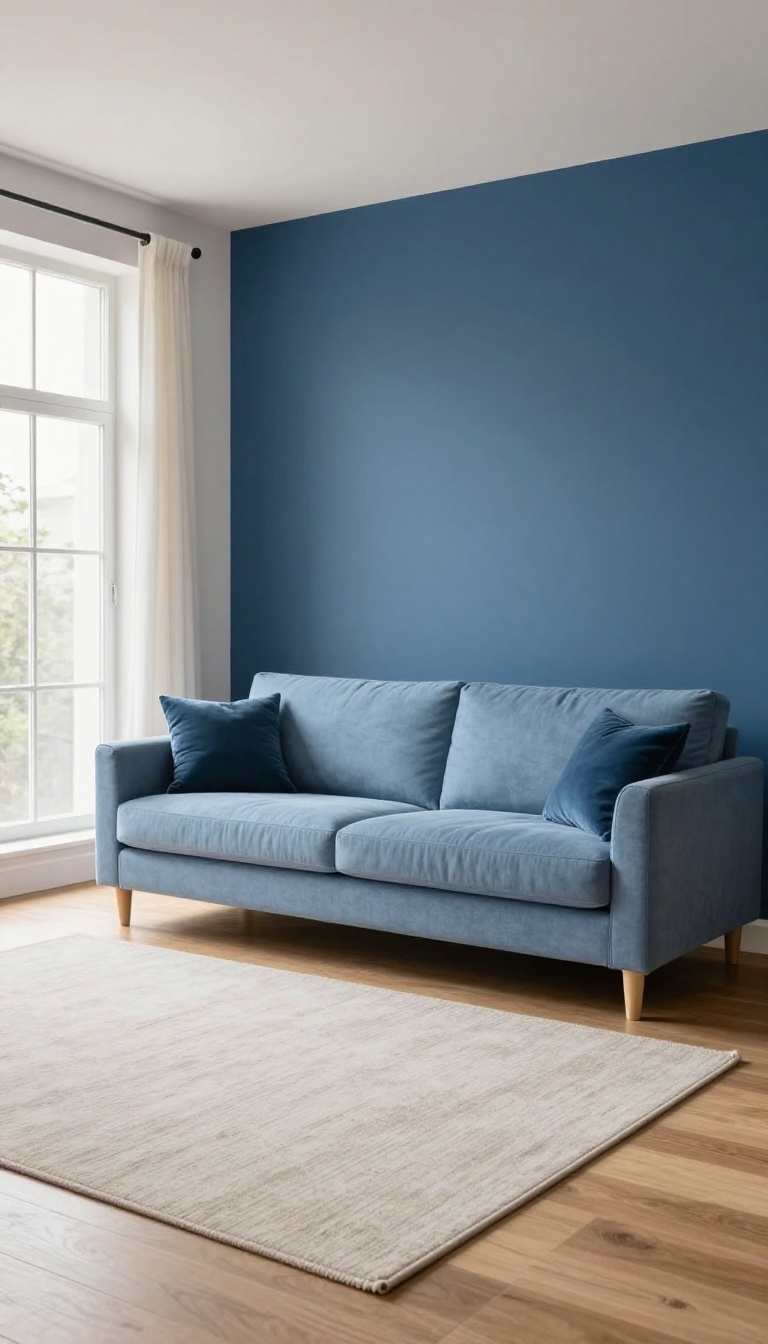
A light blue couch can sometimes blend into a pale wall and lose its presence. Painting the wall behind it in a deeper blue—think navy, teal, or slate—instantly gives the seating area a backdrop that feels intentional. The contrast makes the light blue pop without any extra furniture or accessories.
This move also adds depth to the room. A dark wall recedes visually, so the couch appears to sit forward, creating a cozy, anchored zone. It’s a simple paint job that changes the entire mood.
You don’t need to paint all four walls. One accent wall behind the sofa is enough to frame the seating area and draw the eye. The key is picking a deeper blue that shares undertones with your couch, so the two shades feel related rather than random.
A navy wall with a light blue sofa is a classic pairing—crisp and slightly nautical. Teal adds a touch of green and feels a bit more relaxed. Slate blue sits between gray and blue, giving a softer, moodier contrast.
Any of these will make the light blue read as lighter and brighter by comparison. Finish the look with simple accessories. A couple of throw pillows in the same deep blue tie the wall to the couch.
A light rug and warm wood tones keep the room from feeling too dark. The goal is balance, not a cave.
Pick The Right Deep Blue
Navy is the safest bet if you want a timeless look. It pairs well with almost any light blue and doesn’t fight with other colors. Teal works if your couch has a hint of green or if you want a coastal vibe.
Slate blue is great for a more muted, sophisticated feel. Grab paint swatches and hold them against your couch in different lighting before you commit.
Balance The Contrast
A dark wall can overwhelm a small room, so keep the rest of the space light. Use white or cream curtains, a pale rug, and maybe a mirror to bounce light around. If the room feels too heavy, add a few metallic accents or a light wood coffee table to break up the dark expanse.
Tie It Together With Texture
Once the wall is dark, texture becomes your friend. A chunky knit throw, a woven basket, or a linen lampshade adds softness. These small touches keep the room from feeling flat and make the light blue couch feel like part of a layered, comfortable space.
13. Add a Bookshelf Styled with Neutral Decor
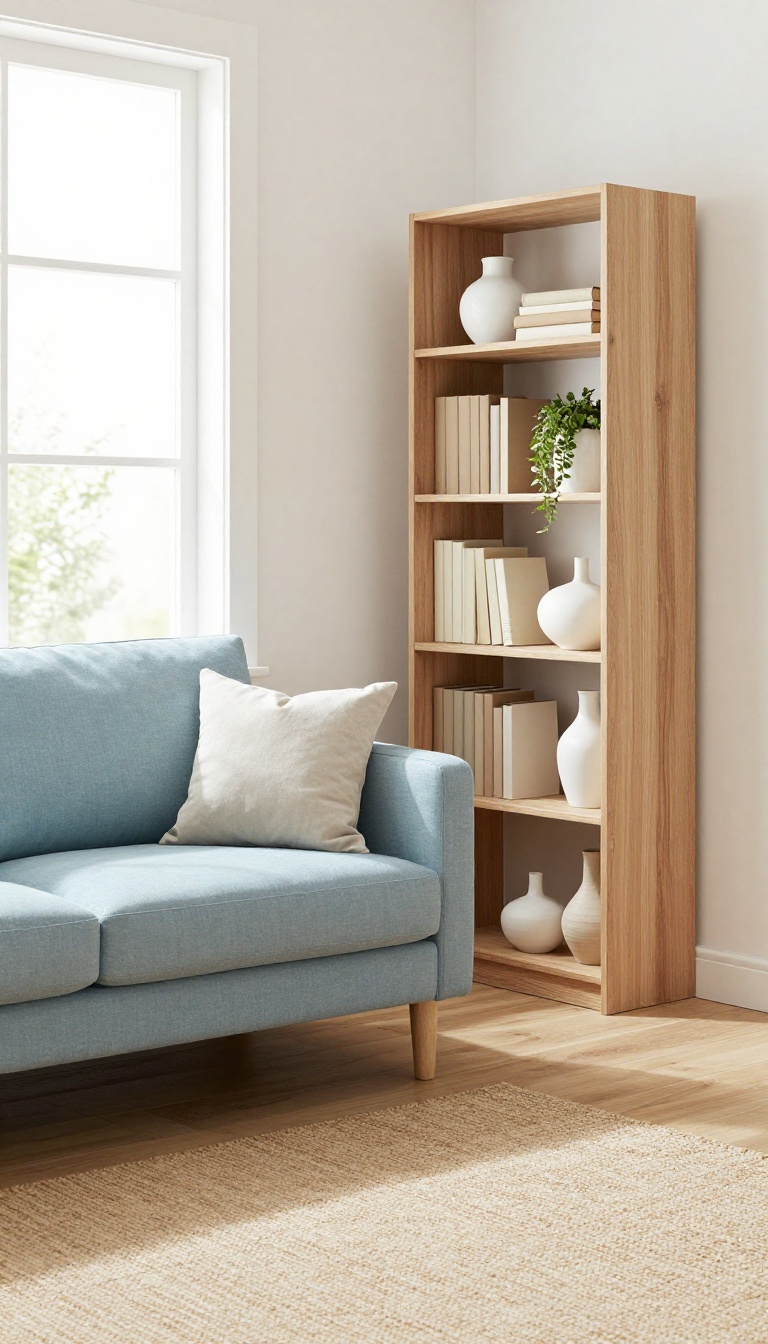
A bookshelf next to your light blue couch can either add calm structure or turn into visual noise. The fix is simple: keep the palette tight and neutral. White vases, pale books, and one small plant do more than a shelf full of color ever will.
This approach gives your eye a place to rest while adding height and interest. It also keeps the room from feeling like a showroom. The shelf becomes a quiet supporting character instead of a scene-stealer.
A styled bookshelf works because it echoes the softness of your couch without competing with it. Neutral decor lets the light blue stay the star. You get texture and shape, but no clash.
Start by clearing everything off. Then add back only what fits the palette. You will likely need less than you think.
The goal is breathing room between objects, not a packed shelf. Once the basics are in place, tweak the arrangement until it feels balanced. Small shifts make a big difference.
Step back often to check how it reads from across the room.
Stick To A Tight Color Story
White, cream, oatmeal, and light wood are your best friends here. A single muted green from a plant is fine. Anything brighter will pull attention away from the couch.
If you already own colorful books, turn them spine-in or store them elsewhere. That one move instantly calms a busy shelf. You can also group books by shade so the shelf reads as one soft block of color.
Mix Heights And Textures
A tall white vase next to a low stack of books creates rhythm. Add a small trailing plant for a touch of life. Vary the shapes so the shelf does not look like a grid.
Use a mix of matte and glossy finishes. A ceramic vase, a woven basket, and a smooth stone object all catch light differently. That variety keeps neutral decor from feeling boring.
Leave Empty Space On Purpose
Empty shelves are not wasted space. They give the eye a break and make the objects you do display feel intentional. Aim for about one-third empty space per shelf.
Resist the urge to fill every gap. A little breathing room is what separates styled from cluttered. If a shelf feels too busy, remove one item and see how it feels.
14. Choose a Light Blue Area Rug to Extend the Color
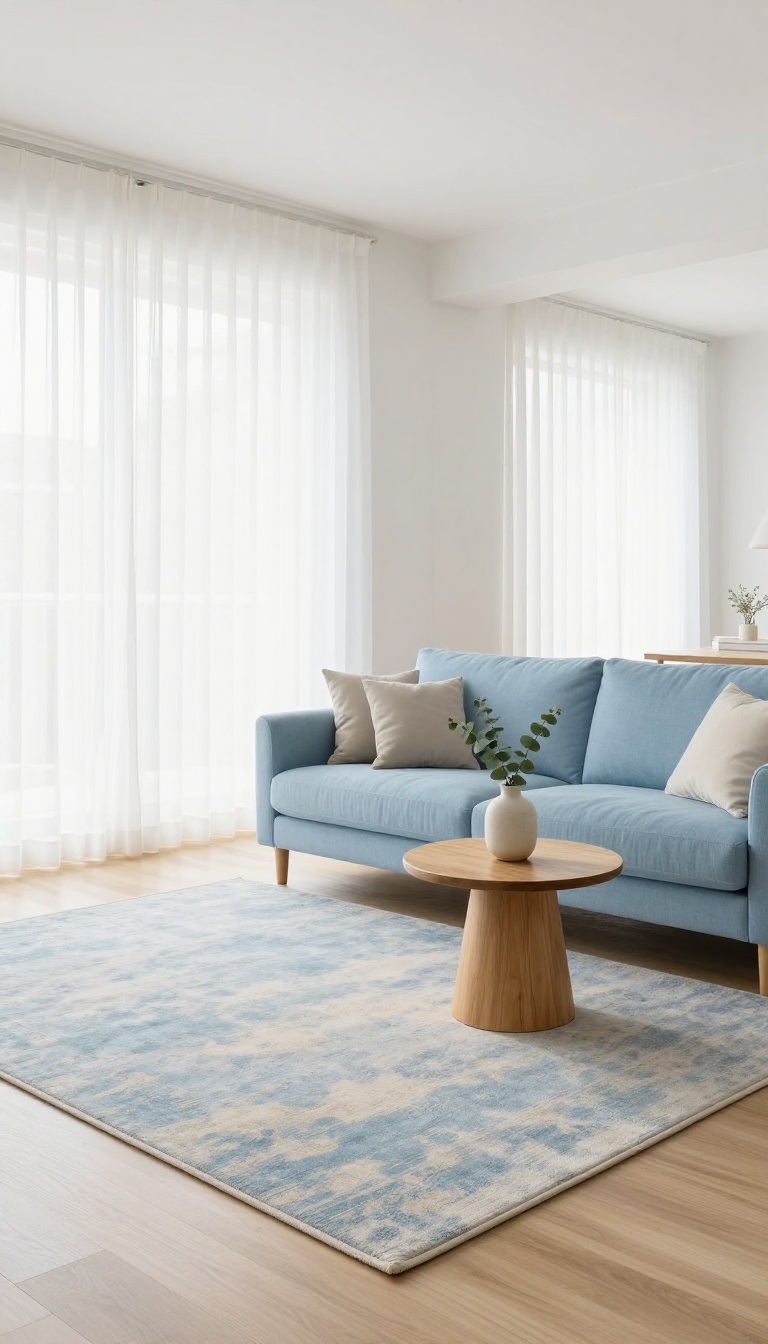
A light blue couch floating on a bare floor can feel like it's waiting for something. An area rug in a similar or slightly lighter blue pulls the whole seating area together. It also adds a layer of softness that makes the room feel more inviting.
The rug doesn't have to match the couch exactly. In fact, a slight shift in tone often looks more natural. Think of it as a gentle echo, not a duplicate.
The right rug does two things at once: it anchors your furniture and extends the color story. When the blue repeats underfoot, the couch stops feeling like a lone island. Instead, it becomes part of a cohesive scene.
You can go with a solid blue rug for a clean, modern look. Or pick one with a subtle pattern that includes hints of cream, gray, or sand. Either way, the goal is to keep the overall effect calm and connected.
Match The Tone, Not The Exact Shade
A rug that's a touch lighter than your couch can make the space feel airy and open. If your couch is a cool ice blue, try a rug with a hint of aqua or seafoam. If your couch leans more powdery, a soft sky blue rug will feel like a natural extension.
Avoid going too dark unless you want a stronger contrast. A deep navy rug under a pale blue couch can look sharp, but it also breaks the serene vibe. Stick close to the same family for that effortless, floaty feel.
Think About Texture And Pile
A plush, high-pile rug adds coziness and muffles sound, which is great for open-plan rooms. A flat-weave or low-pile rug feels more casual and works well in high-traffic areas. Both can look beautiful—just consider how you use the space.
If you have pets or kids, a low-pile rug in a slightly darker blue hides stains better. For a formal living room, a soft, thick rug in a light blue invites bare feet and long conversations.
Size It Right For The Room
A rug that's too small makes the seating area feel disconnected. Aim for at least the front legs of your couch and chairs to sit on the rug. In a larger room, you can go bigger and let the rug extend a few inches beyond the furniture on all sides.
When in doubt, measure your space and tape out the size on the floor. It's a quick way to see how the rug will interact with your couch and the rest of the room before you buy.
15. Keep It Minimal with Clean Lines and Open Space
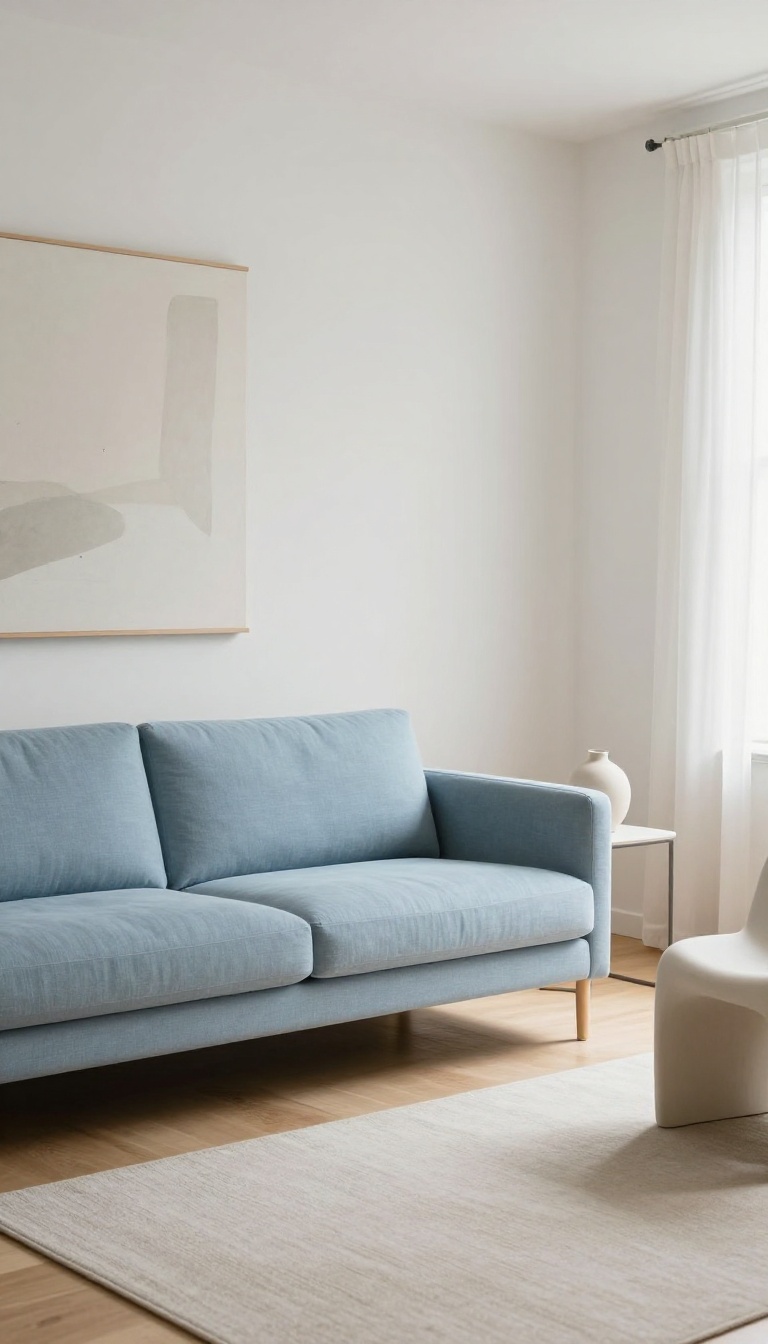
Empty space is not wasted space. When you give a light blue couch room to breathe, the color reads as calm instead of crowded. The goal is simple: fewer things, better placed.
Minimalism here does not mean bare walls or a cold room. It means every piece earns its spot. A light blue couch already carries a soft, quiet presence.
Clutter fights that presence, and open space lets it win.
Leave Breathing Room Around The Couch
Pull the couch a few inches away from the wall if you can. Even six inches of space changes how the whole corner feels. Keep side tables slim and low so they support the couch without boxing it in.
Choose Furniture With Simple Silhouettes
Straight legs, smooth surfaces, and no busy patterns keep the eye moving. A single sculptural chair beats three bulky ones. Let the couch be the main character, not one voice in a loud crowd.
Edit Your Surfaces And Shelves
Clear the coffee table down to one or two objects. On shelves, leave gaps between books and bowls. Negative space is what makes the blue feel intentional rather than accidental.
Let The Floor And Walls Stay Quiet
A solid rug in a soft neutral grounds the couch without competing. Keep wall art sparse and large rather than small and scattered. The room should feel open, not emptied.
FAQ
What colors go best with a light blue couch?
Warm whites, creams, soft grays, and natural wood tones work well. You can also add deeper blues or soft greens for contrast.
How can I make a light blue couch look cozy?
Layer in textured throws, pillows, and a soft rug. Add warm lighting and natural materials like wood and jute.
Is a light blue couch good for a small living room?
Yes, light colors reflect light and make small spaces feel larger. Keep the surrounding decor light and uncluttered.
What style of rug should I use with a light blue couch?
A jute or sisal rug adds natural texture, while a light blue or patterned rug can tie the room together. Choose based on your desired look.
How do I prevent a light blue couch from looking cold?
Balance it with warm textures like wood, wool, and linen. Add warm lighting and soft neutral accents.
Conclusion
A light blue couch works because it already does the heavy lifting. You do not need to redecorate the whole room to make it feel calm and put together. Pick two or three ideas that fit your space and budget, try them out, and see how the room feels after a week.
Start with the easiest swap, like a warmer throw or a softer rug, then build from there. Small changes add up faster than one big overhaul. Let the couch set the tone, and let everything else follow at its own pace.