13 Window Seat Ideas to Give Your Living Room More Charm
A window seat turns dead space under glass into the coziest square footage in your home. Suddenly there's a spot for morning coffee, a stack of paperbacks, and a cat that refuses to move. It's the kind of upgrade guests notice immediately, even if they can't name what changed.
The trick is matching the build to your window. A shallow bay calls for a cushion, while a deep alcove can swallow drawers, shelves, or a fold-out desk. Some seats float on casters so you can move them aside.
Others bolt in permanently and become the room's anchor. These thirteen ideas cover every layout, from cramped corners to wide sliding doors.
1. Built-In Bench with Hidden Storage
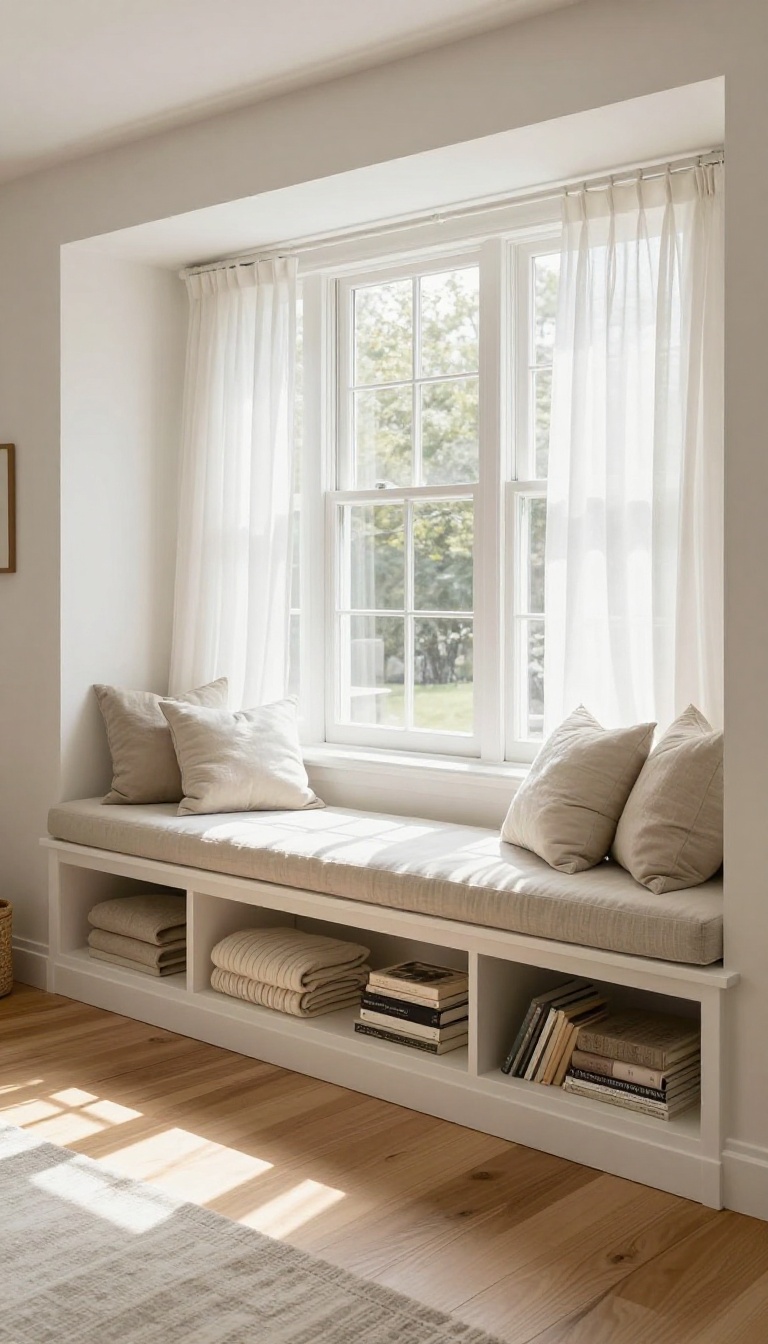
A built-in bench that lifts up to reveal hidden storage solves two problems at once: it gives you a cozy place to sit and a discreet spot to stash blankets, books, or off-season gear. The best versions look like they've always been part of the wall, not like a box you dropped in a corner. With a little planning, you can turn that awkward nook under a window into the hardest-working seat in the house.
The magic of a built-in bench is that it disappears into the architecture. You frame it to fit the exact width of your window, then top it with a cushion that makes people want to linger. Underneath, a lift-up lid or a row of drawers keeps everyday clutter out of sight.
It's a simple trick that makes a small room feel intentional instead of cramped.
Choosing The Right Lift Mechanism
You have two main options: a hinged lid that opens like a chest, or drawers that pull out from the front. Hinged lids work well when you want to store bulky items like comforters or pillows, but you'll need clear space above to open them. Drawers are easier to access daily and don't require you to clear the seat cushion.
For a window seat, a combination often works best: a hinged section for big stuff and a couple of drawers for smaller items.
Sizing It To Your Space
Measure your window opening and decide how deep you want the bench. A depth of 18 to 22 inches is comfortable for sitting, but if you need more storage, you can go deeper—just add a few throw pillows to support your back. The height should match your window sill or sit slightly below it, so the bench feels integrated.
If you have baseboard heaters, leave a gap or choose a floating design to avoid blocking airflow.
Materials And Finishes That Last
For the frame, plywood or MDF painted to match your trim gives a clean, built-in look. If you want a furniture feel, use solid wood with a stain that complements your floors. The top should be sturdy enough to sit on, so avoid thin panels.
For the cushion, choose a high-density foam wrapped in a durable fabric like cotton canvas or performance weave. Add a few decorative pillows for color and comfort.
2. Bay Window Cushion with Piping
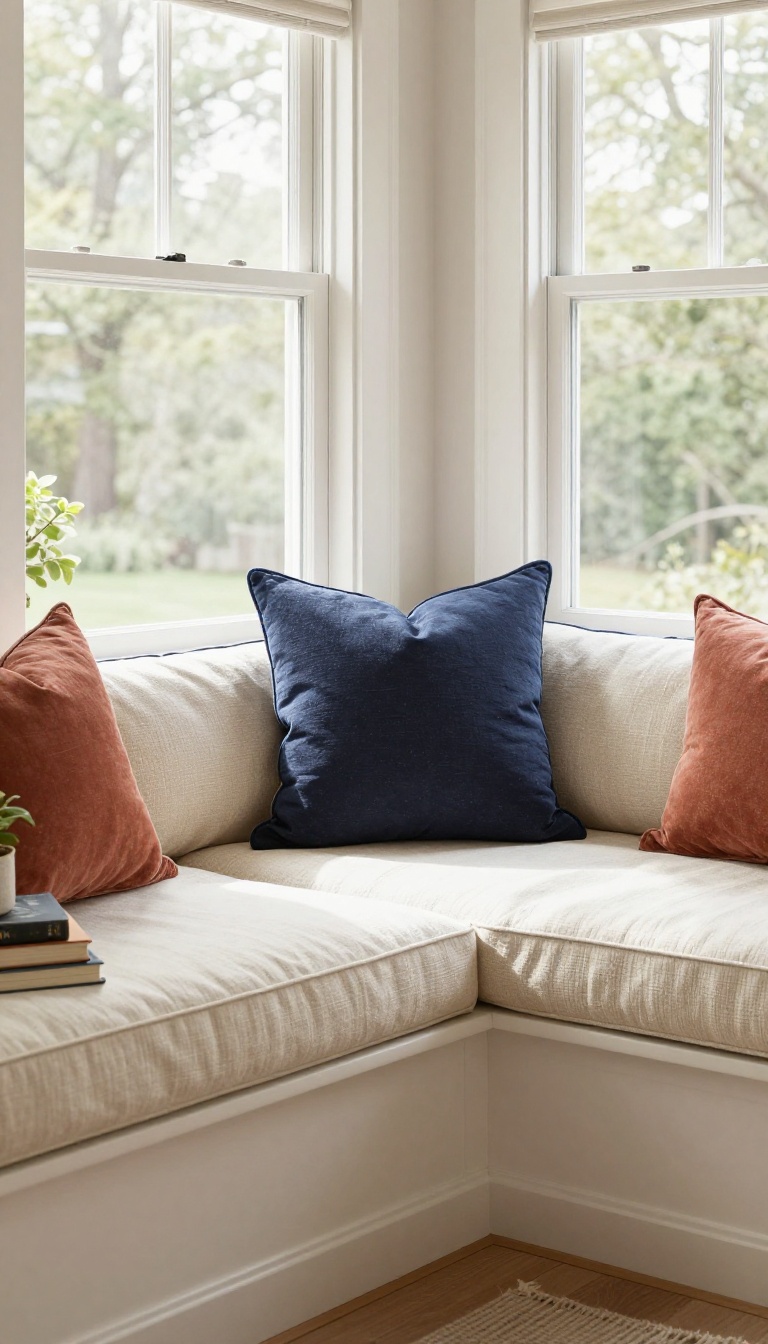
A bay window's angled walls make it tricky to dress. A plain bench pad can look like an afterthought, sliding around and leaving gaps. A thick cushion cut to follow the curve, finished with contrast piping, turns that awkward nook into a deliberate, tailored seat.
The piping isn't just decorative. It reinforces the edges so the cushion holds its shape, and it draws a clean line that makes the whole window feel finished. You get a spot that looks custom without a custom price tag.
The magic is in the fit. Measure each segment of the bay separately, then have the cushion made as one piece with seams at the angles. A 3- to 4-inch thickness gives you comfort without swallowing the window ledge.
Contrast piping in a complementary color—think navy on cream or rust on oatmeal—adds a crisp outline that makes the seat pop. For fabric, go with a durable indoor-outdoor weave or a performance linen. They resist fading from all that sunlight and wipe clean when life happens.
Add a few throw pillows in a smaller print to soften the corners, and you've got a reading nook that looks like it was always meant to be there.
Getting The Measurements Right
Measure the width at the front edge, the back edge, and the depth at each angle. If your bay has three panels, treat each as its own rectangle, then add seam allowances. A cushion that's too shallow leaves a gap; too deep and it buckles.
When in doubt, make a cardboard template and test it in the space before you order.
Choosing Piping That Pops
Piping in the same fabric as the cushion is subtle and safe. Contrast piping is the fun part. Pick a color from your curtains, rug, or artwork to tie the room together.
A thin welt (about 1/8 inch) looks modern; a thicker cord feels more traditional. Either way, it defines the shape and keeps the cushion from looking flat.
Comfort And Care
A high-resilience foam wrapped in batting gives you a seat that's firm but cozy. Add a hidden zipper so you can remove the cover for washing. If you have pets or kids, choose a fabric with a stain guard.
Vacuum the piping crevice monthly—crumbs love to hide there.
3. Reading Nook with Adjustable Sconce
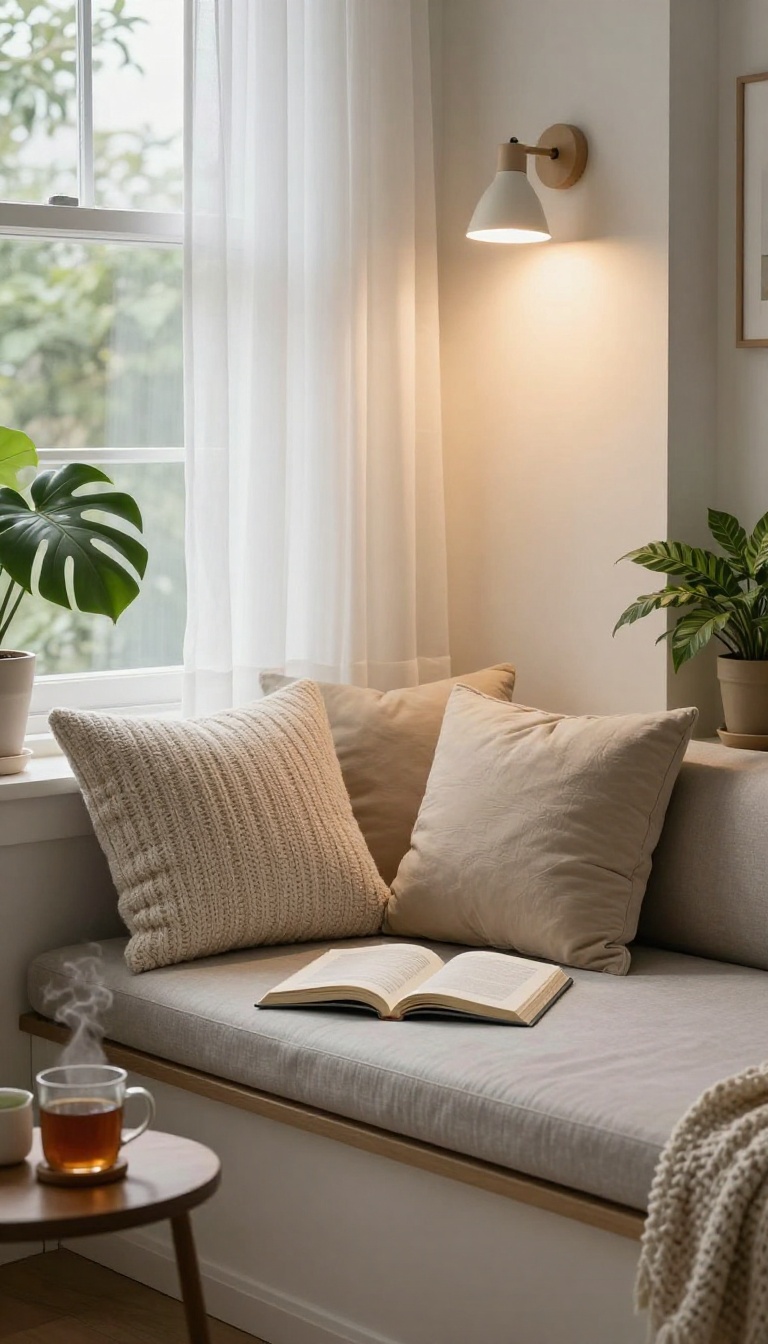
A window seat already begs for a good book, but the wrong light can turn page-turning into a squint-fest. A wall-mounted sconce with a swing arm fixes that. It throws light exactly where you need it and keeps the rest of the room dim and peaceful.
The best part is how little space it takes. You get focused task lighting without crowding your sill or dragging a floor lamp across the rug. And because it's attached to the wall, the cord stays hidden and the seat stays clear for cushions, a throw, and your current read.
Pick A Sconce That Swings
Look for an articulated arm or a pivoting head. That way you can aim the beam at your page while sitting upright or reclining against the window frame. A warm bulb around 2700K keeps the mood cozy and easy on late-night eyes.
Mount It At The Right Height
Aim for the sconce to sit about shoulder height when you're seated, usually 48 to 54 inches from the floor. Too high and it glares; too low and it blocks your view. Test it with a temporary hook before you drill.
Keep The Glow Contained
Choose a sconce with a shade that directs light downward and inward. That way your partner can sleep or watch TV nearby without a bright wash across the whole room. A dimmer switch makes it even easier to dial in just enough light.
4. Window Seat with Drawers Underneath
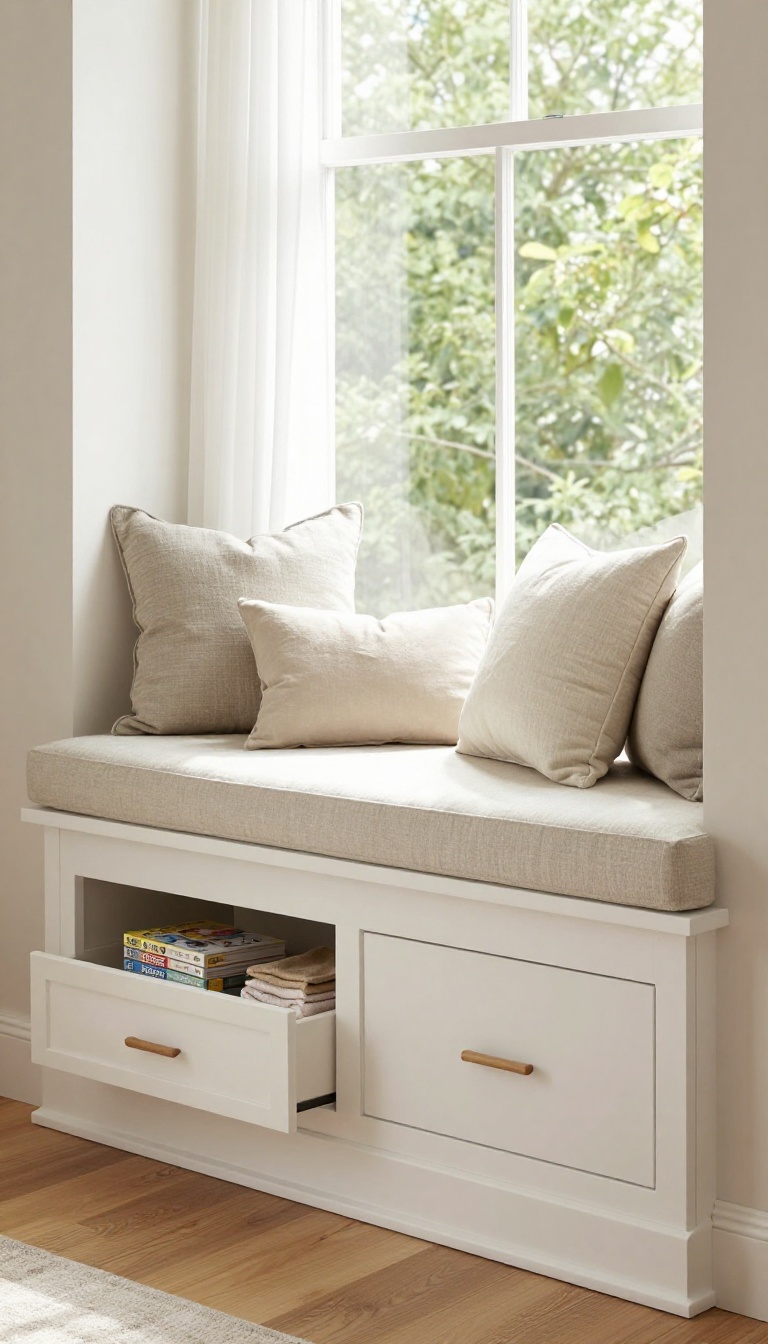
Drawers tucked under a window bench keep the seat low and the storage simple. Instead of lifting a heavy lid every time you want a blanket, you just pull a handle. That small change makes the whole setup easier to live with day to day.
The drawers also give all those loose items a real home. Board games stack flat, magazines stay tidy, and extra pillows disappear until someone needs one. The bench stays comfortable because nothing bulges underneath the cushion.
The best part is how little this changes the look of the room. From the front, it reads as a clean built-in bench with a cushion on top. The storage only shows up when you reach for it, which keeps the window area calm instead of cluttered.
You can build the drawers as one wide unit or split them into two or three smaller ones. Smaller drawers tend to slide better and put less strain on the runners. They also let you sort things by category without digging through one giant box.
Pick The Right Drawer Depth
Measure how far the bench sticks out before you choose drawer depth. A 16- to 20-inch drawer holds games and pillows without swallowing your whole hand. Deeper drawers are fine for blankets, but they get heavy fast.
If the bench is shallow, go with a single row of slim drawers instead of forcing depth that isn't there.
Hardware That Holds Up
Full-extension slides let you reach the back of the drawer, which matters more than people expect. Soft-close runners stop the drawer from slamming when kids or guests use it. Cup pulls and bar handles are easy to grab and look tidy on painted wood.
Skip tiny knobs if the drawer is wide, since they can wobble over time.
Keep The Cushion Sitting Right
A hinged or removable cushion top makes the drawers usable without fighting fabric. Add a thin non-slip pad so the cushion stays put when people slide on and off. If the drawers sit flush with the frame, the cushion can rest directly on top.
Just leave a small gap at the front so your fingers can reach the handle.
5. Upholstered Bench in a Bold Print
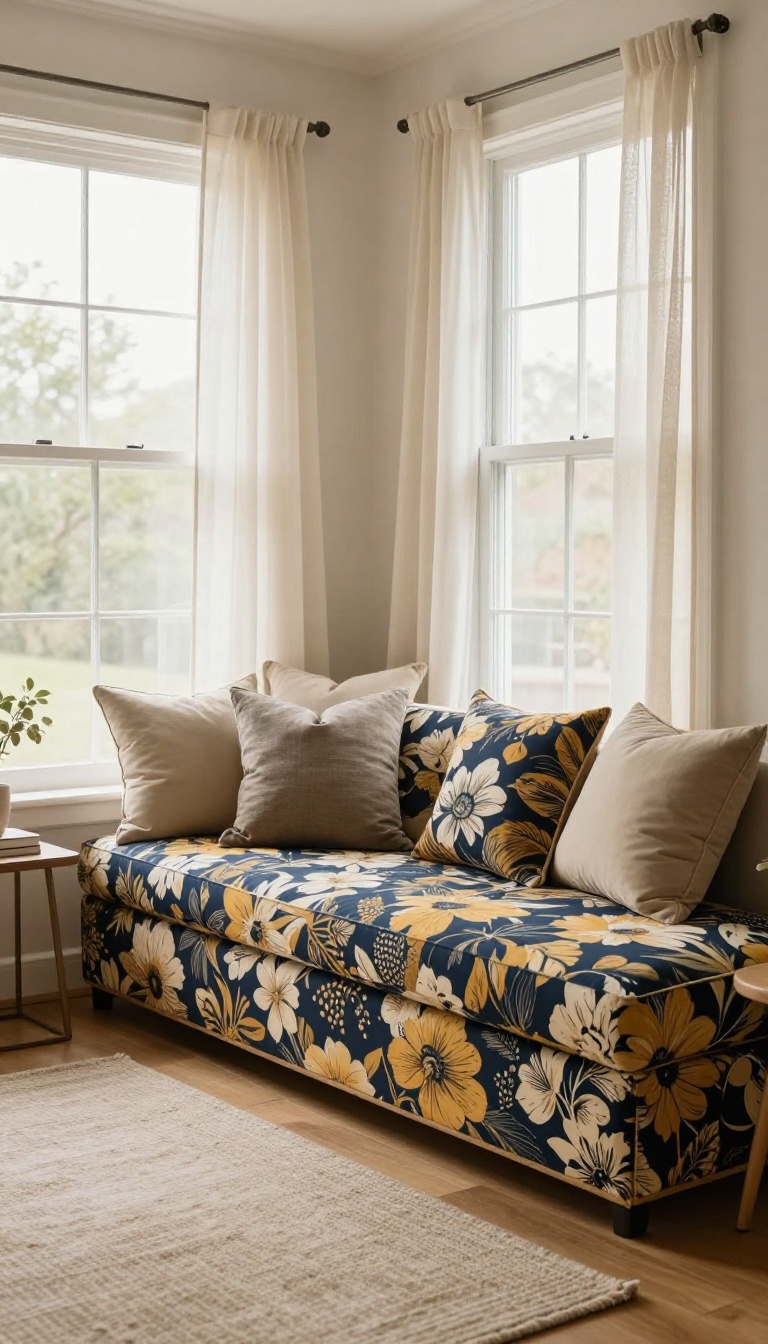
A plain window seat can blend into the background, but one wrapped in a bold print takes charge of the room. Think oversized florals, punchy geometrics, or a graphic stripe that makes the window area impossible to ignore. This isn't about playing it safe—it's about giving your living room a shot of personality that ties your color scheme together.
An upholstered bench in a vibrant fabric turns a simple perch into a lively focal point. The right print can pull together scattered throw pillows, artwork, and even a rug that felt a little lost before. It's a low-commitment way to go bold because the bench is small enough to swap out later if you change your mind.
Pick A Print That Plays Well With Your Palette
Start by pulling two or three colors from your existing room—maybe the navy from your sofa and the mustard from a lamp. A floral or geometric in those shades will feel intentional, not random. If your room is mostly neutral, a single bold print adds life without overwhelming the space.
Choose The Right Fabric For Real Life
Cotton and linen blends hold up well and come in endless prints. If the bench gets daily use, look for a performance fabric that resists stains and fading. A tight weave keeps the pattern crisp, while a looser weave can distort the design over time.
Balance Bold With Simple Surroundings
Let the bench be the star by keeping window treatments and nearby walls calm. Solid curtains in a neutral tone or a subtle texture won't compete. A few plain cushions on the bench itself can soften the look without diluting the print.
6. Corner Window Seat with Triangle Cushion
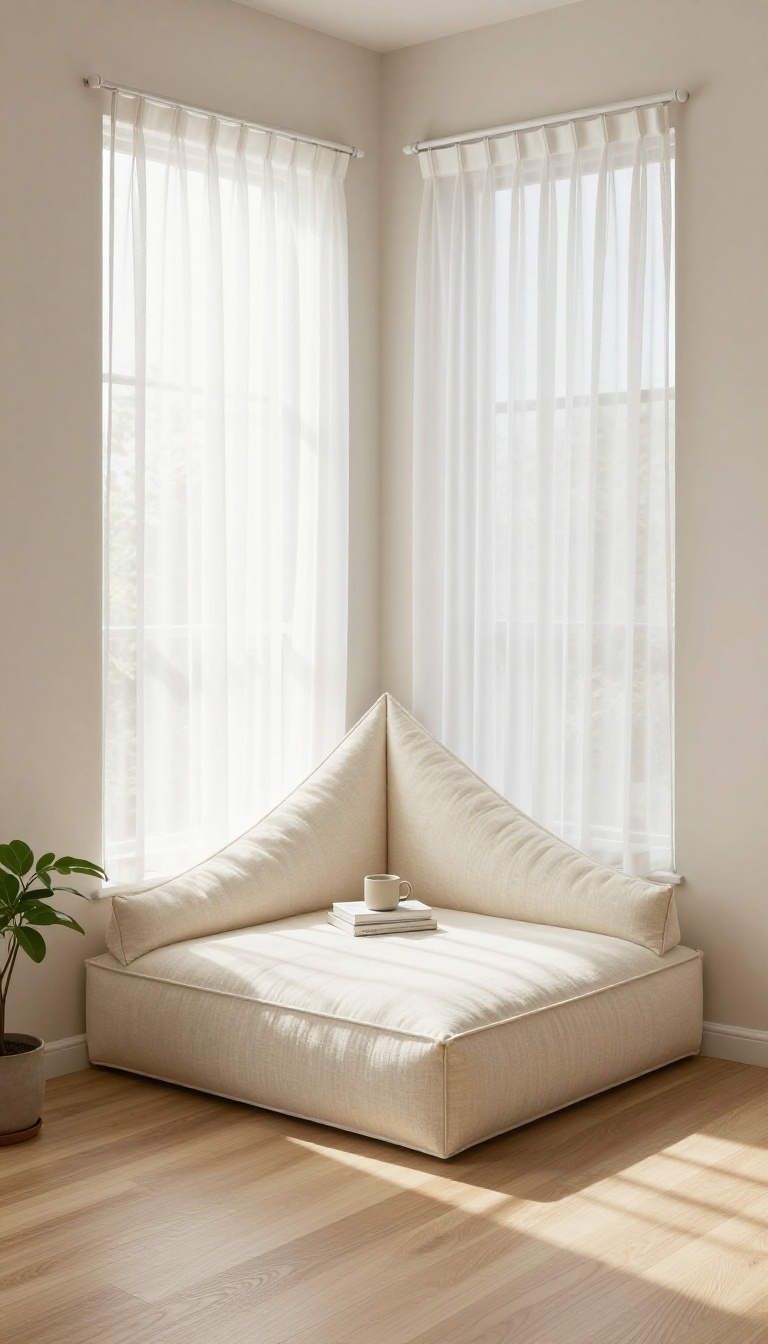
Corners are the most wasted real estate in a living room. They collect floor lamps, dying plants, and a surprising amount of dust. But when that corner happens to sit under a window, it becomes a chance to create a snug perch for two.
The trick is a custom triangular cushion that follows the angle of the walls. It turns an awkward nook into the kind of spot where people fight over who gets to sit.
A corner window seat works because it doesn't fight the architecture. Instead of trying to squeeze a rectangular bench into a space that isn't rectangular, you lean into the geometry. The cushion mirrors the corner's angle, so there's no gap behind your back and no wasted sliver of seat.
It feels intentional, like the house was built around it. Most corner windows form a 90-degree angle, but you'll also see 45-degree bays and even oddball 120-degree setups. Measuring that angle is step one.
From there, you can build a simple plywood base that fits the corner, or use two rectangular benches pushed together and topped with a single triangular cushion. The cushion is what sells it. Choose a firm foam so you don't sink into the gap, and wrap it in a durable fabric that can handle sunlight and the occasional spilled coffee.
For two people, aim for at least 48 inches along each wall. That gives each person about two feet of personal space, which is enough for a book and a mug but close enough for conversation. If your corner is smaller, it still works as a solo reading nook or a spot for a kid and a stack of picture books.
The triangle shape means you can tuck it into places a standard bench would never fit.
Measure The Angle Before You Order
Grab a protractor or a digital angle finder and check the exact corner where the two walls meet. Most are 90 degrees, but older homes can be a few degrees off. Write down the length of each wall from the corner to where you want the seat to end.
Those three numbers—angle, side A, side B—are all a cushion maker needs. If you're cutting foam yourself, draw the triangle on paper first and test it in the corner with painter's tape. It's easier to adjust paper than foam.
Build A Base That Disappears
The base doesn't need to be fancy. A simple frame of 2x4s topped with plywood gives you a solid platform. Paint it the same color as your walls so it visually vanishes, or stain it to match your floors.
For a cleaner look, skip the legs and use a cleat system that attaches directly to the wall studs. That leaves the floor open underneath, which makes the corner feel bigger. Just make sure the top of the base sits at a comfortable seat height—usually 16 to 18 inches from the floor.
Pick A Cushion That Holds Its Shape
High-density foam is your friend here. It won't flatten out after a month of daily use, and it keeps the triangle edges crisp. A 3-inch thickness is plenty for sitting; go 4 inches if you want a plusher feel.
For the cover, look for a fabric with a tight weave and a high rub count—think outdoor canvas or a performance linen. Add a zipper so you can wash it, and consider a piping detail along the edges to define the shape. A tufted button in the center can also help the cushion keep its form.
Style It For Two Without Crowding
Two small throw pillows, one in each corner, make the seat feel inviting without stealing space. Hang a slim sconce on the wall between the windows so both sitters can share the light. A tiny side table—or a floating shelf—gives each person a place for a drink.
Keep the area underneath clear if you can, or add a couple of woven baskets for blankets. The goal is cozy, not cluttered. If you have a cat, expect it to claim the sunniest triangle as its own.
7. Window Seat with Bookshelves on Both Sides
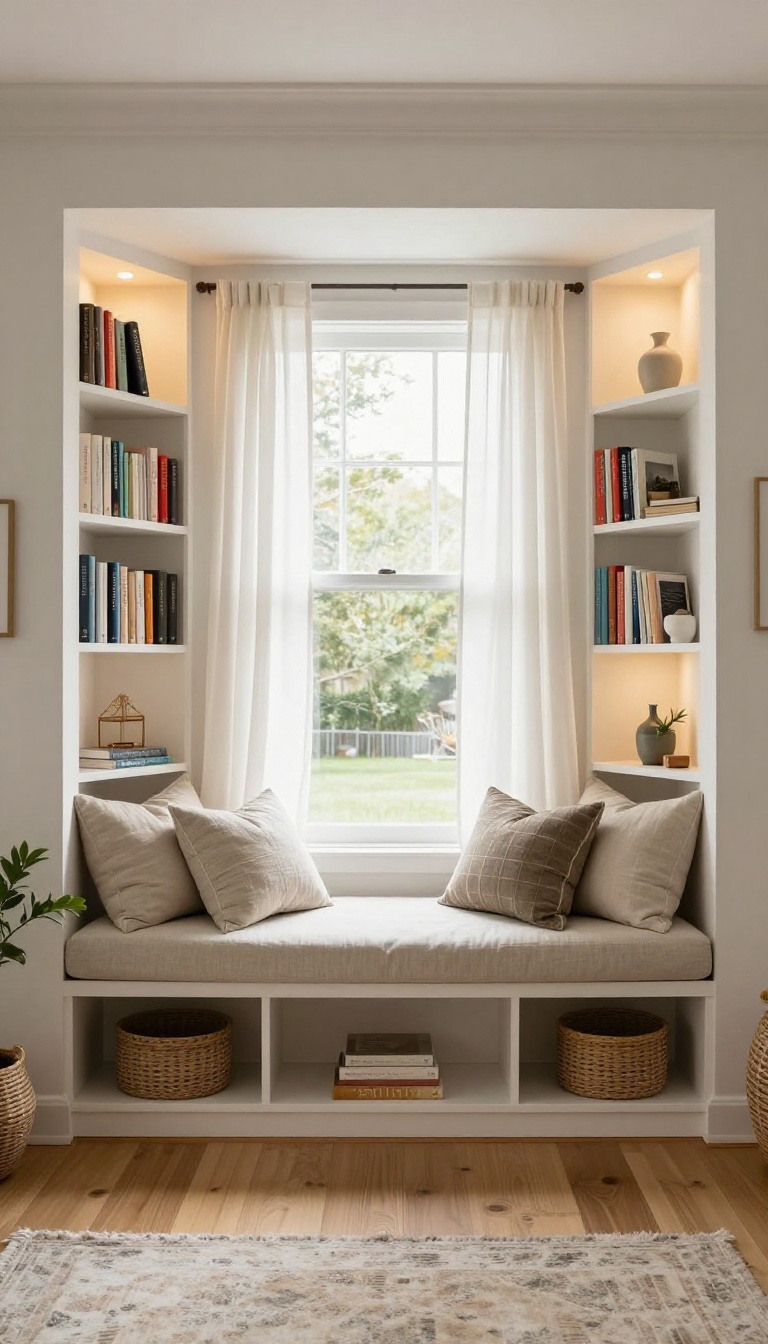
A window seat flanked by built-in bookshelves does two jobs at once. It gives you a place to sit and turns the wall around it into a small library. The result feels intentional, like the window was always meant to be there.
This layout works in almost any living room with a recessed window or a wall you can build out. You get storage, display space, and a reading nook in one footprint. It also hides the awkward gap that often shows up beside a freestanding bench.
The shelves don't have to be deep. Twelve inches is plenty for most paperbacks and a few hardcovers. If you want to display larger art books, go fourteen to sixteen inches and keep the lower shelves for magazines or baskets.
Build the seat at the same height as a standard chair, around eighteen inches, so it stays comfortable for long sits. The shelves rise from that base, which means the whole unit reads as one piece of furniture instead of three separate ones.
Shelf Depth And Height That Actually Work
Shallow shelves look cleaner and cost less to build. Aim for twelve inches deep and space the shelves ten to twelve inches apart. That fits most books without wasting wall space.
Keep the lowest shelf about eighteen inches off the floor so it clears the seat cushion. If you have small kids or pets, put sturdy board books and bins down there where they can reach.
Lighting The Reading Zone
Two small sconces mounted inside the shelf uprights throw light right onto the page. They also make the shelves glow at night, which adds warmth to the whole room. Skip a single overhead fixture.
It casts shadows on the seat and makes the shelves look flat. A pair of adjustable wall lamps or a slim LED strip under one shelf gives you control without clutter.
Making The Shelves Feel Styled, Not Stuffed
Leave about a third of the shelf space open. A few books laid flat, a small plant, or a framed photo breaks up the rows and keeps things from looking like a storage unit. Group books by color or size if you like a tidy look, or mix in baskets for remotes and chargers.
The point is to make the shelves useful without turning them into a junk drawer.
8. Sliding Door Window Seat with Casters
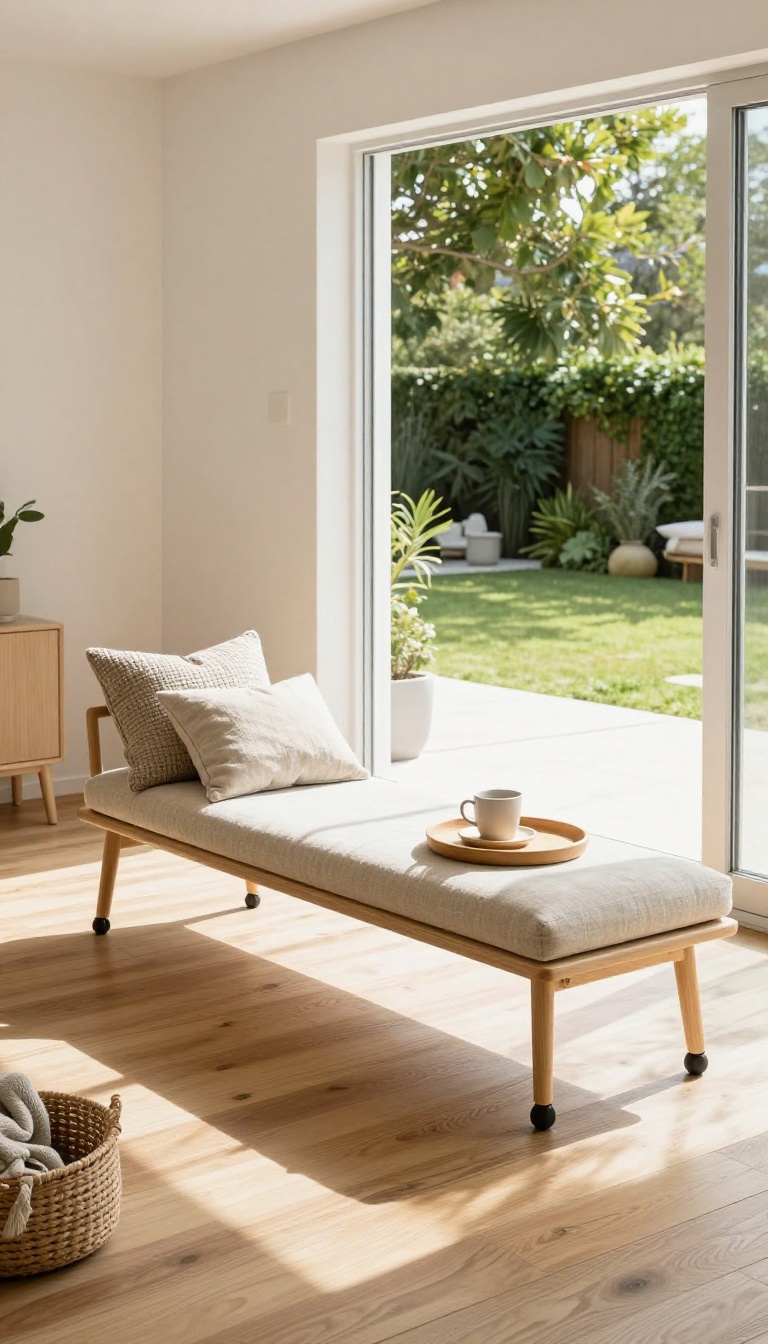
Sliding doors create a wide, bright opening to a patio or garden, but they leave almost no wall space for a bench. A freestanding window seat on casters solves that problem by rolling out of the way whenever you need to slide the glass. You get the cozy perch without blocking the door's path.
The wheels do more than just move the bench. They turn a single piece of furniture into a flexible spot that works for morning coffee, extra party seating, or a quiet reading corner. When the doors need to open, the seat glides aside in seconds.
A rolling bench keeps the doorway clear while still giving you a place to sit. It's a smart trade for anyone who loves the look of a window seat but can't sacrifice floor space near a slider.
Pick The Right Casters
Not all wheels roll smoothly over tile, wood, or low-pile carpet. Look for soft rubber casters that won't scratch hard floors and can handle the weight of a cushioned bench. Locking casters are worth the upgrade so the seat stays put when you sit down.
Keep The Frame Slim
A bulky bench defeats the purpose of a movable seat. Choose a frame that's shallow enough to tuck against the wall but deep enough for comfortable sitting. Open legs or a low profile base also make the piece feel lighter in the room.
Style It Like A Real Seat
Casters don't mean the bench has to look utilitarian. Add a thick cushion, a few throw pillows, and a small tray for drinks to make it feel intentional. A basket underneath can hold blankets and still roll away with the seat.
9. Window Seat with a Gallery Wall Above
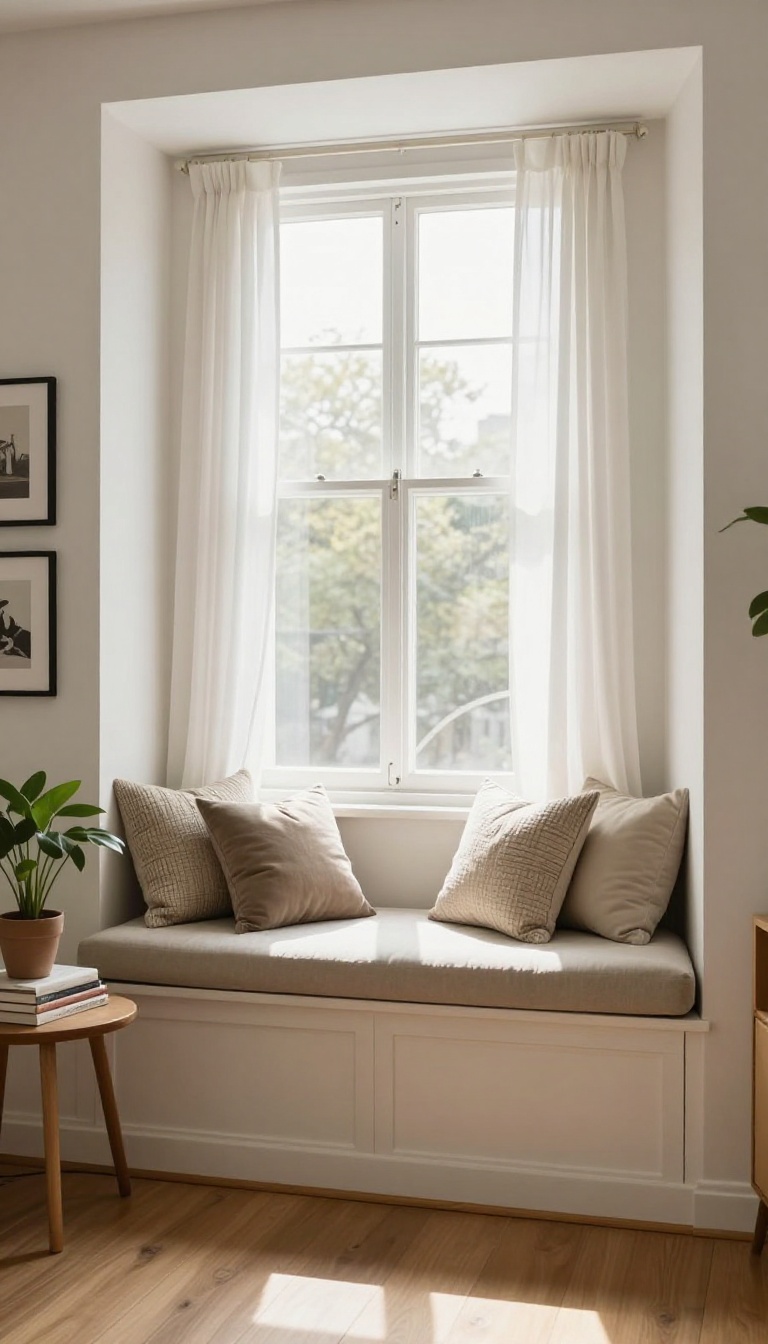
A window seat already earns its keep as a perch for reading and watching the street. But the wall above it often sits blank, which makes the whole setup feel unfinished. Hang a collection of framed art or photos there, and you turn that empty stretch into a curated display that pulls the eye upward.
The gallery wall does more than decorate. It gives the seat a sense of purpose, like a built-in nook in a boutique hotel. It also lets you play with scale, color, and memory without touching the furniture below.
The key is to treat the wall and the seat as one composition. The frames shouldn't float randomly; they should feel anchored to the bench. That means choosing a layout that respects the window's shape and the seat's width.
You also want to avoid visual clutter. A tight grid of identical frames reads calm and modern. A loose salon-style arrangement feels collected and warm.
Either way, the art should relate to the seat, not compete with it. Light matters too. Direct sun can fade prints and create glare on glass.
If your window faces south or west, consider UV-filtering glass or rotate pieces every few months. A little planning keeps the display looking sharp for years.
Pick A Layout That Fits The Window
Start by tracing the window's outline on paper. If you have a wide bay, a horizontal row of three to five frames mirrors the sill nicely. For a tall, narrow window, stack frames in a vertical column to emphasize height.
A symmetrical grid works best when the seat is centered under the glass. If the bench sits off-center, try an asymmetrical arrangement that balances visual weight. You can also mix shapes—round, rectangular, oval—to keep things interesting without chaos.
Mix Frames And Art Without The Mess
Stick to two or three frame finishes, like black, brass, and natural wood. More than that and the wall starts to look like a flea market booth. Repeat those finishes throughout the arrangement to create rhythm.
For art, blend sizes and mediums. A large abstract print can anchor the group, while smaller photos and sketches fill the gaps. Leave at least two inches between frames so each piece can breathe.
If you're unsure, cut paper templates and tape them up before hammering nails.
Hang At The Right Height
The bottom edge of your lowest frame should sit about six to ten inches above the seat cushion. That keeps the art connected to the bench without crowding it. If you have a high backrest or pillows, measure from the top of those instead.
Center the whole arrangement on the window, not the wall, unless the seat is clearly off-center. Use a level and painter's tape to mark your layout. Once you're happy, hang the center piece first, then work outward.
10. Curved Window Seat with Bolster Pillows
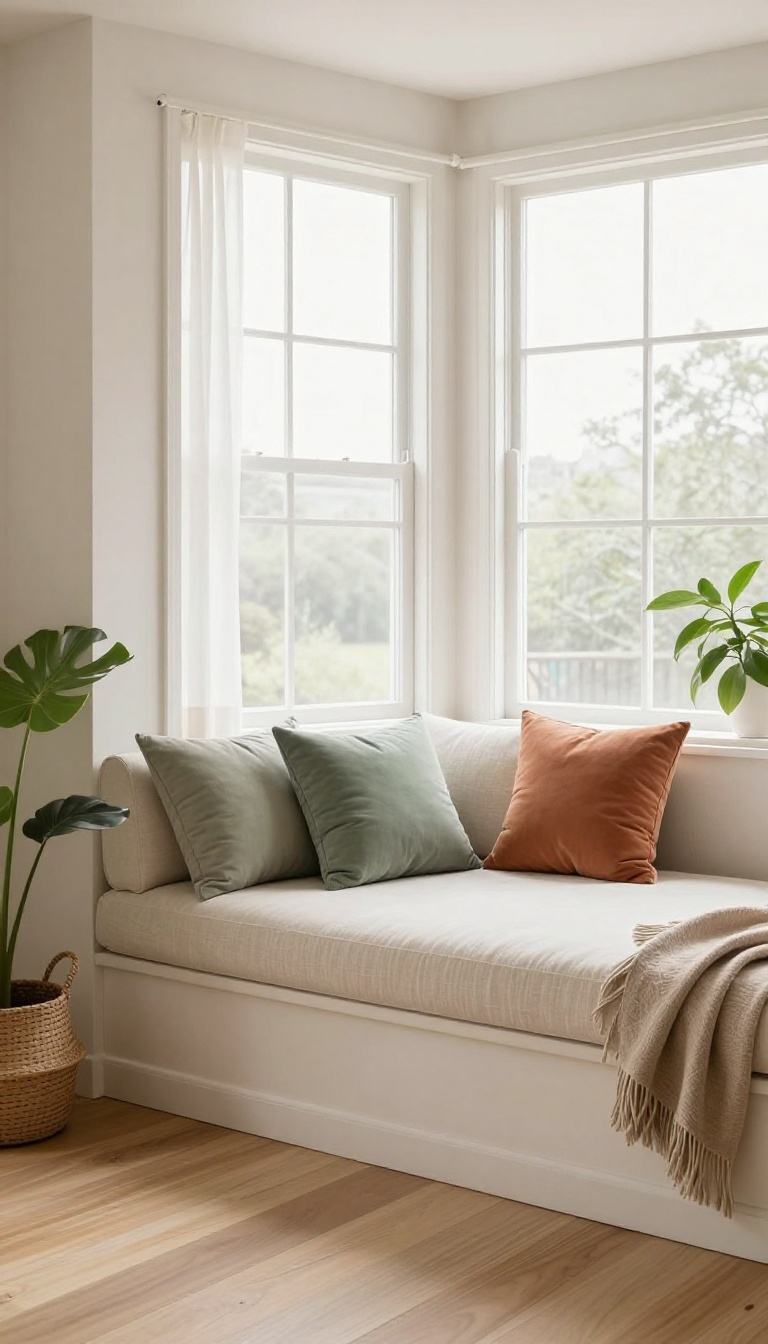
Arched and rounded windows bring a softness that straight lines can't match. But a standard rectangular bench leaves awkward gaps and looks out of place against that curve. A custom curved seat fills the space perfectly and feels like it was always meant to be there.
The real magic happens when you add cylindrical bolster pillows. They follow the arc of the bench and give your back proper support. Plus, they look plush and inviting, like a hug waiting to happen.
A curved window seat works best when it mirrors the window's shape. You can build it as a single sweeping bench or break it into segments that follow the arch. The goal is a seamless fit that eliminates dead corners and maximizes comfort.
Bolster pillows are the unsung heroes here. Their round shape supports your lower back and neck without the bulk of square cushions. They also add a playful, tailored look that feels intentional rather than thrown together.
Getting The Curve Right
Measure the window's arc at the base and at seat height. If the curve is gentle, a single bent board works. For tighter arches, you may need to piece together angled sections.
A local carpenter or a CNC-cut plywood template can make this easier than it sounds. Don't forget depth. Aim for 18 to 22 inches so you can sit cross-legged or stretch out.
And keep the front edge slightly rounded to avoid pressure points behind your knees.
Choosing Bolster Pillows
Bolsters come in all sizes, so pick ones that match your seat's curve. A diameter of 6 to 8 inches is usually comfortable for back support. Look for covers with hidden zippers so you can wash them easily.
Mix textures for visual interest: a smooth linen bolster next to a nubby wool one. Or go monochrome for a calm, spa-like feel. Either way, two or three bolsters spaced along the curve will keep everyone happy.
Building In Storage
A curved seat can still hide storage. Lift-up lids or drawers that follow the arc are possible with custom joinery. Use the space for blankets, board games, or off-season gear.
If drawers feel too complex, try open cubbies underneath. Baskets slide in and out easily, and they add a casual, woven texture that softens the woodwork.
11. Window Seat with a Tray for Coffee
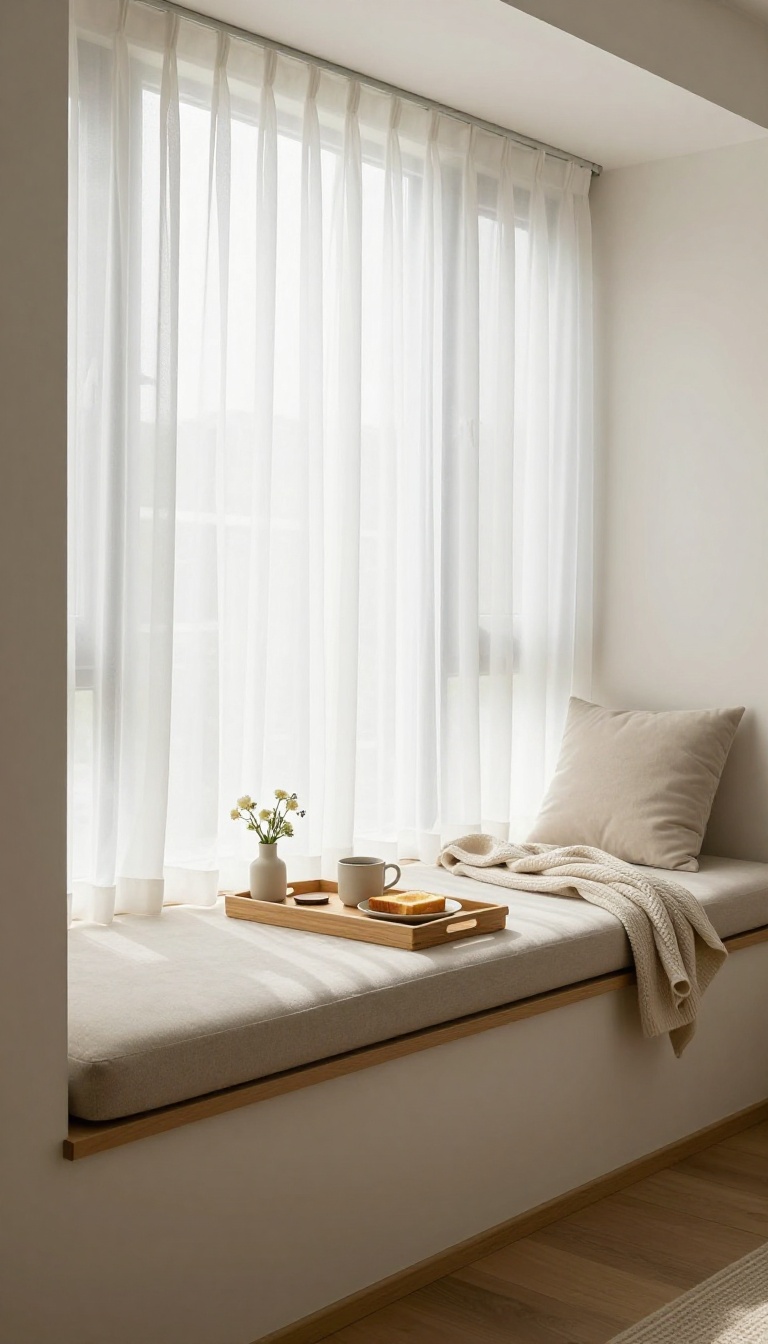
A mug needs a flat, steady spot, and cushions are terrible at providing one. A small tray solves that instantly without turning your window seat into a permanent piece of furniture. It gives you a landing pad for coffee, a plate of toast, or a phone, then disappears when you want the cushion clear.
The result feels less like a bench and more like a tiny café table that happens to face the best view in the house.
The tray doesn't have to be fancy. A lightweight wooden or metal tray with a lip works best because it won't slide when you set down a full mug. Look for one that's roughly the size of a hardcover book, so it holds a drink and a small snack without hogging the whole seat.
If your cushion is thick and soft, add a thin cutting board or a piece of cork underneath the tray to create a firm base.
Choosing The Right Tray
Go for a tray with raised edges and a non-slip bottom. Bamboo, matte metal, and melamine all wipe clean easily, which matters when coffee inevitably drips. Avoid glass trays on deep cushions, since they can tip with the slightest shift.
A tray with handles makes it easy to lift off and carry to the kitchen when you're done.
Making It Stay Put
A loose tray on a squishy cushion will wobble. Fix that with a small square of grippy shelf liner under the tray, or rest it on a thin, firm board that spans the cushion. If you want something more permanent, a low wooden lip screwed to the seat frame keeps the tray from sliding forward.
Just make sure nothing pokes through the fabric.
Styling It As A Ritual Spot
Keep a small vase, a coaster, and a book on the tray so it looks intentional even when empty. A tiny jar for sugar packets or a folded napkin adds a cozy touch. When guests come over, lift the tray off and you have a clean seat again in two seconds.
12. Window Seat with Under-Bench Lighting
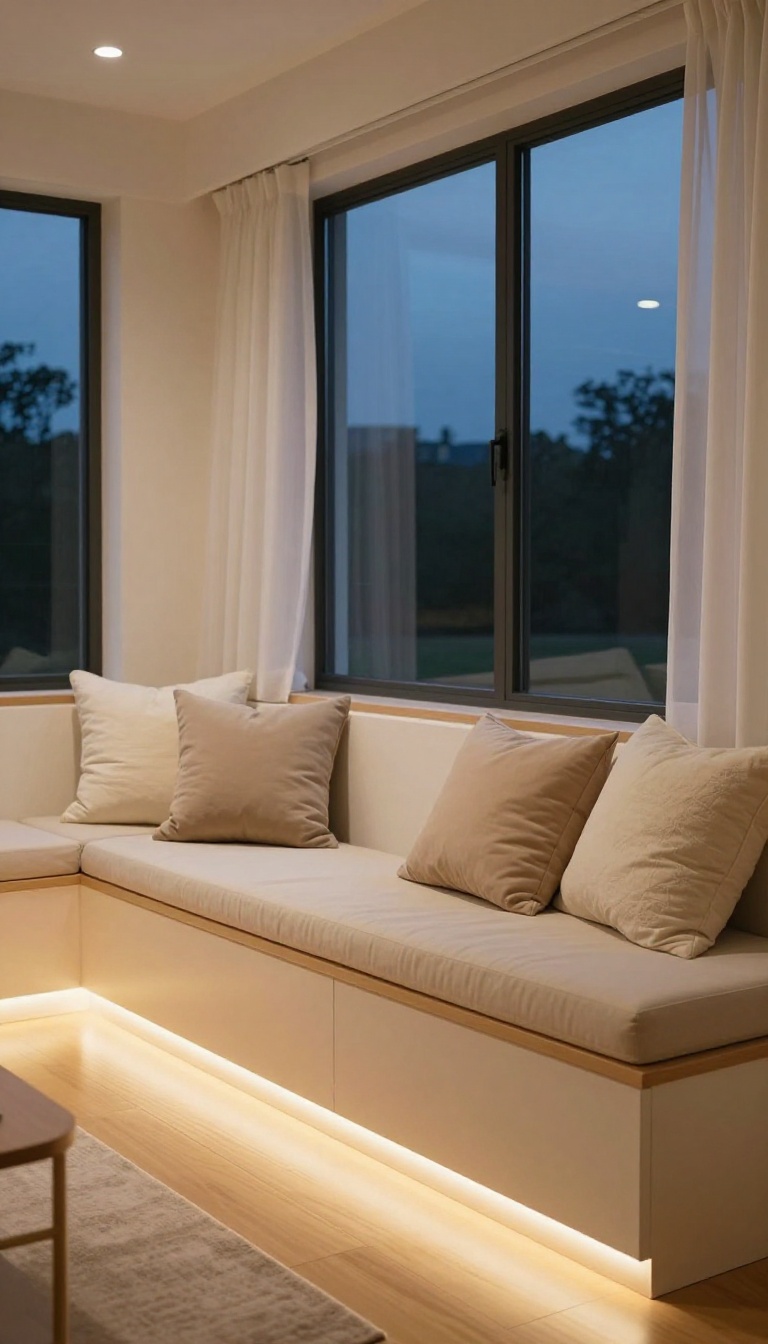
Under-bench lighting turns a simple window seat into a glowing retreat once the sun goes down. A strip of LEDs tucked behind the bench lip washes the floor with warm light and makes the seat feel like its own little room. It's a small upgrade that changes how you use the space after dark.
The best part is that the light stays hidden during the day. You only see the glow, not the hardware, so the seat still looks clean and built-in. At night, that soft wash of light makes the bench feel intentional instead of accidental.
Pick The Right Led Strip
Warm white strips around 2700K to 3000K match the cozy mood of a living room. Look for dimmable strips with a remote or app control so you can drop the brightness for movie nights. Avoid cool white or RGB unless you want a game room vibe.
Hide The Strip, Not The Glow
Mount the strip along the underside of the bench lip, facing down and slightly toward the wall. An aluminum channel with a diffuser softens the dots into one smooth line. Leave a small gap so the light spills onto the floor instead of blasting your eyes.
Wire It Without A Mess
Run the cord along the baseboard or behind the bench to the nearest outlet. If you don't want visible wires, use a rechargeable strip or a plug-in with a flat cord. A smart plug lets you schedule the glow to come on at dusk.
13. Window Seat with Slipcover for Easy Cleaning
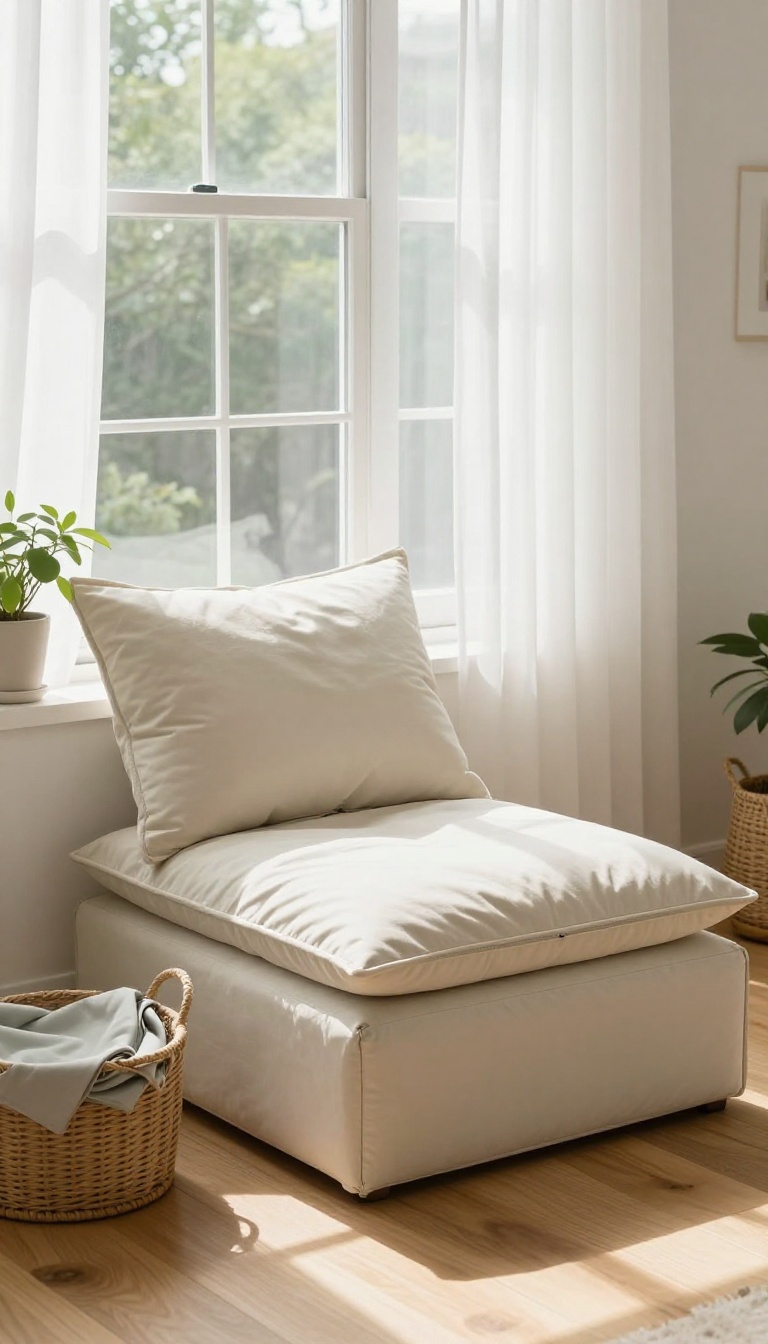
Cushions look great until someone spills grape juice on them. In busy homes, a fixed fabric cover turns a cozy window seat into a cleaning headache. A slipcover solves that by coming off in seconds and going straight into the wash.
It also gives you room to play with color. You can keep a neutral cover for everyday use and swap in a brighter one when the seasons change. That flexibility makes this one of the most practical upgrades for a window seat.
A slipcover is basically a fitted sheet for your cushion. It wraps around the foam and tucks or zips closed, so the fabric stays put when you sit down. When it gets dirty, you pull it off and toss it in the laundry.
This matters most in homes with kids, pets, or anyone who eats near the window. Crumbs, muddy paws, and coffee drips stop being permanent stains. You just wash and re-cover.
The trick is choosing a cover that fits well and holds up to repeated washing. A loose slipcover bunches and looks sloppy. A tight one stays crisp and keeps the cushion shape intact.
Pick A Washable Fabric That Lasts
Cotton canvas and linen blends hold up best to frequent washing. They soften over time instead of falling apart. Avoid dry-clean-only fabrics, because you will never actually dry clean them.
Look for pre-shrunk materials so the cover still fits after the first wash. A little stretch helps too, especially if you plan to wash it weekly. Performance fabrics with stain resistance are a smart pick for pet owners.
Get The Fit Right
Measure your cushion at its widest points, including the corners. A cover that is too small will pull at the seams. One that is too big will wrinkle and slide around.
Envelope backs and hidden zippers keep the look clean. If you are sewing your own, add a little extra room for the foam to breathe. Velcro strips can work in a pinch, but they wear out faster than zippers.
Swap Covers With The Seasons
Buy two covers instead of one. Keep a light neutral for spring and summer, then switch to a warmer tone in fall. It feels like a new seat without buying new furniture.
Store the off-season cover folded in a bin with a cedar block. When you swap them, give the cushion a quick vacuum first. That keeps dust from building up under the fabric.
FAQ
How deep should a window seat be?
A comfortable window seat is typically 16 to 20 inches deep. If you want to use it for lounging, go up to 24 inches.
Can I add a window seat without built-ins?
Absolutely. A freestanding bench or a repurposed dresser can work just as well and requires no construction.
What kind of cushion is best for a window seat?
High-density foam wrapped in batting holds its shape. Choose a fabric that resists fading if the seat gets direct sun.
How do I make a window seat look intentional?
Add a few throw pillows, a small side table, and a wall light. Repeating colors from the room ties it together.
Is a window seat worth it?
Yes, if you have an unused nook. It adds seating, storage, and a cozy focal point without taking up floor space.
Conclusion
A charming window seat rarely comes from one big purchase. It comes from small choices that make the spot feel intentional, like a cushion you actually want to sit on, a curtain that softens the light, or a shelf within arm's reach. Start with the idea that solves your biggest problem, whether that is glare, storage, or a corner nobody uses.
Live with it for a week, then layer in the next detail. Two or three done well will always beat a rushed overhaul.