11 Brown and Teal Living Room Ideas for Warm Modern Rooms
Brown and teal can feel like a risky pairing until you see it done right. The trick is treating brown as your warm base and teal as the cool, lively accent that keeps things from feeling heavy.
Get the balance wrong and the room can look muddy or dated, but get it right and it feels rich, calm, and surprisingly modern. The good news is you do not need a full remodel to pull it off.
A few smart swaps, like a teal throw over a brown sofa or a warm wood tone against a deep teal wall, can shift the whole mood.
1. Start With a Warm Brown Base and Layer Teal on Top
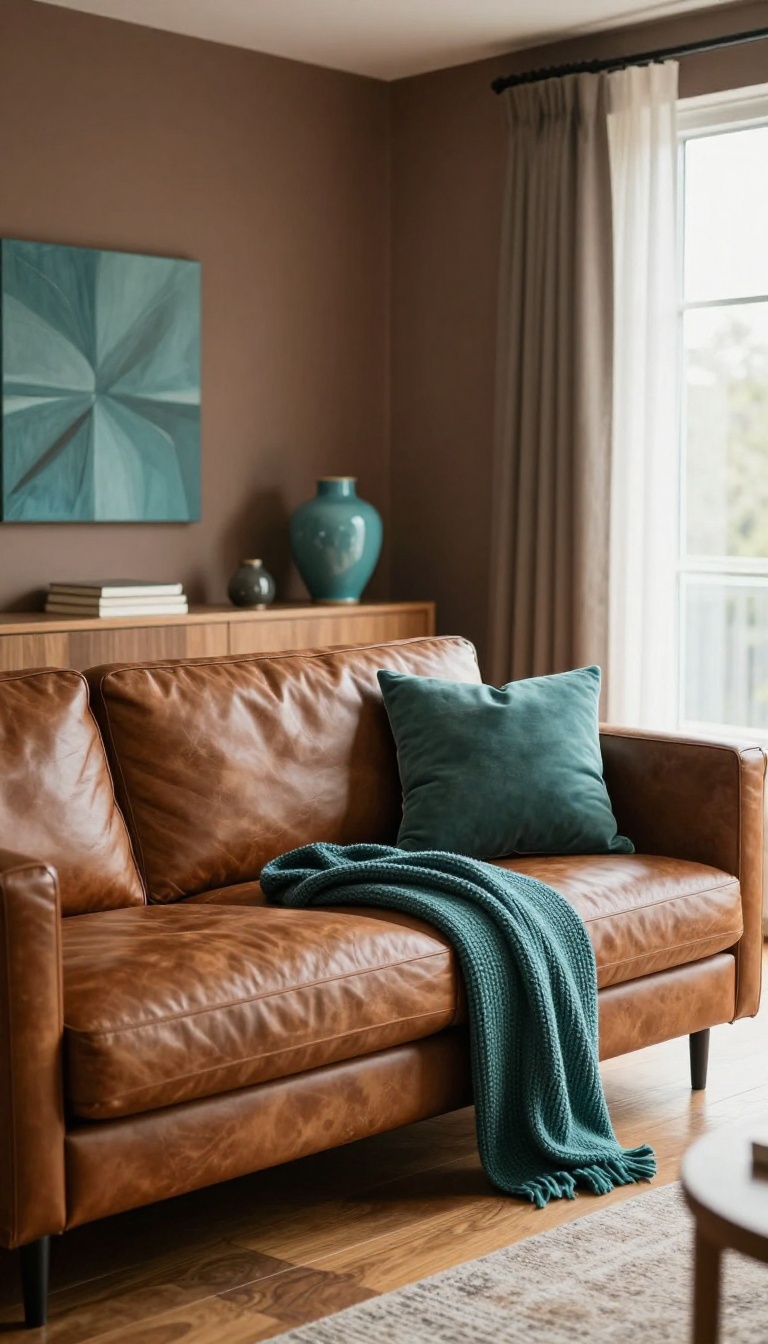
Brown does the heavy lifting in this color scheme. It covers the big surfaces—walls, floors, and main furniture—so the room feels grounded and cozy from the start. Teal then comes in as the accent, adding a cool pop that keeps the brown from turning sleepy.
The result is a space that feels warm but still has energy.
Think of brown as the canvas and teal as the brushstrokes. When brown dominates, the room feels stable and inviting. Teal, on the other hand, brings a fresh, modern edge that balances the warmth.
This approach works because it follows a simple rule: large areas get brown, small areas get teal. You can apply brown to walls with a warm taupe or chocolate paint, or stick with natural wood tones on floors and big pieces like a sofa or media console. Teal then shows up in pillows, throws, artwork, and accessories.
This keeps the look cohesive without feeling themed. The beauty of this method is its flexibility. You can dial the teal up or down depending on your mood.
Start with a few teal accents, live with them for a week, and add more if the room feels like it needs extra life.
Why Brown First?
Brown is a natural anchor. It mimics earth tones found in wood, leather, and stone, so it feels familiar and comfortable. Using it as your base means you are not fighting your room's architecture or lighting.
Instead, you are working with warm, neutral tones that make any space feel instantly cozier.
Where To Add Teal
Teal works best when it is not everywhere. Place it where your eye lands: a pair of teal pillows on a brown sofa, a teal ceramic lamp on a side table, or a framed teal abstract above the mantel. Even a teal book spine or candle can tie the palette together without overwhelming the brown.
Keep The Balance
A good rule of thumb is 80 percent brown and 20 percent teal. That ratio keeps the room warm and grounded while still feeling lively. If you want more drama, flip it to 70/30, but avoid going beyond that unless you want teal to become the star.
2. Paint an Accent Wall in Deep Teal Behind a Brown Sofa
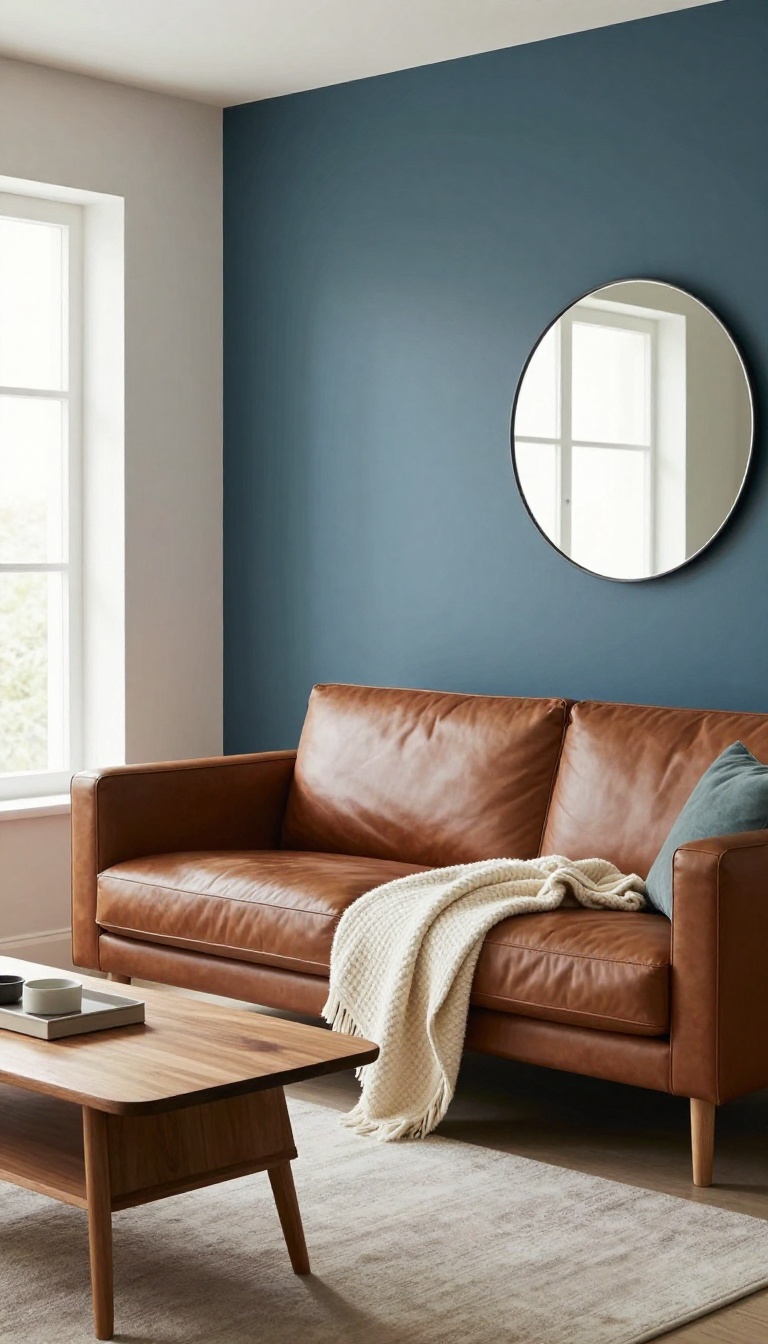
A deep teal wall behind a brown sofa does more than just look good. It creates a backdrop that makes the brown feel intentional instead of accidental. The cool depth of teal pushes the warm brown forward, so your sofa becomes the star without shouting.
This move also adds instant depth to the room. Dark colors recede, which makes the wall feel farther away and the space feel bigger. You get drama without closing in the room.
The key is picking the right teal and pairing it with the right brown. Not every teal works with every brown, but when you get it right, the combination feels rich and modern. Here's how to nail it.
Pick A Teal With Some Gray In It
Teals that lean too bright or too green can clash with brown. Look for deep teals with a gray or blue undertone, like peacock or dark slate teal. These muted tones feel sophisticated and let the brown sofa stand out without fighting it.
Keep The Sofa As The Focal Point
The wall is the frame, not the picture. Avoid placing busy art or shelves on the teal wall that compete with the sofa. Instead, let the wall be mostly bare or add a simple mirror to bounce light.
The sofa stays the hero.
Balance With Warm Wood And Textiles
Brown sofas often come with warm wood legs or frames. Echo that warmth with wood tones in side tables, shelves, or a coffee table. Add a textured throw in a lighter teal or cream to tie the wall and sofa together.
3. Pair Caramel Leather With Soft Teal Textiles
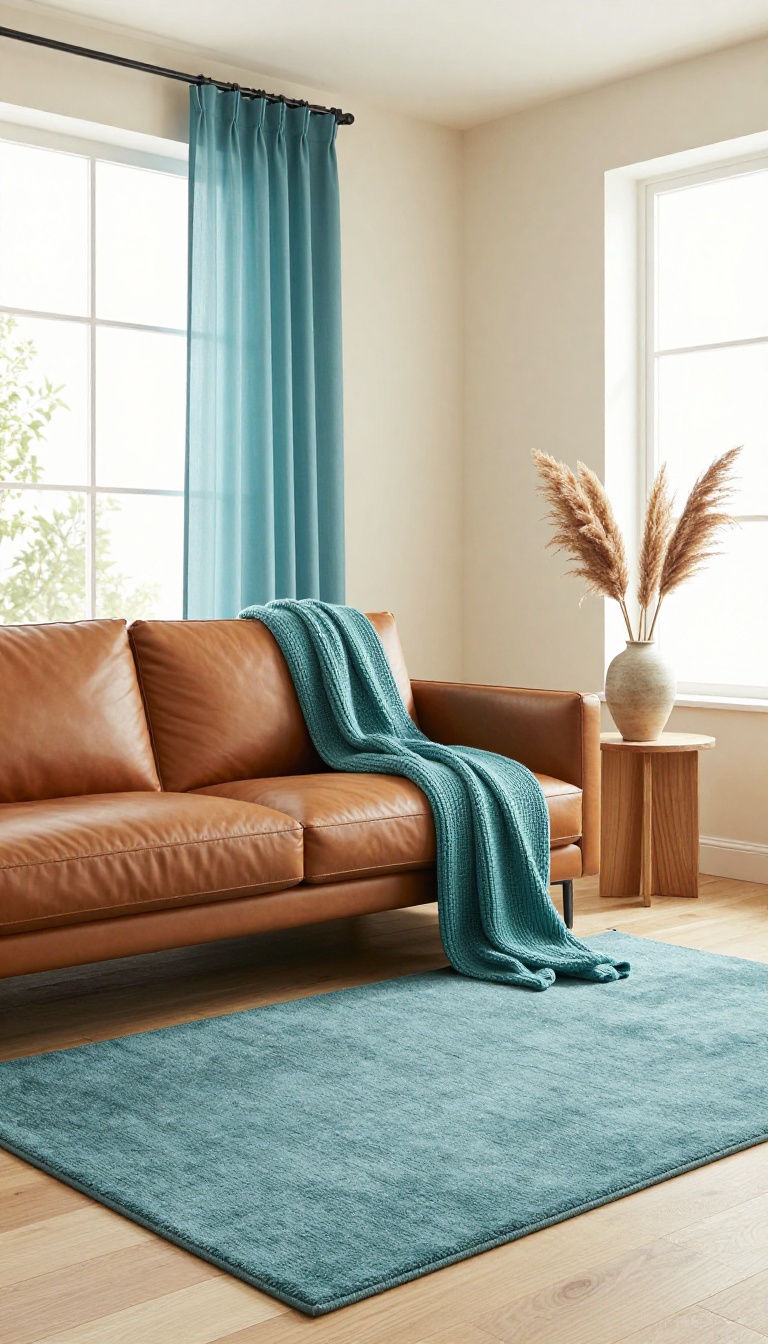
Leather gets a bad rap in modern living rooms. People picture a heavy recliner and a sports poster, not a space that feels light and current. Caramel and cognac leather solve that problem fast.
The warm orange-brown tone has depth and a little shine, and it ages into something better every year. Teal textiles are the counterweight. A throw, a curtain panel, or a low-pile rug in a soft teal keeps all that warmth from tipping into dark and heavy territory.
The magic here is contrast without conflict. Leather is dense, smooth, and warm. Teal fabric is soft, matte, and cool.
Put them next to each other and both look more expensive than they are. You also get texture variety, which matters more than most people realize. A room with one material everywhere reads flat, no matter how good the color palette is.
Stick to one or two leather pieces and let the teal do the rest. A sofa and an ottoman are plenty. Anything more and you are back to the man cave.
Pick The Right Leather Tone
Caramel sits in the sweet spot between tan and brown. It has enough orange in it to feel warm against teal without turning yellow. Cognac is a touch deeper and richer, which works well in rooms with less natural light.
If your space is bright, a lighter caramel keeps things airy. Avoid dark espresso leather here. It fights teal instead of balancing it, and the whole room starts to feel closed in.
Choose Teal Textiles That Stay Soft
Not every teal plays nice with leather. Go for muted, grayish teals rather than bright turquoise or jewel tones. A chunky knit throw draped over the arm of a leather sofa is the easiest starting point.
Curtains in a washed teal linen soften the hard edges of leather without competing with it. For floors, a teal rug with a faded or vintage pattern adds color without shouting. Keep the pile low so it still feels modern.
Balance The Rest Of The Room
Leather and teal need a neutral to breathe. Warm white walls, a light oak coffee table, or a jute rug give your eyes somewhere to rest. Metal finishes matter too.
Brass and aged bronze lean warm and pair beautifully with caramel. Chrome and cool silver can make the teal feel colder than you want. Add one more warm element, like a wooden bowl or a terracotta vase, and the room feels collected instead of decorated.
4. Use Teal Cabinetry or Shelving Against Brown Walls
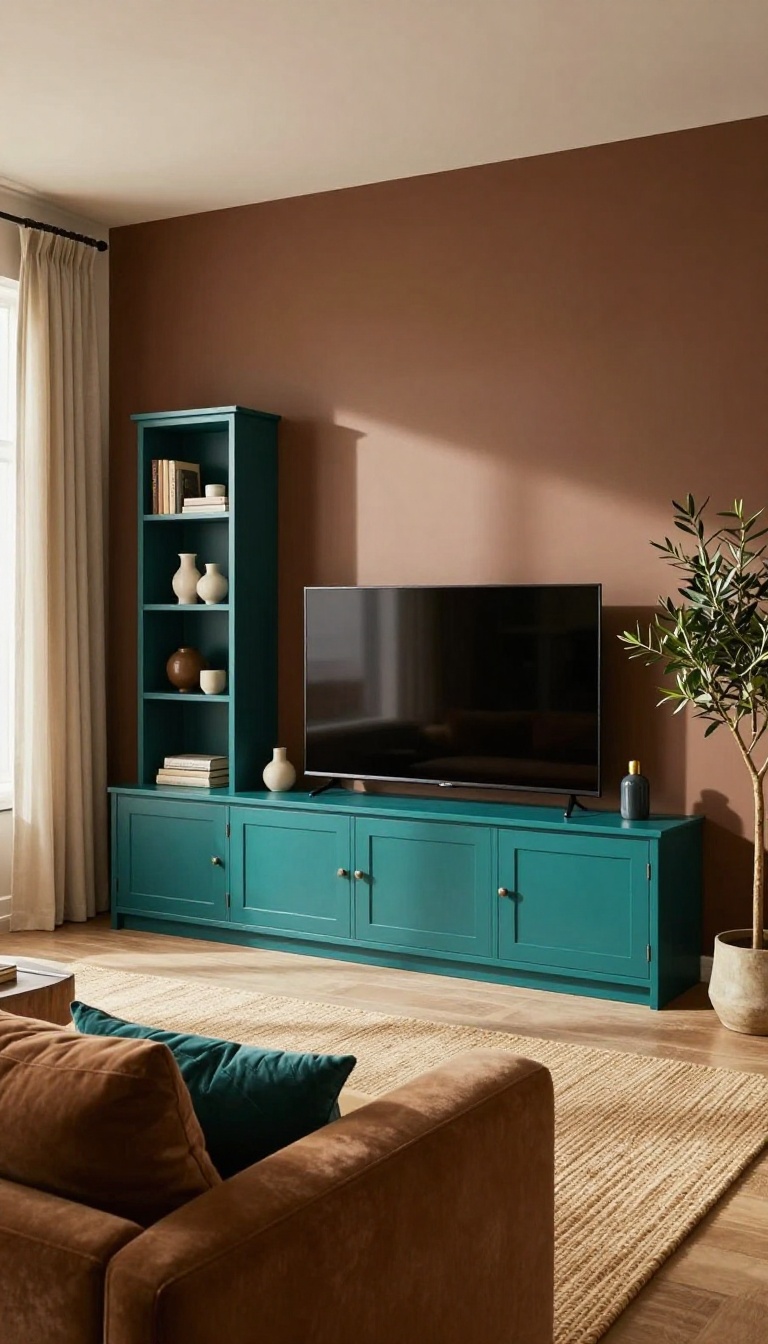
Built-ins and media consoles are the unsung heroes of a brown and teal living room. When you paint them teal against brown walls, you turn storage into a statement. The contrast reads as deliberate, not accidental, and suddenly the whole room feels pulled together.
Brown walls can feel like a warm hug, but they can also swallow a room if everything else is brown too. Teal cabinetry breaks that up without fighting the warmth. It gives your eye a place to land and makes the brown feel like a choice instead of a default.
The best part? You don't need custom millwork to get the look. A stock media console, a bookshelf, or even upper kitchen cabinets repurposed as a floating unit can all work.
Paint is your friend here. Just keep the teal in one or two spots so it stays special. If every surface is teal, you lose the contrast that makes it sing.
Pick The Right Teal
Not all teals play nice with brown. A muddy teal can look dingy next to warm wood, while a bright turquoise might feel too loud. Aim for a teal with some depth—think peacock, lagoon, or a teal with a touch of gray.
Those shades hold their own against brown without competing.
Where To Put It
A media console under a TV is the easiest win. It anchors the wall and gives you hidden storage. Floating shelves on either side of a fireplace or window also work well.
If you have a built-in niche, painting the back of it teal creates instant depth.
Balance The Rest
Once your cabinetry is teal, keep the surrounding walls and large furniture in brown or neutral tones. Add a few teal accents—like a throw pillow or a vase—to tie it together. But don't overdo it.
The cabinetry should be the star.
5. Choose a Teal Rug to Anchor a Brown Furniture Group
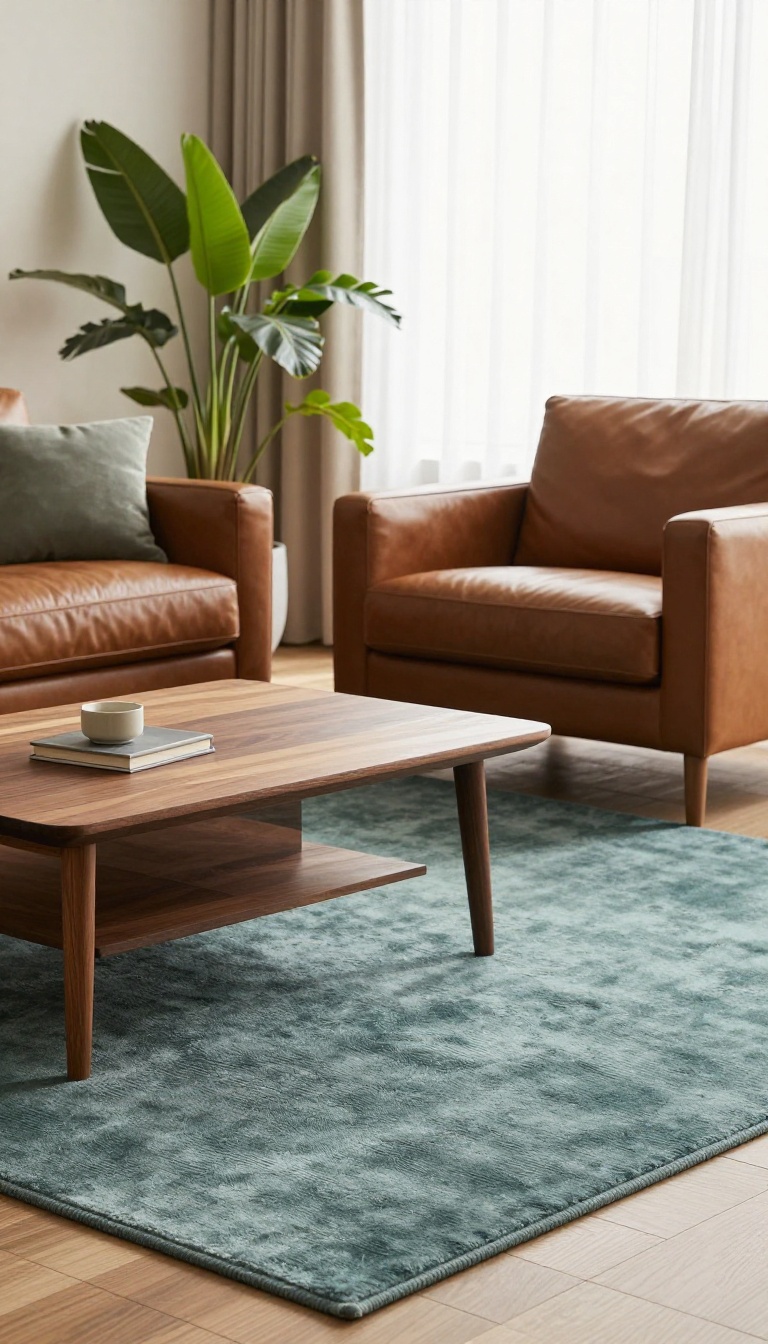
A teal rug does more than add color underfoot. It gives a group of brown furniture a shared home, especially when the pieces are mismatched or floating in an open-plan space. The rug acts like a visual boundary.
It tells your eye where the seating area starts and stops, which keeps the room from feeling like a random collection of chairs and sofas. And because teal is cool, it balances the warmth of brown wood and leather without fighting it. The result is a seating zone that feels intentional, not accidental.
Most brown furniture groups have a mix of tones. You might have a dark walnut coffee table, a cognac leather chair, and a lighter oak side table. Without something to tie them together, they can look like they came from three different houses.
A teal rug fixes that. The cool blue-green sits between all those browns and gives them a common backdrop. It also adds a layer of softness that hard floors and heavy wood pieces often lack.
Size matters more than pattern here. You want the rug to extend at least a few inches beyond the front legs of every seat. That way, the whole group feels connected.
If you go too small, the rug looks like a bath mat lost under a sofa. Too big, and it swallows the room. Measure your seating area and add about 18 to 24 inches on all sides.
Pick The Right Teal
Teal comes in a wide range. A soft, muted teal with gray undertones keeps things calm and works well with cool browns like espresso or ash. A brighter, jewel-toned teal adds energy and pairs nicely with warm browns like caramel or chestnut.
If your room already has a lot of pattern, choose a solid or subtly textured teal rug. If your walls and furniture are plain, a teal rug with a geometric or distressed pattern can add interest without overwhelming the space.
Place It Like A Pro
In an open-plan room, the rug should sit under the main seating group, not float in the middle of the floor. Center it on the coffee table or the main conversation zone. Leave a consistent border of bare floor around the rug so it reads as a defined area.
If you have a sectional, tuck the front legs under the rug and let the back legs stay off. For a more layered look, put a smaller teal rug over a larger neutral jute or sisal rug. This adds texture and makes the seating area feel even more grounded.
Keep The Rest Simple
Once the rug is in place, let it be the star. Avoid adding too many other teal accents nearby, or the room starts to feel theme-y. A couple of teal pillows on a brown sofa or a teal throw draped over a chair is plenty.
The rug does the heavy lifting, so the other pieces can stay quiet. If you want to repeat the color, choose one small item like a vase or a candle. That subtle echo makes the room feel pulled together without trying too hard.
6. Mix Brown Wood Tones With Teal Upholstery
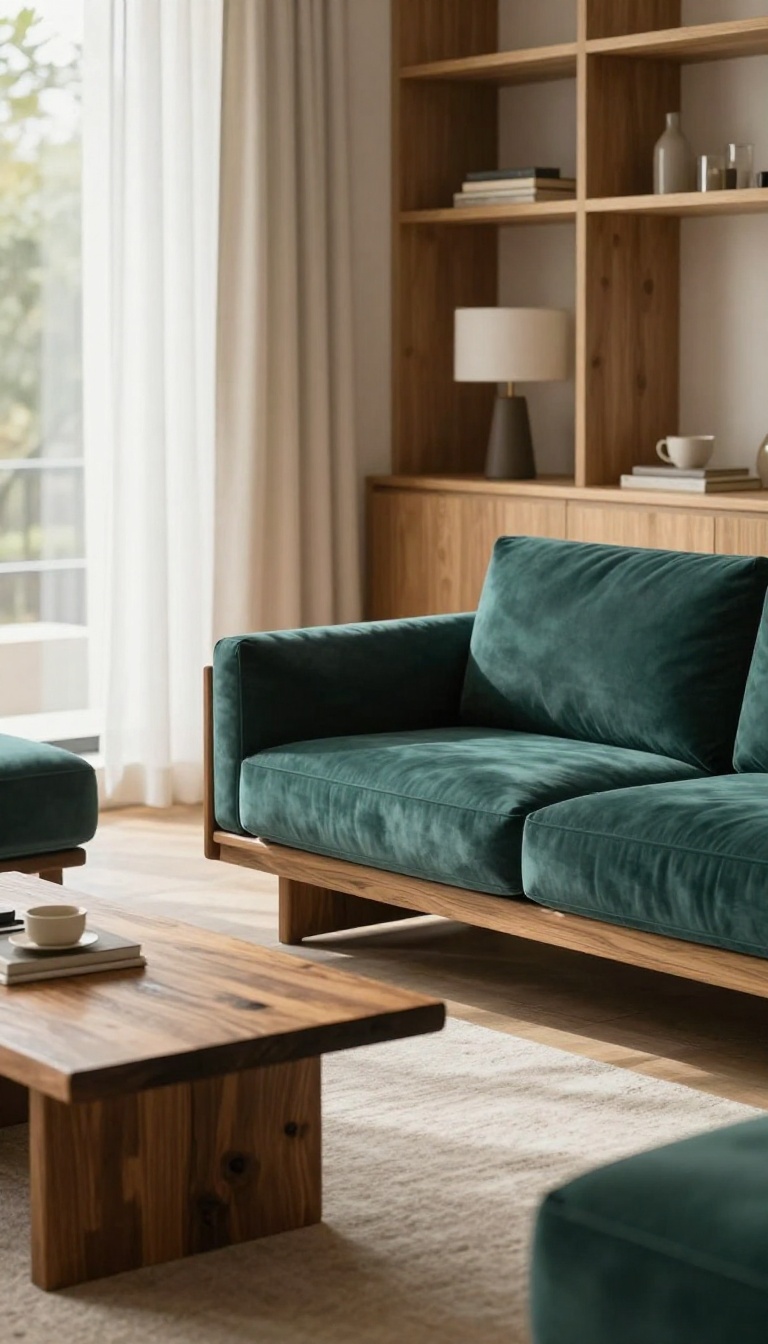
Wood and teal upholstery make a natural pair. The wood brings warmth and texture, while teal adds a cool pop that keeps the room from feeling one-note. When you place a teal chair or ottoman near a wood table or shelf, the contrast draws attention to the wood grain in a good way.
The key is to let the two materials play off each other. Wood tones—whether light oak, medium walnut, or dark espresso—each react differently to teal. Lighter woods feel fresh and airy with teal, while darker woods create a moodier, more dramatic look.
Teal upholstery, on the other hand, softens the hardness of wood and adds a layer of comfort. You can mix multiple wood tones in one room, but keep the teal consistent to avoid visual chaos. A teal ottoman paired with a reclaimed wood coffee table, for example, anchors the seating area without overwhelming it.
If you already have wood furniture, adding a teal accent chair is an easy update. Just make sure the teal has enough depth—think teal, not turquoise—so it holds its own against the wood.
Choose The Right Wood Finish
Not all brown woods are equal. A honey-toned oak feels casual and bright, while a walnut or mahogany brings richness and formality. Teal upholstery works with both, but the vibe changes.
For a modern look, go with a medium wood tone and a saturated teal. For a more rustic feel, pair a distressed wood with a softer, muted teal. Test a few wood samples next to your teal fabric before committing.
The goal is contrast, not clash.
Balance Proportions
Too much teal can make the wood look like an afterthought. Too much wood can make the teal feel random. Aim for a 70/30 split: wood as the dominant material, teal as the accent.
That might mean a wood dining table with teal upholstered chairs, or a wood bookshelf with a teal armchair nearby. If you want more teal, add it in smaller doses—a teal cushion on a wood bench, or a teal lamp base on a wood side table.
Layer In Texture
Both wood and teal upholstery have texture, so use that to your advantage. A smooth teal velvet chair against a rough-hewn wood console creates tactile interest. A woven teal fabric on a wood frame adds a casual, organic feel.
Don't forget about other textures in the room—a jute rug or linen curtains can bridge the gap between the two materials. The mix keeps the room from feeling flat or overly matched.
7. Add Brass or Gold Hardware for a Warm Metallic Bridge
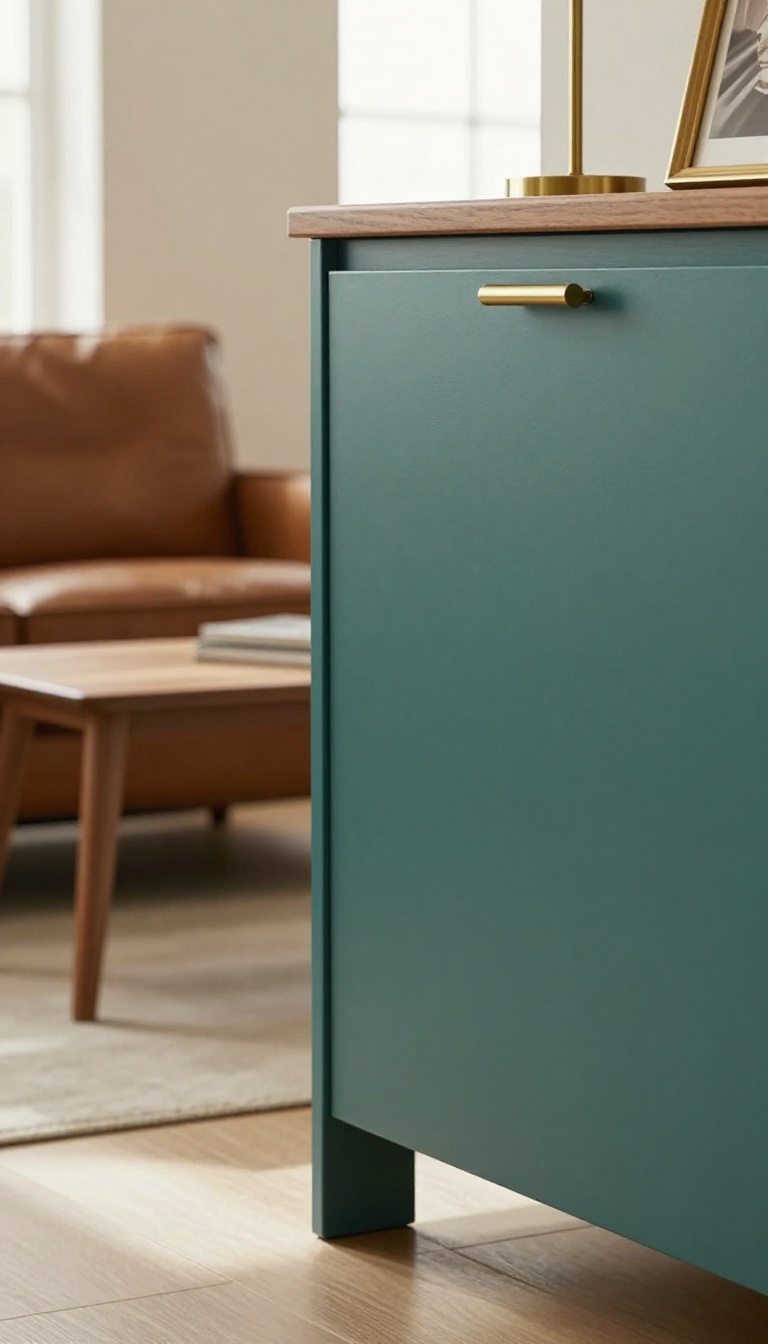
Brass and gold sit right between brown and teal on the warmth scale. They pick up the cozy, earthy side of brown while catching a little of teal’s cool shimmer. That makes them the perfect middle ground—no third color needed, just a metallic that ties the two together.
Swap out a few hardware pieces and the whole room feels more deliberate. It’s a small change with a big payoff, and it works in almost any style, from mid-century to modern farmhouse.
You don’t need to replace every knob and pull. Start with the pieces you touch every day: cabinet handles, drawer pulls, and maybe a faucet. Those small swaps add up fast.
Brass has a natural warmth that echoes wood tones and leather. Gold leans a bit brighter, which can lift a darker brown sofa or a deep teal wall. Either one acts like jewelry for the room—subtle but noticeable.
Just keep the finish consistent. Mixing brass and gold in the same space can look accidental unless you’re very intentional about it. Pick one and repeat it in two or three places.
Where To Swap Hardware First
Kitchen cabinets and built-in shelving are the easiest starting points. If your living room opens to a kitchen, matching the hardware there makes the whole space feel connected. For a quicker win, change the pulls on a media console or a bar cart.
Even a single brass handle on a teal cabinet can pull the palette together.
Mix Metals Without The Mess
You can mix brass with black or nickel if you keep brass as the dominant metal. Use black for structural pieces like curtain rods or floor lamp bases, and let brass handle the decorative touches. Avoid putting brass and gold right next to each other unless they’re part of the same fixture.
A brass faucet with gold cabinet pulls in the same sightline can look like a mistake.
Small Accents That Count
Think beyond hardware: a brass picture frame, a gold-rimmed mirror, or a brass-based table lamp. These add warmth without committing to a full overhaul. A brass tray on a brown coffee table or a gold bowl on a teal sideboard does the same job.
They catch light and make the brown-teal pairing feel intentional.
8. Balance Dark Teal With Light Brown or Tan Walls
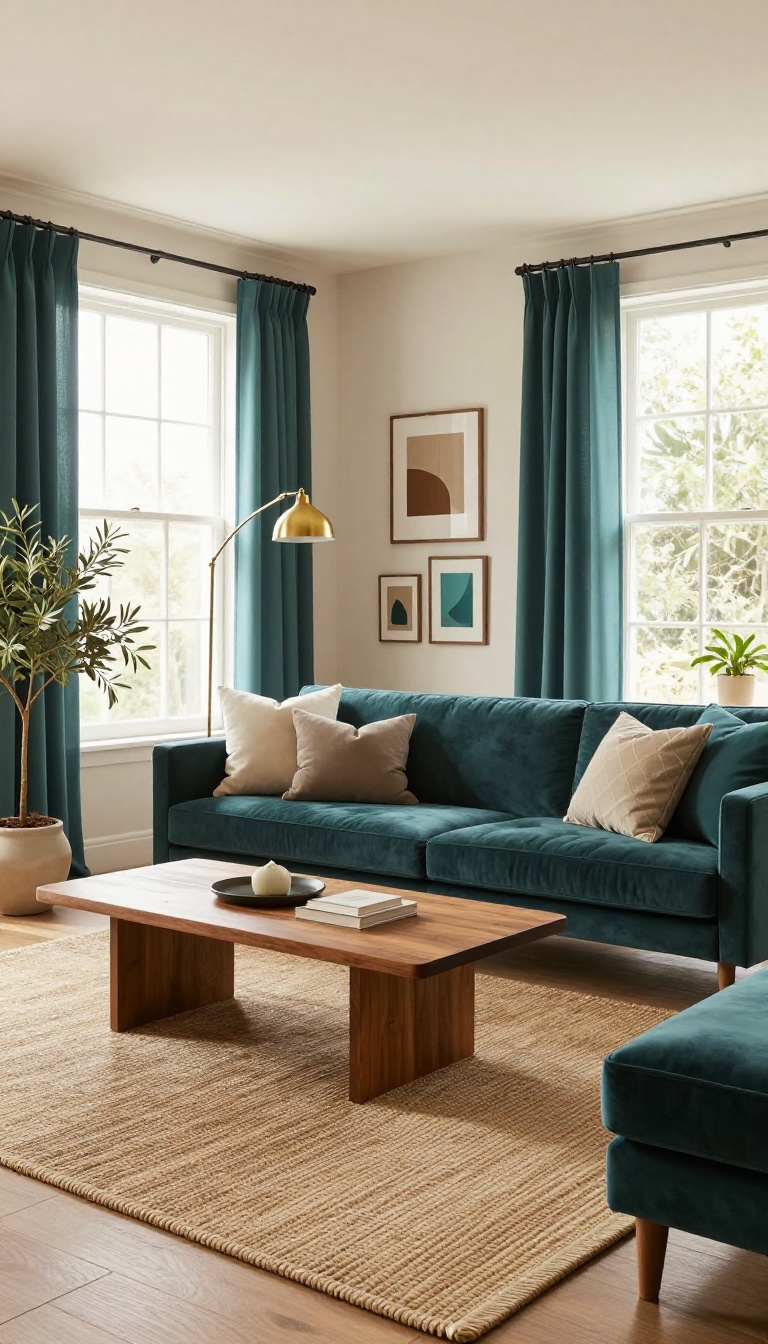
Dark teal walls can turn a living room into a cozy cave if you're not careful. The fix isn't to ditch the color—it's to keep the walls light and let teal do its thing on furniture and decor. Tan, mushroom, and soft brown walls give you that warm, open feel while teal brings the drama without the gloom.
The trick is to think of your walls as the canvas and teal as the paint you add in bold strokes. Light brown or tan walls reflect more light, so the room stays airy even on gray days. Then you layer in teal through a sofa, curtains, or a gallery wall, and suddenly the color feels intentional instead of overwhelming.
Why Light Walls Work With Dark Teal
Dark teal absorbs light, which can make a room feel smaller and moodier than you want. Light tan or mushroom walls bounce light around, so the teal reads as a rich accent rather than a black hole. This combo also creates contrast that makes both colors look more expensive.
Pick The Right Shade Of Tan Or Mushroom
Not all light browns are created equal. Look for warm tans with a hint of yellow or beige, and avoid anything too pink or gray, which can clash with teal's blue-green base. Mushroom brown—a soft, earthy taupe—is a safe bet because it has just enough warmth to balance teal's coolness.
Bring Teal In Through Furniture And Decor
Once your walls are light, teal can show up in a velvet sofa, a pair of curtains, or even a large piece of art. Mix in a few brown wood tones—like a coffee table or shelves—to tie the walls and teal together. The result feels collected, not themed.
9. Layer Teal and Brown in Window Treatments and Pillows
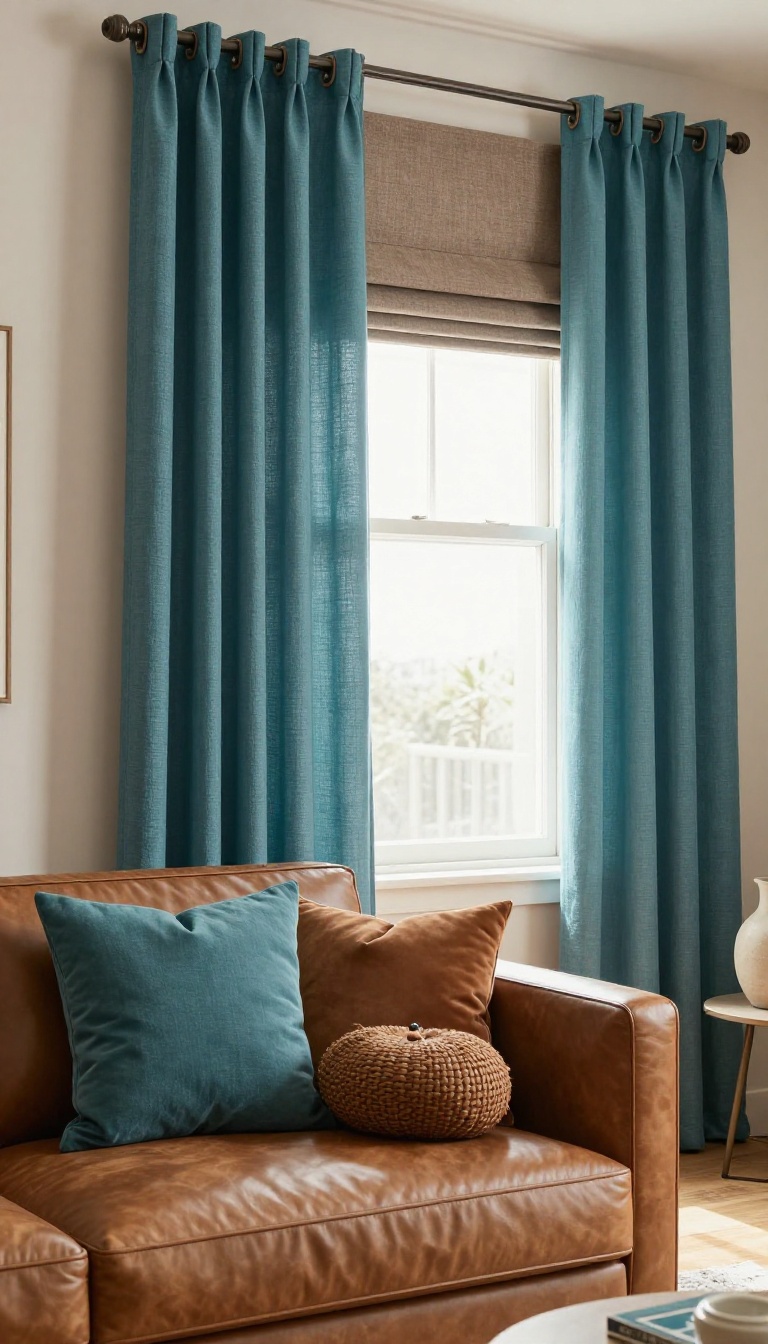
Window treatments and pillows are the easiest places to experiment with teal and brown. You can swap them out without repainting or buying new furniture, and they add softness to a room full of hard edges. Curtains, Roman shades, and throw pillows also let you control how much of each color shows up.
Start small with a few accents, or go bold with floor-length drapes that make a statement.
Curtains and Roman shades bring teal and brown together in a way that feels intentional. They frame the window, soften light, and add a layer of texture that a bare window just can't match. Pillows do the same on a smaller scale, letting you test the mix right on your sofa.
Together, they're a low-commitment way to see how the colors play in your space.
Pick The Right Curtain Fabric And Lining
For a warm modern look, choose a medium-weight fabric like linen or a linen blend. A teal curtain with a brown trim or a brown curtain with a teal leading edge gives you both colors without overwhelming the room. Add a blackout lining if you want to control glare and keep the teal from looking too bright during the day.
Mix Pillow Sizes And Textures
Start with a solid teal pillow as your anchor, then layer in brown leather, velvet, or woven textures. A 20-inch square paired with a 12×20 lumbar and a small round pillow creates a balanced arrangement. Don't be afraid to mix patterns like a teal geometric with a brown solid—just keep the scale different so they don't compete.
Use Roman Shades For A Cleaner Look
If curtains feel too fussy, Roman shades offer a tailored alternative. A brown woven shade with a teal border adds warmth and a subtle pop of color. Mount them outside the window frame to make the window appear larger, and keep the folds simple to maintain that modern vibe.
Coordinate With Existing Furniture
Pull one color from your sofa and the other from your rug or art. If your sofa is brown, choose teal curtains and a mix of teal and brown pillows. If your sofa is teal, reverse it.
This creates a cohesive look without matching everything perfectly.
10. Create a Reading Nook With a Brown Chair and Teal Lamp
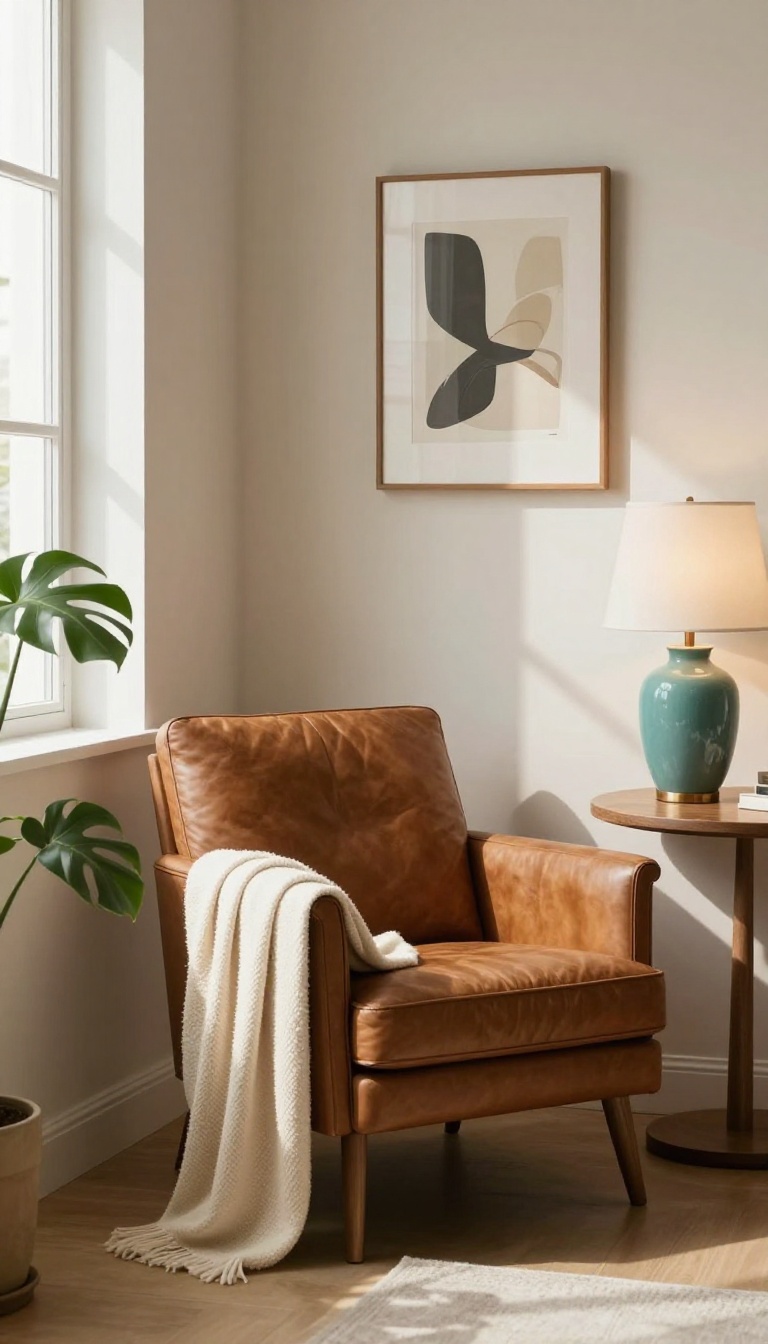
A reading nook doesn't need its own room. A single brown armchair, a teal table lamp, and a small side table can carve out a corner that feels separate from the main seating area. The brown chair grounds the spot with warmth, while the teal lamp adds a cool, focused glow.
Together they create a pocket of calm that invites you to sit down with a book. You're not rearranging the whole room. You're just giving one corner a clear job.
The best reading nooks feel intentional, not accidental. That means the chair faces a certain way, the light falls just right, and there's a surface for a mug or a phone. Brown and teal make this easy because the colors already do half the work: brown says settle in, teal says stay a while.
Start with the chair. A brown armchair—leather, velvet, or woven—anchors the corner without shouting. Then add a teal lamp on a small side table.
The lamp becomes the focal point, and its glow ties the two colors together. Keep the surrounding area simple. A throw blanket, a floor plant, or a single piece of art is enough.
The nook should feel like a destination, not a display.
Pick The Right Corner
Look for a spot that's slightly out of the way but still gets some natural light. A corner near a window works well, but so does the end of a sofa wall if you angle the chair inward. You want the chair to feel like it belongs there, not like it's blocking traffic.
Leave at least a foot of space around it so the nook breathes.
Choose A Brown Chair That Fits
Leather adds a classic, slightly masculine feel. Velvet brings softness and a bit of luxury. Woven or boucle keeps things casual and modern.
Any shade of brown works, from caramel to espresso, as long as it contrasts with your walls. If your walls are brown, go lighter with the chair. If your walls are light, a darker brown adds depth.
Let The Teal Lamp Do The Work
A table lamp with a teal base or shade becomes the accent that makes the nook pop. Place it on a small side table to the left or right of the chair, depending on which hand you use for reading. Choose a warm bulb—around 2700K—so the light feels cozy, not clinical.
A dimmer switch is a nice touch if you want to adjust the mood.
Add Small Comforts
A throw blanket in a third color—cream, rust, or mustard—keeps the palette from feeling too matchy. A small tray on the side table holds a candle, a coaster, and your current book. If you have room, a tiny stool or floor cushion gives you a place to prop your feet.
Keep it minimal so the nook stays calm.
11. Use Art and Accessories to Tie Brown and Teal Together
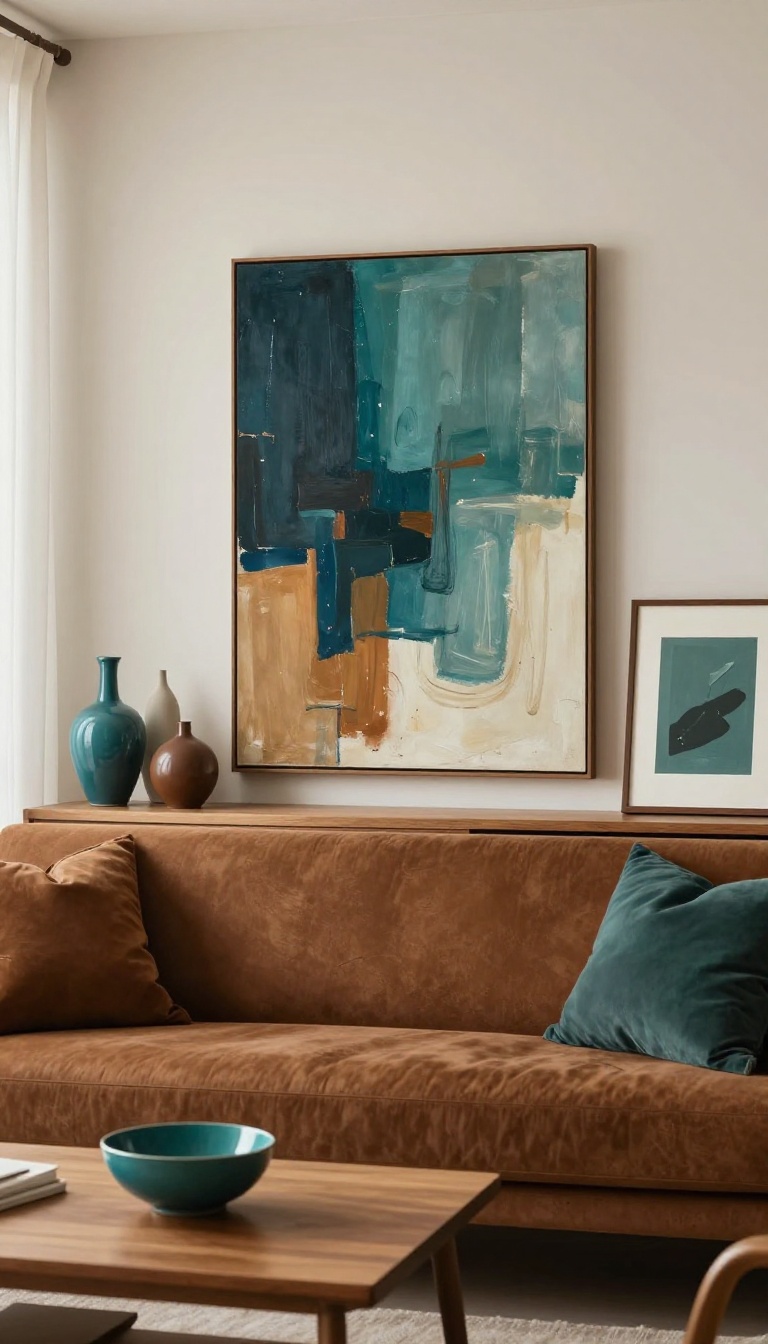
You've got the big pieces in place—a brown sofa, a teal accent wall, maybe a warm wood coffee table. But without the right finishing touches, the room can still feel like two separate color stories that never quite meet. Art and accessories are where you seal the deal.
They repeat brown and teal in small, deliberate doses so the whole space reads as one cohesive thought instead of a random collection of furniture.
Think of accessories as the connective tissue of your color scheme. They bridge the gap between large surfaces and make the palette feel intentional. A single teal ceramic bowl on a brown console, or a brown-framed print with teal accents, tells the eye that these colors belong together.
The goal isn't to match everything perfectly—it's to echo the palette in enough places that it feels natural.
Let A Large Painting Do The Heavy Lifting
A big abstract canvas is the fastest way to marry brown and teal. Look for a piece that includes both colors—maybe a deep teal background with warm sienna and umber strokes, or a brown field with teal splashes. Hang it centered above the sofa or on the main wall you face when you walk in.
The size matters: go bigger than you think. A large artwork anchors the room and gives your eye a single place to land, which makes the whole scheme feel more pulled together.
Scatter Ceramic And Glass In Both Hues
Vases, bowls, and small sculptures are easy wins. Group three ceramic vases on a mantel or shelf—one glossy teal, one matte brown, one somewhere in between. Mix heights and finishes so it looks collected, not catalog-ordered.
A teal glass bowl on a brown coffee table catches light and adds a little sparkle. Just keep the shapes simple; busy patterns can fight the clean color story you're building.
Use Books And Small Objects As Color Echoes
Stack a few books with teal spines on a brown side table. Tuck a brown leather-bound journal next to a teal candle. Even a small tray in one color holding remotes or coasters in the other can reinforce the pairing.
These tiny moments might seem insignificant, but they add up. They show that the colors aren't just a coincidence—they're a deliberate choice that runs through the entire room.
Mix Metals And Natural Textures For Depth
Metals and natural materials can act as neutral bridges between brown and teal. Antique brass or aged bronze picks up the warmth of brown while complementing teal's coolness. Woven rattan, jute, or dark wood frames add texture without introducing a new color.
A brass-framed mirror over a teal console, or a rattan basket holding a brown throw, keeps the palette grounded and prevents it from feeling too flat.
FAQ
What shade of teal works best with brown furniture?
Deep teal, like a peacock or ocean tone, pairs well with dark brown and walnut. Lighter teal or aqua works better with tan, beige, and light wood. Test a few swatches in your room's light before committing.
Can I use brown and teal in a small living room?
Yes. Keep the walls light brown or tan and use teal on smaller pieces like pillows, art, and a rug. Avoid dark teal on all walls in a small space unless you have plenty of natural light.
Is brown and teal a good color combo for a modern living room?
It can be very modern when you keep lines clean and mix in neutral whites or creams. The warmth of brown and the coolness of teal create a balanced, contemporary feel without looking trendy.
What accent colors go with brown and teal?
Cream, white, brass, and muted rust or terracotta all work well. Stick to one or two accents so the brown and teal remain the stars of the room.
How do I keep brown and teal from looking dated?
Choose current silhouettes, avoid heavy floral patterns, and limit the palette to two or three tones. Fresh textures like linen, boucle, and matte ceramics also keep the look updated.
Conclusion
Brown and teal do not have to be a gamble. Pick one as your base, let the other do the accent work, and keep the rest of the room simple so the pairing can breathe. A few swaps are often enough to change the whole feel.
Start with the idea that fits your light and your furniture, then build outward. You can always add more teal or more brown later. The goal is a room that feels warm, modern, and unmistakably yours.