13 White and Gold Living Room Ideas with Soft Elegant Glam
A white and gold living room instantly feels brighter, more open, and quietly luxurious. The right mix of warm metallics and crisp whites can turn an ordinary space into one that looks curated without trying too hard. You don't need a massive budget or a designer to pull it off.
Small changes—like swapping hardware or adding a gold mirror—can shift the whole mood. The trick is balancing shine with softness so the room stays inviting, not flashy.
Below are 13 ideas that range from easy updates to bigger statement moves. Pick a few, mix them with your own style, and watch your living room glow.
1. Start with a Warm White Base
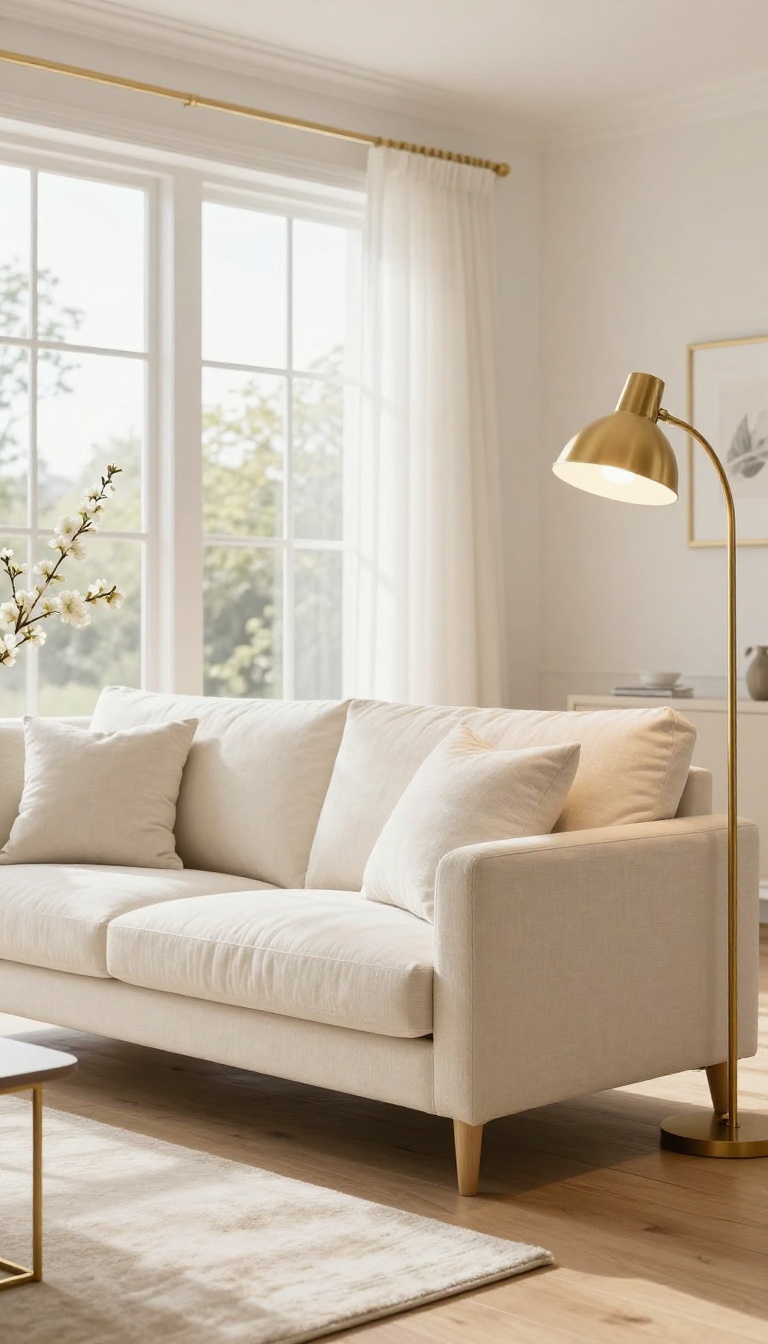
The foundation of any white and gold living room is the white itself. Not all whites are created equal—some lean cool and icy, while others carry a soft, warm undertone that feels like a gentle hug. For a glam look that still feels inviting, you want a warm white that whispers luxury rather than shouting it.
This base color sets the stage for every gold accent you add, making them shine without turning the room into a cold showroom.
Warm whites have a hint of yellow, cream, or beige in them, which balances the coolness of gold's metallic finish. Think of colors like alabaster, ivory, or soft cream. These shades reflect light beautifully and create a cozy atmosphere that cool whites simply can't match.
When you pair them with gold, the result is a harmonious blend that feels both elegant and lived-in.
Why Warm White Works
Warm white walls act like a soft filter for your gold accents. They prevent the metal from looking harsh or out of place. Instead, the gold appears to glow against the creamy background, adding depth and warmth.
This combination is especially effective in rooms with limited natural light, as warm whites keep the space from feeling gloomy.
Choosing The Right Shade
Test a few warm white paint samples on your walls before committing. Look at them at different times of day to see how they interact with your lighting. A color that looks perfect in the morning might turn too yellow or too pink under artificial light.
Popular choices include Benjamin Moore's White Dove or Sherwin-Williams' Alabaster. Both offer that soft, warm base that makes gold pop.
Finishing Touches
Once your walls are painted, consider carrying the warm white onto the ceiling and trim for a seamless look. This creates a cohesive backdrop that allows your gold accessories to take center stage. Add white slipcovers or a white area rug to reinforce the airy feel, and then layer in gold with mirrors, light fixtures, and hardware.
2. Add a Gold Accent Wall
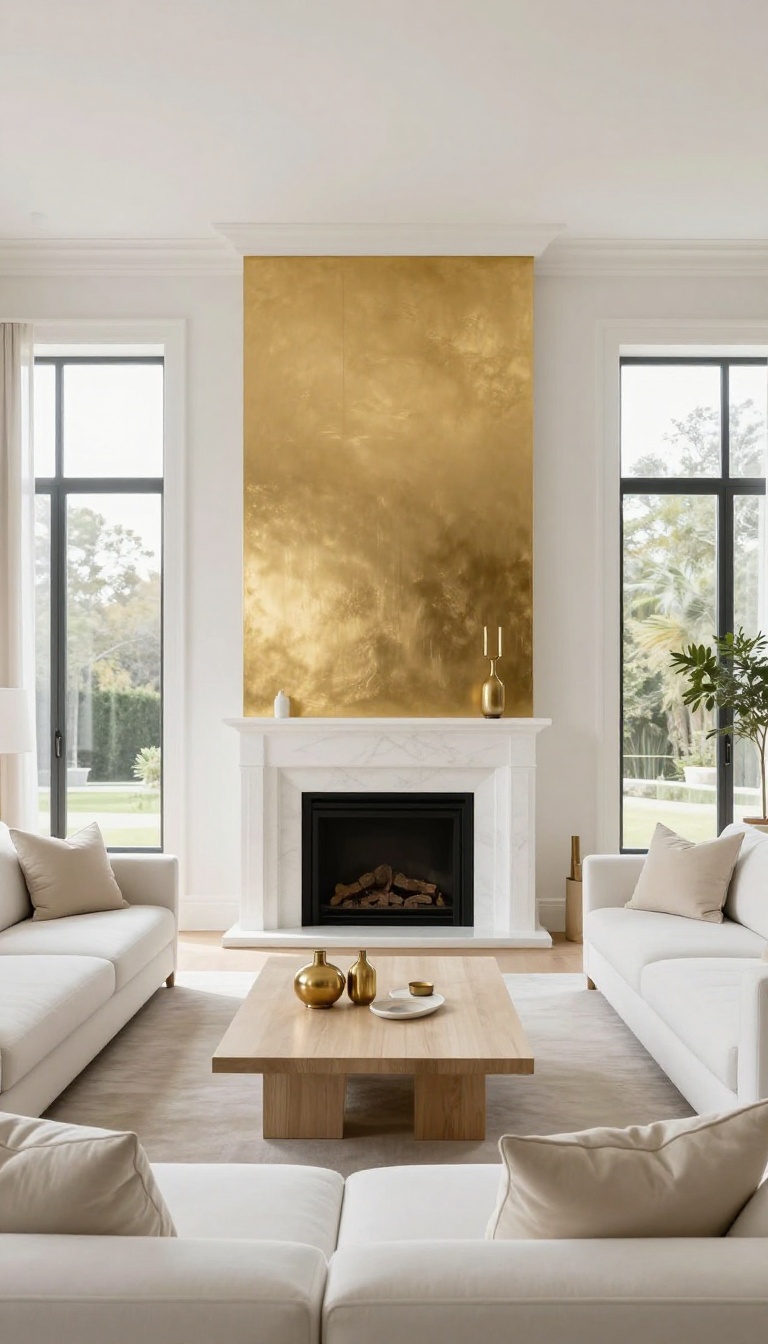
An accent wall gives your eyes a place to land without making the whole room feel busy. In a white and gold living room, a single gold wall can deliver that soft glam look while the rest of the space stays airy and calm. You get the drama of metallic shine, but it's contained to one spot.
That balance keeps things elegant instead of overdone.
You don't need to cover every wall in gold to make an impact. One wall—usually the one behind your sofa, fireplace, or TV—can carry the metallic moment. The rest of the room stays white or off-white, which lets the gold stand out without competing.
This approach works in small apartments and large living rooms alike. It's also a smart way to test a bolder metallic look before committing to more.
Pick The Right Wall
The best accent wall is one you naturally face when you walk in or sit down. In most living rooms, that's the wall behind the main seating area. If you have a fireplace or a built-in shelf, that wall is a strong candidate too.
Avoid accenting a wall with lots of doors or windows—it breaks up the gold and weakens the effect. A solid, uninterrupted wall gives you the cleanest canvas for shine.
Choose Your Gold Finish
Gold comes in many forms, so decide how much shimmer you want. Metallic paint gives a smooth, subtle glow that shifts with the light. Gold wallpaper can add texture, pattern, or a hand-painted look.
For a softer vibe, try a matte gold or champagne tone. For maximum glam, go with a high-shine metallic or a foil wallpaper. Just keep the rest of the room's gold accents in a similar tone so nothing clashes.
Balance The Rest Of The Room
Once one wall is gold, keep the other walls white or a warm off-white. That contrast makes the gold pop without overwhelming the space. Add white curtains, a light rug, and white or cream furniture to keep things feeling open.
A few gold accents—like a mirror frame, lamp base, or drawer pulls—tie the look together. But don't overdo it. The accent wall should be the star, not one of many.
3. Choose a Statement Gold Chandelier
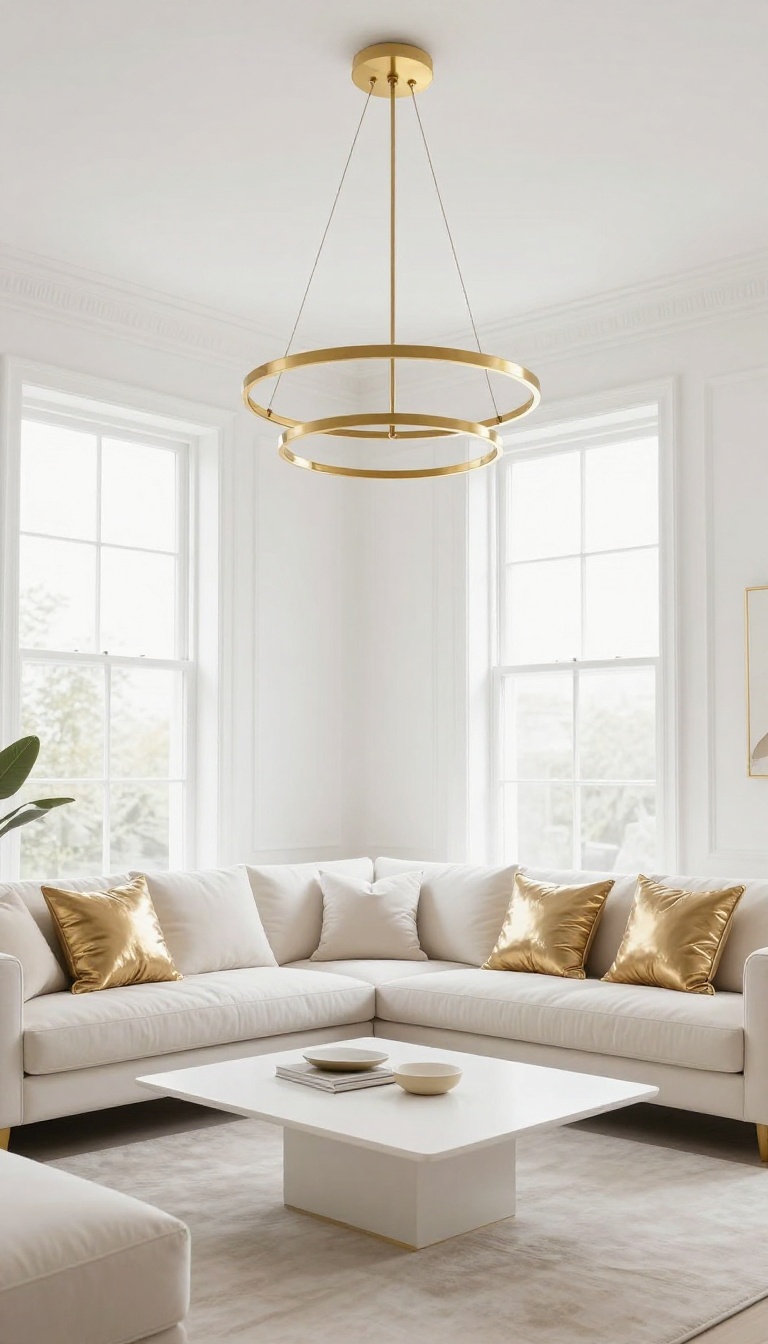
A gold chandelier does more than light a room—it anchors the entire design. In a white and gold living room, it becomes the jewelry of the space, catching light and drawing every eye upward. This is your chance to go bold without overwhelming the palette.
A single sculptural piece in warm gold adds instant glam while keeping the white backdrop calm and airy. Just remember: the chandelier should feel like a deliberate choice, not an afterthought. Size, shape, and finish all matter.
Hanging a chandelier is one of the fastest ways to make a living room feel custom. It adds height, drama, and a soft glow that flatters everything below. But not all gold chandeliers are created equal.
The right one depends on your ceiling height, room size, and how much sparkle you want. Start by measuring your space. A chandelier that's too small will look lost; too large and it will dominate.
Aim for a diameter that's about one-third the width of your seating area. Then think about style. A modern brass ring keeps things minimal, while a crystal-and-gold number leans traditional.
Either way, the gold ties back to your other metallic accents.
Pick The Right Size And Height
For a standard 8-foot ceiling, hang the chandelier so the bottom sits about 30 to 36 inches above your coffee table. In an open room, keep it at least 7 feet from the floor. If your ceiling is higher, add 3 inches for every extra foot.
This keeps the fixture proportional and prevents it from feeling like it's floating too high.
Match The Gold Tone To Your Room
Gold comes in many shades—from soft champagne to bold brass. If your other accents are brushed or antique, choose a chandelier with a similar finish. Mixing tones can work, but it's safer to stay in the same family.
A warm gold chandelier pairs beautifully with white walls and cream upholstery.
Layer The Lighting
A chandelier alone can feel harsh at night. Add dimmable bulbs and pair it with table lamps or wall sconces for a softer, layered glow. Use warm white bulbs (around 2700K) to enhance the gold's warmth.
That way, the room feels cozy and elegant, not clinical.
4. Layer in Gold Mirrors
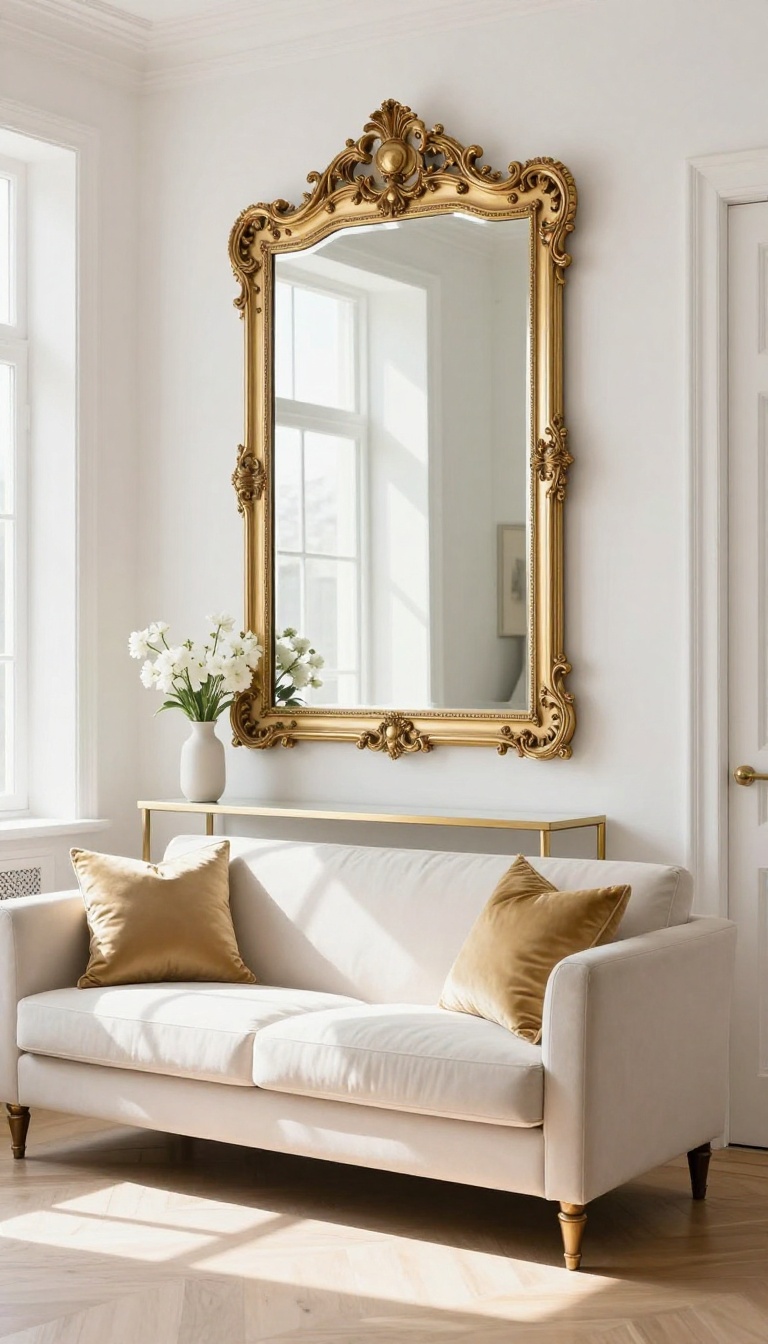
Mirrors do more than let you check your reflection—they bounce light around the room, make tight spaces feel bigger, and add a dose of glam. In a white and gold living room, a gold-framed mirror becomes a piece of art that ties the palette together. The key is picking the right style and placing it where it can work its magic.
You don't need to cover every wall, but one well-placed mirror can change the whole vibe. It reflects your white walls and gold accents, doubling the glow and making the room feel airy. Plus, it adds that touch of luxury without shouting.
Choose The Right Frame
Go for a frame that matches your gold tone—brushed, antique, or polished. A thin, minimalist frame feels modern, while an ornate one leans classic. Just make sure it complements your other gold accents rather than competing with them.
Place It For Impact
Hang a large mirror opposite a window to maximize natural light. Or lean a full-length mirror against a wall for a relaxed, designer look. Above a console table or sofa, it anchors the space and adds height.
Mix Shapes And Sizes
A round mirror softens angular furniture, while a rectangular one adds structure. Group smaller mirrors for a gallery wall if you want a collected feel. Varying shapes keeps the room interesting without overwhelming it.
5. Mix White and Gold Throw Pillows
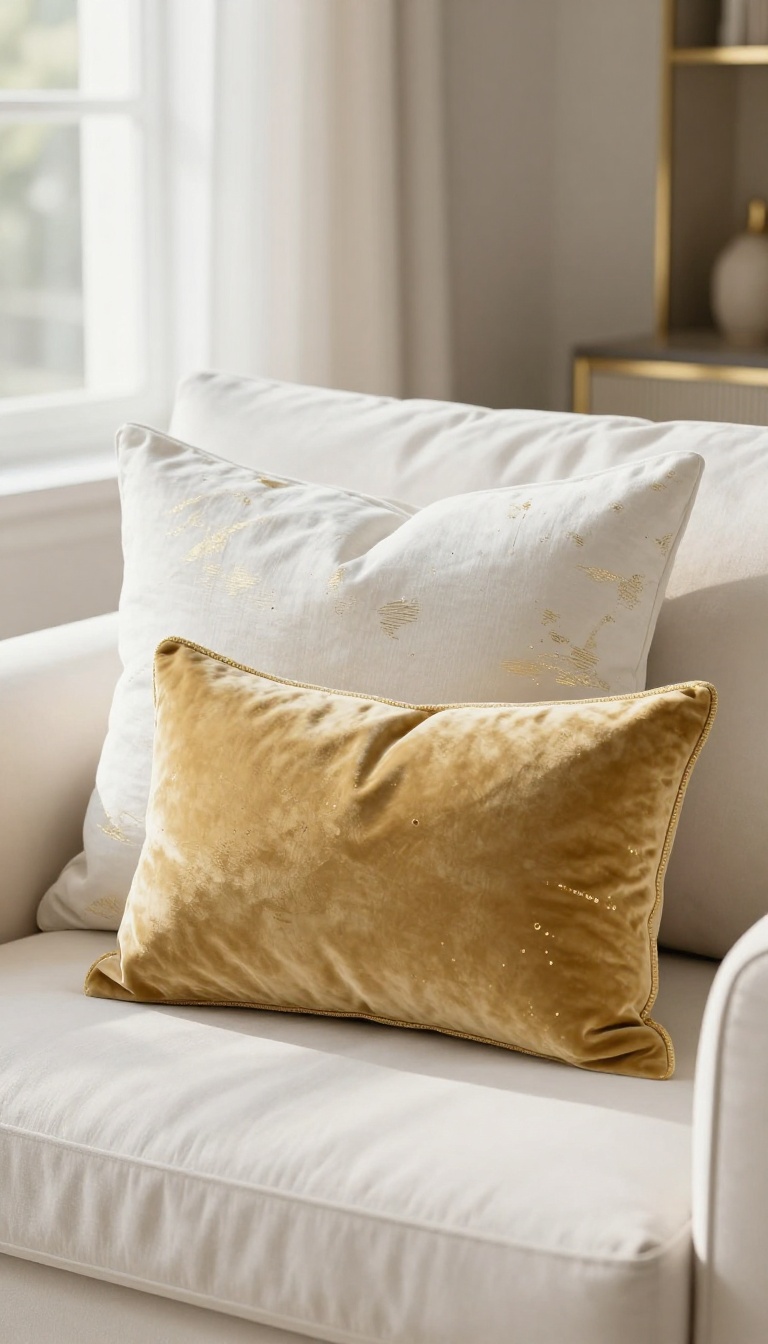
Throw pillows are the easiest way to test a white and gold color scheme without committing to a full redesign. You can swap them out seasonally, mix patterns, and play with texture until the sofa feels just right. Plus, it's one of the most affordable updates you can make.
Start by choosing a base color for your pillows—white, cream, or ivory—then layer in gold accents. A solid white pillow with a gold trim or a subtle metallic sheen adds just enough shine. Mix in different sizes: a couple of large square pillows in the back, medium ones in the middle, and a small lumbar pillow up front for contrast.
Play With Texture
Gold comes in many forms: sequins, foil print, velvet, and embroidery. Pair a smooth white linen pillow with a textured gold one to keep the look interesting. Velvet adds richness, while sequins bring a hint of glam.
Just don't overdo it—two or three textures per sofa is plenty.
Balance The Shine
Too much metallic can feel flashy, so balance gold pillows with matte white ones. If your sofa is light, add a gold pillow with a white pattern to tie it together. If your sofa is dark, white pillows with gold accents will pop beautifully.
The goal is a mix that feels collected, not cluttered.
Rotate For Seasons
Keep a stash of pillow covers in white and gold so you can switch them out. In summer, go for lighter fabrics like cotton and linen with subtle gold threads. In winter, swap in velvet and faux fur with richer gold tones.
It's a quick way to refresh your living room without spending much.
6. Use a Gold Coffee Table
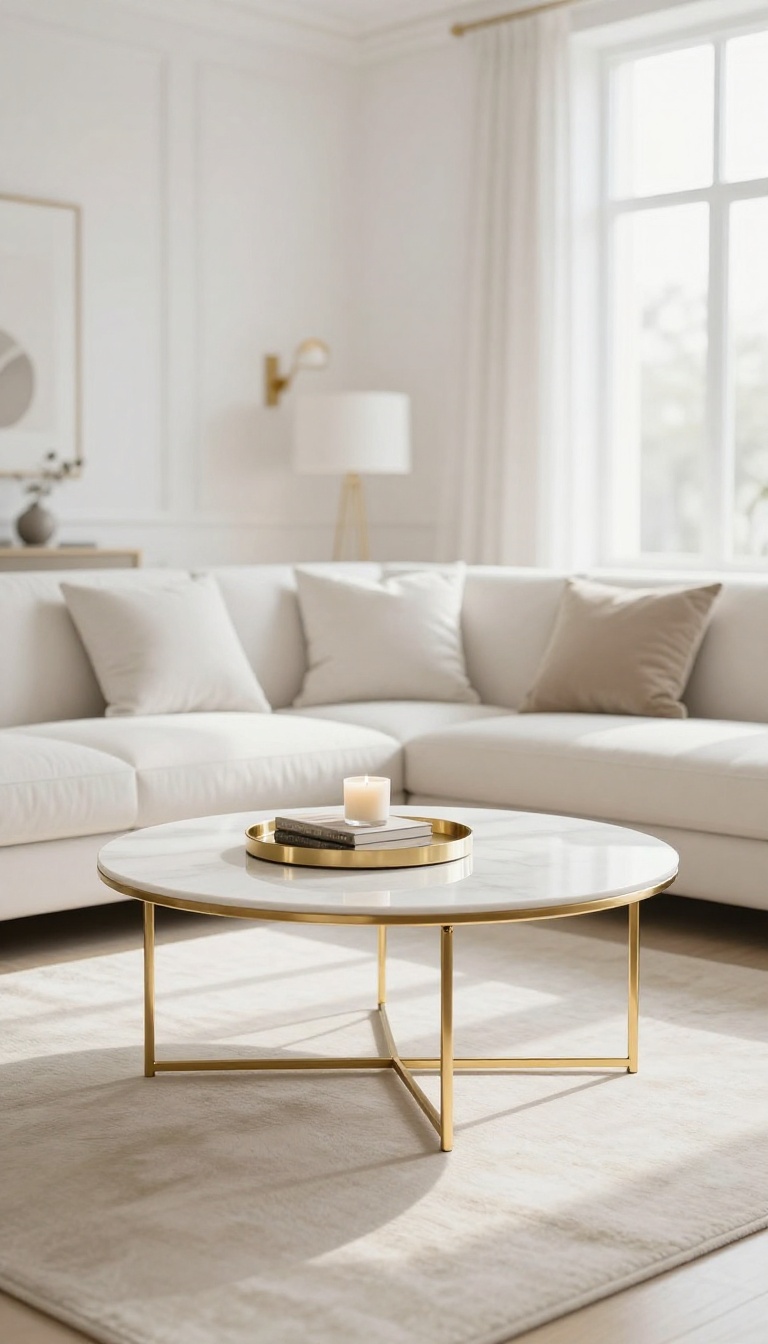
A gold coffee table pulls the eye to the center of the room and gives your seating area a polished focal point. It works like a piece of jewelry for your living space—small in scale but big on impact. Unlike a bulky wood or glass table, a gold one adds warmth and reflection without weighing down the room.
It pairs beautifully with white sofas, light rugs, and soft neutral walls. You can go bold with a sculptural brass design or keep it simple with slim gold legs. Either way, it becomes the functional art piece your living room has been missing.
Pick The Right Shape And Size
A round gold coffee table softens a boxy seating arrangement and makes conversation flow better. If your sofa is long and straight, a rectangular or oval table mirrors that line and keeps things balanced. Measure your seating area before you buy.
Leave at least 14 to 18 inches between the table and the sofa so people can move comfortably. A table that's too big will crowd the room; one that's too small will look lost. Nesting tables in gold are a smart choice for small spaces.
You can pull them apart when guests come over and tuck them back when you don't need the extra surface.
Mix Materials For Softness
All-gold everything can feel cold, so pair your table with softer textures. A white marble top on a gold base is a classic combo that feels elegant but not overdone. Glass tops keep the look airy and let your rug pattern show through.
If you want more warmth, choose a gold table with a wood or faux shagreen top. Add a small tray, a candle, or a stack of books to ground the shine. These little layers make the table feel lived-in instead of showroom-perfect.
Style It Without Clutter
Keep the surface mostly clear so the gold finish can do its job. One or two well-chosen objects—like a sculptural bowl or a small vase with fresh flowers—are enough. Use a decorative tray to corral remotes, coasters, and candles.
It keeps things tidy and gives the table a deliberate, styled look. If you have a glass-top gold table, add a runner or placemat underneath your decor to prevent scratches. Small care steps keep the piece looking new for years.
Make It Work In Real Life
Gold finishes show fingerprints and dust more than darker surfaces, so keep a microfiber cloth nearby. A quick wipe once a week keeps the shine intact. If you have kids or pets, look for a table with rounded edges and a sturdy base.
A heavier gold table won't slide around when someone bumps it. For a budget-friendly option, consider a gold-finished metal table instead of solid brass. You get the same glam look without the high price tag.
7. Incorporate Gold Curtain Rods and Hardware
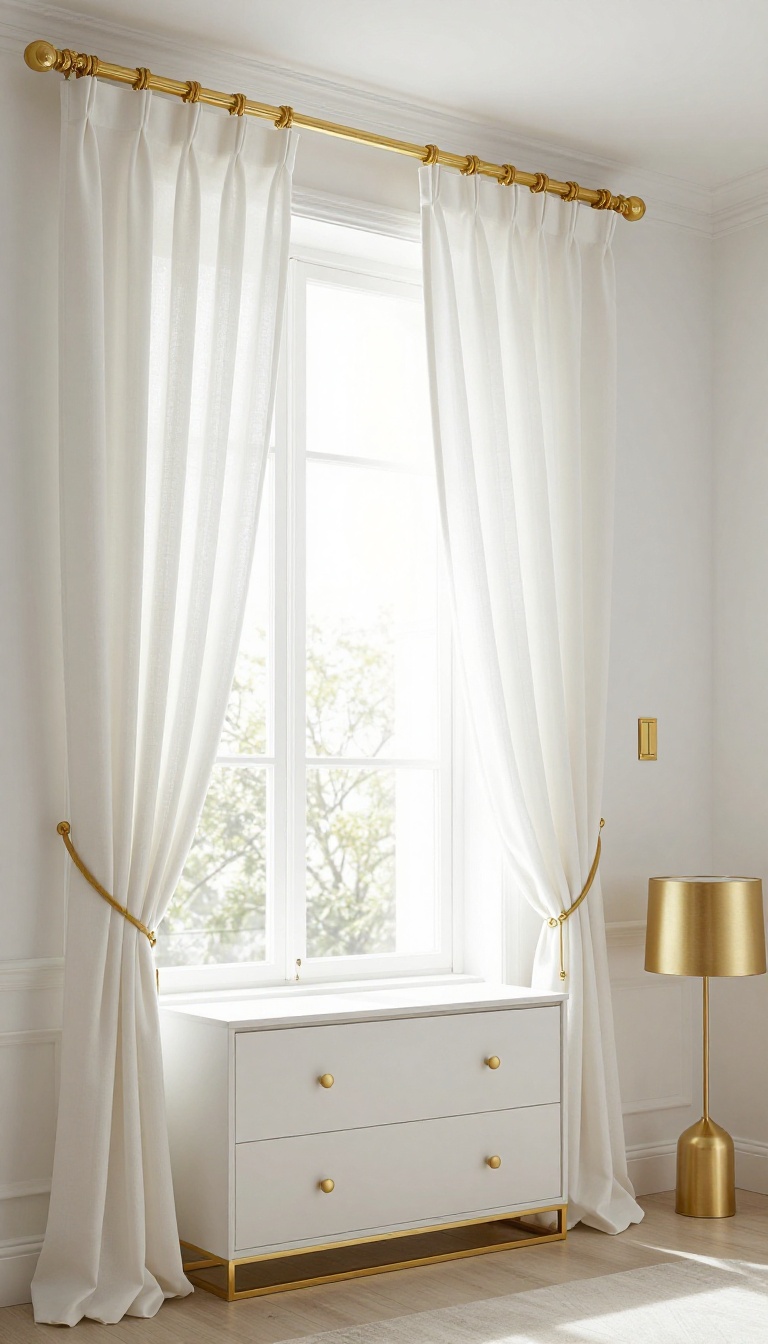
Curtain rods and hardware rarely get the spotlight, but they quietly shape how polished a room feels. In a white and gold living room, swapping basic metal rods for warm gold ones adds a subtle layer of glam that ties everything together. It's one of those upgrades that costs little but reads as intentional and high-end.
The same goes for cabinet pulls, door knobs, and even switch plates. These small touches repeat the gold accent around the room without overwhelming it. The key is consistency—stick to one finish family so the details feel deliberate, not random.
Gold hardware works best when it echoes other metallic accents in the space. If your curtain rods are gold, your drawer pulls and light fixtures should lean warm too. That doesn't mean everything must match exactly; a mix of brushed and polished gold can add depth as long as the tone stays consistent.
Scale matters as much as finish. A flimsy rod on wide windows looks cheap, while a substantial one with decorative finials feels custom. For cabinets, simple bar pulls or round knobs in a satin gold finish keep things elegant without shouting.
You can also use hardware to bridge styles. In a mostly white room, gold rods and pulls add just enough warmth to keep things from feeling cold or sterile. They're the jewelry of the room—small, but they finish the outfit.
Choosing The Right Gold Finish
Gold comes in many shades, from bright brass to muted antique. Pick one that complements your existing light fixtures and won't clash with warmer woods or cool whites. Satin brass and brushed gold are safe bets because they hide smudges and look refined.
Where To Add Gold Hardware
Start with curtain rods in the living room, then carry the finish to cabinet pulls, door handles, and even outlet covers. You don't have to do it all at once—adding one or two pieces at a time lets you see how the gold reads in different light.
Mixing Metals Without The Mess
If you already have nickel or chrome elsewhere, don't panic. Keep gold as the dominant accent and let other metals play a supporting role in small doses. The goal is harmony, not a matched set.
8. Add a White Sofa with Gold Legs
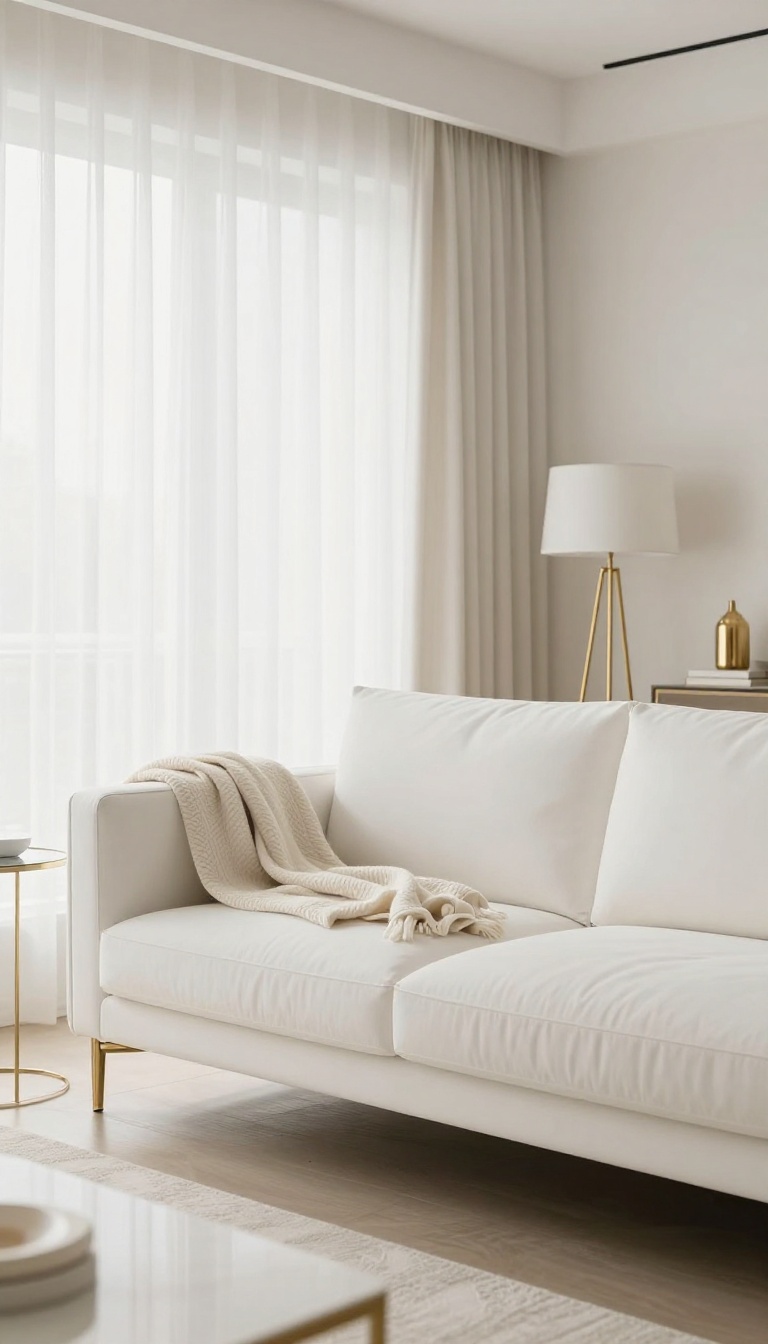
A white sofa with gold legs is the kind of piece that makes people ask where you got it. It's clean and comfortable, but those slim metallic legs give it a little lift—literally and visually. Think of it as your room's best supporting actor: it doesn't steal the show, but everything else looks better because it's there.
The beauty of a white sofa with gold legs is how easily it plays with others. White keeps things airy, while the gold base adds just enough warmth to tie in your other metallic touches. It's a quiet anchor for the whole room, and it works with almost any accent color you throw at it.
Why This Combo Works
White upholstery reflects light and makes small rooms feel bigger. Gold legs add a hint of glam without overwhelming the space. Together, they create a neutral foundation that lets your personality shine through in pillows, art, and accessories.
Choosing The Right Sofa
Look for a style with clean lines and a tight back—it keeps the look modern. Performance fabrics are a smart pick if you have kids or pets, since they wipe clean easily. And check the leg height: taller legs make a room feel more open, while shorter ones feel cozier.
Styling Around It
Keep the sofa as the star by using a simple white or cream slipcover, then layer in gold accents elsewhere. A gold floor lamp, a mirrored side table, or a metallic tray on an ottoman all echo the legs without competing. Add a throw in a soft neutral for texture.
9. Style with Gold Bookshelf Accents
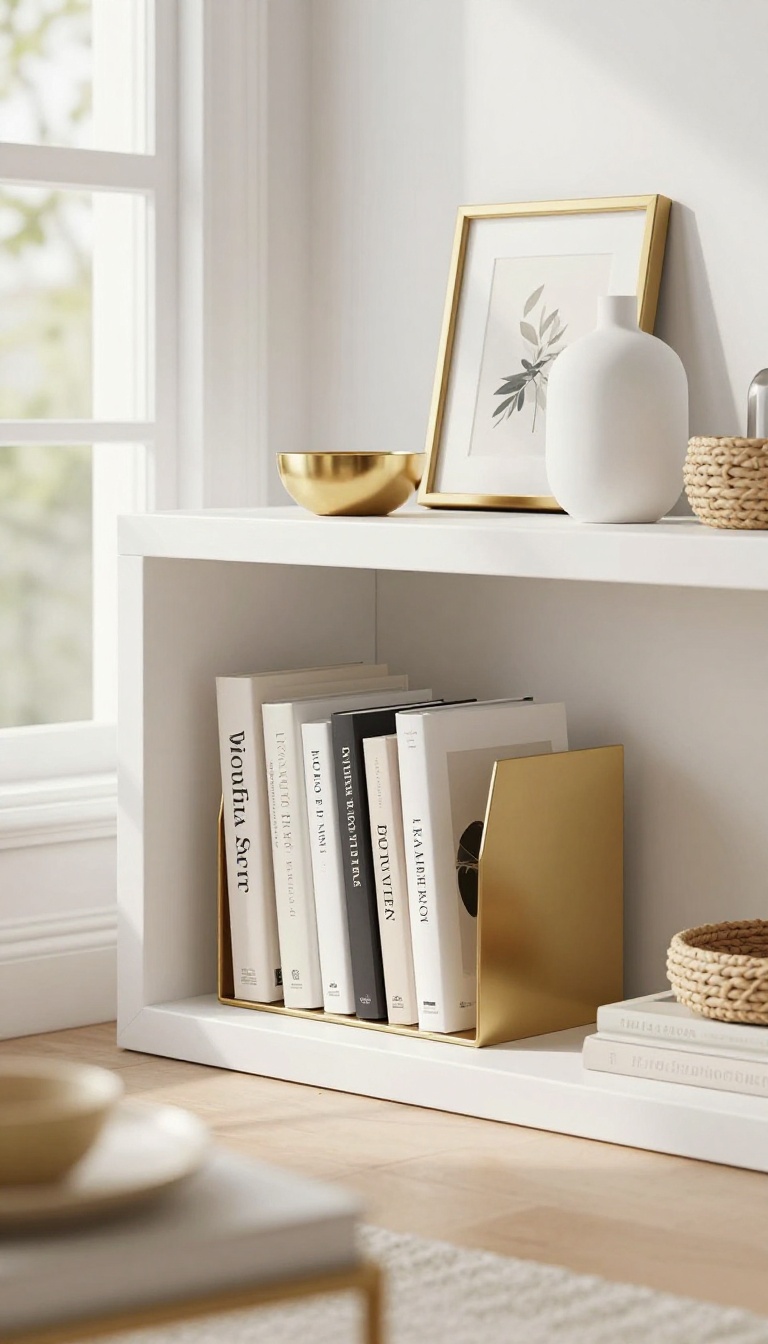
Bookshelves often become a catch-all for clutter, but with a little intention, they can be a major style moment in your white and gold living room. Gold accents—bookends, frames, and small decorative objects—add just enough sparkle to make the shelves feel curated and personal. The key is to mix shine with substance so the display doesn't look like a store shelf.
Start by clearing everything off your shelves and giving them a fresh start. Group books by color or size, then layer in gold pieces to break up the rows. You don't need to fill every inch; negative space lets each gold accent breathe.
Choose Bookends That Do Double Duty
Gold bookends keep your books upright while adding a sculptural touch. Look for geometric shapes, abstract figures, or simple blocks that feel modern. Place them at the end of a row to anchor the display and catch the light.
Mix Frames And Small Objects
Lean a gold-framed photo or art print against the back of the shelf for depth. Tuck in a small gold bowl, candleholder, or figurine among the books. Vary heights and textures so the eye moves across the shelf naturally.
Balance Shine With Softness
Too much gold can feel harsh, so pair it with matte white vases, woven baskets, or textured book covers. A white ceramic bowl next to a gold bookend creates a calm contrast. Let the gold be the accent, not the whole story.
10. Choose a Gold Area Rug
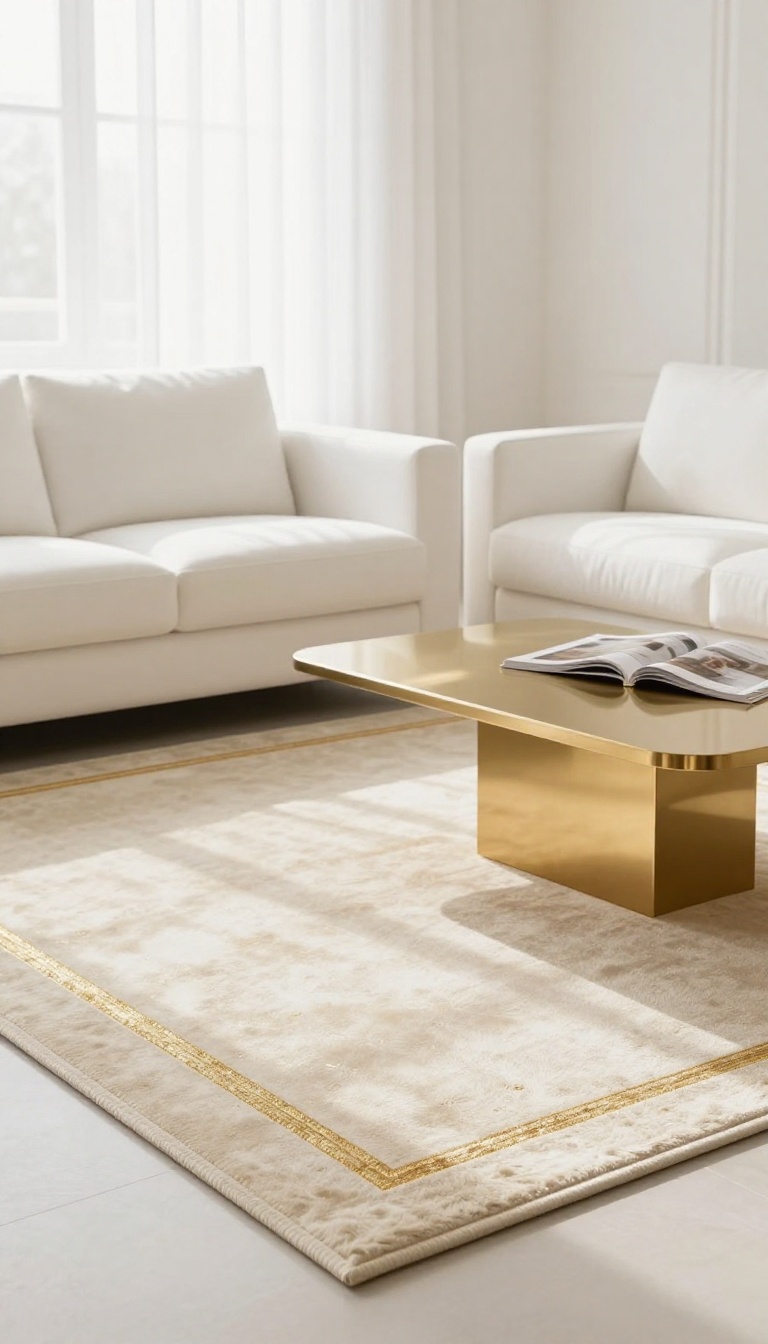
A rug might not be the first thing you notice in a room, but it quietly holds everything together. In a white and gold living room, a rug with gold tones or a gold border adds warmth underfoot and gives your seating area a clear boundary. It also softens all the crisp white and shiny metal, so the space feels layered instead of cold.
The right rug can make a white sofa look intentional and a gold coffee table feel grounded.
Think of a gold area rug as the foundation of your seating zone. It defines where conversation happens and adds a subtle glow that ties the whole room together. You don't need a solid gold rug—that would be overwhelming.
Look for rugs with gold accents, like a cream base with a gold border, or a pattern that weaves in soft metallic threads. These options keep the elegance without turning your floor into a disco ball. Size matters more than you think.
A rug that's too small makes the room feel disjointed, while one that's too large can swallow the space. Aim for at least the front legs of your furniture to sit on the rug. Material also plays a role.
A wool or viscose blend with a subtle sheen catches light beautifully and feels luxurious underfoot. Flatweave rugs with gold threads are another great choice if you want something lower maintenance.
Finding The Right Gold Tone
Gold comes in many shades, from pale champagne to deep antique brass. Pick a tone that matches your other gold accents—if your curtain rods are brushed brass, a rug with warm gold threads will feel cohesive. If you're unsure, go with a rug that has a cream or ivory base and just a hint of gold.
It's easier to live with and still adds that soft glam.
Placement That Works
Center the rug under your coffee table and anchor it with your sofa and chairs. In an open-concept space, use the rug to separate the living area from the dining or kitchen zone. A runner with gold edges can also work in a narrow space, like between a sofa and a console table.
Just make sure it doesn't look like an afterthought.
Keeping It Clean And Fresh
Gold rugs can show dirt, especially lighter ones. Vacuum regularly and rotate the rug every few months to even out wear. For spills, blot immediately with a clean cloth.
Avoid harsh chemicals that can dull the metallic threads. A gentle spot cleaner made for delicate fabrics is your best bet.
11. Hang Gold Wall Art
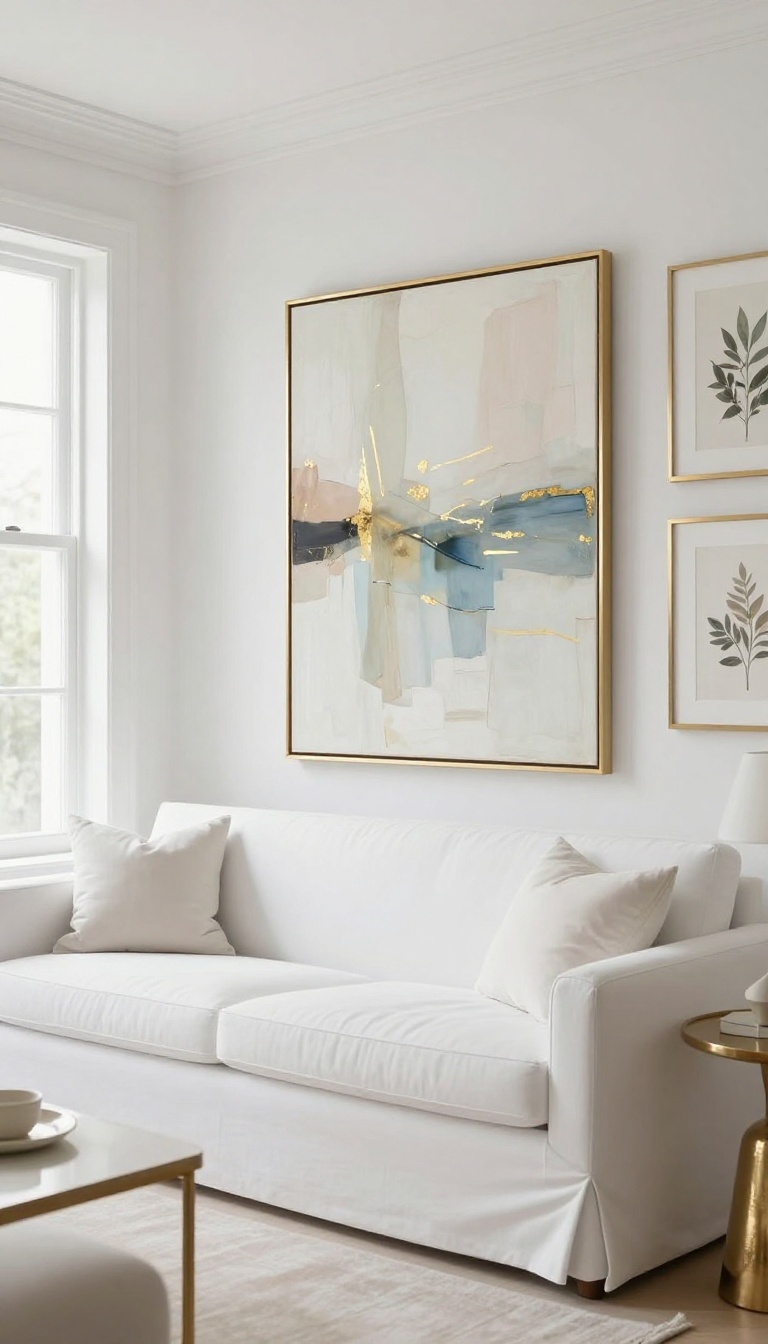
Blank white walls are an open invitation. Hang gold-framed art and you give those walls a job to do—catching light, adding depth, and making the room feel collected instead of decorated. It's one of the fastest ways to bring gallery energy into a white and gold living room.
The frames matter as much as the art. A thin gold frame reads modern and airy, while a chunkier ornate one leans classic glam. Either way, the metallic edge against white walls creates that soft, elegant contrast you're after.
You don't need a gallery wall to make this work. Even two or three well-placed pieces can transform a plain stretch of wall into something that feels intentional. The key is treating your art like part of the room's lighting plan—gold frames reflect whatever light hits them, so placement matters as much as the pieces themselves.
Start with one anchor piece above the sofa or console, then build outward. Keep the spacing generous so the white walls can breathe between frames.
Pick Art That Plays With Gold
Abstract pieces with gold leaf or metallic accents are an easy match because they carry the same warm shimmer as your frames. Soft neutrals, blush tones, and muted blues also sit beautifully against white walls without fighting the gold. If you prefer something more traditional, botanical prints or simple line drawings in gold frames keep things elegant without feeling heavy.
Skip anything too busy or dark—it'll pull attention away from the room's light, airy feel.
Mix Frame Sizes And Shapes
A row of identical frames can look stiff. Blend a large rectangular piece with smaller square or round ones to create rhythm. Round gold frames are especially good for breaking up straight lines on a white wall.
Keep the gold tone consistent across frames so the grouping feels cohesive. Slight variations in width or finish are fine, but too many different golds start to look mismatched.
Hang At The Right Height
Center your main piece at eye level—roughly 57 to 60 inches from the floor. That's the sweet spot where art feels connected to the furniture below it rather than floating. If you're hanging above a sofa, leave 6 to 10 inches of space between the frame and the back of the couch.
Too high and the art drifts; too low and it crowds the seating.
Let Lighting Do The Rest
A picture light or a nearby floor lamp makes gold frames glow in the evening. It's a small addition that adds warmth and keeps the art from disappearing once the sun goes down. Avoid harsh overhead spotlights that create glare on glass.
Soft, angled light brings out the metallic finish without washing out the artwork.
12. Use Gold Table Lamps for Ambient Light
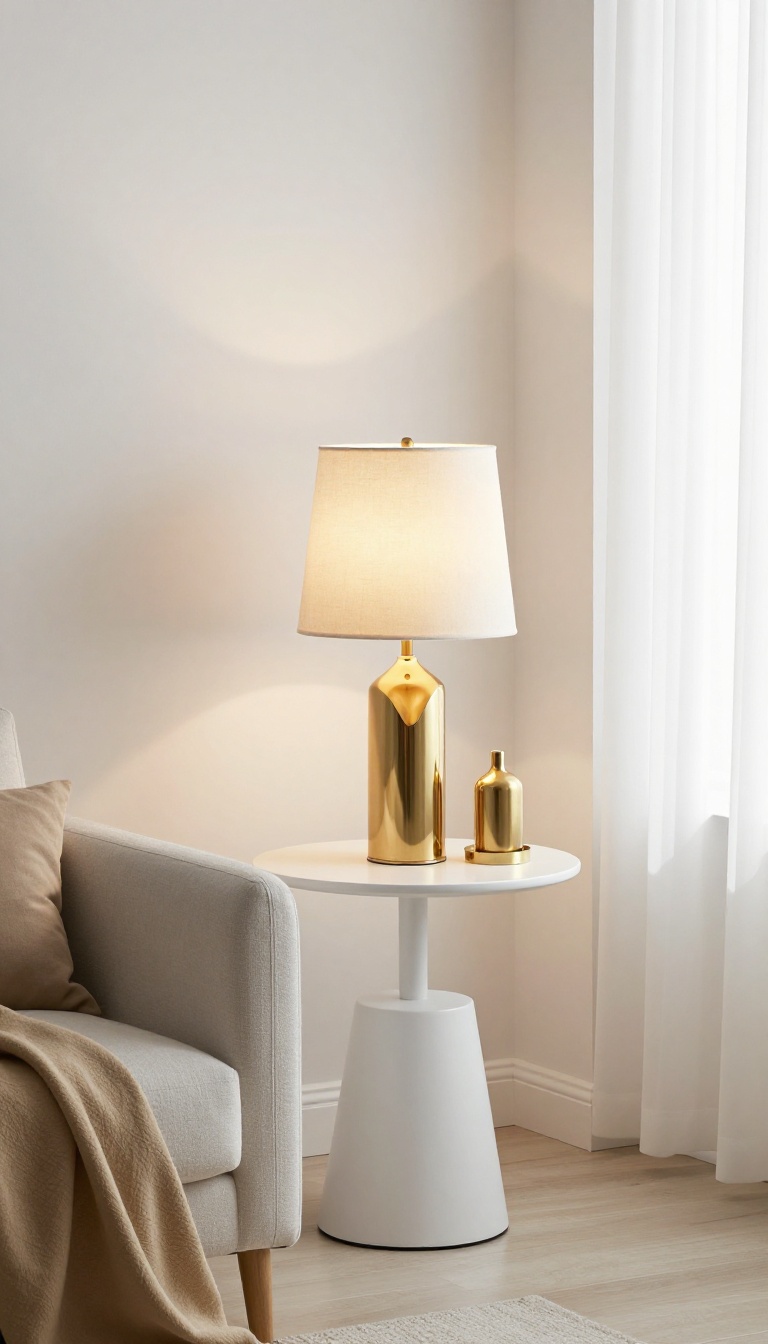
Table lamps don't get nearly enough credit in living room design. They're often treated as an afterthought, something you grab at the last minute to fill an empty side table. But in a white and gold room, a well-chosen gold table lamp can be the difference between a space that feels flat and one that feels layered, warm, and intentional.
Think about it: overhead lighting alone can make even the most beautiful room feel a little clinical. Table lamps add pools of soft light at eye level, which instantly makes a space feel cozier and more inviting. And when those lamps are gold, they double as sculptural accents that tie your metallic theme together.
The best part? You don't need to rewire anything or hire an electrician. Just pick the right lamps, place them thoughtfully, and watch how much they change the mood.
Gold table lamps are one of those rare decor pieces that work hard in two ways. They provide functional light, sure, but they also act like jewelry for your side tables. In a white and gold living room, they bridge the gap between softness and shine.
A white lamp base can blend into the background, and a black one can feel heavy. Gold, on the other hand, catches the light and adds a subtle glow even when the lamp is off. It's a small detail that makes a big difference.
You can go sleek and modern with a slim brass column, or lean traditional with a sculpted base and a linen shade. Either way, the gold finish keeps things elegant without screaming for attention.
Choosing The Right Shade
The shade matters as much as the base. A white or cream linen shade keeps the look soft and diffuses light beautifully. Avoid shades with dark linings unless you want a more dramatic, focused glow.
Size-wise, the shade should be about two-thirds the height of the base. Too small and it looks off; too large and it overwhelms the lamp. A simple drum or classic empire shape works in almost any white and gold room.
Placement That Works
Put a gold table lamp on each side of your sofa if you have the space. Symmetry feels calm and polished. If your room is smaller, one lamp on a console behind the sofa or on a corner side table can be enough.
Height matters too. The bottom of the shade should sit around eye level when you're seated, so the light doesn't glare. Aim for a lamp that's roughly 26 to 32 inches tall for standard side tables.
Bulbs And Brightness
Use warm white bulbs—around 2700K—to keep the light cozy. A 60-watt equivalent LED bulb is usually plenty for ambient lighting. If you want a softer glow, go with a dimmable bulb and a lamp with a built-in dimmer or a smart plug.
Avoid cool or daylight bulbs here. They'll fight the warm gold tones and make the room feel stark instead of soft.
13. Finish with Gold Hardware and Trim
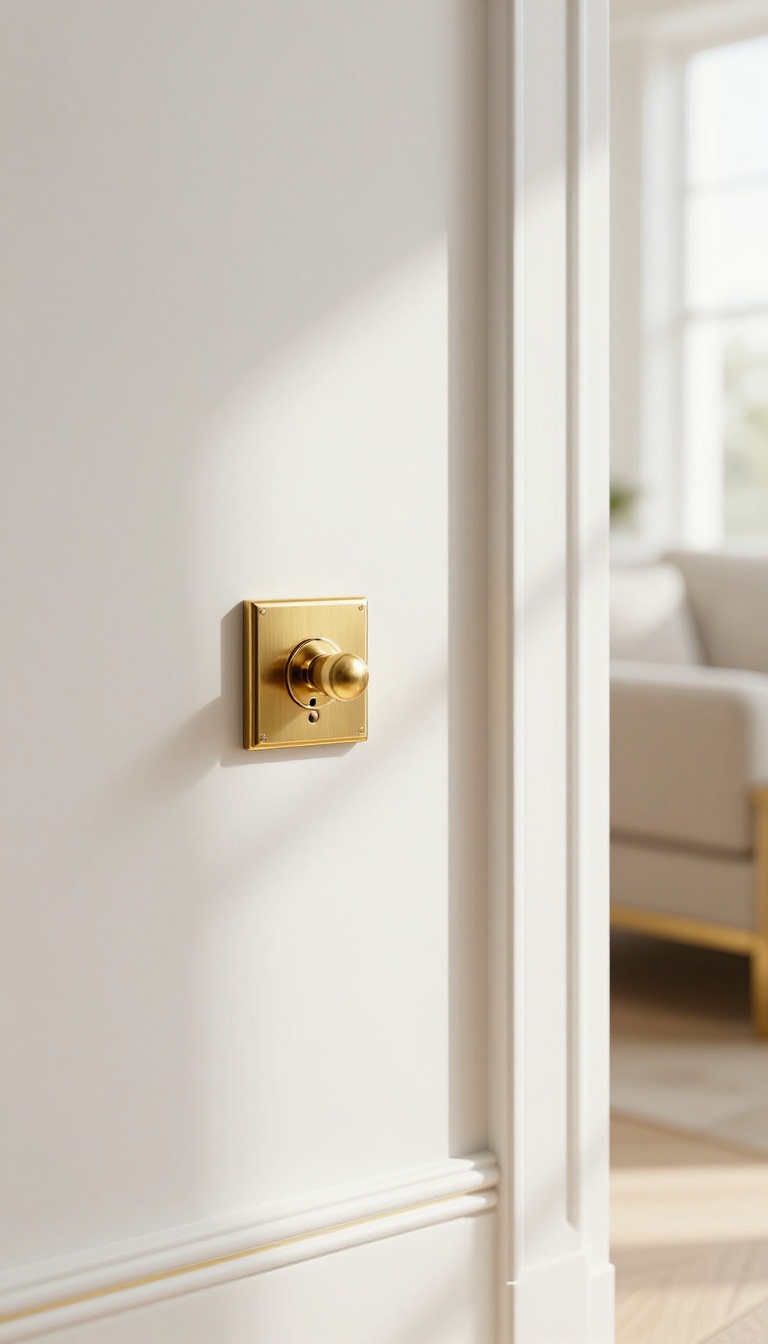
You've styled the furniture, layered the textiles, and hung the art. But if your light switch plates are still basic builder-grade beige or white plastic, the room feels unfinished. Gold hardware and trim are the final punctuation mark that tells everyone this space was designed with intention.
This isn't about replacing every door hinge or crown molding in your house. It's about the small, high-impact details that live at eye level and hand level—the things you touch and see every single day. Switching them out takes an afternoon and costs less than a new accent chair.
The best part? These tiny metallic moments tie every other gold element in the room together. They make the whole scheme feel deliberate rather than accidental.
Start by walking through your living room and touching every switch and outlet. Those little rectangles are the most overlooked real estate in any home. Replacing them with brushed gold or antique brass covers instantly elevates the walls without a single drop of paint.
Next, look at your trim. Baseboards, door casings, and window frames are usually painted white—which is fine—but adding a thin gold line or swapping out the hardware on doors and windows creates a subtle shimmer. You don't have to go full glam.
Even a gold doorstop or a brass air vent cover adds a whisper of luxury. Finally, think about the transition points. Where the floor meets the wall, where the door meets the frame, where the light switch meets the drywall.
Those intersections are where cheap looks live. Gold finishes there signal that you care about the details, and that's what separates a nice room from a truly elegant one.
Switch Plates And Outlet Covers
These are the easiest swaps in the entire room. Unscrew the old plastic plate, screw on a new metal one, and you're done in under two minutes per plate. Brushed gold hides fingerprints better than polished brass, so it's a smart choice for high-traffic areas.
Look for screwless designs if you want an ultra-clean, seamless look. Just make sure you turn off the power at the breaker before you start—safety first, glam second.
Door And Window Hardware
Door knobs, hinges, and window latches are like jewelry for your architecture. If your doors are white, gold knobs create a crisp contrast that feels intentional. If your doors are wood, antique brass adds warmth without competing.
You can also swap out curtain rod finials or tiebacks for a gold version. It's a small change that catches the light and makes the whole room feel more polished.
Trim Accents And Vents
Painting your baseboards white is classic, but adding a thin gold pinstripe along the top edge is a designer trick that adds subtle dimension. You can also replace standard floor vents with brass or gold-finished ones. They're functional, but they double as tiny metallic accents that tie the floor to the walls.
And don't forget doorstops—a heavy brass one looks like a sculpture instead of a rubber wedge.
FAQ
What shade of white works best with gold in a living room?
Warm whites like cream, ivory, or soft off-white work best because they complement gold's warmth without clashing. Pure white can feel too stark and make gold look yellow.
How can I add gold without making the room look tacky?
Use gold in moderation—focus on a few key pieces like a mirror, lamp, or hardware. Mixing finishes (like brushed gold with matte black or wood) also keeps it balanced.
Is white and gold a good color scheme for small living rooms?
Yes, it's actually ideal. White opens up the space, and gold reflects light, making the room feel larger and brighter. Just avoid heavy gold patterns.
What furniture styles pair well with white and gold?
Glam, modern, and transitional styles work best. Look for clean lines, tufted details, and metallic accents. Avoid rustic or heavy traditional pieces.
How do I clean and maintain gold accents?
Dust regularly with a soft cloth. For metal surfaces, use a gentle cleaner or a mix of mild soap and water. Avoid abrasive cleaners that can scratch the finish.
Conclusion
White and gold living rooms work because they stay flexible. Start with one idea that fits your space, like a gold mirror or a warm white paint, then build slowly from there. You can always layer in more shine later.
Keep the gold balanced and the whites varied so nothing feels flat. A few well-chosen pieces usually beat a room full of them. Once it feels soft, bright, and a little glam, you are done.