10 Green Velvet Couch Living Room Ideas Full of Luxe Charm
A green velvet couch changes a living room the second it lands. The color alone adds depth, and the velvet brings a softness that plain fabric just can't match. The tricky part is everything around it.
Get the surrounding pieces right and the sofa looks intentional and expensive. Get them wrong and it can read heavy, dark, or out of place. The good news is you don't need a designer or a full remodel.
These ten ideas show you how to build a room that lets the couch lead without letting it swallow the space. Each one tackles a different piece of the puzzle, from color and texture to lighting and layout.
1. Pair with Warm Neutrals for a Balanced Look
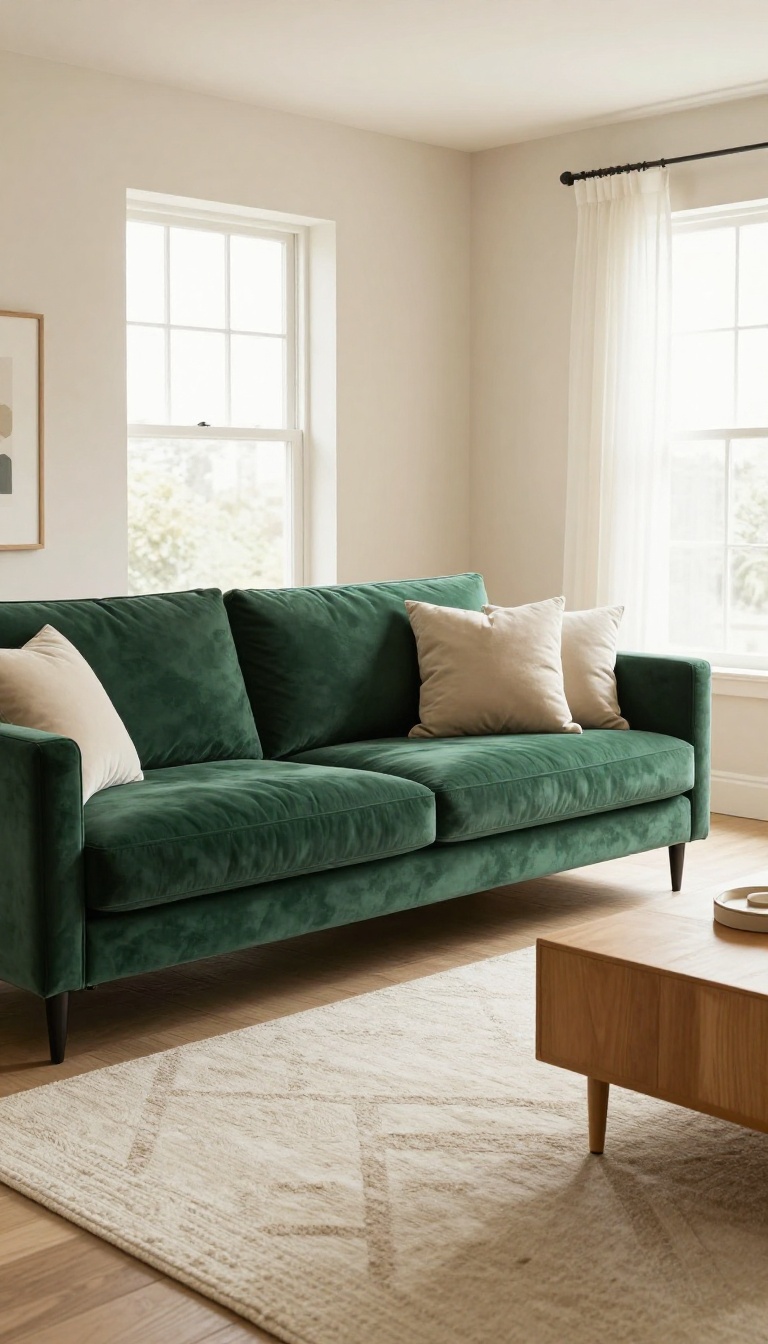
Green velvet is a showstopper, but it doesn't need to compete with every other piece in the room. Warm neutrals—think beige, cream, and soft tan—give the couch room to breathe while keeping the space inviting. This combo works because the green stays the star, and the neutrals quietly support it.
Start with the walls. A warm beige or creamy white creates a soft backdrop that makes the green pop without feeling jarring. Avoid cool grays or stark whites—they can make the velvet look colder and less inviting.
If you want a bit more depth, try a light tan or greige, which adds warmth without stealing attention. Next, ground the space with a neutral rug. A cream or beige area rug under the couch ties everything together and prevents the green from floating.
Look for a subtle texture, like a low-pile weave or a faint geometric pattern, to add interest without competing. Finally, layer in neutral accents. Throw pillows in oatmeal, ivory, or soft camel blend seamlessly.
A tan leather ottoman or a light wood coffee table continues the warm, balanced feel. The goal is harmony, not matchy-matchy—so mix tones and textures within the neutral family.
Choose The Right Wall Color
Warm beige, cream, or light tan walls create a soft contrast that lets the green velvet stand out. Skip cool grays or bright whites, which can clash with the warmth of the velvet. A matte finish keeps the look cozy and understated.
Ground With A Neutral Rug
A beige or cream rug anchors the seating area and balances the intensity of the green. Opt for a subtle pattern or texture to add depth without distracting. Size matters: go large enough to fit under the front legs of the couch and extend beyond.
Add Warm Accents
Pillows, throws, and small furniture in oatmeal, camel, or soft brown tie the room together. Mix materials like cotton, wool, and leather for a collected, lived-in feel. Keep the palette tight so the green remains the focal point.
2. Add Brass and Gold Accents for a Touch of Glam
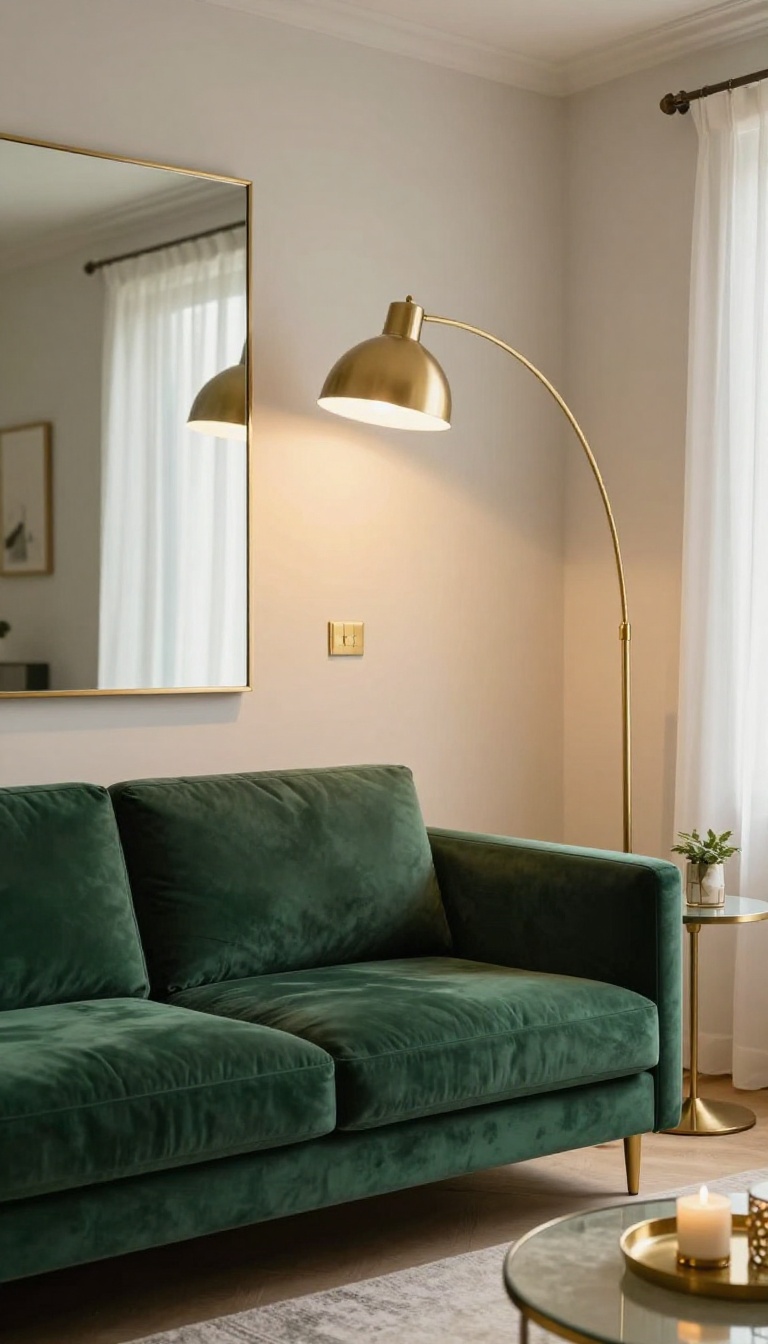
Green velvet already feels rich, but it gets even better when you pair it with warm metallics. Brass and gold catch the light in a way that makes the deep green look almost jewel-like. You don't need to go overboard—just a few well-placed pieces will do the trick.
Think of metallics as the jewelry of your living room. They add sparkle without competing with the couch. The key is to choose finishes that feel warm and slightly aged, not shiny and new.
The trick is to spread the metallic love around the room. A little here, a little there, and suddenly the whole space feels more polished. Here's how to do it without making your living room look like a trophy case.
Lighting That Shines
Swap out your lamp shades for brass or gold ones, or choose a floor lamp with a slim metallic base. A brass arc lamp behind the couch adds a sculptural touch and throws warm light right where you need it. Even small changes, like a gold-finished switch plate, can make a difference.
Frames And Mirrors
Hang a large mirror with a thin brass frame above the sofa. It bounces light around and makes the green velvet pop. For artwork, choose simple gold frames—they act like a border that ties the room together.
Just keep the art itself calm so the metallics can do the talking.
Tables And Trim
A brass side table next to the couch adds a hit of glam without taking over. Look for one with a glass top so it doesn't feel heavy. If you have a coffee table, consider swapping the hardware or adding a gold tray to corral remotes and candles.
Even the legs of a console table can bring in that metallic warmth.
3. Layer in Rich Jewel Tones for a Moody Vibe
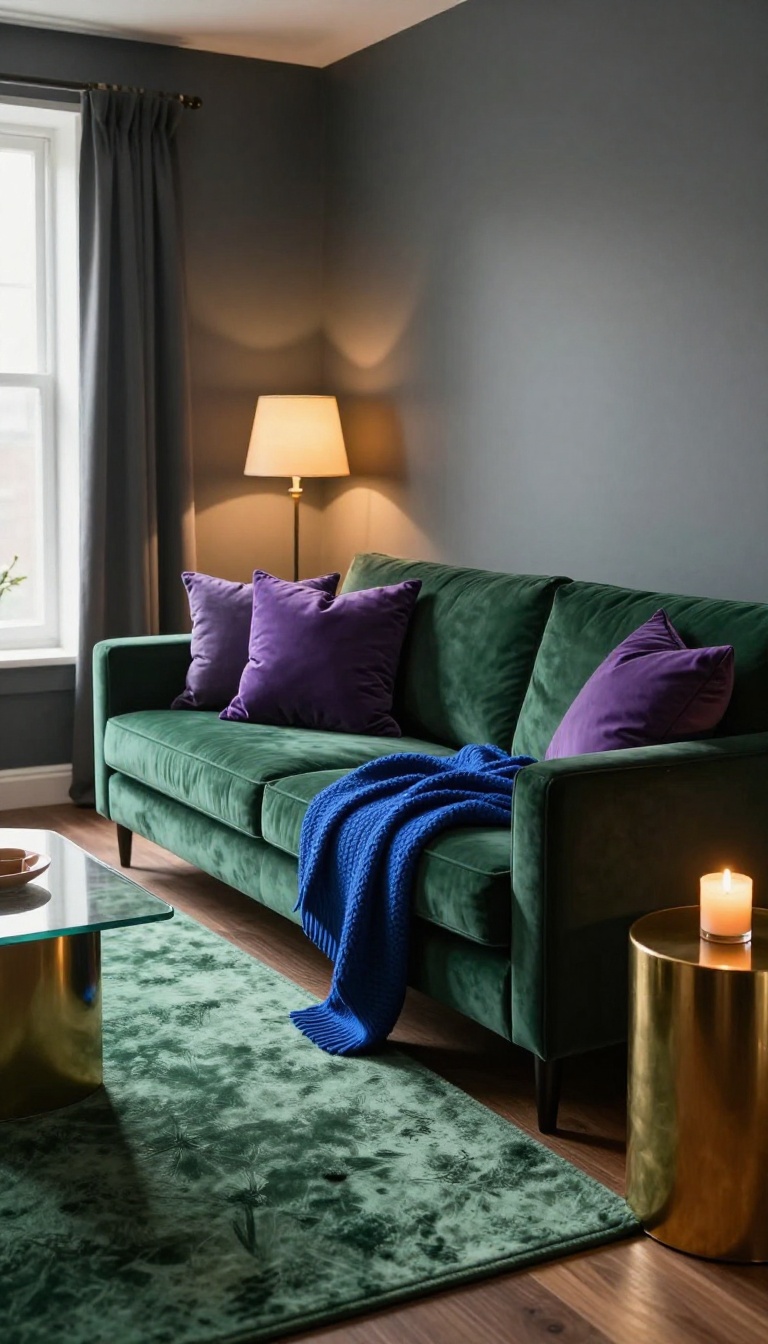
Green velvet already has a natural depth, so leaning into darker, saturated colors around it can feel like wrapping the room in a warm, dramatic hug. Jewel tones like emerald, sapphire, and amethyst don't fight the couch—they amplify its richness and create a cozy, evening-ready atmosphere. The trick is balancing those deep hues with enough light and texture so the space feels inviting, not cave-like.
Start by picking one or two jewel tones to weave in as accents. You don't need to drench every surface. A sapphire throw, amethyst pillows, or an emerald area rug can be enough to set the mood.
Keep the base neutral—think charcoal, cream, or warm taupe—so the colors pop without overwhelming the green velvet. Lighting plays a huge role here. Moody doesn't mean dark.
Add a mix of warm table lamps, a floor lamp with a dimmer, and maybe a candle or two. The glow bounces off the velvet and makes the jewel tones shimmer instead of sink. Texture keeps the look from feeling flat.
Velvet on velvet can get heavy, so mix in smooth leather, shiny brass, or a chunky knit throw. A glass coffee table or mirrored side table will also reflect light and break up the density. Finally, don't forget the ceiling and floor.
A deep teal or plum accent wall behind the couch can frame it beautifully, while a patterned rug with hints of emerald and sapphire ties everything together. Just keep the pattern subtle so it doesn't compete with the couch.
Pick Your Jewel Tones Wisely
Emerald, sapphire, and amethyst are the classics, but you can also play with ruby, topaz, or even deep teal. Choose one as your main accent and a second as a supporting player. For example, sapphire curtains with amethyst pillows.
This keeps the palette cohesive without feeling like a rainbow.
Balance With Neutrals And Light
A moody room still needs breathing room. Use neutral walls, a light-colored rug, or sheer curtains to let natural light in during the day. At night, layer in warm artificial light.
The contrast between the deep jewel tones and the lighter elements keeps the space from feeling like a dungeon.
Mix Textures To Add Depth
Combine the velvet couch with smooth metals like brass or copper, soft wool throws, and maybe a glossy ceramic vase. Texture variation makes the jewel tones feel intentional and rich, not flat. It also adds a tactile quality that invites people to sit and stay awhile.
4. Keep It Airy with Light Wood and White
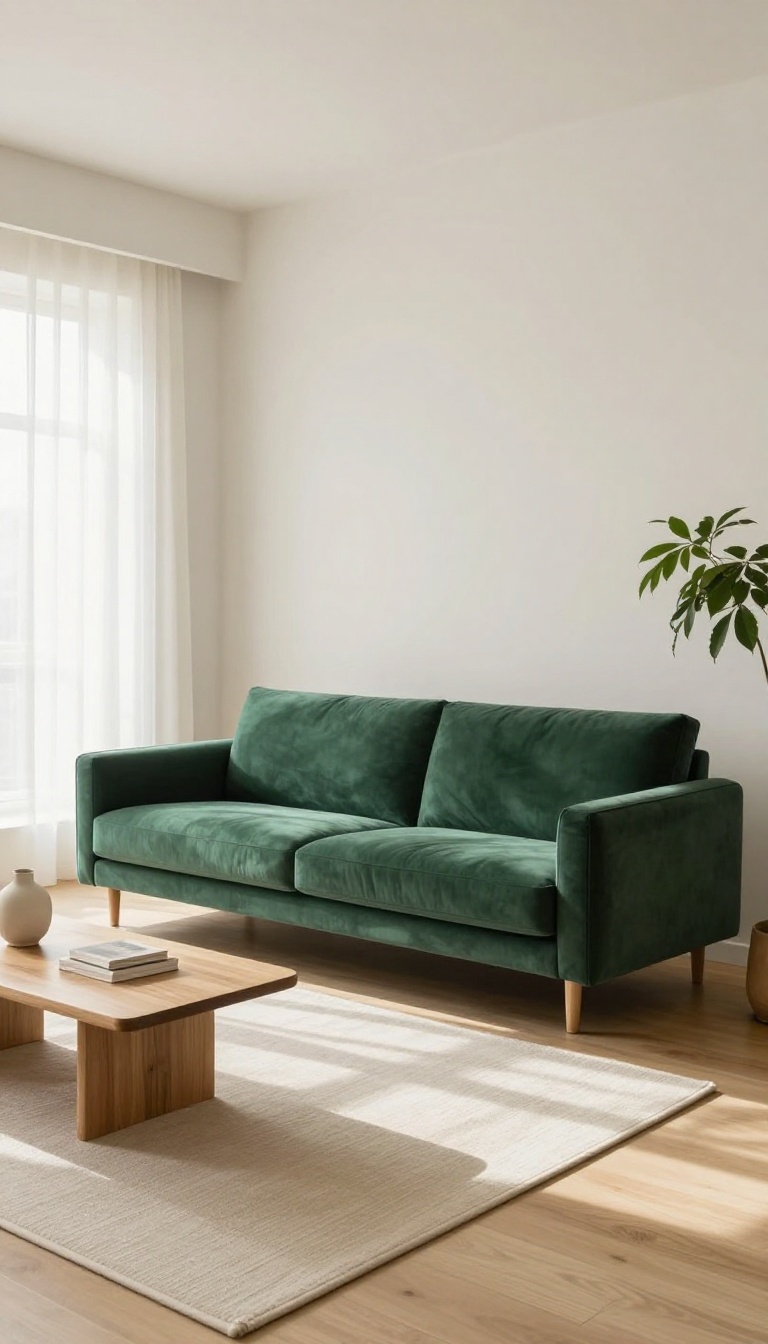
A green velvet couch can feel like a heavy anchor in a small or dim room. But you don't have to fight its weight with more dark colors. Instead, lighten everything around it.
Pale floors, white walls, and a few well-chosen pieces create a fresh, open feel that lets the couch shine without overwhelming the space.
Think of this approach as giving your couch room to breathe. The goal is contrast, not competition. Light surfaces reflect more light, making the room feel bigger and brighter.
That brightness balances the richness of the velvet, so the couch reads as luxurious rather than heavy. You'll want to keep the palette simple: whites, creams, and light woods like oak, ash, or birch. Add a few natural textures and maybe a touch of green from plants to tie it all together.
The result is a space that feels calm, modern, and effortlessly chic.
Start With The Floor
Light wood flooring is your best friend here. It instantly brightens the room and provides a warm, natural base that complements green velvet. If you have dark floors, add a large, light-colored rug—think ivory, beige, or pale gray—to break up the darkness.
Avoid heavy, dark rugs that swallow the light. A flat-weave or low-pile rug in a light tone keeps things airy and makes the couch pop.
Go White On The Walls
White walls might sound boring, but they're actually the perfect backdrop for a statement couch. They reflect light and make the green velvet feel like a piece of art. Choose a warm white or soft cream to avoid a sterile look.
If you want a bit more depth, try a very pale gray or a subtle off-white. Just keep it light enough to maintain that open, airy vibe.
Keep Decor Minimal And Light
Skip the heavy curtains and bulky furniture. Instead, opt for sheer white curtains that let light pour in. Choose a glass or light wood coffee table with slim legs to keep the space feeling uncluttered.
For accents, add a few small potted plants, a light-colored throw, and maybe a metallic or glass lamp. Less is more here—every piece should feel intentional and not weigh down the room.
5. Mix Textures with Chunky Knits and Leather
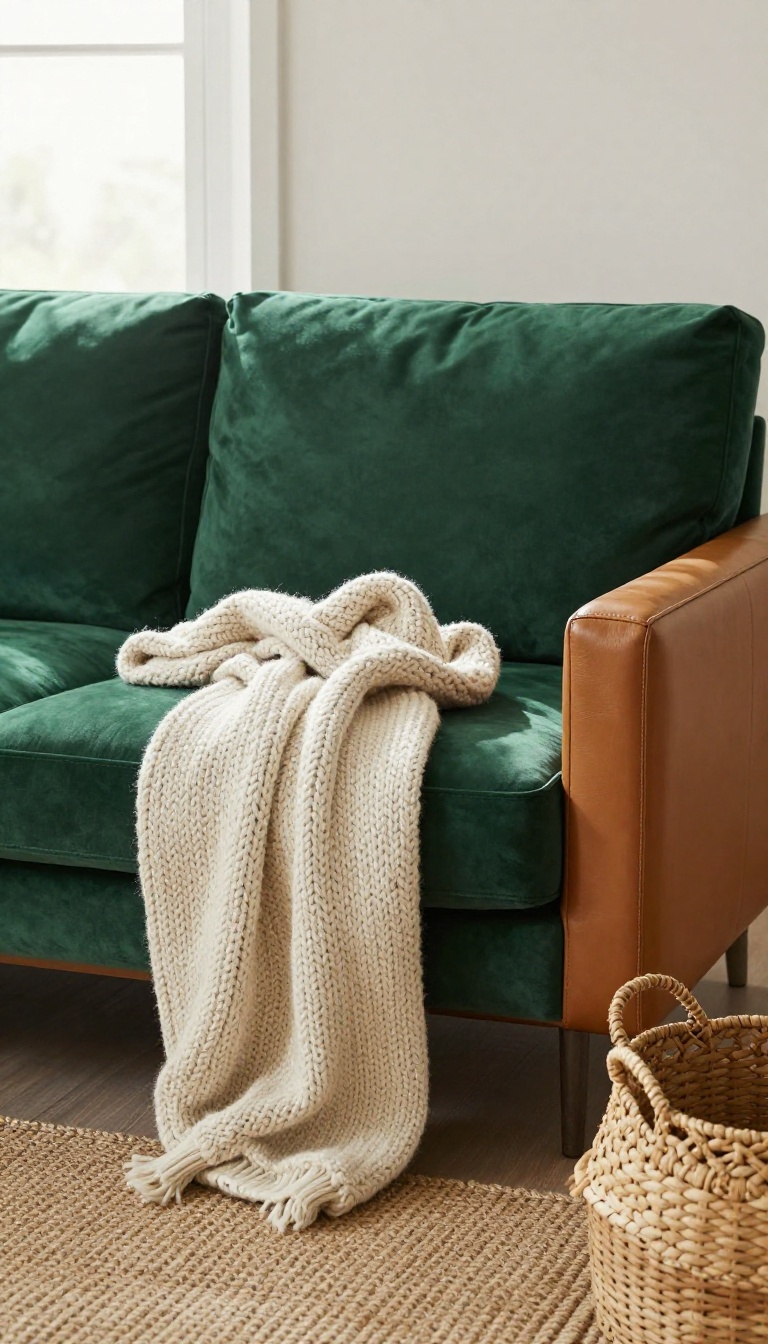
Velvet is famously smooth, which is exactly why it can start to feel one-note if everything around it is smooth too. The fix is simple: bring in textures that push back. Chunky knits, worn leather, and woven baskets all give the eye something different to land on, and they make the velvet look even richer by comparison.
You don't need to overhaul the room to make this work. A single throw or one leather chair can change how the whole couch reads. The goal is contrast, not clutter, so pick two or three textures and let them do their job.
Start With A Chunky Knit Throw
Drape a thick, oversized knit blanket over one arm or the back of the couch. The nubby, uneven surface of the yarn contrasts beautifully with velvet's sheen, and it adds instant coziness. Choose cream, oatmeal, or a soft sage so the green stays the star.
A throw also softens the sofa's formal edge, making it feel more lived-in and less showroom.
Add A Leather Chair Or Ottoman
Leather brings a sleek, slightly glossy finish that plays well against velvet's matte softness. A caramel or cognac leather chair near the couch warms up the green without competing with it. If a full chair feels like too much, try a leather ottoman or a pair of leather cushions.
The mix of smooth and supple textures adds depth without adding visual noise.
Work In Woven Baskets And Natural Fiber
Woven baskets, jute rugs, and rattan side tables introduce a rougher, organic texture that grounds the room. Place a large basket next to the couch for blankets or magazines, or layer a jute rug under the seating area. The natural fibers break up the polish of velvet and leather, keeping the space from feeling too precious.
Just keep the tones neutral so the green remains the focal point.
Balance The Contrast
Too many competing textures can make a room feel busy. Stick to a simple rule: one smooth texture (velvet), one soft and nubby (knit), and one sleek or rough (leather or woven fiber). Repeat each texture at least once around the room to create rhythm.
When the contrasts feel intentional, the green velvet couch looks curated rather than accidental.
6. Use a Gallery Wall to Frame the Couch
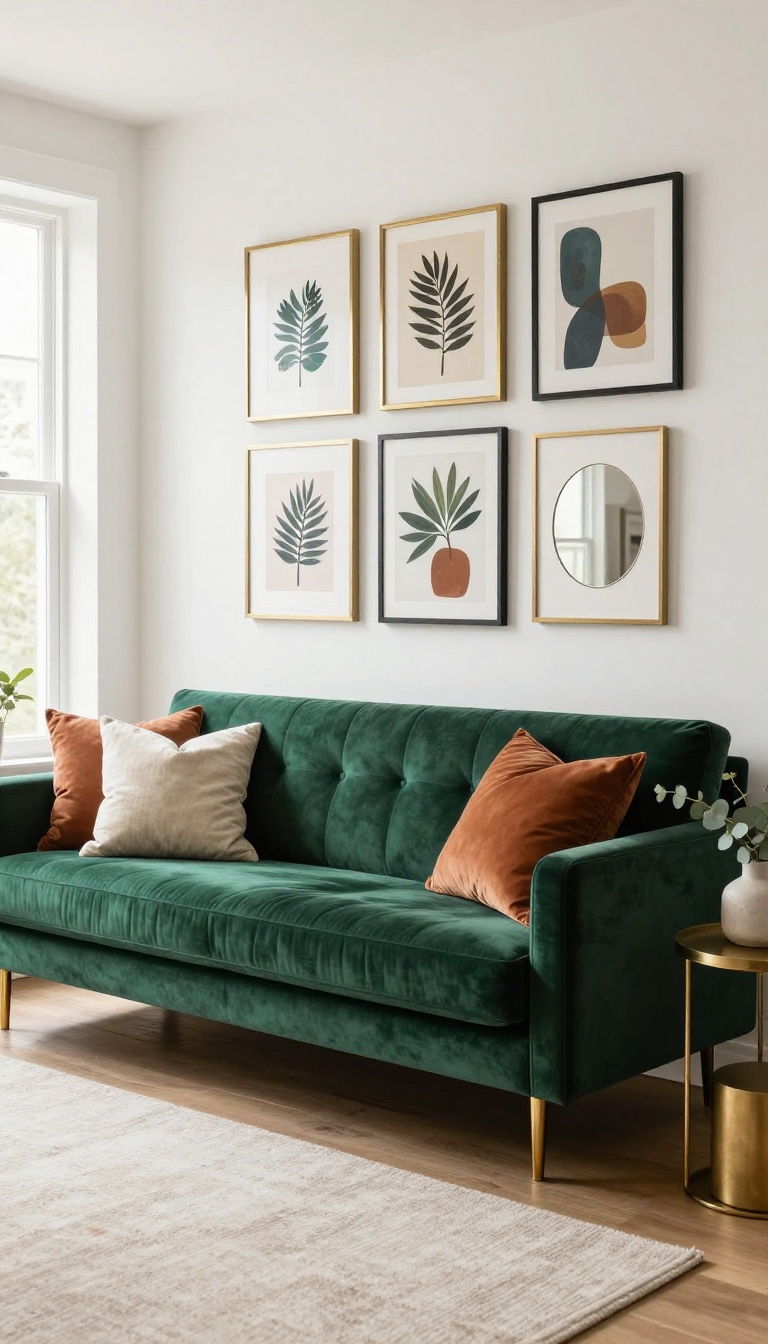
A gallery wall above a green velvet couch does more than fill empty space. It draws the eye upward, balances the visual weight of the sofa, and gives the room a personal, collected feel. The key is to choose art that complements the green without competing with it.
You don't need a dozen pieces or a perfect grid. A few well-chosen frames in the right colors and sizes can make the couch look intentional and the wall look finished. Think of the gallery wall as a frame for your sofa—it should enhance, not overwhelm.
Start by deciding on a layout. A symmetrical grid feels calm and classic, while an organic arrangement feels relaxed and modern. Both work with a green velvet couch, so pick the one that matches the rest of your room's vibe.
Next, choose art that plays well with green. You can go tonal with shades of green, blue, and teal, or add contrast with warm tones like blush, mustard, or rust. Metallics in the frames—brass, gold, or black—can tie everything together.
Keep scale in mind. The art should span about two-thirds the width of the couch, and the bottom edge should sit 6 to 10 inches above the sofa back. This creates a connection between the furniture and the wall without crowding.
Finally, don't be afraid to mix mediums. Photos, prints, and even a small mirror or sculptural piece can add texture and interest. The goal is a wall that feels layered and personal, not like a store display.
Choosing Colors That Complement Green
Green velvet can lean cool or warm depending on the shade. For cool greens, try art with blues, grays, and whites. For warm olives or emeralds, lean into golds, creams, and earthy reds.
A little contrast keeps the wall from blending into the couch.
Layouts That Work Above A Sofa
A grid of four or six frames is foolproof. For a looser look, start with a large anchor piece and build outward. Just keep the spacing consistent—2 to 3 inches between frames—so it looks intentional.
Frames And Finishes
Matching frames create a clean, modern look. Mixed frames feel more eclectic. Either way, repeat at least one element—like frame color or matting—to keep the wall cohesive.
Brass and black are safe bets with green velvet.
7. Choose a Bold Rug to Ground the Seating Area
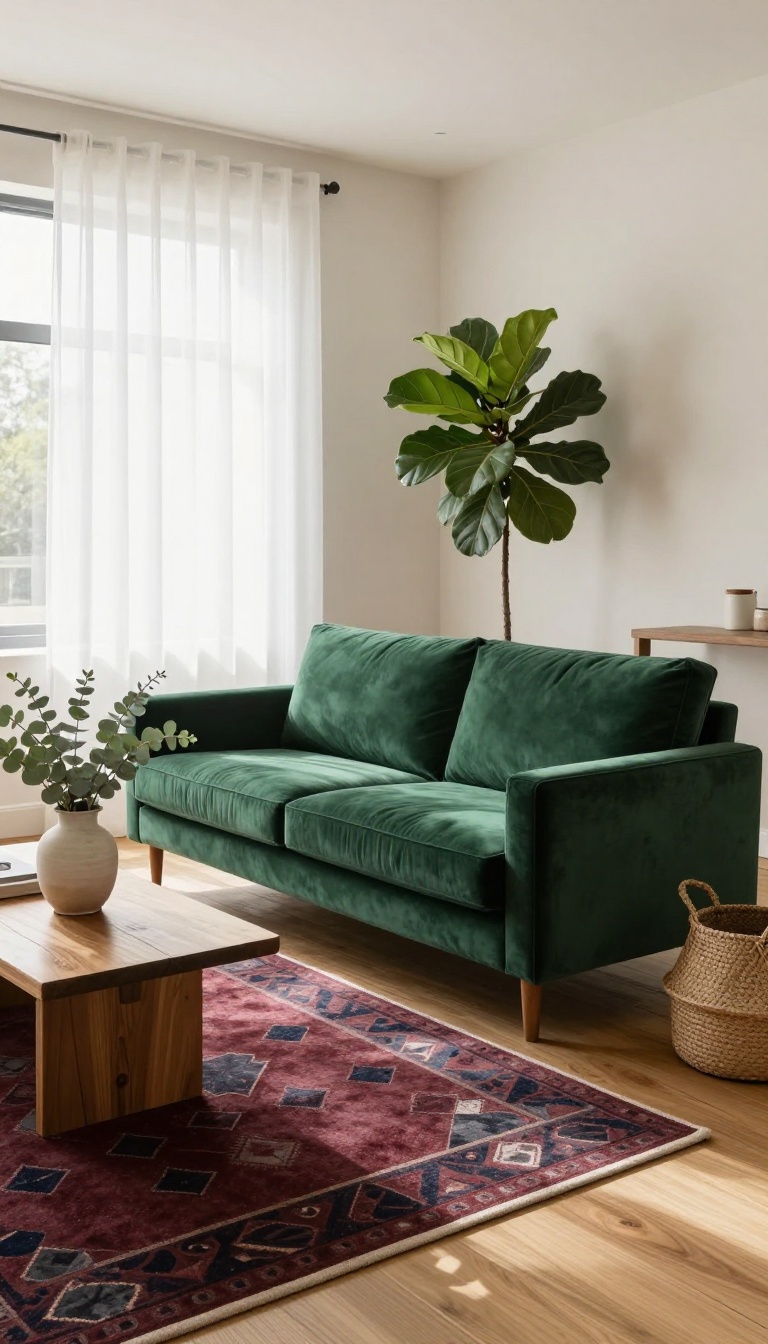
A green velvet couch floating on a bare floor can feel unmoored, no matter how beautiful it is. The right rug fixes that instantly. It gives the seating area a defined edge and pulls the eye down, so the couch reads as part of a complete scene rather than a lone statement piece.
Pick something with pattern or punch, and the whole room tightens up.
Think of the rug as the stage your couch performs on. Without it, the furniture can look like it's hovering in space. With it, everything feels deliberate.
The key is choosing a rug that contrasts with the velvet in a way that feels intentional, not accidental. A bold rug also solves a common problem with green velvet: it can dominate a room if nothing else holds its own. A strong pattern or a saturated color gives the couch a partner, not a competitor.
The two elements balance each other out, and the room feels layered instead of flat.
Why Pattern Beats Plain
A solid rug in a neutral tone can work, but it often fades into the background. That leaves the couch doing all the talking, which can feel heavy. A patterned rug—think geometric, floral, or even a distressed vintage look—adds visual texture without competing with the velvet's softness.
It breaks up the solid block of color underfoot and gives the eye something to explore. Just keep the pattern scale in mind. A small, busy print can get lost under a large couch.
Go bigger with the motif so it holds its own.
Color Combinations That Work
Green velvet plays well with a surprising range of rug colors. For a rich, moody look, try deep burgundy, navy, or charcoal with a subtle pattern. If you want something brighter, a rug with warm terracotta, mustard, or blush tones adds a lively contrast.
For a calmer vibe, a cream and green rug with a soft geometric pattern keeps things airy. The trick is to pick one or two colors from the rug that echo elsewhere in the room—throw pillows, art, or a lamp—so it all feels connected.
Size And Placement Matter
A rug that's too small makes the couch look like it's sitting on a postage stamp. You want at least the front legs of the couch on the rug, and ideally the whole seating group anchored within its edges. In a living room, that usually means an 8×10 or 9×12, depending on your space.
Leave a border of bare floor around the rug to frame the area. And don't forget a rug pad—it keeps things from sliding and adds a little cushion underfoot.
8. Incorporate Plants for a Natural, Organic Touch
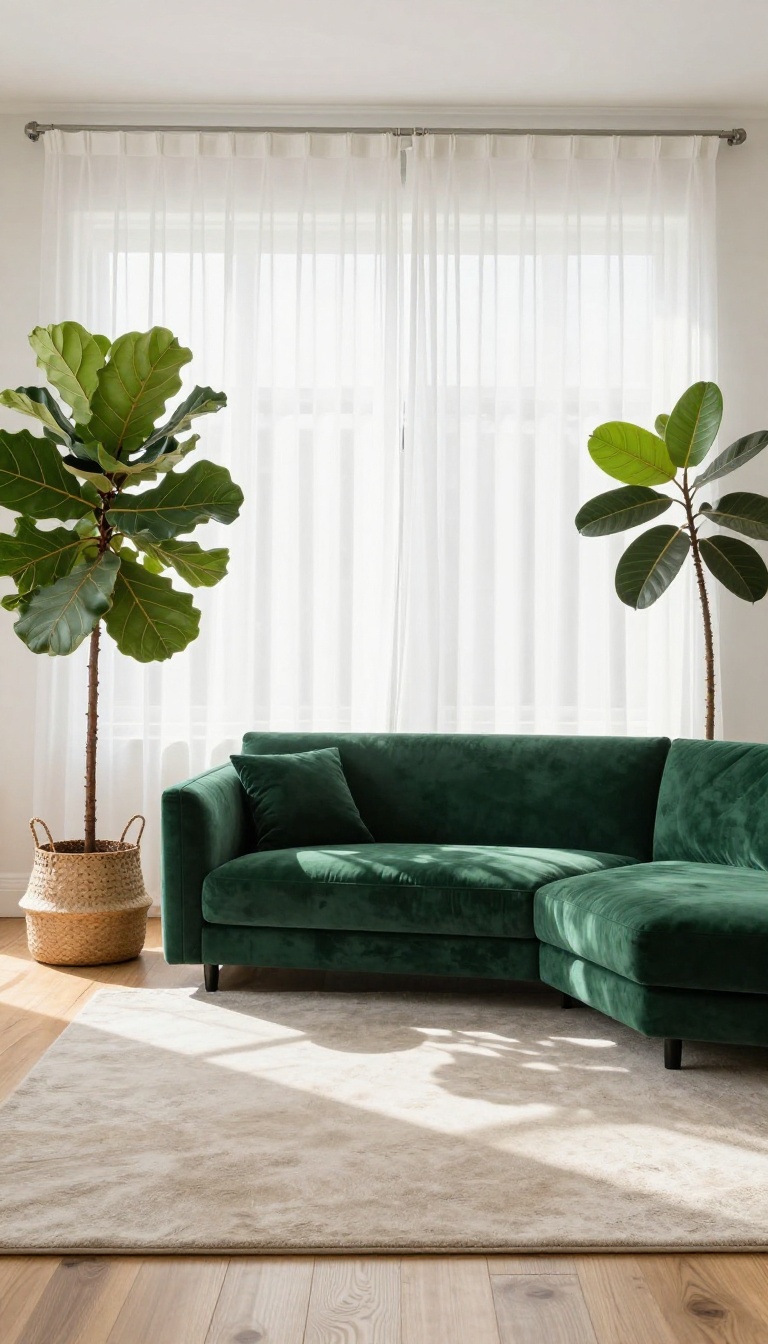
Plants bring a green velvet couch down to earth. That might sound odd for a piece of furniture that already leans glam, but it's exactly why they work. Velvet can feel formal and a little untouchable, and living greenery softens that edge without dulling the luxury.
There's also a color story happening. Leafy greens echo the couch in a looser, more organic way, so the room reads layered instead of matchy. You get depth, texture, and a little life moving through the space.
The trick is choosing plants that suit the room's light and scale, then placing them where they frame the couch rather than crowd it.
Pick Plants That Flatter Green Velvet
Not every plant plays nicely with velvet. You want leaves with enough presence to hold their own next to a rich, saturated fabric. Big, architectural plants like fiddle leaf figs, rubber trees, and bird of paradise work well because their bold shapes balance the couch's softness.
If your green velvet leans emerald or forest, plants with darker foliage feel cohesive. If it's more sage or olive, lighter greens and variegated leaves add contrast without clashing. Avoid anything too delicate or spindly.
Thin, wispy plants get lost beside velvet's weight.
Placement That Frames The Couch
A plant on each side of the sofa creates a natural frame and anchors it in the room. Go for height on at least one side, like a tall floor plant, and keep the other lower if you want a more relaxed feel. Corner placement works when the couch sits against a wall.
If the sofa floats in the room, a plant behind it can define the zone without a console table. Just don't block sightlines or walkways. The goal is to make the couch look settled, not hidden.
Mix Heights, Textures, And Pots
One tall plant and one small one is fine, but a mix feels more collected. Try a floor plant, a mid-size plant on a stool, and a trailing plant on a shelf or mantel. Pots matter too.
A woven basket softens the look, while a ceramic or brass planter adds polish. Mixing two or three finishes keeps it interesting without turning into a plant store display. If you're short on floor space, hanging planters near a window pull the eye up and keep the area around the couch open.
9. Go Monochromatic with Shades of Green
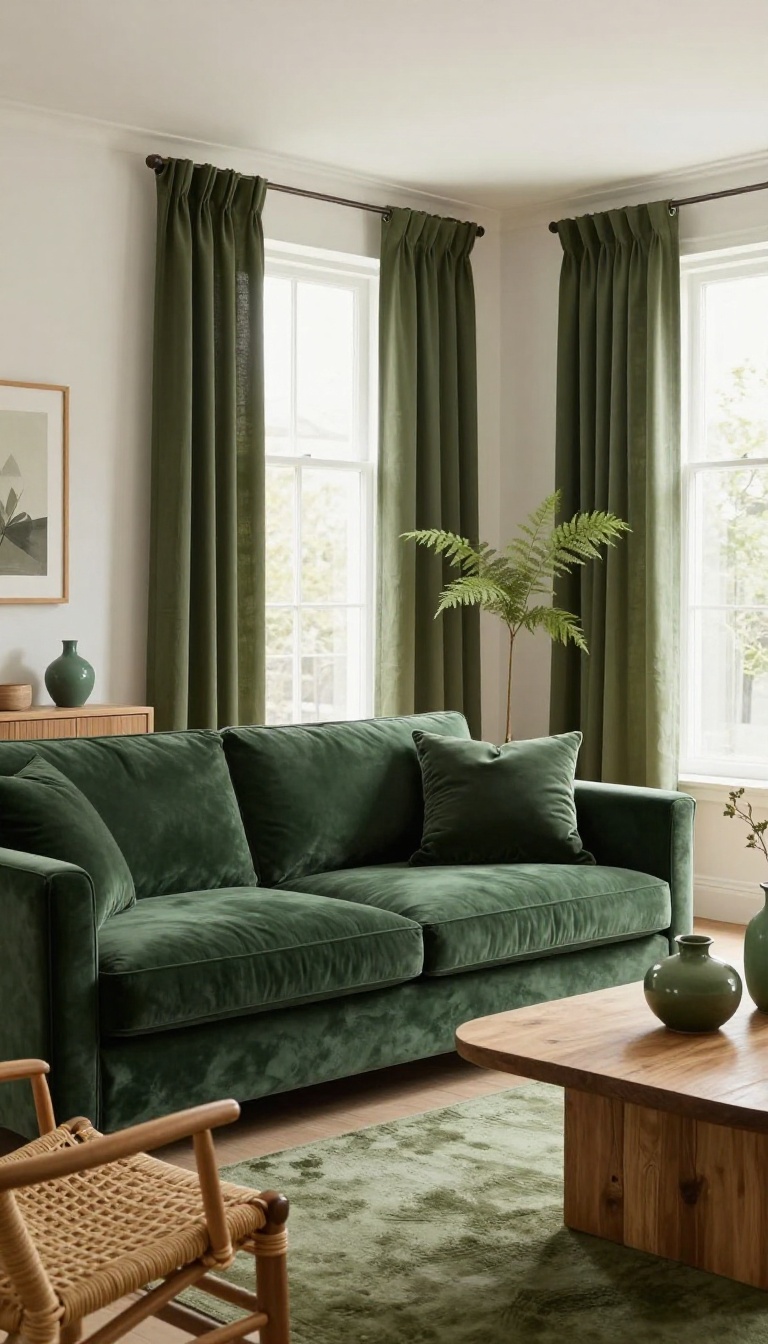
One color doesn't have to mean one note. When you work entirely within the green family, you get a room that feels calm, curated, and surprisingly rich. The trick is layering different shades so the eye has somewhere to travel.
Think of it like a forest: moss on the ground, ferns in the middle, and deep pines overhead. Your green velvet couch sits somewhere in that mix, and everything else supports it. The result is cohesive without being boring.
A monochromatic green scheme works because it removes the guesswork of matching unrelated colors. You're not hunting for the perfect complementary hue or worrying about clashing undertones. Instead, you're playing with depth, texture, and light within a single family.
Start by identifying the exact shade of your couch. Is it a cool emerald, a warm olive, or a soft sage? That becomes your anchor.
From there, you'll pull lighter and darker greens that share the same undertone—warm with warm, cool with cool. Mixing undertones is the fastest way to make a monochromatic room look off. Once your palette is set, texture does the heavy lifting.
Velvet, linen, wool, and ceramic all reflect light differently, so even same-color pieces feel distinct. Add a few natural materials like wood or rattan to keep things from feeling too matchy.
Build Your Green Palette
Pick three to five greens that range from light to dark. A common mistake is choosing shades that are too similar in value—they'll blur together. Instead, go for contrast: a pale sage wall, a mid-tone olive rug, and a deep forest throw.
Your velvet couch can sit anywhere in that range, but it usually works best as the richest or most saturated piece. Test swatches in the room at different times of day. Green shifts dramatically depending on natural versus artificial light.
What looks like a soft eucalyptus in the morning can turn gray by evening. Once you've got your palette, commit to it—monochromatic rooms reward confidence.
Layer Textures, Not Just Tones
If everything in the room is velvet, the space will feel flat. Break it up with a chunky knit blanket, a smooth leather ottoman, or a woven jute rug. Each texture catches light differently, which adds dimension without adding new colors.
Metallics count as texture, too. Brushed brass or aged bronze picks up the green and makes it glow. Keep hardware consistent—mixing metals can muddy the calm you're building.
A single finish repeated across lamps, frames, and drawer pulls feels intentional.
Keep The Room From Going Flat
All-green rooms can start to feel like a cave if you're not careful. Balance the depth with plenty of white or cream—trim, ceiling, lampshades, or a light-colored throw. These neutral breaks give the eye a rest and make the greens pop.
Mirrors help, too. A large mirror reflects light and doubles the visual space, which keeps a dark green scheme from feeling heavy. Place one opposite a window if you can.
And don't forget lighting: warm bulbs bring out the richness in green, while cool bulbs can make it look sickly. Stick with 2700K to 3000K.
10. Add a Statement Light Fixture Above
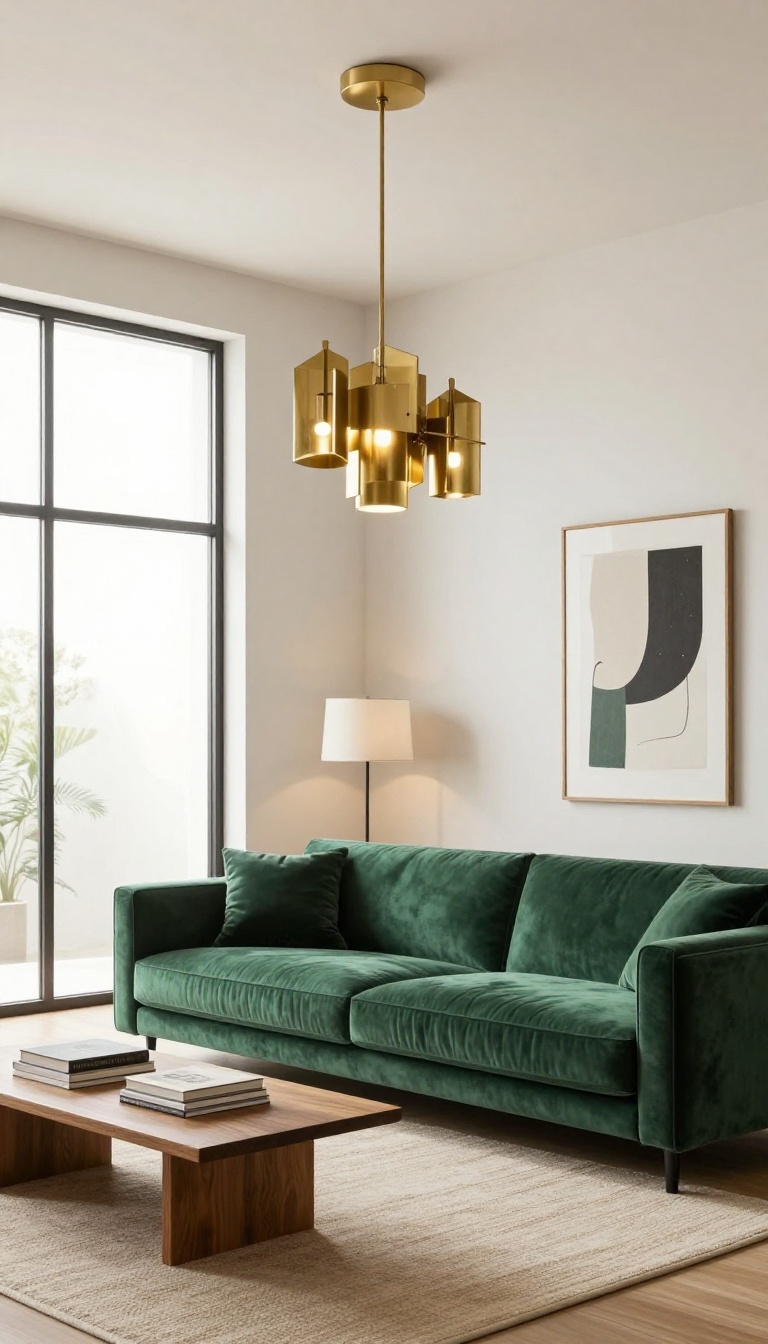
The ceiling often gets ignored, but it's prime real estate above a green velvet couch. A statement light fixture draws the eye up, balances the visual weight of the sofa, and adds a layer of luxury that feels intentional. It's a simple upgrade that can transform the entire mood of the room.
Whether you choose a chandelier, pendant, or sculptural piece, the right fixture becomes a focal point that complements the couch instead of competing with it. The key is to match the scale, style, and finish to the room's overall vibe.
Choosing The Right Style
For a glam look, a crystal chandelier adds sparkle and reflects light, making the green velvet appear richer. If your space leans modern, a sleek geometric pendant in brass or black creates contrast without overwhelming. For a relaxed, bohemian feel, a woven rattan or beaded fixture brings texture and warmth that pairs beautifully with velvet.
Getting The Scale Right
A fixture that's too small will get lost, while one that's too large can feel heavy. As a rule, the diameter of the fixture should be about one-third to one-half the width of the couch. Hang it so the bottom sits 30 to 36 inches above the couch for comfortable conversation and clear sightlines.
Layering With Other Lighting
A statement fixture shouldn't be the only light source. Add floor lamps or table lamps on either side of the couch to create a warm, layered glow. Dimmers let you adjust the mood from bright and energetic to soft and intimate, which is perfect for both entertaining and relaxing.
FAQ
What colors go best with a green velvet couch?
Warm neutrals like beige and cream, jewel tones like navy and burgundy, and metallics like brass and gold all complement green velvet beautifully.
How do I keep a green velvet couch from looking too dark?
Balance it with light walls, mirrors, and plenty of natural light. Add white or cream throw pillows and a light-colored rug.
Can I mix green velvet with other patterns?
Yes, but keep patterns subtle. Try geometric or floral prints in similar colors to avoid clashing.
What style of coffee table works with a green velvet couch?
Glass or acrylic tables keep the look airy, while brass or gold adds glam. Wood works for a more natural vibe.
Is green velvet couch suitable for small living rooms?
Absolutely. Choose a streamlined silhouette and pair it with light colors and minimal decor to keep the space feeling open.
Conclusion
A green velvet couch already does the heavy lifting, so you do not need to rebuild the whole room around it. Pick one idea from this list that solves your biggest gap, whether that is a bare wall, weak lighting, or a floor that feels cold underfoot. Try that single change first and live with it for a week.
Layer in the next piece only when the room asks for it. Green velvet rewards restraint, so let the couch lead and stop once the space feels warm, balanced, and unmistakably yours.