15 Small Living Room Furniture Ideas That Save More Space
Small living rooms force you to make every piece count. You don't need a bigger apartment, just furniture that pulls double duty and stays out of the way when you don't need it.
Most space-saving wins come from thinking vertically, choosing multi-purpose pieces, and ditching anything that only does one job. A few smart swaps can change how the whole room flows.
Below are 15 practical furniture ideas that actually free up floor space. None of them require a renovation, and most work with whatever style you already have going.
1. Nesting Coffee Tables That Tuck Away
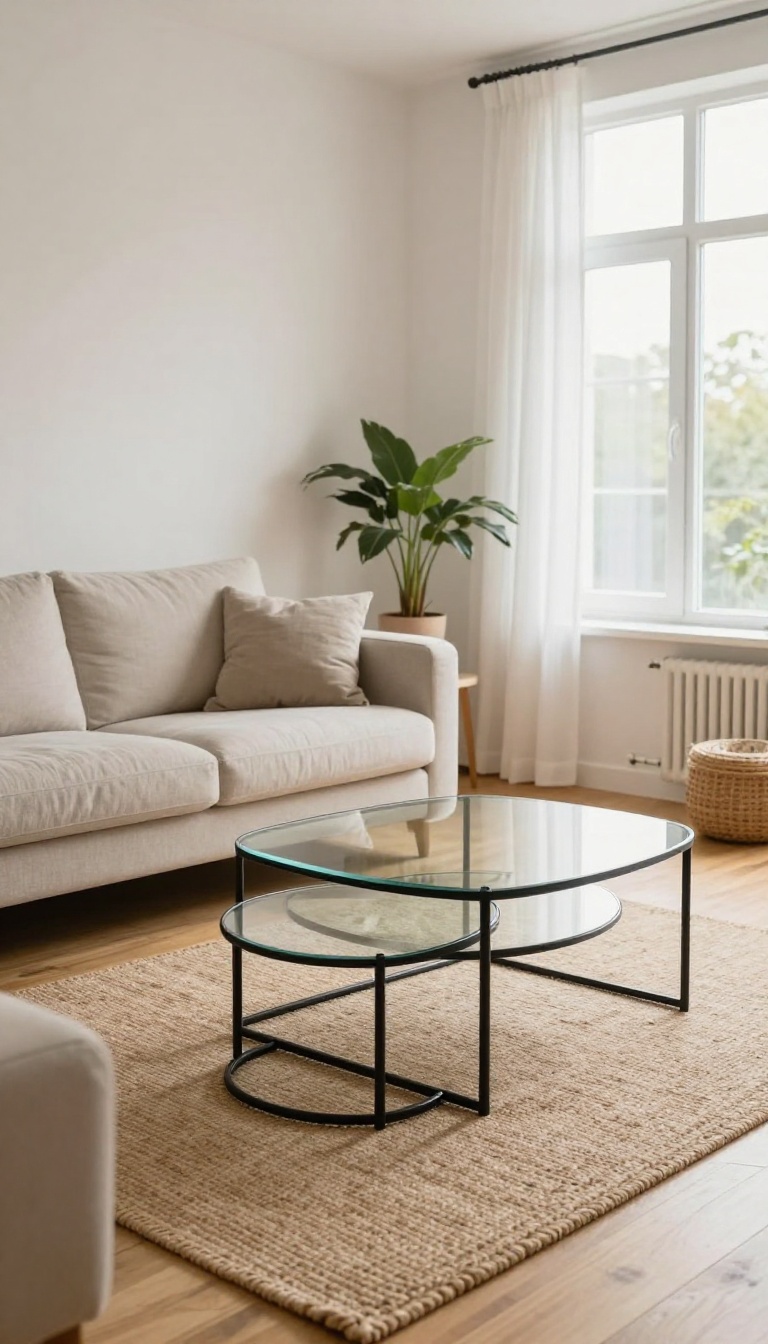
Nesting tables solve a problem most coffee tables create: they take up the same amount of floor space whether you're using them or not. A set of two or three tables in graduated sizes slides together into one compact stack, so the room only feels full when you actually need the surface area. When friends come over, you pull them apart and suddenly everyone has a spot for a drink.
The rest of the time, they collapse into a single footprint that barely registers in the room.
The appeal here is flexibility without clutter. You get the function of a full coffee table setup minus the permanent commitment to that much floor space. Most sets come in three sizes, with the largest on the bottom and the smaller ones sliding underneath.
That layered design is what makes them work in tight rooms.
How To Pick The Right Set
Look for tables with a height difference of at least two inches between each one. If they're too close in height, the smaller tables won't slide cleanly underneath and you lose the whole benefit. Glass tops and thin metal frames keep the visual weight low, which matters in a small room.
A chunky wooden nesting set can look great, but it will feel heavier than a slim, open design.
Where They Work Best
Nesting tables shine in front of a sofa, but they're just as useful beside a reading chair or tucked into a corner. In really tight rooms, you can use one as a side table and keep the others nested until you need them. If you host often but live in a small space, this is one of the few pieces that genuinely adapts to both modes.
It's a table when you need one and a sliver of floor space when you don't.
A Quick Styling Note
Keep the top table styled with one or two items and leave the nested ones bare. Stacking decor on every layer defeats the purpose and makes the set look cluttered. A small tray, a candle, and a book are plenty.
The point is that the whole thing can disappear in seconds when you need the room to breathe.
2. Wall-Mounted Desks That Fold Down
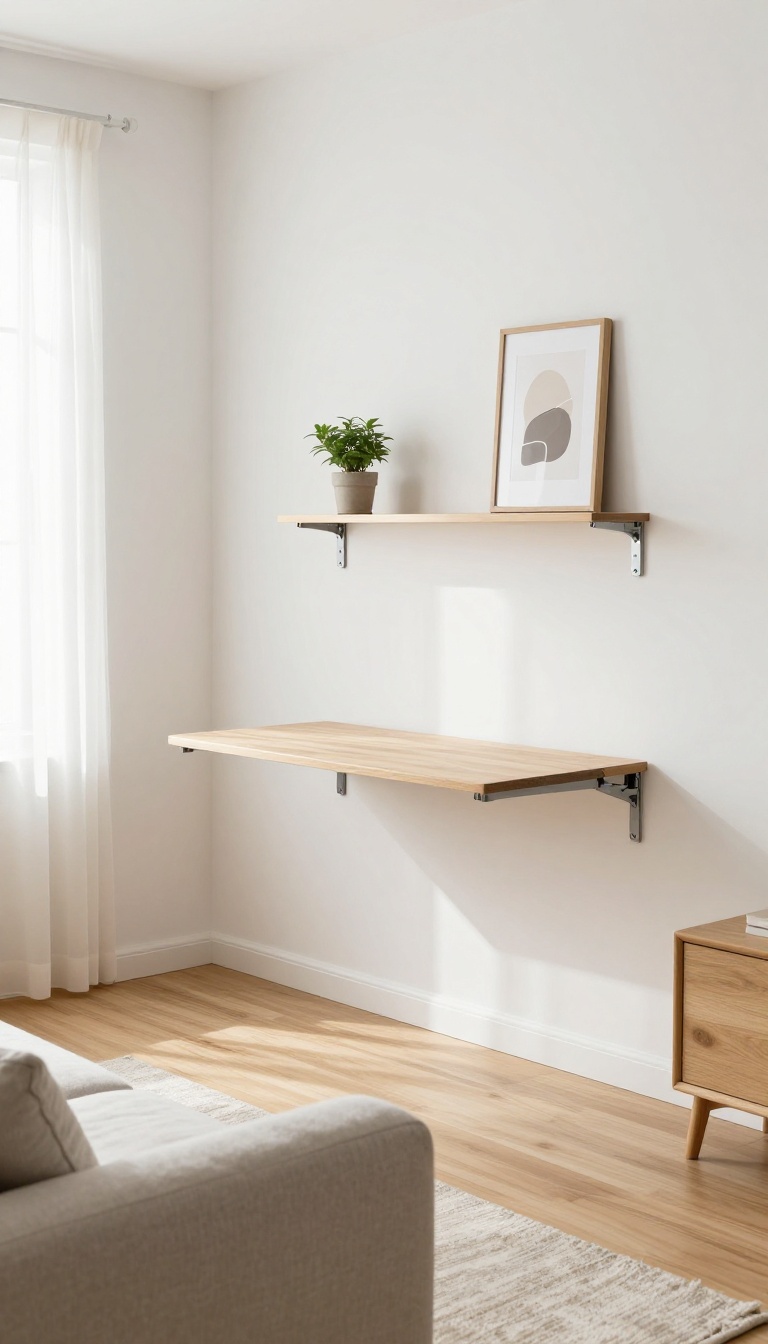
A fold-down desk is basically a shelf that transforms into a workspace. It attaches to the wall, flips up when you need it, and drops flat when you don't. That means zero floor space is wasted on a piece of furniture you only use a few hours a day.
Most people who work from home don't need a full-time office. They need a surface for a laptop, a notebook, and maybe a coffee mug. A fold-down desk delivers exactly that without permanently eating up a corner of your living room.
When you're done, you push it back against the wall and suddenly you have your room back. No awkward gap behind the couch, no dedicated desk zone you have to walk around. It's one of the simplest ways to make a small space feel bigger because the furniture literally disappears.
You can mount one above a radiator, between two windows, or even inside a closet nook. The wall does the heavy lifting, so you don't lose any square footage. And because it folds out only when needed, your living room stays a living room instead of turning into a permanent office.
Pick The Right Spot
Look for a stretch of wall that's at least 30 inches wide and free of obstructions. A spot near an outlet is ideal so you don't have to run an extension cord across the floor. Avoid hanging it above a heat source if you plan to leave electronics on it.
Mounting Matters
These desks need to anchor into studs or use heavy-duty toggle bolts. A flimsy install will sag or pull out of drywall, especially if you lean on it. If you rent, use a stud finder and patchable anchors so you can remove it later without drama.
Add A Chair That Tucks Away
A folding stool or a lightweight chair you can slide under the couch keeps the floor clear. Some people use a backless perch that hangs on a hook when not in use. The goal is to avoid a permanent chair footprint.
3. Storage Ottomans That Pull Double Duty
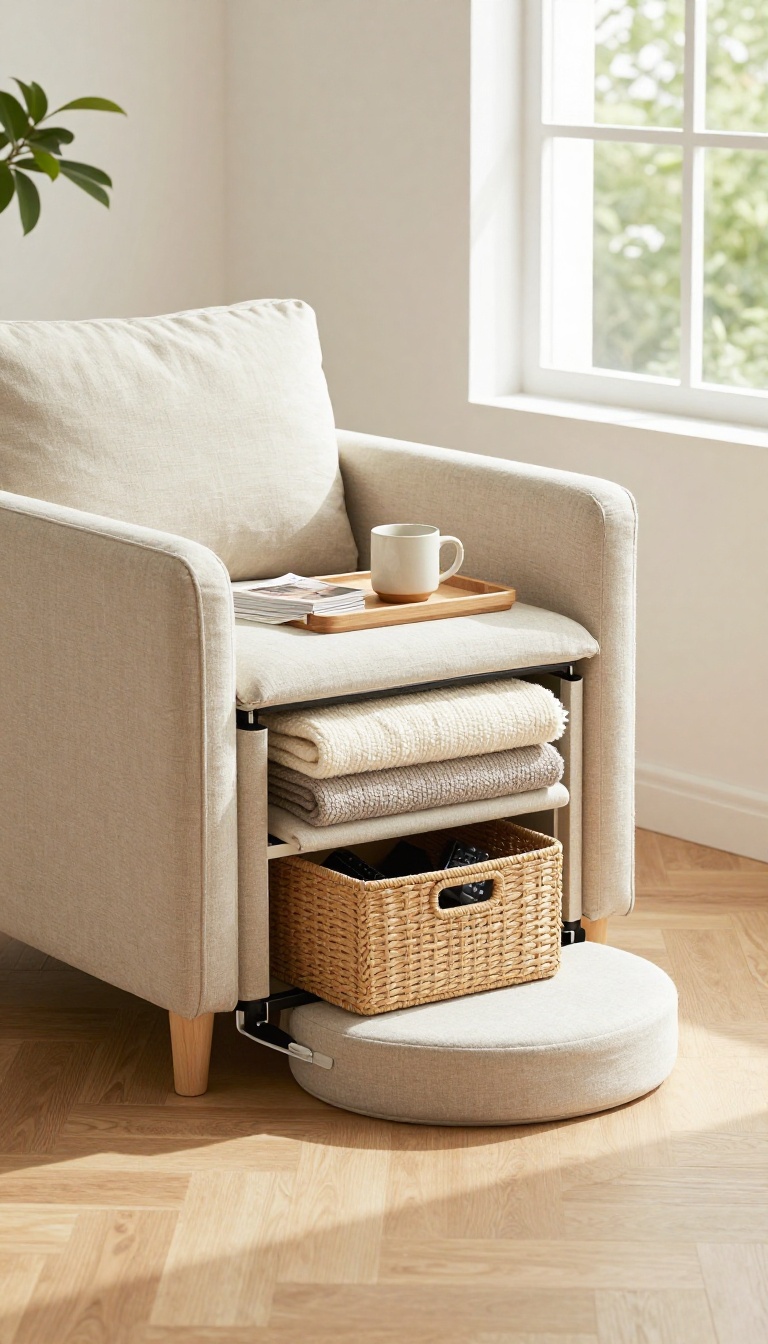
An ottoman already earns its keep as a footrest or a spare seat. Add a lift-off lid and suddenly it swallows blankets, remotes, magazines, or whatever else clutters your coffee table. That means one piece of furniture handles three jobs, so you don't need to find floor space for a separate storage bin, side table, or extra chair.
The trick is picking an ottoman that actually works for your room, not just one that looks good in a photo. You want a lid that opens easily but stays put when you sit on it. You also want interior space that's deep enough to hide the stuff you don't want on display.
A good storage ottoman can replace a coffee table in a tiny room, especially if you add a tray on top for drinks and snacks.
What To Stash Inside
Think about the items that normally live on your floor or coffee table. Throw blankets, extra pillows, board games, charging cables, and remote controls are all fair game. In a small room, you might also use it for shoes, pet toys, or craft supplies.
The goal is to clear surfaces and corners, not just move the mess somewhere else.
Pick The Right Size And Shape
A round ottoman works well in tight corners because it has no sharp edges. A rectangular one gives you more surface area for a tray and can double as a bench. Measure your available floor space before you buy.
You want enough room to walk around it, but not so much that it becomes a trip hazard. If you plan to use it as a seat, check the weight limit.
Make It Work As A Table
A flat, sturdy top turns your ottoman into a coffee table. Add a large tray to corral drinks, books, and a candle. That way you can lift the tray off when you need to open the lid.
Some ottomans come with a reversible top that's flat on one side and cushioned on the other. That's a smart two-in-one if you can find it.
Style It To Blend In
Choose a fabric or leather that matches your sofa or chairs. That way the ottoman feels like part of the room, not a random storage box. A neutral color hides everyday wear and makes it easy to move the piece around.
If you want a pop of color, pick a shade that already appears in your throw pillows or rug.
4. Floating Shelves Instead of Bookcases
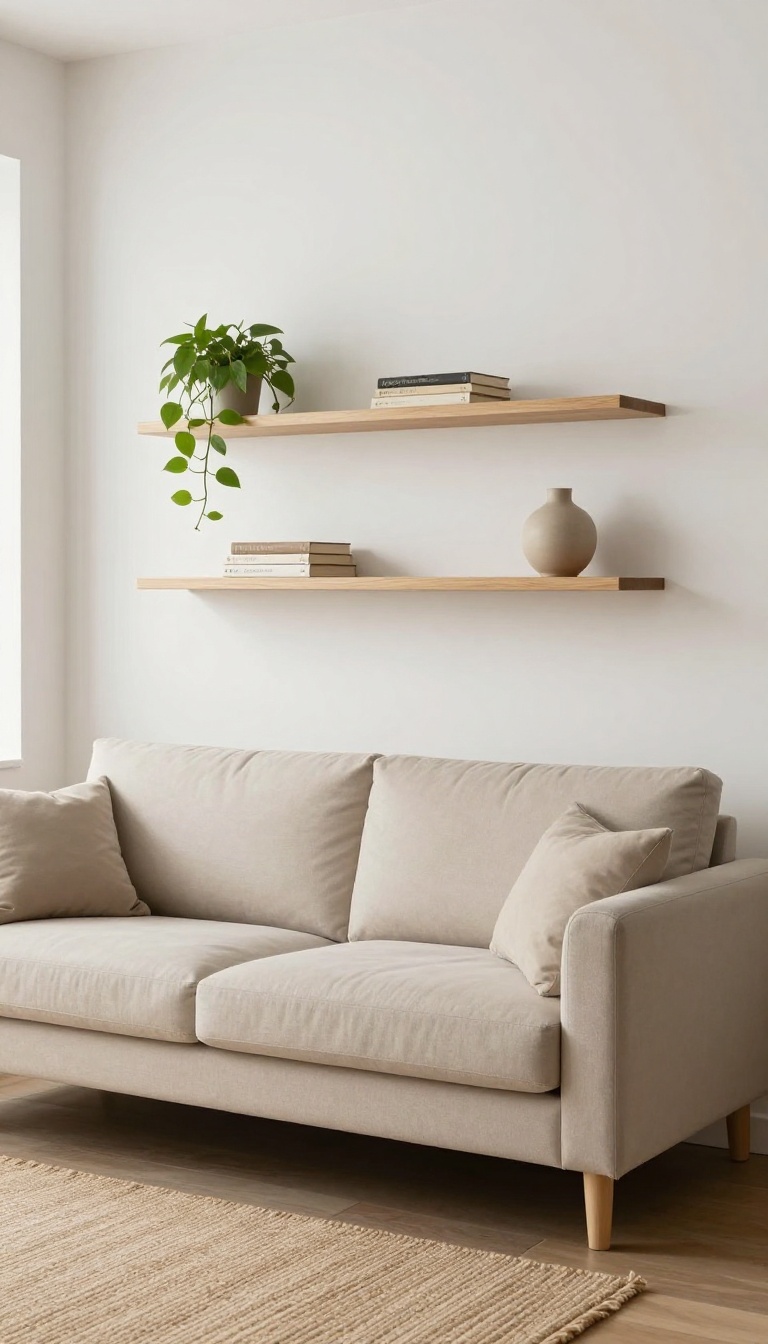
Bookcases eat up floor space and create visual weight that makes a small room feel even smaller. Floating shelves flip that equation by using the wall as your storage real estate, leaving the floor open for actual living. They also draw the eye upward, which tricks the brain into reading the ceiling as higher than it really is.
You can mount floating shelves at any height, which means you control exactly how much visual breathing room you get. A single row of shelves above a sofa or TV keeps things tidy without the bulk of a full unit. And because there's no furniture footprint, you gain back precious square footage for walking, stretching, or just not feeling cramped.
Pick The Right Spots
The wall above your sofa is prime real estate for floating shelves. It's already a focal point, so shelves there feel intentional rather than random. Another smart spot is the narrow wall beside a doorway or window, where a bookcase would never fit.
Just avoid hanging them too close to the ceiling, or they'll feel like they're pressing down instead of lifting the room.
Style Without The Clutter
Floating shelves look best when they're not stuffed to the brim. Treat them like a display: a few books, a small plant, one or two decorative objects. Leave empty space between items so the shelves feel airy.
Rotate your decor every few months to keep things fresh without adding more stuff.
Installation Tips That Actually Hold
Not all floating shelves are created equal. Look for ones with hidden brackets that attach to studs, or use heavy-duty drywall anchors rated for at least 50 pounds. If you're renting, choose shelves that mount with a simple cleat system so you can patch small holes later.
And always check the weight limit before you load them up with hardcovers.
5. A Slim Console Behind the Sofa
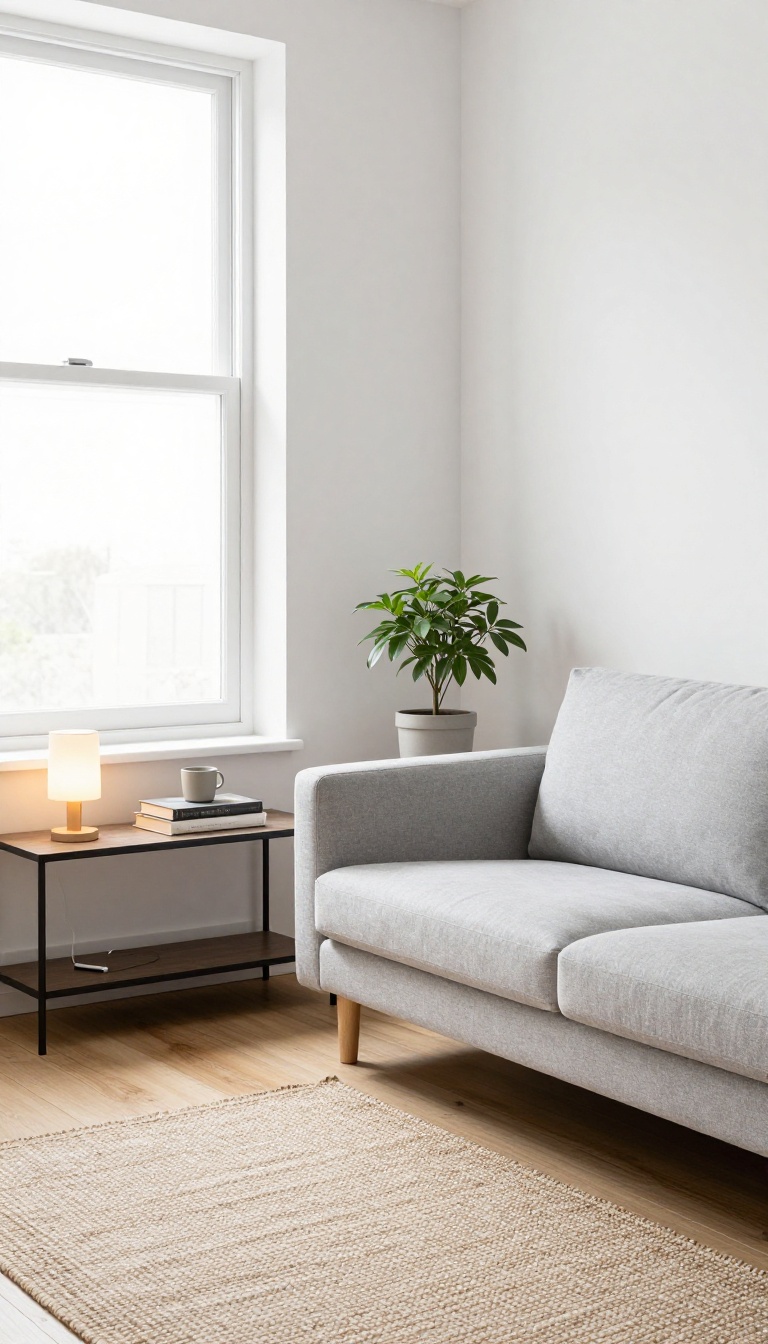
A slim console behind the sofa turns dead space into a functional strip. It slides into the gap between the back cushions and the wall, giving you a surface without pushing the sofa into the room. Most sofas float a few inches from the wall anyway, so that gap is already there.
A console that's 8 to 12 inches deep fits right in and adds storage, lighting, and charging spots. You get the perks of a side table without sacrificing an inch of walkway.
A slim console behind the sofa is one of those upgrades that feels obvious once you try it. It doesn't block traffic because it sits in space you weren't using. And it keeps essentials within arm's reach, so you're not constantly getting up.
The key is to measure first. You want a console that's slightly shorter than your sofa so it doesn't poke out on the ends. Depth matters too: anything deeper than 12 inches starts to feel bulky and might crowd the room.
Look for styles with open legs or a lower shelf to keep the visual weight light. Once it's in place, you can use it for a lamp, a book, a drink, or a charging station. It's a small change that makes the whole room work harder.
Pick The Right Size
Measure the width of your sofa and subtract a few inches. That's your target console length. For depth, stick to 8 to 12 inches.
Anything deeper and you'll lose the walkway benefit. Height should be just below the back of the sofa, so it doesn't block sightlines when you're sitting.
Choose A Style That Disappears
Glass, acrylic, or thin metal frames keep the console visually quiet. Wood works too if it matches your floor or sofa legs. Avoid chunky designs with solid panels; they add bulk.
Open shelves or a single drawer give you storage without the heaviness.
Make It Earn Its Keep
Add a small lamp for ambient light, a tray for keys and remotes, or a power strip for charging devices. If you have the space, a narrow basket underneath can hold throws or magazines. The goal is to keep the top mostly clear so it still feels like a surface, not a shelf.
6. Armless or Reclining Sectionals
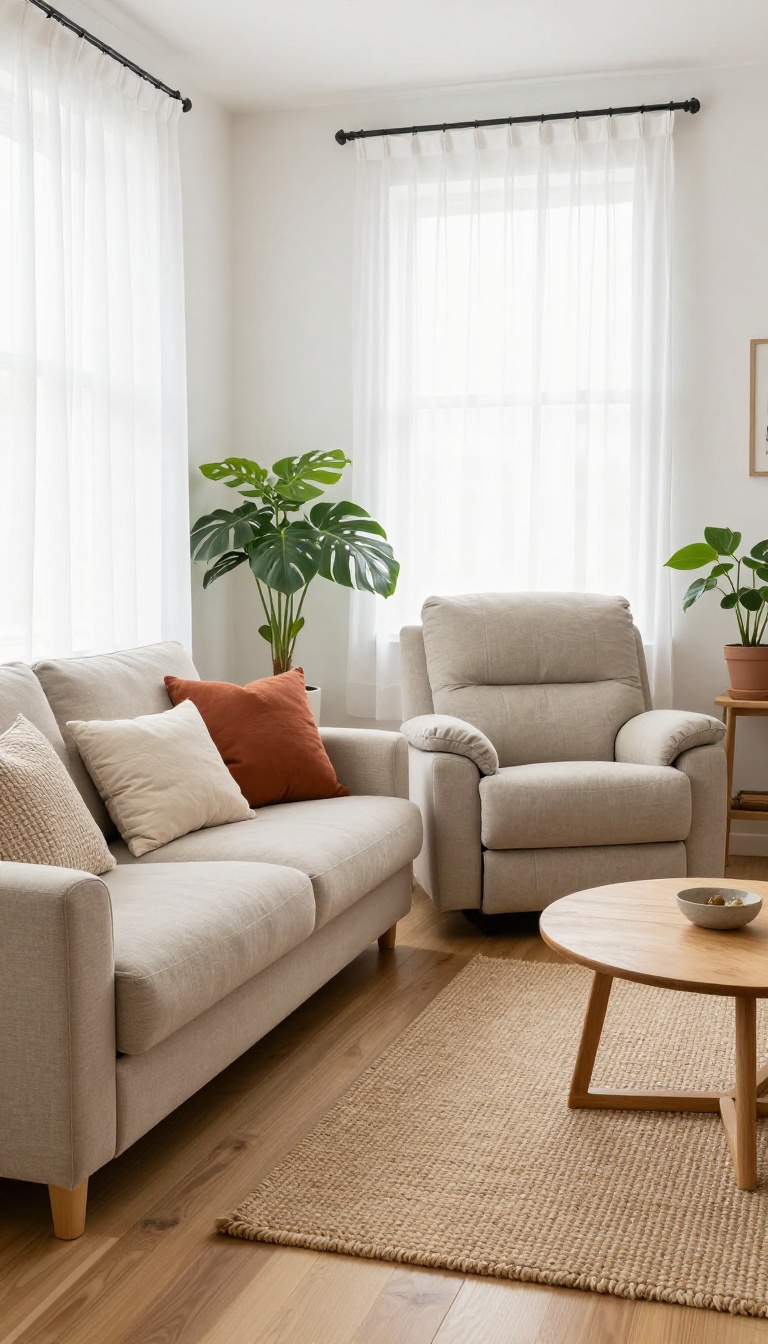
Arms on a sofa are basically wasted inches. They look nice, but they don't seat anyone, and in a small room those inches add up fast. An armless sectional strips away that dead space and lets you squeeze in an extra seat without widening your footprint.
A wall-hugger recliner does something similar: it reclines without needing a gap behind it, so it can sit flush against the wall. Both options give you more seating per square foot, and they work in corners and tight spots where a traditional sofa just won't fit.
If you've ever measured a sofa only to realize the arms eat up six inches on each side, you already get the appeal. Armless sectionals are built for rooms where every inch counts. They also slide into corners more naturally, turning awkward angles into usable seating.
Wall-hugger recliners are the other half of this equation. Regular recliners need several inches of clearance behind them to lean back. Wall-huggers use a different mechanism that lets them recline with almost no gap, so you can push them right up against the wall.
Together, these two furniture styles solve the same problem: they let you seat more people without making the room feel cramped.
Why Arms Are Overrated In Small Rooms
Arms add comfort, but they also add width. In a tight living room, that extra width can be the difference between a sofa that fits and one that doesn't. Armless pieces let you maximize seating within the same footprint.
You can also mix and match: an armless chair or chaise at the end of a sectional keeps the look open and airy. If you like the cozy feel of arms, consider an armless sectional with a single arm on one end. You get the best of both worlds without wasting space on both sides.
How Wall-huggers Actually Work
A wall-hugger recliner has a mechanism that slides the seat forward as it reclines, rather than pushing the backrest backward. That means you only need a couple of inches of clearance behind it. This is a game-changer for small rooms where every wall is precious.
You can place a wall-hugger directly against the wall and still enjoy full recline. Look for models labeled "wall-hugger" or "zero-wall. " They're widely available in fabric and leather, and many come in compact sizes perfect for apartments.
Making It Work In Your Layout
Measure your space first, then look for sectionals that are armless or have a chaise on one end. A corner configuration can turn a dead corner into a cozy nook. If you're short on floor space, consider a modular armless sectional.
You can rearrange the pieces to fit your room now and reconfigure later if you move. For recliners, place them where they won't block traffic. A wall-hugger in the corner next to a window is a classic small-space move.
Don't forget to check the seat depth. Deeper seats feel luxurious but eat up floor space. A shallower seat keeps the room feeling open.
7. Corner TV Stands With Built-In Storage
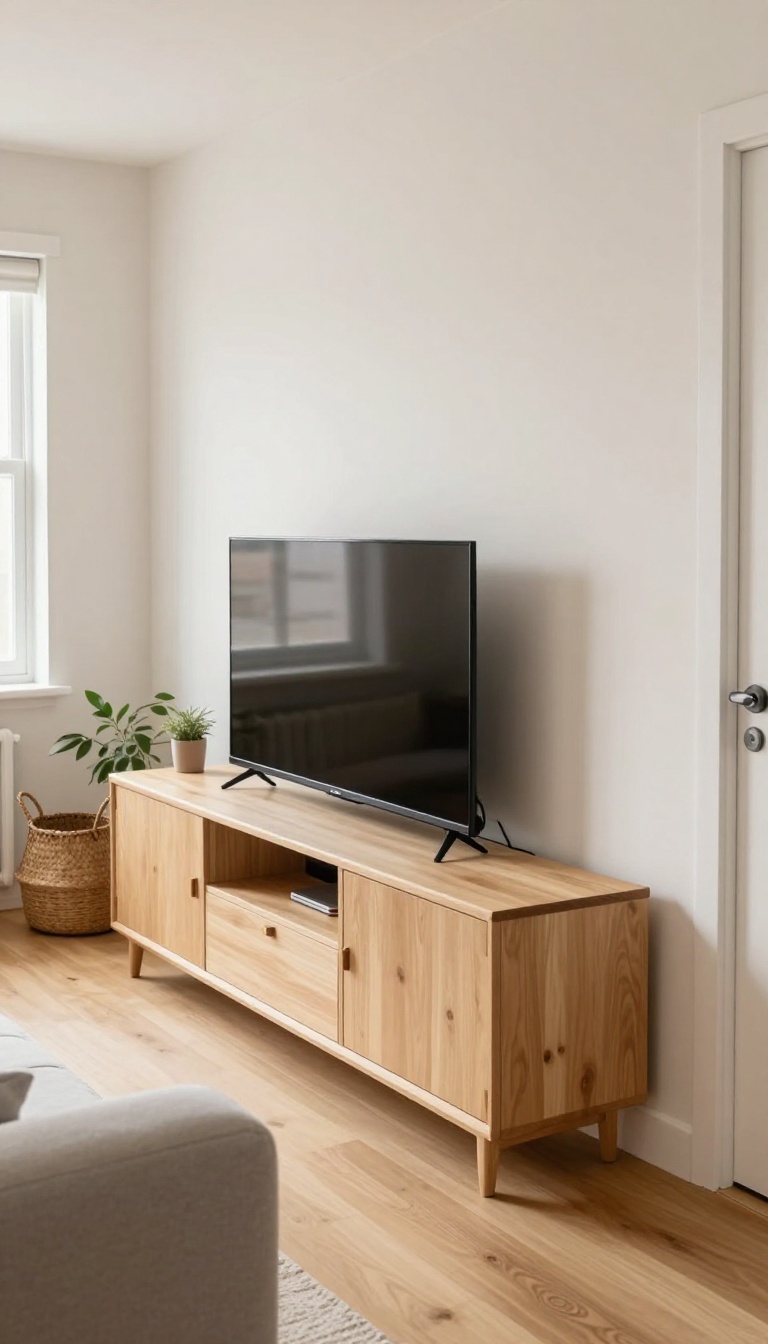
That awkward corner behind the door or beside the window rarely does anything except collect dust. A corner TV stand turns that dead angle into a media hub, so the TV, cable box, and game console all live in one spot. The main wall stays open for a sofa, a gallery wall, or just breathing room.
Most flat screens end up on the longest wall because that's where the cable outlet is. But that wall is usually prime real estate for seating. When you slide the TV into a corner, you free up the entire wall for a couch, a pair of chairs, or a slim console.
The room instantly feels wider because your eye isn't blocked by a black rectangle in the middle of everything. Corner units also hide the clutter that comes with a TV. Cables, remotes, streaming sticks, and extra controllers all disappear behind closed doors or into open cubbies.
You get the function of a media center without the visual noise. That matters in a small room where every object competes for attention. A good corner stand fits flush against two walls, so it doesn't stick out into the walking path.
Look for angled or triangular designs that follow the shape of the corner. Some models even swivel, letting you aim the screen toward the sofa or the kitchen without moving the furniture.
Measure The Angle First
Corners are rarely a perfect 90 degrees, so grab a tape measure before you shop. Jot down the width along each wall and the depth from the corner out. Most corner stands list a footprint range, and you want one that leaves at least a couple of inches of breathing room.
If the stand is too wide, it'll block a doorway or a light switch.
Pick Storage That Hides The Mess
Open shelves look nice in photos but show every tangled cord. Closed cabinets or drawers keep the gear out of sight and cut down on dust. If you need to reach the cable box, choose a stand with a remote-friendly glass door or an open shelf just for that one device.
Baskets and bins can also corral smaller items inside open cubbies.
Keep The Cables Under Control
A corner stand usually sits far from the wall outlet, so plan your cable route. Adhesive cable channels or a slim raceway can run along the baseboard without looking ugly. Zip ties and velcro straps keep the mess behind the stand from turning into a rat's nest.
If you can, mount a power strip to the back of the unit so you only have one cord to the wall.
Style The Top Without Crowding It
The top of the stand is prime display space, but it's easy to overdo it. A small plant, a framed photo, or a single decorative object is enough. Leave room around the TV so it doesn't feel boxed in.
If the stand has a lower shelf, use it for books or a soundbar, not more knickknacks.
8. Glass or Acrylic Coffee Tables
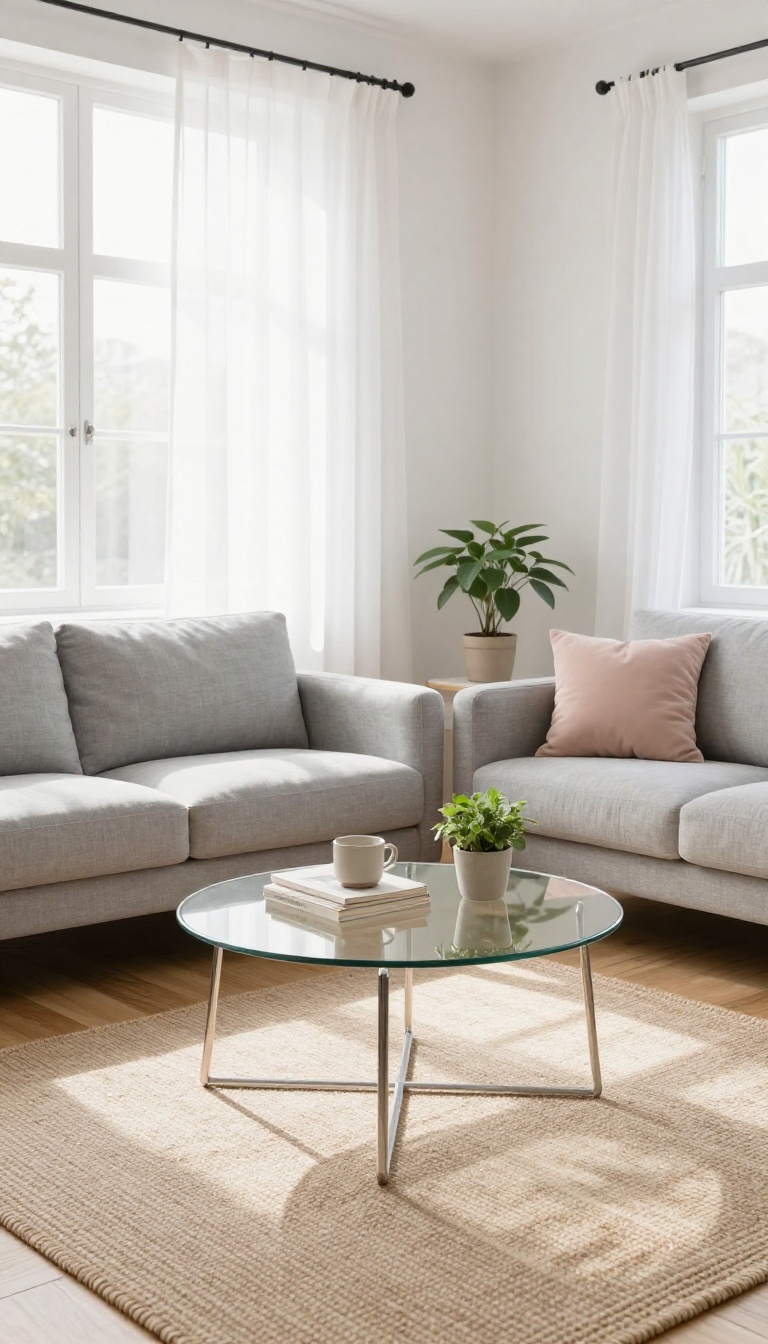
A solid wood coffee table can dominate a small living room. It blocks sightlines and makes the floor plan feel chopped up. Glass or acrylic versions solve that by letting your eye travel straight through them.
The room instantly reads as more open, even if you haven't moved a single wall.
See-through furniture is one of the oldest tricks in small-space design, and it still works. When light passes through a table, the floor underneath stays visible, so your brain registers more square footage. Acrylic does this with a slightly warmer, softer look, while glass feels crisp and modern.
Both keep the focus on your seating and art instead of the table itself.
Why See-through Works
Solid tables create a visual wall at knee height. That wall makes a small room feel boxed in. Glass and acrylic remove that wall without removing the surface you need for drinks and remotes.
You get function without the bulk.
Pick The Right Shape And Edge
Round or oval glass tops soften tight corners and let people walk past without banging a hip. Rectangular acrylic with rounded edges works well in narrow rooms where you need every inch. Avoid sharp square corners if your sofa and chairs already crowd the space.
Keep It Clean And Safe
Fingerprints show up fast on glass and acrylic. A microfiber cloth and a little glass cleaner keep them clear. If you have kids or pets, choose tempered glass or thick acrylic with rounded edges.
A clear mat underneath prevents scratches on wood floors.
9. A Bar Cart as a Mobile Side Table
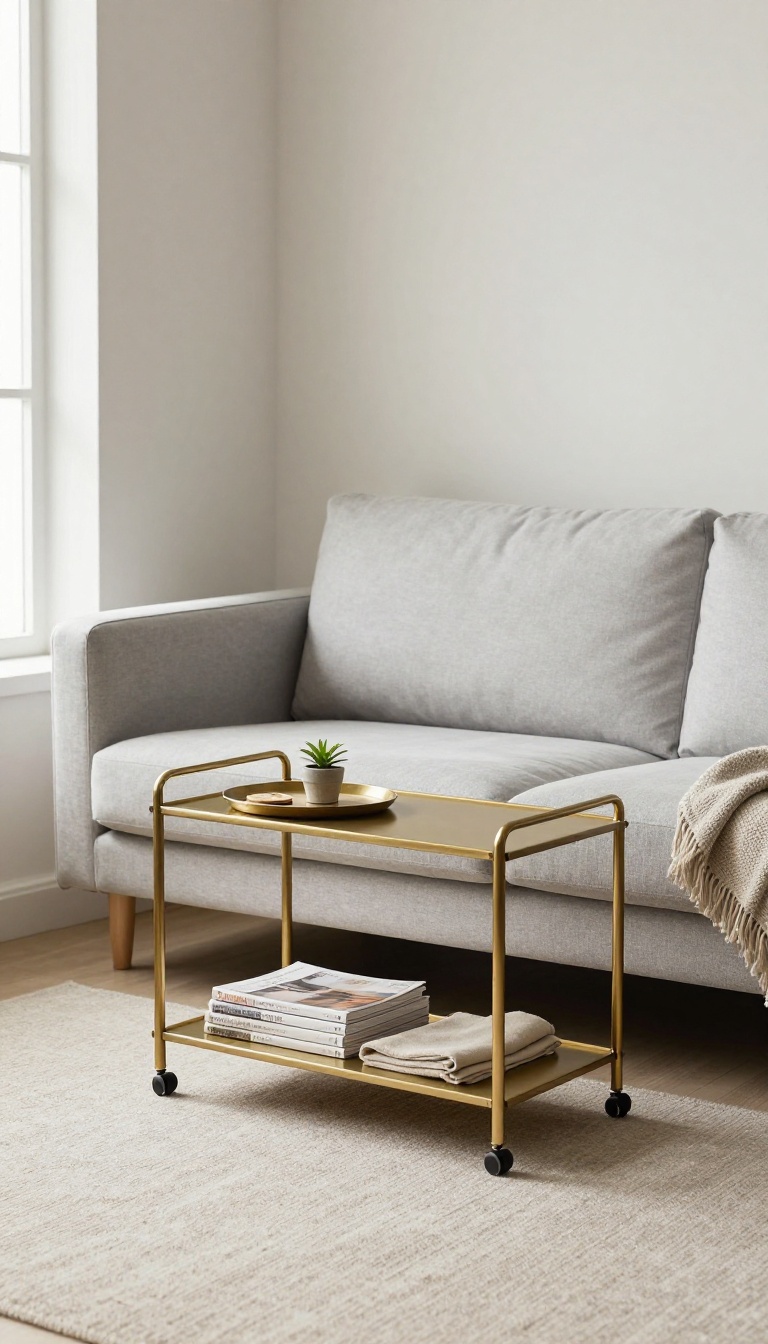
A bar cart does more than hold bottles. It rolls right up to the sofa when you need a drink, a snack, or a lamp, then slides away when you want your floor back. It's a side table, a mini bar, and a plant stand all in one—without taking up permanent real estate.
Think of it as furniture that knows when to leave. Most bar carts have two or three tiers, so you get vertical storage without adding visual weight. The wheels are the secret weapon: you can park it next to your seat during a movie, then tuck it into a corner or beside a bookshelf when the room needs to breathe.
That flexibility is huge in a small living room where every inch counts.
What To Look For
Go for a cart that's narrow enough to fit between furniture but sturdy enough to hold a few books or a lamp. Metal frames with locking casters are a safe bet. Two tiers are usually enough; three can feel cluttered in a tight spot.
And check the height—it should sit close to your sofa arm so you can reach your coffee without stretching.
How To Use It
Keep the top tier for everyday items: a coaster, a small tray, your remote. The bottom tier can hold magazines, a plant, or extra throws. When guests come over, load it up with drinks and glasses, then wheel it into the center of the conversation.
Afterward, roll it back against the wall. You just turned one piece into a side table, a bar, and a display shelf.
Styling Tips
Stick to a color that blends with your sofa or walls so it doesn't scream for attention. A glass or acrylic cart can make the room feel lighter. Add a small basket on the bottom to corral clutter, and keep the top surface mostly clear.
The goal is function first, but a little style never hurts.
10. Bench Seating With Under-Seat Bins
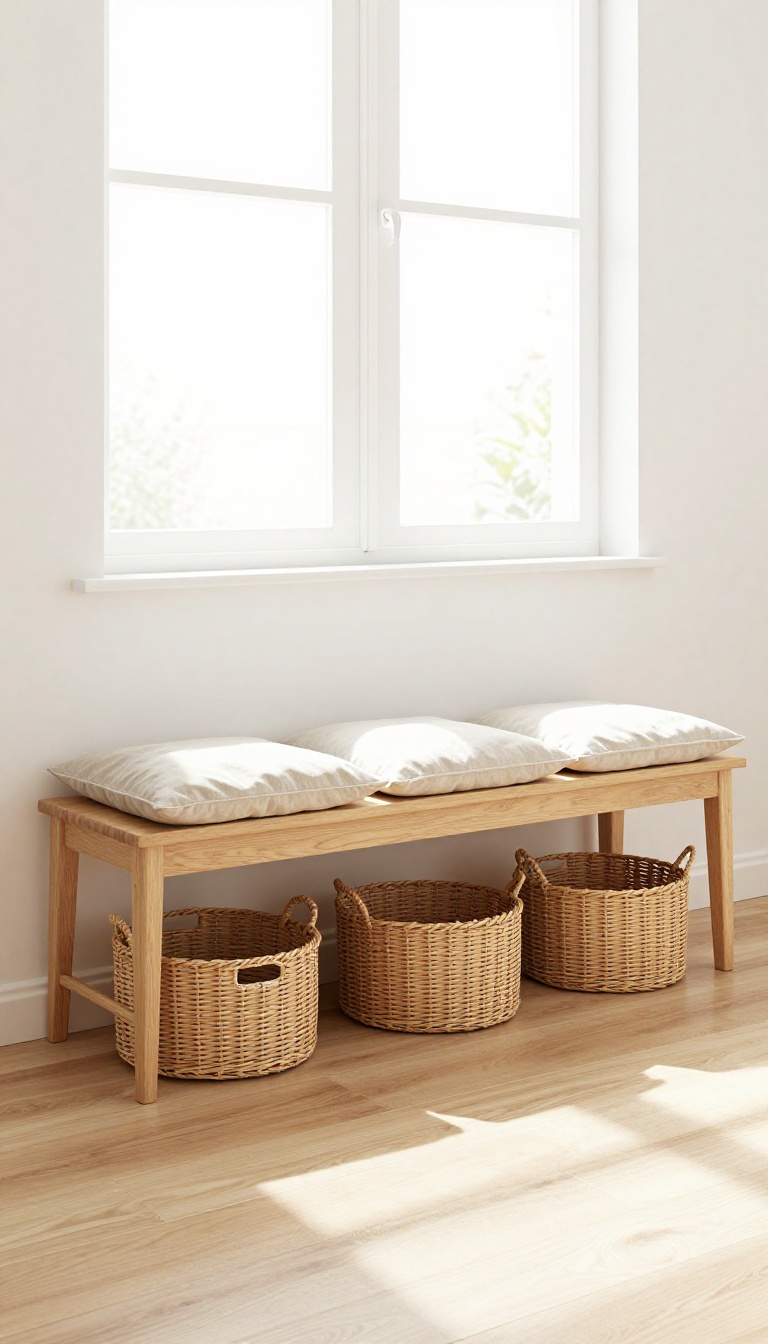
A bench does two jobs at once, and that's the whole point. It gives you a place to sit while quietly holding the stuff that usually ends up in a pile on the floor. Slide a few baskets or bins underneath and you've replaced a chair and a storage unit with one slim piece.
That's a lot of function for a strip of wall you probably weren't using anyway.
The trick is picking a bench with open space below instead of legs that block everything. Anything with a shelf, a lower rail, or a simple frame works fine. Then you fill that gap with bins that slide in and out without a fight.
This setup shines along a window, behind a sofa, or in an entry-adjacent corner of the living room. It keeps the floor clear and gives clutter a home that doesn't look like clutter.
Pick The Right Bench Height And Depth
You want a seat height around 18 inches so it's actually comfortable to sit on. Depth matters too. Anything past 18 inches starts to eat floor space you were trying to save.
A bench 12 to 16 inches deep hugs the wall and still fits standard baskets underneath. Measure your bins before you buy the bench, not after.
Choose Bins That Disappear
Woven baskets, canvas cubes, or shallow plastic totes all work. Match them to the room's palette so they read as part of the furniture instead of a storage emergency. Lidded options hide mess better, but open bins are easier to grab from when you're sitting down.
Either way, keep one bin per category so things don't turn into a junk drawer.
Style It Without Blocking Access
A couple of pillows on top make the bench feel intentional. A throw blanket folded on one end adds softness without stealing seat space. Skip anything that hangs low or drapes over the front.
You want the bins to slide out freely, and you want the bench to stay easy to sit on.
11. A Room Divider That Doubles as a Shelf
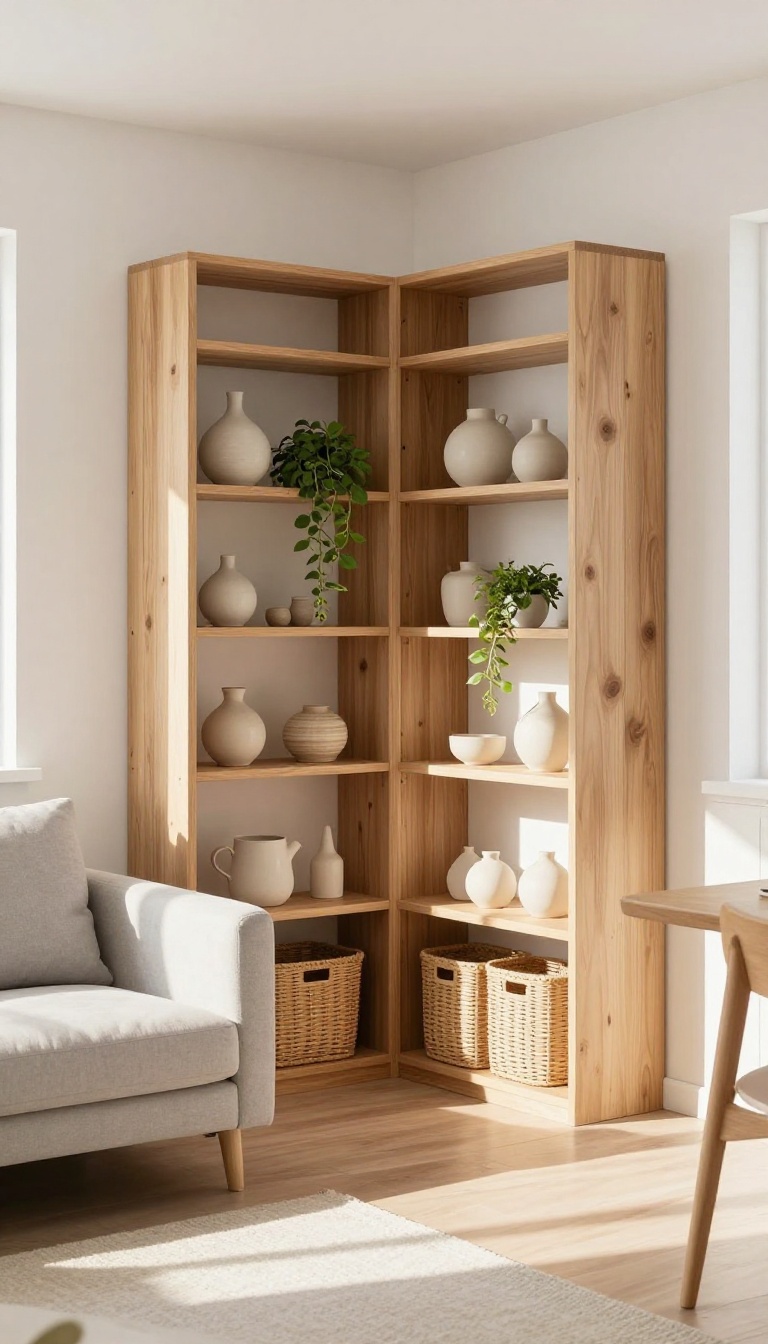
A plain room divider splits a space but doesn't do much else. Swap it for an open shelving unit and you get separation plus storage. It's one of those rare pieces that solves two problems at once.
The shelves stay open, so light and air move right through. That keeps a small living room from feeling chopped up or dark. You get defined zones without sacrificing brightness.
Think of it as a see-through wall that holds your stuff. You can place it between the sofa and a dining nook, or between the TV area and a home office corner. The open back means you never lose the sense of one big room.
Most units come in narrow depths, so they don't eat up much floor space. You can also find ones on casters if you like to rearrange. Either way, it's a smarter use of that invisible boundary line.
Pick The Right Depth And Height
A depth of 10 to 12 inches is plenty for books, plants, and baskets. Anything deeper starts to feel like a bulky bookcase. For height, go a little taller than your sofa back so it visually separates without towering over the room.
Style It So Both Sides Work
Since it's open, both sides are visible. Keep the shelves tidy and intentional. Use matching baskets on lower shelves for hidden storage, and leave upper shelves for a few nice objects.
That way it looks good from the couch and from the kitchen.
Secure It And Keep It Light
Always anchor a tall shelving unit to the wall, especially in rentals with kids or pets. Choose a light wood or metal frame to keep the visual weight down. A white or natural finish blends into the background instead of blocking the view.
12. Wall-Mounted Bikes and Gear Racks
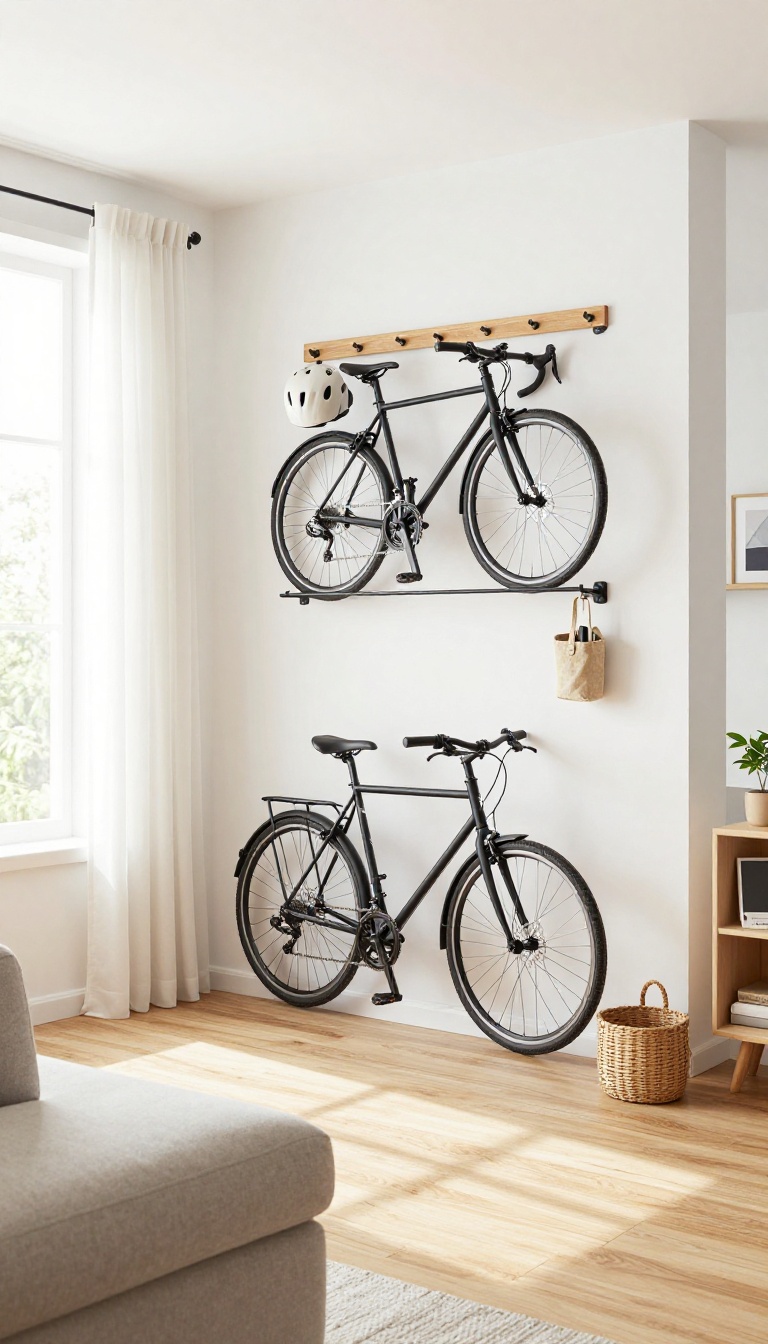
Bikes and gear take up serious floor space, especially in a small living room. Wall mounts lift them up and turn that clutter into a clean vertical display. You get your floor back and your ride still looks good.
A bike leaning against the wall is basically a piece of furniture you can't use. Wall-mounted racks solve that by moving your bike up and out of the way. They also make your gear look intentional instead of messy.
The same goes for helmets, bags, and tools. A few hooks and mounts can turn a chaotic corner into a tidy, organized zone.
Pick The Right Mount For Your Space
Horizontal mounts hold the bike flat against the wall, so they stick out less. Vertical mounts save even more floor space but need more height. If you rent, look for mounts that use drywall anchors or a single stud.
No drilling? Try a freestanding rack that leans against the wall. Measure your wall and your bike before you buy.
Gear Deserves A Spot Too
Helmets, shoes, and pumps add up fast. A simple wall track with hooks keeps them together and off the floor. Baskets or small shelves above the bike hold gloves and tools.
Label bins if you have multiple riders. Everything stays visible and easy to grab.
Make It Look Like Decor, Not Storage
Choose mounts with a clean finish that matches your room. A wooden rack or matte black metal looks deliberate. Arrange your bike at an angle or centered on the wall for a gallery feel.
Add a small plant or print nearby to blend it in. Now it's a feature, not an eyesore.
13. A Lift-Top Coffee Table for Hidden Storage
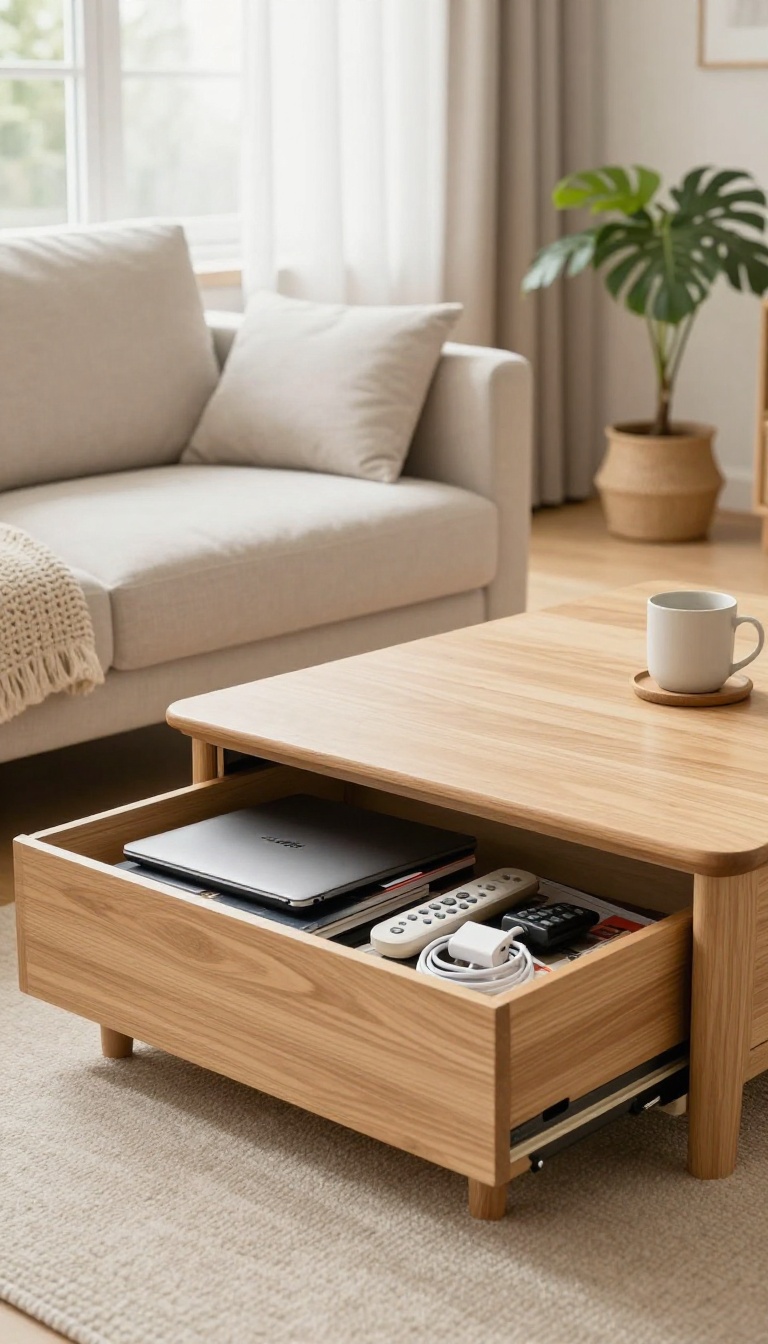
A lift-top coffee table solves a problem most small rooms share: nowhere to eat, work, or stash clutter. The top raises up and pulls toward you, turning a low table into a usable surface at sitting height. Underneath, there's usually a compartment for remotes, magazines, chargers, or the laptop you don't want on display.
You get three pieces of furniture in one footprint, which is exactly what a tight living room needs.
The real win here is that you stop needing a separate dining table. In a studio or a small one-bedroom, that's a huge chunk of floor space you get back. You also stop eating every meal with a plate balanced on your knees.
Most lift-top tables come with a split or full-lift mechanism. Split tops let you raise half the surface while keeping the other half flat for drinks or a lamp. Full-lift tops give you a bigger work area but take up more visual space when raised.
Look for one with a smooth gas-spring hinge. Cheap hinges sag over time and make the table wobble when you lean on it. A little resistance when you lift is a good sign.
Storage inside matters too. Some models have one open cubby, others have divided sections or a small drawer. Measure what you actually need to hide before you buy.
How To Pick The Right Height
A good lift-top table sits around 16 to 18 inches when closed, which is standard coffee table height. When raised, the surface should land somewhere between 24 and 28 inches, depending on your sofa seat height. If it's too low, you'll hunch over your laptop.
Too high, and it feels awkward to eat from. Check the raised height before you buy, not just the closed height.
What To Store Inside
Use the compartment for things that normally clutter your coffee table: remotes, coasters, a tablet, charging cables, or a small basket of pens. Keep it light. Heavy items make the lift mechanism work harder and can warp the lid over time.
If you work from the couch, a slim lap desk and a notebook fit fine. Just don't treat it like a junk drawer, or you'll lose the space-saving benefit.
Style And Material Choices
Lift-top tables come in wood, metal, and mixed materials. A warm wood tone blends into most living rooms, while a white or black finish reads more modern. If your sofa has clean lines, a simple rectangular top works best.
For a softer look, choose rounded corners. Avoid glass tops if you have kids or pets, since they show every smudge and fingerprint.
14. Modular Sofas You Can Rearrange
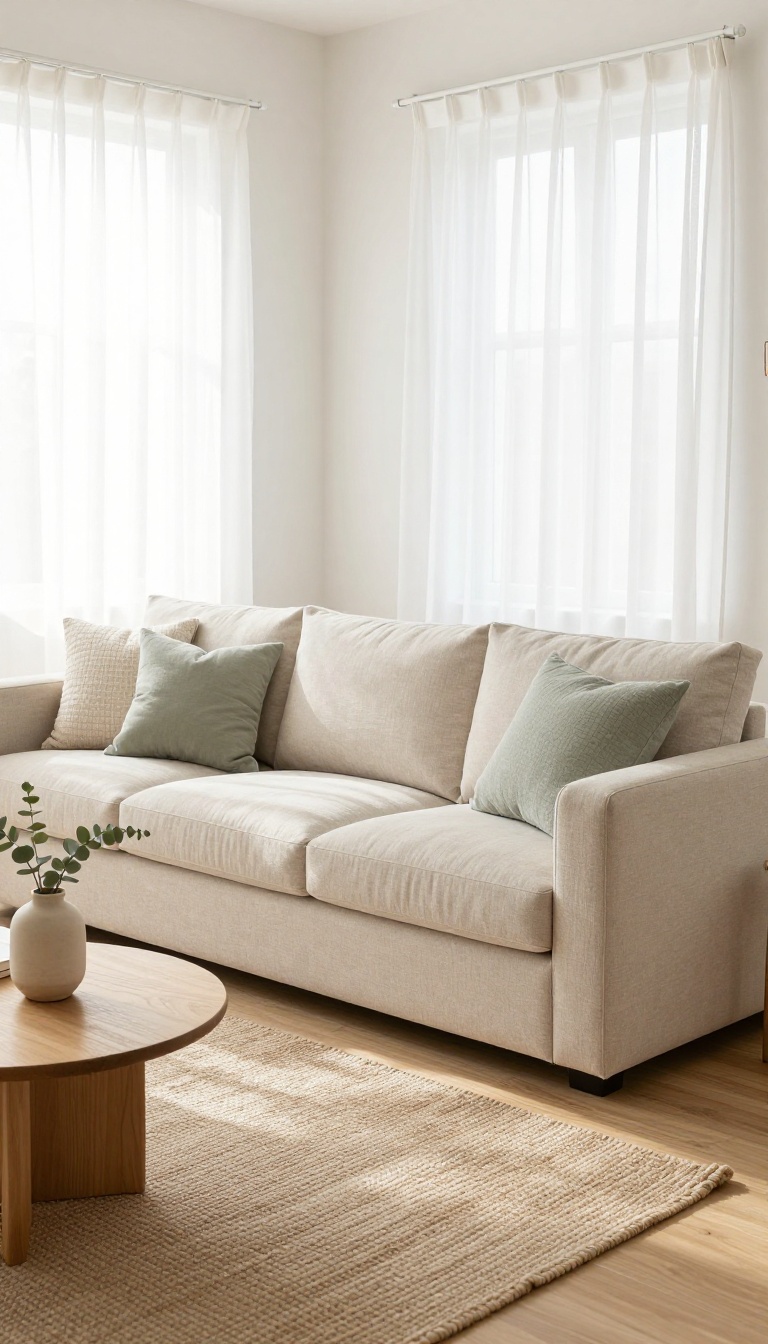
One sofa that changes shape beats three pieces you never use. Modular sofas come in separate chunks you can slide apart, push together, or flip into a bed when someone crashes. In a tight room, that flexibility buys you square footage without adding furniture.
Most small living rooms get stuck with a fixed layout. You pick a couch, shove it against a wall, and live with the same setup for years. Modular seating breaks that pattern.
Each section works on its own, so movie night, guest visits, and open floor space can all happen in the same room.
How Modular Actually Works
A modular sofa is built from separate seats, corner pieces, and ottomans that connect with brackets or simple latches. You buy the number of pieces that fit your room, not a single bulky unit. When you want more floor space, pull the sections apart and stack or store the extras.
Rearranging For Real Life
Push two seats together for a loveseat during the week. Slide a chaise out when friends come over and you suddenly have a sectional. Flatten the back cushions and a piece becomes a guest bed.
The same furniture handles all three without a trip to the store.
What To Check Before Buying
Measure your doorways and tightest corner first, since each piece has to fit through on its own. Look for connectors that hold tight but release without tools. Washable covers matter too, because modular pieces get moved, sat on, and occasionally spilled on more than a standard couch.
15. A Slim Accent Chair That Tucks Into Corners
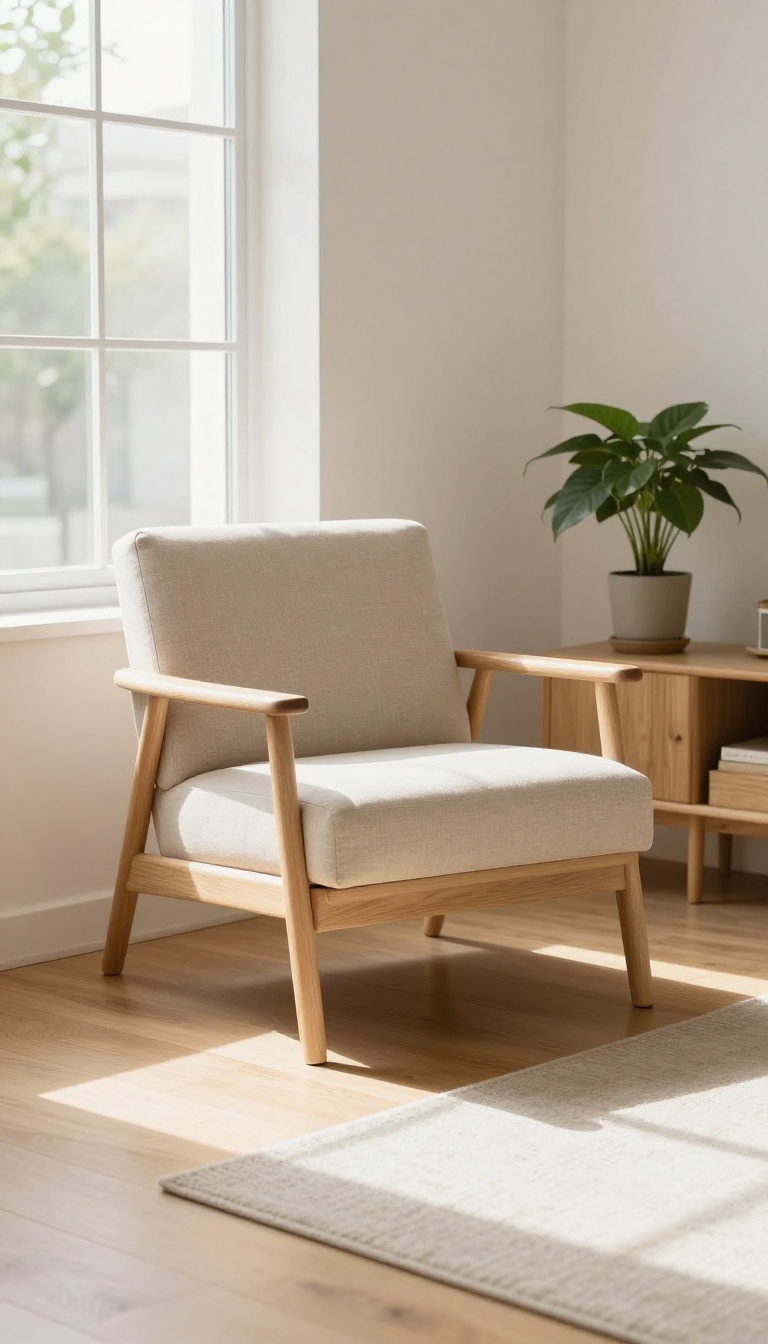
A slim accent chair gives you an extra seat without eating up your walking path. The trick is picking one with a narrow frame and a small footprint, then angling it into a corner where nothing else fits. Unlike a bulky armchair, these chairs stay out of the way until someone needs them.
They work in bedrooms, reading nooks, and tight living rooms where every inch counts.
A slim accent chair is one of those pieces you don't notice until you need it. It sits quietly in the corner, then becomes the best seat in the room when a friend stops by. The key is choosing a chair that's narrow enough to slide into unused space.
Look for models under 25 inches wide with a shallow depth. Splayed legs or a swivel base help it feel lighter, and a low back keeps sightlines open. Fabric matters too.
A solid neutral blends into the background, while a bold pattern turns the chair into a focal point. Either way, the footprint stays tiny.
Why Corners Work So Well
Corners are dead space in most small living rooms. A slim chair angled at 45 degrees fills that gap without blocking traffic. You get a cozy spot for reading or chatting, and the room still feels open.
Just leave a few inches between the chair and the wall so it doesn't look crammed.
What To Look For
Measure your corner first. A chair that's 24 to 28 inches wide usually fits without overwhelming the space. Choose a lightweight frame you can move easily.
Wood or metal legs with a slim profile keep the chair from feeling heavy. If you want extra function, pick one with a small attached side table or a built-in magazine pocket.
Styling It Without Clutter
Keep the area around the chair simple. A small floor lamp and a tiny side table are plenty. Avoid stacking books or blankets on the chair itself.
The point is to keep it ready to use, not to turn it into a storage pile.
FAQ
What is the best furniture for a very small living room?
Multi-purpose pieces win every time. Nesting tables, storage ottomans, wall-mounted desks, and armless sectionals give you function without eating floor space.
How do I make a small living room feel bigger without knocking down walls?
Go vertical with floating shelves, choose see-through materials like glass or acrylic, and keep furniture low and leggy so the floor stays visible.
Are sectionals good for small living rooms?
Yes, if you pick an armless or wall-hugger model. They seat more people per square foot and fit flush against walls or into corners.
Should I use a coffee table or an ottoman in a small space?
A storage ottoman often works better because it doubles as seating and hides clutter. If you need a hard surface, a lift-top or nesting coffee table is the smarter pick.
How can I add storage without bulky cabinets?
Use under-seat bins, floating shelves, a slim console behind the sofa, or a room divider with built-in shelves. These add storage without taking up floor area.
Conclusion
Small rooms rarely need a full overhaul. Pick one idea from this list that fixes your biggest headache, whether that is a bulky sofa, a bare wall, or a floor that feels cramped. Try it for a week before buying anything else.
Two or three smart swaps beat a rushed shopping spree every time. Let each piece earn its footprint, keep the walkways clear, and stop once the room feels open and easy to move through.