15 Cleaning Rusty Cast Iron Tips to Bring It Back
You pull out your favorite cast iron skillet only to find orange rust spots staring back at you. It happens to the best of us—a moment of neglect or a forgotten pan in the sink can lead to that dreaded corrosion.
But don't toss it yet. Rust on cast iron is almost always reversible with a little elbow grease and the right techniques.
Whether you're dealing with surface rust or a full-on crusty layer, these 15 tips will walk you through bringing your pan back to life. No fancy tools required, just patience and a few common kitchen staples.
1. Start with a Dry Scrub to Remove Loose Rust
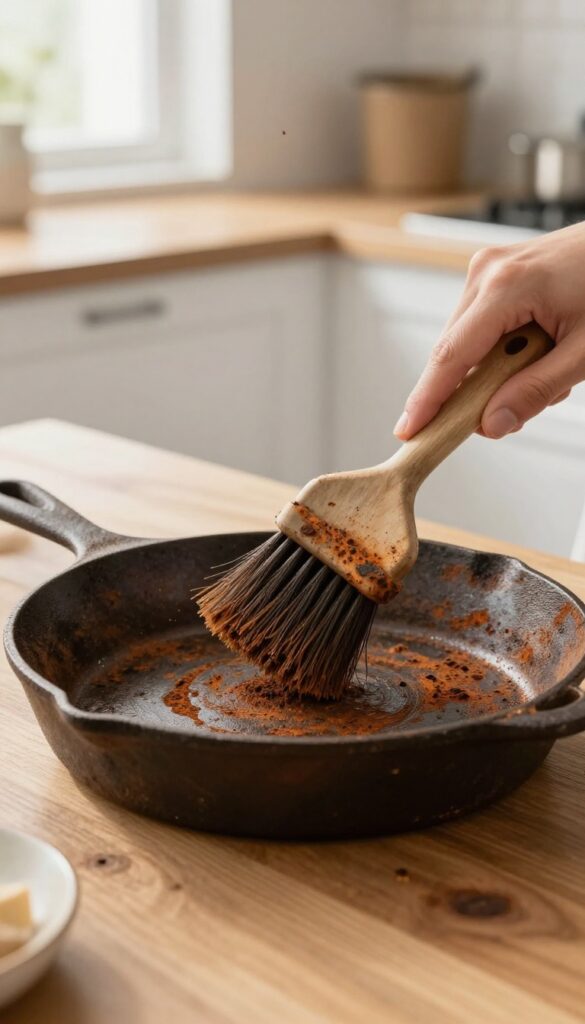
Before you bring out the vinegar or baking soda, you need to get rid of the loose rust first. Scrubbing dry removes the flaky stuff without pushing moisture deeper into the iron. It's a simple step that sets you up for success.
Grab a stiff-bristled brush or a wad of steel wool. Scrub the rusty areas firmly in a circular motion. Work over a trash can or newspaper to catch the rust dust.
Once the loose flakes are gone, wipe the pan with a dry cloth. Now you're ready for the next step.
Why Dry Scrubbing First Matters
If you apply liquid right away, the water can carry rust particles into the pores of the cast iron. That makes the rust harder to remove later. A dry scrub keeps the surface clean and prevents spreading.
Choosing The Right Scrubber
For light rust, a stiff nylon brush works fine. For heavier rust, go with coarse steel wool (grade 0 or 1). Avoid using anything that leaves behind fibers or residue.
You want a clean, bare metal surface.
What To Do With The Rust Dust
Vacuum or wipe away all the rust dust before moving on. Leftover particles can interfere with the next cleaning steps. A damp paper towel works well to pick up the fine powder.
2. Soak in Equal Parts Vinegar and Water
Vinegar is a mild acid that eats rust without harming the iron underneath. A 50/50 white vinegar and water soak breaks down oxidized layers gently, making it one of the most effective rust removal methods. Just remember: cast iron is porous, so you never want to soak it for hours on end.
Short, timed intervals are the secret.
Why The 50/50 Ratio Works
White vinegar contains acetic acid, which reacts with iron oxide (rust) to form a water-soluble compound. Diluting it with water prevents the acid from being too aggressive, which could etch the iron's surface. A 50/50 mix is strong enough to dissolve rust quickly but gentle enough to preserve the metal's integrity.
Step-by-step Soaking Process
Fill a container large enough to fully submerge the pan with equal parts white vinegar and warm water. Place the pan in the solution and let it sit for 30 minutes. Check the rust—if it's still stubborn, scrub with a non-metal brush or sponge, then soak for another 30 minutes.
Never exceed two hours total, or the acid may damage the iron.
After The Soak: Neutralize And Dry
Once the rust loosens, rinse the pan thoroughly with warm water and mild dish soap to remove any vinegar residue. Dry it immediately with a towel, then place it on a low-heat stove burner for a few minutes to evaporate all moisture. Follow up with a light coat of oil to prevent flash rusting.
3. Use a Potato and Baking Soda Paste
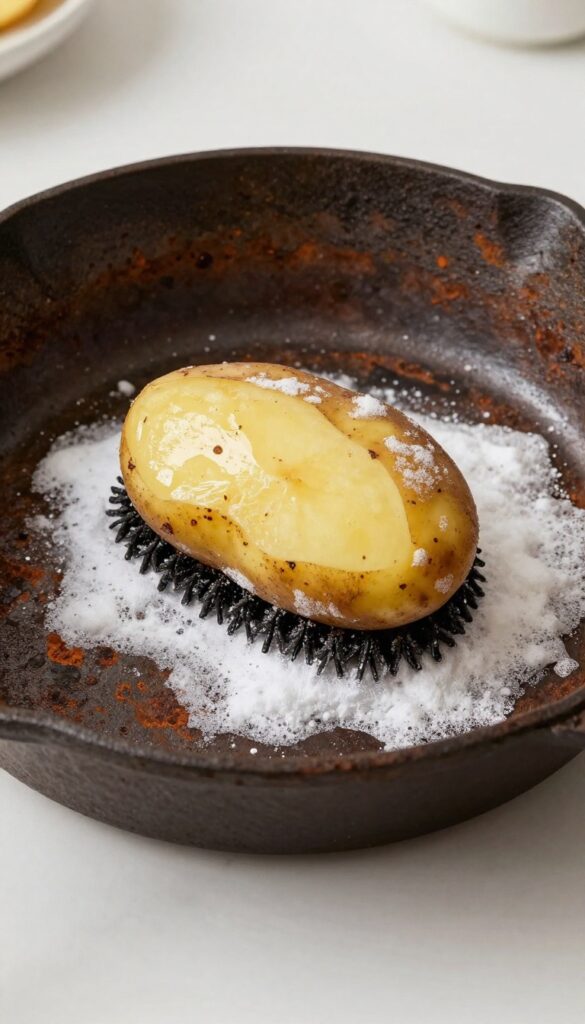
If you've got a potato lingering in the pantry, you're in luck. This common kitchen staple can double as a rust remover thanks to its natural oxalic acid. When paired with baking soda, it creates a gentle abrasive paste that lifts rust without scratching the surface.
This method is perfect for light to moderate rust spots. It's chemical-free, cheap, and surprisingly effective. The potato's moisture activates the baking soda, forming a scrub that breaks down rust on contact.
Why It Works
Potatoes contain oxalic acid, a natural compound found in many rust removers. When you cut a potato and dip it in baking soda, the acid reacts with the rust, loosening its grip on the iron. The baking soda adds mild abrasion to help scrub away the loosened particles.
How To Do It
Cut a raw potato in half. Pour a small pile of baking soda onto a plate. Dip the cut side of the potato into the baking soda, then scrub the rusty area in circular motions.
Apply gentle pressure—no need to go Hulk mode. Rinse with warm water and dry immediately.
When To Use This Method
This trick works best on surface rust that hasn't pitted the metal. For deeper rust or large areas, you might need a stronger method like vinegar soaking. But for quick touch-ups or spot treatment, the potato method is a winner.
4. Try a Lemon and Salt Scrub
When life gives you lemons, use them to scrub rust off your cast iron. This simple method combines the acidity of lemon juice with the abrasiveness of coarse salt to break down rust without harsh chemicals. It's gentle enough for light to moderate rust and leaves your pan smelling fresh.
Sprinkle a generous amount of coarse salt over the rusted areas. Cut a lemon in half and use the cut side to scrub the salt into the rust, applying firm pressure in circular motions. The acid reacts with the rust while the salt acts as a gentle abrasive.
Rinse with warm water and dry immediately. Repeat if needed, then season the pan as usual.
Why This Works
Lemon juice contains citric acid, which dissolves iron oxide (rust). The salt provides friction to mechanically lift the rust particles. Together, they create a non-toxic cleaning paste that's safe for food contact surfaces.
Best For Light To Medium Rust
This method works well on surface rust and spotty areas. For heavy, flaky rust, you may need to start with steel wool or a vinegar soak first. The lemon-salt scrub is ideal for maintenance cleaning between seasonings.
Tips For Best Results
Use coarse salt like kosher or sea salt—table salt is too fine. Apply even pressure and don't be shy with the lemon juice. Rinse thoroughly to remove all salt residue, then dry the pan on the stove over low heat before applying a thin layer of oil.
5. Apply a Paste of Baking Soda and Water
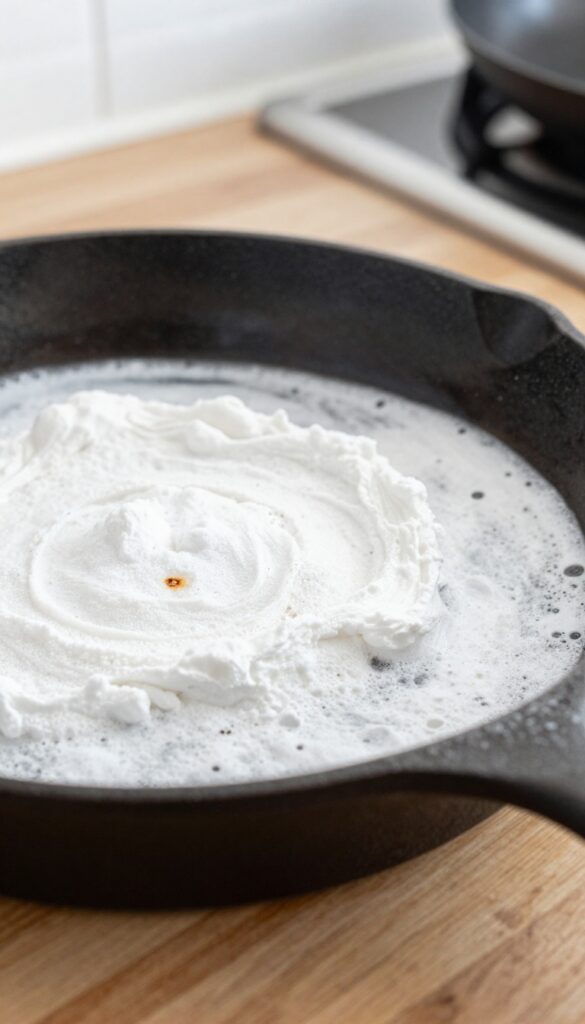
Baking soda is one of those kitchen staples that does more than just help cookies rise. It’s a gentle abrasive that can tackle light to moderate rust without damaging the seasoning or the iron itself. When mixed with water into a thick paste, it becomes a targeted rust remover that’s easy to control and rinse off.
This method is best for spot rust or small areas that need a little extra attention. It's also a great first step before you move on to more aggressive techniques like vinegar soaks or steel wool. The paste stays put, so you can focus it exactly where it’s needed.
Making The Paste
Mix three parts baking soda to one part water in a small bowl. Stir until it forms a spreadable paste that’s not too runny. You want it thick enough to cling to the pan’s surface without dripping off.
Adjust the ratio if needed—a little more water if it’s too dry, a little more baking soda if it’s too wet.
Applying And Waiting
Use a clean cloth or your fingers to spread the paste over the rust spots in a layer about 1/8 inch thick. Let it sit for at least 15 minutes—longer if the rust is stubborn. The baking soda works by lifting the rust particles away from the iron, so patience pays off.
Scrubbing And Rinsing
After the wait, scrub the paste into the rust using a non-scratch scrub pad or a soft-bristle brush. Use circular motions and a bit of pressure. Rinse with warm water and dry immediately.
Repeat if any rust remains. This method is gentle enough that it won’t hurt the pan’s surface.
6. Use a Rust Eraser or Fine-Grit Sandpaper
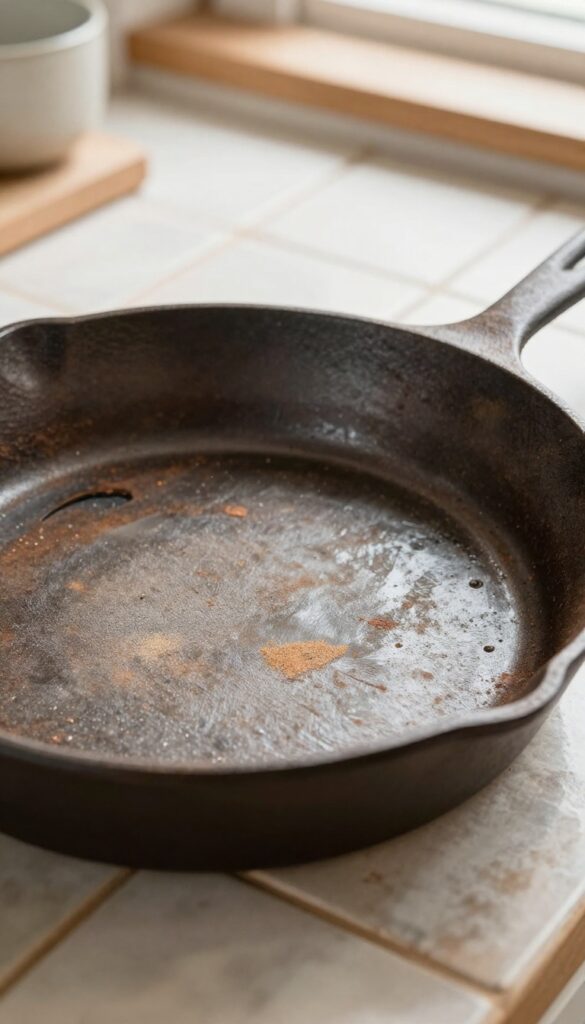
Sometimes rust is stubborn and won't budge with gentler methods. That's when you bring in the abrasives. A rust eraser or fine-grit sandpaper can target those last patches without damaging the iron underneath—if you go easy on the pressure.
For tough rust spots, sanding is a fast and effective way to restore the surface. The key is using the right grit and a light touch to avoid gouging the metal.
Pick The Right Grit
Start with 120-grit sandpaper or a rust eraser block. Coarser grits (like 60 or 80) can scratch the iron too deeply, making reseasoning harder. Fine-grit is safer and still removes rust quickly.
Sand In One Direction
Move the sandpaper in straight lines—back and forth or in circles—but keep it consistent. This helps you see which areas you've covered and avoids uneven wear. Don't press hard; let the abrasive do the work.
Check And Clean As You Go
Wipe away dust with a dry cloth every few strokes. This lets you see how much rust is left and prevents grit from scratching the iron further. Stop as soon as the metal looks clean and smooth.
Finish With A Wash
After sanding, wash the pan with warm water and mild soap to remove all dust and grit. Dry it immediately with a towel, then place it on a warm stove to evaporate any remaining moisture. It's now ready for reseasoning.
7. Electrolysis for Heavy Rust Removal
For pans that look more like rust sculptures than cookware, electrolysis is the nuclear option. It uses a low-voltage electrical current to lift rust off without any scrubbing or abrasion. The setup is straightforward and uses common household items, making it surprisingly accessible for a DIY project.
What You'll Need
Gather a plastic tub (large enough to submerge the pan), a manual battery charger (not automatic), a piece of scrap steel or rebar for the anode, a box of washing soda (sodium carbonate), and distilled water. Avoid stainless steel or galvanized metal for the anode, as they release toxic fumes.
Setting Up The Tank
Fill the tub with distilled water and add washing soda (about 1 tablespoon per gallon). Stir to dissolve. Place the anode in the water, ensuring it doesn't touch the pan.
Connect the positive (red) clamp to the anode and the negative (black) clamp to the pan. Plug in the charger—you'll see bubbles forming on the pan as the rust lifts off.
Safety And Cleanup
Do this in a well-ventilated area, and never leave the setup unattended. After 12–24 hours, the rust will have sloughed off. Unplug the charger before removing the pan.
Rinse the pan thoroughly with water and dry immediately. You'll be left with bare gray iron, ready for seasoning.
8. Clean with a Chainmail Scrubber
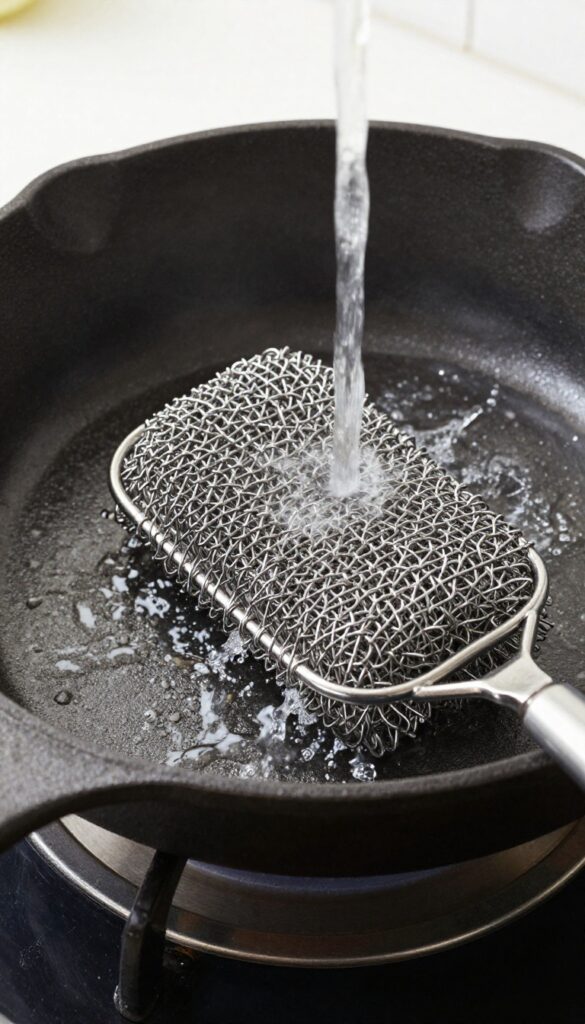
A stainless steel chainmail scrubber is a game-changer for cast iron care. It's tough enough to knock off rust and stuck-on food but gentle enough to leave your seasoning intact. Unlike steel wool or abrasive pads, chainmail won't scratch the surface or strip away the nonstick layer you've worked hard to build.
Chainmail scrubbers are made from interlinked stainless steel rings that create a flexible, durable scrubbing surface. They're specifically designed for cast iron and work by catching on rust particles and food residue, pulling them away without damaging the seasoning. Use it with warm water and a drop of mild soap for best results.
Rinse and dry immediately after scrubbing.
Why Chainmail Works So Well
The key is the material. Stainless steel is harder than rust but softer than cast iron's seasoning layer. So when you scrub, the rings dislodge rust flakes and carbon buildup without scraping off the polymerized oil.
Plus, the open weave allows water and soap to flow through, rinsing away debris easily.
How To Use A Chainmail Scrubber
Start by rinsing your pan with warm water to loosen any loose particles. Add a small amount of mild dish soap—yes, it's okay to use soap on seasoned cast iron in moderation. Scrub in a circular motion, focusing on rusty spots.
Rinse thoroughly and dry with a towel or by heating on the stove. For stubborn rust, you can add a bit of coarse salt as an additional abrasive.
Caring For Your Scrubber
Chainmail scrubbers are dishwasher safe, but hand washing with soap and water works just fine. Rinse them well and let them air dry to prevent any water spots. They last for years, making them a cost-effective tool for your cast iron maintenance kit.
9. Try a Commercial Rust Remover (Evapo-Rust)
Sometimes you just want the rust gone without scrubbing for an hour. Commercial rust removers like Evapo-Rust are designed to dissolve rust chemically, and they're safe for cast iron. You simply submerge the pan and let the solution do the work.
Evapo-Rust is a water-based, non-toxic formula that chelates rust, meaning it bonds with the iron oxide and lifts it away. It won't damage the underlying metal or your skin, and it's biodegradable. For heavily rusted pans, this can save hours of elbow grease.
How To Use Evapo-rust On Cast Iron
First, degrease the pan to remove any oil or seasoning. Submerge it completely in Evapo-Rust—use a plastic tub or a heavy-duty garbage bag lined with a container. Leave it for 2 to 4 hours; for thick rust, overnight works too.
After soaking, rinse with water and dry immediately. The rust will be gone, leaving bare gray iron.
Pros And Cons Of Chemical Removers
The biggest pro is minimal effort—no scrubbing required. It's also safe for use indoors since it's non-toxic and odorless. On the downside, you need enough solution to fully submerge the pan, which can get pricey for large skillets.
Also, it removes all existing seasoning, so you'll need to re-season from scratch.
What To Do After Using A Rust Remover
Once the rust is gone, rinse the pan thoroughly with water and dry it on the stove over low heat. Apply a thin layer of oil and bake it at 400°F for an hour to build a new seasoning. Your pan will be like new—no rust, ready to cook.
10. Use a Self-Cleaning Oven Cycle
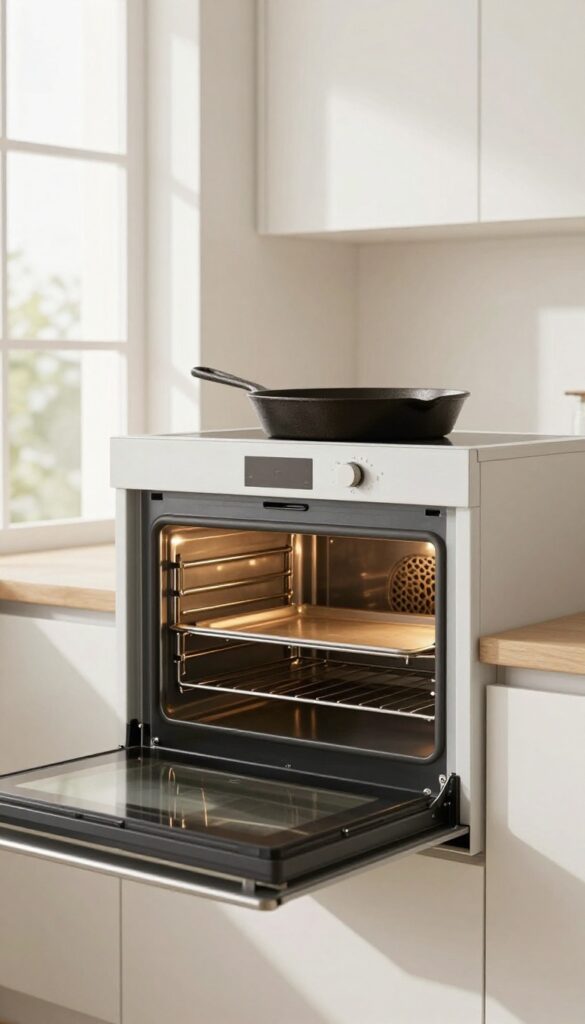
If you have a self-cleaning oven, you can let it do the hard work for you. The intense heat—typically around 900°F—burns rust and old seasoning into ash that wipes away effortlessly. This method is perfect for heavily rusted pans that need a complete reset.
This approach requires almost no scrubbing, but it does demand caution. The high heat can warp thin cast iron or damage handles, so it's best for thick, sturdy pans. Always remove any plastic or wooden handles first, and make sure your oven's self-cleaning cycle is in good working order.
Also, expect some smoke and odor as the rust and residue burn off—open windows and run your kitchen vent.
How To Do It Safely
Place the rusty cast iron upside down on the top oven rack (with a baking sheet on the lower rack to catch any drips). Close the oven door and start the self-cleaning cycle. Let it run the full cycle, then wait for the oven to cool completely before opening it.
You'll find a pile of gray ash where the rust used to be.
After The Cycle
Once cool, wipe the ash off with a damp cloth. The pan may look dull or slightly pitted, but that's normal. Rinse with warm water and dry immediately.
You'll need to re-season the pan from scratch, so apply a thin layer of oil and bake it at 450°F for an hour.
When To Skip This Method
Avoid this technique if your pan is thin, has cracks, or if the oven's self-cleaning feature is known to run hot. Some ovens can exceed 1000°F, which may cause warping. Also, never use this method for enameled cast iron—the high heat will crack the enamel.
11. Scrub with a Pumice Stone
If you've got stubborn rust spots that won't budge with soap and a brush, a pumice stone might be your new best friend. These lightweight volcanic rocks are abrasive enough to scrub away rust but gentle enough not to gouge your cast iron's surface. You'll be amazed at how quickly that orange mess disappears.
Grab a pumice stone from the cleaning aisle or online—they're cheap and last forever. Wet both the stone and your pan thoroughly; dry scrubbing can scratch. Rub the stone in small circles over the rust spots, applying light to moderate pressure.
Rinse and check your progress often. The stone will gradually wear down, exposing fresh abrasive surface. Once the rust is gone, wash the pan with soap and water, dry it immediately, and apply a thin layer of oil to prevent flash rusting.
This method works best on flat surfaces like the cooking surface or sides, not on rough, pitted areas where the stone might catch.
Why A Pumice Stone Works
Pumice is a natural abrasive made from hardened volcanic foam. Its porous structure makes it rough enough to scrape off rust without being harsh on the iron underneath. Unlike steel wool or sandpaper, pumice won't leave deep scratches that can trap moisture and cause more rust.
It's also reusable—just rinse it off after each use.
How To Use It Safely
Always wet the pumice stone and the pan before scrubbing. This lubricates the surface and reduces friction, preventing scratches. Work in small sections and use a circular motion.
Check your progress frequently to avoid over-scrubbing. If the stone feels too rough, you can smooth its edges on concrete or a brick before use.
When To Skip This Method
Avoid pumice stones on enameled cast iron—the abrasive can chip the coating. Also skip it if your pan has deep pitting or flaking seasoning; the stone might remove more seasoning than you want. Stick to this method for surface rust on bare cast iron only.
12. Neutralize Rust with Cream of Tartar
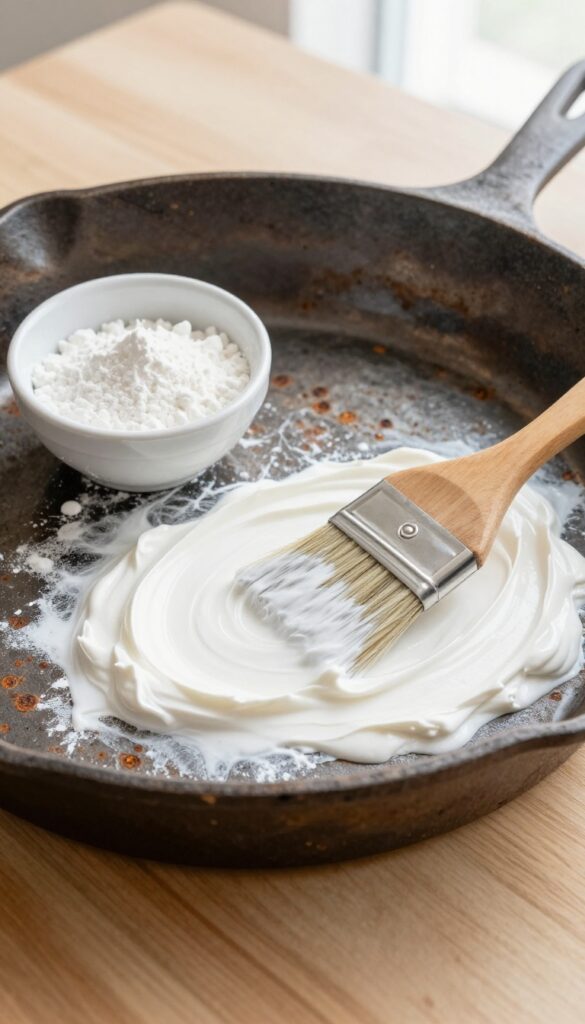
Cream of tartar isn't just for stabilizing egg whites—it's a surprisingly effective rust remover. This pantry staple is a mild acid that gently lifts rust without damaging the iron underneath. It's especially handy for light to moderate rust spots that haven't eaten deep into the metal.
To use it, mix cream of tartar with just enough water to form a thick paste. Apply the paste directly to the rusted areas, making sure to cover them completely. Let it sit for about 20 minutes—the acid will start breaking down the rust.
Then, scrub with a non-abrasive brush or sponge. Rinse thoroughly and dry immediately. You'll likely see the rust fade or disappear entirely.
For stubborn spots, repeat the process or let the paste sit longer.
Why It Works
Cream of tartar is potassium bitartrate, a mild acid that reacts with iron oxide (rust) to form a soluble compound that can be scrubbed away. Unlike harsh chemicals, it's gentle on the cast iron's surface and won't strip the seasoning if used sparingly.
Best Practices
Always dry your pan immediately after rinsing to prevent new rust from forming. If you're planning to reseason afterward, make sure the pan is completely dry and apply a thin layer of oil before storing. For extra tough rust, you can add a splash of lemon juice to the paste to boost acidity.
13. Rinse and Dry Immediately After Cleaning
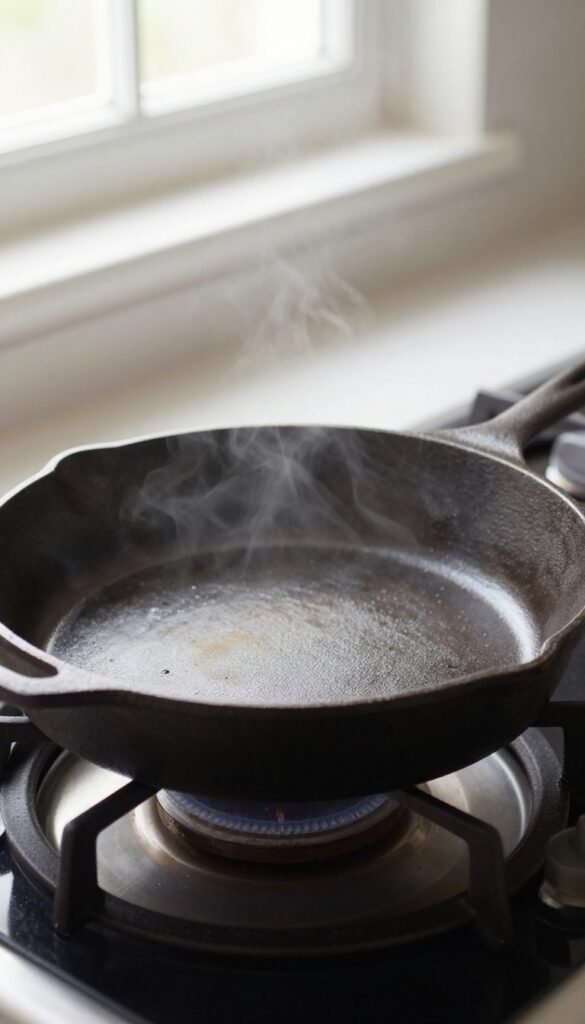
You've scrubbed off the rust, and the pan looks clean. But the job isn't done yet. If you leave it wet or damp, flash rust can form in minutes, undoing all your hard work.
That's why rinsing and drying right away is a critical final step.
After any rust removal method—whether you used vinegar, a scrubber, or baking soda—rinse the pan thoroughly with warm water to remove all residues. Then dry it completely. The fastest way is to place it on a low-heat burner for a few minutes until all moisture evaporates.
Alternatively, use a clean towel and dry it thoroughly, including the handle and exterior. Once dry, apply a thin layer of oil to protect the surface and prevent new rust from forming.
Why Flash Rust Happens
Cast iron is highly reactive. When the protective seasoning is stripped away during rust removal, the bare metal is exposed to oxygen and moisture. Even a thin film of water can trigger flash rust—a light orange layer that appears almost instantly.
Drying immediately stops this chemical reaction.
How To Dry On The Stove
Set your burner to low or medium-low and place the pan upside down or right-side up. Let it heat for 2–3 minutes until all water sizzles away. Watch closely to avoid overheating, which can warp the pan.
Once dry, turn off the heat and let it cool slightly before oiling.
Towel Drying Tips
Use a lint-free cloth or paper towel to wipe every surface. Don't forget the handle and the bottom—water can hide there. If you see any orange tint on the towel, you may need to re-rinse and dry more aggressively.
A second pass with a fresh towel ensures no moisture remains.
14. Apply a Thin Layer of Oil to Prevent Flash Rust
You've scrubbed off the rust, and the pan looks clean. But if you leave it bare for more than a few minutes, especially in humid air, flash rust can appear almost instantly. That orange haze is frustrating, but it's easy to prevent with a simple step: oiling right after drying.
Once your pan is fully dry—either on the stove or in a warm oven—grab a high-smoke-point oil like vegetable, flaxseed, or grapeseed oil. Pour a tiny amount (about a teaspoon) onto a lint-free cloth or paper towel and rub it all over the pan, inside and out. The goal is a very thin, even layer.
Too much oil will leave a sticky residue, so wipe off any excess with a clean cloth. This oil layer seals the iron from moisture and creates a protective barrier until you're ready to season or cook.
Why Flash Rust Happens
Bare cast iron is extremely reactive. When exposed to oxygen and moisture, iron atoms oxidize rapidly, forming rust. This process speeds up if the pan is still slightly damp or if the air is humid.
Oiling immediately after drying stops oxygen from reaching the metal surface.
Best Oils For The Job
Vegetable oil, flaxseed oil, and grapeseed oil are top choices because they polymerize well, meaning they bond to the iron and form a hard, protective coating. Avoid olive oil—it has a low smoke point and can become sticky. Canola oil works in a pinch, but flaxseed oil gives the most durable finish.
How To Apply Without Over-oiling
Use a clean, lint-free cloth or a paper towel. Apply a few drops of oil to the cloth, then rub it into the pan in circular motions. The surface should look glossy but not wet.
If you see puddles or drips, wipe them off. A good test: after rubbing, the pan should feel slightly slick but not greasy to the touch.
15. Re-Season Your Pan in the Oven
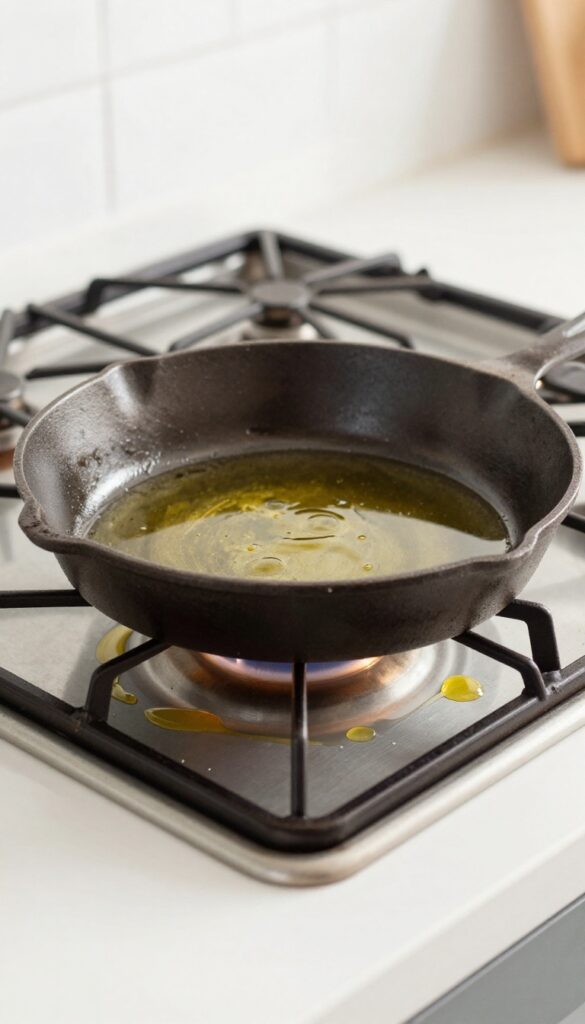
You've scrubbed off the rust, and the pan looks clean. But if you stop there, the rust will come back fast. The real secret to a lasting finish is a proper oven seasoning that bonds oil to the iron at a molecular level.
This step turns a bare, vulnerable surface into a slick, non-stick shield.
Oven seasoning is the final and most important step in restoring cast iron. Without it, your pan is just bare metal waiting to oxidize again. The heat causes the oil to polymerize, creating a hard, smooth coating that protects against moisture and makes cooking a breeze.
It's not complicated, but doing it right makes all the difference.
Choose The Right Oil
Not all oils are created equal for seasoning. You want one with a high smoke point and a neutral flavor. Flaxseed oil, grapeseed oil, or vegetable shortening work great.
Avoid olive oil or butter—they burn at lower temperatures and leave a sticky residue.
Apply A Thin, Even Layer
Pour a small amount of oil onto the pan and wipe it all over—inside, outside, handle, and bottom. Then take a clean cloth and try to wipe it all off. Yes, really.
You want only a microscopic film left. Too much oil will pool and create a tacky, uneven finish.
Bake Upside Down For An Hour
Place the pan upside down on the middle oven rack with a baking sheet or foil on the lower rack to catch drips. Bake at 450°F for one hour. Then turn off the oven and let the pan cool inside.
Repeat this process 2-3 times to build up a durable, non-stick layer.
FAQ
Can I use soap to clean rusty cast iron?
Yes, mild dish soap is fine for removing rust residue after scrubbing. Modern soaps won't damage seasoning if used sparingly.
How long should I soak cast iron in vinegar?
Soak in 50/50 vinegar-water for 30-minute intervals. Check frequently; longer than an hour can pit the iron.
Will baking soda damage cast iron?
No, baking soda is mildly abrasive but safe for cast iron. It helps remove rust without scratching the surface.
Can I use steel wool on cast iron?
Yes, fine-grade steel wool (0000) is effective for rust removal. Avoid coarse grades that can scratch the iron.
How do I prevent rust after cleaning?
Dry the pan thoroughly and apply a thin layer of oil immediately. Store in a dry place with a paper towel inside to absorb moisture.
Conclusion
Rusty cast iron doesn't have to mean the end of your favorite pan. With a little effort and the right method, you can strip away the corrosion and start fresh. Each of these 15 tips offers a different approach, so pick the one that fits your tools and comfort level.
Once the rust is gone, a proper re-seasoning will have your skillet cooking like new again. Don't be afraid to experiment—cast iron is tough and forgiving. Your pan has plenty of life left, and now you know exactly how to bring it back.