15 Stylish Grey Shower Tile Ideas with Warm, Personal Appeal
Grey tile doesn't have to feel cold or sterile—it can be the warm, grounding anchor your bathroom needs. The trick is choosing shades with subtle beige or brown undertones and pairing them with the right grout and texture.
Whether you're dealing with a cramped powder room or a spacious master bath, these 15 ideas turn a practical surface into a personal statement. From handcrafted zellige to vintage basketweave, each option solves a specific design puzzle.
Let's explore how to make grey work with your style, not against it.
1. Warm Grey Subway Tiles with Beige Grout
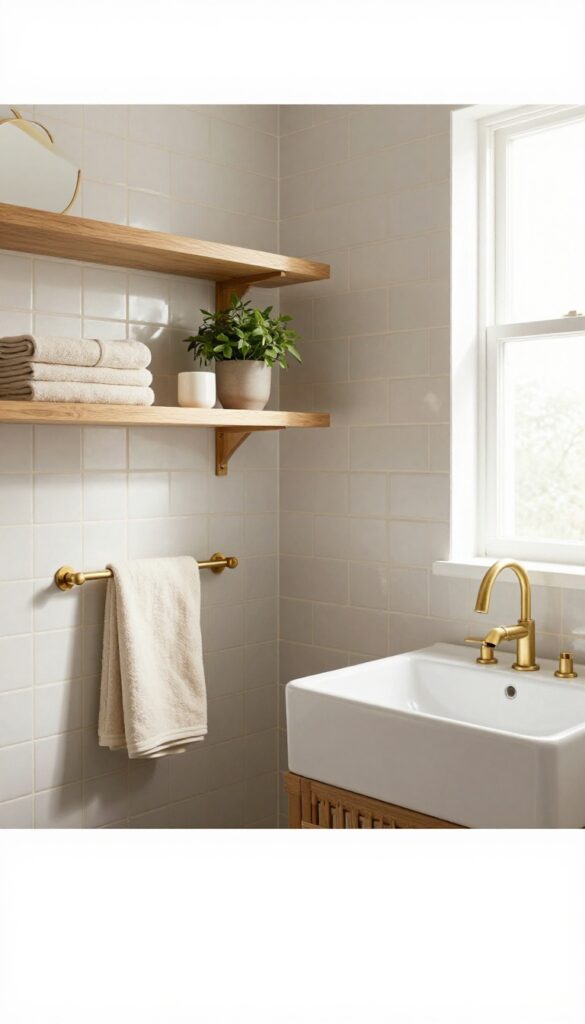
Subway tiles are a timeless choice, but the grout color can make or break the vibe. White grout often reads crisp and cool, which might feel stark against grey. Switching to a beige or warm-toned grout softens the whole look and brings out the cozy undertones in the tile.
This pairing works because the beige grout bridges the grey tile with warm wood accents, brass fixtures, or natural stone countertops. It’s an easy way to keep the classic subway pattern while making the space feel more inviting.
Why Beige Grout Works
Beige grout adds warmth without overpowering the grey. It creates a subtle contrast that highlights the tile shape, but the overall effect stays soft and cohesive. Plus, beige hides dirt better than white, so it’s practical for busy bathrooms.
Choosing The Right Grey
Look for grey tiles with a hint of taupe or greige—not too blue or too cool. A warm grey like ‘greige’ pairs beautifully with beige grout. Test samples in your lighting, because the same tile can look different under warm bulbs versus natural light.
Styling Around The Combo
Once your tiles are up, lean into the warmth. Add wooden shelves, a rattan mirror, or brushed brass fixtures. Keep the rest of the palette neutral—cream, sand, or soft white—to let the tile and grout shine.
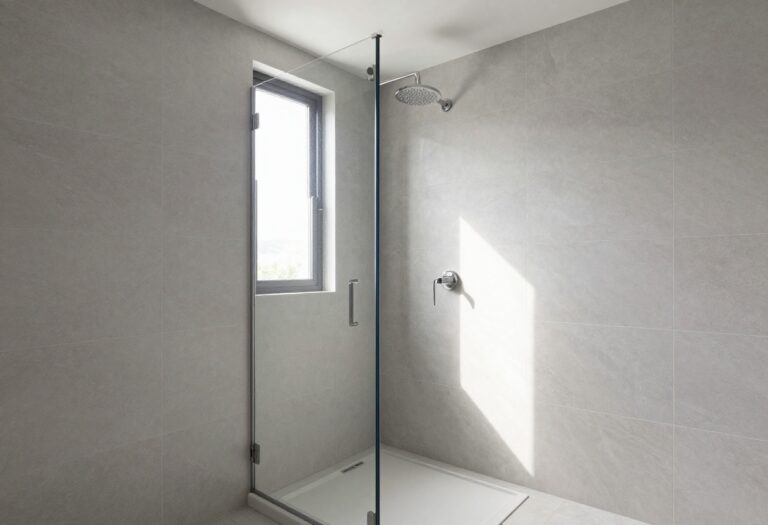
2. Large-Format Grey Porcelain for a Seamless Spa Feel
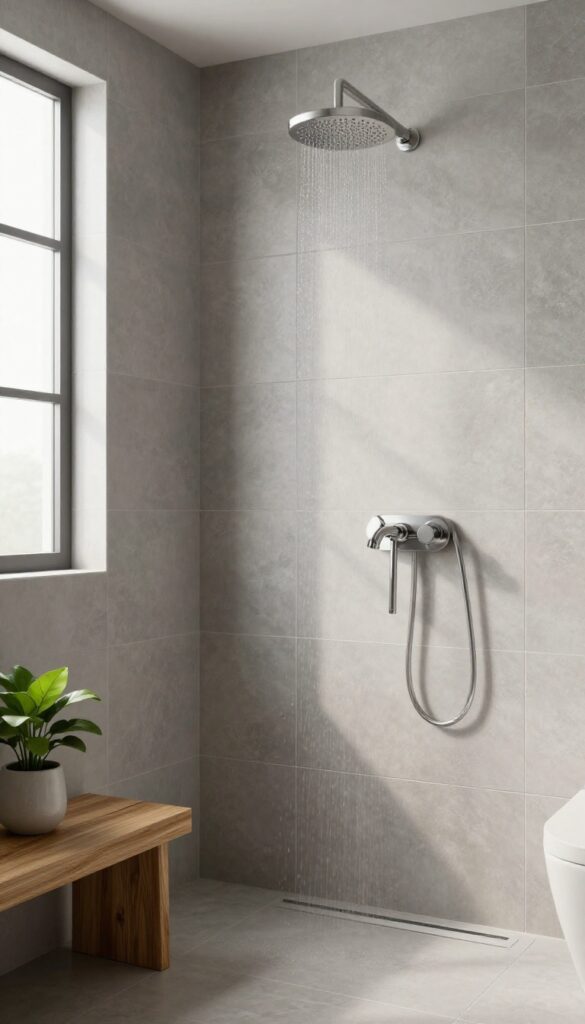
Big tiles do more than just cover wall space—they change how the whole room feels. Large-format grey porcelain, especially rectified edges, creates long, clean lines that visually expand a shower. With fewer grout lines to interrupt the surface, the tile acts like a smooth, continuous backdrop, which instantly reads as calm and high-end.
It's a look that feels both modern and timeless, and it's surprisingly easy to live with.
The secret to that seamless spa look is all in the size and finish. Rectified tiles are cut to exact dimensions, so you can lay them with ultra-thin grout lines—sometimes as slim as 1/16 inch. That tight joint makes the wall look almost monolithic, like one solid slab rather than individual tiles.
The effect is clean, quiet, and very luxurious. Plus, fewer grout lines mean less scrubbing, which is a win for anyone who wants a beautiful shower without the upkeep. Choose a grey with a subtle warm undertone—like greige or a soft mushroom—to keep the space feeling cozy, not cold.
Why Size Matters In A Shower
When you use large tiles, the eye reads the wall as a single surface, which makes the shower feel bigger and more open. In a small bathroom, that can be a game-changer. Big tiles also mean fewer cuts and less waste, so installation can be quicker and more budget-friendly.
Just make sure your walls are flat—large-format tiles will show any imperfection, so a little prep work goes a long way.
Choosing The Right Finish And Tone
Matte or satin finishes are your best bet for a spa-like vibe—they soften the light and hide water spots better than high-gloss. For the color, stay away from cool, blue-grey shades if you want warmth. Instead, look for greiges, warm greys, or those with a hint of taupe.
These tones pair beautifully with natural wood accents, brushed brass fixtures, and plush white towels, creating a balanced, inviting space.
Installation Tips For A Flawless Look
To get that seamless effect, use a leveling system during installation to keep the large tiles perfectly flush. And when it comes to grout, choose a color that blends with the tile—a slightly lighter or darker shade of grey works well. Avoid stark white grout, as it can create a grid pattern that breaks up the smoothness.
Also, consider a continuous layout from floor to ceiling to really stretch the visual height of the shower.
3. Hexagon Tiles with a Matte Finish
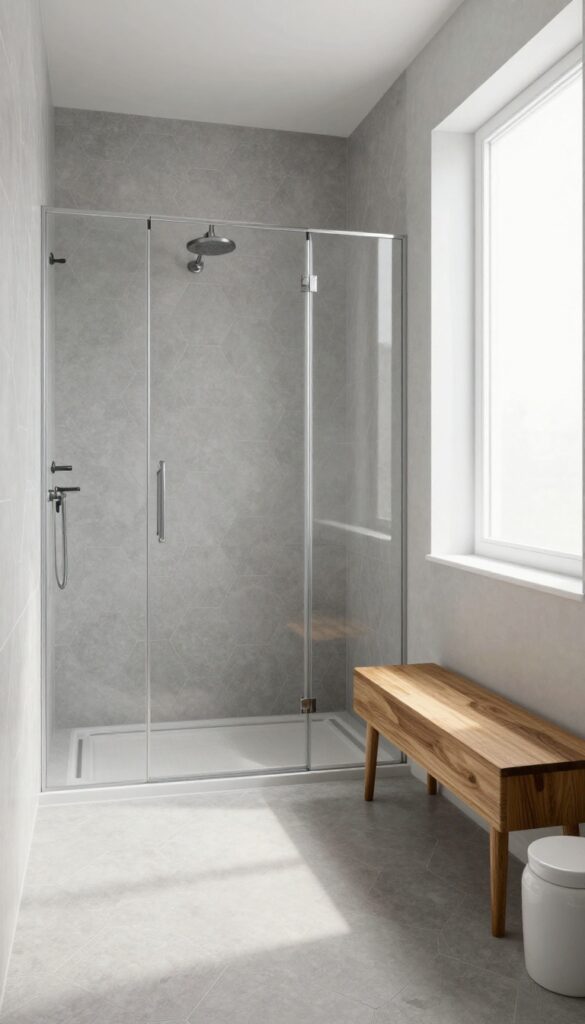
Hexagons have a way of making any surface feel more intentional, and when you choose a matte finish in a mid-grey, the effect is quietly striking. The soft, non-reflective surface catches light differently than glossy tiles, giving the walls or floor a subtle, tactile quality that feels both modern and grounded. It's a simple swap that adds depth without shouting for attention.
Matte hexagon tiles are a favorite for good reason: they bring texture and visual rhythm to a shower without overwhelming the space. The mid-grey shade sits comfortably between light and dark, so it works with a variety of color palettes—from crisp white fixtures to warm wood accents. The matte finish also hides water spots and soap scum better than glossy options, which is a practical bonus for a busy bathroom.
Why Matte Beats Glossy In The Shower
Glossy tiles reflect light, which can make a small shower feel brighter, but they also show every streak and drip. Matte tiles, on the other hand, diffuse light and mask minor imperfections. In a wet environment, that means less time wiping down surfaces and more time enjoying the space.
Plus, the soft sheen feels more organic and less clinical, which aligns with the warm, personal vibe you're going for.
Playing With Scale And Layout
Hexagons come in all sizes, and the scale you pick changes the whole feel. Large-format hexagons (think 8 inches or bigger) create a seamless, almost contemporary look with fewer grout lines. Smaller hexagons, like 2-inch mosaics, add more texture and a classic honeycomb pattern that feels intricate and handmade.
For a shower floor, small hexagons provide extra grip and visual interest; for walls, larger ones keep the eye moving without feeling busy.
Grout Colors That Make It Pop Or Blend
Grout is the secret weapon with hexagon tiles. A contrasting grout—say, warm white or soft beige—will highlight the geometric shape and make the pattern stand out. If you prefer a more uniform look, choose grout in a similar grey tone to create a smooth, monochromatic surface.
Warm-toned grout can also counteract any coolness in the grey, tying the whole shower together.
4. Grey Herringbone Pattern for a Touch of Elegance
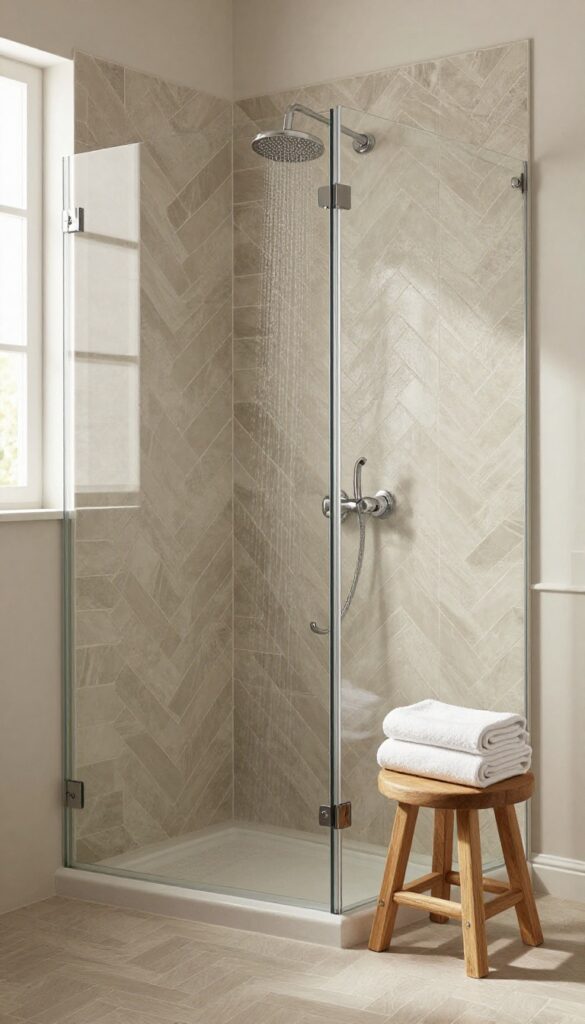
Herringbone is one of those patterns that instantly elevates a space without shouting for attention. The zigzag layout adds movement and depth, making even a simple grey tile feel rich and considered. It’s a classic choice that brings a tailored, almost bespoke quality to your bathroom—perfect if you want warmth through geometry rather than color.
The herringbone pattern works because it draws the eye along the lines, creating a sense of flow and sophistication. When done in grey, it balances the pattern’s formality with a soft, neutral backdrop, so the result feels elegant but not stiff. The key is to choose the right tile size and finish—longer rectangles with a matte or subtle textured surface tend to highlight the pattern best, while glossy tiles can make the zigzag feel busier.
Why Herringbone Feels Warmer Than You Think
Herringbone’s diagonal lines break up the monotony of straight rows, which adds visual interest and a handcrafted feel. The pattern also catches light differently depending on the angle, giving the wall a soft, dynamic shimmer. When you pair it with warm-toned grey—think greige or a grey with brown undertones—the overall effect feels cozy and inviting, not cold.
Choosing The Right Tile Size And Finish
For herringbone, the tile’s proportions matter. Classic rectangular tiles like 3×6 or 4×12 work well, but you can also go for longer planks (like 3×12) for a more modern look. A matte finish hides water spots and adds a subtle texture that feels warm to the touch.
If you prefer a bit of shine, a satin or low-gloss finish will still keep the elegance without being too reflective.
Grout Colors That Enhance The Pattern
Grout is your secret weapon with herringbone. A grout color close to the tile (like warm grey or beige) lets the pattern blend softly, creating a cohesive, seamless look. For more contrast, a slightly darker grout defines each zigzag and makes the pattern pop.
Just avoid stark white grout with light grey tiles—it can look harsh and draw attention away from the warmth you’re trying to create.
Where To Use Herringbone In Your Bathroom
Herringbone is versatile—use it as a full wall feature behind the vanity, a shower surround, or even a backsplash. In a small powder room, a herringbone accent wall can add depth without overwhelming the space. For a larger bathroom, consider using it on the floor with a coordinating solid tile on the walls to keep the room balanced.
5. Textured Grey Stone-Look Tiles
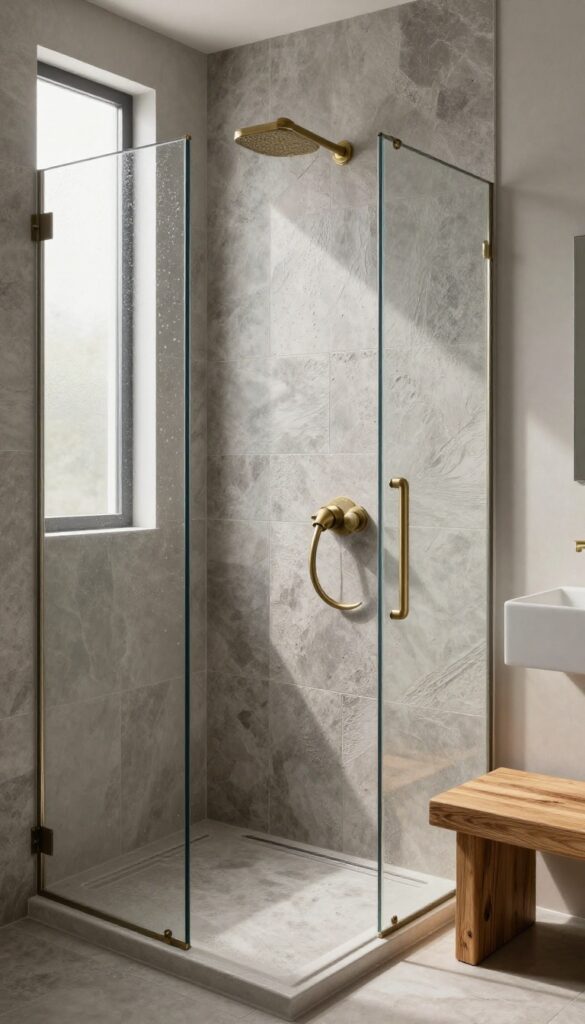
If smooth, polished surfaces feel a bit too clinical for your taste, textured stone-look tiles offer a different kind of warmth. These porcelain tiles mimic the natural cleft of slate or the rugged surface of travertine, bringing an organic, earthy quality to the shower. The tactile feel underfoot and on the walls adds depth that flat tiles simply can't match.
What makes this option so appealing is how it balances grey's calm neutrality with the raw character of natural stone. The subtle variations in tone and texture create a surface that feels alive, catching light and shadow in interesting ways. It's a way to get the look of a high-end spa without the maintenance that real stone demands.
Stone-look porcelain tiles are a practical choice for showers because they offer the beauty of natural stone with better durability and easier upkeep. The textured surface provides slip resistance, which is a bonus for wet areas. Plus, the earthy undertones in many grey stone-look tiles—like warm greige or taupe-grey—help the space feel inviting rather than stark.
When selecting these tiles, pay attention to the finish. A matte or honed finish will enhance the natural feel, while a polished one might defeat the purpose. Also consider the size: larger formats create a seamless, modern look, while smaller tiles in a mosaic pattern add more texture and grip.
To complete the aesthetic, pair these tiles with warm wood accents or brushed brass fixtures. The contrast between the rugged tile and sleek metal adds visual interest without clashing. For grout, choose a color that blends with the tile to keep the focus on the texture, or go slightly darker for a more defined grid.
Why Texture Matters In A Shower
Texture does more than just look good—it changes how the space feels. A textured surface catches light differently, creating subtle shadows that add depth. It also provides a sensory experience; running your hand along a cleft slate tile feels grounding and natural.
In a shower, where everything is wet and slippery, texture adds a practical layer of safety without sacrificing style.
Choosing The Right Shade Of Grey
Not all greys are created equal. For a warm, personal appeal, look for stone-look tiles with beige, brown, or taupe undertones. These warm greys blend seamlessly with natural materials like wood and stone, making the bathroom feel cozy.
Avoid cool, blue-grey tones if you're aiming for warmth—they can make the space feel cold and clinical.
Pairing With Grout And Fixtures
The grout color can make or break the stone-look effect. For a seamless, natural appearance, choose a grout that matches the tile's background color. If you want to highlight the texture, use a slightly darker grout to outline each tile.
For fixtures, brushed nickel or oil-rubbed bronze complement the earthy vibe, while chrome might feel too sleek and modern.
6. Grey Zellige Tiles with Handcrafted Charm
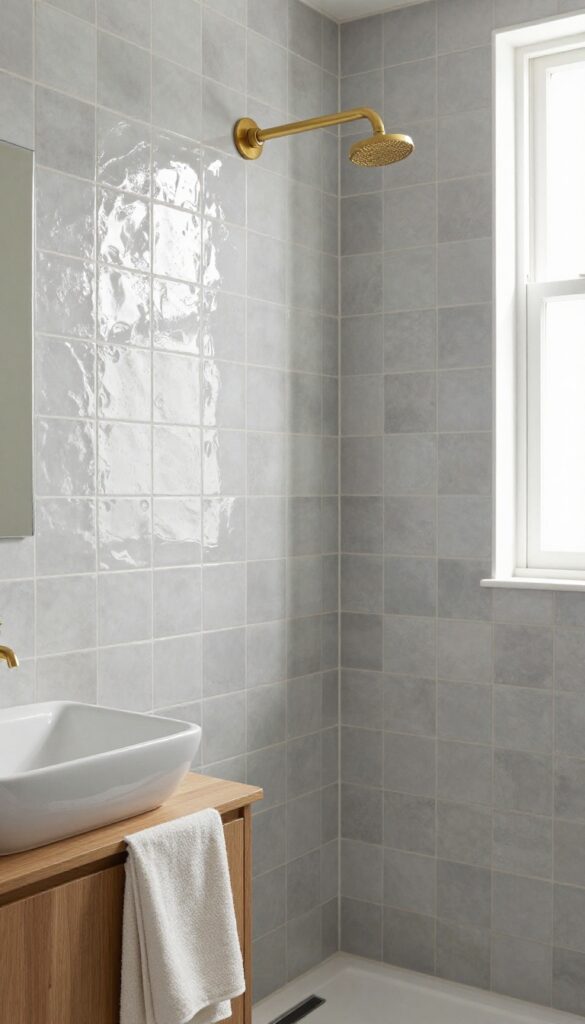
Zellige tiles bring a handcrafted feel that factory-made options just can't replicate. In soft grey, their subtle color shifts and glossy surface catch light in a way that makes the whole room feel alive. If you want warmth without sacrificing the calm neutrality of grey, this is a beautiful route to explore.
The beauty of zellige lies in its imperfections—each tile has slight variations in tone, texture, and edge, which creates a rich, organic surface. The glossy finish reflects light softly, making even a small bathroom feel brighter and more welcoming. Because the tiles are handmade, no two installations look exactly alike, giving your space a one-of-a-kind character.
Why Grey Zellige Feels Warm
Grey zellige often has subtle undertones of beige or brown, which prevents it from feeling cold. The glossy surface adds depth, and the irregular edges create gentle shadows that add visual interest. This combination makes the tile feel more like a natural material than a manufactured product, which is why it pairs so well with warm wood and brass fixtures.
How To Style Grey Zellige
Keep the grout line thin and in a matching grey to let the tile shine. Pair it with matte black or brushed gold fixtures for a modern yet earthy look. Add a wooden vanity or a linen towel to enhance the warmth, and let the tile be the star of the space.
Where To Use Grey Zellige
Grey zellige works beautifully as a full wall treatment in a shower, but it can also be used as a backsplash behind a freestanding tub. For a more subtle touch, try it on a single accent wall or in a niche. The glossy finish makes it easy to clean, so it's practical for everyday use.
7. Vertical Stacked Grey Tiles to Heighten the Room
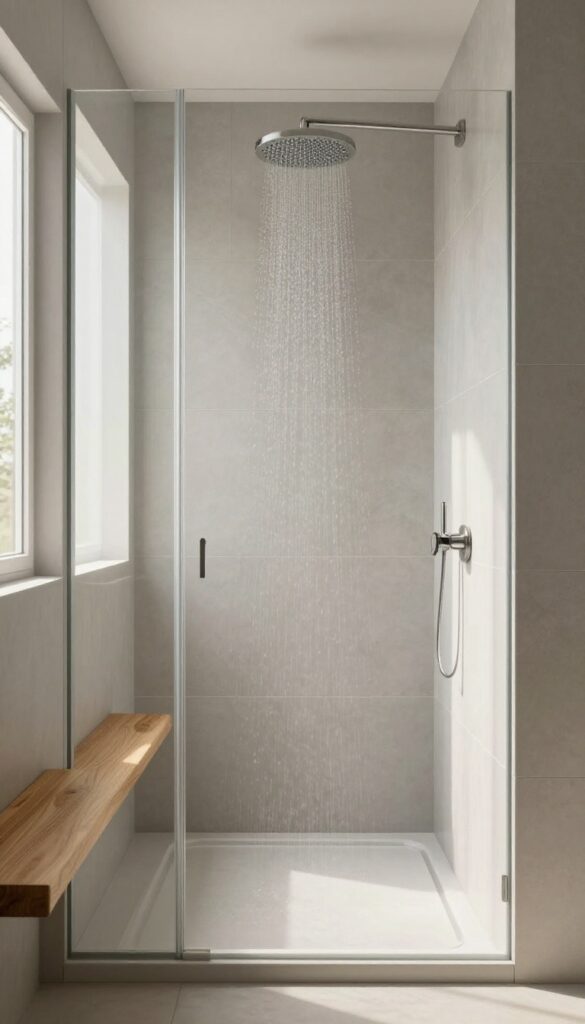
When your shower feels a bit boxy or low, the direction of your tile layout can work wonders. Vertical stacking—where rectangular tiles are set in a straight, upright pattern—creates a visual lift that tricks the eye into seeing more height. It’s a simple change that adds a sense of airiness without sacrificing style.
Vertical stacking is all about elongating the space. Instead of the traditional horizontal brick lay, you turn the tiles 90 degrees and run them from floor to ceiling. This draws the gaze upward, making the ceiling feel higher and the shower more open.
It’s especially effective in small bathrooms or showers with lower ceilings, where every inch of perceived space counts. Beyond the spatial trick, vertical lines bring a clean, modern rhythm to the wall. They pair beautifully with long, narrow tiles—think subway, plank, or even slim rectangles—and work with both glossy and matte finishes.
The result is a look that feels tailored and intentional, not just a default choice.
Choosing The Right Tile Size And Finish
For the strongest vertical effect, go with tiles that are noticeably longer than they are wide—like 3×12 or 4×16 inches. The longer the tile, the more pronounced the upward line. A matte finish in a warm grey (with a hint of beige or brown) keeps the look soft and inviting, while a subtle gloss can add a touch of light reflection without feeling cold.
Grout Color And Contrast
Grout plays a big role in how the vertical lines read. If you want the lines to stand out and emphasize the height, choose a grout that contrasts slightly—like a light warm grey or off-white. For a more seamless, continuous look, pick a grout that matches the tile closely.
Keep in mind that lighter grout can brighten the space, while darker grout adds definition and hides stains better.
Pairing With Fixtures And Accents
Vertical stacking works well with most fixture styles, from sleek modern to classic. To enhance the heightening effect, consider mounting a rain showerhead high up and using a vertical towel rail or a tall niche. Add warm wood tones or brass accents to keep the grey from feeling too cool.
A simple glass shower screen instead of a bulky frame also helps maintain the uninterrupted vertical flow.
8. Grey Penny Tiles for a Playful, Textured Surface
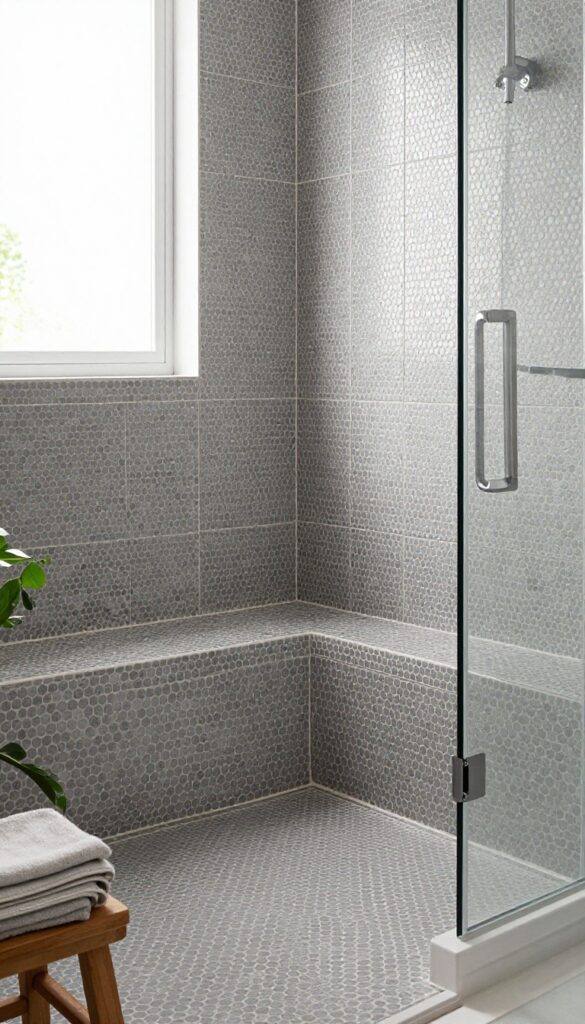
Penny tiles are having a moment, and it's easy to see why. The small, round shapes create a surface that's full of texture and movement, making your shower feel anything but flat. In grey, they strike a perfect balance between playful and polished, so they work in both modern and classic bathrooms.
The best part? The slightly uneven surface feels amazing underfoot, almost like a gentle massage. Plus, the small tiles hide imperfections well and can make a small shower feel more spacious.
If you're after a look that's both fun and sophisticated, grey penny tiles are a solid pick.
Grey penny tiles bring a unique blend of charm and practicality to your shower. Their small size means they conform to curves and corners easily, which is great for niches or benches. The texture they add is subtle but noticeable, giving your walls a soft, tactile quality that flat tiles can't match.
When it comes to grout, you have options. A contrasting white grout makes the penny pattern pop, while a matching grey grout creates a more seamless, modern look. For a warmer feel, consider a warm grey grout that complements the tile's undertones.
Maintenance is easier than you might think. The grout lines are small, so there's less surface area for grime to build up. A simple squeegee after each shower and a regular cleaning routine will keep them looking fresh.
Why Penny Tiles Work In A Shower
Penny tiles are naturally slip-resistant because of their many grout lines, which is a huge plus for a wet floor. They also add a visual texture that makes the space feel dynamic without being overwhelming. The round shape softens the overall look, making it feel more inviting and less stark than square tiles.
Choosing The Right Shade Of Grey
The shade of grey you pick sets the mood. Lighter greys with a hint of warm beige keep things airy and bright, while deeper charcoals add drama and coziness. To keep that warm, personal appeal, look for greys with brown or taupe undertones rather than blue or green ones.
This subtle warmth pairs beautifully with natural wood accents and soft lighting.
Grout Colors That Make A Difference
Grout is more than just a filler—it's a design choice. For a seamless, modern look, choose a grout that closely matches the tile. If you want to highlight the penny shape, go with a contrasting grout like white or off-white.
For a softer, more uniform appearance, a warm grey grout blends everything together nicely. Just make sure to use a high-quality, mold-resistant grout to keep things clean.
9. Warm Grey with Wood-Look Accent Stripe
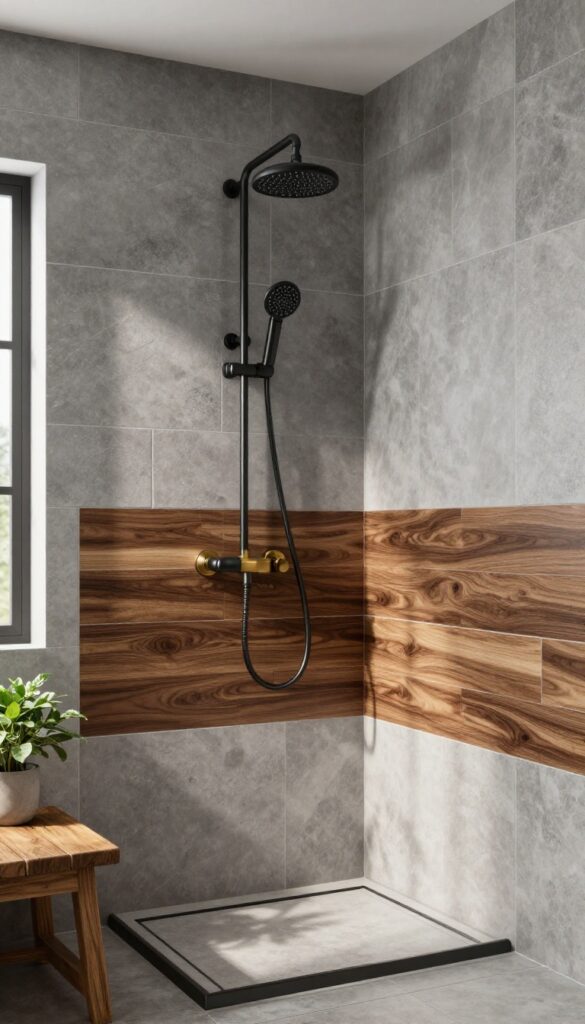
Wood and grey make an unexpected but natural pairing. The cool neutrality of grey tile balances the rich, organic warmth of wood, creating a shower that feels grounded and inviting. A wood-look accent stripe is an easy way to bring that mix in without committing to an all-wood feature wall.
The stripe can run horizontally at eye level, vertically behind the shower bench, or even as a niche accent. It breaks up the monotony of a single tile size and adds a custom touch that feels deliberate. Plus, wood-look porcelain planks are durable and waterproof, so you get the beauty of wood without the maintenance.
Choosing The Right Wood Tone
Pick a wood tone that complements your grey tile's undertone. If your grey has beige or greige undertones, go with a light oak or hickory. For cooler greys, a walnut or espresso wood-look tile adds contrast without clashing.
Test samples in your shower's lighting to see how they interact.
Placement Ideas That Flow
A single horizontal stripe at waist height works well in most showers. For a more unique look, try a vertical stripe behind the showerhead or a diagonal band that adds movement. You can also use wood-look tile to line a recessed shelf or the floor of a niche for a subtle pop.
Grout And Finishing Touches
Use a grout color that blends with the grey tile to keep the focus on the wood stripe. For the wood-look pieces, a slightly darker grout helps define the plank shape. Pair the stripe with matte black fixtures or brushed brass to enhance the warm, personal feel.
10. Grey Chevron Tiles for a Dynamic Focal Point
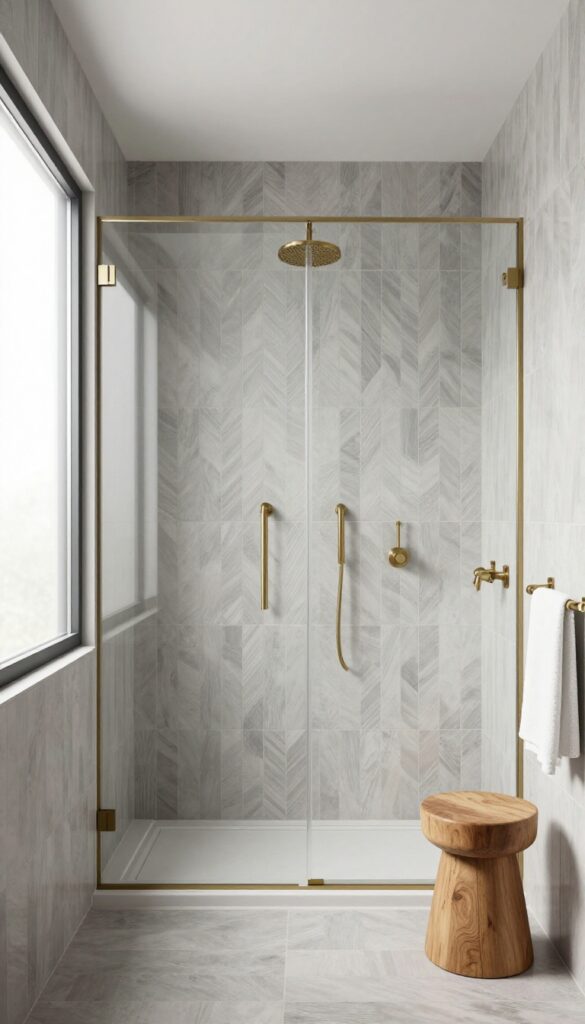
Chevron-patterned grey tiles bring a sense of motion that instantly draws the eye. The V-shaped lines add energy and depth, turning a simple shower wall into a striking feature. With the right grey tones, this pattern feels bold yet inviting, not cold or overpowering.
Chevron tiles are a fantastic way to introduce visual interest without overwhelming the space. The pattern naturally guides the eye upward, making the ceiling feel higher and the shower more expansive. Choose a warm grey with subtle undertones to keep the look cozy and grounded.
Why Chevron Works In Small Showers
In a compact shower, chevron tiles can create the illusion of more space. The diagonal lines trick the eye into seeing a larger area, and the pattern adds texture that distracts from tight corners. Opt for a light-to-medium grey to keep the space feeling airy.
Pairing Grout With Your Chevron Pattern
Grout color can make or break the chevron look. For a seamless, modern feel, choose a grout that closely matches your tile. If you want to emphasize the pattern, go with a contrasting grout—just keep it subtle, like a warm off-white or soft beige, to maintain warmth.
Warm Accents To Balance The Bold Pattern
Since chevron is busy, balance it with warm, simple accents. Think brushed brass fixtures, a wooden stool, or soft beige towels. These elements add a personal touch and prevent the pattern from feeling too stark.
11. Matte Grey Large Tiles with Bold Dark Grout
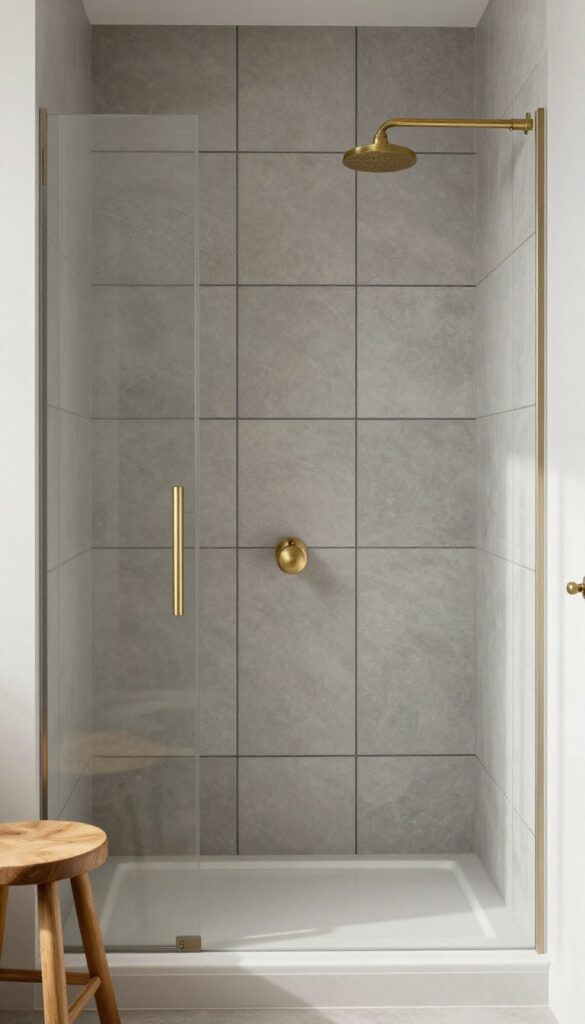
Large format tiles already make a shower feel more expansive, but the grout you choose can completely change the vibe. Pairing matte grey with a bold dark grout creates a strong graphic outline that adds structure without feeling heavy. It's a look that grounds the space, giving it a cozy, anchored feel.
The contrast between the soft matte surface and the crisp dark lines adds a modern, tailored edge. It also helps hide wear and tear, making it a practical choice for busy bathrooms. The dark grout acts like a frame, highlighting the tile's shape and giving the wall a subtle grid pattern that feels intentional.
Why Dark Grout Works With Matte Grey
Matte grey tiles absorb light rather than reflect it, which keeps the shower feeling calm and grounded. Dark grout complements that by adding definition without competing for attention. The result is a look that's both understated and striking, perfect for anyone who wants a bit of drama without going bold.
Choosing The Right Tile Size
Large tiles, like 12×24 or 24×48 inches, minimize grout lines and create a seamless, spa-like feel. When you add dark grout, those fewer lines become more of a feature. The wider the tile, the more each line stands out, so pick a size that matches the scale of your shower.
Bigger tiles work best in larger spaces, while medium formats suit smaller alcoves.
Finishing Touches To Balance The Look
To keep the dark grout from feeling too stark, balance it with warm accents. Think brushed brass fixtures, a wooden stool, or soft lighting. These elements soften the contrast and add a personal touch.
Also, consider a matching dark grout on the floor to tie the whole design together.
12. Grey Basketweave Tiles for Vintage Warmth
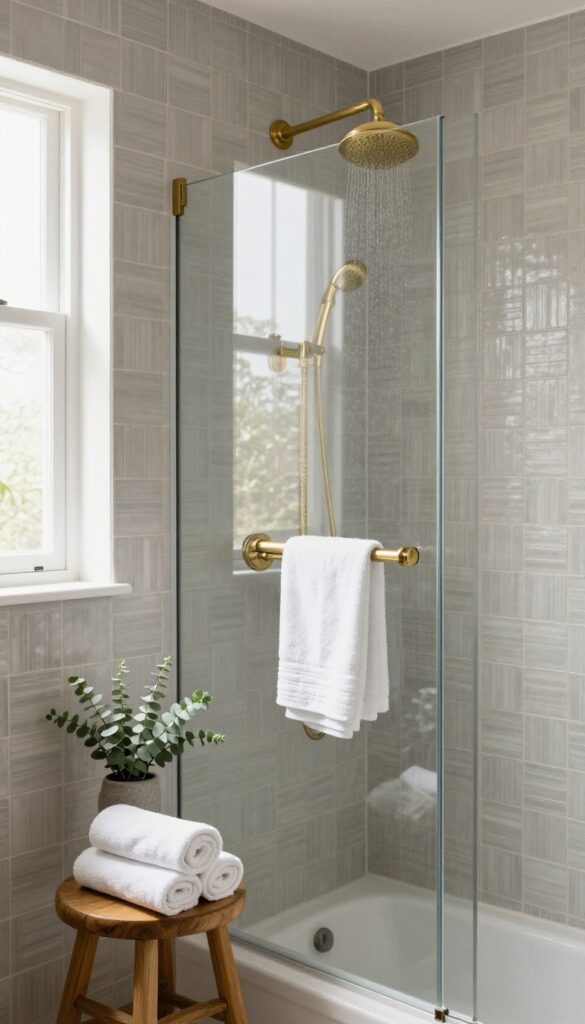
Basketweave patterns have been around for over a century, yet they still feel fresh and inviting. The interlocking weave adds texture and depth, making it a perfect choice for showers that need a touch of character. In grey tones, this classic pattern brings a cozy, vintage warmth that balances the coolness of the color.
When you step into a shower with basketweave tiles, the pattern immediately draws your eye and creates a sense of craftsmanship. Unlike plain subway tiles, basketweave adds visual interest without overwhelming the space. The small, woven pieces catch light in different ways, giving the walls a soft, dimensional look that feels both timeless and personal.
Why Basketweave Works In Grey
Grey basketweave tiles offer the best of both worlds: the classic, handcrafted feel of a vintage pattern with the modern neutrality of grey. The weave pattern breaks up the monotony of a solid color, while grey keeps the overall look calm and versatile. It pairs beautifully with white grout for a crisp, clean look, or with a darker grout to make the pattern pop.
Choosing The Right Shade Of Grey
Not all greys are created equal. For a warm, vintage vibe, look for greys with beige or brown undertones—think greige or warm charcoal. These shades complement the traditional basketweave pattern and prevent the shower from feeling cold.
Avoid blue-greys, as they can make the space feel stark and less inviting.
Pairing With Fixtures And Accessories
To enhance the vintage warmth, pair your grey basketweave tiles with brass or oil-rubbed bronze fixtures. These metals add a touch of old-world charm that echoes the tile's heritage. For the rest of the bathroom, consider natural wood accents or soft, warm lighting to create a cohesive, cozy atmosphere.
13. Grey Tiles with a Subtle Marble Vein
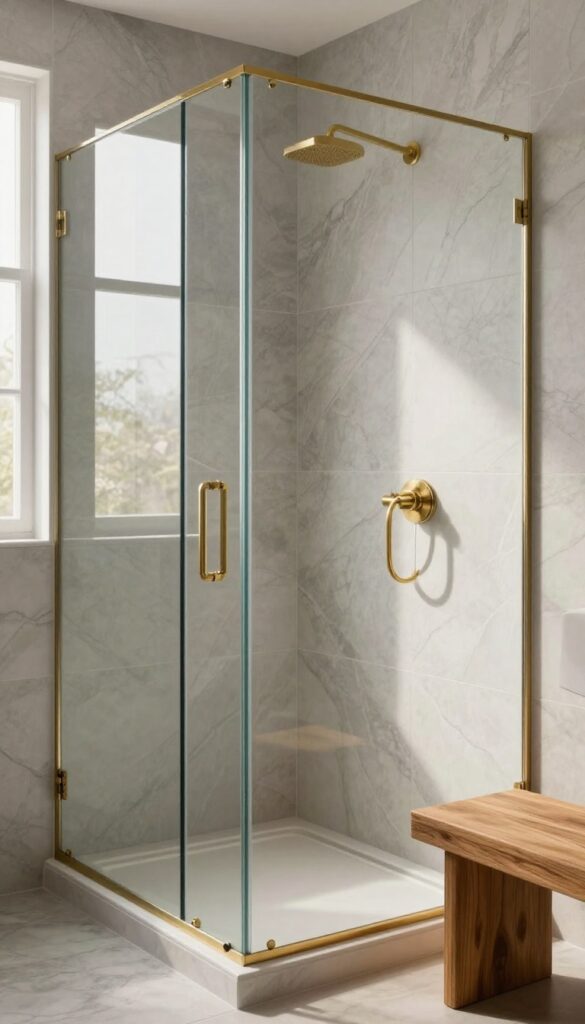
Marble has always been a classic, but pure white marble can feel stark and unforgiving. Grey marble-look tiles with soft, subtle veining offer that same luxury without the chill. They bring warmth and depth, making your shower feel like a serene spa retreat rather than an operating room.
The beauty of grey marble-look tiles lies in their versatility. They pair beautifully with warm wood accents, brushed gold fixtures, and even matte black hardware. The key is to choose a tile with gentle, organic veins rather than bold, dramatic ones—this keeps the look soft and inviting.
Choosing The Right Grey Tone
Not all greys are created equal. Look for tiles with warm undertones—hints of beige, taupe, or brown—to keep the space cozy. Cool greys with blue or green undertones can feel more clinical.
Test samples in your bathroom's lighting before committing.
Pairing With Grout And Fixtures
Grout color makes a big difference. A light grey or warm white grout keeps the marble look seamless, while a darker grout adds contrast and hides dirt. For fixtures, brushed brass or champagne bronze add warmth, while matte black gives a modern edge.
Avoid polished chrome—it can feel too cold.
Placement And Layout Ideas
Large-format marble-look tiles create a seamless, luxurious feel with fewer grout lines. For a more dynamic look, try a herringbone or diagonal layout. Use the same tile on the floor and walls for a cohesive, spa-like vibe, or just on one accent wall to save on budget.
14. Grey and White Mix-and-Match Tiles
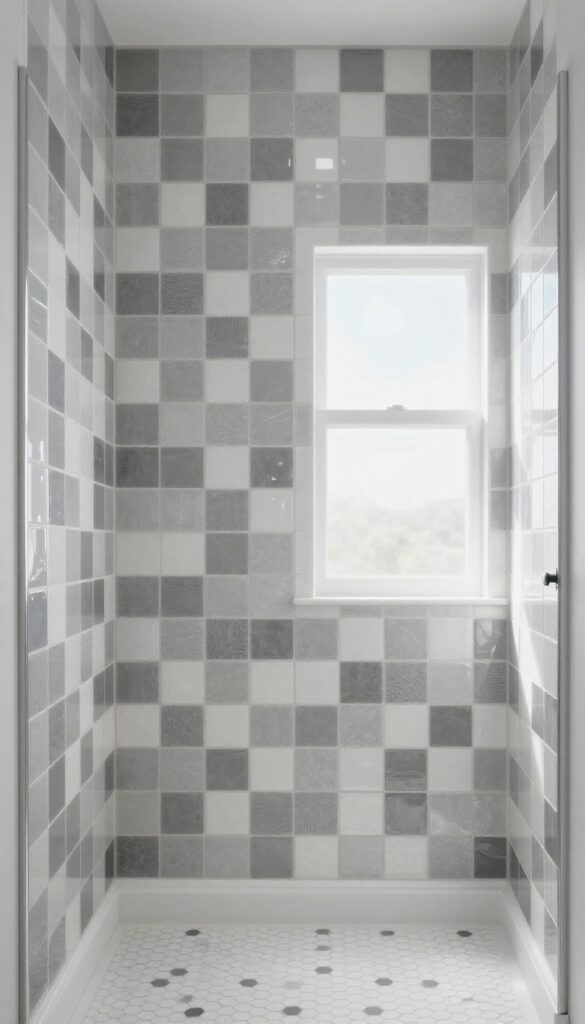
Combining grey and white tiles in the same shower is like giving your bathroom a custom patchwork quilt—every layout feels personal and deliberate. The contrast brightens the space while the grey keeps it grounded, and you can go as subtle or as bold as you like. Whether you alternate single tiles in a checkerboard or create a scattered mosaic, the mix adds visual interest without overwhelming the room.
The beauty of mixing grey and white is that you control the balance. A mostly white shower with grey accents feels airy and calm; a grey-heavy layout with white pops feels more dramatic. You can also play with tile size and shape—use large grey planks with small white hexagons, or keep everything the same size and just vary the color.
The key is to plan the pattern before you install so the mix looks intentional, not accidental.
Classic Checkerboard With A Twist
A traditional checkerboard in grey and white can feel retro, but you can modernize it by using different shades of grey—some tiles light, some dark—so the pattern feels more organic. You can also use a larger format for the grey and a smaller format for the white, creating a subtle texture change that adds depth. This approach works well in a shower with a lot of natural light, where the contrast really shines.
Scattered Accent Tiles
If a full checkerboard feels too busy, try a mostly white wall with randomly placed grey tiles. You can use a mix of grey shades and sizes to create a sense of movement. This is a great way to add personality without committing to a bold pattern.
It also makes the shower feel more custom, as if each tile was placed by hand. Use a contrasting grout to make the grey tiles pop even more.
Horizontal Stripes And Geometric Patterns
For a more structured look, alternate rows of grey and white tiles, or create geometric shapes like diamonds or chevrons using both colors. This adds a graphic element to the shower that feels modern and clean. You can keep the stripes subtle by using similar grey tones, or make them bold with a stark white and dark charcoal.
Pair with simple fixtures to let the pattern take center stage.
15. Grey Tiles with Brass or Gold Fixtures
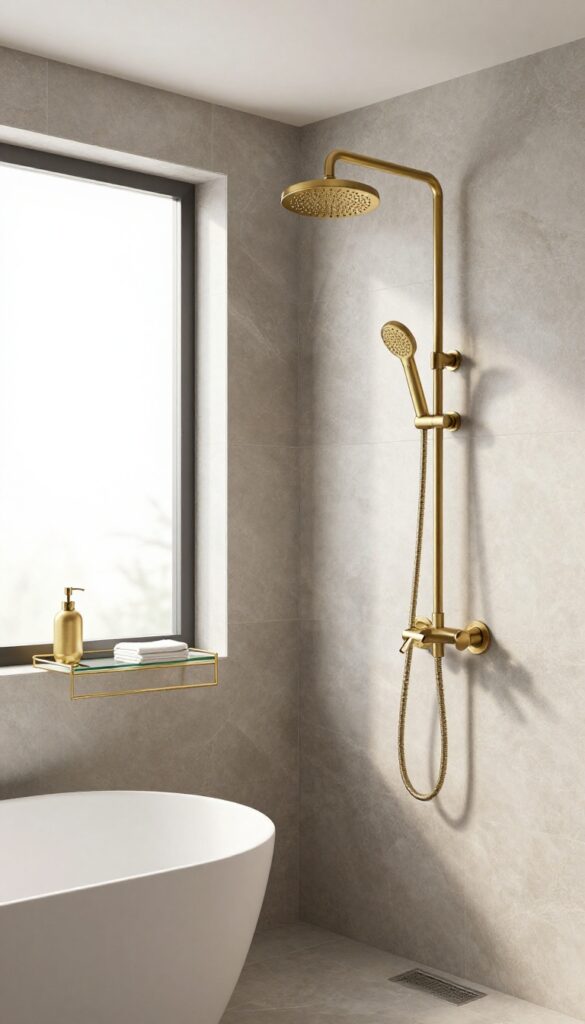
Brass and gold fixtures are having a serious moment, and for good reason. They bring a warmth that grey tile naturally lacks, creating a balanced, inviting look. Whether you prefer a polished finish or something more brushed, these metals add a touch of luxury without feeling over the top.
Choosing The Right Grey Undertone
Not all greys are created equal. For brass or gold to pop, pick a grey with warm undertones—think greige or a taupe-grey. Cool greys can clash with the yellow tones of brass, making the space feel disjointed.
Test samples in your shower's lighting to see how they interact.
Mixing Finishes For Depth
Don't be afraid to mix brushed and polished brass. Use polished for the showerhead and valve, then opt for brushed for the faucet and handles. This adds subtle dimension without looking mismatched.
Just keep the overall tone consistent to avoid visual chaos.
Accessorizing With Warm Metals
Beyond fixtures, bring in brass or gold through accessories. A gold-framed glass shelf, a brass soap dispenser, or even a gold-finished shower caddy can tie the look together. These small touches make the space feel intentional and personal.
FAQ
What grout color goes best with grey shower tiles?
For a warm look, choose beige, tan, or warm white grout. Dark grey or charcoal grout can add contrast and depth, but avoid pure white if you want to keep the space feeling cozy.
How do I make grey shower tiles feel warmer?
Incorporate warm accents like wood, brass, or gold fixtures. Also, choose tiles with warm undertones (taupe, greige) and use soft lighting to enhance the cozy feel.
Are grey shower tiles hard to keep clean?
Not necessarily. Matte and textured tiles may require a bit more scrubbing, but many grey porcelain tiles are low-maintenance. Sealing natural stone tiles is important to prevent stains.
Can I use grey tiles in a small shower?
Yes. Light to medium grey tiles can make a small shower feel larger, especially if you use large-format tiles and minimal grout lines. Avoid very dark greys in tiny spaces.
What is the best finish for grey shower tiles?
Matte or satin finishes are popular for a warm, modern look and provide better slip resistance. Glossy tiles can add brightness but may show water spots more easily.
Conclusion
Grey tile gives you room to play with texture, tone, and layout without shouting for attention. The trick is choosing a finish that matches how you actually use the shower—whether that means easy upkeep, a softer feel underfoot, or a bit of visual contrast.
Start with the tile that solves your biggest daily annoyance, then layer in the warmth through grout, fixtures, or accessories. Even one thoughtful swap can make the whole space feel more personal and put-together.