11 Bathtub Shower Tile Ideas with Simple, Effective Appeal
Tiling the area around a bathtub and shower combo is one of the fastest ways to refresh the whole bathroom without a full gut job. But with so many patterns, materials, and price points out there, it's easy to feel stuck before you even start.
The trick is to pick a look that matches your space, your cleaning habits, and your budget. This list of 11 tile ideas focuses on practical appeal—styles that look great but also stand up to water, soap scum, and daily use.
You'll find budget-friendly ceramic that mimics marble, bold matte black for drama, and playful hexagons that add texture without going overboard.
1. Classic White Subway Tile with a Twist
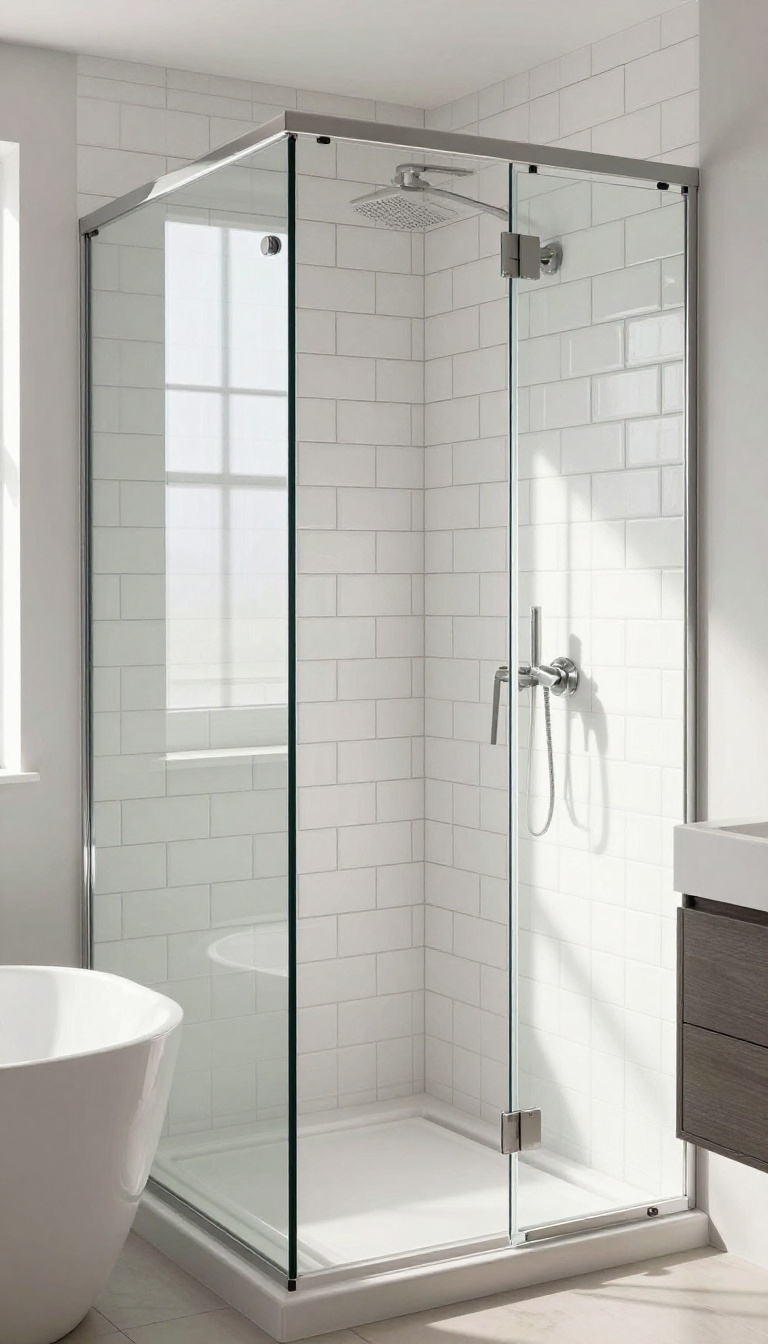
Subway tile has been a bathroom staple for over a century, and for good reason. It's affordable, easy to clean, and pairs with almost any design style. But if you're worried it might look too predictable, a few simple tweaks can make it feel fresh and modern.
The key is to update the classic formula. Instead of the standard 3×6 inch rectangles laid in a brick pattern, try a larger format like 4×12 or 6×18 inches. You can also experiment with the layout—a vertical stack, a herringbone pattern, or even a diagonal set can completely change the look.
Another easy way to add interest is with grout. A contrasting grout, like dark gray or black, makes the tile pattern pop, while a matching grout keeps it subtle and seamless.
Size And Layout Matter
Bigger tiles mean fewer grout lines, which translates to less scrubbing. A 4×12 or 6×18 inch subway tile in a running bond (offset) pattern feels more contemporary than the classic small brick. For a more dramatic effect, consider a herringbone or vertical stack layout.
These patterns add visual movement without introducing a new material.
Grout Color Sets The Tone
Grout is the unsung hero of tile design. Bright white grout with white tiles gives a clean, seamless look that makes the space feel larger. Dark grout, such as charcoal or navy, creates a striking grid that highlights the tile shape.
It also hides dirt better, which is a practical bonus in a bathroom.
Finish And Texture
Glossy subway tile reflects light and is a breeze to wipe down. But if you prefer a more muted, spa-like vibe, a matte or satin finish is a great option. Some tiles even come with a slightly textured surface, which adds grip and depth.
Just make sure any texture is still smooth enough to clean easily.
2. Large-Format Porcelain for a Seamless Look
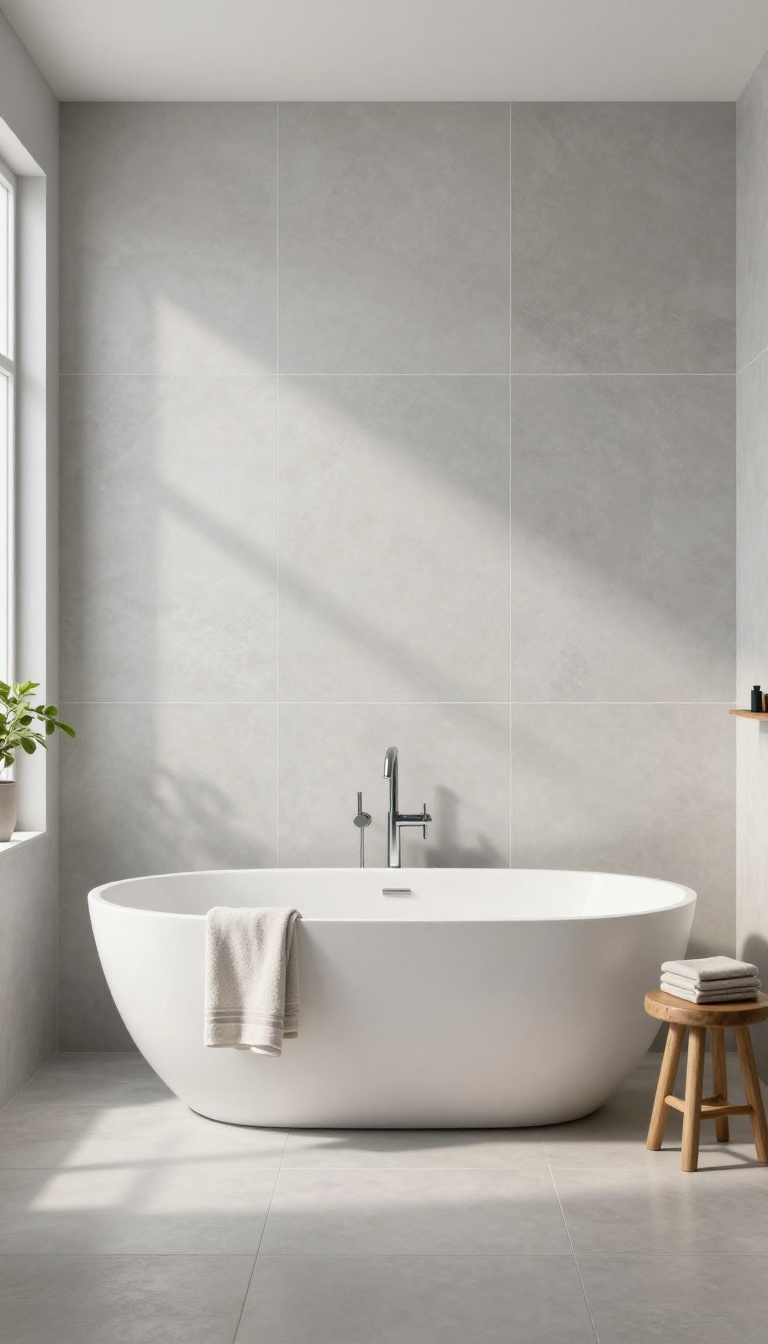
If you're tired of scrubbing grout lines, large-format tiles might be your new best friend. These big slabs—often 12×24 inches or larger—create a sleek, continuous surface that feels both modern and easy to maintain. With fewer joints, there's less space for soap scum and mildew to hide, which is a win for anyone who prefers a quick wipe-down over a deep scrub.
Large-format porcelain tiles are a smart choice for bathtub surrounds because they offer a clean, almost monolithic appearance. The minimal grout lines visually expand the space, making even a compact bathroom feel more open and airy. Plus, porcelain is naturally resistant to moisture and stains, so it holds up beautifully in wet areas.
Installation is also faster since each tile covers more ground, which can reduce labor costs if you're hiring a professional.
Why Fewer Grout Lines Matter
Grout is porous and prone to discoloration and mold if not sealed properly. With large-format tiles, you cut down the total length of grout lines dramatically. That means less maintenance over time and a cleaner look.
It also creates a more seamless backdrop, letting other bathroom elements—like a freestanding tub or a bold vanity—take center stage.
Choosing The Right Finish
Porcelain comes in a range of finishes, from glossy to matte. A glossy finish reflects light and can make the space feel brighter, but it may show water spots more easily. Matte finishes hide smudges and water marks better, and they offer a softer, more contemporary feel.
Consider your lifestyle: if you have hard water, a matte or textured finish might be more forgiving.
Installation Tips For Large Tiles
Large tiles require a perfectly flat substrate to avoid lippage—where one tile edge sits higher than the next. Make sure your walls are level and use a leveling system during installation. Also, use a trowel with a larger notch to get proper adhesive coverage.
While DIY is possible, this is one area where hiring an experienced installer can save you headaches.
3. Vertical Stacked Tile to Make the Ceiling Feel Higher
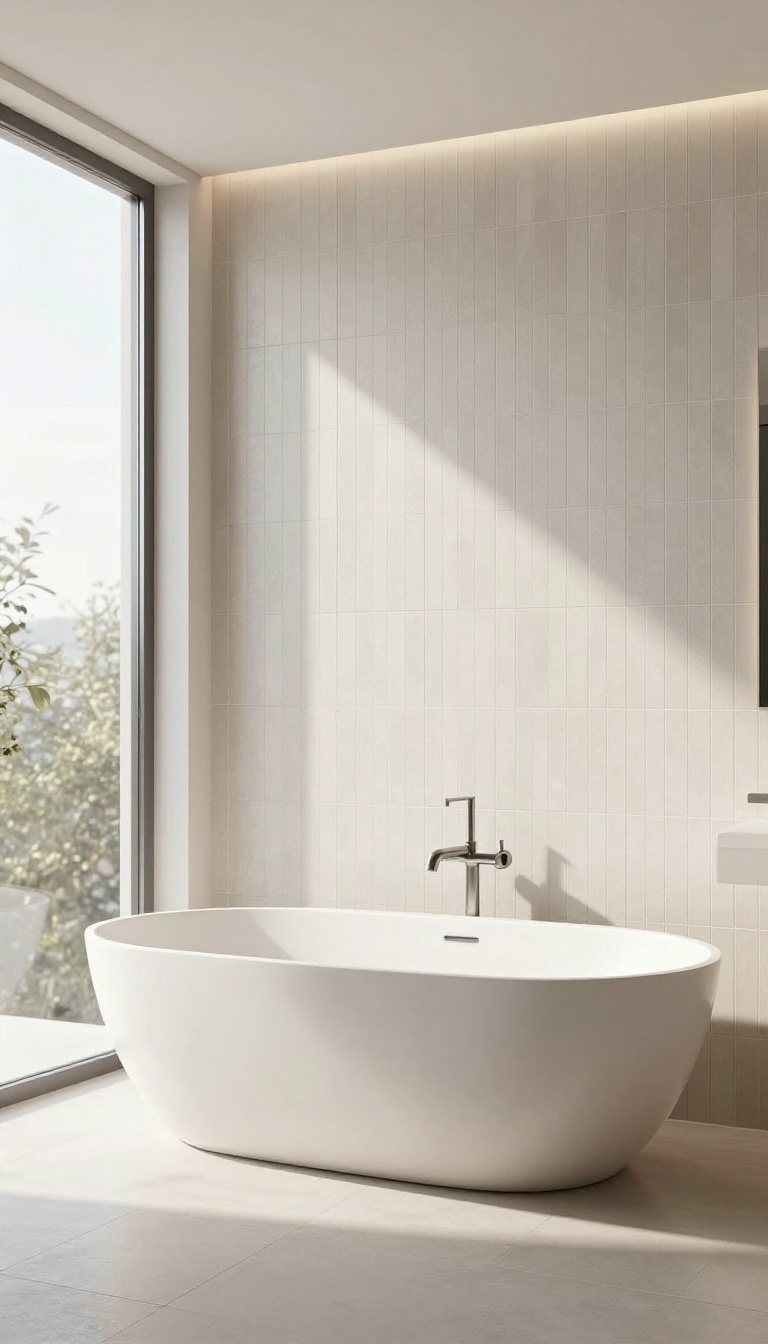
If your bathroom feels a bit boxy, the tile layout might be the culprit. Horizontal patterns can visually widen a space, but they also make low ceilings seem even lower. Flipping the orientation is a clever trick that costs nothing extra and changes the whole vibe.
Vertical stacked tile—where rectangular tiles are set end-to-end in straight columns—draws the eye upward. It’s a clean, modern look that adds height and makes the room feel more open. Plus, the simple geometry keeps the space calm and uncluttered.
Vertical stacking works best with rectangular tiles like subway or large-format planks. The long, continuous lines create a sense of flow that pulls the gaze from the floor to the ceiling. This layout is especially effective in small bathrooms or those with standard 8-foot ceilings, where every inch of perceived height matters.
Unlike offset brick patterns, stacked tile offers a crisp, grid-like aesthetic that feels contemporary and tailored. It’s also a great way to highlight the vertical space around a bathtub, making the entire wall feel like a deliberate design statement rather than an afterthought.
Choosing The Right Tile Size
For vertical stacking, the tile’s proportions are key. Standard 3×6 subway tiles work well, but larger formats like 4×12 or 6×24 create even stronger vertical lines. If you want a more dramatic effect, go with a longer tile—the extended length emphasizes the upward motion.
Just keep in mind that larger tiles may require more careful cutting around fixtures, so measure your space and plan accordingly.
Color And Finish Tips
Light colors enhance the airy feeling, so whites, soft grays, or pale blues are safe bets. Glossy finishes reflect light and add to the sense of openness, while matte finishes offer a more subdued, modern look. If you’re feeling bold, a dark vertical stripe in a contrasting color can draw the eye even higher, but use it sparingly to avoid overwhelming the space.
Grout And Layout Considerations
To keep the vertical lines clean, choose a grout color that closely matches the tile. This minimizes visual interruptions and lets the stacked pattern shine. When installing, make sure the columns are perfectly plumb—any slight deviation will be noticeable.
It’s also wise to start from the center of the wall and work outward to ensure balanced cuts at the edges.
4. Hexagon Tiles for a Touch of Playfulness
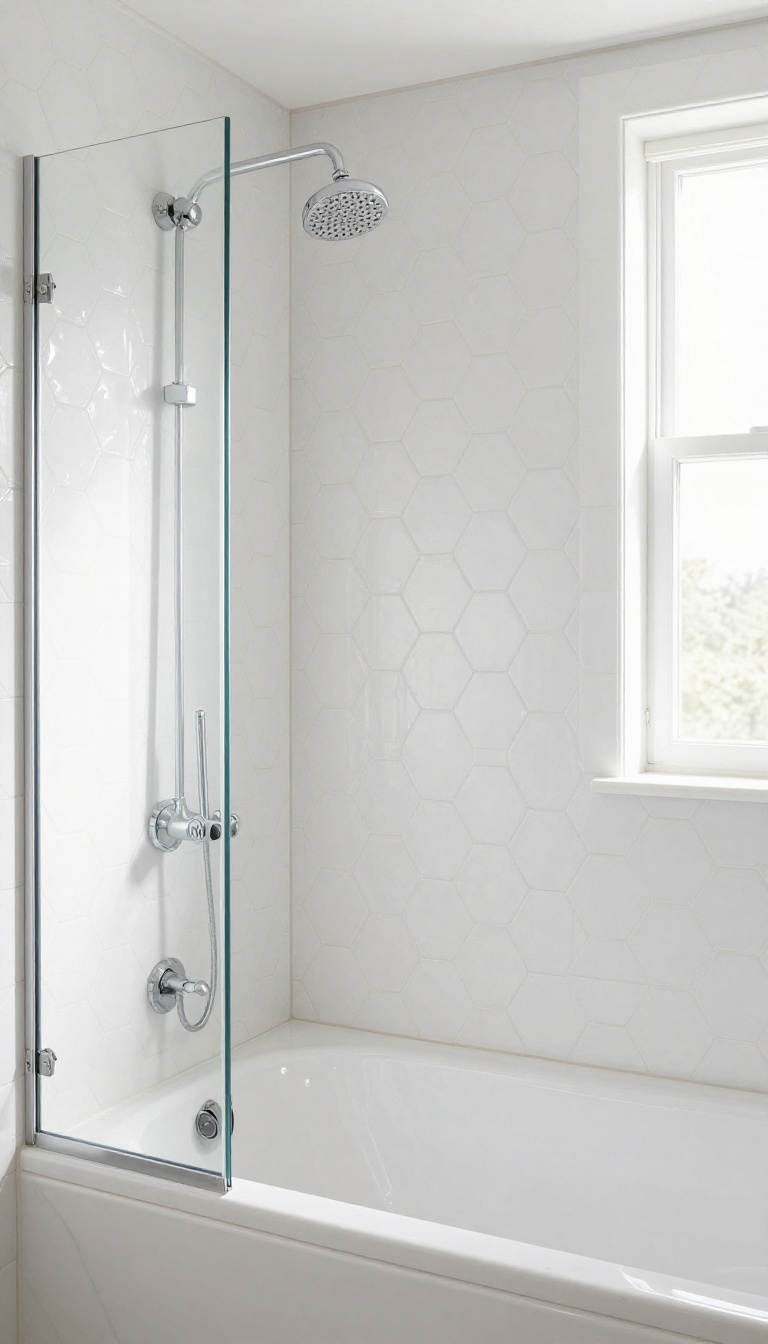
Hexagon tiles are having a serious moment, and it's easy to see why. Their six-sided shape adds a subtle geometric twist that plain squares just can't match. They bring a sense of fun and movement to the bathroom without feeling childish or trendy.
The beauty of hexagon tiles lies in their versatility. You can use them to create a full feature wall, a striking floor, or a simple accent strip that breaks up larger format tiles. They work in almost any style, from modern farmhouse to sleek contemporary.
Plus, the many small grout lines actually help hide soap scum and hard water spots better than large-format tiles, making them a practical choice for busy bathrooms.
Why Hexagons Work In Wet Areas
Hexagon tiles are naturally slip-resistant, especially when you choose a matte finish. The many grout lines provide extra traction underfoot, which is a real plus in a bathtub and shower combo. They also handle water well—just make sure you pick a porcelain or ceramic tile with a PEI rating of 3 or higher for wet areas.
The grout lines do require some maintenance, but sealing them once a year keeps everything looking fresh.
Placement Ideas That Make An Impact
You don't have to tile the entire space to get the playful effect. A popular approach is to run a band of hexagon tiles horizontally around the tub, like a decorative border. Another idea is to use them on the floor and pair them with simple subway tile on the walls.
For a bolder look, cover the entire shower wall in hexagons, but keep the color light to avoid overwhelming the room.
Color And Finish Options
Matte white hexagons are a classic choice that brightens the space and hides water spots. If you want more personality, consider soft sage green, dusty blue, or even a warm terracotta. A matte finish is your best bet for a modern, understated look, while a glossy finish can make the space feel more polished and reflective.
You can also mix two complementary colors in a random pattern for a custom, artistic feel.
5. Neutral Large-Scale Pattern for Subtle Depth
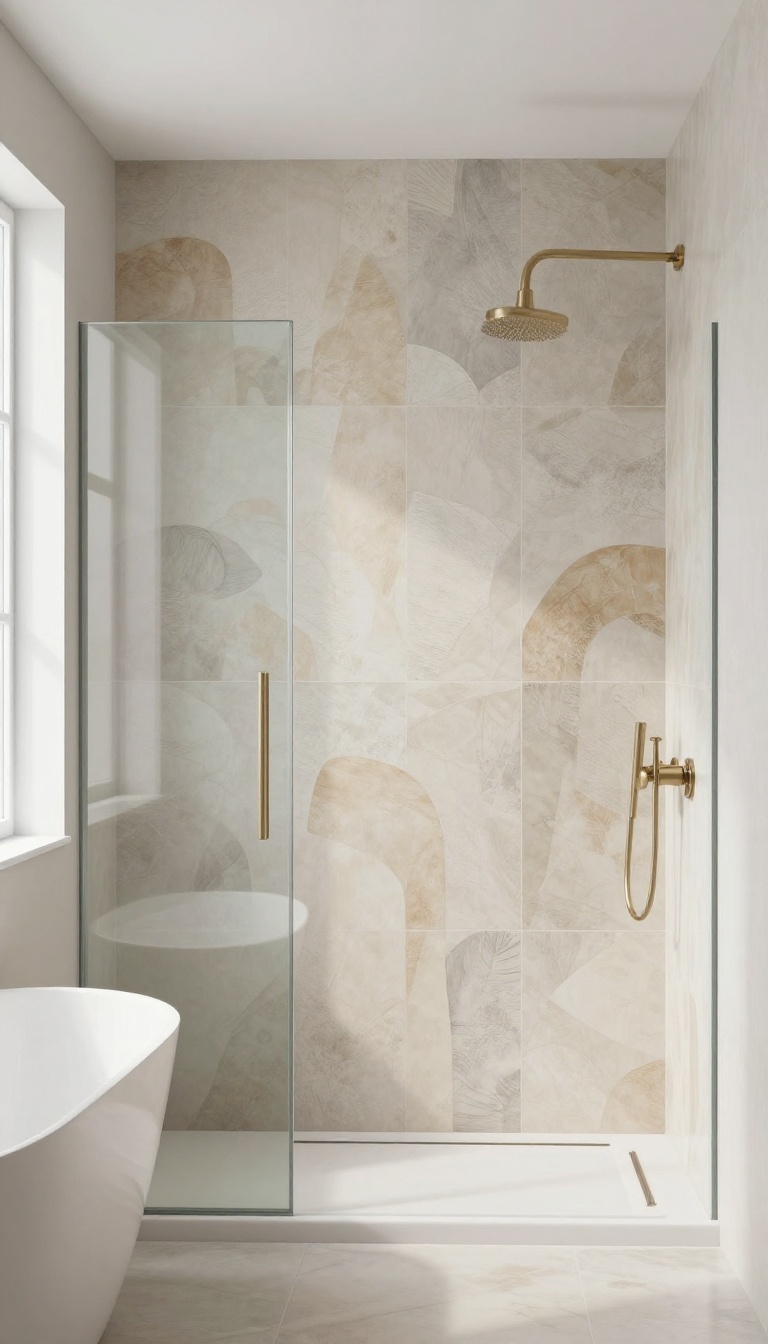
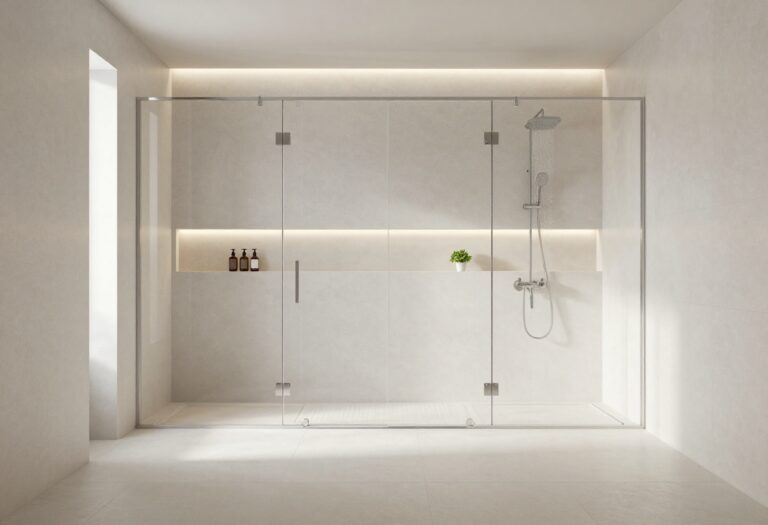
A large-scale pattern in soft, neutral tones gives the shower a designer feel without being overwhelming. It's a great way to add personality while keeping the space calm. This approach works especially well in smaller bathrooms where busy prints can feel chaotic.
Large-scale patterns, like oversized florals or abstract shapes, draw the eye and create a focal point. When done in muted beiges, greys, or warm whites, they add texture and movement without shouting for attention. The key is to balance the pattern with solid surfaces elsewhere, so the overall effect feels intentional and soothing.
Why Neutral Large-scale Works
Neutral tones reflect light, making the space feel airy and open. The large pattern reduces visual clutter compared to small, busy designs. It also hides water spots and soap scum better than dark or glossy tiles, which is a practical win.
How To Pair It With Fixtures
Keep fixtures simple—think brushed nickel or matte black—to let the tile shine. White grout keeps the pattern crisp, while a softer grey grout can blend for a more seamless look. Pair with a glass shower screen to show off the full effect.
Installation And Maintenance Tips
Large-format tiles mean fewer grout lines, so cleaning is easier. Use a matte finish to reduce slipping and hide smudges. If you're DIYing, ensure the wall is perfectly flat to avoid lippage.
For a pro touch, consider a vertical offset layout to elongate the space.
6. Contrasting Niche and Accent Stripe
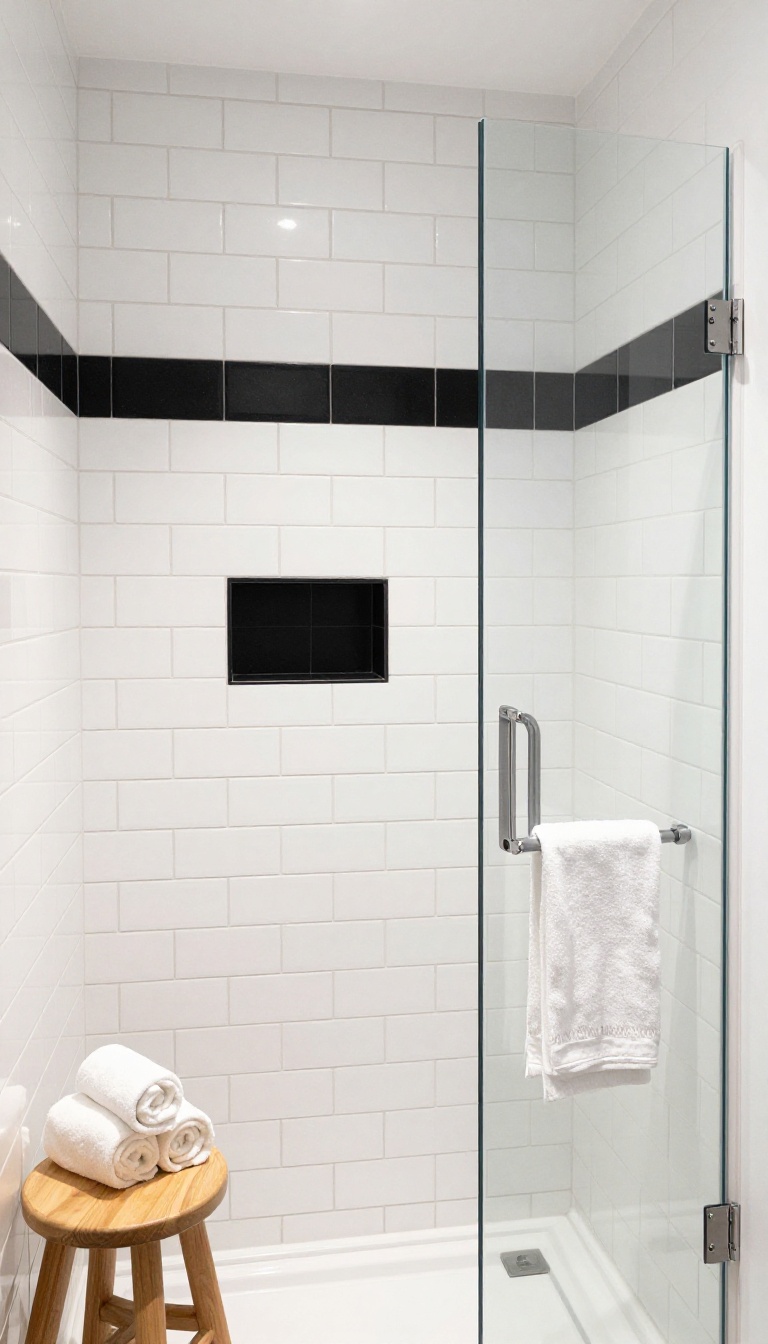
A full wall of statement tile can stretch a budget fast. But you can still get that custom, designer feel by using contrast in small doses—like inside the shampoo niche or as a single horizontal stripe. It’s a clever way to add personality without the cost of tiling the entire shower.
This idea works because it draws the eye to specific points instead of overwhelming the whole space. A darker tile inside the niche creates depth, while a contrasting stripe breaks up the monotony of a solid field. You get a high-end look with a fraction of the tile—and a fraction of the price.
Why This Works
Small accents act like jewelry for your shower. They give the eye a place to rest and make the overall design feel intentional. Plus, using a different tile in the niche or as a stripe means you can splurge on a pricier accent tile without buying enough to cover the whole wall.
Material And Color Choices
For the niche, try a matte black or deep navy tile against white subway tile—it creates a bold frame. For a softer look, use a marble-look ceramic in a contrasting tone. If you want a stripe, pick a tile that’s the same size as your field tile but in a different color, or use a thin mosaic strip for texture.
Placement Tips
The niche is usually at eye level, so it’s a natural focal point. For the stripe, place it at around shoulder height or just below the ceiling to draw the eye upward. Keep the stripe to one or two rows—any more and it becomes the main event, which defeats the purpose of a subtle accent.
Budget And Installation
This approach is budget-friendly because you only need a small amount of accent tile. Installation is straightforward too—the niche is already framed, and a stripe is just a row or two of tile. If you’re DIYing, make sure to use waterproof materials and seal the grout properly, especially around the niche.
7. Matte Black or Charcoal for a Bold Statement
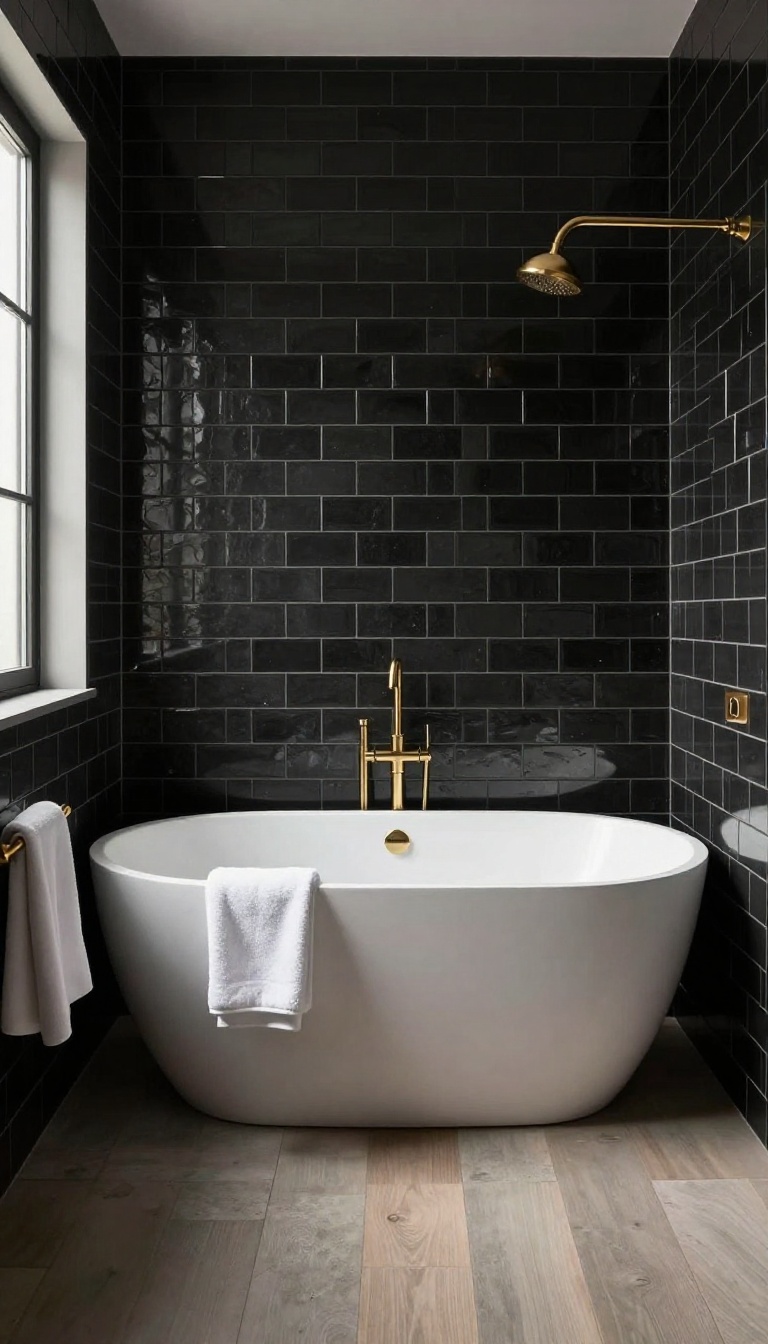
Dark tiles might feel like a risky move, but they bring a level of sophistication that lighter shades rarely match. Matte black or charcoal creates a cocooning, spa-like atmosphere that instantly makes the bathroom feel more intentional. And despite what you might expect, these deep tones are surprisingly practical—they hide soap scum and water spots far better than glossy white or glass tile.
When you choose matte black or charcoal tile for your tub surround, you’re not just picking a color—you’re setting a mood. The dark finish absorbs light, which can make a small bathroom feel cozy rather than cramped, especially when paired with warm lighting. It also provides a stunning contrast against white fixtures, which is why this look has become a favorite in modern and industrial-style homes.
Best of all, the matte texture reduces glare and doesn’t show every fingerprint or smudge, making it a smart choice for busy family bathrooms.
Pairing With Fixtures
One of the best parts about going dark is how it makes your hardware pop. Brushed brass, matte gold, or polished chrome all stand out beautifully against a charcoal backdrop. If you want a sleek, contemporary feel, stick with chrome or nickel.
For a warmer, more luxurious vibe, brass fixtures add a touch of elegance without being too flashy. Whichever you choose, the dark tile will make those details the star of the show.
Combating A Dark Space
If your bathroom lacks natural light, you might worry that dark tile will make it feel like a cave. The trick is to balance the darkness with lighter elements. Use a white or light-colored ceiling, keep the floor light, and add a large mirror or glass shower door to reflect light.
You can also install a dimmer switch to control the mood—bright for morning routines, softer for evening soaks.
Grout And Maintenance
Dark tile does hide soap scum well, but you still need to think about grout. Light grout on dark tile creates a striking grid pattern, but it can be a pain to keep clean. Instead, choose a grout in a similar dark shade to create a seamless, modern look that’s much easier to maintain.
Sealing the grout and wiping down the tile after showers will keep everything looking sharp for years.
8. Marble-Look Ceramic for Elegance on a Budget
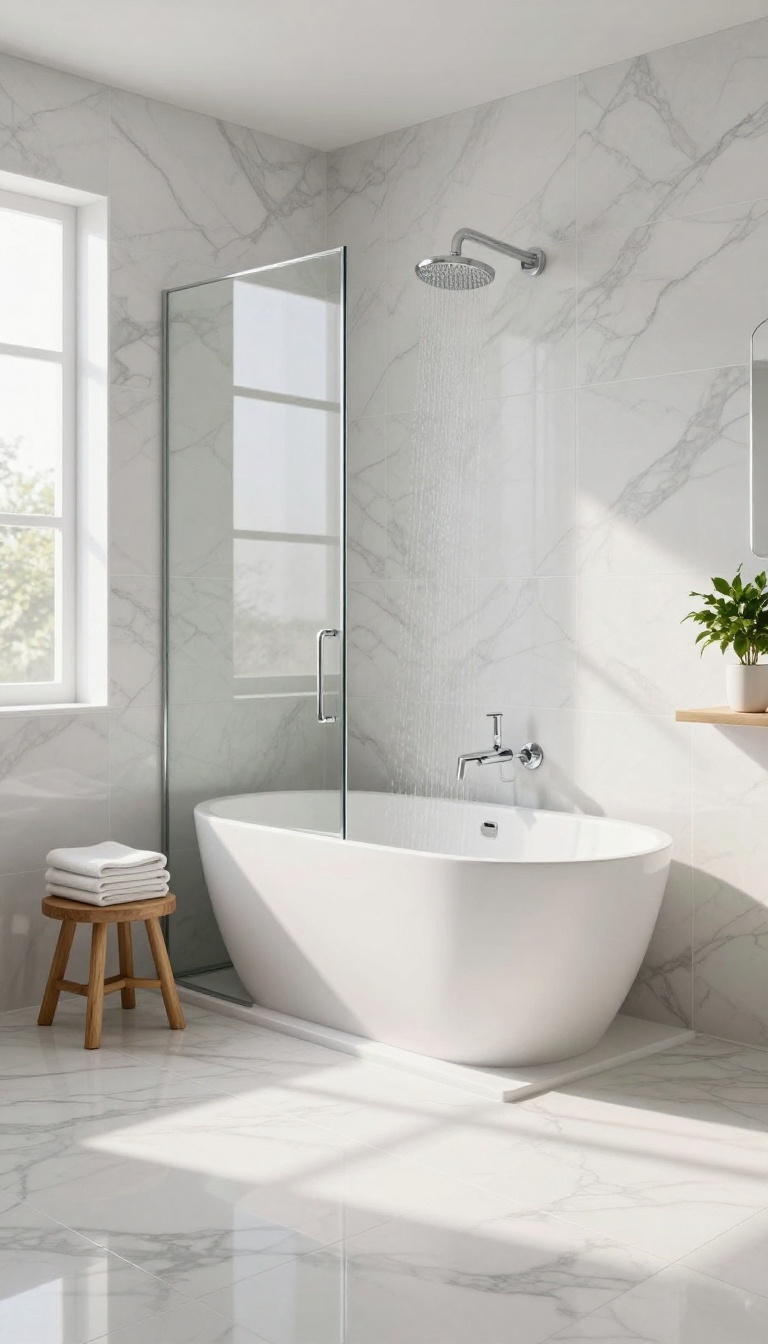
Marble has always been a classic choice for bathrooms, but the real stone comes with a hefty price tag and a demanding care routine. Fortunately, ceramic tiles that mimic marble deliver the same high-end look without the cost or the constant upkeep. They're a practical way to bring that timeless elegance into your bathtub shower area.
Ceramic marble-look tiles are printed with high-resolution scans of real marble, capturing the veining and depth of the natural stone. This technology has advanced so much that it's often hard to tell the difference from a few feet away. You get the luxurious aesthetic of marble, but with the durability and easy maintenance of ceramic.
Polished Vs. Honed Finish
One of the first decisions you'll make is the finish. Polished ceramic has a glossy, reflective surface that brightens the space and makes it feel more open. It's also easier to wipe clean, but it can show water spots more readily.
Honed ceramic has a matte, satin-like finish that offers a softer, more understated look. It hides fingerprints and water spots better, and it provides a bit more traction underfoot, making it a safer choice for a shower floor.
Large-format Tiles For Fewer Grout Lines
To really sell the marble illusion, go with large-format tiles. Bigger slabs mean fewer grout lines, which makes the surface look more continuous and stone-like. This also cuts down on the areas where soap scum and mildew can build up, making your cleaning routine a breeze.
Plus, fewer lines visually expand the space, making a small bathroom feel more spacious.
Pairing With Other Materials
Marble-look ceramic is versatile enough to pair with various other materials. For a modern look, combine it with matte black fixtures and hardware. For a warmer feel, add natural wood accents or a teak shower bench.
You can also use the marble-look tile on just one accent wall and paint the other walls a complementary neutral, like soft gray or warm beige, to keep the budget in check.
9. Vertical Herringbone Pattern for a Modern Classic
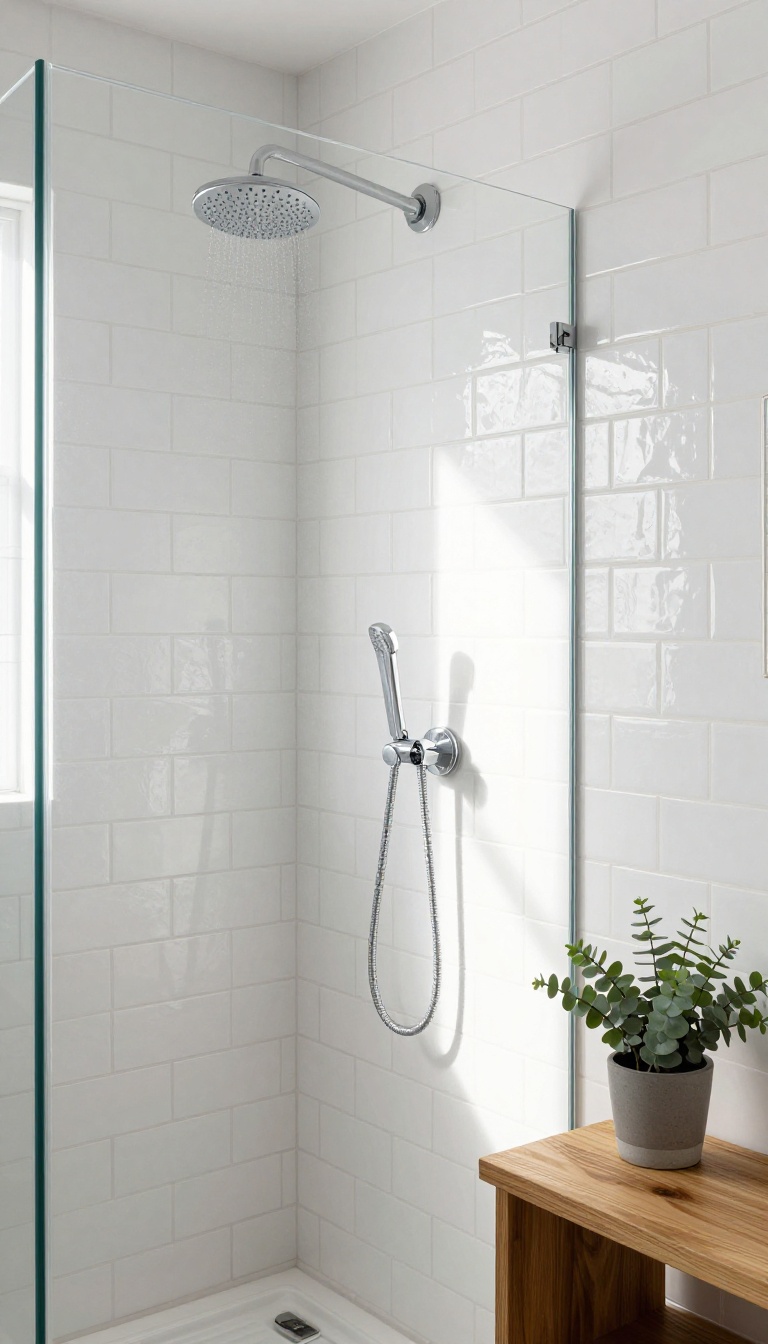
Herringbone is a timeless pattern that instantly adds texture and movement to any surface. When laid vertically, it draws the eye upward, making the shower feel taller and more spacious. It's a bit more labor-intensive than standard subway tile, but the payoff is a feature wall that looks custom and high-end.
Vertical herringbone is a smart choice if you want to break away from the standard horizontal stack or brick patterns. The angled lines create a sense of flow and energy, which works especially well in compact bathrooms where you want to add visual interest without overwhelming the space. Because the pattern is so dynamic, you can keep the rest of the bathroom simple and let the tile shine.
Why Vertical Beats Horizontal
Horizontal herringbone is common, but vertical orientation changes the whole feel. The upward lines make ceilings seem higher and add a touch of formality. It also pairs beautifully with tall fixtures like a rain shower head or a floor-to-ceiling niche.
Best Tile Shapes And Sizes
You don't need special tiles for this pattern—standard subway tiles work perfectly. For a more refined look, choose longer planks, like 3×12 or 4×16 inches. Larger tiles mean fewer grout lines and a cleaner appearance, while smaller tiles create a busier, more textured effect.
Grout Color Matters
Since herringbone has many intersecting lines, grout color plays a big role. Matching the grout to the tile creates a seamless, modern look. Contrasting grout, like white tile with dark gray grout, emphasizes the zigzag shape and adds a graphic quality.
Where to Use It
You don't have to cover every wall. A vertical herringbone accent wall behind the tub or in the shower niche is enough to make a statement. Pair it with solid-color tiles on the other walls to keep the design balanced and the budget in check.
10. Glass Tile Accent for Light and Shine
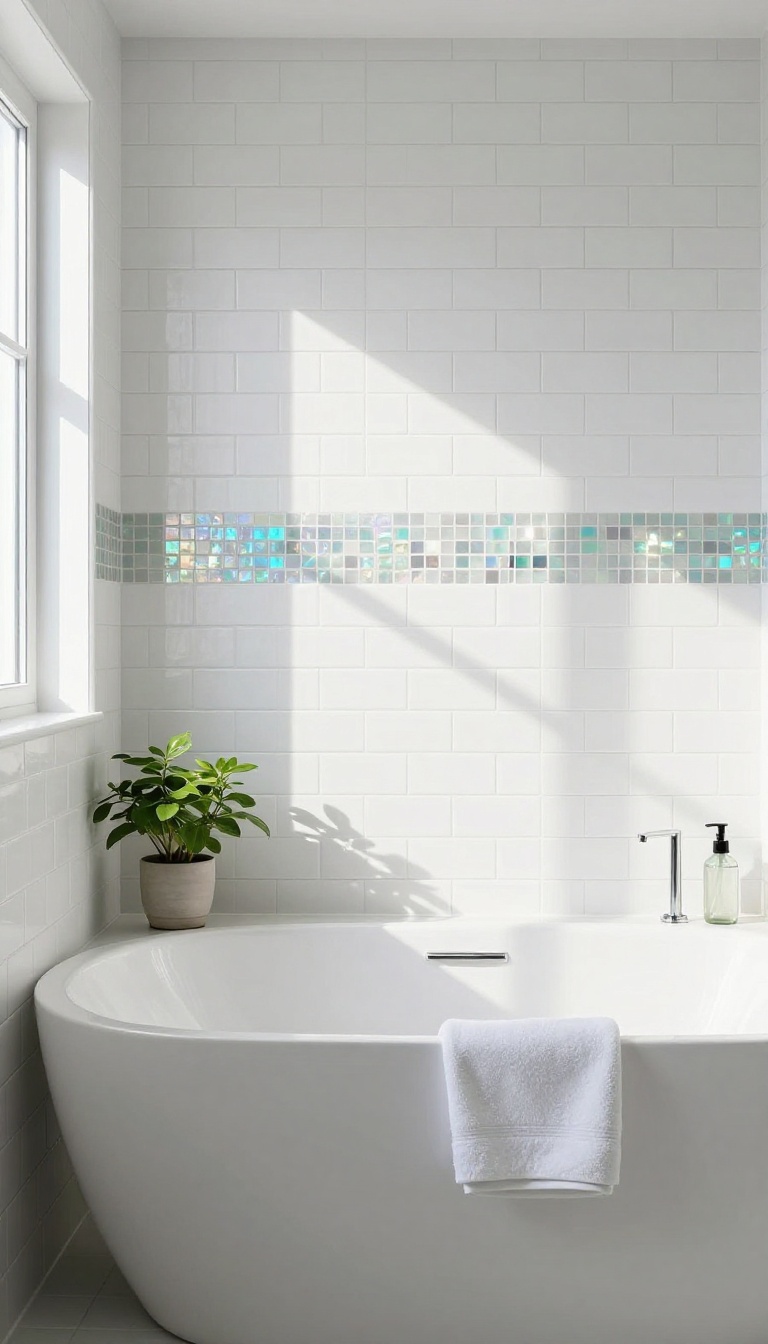
A glass tile accent strip can transform a plain tub surround into something special. It catches the light, adds a subtle shimmer, and makes the whole space feel brighter. Plus, glass is non-porous, so it resists water spots and soap scum better than many other materials.
You don’t need to cover an entire wall to get the benefit. A single row of glass tile, whether it's a bold color or a soft iridescent tone, creates a focal point without overwhelming the room. It's a simple upgrade that delivers a lot of visual punch.
Adding a glass tile accent is one of the easiest ways to introduce light and shine into a bathtub shower area. The reflective surface bounces light around, making even a small bathroom feel more open and airy. And because glass tiles come in so many colors and finishes, you can easily find one that complements your existing palette.
When placed strategically, a glass accent can break up a large expanse of solid tile or add a touch of elegance to a simple design. It works well behind the tub, around the shower niche, or as a border at eye level. The key is to keep the rest of the tile simple so the glass can be the star.
Cleaning is a breeze, too. Glass doesn't absorb moisture, so you won't have to worry about mold or mildew taking hold. A quick wipe with a squeegee or a mild cleaner keeps it looking sparkling new.
Placement That Maximizes Impact
Where you put the glass accent matters. A popular spot is right above the bathtub faucet or along the top edge of the shower wall, where it catches the most light. Another idea is to run a vertical strip from the floor to the ceiling in a corner, which can make the ceiling feel higher.
You can also frame the shower niche with glass tile to draw the eye to that feature. Think about the light sources in your bathroom. If you have a window, place the accent where it will reflect natural light.
If you rely on overhead fixtures, a horizontal band at eye level will pick up that illumination and brighten the whole area.
Choosing The Right Color And Finish
Glass tile comes in glossy, matte, and textured finishes. Glossy is the most reflective and easiest to clean, but it can show water spots if you don't wipe it down. Matte glass has a softer sheen and hides smudges better, but it's still non-porous.
For color, think about the mood you want. Soft blues and greens add a spa-like calm, while clear or iridescent tiles give a subtle shimmer without adding color. If you want a pop of contrast, a deep navy or emerald strip can be striking against white subway tile.
Just make sure the accent complements the rest of your bathroom's palette.
Installation Tips To Keep In Mind
Glass tile requires a little extra care during installation because it can chip or crack if not handled properly. Use a notched trowel designed for glass, and consider a white thin-set adhesive to prevent the tile color from being altered. You'll also want to use a grout that's recommended for glass, usually unsanded or epoxy-based, to avoid scratching the surface.
It's a good idea to hire a professional if you're not experienced with tile work, especially for accent strips that need precise alignment. But if you're handy, you can tackle it yourself with careful planning and the right tools. Take your time with the layout and use spacers to keep the lines straight.
11. Mixed Materials for an Eclectic Vibe
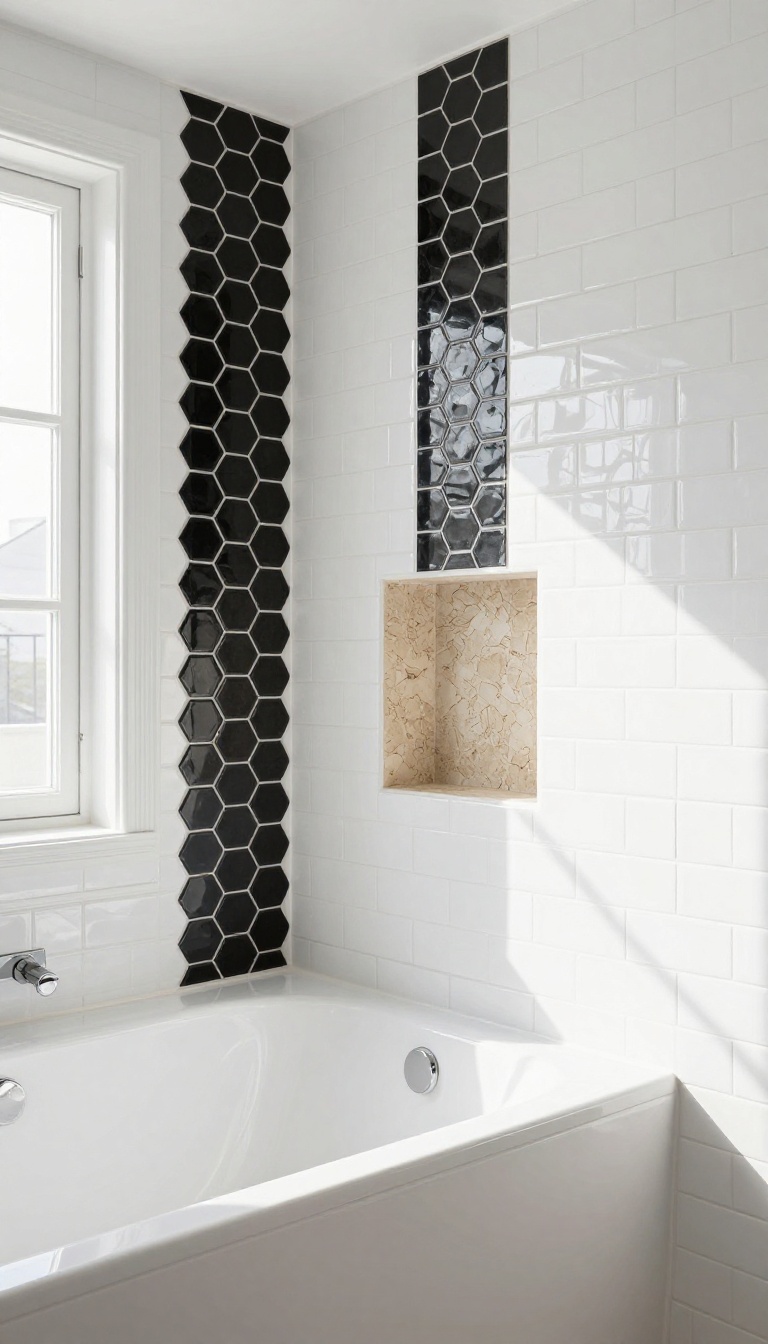
Mixing tile shapes or materials is a clever way to give your tub surround a one-of-a-kind look. The contrast between subway and hexagon, or ceramic and stone, adds visual interest without overwhelming the space. The key is to keep the color palette tight so the mix feels intentional, not messy.
Combining different tile styles is a design trick that adds depth and personality to a bathroom. You can pair classic white subway tiles with a band of hexagon tiles, or use large-format tiles on the main wall and a different shape as an accent. The goal is to create a collected, curated feel that looks like it evolved over time, not a random patchwork.
Shape Contrast: Subway Meets Hexagon
Subway tiles are a safe, timeless choice, but they can feel a bit predictable. Adding a vertical strip of hexagon tiles—maybe in a contrasting color or a metallic finish—breaks up the repetition and gives the eye a place to rest. You can also use hexagons as a niche backsplash or behind the faucet to create a focal point.
Material Pairing: Ceramic And Stone
Pairing glossy ceramic with natural stone like travertine or slate brings texture and warmth to the space. The stone adds an organic, earthy element, while the ceramic keeps the surface easy to clean. Use stone as an accent strip or a border, and keep the ceramic in a light, neutral shade to balance the heavier look of the stone.
Color Cohesion: Keep It Simple
When mixing materials, the easiest way to avoid chaos is to stick to a limited color palette. Choose two or three colors that naturally go together—like white, gray, and a soft blue—and use them consistently across both tile types. This way, the mix feels deliberate and harmonious, not random.
FAQ
What is the best tile for a bathtub shower?
Porcelain or ceramic tile is the most practical choice because it's durable, water-resistant, and easy to clean. Large-format tiles reduce grout lines, making maintenance even simpler.
How much does it cost to tile a bathtub shower?
Costs vary widely depending on tile type and labor. On average, you might spend between $500 and $2, 500 for materials and installation for a standard tub surround.
Can I tile over existing tiles?
In some cases, yes, if the existing tile is in good condition and the surface is properly prepared. However, it's often safer to remove old tile to avoid moisture issues.
What grout color should I use?
Lighter grout creates a seamless look, while darker grout adds contrast and hides stains better. Choose a grout that complements your tile and matches your maintenance preference.
Do I need to waterproof behind the tile?
Yes, proper waterproofing is essential to prevent mold and water damage. Use a cement board or waterproof membrane behind the tile, especially in wet areas.
Conclusion
Picking the right tile for your bathtub shower doesn't have to be a stressful decision. Start with the vibe you want—bright and airy, bold and dramatic, or calm and spa-like—and then narrow down materials that fit your budget and cleaning habits. Even one standout tile choice can completely change how the whole bathroom feels.
Keep samples at home and live with them for a few days before committing. Natural light and your existing fixtures will tell you more than a showroom ever will.