11 Chocolate Couch Living Room Ideas with Rich Warmth
A chocolate couch can anchor a room beautifully, but it can also swallow the light if you're not careful. The fix isn't replacing it—it's giving it the right supporting cast of colors, textures, and lighting.
Dark upholstery reads rich and warm when you balance it with soft neutrals, a few bright accents, and materials that catch the light. Get those pieces right and the whole room feels intentional instead of heavy.
These eleven ideas cover everything from rug choices to furniture spacing, and each one solves a specific problem. Pick the ones that fit your space and build from there.
1. Pair with Warm Neutrals for a Cozy Base

Chocolate brown is a deep, saturated color that can feel heavy if it's the only thing in the room. Warm neutrals like cream, beige, and tan act as a soft counterweight. They lighten the visual load without fighting the couch for attention.
Think of these neutrals as the room's deep breath. They give your eyes a place to rest and make the chocolate upholstery feel intentional. The result is a space that feels cozy and grounded, not dark and cramped.
You don't need to repaint everything. Small swaps—a throw, a rug, even a lampshade—can introduce enough warmth to shift the whole mood.
Start With A Cream Or Beige Area Rug
A light rug under a chocolate couch instantly lifts the floor and reflects light upward. Choose a low-pile or flatweave style in cream, oatmeal, or soft beige to keep the room feeling airy. If you want a bit more texture, a subtle geometric or faded pattern works without competing with the couch.
Size matters here. Go big enough that the front legs of the couch sit on the rug, and leave a comfortable border of bare floor around the edges. That frame of floor keeps the rug from looking like a floating island.
Layer In Tan And Camel Textiles
Tan and camel are close cousins to chocolate, so they blend naturally while still offering contrast. A camel leather ottoman, tan linen curtains, or a woven throw in a warm neutral can bridge the gap between the dark couch and lighter walls. Use these tones in different textures—smooth leather, nubby wool, crisp cotton—to add depth.
The variation keeps the neutral palette from feeling flat or matchy.
Balance With Soft White Walls And Trim
If your walls are stark white, they can make a chocolate couch look almost black by comparison. Swap to a soft white or warm off-white with a hint of yellow or gray. That subtle warmth softens the contrast and makes the brown feel richer.
Don't forget trim and ceilings. Painting them the same soft white creates a seamless envelope that bounces light around the room. It's a small change with a big payoff.
2. Add Pops of Jewel Tones for Drama
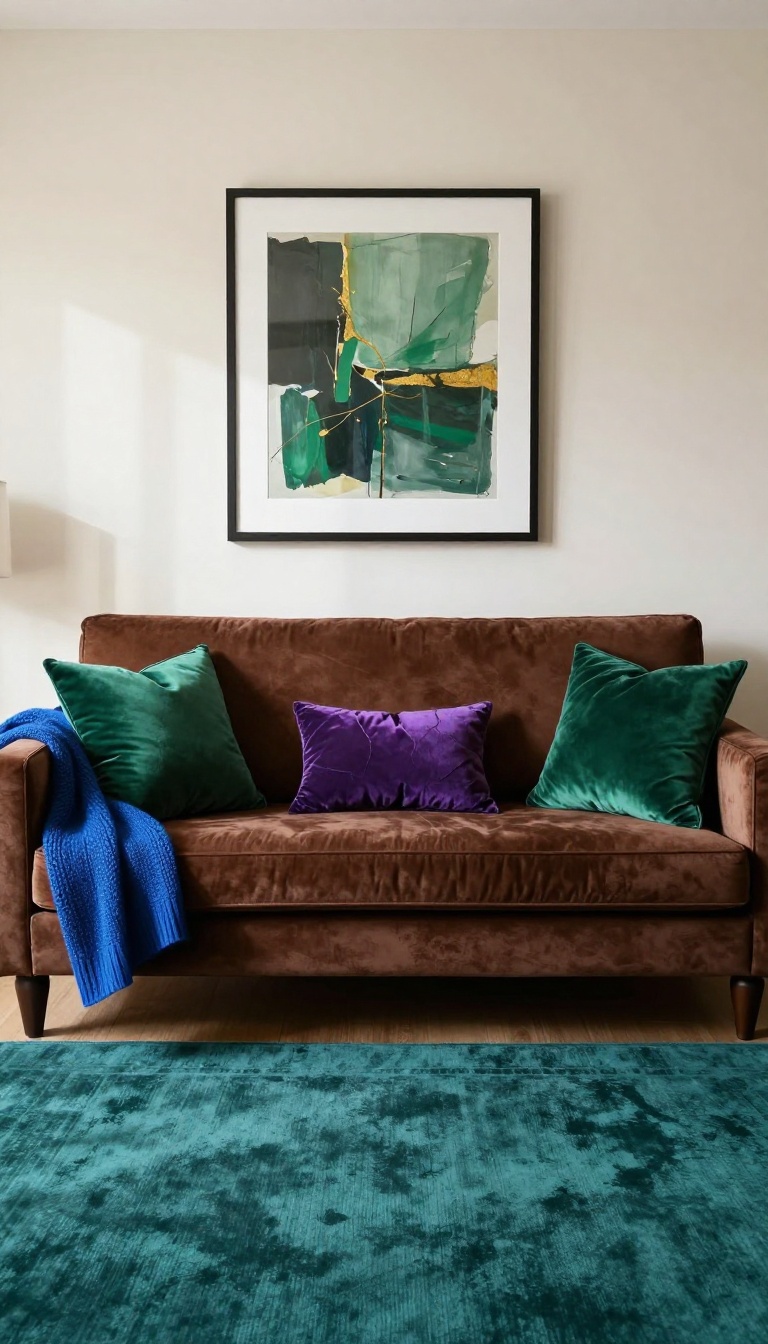
Chocolate brown is a neutral, but it's a deep, saturated one. That means it can handle bold color partners without getting overwhelmed. Jewel tones—emerald, sapphire, amethyst—are the perfect match because they share that same richness.
They add instant luxury and a little bit of drama, turning a simple couch into a statement piece.
The trick is to use jewel tones as accents, not as a full repaint. A few well-placed pieces will do more than you think. Start with textiles you can swap out easily, then move to bigger commitments if you love the direction.
The goal is balance: the chocolate stays the star, and the jewels are the supporting cast that makes it shine.
Start With Pillows And Throws
Pillows are the easiest way to test a jewel tone. Try a pair of emerald green velvet pillows on each end of the couch. Add a sapphire blue throw draped over one arm.
These small doses of color pop against the brown without fighting it. If you like the effect, layer in a third jewel tone, like amethyst, in a smaller pattern. Just keep the textures varied so it doesn't look flat.
Go Big With An Area Rug
A jewel-toned rug under the couch ties the whole seating area together. Look for a deep teal or a rich burgundy with a subtle pattern. The rug should be large enough that the front legs of the couch sit on it.
This grounds the space and makes the chocolate couch feel intentional. It also adds warmth underfoot, which is always a plus.
Add Art And Accessories
Artwork is another spot where jewel tones can shine. A framed print with emerald and gold tones above the couch draws the eye up and adds height. On side tables, try a sapphire glass vase or an amethyst geode.
Even small accessories in these colors can make the room feel more curated. Just don't overdo it—three or four jewel-toned moments are plenty.
3. Layer Textures with Chunky Knits and Velvet
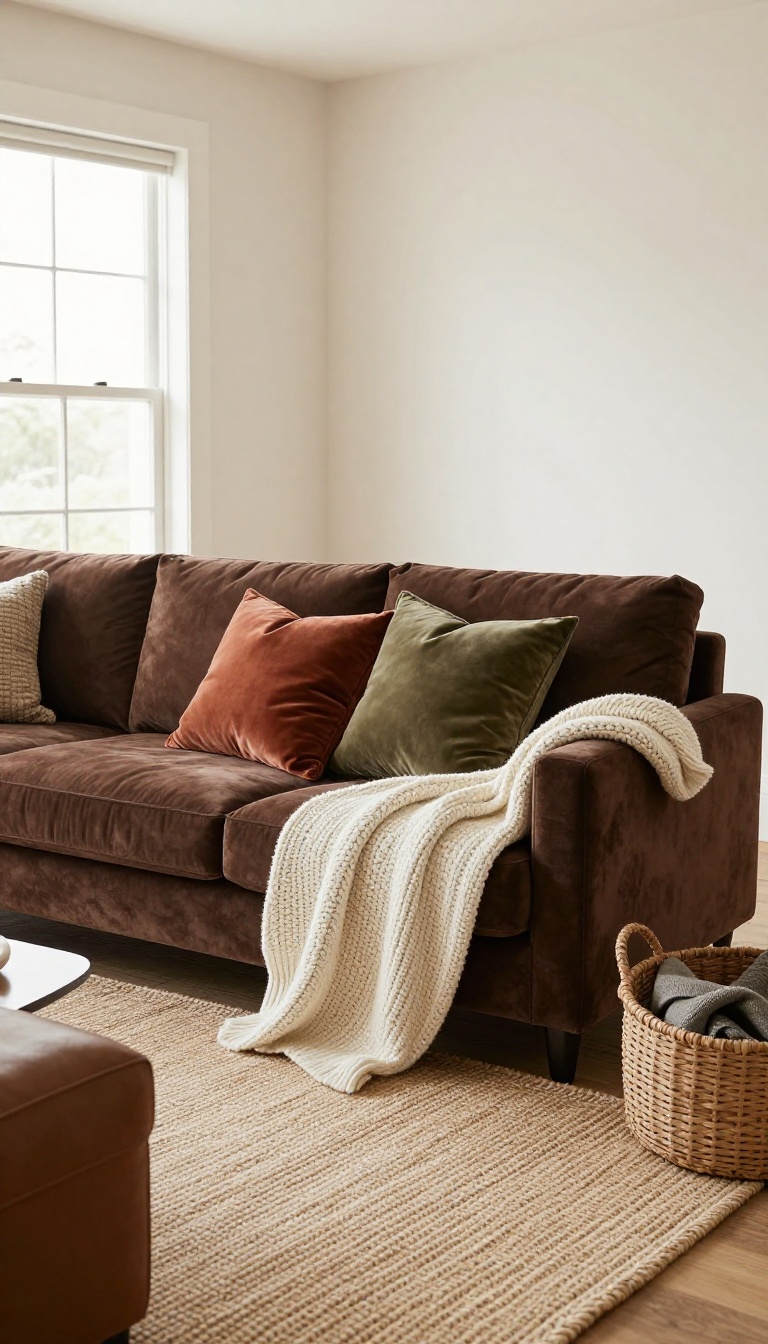
A chocolate couch already brings plenty of visual weight. What it needs is contrast you can feel with your hands. Mixing textures keeps the room from reading flat, even when the colors stay in the same warm family.
Think of it like building a outfit: one smooth piece, one nubby piece, one soft piece. Velvet, wool, and linen each catch light differently, so the eye keeps moving instead of settling on a single brown mass. The goal isn't to pile on every fabric you own.
It's to pick two or three that play well together and repeat them just enough to feel intentional.
Texture is the quiet workhorse of a chocolate couch living room. You can keep your palette tight and still get depth, simply by varying how surfaces reflect light. Smooth velvet absorbs and glows.
Chunky knits scatter light in a hundred tiny directions. Linen adds a dry, matte counterpoint that keeps things from feeling too plush. Start with the biggest texture opportunity: the throw.
A chunky knit blanket draped over one arm of the sofa instantly softens the silhouette and invites you to sit. Then add a velvet cushion or two in a slightly lighter or darker brown, or even a muted rust or olive. Next, look at what's underfoot.
A wool rug with a visible weave gives the floor its own tactile story. If you already have a smooth rug, layer a smaller woven jute or cotton rug on top for instant depth. Finally, don't forget the furniture around the couch.
A linen slipcover on an accent chair, a leather ottoman, or a woven basket for throws all add another note. The trick is to repeat at least one texture twice so the room feels cohesive rather than random.
Pick A Lead Texture And A Supporting One
Decide which texture should dominate. If your couch is velvet, let a chunky knit throw be the star and keep cushions smoother. If your couch is a flat weave or microfiber, bring in velvet pillows for a little sheen.
One lead, one support, and you're set.
Use Throws To Break Up The Brown
A throw folded over the back or arm of the sofa does two things: it adds texture and it interrupts the large brown expanse. Choose a knit in cream, camel, or a muted stripe that picks up the couch color without matching it exactly.
Mix Cushion Fabrics, Not Just Colors
Two velvet cushions and one nubby wool cushion in similar tones will do more for the room than five cushions in five different colors. Vary the fabric, keep the palette tight, and the couch looks curated instead of cluttered.
Bring Texture Down To The Floor
A flat, smooth rug can make a chocolate couch feel like it's floating. A wool or jute rug with visible texture grounds the seating area. If you love your current rug, layer a smaller woven one on top for a quick fix.
4. Use Metallic Accents to Brighten the Space
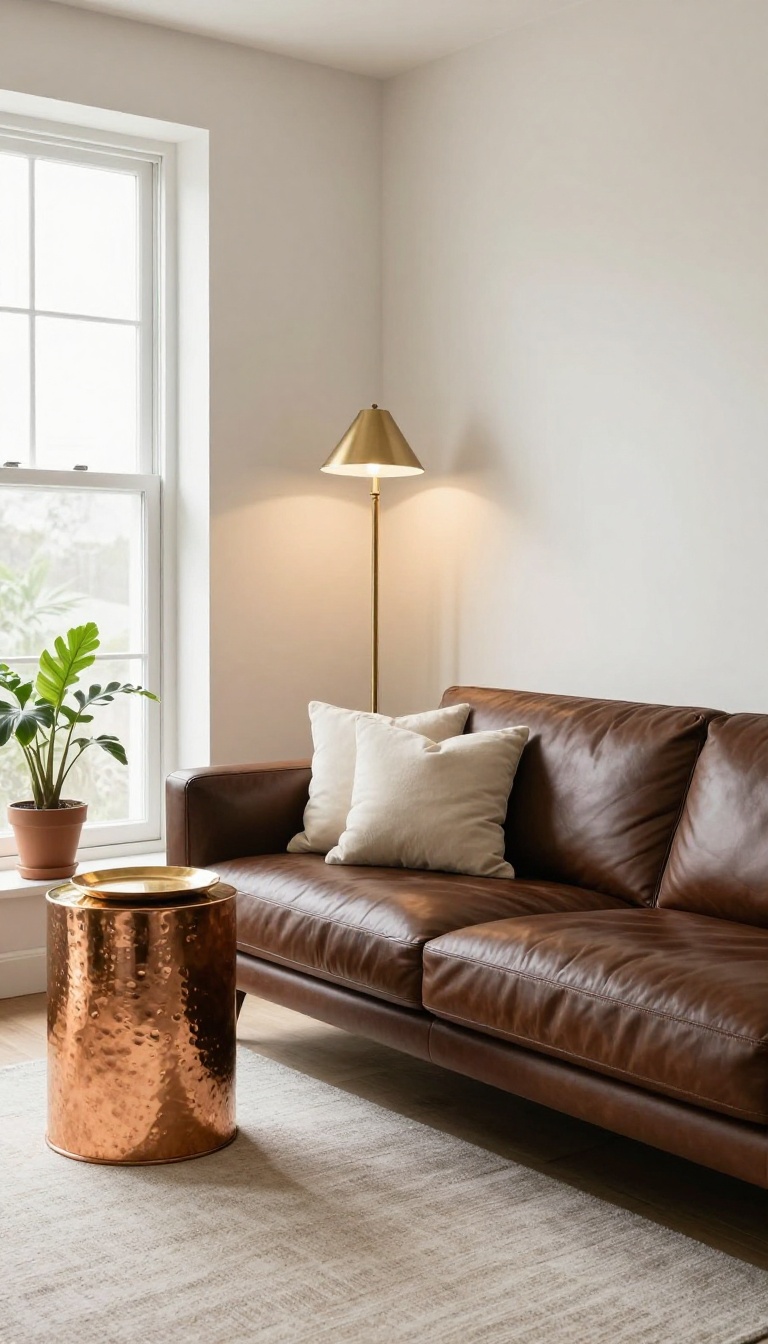
Chocolate brown soaks up light like a sponge, which is why a room full of it can feel cave-like by late afternoon. Metallic accents flip that script. Gold, brass, and copper bounce light around the room instead of absorbing it, so your couch stays rich and warm without dragging the whole space into shadow.
You don't need much. A few reflective surfaces placed at different heights are enough to lift the room and make the brown read as deliberate rather than heavy. Think of metallics as tiny lamps you don't have to plug in.
The trick is mixing finishes and placements so the shine feels layered, not matchy. Here's how to work metallics in without turning your living room into a showroom.
Start With A Brass Or Gold Floor Lamp
A slim brass floor lamp next to the couch does double duty: it adds warm task lighting and puts a reflective vertical line right where the brown is densest. Choose an antique brass or brushed gold finish rather than high-gloss chrome, since warmer metals harmonize with chocolate upholstery instead of fighting it. Angle the shade toward the wall so the light bounces back into the room, and you'll notice the couch looks richer, not darker.
Swap In Metallic Side Tables And Trays
Replace one wood or black side table with a hammered copper or aged brass version. The reflective top catches window light and lamp glow, creating a bright pocket right beside the sofa. A small gold tray on an ottoman works the same way for less money.
Keep the metal tone consistent within a six-foot radius so the eye reads it as intentional.
Layer In Small Copper And Gold Decor
You don't need big pieces to make this work. A copper bowl on the coffee table, gold picture frames on the wall, or brass candlesticks on a shelf each add a tiny sparkle that breaks up the brown. Group two or three metallic objects together instead of scattering them, and place at least one near eye level so the shine is visible when you're sitting down.
Balance Shine With Matte Textures
Too much metal can feel cold, so pair each shiny piece with something soft and matte. A brass lamp next to a chunky knit throw, or a gold tray on a velvet ottoman, keeps the room cozy. The contrast makes the metallics pop more, and it stops the chocolate couch from competing with the shine for attention.
5. Balance with Light Walls and Airy Curtains
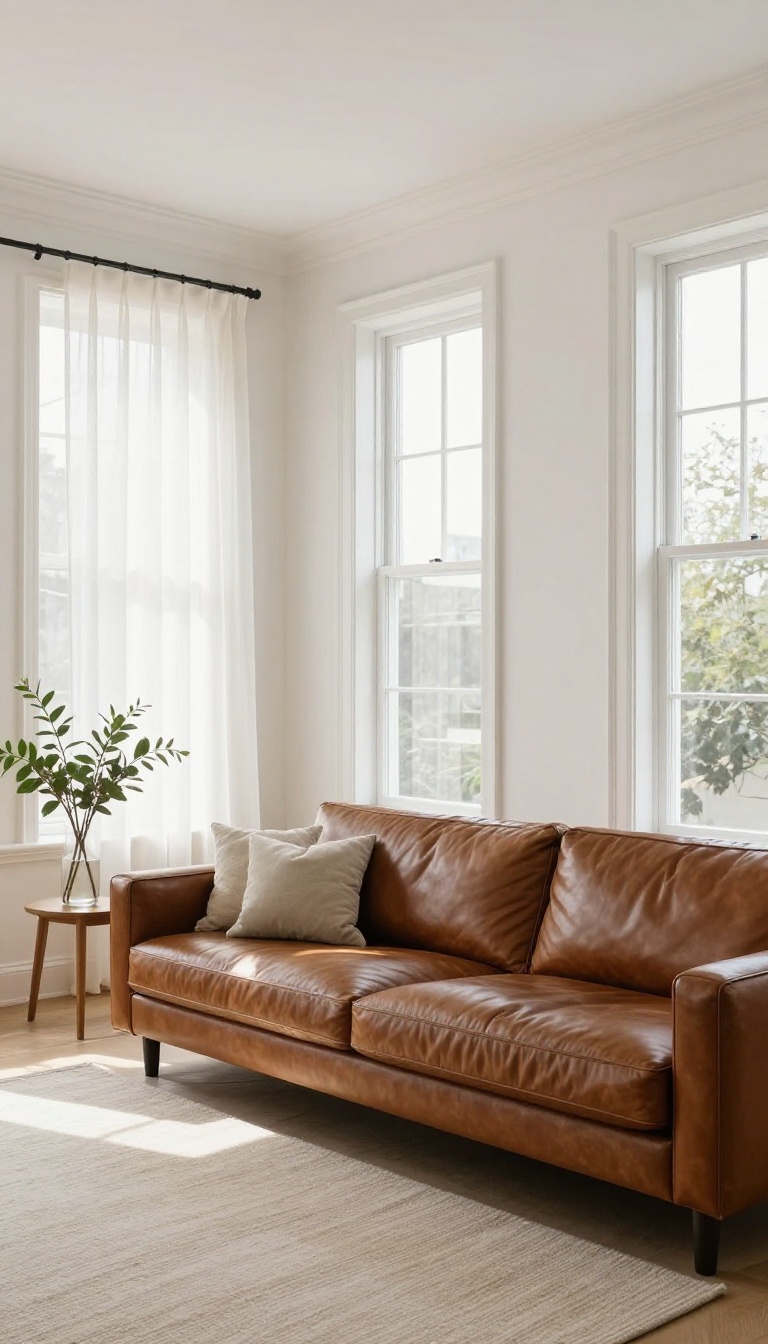
A chocolate couch doesn't need a dark room to feel cozy. In fact, pairing it with light walls and sheer curtains often makes the brown pop more, not less. The contrast keeps the space from feeling like a cave, and it lets the couch be the star without overwhelming everything else.
Light walls act like a reflector for whatever natural light you get. They bounce brightness around the room, so the chocolate upholstery reads as rich instead of gloomy. And airy curtains do the same job at the windows—they filter light without blocking it, which keeps the whole space feeling open.
Pick A Wall Color That Flatters Brown
Warm whites, soft creams, and pale greige all work well with chocolate. They have enough warmth to avoid looking stark, but they're light enough to create contrast. Stay away from icy blues or cool grays—they can make brown look muddy.
A flat or matte finish also helps diffuse light more softly than a glossy one.
Choose Curtains That Let Light Through
Sheer linen, cotton voile, or lightweight blends are your best bet. They soften the window without blocking the view or the daylight. Hang them high and wide to make ceilings look taller and windows feel bigger.
If you need privacy, layer sheers with a light-colored roman shade instead of heavy drapes.
Keep The Trim And Ceiling Light Too
White or off-white trim around windows and doors adds crisp definition. A bright ceiling helps light bounce down onto the couch, making the whole room feel taller. If your ceiling is already white, keep it that way—no need to paint it dark for drama.
6. Incorporate Natural Elements for Earthy Warmth
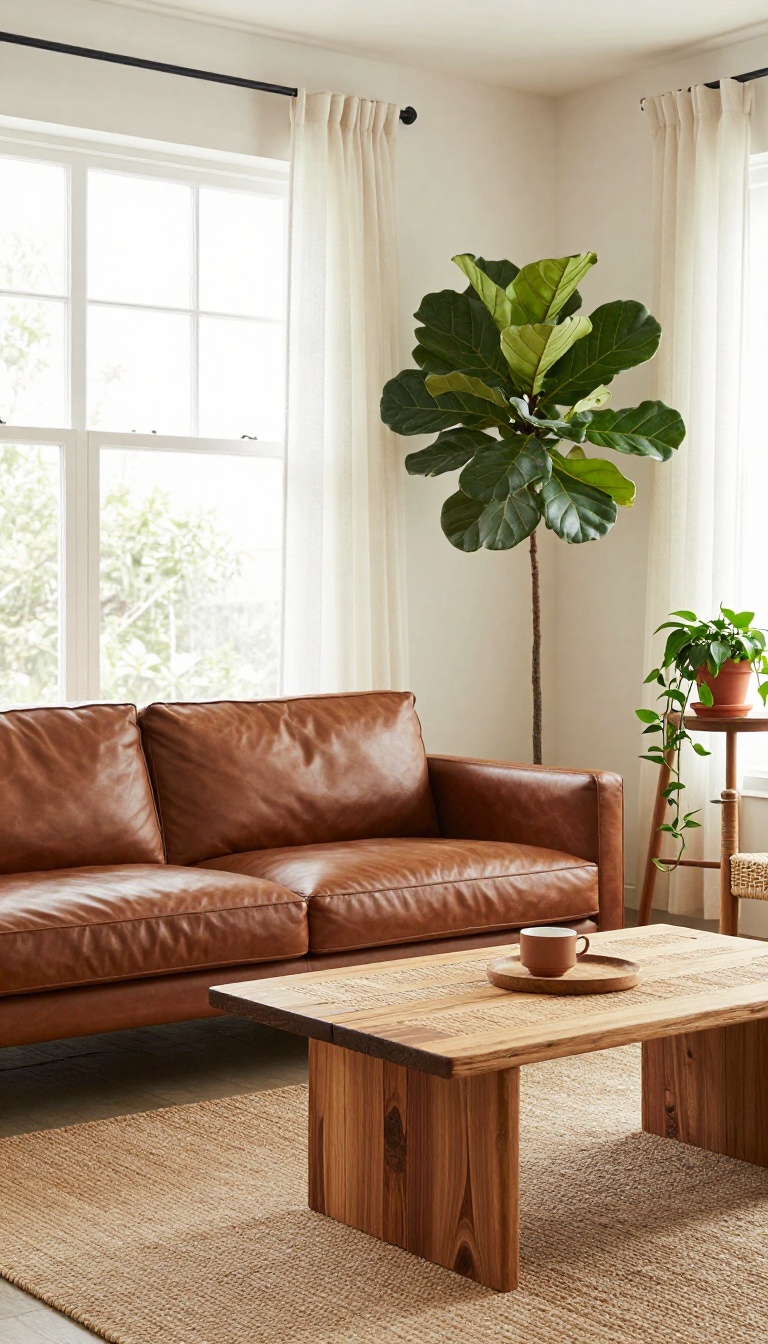
Chocolate brown is literally the color of earth, so it makes sense to lean into that. Natural materials like wood, rattan, and plants bring out the organic side of your sofa instead of fighting it. They also add texture, which keeps the room from feeling flat.
The best part? You don't need a complete overhaul. A few well-chosen pieces can shift the whole mood from heavy to grounded.
Think of it as giving your couch a breath of fresh air.
Natural elements work because they share the same warm undertones as chocolate brown. Wood, rattan, jute, and greenery all have that organic, lived-in feel that makes a dark sofa look intentional rather than accidental. They also break up the solid block of color, which is key when you're working with a deep, saturated hue.
You can go as subtle or as bold as you like. A single rattan chair or a large fiddle leaf fig might be all you need. Or you can layer in wood tones, woven textures, and a few trailing plants for a full-on earthy vibe.
Either way, the goal is to make the room feel connected to nature, even if you're in a city apartment.
Mix In Warm Wood Tones
Wood furniture is a natural partner for chocolate brown. A reclaimed wood coffee table or a pair of oak side tables adds warmth without competing with your sofa. Stick to medium to dark woods like walnut, teak, or acacia—they blend seamlessly with brown upholstery.
If you already have wood floors, you're ahead of the game. Just make sure your other wood pieces don't match too perfectly. A little variation in tone and grain keeps things interesting.
And if your floors are light, a dark wood console or shelf can ground the space and tie back to the couch.
Add Rattan And Woven Textures
Rattan, wicker, and cane bring a breezy, organic feel that lightens up a chocolate couch instantly. A rattan accent chair, a woven pendant light, or even a cane-front cabinet adds texture and visual relief. These materials have a natural warmth that complements brown without making the room feel darker.
You can also layer in woven baskets for storage, a jute rug underfoot, or a seagrass belly basket for your throw blankets. The key is to mix weaves—tight, loose, chunky, fine—so the room feels collected, not themed. A little imperfection is a good thing here.
Bring In Plants (real Or Fake)
Plants are the easiest way to add life and color to a chocolate brown room. A tall fiddle leaf fig or a rubber tree next to the sofa creates a soft, organic contrast. If you have a brown thumb, high-quality faux plants look surprisingly real these days—just avoid anything too shiny or plastic-looking.
For lower-maintenance options, try a snake plant, ZZ plant, or pothos. They tolerate low light and add a pop of green that breaks up all the brown. Group a few smaller plants on a side table or hang a trailing one from the ceiling to draw the eye upward.
The goal is to make the room feel alive, not like a jungle.
7. Create Contrast with a Light Area Rug

A light area rug under your chocolate couch does more than soften the floor—it frames the seating zone and keeps the dark upholstery from feeling like a black hole. The contrast draws the eye, defines the conversation area, and adds a layer of brightness that balances the richness of the brown. It's one of the simplest swaps you can make for an instant lift.
Think of the rug as the stage for your couch. A pale rug—think cream, oatmeal, or soft gray—creates a visual boundary that separates the seating area from the rest of the room. That boundary helps the chocolate brown feel intentional rather than overwhelming.
It also bounces light upward, which can make the whole space feel airier. Size matters more than you might think. A rug that's too small makes the couch look like it's floating, while one that's too large can swallow the room.
Aim for a rug that extends at least six to eight inches beyond the front legs of the couch on all sides. In a typical living room, that means an 8×10 or 9×12 rug for a standard three-seater. Texture plays a supporting role here.
A flat-weave or low-pile rug in a light color keeps things modern and easy to clean, while a plush shag adds coziness but can compete with the couch's visual weight. If your chocolate couch has a lot of texture—like velvet or chenille—opt for a smoother rug to avoid a cluttered look. If your couch is smooth leather, a textured rug adds welcome depth.
Don't forget the power of a subtle pattern. A light rug with a faint geometric or distressed motif adds interest without stealing the show. It can also hide small stains better than a solid pale rug, which is a practical win in busy households.
Pick The Right Size
A rug that's too small makes the couch look disconnected from the room. Measure your space and choose a rug that extends at least six inches beyond the front legs of the couch. In most living rooms, an 8×10 or 9×12 works well for a standard sofa.
Choose A Light, Warm Tone
Stick with off-white, cream, oatmeal, or soft gray. These shades contrast with chocolate brown without feeling stark. Avoid cool whites that can look blue next to warm browns—they'll clash instead of complement.
Balance Texture And Pattern
If your couch is textured, go with a smoother rug. If it's smooth leather, a textured rug adds depth. A subtle pattern in a light rug adds visual interest and hides everyday wear.
8. Mix in Patterned Pillows for Personality

Solid chocolate upholstery is a great background, but it stays quiet until you give it something to talk to. Patterned pillows do that job fast, and they're the cheapest way to shift a room's mood without touching the big pieces. A few well-chosen prints can make the same couch feel playful, tailored, or a little bit vintage, depending on what you pick.
The trick is treating pillows like a small collection, not a matching set. You want enough pattern to wake up the brown, but not so much that the couch turns into a patchwork quilt. Start with one print you love, then build two or three supporting pillows around it.
Pick A Lead Pattern
Choose one pillow that carries the strongest design—maybe a bold geometric, a loose floral, or a classic stripe. Let that be your anchor and keep the rest quieter. If the lead pillow feels right against the chocolate, everything else gets easier.
Mix Scales, Not Just Prints
A large-scale print next to a tiny one looks intentional; two medium prints often compete. Pair a big abstract with a small dot or a thin stripe so each pillow has room to breathe. Vary the sizes of the pillows too, mixing squares with rectangles and one round shape for softness.
Borrow Colors From The Room
Pull one or two colors out of your rug, art, or curtains and repeat them in the pillow patterns. That keeps the mix from feeling random. Cream, rust, sage, and muted blue all sit comfortably beside chocolate brown without fighting it.
Keep The Rest Calm
Once the pillows bring pattern, let the throw and curtains stay simple. A solid textured blanket in a warm neutral keeps the eye moving instead of overwhelmed. You want the couch to look styled, not busy.
9. Choose Complementary Art and Wall Decor
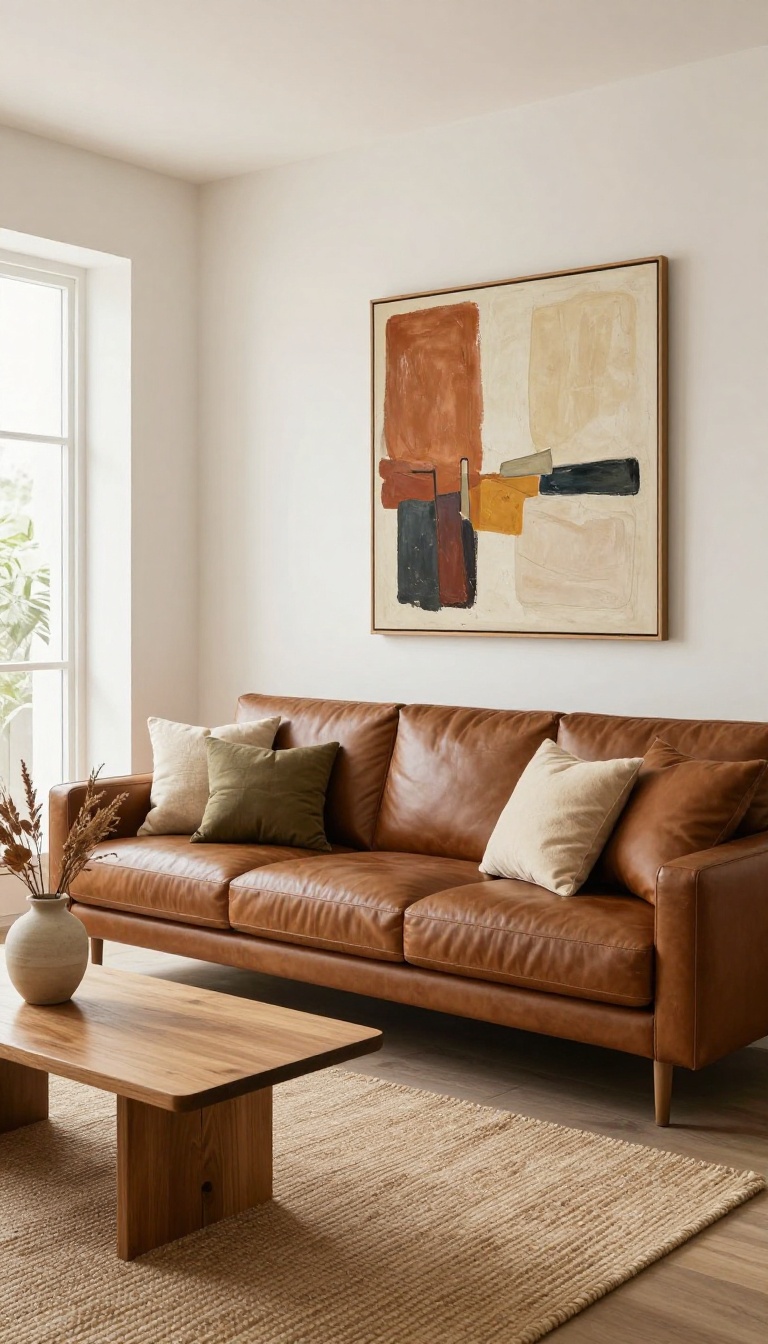
Your chocolate couch already makes a strong statement, so the art above it should support that statement, not compete with it. The right pieces pull the room together and make the couch look intentional rather than like a big brown blob. Think of wall decor as the finishing touch that ties your color palette into a neat bow.
Start by looking at the tones in your couch. Chocolate brown has warm, reddish undertones, so artwork with similar warmth—think terracotta, amber, mustard, or rust—will feel like a natural extension of the upholstery. If you want a lighter, airier feel, choose pieces with creamy backgrounds and just a few warm accents.
Either way, the goal is to create a conversation between the wall and the couch, not a shouting match. Scale matters just as much as color. A tiny framed print floating above a large sofa looks lost, while an oversized canvas can overwhelm the whole seating area.
As a rule of thumb, your art should span about two-thirds to three-quarters of the couch's width. That keeps things balanced and gives the eye a clear focal point. Don't forget the wall itself.
A bold paint color or patterned wallpaper can either enhance or fight your chocolate couch. If you love pattern, keep it subtle and in the same warm family. If you prefer paint, soft whites, warm greiges, or even a muted olive can make the brown pop without turning the room into a cave.
Warm Tones That Play Nice
Art with earthy reds, oranges, and yellows mirrors the warmth in chocolate brown and makes the whole room feel cohesive. Look for abstract pieces, landscapes, or even photography with sunset hues. These colors also add a cozy, inviting vibe that works year-round.
Light Backgrounds For Balance
If your room needs more light, choose art with white, cream, or pale gray backgrounds. The light backdrop lifts the wall and keeps the dark couch from feeling heavy. A simple black frame adds definition without stealing attention.
Mix Textures And Shapes
Wall decor isn't just paintings. Woven baskets, metal sculptures, or a large mirror can add texture and reflect light. Mix shapes—round, rectangular, organic—to keep the wall interesting.
Just make sure the materials feel warm and tactile to match the couch's richness.
10. Optimize Lighting for Warmth and Depth
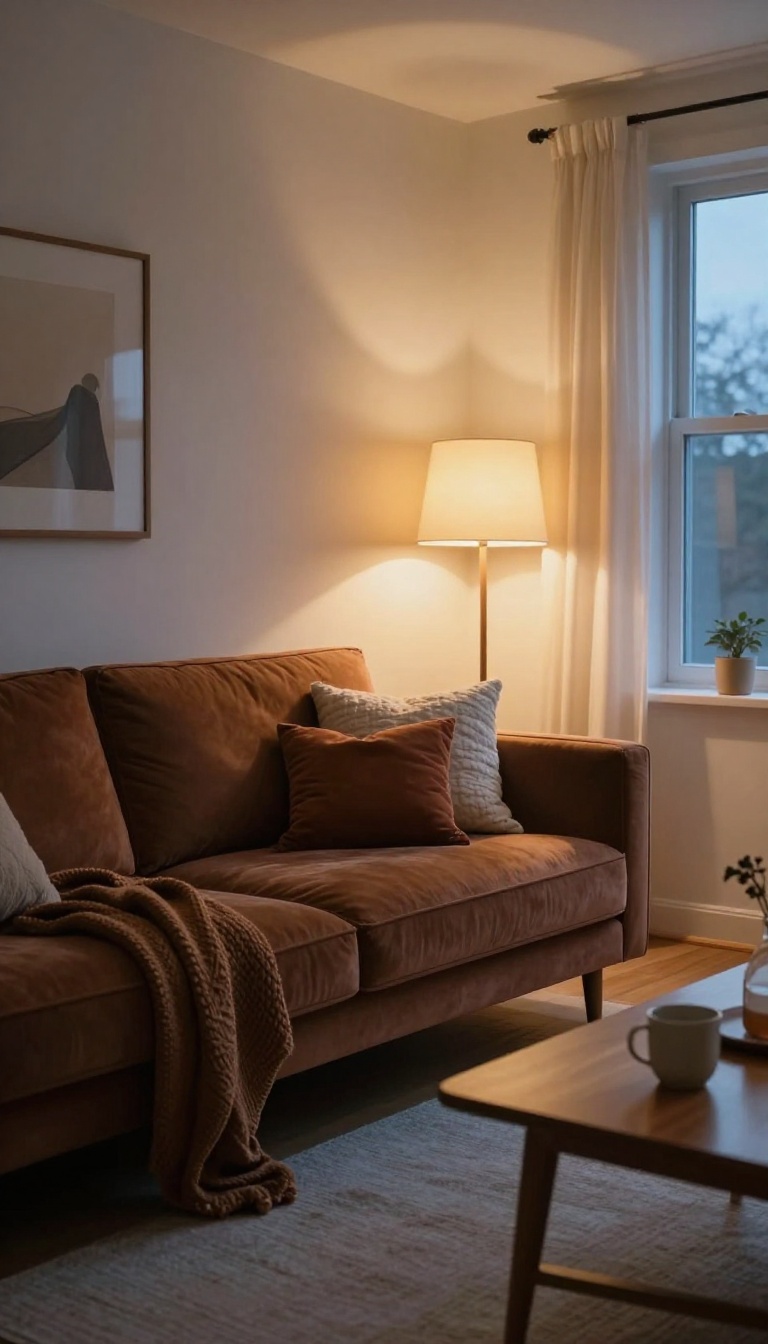
Chocolate brown absorbs light, which can make a room feel like a cave if you rely on a single overhead fixture. The solution is layered lighting that mimics the cozy glow of a fireplace or candlelight. Warm-toned bulbs and multiple light sources bring out the richness of the upholstery while keeping the space inviting.
Start by ditching cool white bulbs. They cast a blue-ish hue that fights the warm undertones of chocolate and makes the couch look drab. Swap them for bulbs in the 2700K to 3000K range, which emit a soft, golden light.
You'll instantly notice the difference—the brown looks richer, and the whole room feels more welcoming. Next, add layers. A single ceiling light won't cut it.
Combine ambient, task, and accent lighting to create depth. Use a dimmable overhead fixture for general light, then add table lamps, floor lamps, and maybe a picture light to highlight specific areas. Each layer adds dimension and prevents the room from feeling flat.
Finally, play with placement. Put a floor lamp behind the couch to create a halo effect that separates the dark upholstery from the wall. Use a table lamp on a side table to cast a warm pool of light over the seating area.
And don't forget a dimmer switch—it lets you adjust the mood from bright and functional to soft and intimate.
Choose Warm Bulbs
Bulbs with a color temperature between 2700K and 3000K emit a cozy, yellow-toned light that enhances chocolate brown. Avoid anything above 4000K, which looks harsh and clinical. LED bulbs in this range are energy-efficient and last for years, so you can keep the warmth without the guilt.
Layer Your Light Sources
Mix overhead, task, and accent lighting. A dimmable chandelier or recessed lights provide ambient illumination. Table and floor lamps add task light for reading or conversation.
Accent lights, like a picture light or a small spotlight aimed at the couch, create highlights that make the texture pop.
Use Dimmers And Smart Controls
Dimmers let you fine-tune brightness to suit the time of day or activity. Smart bulbs and plugs take it further—you can set scenes, schedule warm light for evenings, and even control them with your voice. It's a small upgrade that makes a big difference in how the room feels.
11. Arrange Furniture to Let the Couch Breathe
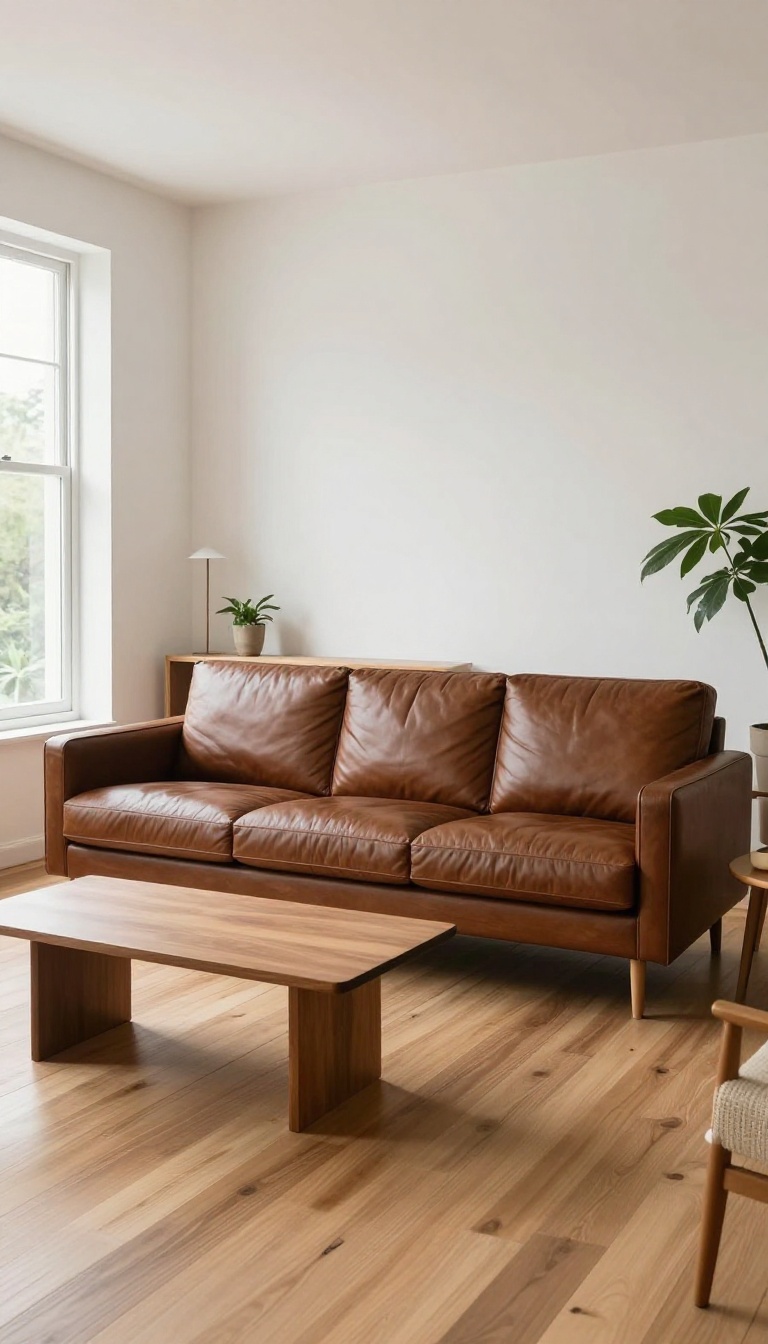
A chocolate couch needs room to breathe. When you crowd it with side tables, floor lamps, and extra chairs, the whole seating area starts to feel heavy and closed in. The fix is simple: give it some breathing room.
A little empty space around the couch makes the room feel open, calm, and easier to live in.
Think of your couch like a piece of art—it looks better with a frame of empty space around it. That doesn't mean the room has to feel sparse. It means being deliberate about what goes near the couch and what stays farther away.
The goal is balance, not emptiness.
Leave A Gap Behind The Couch
If your couch sits against a wall, pull it forward a few inches. Even six inches of space behind it can make the room feel less cramped. It also gives you a spot for a slim console table or a floor lamp without blocking the couch itself.
Don't Block The Walkways
People should be able to move around the couch without sidestepping. Keep at least 18 inches of clear space between the couch and any other furniture. That goes for coffee tables, side chairs, and media consoles.
If you have to squeeze through, it's too tight.
Use Fewer, Larger Pieces
One big coffee table works better than three small ones. A single large ottoman or a wide, low table gives you surface area without visual clutter. Fewer pieces mean less visual noise, and your chocolate couch becomes the clear focal point.
Keep The Floor Visible
Don't cover every inch of floor with rugs, baskets, or poufs. Let some bare floor show around the seating area. That negative space gives the eye a break and makes the room feel airier, even with a dark couch anchoring the space.
FAQ
What colors go best with a chocolate brown couch?
Warm neutrals like cream, beige, and tan work well, as do jewel tones like emerald and sapphire. Light blues and greens also provide a nice contrast.
How can I make a chocolate couch look modern?
Pair it with sleek lines, metallic accents, and a light area rug. Avoid heavy, ornate furniture and keep the overall look clean and uncluttered.
Is a chocolate brown couch outdated?
Not at all. When styled with the right colors and textures, it can look timeless and sophisticated. It's all about balance and contrast.
What kind of rug should I put under a chocolate couch?
A light-colored rug, such as cream or light gray, helps break up the dark color and adds contrast. A textured rug can also add warmth.
How do I keep a chocolate couch from making the room too dark?
Use light walls, airy curtains, and plenty of lighting. Metallic accents and mirrors can also help reflect light and brighten the space.
Conclusion
A chocolate couch already does the heavy lifting, so you don't need to redecorate the whole room around it. Pick one idea that solves your biggest annoyance, whether that's a dark corner, a flat wall, or a floor that feels cold. Live with it for a week before layering in the next change.
Two or three warm moves done well will always beat a rushed shopping spree. Let the browns stay rich, add texture and light where the room needs it, and stop when it feels settled. Your couch is the anchor, not the whole story.