15 Cleaning Pillows Tips for Fresh, Fluffy, Odor Free Bedding
Pillows work hard every night, absorbing sweat, drool, and body oils. Over time, they can turn yellow, develop odors, and lose their fluff. Regular cleaning not only extends their life but also improves your sleep quality.
Most people forget about their pillows until they start smelling funky. But with the right techniques, you can restore them to their former glory.
Whether you have down, memory foam, or synthetic pillows, these tips will help. Let's dive into 15 practical ways to keep your pillows fresh, fluffy, and odor-free without harsh chemicals or expensive dry cleaning.
1. Check the Care Label First
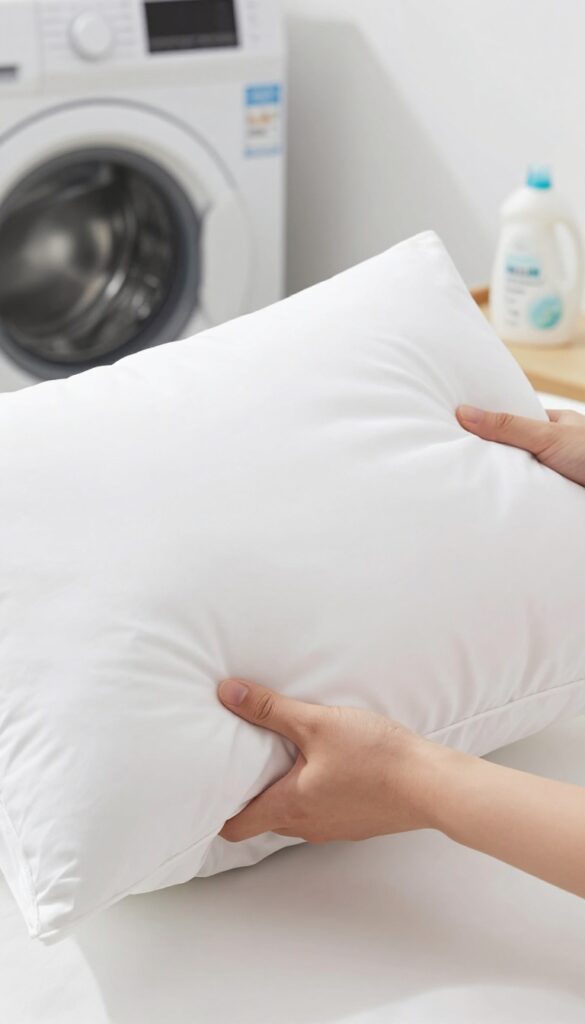
Before you toss your pillows into the washing machine, take a moment to find the care tag. That small piece of fabric holds the key to cleaning them the right way. Ignoring it can lead to clumped filling, ruined pillows, or even voided warranties.
A quick read can save you from a costly mistake.
The care label tells you exactly what your pillow can handle. Some pillows are machine washable, others require spot cleaning or professional dry cleaning. Down and feather pillows often need a gentle cycle with mild detergent, while memory foam should never be submerged in water.
Polyester fills are usually more forgiving, but even they have limits. Always follow the manufacturer's instructions to keep your pillows in top shape.
Decode The Symbols
Care labels use standard symbols for washing, bleaching, drying, and ironing. A tub with water means machine washable, while a hand in the tub means hand wash only. The dots inside the tub indicate water temperature—one dot for cold, two for warm, three for hot.
A circle inside a square means tumble dry, with dots for heat level. If you see an X over any symbol, avoid that action entirely.
When To Ignore The Label
Sometimes the label says 'dry clean only' but the pillow is old or cheap. In that case, you might risk a gentle hand wash. But for expensive down or specialty pillows, stick to the label.
If the tag is missing or unreadable, take a guess based on the filling. Down and feather are usually machine washable, memory foam is not, and synthetic fills are safe unless stated otherwise.
What Happens If You Don't Check
Skipping the label can turn a fluffy pillow into a lumpy mess. Memory foam absorbs water like a sponge and takes days to dry, often developing mold. Down can clump if washed with harsh detergent or hot water.
Even synthetic pillows can lose their shape if you use too much heat. A few seconds of reading can prevent all that trouble.
2. Use the Right Water Temperature
Water temperature can make or break your pillow cleaning session. Too hot, and you might ruin delicate fibers. Too cold, and you won't kill dust mites or remove oils.
Getting it right keeps pillows fresh without damage.
Most pillows benefit from warm water, which balances cleaning power with fabric safety. Hot water (above 130°F) kills dust mites but can shrink or warp certain materials like down or memory foam. Cold water is gentle on delicate fabrics but may not fully remove oils or allergens.
Always check the care tag first, but if you're unsure, warm is your safest bet.
Hot Water For Deep Sanitizing
If your pillow is made of cotton or polyester and the tag allows, hot water can kill dust mites and bacteria. This is especially useful for allergy sufferers. But never use hot water on memory foam, latex, or down—it can break down the filling.
Warm Water For Everyday Cleaning
Warm water works well for most synthetic and down pillows. It dissolves oils and detergents without damaging the fabric or filling. Stick to warm (around 90-110°F) for a safe, effective clean.
Cold Water For Delicates
Use cold water for pillows with delicate fabrics like silk or those with special coatings. Cold water prevents shrinkage and color bleeding. However, add a disinfectant like vinegar or a sanitizing laundry booster to kill germs.
3. Choose a Gentle Detergent
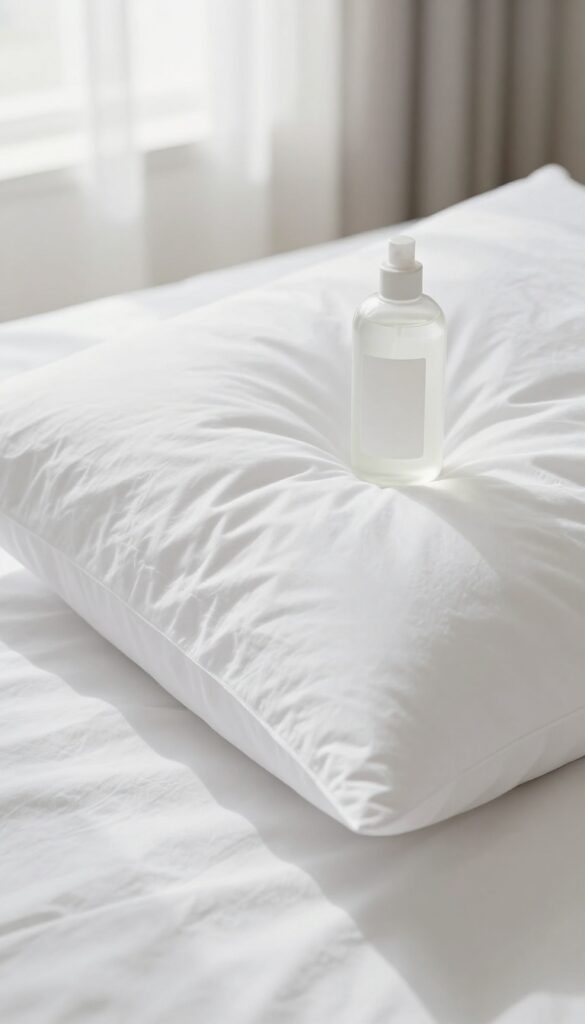
Not all laundry detergents are pillow-friendly. Harsh formulas can leave behind residue that traps dirt and makes pillows feel stiff. A mild, liquid detergent works best because it dissolves completely and rinses out easily.
Skip the fabric softener—it coats pillow fibers, reducing their fluffiness and absorbency over time.
When washing pillows, the detergent you use matters more than you might think. Heavy-duty or powdered detergents often don't dissolve fully in cold or warm water, leaving a film that attracts more soil. Liquid detergents labeled as "free and clear" or for sensitive skin are ideal because they contain fewer additives and are less likely to cause buildup.
Use about half the amount you'd use for a regular load—too much soap is a common mistake that leads to residue. Fabric softener is especially problematic for pillows: it leaves a waxy coating on fibers that reduces breathability and makes pillows feel less fluffy. If you want softness, add a half-cup of white vinegar to the rinse cycle instead.
It naturally softens fabric and helps remove any lingering detergent.
Why Liquid Beats Powder
Powder detergents can clump and fail to dissolve fully in the cooler water often recommended for pillows. Liquid detergents mix more evenly and rinse out cleaner. Look for a product that is dye-free and fragrance-free to minimize irritation and residue.
The Fabric Softener Trap
Fabric softener might make your clothes feel nice, but it's bad for pillows. It coats the fibers with a thin layer of wax that traps odors and reduces fluffiness. Over time, this buildup can make pillows feel flat and heavy.
Skip it and use vinegar as a natural alternative.
How Much Detergent Is Enough?
More soap doesn't mean cleaner pillows. In fact, excess detergent is the top cause of residue. Use about one tablespoon of liquid detergent per pillow.
If your machine is high-efficiency, use even less—follow the HE guidelines. An extra rinse cycle can also help remove any leftover soap.
4. Wash Two Pillows at a Time
Tossing a single pillow into the washing machine can throw off the balance during the spin cycle, causing loud thumping and potential damage. Washing two at a time keeps the load evenly distributed, which protects both your machine and your pillows. Plus, it ensures that each pillow gets cleaned thoroughly without being knocked around.
Balancing the load isn't just about noise—it's about getting a proper clean. When pillows are unbalanced, the washer may stop mid-cycle or fail to distribute detergent evenly. By always washing pairs, you maintain smooth operation and consistent results.
Why Balance Matters
An unbalanced washer can vibrate excessively, leading to premature wear on bearings and suspension. For pillows, uneven spinning means some areas stay soaked while others barely get rinsed. Washing two pillows at once prevents these issues and extends the life of your appliance.
How To Pair Pillows
Match pillows of similar size, fill type, and condition. A down pillow and a synthetic one may behave differently when wet, so keep like with like. If you only have one pillow to wash, add a few large bath towels to balance the load—but avoid overloading the machine.
Extra Rinse Cycle
After washing two pillows together, run an extra rinse cycle to remove all detergent residue. Soap left behind can attract dirt and cause yellowing. An extra spin also helps extract more water, cutting down drying time.
5. Add an Extra Rinse Cycle
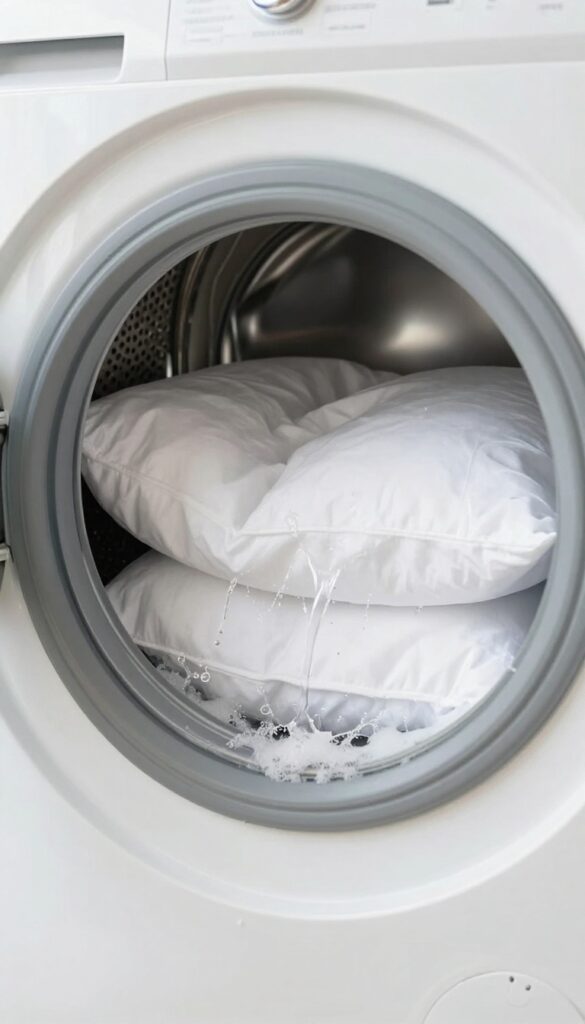
Residue from detergent can cause yellowing and stiffness. An extra rinse ensures all soap is removed, leaving pillows fresh and soft. Many washers have a dedicated extra rinse setting, but you can also manually select a second rinse cycle.
That leftover detergent doesn't just make pillows feel crusty—it can also trap odors and irritate sensitive skin. An extra rinse cycle is a simple step that makes a huge difference.
Why It Matters
Detergent residue builds up over time, especially in thick pillows. It attracts dirt and can cause yellow patches. An extra rinse flushes out every last bit, keeping pillows bright and fluffy.
How To Do It Right
After the main wash cycle, set your machine to an extra rinse or a second rinse-and-spin. If your washer doesn't have that option, run a quick rinse cycle manually. Use cold water to save energy and prevent shrinkage.
When To Skip It
If you use a very mild, low-residue detergent, one rinse might be enough. But for most detergents, especially high-efficiency ones, an extra rinse is still beneficial. When in doubt, add it.
6. Dry Thoroughly on Low Heat
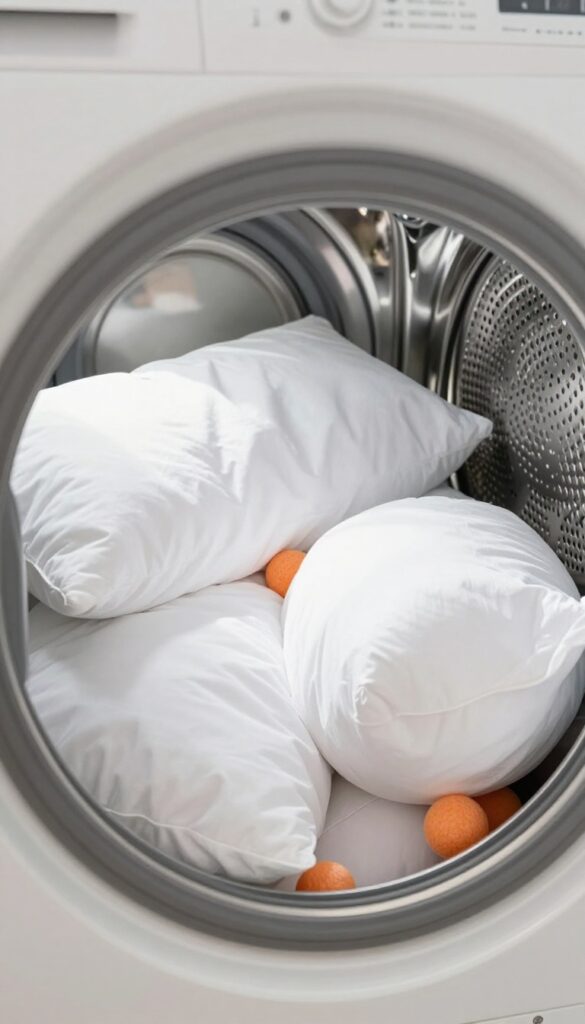
Damp pillows are a breeding ground for mold, mildew, and dust mites. Even if you wash them perfectly, skipping the drying step or rushing it can undo all your hard work. The key is low heat and patience—high heat can damage fillings and cause yellowing.
After washing, squeeze out excess water gently without wringing. Place pillows in the dryer on a low-heat setting. Add dryer balls or clean tennis balls to break up clumps and restore fluff.
Check every 20 minutes and fluff by hand if needed. Depending on pillow size and fill, drying can take one to two hours. Make sure they are completely dry inside—any remaining moisture leads to odors and mildew.
Why Low Heat Matters
High heat can melt synthetic fibers, damage down clusters, and set stains. Low heat dries gradually without compromising the pillow's structure. It also prevents the outer fabric from shrinking or becoming brittle.
The Magic Of Dryer Balls
Dryer balls or clean tennis balls bounce around, physically breaking up wet clumps of filling. This fluffs the pillow and speeds drying by allowing hot air to circulate through the fibers. Use two to three balls per load for best results.
How To Know When They're Dry
Pillows can feel dry on the surface but stay damp inside. Check by pressing the pillow in the center—if it feels cool or heavy, it needs more time. You can also run a quick fluff cycle and then let them air out for an hour before using.
7. Fluff Pillows by Hand Daily
A quick daily fluff does more than you think. It redistributes the filling, prevents flat spots, and keeps your pillows airy between washes. Best of all, it takes just seconds.
Each morning, give your pillow a good squeeze and shake. Fluff it from all sides to break up clumps and restore loft. This simple habit extends the life of your pillow and maintains its supportive shape.
Make it part of your bed-making routine for effortless freshness.
Why Daily Fluffing Works
Pillow fillings—whether down, synthetic, or memory foam—shift and compress overnight. A quick fluff redistributes the material evenly, preventing permanent indentations. It also aerates the pillow, releasing trapped moisture and odors.
How To Fluff Properly
Hold the pillow by two corners and give it a vigorous shake. Then, punch and squeeze it from all sides, focusing on areas that feel lumpy or flat. For down pillows, use your hands to break up clumps gently.
Repeat for 10–15 seconds.
When To Fluff Vs. Wash
Daily fluffing handles light maintenance, but it's not a substitute for washing. If your pillow still looks flat or smells after fluffing, it's time for a deeper clean. Fluffing simply buys you more time between washes.
8. Use Pillow Protectors
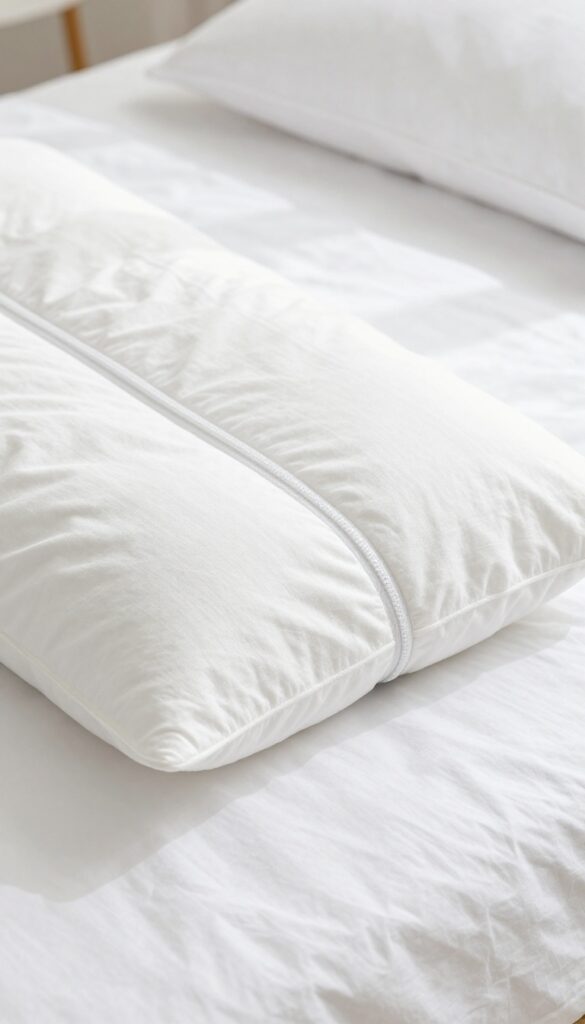
Zippered pillow protectors are the unsung heroes of pillow maintenance. They act as a barrier between your pillow and the sweat, oils, and allergens that accumulate nightly. Not only are they easy to remove and wash, but they also significantly extend the time between deep cleans, keeping your pillows fresher for longer.
What To Look For
Choose protectors made from breathable, waterproof, or water-resistant materials like cotton, bamboo, or polyester blends. Look for tight-weave fabrics that block dust mites and allergens while still allowing air circulation. Zippered covers provide full enclosure, preventing any debris from seeping in.
How To Maintain Them
Wash pillow protectors every two to four weeks in warm water with a mild detergent. Avoid fabric softeners, which can reduce breathability and waterproofing. Tumble dry on low heat or air dry.
Having two sets per pillow makes swapping easy when one is in the wash.
The Long-term Benefit
With protectors, your pillows stay cleaner, fluffier, and odor-free for months. You’ll need to deep clean them less often, which extends their lifespan. Plus, protectors are cheaper than replacing pillows, making them a smart investment for your bedding routine.
9. Spot Clean Stains Immediately
Yellow sweat stains and makeup marks are inevitable, but they don't have to ruin your pillows. The key is to act fast before the stain sets in. A simple paste of baking soda and water can lift most stains without a full wash.
When you notice a stain, mix three parts baking soda with one part water to form a thick paste. Apply it directly to the stain and let it sit for 30 minutes. Gently blot with a damp cloth—no rubbing, which can push the stain deeper.
This method works on cotton, polyester, and down pillows. For tougher stains, add a few drops of hydrogen peroxide to the paste. Always test on a hidden area first.
Why Spot Cleaning Works
Spot cleaning targets the problem area without soaking the entire pillow. This prevents over-wetting, which can lead to mold or clumping. It also saves time and water compared to a full wash cycle.
Common Stains And How To Handle Them
Sweat stains respond well to baking soda paste. Makeup marks often need a dab of dish soap mixed with water. For blood stains, use cold water and hydrogen peroxide.
Always blot, never scrub.
When To Wash Instead
If the stain is large or the pillow smells musty, spot cleaning alone won't cut it. In that case, wash the whole pillow using a gentle cycle. But for small, fresh stains, spot cleaning is your best bet.
10. Deodorize with Baking Soda
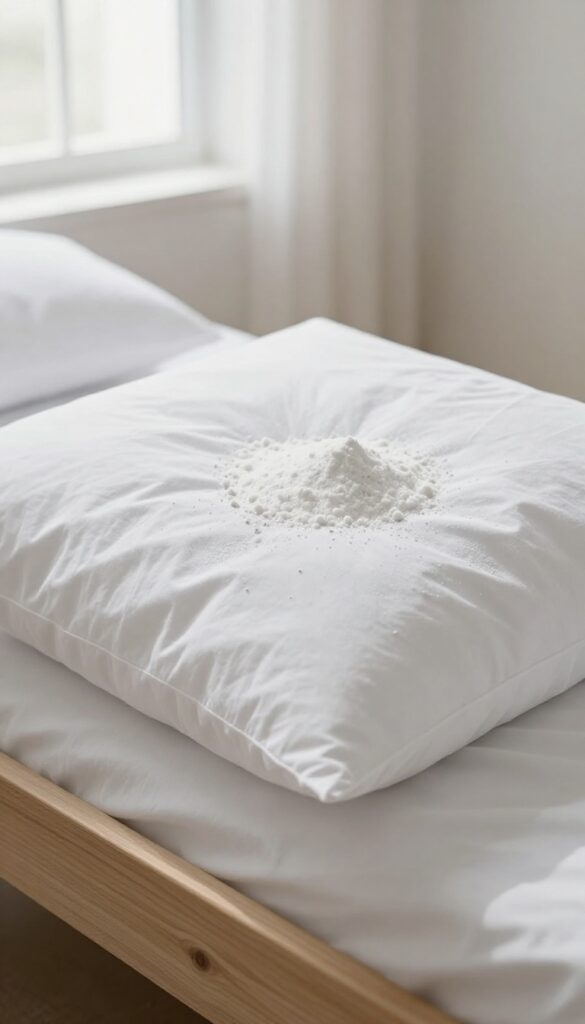
Baking soda is a natural deodorizer that works wonders on pillows. It absorbs odors without adding moisture or harsh chemicals. This simple method is perfect for a quick refresh between deep washes.
Sprinkle a generous layer of baking soda over the entire surface of your dry pillow. Let it sit for at least 15 minutes—longer if the odor is strong. Then, use a vacuum cleaner with an upholstery attachment to remove all the powder.
Your pillow will smell fresher instantly.
Why It Works
Baking soda is alkaline and neutralizes acidic odors from sweat and body oils. Its fine powder also absorbs moisture and trapped smells deep within the pillow fibers.
Best Pillow Types For This Method
This technique works great on synthetic, down, and feather pillows. Avoid using it on memory foam or latex pillows, as the powder can get trapped in the foam and cause damage.
Pro Tip For Stubborn Odors
For extra deodorizing power, mix a few drops of essential oil (like lavender or tea tree) with the baking soda before sprinkling. Let it sit for 30 minutes, then vacuum thoroughly.
11. Sun-Dry for Natural Freshness
The sun is one of the most powerful and natural cleaning tools you have. UV rays kill bacteria and bleach out mild stains, leaving pillows smelling like fresh air. Hanging pillows outside on a sunny day for a few hours can do wonders—just be careful with synthetic fills, which can degrade under direct heat.
Sun-drying is a simple, energy-free way to refresh pillows. The ultraviolet light naturally disinfects and deodorizes, while the breeze helps fluff the fill. It's especially effective for cotton, down, and feather pillows.
How Long To Air Them
Aim for 2 to 4 hours of direct sunlight, flipping them halfway through. Early morning or late afternoon sun is gentler on materials. Avoid the hottest midday sun for synthetic pillows to prevent melting or hardening.
Best Weather Conditions
Choose a dry, low-humidity day with a light breeze. Humidity can trap moisture, defeating the purpose. If pollen is high, consider covering pillows with a thin cotton pillowcase to keep allergens off.
What About Foam Pillows?
Memory foam and latex pillows should never sit in direct sun for long—UV rays can break down the foam. Instead, air them in a shaded, breezy spot for an hour or two. A fan indoors works well too.
12. Refresh Memory Foam with Care
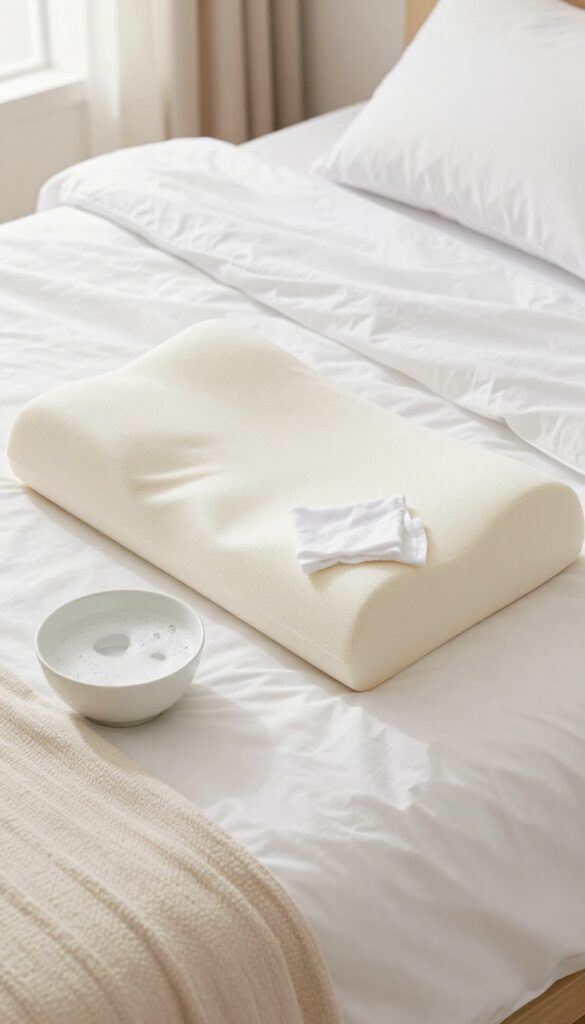
Memory foam pillows are a bit different from your standard down or synthetic ones. They can't just be tossed in the washing machine without serious damage. But that doesn't mean you're stuck with a dirty pillow forever.
With the right technique, you can keep your memory foam fresh and supportive for years.
Start by checking the care tag—some memory foams have a removable cover that can be washed separately. For the foam itself, spot cleaning is the way to go. Mix a small amount of mild detergent with water, dip a clean cloth into the solution, and gently blot the stained area.
Avoid soaking the foam, as excess moisture can break down its structure. After spot cleaning, press the area with a dry towel to absorb as much water as possible. Then let the pillow air dry completely in a well-ventilated room, which might take a full day.
Never use heat or a dryer, as that can ruin the foam. Once dry, fluff the pillow by hand to restore its shape. To minimize future cleaning, always use a zippered pillow protector under your pillowcase.
It catches sweat, oils, and dust mites, keeping the foam itself much cleaner.
Spot Clean Stains Gently
Mix a few drops of mild dish soap or laundry detergent with a cup of cool water. Dip a white cloth into the solution and wring it out until damp, not wet. Blot the stain lightly—don't rub, as that can push the stain deeper.
Repeat with a clean damp cloth to rinse, then blot with a dry towel to remove moisture.
Dry Thoroughly To Prevent Mold
After spot cleaning, place the pillow in a sunny, airy spot. Flip it every few hours to ensure even drying. A fan can speed up the process.
Make sure it's completely dry before using it again—any trapped moisture can lead to mold or mildew inside the foam.
Use A Protector For Longevity
A high-quality, breathable pillow protector is the best investment for memory foam. It blocks dirt, oils, and allergens from reaching the foam. Wash the protector every two weeks with your sheets, and your memory foam will stay fresh much longer between deep cleans.
13. Replace Pillows Every 1-2 Years
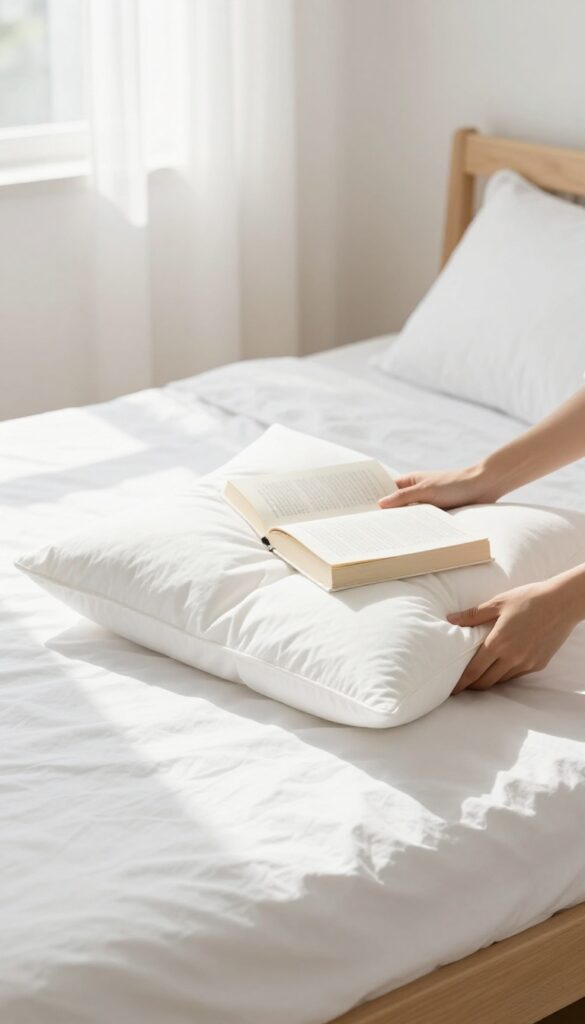
No matter how well you clean, pillows have a finite lifespan. Over time, they accumulate dust mites, allergens, and body oils that washing can't fully remove. The internal fill also breaks down, losing its ability to support your head and neck properly.
Knowing when to toss old pillows is just as important as knowing how to clean them.
The Fold Test
A simple way to check pillow support is the fold test. Fold the pillow in half and place a book on top. When you remove the book, if the pillow springs back open, it's still good.
If it stays folded or slowly unfurls, the fill has lost its resilience. Time to shop for a replacement.
Odor That Won't Quit
Even after a thorough wash, some pillows retain a musty or sour smell. That's a sign of deep-set bacteria or mold growth inside the fill. No amount of baking soda or sunshine can fully fix that.
Persistent odors mean the pillow's internal structure is compromised, and it's healthier to start fresh.
Lumps And Clumps
If you feel hard lumps or uneven clumps in your pillow, the fill material has shifted or broken down. This creates uncomfortable pressure points and uneven support. For down or feather pillows, clumping is a clear sign the feathers have degraded.
For synthetic pillows, the fibers have matted. Either way, replacement is the best solution.
14. Wash Pillows Seasonally
Setting a regular washing schedule keeps pillow buildup in check before it becomes a problem. A seasonal rhythm—every three months—works well for most households. Tying it to the change of seasons makes it easy to remember, like when you swap out your wardrobe or adjust the thermostat.
Aim for every three months. Set a calendar reminder—regular cleaning prevents buildup and keeps your bed feeling hotel-fresh. Consistency is key: if you wait until pillows look or smell dirty, you're already behind.
Seasonal washing also helps you inspect for wear and tear, so you know when it's time for replacements.
Why Every Three Months?
Three months is the sweet spot for most pillow types. It's frequent enough to prevent oil, sweat, and dust mites from accumulating, but not so often that you wear out the fabric. If you have allergies or sleep hot, consider bumping it up to every two months.
How To Set A Reminder That Sticks
Pick a seasonal anchor—first day of spring, summer solstice, first day of fall, winter solstice—and add a recurring reminder on your phone. Or link it to a routine task you already do, like changing your HVAC filter or flipping your mattress. That way you won't forget.
What To Do Between Washes
Even with seasonal washing, pillows benefit from quick refreshers. Give them a good fluff each morning, air them out weekly for a few hours, and spot clean any stains right away. This reduces the grime that builds up between deep cleans.
15. Store Extra Pillows Properly
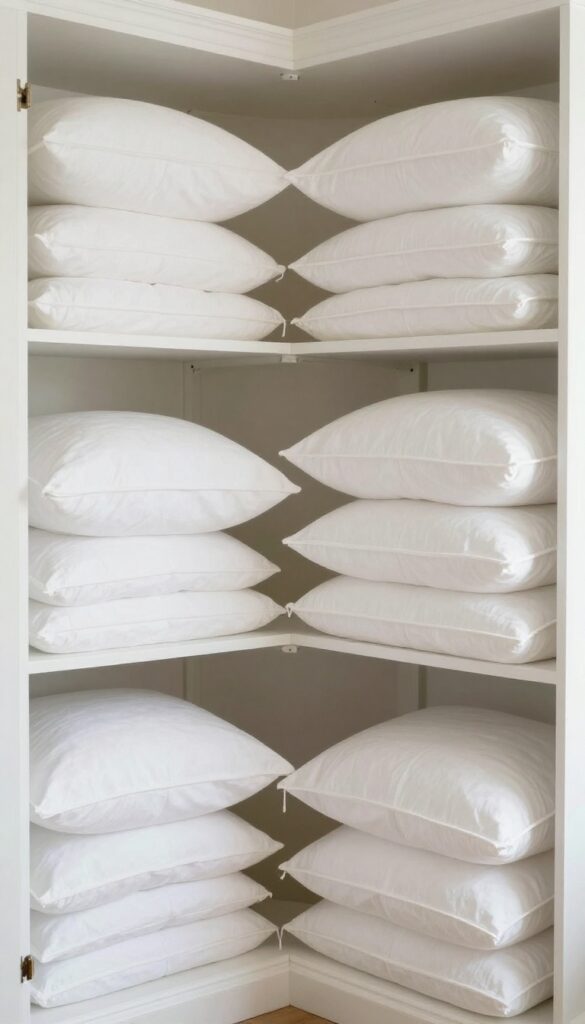
If you keep spare pillows in a closet or under the bed, how you store them matters. Tossing them in plastic bags traps moisture and leads to musty smells. Instead, use breathable storage to keep them fresh and fluffy until you need them.
Proper storage is the final piece of the pillow care puzzle. Even clean pillows can develop odors or lose shape if stored incorrectly. The key is to let them breathe while protecting them from dust and humidity.
Choose Breathable Bags
Plastic bags or airtight containers might seem convenient, but they lock in moisture and encourage mildew. Use cotton or muslin bags instead. These natural fabrics allow air circulation while keeping dust and bugs out.
If you don't have a dedicated bag, an old pillowcase works just as well.
Find The Right Spot
Store pillows in a cool, dry place away from direct sunlight. Avoid damp basements or hot attics, which can cause yellowing or mold. A linen closet or a shelf in a climate-controlled room is ideal.
Place them flat or standing upright, never folded in half for long periods.
Refresh Before Using Again
If a stored pillow feels a bit flat or smells stale, fluff it in the dryer on low heat for 10 minutes with a dryer sheet. This restores loft and freshens the fabric. For a natural boost, toss in a few tennis balls wrapped in socks to break up clumps.
FAQ
Can I wash all types of pillows in a washing machine?
No. Down and synthetic pillows are usually machine washable, but memory foam, latex, and decorative pillows often require spot cleaning or dry cleaning. Always check the care label first.
How often should I clean my pillows?
Wash pillows every 3 to 6 months. If you use pillow protectors, you can stretch it to 6 months. Spot clean stains as they happen.
What's the best way to dry pillows after washing?
Dry on low heat with dryer balls or clean tennis balls to break up clumps. It may take two cycles to ensure they are completely dry. Air drying is fine but takes longer.
How do I remove yellow stains from pillows?
Make a paste of baking soda and water, apply to stains, let sit for 30 minutes, then wash as usual. For tough stains, add a little hydrogen peroxide to the paste.
When should I replace my pillows?
Replace pillows every 1 to 2 years. Signs include loss of shape, persistent odors, lumps, or if they don't spring back after folding.
Conclusion
Keeping your pillows fresh and fluffy doesn't require a complicated routine. Start with the simplest habit—like weekly fluffing and a quick baking soda refresh—then add deeper cleaning as needed. A little regular care keeps odors away and extends pillow life.
Pick two or three tips that match your pillows' current condition and make them part of your laundry cycle. Your bed will feel more inviting, and you'll sleep better knowing your pillows are truly clean.