10 Rental Living Room Ideas to Make the Space Feel Yours
Renting a living room shouldn't mean living with someone else's design choices. The space can still reflect your style without risking your deposit or your lease agreement. A few renter-friendly swaps can turn a beige, blank box into a room that actually feels like home.
You don't need a contractor, a huge budget, or a landlord who loves the idea of change. Every idea here is removable, reversible, or portable when moving day comes.
Start with one project, or stack several for a full transformation. The goal is simple: make the room feel yours, not temporary.
1. Go Big with a Removable Wallpaper Accent Wall
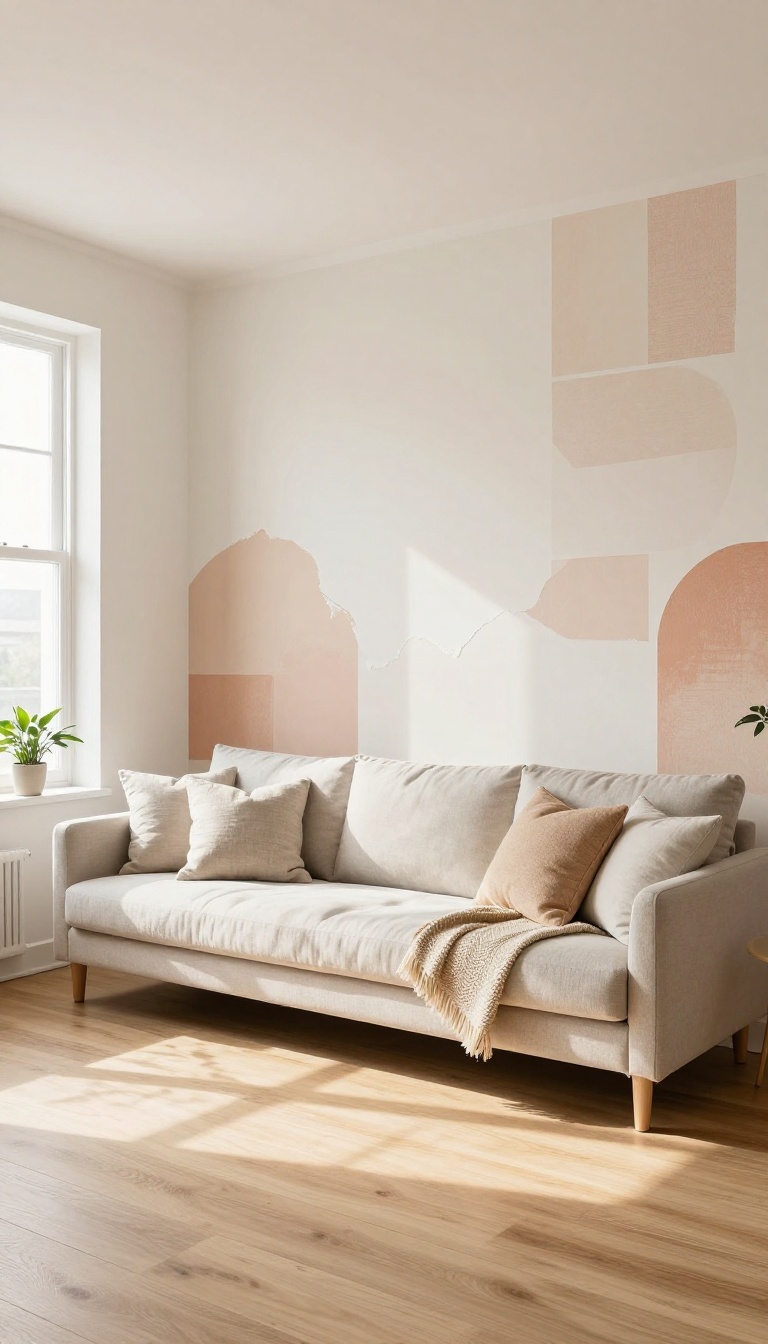
An accent wall is the fastest way to make a rental living room look like someone actually lives there. You pick one wall—usually the one behind the sofa or the first thing you see when you walk in—and cover it with peel-and-stick wallpaper. It takes an afternoon, comes off cleanly when you move, and instantly gives the room a focal point.
The best part? You don't need permission for most peel-and-stick options, and you don't need to be handy. If you can measure, cut, and smooth, you can do this.
The impact is huge for the effort.
Most renters avoid wallpaper because they picture paste, water, and a mess. Peel-and-stick changed that. It's basically a giant sticker that clings to smooth walls and lifts off without damaging paint.
You can go bold with a geometric print, soft with a subtle texture, or moody with a deep color. The key is to commit to one wall and treat it like art.
Pick The Right Wall
The wall behind your main seating area is the obvious choice because it anchors the room. If your living room is open to the kitchen or dining area, choose the wall that defines the living zone. Avoid walls with heavy texture, peeling paint, or direct water exposure—those make adhesion tricky.
A smooth, clean, painted wall is ideal.
Install Without The Headache
Start with a clean wall. Wipe it down with a damp cloth and let it dry completely. Measure your wall height and add a few inches for trimming.
Cut your first strip, peel the backing a few inches at a time, and smooth it down with a felt-edged squeegee or a clean towel. Overlap seams slightly if the pattern allows, or butt them together for a seamless look. Work from the top down, and don't stress about perfect edges—baseboards and ceiling trim hide a lot.
Make It Last (and Come Off Clean)
Press the wallpaper firmly along all edges and seams with your fingers or a roller. Let it set for a day before hanging anything heavy on that wall. When it's time to move, peel slowly from the top corner at a low angle.
Most quality brands come off in one piece and leave no residue. If you're worried, test a small corner first. Keep the backing paper—you can re-roll the wallpaper for your next place.
2. Swap Out the Boob Light for a Statement Fixture
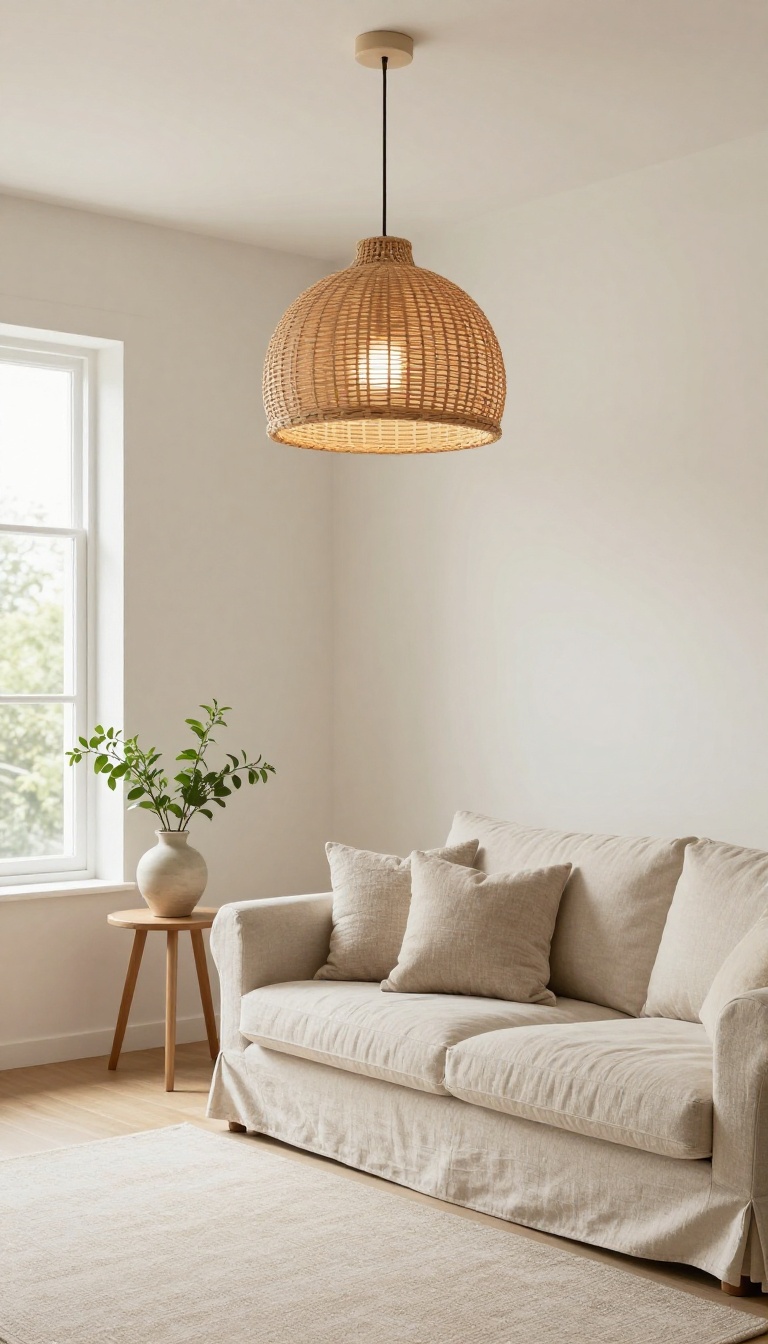
That flush-mount dome light on your ceiling has a nickname for a reason, and it's not a compliment. It's the default builder-grade fixture that shows up in almost every rental, and it does nothing for the room except make everything look a little sad. The good news: swapping it takes about fifteen minutes, costs less than a nice dinner, and reverses completely before you hand back the keys.
Here's the thing about ceiling lights in rentals. Landlords rarely care what's up there as long as it works and the wiring stays safe. That gives you a rare window to make a real change without asking permission.
You're not painting, drilling new holes, or altering the structure. You're unscrewing a couple of screws, disconnecting three wires, and putting something better in its place. The key is to treat the original fixture like a library book.
Label it, bag the screws, and store it somewhere you'll actually find it. When move-out day arrives, you reverse the process and nobody's the wiser. This is one of the few rental upgrades that feels permanent while staying completely temporary.
Pick A Fixture That Fits The Room
A living room usually wants something with presence but not chaos. A pendant with a woven or metal shade adds warmth and draws the eye upward. A sleek flush-mount works better if your ceilings are low or the room is small.
Match the finish to what's already there. If your door handles and curtain rods are black, a black fixture blends right in. If everything is brass or nickel, stay in that family.
You're not trying to make a statement that fights the room, just one that improves it.
The Actual Swap, Step By Step
Turn off the breaker first. Not just the switch, the breaker. Then grab a screwdriver, a wire nut or two, and a stool tall enough to reach comfortably.
Unscrew the old fixture and let it hang by the wires. Take a photo of the connections before you touch anything. Connect the new fixture the same way: black to black, white to white, ground to ground.
Tuck the wires up, screw the canopy in place, and flip the breaker back on. If any of that sounds like too much, hire a handyman for an hour. It's still cheaper than a new lease.
Store The Original Like A Pro
Drop the old fixture and its screws into a labeled zip bag. Write the room name on it so future-you doesn't have to guess. Tape the bag to the back of a closet shelf or tuck it in a storage bin with other rental parts.
Snap a photo of the original installed, too. That way you know exactly how it looked and how it went back together. Fifteen seconds of prep now saves an hour of confusion later.
3. Layer in a Large Area Rug to Cover Bad Carpet
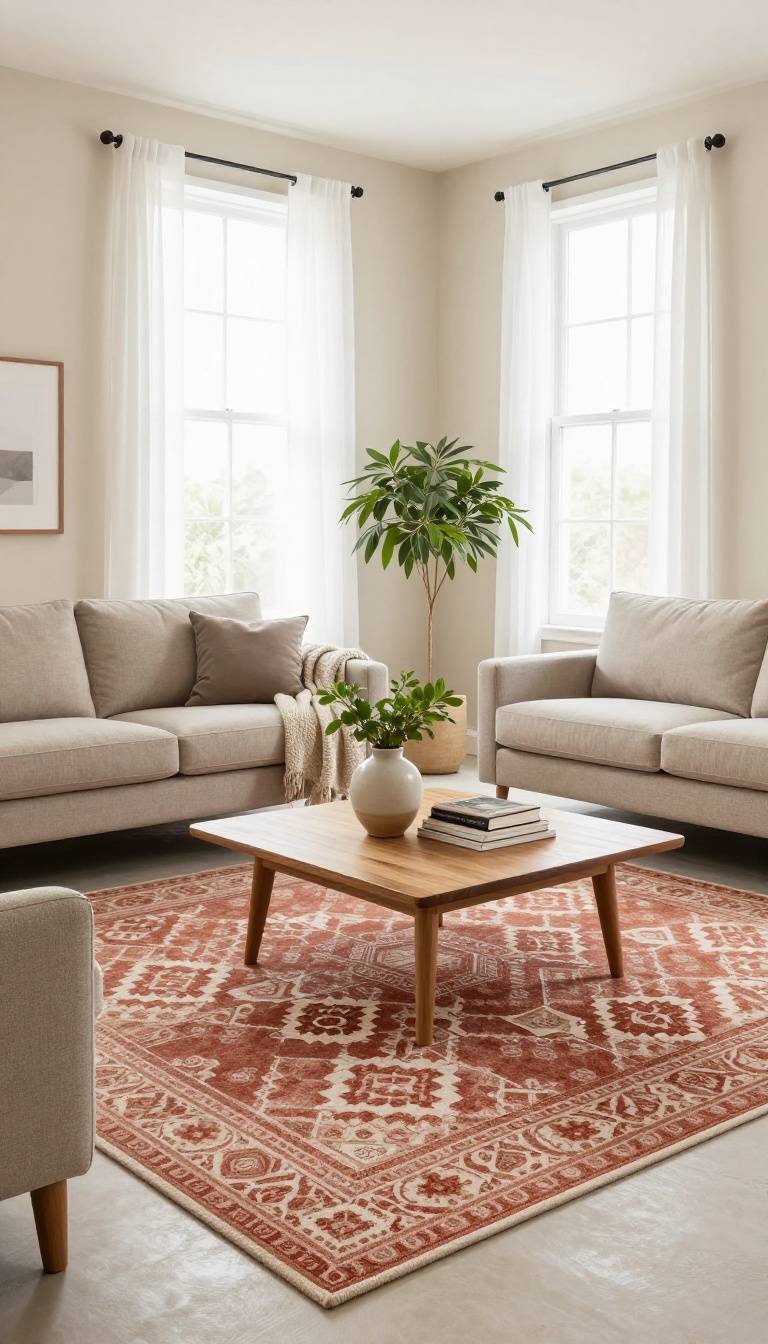
Rental carpet is often the worst part of the room: flat, stained, or a shade of beige that seems designed to erase personality. A large area rug covers the problem and instantly makes the space feel more intentional. It also anchors your furniture so the room stops feeling like a random collection of pieces.
The key is going big. A tiny rug floating in the middle of the floor looks like an accident. A rug that reaches under the front legs of your sofa and chairs pulls everything together.
And because you're renting, you can roll it up and take it with you when you move.
Measure first, then shop. You want the rug to be large enough that at least the front legs of your main seating pieces sit on it. In a typical living room, that means an 8×10 or 9×12.
If the room is small, go with a 5×8 but keep the furniture arrangement tight so the rug still feels generous. Low-pile or flatweave rugs are your best friend in a rental. They don't trap dust and pet hair the way shag does, and they're easier to vacuum.
Washable rugs are even better if you have kids or pets, because you can toss them in the machine when something spills. Just check the care label before you buy. Color and pattern are your chance to add personality.
Since you can't paint the walls or replace the carpet, let the rug do the heavy lifting. A bold geometric or a warm vintage-inspired pattern can distract from ugly flooring and give the room a focal point. If you prefer calm, a solid rug in a color that contrasts with the carpet still works.
Don't forget the rug pad. It keeps the rug from sliding, adds cushioning, and protects both the rug and the rental carpet underneath. A good pad can also make a thin rug feel more premium.
Trim it to fit if needed, and you're done.
Get The Size Right
Too small is the most common rug mistake. Aim for a rug that extends at least a few inches beyond your furniture on all sides. In an open-plan space, use the rug to define the living zone.
If you're unsure, tape out the dimensions on the floor with painter's tape before you buy.
Pick Rental-friendly Materials
Low-pile, flatweave, and washable rugs are practical for rentals. They resist crushing, clean up easily, and don't require special care. Avoid delicate materials like silk or high-maintenance wool if you want low stress.
A inexpensive polypropylene rug can look great and handle wear.
Use Pattern To Distract
A busy pattern hides stains and draws the eye away from bad carpet. Geometric, tribal, or abstract designs work well. If you want a quieter look, choose a rug with a subtle texture or a tone-on-tone pattern.
Either way, the rug becomes a design feature instead of just a cover-up.
4. Use Command Hooks and Removable Adhesive for Art
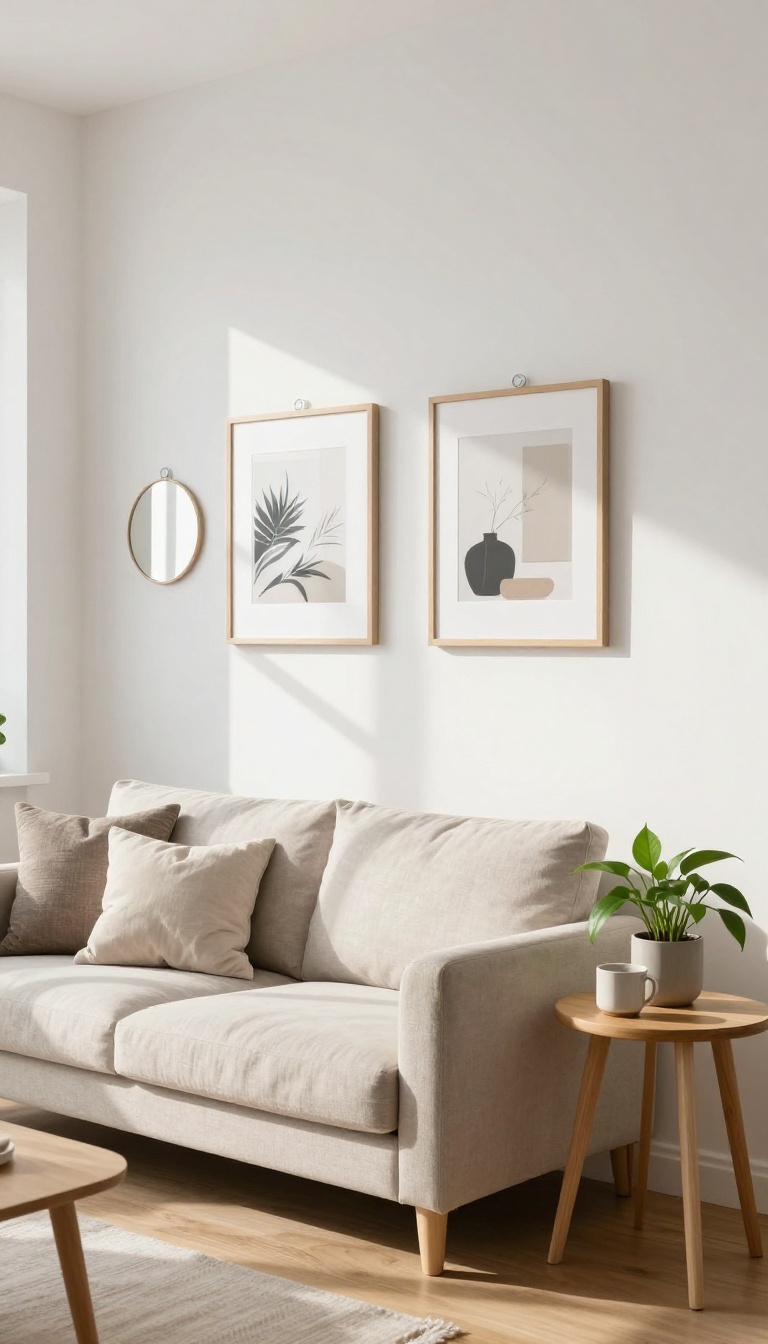
Blank walls make a rental feel like a waiting room. You don't need nails to fix that. Command hooks and removable adhesive strips let you hang art, mirrors, and gallery walls without damaging the walls or your deposit.
These products have come a long way. Modern damage-free strips hold frames, lightweight mirrors, and even small shelves securely. When you move out, you pull the tab, and the adhesive stretches off cleanly.
No holes, no sticky residue, no patching.
Pick The Right Strip For The Job
Not all strips are equal. Check the weight limit on the package and add a buffer. For a 2-pound frame, use strips rated for 4 pounds.
Clean the wall with rubbing alcohol first, let it dry, then press the strip firmly for 30 seconds. Wait an hour before hanging anything.
Lay Out A Gallery Wall Without Nails
Start with paper templates. Cut paper to the size of each frame, tape them to the wall with painter's tape, and rearrange until the layout feels right. Mark where the hooks go, then swap paper for frames.
Command hooks with wire backs work best for this.
Make Mirrors And Heavy Pieces Work
For larger mirrors, use picture-hanging strips designed for heavier items. Some brands make Velcro-style strips that lock together. Press the mirror firmly to the wall and hold for a minute.
Avoid hanging anything above a couch or bed where it could fall and hurt someone.
Remove Everything Cleanly On Move-out Day
Don't just rip the art off the wall. Hold the frame, slowly stretch the adhesive tab straight down until it releases. If a strip fights you, warm it with a hair dryer for a few seconds.
Any leftover residue comes off with a dab of rubbing alcohol.
5. Add Temporary Window Treatments That Actually Fit
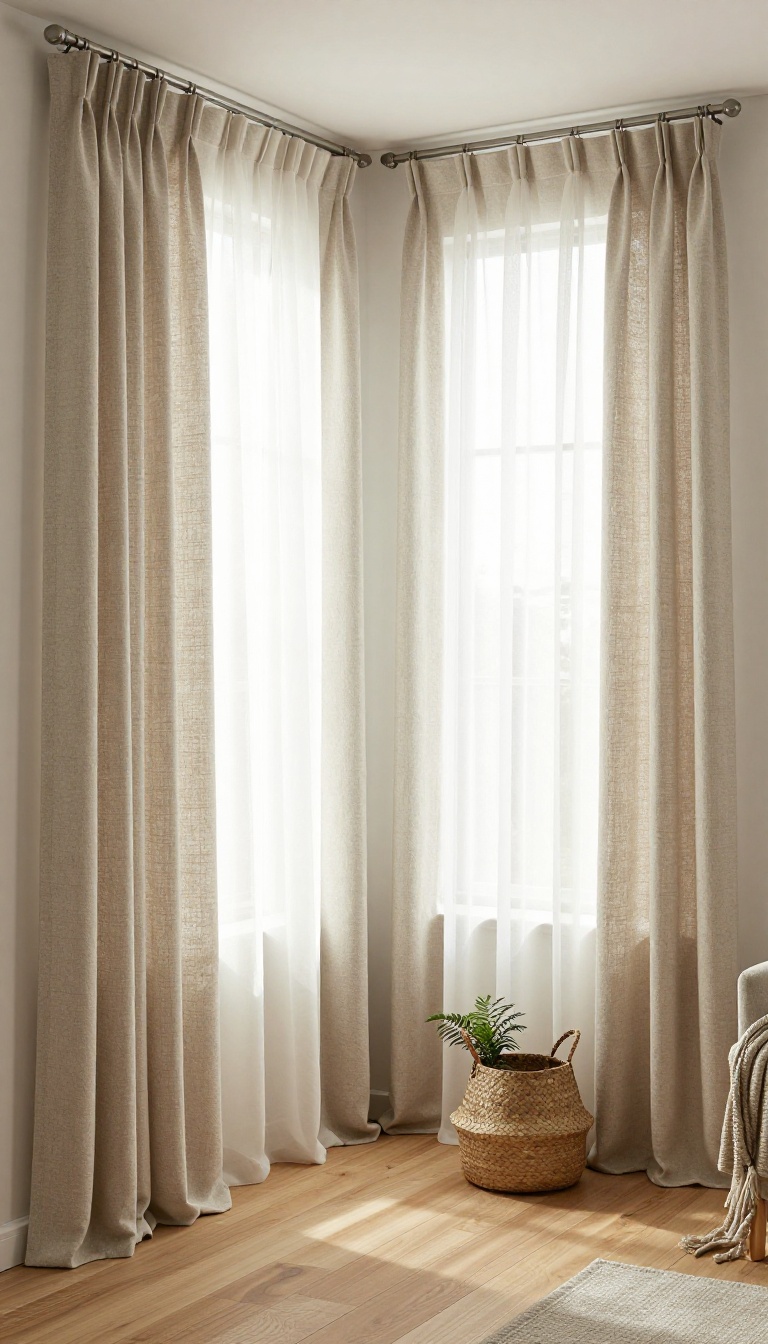
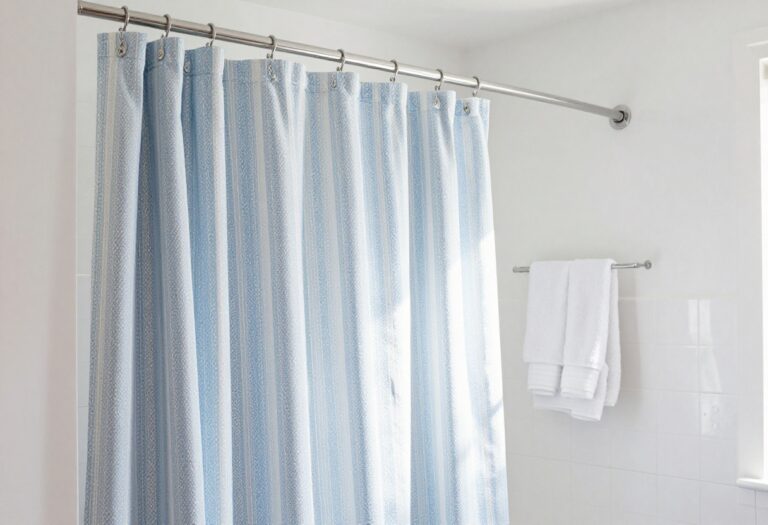
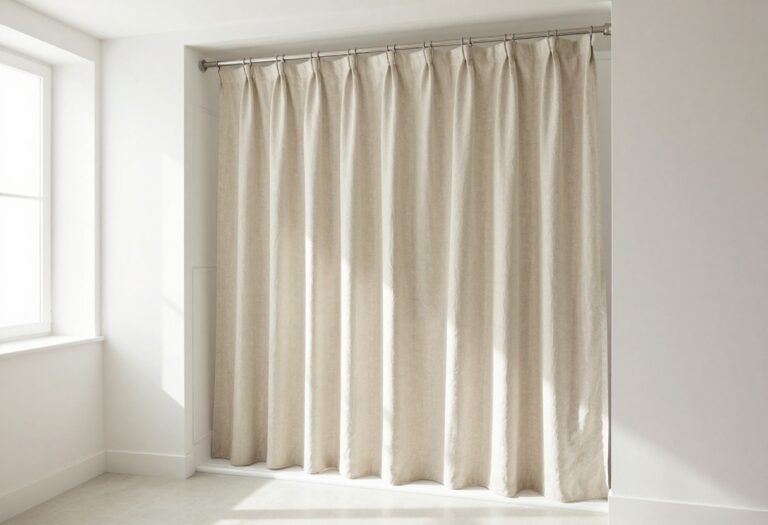
Those skinny vinyl blinds that came with the apartment do almost nothing. They let in every bit of streetlight, they rattle when the heat kicks on, and they make the whole room look unfinished. Swapping them for real curtains or a no-drill shade is one of the easiest upgrades you can make, and you can take it all with you when you leave.
The trick is doing it without a drill. Tension rods and adhesive brackets handle almost any window, and they come out clean when you're done. Once you have a proper curtain or shade up, the room instantly feels softer and more put together.
Tension Rods Do More Than You Think
A tension rod wedged inside the window frame is the classic renter move, and it works for lightweight curtains. For a wider look, use a tension rod that presses against the walls on either side of the window instead. Just check the weight limit before you hang anything heavy, because a rod that slips mid-week is a bad surprise.
Curtains That Soften The Room
Pick curtains that reach the floor or just above it, since short curtains chop up the wall and make the window look small. A linen or cotton blend in a warm neutral hangs nicely without blocking too much light. Hang them wide enough that the fabric covers the edges of the window frame, not just the glass.
No-drill Shades For Clean Lines
If curtains feel like too much fabric, a no-drill roller or cellular shade gives you a cleaner look. These mount with adhesive strips or tension brackets and come in cordless versions that are safer and simpler. A light-filtering shade keeps the room bright while cutting the glare that makes a living room hard to relax in.
Layer For Light Control
One covering rarely solves everything, so layer a sheer panel with a heavier one on the same rod. During the day, pull the heavy side open and let the sheer soften the view. At night, close both and the room feels cozy instead of exposed.
6. Bring in a Foldable or Modular Sofa for Flexibility
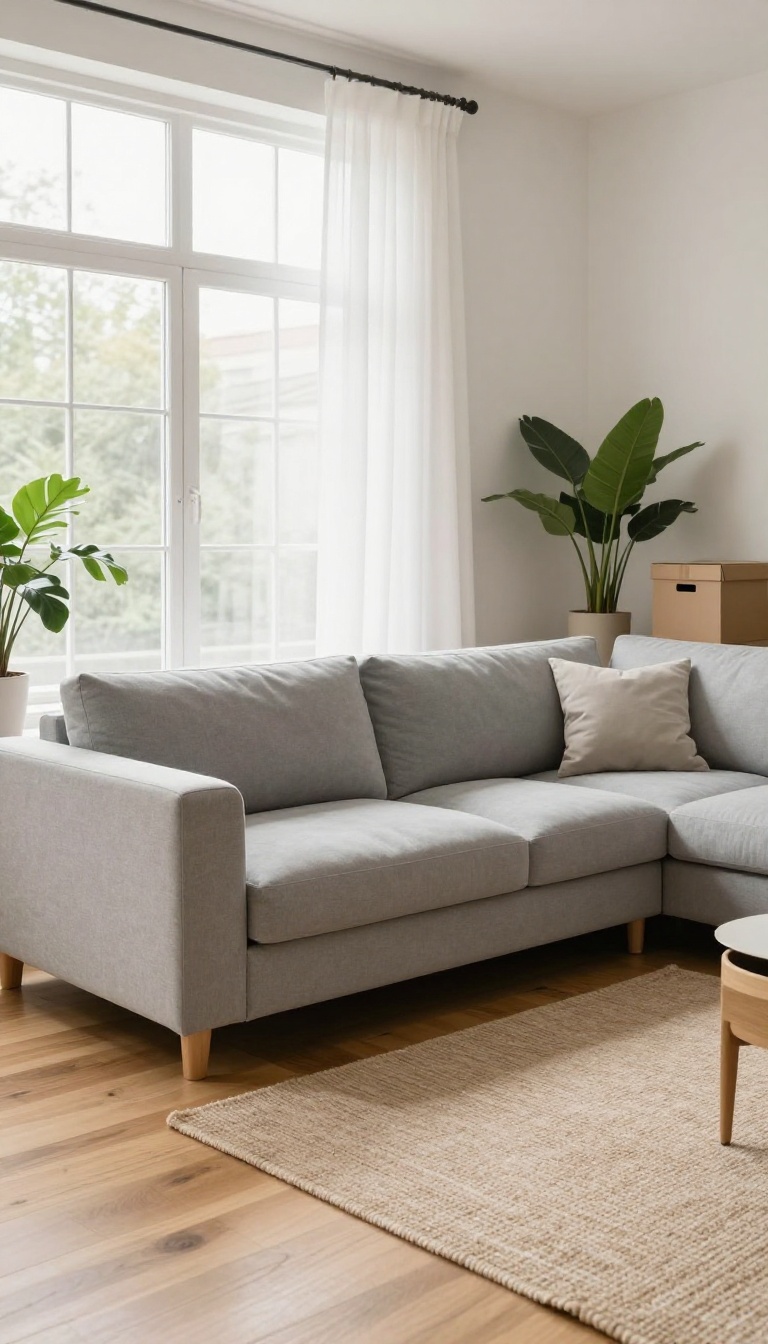
A sofa that folds, splits, or rearranges itself solves two rental problems at once: awkward layouts and future moves. You get seating that adapts to the room you have now, not the room you wish you had. And when the lease ends, it comes apart without a team of movers or a scratched doorframe.
Standard sofas assume a standard room. Rentals rarely cooperate. You might have a long, narrow living area, a weird corner, or a wall that ends too soon.
A modular or foldable sofa bends to fit those spaces instead of forcing you to work around it. The best part? You can reconfigure it later without buying anything new.
Why Modular Beats Fixed
Modular sofas come in pieces you can rearrange. A chaise can move from left to right. A three-seater can become two chairs and a loveseat.
That flexibility means you can reshape the room for movie night, guests, or a clear path to the balcony. And if you move to a smaller place, you just leave a section behind.
Sofa Beds That Don't Feel Like A Compromise
Old-school sofa beds had a reputation for metal bars and bad sleep. Today's versions use memory foam or air coils that actually feel decent. Look for a fold-out with a built-in storage chaise, so you can stash bedding and pillows right inside.
It doubles as a guest bed without eating up a second room.
Moving Day Made Easier
A modular sofa breaks down into manageable pieces. No pivoting a giant frame through a narrow hallway. No hiring extra help just to get it out the door.
You can carry it yourself in a few trips, and it fits in a standard SUV or small van. That alone can save you hundreds on moving costs.
What To Look For Before You Buy
Check the connector hardware. Cheap brackets strip or loosen over time. Look for metal clips or sturdy velcro that holds sections tight.
Also measure your doorways and elevator before ordering. A modular piece is only flexible if it actually fits through your building's tightest spot.
7. Warm Up the Room with Plug-In Sconces and Floor Lamps
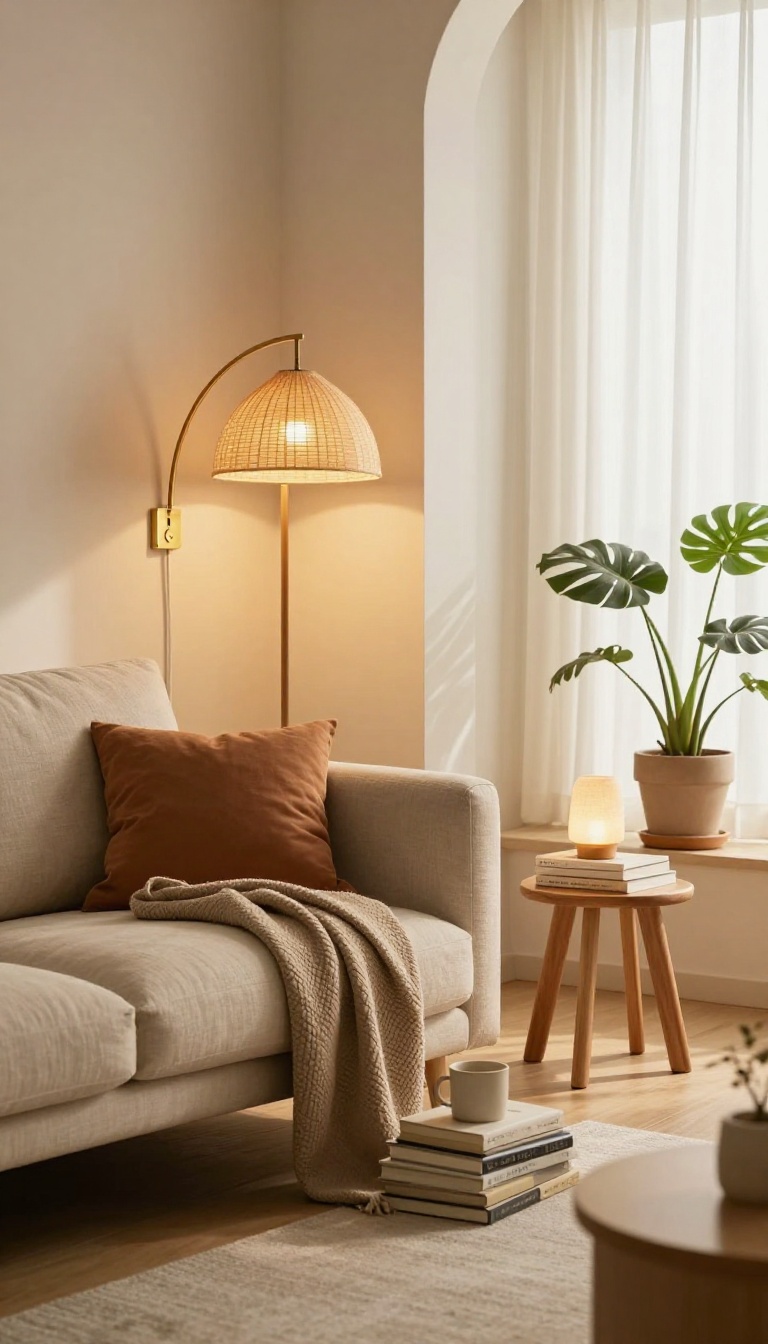
Overhead lighting in a rental is rarely kind. It's usually one bright dome in the middle of the ceiling that makes everything look flat and slightly institutional. The fix isn't rewiring anything.
It's layering light at different heights with fixtures you can unplug and take with you. Plug-in sconces and floor lamps do the heavy lifting here. They add pools of warm light where you actually sit, read, or hang out.
Best of all, they leave zero marks on the walls and zero awkward conversations with your landlord. This is one of the easiest rental upgrades to pull off in an afternoon. You just need a few outlets, some command hooks, and a plan for where the light should land.
Think of lighting in three layers: ambient, task, and accent. Your ceiling fixture handles ambient, even if it does it poorly. Floor lamps and plug-in sconces cover the other two, and that's what makes a room feel warm instead of fluorescent.
The goal is to stop relying on that one switch by the door. When you can turn on a corner lamp, a sconce by the sofa, and a small accent light separately, the room instantly feels more intentional. You're not just illuminating a space.
You're setting a mood.
Why Plug-in Beats Hardwired
Hardwired sconces look great until you read your lease. Plug-in versions give you the same wall-mounted look without cutting into drywall or hiring anyone. Most come with a cord cover that hides the wire, so it reads as built-in from across the room.
You also get flexibility. Move the sconce from the sofa wall to the bed wall when you rearrange. Swap it between rooms if you move.
Nothing is permanent, which is exactly the point.
Pick The Right Floor Lamp For The Corner
A single floor lamp in the darkest corner changes the whole room. Go for something with a fabric shade and a warm bulb, around 2700K, so the light feels soft rather than surgical. An arc lamp works well over a reading chair, while a slim column lamp fits tight spaces.
If you have the room, two lamps on opposite sides create balance. One near the sofa, one near the entry or a bookshelf. Suddenly the ceiling light becomes optional.
Smart Bulbs Do The Rest
Smart bulbs are the quiet hero of rental lighting. Screw them into your existing lamps and sconces, then control brightness and color temperature from your phone. You can go warm and dim for movie night, then brighter and cooler when you're cleaning.
They also let you schedule lights so you come home to a lit room instead of a dark one. No wiring, no dimmer switches, no electrician. Just a bulb and an app.
Hide The Cords Without Losing Your Deposit
Cords are the one downside of plug-in lighting. Tuck them along baseboards with adhesive clips, or run them through a cord cover that matches your wall color. Command hooks hold sconce cords neatly in place and peel off clean when you leave.
If an outlet is far away, a slim extension cord under a rug or behind furniture solves it. Just keep walkways clear and avoid pinching cords under heavy legs. A little planning keeps the setup safe and tidy.
8. Cover Dated Floors with Peel-and-Stick Tiles or Vinyl
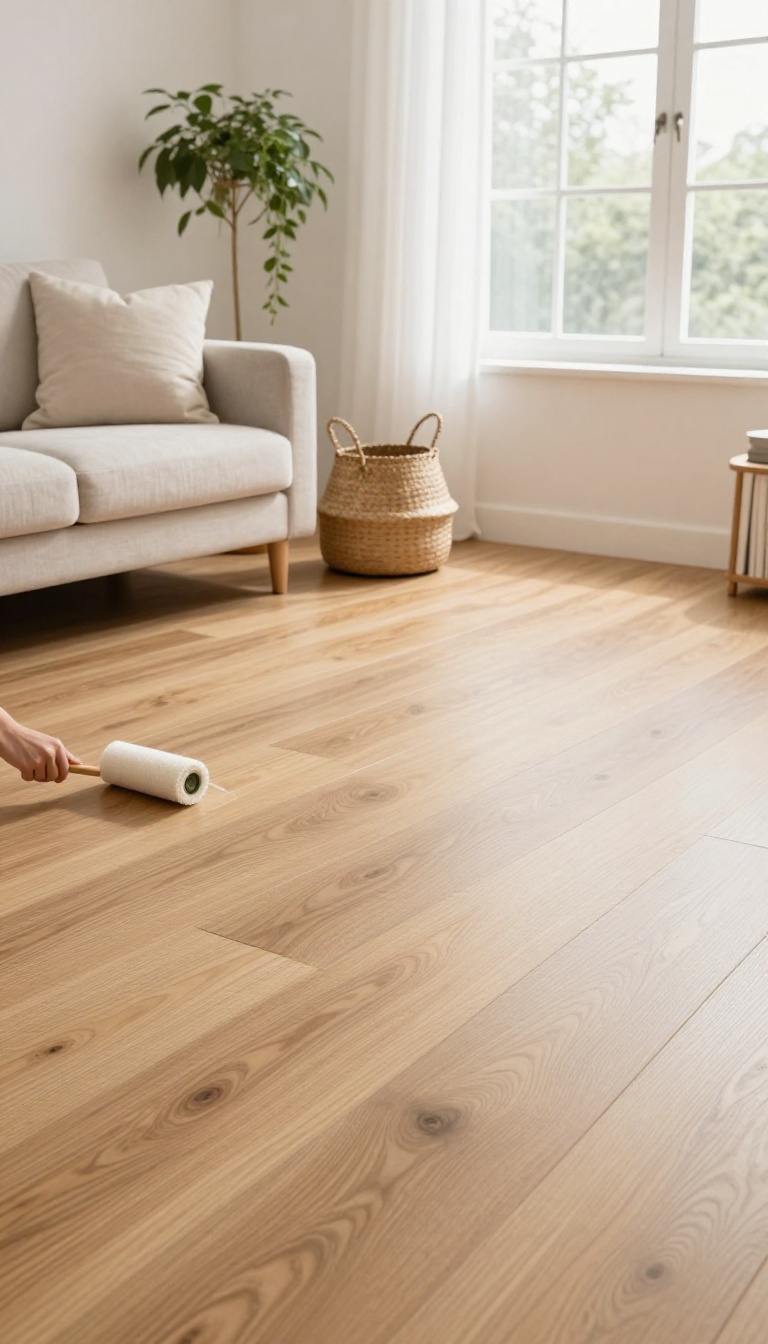
Your rental's floor might be the most stubborn part of the whole room. Linoleum from 1987 or scuffed tile can drag down everything else you do. Peel-and-stick flooring lets you cover it up without a permanent commitment.
These adhesive tiles and planks go down in an afternoon and pull up just as easily when you move. You get a fresh surface that changes the entire feel of the space. Best of all, your security deposit stays intact.
Why It Works For Renters
Peel-and-stick flooring is designed for people who can't rip out what's already there. The adhesive holds strong on clean, smooth surfaces but releases with a little heat and patience. That means you can transform a dated floor without asking permission.
It's also affordable. A living room usually costs a few hundred dollars to cover, far less than hiring a pro. And because it comes in planks and tiles, you can mix patterns or keep it simple.
Choosing The Right Look
Vinyl planks mimic wood or stone convincingly these days. If your living room leans modern, go for wide planks in a warm oak or cool gray. For a boho or vintage vibe, try patterned tiles in black and white or terracotta.
Stick with a matte finish if you want to hide dust and footprints. Glossy options show every speck, which gets old fast in a high-traffic room.
Installation Tips That Save Headaches
Start with a thorough clean. Any grit or grease will keep the adhesive from sticking. Let the flooring acclimate to room temperature for a day before you begin.
Work in small sections and press each piece down firmly. Use a roller or a heavy book to seal the edges. If you're covering grout lines, choose thicker vinyl so they don't telegraph through.
Removal Without The Mess
When it's time to move, warm the tiles with a hair dryer or a heat gun on low. They'll peel up with less resistance and leave minimal residue. Any sticky spots come off with rubbing alcohol or a gentle adhesive remover.
Test a small corner first to see how your specific floor reacts. Most rentals come clean with a little patience, and your landlord will never know the difference.
9. Personalize with Textiles: Throw Pillows, Blankets, and Baskets
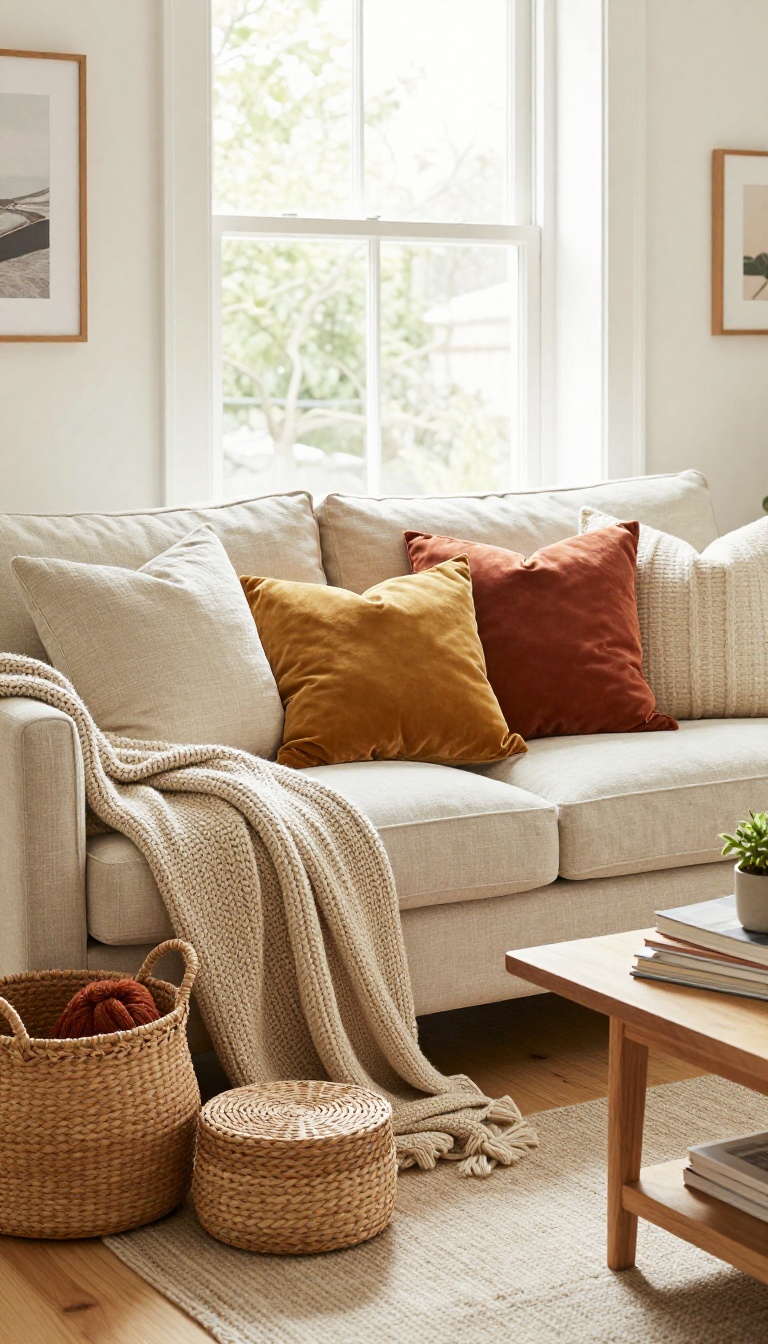
Textiles are the easiest way to inject personality into a rental living room without touching a single wall. They add color, pattern, and texture that can instantly warm up a bland space. Plus, they're affordable, portable, and simple to swap when you want a fresh look.
Unlike paint or wallpaper, textiles let you experiment with bold hues and cozy layers without any commitment. You can change them with the seasons, your mood, or your next lease. And when you move, they pack up as easily as they came in.
Throw Pillows: Instant Color And Comfort
Throw pillows are the quickest way to add a pop of color or a touch of pattern to a neutral sofa. Mix different sizes and textures—like velvet, linen, and chunky knits—to create depth. You can also rotate covers instead of buying new inserts, which saves money and storage space.
Blankets And Throws: Cozy Layers That Travel
A soft throw draped over the arm of a chair or folded on the sofa adds warmth and texture. Choose a bold color or a cozy knit to break up a monochrome rental. When you move, they roll up and go with you—no damage, no fuss.
Woven Baskets: Stylish Storage And Texture
Baskets are functional and decorative—use them to corral remotes, magazines, or extra throws. Their natural texture contrasts nicely with sleek furniture and adds a relaxed vibe. Look for different sizes and shapes to create a collected, lived-in feel.
Seasonal Swaps Made Simple
Rotate your textiles with the seasons: lighter fabrics and bright colors for spring and summer, heavier knits and warm tones for fall and winter. Store off-season items in a basket or under the bed. This keeps the room feeling fresh without spending a dime.
10. Create a Gallery Wall with Lightweight Frames
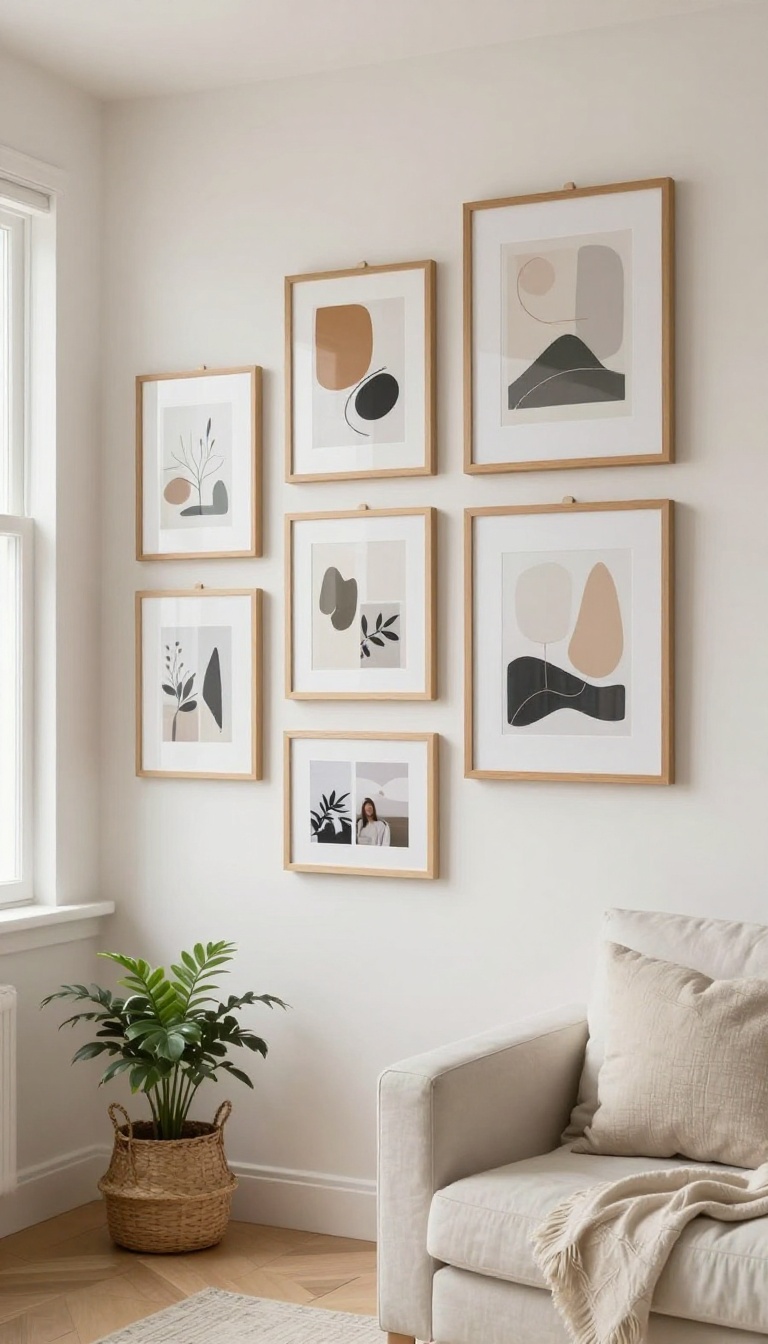
Blank walls in a rental can feel like a missed opportunity. A gallery wall lets you fill that space with things you actually love, without a single nail hole. The trick is going lightweight and using damage-free hanging strips.
You can mix art prints, personal photos, and even postcards to tell your story. The whole setup comes down easily when you move, and your deposit stays intact. It’s one of the most personal changes you can make, and it’s completely reversible.
A gallery wall turns a plain wall into a focal point that feels curated and intentional. In a rental, the challenge is hanging things without leaving marks. Lightweight frames paired with removable adhesive strips solve that problem.
You get the look of a traditional gallery wall with none of the landlord headaches. The best part? You can arrange and rearrange as often as you like.
No tools, no spackle, no stress. Just peel, stick, and step back to admire your handiwork.
Pick Frames That Won't Weigh You Down
Go for frames made of lightweight materials like plastic, thin metal, or lightweight wood. Avoid heavy glass and thick solid wood frames. Look for frames with plexiglass instead of real glass—they’re lighter and safer.
Command strips or similar damage-free hanging strips work best with frames under a few pounds. Check the weight limit on the strips and stay well below it for security.
Mix And Match Your Story
This is where your personality shines. Combine framed photos, art prints, concert tickets, or even fabric scraps. Vary sizes but keep a consistent color palette or theme to avoid visual chaos.
Thrift stores and online marketplaces are goldmines for affordable, unique frames. Don’t be afraid to leave some frames empty or use clipboards for a casual vibe.
Hang Without Harm
Clean the wall with rubbing alcohol and let it dry completely. Apply the adhesive strips to the back of each frame according to the package directions. Press firmly to the wall and hold for 30 seconds.
For larger arrangements, start with the center piece and work outward. When it’s time to move, slowly pull the tabs straight down to release the strips without damaging paint.
FAQ
Will peel-and-stick wallpaper damage my rental walls?
Most modern peel-and-stick wallpapers are designed to remove cleanly, but it depends on your wall's paint and texture. Test a small piece first and follow the manufacturer's removal instructions.
What if my landlord doesn't allow any changes?
Focus on removable, freestanding updates like rugs, lamps, and furniture. You can also ask your landlord for permission in writing—many are fine with reversible improvements.
How can I cover ugly floors without installing new flooring?
A large area rug is the easiest fix. For a bigger change, try peel-and-stick vinyl tiles or a floating floor that you can take with you when you move.
Are plug-in sconces a good alternative to hardwired lights?
Yes. Plug-in sconces mount with adhesive or a small screw and plug into a standard outlet. They give you the look of custom lighting without an electrician.
What's the best way to hang art without nails?
Use damage-free adhesive strips or hooks rated for the weight of your art. Clean the wall first, press firmly, and wait an hour before hanging.
Conclusion
Renting does not mean living in a space that feels borrowed. Pick one idea from this list that solves your biggest frustration, whether that is blank walls, bad lighting, or a layout you cannot change. Try it this weekend and live with it for a week before adding anything else.
Small swaps stack up faster than one expensive overhaul. Layer in a rug, a lamp, or a peel-and-stick accent, then stop once the room feels like yours. Your lease limits the walls, not your taste.