13 Savvy Modern Shower Tile Ideas with Warm, Personal Design
Your shower can carry the same warmth and personality as the rest of your home—without sacrificing modern edge. The trick is choosing tile that feels personal, not just trendy, and today's options go far beyond basic white subway.
From textured neutrals that soften the light to zellige tiles that catch every glance, these 13 ideas blend comfort with contemporary style. Each one brings a distinct mood, whether you're after a spa-like retreat or a bold statement wall.
Ready to give your daily rinse a fresh, inviting look? Let's find the tile that speaks to you.
1. Textured Neutrals for a Soft, Organic Feel
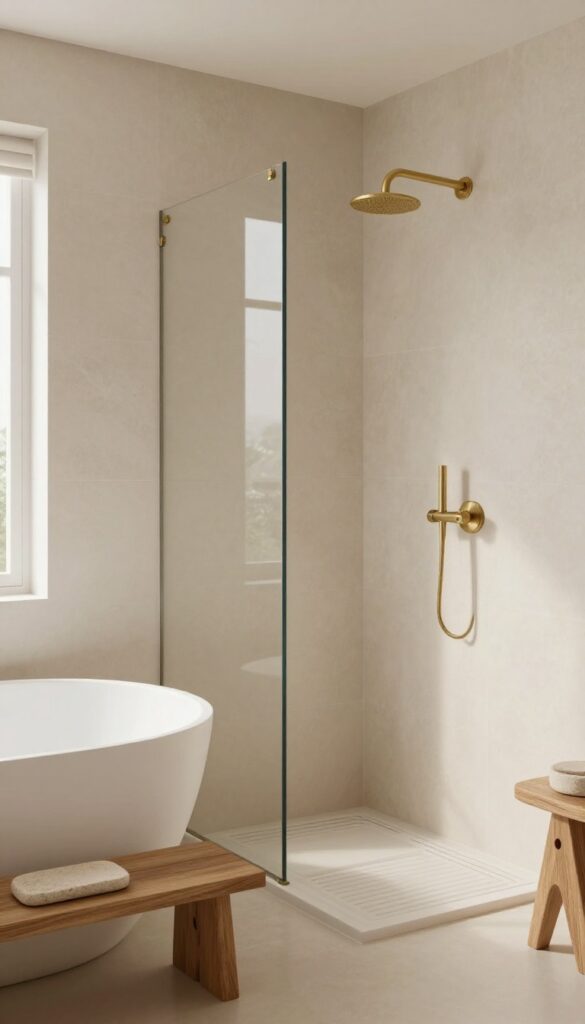
When you want a shower that feels calm and grounded, textured neutrals are a quiet win. Matte tiles in warm beige or greige bring a softness that glossy finishes can't match, and the subtle surface variation catches light in a way that feels natural, not flat.
These tiles work beautifully as a full-wall treatment or as a backdrop for a freestanding tub. They pair well with wood accents and brushed brass fixtures, giving the space a cohesive, spa-like atmosphere without trying too hard.
Why Matte Over Gloss?
Glossy tiles reflect light and can feel cold or slippery, while matte finishes absorb light and add a tactile, grounded quality. They also hide water spots and soap scum better, which is a practical bonus for a busy shower.
Pairing Textures With Warm Tones
Combine your matte neutral tile with warm wood shelving, a teak bench, or a stone soap dish. These natural materials echo the organic feel of the tile and keep the space from feeling too sterile.
Where To Use Them
Use textured neutrals on all walls for a seamless look, or just on the main wall and pair with a complementary solid tile. They also work well in niches and as a shower floor, since the texture adds grip underfoot.
2. Large-Format Tiles with Subtle Veining
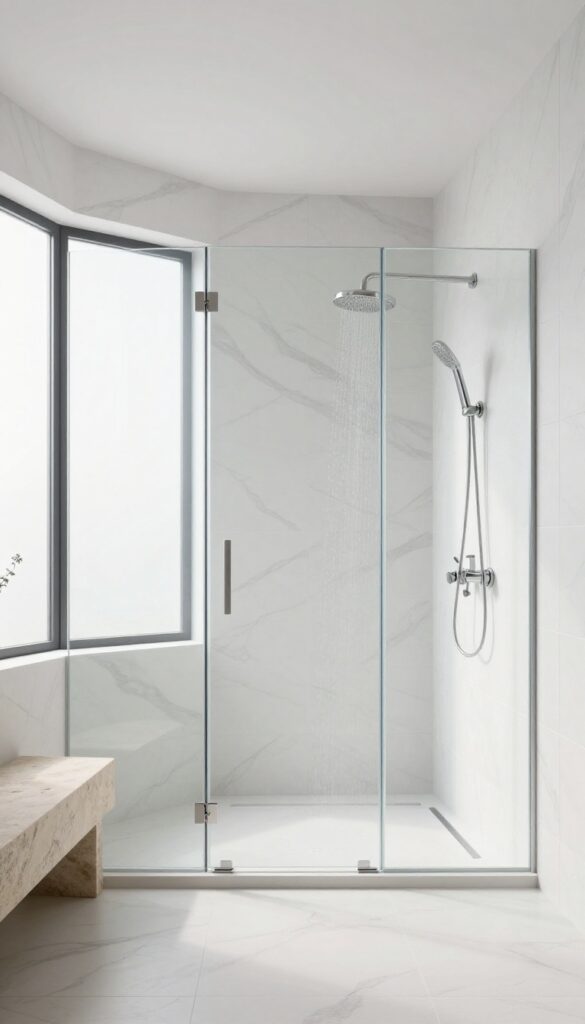
If your shower feels a little cramped or busy, large-format tiles can change the whole vibe in one swoop. These big slabs cut down on grout lines, which means fewer visual interruptions and a cleaner, more open look. And when they come with soft, marble-like veining, they add just enough movement to feel luxurious without going over the top.
Large-format tiles are a smart choice for modern showers because they make small spaces feel bigger and big spaces feel grand. The subtle veining gives that high-end, natural stone look but with the durability and easy maintenance of porcelain. Plus, fewer grout lines mean less scrubbing and fewer places for grime to hide.
Why Bigger Is Better
Oversized slabs, like 12×24 or even 24×48 inches, create a seamless surface that visually expands your shower. With fewer grout lines, the eye glides over the wall without stopping, making the whole area feel more open and spa-like. They're also a practical pick for busy households because they're quicker to install and easier to keep clean.
Veining That Adds Depth
Look for tiles with soft, subtle veins—think gentle gray or beige lines on a white or cream background. This adds a touch of organic texture without competing with your fixtures or other design elements. The key is to choose a pattern that's not too bold, so it feels calm and timeless, not flashy.
Mixing With Smaller Tiles
You don't have to use large-format everywhere. Pair them with smaller tiles on the floor or in a niche to create visual interest. For example, use large slabs on the main walls and a hexagon or subway tile on the floor or accent strip.
This gives you the best of both worlds: the clean look of big tiles and the detail of smaller ones.
3. Warm Wood-Look Planks
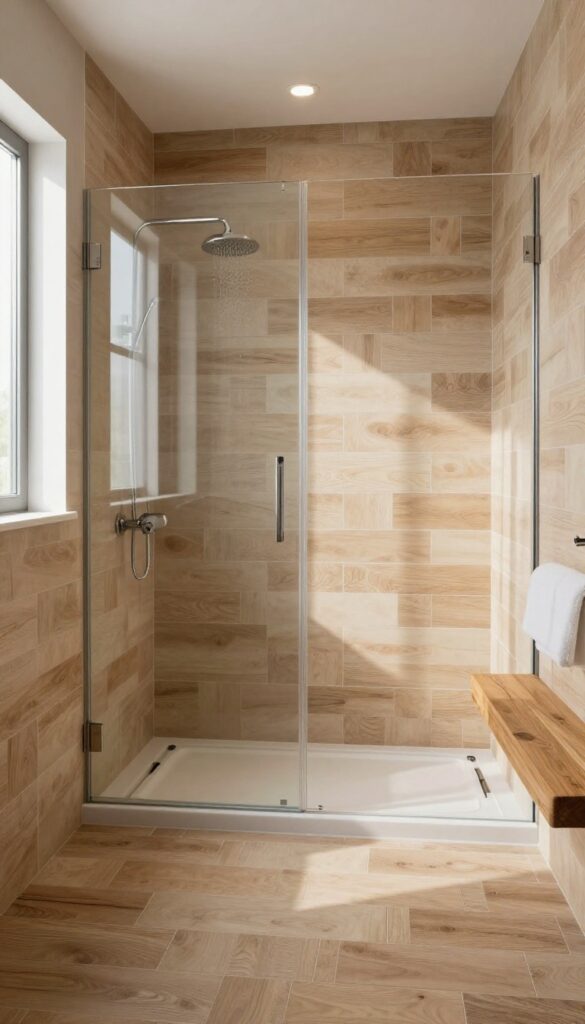
Wood-look ceramic tiles bring the warmth of timber into your shower without the maintenance. They mimic the grain and texture of real wood, but they're waterproof and easy to clean. This option is perfect if you love the idea of a wood-accented shower but don't want the hassle of sealing or warping.
Wood-look planks are a brilliant way to add a cozy, organic feel to your shower. They come in a range of shades from light oak to rich walnut, so you can match your existing decor or create a new focal point. Plus, they're durable and slip-resistant, making them a practical choice for wet areas.
Why Wood-look Tile Works In Showers
Unlike real wood, ceramic and porcelain planks are impervious to moisture. They won't rot, warp, or fade. They also handle temperature changes well, so they're safe for shower walls and floors.
With modern printing technology, the grain patterns look incredibly realistic, giving you the beauty of wood without the upkeep.
Choosing The Right Shade And Finish
Light shades like ash or maple can make a small shower feel larger and brighter. Darker tones like espresso add drama and a spa-like vibe. Matte finishes offer better grip and hide water spots, while textured surfaces mimic hand-scraped wood for extra authenticity.
Consider your bathroom's lighting and overall style when picking a shade.
Installation Patterns To Consider
The classic staggered brick pattern is a safe bet, but you can also try a herringbone layout for a more dynamic look. Vertical stacking can make ceilings feel higher, while diagonal installation adds visual interest. Pair wood-look planks with white grout for a crisp contrast or a matching grout for a seamless appearance.
4. Handmade-Look Subway Tiles
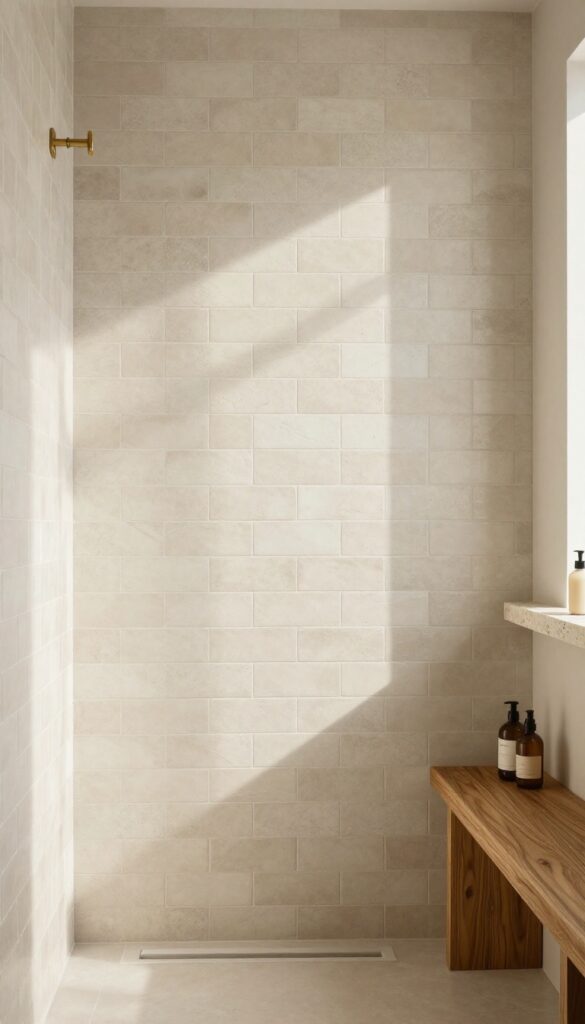
Standard subway tile is a classic, but it can feel a little sterile. If you want that same clean layout with more soul, handmade-look subway tiles are the answer. These tiles are intentionally imperfect, with slight variations in size, edge, and glaze that give your shower a custom, artisan feel.
The beauty of this tile is in the details. Each piece catches light differently, creating a subtle, organic texture that plain tiles just don't have. It's a simple way to add depth and character without going bold or busy.
Why Imperfection Works
Our eyes are drawn to natural variation, and handmade-look tiles mimic that. The slight waves and dips in the surface create a play of light and shadow that makes the wall feel alive. It's a small detail that makes a big difference, giving your shower a warm, welcoming vibe.
Choosing Your Color And Finish
You can find handmade-look subway tiles in a range of colors, from soft whites and creams to deeper blues and greens. A glossy finish will reflect more light and brighten the space, while a matte finish feels more grounded and modern. Think about the mood you want to create and pick a tone that complements your fixtures.
Layering Textures
Pair these tiles with natural stone or wood-look accents to enhance the handcrafted feel. A teak bench or a stone shelf adds warmth and texture, making the shower feel like a spa retreat. Just keep the rest of the design simple so the tile remains the star.
5. Terrazzo with Warm Accents
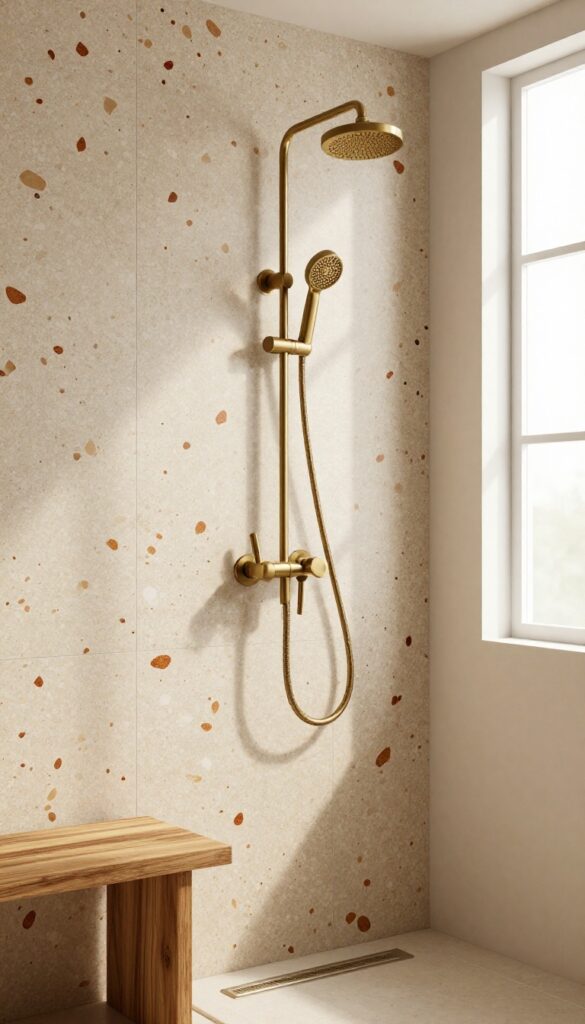
Terrazzo has made a serious comeback, and it's not hard to see why. Those little chips of stone and glass bring a playful, handmade feel that plain tiles just can't match. But if you want to keep things warm and personal, skip the cool gray palette and go for chips in earthy tones like rust, ochre, and cream.
Terrazzo with warm accents is a fantastic way to add texture and visual interest to your shower without going overboard. The warm chips soften the overall look, making the space feel cozy and inviting. Plus, terrazzo is incredibly versatile—it works in both modern and traditional bathrooms, and it pairs beautifully with natural materials like wood and stone.
Choosing The Right Base Color
The base color of your terrazzo sets the mood. A warm white or soft beige base keeps things light and airy, while a deeper taupe or greige adds a touch of coziness. Don't be afraid to go slightly darker if you want a more dramatic look—just make sure the warm chips stand out clearly against the base.
Mixing With Other Materials
Terrazzo plays well with others. Pair it with matte black fixtures for a modern edge, or with brushed brass for a warmer, more classic feel. Natural wood vanities or teak shower benches complement the earthy tones in the terrazzo, creating a cohesive, spa-like atmosphere.
Placement Ideas
You don't have to tile the entire shower in terrazzo. A terrazzo accent wall behind the shower bench or a terrazzo niche can add just the right amount of character. For a bolder look, use terrazzo on the floor and keep the walls in a solid, warm-toned tile.
This balances the visual weight and keeps the space from feeling too busy.
6. Vertical Stacked Tiles for Height
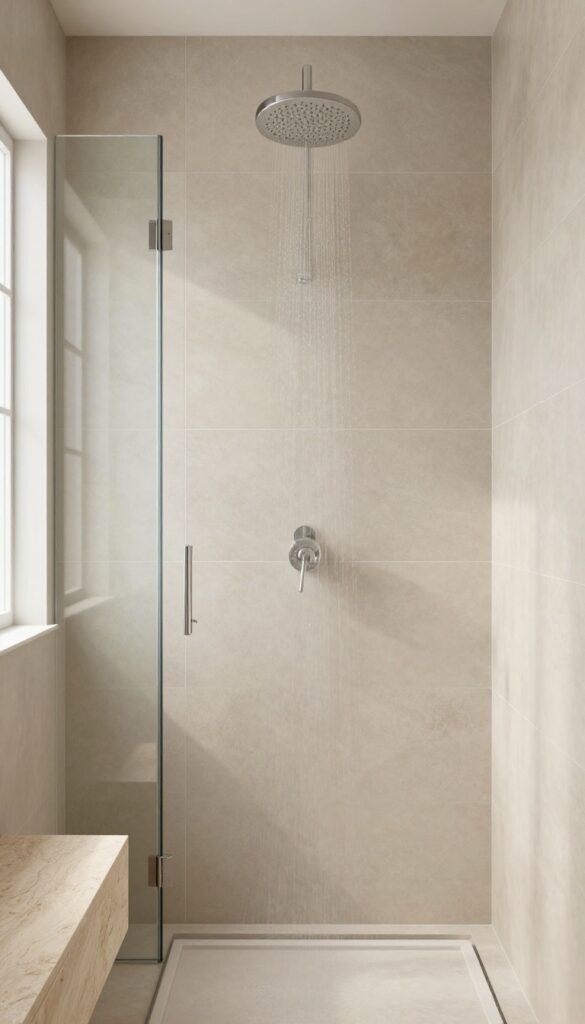
If your shower feels a little boxy or low, the direction your tile runs can make a surprising difference. Vertical stacked tiles—long rectangles set upright in a clean grid—pull the eye upward and add a sense of height that horizontal layouts often miss. The effect is subtle but powerful.
Instead of a busy pattern, you get a smooth, continuous line that makes the walls feel taller and the whole space more open. It's a simple trick that works in both compact bathrooms and larger master suites.
Vertical stacking isn't just about looks—it's a smart way to change the proportions of your shower. Here's how to make it work in your space.
Why Vertical Stacking Works
When you lay tiles vertically, the eye follows the lines upward, which makes the ceiling feel higher than it actually is. This is especially helpful in bathrooms with lower ceilings or in showers that feel cramped. The clean, uninterrupted grout lines also create a sense of order and calm, which fits perfectly with a modern aesthetic.
Best Tile Shapes And Sizes
The most common choice is a 3×12 or 4×16 rectangular tile, but you can also use larger formats like 6×24 or even 8×36 for a more dramatic look. The key is to keep the length at least twice the width—that's what creates the elongating effect. If you want a softer feel, consider a beveled edge or a matte finish to avoid too much glare.
Pairing With Other Elements
Vertical stacked tiles work beautifully with a horizontal accent strip or a contrasting niche to break up the height. You can also pair them with a linear drain that runs perpendicular to the tile direction for a cohesive design. Keep the rest of the shower simple—minimal fixtures and a glass enclosure will let the tile do the talking.
7. Softly Patterned Cement Tiles
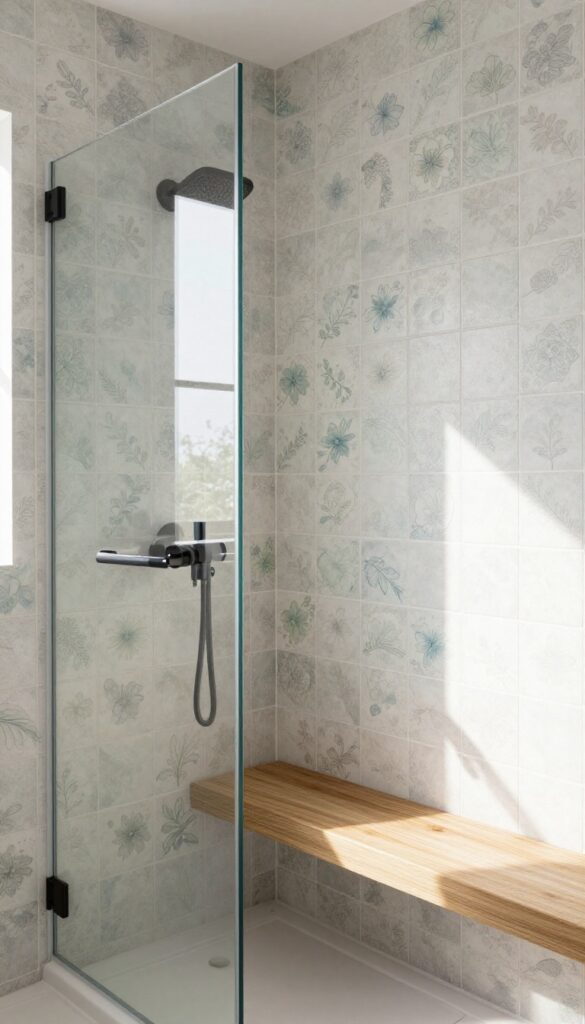
Cement tiles have a way of making a space feel handcrafted and lived-in, even when they're brand new. Their slightly imperfect surface and muted, vintage-inspired patterns add warmth without shouting for attention. In a shower, they strike a lovely balance between artistic flair and everyday practicality.
Softly patterned cement tiles are a fantastic choice if you want a shower that feels personal and curated, but not overwhelming. Unlike bold, high-contrast patterns, these tiles use faded colors and gentle motifs that blend seamlessly with your fixtures and other materials. They bring texture and story to the space, making your daily routine feel a bit more special.
Why Subtle Patterns Work
The key to this look is restraint. Patterns that are too busy can make a small shower feel chaotic, but soft, faded designs—like delicate florals, geometric lines, or Moroccan-inspired shapes—add depth without visual noise. They also hide water spots and soap scum better than plain tiles, which is a practical bonus.
Pairing With Other Materials
To let the tiles shine, keep surrounding elements simple. White or light gray grout keeps the pattern clean, while matte black or brushed brass fixtures add a modern contrast. A clear glass shower door lets the tile be the star, and natural wood accents (like a teak bench) warm up the space even more.
Color And Placement Ideas
For a cohesive look, choose a palette that echoes the rest of your bathroom. Soft blues and greens evoke a spa-like calm, while warm terracotta and ochre add a cozy, earthy vibe. You can use the patterned tiles on one accent wall, or take them floor-to-ceiling for a more enveloping feel.
If you're feeling adventurous, try them on the floor with a solid color on the walls.
8. Warm Metallics as Accent Strips
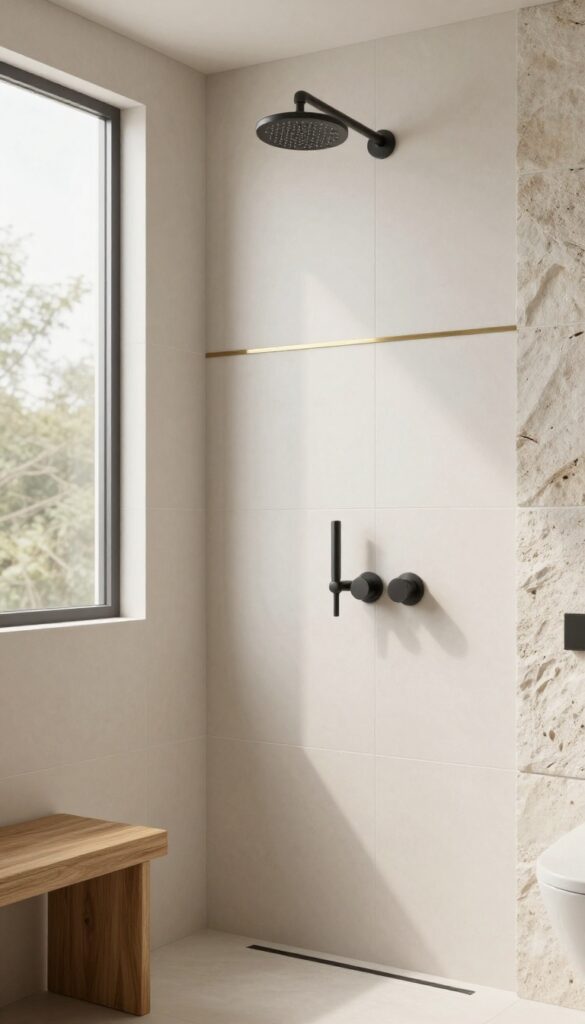
Metallic tiles don't have to shout. A slim brass or copper strip can quietly warm up an all-neutral shower, catching the light just enough to feel special. It's a small detail with a big payoff, and it plays nicely with modern fixtures and natural textures.
Adding a metallic accent strip is one of the easiest ways to inject warmth without committing to a full wall of shiny tile. You can use it as a horizontal line at eye level, a vertical divider between different tiles, or even as a niche border. The key is to keep it thin and intentional—think of it as jewelry for your shower, not a full outfit.
Brass and copper are the go-to choices because they develop a patina over time, adding character. If you prefer a more consistent look, go for brushed nickel or matte gold. These strips work beautifully with white, beige, or greige tiles, and they pair well with wood-look planks or textured stone.
Where To Place The Strip
The most common placement is a single horizontal row about 54 inches from the floor, which aligns with your eyeline when you're standing. That creates a subtle visual break without feeling random. You can also run a vertical strip along the edge of a niche or behind the shower bench for a more unexpected touch.
Matching Your Fixtures
To keep the look cohesive, match the metal tone of your accent strip to your showerhead, faucet, and handles. If you've got brushed brass fixtures, a brass strip will tie everything together. If your hardware is matte black, consider a champagne bronze or copper strip to add warmth without clashing.
Mix With Natural Textures
Metallic strips shine when they're surrounded by organic materials. Pair them with zellige tiles, tumbled marble, or matte porcelain that has a handcrafted feel. The contrast between the smooth, reflective metal and the slightly imperfect tile surface creates depth and interest.
9. Pebble Mosaic Floor with Contrasting Grout
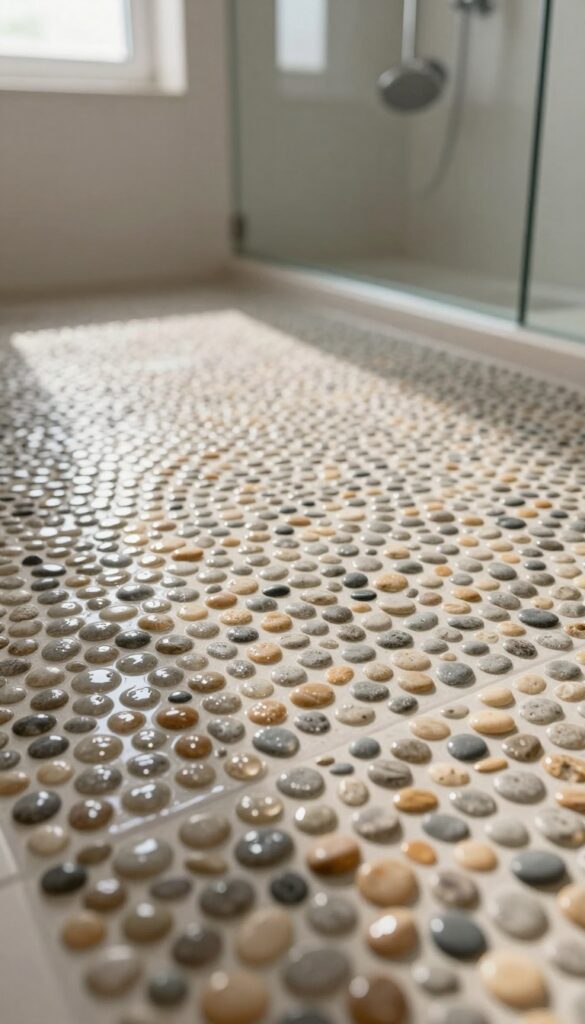
Switching up the floor can change the whole feel of your shower, especially when you choose a pebble mosaic. The rounded stones bring a natural, spa-like texture underfoot that’s both comfortable and visually interesting. Pair them with a contrasting grout, and you get a look that’s grounded yet modern—perfect for adding warmth without going rustic.
A pebble mosaic floor in warm gray or tan tones gives your shower a gentle, massaging sensation while adding organic texture. The contrast grout not only defines the stones but also makes the floor pop, turning a functional surface into a design feature. This idea works well in both small and large showers, and it pairs beautifully with neutral wall tiles or a bold accent wall.
Why Contrasting Grout Works
When you use a grout color that’s lighter or darker than the pebbles, you create a striking pattern that draws the eye. Light grout with darker stones feels airy and crisp, while dark grout with tan pebbles adds depth and a more grounded, earthy vibe. The contrast also helps hide dirt and wear, making maintenance easier in the long run.
Choosing The Right Pebble Tone
Warm gray and tan pebbles are the most versatile, as they complement a variety of wall colors and fixtures. If you prefer a cooler look, you can opt for slate or mixed blues, but warm tones keep the space inviting and cozy. For a more uniform appearance, select pebbles that are similar in size and shape, or go for a mix for a more natural, organic feel.
Installation And Maintenance Tips
Pebble mosaics come in mesh-backed sheets, which makes installation easier, but you’ll want a pro to ensure the floor is level and well-sealed. The textured surface can be a bit rougher on bare feet, so consider a smoother pebble or a matte finish if you prefer a softer feel. Regular sealing and gentle cleaning with a mild detergent will keep the grout looking fresh and prevent mold.
10. Zellige-Inspired Glossy Tiles
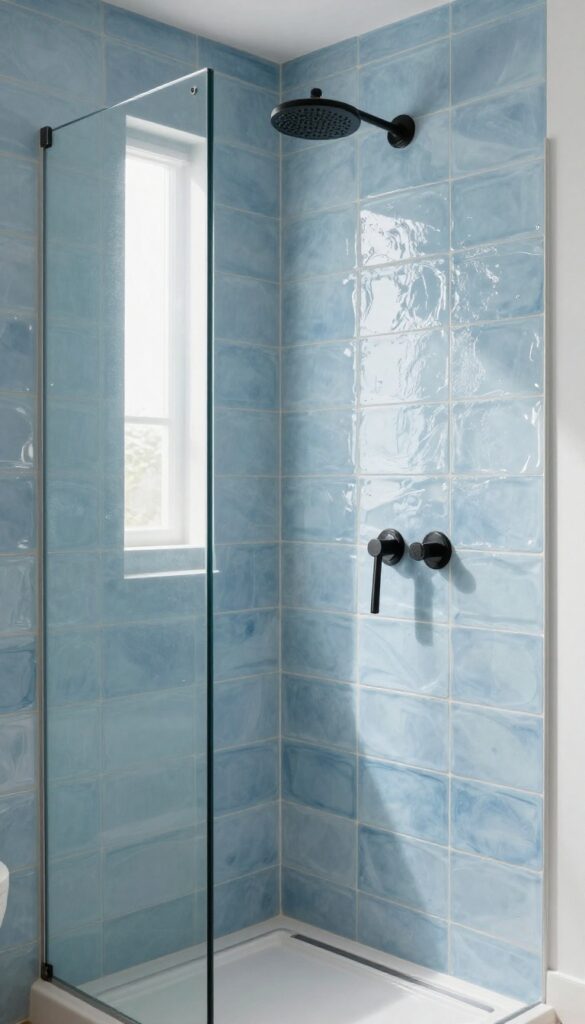
Glossy, slightly uneven zellige tiles bring a rich, handcrafted warmth to modern showers. Their high-shine surface catches light in a way that flat, uniform tiles simply can't, adding depth and a subtle, organic rhythm to the walls. Each tile's tiny imperfections make the space feel personal and alive, not mass-produced.
Zellige tiles originated in Morocco, where artisans shape them by hand, giving each piece a unique texture and glaze. Modern versions capture that same handmade feel but are easier to install and maintain. The glossy finish reflects light beautifully, making small or windowless showers feel brighter and more open.
The slight undulations in the surface create gentle shadows that shift throughout the day, so your shower never looks static. Whether you choose a classic white or a soft blue, these tiles add a layer of visual interest that feels both ancient and contemporary.
Why Glossy Zellige Works In Showers
The glossy glaze is not just about looks—it's also practical. The smooth surface is easy to wipe down and resists soap scum better than matte finishes. The slight texture helps hide water spots, so the wall stays looking fresh between cleanings.
Plus, the reflective quality makes the space feel larger and more inviting, which is a big win if your shower is on the compact side.
How To Choose The Right Zellige Color
White and cream are the most popular choices because they brighten the space and go with any fixture. But don't be afraid to go bolder—soft greens, dusty blues, or even terracotta can add a warm, earthy tone that feels personal. Consider the rest of your bathroom's palette: if you have warm wood or brass, a warm-toned zellige will tie everything together.
For a cooler, spa-like vibe, opt for a pale blue or gray.
Installation And Grout Tips
Because zellige tiles are uneven, they need a flexible thinset and a grout that can handle slight movement. Use a grout color that blends with the tile to keep the focus on the glossy surface—white or cream grout works well with lighter tiles. Leave a small gap (about 1/8 inch) between tiles to allow for the natural variation.
If you're not comfortable with a DIY install, hire a pro who has experience with handmade tiles to avoid lippage issues.
11. Herringbone Pattern in Warm Tones
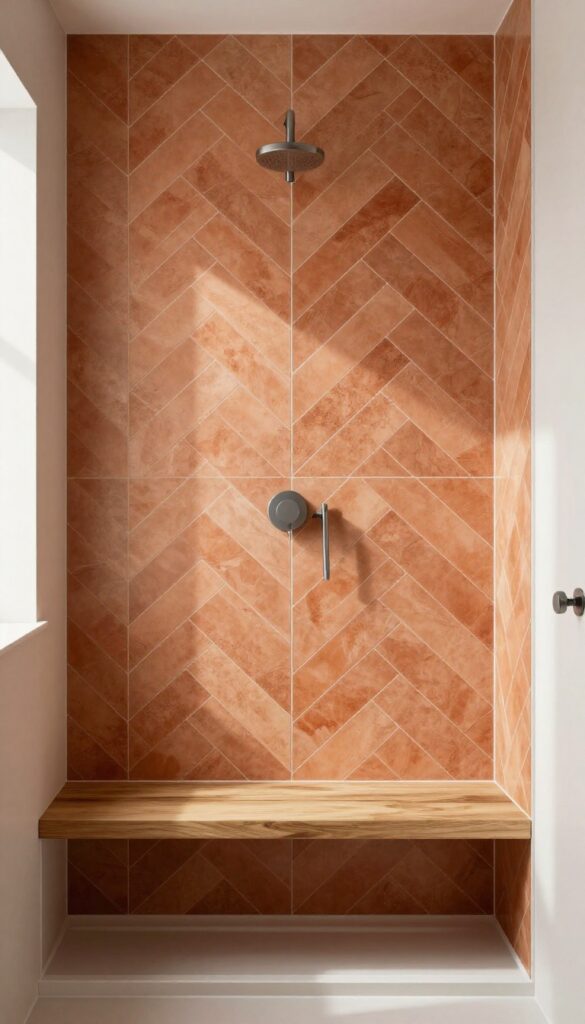
A herringbone layout instantly adds texture and movement to any wall, but when you pair it with warm terracotta or caramel tones, it becomes something special. The classic zigzag pattern feels both timeless and fresh, bringing a cozy, handcrafted vibe to your shower. It's a simple way to make a big style statement without overwhelming the space.
Herringbone tile is a classic pattern that never goes out of style, and in warm tones it feels especially inviting. The angled lines catch the light in different ways, creating subtle shadows that add depth and interest. Whether you use it on a single accent wall or the entire shower, this pattern brings a sense of craftsmanship and warmth that plain straight-lay tiles just can't match.
Why Warm Herringbone Works
Warm tones like terracotta, caramel, and burnt orange have a natural, earthy feel that pairs beautifully with modern fixtures. The herringbone pattern adds a geometric element that keeps the look from feeling too rustic or dated. It's a balanced combination of classic and contemporary, making it a versatile choice for many bathroom styles.
Where to Use It
A full herringbone wall behind the shower bench or the main shower wall creates a stunning focal point. If you prefer a more subtle approach, use herringbone on the floor or in a niche. You can also mix it with solid neutral tiles on the other walls to let the pattern shine without overwhelming the space.
Grout And Finish Tips
Choose a grout color that blends with the tile for a seamless, modern look, or go with a contrasting shade to emphasize the pattern. A matte finish on the tile reduces glare and enhances the natural, earthy feel, while a glossy finish adds a bit of drama. Either way, make sure the grout is sealed properly to keep your shower looking fresh.
12. Mixed Materials with a Cohesive Palette
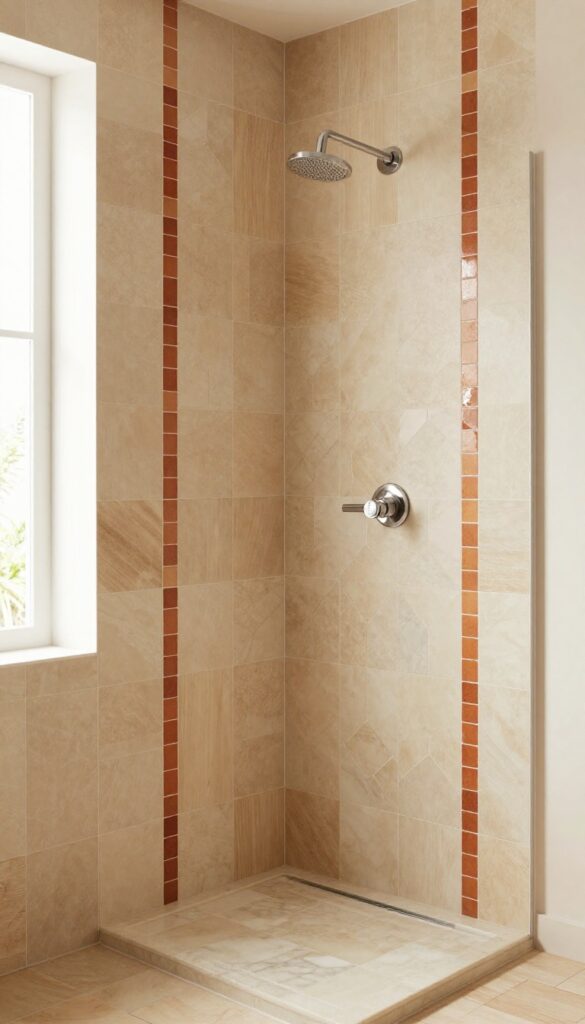
Who says you have to pick just one tile? Blending different shapes and materials in a shower can create a layered, curated feel—like a gallery wall for your walls. The secret is anchoring everything with a warm, unified color palette so the mix feels intentional, not chaotic.
Start with a base tile that covers most of the wall, like a large-format porcelain in a soft sand tone. Then add accents: a strip of handmade zellige in a terracotta shade, a niche lined with hexagonal marble, or a few vertical planks of wood-look tile. The key is to limit the palette to two or three warm hues—think cream, caramel, and rust—so the different textures and shapes harmonize.
Choose A Dominant Base
Pick one tile to cover the majority of the shower walls. A large-format tile in a warm neutral—like beige or greige—provides a calm backdrop. This lets your accent tiles shine without overwhelming the space.
Add Accents In The Same Family
For accents, choose tiles that share undertones with your base. If your base is warm cream, opt for terracotta or caramel accents. Mixing shapes—like hexagons, rectangles, or arabesque—adds visual interest while staying cohesive.
Use Texture To Tie It Together
When materials differ, texture can unify them. A matte porcelain base pairs well with a glossy zellige accent, or a smooth stone with a rough pebble strip. The contrast in finish adds depth without breaking the palette.
13. Bold Dark Tiles with Warm Lighting
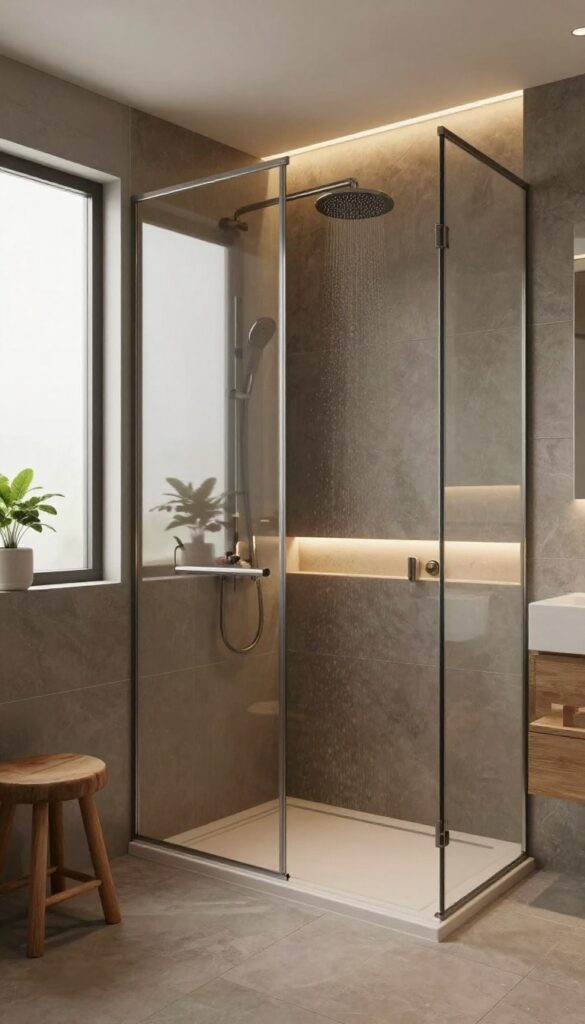
Dark tiles in a shower can feel like a gamble, but when you pair them with the right warm lighting, they become the coziest spot in the house. Deep charcoal or navy walls don't have to read as cold or cave-like. Instead, they soak up light and reflect it back in a way that feels intimate and modern.
The secret is all in the layering. Warm LED strips under niches, behind benches, or along the ceiling soften the contrast and make the dark surfaces feel velvety rather than harsh. You get that dramatic, high-end look without losing the welcoming vibe.
Pick The Right Shade Of Dark
Not all dark tiles are created equal. Charcoal with a hint of brown or green feels warmer than a pure cool gray. Navy with a touch of teal also adds depth without going too moody.
Avoid jet black unless you're going for a very specific, almost theatrical style.
Layer Your Light Sources
One overhead light isn't enough. Add warm LED tape under the shower bench, inside a niche, or along the floor perimeter. Dimmable lights let you adjust from bright morning rinses to calm evening showers.
Aim for 2700K to 3000K color temperature for that golden glow.
Balance With Lighter Accents
Dark tiles don't have to cover every surface. Use them on one accent wall or the lower half, then pair with light grout or a lighter ceiling. A light-colored shower floor or a contrasting niche can break up the darkness and keep the space from feeling too heavy.
FAQ
What is the best tile for a modern shower?
Large-format porcelain tiles are a top choice for modern showers because they create a sleek, seamless look with fewer grout lines, making them easy to clean and maintain.
How can I make my shower tile look warm and inviting?
Opt for tiles in warm hues like beige, terracotta, or soft brown, and choose matte or textured finishes. Adding warm lighting and natural wood accents can also enhance the cozy feel.
Are wood-look tiles suitable for showers?
Yes, wood-look ceramic or porcelain tiles are waterproof and durable, making them perfect for showers. They offer the warmth of wood without the risk of water damage.
What tile size is best for a small shower?
Large-format tiles can make a small shower appear bigger by reducing grout lines, but smaller tiles like mosaics can provide better grip on the floor. Consider a combination for best results.
How do I choose grout color for warm tile?
For a seamless look, choose grout that closely matches the tile color. Alternatively, a contrasting grout can highlight the tile shape, but keep it in a warm tone to maintain cohesion.
Conclusion
Your shower tile should feel like a reflection of how you live, not just a trend you copied. The best part about these ideas is that they let you blend warmth and practicality without losing your own style in the process.
Start with the tile that speaks to you, then build the rest of the space around that choice. Even one thoughtful swap can make your daily routine feel a little more personal and a lot more inviting.