13 Updated Shower Chair Ideas for Better Ease and Confidence
A shower chair can be the difference between a stressful routine and a calm, independent one. The right pick supports your balance, spares your energy, and makes every wash feel secure.
But with so many styles out there, it's easy to get stuck comparing features. That's why we've gathered 13 updated options that go beyond the basics—each one built to solve a real problem, from tight corners to slippery floors.
Whether you're recovering from surgery, aging in place, or just want a safer shower, these ideas will help you move with confidence and enjoy your space again. Let's find the seat that fits your life.
1. Teak Wood Shower Stools: Natural Warmth and Durability
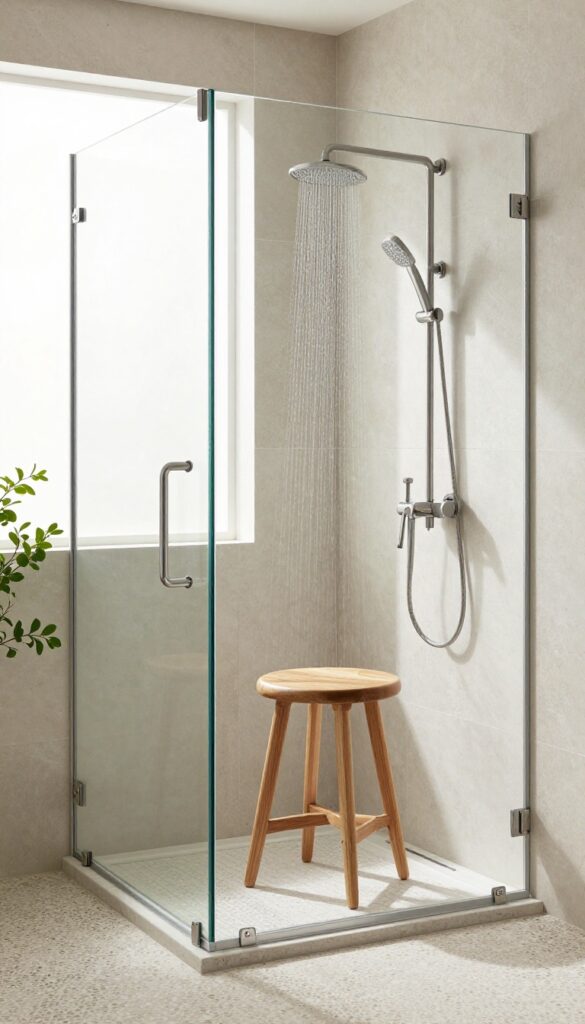
If your bathroom feels more like a clinical space than a personal retreat, a teak wood stool can change that instantly. The rich, warm grain brings a touch of nature indoors, turning an everyday necessity into something you actually look forward to using. Beyond looks, teak is a workhorse in wet environments—it handles moisture, resists mildew, and stays solid for years.
Teak wood stools are a favorite for good reason. They're not just pretty; they're incredibly practical. The natural oils in teak make it waterproof, so it won't warp or rot like other woods.
Plus, the textured surface provides a non-slip grip, even when soapy. Whether you're standing to wash or sitting to rest, a teak stool offers a stable, comfortable base that feels solid underfoot.
Why Teak Beats Other Woods
Teak contains natural rubber and oils that repel water, making it the go-to choice for outdoor furniture and now shower seating. Unlike bamboo or pine, teak doesn't absorb moisture, so it won't crack or swell. It also resists termites and fungal growth, which means less maintenance for you.
A quick wipe-down after each use keeps it looking fresh.
Styles That Fit Any Bathroom
You can find teak stools in minimalist designs with clean lines, or more traditional styles with curved legs and rounded tops. Some fold flat for easy storage, while others have a built-in handle for carrying. Whether your bathroom is modern, rustic, or classic, there's a teak stool that blends right in.
Plus, the natural color variations mean each piece is unique.
Caring For Your Teak Stool
Teak is low-maintenance, but a little care goes a long way. Rinse it after use to remove soap residue, and occasionally apply teak oil to maintain its golden hue. If you prefer a silver-gray patina, just let it age naturally.
Avoid harsh cleaners or abrasive pads, as they can strip the natural oils. With proper care, a teak stool can last decades.
2. Foldable Shower Chairs: Space-Saving Convenience
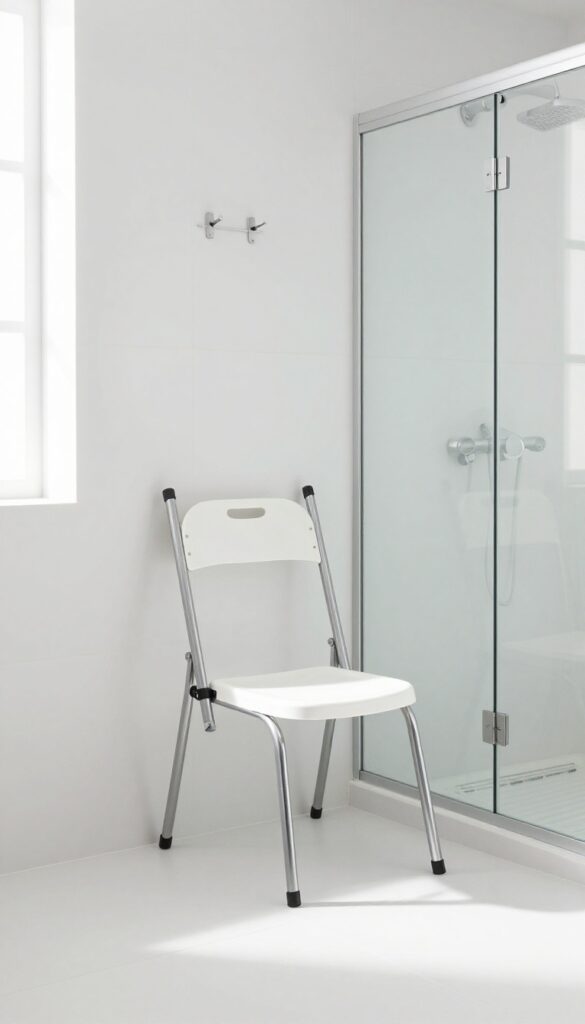
Tight bathrooms and shared showers often leave little room for extra gear. A foldable shower chair solves that by tucking away flat when you don't need it, freeing up floor space instantly. These chairs are also a breeze to transport, making them a top pick for travel or temporary setups.
If your bathroom is short on square footage, this style keeps things practical without sacrificing support.
Foldable shower chairs are designed with hinges that let the seat and legs collapse into a slim profile. Most models weigh between 5 and 10 pounds, so you can easily hang them on a hook or slide them under a cabinet. The frames are typically made from rust-resistant aluminum or coated steel, which stands up to constant moisture.
Many also feature adjustable leg heights to level the chair on uneven floors, giving you a stable base even in older tubs. Whether you're dealing with a compact apartment bathroom or sharing a shower with family, these chairs offer a low-fuss solution that doesn't crowd your space.
Why Choose A Foldable Model?
The obvious perk is storage, but there's more to it. Foldable chairs are lighter than their rigid counterparts, which makes them easier to lift in and out of the tub. That's a big plus if you have limited upper-body strength or need to move the chair between rooms.
They're also a smart choice for renters who don't want to install permanent fixtures. Plus, the compact design means you can take it along on trips, so you don't have to rely on flimsy hotel shower benches.
Key Features To Look For
Not all foldable chairs are created equal. Start with the seat material—plastic or resin seats are easy to clean and dry quickly, while padded seats add comfort but need more upkeep. Check for non-slip feet or suction cups to keep the chair grounded on wet surfaces.
Adjustable legs are another must-have, especially if your shower floor has a slight slope. Also, look for a weight capacity that matches your needs; most foldable chairs support 250 to 350 pounds. Finally, consider the folding mechanism—some chairs fold in half, while others collapse like a camping stool, so pick one that feels intuitive to operate.
Best Ways To Store And Maintain
Even though these chairs are compact, smart storage keeps them within reach. A sturdy hook on the back of the bathroom door or inside the shower curtain rod works well. If you have a cabinet under the sink, that's another spot—just make sure the chair is dry before stowing it to prevent mildew.
Rinse the frame and seat after each use and wipe down with a mild cleaner weekly. Check the hinges and rubber tips every few months to ensure they're still secure. With minimal care, a foldable chair can last for years without taking over your bathroom.
3. Wall-Mounted Shower Seats: Sleek and Out of the Way
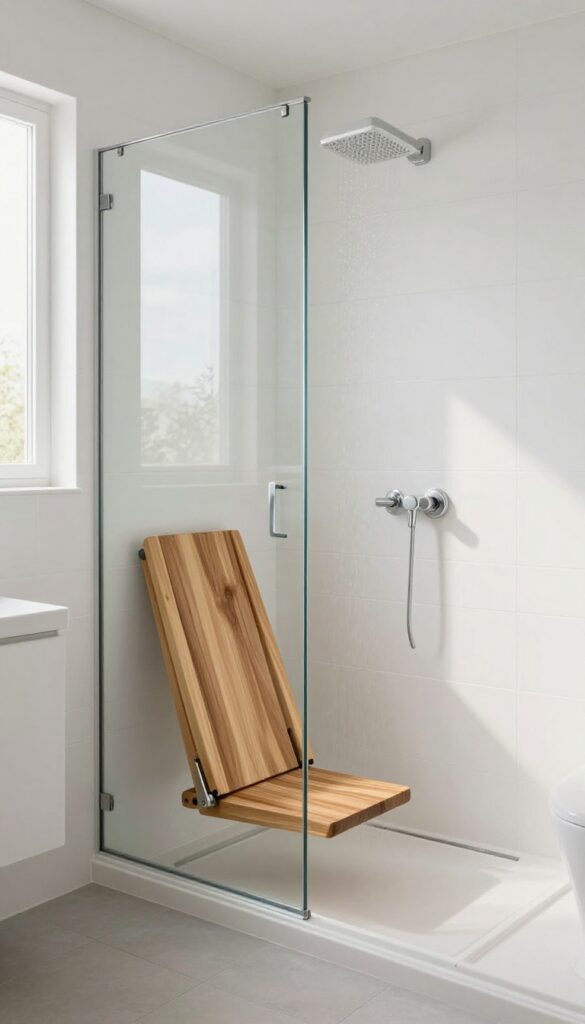
When floor space is tight, a wall-mounted seat can be a game changer. It attaches directly to the wall, so there's nothing to trip over or store. These seats are especially handy in corner showers or small bathrooms where a free-standing chair would just get in the way.
Wall-mounted seats offer a clean, minimalist look while keeping your shower floor open. They're perfect for anyone who wants a permanent seat without sacrificing space. Many models fold up against the wall when not in use, making them even more unobtrusive.
Why Choose A Wall-mounted Seat?
The biggest advantage is space savings. Since the seat is attached to the wall, you don't have to worry about moving it around or finding a spot to store it. That's a huge plus for shared bathrooms or small showers.
Plus, it feels more stable than a portable chair because it's anchored securely.
Fold-up Vs. Fixed Models
Fold-up seats are ideal if you want the option to clear the space when the seat isn't needed. They simply flip up against the wall, out of the way. Fixed models are more permanent and often have a larger seat area, but they stay in place.
Think about how often you'll need the seat and how much space you can spare.
Installation And Safety Considerations
Proper installation is key. You'll need to mount the seat into wall studs or use heavy-duty anchors designed for tile or fiberglass. If you're not handy, it's worth hiring a professional.
Also, check the weight capacity—most wall-mounted seats hold 250–400 pounds, so pick one that fits your needs. And always add non-slip grips on the seat surface for extra safety.
4. Swivel Shower Chairs: Effortless Transfers
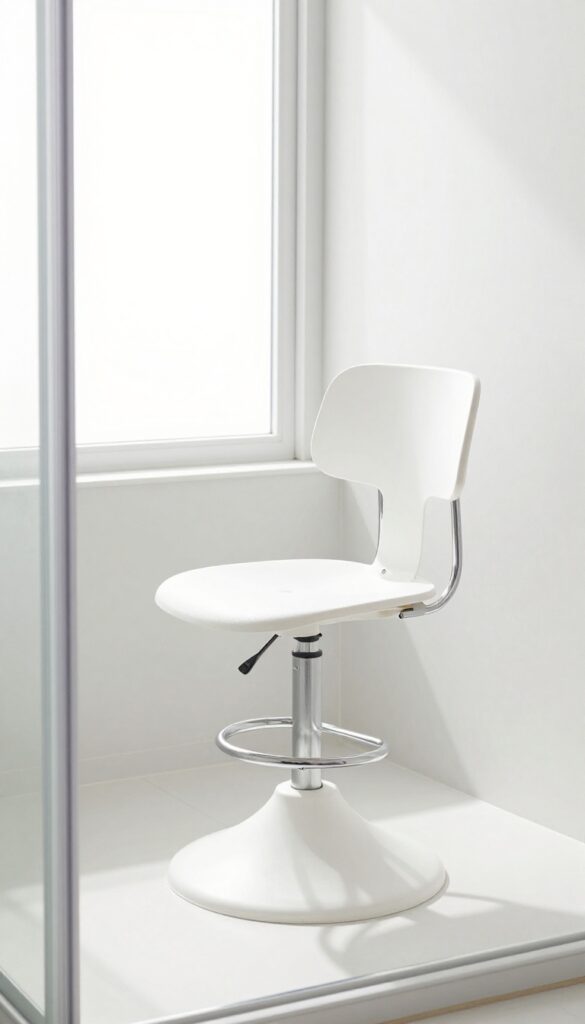
Getting in and out of the shower can be the trickiest part of the whole routine, especially when you're dealing with balance issues or using a walker. A swivel shower chair takes the strain out of that twist-and-turn motion by rotating the seat toward you, so you can sit down safely and then swing your legs in with ease. It's a small feature that makes a big difference in how independent you feel.
Swivel seats are designed to reduce the twisting motion that often leads to falls. Instead of pivoting your body, the chair does the turning for you. This is especially helpful if you have limited hip or back mobility, or if you're transferring from a wheelchair.
Many models lock in place once you're seated, so you don't spin unexpectedly while washing. The seat typically rotates 360 degrees, but you can set it to lock at the angle that works best for your setup.
How Swivel Seats Simplify Your Routine
Picture this: you roll up to the shower in your wheelchair, position the swivel chair right next to it, and then shift over onto the seat. Because the seat rotates, you can face outward while you transfer, then swing your legs in and rotate to face the shower. No awkward twisting, no reaching for a grab bar mid-move.
Some models even have a built-in handle or cutout to give you extra leverage during the transfer.
Key Features To Look For
When shopping for a swivel chair, check that the rotation mechanism is smooth but not too loose—you want it to hold position when you're seated. Look for a locking lever that's easy to reach from a seated position. A non-slip seat surface is a must, especially if you'll be using it without a towel.
Also, consider the height: an adjustable seat lets you match the height of your wheelchair or walker for a level transfer.
Who Benefits Most From A Swivel Chair
Swivel chairs are a great fit for anyone with limited trunk rotation or hip mobility, which includes many older adults and people recovering from hip or back surgery. They're also handy for caregivers, because the chair reduces the amount of physical lifting and twisting you need to assist with. If you have a walker that you park right outside the shower, a swivel seat can make the step from walker to seat much less awkward.
5. Shower Benches with Backrests: Extra Support and Comfort
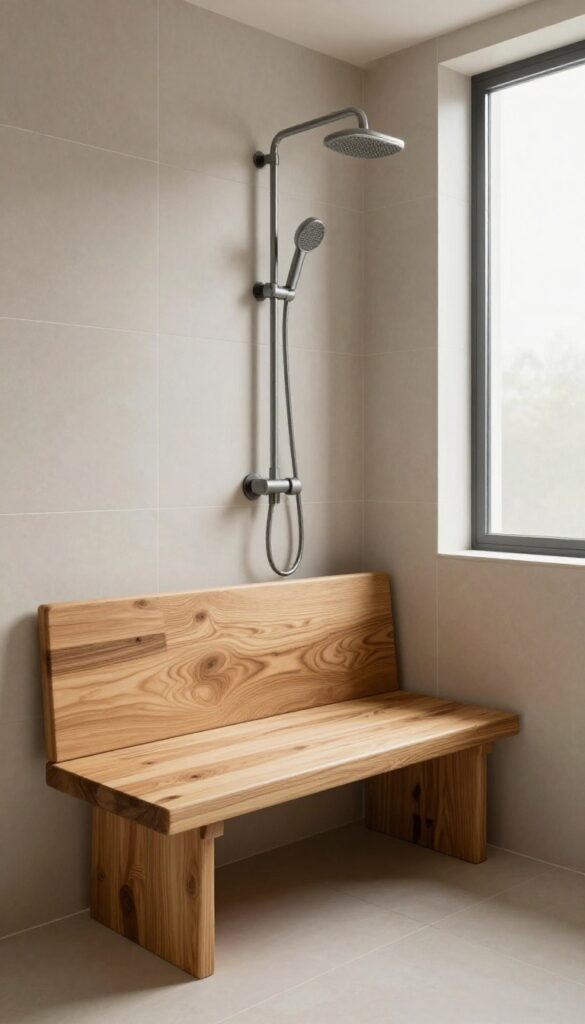
A shower bench with a backrest can feel like a whole different level of support. Instead of perching on a flat seat, you get something that cradles your back and helps you relax while you wash. That extra support makes a big difference when you're in the shower for a while or feel a bit unsteady on your feet.
Backrests also encourage better posture, which reduces strain on your lower back and hips. Many models come with contoured seats and armrests, giving you multiple points of contact so you feel grounded and secure. If you want a shower chair that truly feels like a seat, not just a stool, this style is worth a closer look.
Shower benches with backrests are designed for people who need more than just a place to sit. The backrest provides essential support for your spine, helping you maintain a comfortable upright position without slouching. This is especially helpful if you have limited core strength or experience fatigue during longer showers.
These benches come in a variety of materials and styles, from simple plastic models to more elegant teak or aluminum options. Many include features like adjustable legs, non-slip feet, and drainage holes to keep water from pooling. Some even have built-in armrests that flip up for easy transfers.
The key is to find a model that fits your body size and shower layout, so you get the support you need without taking up too much space. When choosing a backrest bench, think about where you'll place it and how you'll use it. If you have a corner shower, a corner bench with a backrest can maximize space.
If you prefer to face the showerhead, look for a bench with a lower backrest that won't block the water. And if you need extra help standing up, armrests can give you something to push against. All these little details add up to a safer, more comfortable shower experience.
Why A Backrest Matters
Without a backrest, you're essentially balancing on a flat surface, which can make your muscles work harder to stay upright. A backrest shifts that work to the bench, letting your back relax. This reduces fatigue and helps you feel more stable, especially if you're prone to dizziness or weakness.
It also gives you a natural place to rest your back while you wash your legs or feet, making those tasks easier and safer.
Key Features To Look For
When shopping for a backrest bench, pay attention to the seat width and depth. You want enough room to sit comfortably without feeling cramped. Contoured seats that curve slightly can help distribute your weight evenly and reduce pressure points.
Armrests are another great feature, especially if you need help standing up or sitting down. Look for armrests that are padded and easy to grip. Also, check the weight capacity to make sure it supports you safely.
Non-slip feet and rust-resistant materials are must-haves for any shower environment.
Placement And Safety Tips
Place the bench where you can reach everything you need without stretching or twisting. Keep it close to the shower controls and within easy reach of your soap and shampoo. Make sure the floor is level and the bench's feet are firmly planted.
If your shower has a curb, consider a bench with adjustable legs to level it out. Always test the bench for stability before you step in, and don't forget to clean it regularly to prevent soap scum and mildew buildup.
6. Lightweight Aluminum Chairs: Portable and Rust-Proof
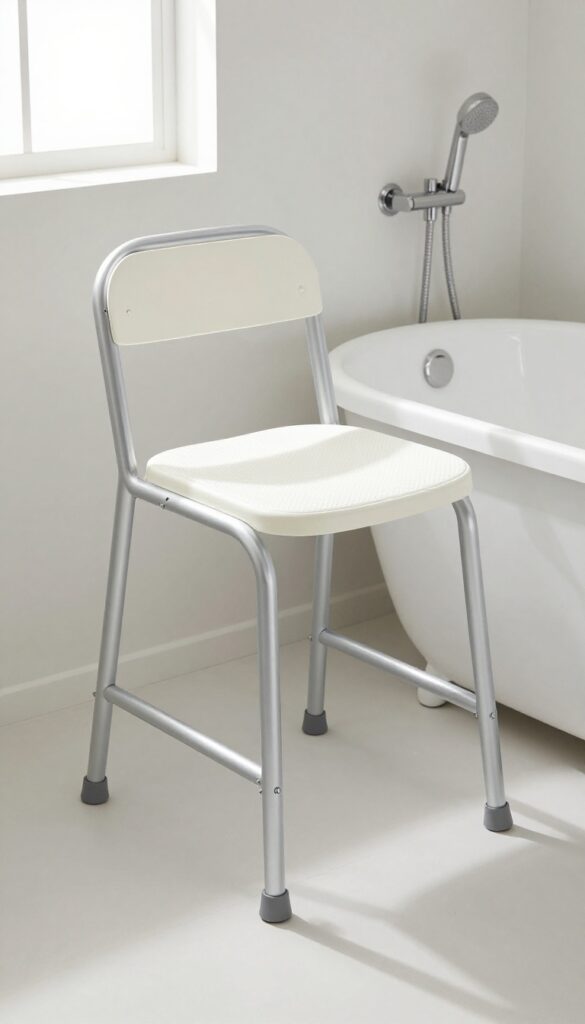
If you're tired of hauling a heavy chair in and out of the tub, or worried about rust spots forming on a metal frame, aluminum is the answer. These chairs are built to move with you—light enough to lift with one hand, yet sturdy enough to trust. Plus, they shrug off moisture, so they stay looking new for years.
Aluminum shower chairs are a favorite for good reason. They combine portability with durability, making them ideal for travel, small bathrooms, or anyone who needs to reposition their seat often. The material won't corrode, even with constant water exposure, and many models come with adjustable legs to fit different tub heights.
Whether you're using it at home or taking it to a hotel, an aluminum chair gives you freedom without sacrificing safety.
Why Aluminum Wins
Aluminum is naturally rust-proof, which is a huge plus in a damp environment. It's also about 30-50% lighter than steel, so you can easily pick it up and move it. That doesn't mean it's flimsy—most aluminum chairs support up to 300 pounds or more.
Look for models with reinforced crossbars and wide legs for extra stability.
Adjustability And Fit
Many aluminum chairs feature tool-free adjustable legs, letting you set the seat height to match your tub or shower floor. This is especially helpful if multiple people use the same chair. Some models also have a removable backrest, so you can use it as a stool when you need more space.
Safety Features To Look For
Even lightweight chairs need to grip the floor. Check for slip-resistant rubber tips on the legs and a textured seat surface to prevent sliding. Some models come with a built-in handle or cutout for easier carrying.
Always make sure the chair has a weight rating that exceeds your needs.
7. Bamboo Shower Stools: Eco-Friendly and Stylish
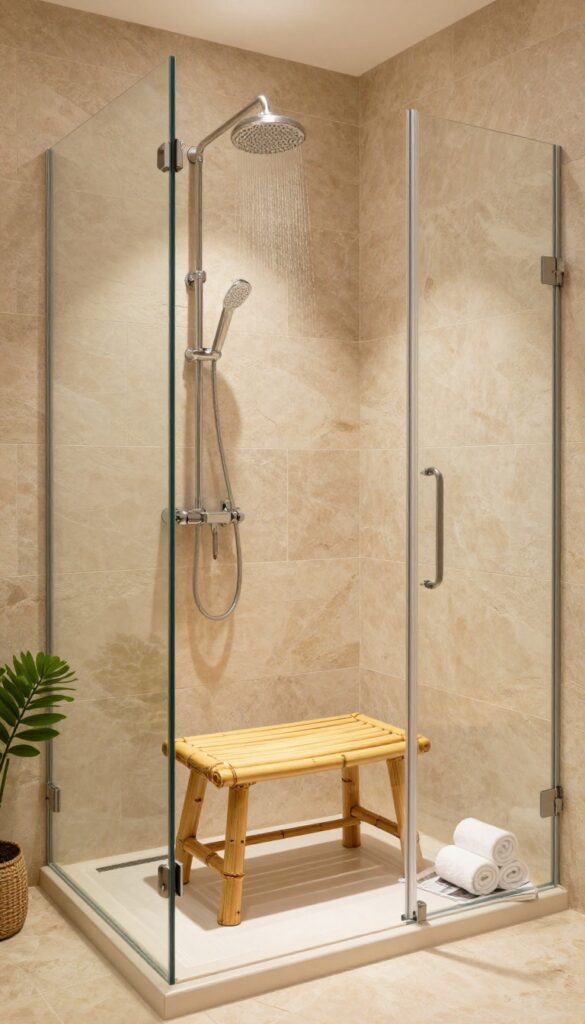
Bamboo is having a moment in bathroom design, and for good reason. It’s renewable, naturally water-resistant, and brings a warm, organic feel that plastic and metal just can’t match. A bamboo shower stool isn’t just a practical seat—it’s a small upgrade that makes your bathroom look and feel more inviting.
If you’re trying to avoid the clinical look of typical medical equipment, bamboo is a smart choice. It blends seamlessly with most decor styles, from spa-like retreats to modern farmhouse. Plus, with proper treatment, it can handle the humidity of a shower without warping or cracking, so you get both beauty and durability.
Bamboo shower stools are a fantastic option for anyone who wants a safer shower without sacrificing style. They’re lightweight, easy to move, and surprisingly sturdy. Many are made from solid bamboo slats that allow water to drain through, reducing slipping and keeping the seat dry.
Some models even come with a natural oil finish that repels water and resists mildew, so maintenance is a breeze. When shopping for a bamboo stool, look for one with a wide, stable base and non-slip feet. The seat should be comfortable and contoured, with a smooth, splinter-free surface.
Because bamboo is a grass, it’s actually stronger than many hardwoods, so you don’t have to worry about it feeling flimsy. With a little care, a bamboo stool can last for years, making it a smart investment for your bathroom and the planet.
Why Bamboo Works In The Shower
Bamboo is naturally resistant to moisture, which is why it’s used for everything from cutting boards to flooring. In the shower, this means it won’t absorb water as quickly as other woods, and it’s less likely to crack or split. Many bamboo shower stools are treated with a waterproof sealant, giving them an extra layer of protection against daily use.
Plus, bamboo is a sustainable resource—it grows quickly and doesn’t require pesticides, so you can feel good about your choice.
How To Care For Your Bamboo Stool
To keep your bamboo stool looking its best, wipe it down after each shower to remove excess water. Every few months, apply a thin coat of mineral oil or a bamboo-safe sealant to maintain the finish. Avoid using harsh chemical cleaners, as they can strip the natural oils.
With just a little attention, your stool will stay smooth, beautiful, and ready for use.
What To Look For When Buying
Not all bamboo shower stools are created equal. Check that the stool is made from solid bamboo, not particleboard or veneer, which can swell and fall apart. Look for a weight capacity that suits your needs—most hold at least 250 pounds.
Non-slip rubber feet are a must to keep the stool steady on wet tile. And consider the height: you want a seat that lets you sit with your feet flat on the floor, knees at a comfortable angle. A stool with adjustable legs can be a great option if you’re sharing the shower with someone of a different height.
8. Shower Chairs with Arms: Added Balance for Getting Up
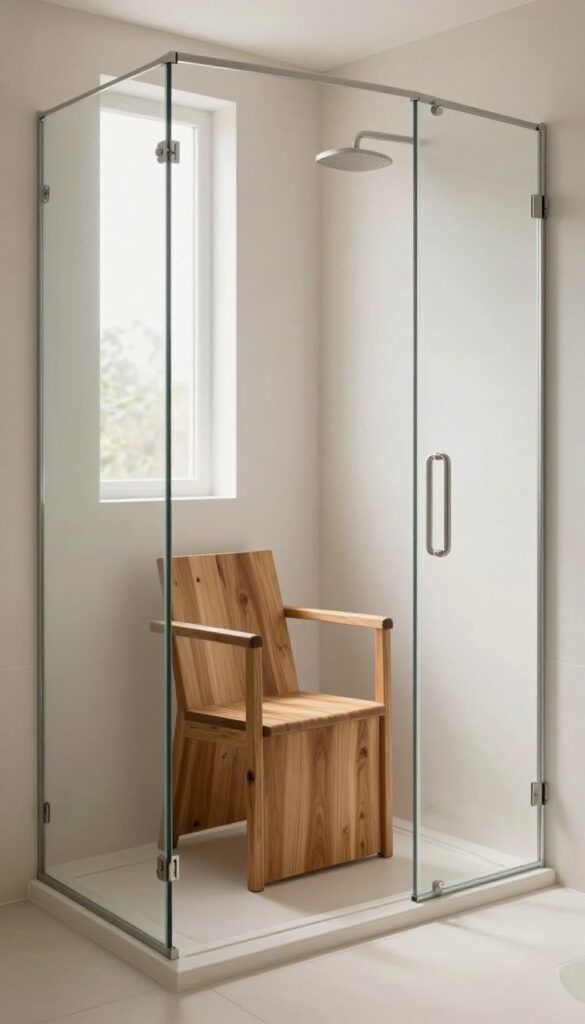
Armrests can be the quiet hero of a shower chair. They give you something solid to push against when you're ready to stand, and a steady anchor when you're lowering yourself down. For anyone with weaker legs, joint stiffness, or just a wobbly moment now and then, that extra support can make a huge difference.
Some models keep the arms slim and unobtrusive, while others come with padded rests that feel almost like a lounge chair. Either way, the goal is the same: less strain, more stability, and a shower that feels a lot less like a balancing act.
When you're sitting on a standard shower bench, getting up can feel like a leap of faith. You have to shift your weight, find your footing, and hope your legs cooperate. With armrests, you've got something to grip, so you can rise in a controlled, steady motion.
That's especially helpful after surgery or when dealing with conditions like arthritis or neuropathy. Armrests also help you stay seated comfortably. They give your arms a place to rest, which can reduce shoulder tension and help you relax during a longer rinse.
Some people even find they can wash more thoroughly because they're not bracing themselves the whole time. Of course, not all armrests are created equal. Some are fixed, some flip up for easy transfer, and some are height-adjustable.
The right choice depends on your mobility level and how you get in and out of the shower. If you use a transfer bench or a walker, flip-up arms might be more practical. If you just need a little extra help standing up, fixed arms are usually fine and often more affordable.
Padded Arms For Comfort
Hard plastic or metal armrests can dig into your elbows after a few minutes. Padded arms solve that with a soft layer that feels much nicer against your skin. They're especially great for people who like to sit and soak for a while, or who have sensitive skin or bony elbows.
Look for padding that's waterproof and easy to wipe down—you don't want it holding onto moisture or soap scum.
Flip-up Arms For Easy Transfer
If you need to slide onto the chair from a wheelchair or walker, flip-up arms are a game changer. They swing out of the way so you can step or slide in from the side without a barrier. Once you're seated, you just pull them back down for support.
This feature is common on bariatric and heavy-duty models, but you can find it on standard chairs too. Just make sure the locking mechanism feels secure before you rely on it.
Height-adjustable Arms
Everyone's body is different, and a one-size-fits-all armrest might not line up with your natural sitting height. Height-adjustable arms let you set the support exactly where you need it, which can reduce strain on your shoulders and elbows. This is a nice feature if you're taller or shorter than average, or if you share the shower with someone else.
It's a small tweak that can make the chair feel custom-made.
9. Corner Shower Seats: Maximize Small Spaces
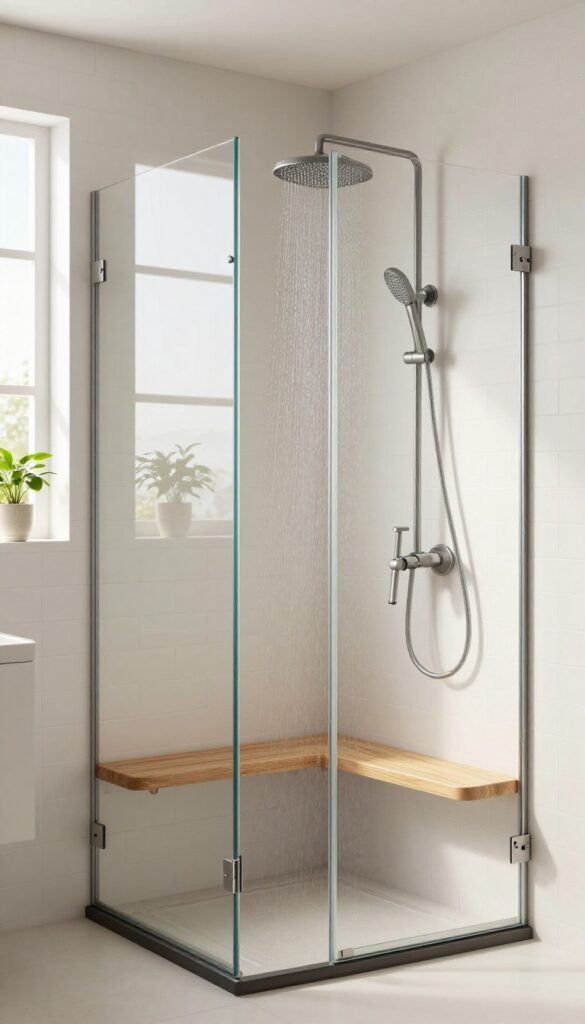
Showers with limited floor space can make adding a seat feel impossible. But you don't need a full-width bench to get the support you need. A corner shower seat tucks neatly into the angle of your walls, freeing up the rest of the shower for movement and other essentials.
Corner seats come in a few different shapes, but the most common are triangular and quarter-round designs. Triangular seats fit flush into the corner, offering a flat surface that angles outward. Quarter-round seats have a curved front, which can feel a bit more open and leave a little extra legroom.
Both styles are great for making the most of a small shower without sacrificing stability.
Space-saving Shape
The key benefit of a corner seat is that it uses space that would otherwise be empty. In a typical shower, the corner is hard to stand in and often becomes a spot for shampoo bottles. By placing a seat there, you turn dead space into a functional seating area.
This leaves the center of the shower open, so you can move around more easily and keep other items within reach.
Installation And Stability
Most corner seats are wall-mounted, which means they need to be anchored into the studs. That's important for safety—you want the seat to feel rock-solid when you sit down. If you're not comfortable with DIY, a professional can install it in under an hour.
Some corner seats also come with legs for extra support, which can be a good option if your walls are tile or if you want a more temporary setup.
Material Options
You'll find corner seats in teak, plastic, and metal with a waterproof finish. Teak looks warm and natural, and it holds up well in wet environments. Plastic is lightweight and easy to clean, while metal seats are sturdy and often foldable.
Think about your bathroom's style and how much maintenance you're willing to do. All of these materials can handle the moisture, but they each have a different feel.
10. Height-Adjustable Shower Chairs: Custom Fit for Every User
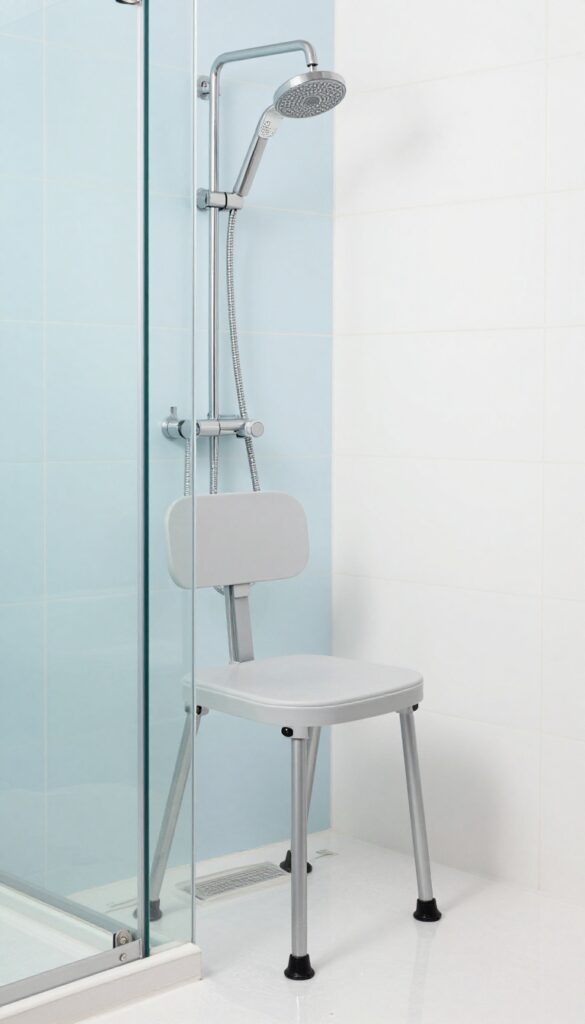
One size rarely fits all, especially when it comes to shower seating. A chair that's too low forces you to strain when standing up, while one that's too high can make sitting feel unstable. Height-adjustable models solve this by letting you dial in the exact seat level that works for your legs, your balance, and your transfer style.
This feature becomes even more valuable in households where multiple people share the same shower. A quick twist of the legs can switch the seat from a comfortable height for a taller partner to a safer, lower position for someone recovering from surgery. It's a small adjustment that makes a big difference in daily comfort and confidence.
Height-adjustable shower chairs typically feature telescoping legs with push-button or twist-lock mechanisms. You can raise or lower each leg independently, which also helps level the chair on uneven shower floors. Most models offer a range of about 16 to 21 inches, covering the needs of most adults.
When shopping, look for chairs with clear height markings on the legs. This lets you quickly set the same height every time without guessing. Also check the adjustment mechanism—some are easier to operate with wet hands than others.
If you have limited hand strength, a lever-style lock might be easier than a twist lock. A proper seat height allows your feet to rest flat on the floor with your knees at a 90-degree angle. This posture reduces strain on your lower back and makes standing up feel more natural.
It also helps prevent slipping, because you can push off with both feet evenly. For caregivers, adjustable height means less bending and lifting during transfers. You can position the seat at a height that aligns with your own movements, reducing the risk of injury.
In shared bathrooms, it also means each user can quickly customize the chair to their own needs without tools.
Why Seat Height Matters More Than You Think
When your feet dangle or your knees rise above your hips, your center of gravity shifts. That makes it harder to keep your balance while washing and increases the effort needed to stand up. A correctly adjusted seat keeps your joints in a safe, neutral position, so you can focus on the task at hand instead of worrying about stability.
For older adults, a seat that's too low can be especially dangerous. It forces the knees to bend more deeply, which can strain weakened muscles and increase the risk of a fall when standing. On the flip side, a seat that's too high can make sitting feel precarious, as if you might slide off.
The right height gives you a solid, grounded base.
How To Choose The Right Adjustment Range
Start by measuring the height of your shower floor to the top of your knee when you're standing naturally. That measurement is your ideal seat height. Most adjustable chairs cover a range of about 16 to 21 inches, but some extend higher or lower.
If you're taller or shorter than average, look for a model with a wider range. Also consider the type of shower you have. A walk-in shower with a level floor might not need much adjustment, while a tub with a high edge might require a taller seat to make transfers easier.
Measure the distance from the tub floor to the top of the tub wall to ensure the chair can be set high enough for safe entry and exit.
Adjustability For Caregivers And Shared Bathrooms
If you're a caregiver, an adjustable chair lets you set the seat at a height that reduces strain on your own back. You can raise the seat to match your hip height, making it easier to help someone stand or sit. After the transfer, you can lower the chair back to a comfortable level for the user.
In shared bathrooms, each person can quickly adjust the chair to their own preference. This is especially useful in homes where a family member is recovering from surgery and needs a different height than they would normally use. The ability to customize without tools makes the chair truly universal.
11. Shower Stools with Suction Feet: Non-Slip Security
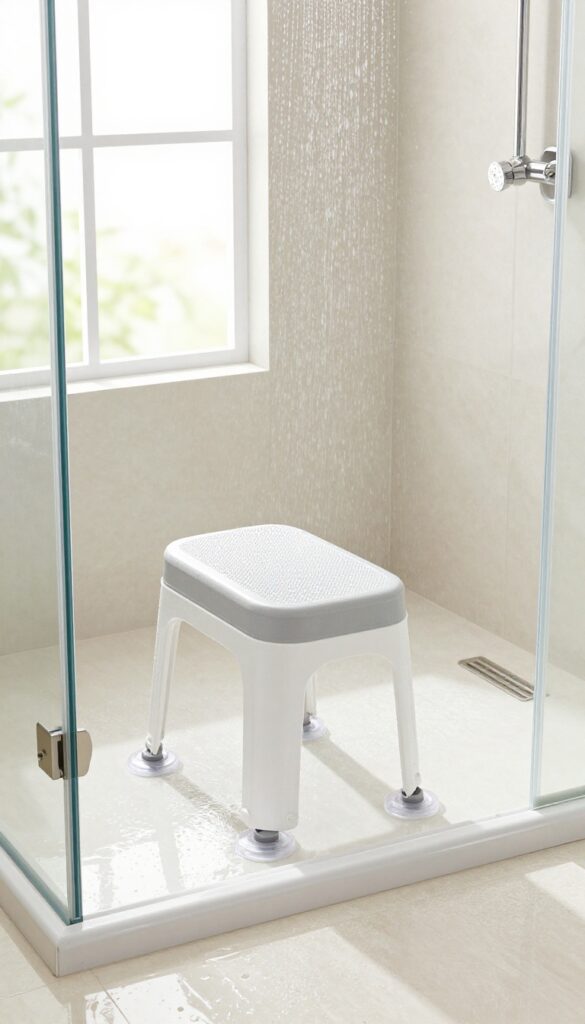
Slips in the shower are a real concern, and a chair that shifts under you only adds to the risk. That's where suction feet come in—they grip the floor like a seal, giving you a stable base even on slick tile. It's a simple feature that makes a big difference in how secure you feel.
When you're standing or sitting on a wet surface, the last thing you want is for your chair to slide. Suction feet are designed to lock onto the shower floor, reducing the chance of movement during transfers. This is especially helpful for people with limited strength or balance, as it removes one more variable from an already tricky routine.
Why Suction Feet Matter
Most shower chairs have rubber tips that offer some grip, but they can still slide on smooth surfaces. Suction feet create a stronger hold by using pressure to adhere to the floor. This is particularly important if you have a walk-in shower with a flat, tiled base, where water and soap can make everything slick.
What To Look For
When shopping, check that the suction cups are made of durable rubber and can be easily released for cleaning. Some models have a lever or tab that lets you break the seal quickly, which is handy when you need to move the stool. Also, look for cups that are wide enough to provide a stable footprint—smaller ones might not grip as well.
Maintenance And Care
To keep the suction working, make sure the floor is clean and free of soap scum or debris. Rinse the cups periodically and dry them after use. If you notice the grip weakening, a quick wipe with a damp cloth often restores it.
It's also a good idea to check the cups for wear and tear over time, as they can lose their stickiness.
12. Padded Shower Chairs: Cushioned Comfort for Longer Showers
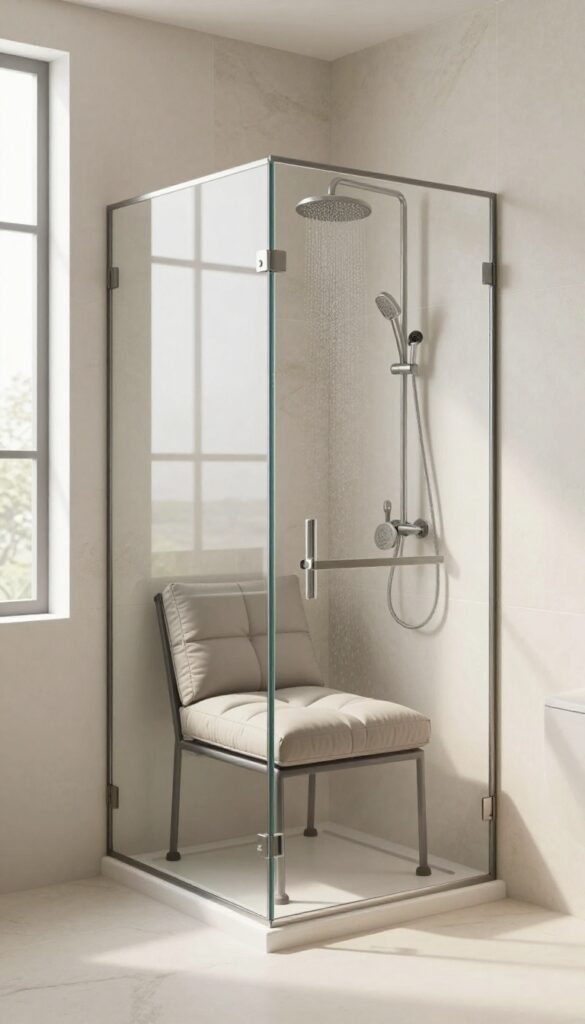
Some showers are quick, but many of us linger—letting the warm water ease sore muscles or simply enjoying a few quiet minutes. On a hard plastic or metal seat, that comfort fades fast. Padded shower chairs bring a soft touch that makes longer showers feel less like a chore and more like a treat.
The key is choosing padding that can handle constant moisture. Waterproof, quick-drying materials resist mold and mildew, so the chair stays fresh and supportive for years. With the right cushioning, you can relax without worrying about pressure points or a slippery surface.
Why Padding Matters More Than You Think
A hard seat can cause discomfort and even skin irritation, especially if you spend extra time in the shower. Padded seats distribute your weight more evenly, reducing pressure on your hips and tailbone. That makes a big difference for anyone with sensitive skin, recent surgery, or chronic pain.
Plus, the extra cushioning helps you stay stable. You’re less likely to slide around, which is a subtle but important safety feature. When you feel secure, you can focus on washing and relaxing instead of gripping the seat.
Choosing The Right Padding Material
Not all padding is created equal. Look for closed-cell foam or other waterproof materials that won’t absorb water. These dry quickly and prevent mold and mildew from taking hold.
Some chairs come with removable, washable covers that make cleanup a breeze. Check the base too. A sturdy aluminum or stainless steel frame with non-slip feet will keep the chair steady, even with the added cushioning.
You want comfort and stability in one package.
Styles To Fit Your Shower And Needs
Padded shower chairs come in a few styles. Some are simple stools with a padded top, while others feature a full backrest and armrests for extra support. If you have a corner shower, a corner-style padded chair can maximize space.
For those who need to transfer from a wheelchair, a padded bench that extends outside the tub might be the best fit. Think about how you move in the shower. Do you need armrests to help you stand?
A backrest for leaning? Choose the style that matches your routine, not just the look.
13. Multi-Functional Shower Chairs: Combining Seating and Storage
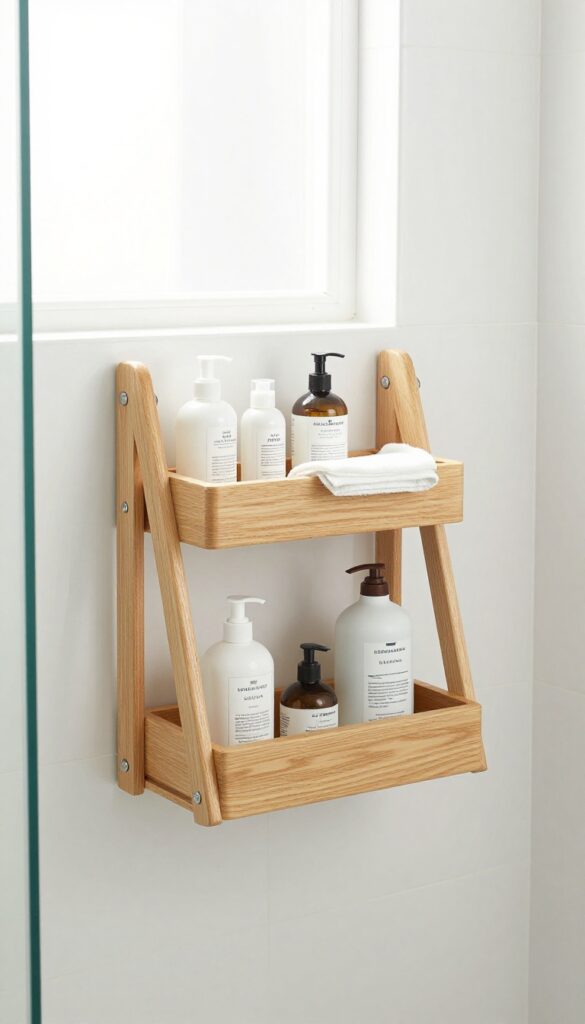
Shower caddies and shelves can clutter a small space, and reaching for a bottle can throw off your balance. A chair with built-in storage solves both problems at once. These designs keep your essentials within arm's reach, so you can stay seated and steady while you wash.
Think of it as a seat that doubles as an organizer. You get a secure place to sit and a tidy spot for shampoo, soap, and a washcloth—no extra hardware or corner shelves needed.
Multi-functional shower chairs are a smart upgrade for anyone who wants fewer items cluttering the shower floor. Instead of juggling bottles on a separate caddy or bending over to pick up a fallen soap, you can have everything right beside you. This design is especially helpful for people with limited mobility, because it reduces the need to twist or reach.
It also keeps the shower feeling more organized and less chaotic, which can make the whole routine feel calmer and more controlled. When you choose a chair with storage, you're not just buying a seat—you're investing in a more streamlined bathroom experience. Many models include a lower shelf, side hooks, or even a small tray that attaches to the armrest.
These features are practical, but they also add a sense of convenience that makes daily use more pleasant. Whether you're recovering from surgery or simply want a more efficient shower, this type of chair can make a noticeable difference.
Built-in Shelves And Trays
Some shower chairs come with a sturdy shelf beneath the seat, perfect for holding a few bottles or a loofah. Others have a removable tray that clips onto the armrest, giving you a flat surface for smaller items like a razor or a bar of soap. These features are designed to keep your shower essentials within easy reach, so you don't have to stretch or lean forward.
That's a big plus for balance and safety.
Hooks For Hanging Essentials
Hooks are another handy addition. You might find them on the side of the chair or on the backrest, ideal for hanging a washcloth, a loofah, or even a lightweight shower bag. This keeps wet items off the floor and lets them air dry faster.
It's a small detail that adds a lot of convenience, especially if you like to keep your shower organized.
Materials That Hold Up
Since these chairs are meant for wet environments, manufacturers use materials that resist rust and mildew. Look for frames made of aluminum or stainless steel, and seats that are either molded plastic or a quick-drying foam. The storage parts are usually made of the same durable plastic, so they won't warp or degrade over time.
This means your chair stays looking good and functioning well for years.
Who Benefits Most
This type of chair is ideal for anyone who wants to minimize movement in the shower. If you have balance issues, joint pain, or fatigue, having your toiletries close by can help you conserve energy. It's also great for small bathrooms where adding a separate caddy or shelf isn't practical.
Even if you don't have a specific need, the extra convenience is a nice bonus.
FAQ
What is the best material for a shower chair?
The best material depends on your needs. Teak and bamboo are naturally water-resistant and look great, while aluminum is lightweight and rust-proof. Plastic is also common, but ensure it's high-quality and slip-resistant.
How do I choose the right shower chair height?
The seat height should allow your feet to rest flat on the floor with your knees at a 90-degree angle. Measure the distance from the floor to the back of your knee while sitting, and adjust the chair accordingly.
Can a shower chair be used in a bathtub?
Yes, many shower chairs are designed for both showers and bathtubs. Look for models with adjustable legs and suction feet to ensure stability on different surfaces.
Are wall-mounted shower seats safe?
Wall-mounted seats are safe when properly installed on a stud or with appropriate anchors. They can support significant weight, but always check the manufacturer's weight limit and follow installation instructions.
How do I clean and maintain a shower chair?
Regularly wipe down the chair with a mild cleaner and water. For wood, apply a protective sealant periodically. Check for loose screws or worn suction cups and replace parts as needed.
Conclusion
Finding the right shower chair is about matching your space, your routine, and your comfort level. Whether you prioritize portability, a natural look, or extra support, there’s an option that makes daily showers feel safer and more manageable.
Start with the feature that matters most to you, and build from there. A small upgrade can bring a big boost in confidence, so take your time and choose what feels right.