15 Well-Planned Shampoo Holder Ideas in the Shower
Shampoo bottles topple over, crowd the ledge, and turn every shower into a balancing act. Instead of wrestling with slippery plastic, you can reclaim your space with storage that actually works.
These 15 shampoo holder ideas range from quick renter-friendly fixes to built-in looks that feel custom. Each one solves a real problem—whether it's dead corner space, glass walls, or zero shelf room.
Pick the approach that fits your routine and your bathroom's layout, then enjoy a shower that feels organized from the very first squeeze.
1. Corner Caddy That Maximizes Dead Space
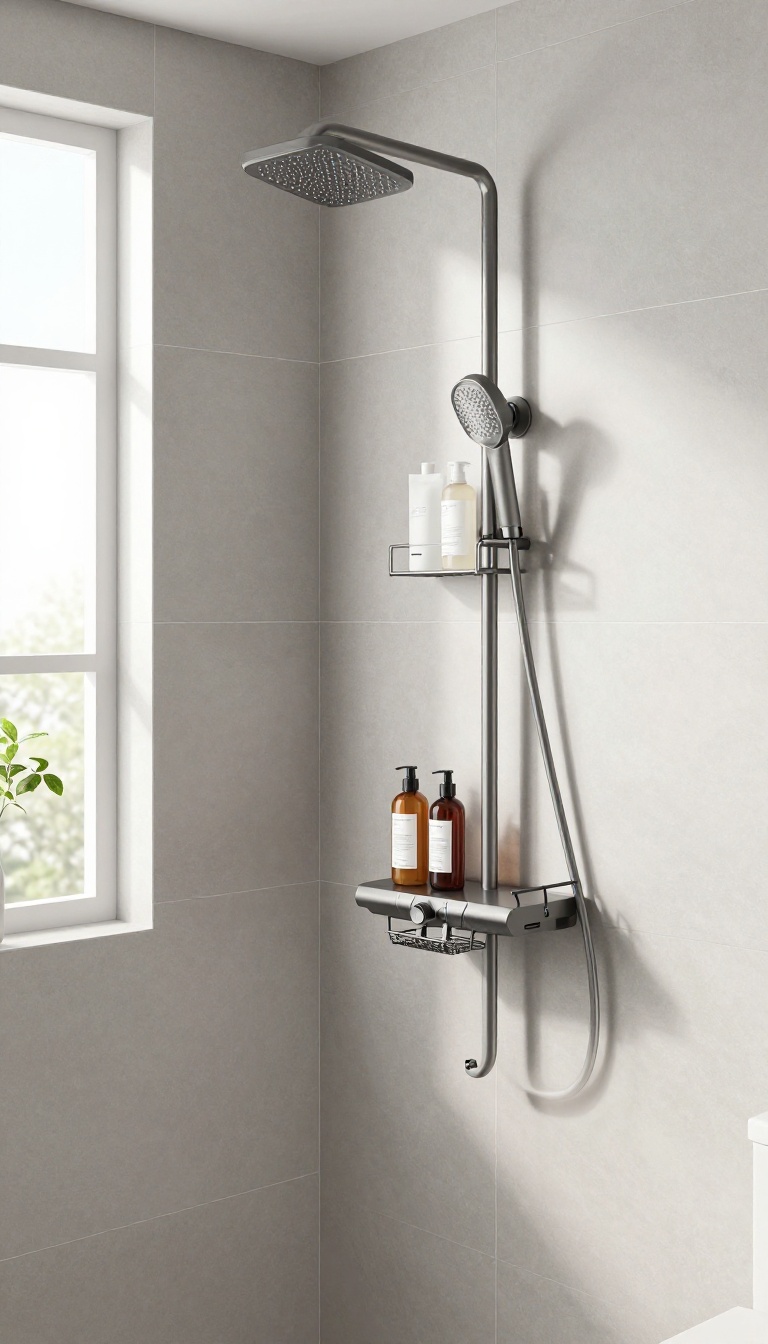
That unused corner where the walls meet is prime real estate for shampoo storage. A corner caddy fits snugly into this often-ignored nook, keeping bottles off the floor and within easy reach. It turns wasted inches into a neat, vertical tower that doesn't crowd your showering space.
Corner caddies are a smart choice for showers with limited shelf room or for those who want to keep the floor clear. They exploit the geometry of the corner, providing two sides of support while leaving the rest of the shower open. Most models are designed to hang from the showerhead or the wall, but you can also find freestanding corner shelves that sit on the floor or the tub edge.
Why Corners Work So Well
Corners are dead zones that don't interfere with movement. Placing a caddy there keeps your shampoo, conditioner, and body wash within arm's reach without making the shower feel cramped. It also keeps bottles away from the direct spray, which helps them last longer and reduces soap scum buildup.
Choosing The Right Material
Look for rust-resistant materials like stainless steel, aluminum, or coated plastic. If you have hard water, consider a caddy with a drain hole in each basket so water doesn't pool and leave mineral deposits. For a seamless look, match the finish to your shower fixtures—chrome, brushed nickel, or matte black.
Easy Installation And Adjustments
Most corner caddies require no drilling—they hang from the showerhead arm or use tension poles. If you prefer a more permanent solution, adhesive strips or screws work well on tile. Always check the weight capacity and ensure the caddy is installed at a height that's easy for everyone in the household to reach.
2. Over-the-Showerhead Hanging Rack
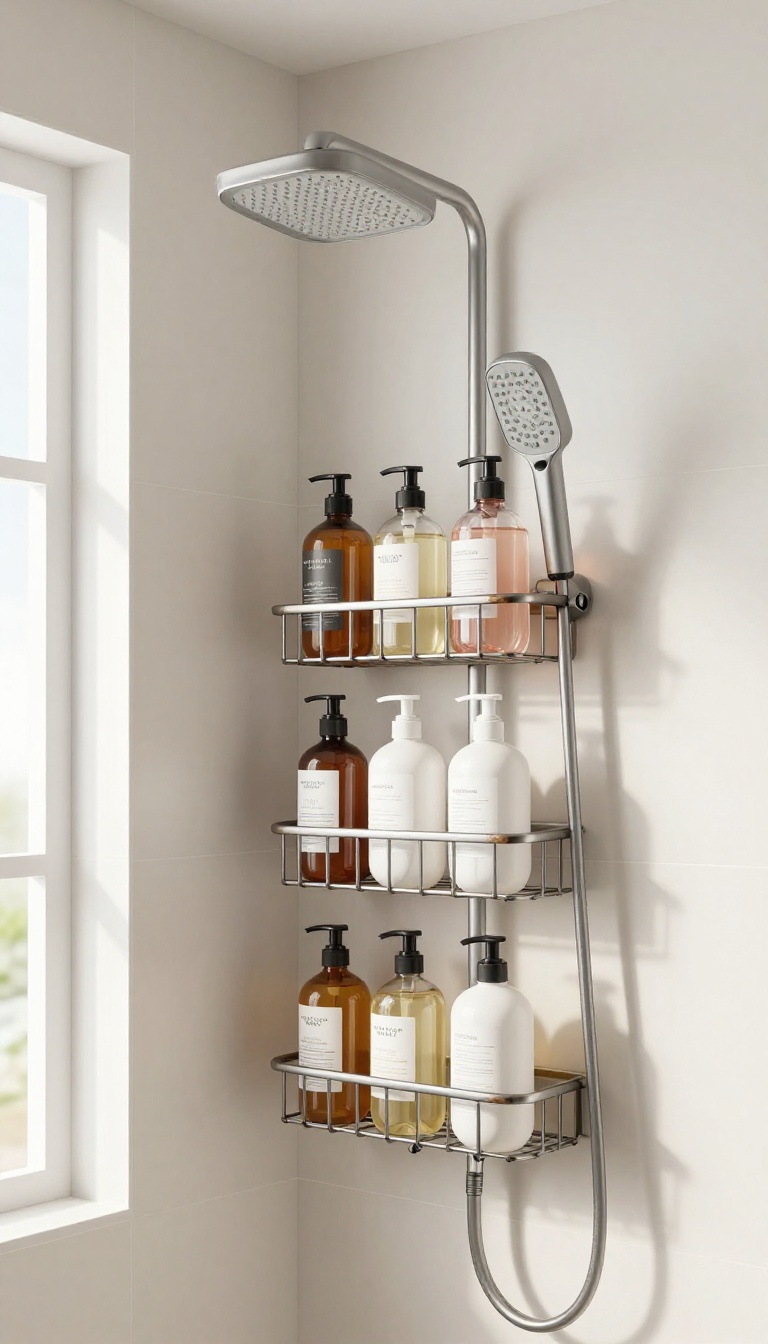
If you're renting or just hate the idea of drilling into tile, an over-the-showerhead rack is a lifesaver. It hooks right onto your existing showerhead arm, giving you instant shelf space without any permanent changes. This is one of those solutions that takes about two minutes to install and works in almost any shower.
These racks typically feature a metal basket or a few tiers that sit above the showerhead, keeping bottles within easy reach. Because they hang, they don't take up any floor or corner space, which is perfect for compact bathrooms. Plus, they're easy to remove for cleaning or when you move out.
Why It Works So Well
The key advantage is the zero-install factor. You simply slip the hook over the showerhead arm and adjust it so it's level. Most models have a rubber or plastic coating on the hook to protect your fixture and prevent slipping.
It also puts your shampoo at eye level, so you don't have to bend down or reach awkwardly.
What To Look For
When shopping, check the weight capacity—some are flimsy and can sag under heavy bottles. Look for rust-resistant materials like stainless steel or coated aluminum. Also, consider the size of your showerhead; a large rainfall head might block the rack, so measure the space first.
A Quick Styling Tip
To keep it looking tidy, use matching bottles or transfer your shampoo into pump dispensers. This not only looks better but also makes it easier to grab what you need. If you have a handheld showerhead, make sure the rack doesn't interfere with the hose.
3. Tension Pole Shower Caddy for Renters
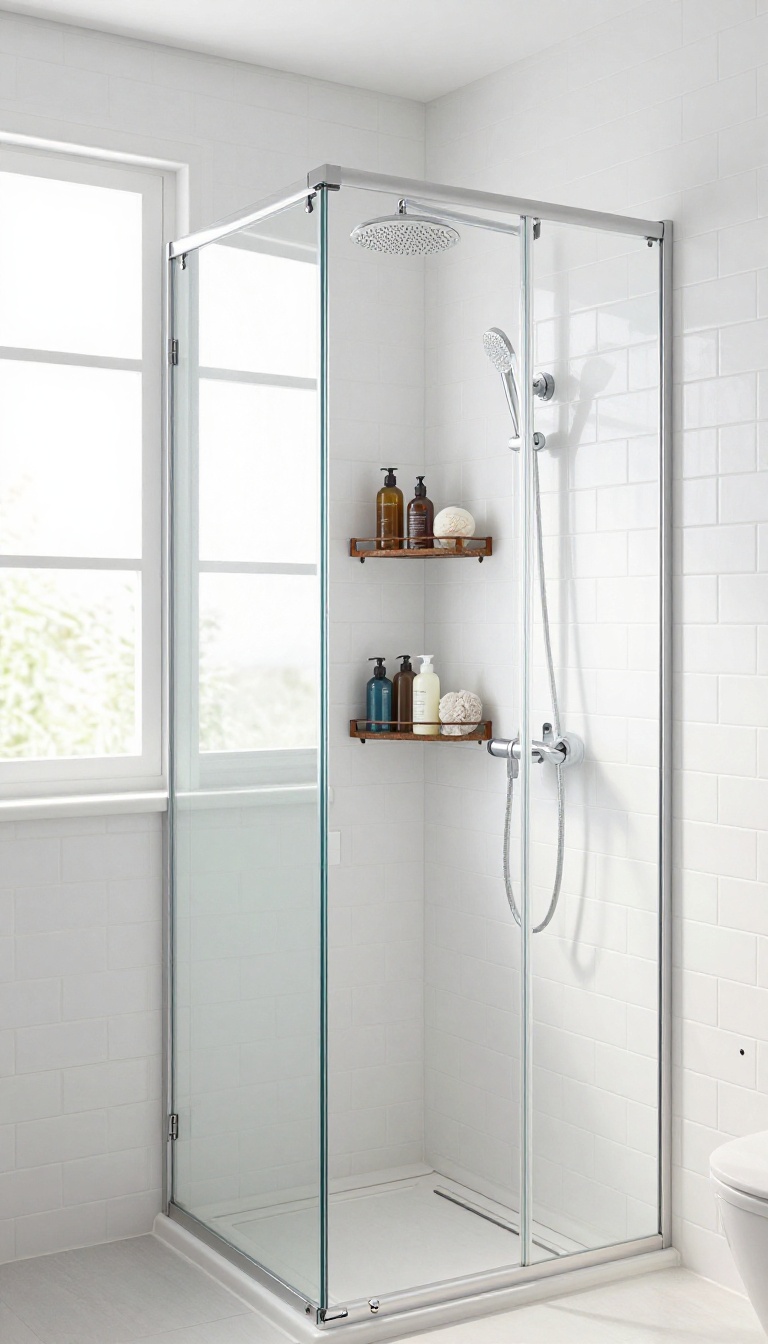
Renting often means living with boring, builder-grade showers and a strict no-drilling policy. A tension pole caddy sidesteps all that by wedging between the floor and ceiling, giving you sturdy shelves without a single screw. It’s a smart pick for anyone who wants extra storage but can’t commit to permanent changes.
Tension pole caddies are the chameleons of shower storage. They adapt to your space, hold a surprising amount of gear, and come down without a trace when it’s time to move. Here’s how to make the most of one, plus a few things to watch out for.
Why It Works For Renters
The biggest selling point is the zero-damage install. You just twist the pole to lock it between the floor and ceiling, and it stays put. No holes, no patchwork, no lost security deposit.
It also uses vertical space that usually goes to waste, which is perfect for small showers with no real shelf.
What To Look For
Not all tension caddies are created equal. Look for rust-proof materials like aluminum or coated steel, and check that the shelves have drainage holes so water doesn’t pool. Adjustable shelves are a must—they let you fit tall bottles and short jars without wasting space.
Also, measure your shower height before buying; most poles extend, but you need the right range.
Setup And Safety Tips
Installation takes about five minutes. Extend the pole until it’s snug, then give it a firm tug to make sure it’s locked. Avoid overloading the top shelf, and keep heavier bottles lower to maintain balance.
If your ceiling is textured or uneven, add a rubber pad or grip tape for extra stability. Check the tension every few weeks, especially in humid conditions where things can loosen slightly.
4. Adhesive Shelf for Tile and Glass
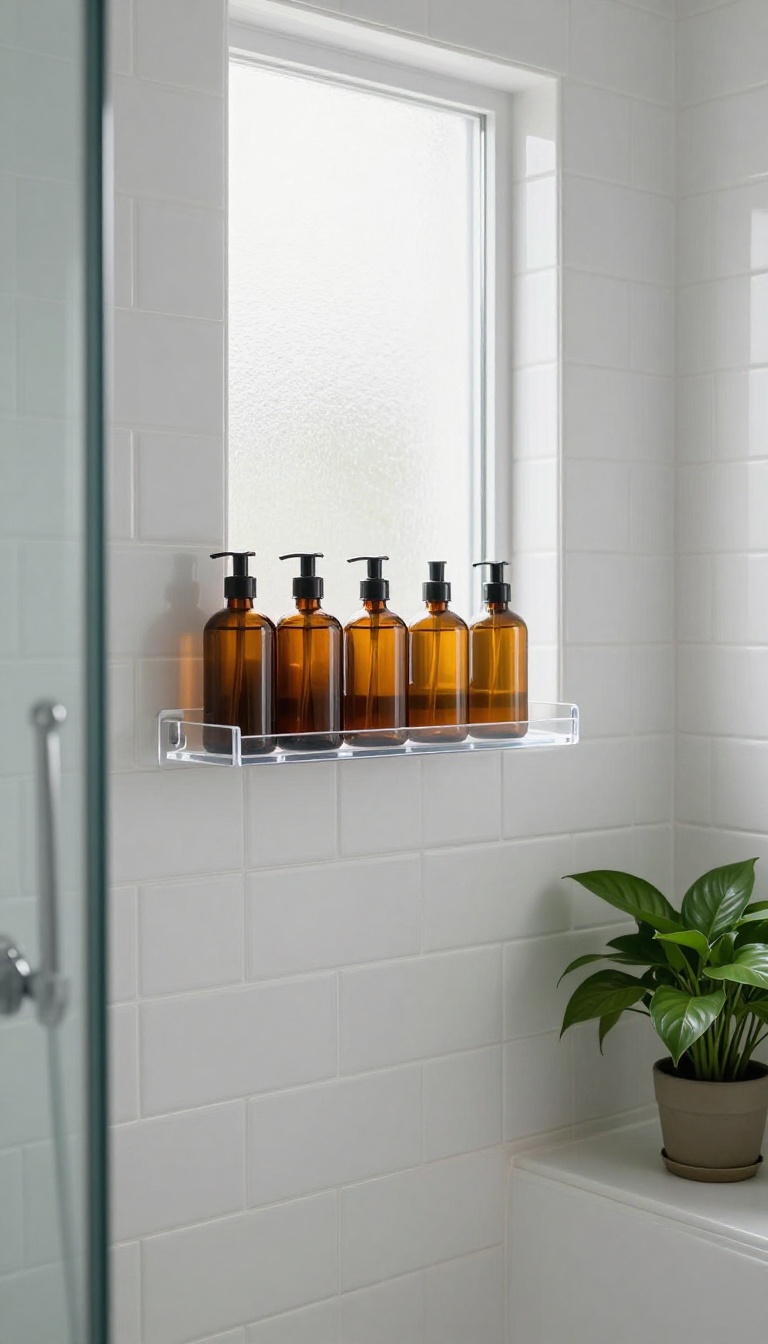
If you're dealing with smooth tile or a glass shower door, adhesive shelves offer a clean, floating solution. They stick on in minutes without any drilling, so they're perfect for renters or anyone who wants to avoid permanent changes. Just make sure your surface is clean and dry before you press them on.
Adhesive shelves have come a long way. The best ones now hold a surprising amount of weight, thanks to strong bonding strips or heavy-duty glue. You can find them in clear acrylic, sleek metal, or even bamboo, so they blend in without looking bulky.
The key is to install them correctly and give the adhesive time to cure before loading them up with bottles.
Choosing The Right Adhesive
Look for shelves that use 3M VHB tape or similar high-strength adhesive. These are the ones designed for wet areas and can handle the humidity. Avoid cheap suction cups or light-duty sticky pads—they'll give up after a few showers.
Check the weight rating and always follow the manufacturer's instructions for surface prep.
Placement Tips
Place the shelf at a height where you can easily reach your shampoo and body wash. A corner spot can work well, but you'll need a corner-specific adhesive shelf. If you're putting it on a glass door, make sure it doesn't interfere with the door's swing or the track.
And always leave a little gap between bottles so they don't block each other.
Installation Steps
Start by cleaning the tile or glass with rubbing alcohol to remove any soap scum or residue. Dry it completely. Peel off the backing, press the shelf firmly into place, and hold it for about 30 seconds.
Then wait at least 24 hours before putting anything on it. This gives the adhesive time to bond properly and ensures a secure hold.
Maintenance And Removal
To clean the shelf, just wipe it down with a mild cleaner. Avoid abrasive pads that could scratch the surface. If you ever need to remove it, use a hairdryer to warm the adhesive, then gently pry it off with a thin tool.
Any leftover residue can be rubbed away with a little oil or adhesive remover.
5. Recessed Niche for a Built-In Look
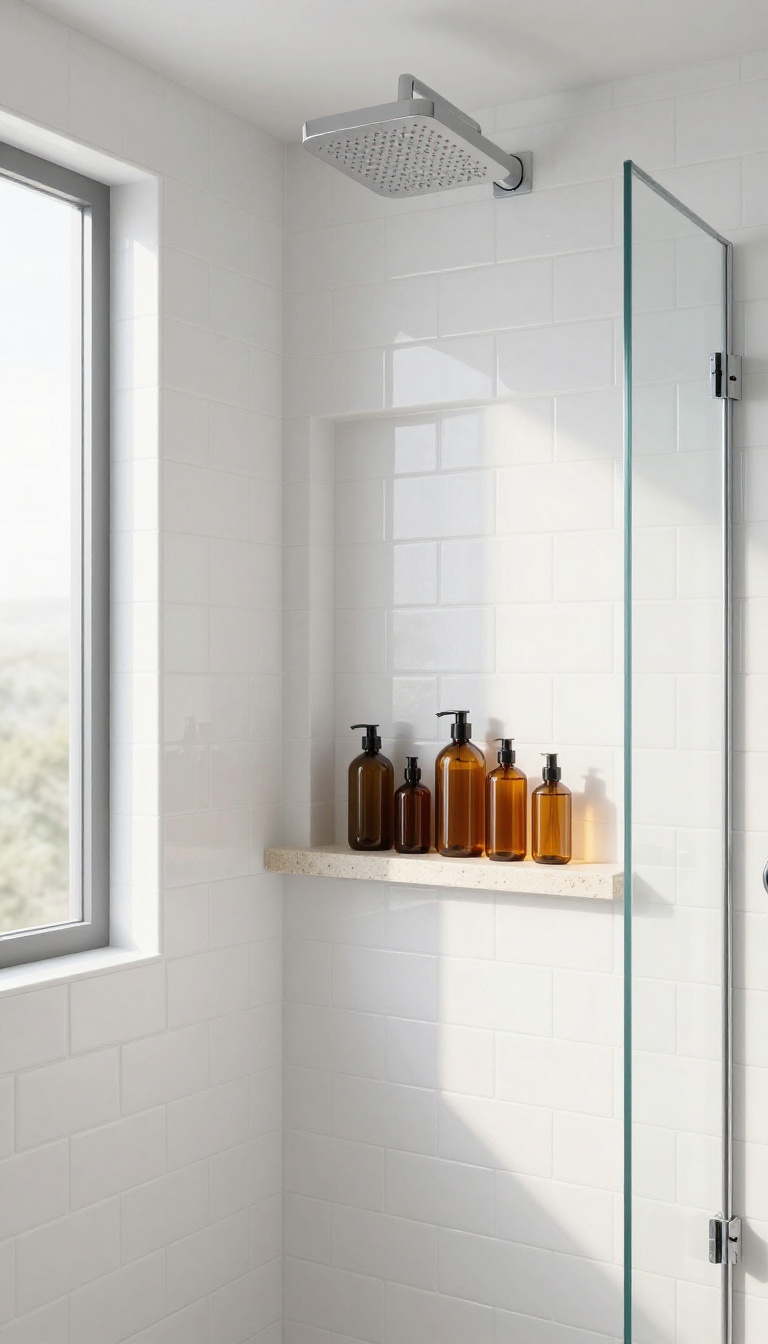
If you're planning a bathroom remodel or just love the idea of seamless storage, a recessed niche is the gold standard. It’s cut directly into the wall, creating a built-in shelf that holds your shampoo bottles without sticking out. This isn’t just practical—it adds a touch of custom luxury that makes your shower feel more polished.
A recessed niche gives you a permanent spot for your shower essentials, blending perfectly with the tile. Because it’s set into the wall, you don’t lose any precious elbow room, and there are no edges to catch grime. It’s a solution that works beautifully in new builds or major renovations, but with the right contractor, you can add one to an existing shower too.
Why Choose A Recessed Niche?
The biggest win here is the clean, integrated look. Unlike shelves that stick out, a niche sits flush, so your shower feels more open and less cluttered. It’s also incredibly sturdy—no brackets to loosen or adhesive to fail.
Once it’s tiled and sealed, it’s as permanent as the wall itself.
Where To Place It
Think about your routine. Place the niche at chest or shoulder height on the wall opposite the showerhead, so it’s easy to reach but not constantly sprayed. If you have a bench, a lower niche nearby works well for foot scrubs or larger bottles.
Just avoid putting it where water might pool or where the door swing could block access.
Sizing And Tiling Tips
Aim for a niche that’s at least 12 inches tall and 12 inches wide to fit standard shampoo bottles. If you use big pump bottles, go taller—maybe 18 inches. When tiling, slope the base slightly toward the shower floor so water doesn’t sit inside.
Choose tile that matches your shower wall for a truly built-in feel, or use a contrasting color to make it a design feature.
Can You Add One Without A Full Remodel?
Yes, but it requires cutting into the wall and moving insulation or wiring, so it’s not a simple DIY. A pro can usually retrofit a niche in a day, but you’ll need to retile the surrounding area. If you’re not ready for that, consider a prefab niche insert that gets installed during a shower re-tile.
It’s a smart investment if you plan to stay in your home for years.
6. Over-the-Door Organizer for Extra Storage
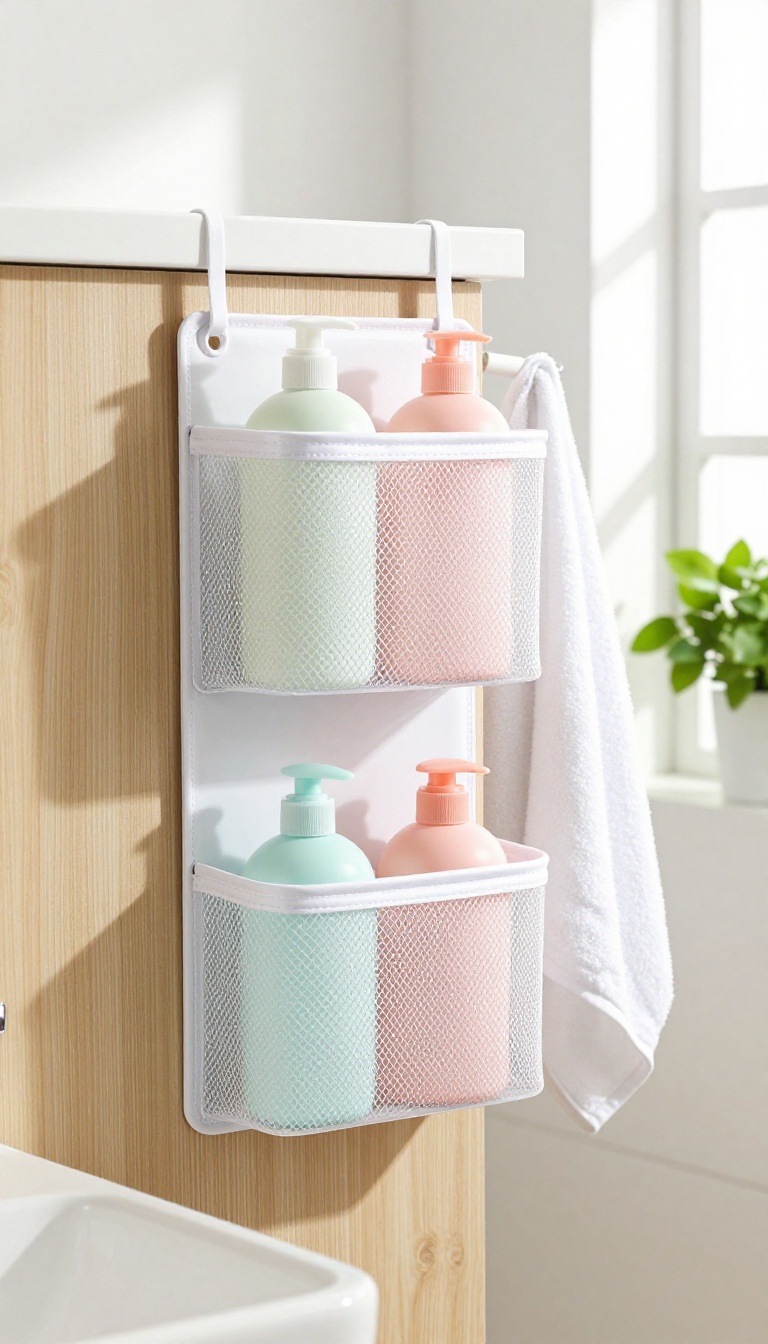
When the shower itself is packed but you have a door nearby, an over-the-door organizer turns that blank surface into a storage powerhouse. It’s a clever way to keep bottles off the floor and within easy reach, especially if you’re short on shelf space.
Over-the-door organizers come in many styles, from clear plastic pockets to mesh or metal baskets. You can hang one on the bathroom door to store backup bottles, or on the shower door if you have one. The key is to pick a design that lets water drain and doesn’t block the door’s swing.
Choose The Right Style
Look for an organizer with deep pockets or baskets that can hold tall shampoo bottles without tipping. Mesh or wire versions allow air circulation, which prevents mold and mildew. Clear plastic is easy to see through, but it can look cluttered if you don’t keep it tidy.
Installation Tips
Most over-the-door organizers hook over the top edge, so they’re renter-friendly and require no tools. For a shower door, make sure the hooks fit the door’s thickness and won’t scratch the glass. If the organizer swings too much, add adhesive hooks at the bottom to keep it stable.
Maximize Accessibility
Hang the organizer on the side of the door that opens away from the shower, so it’s easy to grab what you need without getting wet. Use the top pockets for daily-use items and lower ones for backups or less frequently used products.
7. Rustic Wooden Ladder Shelf
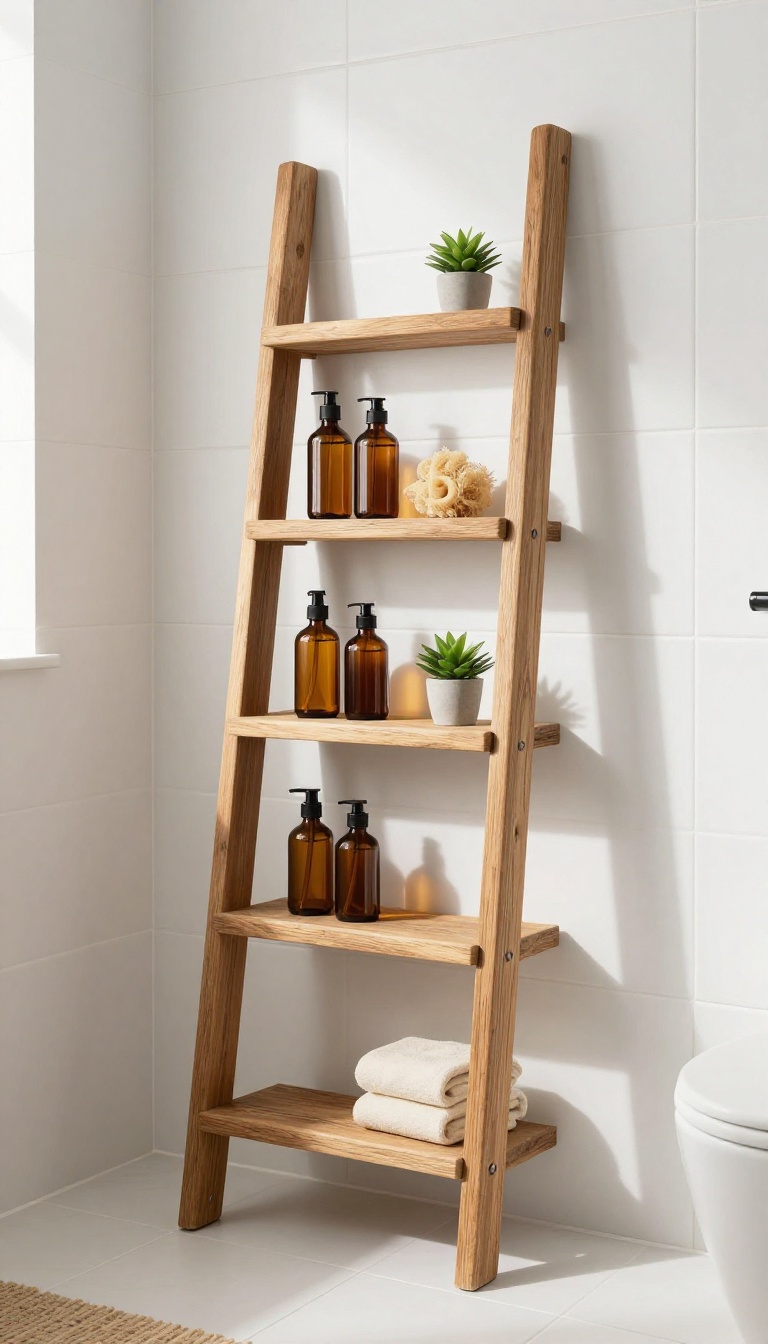
A wooden ladder leaning against the shower wall brings a cozy, rustic feel while giving you multiple shelves for all your hair care essentials. It turns an ordinary corner into a charming display spot that’s as practical as it is pretty.
If you’re tired of bottles cluttering the floor or crowding a tiny corner caddy, a ladder shelf offers a vertical solution that feels warm and inviting. It’s perfect for anyone who loves a farmhouse or cabin-inspired bathroom, and it works especially well in larger showers with unused wall space. The open rungs let water drain away, so you don’t have to worry about puddles or mildew.
Plus, you can style it with your favorite products, a small plant, or a natural loofah to make the shower feel more like a spa retreat.
Why A Ladder Works In The Shower
Ladders lean against the wall without taking up much floor space, and the slanted design keeps bottles within easy reach. The gaps between rungs allow air to circulate, which helps prevent soap scum and mold from building up. You can also adjust the angle to fit snugly in a corner or along a flat wall, making it a flexible option for various shower layouts.
Choosing The Right Wood And Finish
Not all wood is safe for a wet environment. Look for naturally water-resistant options like teak or cedar, which handle humidity without warping. If you prefer a lighter look, bamboo is another eco-friendly choice that resists moisture well.
Whichever wood you pick, apply a waterproof sealant or outdoor varnish to protect it from daily splashes. That extra coat keeps the ladder looking fresh for years.
Styling And Organizing Your Products
Use the wider bottom rungs for heavy bottles like shampoo and conditioner, and reserve the higher rungs for lighter items like face wash or hair masks. Add a small basket on one of the lower steps to corral smaller tubes and jars, so nothing slips through. You can also hang a loofah or shower puff from a hook on the side for easy access.
Keep the ladder uncluttered—just a few key products—to maintain that airy, rustic vibe.
Installation And Safety Tips
You don’t need to drill into tile or glass—just lean the ladder securely against the wall, making sure it’s stable. For extra safety, attach non-slip rubber pads to the bottom legs to prevent sliding on wet floors. If your shower is small, choose a narrower ladder that fits comfortably without blocking the door or your movement.
Always check that the ladder is firmly in place before stepping in, especially if you have kids or pets around.
8. Magnetic Strip for Metal Shower Walls
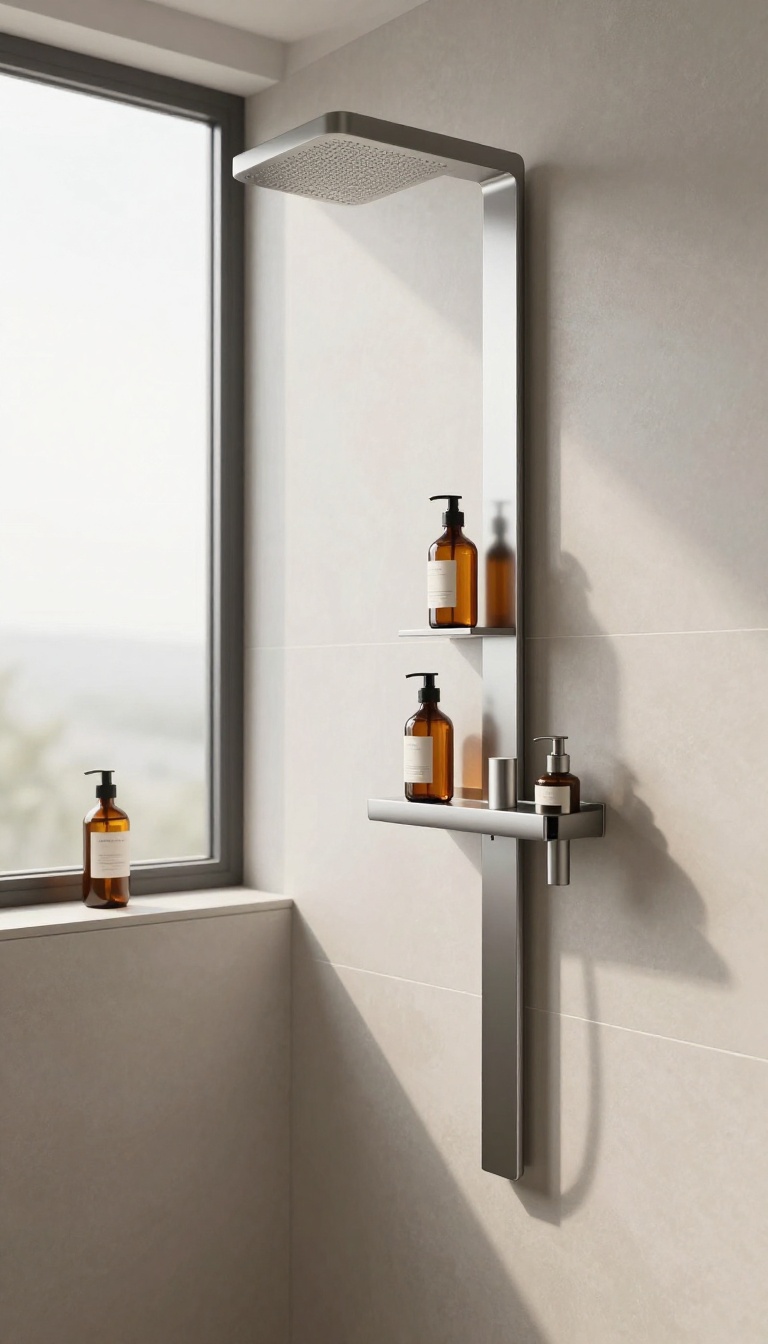
Metal shower walls are rare, but if you have them, you’ve got a secret weapon: magnets. A simple magnetic strip can turn that flat surface into a flexible storage zone without any drilling or sticky residue. It’s a clean, modern look that keeps bottles off the floor and within easy reach.
Magnetic strips work best with metal bottles or containers, so you might need to transfer your shampoo into metal pump bottles or use magnetic hooks to hold plastic ones. The key is placement—high enough to avoid splashes but low enough for comfortable access. You can also cut the strip to fit your space, making it a truly custom solution.
Why Magnetic Strips Work
Unlike adhesive shelves, magnetic strips don’t rely on sticky backing that can fail in humid conditions. They hold firm on metal surfaces, and you can rearrange items instantly. Plus, they take up zero visual space, making your shower feel open and airy.
Choosing The Right Strip
Look for a magnetic strip with strong neodymium magnets and a rust-resistant coating. You can buy adhesive-backed strips and attach them directly to the wall, or opt for a screw-in version for a more permanent hold. Measure your wall space first to get the right length.
Styling And Organization Tips
Group bottles by frequency of use—daily shampoos at the front, occasional treatments behind. Add a few magnetic hooks for loofahs or razors. For a cohesive look, use matching metal bottles or stick to a simple color palette.
The strip itself can be painted to match your walls if you want it to blend in.
9. Hanging Basket with Suction Cups
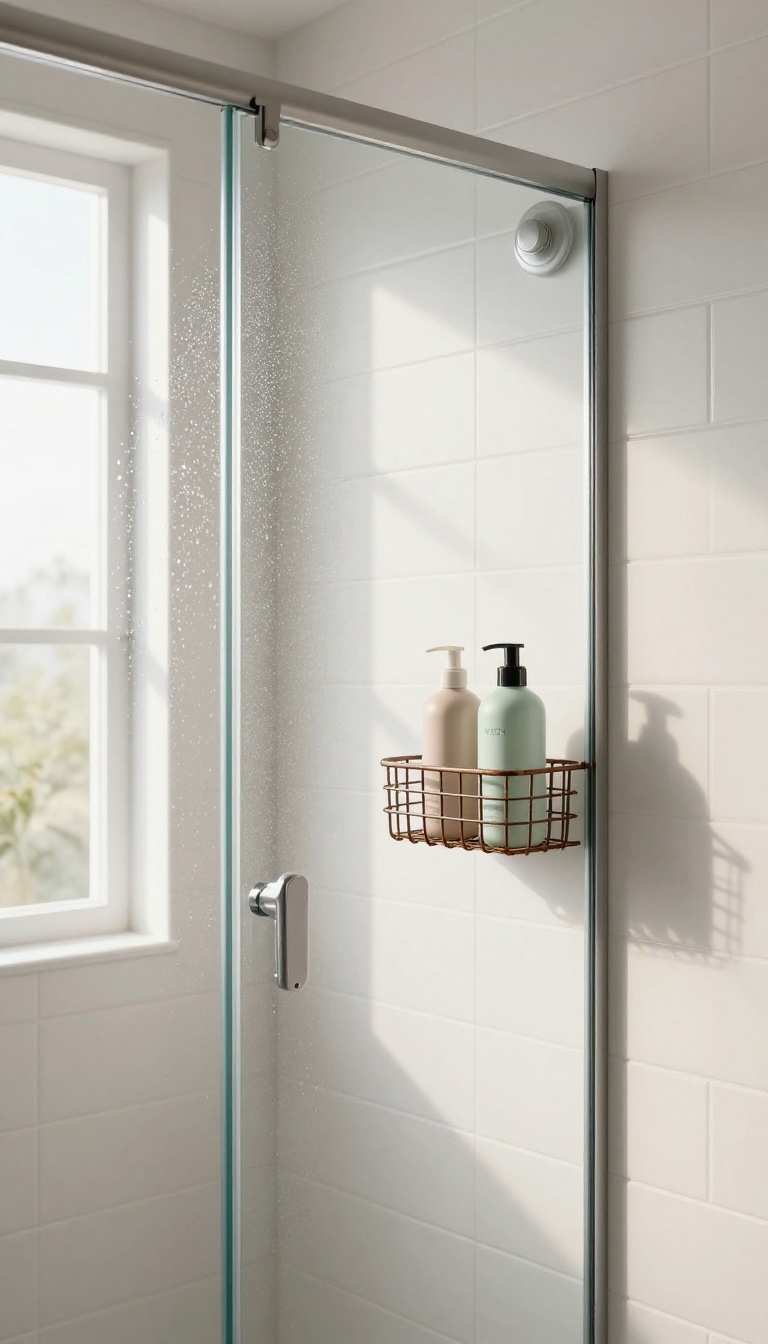
A wire basket with suction cups is a clever way to add storage without drilling holes. It hangs right on the tile or glass, giving you a spot for bottles that drains and dries quickly. This option works especially well if you're renting or simply want a temporary fix that doesn't damage the walls.
The beauty of a suction-cup basket lies in its simplicity. You just press it onto a clean, smooth surface, and it's ready to use. The open wire design lets water drip through, so shampoo bottles don't sit in puddles.
Plus, it's easy to remove and reposition whenever you need.
Why Choose A Wire Basket?
Wire baskets are lightweight and breathable, which means less mold and mildew compared to solid shelves. They also offer a clear view of your products, so you can grab the right bottle without hunting around. And because they hang, they free up valuable corner or floor space.
Where To Place It
The best spot is on a flat, smooth wall away from the direct stream of water. Place it at arm's reach, typically around shoulder height, so you can easily access your shampoo and conditioner. If you have a glass shower door, you can even mount it on the inside for a space-saving trick.
Getting A Strong Hold
To ensure the suction cups stay put, clean the surface thoroughly before attaching them. Rub a little water or oil on the cup's rim to create a better seal. Press firmly and give it a few hours to set before loading it up.
Check the weight limit—most baskets hold a few pounds, so stick to standard bottles.
Styling And Maintenance
Choose a basket with a rust-resistant coating, like stainless steel or plastic-covered wire, to withstand the humid shower environment. To keep it looking fresh, wipe it down occasionally and give it a shake to remove any trapped hair or debris. You can also add small hooks underneath for hanging loofahs or razors.
10. DIY PVC Pipe Shelf for a Custom Fit
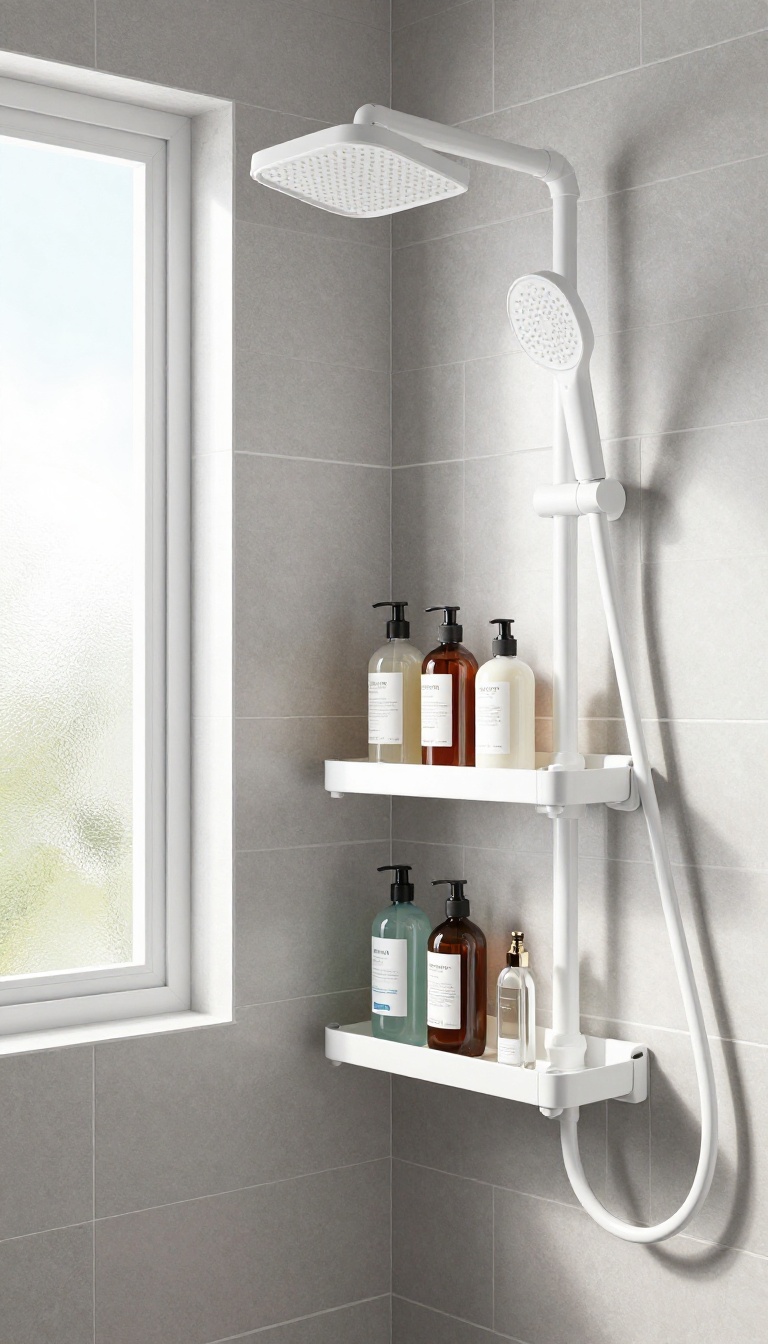
Standard shelves rarely hug the odd angles of a shower. If you have a tight corner or a sloped ceiling, a PVC pipe shelf lets you build storage that fits like it was made for the space—because it was. This project is surprisingly simple, and the result looks far more intentional than the plastic parts suggest.
Cutting PVC pipe to length is the only real skill you need. You can piece together a shelf that wraps around a corner, spans a narrow gap, or stacks vertically to use every inch of wasted wall. The open design lets water drain away, so you won't have to deal with puddles or mildew.
Why Pvc Works So Well In A Shower
PVC is naturally waterproof and won't rust, warp, or rot. It's also lightweight, so mounting it is easy, and you can paint it to match your tile or trim. Plus, it's cheap—you can build the whole shelf for under $20, which makes it a perfect weekend project.
How To Build Your Own Corner Unit
Measure the corner you want to fill, then cut four PVC pipes to that length. Connect them with elbow joints to form a square frame, and add a bottom piece of PVC board or a plastic cutting mat for the base. Attach the frame to the wall with adhesive hooks or small brackets, and you're done.
Customizing For Bottles Of Every Size
You can space the pipes closer together for tall bottles or leave gaps for pump tops. If you want two tiers, just build a second frame and stack it on top. Add rubber feet to the bottom so the shelf doesn't slide, and you have a stable, personalized storage solution.
11. Over-the-Toilet Shelf for Bathroom Storage
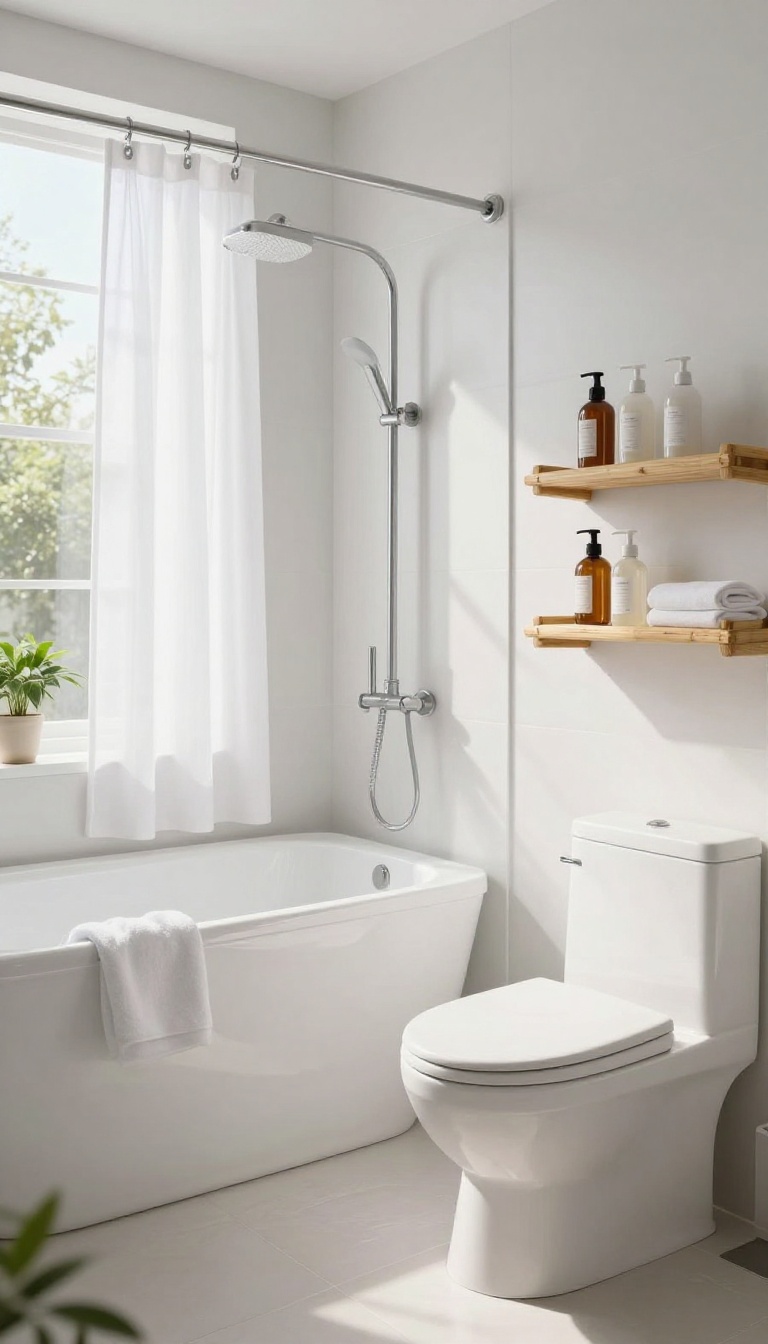
When the shower is cramped but the bathroom has a little breathing room, the space above the toilet often goes unused. An over-the-toilet shelf turns that dead zone into a convenient staging area for shampoo, conditioner, and other bath essentials. You can reach them easily from the tub or shower, and you free up valuable ledge space inside.
The key is to keep everything within arm's reach without turning your bathroom into a cluttered mess. Choose a shelf that matches your bathroom's style and size, and arrange items so they're easy to grab when you're dripping wet. With a few smart touches, this setup feels intentional rather than like a storage afterthought.
Why It Works
An over-the-toilet shelf takes advantage of vertical space that's usually wasted. It keeps bottles off the shower floor and out of the way, yet still close enough to grab without stepping out of the tub. Plus, it's a renter-friendly solution since most units are freestanding and require no drilling.
Choosing The Right Shelf
Look for a shelf that fits your toilet's dimensions and doesn't interfere with the tank lid or flush handle. Materials matter too: bamboo or teak add warmth and resist moisture, while metal or tempered glass offer a modern look. Consider how many bottles you need to store and whether you want extra hooks for loofahs or washcloths.
Styling And Organization Tips
Group shampoos and conditioners together on one level, and keep everyday items at waist height for easy access. Use small baskets or trays to corral smaller bottles and prevent them from tipping over. Add a decorative touch with a small plant or a rolled towel, but don't overcrowd the space.
12. Shower Curtain Pocket Organizer
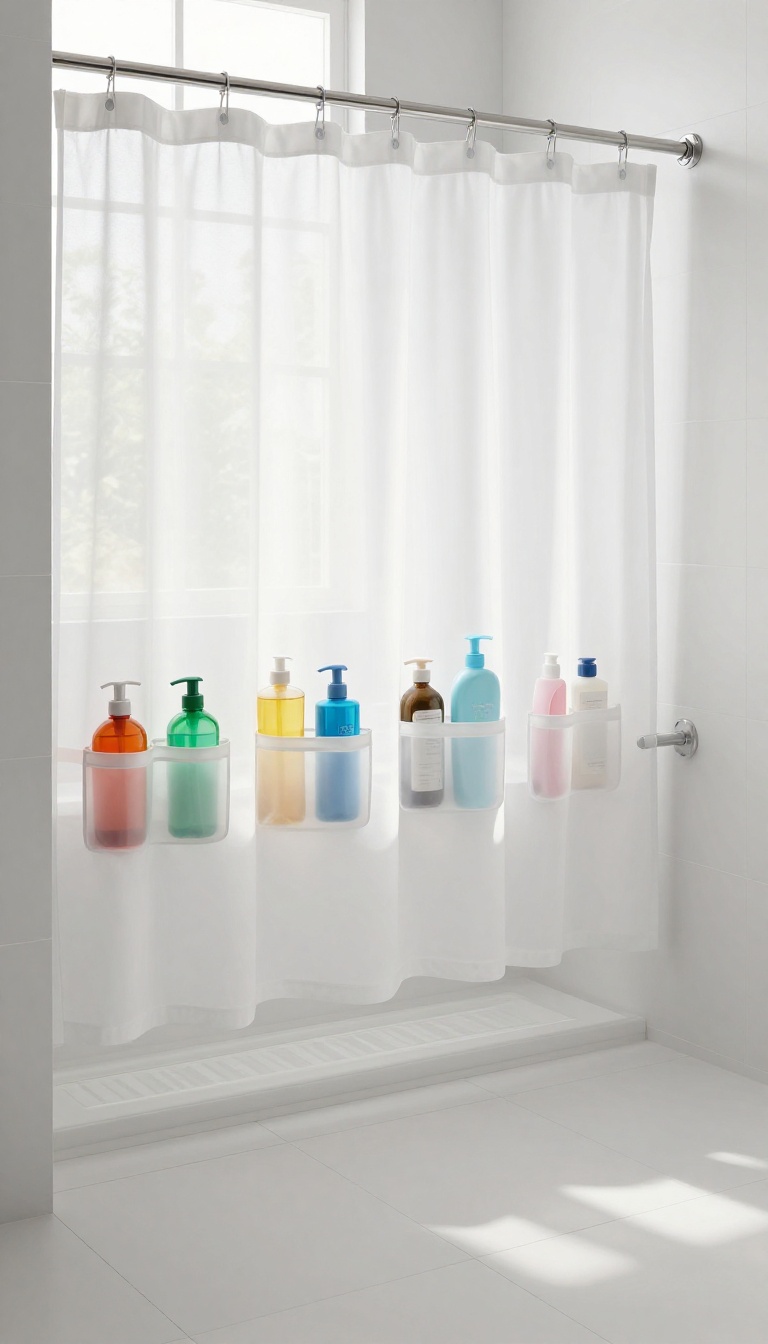
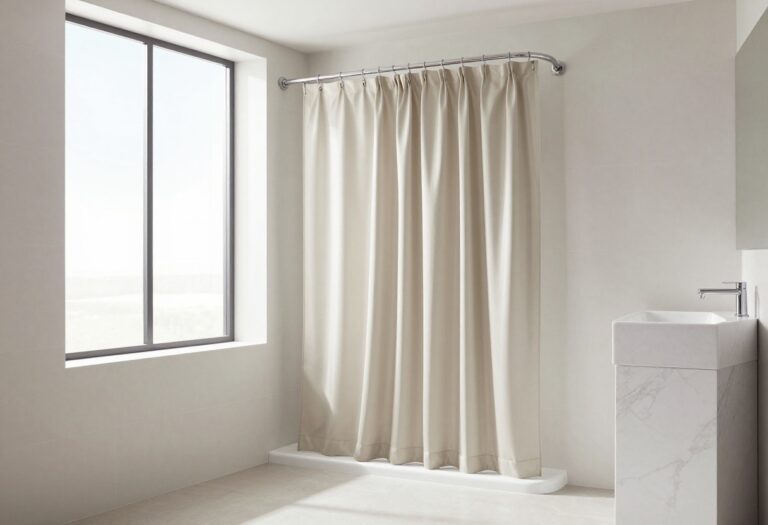
If your shower curtain rod is already doing its job, why not make the curtain work harder too? A shower curtain with built-in pockets—or an add-on pocket panel—turns the entire curtain into vertical storage. It's a clever way to keep bottles within arm's reach without sacrificing any floor space or drilling into tile.
This setup is especially handy for small showers where every inch counts. You can stash your shampoo, conditioner, and body wash in separate pockets, so you never have to fumble around looking for the right bottle. Plus, the pockets naturally drain and dry faster than a closed caddy, which helps prevent soap scum and mildew.
Why It Works
Unlike shelves or caddies that take up visual and physical space, a pocket curtain uses an area that's already there. It keeps the shower floor clear and makes cleaning easier—just wipe the curtain or toss it in the wash if it's machine-safe. For renters, it's a non-invasive option that leaves no holes behind.
What To Look For
When shopping, check the pocket size and depth—some are too shallow for tall bottles. Look for water-resistant materials like PEVA or polyester with rustproof grommets. If you prefer a regular curtain, you can buy a separate pocket organizer that hangs over the rod or attaches with hooks.
Placement Tips
Hang the curtain so the pockets sit at a height you can easily reach. If you're using an add-on, position it on the inside of the tub or shower to keep water from pooling in the pockets. Keep heavier bottles in lower pockets to prevent the curtain from pulling or sagging.
13. Floating Shelves for a Modern Look
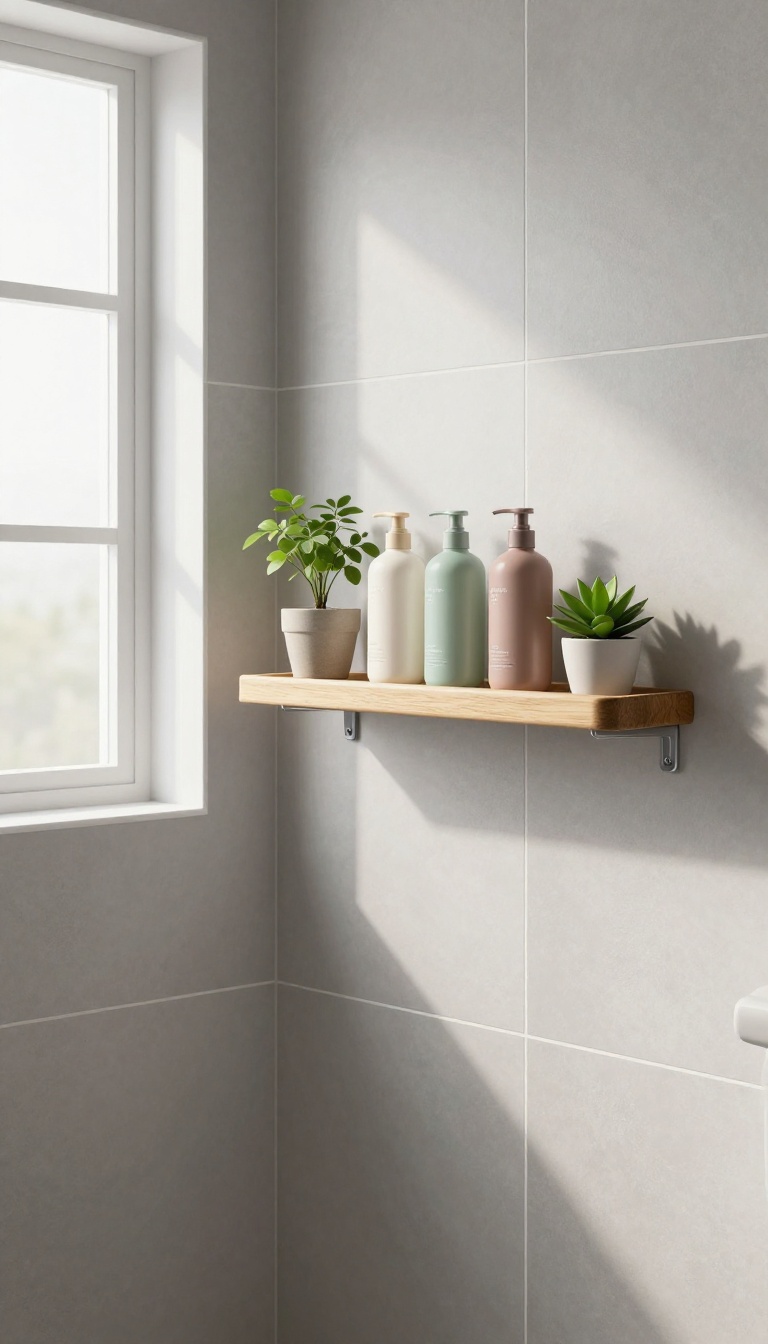
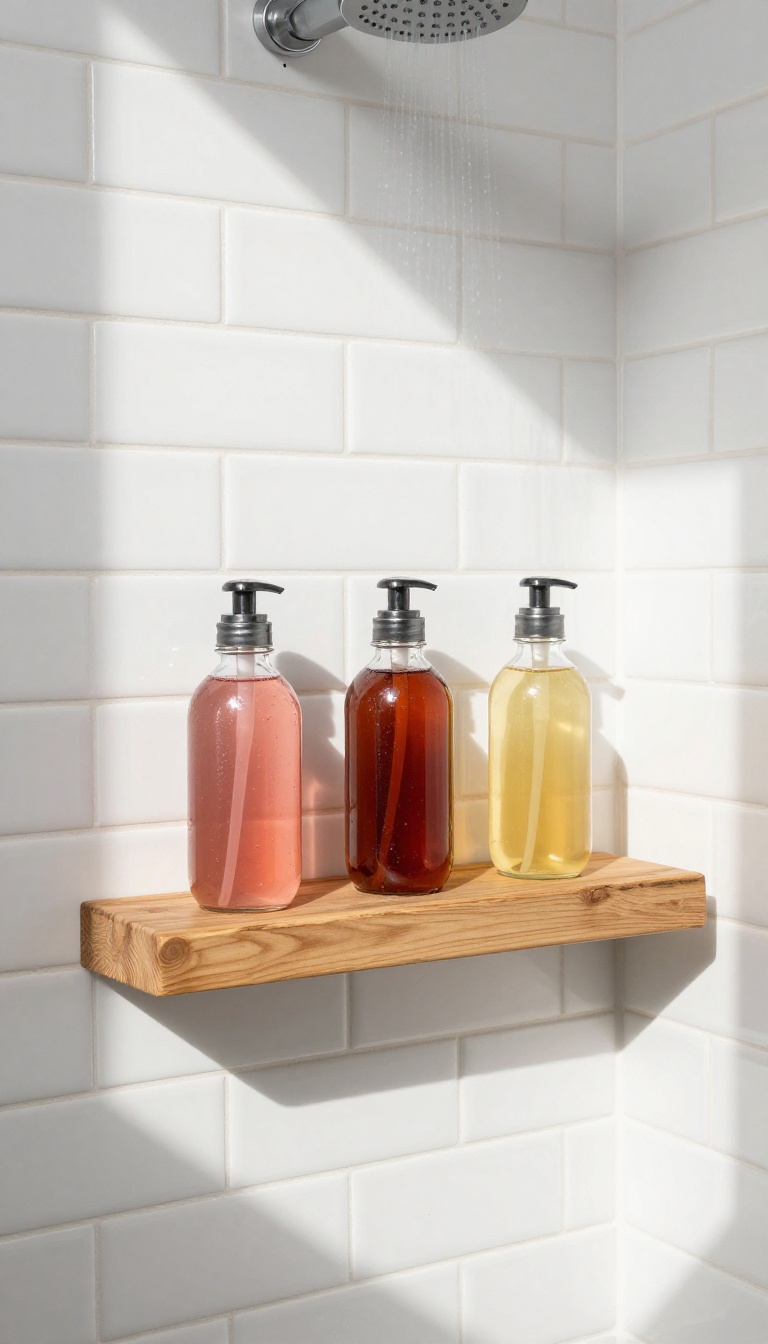
Floating shelves aren't just for living rooms. Mounted on a shower wall, they offer a clean, minimalist look that feels custom and uncluttered. Unlike bulky corner caddies or tension rods, floating shelves sit flush against the tile, creating a sleek line that complements modern bathrooms.
They also handle weight better than most adhesive options. Solid wood or sealed MDF can easily hold large shampoo bottles and heavy conditioners without bowing. If you're ready to drill into tile or waterproof backer board, this is a sturdy, long-term solution that transforms your shower into a spa-like space.
Floating shelves give you a place for everything without the visual noise of metal racks. The key is choosing the right material and installation method for your shower's surface. Sealed teak or bamboo add warmth, while glass or acrylic keep things feeling airy.
For a truly modern look, go with a thick, floating wood shelf that contrasts with light tile, or a slim glass shelf that disappears. Installation is the main consideration. You'll need to drill into tile or grout, which can be intimidating if you're a renter or not handy.
But if you own your place or are willing to patch holes later, the payoff is huge. Use a diamond-tipped bit for tile and anchors rated for wet areas. Always check for pipes or wires before drilling—a stud finder is your friend.
Once up, floating shelves make organizing easy. Group daily-use bottles at waist height, and reserve higher shelves for backups or items you rarely reach. Add a small caddy or tray to keep soap and razors from rolling off.
The open design means you can see everything at a glance, so you'll never fumble for the right bottle mid-shampoo.
Choosing The Right Material
Your shelf material needs to handle constant moisture. Untreated wood will warp and grow mold, so go with teak, bamboo, or heat-treated pine that's sealed for wet areas. Glass or acrylic shelves are waterproof and easy to wipe down, but they can look streaky with hard water.
Stainless steel or aluminum are durable and modern, but they may feel cold. Think about your shower's existing finishes—warm woods pair well with earthy tiles, while metals match chrome or brushed nickel fixtures.
Installation Tips For Tile And Grout
Drilling into tile is nerve-wracking but doable. Start with a carbide or diamond-tipped bit and use painter's tape to prevent slipping. Drill slowly, keep water on the bit to cool it, and go through the glazed layer before increasing speed.
For grout lines, a standard masonry bit works. Once the hole is clean, insert a waterproof anchor (like a plastic or nylon toggle) and screw in the bracket. Make sure the shelf is level and can support the weight of your bottles—test it with a gentle tug before loading it up.
Styling And Organizing Your Shelves
Floating shelves look best when they're not overcrowded. Keep only your daily essentials within easy reach—shampoo, conditioner, body wash. Use matching pump bottles or decanters for a uniform, spa-like vibe.
For smaller items like razors or loofahs, place them in a shallow tray or a small suction-cup holder attached to the shelf's side. Leave a little breathing room between products so the shelf feels intentional, not cluttered. If you have a double shelf, use the lower one for heavy bottles and the upper for lighter items like face wash or hair masks.
14. Bamboo Teak Wood Caddy for Spa Vibes
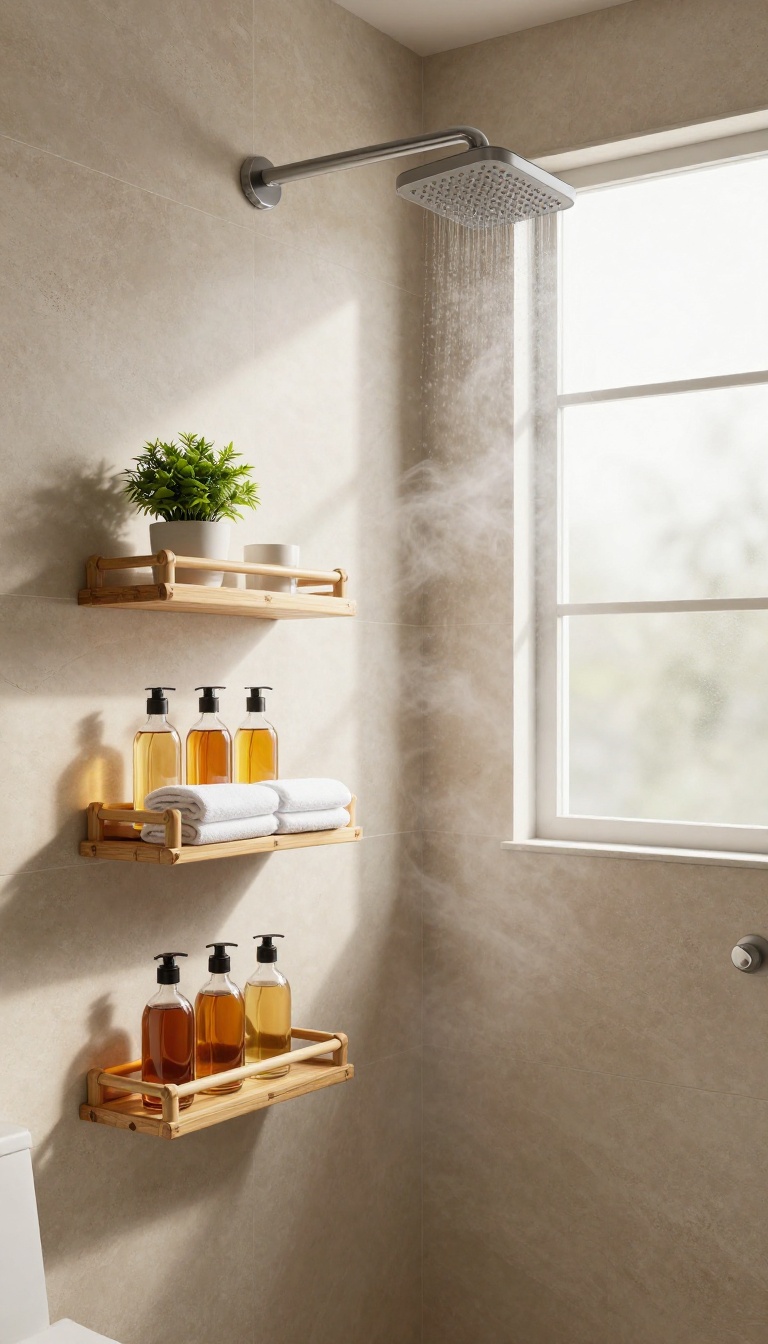
If your shower feels more like a utility closet than a retreat, a bamboo or teak wood caddy can shift the mood instantly. These natural materials bring warmth and an organic texture that plastic just can't match. They also happen to be tough enough for wet environments, making them a smart swap for your usual shower storage.
A bamboo or teak wood caddy is a simple upgrade that does double duty: it keeps your bottles within reach and adds a spa-like aesthetic to your daily routine. Unlike metal or plastic, wood doesn't look out of place next to natural stone or earthy tiles. Plus, both bamboo and teak are naturally water-resistant, so they can handle the humidity without warping or rotting—as long as you give them a little care now and then.
Why Bamboo And Teak Work So Well
Bamboo is actually a grass, and it grows fast, making it an eco-friendly choice. It's dense and less prone to absorbing water than many hardwoods. Teak, on the other hand, contains natural oils that repel moisture and resist mildew, which is why it's a classic for boat decks.
Both materials are naturally slip-resistant when wet, so your bottles stay put even when things get soapy.
Picking The Right Size And Style
Before you buy, measure your shower floor or corner to make sure the caddy fits comfortably. Look for models with raised edges or a slight lip to keep bottles from sliding off. Some caddies come with a built-in soap dish or a small shelf for a loofah, which can be handy.
If you have a corner shower, a triangular caddy might maximize the space better than a rectangular one.
Caring For Your Wooden Caddy
To keep your caddy looking fresh, rinse it occasionally and let it air dry outside the shower. Every few months, rub a thin coat of mineral oil or a teak sealer into the wood to maintain its color and water resistance. Avoid leaving it submerged in standing water, and don't use harsh chemical cleaners—just a mild soap and water solution works fine.
15. Repurposed Mason Jar Rack
Mason jars have a rustic charm that fits right into a farmhouse-style bathroom, but they're also just practical. By mounting them to a wooden board or a metal rack, you create a sturdy, visible storage spot for small bottles, travel sizes, and even cotton swabs. This DIY project is budget-friendly and can be customized to match your shower's vibe.
Why Mason Jars Work In The Shower
Mason jars are thick, durable, and water-resistant, making them ideal for damp environments. Their wide mouths let you grab bottles easily, and the clear glass means you can see exactly what's inside without fumbling. Plus, they add a warm, handmade touch that plastic caddies just don't have.
How To Build Your Own Rack
Start with a piece of untreated wood that's been sealed with waterproof varnish, or use a metal rack with pre-drilled holes. Attach mason jar lids to the underside of the board using screws or strong adhesive, then screw the jars into the lids. Mount the whole thing on the shower wall with rust-proof brackets, making sure it's level and secure.
Placement And Safety Tips
Position the rack where it won't interfere with your showering movements, like on a side wall or near the back. Keep heavier bottles in lower jars to avoid strain on the mounts. Check the seals occasionally to prevent leaks, and always use jars without cracks to avoid accidents.
FAQ
What is the best material for a shower shampoo holder?
Stainless steel, aluminum, and plastic are common. For a natural look, bamboo or teak are great, but they need proper sealing to resist moisture.
How do I prevent rust on metal shower caddies?
Choose rust-resistant materials like stainless steel or coated finishes. Rinse the caddy occasionally and dry it to extend its life.
Can I install a shampoo holder without drilling?
Yes, many options like tension pole caddies, adhesive shelves, and over-the-door organizers require no drilling and are renter-friendly.
How do I clean a shampoo holder?
Most holders can be wiped down with a mild cleaner. For soap scum, use a vinegar solution. Removable parts can be soaked.
What is the ideal height for a shampoo holder?
Place it at chest or shoulder level for easy reach. For a family, consider adjustable shelves or multiple holders at different heights.
Conclusion
Once you find a shampoo holder that matches your shower routine, you'll wonder how you ever managed without it. The best option is the one that keeps your bottles off the floor and within easy reach, without adding clutter.
Start with a single idea that solves your biggest annoyance, then build from there. A tidy shower makes every rinse feel more refreshing, so pick a solution that works for your space and stick with it.