15 Unique Shower Curtain Ideas for a Refined, Relaxed Finish
You step out of the shower, reach for a towel, and catch a glimpse of that thin plastic liner doing nothing for the room. A curtain hangs over a big stretch of wall, so it quietly sets the mood more than any paint or tile choice.
Swap it for something with real texture or pattern and the whole bathroom shifts. The right curtain can make a basic stall feel like a spa, a rental feel intentional, and a small bath feel calm instead of cramped.
You do not need a remodel, just a better fabric and a little styling sense. Fifteen ideas below cover waffle weave, sheer layering, linen, scalloped edges, tassels, and more.
1. Go Full Spa with Waffle Weave
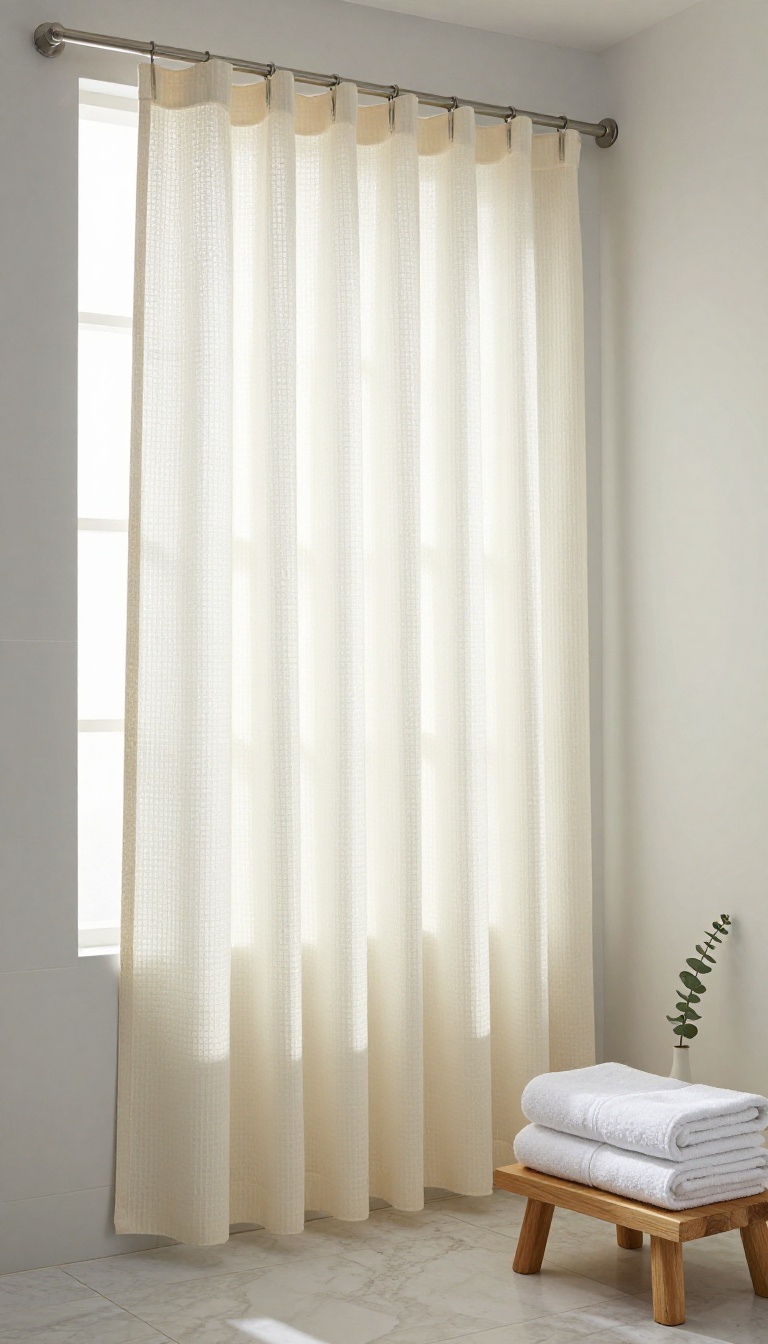
Waffle weave fabric has a grid-like texture that instantly makes a bathroom feel more considered. It absorbs light instead of reflecting it, so the room feels softer and calmer. That subtle depth is why so many hotels and spas use it.
Beyond looks, waffle weave is breathable and dries quickly, which means less mildew and fewer musty smells. It is practical without looking utilitarian. If you want one upgrade that does the most work, start here.
Waffle weave is not just a pattern—it is a performance fabric. The raised squares create air pockets that help the curtain dry fast after a steamy shower. That means less chance of that damp, sour smell that plagues cheap plastic liners.
The texture also catches light in a gentle way. Instead of a flat sheet of color, you get soft shadows and dimension. It reads as high-end even when the price tag is not.
You can find waffle weave in cotton, polyester, and blends. Cotton feels more natural and gets softer with each wash, but it wrinkles a bit. Polyester holds its shape and resists fading, which is great for busy bathrooms.
A cotton-poly blend gives you the best of both. Color matters too. White and cream keep things bright and spa-like.
Soft gray or sage green adds a hint of color without stealing the show. Deep navy or charcoal makes a bold statement but can make a small bathroom feel darker. Hanging it right is key.
Use a liner behind it so the waffle weave stays dry and clean. A liner also protects the fabric from soap scum and hard water spots. Choose a liner that is a few inches shorter than the curtain so it does not peek out at the bottom.
For a polished look, pick a curtain that grazes the floor or sits just above it. Too short and it looks like you ran out of fabric. Too long and it puddles, which can stay wet and get dirty.
Waffle weave works with almost any style—modern, farmhouse, coastal, or minimalist. It adds texture without pattern, so it plays well with tile, wallpaper, and art. That versatility is why it is a safe bet for rentals and forever homes alike.
When you wash it, use cold water and a gentle cycle. Tumble dry low or hang it to dry. Avoid bleach and fabric softener, which can break down the fibers and reduce absorbency.
With basic care, a good waffle weave curtain lasts for years.
Why It Works
The weave creates tiny pockets that trap air and help the fabric dry faster. That means less moisture sitting around, which keeps mildew away. It also gives the curtain a subtle texture that softens the whole room.
Choosing The Right One
Look for a cotton or cotton-blend waffle weave for a natural feel. Check the weight—too thin and it feels cheap, too heavy and it may not drape well. A liner is a must to protect the fabric and keep it looking fresh.
Styling Tips
Hang it so the bottom just kisses the floor or hovers an inch above. Use neutral colors for a spa vibe or go bold if you want a pop. Add matching towels or a bath mat to tie the look together.
2. Layer Sheer and Opaque for Depth
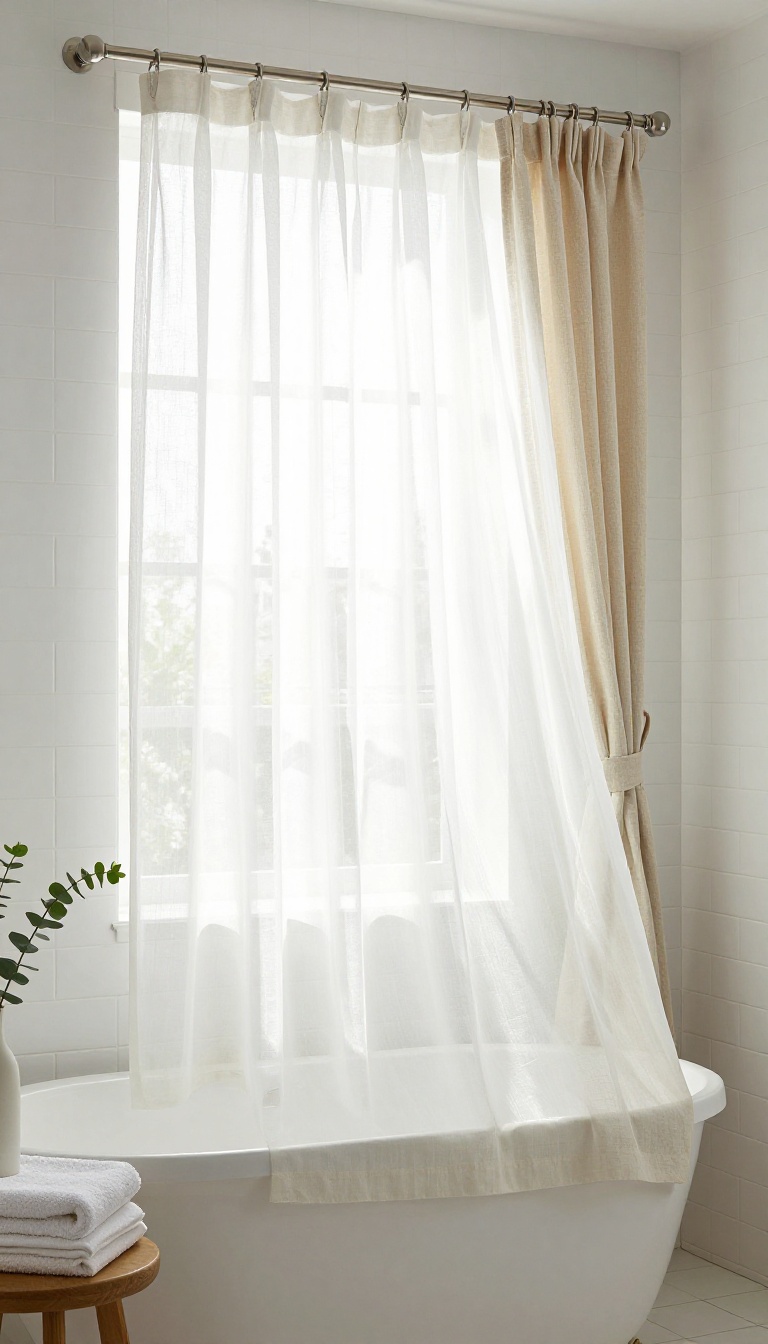
Two curtains do more than one ever could. A sheer inner layer lets light glow through while a heavier outer panel handles privacy and shape, and together they give the window a soft, custom feel. It reads like a hotel trick because it is one, and it works in almost any bathroom.
The trick is contrast. You want one layer that filters and one that grounds, so the pair looks deliberate instead of accidental. Keep both panels the same length and the whole thing snaps into place visually.
Hang the sheer closest to the tub so water stays off the heavier fabric, then let the outer panel fall a few inches wider on each side. That extra width is what makes the layering look intentional rather than cramped.
Pick Fabrics That Play Well Together
A cotton or linen outer panel with a voile or chiffon inner layer is the easiest pairing. The sheer should be light enough to see through but dense enough to blur the shape of the tub. Skip anything scratchy or stiff, since the two layers will brush against each other every time you move them.
Get The Hardware Right
You need two rods or one double rod, and a double rod is the cleaner choice. Mount the inner rod slightly lower and closer to the tub, then set the outer rod a few inches higher and wider. Rings should match in finish so the two layers feel like one setup.
Style The Layers Without Clutter
Tie the outer panel back on one side with a simple hook or holdback to show off the sheer underneath. Keep the sheer closed for softness or open it slightly for a breezy look. Either way, resist adding more than one tieback, because the layering is already the statement.
3. Choose a Subtle Stripe for Tailored Polish
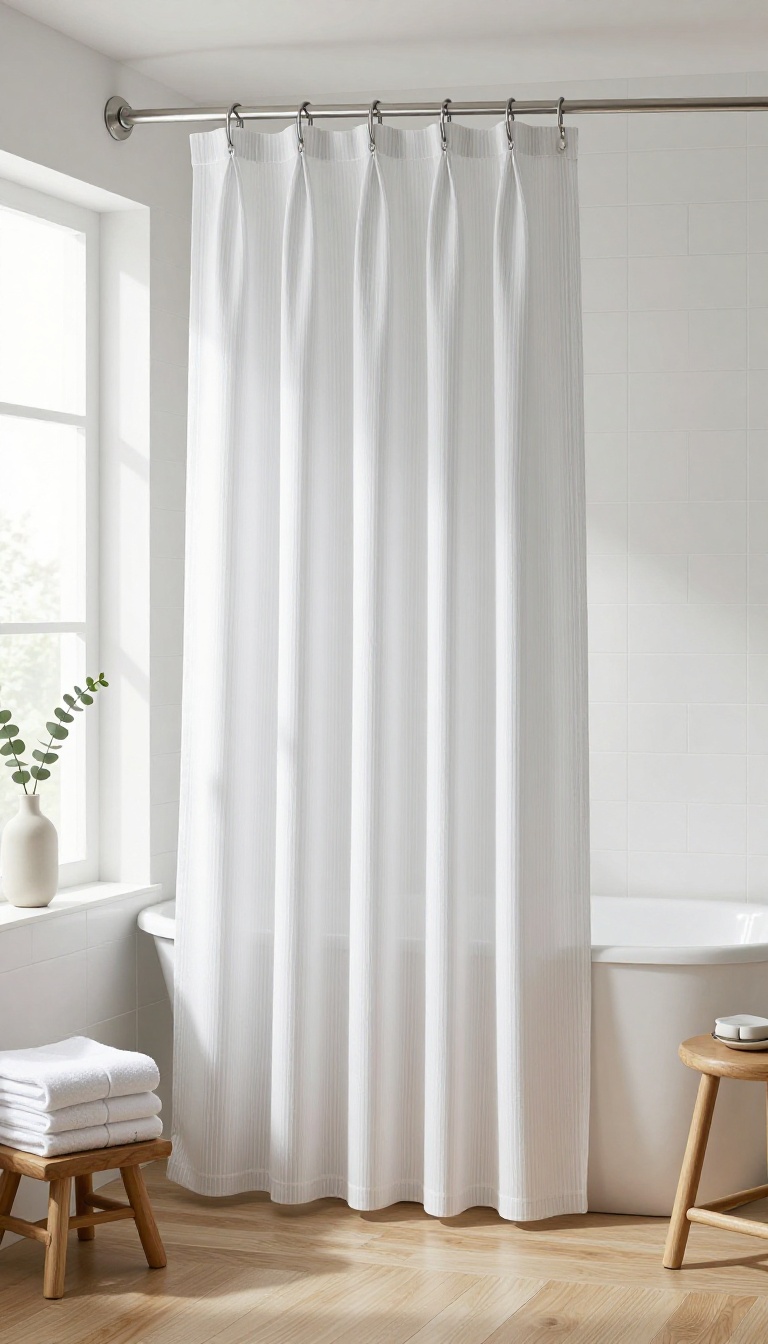
Stripes bring a quiet structure to a bathroom that solid colors just can't match. They read as tailored and intentional, like something you'd find in a well-kept hotel. The trick is keeping them subtle so they add polish without stealing the show.
A striped shower curtain works because it creates order. Thin lines, whether they run up and down or side to side, give the eye a clear path to follow. That sense of rhythm makes the whole room feel more put together, even if the rest of your bathroom is pretty basic.
Muted tones keep the effect calm. Think soft gray on white, warm taupe on cream, or faded navy on off-white. Those combinations feel refined and pair easily with towels, rugs, and tile that already have their own thing going on.
Vertical Vs. Horizontal Stripes
Vertical stripes draw the eye upward, which can make a low ceiling feel taller and a narrow bathroom feel more spacious. They add height without any structural changes. Horizontal stripes do the opposite.
They widen a narrow room and create a relaxed, coastal vibe. If your bathroom is long and skinny, a horizontal stripe can balance the proportions nicely.
Picking The Right Stripe Width
Skinny pinstripes feel crisp and modern, almost like a tailored shirt. They add texture without overwhelming the space, so they work well in small bathrooms. Wider stripes make a bolder statement and can handle larger rooms.
Just keep the color contrast low if you want that soft, hotel-inspired look. High-contrast stripes are fun but they demand more attention.
Mixing Stripes With Other Patterns
A striped curtain plays well with others as long as you vary the scale. Pair thin stripes with a larger floral or geometric print on a bath mat or hand towel. The key is to keep one pattern dominant and the other as an accent.
Stick to a shared color palette to keep things cohesive. If your curtain has gray stripes, pull that gray into a soap dish or a small piece of art. It ties the room together without matching everything perfectly.
4. Embrace Organic Cotton for Natural Softness
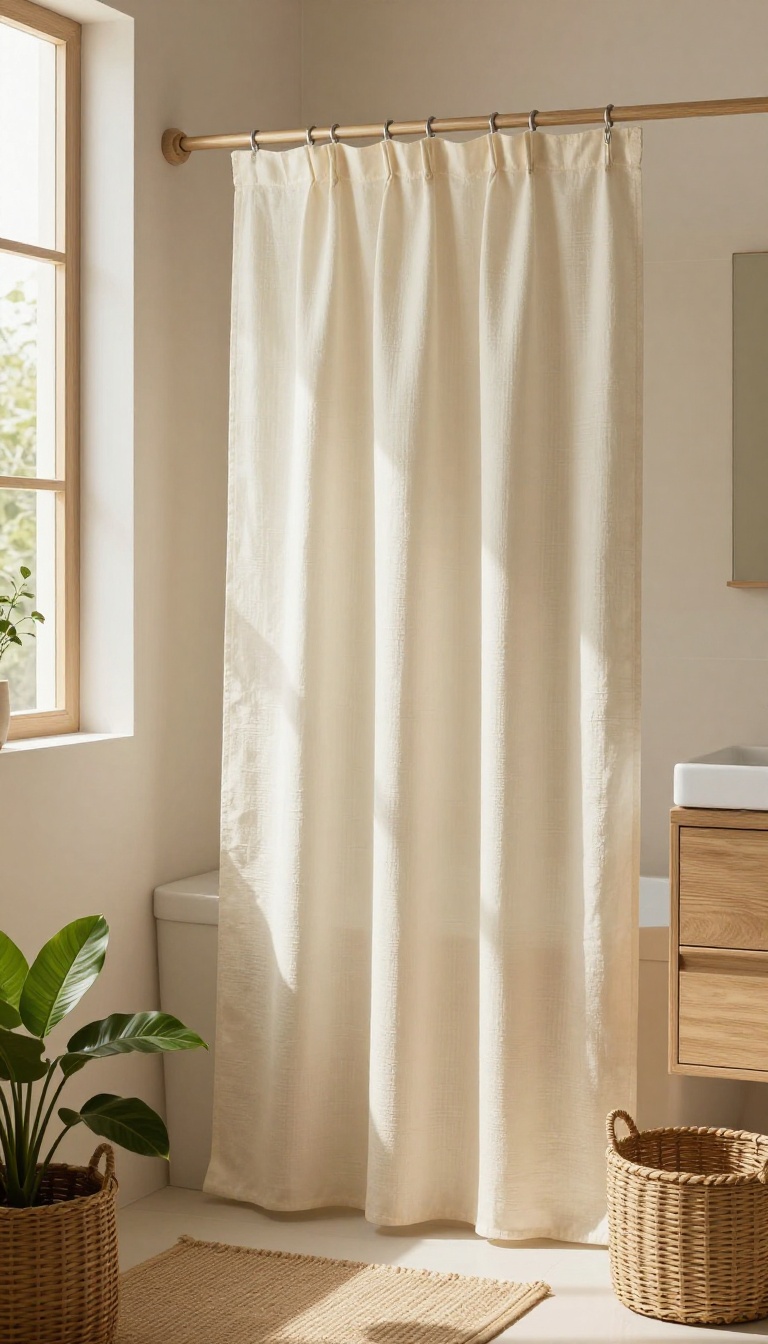
Organic cotton brings a soft, earthy feel to your bathroom that synthetic fabrics just can't match. It's gentle on the eyes and the skin, making your daily routine feel a little more spa-like. Plus, it's machine washable and gets even softer with each wash, so it's as practical as it is pretty.
Organic cotton shower curtains are a smart pick if you want that relaxed, refined look without trying too hard. The fabric has a natural texture that adds warmth to the room, and it drapes beautifully instead of hanging stiffly. Because it's cotton, it breathes well, which helps keep your bathroom from feeling damp and stuffy.
And since it's washable, you can keep it fresh without much effort.
Why Organic Cotton Stands Out
Organic cotton is grown without harsh chemicals, so it's a better choice for you and the planet. It feels softer than conventional cotton and has a subtle, organic look that fits both modern and rustic bathrooms. The fabric also holds up well over time, getting cozier with every wash.
Styling Tips For A Relaxed Look
Pair a white or cream organic cotton curtain with neutral walls and natural accessories like wood or rattan. To keep it from looking plain, add a textured rug or a few green plants. If you want a bit more interest, choose one with a simple stripe or a subtle embroidered edge.
Care And Longevity
Toss your organic cotton curtain in the washing machine on a gentle cycle with mild detergent. Avoid bleach and fabric softener, which can break down the fibers. Hang it to dry or tumble on low, and it'll stay soft and fresh for years.
5. Add a Touch of Linen for Casual Elegance
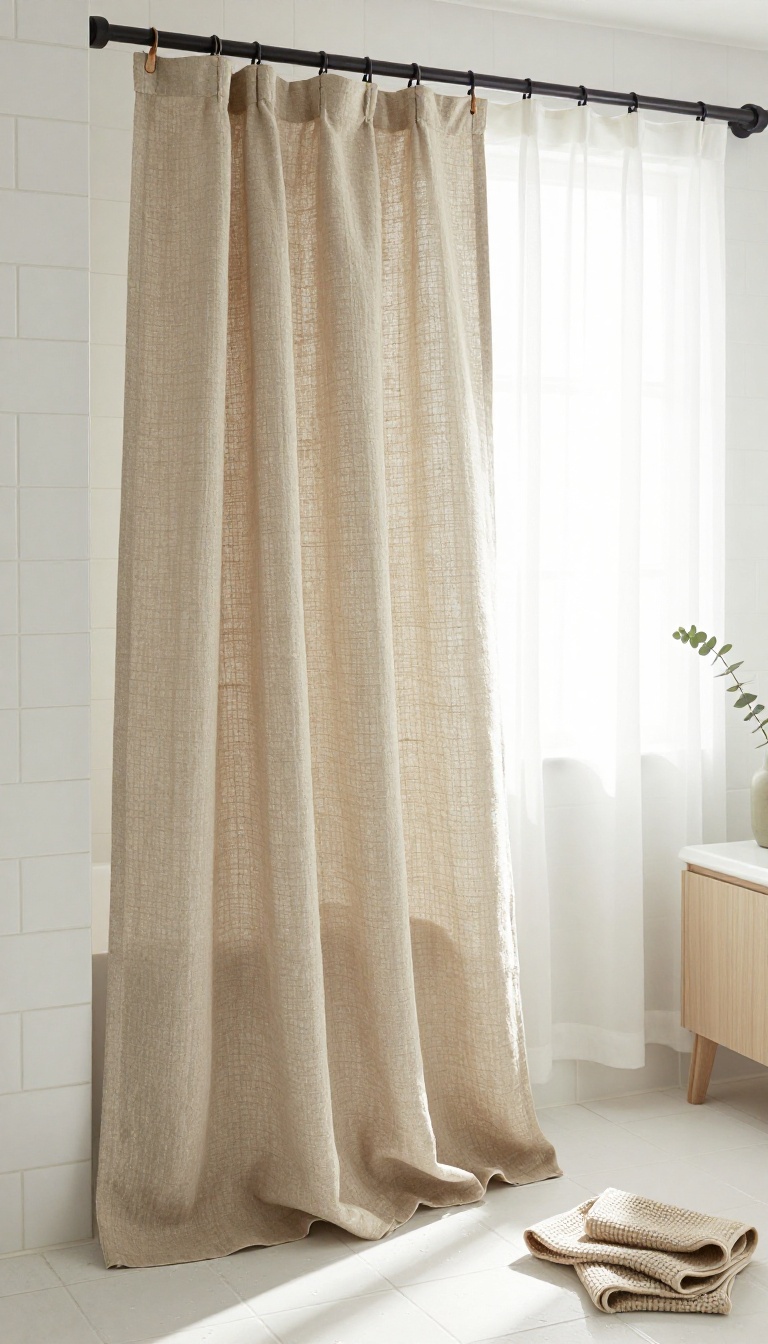
Linen brings an easy, breezy feel that makes a bathroom look relaxed without trying too hard. The natural slub texture—those little uneven threads—gives it a lived-in charm that hides water spots better than smooth fabrics. It's a simple swap that adds warmth and softness to modern or traditional spaces alike.
Linen shower curtains work because they don't look fussy. They drape loosely, catch light in a soft way, and make the whole room feel more inviting. You get the elegance of a natural fiber without the stiffness of a formal hotel curtain.
One thing to know: pure linen can be pricey and wrinkles easily. A linen-cotton blend gives you the same look with better durability and less upkeep. Look for blends with at least 50% linen for that authentic texture.
Why Linen Works In The Bathroom
Linen's irregular weave creates a subtle pattern that masks water spots and soap scum. It also breathes well, so it dries faster than heavy cotton and resists mildew better. That makes it a practical pick for a humid space.
Choosing The Right Blend
A 55% linen and 45% cotton blend is a sweet spot—soft, durable, and less prone to shrinking. Check the label for pre-washed or garment-dyed options; they feel broken-in from day one. Avoid blends with too much polyester, which can look shiny and cheap.
Styling Linen For A Relaxed Look
Hang it with wooden or matte black rings to keep the vibe casual. Let it puddle slightly at the floor for a soft, undone feel—just make sure it doesn't drag in water. Pair with a sheer liner if you want extra light and airflow.
6. Try a Two-Tone Color Block
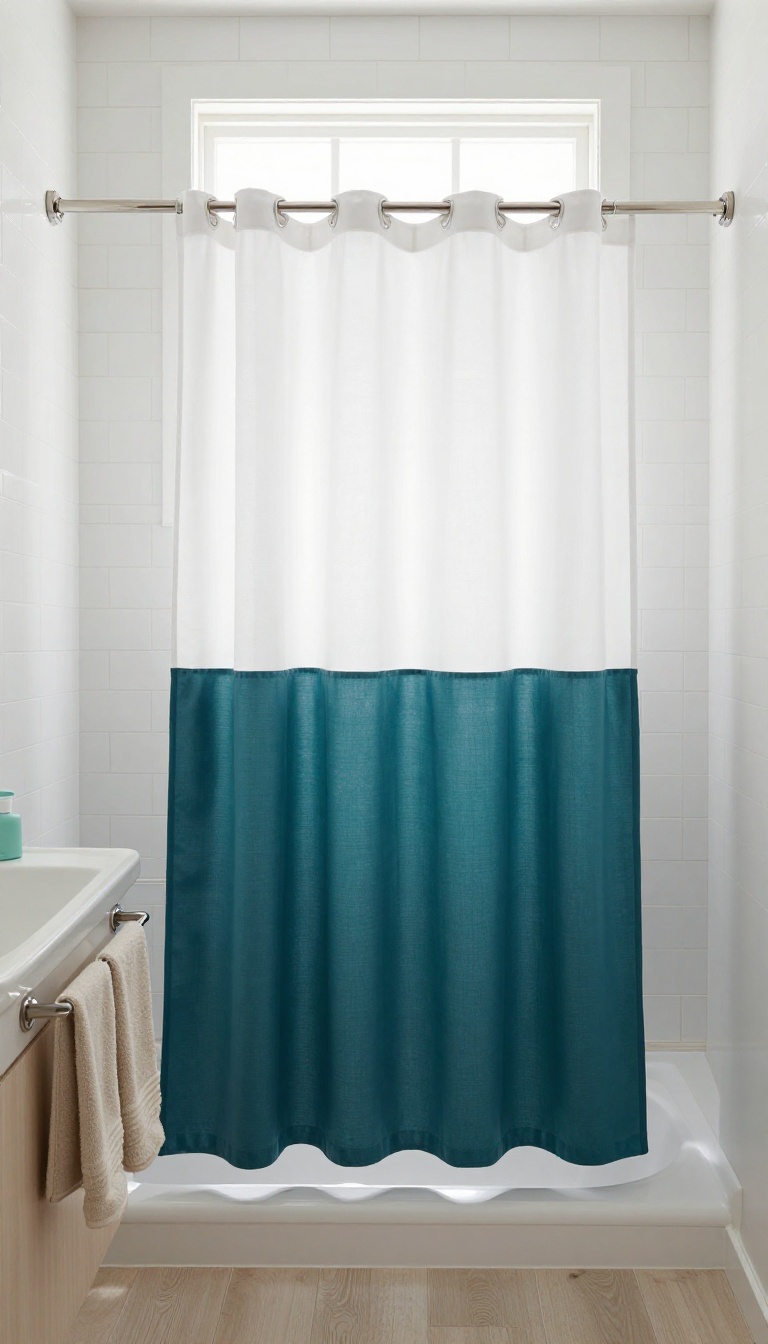
Color blocking turns a plain shower curtain into a graphic statement. Split it horizontally or vertically into two complementary shades, and the bathroom instantly feels more designed. The best part?
You can pull it off with fabric dye or by sewing two pre-made panels together.
A two-tone curtain works because it plays with proportion and contrast. A horizontal split—like white on top and deep teal on the bottom—grounds the space and draws the eye upward. A vertical split, say soft blush next to warm gray, adds height and a modern edge.
Either way, you get a custom look without a custom price tag.
Pick Your Split
Horizontal splits feel calm and balanced, especially if you keep the darker color on the bottom. Vertical splits are bolder and can make a small bathroom feel taller. Measure your curtain rod and decide where you want the seam—usually at the one-third or halfway mark.
Dye It Or Sew It
For a DIY dye job, choose a white or light-colored curtain and dip-dye one half in a fabric dye bath. Use a plastic tub and follow the dye instructions for the fabric type. If sewing is more your speed, buy two curtain panels in complementary colors and stitch them together with a straight seam.
Press the seam flat for a clean finish.
Style Without The Struggle
Keep the rest of the bathroom simple so the curtain stands out. Solid towels and neutral accessories let the color block do the talking. If you want to tie it together, add a small accent—like a soap dispenser or bath mat—in one of the two curtain colors.
7. Pick a Botanical Print for Calm
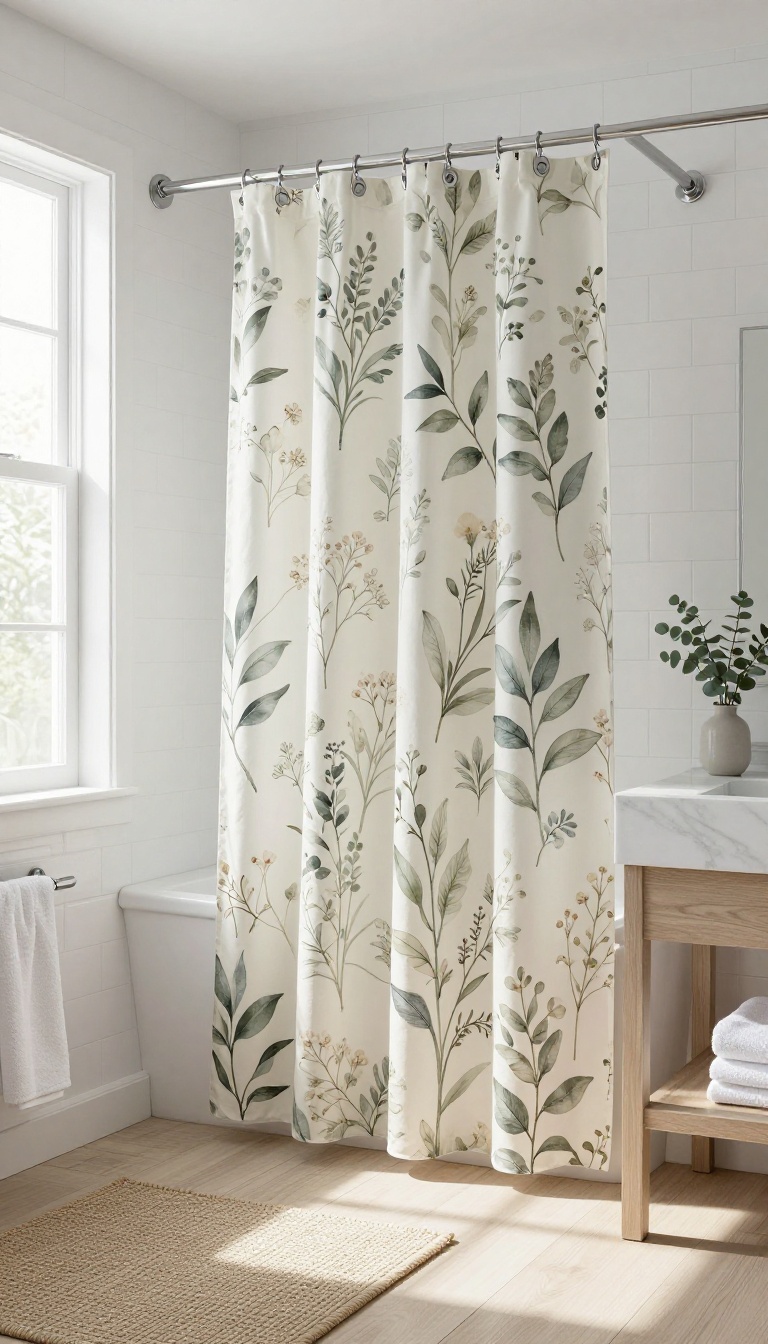
Botanical prints have a way of softening a bathroom without making it feel busy. A few leaves or wildflowers, painted loosely or drawn in clean lines, bring the outside in just enough to take the edge off a hard, tiled space. The trick is keeping the colors quiet so the pattern reads as calm rather than loud.
You are not trying to recreate a garden here, just borrow its ease. A soft print gives your eye somewhere gentle to land, and it works with almost any bathroom style. Pair it with simple hardware and a neutral liner, and the curtain does the rest.
Watercolor Vs. Line Drawing
Watercolor botanicals feel soft and slightly faded, which suits a relaxed, spa-like room. Line drawings are crisper and more modern, so they work well in a clean, minimal bathroom. Both stay calm as long as the background is light and the ink or paint is muted.
Choosing Your Palette
Muted greens, soft blues, and dusty sage keep things serene. Skip bright tropical greens and hot pinks unless you want the curtain to be the loudest thing in the room. A white or cream base makes the print feel airy instead of heavy.
Styling Around The Print
Let the curtain lead and keep everything else quiet. White towels, a woven bath mat, and a small plant on the counter echo the theme without competing. If your tiles are busy, choose a print with more white space so the two do not fight.
8. Go Minimal with a Solid Earth Tone
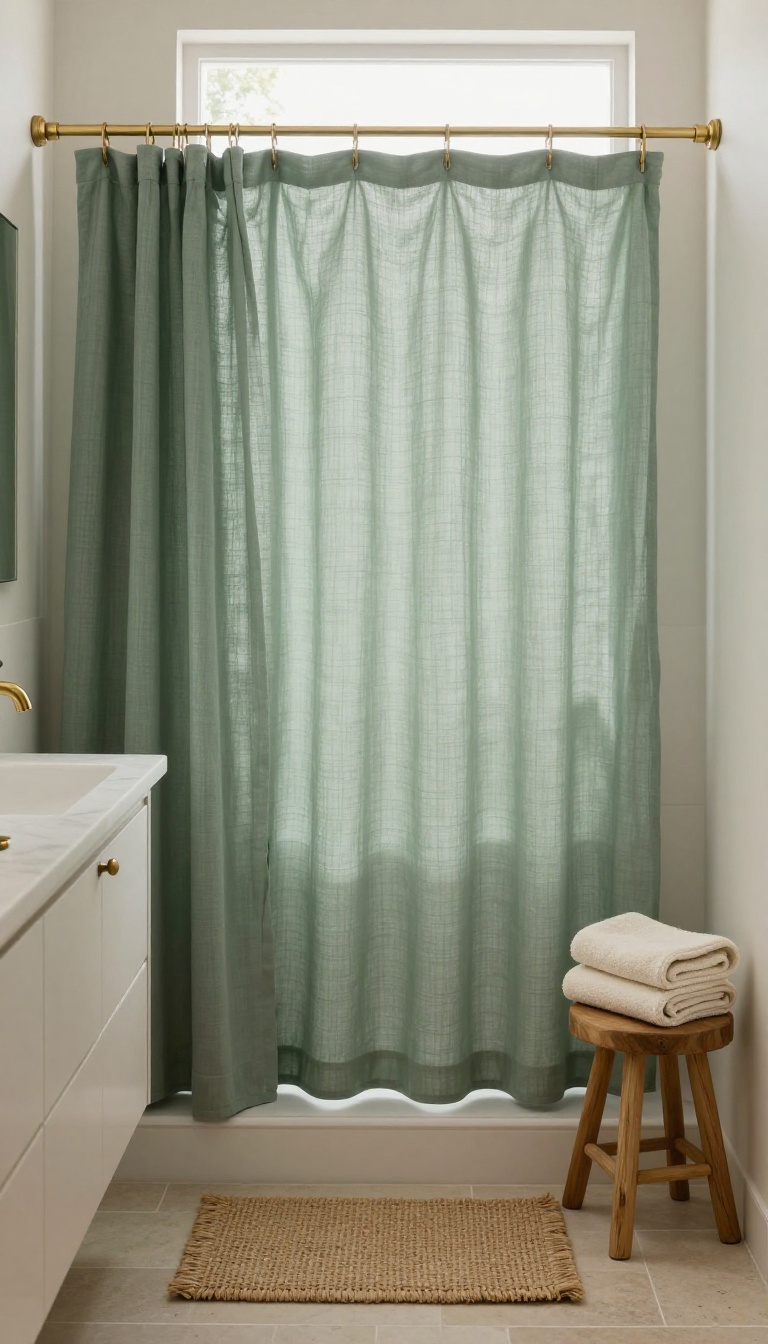
A solid earth tone curtain does the quiet work of grounding a bathroom without shouting for attention. Think clay, sage, or sand—colors pulled straight from nature that feel warm and settled. They give your eye a place to rest, which is exactly what a minimalist space needs.
When your curtain is one calm, earthy color, it stops competing with your tile, fixtures, and hardware. That lets the details you actually chose—like a brass faucet or a marble counter—take the spotlight. It’s a simple move that makes a bathroom feel curated instead of cluttered.
Why Earth Tones Work In Small Baths
Dark or bright curtains can shrink a small bathroom by drawing the eye straight to them. Earth tones like sand or clay recede gently, making the room feel open and breathable. They also hide water spots and soap splashes better than stark white, so the curtain stays looking fresh longer.
Picking The Right Shade For Your Light
In a bathroom with cool, north-facing light, a warm clay or terracotta adds a cozy glow. If your space gets lots of sun, a sage or olive green keeps things from feeling too hot. Hold a swatch against your wall at different times of day to see how the color shifts.
Fabric And Finish That Keep It Minimal
A matte finish in a natural fiber like linen or cotton reads more organic than a shiny polyester. Look for a subtle texture—like a slub weave—so the solid color still has depth. Skip loud trims or patterns; the whole point is a clean, uninterrupted block of color.
Styling Around A Solid Earth Tone
Pair your curtain with white or cream towels and a simple woven bath mat to keep the palette tight. Add one small plant or a wooden stool for warmth, but don’t overload the space. The curtain sets the tone, and everything else should feel like a quiet echo of it.
9. Use a Scalloped Edge for Whimsy
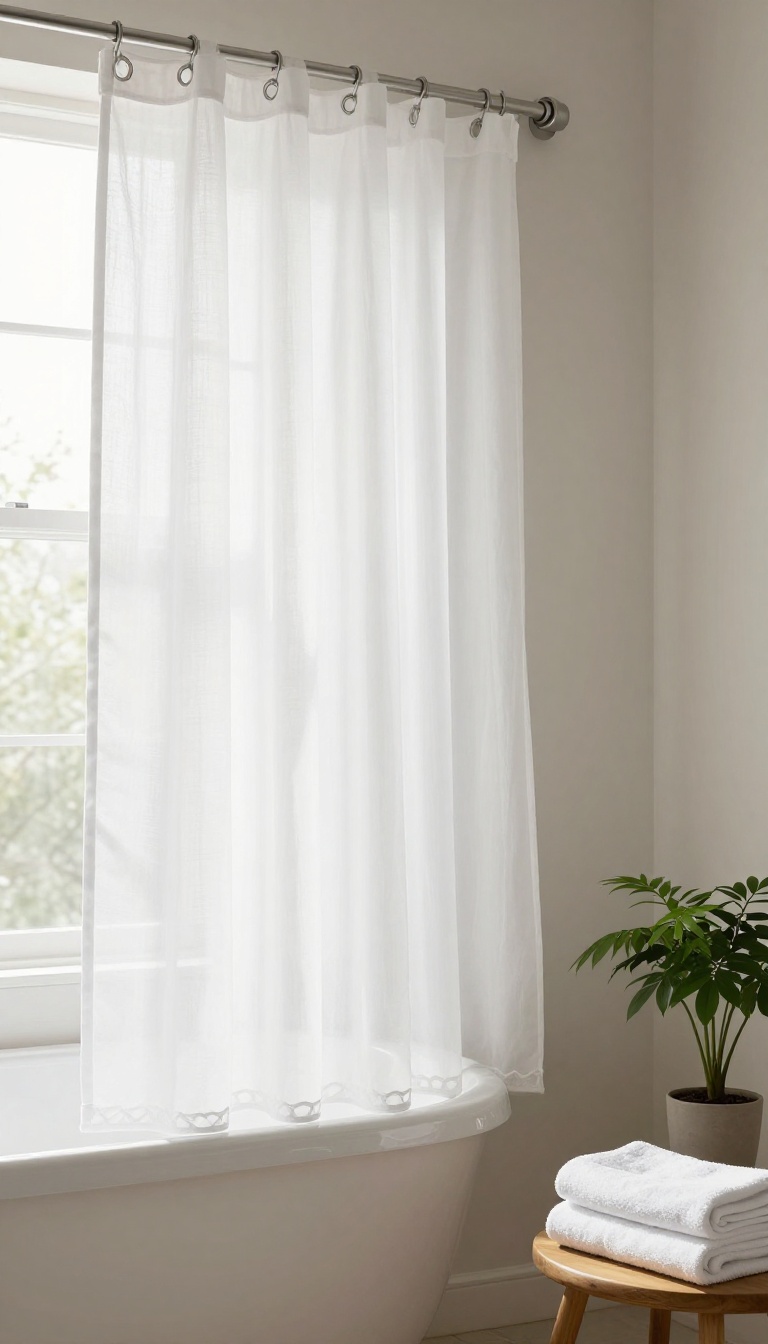
A scalloped edge gives a shower curtain a gentle, decorative rhythm that feels custom without being fussy. The curved trim adds movement and softness, breaking up the straight lines of a standard bathroom. It's a small detail, but it changes how the whole curtain reads—from plain to polished with a wink.
Scallops work on almost any fabric, from crisp cotton to floaty linen. They add a touch of vintage charm or a modern, playful edge depending on the scale and color. Pair them with a simple pattern or a solid hue to let the shape do the talking.
Choosing The Right Scale
Small, tight scallops feel delicate and traditional, while larger, wider curves make a bolder, more contemporary statement. Think about the size of your bathroom: tiny scallops can get lost in a big space, and oversized ones might overwhelm a small stall. A good rule is to match the scallop height to about one-tenth of the curtain's width for balance.
Fabric And Color Pairings
Crisp white cotton with white scallops keeps things clean and classic. For a bit more personality, try a pastel scallop on a neutral base, or a contrasting trim like navy on cream. Sheer fabrics with scalloped edges add a soft, romantic layer without blocking light.
Styling And Care
Scalloped edges can curl if they're not pressed, so a quick steam after washing keeps them looking sharp. Hang the curtain so the scallops fall just above the floor or tub edge to avoid dragging. Pair with simple rings or hooks so the trim stays the focal point.
10. Incorporate a Vintage-Inspired Pattern
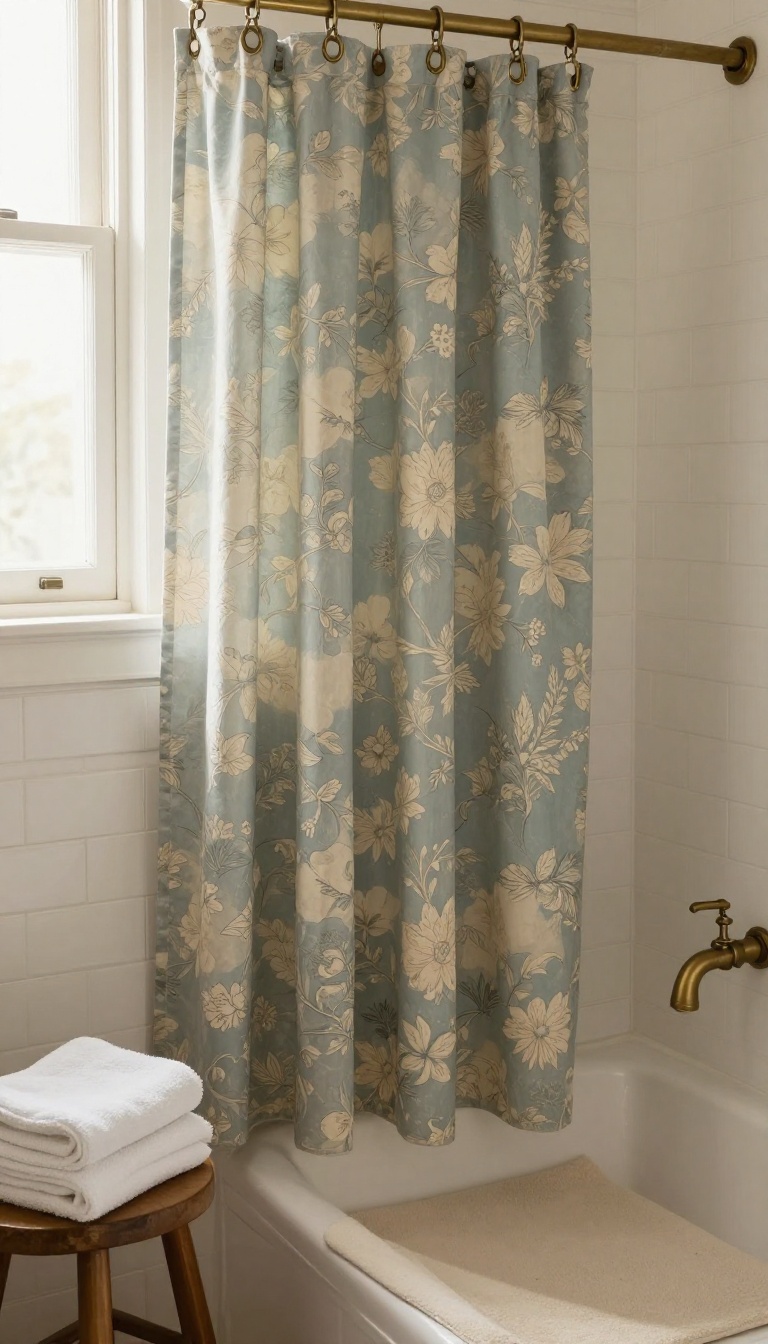
Vintage patterns bring a sense of history and softness to a bathroom, turning a plain shower curtain into a subtle focal point. Think delicate florals, classic toile, or faded geometric prints that feel collected rather than brand new. These designs add character without overwhelming the space, especially when you pair them with antique brass hardware for a cohesive, aged look.
Vintage-inspired patterns work because they introduce detail and warmth without demanding attention. A soft floral or a muted geometric print can make a basic shower stall feel like a thoughtful corner of an old inn. The key is to choose a pattern that feels worn-in, not overly precious, so it blends with the rest of your bathroom instead of fighting it.
Pick A Pattern With Patina
Look for prints with slightly faded colors or a hand-drawn quality. Toile scenes, small-scale florals, and repeating diamonds all read as vintage when the palette stays muted. Avoid crisp, high-contrast graphics that feel modern and sharp.
Match Your Metal
Antique brass hooks, rings, or a curved rod tie the curtain into the room. The warm, slightly dull finish of aged brass echoes the softness of a vintage print. If your fixtures are chrome or nickel, choose a pattern with cooler tones like dusty blue or sage to keep things balanced.
Keep The Rest Simple
Let the curtain be the star by keeping towels, rugs, and accessories solid and neutral. A plain white or cream liner behind the patterned curtain adds crispness without competing. This way, the vintage pattern feels intentional, not cluttered.
11. Choose a Curtain with a Built-In Liner
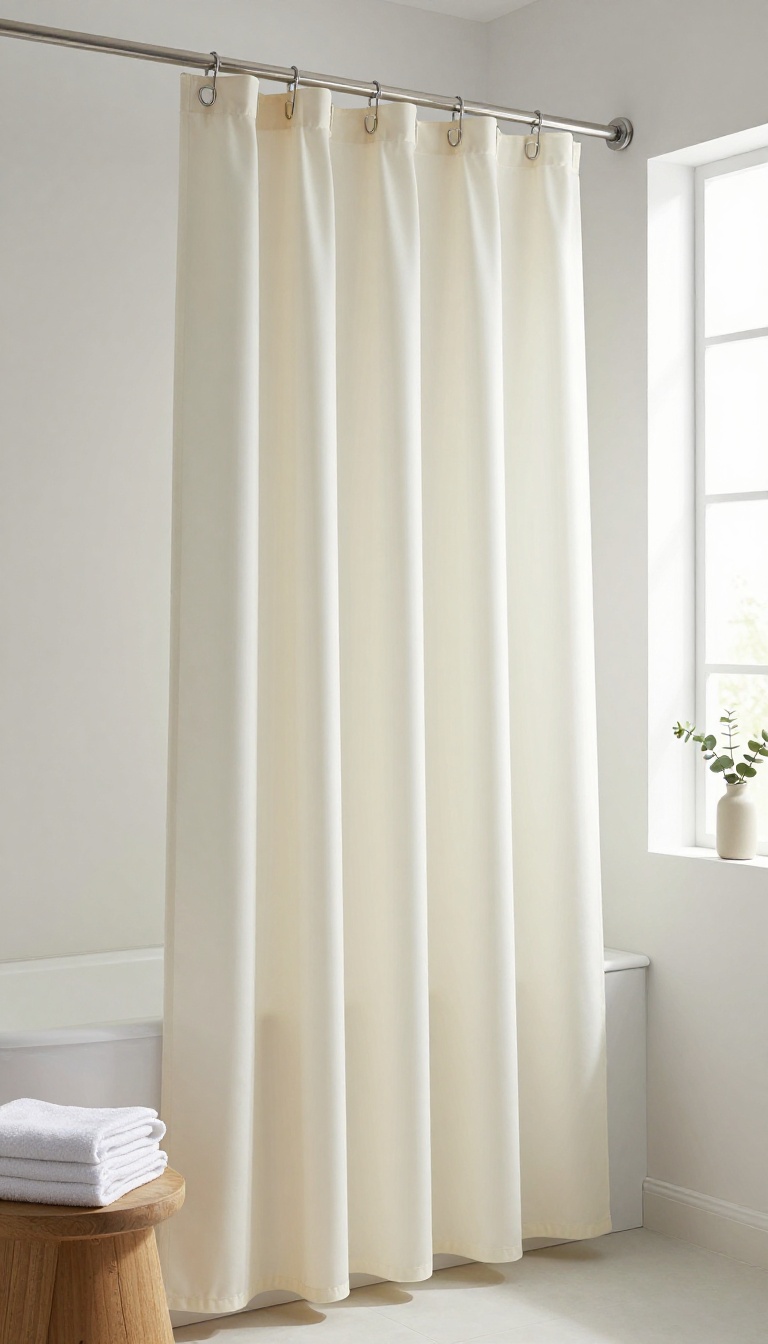
Two curtains, one rod, and a daily wrestling match with plastic that never hangs straight. Built-in liners solve that by attaching the liner directly to the decorative curtain, so you get one piece to hang and one piece to wash. The result is a cleaner look and far less fuss.
Snap-in liners let you detach the liner for washing without taking down the whole curtain. Sewn-in liners are even simpler: the whole thing goes in the machine, and you rehang it damp. Either way, you skip the awkward gap where a separate liner peeks out below the hem.
The curtain hangs as a single panel, which means fewer wrinkles and a more tailored drape. You also avoid buying replacement liners every few months, since fabric liners last longer and wash up well. For anyone who has ever dealt with a liner that billows and clings, this is a quiet upgrade that pays off every day.
Snap-in Vs. Sewn-in
Snap-in liners give you flexibility: swap the liner when it wears out, or remove it entirely for a lighter look in summer. Sewn-in liners are the lowest-maintenance option because there are no snaps to align or lose. Both keep the liner from slipping off the rod or bunching at the corners.
If you like to change your curtain often, go with snap-in. If you want to set it and forget it, sewn-in wins.
Care That Actually Works
Most built-in liner curtains are machine washable on cold and can be tumble dried low or hung to dry. Check the tag, but generally you can wash the whole curtain every few weeks without fading or shrinking. A quick shake before hanging helps smooth wrinkles.
Avoid bleach unless the label says it is safe, since it can break down the liner coating. One wash, one rehang, and you are done.
Style Without The Bulk
A built-in liner eliminates the double layer of fabric that can make a shower feel closed in. The curtain lies flatter against the tub, which reads as more modern and less cluttered. You can still choose any pattern or texture you like, from waffle weave to subtle stripes.
The liner stays hidden, so the decorative side gets all the attention. It is a small detail that makes the whole bathroom feel more considered.
12. Add Tassels or Fringe for Texture
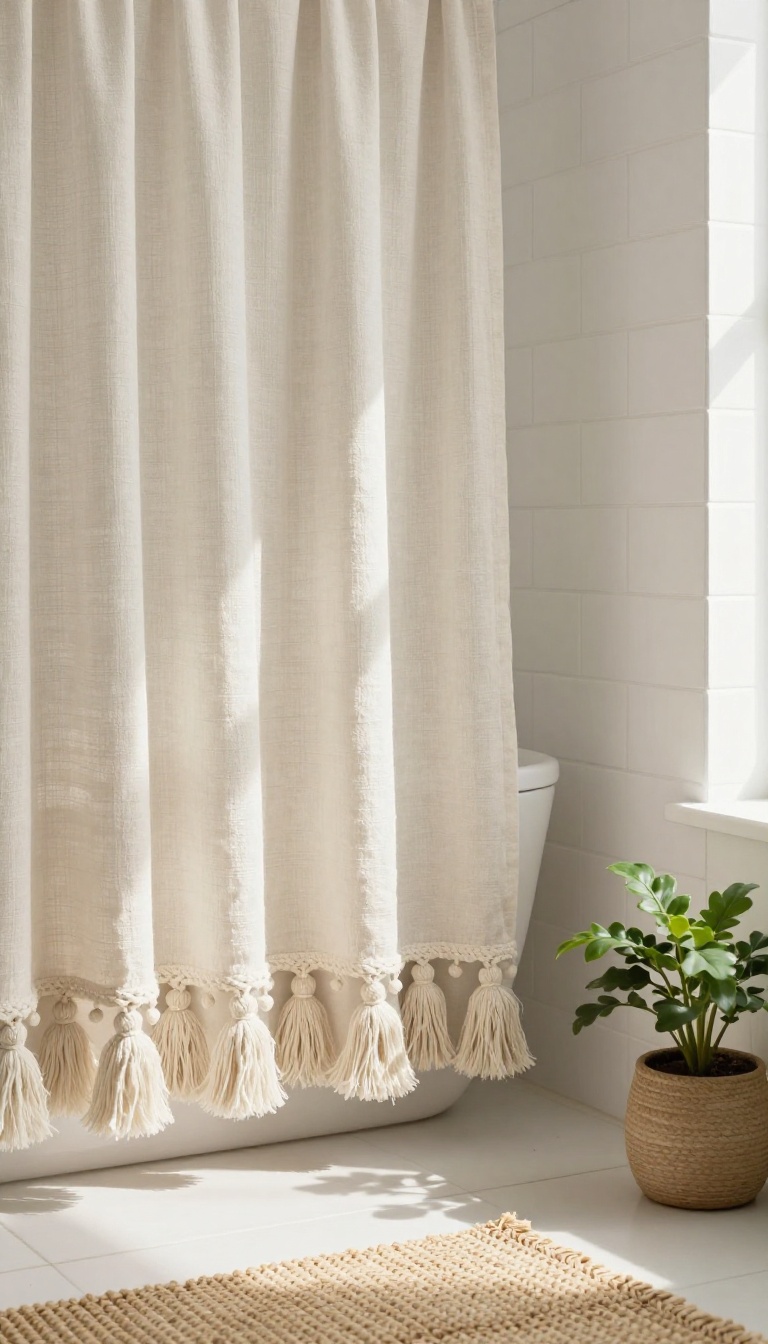
Tassels or fringe along the bottom hem give a shower curtain a playful, bohemian edge that instantly warms up a bathroom. The key is to keep the rest of the curtain simple so the trim becomes the star. A plain fabric with a detailed hem feels intentional and stylish, not overdone.
A row of tassels or a swish of fringe adds movement and softness to an otherwise flat surface. It's a small detail that catches the eye without overwhelming the space. This works especially well in bathrooms that lean neutral or minimalist, where a little texture goes a long way.
Choosing The Right Trim
Look for tassels or fringe made from cotton, wool, or a soft blend that matches the curtain's weight. Chunky tassels feel more casual and boho, while fine fringe reads a bit more tailored. Make sure the trim is securely attached so it survives regular use and washing.
Keeping The Base Simple
Stick with solid colors or subtle textures like linen or waffle weave for the main curtain. Busy prints will compete with the trim and make the whole thing look cluttered. A neutral base lets the tassels or fringe do the talking.
Styling And Care Tips
Hang the curtain so the trim grazes the floor or tub edge for a relaxed look. Shake it out after showers to keep the fringe from tangling. When washing, use a gentle cycle and air dry to protect the details.
13. Go Custom with a Local Seamstress
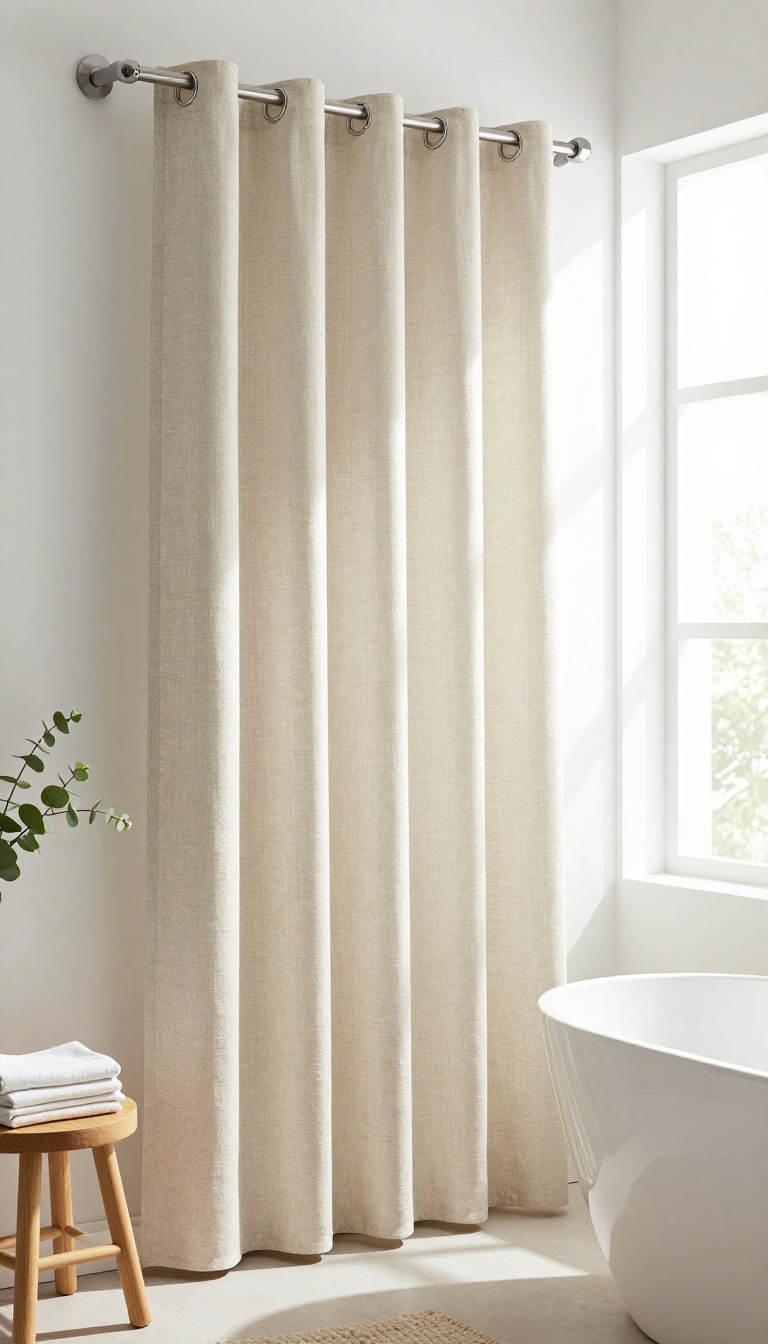
A custom shower curtain sounds like a luxury, but it's often a practical move. You pick the fabric, the exact length, and the hem style, then hand it off to someone who sews for a living. The result is a curtain that fits your rod perfectly and looks like it was made for your bathroom, because it was.
Most shower curtains come in one or two standard sizes, which is fine until your rod sits a little higher or your tub is wider than average. A local seamstress can work with any dimensions you give her. She can also add a lining, reinforce the top hem, or place buttonholes exactly where your rings need them.
You're not paying for guesswork; you're paying for a precise fit. The cost might surprise you. For a simple curtain in a standard size, many seamstresses charge less than a designer fabric store curtain, especially if you supply the fabric.
You can find good yardage on sale or use a drop cloth, a linen flat sheet, or a vintage textile you already love. The labor is usually the smaller part of the bill. Working with someone local also means you can see and touch the fabric before you commit.
You can discuss how it drapes, whether it needs a liner, and how it will handle steam. That back-and-forth is hard to get online. And if something isn't right, you can take it back for a tweak instead of shipping it across the country.
What To Bring To The First Meeting
Come with your rod measurements, the drop you want, and a photo of the bathroom. If you have a fabric in mind, bring a swatch or the yardage itself. A seamstress can tell you if the material needs a lining or a weighted hem.
She might also suggest a different hem finish that hangs better. Being prepared makes the whole process faster and cheaper.
Fabric Choices That Work Hard
Linen, cotton canvas, and midweight blends hold up well in a bathroom. They drape nicely and resist mildew better than thin synthetics. Avoid heavy upholstery fabric unless you want a stiff curtain.
If you love a lightweight fabric, ask for a cotton lining to give it body. Your seamstress can help you match the fabric to the amount of steam and light in the room.
How To Keep The Cost Down
Supply your own fabric and ask for a simple hem. Skip extra details like pleats or trim unless you really want them. Choose a standard size if your rod allows it, since custom sizing adds time.
Ask for a quote before she starts. Many seamstresses charge by the hour plus materials, so a clear scope keeps the price predictable.
14. Use a Curtain as a Room Divider
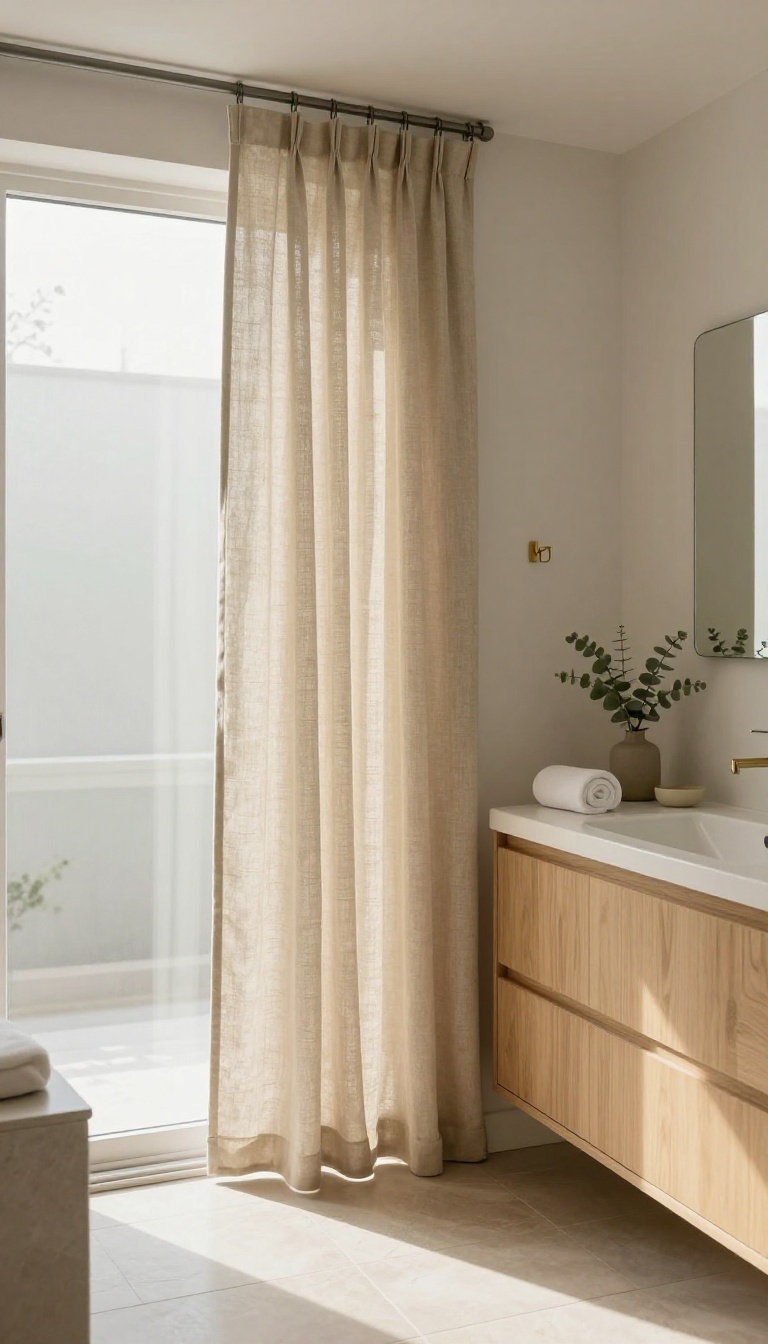
Open bathrooms look spacious until you're standing at the sink with a towel wrapped around you, hoping nobody walks in. A ceiling-mounted curtain can separate the shower from the vanity area without building a single wall. It's a soft, flexible solution that gives you privacy when you need it and keeps the room feeling airy when you don't.
The trick is choosing a fabric that looks good from both sides. A double-sided curtain means no ugly backing shows when you're standing at the sink. Hang it from a track or a rod mounted to the ceiling, and make sure it's long enough to reach just above the floor.
Pick A Double-sided Fabric
Look for curtains labeled reversible or double-faced. These are finished on both sides, so the pattern or color looks intentional from the shower and from the vanity. If you can't find one, a lined curtain works too—just check that the lining isn't plain white unless that's the look you want.
Mount It Right
Ceiling-mounted tracks are the cleanest option because they disappear into the ceiling line. A simple rod with ceiling brackets also works and costs less. Measure from the ceiling to about an inch above the floor, then add a few inches for hemming if needed.
Keep It Functional
You want the curtain to glide easily, so choose a smooth track or a rod with nylon glides. Add a tieback hook on the wall so you can pull it open during the day. That keeps the room feeling open and stops the fabric from getting soaked.
15. Mix Patterns for a Collected Look
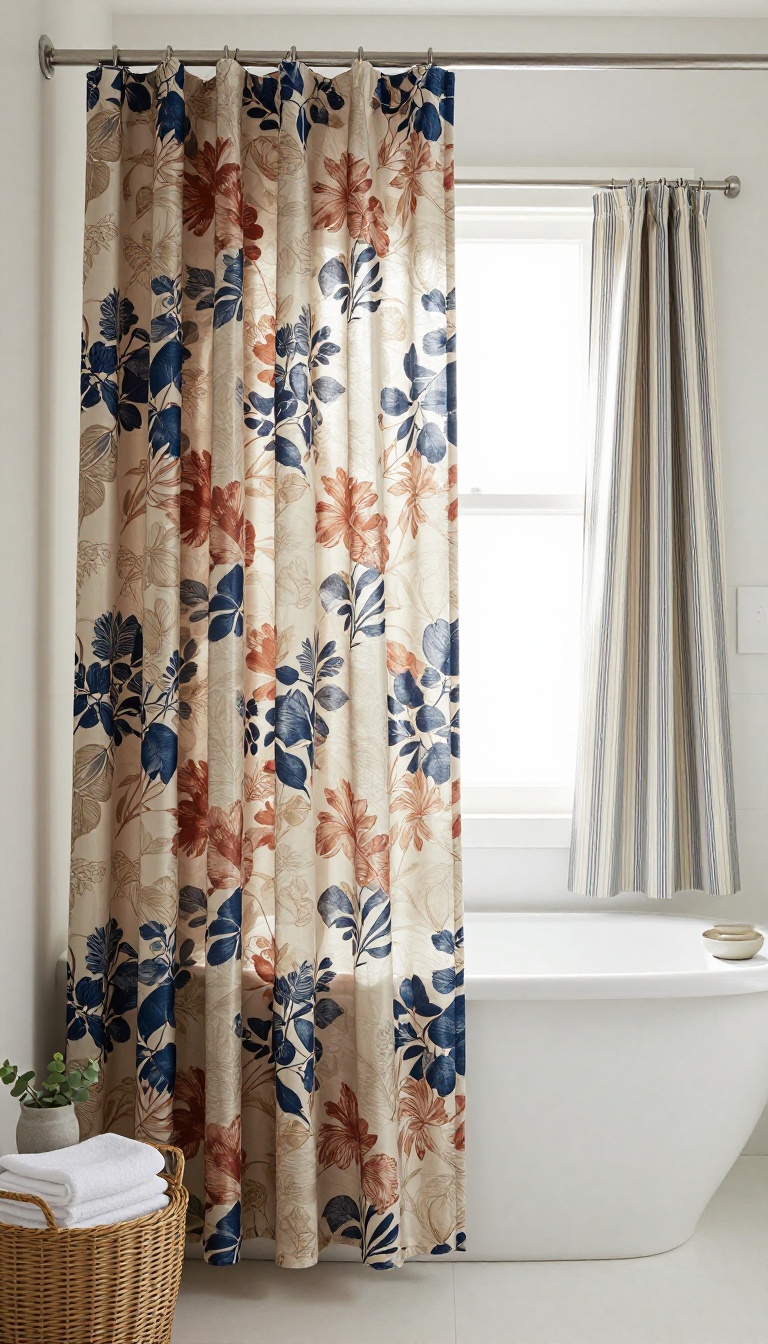
Pattern mixing gets a bad rap because people picture clashing florals and stripes in loud colors. But done with a light hand, it's one of the easiest ways to make a bathroom feel layered and lived-in. The trick is to let one pattern lead and let the other one whisper.
A patterned shower curtain paired with a solid or subtly patterned liner gives you depth without noise. You're not trying to match everything perfectly. You're aiming for a room that looks like it came together over time, not off a single shelf.
The curtain is your statement piece. The liner is the quiet supporting actor. When they relate to each other through color, the whole setup reads as intentional rather than accidental.
Let One Pattern Lead
Pick a curtain with a clear motif like block-print florals, thin geometric lines, or a scattered dot pattern. That's your anchor. Then choose a liner in a solid tone pulled straight from the curtain's palette.
If the curtain has navy, cream, and rust, a cream or navy liner keeps things calm. A patterned liner works too, but keep it small-scale, like a fine stripe or micro-check, so it doesn't compete with the main event.
Stick To A Tight Color Story
Two or three colors max. That's the rule that keeps pattern mixing from tipping into chaos. If your curtain leans warm with terracotta and blush, don't toss in a cool teal liner just because you like it.
Stay in the same family. Neutrals like white, oatmeal, or charcoal can bridge almost anything, so they're a safe bet when you're unsure.
Play With Scale, Not Just Print
A large-scale print on the curtain and a tiny repeating pattern on the liner creates contrast that feels sophisticated. Flip it and you get a busier look that can work in a bigger bathroom. Small bathrooms usually do better with one bold pattern and one quiet one.
The eye needs a place to rest, and the liner gives it that.
FAQ
What is the best fabric for a shower curtain?
Waffle weave, organic cotton, and linen blends are popular for their durability and ability to dry quickly. Avoid heavy fabrics that stay damp.
How often should I wash my shower curtain?
Wash fabric curtains every 1-2 months, or more often if you notice mildew. Always check the care label for specific instructions.
Can I use a regular curtain as a shower curtain?
Yes, if it's made of water-resistant or quick-drying fabric. Otherwise, use a liner behind it to protect the decorative curtain.
How do I choose the right length for a shower curtain?
Standard curtains are 72×72 inches, but measure your tub height. For a luxurious look, let the curtain graze the floor or tub edge.
Are shower curtains with built-in liners worth it?
They can be convenient and reduce bulk, but some find them harder to clean. Snap-in liners are a good compromise.
Conclusion
You do not need to gut the bathroom to get that refined, relaxed look. Pick one curtain idea that fits your space and budget, hang it, and see how the room responds. Swap the liner, adjust the height, or add a tie-back if something feels off.
Small tweaks go a long way. Once the curtain lands, the rest of the room tends to follow.