15 Black Living Room Decor Ideas with Bold Modern Depth
A black living room can turn cold and flat fast if you don't layer it right. The color itself isn't the problem—it's how you handle light, texture, and contrast around it. Most people paint the walls, add a dark sofa, and then wonder why the room feels like a cave.
The fix isn't more black. It's strategic warmth, reflective surfaces, and a few unexpected moves.
These 15 ideas show you how to build depth step by step. Each one solves a specific problem, so you can pick what your space actually needs.
1. Start with a Charcoal Base Instead of Pure Black
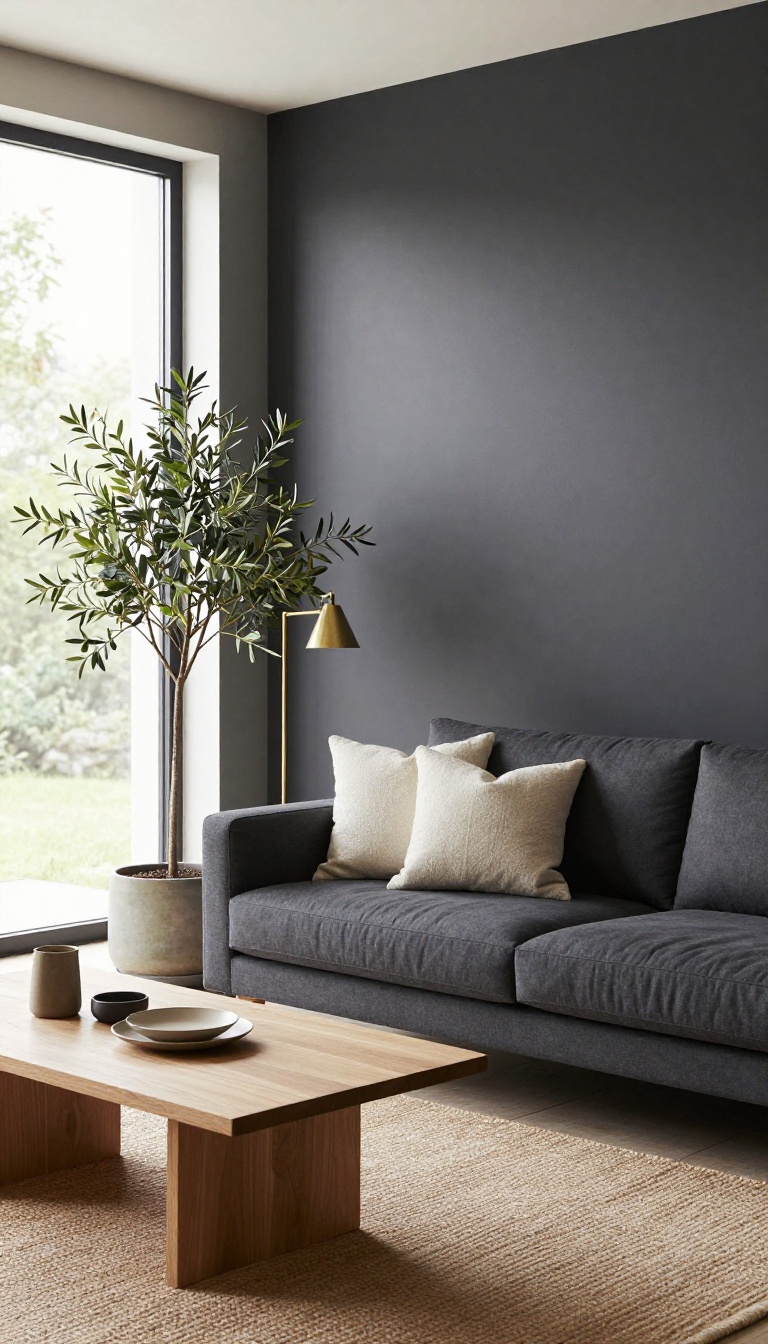
Pure black paint is dramatic, but it's also unforgiving. Every smudge, every uneven roller stroke, and every patch of drywall shows up like a spotlight. Charcoal and soft black give you the moody depth you're after without demanding a perfect paint job.
More importantly, charcoal doesn't swallow light the way true black does. It reflects just enough to keep the room from feeling like a sealed box. That difference matters most in living rooms with one window or north-facing light.
Think of charcoal as black with breathing room. You still get that bold, modern edge, but the walls work with your lighting instead of fighting it.
Charcoal sits in a sweet spot between deep gray and black. It reads as black in low light and as rich graphite in daylight, which keeps the room from going flat. Paint companies make this easy.
Shades like Sherwin-Williams Iron Ore, Benjamin Moore Wrought Iron, and Farrow & Ball Railings all deliver that soft-black depth without the harshness of a true 0, 0, 0 black. Finish matters as much as color. A matte or eggshell finish absorbs light and hides imperfections, while a satin finish bounces more light around and shows every flaw.
For most living rooms, matte walls with a satin trim is the safest combo.
Why Pure Black Backfires
True black absorbs almost all light, so your eyes have nothing to grab onto. The room can feel smaller, heavier, and strangely empty at the same time. It also raises the contrast stakes.
Every white pillow or light wood table becomes a harsh bright spot instead of a soft accent. Charcoal lowers that contrast to a level your eye can actually relax into.
Pick The Right Charcoal For Your Light
Rooms with lots of southern exposure can handle a deeper charcoal with cool blue undertones. Rooms with limited light do better with a warm charcoal that leans brown or green. Test at least three swatches on different walls.
Paint a large sample, live with it for two days, and watch how it shifts from morning to night. The right charcoal changes character throughout the day, and that's the point.
Pair It With Warm Finishes
Charcoal walls love brass, warm oak, cognac leather, and cream textiles. These materials add the warmth the paint intentionally withholds. Skip cool grays and chrome if you want the room to feel inviting.
A charcoal wall with a warm wood floor and a brass floor lamp looks intentional. The same wall with gray vinyl plank and silver fixtures looks like a waiting room.
2. Layer Three Different Black Textures on One Sofa
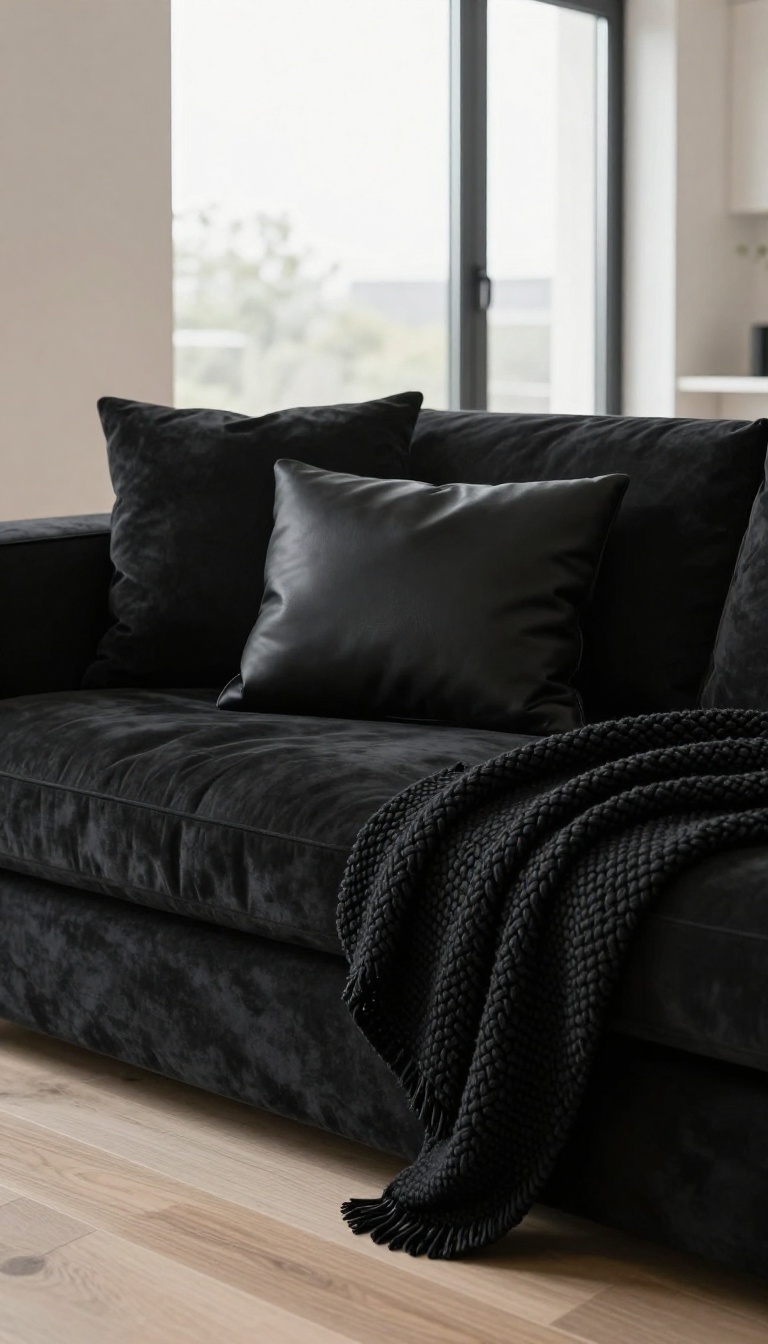
A black sofa can easily look like a flat, dark blob if you don't break up the surface. The trick is to mix three different black textures—like velvet, leather, and woven fabric—in slightly different tones. This adds visual richness without changing your color palette.
You get depth and interest, all while staying true to your bold black theme.
Start by choosing a base material for your sofa. Velvet gives a soft, plush look that absorbs light and feels luxurious. Leather adds a sleek, reflective quality that bounces light around the room.
Woven fabrics like linen or cotton bring a matte, natural texture that grounds the piece. Next, introduce throws and pillows in the other two textures. For example, if your sofa is velvet, add a leather throw pillow and a woven blanket.
If it's leather, use velvet cushions and a chunky knit throw. This creates a mix that's visually interesting but still cohesive. Pay attention to the undertones.
Black isn't just one color—it can lean warm (brownish) or cool (bluish). Mixing undertones adds subtle dimension. Just make sure they don't clash; stick to either warm or cool blacks for a harmonious look.
Finally, don't forget the sheen. Shiny textures like leather or satin reflect light, while matte textures like velvet or wool absorb it. Combining both creates a dynamic surface that changes throughout the day as light shifts.
It's an easy way to make one sofa feel custom and collected.
Pick Your Base Texture
Decide whether your sofa will be primarily velvet, leather, or woven. This sets the tone for the other textures you'll layer on. Velvet feels cozy and elegant, leather is sleek and modern, and woven is casual and earthy.
Choose based on the mood you want.
Mix In Contrasting Textures
Add pillows and throws in the other two textures. A leather pillow on a velvet sofa, or a woven blanket on a leather couch, instantly adds depth. Keep the colors in the black family, but vary the finish—matte, satin, or glossy.
Balance Sheen And Matte
Combine reflective and light-absorbing materials. A glossy leather pillow next to a matte velvet cushion creates a subtle play of light. This contrast makes the black feel rich instead of flat.
Aim for a mix that feels balanced, not busy.
3. Use a Large Light Area Rug to Ground the Space
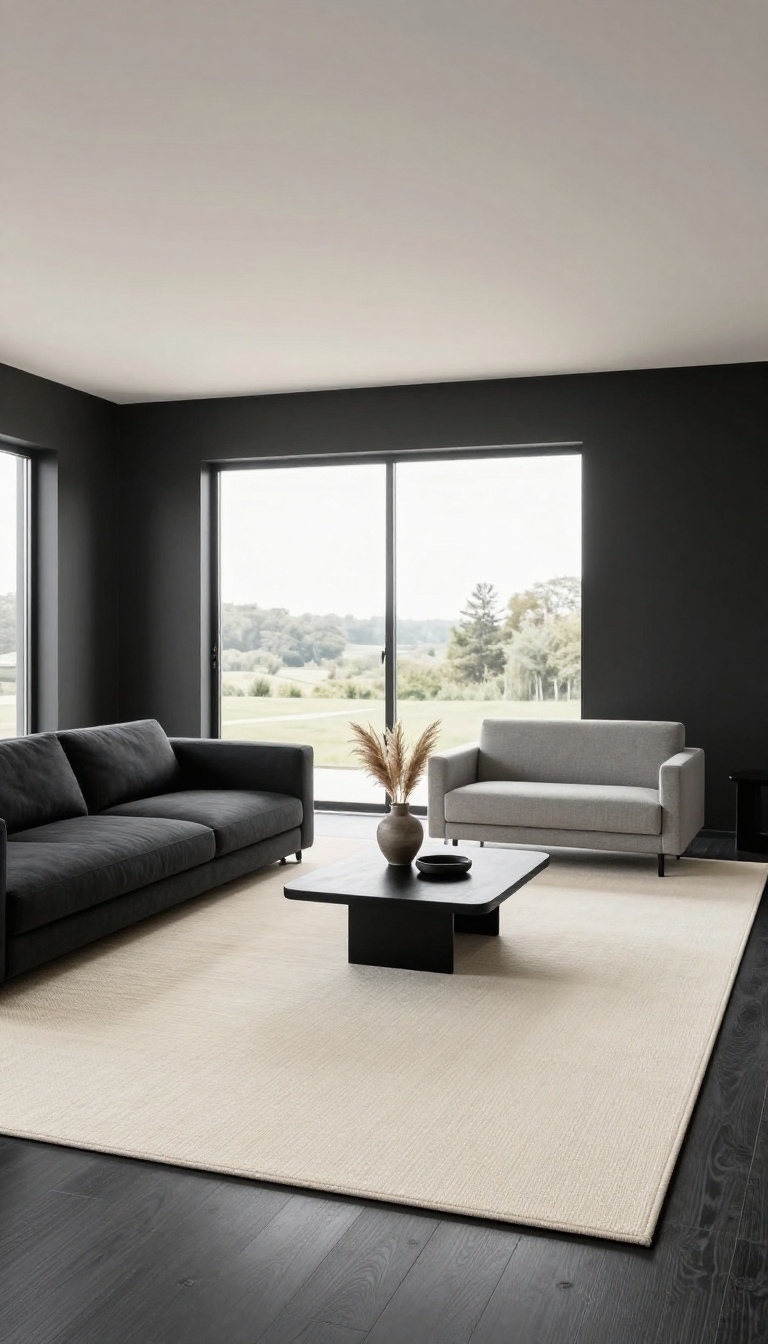
A black room without a light foundation can feel like you're standing on the edge of a cliff. A large, pale area rug fixes that instantly by giving your furniture a visual anchor and bouncing light back into the room. It's one of the simplest swaps that makes a dark space feel intentional instead of accidental.
The key is size and coverage. You want the rug to sit under at least the front legs of your main seating pieces, not float like a small island in a sea of dark floor. A rug that's too small makes the room feel choppy, while a generous one pulls everything together.
Color-wise, think soft whites, warm creams, light grays, or even pale beige. These tones reflect whatever light you have—natural or artificial—and send it upward. That upward bounce is what keeps the room from turning into a black hole.
Texture matters just as much as color. A low-pile or flatweave rug keeps the look modern and clean, while a shaggy or high-pile option can feel dated and trap shadows. Flatweave also handles foot traffic better and won't crush under heavy furniture.
Pick The Right Size
Measure your seating area first. For a standard sofa and two chairs, you'll want at least an 8×10 rug, but 9×12 is safer in larger rooms. The rug should extend a few inches beyond the edges of your furniture so it reads as a deliberate base, not an afterthought.
Choose Light But Practical Materials
Wool and cotton flatweaves are durable and easy to clean. If you have pets or kids, look for polypropylene or recycled PET—they're stain-resistant and still come in plenty of light, modern options. Avoid anything too plush if you want that crisp, contemporary feel.
Layer With A Darker Rug Pad
A dark rug pad underneath adds a subtle shadow line that makes the light rug pop even more. It also keeps the rug from sliding and adds a bit of cushioning. Just make sure the pad is slightly smaller than the rug so it doesn't peek out.
4. Add Warm Metals for Instant Contrast
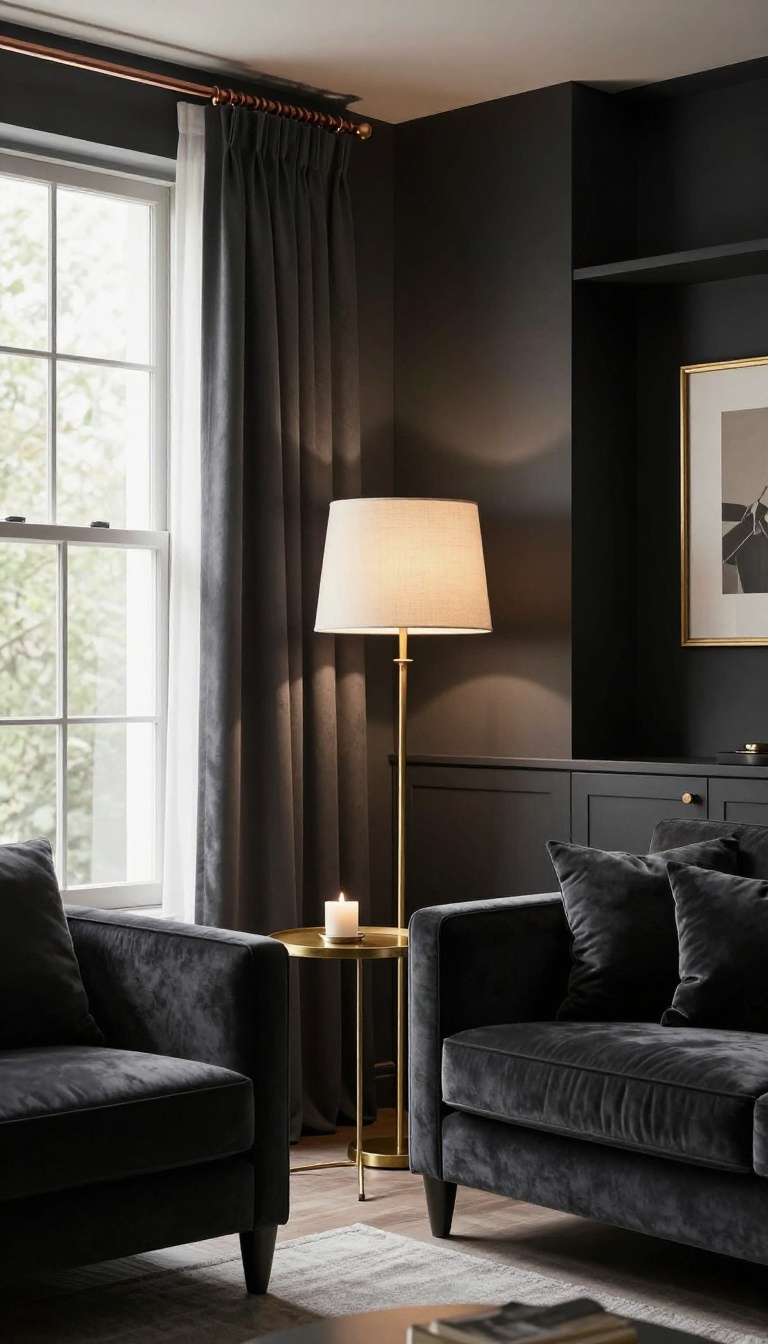
Black walls have a way of swallowing light, which is why warm metals are such a smart countermove. Brass, copper, and antique gold bounce light around the room while adding a glow that feels almost candlelit. You don't need to overhaul anything—swapping a few hardware pieces is often enough to shift the whole mood.
The trick is to treat metals as your room's jewelry. They catch whatever light you have and throw it back with a warm tint, so the black reads as rich instead of flat. Start with the pieces you touch every day: cabinet pulls, lamp bases, curtain rods, and faucets.
Those small swaps cost little and deliver a lot of visual payoff.
Start With Hardware You Already Touch
Cabinet knobs and drawer pulls are the easiest place to begin. Swap out cool silver or matte black hardware for unlacquered brass or aged copper, and the cabinets suddenly feel intentional. The same goes for door handles and light switch plates—small details that add up fast.
Let Lighting Do Double Duty
A brass or copper lamp base warms the light before it even leaves the shade. Choose fixtures with exposed metal arms or shades that let the finish show. Floor lamps and sconces in antique gold are especially good at pulling warmth into corners that black paint tends to darken.
Mix Finishes Without Overthinking It
You don't have to match every metal in the room. Pair brass with copper, or antique gold with a touch of blackened steel, as long as the tones stay warm. Repeating one finish three times—say, on the curtain rod, a side table, and a picture frame—creates a quiet rhythm that ties everything together.
5. Hang a Oversized Mirror Opposite Your Main Light Source
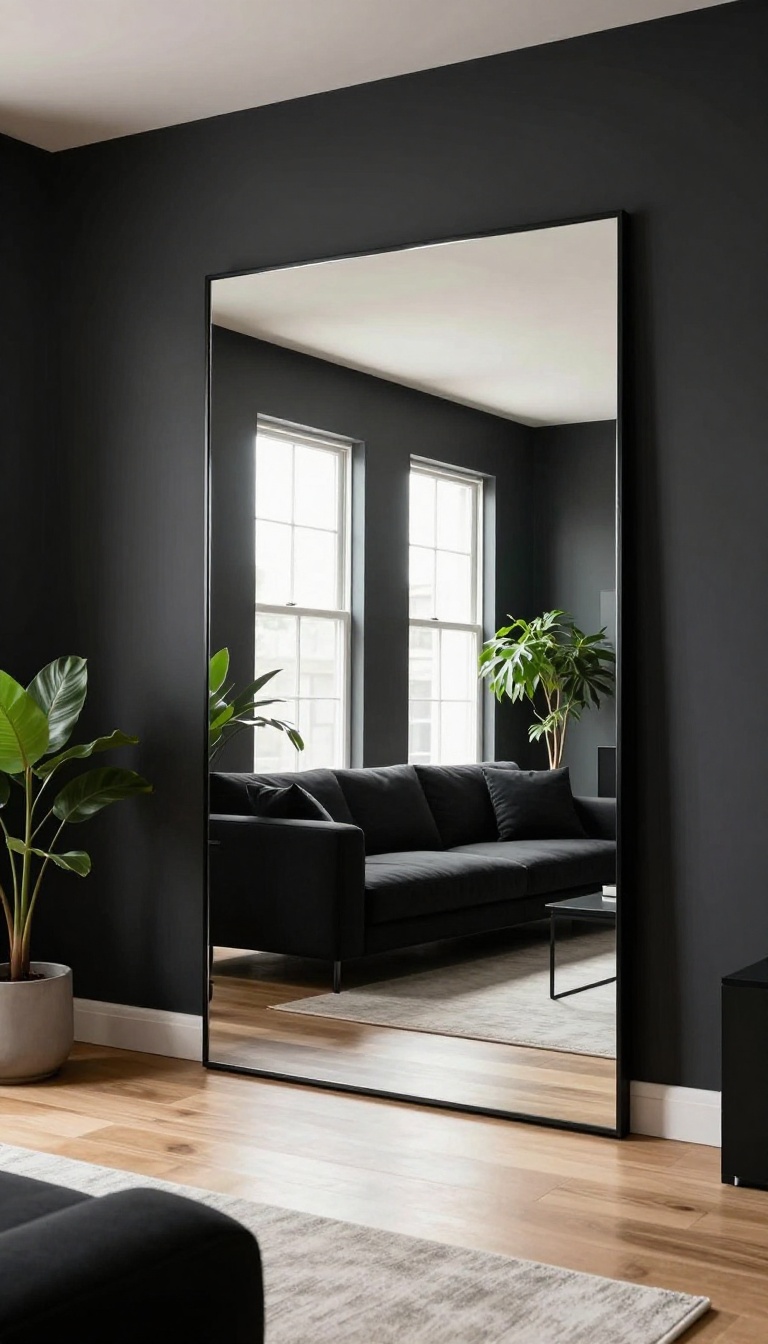
A mirror does more than reflect your reflection—it bounces light around the room. In a black living room, that extra light keeps the walls from feeling like a black hole. The key is placement: put the mirror directly across from your biggest window or main light source.
That way, it catches the light and throws it back into the space, making everything feel brighter and more open.
You don't need a tiny decorative mirror here. Go big—almost as wide as your sofa or the wall it's on. A large mirror acts like a second window, doubling the daylight and adding a sense of depth.
It also breaks up the black expanse so the room feels intentional, not oppressive. Just make sure it's centered on the light source for maximum effect.
Pick The Right Size And Shape
A mirror that's too small gets lost on a black wall. Aim for something that covers at least half the width of your sofa or the wall section. Rectangular mirrors work well for a modern look, while round or arched ones soften the hard edges of black walls.
Lean it or hang it—just keep it proportional to the space.
Position It For Maximum Light
Hang the mirror directly opposite your main window. If you have multiple windows, choose the one that gets the most sun. The mirror will catch that light and reflect it across the room, brightening dark corners.
Avoid placing it opposite a lamp unless that's your only light source—natural light works best.
Frame It To Match Your Style
The frame matters as much as the glass. A thin black frame blends into the wall for a seamless look. A brass or gold frame adds warmth and contrast.
For a bolder statement, try a thick wood frame or even a frameless mirror with beveled edges. Just make sure it complements your other metals and finishes.
6. Choose Art with Light Backgrounds and Bold Lines
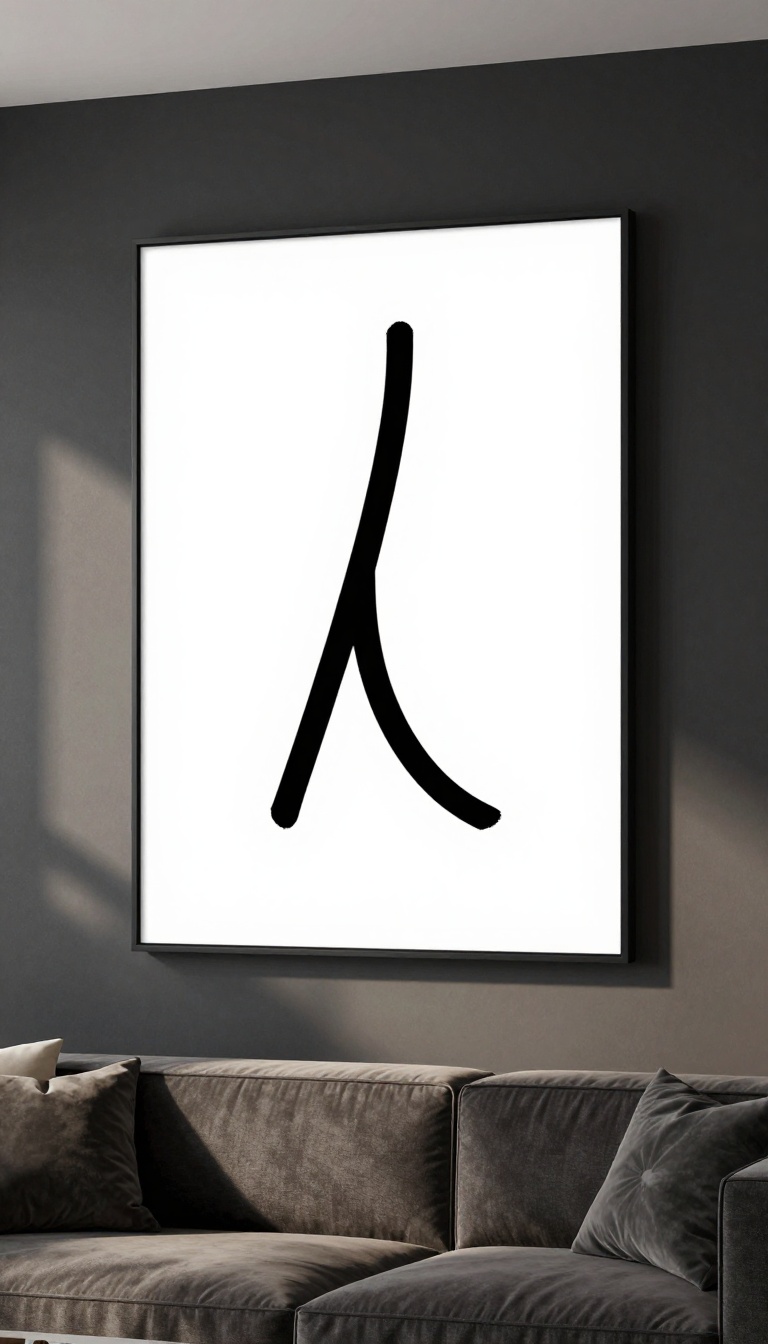
Art on a black wall has one job: stand out. If the piece blends into the darkness, you've wasted the wall and the artwork. Light backgrounds with strong black lines or simple abstract shapes give your eye somewhere to land.
The contrast does two things at once. It makes the art feel intentional and gallery-like, and it keeps the room from turning into a single flat block of color. You're not fighting the walls—you're using them as a frame.
Think of your black wall as a mat around a picture. The darker the wall, the more a white or cream canvas pops. That doesn't mean every piece has to be bright—it means the background should carry enough light to separate from the paint.
Linework and simple shapes work best here. A bold black curve on a white background reads clearly from across the room. A busy, multicolored painting can get lost or feel chaotic against dark walls.
Keep the composition strong and the palette tight. Scale matters too. One large piece with a light background often beats a cluster of small frames.
It gives the wall a clear focal point and keeps the space feeling open instead of cluttered.
Why Light Backgrounds Win
A white or cream canvas reflects light back into the room, which softens the cave effect black walls can create. It also creates an instant focal point. Your eye goes straight to the art instead of drifting across a dark surface.
Bold Lines Over Busy Detail
Abstract line art, geometric prints, and minimal figure drawings hold their own against dark walls. They stay readable from a distance and don't compete with the room's moody base. Skip anything too intricate or low-contrast—it will disappear.
Framing And Placement
Thin black or natural wood frames keep the focus on the artwork. Hang one large piece at eye level, or do a tight grid of light-background prints for a gallery wall. Leave breathing room around each piece so the black wall reads as a frame, not a void.
7. Mix in Natural Wood Tones for Organic Warmth
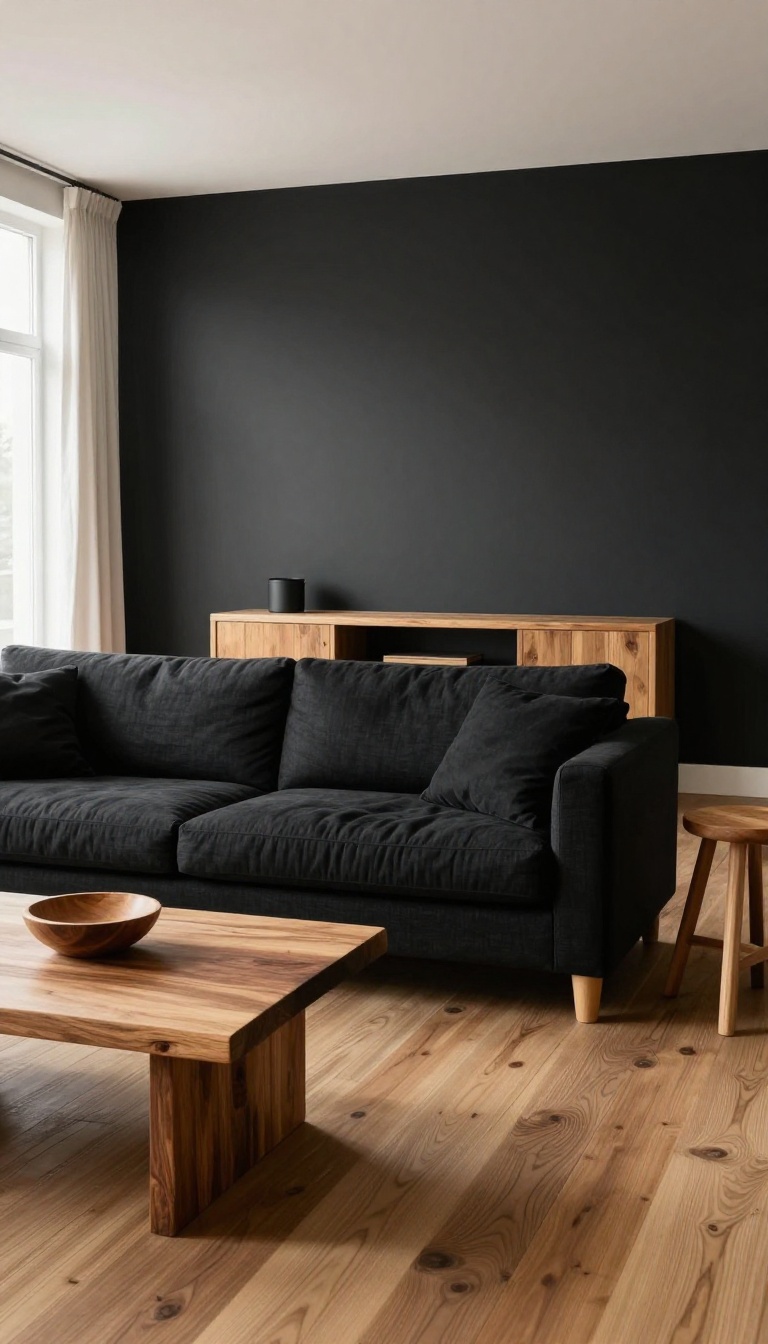
Black rooms can start to feel like a showroom—sleek, but a little sterile. Wood brings back the human element. It adds grain, warmth, and a sense of history that painted surfaces just can't match.
You don't need to go full rustic cabin. A few well-placed wood pieces are enough to soften the edges and make the black feel intentional instead of icy. Walnut, oak, and reclaimed wood are the easiest starting points because they all have enough depth to hold their own against dark walls.
The trick is contrast without clash. Black is a strong neutral, so it plays well with almost any wood tone—as long as you keep the finish consistent. Mixing too many different stains can make the room feel busy, which defeats the purpose.
Start with one anchor piece, like a coffee table or media console, and build from there. A single walnut table can change the entire mood of a black sofa setup. From there, you can layer in smaller wood accents—a bowl, a frame, a stool—without overwhelming the space.
Natural wood also adds texture that flat black surfaces lack. That subtle variation catches light in a way that paint can't, which keeps the room from looking like a black hole. It's a simple move with a big payoff.
Pick One Hero Wood Piece
Choose a statement furniture item—like a chunky oak coffee table or a reclaimed wood console—and let it be the main wood moment. This gives the room a focal point and prevents the space from feeling like a wood sample sale. One strong piece reads as deliberate; five medium pieces read as cluttered.
Balance Grain And Gloss
If your black surfaces are glossy, go with a matte or satin wood finish to add contrast. If your black is matte, a slightly polished wood can bring a subtle shine. The goal is to create a push-pull between finishes so the room feels layered, not flat.
Use Wood As A Bridge
Wood tones can connect black walls to lighter floors or colorful accents. A wood side table next to a black armchair, for example, softens the transition and makes the black feel less abrupt. It's a small move that helps the whole room feel more cohesive.
8. Install a Statement Light Fixture with a Sculptural Shape
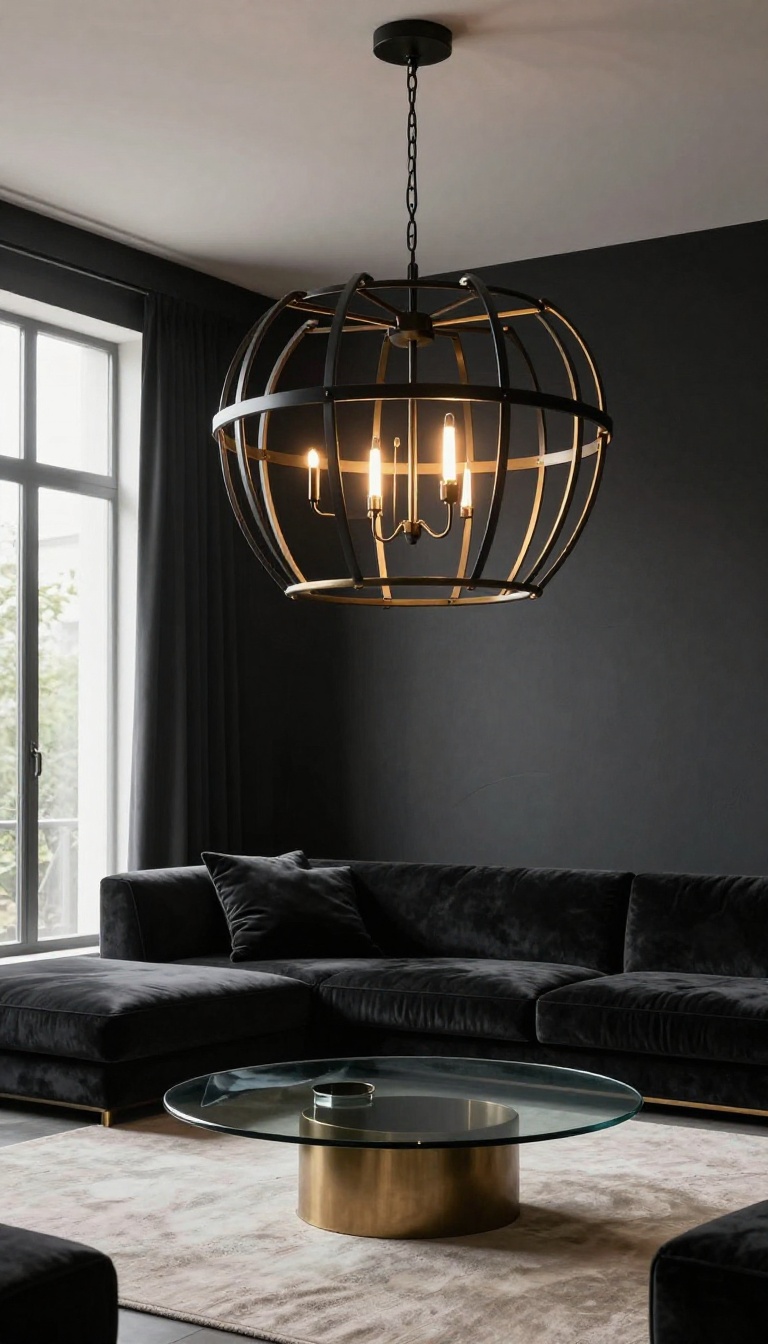
Light fixtures in a black living room do more than illuminate—they become the centerpiece. A sculptural chandelier or pendant draws the eye upward, adding vertical interest that balances the room's horizontal lines. The right piece can make a bold statement while keeping the space feeling open and airy.
When you choose a light fixture with an open frame or reflective finish, it prevents the room from feeling top-heavy. Think of it as jewelry for your ceiling: it should sparkle and catch the light, not block it. A fixture with a unique shape—like a cluster of orbs, a geometric cage, or a flowing ribbon—adds artistic flair without overwhelming the space.
Placement matters too. Center it over a coffee table or seating area to anchor the room. And don't forget dimmers; they let you shift the mood from bright and functional to soft and intimate.
Why Sculptural Shapes Work
Sculptural fixtures create a focal point that distracts from the darkness of the walls. Their unusual forms add visual interest and make the room feel curated. They also introduce a mix of materials—like brass, glass, or matte black—that play with light and shadow.
Choosing The Right Size And Scale
Scale is key. A fixture that's too small gets lost; too large and it dominates. As a rule, the diameter of a chandelier should be about one-third the width of the seating area.
For pendants, hang them 30 to 36 inches above a table. In a black room, a slightly larger fixture can work because it stands out against the dark background.
Open Frames And Reflective Finishes
Open frames let light pass through, so the fixture doesn't become a dark blob. Reflective finishes like chrome, nickel, or gold bounce light around the room, adding sparkle. These choices keep the ceiling from feeling heavy and help distribute light evenly.
9. Use Sheer Curtains to Soften the Edges
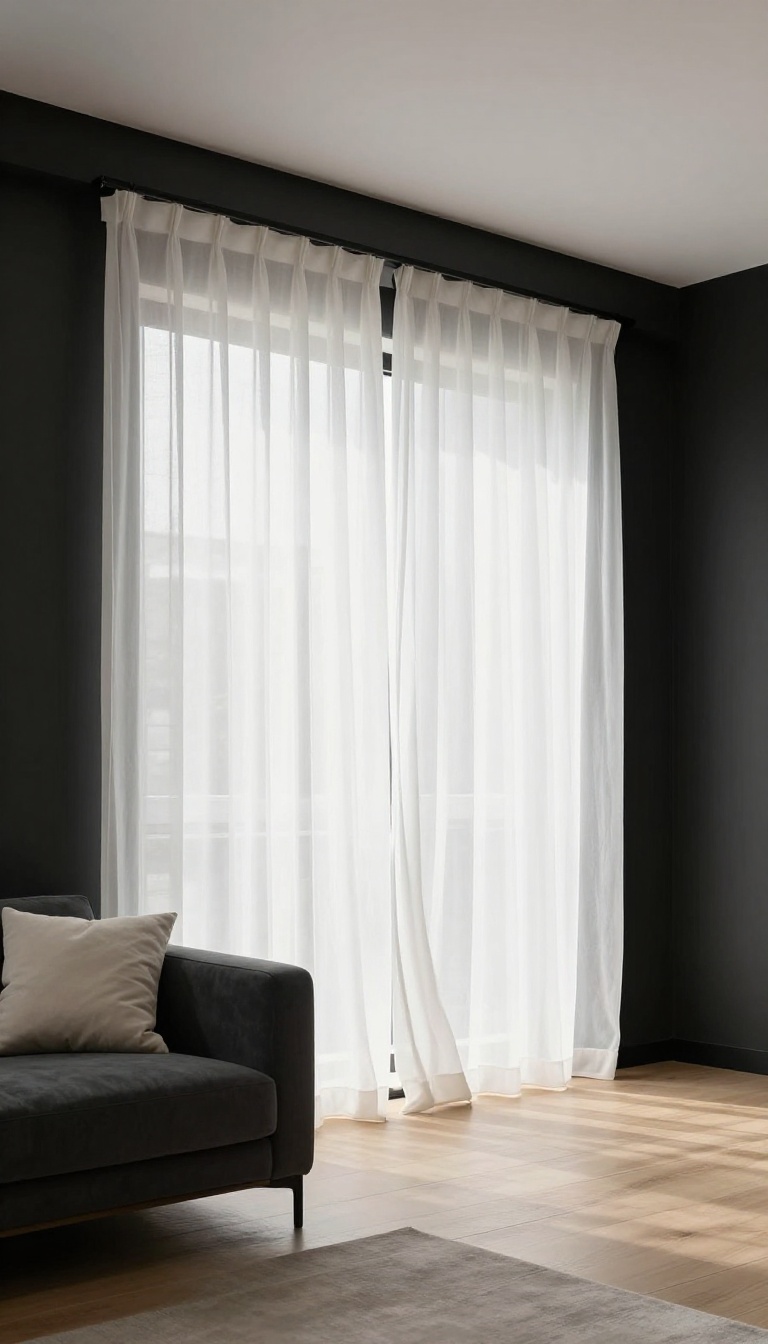
Black walls and heavy drapes can make a room feel like a bunker. The fix is simple: swap those thick panels for something sheer. White or light gray curtains filter daylight and add a soft, airy layer that keeps the dark from feeling oppressive.
Sheer curtains don't block light—they diffuse it. That means your black walls get a gentle wash of brightness instead of harsh glare. The result is a room that feels open and inviting, not closed in.
You still get privacy during the day, but you lose that cave-like vibe. And because sheers are lightweight, they move with the breeze, adding a subtle sense of life to the space.
Why Sheer Works With Black
Black absorbs light, so any window treatment that blocks it entirely will make the room darker. Sheers let light pass through while softening its intensity. They also create a visual break between the dark walls and the bright outdoors, which helps the eye adjust.
The contrast feels intentional, not jarring.
Pick The Right Fabric And Color
Go for white, off-white, or light gray. These shades reflect light and keep the look fresh. Linen and voile are great choices because they drape beautifully and feel natural.
Avoid anything with a shiny finish—it can look cheap against matte black walls. A subtle texture, like a slubby weave, adds depth without competing with the room.
Layer For Flexibility
Sheers alone might not give you enough darkness at night. Add a second, heavier panel that you can pull closed when you want. Choose a blackout curtain in a color that matches your walls or a warm neutral.
Hang the sheers closest to the glass and the heavier panels on the outside. This way, you control light and privacy without sacrificing style.
10. Add a Pop of Jewel Tone in Small Doses
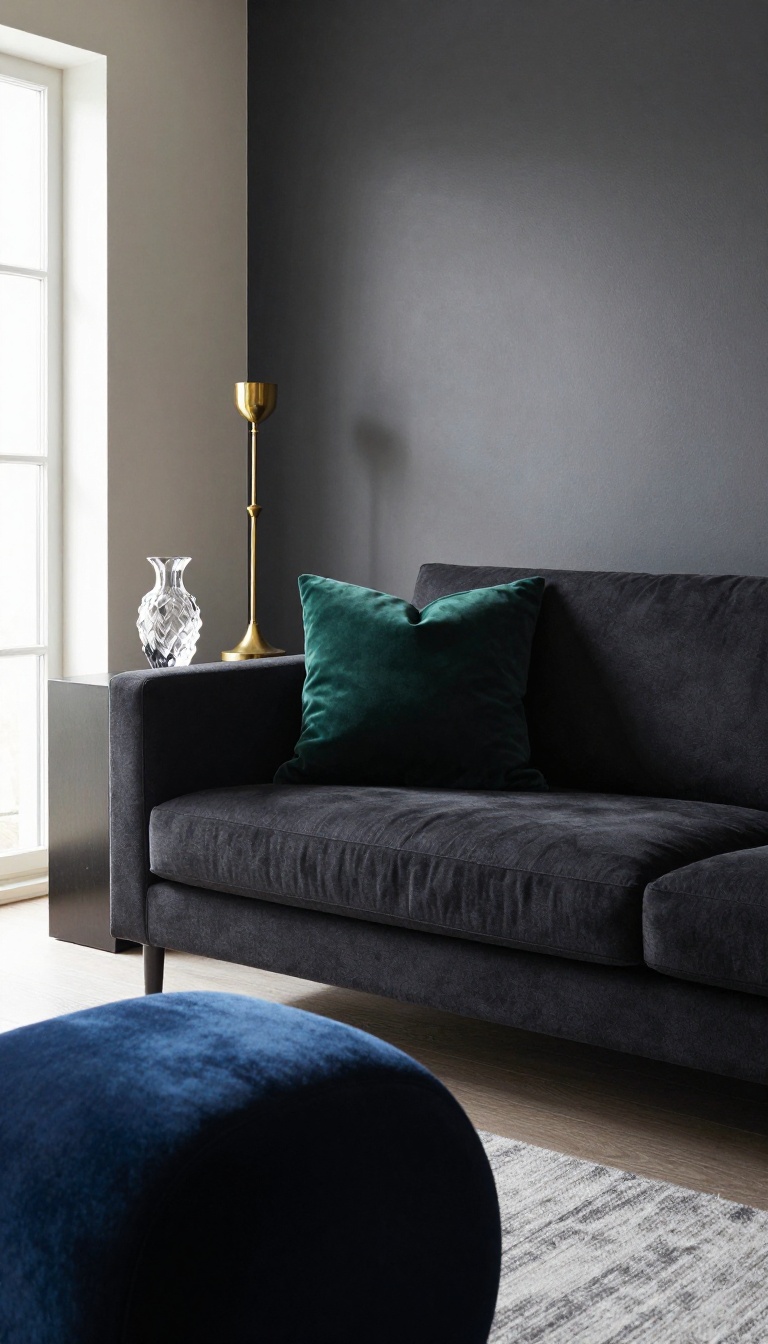
Jewel tones were made for black rooms. Emerald, sapphire, and amethyst carry enough saturation to hold their own against dark walls, and they read as expensive without much effort. The trick is dose size.
A little goes a long way here.
One emerald velvet pillow on a black sofa changes the whole mood of the corner. Two might be better. Five turns your living room into a themed lounge, which is a different article entirely.
Think of jewel tones as seasoning. You want people to notice the color, not drown in it. Keep the surrounding palette neutral—charcoal, cream, warm gray, brass—so the emerald or sapphire has something quiet to sit against.
Where To Place The Color
Pillows and throws are the easiest entry point because you can swap them out when you get bored. A single amethyst glass vase on a black console does the same job with zero commitment. If you want something slightly bigger, try a jewel-tone accent chair or an ottoman in deep sapphire velvet.
Just keep it to one saturated piece per sightline.
Pick One Tone, Not Three
Mixing emerald, sapphire, and ruby in the same room usually looks chaotic against black. Choose one jewel tone as your accent and let it repeat in two or three spots—a pillow, a candle holder, a piece of art. Repetition makes the color feel intentional instead of random.
Let Metallics Do The Framing
Brass, antique gold, and polished nickel pair beautifully with jewel tones on a dark backdrop. A gold-framed mirror above an emerald velvet bench, or brass candlesticks next to a sapphire vase, gives the color a finished edge. Skip chrome here—it fights the warmth.
11. Create a Gallery Wall with Mixed Frame Sizes
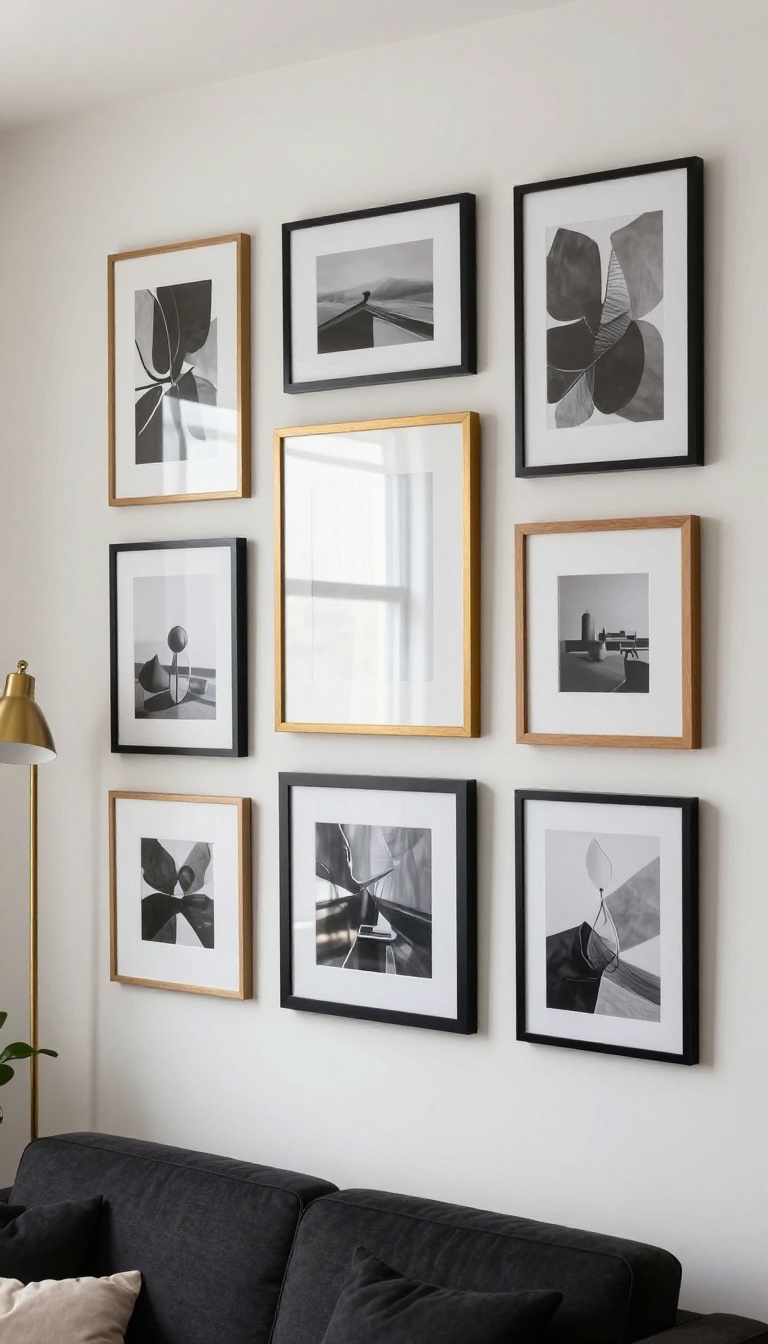
A big black wall can swallow up your favorite art if everything hangs at the same size and spacing. A gallery wall fixes that by turning the wall itself into a composition—one that adds rhythm, personality, and a place for the eye to land. The trick is mixing frame sizes so the arrangement feels collected, not catalog-ordered.
Thin black frames keep the look sharp, while a few gold or wood ones break up the darkness and bring in warmth.
You don't need a perfectly symmetrical grid to make this work. In fact, the best gallery walls look a little off-balance on purpose. Start by pulling together pieces you actually like—prints, photos, small mirrors, even a textile or two.
Then play with scale before you commit to nails. Lay everything on the floor first. Move the biggest piece around until it feels like the anchor, then build outward with smaller frames.
Keep the gaps between frames consistent—about two to three inches—so the mix feels intentional rather than random.
Mix Your Frame Finishes
Thin black frames disappear into a black wall, which can be a good thing when you want the art to do the talking. But if every frame is black, the whole arrangement can flatten out. Add two or three gold, brass, or light wood frames to create little sparks of contrast.
You don't have to match the metals to your other hardware. A little mismatch reads as collected, especially when the frame shapes vary too. Just keep the frame thickness somewhat similar so the mix doesn't look accidental.
Plan The Layout Before You Hang
Trace each frame onto kraft paper and tape the shapes to the wall. This lets you step back and adjust without making a dozen holes. Aim for a loose rectangle or organic cluster, and keep the bottom edge roughly aligned so the group feels grounded.
If you're nervous about committing, start with a smaller cluster of five to seven pieces. You can always add more later. A tight, well-edited group usually looks better than a sparse wall that's still waiting for art.
Light The Wall, Not Just The Room
A gallery wall on a black backdrop needs its own light source. A slim picture light or a pair of adjustable wall sconces will pull the art forward and keep the frames from blending into the dark. Warm bulbs—around 2700K—work best here.
They make gold frames glow and keep black frames from looking like holes in the wall. If you can't hardwire anything, plug-in sconces with a cord cover are an easy fix.
12. Choose a Low-Profile Sofa to Keep Sightlines Open
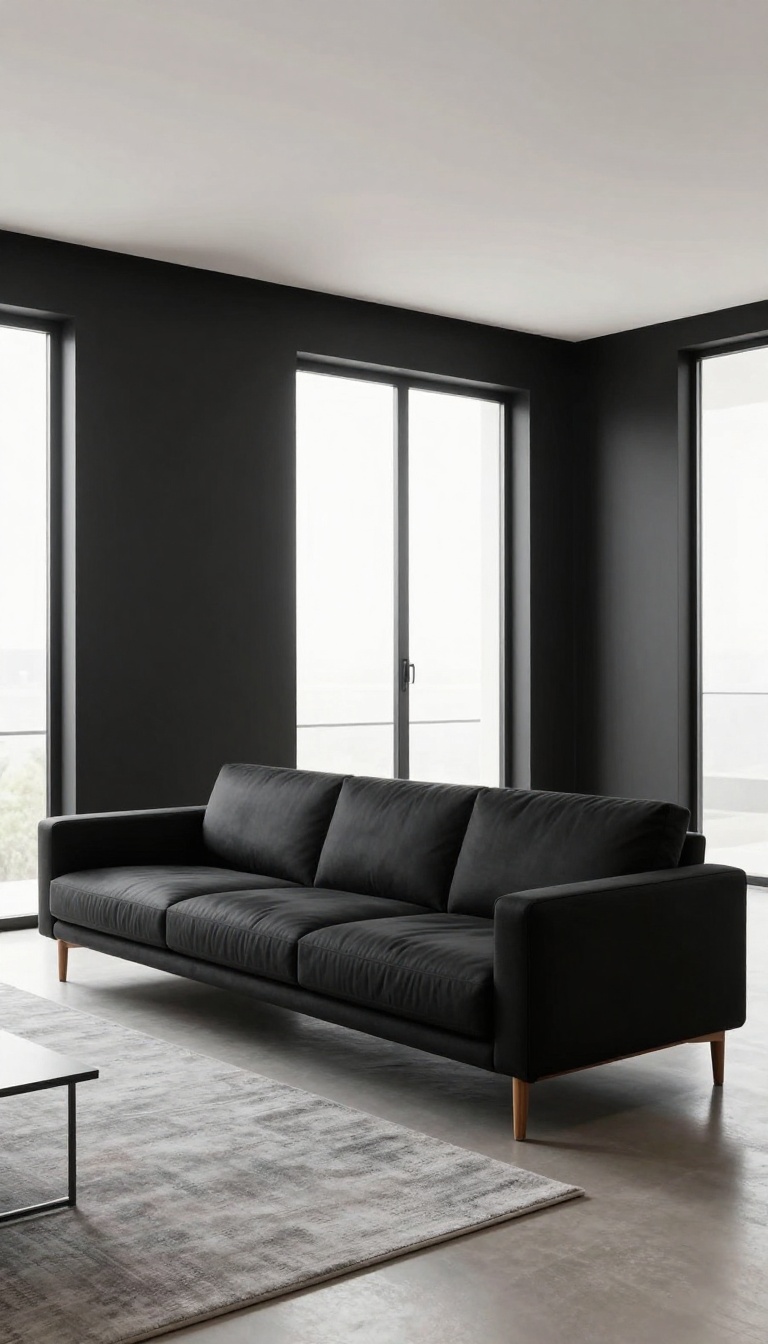
Sofa shopping usually starts with color and fabric, but height matters just as much in a black room. A tall, overstuffed couch blocks the eye and eats up visual space, making even a large living room feel tight. Swap it for something low and lean, and the whole room opens up without changing a single wall.
Low-profile sofas sit close to the floor with backs around 28 to 32 inches high. That gap above the frame lets your eye travel across the room instead of stopping at a wall of upholstery. Black walls already absorb light, so anything that frees up sightlines works in your favor.
Track arms and clean, straight lines keep the silhouette simple. Curvy, rolled arms add bulk you don't need against dark surfaces. A tight back cushion instead of loose pillows also trims the profile and keeps things looking sharp.
Pick The Right Height
Measure from the floor to the top of the back before you buy. Anything under 32 inches reads as low-profile and keeps the room feeling airy. If you have a low ceiling, this matters even more.
Let The Legs Show
A sofa on visible legs, even short ones, feels lighter than one sitting flush on a skirt. The gap underneath adds breathing room. Wood or metal legs also bring in a texture that breaks up all the black.
Keep The Palette Simple
A charcoal or deep navy sofa blends into the walls and makes the room feel larger. If you want contrast, go with a lighter fabric like warm gray or camel. Either way, skip busy patterns that fight the dark backdrop.
13. Add a Floor Lamp with a Warm Bulb for Ambient Glow
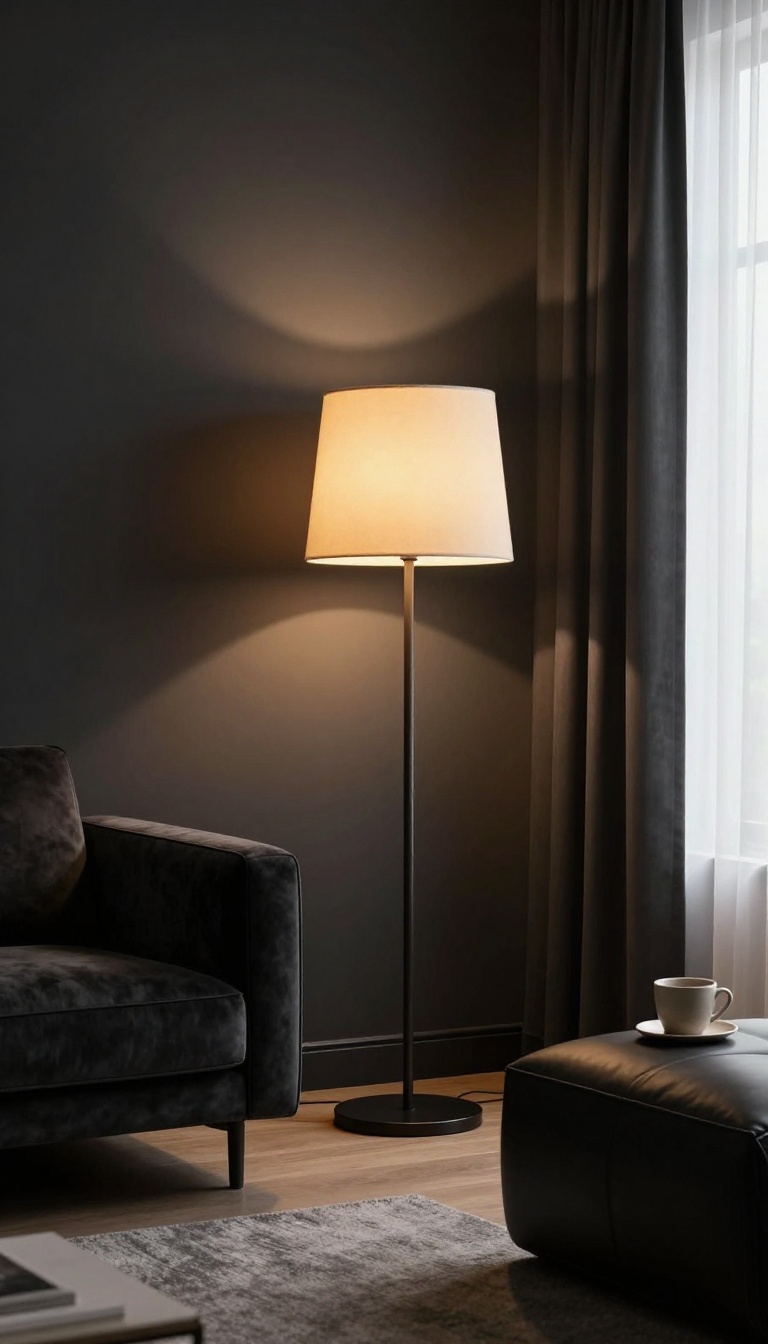
Overhead lighting alone can make black walls look harsh and uninviting. A floor lamp with a warm white bulb adds a cozy pool of light that highlights textures and softens the mood. It's a simple swap that instantly makes the room feel more layered and livable.
A floor lamp isn't just about extra light—it's about controlling the quality of light. In a black room, you want warmth, not glare. A warm bulb (around 2700K) casts a golden glow that flatters dark surfaces and makes them feel rich instead of flat.
Place it near a seating area or beside a dark wall to create a focal point that draws the eye and adds depth.
Why Warm Bulbs Matter
Cool white bulbs can make black walls look gray and clinical. Warm bulbs bring out the subtle undertones in dark paint and make wood, leather, and velvet look their best. They also reduce eye strain in the evening, so the room feels relaxing rather than stark.
Where To Place It
Put the lamp where you need soft light most—next to a reading chair, in a dark corner, or behind a sofa. Aim for a lamp with a shade that directs light up and down. That creates a gentle wash on the wall and a pool of light on the floor, adding dimension without harsh shadows.
Style And Scale
Choose a lamp that complements your room's scale. A slim, sculptural design works in modern spaces, while a chunky base adds weight to minimalist rooms. Black or metallic finishes blend seamlessly with dark walls, but a pop of brass or ceramic can add a welcome contrast.
14. Use a Dark Ceiling to Extend the Depth Upward
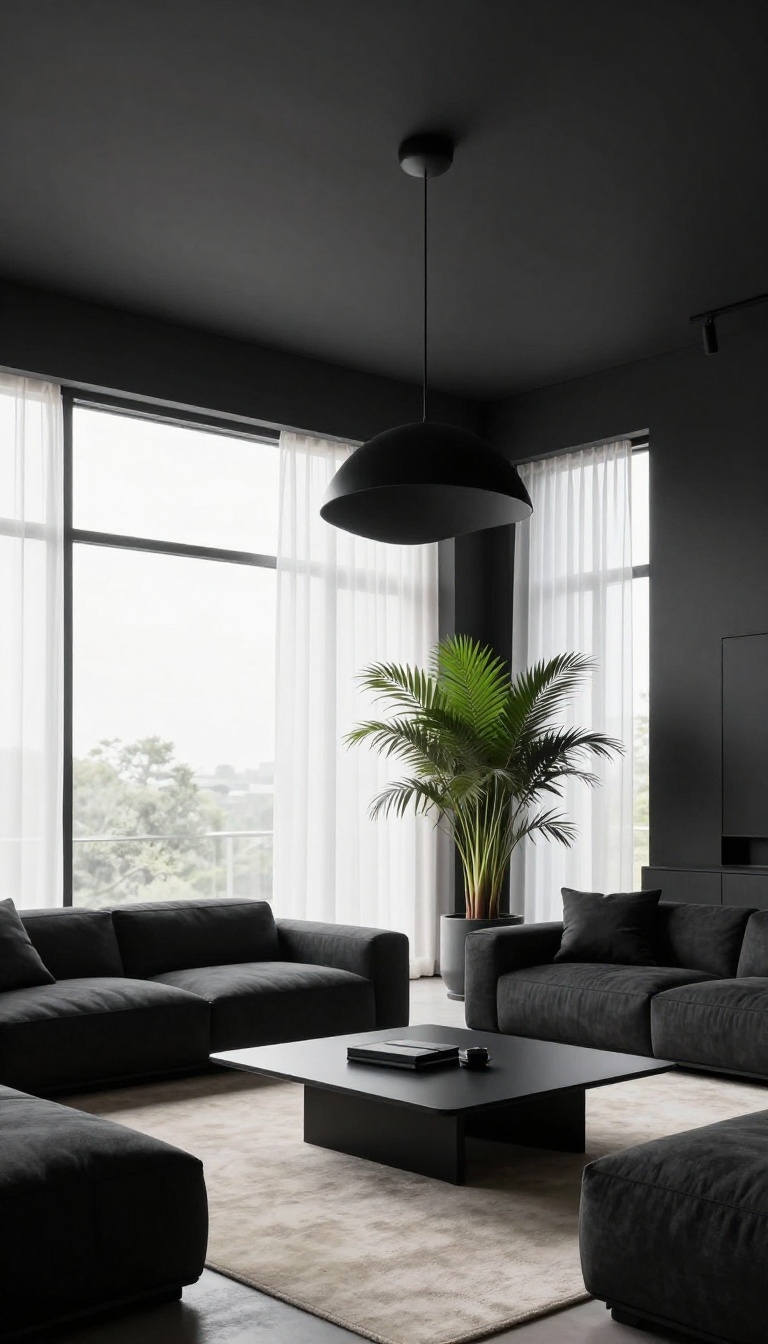
Most people stop painting at the crown molding. The ceiling stays white, the walls go black, and the room ends up looking like a box with a lid. Flip that and the whole space changes.
A dark ceiling pulls the eye up and makes the room feel taller, not smaller, as long as you get the shade right.
The trick is treating the ceiling as part of the same envelope, not a separate surface. When the fifth wall matches or slightly lightens the walls, the corners disappear and the room reads as one continuous volume. That's the cocooning effect people talk about, and it's genuinely cozy rather than claustrophobic when the proportions cooperate.
This move rewards rooms that already have something going on up top. Exposed beams, tray ceilings, coffers, or a strong pendant all give the dark paint something to describe. In a plain low-ceilinged room with no trim, the same treatment can feel heavy, so read your space before you commit.
Match The Walls Or Go One Shade Lighter
Full match gives you the most dramatic, seamless look. Going one or two shades lighter keeps the ceiling from feeling like a black hole while still killing the white-lid problem. Either way, use the same finish family so the light behaves consistently across both surfaces.
Flat Paint Hides, Satin Reveals
Ceilings show every flaw under raking light, and glossy finishes make that worse. Matte or flat black is the safe pick because it absorbs light and softens imperfections. If you want a little sheen for bounce, keep it to a low-sheen eggshell and only in rooms with smooth, well-prepped ceilings.
Let The Architecture Do The Talking
Beams, trim, and recessed panels look incredible in black because shadow and paint work together. Paint the details the same color as the field for a moody, monolithic feel, or pick them out in a slightly deeper black for subtle definition. Skip this treatment in rooms with low ceilings and zero architectural interest, where it just adds weight.
Light It From Below
Once the ceiling goes dark, your overhead fixture stops doing the heavy lifting. Add floor lamps, table lamps, and wall sconces so light washes upward and grazes the surface. That upward glow is what makes the dark ceiling feel intentional instead of oppressive.
15. Finish with a Few Matte Black Accents for Cohesion
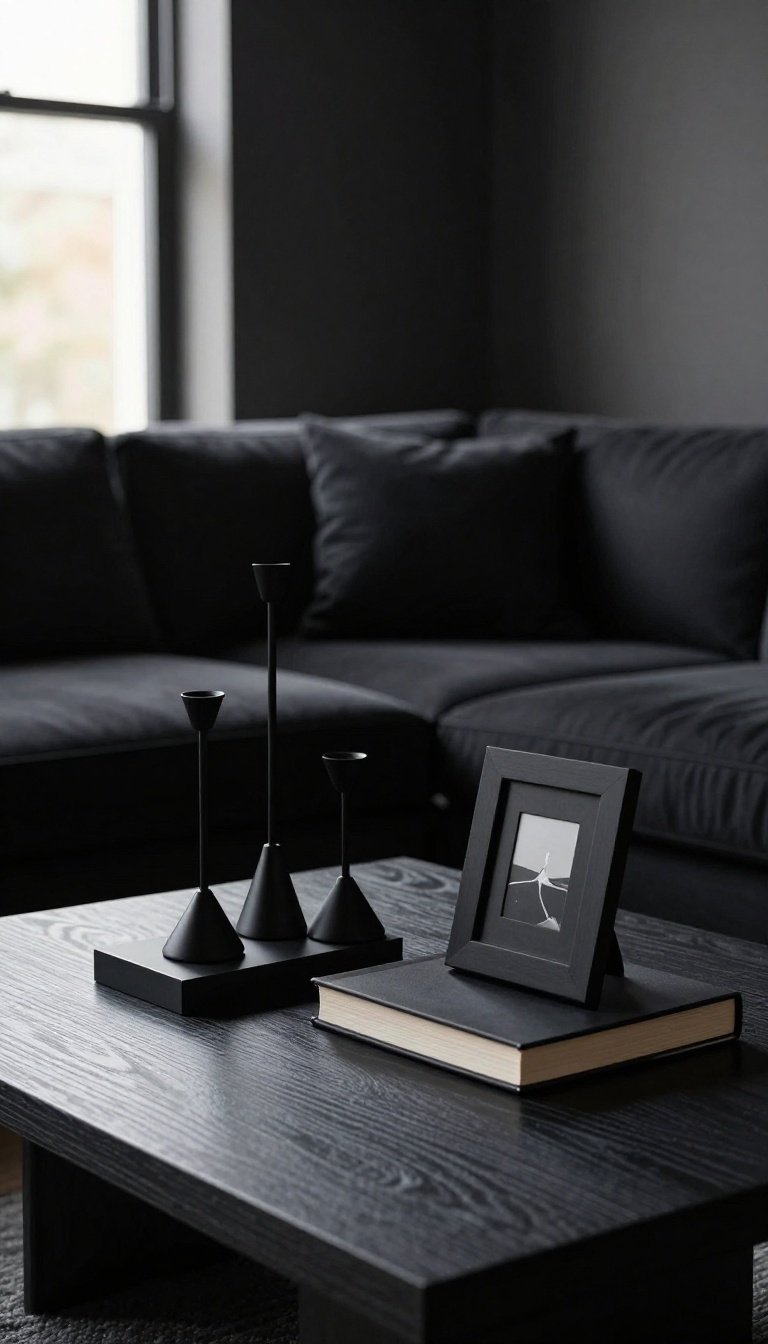
Matte black accents are the quiet workhorses of a black living room. They don't shout for attention, but they pull the whole look together like a good pair of black boots. The trick is keeping the finish consistent—glossy black next to matte black can look like an accident, not a choice.
Candle holders, bookends, picture frames, and even small trays in matte black add structure without adding shine. They absorb light instead of bouncing it, which keeps the room feeling deep and moody. Stick to one finish across all your accents so the eye reads them as a deliberate layer, not random clutter.
Pick One Finish And Stick To It
Matte, satin, and flat are close cousins, but mixing them with gloss creates visual noise. Choose one and repeat it on every small black object in the room. That consistency is what makes the accents feel intentional.
Where To Place Them
Group a few matte black pieces on a coffee table, console, or shelf. A trio of candle holders, a pair of bookends, or a single frame can anchor a surface. Don't scatter them everywhere—clustering keeps the effect strong.
Keep The Scale Small
These accents are supporting players, not stars. Oversized matte black objects can compete with your main furniture. Stick to small and medium sizes so they add detail without dominating.
FAQ
Will a black living room make my space feel smaller?
It can if you don't balance it with light. Use a light rug, mirrors, and warm lighting to keep the room feeling open. Charcoal instead of pure black also helps.
What colors go best with black walls in a living room?
Warm neutrals like cream, camel, and soft gray work well. Jewel tones like emerald or sapphire add richness. Metals like brass and copper bring warmth.
How do I keep a black living room from feeling cold?
Layer textures like velvet, wool, and wood. Add warm lighting with 2700K bulbs. Use a soft rug and throw blankets to make the space feel inviting.
Can I paint just one wall black instead of the whole room?
Yes. An accent wall behind a sofa or TV works well and is less commitment. Pair it with lighter walls on the other sides for balance.
What kind of lighting works best in a black living room?
Mix ambient, task, and accent lighting. Use warm bulbs, dimmers, and multiple sources like floor lamps, table lamps, and sconces to avoid harsh shadows.
Conclusion
Black walls and bold accents can feel intimidating, but the trick is starting small. Pick one idea here that fixes your biggest annoyance, whether that is a flat wall, weak lighting, or a room that feels cold and unfinished. Live with that single change for a week before adding more.
Two or three deliberate moves beat a rushed overhaul every time. Let the dark tones breathe, layer in texture and light where it counts, and stop once the room feels settled and unmistakably yours.