10 Cleaning a Microwave Steps for Fast Steam Results
You know that moment when you open the microwave and a wave of stale popcorn and mystery sauce hits you? It doesn't have to be that way. With a simple steam trick, you can loosen grime in seconds and wipe it away like magic.
This method uses just water and a microwave-safe bowl to create steam that softens stuck-on food. No harsh chemicals, no endless scrubbing.
Follow these 10 steps to get your microwave looking and smelling fresh in under 10 minutes. You'll wonder why you ever cleaned it any other way.
1. Gather Your Supplies
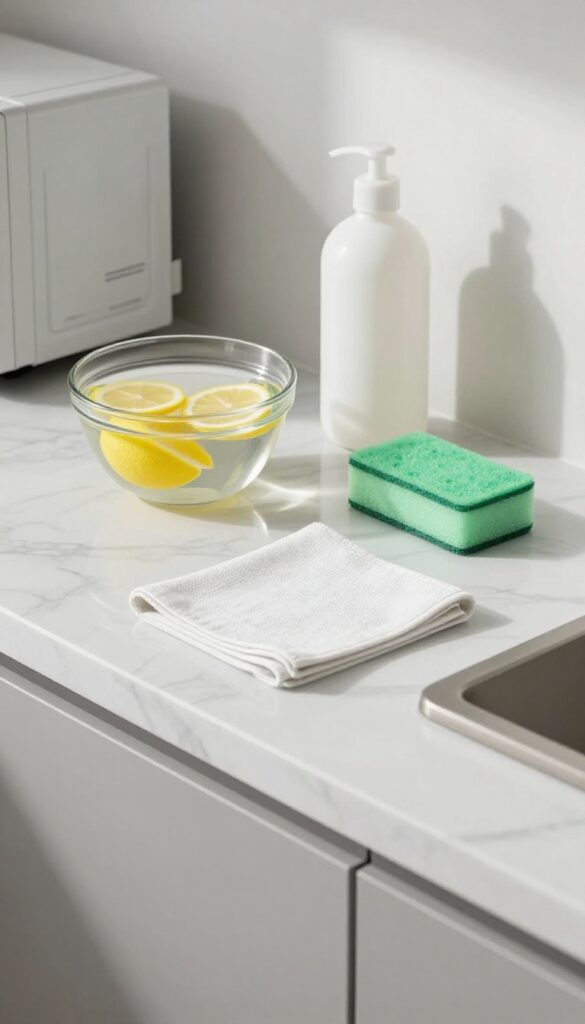
Before you start steaming, grab everything you need. It saves time and keeps you from hunting for a sponge mid-process. A microwave-safe bowl, water, white vinegar or a lemon, a sponge or cloth, and a microfiber towel are all you need.
What You'll Need
Pick a bowl that's microwave-safe—glass or ceramic works best. Avoid metal or plastic that isn't labeled safe. You'll also need water, a tablespoon of vinegar or a few lemon slices, a non-abrasive sponge or cloth, and a dry microfiber towel for buffing.
Why These Items Work
Vinegar and lemon are natural acids that break down grease and odors. The steam created from heating the water loosens dried food, making it easy to wipe away. A microfiber towel picks up residue without leaving lint.
Prep Your Workspace
Clear the microwave of any turntable or accessories if they're removable. Set your supplies on the counter nearby so you can work quickly once the steam cycle ends.
2. Fill the Bowl with Water and Add a Cleaning Agent
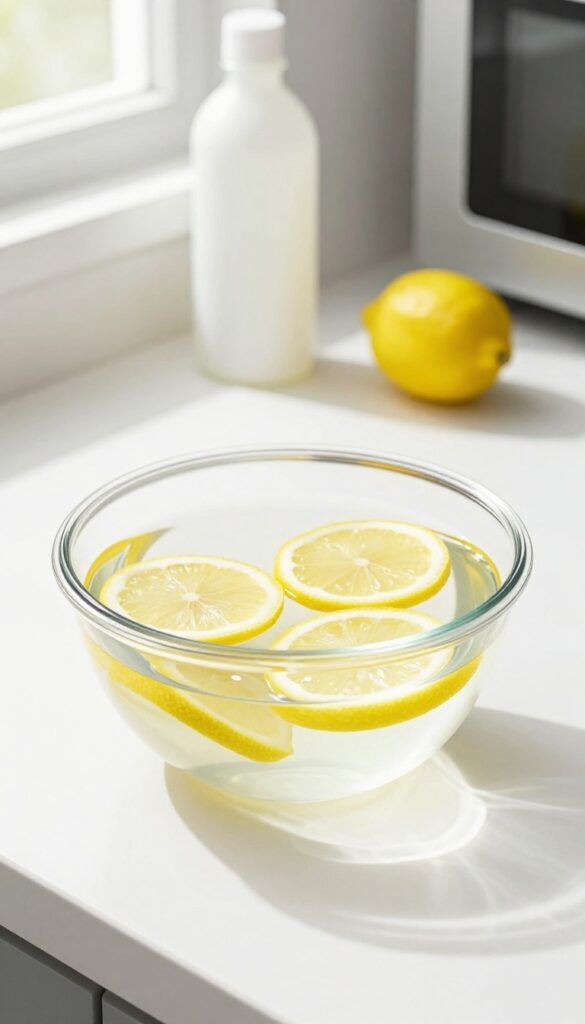
Now that your bowl is ready, it's time to add the cleaning power. Plain water works, but a little extra ingredient makes a big difference. White vinegar cuts through grease and deodorizes, while lemon slices add a fresh, natural scent.
Either choice helps loosen baked-on food so you can wipe it away with ease.
Fill your microwave-safe bowl with 1 cup of water. Then add either 2 tablespoons of white vinegar or a few lemon slices. If you use vinegar, don't worry—the smell will dissipate during heating.
Lemon slices not only smell great but also help break down grime. For extra cleaning punch, you can add a drop of dish soap, but it's not necessary. Stir briefly if using vinegar.
Why Vinegar Works
White vinegar is mildly acidic, which helps dissolve mineral deposits and grease. When heated, the steam carries vinegar particles throughout the microwave, softening stuck-on food. It's a natural, non-toxic cleaner that leaves surfaces fresh without chemical residue.
Lemon For Freshness
Lemon slices add a bright, clean scent while their citric acid helps break down grime. Simply squeeze a few slices into the water or drop them in whole. The steam will carry lemon oils, leaving your microwave smelling like citrus.
Plus, it's a great option if you dislike vinegar's smell.
Water Amount Matters
Using exactly 1 cup of water (about 240 ml) is key. Too little water won't create enough steam, and too much might overflow during heating. Stick to the recommended amount for safe, effective steaming.
If your microwave is especially dirty, you can increase to 1. 5 cups, but keep an eye on the bowl.
3. Microwave the Bowl on High
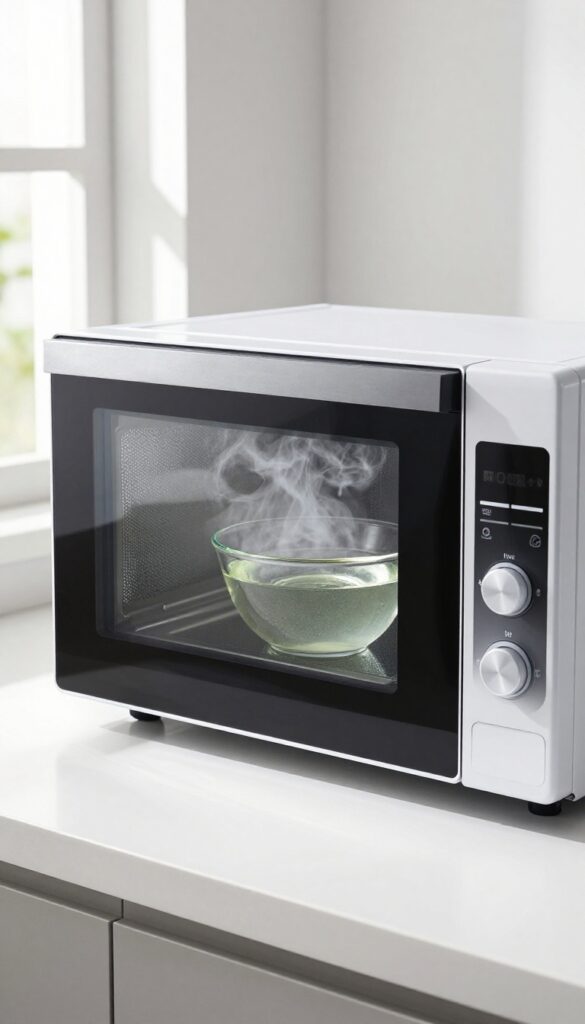
Once your bowl of water and vinegar is ready, it's time to let the heat do the work. This step is where the magic happens: the steam will loosen all that baked-on grime, making it effortless to wipe away. Just a few minutes in the microwave and you'll see a dramatic difference.
Place the bowl in the center of the microwave turntable. Set the power to high and run it for 3 to 5 minutes, depending on your microwave's wattage. You want the water to come to a rolling boil and the steam to fog up the interior completely.
Once the timer goes off, don't open the door right away. Let the bowl sit inside for another 2 minutes. This allows the steam to penetrate the toughest spots and soften the residue without you having to lift a finger.
Watch The Window
Keep an eye on the microwave window during the cycle. You should see condensation forming on the glass within the first minute or two. If the water isn't steaming heavily after 3 minutes, add another minute.
Every microwave is different, so adjust the time as needed.
Safety First
When the time is up, open the microwave door carefully. The bowl and the water inside will be extremely hot. Use oven mitts or a thick towel to handle the bowl.
Tilt the bowl away from you to avoid a face full of steam.
What If It Boils Over?
If your bowl is too full or the water boils too vigorously, it might spill over. To prevent this, use a larger bowl or add a wooden skewer to break the surface tension. A quick wipe of any spills after the cycle will keep things tidy.
4. Let the Steam Work
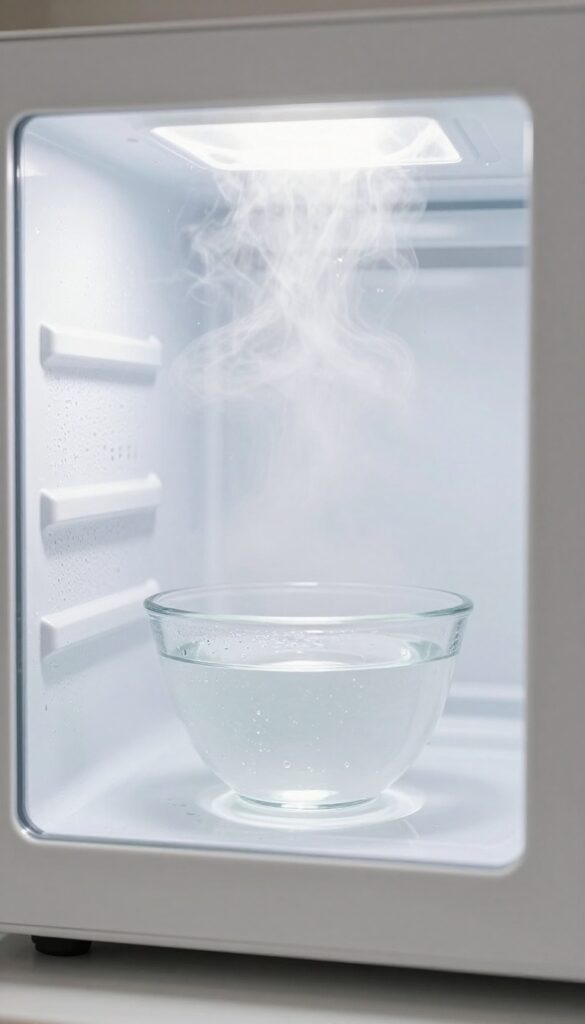
You've run the microwave for a few minutes, and now steam is billowing inside. It's tempting to open the door right away and start wiping, but patience here pays off big time. Letting the steam sit for a couple of minutes is the secret to effortless cleaning.
Why Waiting Matters
Steam needs time to penetrate and soften dried-on food. If you open the door immediately, the steam escapes before it can do its job. Waiting 2–3 minutes allows the heat and moisture to loosen stubborn grease and grime, so you can wipe them away with almost no effort.
What Happens Inside
During those few minutes, the steam condenses on the microwave's interior surfaces. This thin layer of hot water seeps under crusty bits of food, rehydrating them. The result?
Dried spaghetti sauce turns into soft, wipeable smudges, and baked-on cheese slides off like butter.
A Quick Safety Note
The bowl and the water inside will be extremely hot. Use oven mitts or a thick towel when you finally open the door and remove the bowl. Point the opening away from your face to avoid a burst of steam.
Safety first, then easy cleaning.
5. Carefully Remove the Bowl
The microwave has finished its cycle, and the inside is filled with hot steam. That steam has done its job loosening the grime, but now you need to handle the bowl safely. Steam burns are no joke, so take your time with this step.
Open the microwave door slowly, keeping your face away from the opening to avoid the initial burst of steam. Use oven mitts or a thick towel to grip the bowl—it will be very hot. Lift it straight out and place it on a heat-safe surface, like a trivet or a folded dish towel.
Let the bowl cool down completely before handling the water or adding any cleaning agents. This simple caution prevents accidents and keeps the process stress-free.
Use Oven Mitts
Always protect your hands with oven mitts or a folded kitchen towel. The bowl and the water inside can reach temperatures well above boiling, and a slip could cause serious burns. Don't rely on the bowl feeling cool to the touch—steam heat can be deceptive.
Watch For Steam Release
When you open the door, stand to the side and let the steam escape upward. If you lean directly over the bowl, you risk getting a face full of hot vapor. A moment of patience here saves you from discomfort.
Set The Bowl Aside To Cool
Place the hot bowl on a stable, heatproof surface away from the edge of the counter. Don't pour out the water immediately—it's still scalding. Give it at least five minutes to cool down before you dispose of the water or reuse the bowl.
6. Wipe Down the Interior
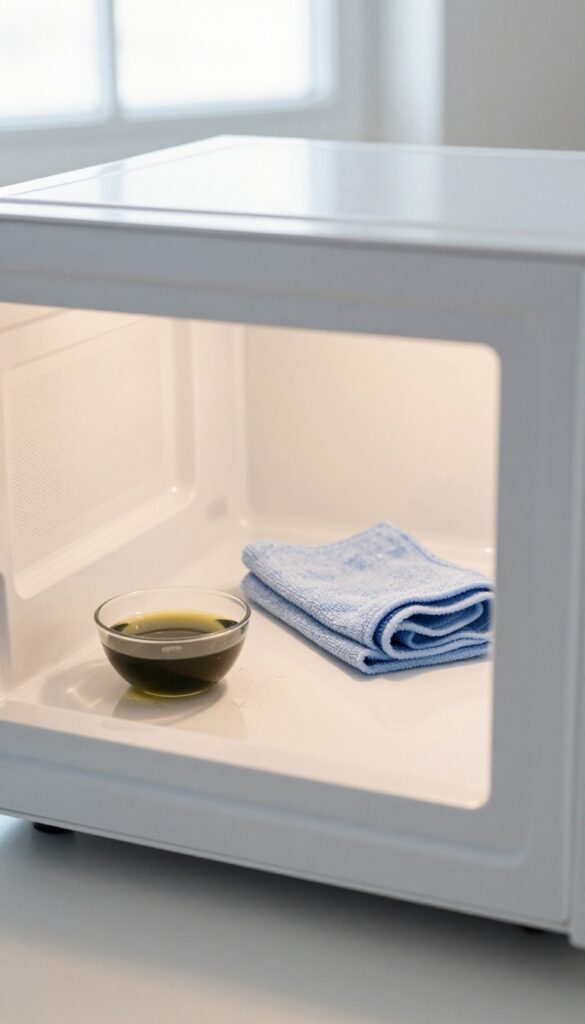
Now that the steam has had a few minutes to work its magic, the real fun begins. All that loosened grime and baked-on gunk is practically begging to be wiped away. This is the most satisfying step because you see immediate results with minimal effort.
Grab a damp sponge or a soft cloth—nothing abrasive, since you don't want to scratch the interior. A microfiber cloth works great because it traps grease and doesn't leave lint behind.
With gentle pressure, start wiping from the top down. The ceiling is often the most neglected spot, and steam has softened any splatters there. Work your way to the walls, then the floor.
For stubborn bits, let the sponge sit on the spot for a few seconds to rehydrate it before wiping again. If you used vinegar in the bowl, the smell will be faint and will dissipate quickly. Rinse the sponge as needed to avoid spreading grease around.
Don't Forget The Door And Edges
The inside of the door and the rubber seal around it collect a lot of splatter. Wipe these areas carefully, especially the seal, because food particles can cause the door to not close properly. Use a clean part of the cloth or a separate damp cloth to avoid transferring grime.
Tackle Stubborn Spots With A Paste
If any spots remain after wiping, make a simple paste of baking soda and water. Apply it to the spot, let it sit for a minute, then wipe away. This gentle abrasive lifts burnt-on food without scratching.
7. Clean the Turntable and Roller Ring
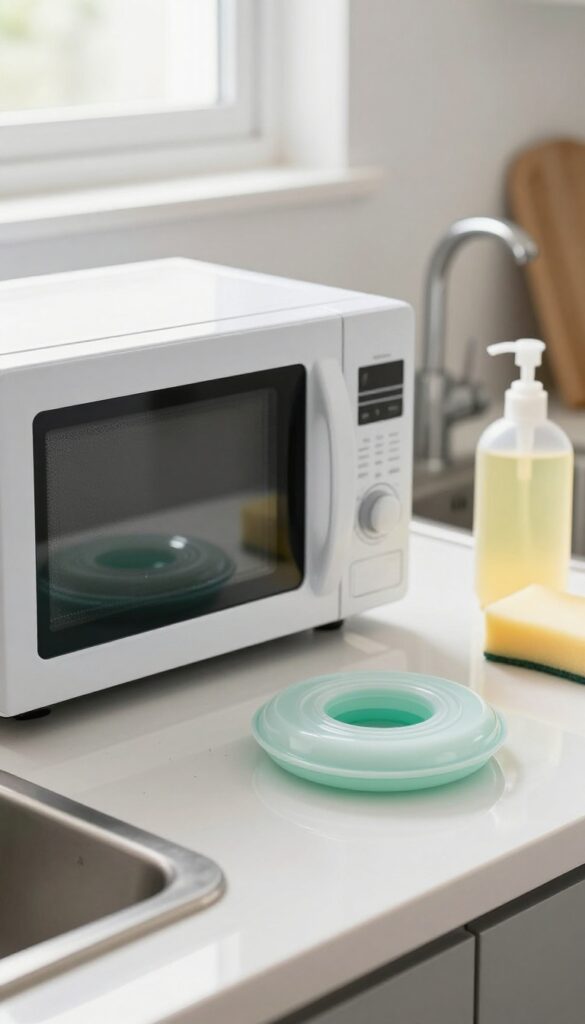
The turntable and roller ring often get overlooked, but they collect food debris and grease just like the interior walls. Removing and washing them separately ensures every surface is spotless. Plus, a clean turntable spins smoothly and prevents uneven heating.
Remove Carefully
Open the microwave and lift out the glass turntable. Underneath, you'll find the roller ring—a plastic or metal ring with small wheels. Lift it out gently; some rings are delicate and can crack if handled roughly.
Wash With Warm Soapy Water
Fill your sink with warm water and a squirt of dish soap. Submerge the turntable and roller ring, letting them soak for a few minutes. Use a soft sponge or cloth to scrub away any stuck-on food.
Rinse thoroughly and dry with a clean towel.
Check Dishwasher Safety
Many glass turntables are dishwasher-safe, but not all. Look for a dishwasher-safe symbol on the underside of the turntable or check your microwave's manual. Plastic roller rings often warp in the dishwasher, so hand washing is usually safer.
Reassemble And Test
Once both pieces are completely dry, place the roller ring back into the microwave, making sure it sits flat. Set the turntable on top, aligning it with the center drive. Give it a gentle spin to ensure it moves freely before using the microwave.
8. Tackle Stubborn Spots
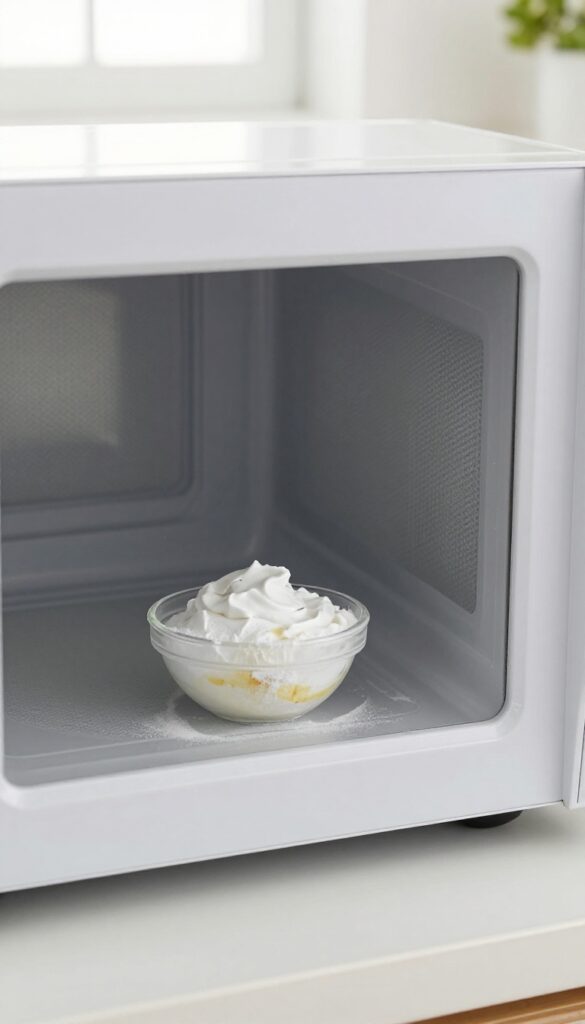
Even after a good steam, some spots just refuse to budge. Dried-on cheese, splattered sauce, or greasy fingerprints may need a little extra attention. Don't worry—you don't need heavy chemicals or elbow grease.
Once the steam has loosened most of the grime, focus on any remaining stubborn spots. Dip a soft sponge or cloth into the leftover vinegar water from your steaming bowl and scrub gently. For really tough, baked-on stains, make a paste with baking soda and a few drops of water.
Apply it directly to the spot, let it sit for a minute, then wipe away. Rinse the area with a damp cloth to remove any residue.
Use The Leftover Vinegar Water
Don't dump that bowl of vinegar water down the drain yet. It's still effective for spot-cleaning. Dip a sponge into the warm liquid and scrub the stubborn areas.
The acidity helps break down grease and food particles without scratching the surface.
Baking Soda Paste For Tough Stains
For dried-on food that won't come off, mix a tablespoon of baking soda with just enough water to form a thick paste. Spread it over the stain and let it sit for 1–2 minutes. Then scrub gently with a sponge.
The mild abrasiveness lifts the gunk without damaging the microwave's interior.
Don't Forget The Door And Seals
Stubborn spots often hide along the door edge or around the rubber seal. Use a cotton swab or old toothbrush dipped in vinegar water to clean these crevices. Wipe dry afterward to prevent moisture buildup.
9. Wipe Down the Door and Exterior
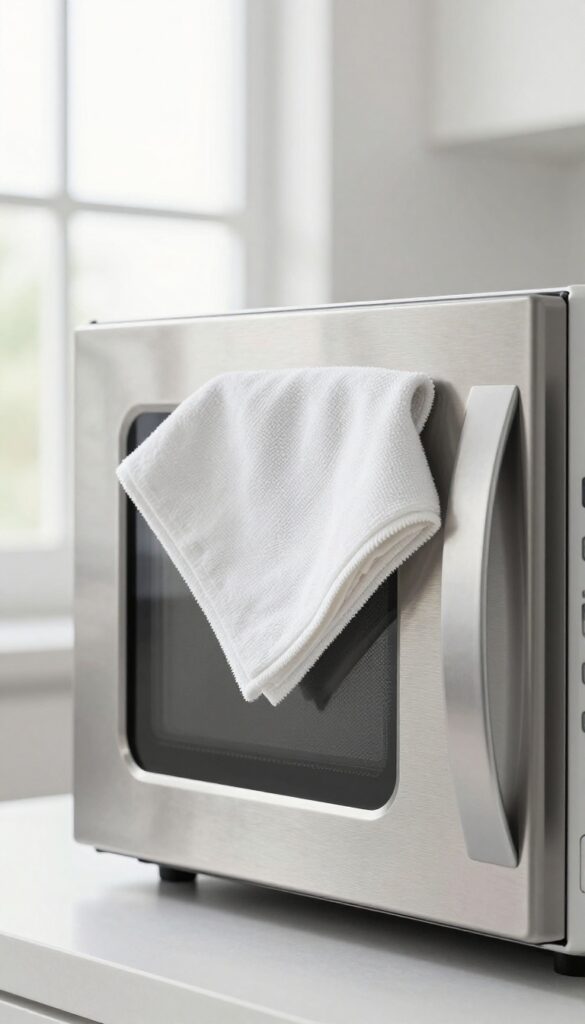
The inside of your microwave might be sparkling, but the door and exterior often tell a different story. Fingerprints, splatters, and dust can make a clean microwave look dirty. Give these surfaces the same attention you gave the interior.
Use a clean, damp microfiber cloth to wipe the door, handle, and control panel. For stubborn spots, a tiny drop of dish soap works wonders. Avoid spraying water directly onto the control panel to prevent moisture from seeping into the electronics.
Dry with a soft cloth to prevent streaks.
Don't Forget The Door Seal
The rubber gasket around the door traps crumbs and grease. Wipe it gently with a damp cloth, then dry it thoroughly. A wet seal can lead to mold or a poor seal, which affects cooking performance.
Handle And Control Panel Care
These high-touch areas need extra love. Use a cloth slightly dampened with water or a mild cleaner. For the control panel, wring out the cloth well so no water drips into the buttons.
Dry immediately to avoid damage.
10. Deodorize and Dry
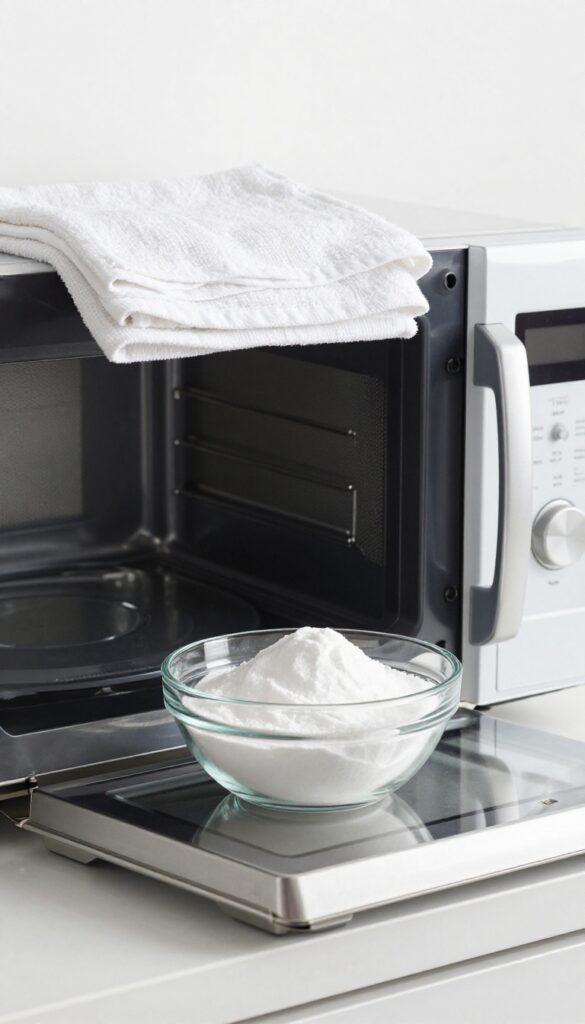
Once you've wiped down every surface, your microwave might still hold onto stubborn smells. That's where a simple air-out and a natural deodorizer come in. This final step ensures your microwave is not just clean but also fresh and ready to use.
Leave the door open for a few minutes to let the interior air dry completely. For lingering odors, place a bowl of baking soda inside and leave it overnight. The baking soda will absorb any remaining smells, leaving your microwave odor-free.
Air Dry For Best Results
After cleaning, moisture can linger in corners and crevices. Prop the door open with a dish towel or just leave it ajar for 10–15 minutes. This prevents mold and mildew from forming and keeps your microwave fresh.
Baking Soda Odor Absorber
If smells persist, put an open bowl of baking soda inside and shut the door. Let it sit overnight. By morning, any leftover odors from fish, popcorn, or sauces will be gone.
Just remember to remove the bowl before using the microwave.
FAQ
Can I use just water without vinegar or lemon?
Yes, plain water works too. Vinegar or lemon helps cut grease and neutralize odors, but steam alone will still loosen most messes.
How long should I microwave the water?
Typically 3-5 minutes on high, depending on your microwave's wattage. You want the water to boil and produce visible steam.
Is it safe to microwave vinegar?
Yes, white vinegar is safe to microwave. It helps clean and deodorize. Just don't inhale the steam directly, as it can be strong.
What if my microwave has a burnt smell?
After cleaning, place a bowl with water and lemon slices or baking soda and microwave for 2 minutes to absorb odors. Leave the door open to air out.
How often should I clean my microwave?
For best results, clean it weekly using the steam method. Wipe up spills immediately to prevent buildup.
Conclusion
Steam cleaning your microwave is fast and effective, but the real trick is consistency. A quick wipe after each use prevents buildup, so you rarely need a deep clean.
Try incorporating one or two of these methods into your routine, and you'll keep your microwave spotless with minimal effort. Your appliance will look newer and work better for years to come.