13 Cleaning Oven With Dishwasher Tablets Steps to Try
You don't need a cabinet full of specialty cleaners to tackle a greasy oven. Dishwasher tablets, designed to break down tough food residue, work surprisingly well on baked-on grime. This simple hack can save you time and elbow grease.
The key is knowing how to use them correctly. Not all methods work the same, and a few tricks make the difference between a streaky mess and a spotless finish. These 13 steps will guide you through the process from start to finish.
Whether you're dealing with a lightly soiled oven or a caked-on disaster, dishwasher tablets offer a convenient alternative to commercial oven cleaners. Let's walk through each step so you can get your oven looking like new.
1. Gather Your Supplies
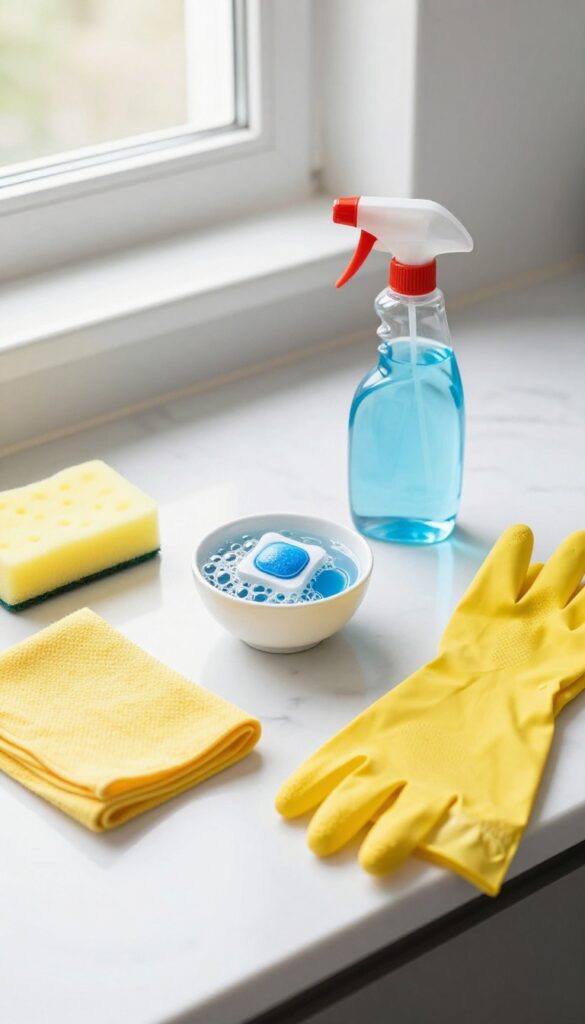
Before you start scrubbing, take a few minutes to gather everything you'll need. This step might seem basic, but having your supplies within reach keeps the process smooth and prevents you from running around mid-job. You'll likely already have most of these items at home.
Dishwasher tablets are the star of the show—any brand works, so use what you have. You'll also need a spray bottle filled with plain water, a soft sponge or microfiber cloth, rubber gloves to protect your hands, and a small bowl for dissolving the tablet. That's it.
No fancy tools required.
What You'll Need
Grab a pack of dishwasher tablets (any brand is fine), a spray bottle with water, a soft sponge or cloth, rubber gloves, and a small bowl. These are the basics. Optional but helpful: a plastic scraper for stubborn bits and a microfiber towel for buffing.
Why Preparation Matters
Having everything ready means you won't have to pause mid-cleaning to hunt for supplies. It also lets you focus on the task without distractions. A little prep goes a long way toward a streak-free finish.
2. Remove Oven Racks and Accessories
Before you get into the scrubbing action, clear the stage. Taking out all racks, trays, and any removable parts gives you full access to the oven interior and prevents damage to your accessories. Plus, you can soak those racks separately in hot, soapy water while you work on the main event.
Why This Step Matters
Leaving racks inside can block your view and make it harder to reach every corner. They also act as barriers, so the dishwasher tablet solution might not coat the oven floor evenly. Removing them also protects the metal finish from harsh scrubbing or chemical reactions.
How To Remove And Soak Racks
Slide each rack out carefully and place them in your sink or a large tub. Fill with hot water and add a squirt of dish soap or a dishwasher tablet. Let them soak for at least 30 minutes.
This loosens baked-on grease so you can wipe them clean later with minimal effort.
Don't Forget Small Parts
Remove any temperature probes, oven thermometers, or broiler pans. Check the bottom of the oven for loose crumbs or fallen debris—sweep those out before you start cleaning. Every removable piece should be taken out and dealt with separately.
3. Wipe Away Loose Debris
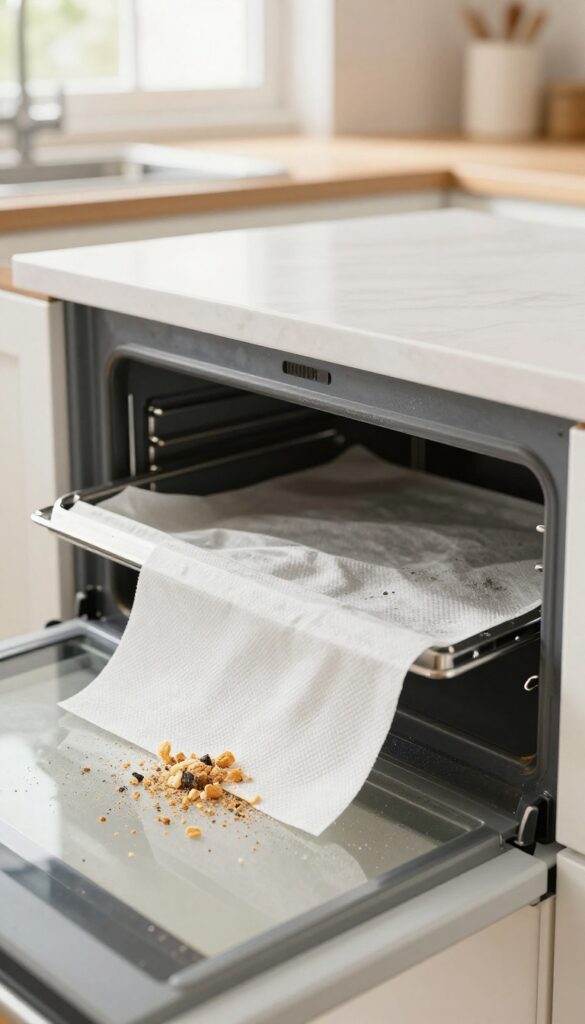
Before you let the dishwasher tablet do its magic, you need to clear the surface. Loose crumbs, ash, and food bits can get in the way, turning your cleaning solution into a muddy mess. A quick dry wipe makes everything else work better.
Why Dry Wiping Matters
When you apply a damp tablet or spray directly over loose debris, it mixes with the grime and forms a paste. That paste spreads around instead of dissolving stuck-on grease. By removing loose particles first, the tablet solution stays concentrated on the tough spots.
What To Use
A dry paper towel works fine for most ovens. For corners and crevices, a soft brush or a vacuum with a brush attachment is better. Avoid wet cloths at this stage—moisture can make crumbs stick and smear.
Don't Forget The Door And Racks
Crumbs often hide along the door edge and under the bottom rack. Take a moment to wipe those areas too. It takes less than a minute and saves you from scrubbing later.
4. Moisten the Oven Surface
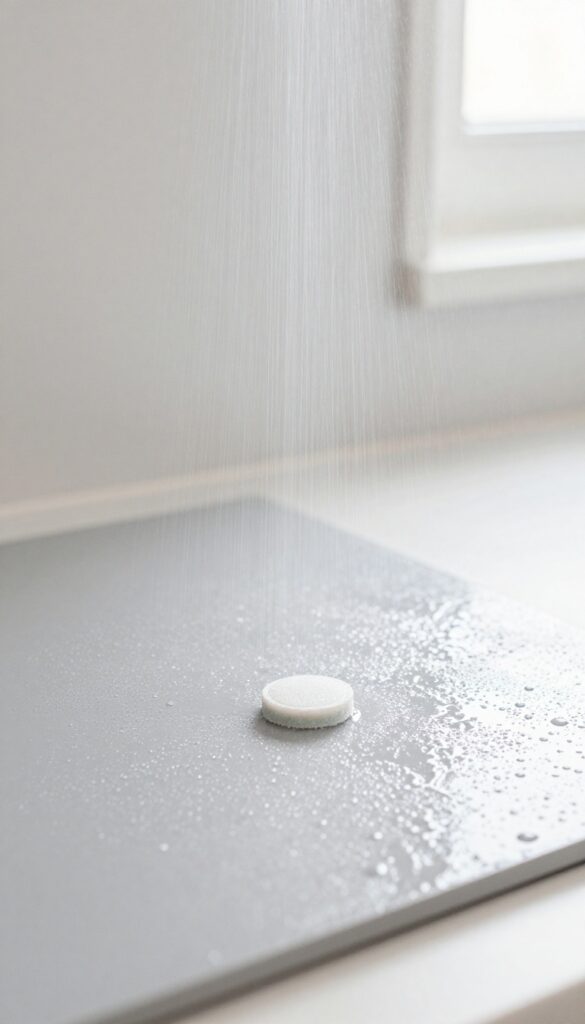
A dry oven won't let the dishwasher tablet work its magic. A light mist of water helps the tablet dissolve and spread evenly across the grime. You don't need much—just a fine spray to dampen the surfaces without soaking them.
Moisture is the trigger that activates the cleaning agents in the tablet. Without it, the tablet may just sit there or crumble without doing much. A quick spritz with a spray bottle ensures the solution gets into every nook and cranny.
Why Moisture Matters
Dishwasher tablets are designed to dissolve in water and release surfactants that break down grease and food residue. On a dry surface, the tablet won't activate properly, leaving you with a mess instead of a clean oven. A light mist provides just enough water to kickstart the cleaning process without creating puddles.
How To Apply The Mist
Fill a clean spray bottle with plain water. Set it to a fine mist setting and lightly spray the oven's interior walls, floor, and ceiling. Hold the bottle about 8–12 inches away to avoid oversaturation.
The goal is a damp sheen, not dripping water. Pay extra attention to areas with heavy buildup.
What To Avoid
Don't soak the oven or let water pool at the bottom. Excess water can dilute the tablet's cleaning power and make a slippery mess. Also, avoid spraying directly into heating elements or gas vents.
If you accidentally overspray, wipe off the excess with a dry cloth before proceeding.
5. Activate the Dishwasher Tablet
A dry tablet won't do much good. You need to wake up those cleaning agents before they hit the grime. A quick activation step makes all the difference between a tablet that sits there and one that really works.
Why Wet The Tablet?
Dishwasher tablets are designed to dissolve gradually in water, releasing enzymes and surfactants that break down food residue. By wetting the tablet first, you kickstart that chemical reaction. The fizzing action helps the tablet foam up and cling to vertical surfaces inside the oven, so it can work on baked-on grease rather than just pooling at the bottom.
How To Do It Right
Hold the tablet under a thin stream of cool or lukewarm water for about 3–5 seconds. You want it to start fizzing and feel slightly soft on the outside, but still hold its shape. If it crumbles or dissolves completely, you've gone too far.
A slightly damp tablet is perfect—it will foam up nicely when you apply it to the oven walls.
What To Avoid
Don't soak the tablet or use hot water, which can cause it to dissolve too quickly. Also, avoid letting the tablet sit wet for too long before applying—once it starts fizzing, use it within a minute or two. If the tablet dries out again, the activation is lost, and you'll need a fresh one.
6. Rub the Tablet Directly on Grease Spots
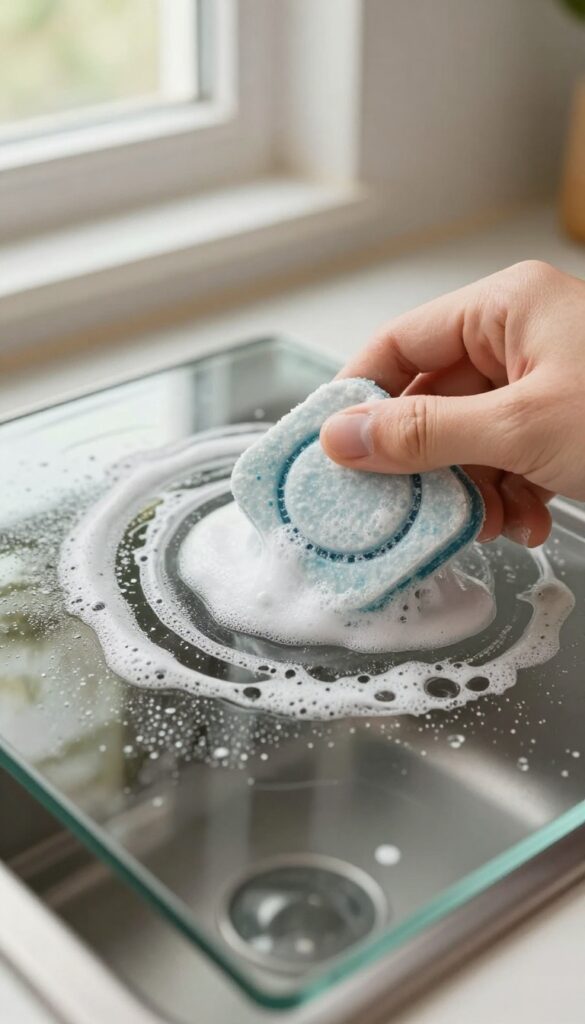
Sometimes soaking and waiting isn't enough. For stubborn, baked-on grease, you need direct contact. A damp dishwasher tablet becomes a scrubber that targets the toughest spots.
Hold the tablet with gloved hands and rub it directly onto greasy areas. The abrasive texture combined with the chemical action breaks down residue that has been baked on for weeks. Work on one section at a time to maintain control and avoid spreading grime.
Why Direct Rubbing Works
The tablet's surfactants are activated by moisture and friction. Rubbing creates a concentrated paste that clings to vertical surfaces and crevices, unlike a spray that drips off. This method is ideal for the oven door glass and the area around the heating element.
How To Do It Right
Wear rubber gloves to protect your skin from the detergent. Dampen the tablet slightly—don't soak it, or it will crumble. Apply firm pressure in circular motions.
The tablet will foam and darken as it lifts grease. Rinse the tablet occasionally to keep it effective.
When To Use This Method
Use direct rubbing for localized spots after a general soak. It's perfect for the oven door's glass panel, the seal area, and the rack guides. Avoid using it on self-cleaning oven coatings or aluminum surfaces, as the abrasive action may cause scratches.
7. Let the Tablet Residue Sit
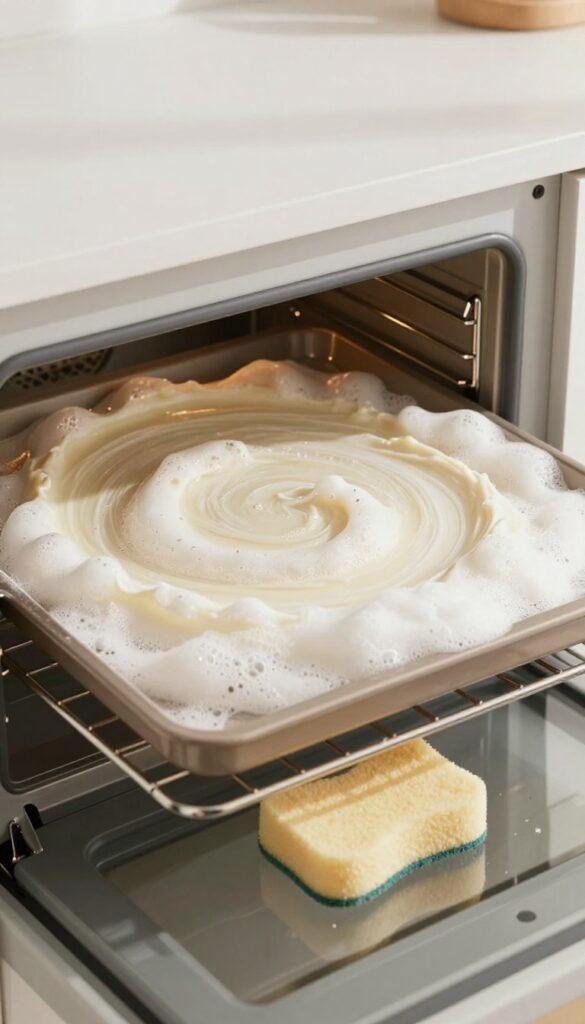
After scrubbing, you might be tempted to wipe everything away immediately. But patience here pays off. Letting the foamy residue sit on the oven surfaces for 15-20 minutes gives the enzymes and surfactants time to penetrate and loosen tough grime.
This dwell step is what makes the dishwasher tablet method so effective.
Once you've scrubbed the oven with the dissolved tablet solution, don't rush to rinse. The foam contains active cleaning agents that need time to work. Let it sit for 15-20 minutes.
You'll see the residue start to break down baked-on grease and food particles. This step is especially important for stubborn spots or if your oven hasn't been cleaned in a while.
Why Dwell Time Matters
Dishwasher tablets are designed to work over time. The enzymes and surfactants need contact time to break down proteins and fats. Without this dwell period, you're just wiping away the cleaner without letting it do its job.
The result is a cleaner that's less effective and requires more elbow grease.
What To Do While You Wait
Use this time to clean other parts of the kitchen or let the oven door stay slightly ajar to air out. Avoid touching the surfaces or adding more water. Just let the foam sit undisturbed.
If you notice the foam drying out, you can lightly spritz with water to reactivate it.
Signs It's Working
You'll see the foam start to discolor as it lifts grime. Baked-on spots may appear softer or start to dissolve. If you see these changes, the dwell time is working.
For really tough buildup, you can extend the wait to 30 minutes, but 15-20 minutes is usually enough.
8. Scrub Stubborn Areas with a Non-Abrasive Pad
Some spots just won't let go, even after a good soak. That's where a gentle scrub comes in. The dishwasher tablet's residue has already started breaking down the grime; you just need a little coaxing to finish the job.
Reach for a soft sponge or a non-scratch scrub pad—nothing abrasive. Abrasive pads can scratch the oven's interior, especially on glass or enamel surfaces. The goal is to lift the softened dirt, not to scour it off.
A light circular motion works wonders. Focus on corners, the door edges, and any baked-on drips. The tablet's enzymes have done the heavy lifting; you're just sweeping away the loosened particles.
Rinse the pad frequently to avoid redepositing grime.
Why Non-abrasive Matters
Oven interiors are often coated with a protective enamel or have a smooth finish. Scratching that surface creates tiny crevices where grease and food can hide, making future cleaning harder. A non-abrasive pad preserves the finish and prevents damage.
It also reduces the risk of leaving behind fine scratches that catch light and look unsightly.
Best Tools For The Job
Microfiber cloths, cellulose sponges, and melamine foam (like magic erasers) are excellent choices. Avoid steel wool, scouring pads with grit, or metal scrubbers. For tight spots, an old toothbrush or a soft-bristled brush can help without scratching.
Always test a small hidden area first if you're unsure about a new pad.
Technique Tips For Stubborn Spots
Apply gentle pressure and use small circles. If a spot resists, don't force it—reapply a bit of the tablet solution and let it sit for another 5–10 minutes. Patience pays off.
For vertical surfaces, work from top to bottom so drips don't re-soil clean areas. Wipe away residue with a damp cloth after scrubbing each section.
9. Wipe Down with a Damp Cloth
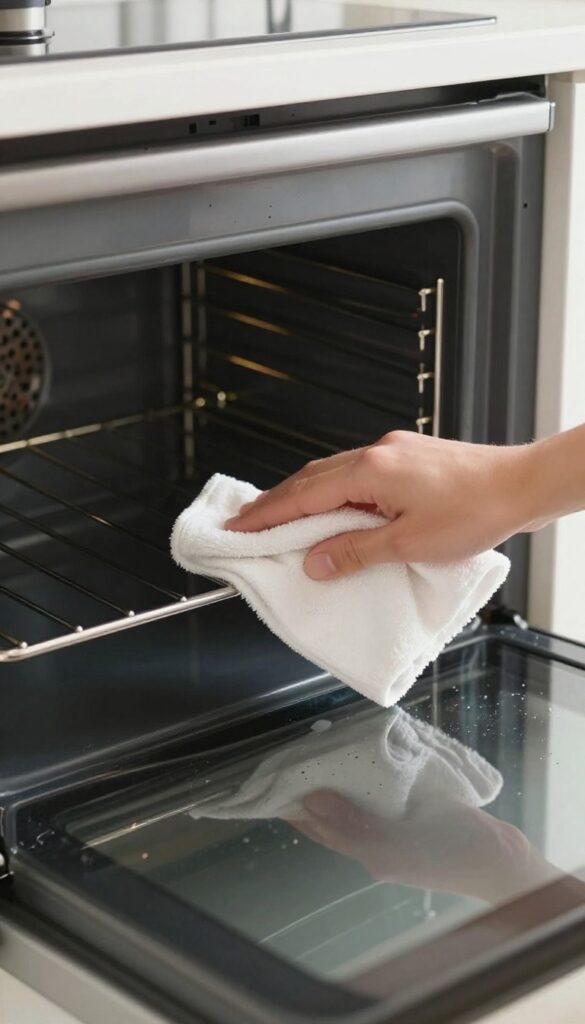
Once you've scrubbed and loosened the grime, it's time to clear away the mess. A simple damp cloth does the job better than you might think. The trick is to keep rinsing so you don't just move grease around.
After scrubbing, you might be tempted to wipe everything away immediately. But a dry cloth will just smear the residue. Use a clean, damp microfiber cloth instead.
Rinse it frequently in warm water to avoid spreading grease. This step ensures you remove all tablet residue and loosened grime, leaving a clean surface.
Why Microfiber Works Best
Microfiber cloths trap grease and grime in their fibers, unlike cotton cloths that can push it around. They're also gentle on oven surfaces, so you won't scratch the enamel. If you don't have microfiber, a soft sponge works too, but avoid abrasive pads.
Rinse, Rinse, Rinse
As you wipe, the cloth picks up grease and tablet residue. If you don't rinse it, you'll just redeposit that grime onto the oven. Keep a bowl of warm water nearby and rinse the cloth thoroughly after each pass.
Change the water if it gets too dirty.
Final Drying Pass
After the initial wipe-down, go over the surface with a dry microfiber cloth. This removes any remaining moisture and prevents water spots. It also helps you see if any spots need a second wipe.
10. Repeat for Heavy Buildup
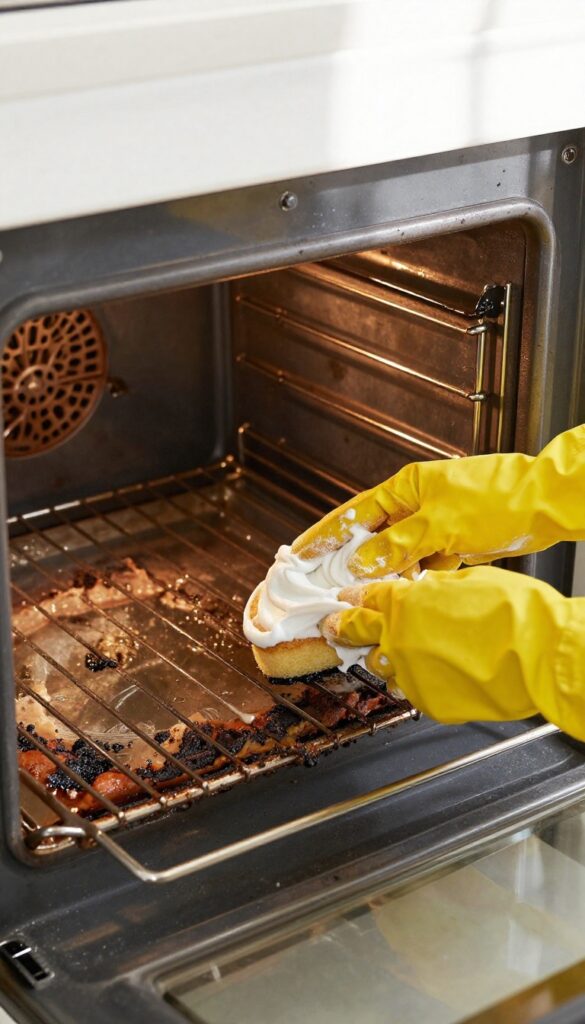
Some ovens have seen years of spills without a proper cleaning. When you open the door and see thick, carbonized layers, one round of the dishwasher tablet method might not cut it. That's okay—just repeat the process on the stubborn spots.
Heavy buildup requires patience. After your first application and scrubbing, you'll likely remove the top layer of grime, revealing a tougher crust underneath. A second application of the tablet paste can penetrate deeper without the need for abrasive scrubbing.
Simply reapply the paste to the remaining spots, let it sit for another 20–30 minutes, then scrub again. This two-pass approach often lifts even the most baked-on residue.
When To Go Again
If after the first scrub you still see dark, crusty patches, it's time for round two. Focus on those areas and don't worry about the rest. The tablet paste works best when applied directly to the grime, so target only the stubborn spots.
Let It Sit Longer
For the second application, consider extending the dwell time. Instead of 20 minutes, let the paste sit for 30–40 minutes. The extra time allows the enzymes to break down the thicker layers more effectively.
You'll notice the paste starting to bubble or soften the residue.
Use A Stiffer Scrubber
For heavy buildup, a soft sponge might not be enough. Switch to a non-scratch scrubbing pad or a nylon brush. These tools provide more abrasion without damaging the oven surface.
Pair with the tablet paste and a bit of elbow grease for best results.
Rinse And Inspect
After the second scrub, wipe away all residue with a damp cloth. Inspect the oven under good light. If you still see spots, you can spot-treat them with a small amount of paste.
Once satisfied, do a final wipe with clean water to remove any soapy film.
11. Clean the Oven Door and Glass
The oven door and glass often get overlooked, but they're the first thing you see. Grease splatters and baked-on residue can make even a clean oven look dirty. Fortunately, the same dishwasher tablet method works wonders on the glass, leaving it streak-free and shiny.
Don't stop at the interior. The oven door, especially the glass, collects grease and grime from spills and steam. Using a damp dishwasher tablet, gently rub the glass in circular motions.
Let the foam sit for a few minutes to break down stubborn spots, then wipe clean with a damp cloth. For extra shine, finish with a glass cleaner or a vinegar-water solution. This step ensures your oven looks as good as it performs.
Why The Glass Needs Special Attention
Oven glass is exposed to high heat and grease splatters, which can bake on and become hazy. Regular cleaning prevents buildup that can obscure your view and make the oven look dingy. The abrasive action of a dishwasher tablet is gentle enough for glass but tough on grease.
Step-by-step Glass Cleaning
First, make sure the oven is cool. Dampen a dishwasher tablet and rub it directly on the glass. Focus on areas with visible stains.
Let it sit for 5-10 minutes. Then, wipe off the residue with a clean, damp microfiber cloth. Rinse the cloth frequently to avoid streaks.
For a final polish, spray a small amount of glass cleaner and buff dry.
Avoiding Common Mistakes
Don't use too much water, as it can drip into the door's insulation. Also, avoid abrasive scrubbers like steel wool, which can scratch the glass. Stick to soft cloths or sponges.
If the tablet leaves a residue, rinse with a vinegar solution (1 part vinegar to 3 parts water) to restore clarity.
12. Rinse Thoroughly with Water
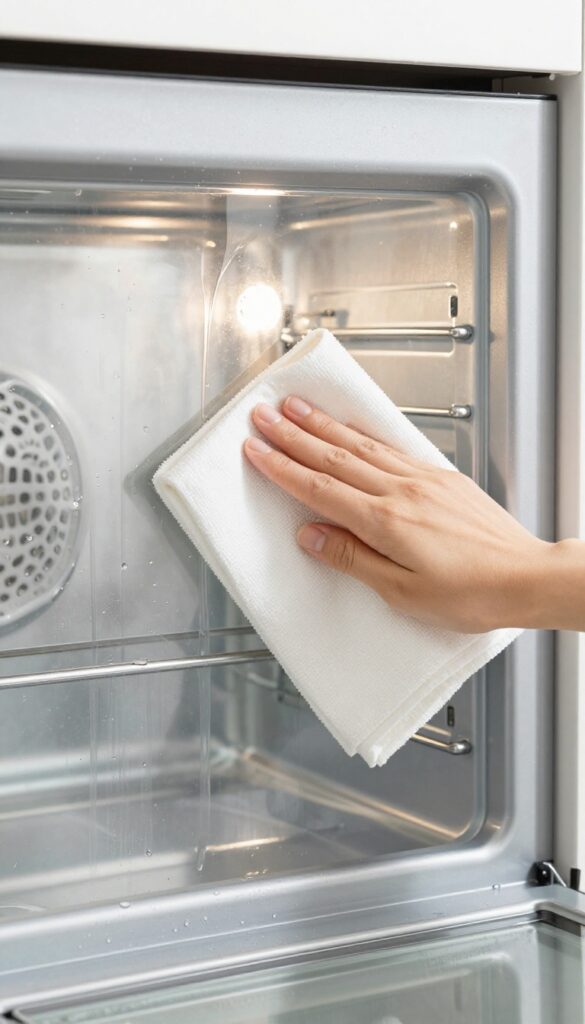
You've scrubbed and wiped, but the job isn't done yet. A final rinse with clean water removes any leftover soapy residue that could cause odors or smoke when you heat the oven. This step is quick but crucial for a safe, fresh-smelling oven.
After all the grime is gone, grab a clean, damp cloth and go over every surface you cleaned. Pay special attention to corners, the door seal, and around the heating elements. Change the cloth or rinse it frequently to avoid spreading residue.
You want to see clear water on the cloth when you're done—no bubbles or film. If you notice any suds, keep rinsing until they disappear. A final dry with a microfiber towel helps prevent water spots and leaves a streak-free shine.
Why Rinsing Matters
Dishwasher tablets contain surfactants that break down grease, but if left behind, they can create a sticky film. When you preheat the oven, that film can burn, producing unpleasant smells or even light smoke. A thorough rinse eliminates that risk.
How To Rinse Effectively
Use a large bowl of warm water and a soft sponge or cloth. Wipe down all surfaces, then wring out the cloth and go over them again with plain water. Repeat until no suds appear.
For hard-to-reach spots, a spray bottle with water helps you flush out residue.
Don't Forget The Door And Seal
The oven door and its rubber gasket often trap soapy residue. Wipe them carefully, then use a dry cloth to remove moisture from the seal. This prevents mold and keeps the door closing properly.
13. Dry and Replace Racks
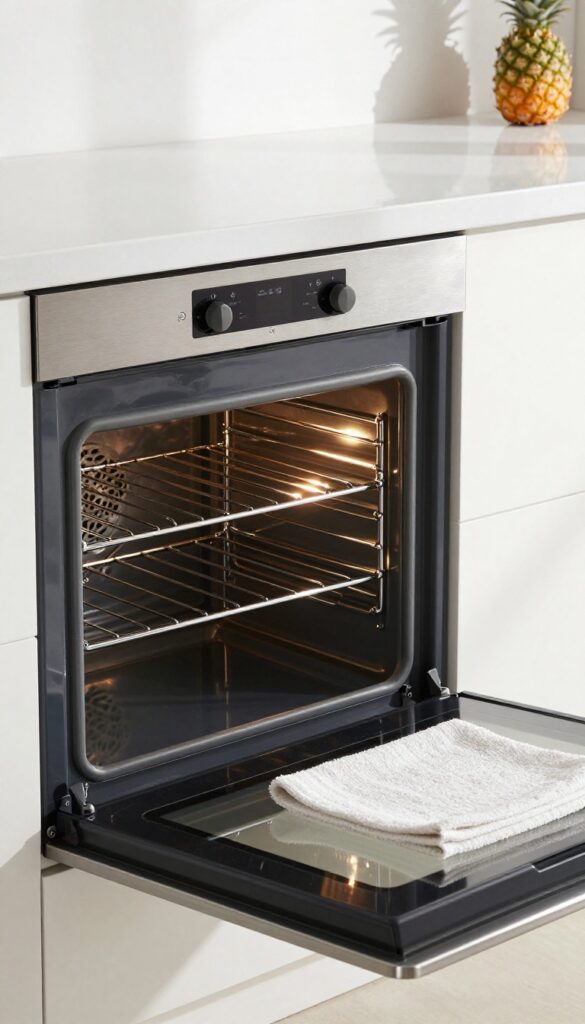
The final step is all about finishing touches. A quick dry and putting everything back in place makes your oven feel truly clean. You've done the hard work; now let's wrap it up neatly so your oven is ready for its next use.
Wipe Down The Interior
After rinsing, use a soft, lint-free towel to dry the interior walls, floor, and ceiling. Pay special attention to the door seal and corners where moisture can hide. A dry surface prevents water spots and helps avoid any musty smells.
Dry The Racks
If you removed the racks for cleaning, dry them thoroughly with a towel before sliding them back in. Any leftover moisture can cause rust over time, especially on chrome racks. For extra protection, you can leave them out to air-dry completely before reinstalling.
Slide Racks Back In
Once everything is dry, carefully slide the racks back into their original positions. Make sure they glide smoothly and lock into place. Your oven is now spotless, free of harsh chemical residues, and ready to cook your next meal.
FAQ
Can I use any dishwasher tablet brand?
Yes, any brand works. Gel tablets or powder pods are fine, but solid tablets are easiest to handle for scrubbing.
Is it safe to use dishwasher tablets on self-cleaning ovens?
Yes, it's safe. Just avoid getting the tablet on heating elements or the door seal. Rinse thoroughly afterward.
Will this method damage the oven's enamel coating?
No, dishwasher tablets are mild and non-abrasive. They won't scratch or dull the enamel if you use a soft sponge.
How often can I clean my oven with dishwasher tablets?
As often as needed. For light maintenance, once a month is fine. For heavy use, you can do it more frequently without harm.
Do I need to wear gloves?
Yes, gloves are recommended. Dishwasher tablets can be irritating to skin, and gloves also protect your hands from grease.
Conclusion
Cleaning your oven with dishwasher tablets is a surprisingly effective hack that saves money and avoids harsh chemicals. The process is straightforward: activate, scrub, let sit, and rinse. With these 13 steps, you can tackle even the toughest grime without breaking a sweat.
Give it a try next time your oven needs a refresh. You'll be amazed at how well a simple dishwasher tablet works. Your oven will look spotless, and you'll have one more trick in your cleaning arsenal.