15 Practical Double Shower Curtain Ideas for the Bathroom
Double shower curtains aren't just a clever way to hide a less-than-pretty liner. They're a simple, budget-friendly upgrade that can change how your bathroom feels and works. Whether you're dealing with a cramped tub-shower combo or just want a quick style refresh, two curtains open up options you might not have considered.
The trick is choosing the right combination of materials, lengths, and hanging methods. Some setups are all about keeping water inside, while others focus on adding color or texture without a full remodel.
And if you're renting, this is one of those changes you can take with you when you move. Below, you'll find 15 practical double shower curtain ideas that balance looks, function, and cost.
1. Classic Fabric + Vinyl Liner Combo
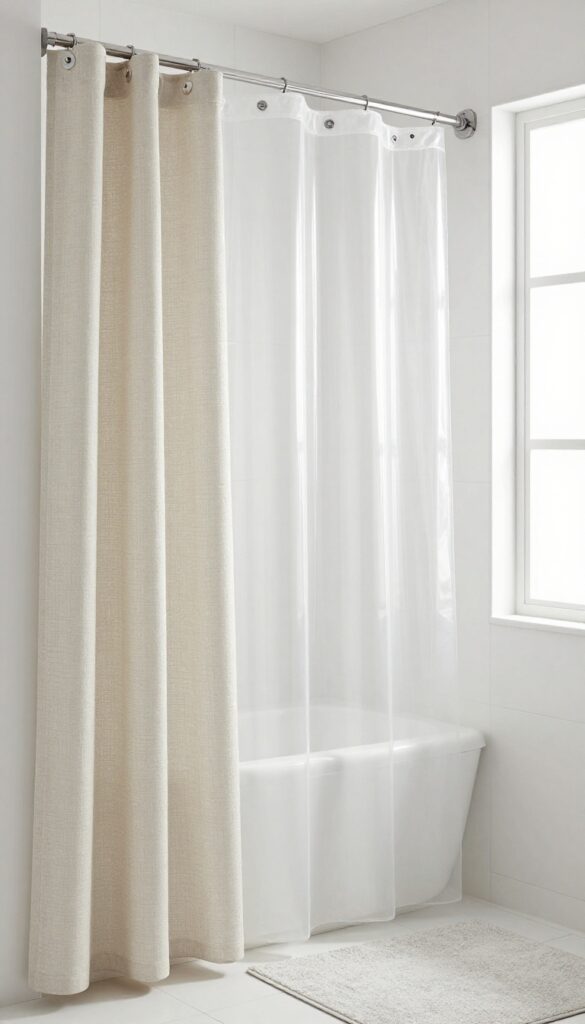
Start with the tried-and-true duo: a decorative fabric curtain on the outside and a clear or white vinyl liner on the inside. This setup is the backbone of most double curtain systems, but the magic lies in the details—especially the liner. A flimsy liner that flutters around can ruin the whole effect, so choose one with weighted magnets at the bottom.
These little magnets grip the tub or floor, keeping the liner in place and water where it belongs.
The classic combo is all about balance. The fabric curtain brings style, while the vinyl liner handles the wet work. Pick a liner with rust-proof grommets and a mildew-resistant coating to extend its life.
And don't forget to hang the liner on its own rod or hooks—sharing a rod with the fabric curtain can cause bunching and gaps. With the right liner, this setup becomes a reliable, low-maintenance choice that works in any bathroom.
Why Weighted Magnets Matter
Weighted magnets are the unsung heroes of this combo. They anchor the liner to the tub, preventing the annoying billow that lets water sneak out. Look for liners with magnets sewn into the hem—they're stronger than the stick-on kind.
If your tub is metal, magnets cling perfectly; for fiberglass, the weight alone still helps keep things in place.
Choosing The Right Fabric Curtain
Your fabric curtain is the star of the show. Go for a polyester or cotton blend that's machine washable and quick to dry. Avoid heavy fabrics that hold moisture and invite mold.
A pattern or solid color that complements your bathroom's palette adds personality without overwhelming the space. Just make sure it's slightly wider than your tub to prevent gaps at the sides.
Liner Care And Replacement
Vinyl liners are cheap to replace, so don't let one get too grimy. Wipe it down weekly with a mild cleaner, and toss it in the wash if it's machine-washable. Replace it every few months or as soon as you notice discoloration or a lingering musty smell.
A fresh liner instantly refreshes the whole setup.
2. Double Rod for a Spa-Like Layered Look
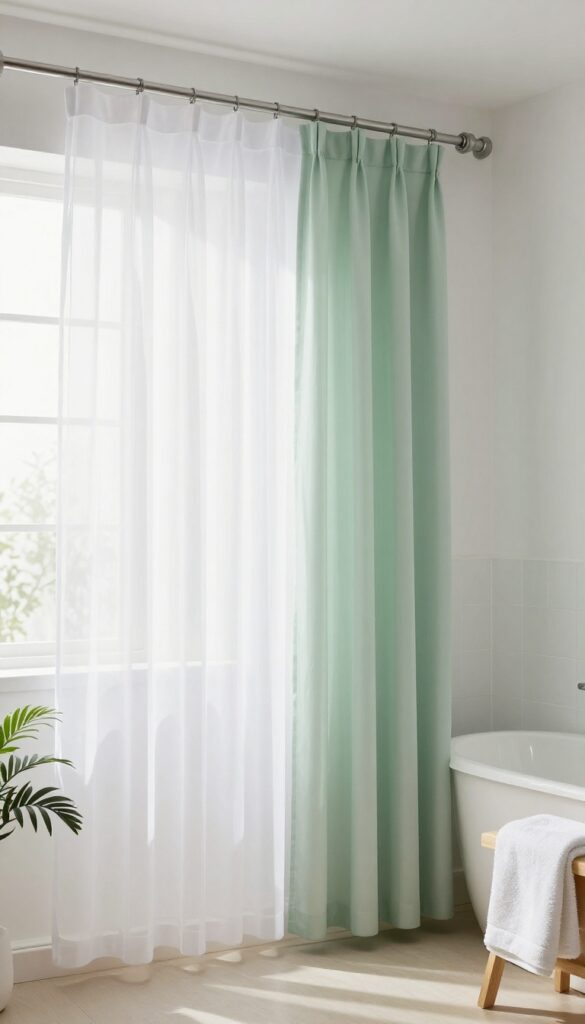
Layering two curtains on a single rod—or better yet, a dedicated double rod—gives your bathroom that soft, spa-like feel without any major renovation. The front curtain adds texture and color, while the back one handles the wet work. It's a simple trick that makes the whole space look more polished and put-together.
A double rod setup is one of the easiest ways to bring depth and flexibility to your bathroom. You get two separate curtains that can be adjusted independently, so you can let in light, create privacy, or just change the look on a whim. Plus, it’s a practical solution for keeping your pretty curtain dry while still having a functional liner.
Pick The Right Rod
You don't need a fancy curved rod, but a straight double rod works best for this look. Look for one with two parallel tracks or rings so the curtains slide smoothly. If your tub is wide, a curved rod gives extra elbow room and keeps the liner away from your body.
Choose Your Fabrics
The magic is in the mix. Use a sheer or light-colored curtain on the outside to filter light and add airiness. Behind it, hang a more opaque liner or a heavier fabric curtain that can actually keep water inside.
This combo gives you the best of both worlds: style and function.
Style It Right
Hang the outer curtain slightly higher than the inner one to create a layered, cascading effect. Use matching or contrasting colors—like a crisp white liner with a soft sage front. Add a few decorative hooks or tiebacks to finish the look.
3. Two Fabric Curtains for a Bold Statement
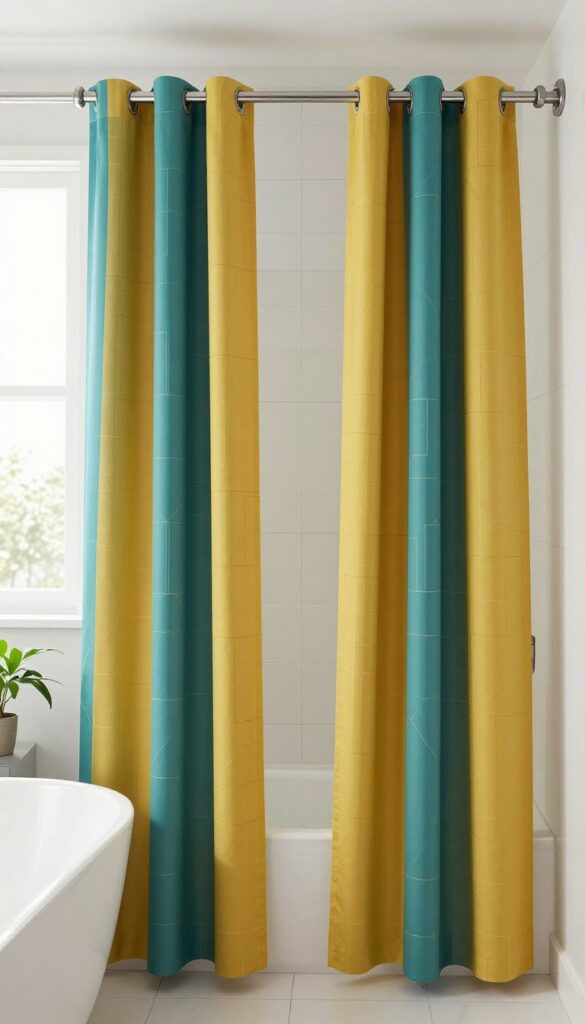
Who says you need a plastic liner on display? If you have a separate liner attached inside the tub or you choose a water-repellent fabric, you can hang two fabric curtains—one on each side of the rod. This setup is a favorite for anyone who wants to make a splash with pattern and color without worrying about the liner ruining the look.
The key is to pick fabrics that can handle moisture. Look for polyester or treated cotton that resists water, or simply rely on your existing liner if you have one. With two fabric panels, you can mix and match patterns or go bold with a single vibrant design that wraps around both sides.
Why Two Fabric Curtains Work
Two fabric curtains create a symmetrical, polished look that a single curtain can't match. They also make the shower feel more open and airy, especially if you choose light colors or sheer fabrics. Plus, you get twice the opportunity to inject your personal style into the bathroom.
Choosing The Right Fabric
Stick with quick-drying materials like polyester or nylon. If you fall in love with a cotton curtain, treat it with a water-repellent spray or use a liner behind it. Avoid heavy fabrics that stay damp and invite mildew.
Hanging And Styling Tips
Use a double rod if you want to keep a liner separate, or simply hang two curtains on a single rod—just make sure they slide easily. For a cohesive look, match the curtains to your bathroom's color scheme or choose complementary patterns. Don't be afraid to mix solids with prints for extra depth.
4. Mixing Textures: Waffle Weave and Smooth
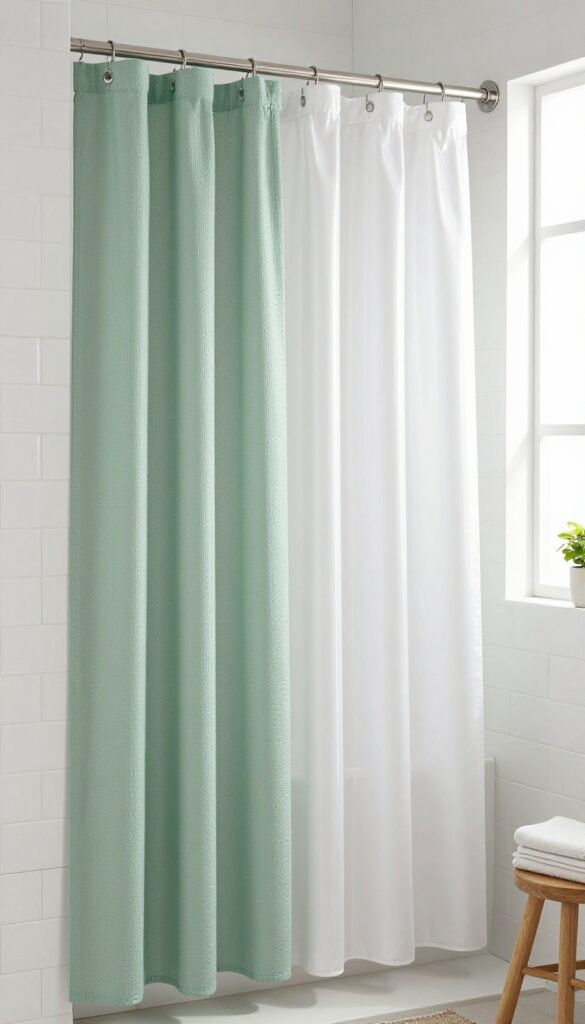
Texture is an underrated tool in bathroom design. When everything is flat and shiny, the room can feel sterile. Pairing a waffle-weave curtain with a smooth, glossy one adds depth and a touch of luxury without any renovation.
The contrast between the two materials catches the eye and makes the shower area feel more intentional. The waffle weave brings a cozy, spa-like feel, while the smooth curtain keeps things sleek and modern. Together, they balance each other out.
Why This Combo Works
Waffle weave adds visual texture and a soft, absorbent quality. The smooth curtain, often in a satin or polyester finish, reflects light and creates a clean backdrop. The mix of matte and glossy surfaces adds dimension, making the bathroom feel more layered and curated.
Choosing The Right Fabrics
Look for a waffle-weave curtain in cotton or a cotton blend for that plush feel. For the smooth one, go with a polyester or microfiber that resists water and dries quickly. Make sure both are machine washable for easy upkeep.
Color And Pattern Ideas
Keep the smooth curtain in a neutral tone like white, beige, or light gray, and let the waffle weave bring in a subtle color like sage green or soft blue. Or, if you prefer a bolder look, choose a waffle weave in a deep hue and keep the smooth curtain light. Avoid busy patterns on both—let the texture do the talking.
5. Two-Tone Color Blocking
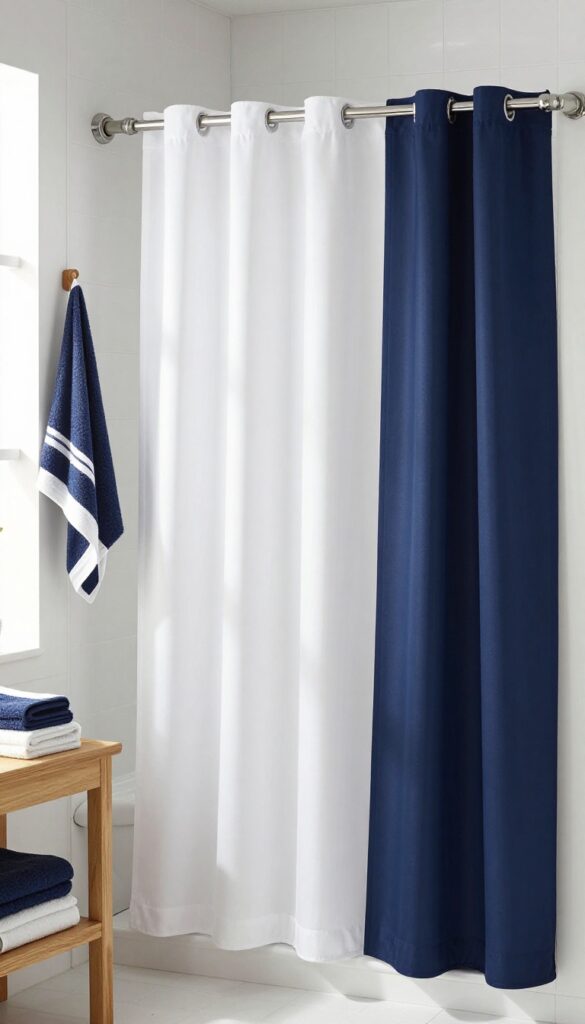
Color blocking isn’t just for walls or throw pillows. Two solid curtains in contrasting shades can instantly give your bathroom a crisp, intentional look. Pick a white front curtain and a deep navy liner for a nautical vibe, or go with terracotta and cream for warmth.
The key is choosing two colors that already appear in your towels or accessories, so the space feels pulled together without much effort.
This approach works because it’s simple—no patterns to match, no textures to coordinate. Just two solid colors that play off each other. When you hang them, the front curtain gets the spotlight, while the back curtain adds depth and a pop of color when it peeks out from behind.
It’s a low-risk way to experiment with bolder shades you might be afraid to commit to on walls or tile.
Pick A Color Pair That Works
Start with a neutral base like white, beige, or light gray for the front curtain. Then choose a deeper or brighter shade for the back—navy, forest green, or mustard yellow all work well. If you’re feeling adventurous, try complementary colors like blue and orange or green and pink.
Just make sure the two tones don’t clash with your floor or vanity.
Hang Them On A Double Rod
A double rod makes color blocking look seamless. The front curtain slides on the outer rod, and the back curtain hangs on the inner rod, closer to the tub. This keeps the colors separate and lets you open and close each curtain independently.
If you only have a single rod, use clip rings to layer them—just make sure the back curtain is slightly shorter to avoid bunching.
Balance With Accessories
Once your curtains are up, tie the look together with a bath mat, towels, or a soap dispenser in one of the two colors. You don’t need to match everything perfectly—just echo the shades in a few key spots. That way, the color blocking feels deliberate, not accidental.
6. Sheer Curtain in Front, Opaque Behind
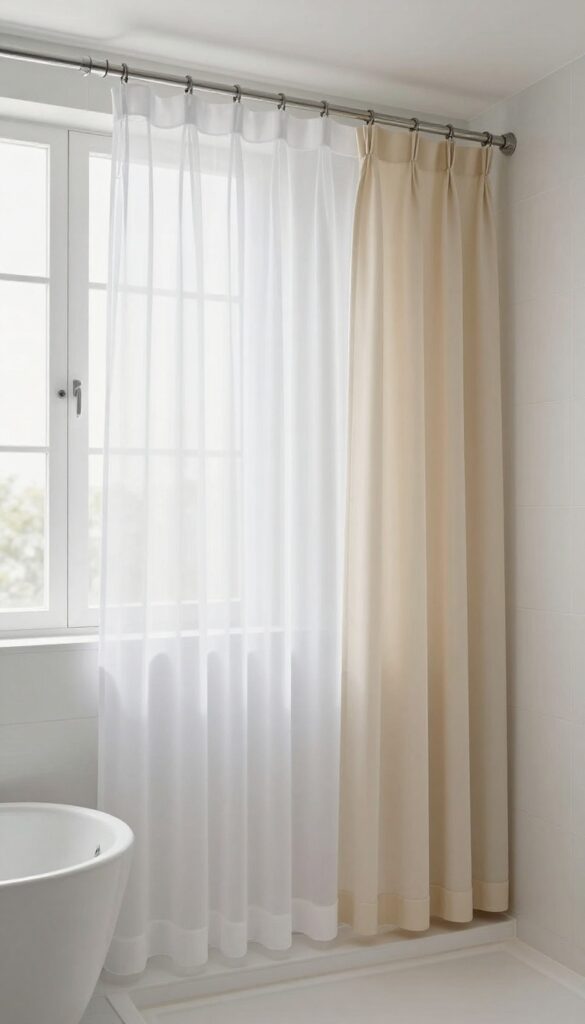
Letting light in without sacrificing privacy is a classic bathroom balancing act. A sheer curtain on the outside and an opaque one behind it gives you both. The sheer layer softens the light and adds a breezy, airy feel, while the opaque liner does the real work of keeping things private.
This setup works especially well in bathrooms with a window that faces a neighbor or a busy street. You can keep the sheer curtain closed all the time to filter light, and only pull the opaque one when you need full coverage. It’s also a great way to add a touch of elegance without going overboard.
Light Control Without The Cave Effect
Opaque liners alone can make a bathroom feel like a dark box, especially if the only natural light comes from a small window. Adding a sheer layer in front lets you diffuse that light while still keeping the space bright. You get the privacy you need, but the room doesn’t feel closed off.
Choose Fabrics That Play Well Together
The sheer curtain should be lightweight and semi-transparent—think voile, chiffon, or a cotton blend. The opaque curtain can be a heavier fabric like polyester or a water-repellent material. Avoid two heavy fabrics, or the rod might sag under the weight.
Also, make sure the sheer is a few inches shorter than the opaque one so it doesn’t drag on the floor.
Easy To Switch Up With The Seasons
Because the sheer layer is so light, you can swap it out with the seasons without much effort. In summer, go for a crisp white or a pale blue to keep things cool. In winter, try a warm ivory or a soft gray.
The opaque layer can stay the same, so you only need to change one curtain to refresh the whole look.
7. Curved Rod to Maximize Interior Space
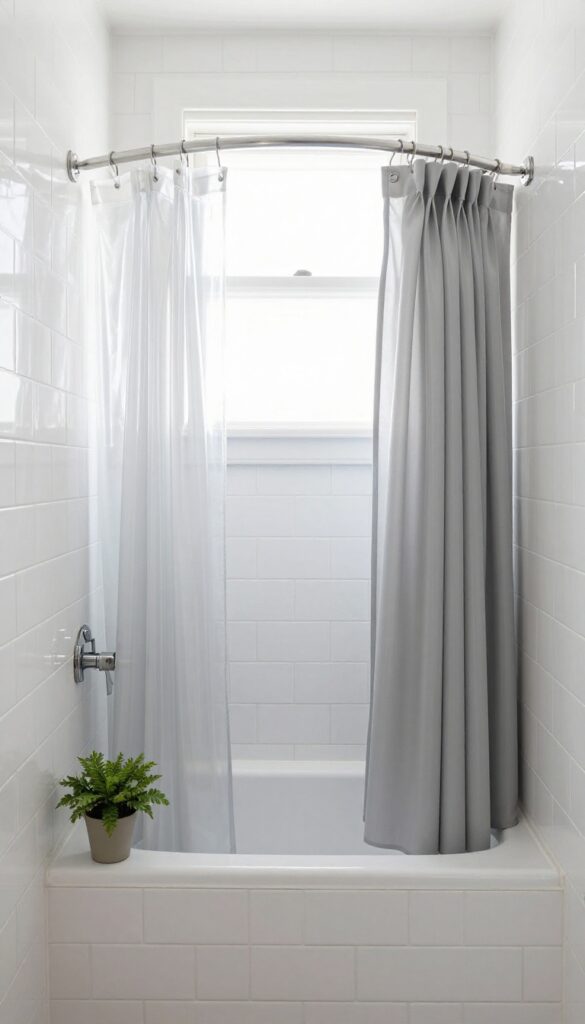
A curved shower rod is one of those small changes that makes a big difference the moment you step inside the tub. Instead of the curtain brushing against your arm or clinging to you while you wash, the rod bows outward, giving you extra elbow room. Pair it with two curtains—one that follows the curve and a flat liner behind—and you get both function and a polished look, even in a compact bathroom.
When you're working with a standard tub-shower combo, every inch counts. A curved rod adds roughly 6 to 8 inches of space at the center, which feels like a luxury in a tight bathroom. The trick is to use two curtains: a clear or fabric liner that hangs straight inside the tub to keep water contained, and a decorative outer curtain that follows the curve.
This setup prevents the liner from billowing out while still giving you that open, airy feeling.
Choosing The Right Rod
Look for a curved rod that's sturdy and easy to install. Tension rods work fine for lightweight curtains, but if you're using heavier fabric or a glass liner, a rod that screws into the wall is more secure. Measure your tub width before buying—most curved rods are adjustable, but you want one that fits snugly without gaps.
Liner And Curtain Pairing
Pair a clear or white liner that sits flat against the tub with a decorative outer curtain that follows the curve. The liner should be slightly shorter than the outer curtain to avoid dragging on the floor. For a seamless look, choose a liner with magnets or weights at the bottom to keep it in place.
Installation Tips
Install the curved rod so the curve faces away from the tub, giving you that extra space. If you're mounting it, use a level to ensure it's straight. For a double curtain effect, you can use a single curved rod with two curtain rings—one set for the liner and one for the outer curtain.
This keeps the setup simple and avoids the need for a second rod.
8. Ceiling-Mounted Track for a Modern Feel
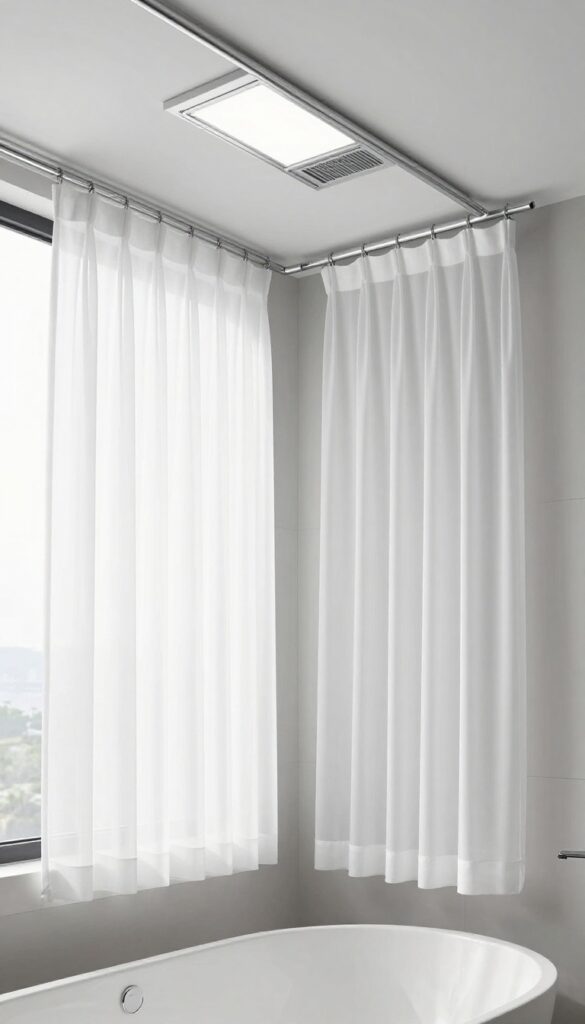
If your bathroom has a high ceiling or an awkward layout, a standard rod might feel limiting. A ceiling-mounted track system changes the game by letting you hang double curtains from above, which adds a sleek, hotel-like touch. It’s a practical choice that also opens up the space visually, making the room feel taller and more open.
A ceiling track isn’t just about looks—it’s a smart solution for tricky spaces. Because the track runs along the ceiling, you can position the curtains exactly where you need them, even if the tub or shower isn’t flush against a wall. Plus, the clean lines of a ceiling mount give your bathroom a custom, polished feel that’s hard to achieve with a traditional rod.
Why Choose A Ceiling Track?
Ceiling tracks are ideal for bathrooms with high ceilings, sloped walls, or non-standard shower configurations. They also make the ceiling feel higher by drawing the eye upward. Unlike curved rods that stick out, a ceiling track sits flush, so it’s less obtrusive and works well in minimalist or modern designs.
Installation Tips
Installing a ceiling track is straightforward if you have the right tools. Use a stud finder to locate ceiling joists for secure mounting, or use heavy-duty anchors for drywall. Measure carefully to ensure the track is centered over the tub or shower.
Most tracks come with mounting brackets and screws, and you can cut them to fit your space.
Curtain And Liner Choices
With a ceiling track, you can mix and match curtain lengths. For a dramatic look, let the outer curtain hang all the way to the floor, while the inner liner stops just above the tub edge. Choose lightweight fabrics for the outer curtain to avoid dragging, and opt for a mold-resistant liner for practicality.
9. Using Two Liners for Easy Cleaning
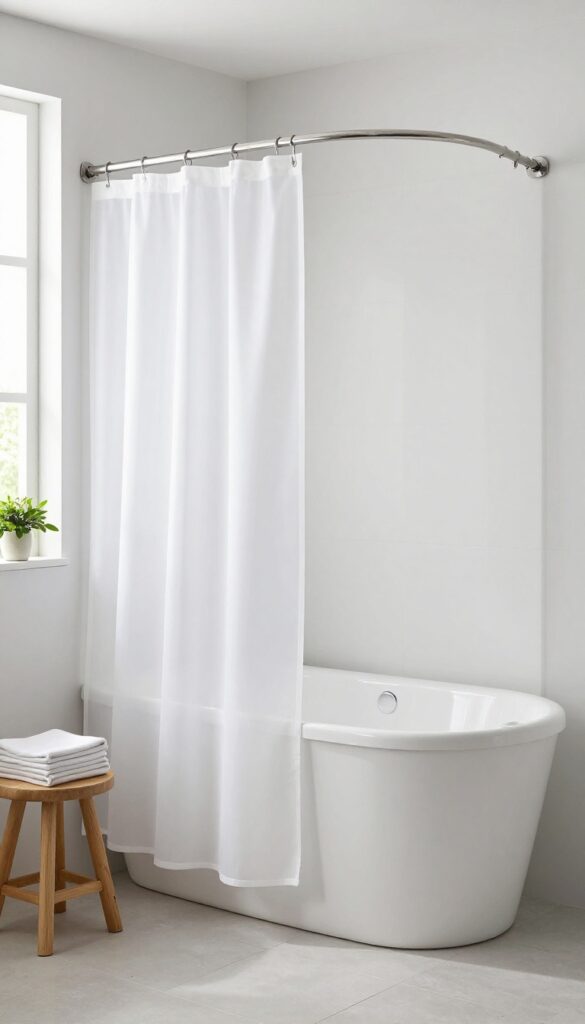
Sometimes the smartest double curtain setup is the one you barely have to think about. If your current shower curtain routine involves scrubbing soap scum or bleaching mystery spots, two liners might be the low-maintenance solution you need. This approach skips the decorative fabric layer entirely and relies on two machine-washable liners that you can swap out in seconds.
The beauty of using two liners is that you get the same water-blocking power as a curtain-and-liner combo, but with less fuss. Most fabric liners are made from polyester or a polyester-cotton blend, which means they can go straight into the washing machine on a gentle cycle. When one liner starts looking dingy, just take it down, toss it in the wash, and hang the backup liner while the first one dries.
It’s a simple rotation that keeps your bathroom fresh without any special cleaning products or elbow grease.
Why Two Liners Beat A Curtain And Liner
A traditional setup usually has a decorative fabric curtain on the outside and a plastic or fabric liner on the inside. That means two pieces to wash or wipe down, and the outer curtain often picks up dust and mildew even if the liner does its job. With two liners, you eliminate the outer layer entirely.
You get the same water protection, but you only have to manage one type of material. Plus, fabric liners tend to dry faster than plastic ones, so you can wash and rehang them more often without worrying about mildew.
Choosing The Right Liners
Not all shower liners are created equal. For this trick to work well, you want liners that are actually machine-washable and made from a durable fabric. Look for ones labeled as “fabric” or “washable” rather than the thin plastic kind that cracks and peels.
A heavier-weight polyester liner with a built-in magnetic bottom will stay in place better and feel more substantial. You might also want to pick two different colors or patterns so you can alternate them and give your bathroom a mini refresh every time you swap.
How To Keep The Rotation Simple
The key to making this system work is having a second liner ready to go. Store the backup liner on a hook near the shower or in a nearby closet. When the liner in use starts to look tired, simply remove it, hang the backup, and throw the dirty one in the wash.
Use a mild detergent and add a little white vinegar to the rinse cycle to help prevent soap scum buildup. Then, let it air dry or tumble dry on low. Once it’s clean, it becomes the new backup, and you’re all set for the next swap.
10. Double Curtains on a Single Rod with Rings
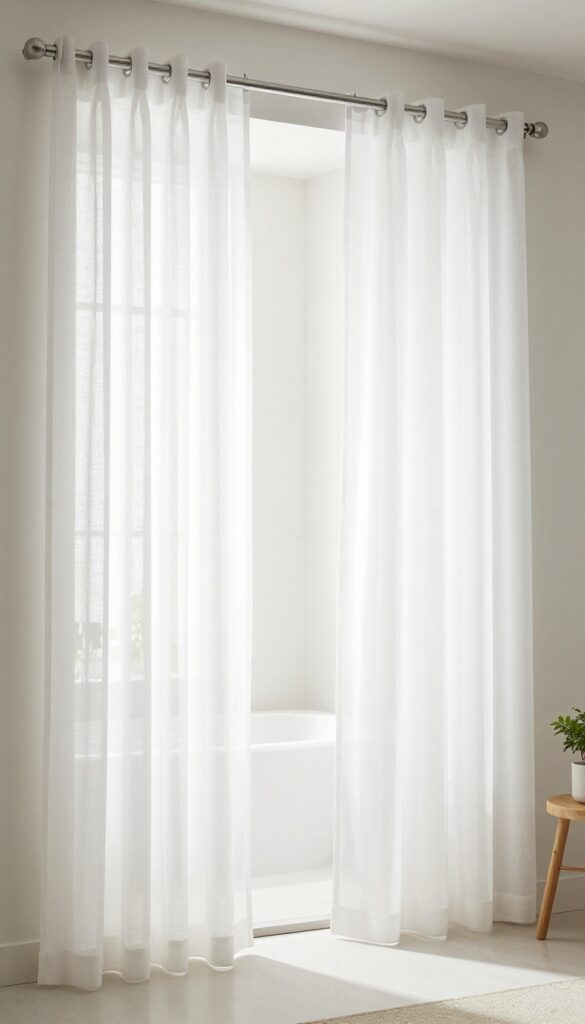
Not every bathroom needs a second rod to pull off the double curtain look. A single rod with two sets of rings can do the job just fine, as long as you pick the right fabrics and don't mind a bit of overlap in the middle. This approach is all about ease and flexibility.
You can swap out one curtain without touching the other, and it takes about five minutes to set up. Plus, it gives the shower a relaxed, layered vibe that feels more collected than fussy.
The key is to choose lightweight curtains that won't fight each other for space on the rod. Heavy materials like thick cotton or velvet can bunch up and make the overlap look bulky. Sheer, light linen, or even a simple polyester blend will hang smoothly and let you slide them apart without a struggle.
When you hang them, use separate rings for each curtain. That way, you can move them independently—pull one closed for total privacy, or keep both open to let light in. The overlap in the middle creates a soft, casual drape that hides the liner and adds depth to the shower area.
One thing to watch: if your rod is too short, the overlap might eat up valuable shower space. Measure your rod length and curtain widths before you buy. You want the curtains to cover the full width of the tub or shower, with a little extra to spare for the overlap.
Why A Single Rod Works
A single rod keeps things simple. There's no extra hardware to install, no second set of brackets to line up, and it works with the rod you already have. It's also a great option for renters who can't make permanent changes.
You just swap out the rings and you're done.
Choosing The Right Fabrics
Lightweight fabrics are your best friend here. Think cotton, linen, or a light polyester blend. They won't add bulk at the overlap, and they'll slide easily on the rings.
If you want a bit more texture, try a waffle weave or a subtle stripe—just keep the weight down.
Getting The Overlap Right
The overlap in the middle is what makes this look work. Aim for a few inches of overlap, not a full curtain-width clash. If your rod is 60 inches and your curtains are each 72 inches wide, you'll have plenty of fabric to create a nice drape.
Just make sure the overlap doesn't block your access to the shower controls.
11. Adding a Valance or Top Tier
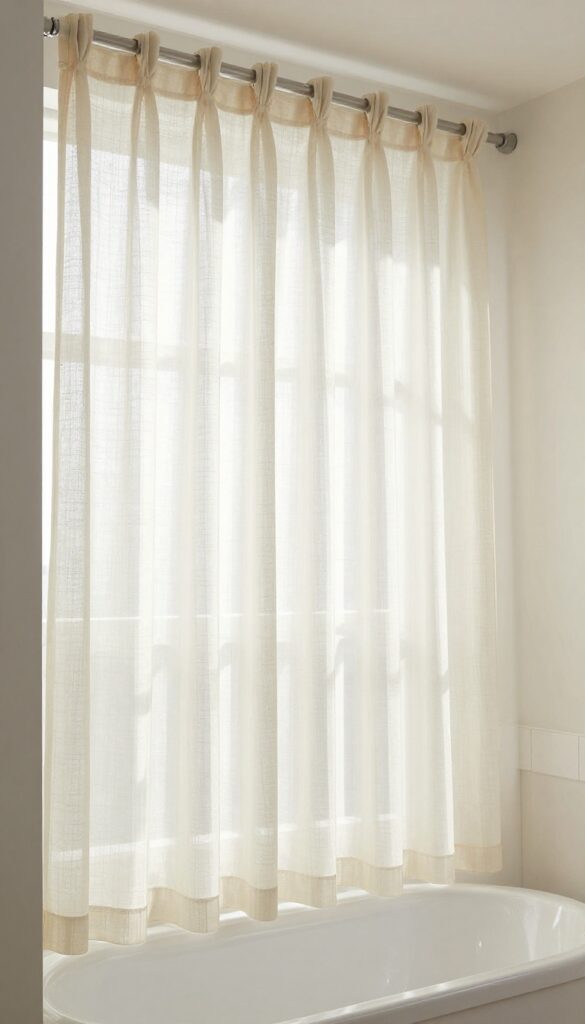
A valance is like the cherry on top of your double curtain setup. It’s a shorter curtain that hangs above the main one, adding a layer of polish and hiding the hardware. This trick works especially well if you want a finished, designer look without much effort.
You can mix and match colors, patterns, or textures to create depth. The valance can be sheer, solid, or even ruffled, depending on the vibe you’re going for. It’s a simple way to elevate the whole bathroom aesthetic.
Adding a valance or top tier is a low-commitment way to upgrade your shower curtain game. It doesn’t require extra rods or complicated hardware—just a second shorter curtain and a few clips. The result is a layered, custom feel that instantly makes the bathroom look more intentional.
This idea is perfect for anyone who wants a quick refresh without repainting or replacing fixtures. Plus, it’s a great way to introduce a pop of color or a fun pattern without overwhelming the space. You can change the valance seasonally or whenever you crave a new look.
Choosing The Right Valance Length
Valances typically hang about 12 to 18 inches from the top of the rod. That leaves the main curtain visible and functional. If you have a high ceiling, you can go longer, but keep it proportional to the window or tub area.
Measure first to avoid a valance that’s too short or too long—it should just skim the top of the main curtain.
Mixing Fabrics And Patterns
The fun part is playing with fabrics. A crisp cotton valance over a textured linen curtain adds contrast. Or try a bold geometric valance with a solid neutral underneath for a playful yet balanced look.
Sheer valances work well if you want to let in light while keeping the main curtain more private. Just make sure the fabrics complement each other in weight and color.
Installation Tips For A Clean Look
Use clip rings or a separate tension rod for the valance. Clip rings are easiest—just attach the valance to the same rod as the main curtain, but place it higher if you have a double rod. If you’re using a single rod, clip the valance to the front and the main curtain behind it.
Space the clips evenly to avoid sagging. A little steam or ironing helps the valance hang crisply.
12. Patterned Outer, Neutral Inner
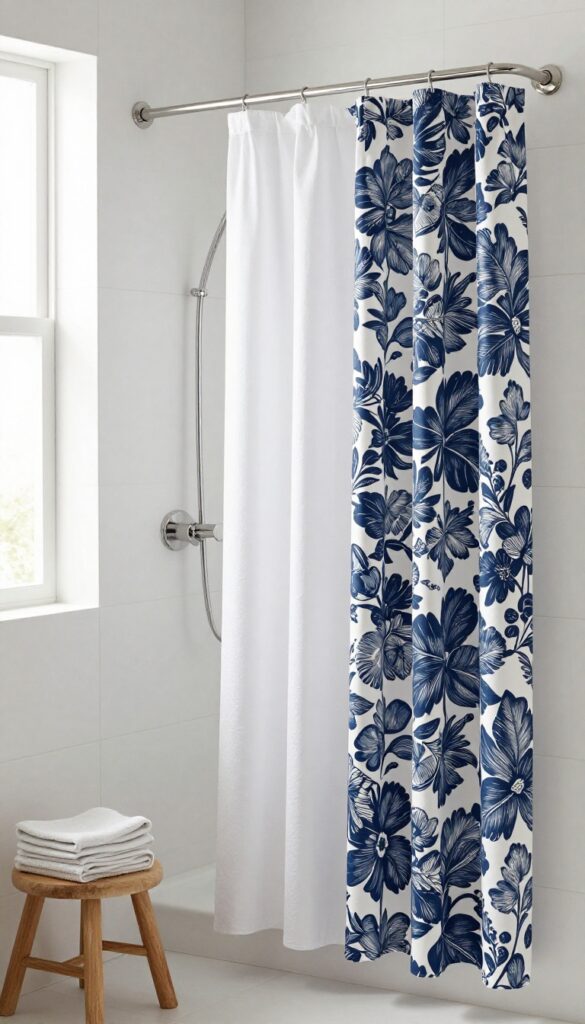
A bold patterned curtain instantly adds personality, but too much of it can make a small bathroom feel busy. Pairing it with a neutral inner curtain gives you the best of both worlds: visual interest on the outside, calm and balance on the inside. This combo also lets you switch up the outer curtain seasonally or whenever you crave a change, without having to rethink the whole setup.
The key is to let the patterned curtain be the star. Choose a design you love—floral, geometric, or even a subtle stripe—and keep the inner curtain plain. A white or light gray liner works with almost any pattern, while a beige or soft taupe can warm up the space.
This approach keeps the eye moving without feeling chaotic, and it's easy to pull off with any double rod setup.
Picking The Right Pattern Scale
Large-scale patterns make a bold statement, but they can overwhelm a tiny bathroom. Small or medium prints are safer if your space is compact. If you're unsure, hold the curtain up against your wall and step back—if it feels too loud, go smaller.
Also, consider the colors in the pattern: pulling one hue from it for your inner curtain or towels ties the whole look together.
Choosing A Neutral That Complements
Your neutral inner curtain shouldn't just be an afterthought. Match it to the lightest or most dominant color in the pattern for a cohesive feel. For example, a navy-and-white geometric pattern pairs beautifully with a crisp white inner curtain, while a warm terracotta print looks great with a cream or sand-colored liner.
This subtle connection makes the combination feel intentional.
Keeping The Look Balanced
Balance isn't just about color—it's also about how much pattern you see. If your outer curtain is very busy, keep accessories and towels simple. Let the curtain be the focal point.
On the other hand, if the pattern is more subdued, you can add a patterned bath mat or a few colorful accessories without clashing. The goal is to avoid visual overload.
13. Seasonal Switch-Up with Two Sets
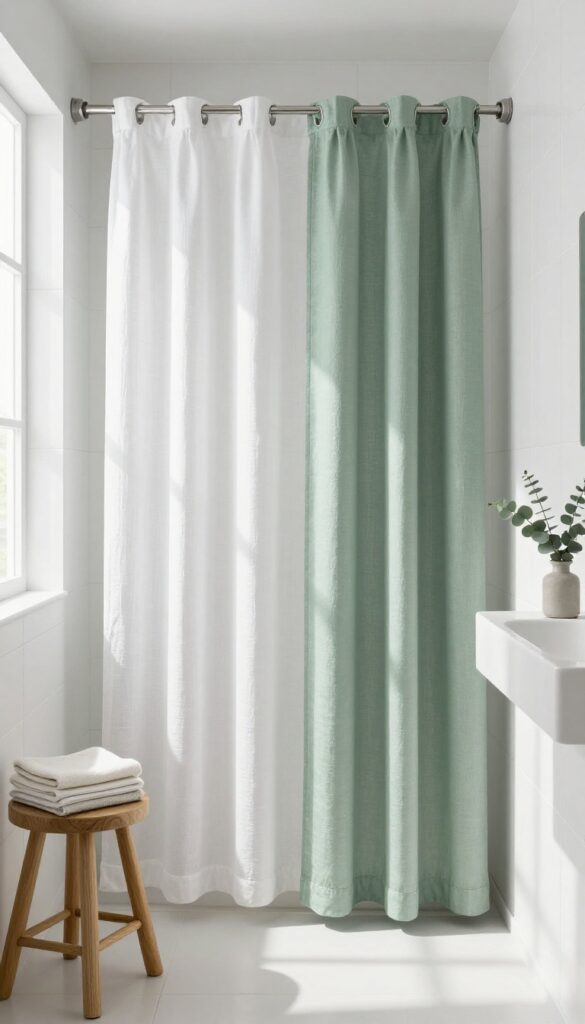
Swapping your shower curtains with the seasons might sound like extra work, but it's actually a low-effort way to keep the bathroom feeling current. With a double rod setup, you already have two curtains to play with, so why not make one of them seasonal?
Keeping two sets of double curtains and rotating them throughout the year gives you a fresh look without a full remodel. Light linen in summer keeps things airy, while heavier cotton in winter adds warmth and coziness. It's a small change that makes a big difference in how the space feels.
Pick Fabrics That Match The Season
Choose breathable, light fabrics like linen or cotton voile for warmer months. They let air flow and keep the bathroom from feeling stuffy. For winter, switch to thicker cotton, flannel, or even a subtle velvet to add insulation and a soft touch.
Coordinate Colors With The Calendar
Seasonal colors can be as simple as swapping pastel tones in spring for deeper jewel tones in fall. You don't have to go overboard—just changing the outer curtain to a seasonal hue while keeping the liner neutral is enough. This way, you get a quick refresh without buying a whole new setup.
Store The Off-season Set Properly
To make the swap easy, store the unused set in a labeled bin or vacuum-sealed bag. Keep them clean and wrinkle-free so they're ready to hang when the season changes. A little organization goes a long way in making this routine hassle-free.
14. DIY Clip-On Rings for a Custom Fit
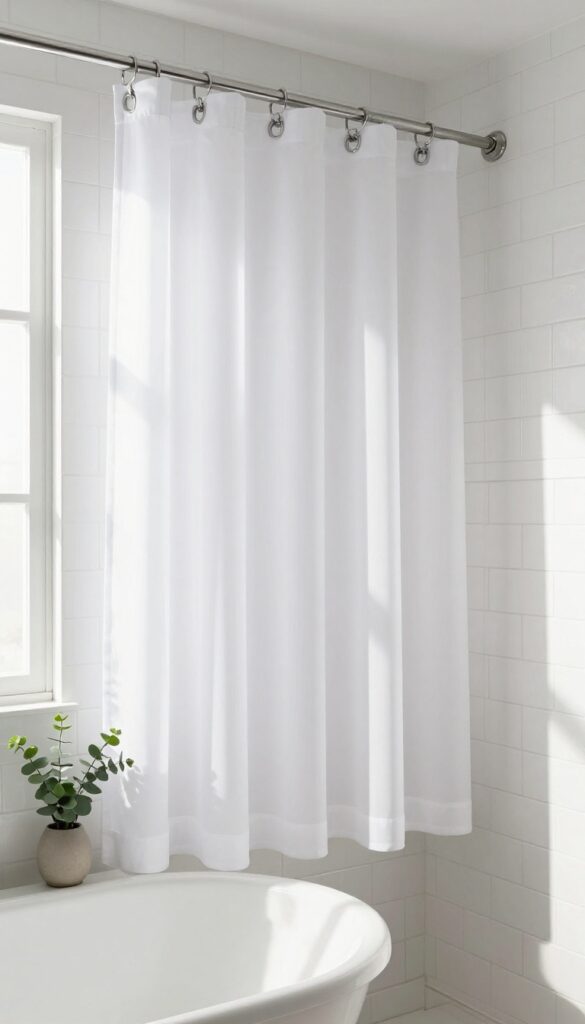
Sometimes the simplest fixes are the most flexible. Clip-on shower curtain rings let you attach two separate panels to a single rod without needing a second rod or a special liner. This opens up a world of mixing and matching—try a long fabric curtain with a shorter waterproof liner, or pair two different patterns for a playful look.
The best part? You can swap them out whenever the mood strikes.
Clip-on rings are a game-changer if you've ever struggled with standard grommet or hook curtains. They let you use any fabric panel you like, from tablecloths to flat sheets, as long as it has a straight top edge. This DIY approach is budget-friendly and gives you total control over the final look.
Plus, it's a renter-friendly solution since you're not drilling holes or installing extra hardware.
What You'll Need
Gather about 12 to 16 clip-on rings (depending on your rod width), a shower rod, and two curtain panels of your choice. You can find clip rings at most home stores or online, and they come in various finishes like chrome, bronze, or matte black. Make sure the clips are sturdy enough to hold the fabric without slipping.
How To Hang Them
Start by sliding the rings onto the rod, spacing them evenly. Then, clip the first panel to the front of the rings and the second panel to the back. This way, the back panel acts as a liner, and the front one is purely decorative.
If you want both panels visible, clip them side by side instead. Adjust the clips so the fabric hangs evenly and doesn't bunch up.
Mixing Lengths And Styles
One of the biggest perks of clip-on rings is the ability to mix lengths. Try a floor-length fabric panel on the outside and a standard shower liner on the inside. Or, go for a shorter valance-style panel on top and a full-length curtain below.
The clips make it easy to change the arrangement whenever you want a new look.
Easy Seasonal Swaps
Because clip-on rings are so easy to remove, you can switch out your curtains seasonally without any hassle. Use light, airy fabrics in the summer and heavier, warmer tones in the winter. Keep a few extra panels in your linen closet, and you can update the bathroom in under five minutes.
15. Double Curtains with a Tension Rod Inside the Tub
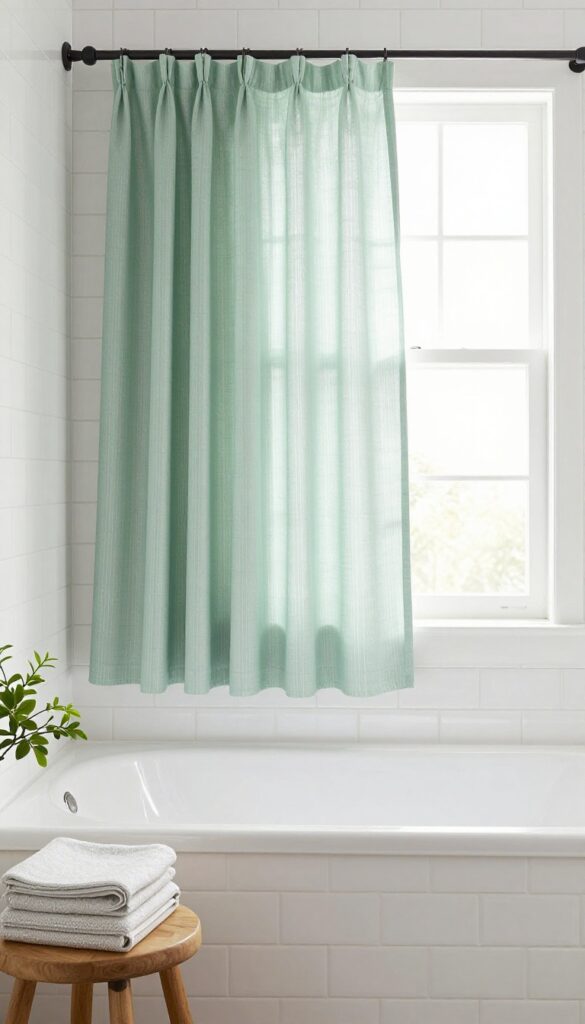
A tension rod inside the tub is a game-changer if you want the look of a double curtain without the commitment of a second permanent rod. It’s a clever workaround that gives you the best of both worlds: a waterproof liner that actually does its job, and a decorative curtain that stays dry and pretty. The setup is simple: mount a tension rod inside the tub area, close to the wall, and hang a standard shower liner on it.
Then, on your main rod outside the tub, hang a decorative curtain that’s purely for looks. This way, water stays contained, and your stylish curtain never gets wet or mildewed.
This approach is especially handy if you have a curved or angled tub where a second rod on the ceiling might not work. It also lets you play with lighter fabrics—like cotton or linen—that would normally soak through if they were the only barrier. Because the liner is doing all the heavy lifting, you can choose a decorative curtain that’s sheer, patterned, or even a fun color without worrying about water damage.
Plus, tension rods are adjustable and easy to remove, making this a renter-friendly option that leaves no holes behind.
Why This Setup Works
The main advantage is that it solves the classic problem of a decorative curtain getting wet and stained. By keeping the liner separate and inside the tub, water never touches the outer curtain. That means you can use a fabric that’s not waterproof, which opens up a ton of design possibilities.
It also makes cleaning easier—just toss the liner in the wash, and your decorative curtain stays fresh for longer.
How To Choose The Right Tension Rod
Not all tension rods are created equal. Look for one that’s sturdy enough to hold a wet liner without sagging. A rod with a spring-loaded mechanism and rubber ends will grip the walls better.
Measure the distance between the walls inside your tub to get the right length. If your tub is extra wide, you might need a rod with a longer extension range. Also, consider a rust-resistant finish, especially in a humid bathroom.
Styling Ideas For The Outer Curtain
Since the outer curtain doesn’t need to be functional, you can have fun with it. Try a sheer white curtain for an airy, spa-like feel, or go bold with a geometric pattern that adds personality. You could even use a fabric shower curtain that matches your towels or bath mat.
The key is to pick something that complements the bathroom’s color scheme and doesn’t overwhelm the space.
FAQ
How do I choose the right double shower curtain rod?
Measure your tub or shower width and consider the depth you need. Curved rods add space, while straight rods are simpler. Look for adjustable rods that fit your space and can support the weight of two curtains.
Can I use two fabric curtains without a liner?
Yes, if the fabric is water-repellent or you don't mind some water getting through. For a standard shower, it's safer to use a liner behind the fabric curtain to prevent mold and water damage.
What's the best way to prevent mold on double shower curtains?
Choose machine-washable fabrics and liners, and wash them regularly. Ensure good ventilation in the bathroom, and consider using a squeegee to remove excess water after showers.
How many curtain rings do I need for a double curtain setup?
Typically, you'll need about 12 rings per curtain for a standard 72-inch rod. For a double rod, you'll need separate rings for each curtain, so about 24 rings total.
Can I install a double shower curtain rod myself?
Yes, most double rods are easy to install with basic tools. Make sure to mount them securely into wall studs or use heavy-duty anchors, especially if you're hanging heavier curtains.
Conclusion
Double shower curtains are a small change that can make a big difference in how your bathroom looks and functions. Whether you're after more privacy, easier cleaning, or just a fresh style, there's a setup here that fits your space and budget.
Start with the simplest idea—like a fabric and liner combo—and experiment from there. You might be surprised how much personality two curtains can add to a room you use every day.