13 Smart Black Shower Tile Ideas for a Calm, Functional Look
Black shower tile gets a bad rap for being dark and moody, but it can actually make your bathroom feel more open and serene. The key is knowing how to use it without turning your shower into a cave.
A well-designed black tile shower hides water spots, adds depth, and pairs with almost any fixture finish. It works in small bathrooms and large ones, as long as you plan the layout and lighting.
These 13 ideas focus on practical ways to get that calm, functional look. Whether you're remodeling or just dreaming, you'll find options that fit real budgets and real spaces.
1. Matte Black Subway Tile for a Soft, Modern Feel
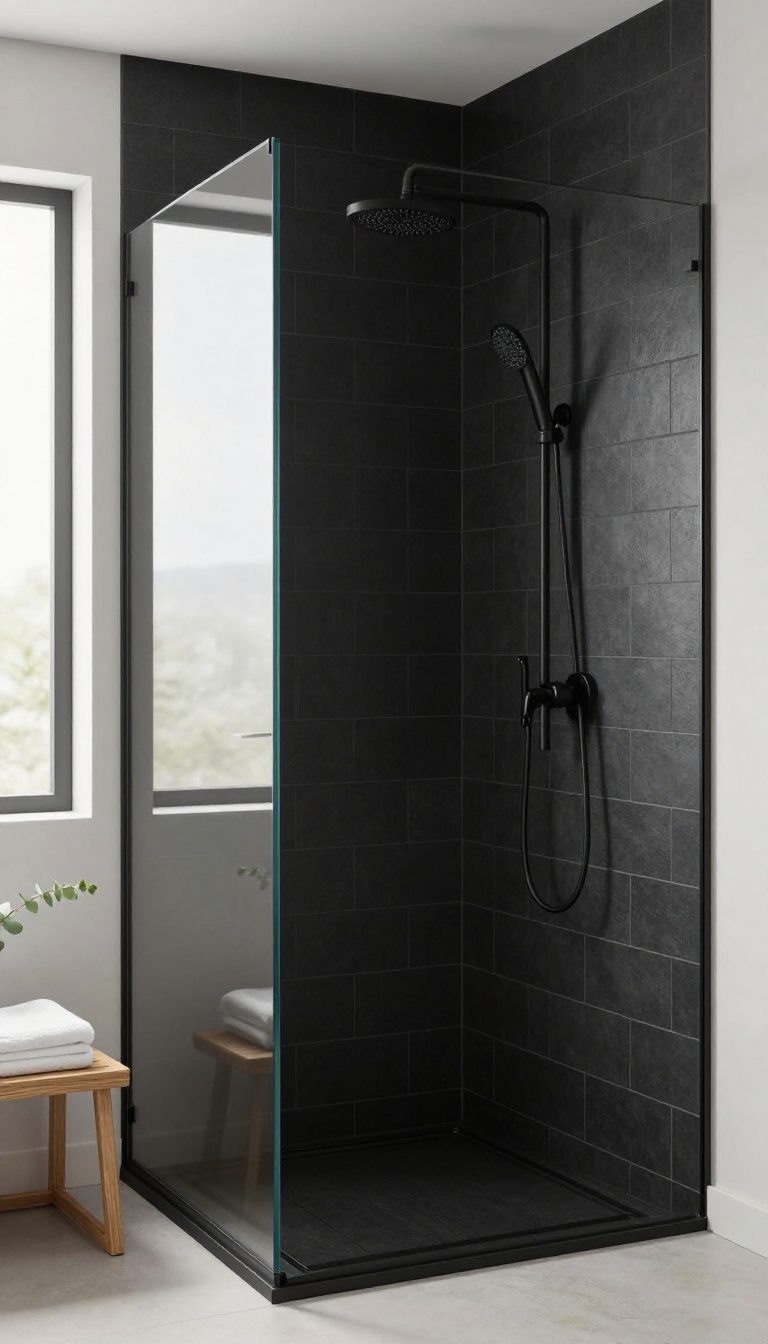
Matte black subway tile flips the script on glossy, high-shine finishes. It absorbs light instead of bouncing it around, so your shower feels calm and grounded rather than stark. And because there’s no glare, water spots and soap scum don’t scream for attention.
You get a sleek, modern look that’s surprisingly forgiving.
Subway tile is a classic shape, but in matte black it reads completely different. The flat surface softens the edges of the room and makes the color feel richer, almost like charcoal. It’s a simple swap that adds depth without making the space feel heavy.
One of the biggest perks is how well it hides everyday mess. Glossy tiles show every droplet and streak, but matte finishes diffuse the light so imperfections fade into the background. That means less time scrubbing and more time enjoying your shower.
You can run it in a traditional offset pattern for a timeless look, or switch to a stacked layout for something more contemporary. Either way, the matte texture keeps it from feeling too perfect or sterile. It’s a workhorse tile that still feels designed.
Why Matte Beats Gloss In A Shower
Glossy tile reflects everything, including hard water spots and fingerprints. Matte black tile scatters light, so those little marks become nearly invisible. It’s a practical choice if you want a low-maintenance shower that still looks sharp.
Layouts That Keep It Interesting
A standard running bond (like classic subway) feels familiar and easy. For a more modern edge, try stacking the tiles in a grid or vertical columns. You can also mix in a few glossy black accents for subtle contrast without losing the soft vibe.
Pairing Matte Black With Other Finishes
Matte black plays well with brushed nickel, warm brass, or even chrome. Keep the grout dark to blend in, or go with a light gray for a hint of definition. Either way, the matte surface keeps the overall look understated.
2. Pair Black Tile with Warm Wood Accents
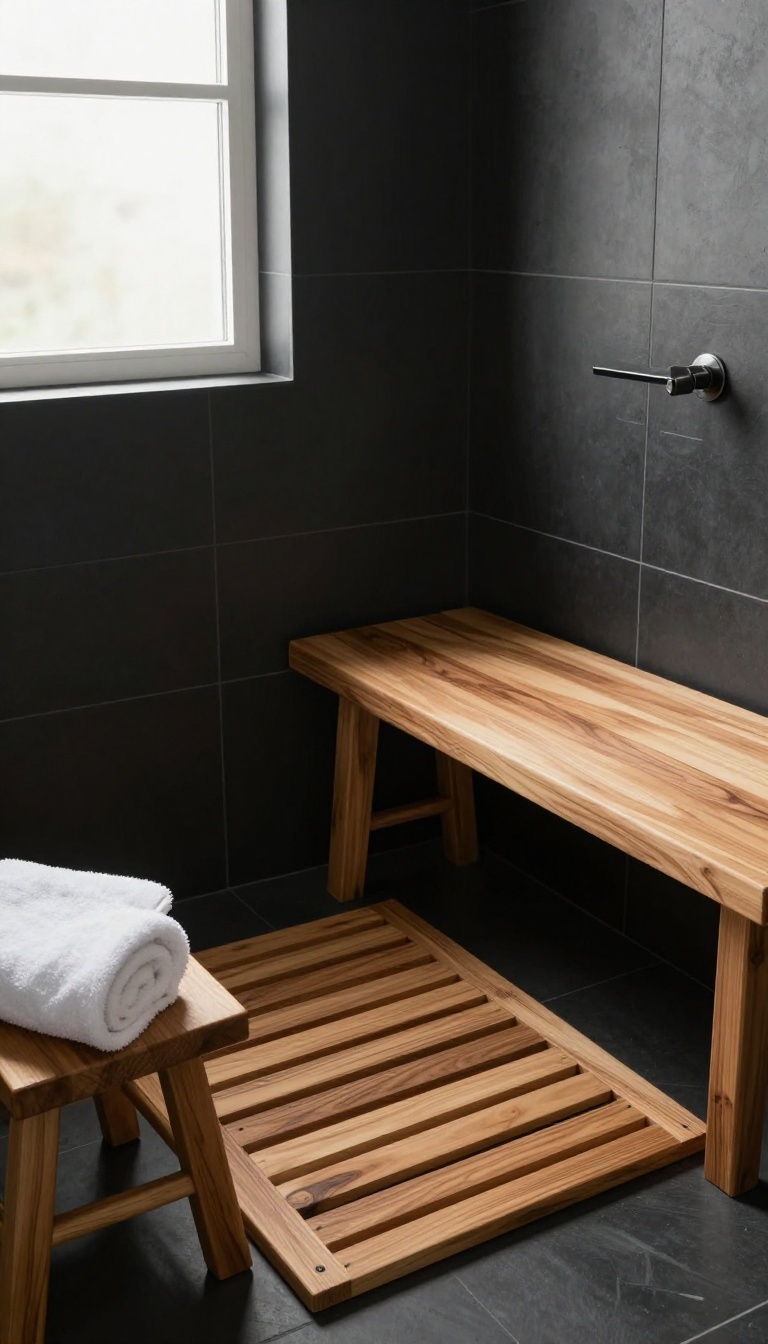
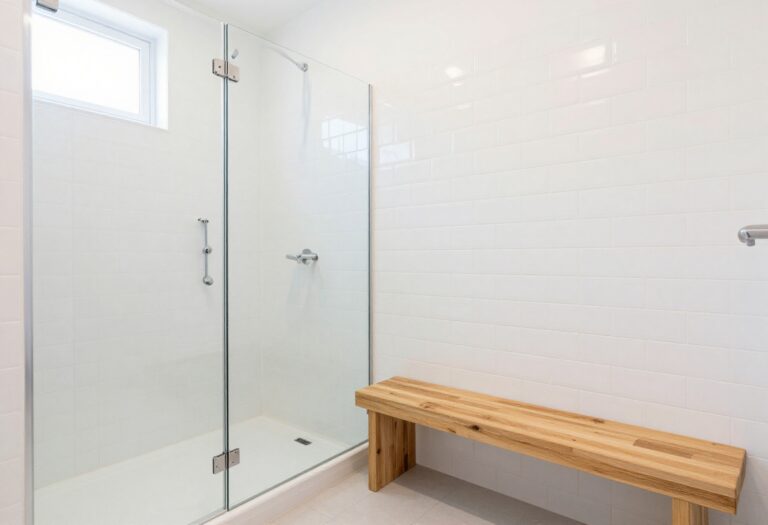
Black tile alone can feel stark, but add a touch of wood and the whole shower softens. Wood brings warmth and texture that balances the coolness of black, making the space feel inviting instead of cold. It's a simple swap that turns a dark shower into a cozy retreat.
You don't need to cover every surface in wood to get the effect. A little goes a long way. Think of wood as the seasoning that brings out the best in the black tile.
Start with a teak or cedar shower mat or bench. These woods handle moisture well and add a natural element that contrasts beautifully with black. Even a small stool or shelf can make a difference.
If you want something more permanent, consider a wood-look tile on the floor or a wood slat wall opposite the shower. This gives you the warmth without the maintenance of real wood. Lighting also plays a role.
Warm-toned bulbs (2700K-3000K) will enhance the wood and keep the black from looking too harsh. Avoid cool white lights that can make the space feel clinical.
Choose The Right Wood
Not all woods are created equal in a wet environment. Teak, cedar, and ipe are naturally resistant to moisture and rot. If you're using real wood, stick with these.
For a low-maintenance option, wood-look porcelain or ceramic tile gives you the same warmth without the upkeep. Just make sure it has a textured finish for slip resistance.
Balance The Proportions
You want the wood to complement, not compete. If your black tile is glossy and bold, use wood sparingly—a mat, a bench, or a single accent wall. If your black tile is matte and subtle, you can afford more wood.
A good rule of thumb: wood should take up about 20-30% of the visual space.
Add Warm Metals
Wood pairs beautifully with warm metals like brass, copper, or bronze. Swap out your chrome fixtures for one of these finishes to enhance the cozy vibe. It's a small change that ties the whole look together and keeps the black tile from feeling too industrial.
3. Use a Black Accent Wall Inside the Shower
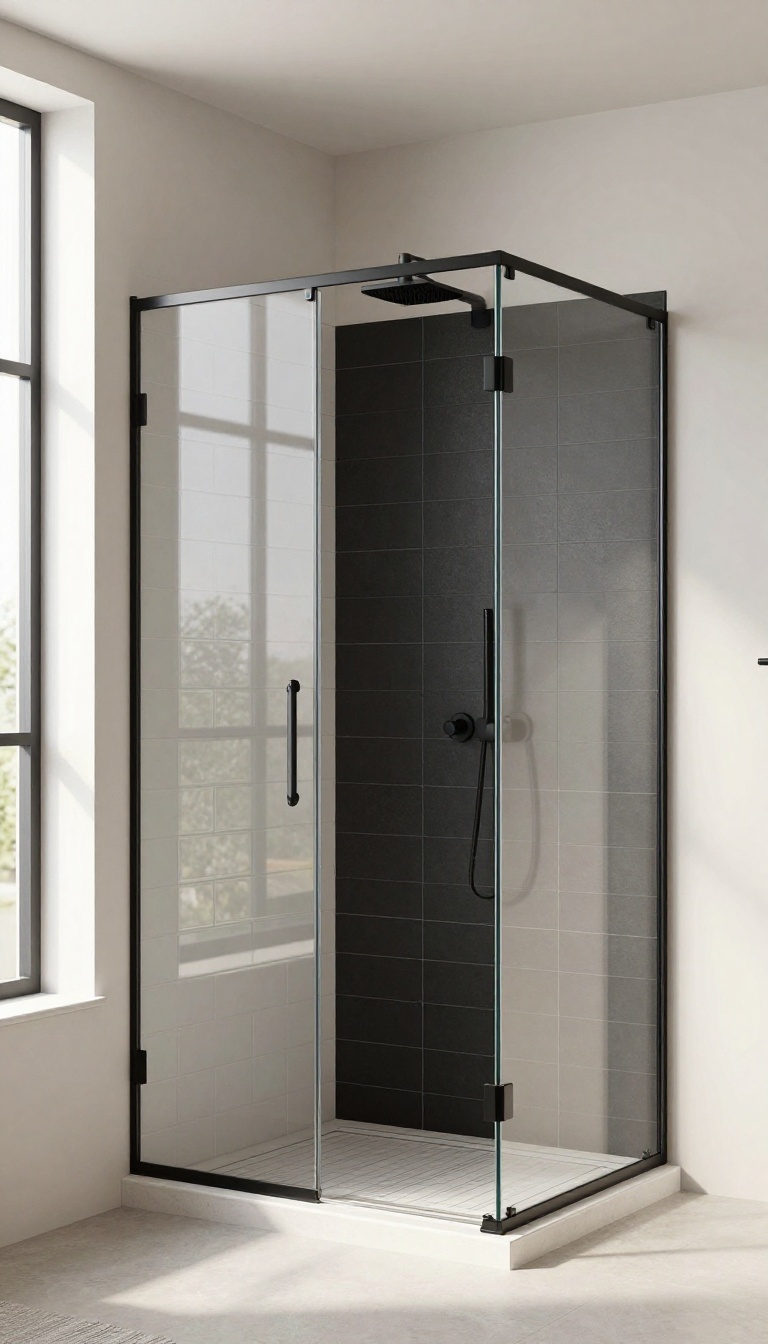
An all-black shower can feel heavy, but one black wall gives you the drama without the cave effect. It's a smart way to test the dark tile trend before committing your whole bathroom to it. You get a strong focal point, and the rest of the shower stays light and open.
Plus, it usually costs less than tiling every surface in black.
An accent wall works because it creates contrast. Your eye reads the black wall as a deliberate design choice, not an accident. The other walls can stay white, gray, or a soft neutral, which keeps the space feeling bright.
This approach also makes the shower feel bigger. A single dark plane adds depth, while the lighter walls bounce light around. You get the moody look without sacrificing openness.
From a practical standpoint, a black accent wall hides water spots and soap scum better than white tile. That means less scrubbing and more time enjoying your shower. It's a win for both style and upkeep.
Pick The Right Wall
The wall you choose matters more than you might think. A black accent wall on the back of the shower draws the eye inward and makes the space feel deeper. If you put it on a side wall, it can make the shower feel wider instead.
Avoid putting the black wall right next to the entrance if your bathroom is small. That can make the whole room feel dark. The back wall is usually the safest bet for a balanced look.
Balance With Light Tile
Pair your black accent wall with light-colored tile on the other walls. White subway tile, pale gray large-format tiles, or even a soft beige keeps things airy. The contrast makes the black wall pop without overwhelming the room.
You can also use a light grout on the black wall to define the tile pattern. Or go with black grout for a seamless, monolithic look. Either way, the light walls do the heavy lifting for brightness.
Add Lighting For Depth
Lighting is key when you have a dark accent wall. A recessed light or two aimed at the black wall will highlight the texture and keep it from looking flat. A dimmer switch lets you adjust the mood from bright and functional to soft and spa-like.
If you have a niche or bench, consider a small LED strip light there. It adds a glow that makes the black tile look intentional and high-end. Just make sure all fixtures are rated for wet areas.
Keep The Budget In Check
Tiling one wall in black costs less than doing the entire shower. You save on materials and labor, which makes this a budget-friendly way to try the trend. You can splurge on a nicer black tile for that one wall without blowing your budget.
If you're handy, you might even DIY the accent wall as a weekend project. Just remember that waterproofing is non-negotiable. A pro can help you get the prep right so the tile lasts.
4. Go Glossy for a Jewel-Box Effect
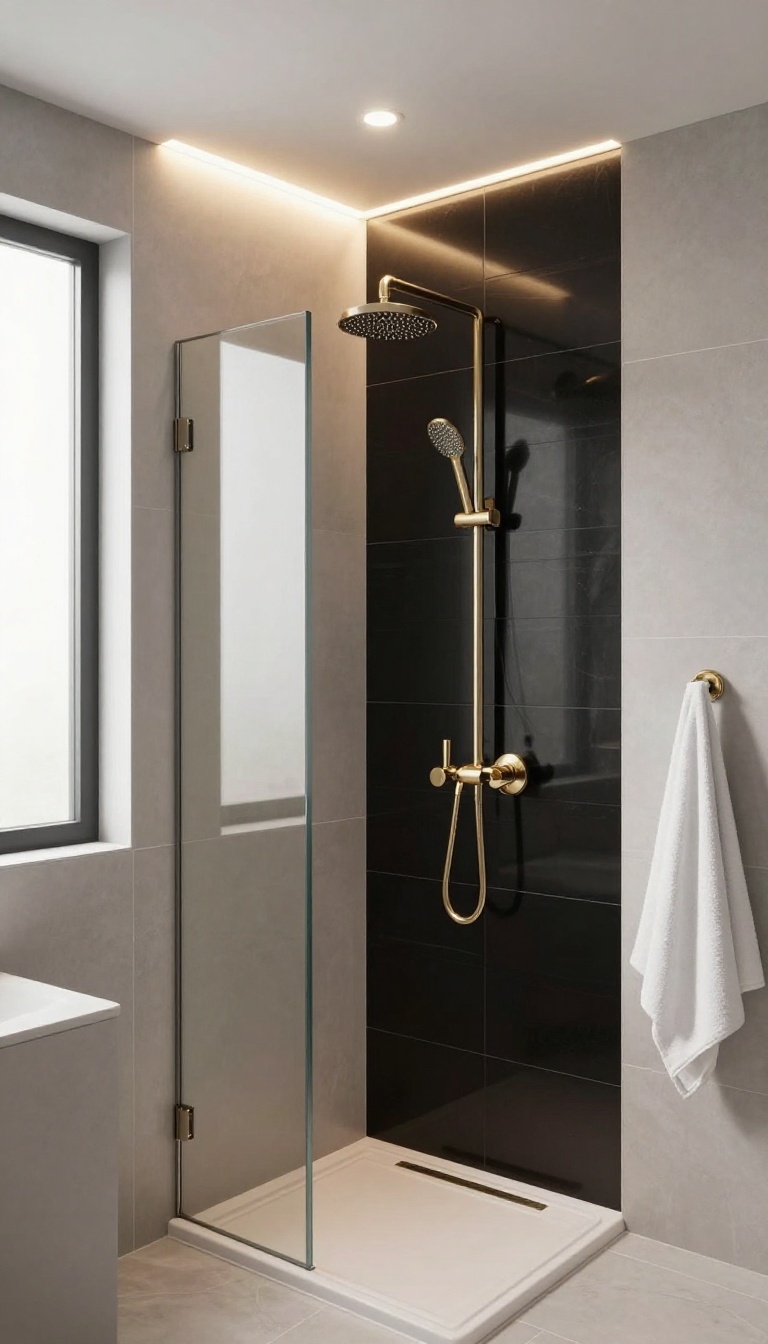
Glossy black tile turns your shower into a little jewel box. The surface bounces light around, so even a tight stall feels brighter and more open. It's a high-impact look that doesn't require a big budget or a big space.
The trade-off is maintenance. Every water droplet and soap smear shows up on that mirror-like finish, so you'll need to squeegee after each use. If you're okay with a quick daily wipe-down, the payoff is a shower that looks polished and expensive.
Glossy black tile works best when you treat it like the star of the show. Pair it with warm brass or brushed nickel fixtures to keep the look rich instead of cold. A single glossy black accent wall behind the showerhead gives you the jewel-box effect without overwhelming the room.
Lighting makes or breaks this finish. A dim shower will make glossy black look flat and dull. Add a recessed light directly above the shower or a slim LED strip along the ceiling to catch the shine.
The reflections will do the rest. If you love the look but hate the upkeep, consider glossy black tile on the upper half of the walls and a matte or textured tile below. You get the sparkle where it counts and a more forgiving surface near the splash zone.
Where Glossy Black Shines
Small showers benefit most from glossy black tile because it reflects light and visually expands the space. Use it on all four walls if the shower is enclosed, or just on the back wall if you want a focal point. It also looks stunning in a curbless walk-in shower with a glass panel.
The Maintenance Reality
Glossy black shows every speck of soap scum, hard water spot, and toothpaste splatter. Keep a squeegee in the shower and give the walls a quick pass after every use. Once a week, use a pH-neutral cleaner and a microfiber cloth to bring back the shine.
Skip abrasive scrubbers, which can dull the surface over time.
Pairing And Grout Tips
Choose a grout color that matches the tile for a seamless, monolithic look. A dark gray or black grout hides stains better than white and keeps the focus on the glossy surface. For a bit of contrast, try a thin white grout line, but be prepared to clean it more often.
Fixtures in warm metals like brass or copper add a touch of luxury, while chrome keeps things sleek and modern.
5. Choose Large-Format Black Tiles to Minimize Grout Lines
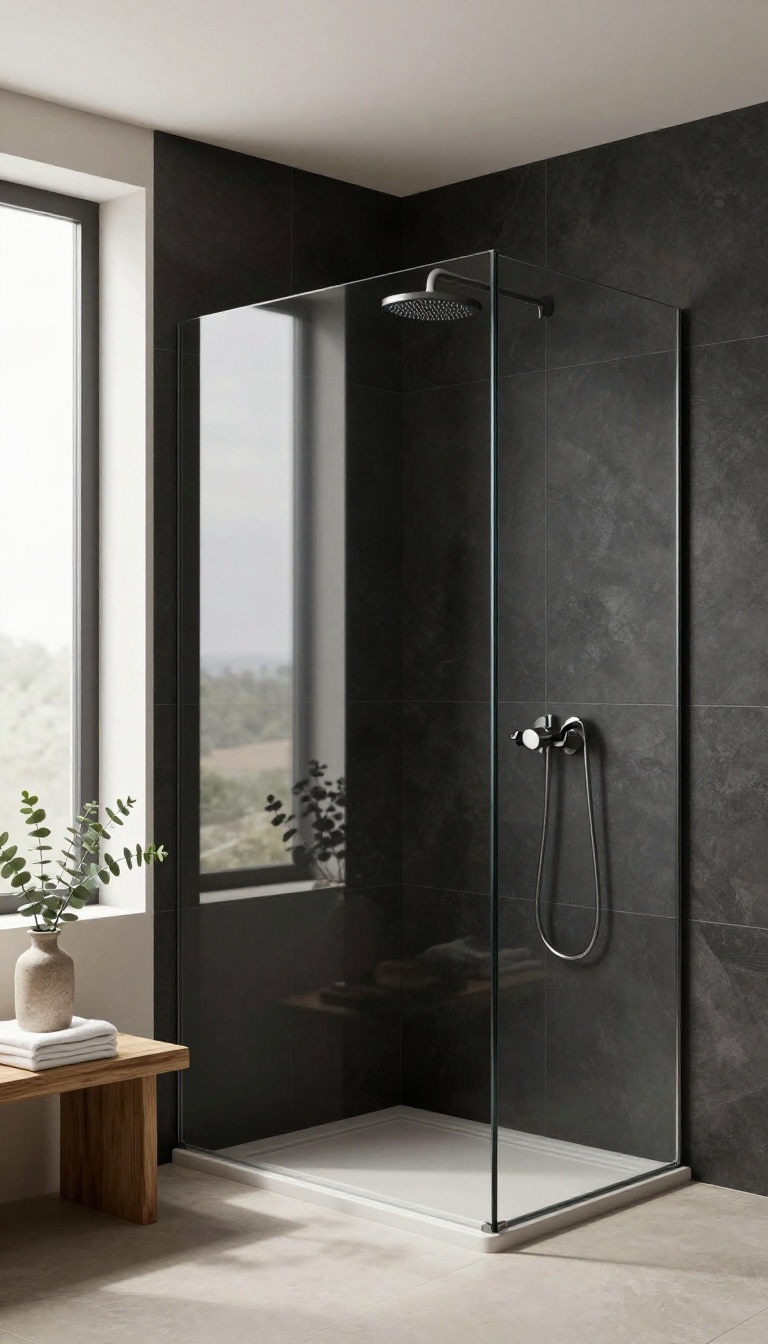
Grout lines are the unsung villains of shower maintenance. Every seam between tiles collects soap scum, hard water spots, and mildew, turning a quick wipe-down into a scrubbing marathon. Large-format black tiles flip that script by covering more surface area with fewer interruptions.
The result is a shower that looks cleaner and stays cleaner with far less effort.
When you shrink the number of grout lines, you shrink the number of places dirt can hide. That's the simple math behind large-format black tiles. They give you a sleek, seamless look that feels modern and calm, not busy or cluttered.
And because there's less grout to scrub, your weekly cleaning routine gets a serious upgrade. This approach works in any size shower, but it's especially smart for high-traffic bathrooms where the shower runs nonstop.
Fewer Lines, Less Scrubbing
A standard 3×6-inch subway tile shower can pack in hundreds of grout lines. Each one is a tiny ledge for grime. Swap those for 12×24-inch or even 24×48-inch black tiles, and you cut those lines by 70% or more.
That means less time on your knees with a brush and more time enjoying your bathroom. It's a small change with a huge payoff for daily use.
Sizing Tiles To Your Shower
Large-format doesn't mean one-size-fits-all. For a standard 32-inch shower wall, a 12×24 tile keeps cuts manageable and waste low. If you have a spacious walk-in, 24×48 tiles can create a dramatic, almost seamless slab effect.
Just plan your layout so you're not left with skinny slivers at the corners. A good tile setter will help you map it out before you buy.
Grout Color Matters
Even with fewer lines, the grout you choose affects the final look. Match your grout to the black tile for a uniform, monolithic feel that downplays seams. Or go with a dark charcoal for subtle contrast that still hides stains.
Avoid white grout unless you want to highlight every line—and every speck of dirt. Dark grout is your friend here.
Installation Tips For A Clean Finish
Large tiles are heavy, so you'll need a strong substrate and the right thinset. A level surface is non-negotiable; any bump will show. Use a tile leveling system to keep lippage minimal.
And don't skimp on waterproofing—a proper membrane behind the tile protects your walls and keeps mold at bay. Hire a pro if you're not confident, because big tiles leave little room for error.
6. Mix Black and White for Timeless Contrast
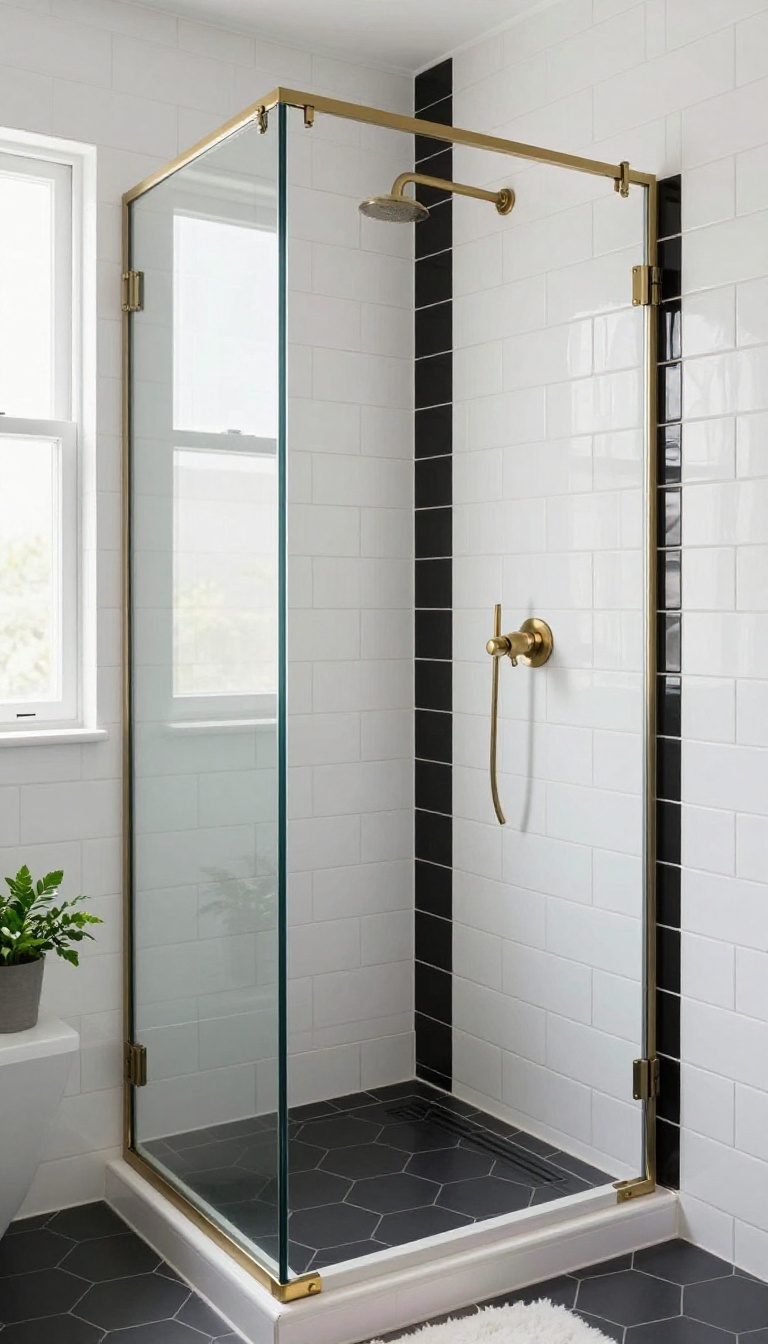
Black and white is the little black dress of bathroom design. It never goes out of style, and it plays nicely with every metal finish you can throw at it. Whether your fixtures are shiny chrome or warm brass, this pairing just works.
The trick is balancing the two so the space feels intentional, not like a checkerboard. You can go bold with a graphic pattern or keep it subtle with simple lines. Either way, you get a shower that feels clean, calm, and put-together.
Contrast is what makes black and white so striking. But it's also what makes it versatile. The white keeps things bright and open, while the black adds depth and definition.
Together, they create a look that's crisp and timeless. You don't have to stick to plain squares either. There are countless ways to mix these two shades, from penny rounds to large-format tiles.
The key is to choose a pattern that suits your style and your space.
Classic Patterns That Always Work
Some patterns have stood the test of time for a reason. The classic checkerboard is a no-brainer. It's playful yet sophisticated, and it instantly adds visual interest to a plain shower.
Another timeless option is the border accent. Run a stripe of black tile along the top or bottom of a white wall. It frames the space without overwhelming it.
Or try a black hexagon floor with white subway walls. That combo feels fresh but familiar. If you want something a bit more modern, consider a vertical stack of black and white tiles.
It draws the eye upward and can make your shower feel taller. Just keep the grout color consistent to avoid a busy look.
Hardware That Complements The Contrast
One of the best things about black and white is how forgiving it is with hardware. Chrome adds a cool, contemporary vibe. It's shiny and reflective, which can make the space feel larger.
Brass brings warmth and a touch of luxury. It contrasts beautifully with the cool tones of black and white, adding a hint of glamour. Matte black fixtures create a seamless look, especially if you use black grout.
Don't forget about the smaller details. A black showerhead or white handles can tie the whole design together. Just make sure the finish matches across all fixtures for a cohesive feel.
Making It Work In Small Showers
In a small shower, too much black can feel cramped. That's why white should be your base. Use white tiles on the walls to keep the space open and airy.
Then, add black accents on the floor or as a feature strip. A black penny round floor is a great choice. It hides dirt well and adds a touch of drama without closing in the room.
Pair it with white subway tiles on the walls and a clear glass door. The result is a shower that feels bright but still has personality. If you want to go bolder, try a black accent wall opposite the showerhead.
It draws the eye away from the tight corners and adds depth. Just balance it with plenty of white elsewhere.
7. Add Texture with 3D or Ribbed Black Tile
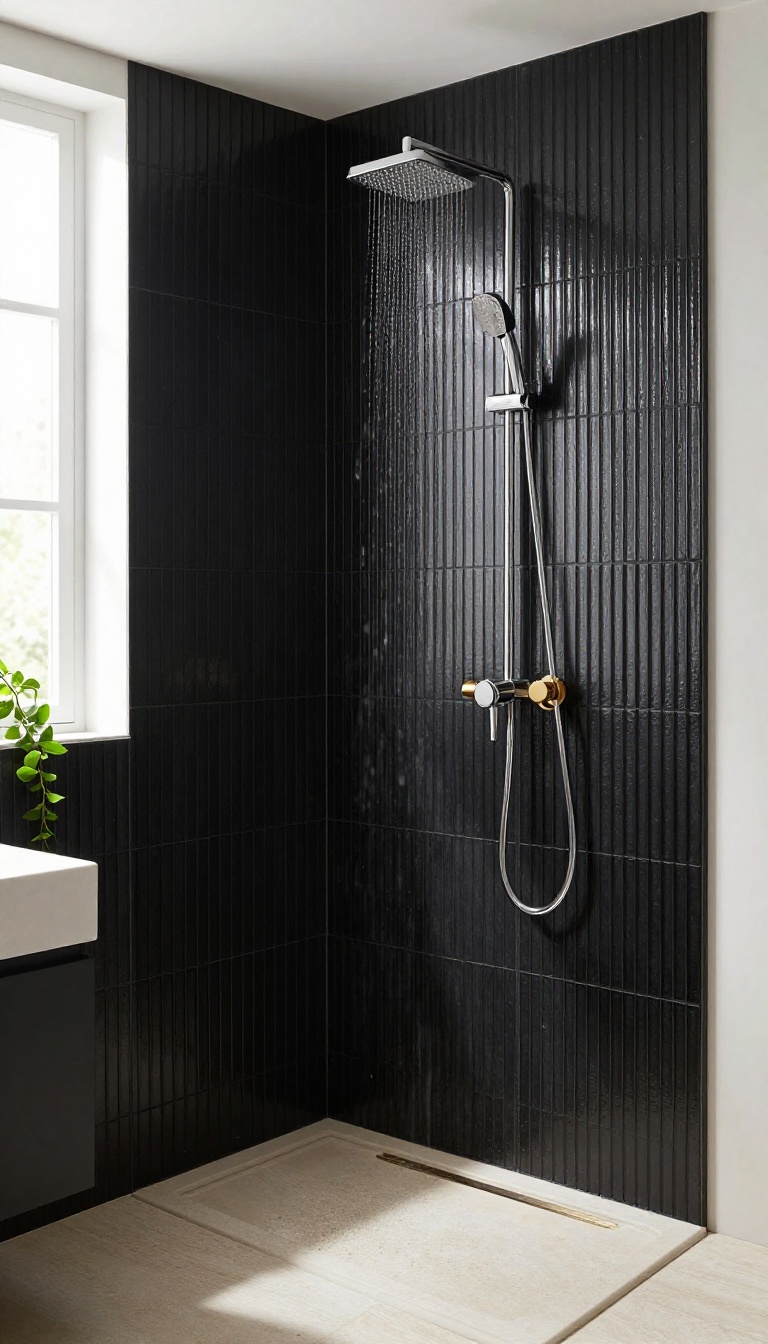
Flat black tile can look sleek, but it can also look a little one-note. Texture changes that. A 3D or ribbed surface catches light in ways a smooth tile never will, so your shower becomes a feature instead of a dark box.
The good news is you don't need a huge budget or a complicated install. Plenty of textured black tiles come in standard sizes and work with regular shower fixtures. You just have to pick the right pattern and placement.
Here's how to use texture without making the space feel busy or hard to clean.
Why Texture Works In A Black Shower
Black absorbs light, which can make a shower feel flat. Texture breaks up that flatness by creating tiny shadows and highlights. Even a subtle rib gives the surface depth, so your eye has something to follow.
It also helps hide water spots and soap scum better than glossy flat tile. The uneven surface scatters light, so minor marks don't stand out as much. That's a practical win in a wet zone.
Popular Textured Black Tile Options
Ribbed tiles come in vertical, horizontal, or wave patterns. Vertical ribs make the shower feel taller, while horizontal ribs add width. Wave patterns feel softer and more organic.
3D tiles go further with raised geometric shapes or faceted surfaces. Some look like folded paper, others like honeycomb. Just keep the pattern consistent so it reads as a design choice, not a mistake.
Placement Tips For A Calm Look
Don't cover every wall with the same texture. Pick one accent wall, usually the one you face when you step in. Keep the other walls smooth black or a lighter neutral.
If you want texture on the floor, choose a smaller-scale pattern with grip. Large 3D tiles can be slippery and uncomfortable underfoot. Save the bold stuff for the walls.
Cleaning And Maintenance
Textured tile needs a little more attention than flat tile. Soap and minerals can settle into the grooves. A soft brush and a mild cleaner once a week keeps it looking fresh.
Avoid abrasive pads that can scratch the finish. A squeegee after each shower also helps, especially on vertical ribs. It takes ten seconds and saves you scrubbing later.
8. Install a Black Tile Niche for Built-In Storage
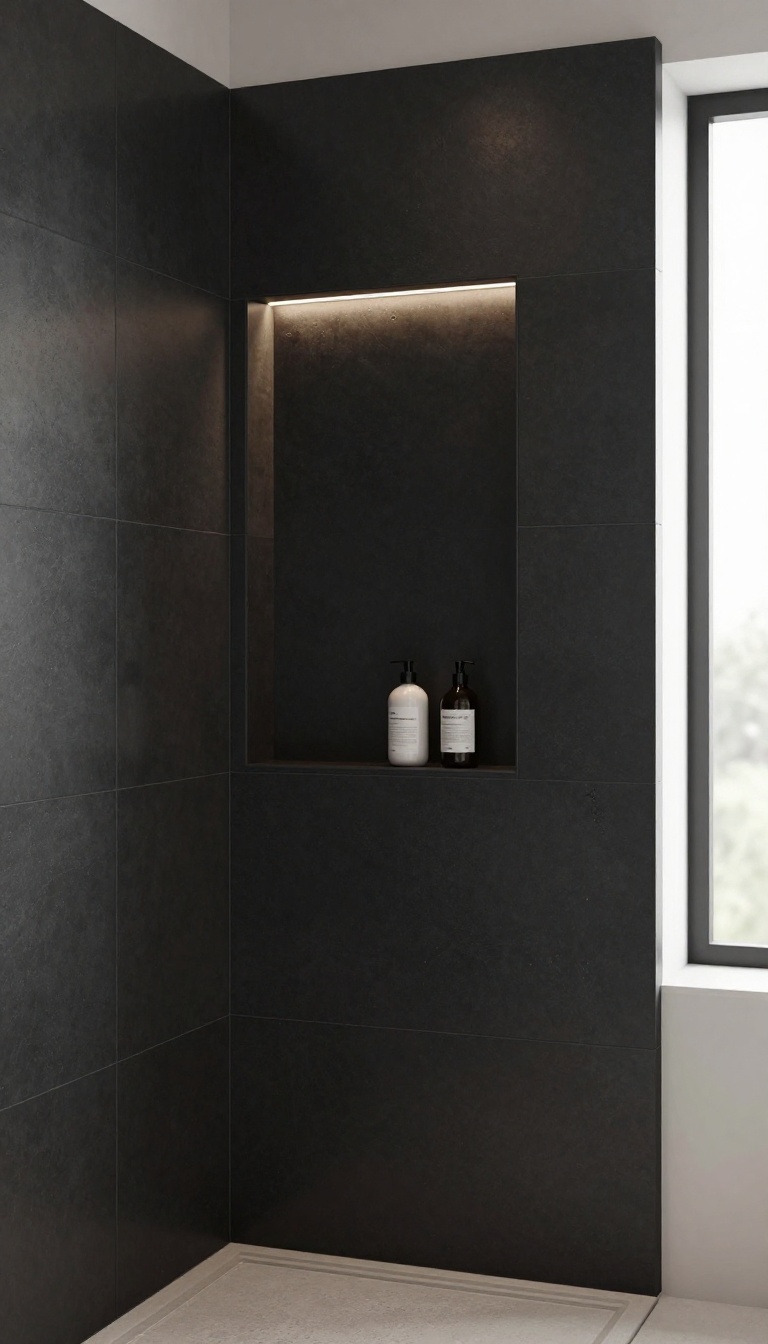
A recessed niche turns a blank shower wall into smart storage without adding a single shelf. When you tile that niche in black, it reads as a deliberate design feature instead of a hole in the wall. The result is a cleaner shower, fewer bottles on the floor, and a look that feels planned from the start.
A niche is basically a small alcove built between the studs, then sealed and tiled like the rest of the shower. Black tile makes it disappear into the wall when empty and frame your products when full. It keeps everything within reach, so you're not bending down or knocking bottles off a ledge.
Size And Placement That Works
A single horizontal niche around 12 by 24 inches fits most shampoo and body wash bottles without dominating the wall. If you share the shower, consider two stacked niches or one tall vertical slot for each person. Place the niche at chest height so you can grab what you need without stretching or crouching.
Tile And Grout Details
Use the same black tile inside the niche as the surrounding wall for a seamless look. A slight contrast, like matte tile with a glossy trim, adds depth without breaking the calm. Choose a dark or color-matched grout to keep the lines subtle and the niche looking like one solid piece.
Lighting And Drainage
A small LED strip or recessed light inside the niche highlights your products and adds a soft glow. Slope the bottom shelf slightly toward the shower so water drains instead of pooling. That tiny detail keeps soap scum from building up in the corners.
Keep It Clutter-free
A niche only looks intentional when it's not overflowing. Stick to daily essentials and refill small bottles instead of lining up giant ones. A quick rinse of the niche during your shower keeps it clean without extra effort.
9. Use Black Mosaic Tiles on the Shower Floor
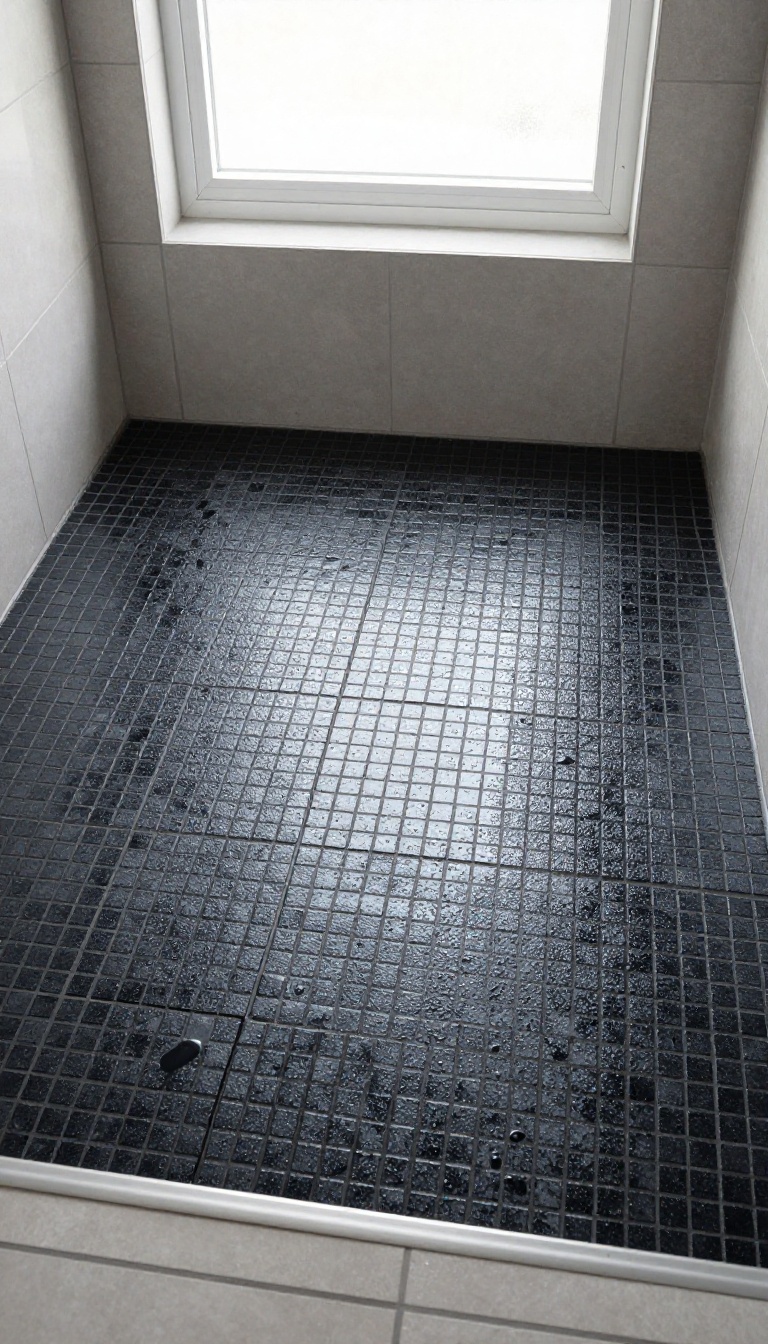
Shower floors take a beating, and light-colored tiles show every drop of water and footprint. Black mosaic tiles flip that script. They hide smudges, add grip, and visually anchor the shower zone without making the whole bathroom feel dark.
Mosaic tiles are small—usually 1×1 or 2×2 inches—which means more grout lines. That's actually a good thing on a shower floor. Those extra lines create texture that helps you stay on your feet.
And because the tiles are black, you won't see water spots or soap scum as quickly as you would on white or beige. It's a practical choice that still looks intentional.
Why Small Tiles Work Better On Wet Surfaces
Large format tiles look sleek on walls, but on the floor they can be slippery. Smaller mosaics give you more grout lines, and grout provides traction. Black mosaics take it a step further by hiding the dirt that inevitably collects in those lines.
You get safety and low maintenance in one move.
Choosing The Right Finish And Grout
Matte or honed finishes offer more grip than polished ones. For grout, go with a dark charcoal or black to keep the seamless look. Epoxy grout costs more but resists stains and mildew better than cement-based grout.
If you want a hint of contrast, a mid-gray grout can work, but it will show more wear over time.
Pairing Black Mosaic Floors With Wall Tile
A black mosaic floor grounds the space, so you can go lighter on the walls. White subway tile, pale gray large-format tiles, or even a soft green can keep the shower feeling open. If you want a moodier vibe, match the floor with black walls, but add a glass door and good lighting to prevent it from feeling closed in.
10. Frame a Black Shower with a Glass Enclosure
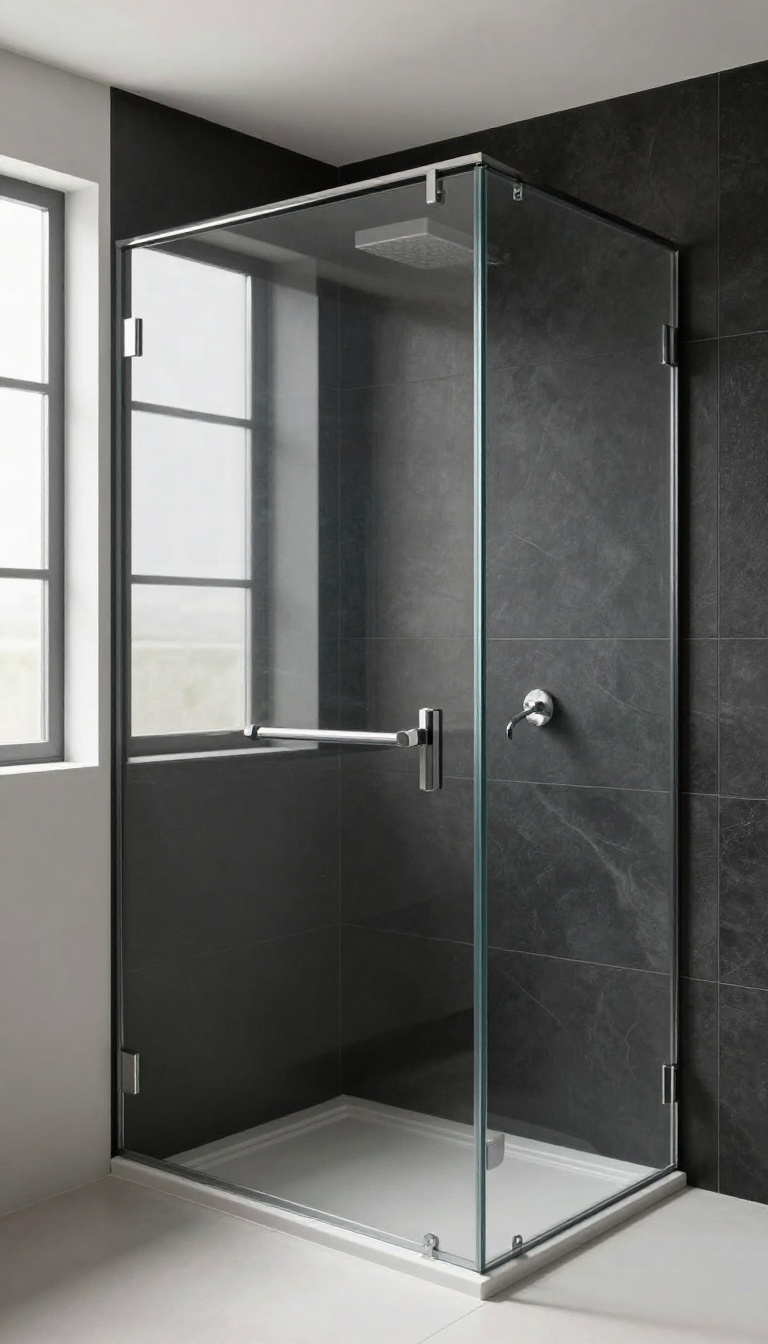
A glass enclosure does more than keep water off the floor. It frames your black tile like a piece of art, letting the color and texture take center stage. The frame you choose—or skip—changes the whole vibe, from airy and modern to bold and industrial.
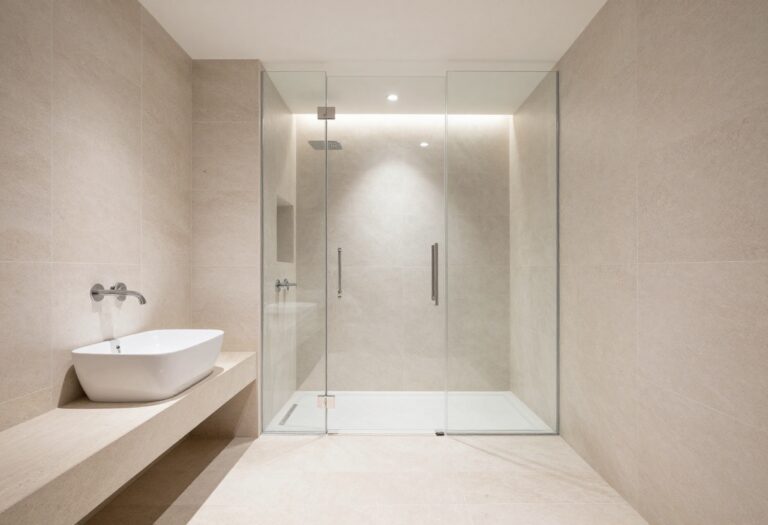
Frameless glass is the go-to for a reason. It disappears into the background, so your eye goes straight to the tile. No metal lines breaking up the view, just a clean sheet of glass that makes even a small shower feel bigger.
The trade-off? You'll need to wipe it down more often to keep it spotless, but that's a small price for that open, gallery-like look. If you want a little more definition, a black frame adds a crisp outline that ties into the dark tile.
It's a deliberate contrast that reads as industrial or modern, depending on the rest of your fixtures. Black frames also hide water spots better than chrome or brass, which is a practical win in a wet zone. Either way, the glass itself should be low-iron if you want maximum clarity.
Standard glass has a green tint that can dull the deep black of your tile. Low-iron glass costs a bit more, but it keeps the color true and the whole shower looking sharp.
Frameless For An Open, Airy Feel
Frameless glass panels are held together with minimal hardware—usually just a few clips or a channel at the bottom. The result is an uninterrupted view of your tile. It works especially well in smaller showers because there's no visual clutter.
Just be prepared to squeegee after every use to avoid water spots.
Black Frames For An Industrial Edge
A black metal frame around the glass creates a strong grid that complements black tile without blending in. It's a popular choice in industrial and modern farmhouse bathrooms. The frame adds structure and can make a large shower feel more intentional.
Plus, the dark finish hides water spots and soap scum better than lighter metals.
Glass Care And Clarity
Whichever style you pick, treat the glass with a hydrophobic coating. It repels water and makes cleaning easier. Avoid abrasive cleaners that can scratch the surface.
A quick squeegee after each shower keeps hard water stains at bay and preserves that just-installed look.
11. Warm Up Black Tile with Heated Floors
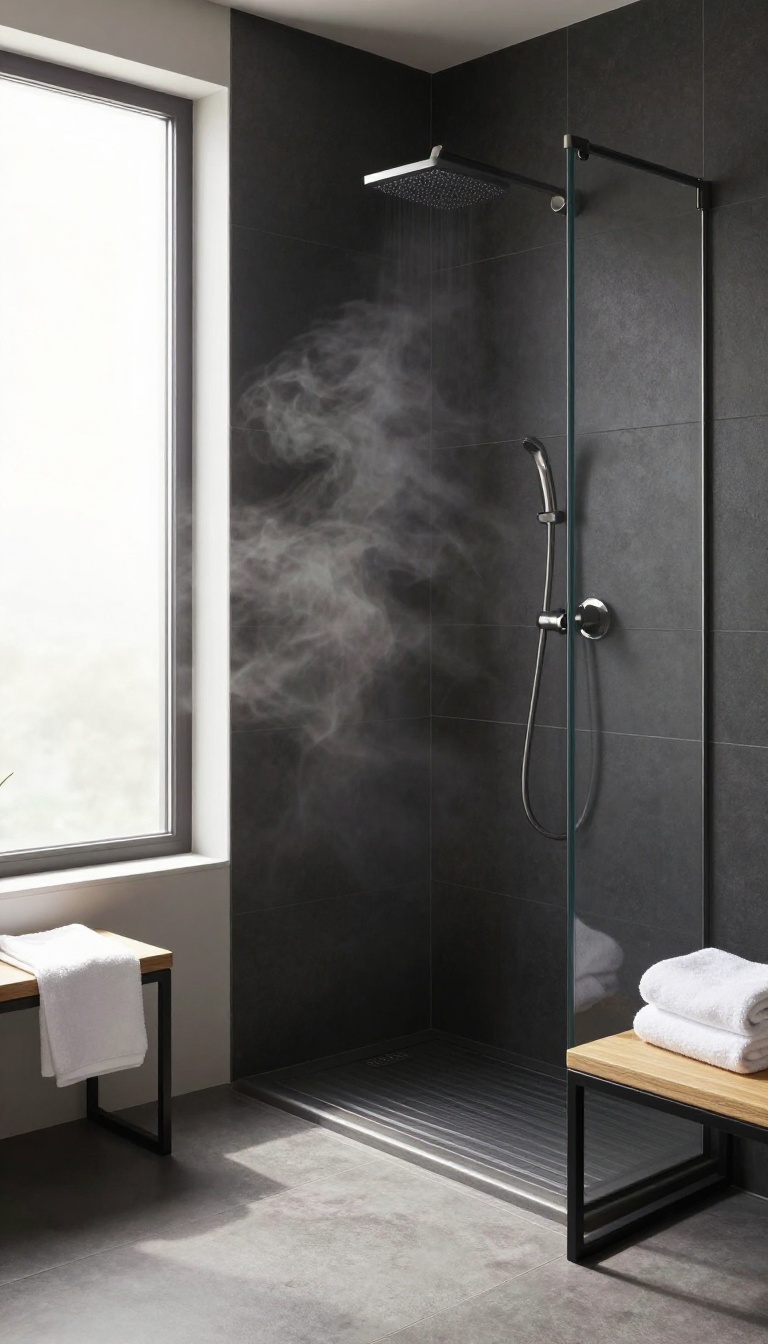
Cold tile underfoot can make even the best-looking shower feel a little unwelcoming. That’s where heated floors come in. They add a layer of comfort that balances out the cool, sleek look of black tile.
In colder climates, this combo isn’t just a luxury—it’s a game-changer for daily routines.
Heated floors work with almost any tile, but they’re especially nice with black because dark surfaces tend to feel cooler to the touch. The warmth rising from below softens the overall vibe without changing the color palette. You still get that calm, moody look, just without the shock of cold stone first thing in the morning.
It’s a small upgrade that makes a big difference in how the space feels.
Why It Works With Dark Tile
Black tile absorbs light and can make a room feel cooler, both visually and physically. Heated floors counteract that by adding gentle warmth where you stand. The contrast between the dark surface and the cozy underfoot feel is what makes it work.
You get the drama of black without the chill.
Installation Basics
Heated floors come in two main types: electric mats and hydronic systems. Electric mats are easier to retrofit and great for smaller showers. Hydronic systems use warm water and are better for larger spaces or whole-bath setups.
Either way, you’ll need a pro to wire or pipe it in, and you’ll want to plan for it before you lay tile.
Cost And Comfort
Electric floor heating for a shower area typically runs a few hundred dollars for materials, plus installation. It’s not the cheapest upgrade, but the comfort payoff is immediate. If you live somewhere with real winters, it’s worth every penny.
Even in milder climates, it takes the edge off early mornings.
12. Choose Black Tile with a Subtle Pattern
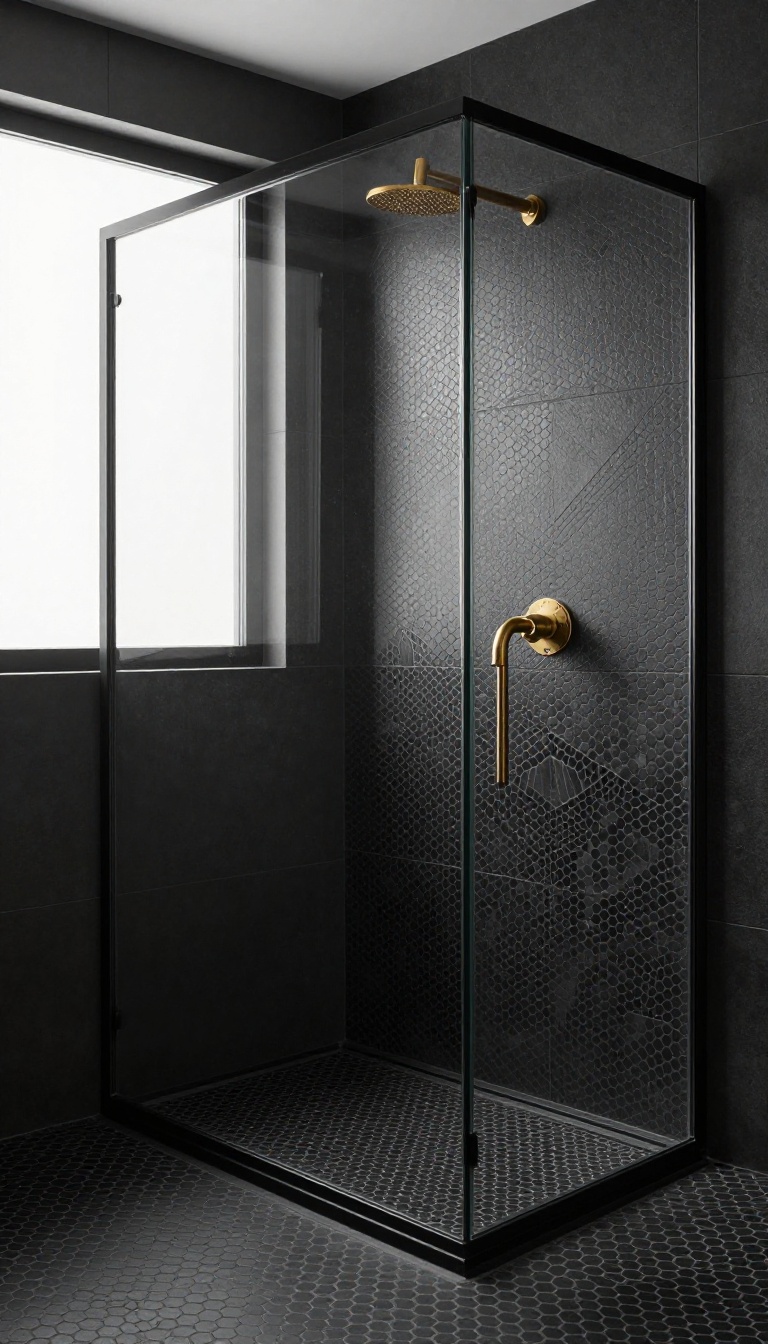
Solid black tile makes a bold statement, but it can also feel flat and unforgiving. A subtle pattern—whether geometric, floral, or abstract—adds depth and personality without overwhelming the space. Plus, those little details do double duty by distracting the eye from water spots and soap scum.
Patterned black tile gives you the best of both worlds: the calm, grounding feel of black with a hint of visual interest. You're not committing to a loud color or a busy design, just a gentle texture that keeps things from looking one-dimensional. It's a smart way to add character while keeping your shower functional and easy to maintain.
Geometric Patterns For A Modern Edge
Geometric designs like hexagons, chevrons, or simple grids bring a crisp, contemporary vibe. They work well with matte black finishes and can be scaled up or down depending on your shower size. A small hexagon tile on the floor, for example, adds grip and hides water spots better than large-format tiles.
Floral And Organic Motifs For Softness
If geometric feels too rigid, consider a subtle floral or vine pattern. These motifs soften the harshness of black and add a touch of elegance. They're especially nice in a shower with natural light, where the pattern can catch shadows and create a gentle, organic feel.
How To Keep The Pattern From Overpowering
Stick to one patterned area—like an accent wall or the shower floor—and keep the rest solid. This prevents visual clutter and lets the pattern shine without competing with your fixtures. Also, choose a pattern with low contrast (like black on charcoal) for a more understated look.
13. Keep It Simple with a Monochrome Black Shower
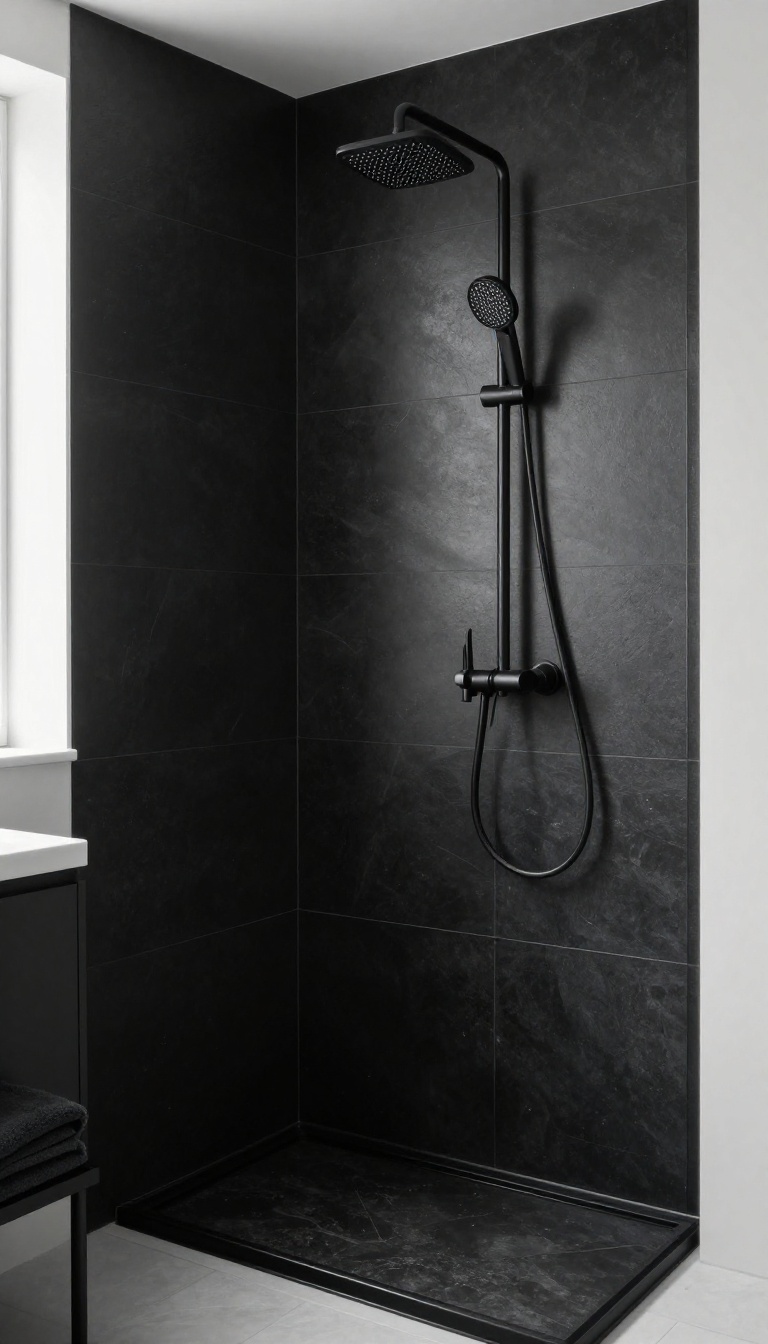
A monochrome black shower doesn't have to be dramatic. When every surface, from the tile to the grout to the fixtures, stays in the same dark family, the result is a quiet, seamless space that feels more like a retreat than a statement. It's the kind of design that calms the eye because there's nothing jumping out for attention.
The trick is commitment. Half-black showers look accidental; fully black ones look intentional. Match your grout to your tile, choose fixtures in a finish that blends rather than contrasts, and let texture do the work that color usually does.
A monochrome black shower works because it removes visual noise. Your eye doesn't bounce between a light grout grid and dark tiles or a shiny chrome fixture against matte walls. Everything reads as one continuous surface, which makes even a small shower feel larger and more cohesive.
This approach also hides everyday wear better than you'd expect. Soap scum, hard water spots, and minor scratches all disappear against a dark, uniform background. You still have to clean, but the shower looks fresher between cleanings.
The key is sticking to one black. Don't mix warm blacks with cool blacks or matte with glossy unless you're doing it on purpose. Pick a lane and stay in it.
Match The Grout To The Tile
Grout lines break up a wall. In a monochrome shower, you want them to disappear. Choose a grout color that matches your tile as closely as possible, or go one shade darker.
The goal is a flat, continuous plane rather than a grid. This works with large-format tiles and small ones alike. With penny rounds or hexagons, matching grout turns the pattern into a subtle texture instead of a busy mosaic.
It's a small detail that makes a big difference in how calm the space feels.
Pick Fixtures That Blend In
Matte black fixtures are the obvious choice, but they're not the only one. Brushed black, gunmetal, and oil-rubbed bronze all sit comfortably against black tile without fighting it. Shiny chrome or polished nickel will pop, which can be great in a two-tone shower but distracting in a monochrome one.
Think about the showerhead, valve trim, handle, and any grab bars as one family. If they all share a finish, the shower reads as a single designed object rather than a collection of parts.
Use Texture Instead Of Contrast
Without color contrast, texture becomes your main design tool. A matte tile next to a slightly ribbed or fluted tile adds depth without breaking the monochrome rule. A tiled niche with the same tile as the walls keeps the look clean, while a built-in bench in a subtly different finish gives the eye something to rest on.
Lighting matters here too. A dimmer on your shower light lets you dial the mood from bright and functional to soft and spa-like. In an all-black shower, light is what keeps the space from feeling like a cave.
FAQ
Does black shower tile make a bathroom look smaller?
Not necessarily. Black tile can make a space feel smaller if it's poorly lit, but with good lighting and reflective finishes, it adds depth and can actually make a shower feel more expansive.
How do I keep black shower tile looking clean?
Matte and textured finishes hide water spots better than glossy ones. A daily squeegee and weekly cleaning with a pH-neutral cleaner will keep them looking fresh.
What grout color works best with black tile?
Matching black grout creates a seamless look and hides stains, while white or light gray grout adds contrast and highlights the tile pattern.
Is black tile too dark for a small shower?
It can work if you balance it with light walls, a glass enclosure, and ample lighting. Using black on just one wall or the floor is a safe way to try it.
Can I use black tile on the shower floor?
Yes, but choose small mosaic tiles with a matte or textured finish for slip resistance. Avoid polished black tiles on the floor, as they can be slippery when wet.
Conclusion
Black tile does not have to feel heavy or cold. A matte finish, a warm light, and one honest accent usually do more than a wall full of busy patterns. Pick the idea that fits your space, your budget, and your morning routine.
Start with the change that solves your biggest annoyance, then live with it for a week before adding more. Swap the grout, adjust the lighting, or soften the edges later. Get the basics right and the shower stays calm, dark, and easy to keep clean.