10 Wooden TV Stand Ideas for Living Room Warmth and Storage
A wooden TV stand can quietly change how your whole living room feels. It warms up a cold wall, hides the cable chaos, and gives you a real place to stash remotes, consoles, and the random stuff that piles up. The right piece does all of that without shouting for attention.
The tricky part is that wood comes in so many moods. Reclaimed planks read rustic, walnut reads mid-century, and pale oak keeps things light and airy. Your room, your budget, and how much storage you actually need should call the shots here.
These ten ideas cover the full range, from floating shelves to tall consoles with hidden cable management. Some are weekend builds, others are simple buys.
1. Rustic Reclaimed Wood Stand with Open Shelves
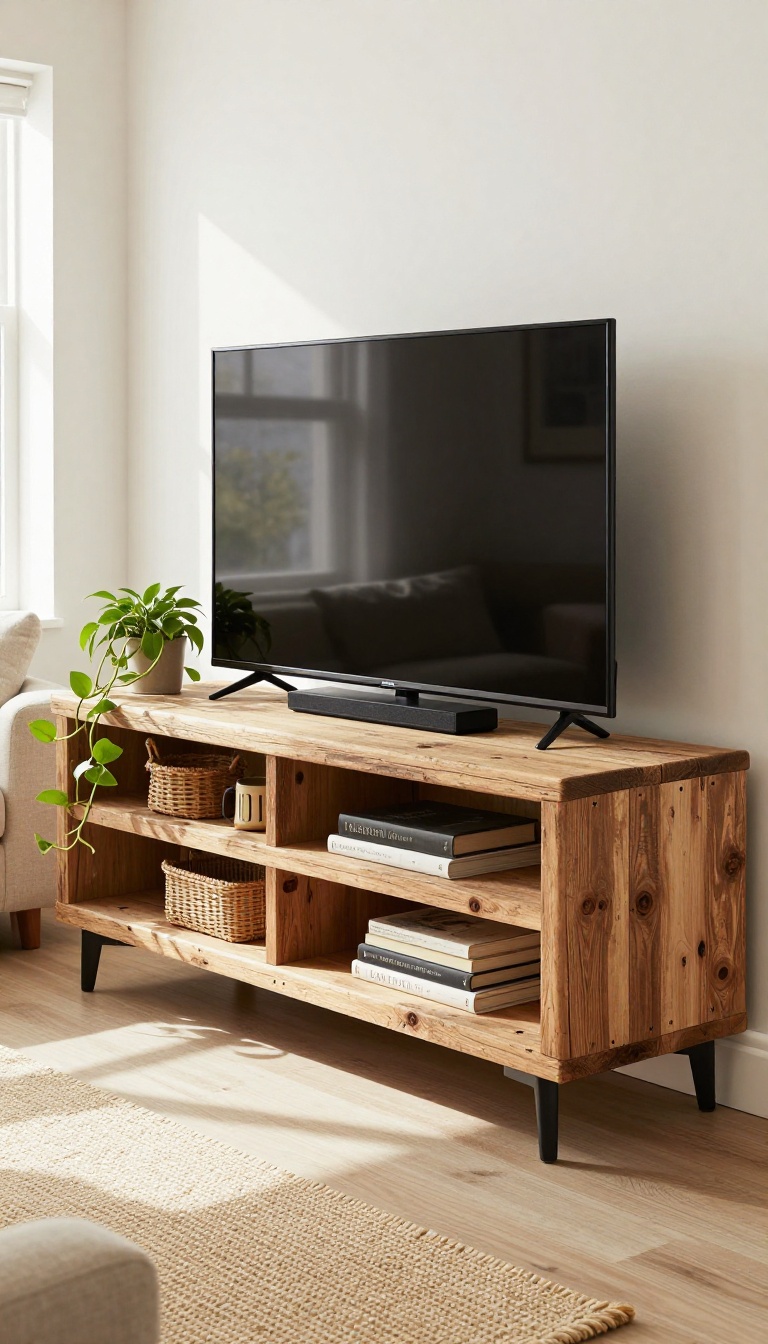
Reclaimed wood brings a story to your living room. Each plank carries knots, nail holes, and a faded patina you can't fake with new lumber. An open-shelf stand built from it feels grounded and warm, like it's been part of the room for years.
This stand works best when you let the wood lead. Skip the glossy finish and heavy hardware. A simple frame with thick, rough-cut boards and black steel legs keeps the focus on texture.
Open shelves do double duty: they let your media gear breathe and give you spots for books, baskets, or a trailing plant. In a farmhouse or industrial space, it ties everything together without trying too hard.
Where To Find Reclaimed Wood
Old barns, salvage yards, and even Facebook Marketplace often have planks for sale. Look for boards at least an inch thick so they can hold weight without sagging. If you want a cleaner look, ask for wood that's already been de-nailed and planed.
Otherwise, expect some prep work. A quick sanding and a coat of matte polyurethane will keep the rustic feel while protecting against spills.
Building For Ventilation And Access
Open shelves mean your cable box, router, and game console get airflow. That's a big deal if you've ever had a device overheat inside a closed cabinet. Leave at least two inches of space around each device.
For cable management, drill a hole in the back of the shelf or use a simple clip system along the legs. You'll keep things tidy without hiding the wood's character.
Styling The Open Shelves
Balance is key. Put heavier items like books or a soundbar on the bottom shelf. Up top, add a small framed photo, a ceramic vase, or a stack of coasters.
Baskets corral remotes and chargers. Keep it sparse so the wood grain stays visible. A single trailing pothos or a vintage clock can add life without clutter.
2. Mid-Century Modern Walnut Stand with Tapered Legs
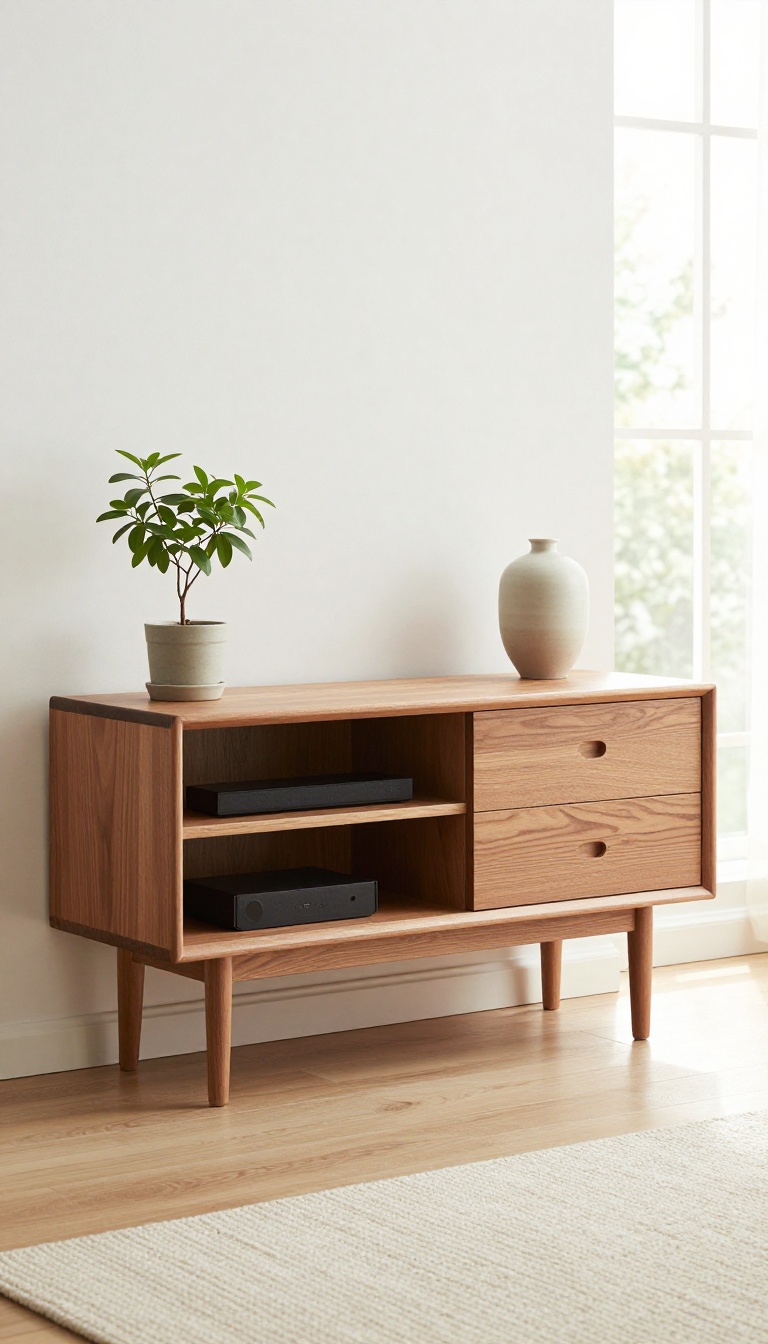
Walnut has a way of making a room feel settled without feeling old. Pair it with angled, tapered legs and you get that clean mid-century look that still works in a modern space. This stand keeps the silhouette light while giving you real storage underneath.
It suits small and mid-sized living rooms especially well. The legs lift the unit off the floor, so the room reads bigger than it is. And the hidden compartments mean you can finally stop apologizing for the cable pile.
The magic here is in the proportions. A low, wide body keeps your TV at a comfortable viewing height, while the tapered legs add just enough lift to make the whole thing feel airy. Walnut's warm brown tone also plays nicely with almost any wall color, from soft white to deep green.
You are not sacrificing function for style, either. A central open shelf handles the cable box or soundbar, and closed compartments swallow the rest. It is the kind of piece that looks intentional even on a lazy Sunday.
Why Walnut Works
Walnut sits in that sweet spot between dark and light wood. It brings warmth without making a small room feel heavy. The grain is subtle enough to stay classy, but interesting enough to notice up close.
It also ages well, developing a richer tone over the years.
Storage That Stays Hidden
Closed drawers or flip-down doors keep remotes, cords, and game controllers out of sight. A central shelf gives open space for the devices you actually want to reach. That mix of hidden and open storage keeps the clutter down without making the stand feel like a solid box.
Sizing It Right
For rooms under 200 square feet, aim for a stand around 55 to 60 inches wide. That fits most TVs up to 55 inches and still leaves breathing room on both sides. In a bigger room, you can stretch to 70 inches and add a matching side table for balance.
Styling The Top
Keep the surface simple. A small plant, a stack of two books, and maybe a ceramic bowl are plenty. Too many knickknacks fight the clean lines of the legs.
Let the wood be the star.
3. Corner Wooden Stand to Save Space
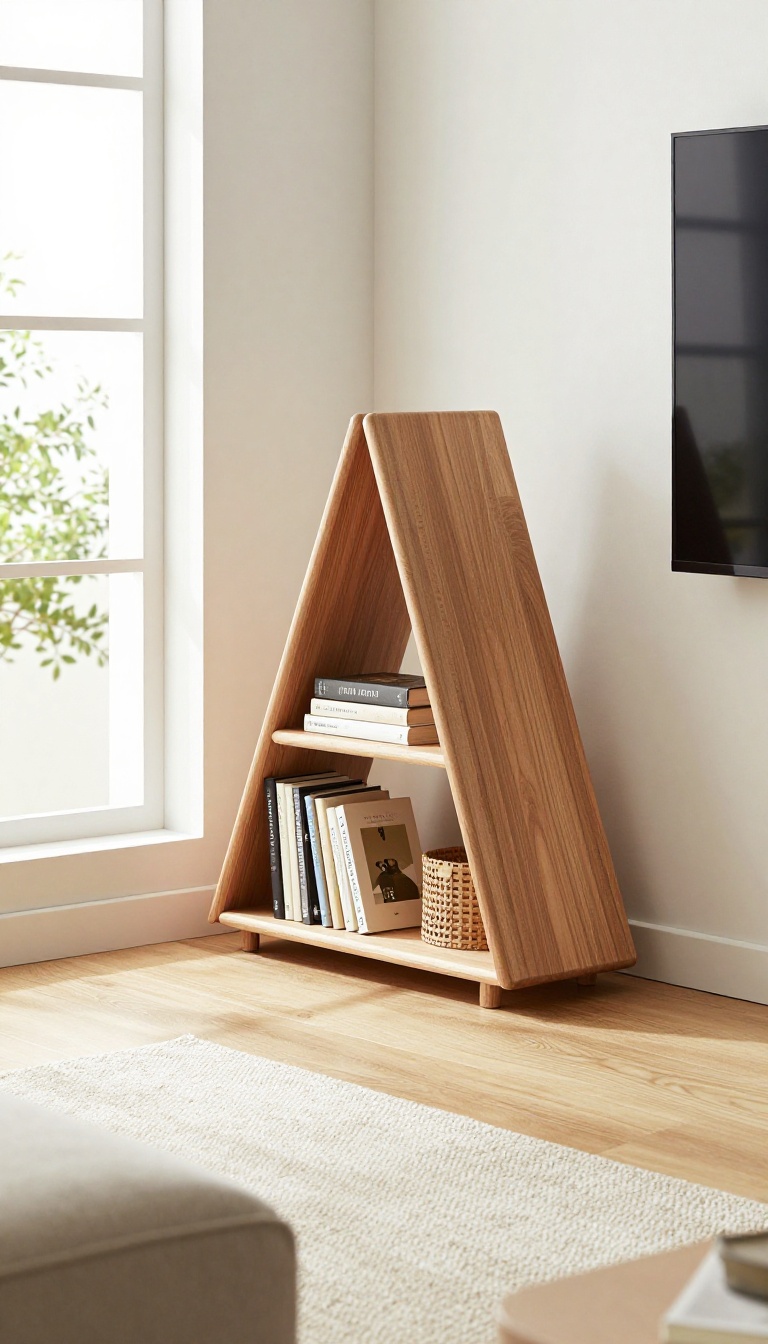
Most living rooms have at least one corner that just sits there, collecting dust and maybe a lonely floor lamp. A corner wooden TV stand turns that dead zone into a functional spot without stealing floor space from the rest of the room. It’s a smart move for apartments, open layouts, or any space where every inch counts.
These stands come in triangular or angled shapes that hug the wall, so they don’t stick out into walkways. You get warmth from the wood and a place for your TV, plus storage that doesn’t feel bulky. It’s a quiet upgrade that makes the room work harder.
A corner stand doesn’t just save space—it changes how the room flows. Instead of a flat console pushing into the middle of the floor, you get a piece that tucks neatly into an angle. That opens up traffic paths and makes the whole area feel less crowded.
Wood is the right material here because it softens the sharp geometry of a corner. A painted or glass stand can feel cold, but wood brings a natural texture that warms up the nook. You can go rustic with reclaimed planks or sleek with walnut, depending on your vibe. **Triangular vs.
Angled: What’s the Difference? ** A triangular stand has a true wedge shape that fits perfectly into a 90-degree corner. It usually has a flat front and two sides that meet the walls. This style maximizes every inch of the corner and often comes with shelves or a cabinet below.
An angled stand is more like a standard console that’s been cut at an angle on one side. It might sit flush against one wall and angle out, or it could be a corner unit with a chamfered back. These work well if your corner isn’t a perfect right angle or if you want a bit more surface area up top. Storage That Disappears Into the Corner Because corner stands are compact, storage has to be clever.
Look for models with adjustable shelves, drawers, or flip-down doors. Some have cable management holes in the back, which keeps cords hidden and tidy. You can also use the space above the TV for floating shelves that follow the corner angle.
That adds display space for books or plants without taking up floor area. Just make sure the shelves are anchored securely and don’t overcrowd the look. Placement Tips for Small Rooms In a small living room, the TV doesn’t have to be the focal point. A corner stand lets you angle the screen toward the seating area without blocking windows or doors.
If your sofa faces a blank wall, try putting the TV in the corner and arranging chairs at an angle. Keep the stand away from heating vents and direct sunlight to protect the wood. Also, leave a few inches of breathing room behind it for ventilation and cord access.
A little planning goes a long way. Materials and Finishes That Work Solid wood or high-quality plywood holds up best in a corner because it won’t sag over time. Veneers can look great too, but check that the edges are sealed well. Medium-tone woods like oak or ash blend with almost any decor, while darker stains add drama.
If you’re handy, you can build a custom corner stand from plywood and edge banding. Otherwise, ready-made options come in standard sizes that fit most corners. Measure your corner first—walls are rarely perfectly square.
Triangular Vs. Angled: What’s The Difference?
A triangular stand has a true wedge shape that fits perfectly into a 90-degree corner. It usually has a flat front and two sides that meet the walls. This style maximizes every inch of the corner and often comes with shelves or a cabinet below.
An angled stand is more like a standard console that’s been cut at an angle on one side. It might sit flush against one wall and angle out, or it could be a corner unit with a chamfered back. These work well if your corner isn’t a perfect right angle or if you want a bit more surface area up top.
Storage That Disappears Into The Corner
Because corner stands are compact, storage has to be clever. Look for models with adjustable shelves, drawers, or flip-down doors. Some have cable management holes in the back, which keeps cords hidden and tidy.
You can also use the space above the TV for floating shelves that follow the corner angle. That adds display space for books or plants without taking up floor area. Just make sure the shelves are anchored securely and don’t overcrowd the look.
Placement Tips For Small Rooms
In a small living room, the TV doesn’t have to be the focal point. A corner stand lets you angle the screen toward the seating area without blocking windows or doors. If your sofa faces a blank wall, try putting the TV in the corner and arranging chairs at an angle.
Keep the stand away from heating vents and direct sunlight to protect the wood. Also, leave a few inches of breathing room behind it for ventilation and cord access. A little planning goes a long way.
Materials And Finishes That Work
Solid wood or high-quality plywood holds up best in a corner because it won’t sag over time. Veneers can look great too, but check that the edges are sealed well. Medium-tone woods like oak or ash blend with almost any decor, while darker stains add drama.
If you’re handy, you can build a custom corner stand from plywood and edge banding. Otherwise, ready-made options come in standard sizes that fit most corners. Measure your corner first—walls are rarely perfectly square.
4. Farmhouse Stand with Barn Door Sliding Storage
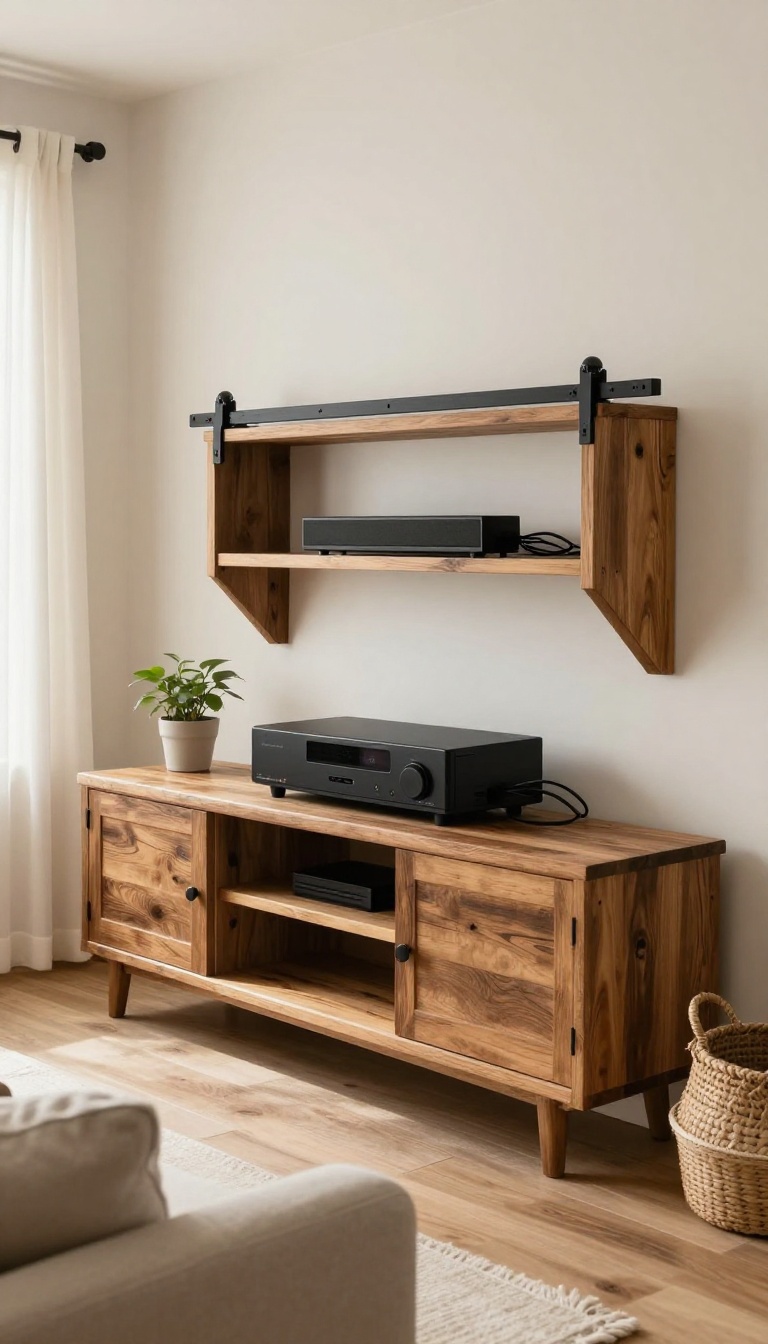
Barn doors on a TV stand do more than look charming. They slide across the front to hide media players, game consoles, and the tangle of cords behind them. When you want to grab a controller or swap a disc, just slide them open.
It's a small move that keeps the farmhouse vibe strong and the clutter out of sight. The wood grain on these stands usually runs horizontal, which makes the piece feel wide and grounded. Pair that with black metal tracks and you get that classic modern farmhouse contrast.
It works in a family room because the doors take a beating and still look good.
A farmhouse stand with sliding barn doors is a workhorse in disguise. The doors glide on a top track, so you never have to swing anything open into the room. That matters in tight spaces where a hinged cabinet door would smack a couch or a kid running by.
Most versions use reclaimed or distressed pine for the body and a darker stain on the doors. That mix gives you warmth without going full log cabin. You can also find models with adjustable shelves inside, which helps when your cable box is taller than your soundbar.
Cable management is built into the better designs. There's usually a cutout in the back panel and a shelf gap that lets cords drop straight down to an outlet. If you're handy, you can add a power strip inside and route everything through one hole.
Why Sliding Doors Work In Family Rooms
Kids and pets won't knock them off track like a swinging door. The sliding motion also keeps the front of the stand clear, so you can walk past without sidestepping. And when the doors are closed, the stand looks like a piece of furniture, not an electronics hub.
What To Look For In The Hardware
Cheap tracks can stick or squeak after a few months. Look for steel rollers with sealed bearings and a bottom guide that keeps the doors from rubbing the frame. A soft-close mechanism is a nice bonus if you don't want a loud clack every time someone shuts it.
Styling The Top Without Hiding The Wood
Keep it simple. A small lamp, a trailing plant, and maybe a stack of books. The barn doors are the star, so don't cover them with clutter.
If you have a soundbar, place it on the top shelf and let the doors hide everything else.
5. Floating Wooden Shelf for a Minimalist Look
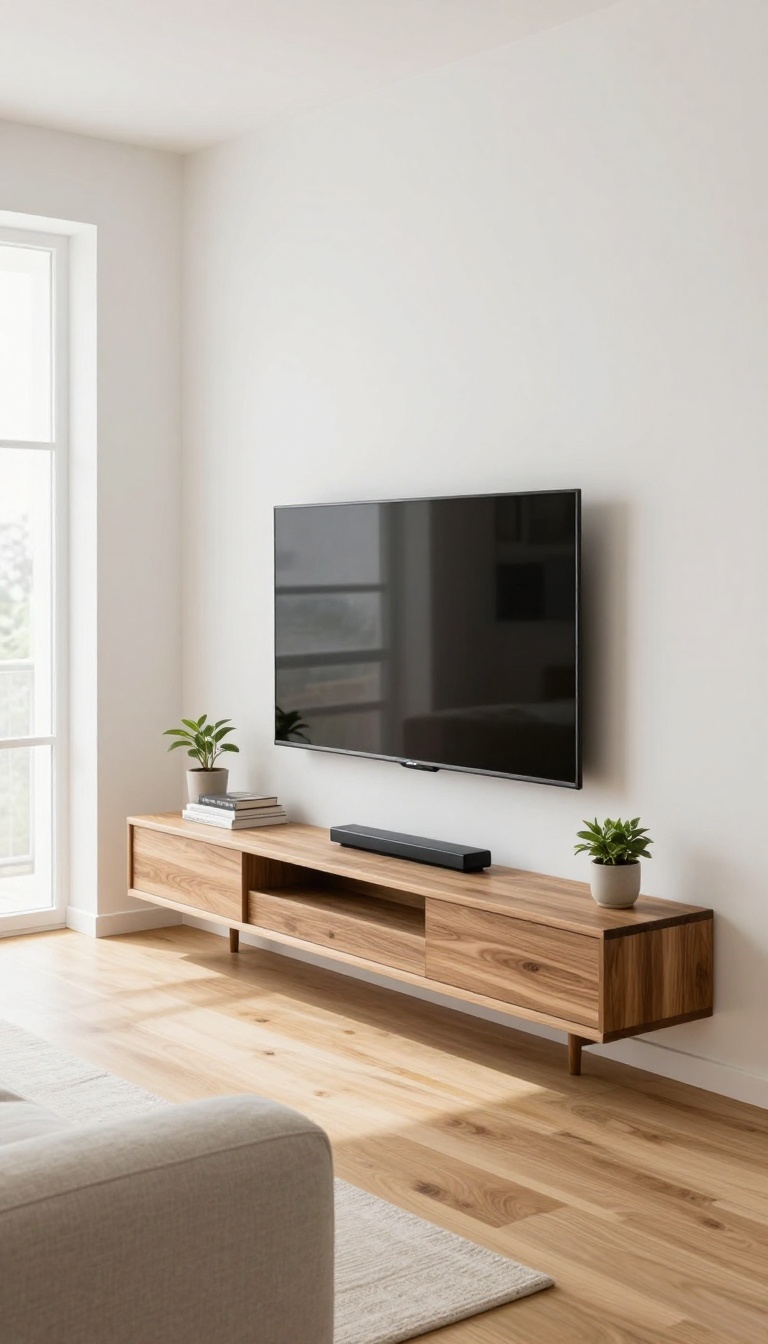
A floating wooden shelf strips the TV setup down to the essentials. You mount a thick slab of wood directly to the wall, set your TV on top, and skip the bulky console altogether. The result is a clean, open look that makes even a small living room feel bigger.
This works best when you keep the shelf long and deep enough to hold the TV plus a few small items. Think soundbar, a couple of books, maybe a small plant. Everything else finds a home elsewhere.
It's a great fit for modern, Scandinavian, or Japandi spaces where less really is more. And because there are no legs or cabinets, the floor stays clear and easy to clean.
A floating shelf gives you the warmth of wood without the visual weight of a full stand. The wall does the heavy lifting, so the room feels airy instead of crowded. It's a smart move when you want your TV to blend in rather than dominate.
You'll need to mount it into studs or use heavy-duty wall anchors, because TVs are heavier than they look. A solid hardwood shelf, at least two inches thick, will hold its shape over time. Softwoods can sag under constant weight, so pick something sturdy.
Cable management is the one thing you can't ignore. Without a cabinet to hide wires, they'll be on full display. A simple wall channel or a fabric sleeve can keep things tidy.
This idea shines in apartments, bedrooms, or any spot where floor space is tight. It also pairs well with a wall-mounted TV if you want the shelf purely for decor and audio gear.
Choosing The Right Wood And Depth
Go with a hardwood like oak, maple, or walnut for strength and grain. A depth of 10 to 12 inches gives you room for a soundbar and a few accents. If you're only holding a small TV, 8 inches can work, but don't go shallower.
Mounting It Safely
Find the studs first, and use a bracket rated for at least twice the weight of your TV and gear. For brick or concrete, use sleeve anchors. If you're unsure, hire a handyman—it's worth the peace of mind.
Keeping Cables Under Control
Run wires through a paintable wall channel that matches your wall color. Or use a sleek cable sleeve in a wood tone to blend with the shelf. Velcro ties keep things neat behind the TV.
6. Industrial Pipe and Wood Stand with Caster Wheels
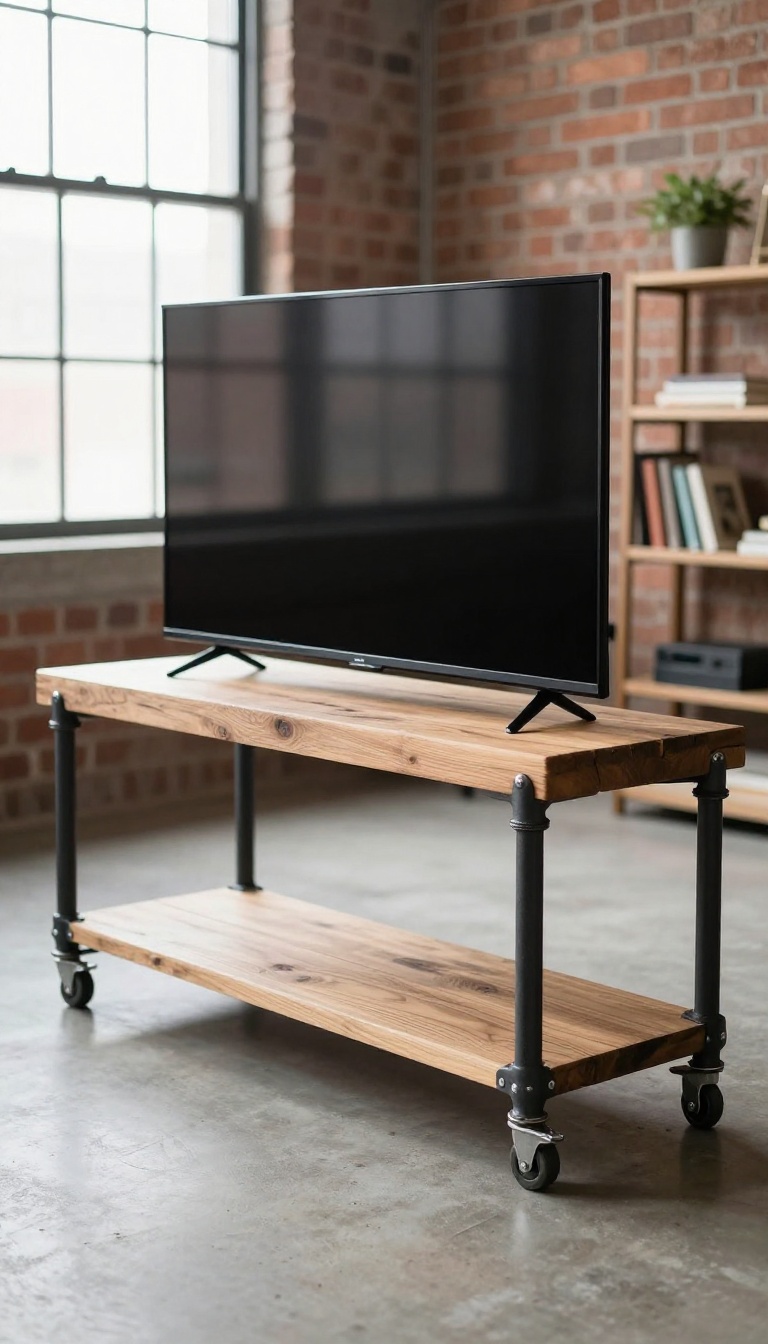
Wood and black iron pipe make an unexpectedly good pair. The wood keeps the piece warm and livable, while the pipe frame adds a raw, workshop edge that suits lofts, basements, and rooms with exposed brick or concrete. Add casters and you get a TV stand that actually moves when you need it to.
That last part matters more than people expect. Cleaning behind a media console is a pain when it weighs a ton and sits flush against the wall. Wheels solve that in one push, and they make rearranging the room a solo job instead of a two-person project.
The build itself is friendly to beginners. Pipe fittings thread together by hand, so you can assemble the frame without welding or fancy tools. A plank top and a lower shelf give you open storage, which keeps the industrial look from feeling heavy.
What You Need
Grab four flanges for the feet, four casters that bolt into those flanges, and a set of threaded pipes and elbows for the uprights. A thick wood plank or two works for the top and shelf. Black pipe is the classic choice, though galvanized steel reads a little brighter if your room leans modern.
Measure your TV first. You want the top at least a few inches wider than the screen on each side so it doesn't look like it's about to tip.
Making It Roll Without Wobble
Cheap casters are the fastest way to ruin this build. Look for locking wheels rated well above the weight of your TV, console, and whatever you stack on the shelf. Locking matters because a rolling stand that drifts every time someone bumps it gets old fast.
Mount the casters to the flanges before you attach the uprights. It's easier to tighten everything while the frame is still lying on its side.
Styling The Open Shelves
Open storage shows everything, so a little restraint goes a long way. Baskets or metal bins hide controllers, cables, and kid clutter without blocking airflow. Keep the top clear except for the TV and maybe one plant or a small speaker.
If the pipe frame feels too stark, warm it up with a woven basket, a wooden bowl, or a runner under the TV. The contrast is what makes the style work.
7. Scandinavian Light Wood Stand with Drawers
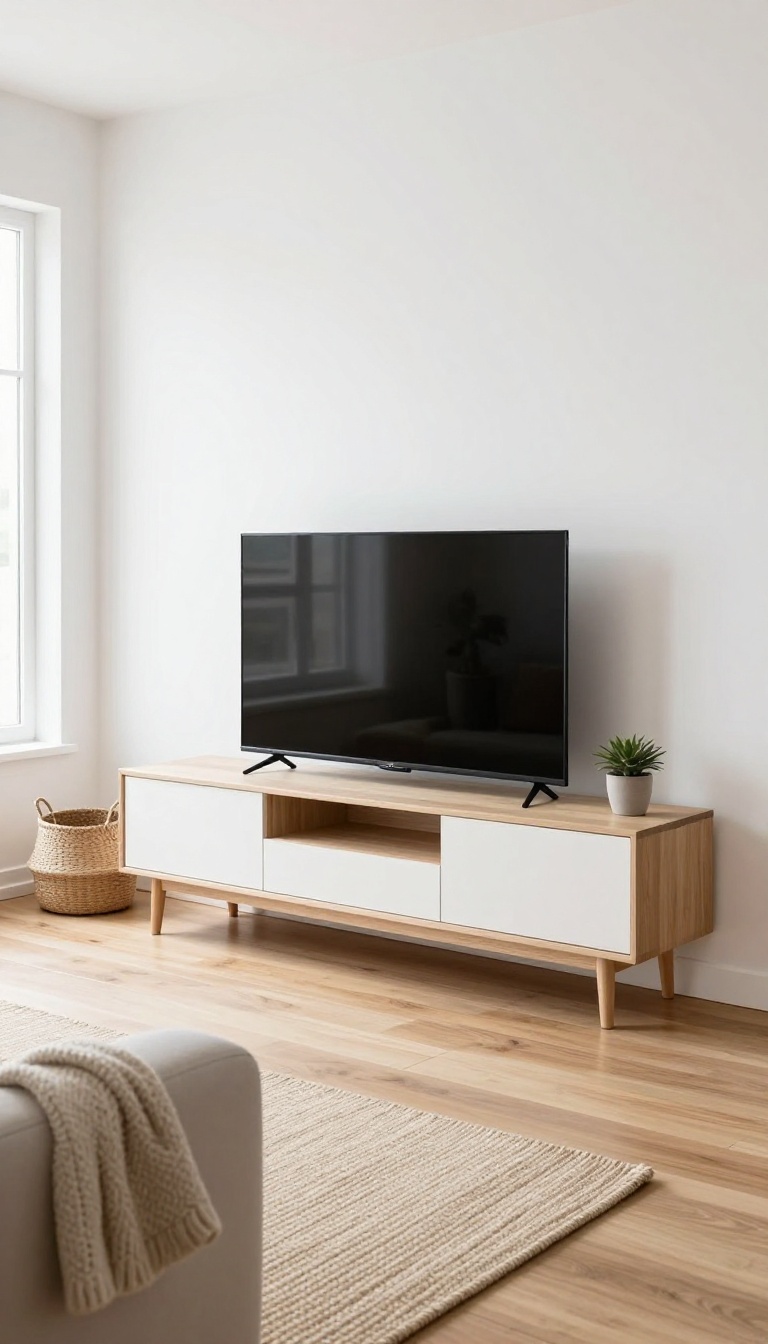
Pale wood has a way of opening up a room instead of weighing it down. A light oak or birch stand bounces daylight around, so even a small living room feels brighter than it actually is. Add a few drawers and suddenly the clutter that used to live on top of the console has somewhere to go.
This is the Nordic look at its most practical. Clean lines, tapered legs, and a low profile keep the TV from dominating the wall. Nothing fussy, nothing heavy, just warm wood doing quiet work.
The magic here is contrast. Light wood against a white or cream wall reads calm and airy, while darker floors or a textured rug keep it from feeling washed out. Drawers sit flush with the front, so the whole piece looks like one smooth block of wood rather than a box with handles stuck on.
Because the wood is pale, you can get away with more texture elsewhere. A chunky knit throw, a woven basket, or a jute rug all play nicely without competing. The stand stays the calm anchor while the rest of the room does the talking.
Why Light Wood Works In Small Rooms
Dark furniture absorbs light, and in a compact living room that can make the space feel like it's closing in. Oak and birch reflect more of what comes through the windows, so the room stays bright even on gray afternoons. It also pairs with almost any color scheme.
You can swap your cushions and art every season and the stand still fits, which is a nice thing when you don't want to rebuy furniture every time your taste shifts.
Drawers That Actually Earn Their Keep
Two or three soft-close drawers are enough to swallow remotes, spare batteries, console controllers, and the tangle of cables you'd rather not see. Measure your gear first, though. A drawer that's too shallow for the soundbar remote is just a fancy shelf.
Look for drawers with a cutout or a small grommet at the back so charging cables can pass through. That one detail keeps the top surface clear and stops the 'where did I put the charger' routine.
Tapered Legs And The Floating Effect
Tapered legs lift the stand off the floor and let light pass underneath, which makes the whole piece feel lighter. It also makes vacuuming less of a chore, since you're not dragging a vacuum around a solid plinth. Keep the legs in the same wood tone or a matte black metal.
Mixing a warm wood top with cool metal legs is a classic Nordic move and it stops the piece from looking too matchy-matchy.
Styling It Without The Clutter Creep
Treat the top like a display, not a dumping ground. One ceramic vase, a small stack of books, and maybe a plant is plenty. The TV itself is already a big visual element, so give it breathing room on both sides.
If you need more storage, go vertical with a slim shelf above rather than piling things on the stand. The whole point of this look is that it stays uncluttered, and a little restraint goes a long way.
8. Live Edge Wood Stand for a Natural Focal Point
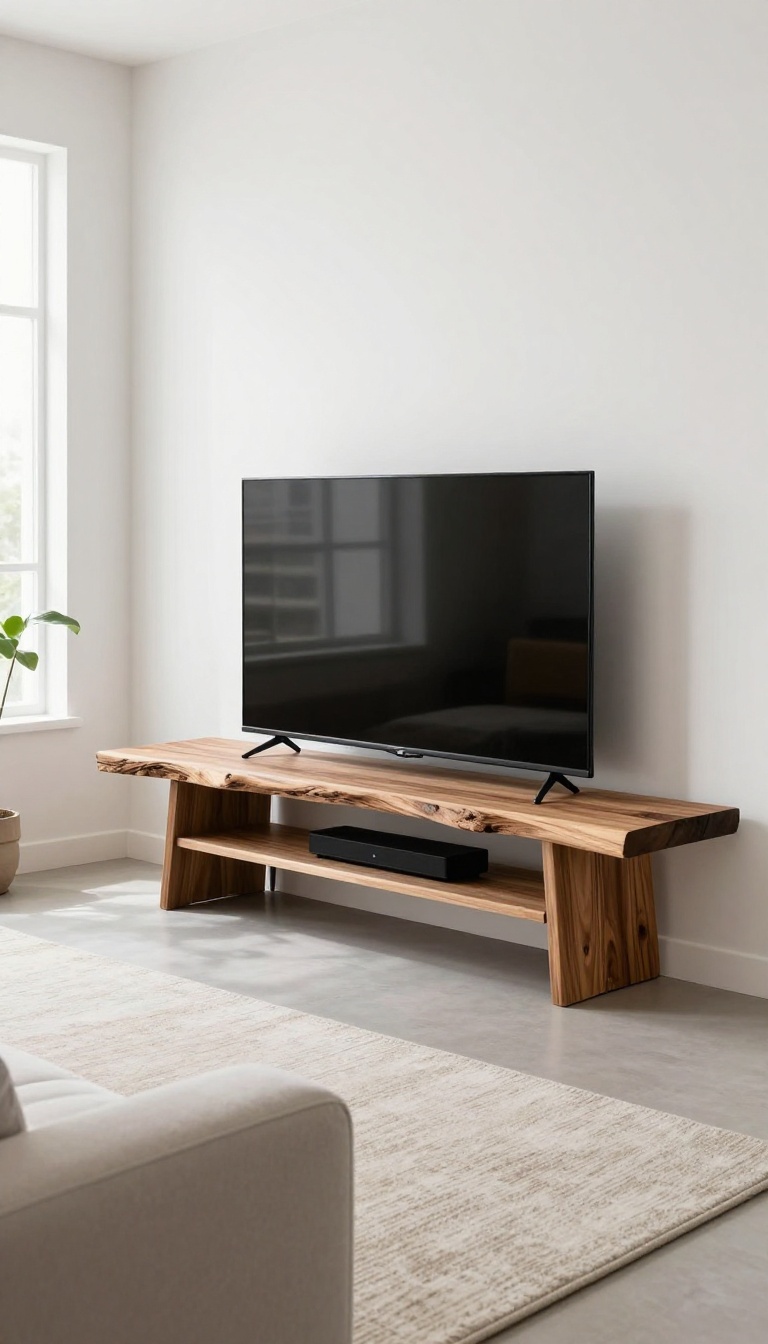
A live edge slab keeps the tree's original shape, so no two stands look alike. The uneven edge adds movement and warmth that a factory-finished board can't match. It works as both furniture and a piece of art under your TV.
Live edge wood comes from a slab cut through the trunk, bark included or sanded smooth. That raw edge draws the eye without trying too hard. Pair it with slim hairpin legs and the whole thing feels modern instead of cabin-like.
The open base leaves plenty of room for a soundbar, cable box, or game console. You get airflow and easy access, which matters more than most people expect. Just plan your cable routing before you set the slab in place.
Pick The Right Slab
Walnut and black cherry bring deep, rich tones. Maple and ash keep things lighter and more airy. Look for a slab that's at least 1.
5 inches thick so it can hold the TV without sagging.
Legs That Balance The Look
Hairpin legs in black or brass add a clean, modern contrast. Chunky wood legs make it feel more rustic. Either way, keep the legs set back a few inches so the live edge stays the star.
Finish And Care
Rub in a hardwax oil or polyurethane to protect the wood without hiding the grain. Reapply oil once a year if the slab starts looking dry. Wipe spills quickly to avoid rings.
9. Tall Wooden Media Console with Vertical Storage
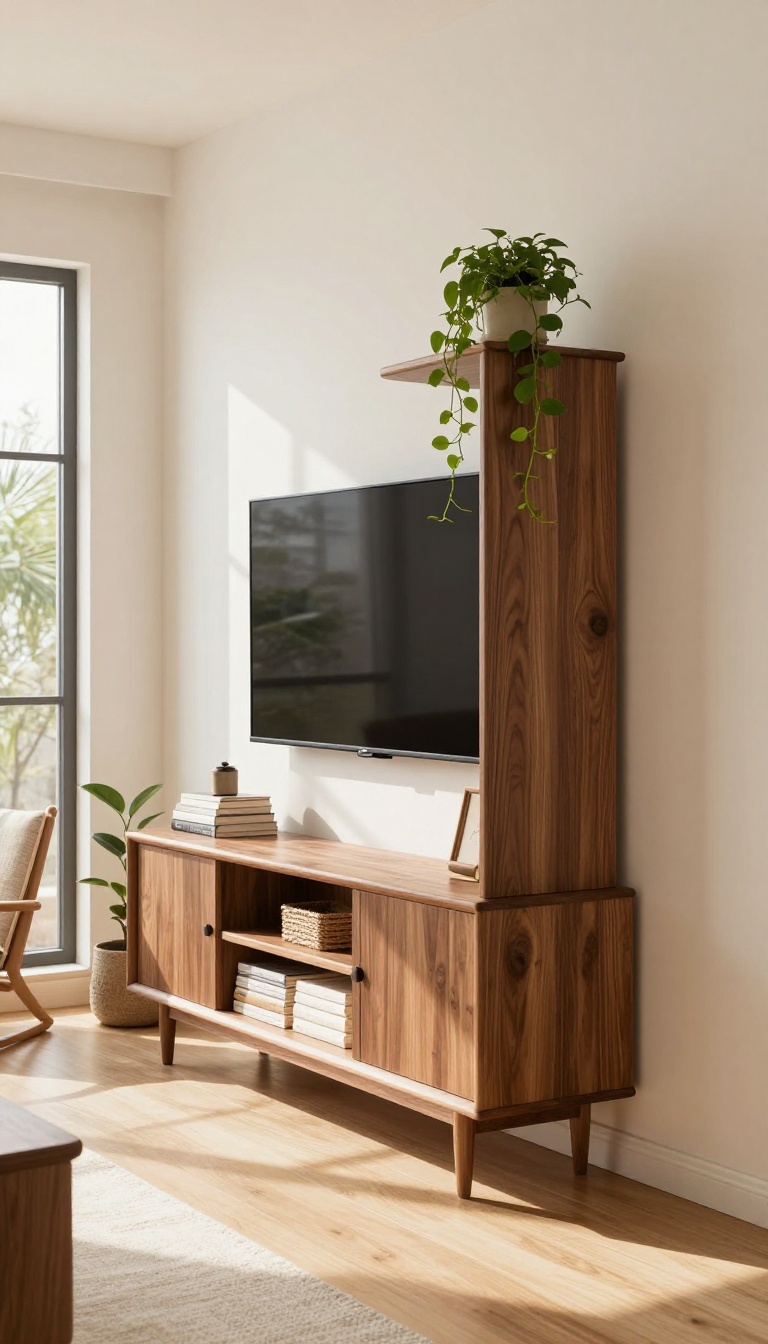
Floor space is precious, especially in living rooms where furniture tends to multiply. A tall wooden media console solves that problem by stacking storage upward instead of outward. It gives you shelves, cabinets, and a dedicated spot for the TV without eating up another inch of floor.
This style works best in rooms with high ceilings or awkward empty walls that feel unfinished. The vertical shape draws the eye up and makes the whole space feel more intentional. You get warmth from the wood and serious function from the height.
A tall console usually stands between 60 and 72 inches high, which puts the TV at a comfortable viewing level while leaving room for storage above and below. The wood choice matters here because a large vertical piece becomes a focal point. Walnut or teak adds richness, while white oak or ash keeps things breezy.
You can buy one ready-made or build a simple frame with adjustable shelves. The key is balancing open and closed storage so the unit doesn't feel like a solid wall of wood. Mixing a few open cubbies with cabinet doors keeps it visually light.
Why Height Beats Width
Wide consoles stretch across the wall and limit where you can place other furniture. A tall console frees up the floor on both sides, so you can add a reading chair or a plant without crowding. It also makes small rooms feel taller by pulling the eye upward.
If your ceiling is standard eight feet, a 60-inch console still works. Just leave at least a foot of breathing room above it so the piece doesn't feel crammed against the ceiling.
Storage That Actually Gets Used
The top shelves are perfect for display items or books you want to grab easily. Middle cabinets hide board games, chargers, and the inevitable tangle of cables. Lower drawers or baskets handle heavier stuff like blankets or photo albums.
Label the inside of cabinet doors if you share the space with family. It sounds fussy, but it stops the console from becoming a black hole of random junk.
Cable Control For Tall Units
Vertical consoles can turn into a cable nightmare if you don't plan ahead. Drill a hole near the bottom back panel and another behind the TV shelf. Run everything through those two points so wires stay hidden.
Velcro straps or adhesive clips along the inside back keep cords from sagging. A small power strip mounted inside a cabinet gives you one plug to the wall instead of five.
10. Custom Built-In Wooden Stand with Hidden Cables
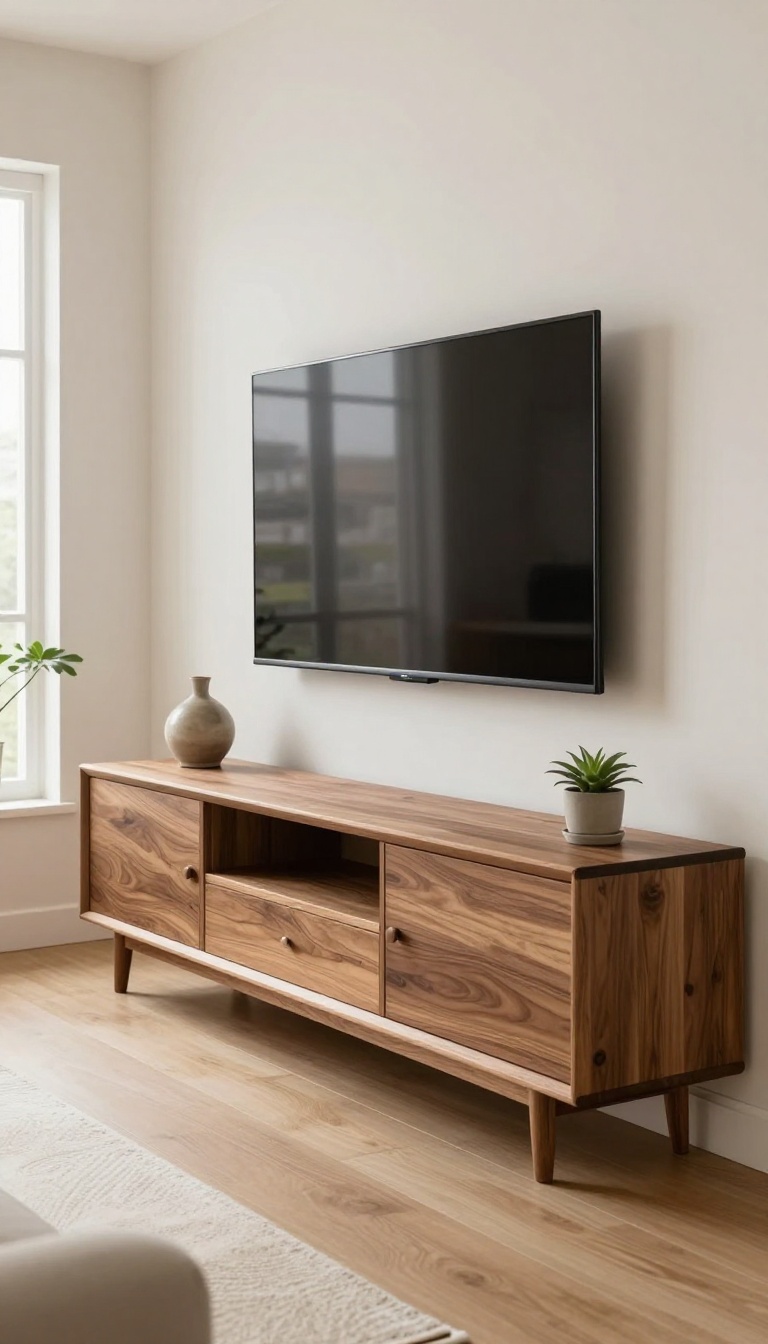
A built-in wooden stand turns your TV wall into a permanent, polished feature instead of a piece of furniture you keep rearranging. It fits flush with the wall, so it looks like it was always meant to be there. The wood brings warmth, and the hidden cable management keeps the whole setup clean and calm.
Built-ins work best when you plan around the room, not just the TV. You get storage that matches your exact needs, from deep drawers for consoles to slim shelves for decor. And because everything is enclosed, the cables disappear completely.
This is a long-term move. You commit to a media wall, but you get a custom look that adds real value and daily ease. It suits living rooms where the TV is a central part of the space, not an afterthought.
Plan The Wall Before You Build
Measure the full wall, not just the TV. Decide how much closed storage you want versus open shelving. Sketch where the outlets and devices will live so you can run cables behind the wood.
A simple paper plan saves hours later.
Hide Cables Like A Pro
Run cables through a channel behind the stand or inside the wall if you can. Leave a small access panel for future changes. Use grommets or brush plates where cords enter the wood.
Everything stays invisible but easy to reach.
Pick Wood That Fits The Room
Match the built-in to your floor or trim for a seamless look. Walnut and oak hold up well and age gracefully. If you want a painted finish, use a solid wood frame and paint the panels.
The warmth still comes through.
Add Smart Storage Details
Soft-close drawers keep remotes and controllers out of sight. Open cubbies at the bottom can hold soundbars or media players. Add a few adjustable shelves so the unit grows with your gear.
Small touches make it feel custom.
FAQ
What type of wood is best for a TV stand?
Hardwoods like oak, maple, and walnut are durable and age well. Pine and reclaimed wood offer a rustic look at a lower cost. Consider your style and budget.
How do I choose the right size wooden TV stand?
Measure your TV and the space. The stand should be slightly wider than your TV and fit your room's scale. Leave room for ventilation and accessories.
Can a wooden TV stand support a large TV?
Yes, if it's well-built. Check the weight capacity and use a stand rated for your TV's size and weight. Solid wood stands are generally stronger.
How can I hide cables with a wooden TV stand?
Use cable management holes, clips, or a built-in channel. Some stands have hidden compartments. You can also run cables behind the stand and secure them.
Are wooden TV stands easy to assemble?
Most come with instructions and tools. Assembly time varies from 30 minutes to a few hours. Some higher-end stands offer pre-assembled delivery.
Conclusion
Wood doesn't need to match perfectly to work. Pick one idea from this list that solves your biggest problem, whether that's cable clutter, a bare wall, or a spot that always feels cold. Live with it for a week before adding anything else.
Small choices stack up faster than one big overhaul. Warm up the wood, hide what you don't want to see, and stop once the room feels settled. Your living room just needs one piece that pulls it together.