9 Fridge Drawer Ideas for Fruits, Snacks, and Veggies
Fridge drawers often become a chaotic mix of wilted greens and forgotten apples. You open them expecting a snack, only to find a science experiment. But with a little planning, those same drawers can be your kitchen's most efficient zones.
Organizing by category—fruits, veggies, snacks—saves time and cuts down on waste. When everything has a designated spot, you grab what you need without digging through clutter.
These nine ideas will help you maximize your fridge drawer space. Each one focuses on keeping food fresh and accessible, so you actually eat what you buy.
1. Dedicated Fruit Drawer with Humidity Control
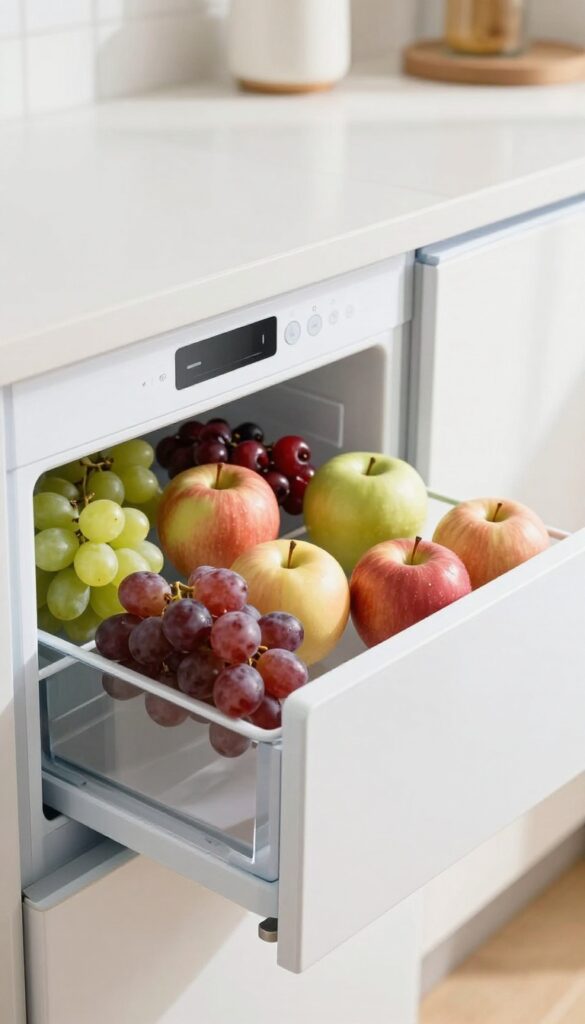
Most modern fridges have humidity sliders, but few people use them correctly. Setting one drawer to low humidity creates the perfect environment for fruits like apples, berries, and grapes. This simple adjustment prevents premature ripening and keeps produce crisp for days longer.
Why Low Humidity Works For Fruit
Fruits release ethylene gas as they ripen. In a low-humidity drawer, this gas escapes through the vent, slowing down the ripening process. Berries stay firm, apples remain crunchy, and citrus doesn't get soft too quickly.
It's a small tweak that makes a big difference.
Which Fruits Belong Here
Apples, pears, peaches, nectarines, plums, grapes, and berries all thrive in low humidity. Melons and bananas are better left on the counter, but most other fruits benefit from this drawer. Keep them loose or in perforated bags for best airflow.
Avoid Mixing With Veggies
Vegetables prefer high humidity and can be damaged by ethylene from fruits. Keep this drawer strictly for fruits to avoid premature spoilage of leafy greens or cucumbers. If your fridge has two drawers, use one for fruit (low) and one for veggies (high).
2. Veggie Drawer with High Humidity for Leafy Greens
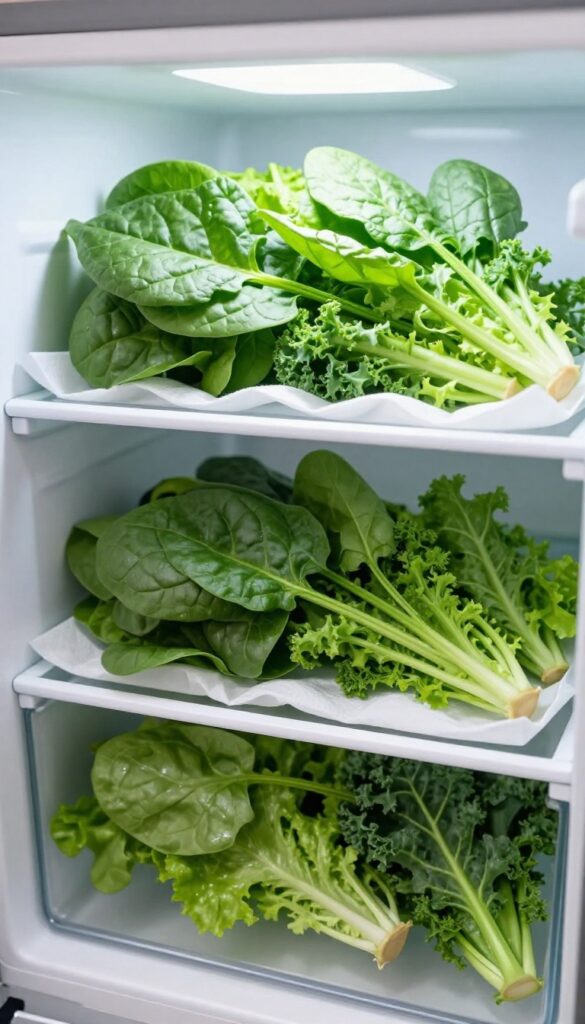
Leafy greens are notoriously finicky. One day they look crisp, the next they're a sad, slimy mess. The secret to keeping them happy lies in your fridge's humidity settings and a simple trick with paper towels.
Set The Drawer To High Humidity
Most crisper drawers have a slider that controls airflow. For leafy greens, you want high humidity—that means closing the vent. This traps moisture around the leaves, preventing them from drying out and wilting.
Line With Paper Towels
Even with high humidity, excess moisture can cause rot. Lay a clean paper towel at the bottom of the drawer before adding your greens. The towel absorbs extra condensation, keeping leaves dry and crisp.
Replace it every few days for best results.
Don't Wash Before Storing
It's tempting to wash greens right when you get home, but moisture is the enemy. Instead, store them dry and wash only before eating. If you must prep ahead, dry thoroughly with a salad spinner and then wrap in a paper towel before placing in the drawer.
3. Snack Drawer for Grab-and-Go Items
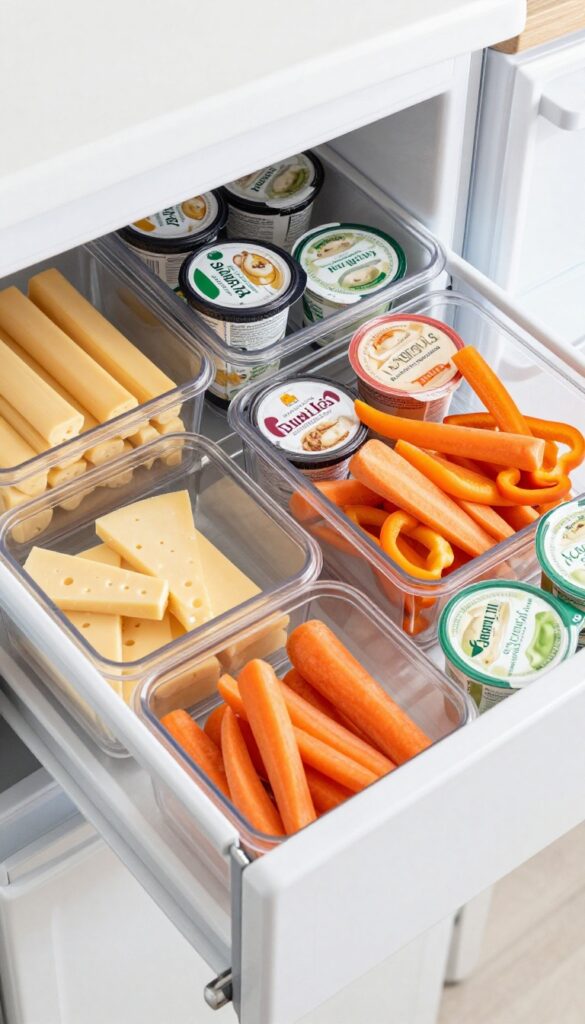
Kids and adults alike love easy access to snacks. A dedicated snack drawer turns the fridge into a convenience station. Pre-portioned items like yogurt, cheese sticks, and cut veggies become instant choices when hunger strikes.
Small bins help keep everything organized and visible.
Designating one drawer for snacks prevents rummaging through other compartments. It also helps with portion control—pre-bagged items are ready to grab. Use clear bins to separate categories: dairy, protein, and produce.
Label them if your family needs extra guidance.
Bin Strategy
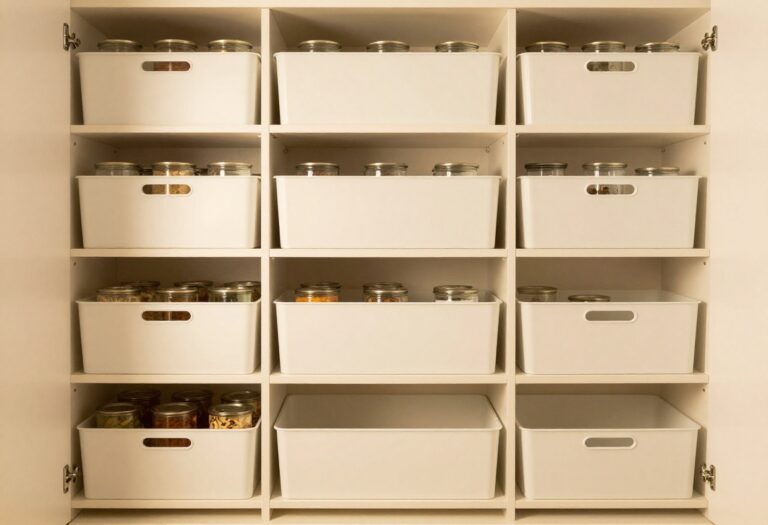
Invest in a few small, clear bins that fit your drawer dimensions. One bin for cheese sticks and yogurt cups, another for cut veggies like carrot sticks or bell pepper strips. A third bin can hold hummus or dip cups.
This setup keeps everything upright and easy to see.
Rotation Tips
Place newer snacks at the back and older ones in front. Check the drawer every few days to restock and remove anything past its prime. Involve your family by assigning each person a bin to maintain—great for teaching kids about food waste.
Kid-friendly Adjustments
Lower drawers work best for kids. Keep their favorite snacks at eye level within the bin. Use small, easy-to-open containers.
Avoid mixing raw meats or strong-smelling items in the same drawer to prevent cross-contamination.
4. Root Vegetable Storage with Sand or Sawdust
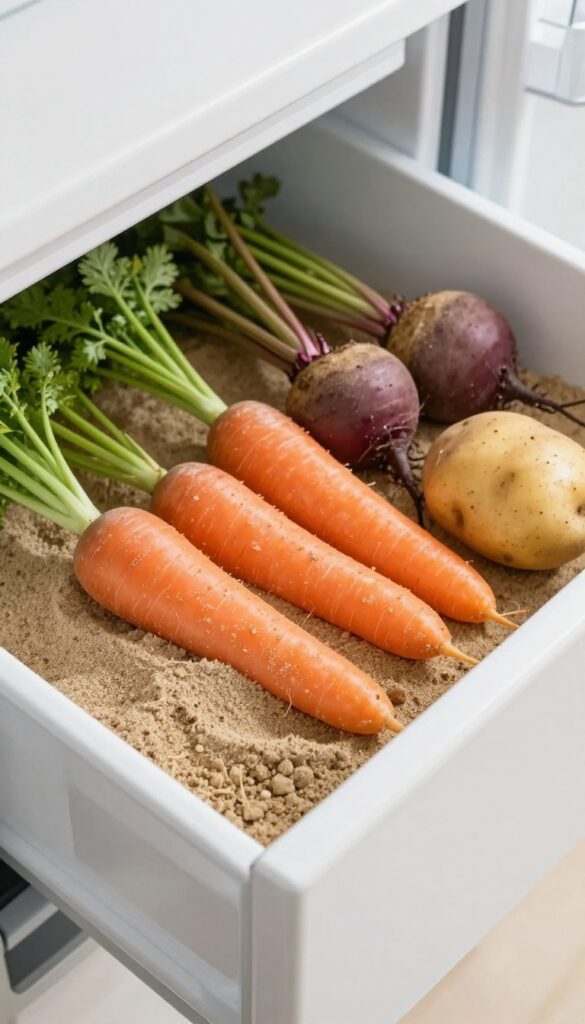
Root vegetables like carrots, beets, and potatoes thrive in cool, dark, and humid conditions—exactly what a fridge drawer can provide with a simple hack. By adding a layer of slightly damp sand or sawdust, you recreate a mini root cellar right in your kitchen. This method keeps them crisp and flavorful for weeks longer than just tossing them in loose.
Start by choosing a clean, dry drawer. Fill it with about two inches of play sand or untreated sawdust, then lightly mist it with water until it feels like damp beach sand. Bury your root veggies completely, leaving a little space between each one.
Check the moisture level weekly and re-mist if needed. This technique works wonders for carrots, beets, parsnips, and potatoes—just keep potatoes separate from other produce to prevent sprouting.
Why Sand Works
Sand buffers against temperature fluctuations and maintains consistent humidity. It also prevents ethylene gas from spreading, which can cause premature spoilage. The darkness mimics underground conditions, slowing respiration and moisture loss.
Choosing The Right Medium
Use clean play sand from a hardware store or untreated sawdust from a lumber yard. Avoid cedar or chemically treated products. If using sawdust, make sure it's from untreated wood.
Both materials are reusable—just let them dry out between uses and re-dampen.
Drawer Prep And Maintenance
Line the drawer with a breathable liner like a cotton cloth to keep sand from spilling. Label the drawer so family members know it's not a snack bin. Every two weeks, check for any soft or rotting vegetables and remove them to keep the rest healthy.
5. Herb Keeper Drawer with Water Jars
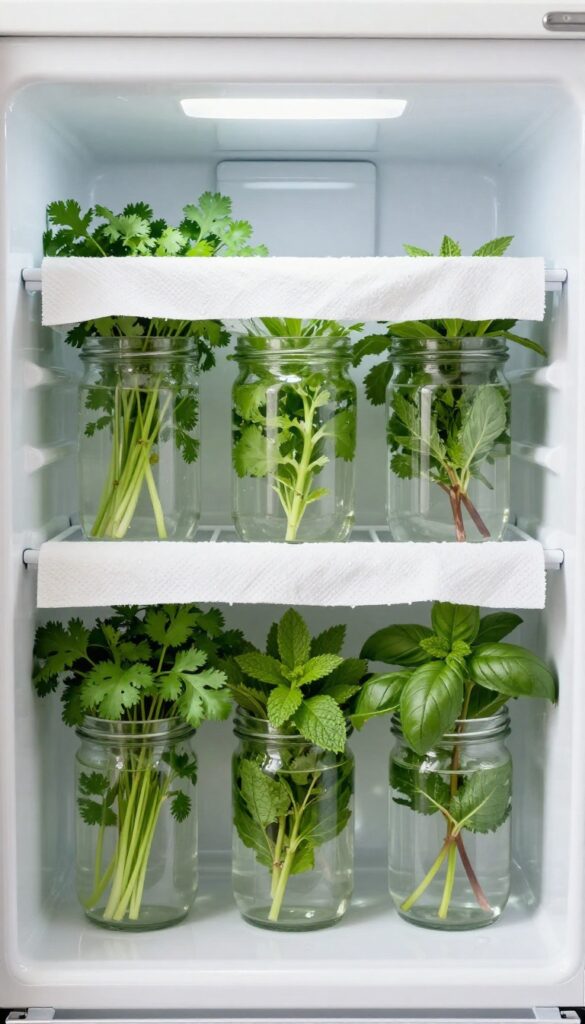
Fresh herbs are the easiest way to elevate a meal, but they're also the quickest to turn into slimy messes. A dedicated herb drawer with water jars changes that. By treating herbs like cut flowers, you keep them crisp and fragrant for up to two weeks.
This setup works best in a shallow, wide drawer. Place small jars or glasses filled with a few inches of water inside, then stand your herbs upright with stems submerged. Loosely drape a produce bag or damp paper towel over the tops to trap humidity without suffocating them.
Change the water every few days and trim the stems for even longer life.
Which Herbs Work Best
Cilantro, parsley, mint, and basil thrive in water. Hardy herbs like rosemary and thyme do fine in a dry drawer, but they'll stay perkier with a little moisture. Avoid submerging leaves—only stems should touch the water.
Drawer Prep Tips
Line the drawer with a paper towel to catch drips and make cleanup easy. Use small, stable jars that won't tip when you open the drawer. If your drawer is deep, place jars on a shallow tray so you can slide the whole setup out at once.
How Long It Lasts
With this method, soft herbs stay fresh 7–14 days—much longer than the fridge's crisper drawer. Check for yellowing leaves every few days and remove them to prevent spoilage from spreading.
6. Berry Box Drawer with Breathable Liners
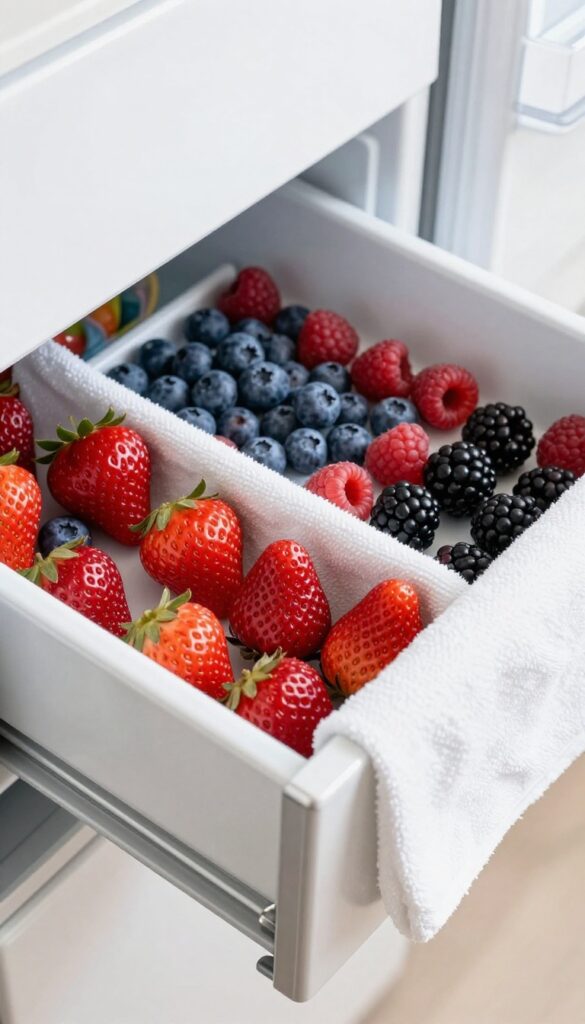
Berries are delicate and expensive, so it hurts when they turn moldy after a few days. The culprit is usually excess moisture trapped in their clamshell containers. A dedicated fridge drawer with breathable liners changes that by keeping berries dry and well-ventilated.
Line a drawer with a clean kitchen towel or paper towels to absorb moisture. Arrange berries in a single layer to prevent mold.
Why Breathable Liners Work
Berries release moisture as they sit. A towel or paper liner wicks that moisture away, keeping the fruit dry. Without that layer, condensation pools at the bottom of the drawer and creates a perfect environment for mold spores to multiply.
Best Berries For This Setup
Strawberries, blueberries, raspberries, and blackberries all benefit from a single-layer arrangement. Avoid stacking them—berries bruise easily, and bruised spots spoil faster. If you have a large batch, use multiple shallow containers instead of piling them up.
Maintenance Tips
Check the liner every few days and swap it out if it feels damp. Wash berries only right before eating, not before storing. Any moisture you add before storage speeds up decay.
Keep the drawer's humidity setting low if your fridge has a slider.
7. Citrus and Melon Drawer with Airflow
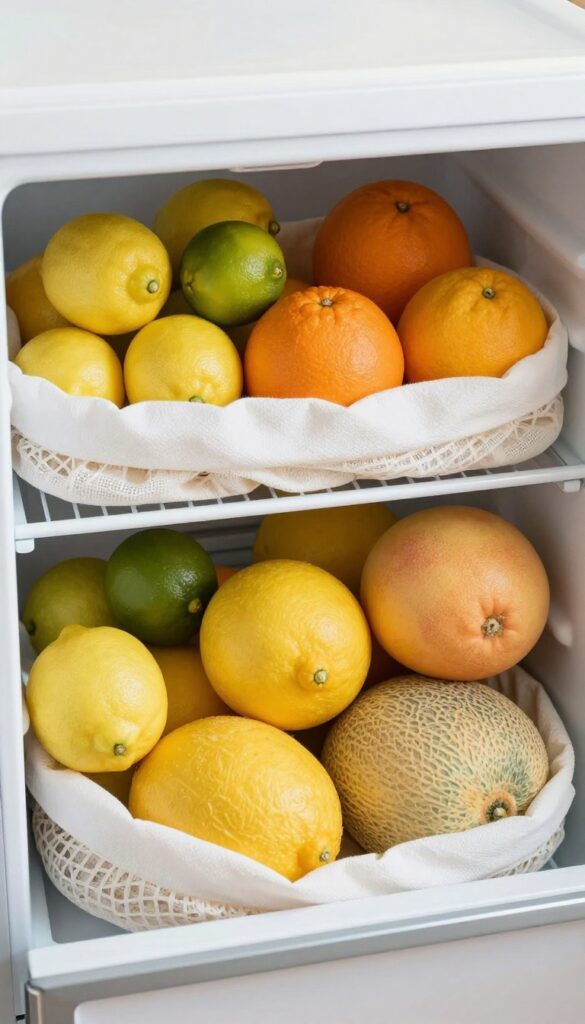
Citrus fruits and melons are not like apples or berries. They prefer a drier environment with plenty of air circulation. Stashing them in a sealed plastic bag invites moisture, which leads to mold and spoilage.
Instead, set up a dedicated drawer that lets these fruits breathe.
Your fridge's low-humidity drawer is perfect for citrus and melons. Keep them loose or in mesh bags so air can flow around each piece. This prevents condensation from pooling and keeps the rinds firm and fresh.
A simple mesh produce bag works wonders—no more sticky, moldy oranges.
Why Airflow Matters
Citrus and melons release ethylene gas, which speeds up ripening. Good airflow disperses the gas, preventing it from concentrating and causing premature spoilage. It also stops moisture from building up, which is the main culprit behind mold on lemon peels and cantaloupe rinds.
Setup Tips
Line the drawer with a dry paper towel to catch any drips. Place fruits in a single layer if possible, or use a wire basket insert to elevate them. Avoid overcrowding—give each piece a little space.
Mesh bags are ideal; they let air circulate while keeping fruits contained.
What To Store Together
Lemons, limes, oranges, grapefruits, and melons all get along in the same drawer. Just keep them away from ethylene-sensitive items like leafy greens or berries. If you have a separate low-humidity drawer, dedicate it entirely to these fruits for best results.
8. Prepped Veggie Drawer for Meal Prep
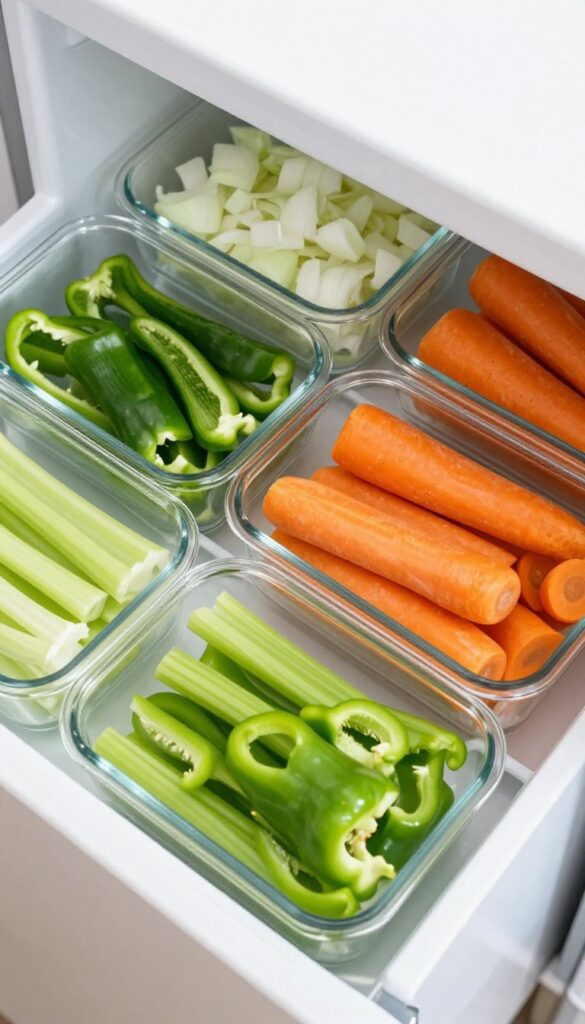
Meal prep can feel like a chore, but having a dedicated drawer for prepped veggies changes the game. Chop once, grab all week—that's the goal. This drawer becomes your shortcut to faster dinners and healthier lunches.
When onions, peppers, and carrots are already diced, cooking feels effortless. The key is airtight containers and clear labels. Date everything so you know what to use first.
A quick glance tells you if it's time to restock.
Container Choice Matters
Glass or BPA-free plastic containers with tight lids work best. Square or rectangular shapes maximize space. Avoid bags—they crush delicate veggies and make it hard to see what's inside.
Label Like A Pro
Use a dry-erase marker or sticker labels with the date. Write both the veggie name and prep date. This small habit prevents mystery containers and reduces waste.
What To Prep
Focus on high-use veggies: onions, bell peppers, carrots, celery, and broccoli. Wash and chop them, then store in separate containers. Mix and match for stir-fries, salads, or quick sides.
9. Dual-Purpose Drawer with Dividers
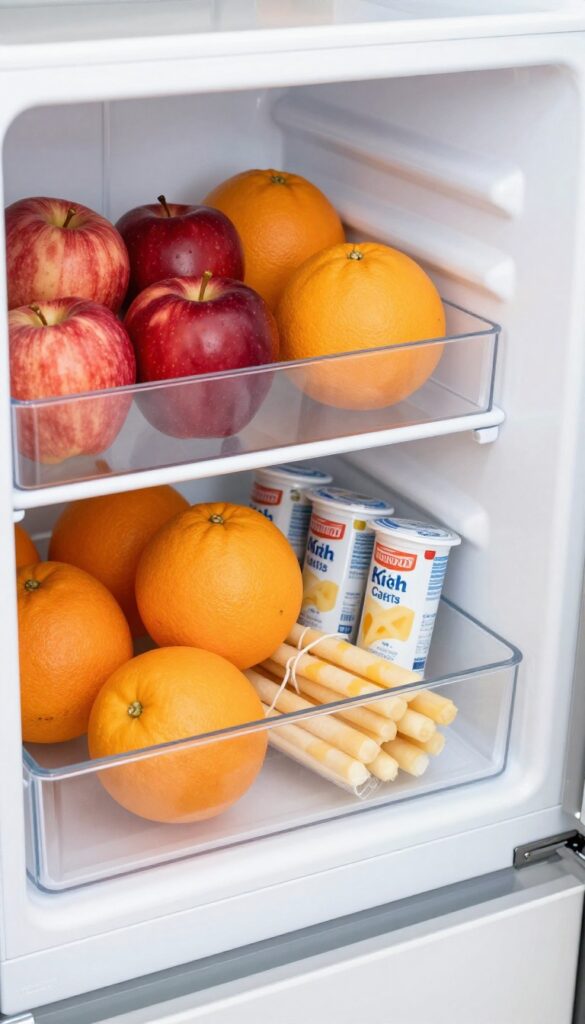
Not everyone has a massive French-door fridge with dedicated fruit and snack drawers. If you're working with a smaller model, every inch counts. The solution is surprisingly simple: split one drawer into two functional zones using adjustable dividers.
This turns a single compartment into a dual-purpose space for fruits on one side and snacks on the other, keeping everything organized and easy to grab.
Adjustable dividers are inexpensive and easy to install. They come in various sizes to fit different drawer widths, and many are made of BPA-free plastic that's safe for food contact. Measure your drawer's interior width before buying to ensure a snug fit.
Once installed, assign one side to fruits like apples, oranges, or grapes, and the other to grab-and-go snacks like cheese sticks, yogurt tubes, or hummus cups. This setup prevents cross-contamination of flavors and makes it easy for kids to find their snacks without rummaging through produce.
Choosing The Right Dividers
Look for dividers with non-slip feet or adhesive strips so they stay in place when you open and close the drawer. Adjustable models let you change the width as needed, which is handy if you occasionally store larger items like a melon. Some dividers are expandable with a spring-loaded mechanism, making them versatile for different drawer sizes.
What Goes Where
Place fruits that don't emit high ethylene gas, like apples and oranges, on the fruit side. For snacks, keep items that don't need refrigeration for long, like string cheese or pre-cut veggies, on the snack side. Avoid storing strong-smelling foods like onions or garlic in the same drawer as fruit, as they can transfer odors.
Maintenance Tips
Clean the dividers regularly with warm soapy water to prevent buildup. If you notice moisture pooling, use a small silica gel pack or a paper towel at the bottom of the drawer to absorb excess humidity. Rotate snacks and fruits weekly to ensure nothing gets forgotten and spoils.
FAQ
Should I wash fruits and veggies before storing them in fridge drawers?
It's best to wash them right before eating. Moisture from washing can speed up spoilage. If you must wash, dry thoroughly before storing.
How often should I clean my fridge drawers?
Aim for a quick wipe-down every week and a deep clean once a month. Remove all items, wash with mild soap, and dry completely.
Can I store onions and potatoes together in a fridge drawer?
No, onions and potatoes should be stored separately. Onions release gases that cause potatoes to sprout faster. Keep them in different drawers.
What's the best way to organize snacks in a fridge drawer?
Use clear bins or small baskets to group similar snacks. Keep frequently grabbed items at the front. Label bins for easy identification.
How do I prevent leafy greens from wilting in the drawer?
Store greens in a high-humidity drawer. Place a paper towel at the bottom to absorb excess moisture. Avoid overpacking the drawer.
Conclusion
A well-organized fridge makes grabbing a snack or prepping dinner feel effortless. Start with just one drawer—maybe the one that's always a jumble of bags and loose veggies—and try a simple tweak like adding clear bins or a humidity adjuster. Small changes add up fast.
Before you know it, every drawer will have a purpose, and you'll waste less food and time. Pick one idea that clicks with your biggest fridge frustration and give it a shot this week.