15 Kitchen Dining Table Ideas for Everyday Family Meals
The kitchen table is where life happens—homework, coffee, conversations, and countless meals. But sometimes that table can feel a little tired or just not quite right for your family's rhythm. The good news?
You don't need a full renovation to give it a fresh, inviting look. A few thoughtful changes over a weekend can turn your dining spot into a place everyone wants to gather.
Whether you're working with a tiny breakfast nook or a spacious farmhouse table, these ideas are designed to be achievable, stylish, and perfect for real life. Let's explore 15 ways to make your kitchen table feel like the heart of your home again.
1. A Linen Runner for Instant Softness
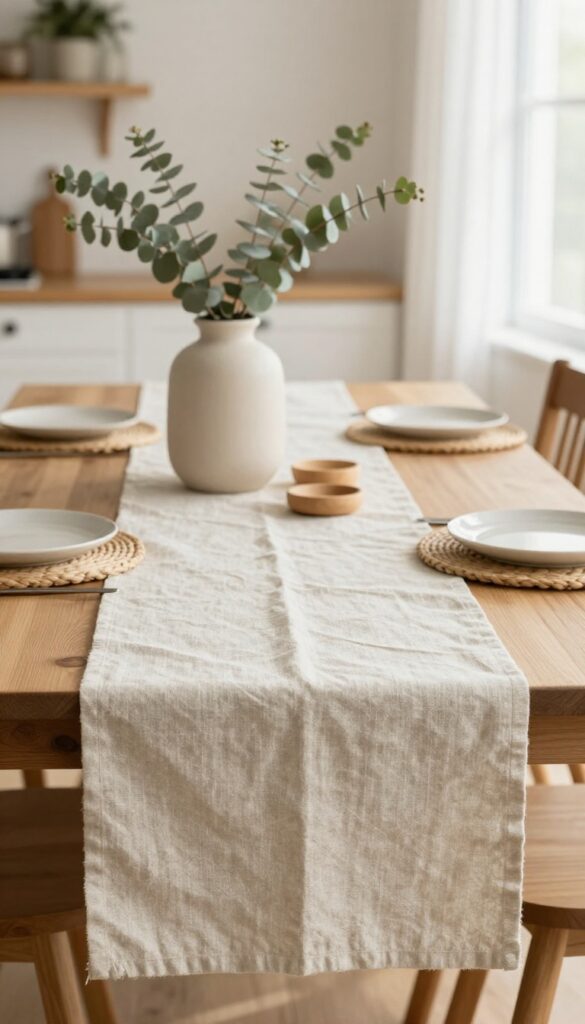
A bare table can feel cold and unfinished, especially during busy weeknight dinners. A plastic cloth might protect the surface, but it rarely adds any warmth. That is where a simple linen runner comes in—it softens the look of your table in seconds and brings a natural, relaxed feel that works with any season.
Choose a neutral tone like oatmeal or sage, and you will have a foundation that makes even a quick pasta dinner feel a little more special.
Linen is one of those materials that only gets better with time. It starts crisp and softens beautifully after a few washes, developing a lived-in texture that feels cozy without looking sloppy. A runner is also much easier to maintain than a full tablecloth—just toss it in the wash when needed.
This idea is perfect for a weekend refresh because it requires no tools, no paint, and no permanent changes. Simply swap out your current table covering or bare surface for a linen runner, and you will instantly notice the difference in how the table feels.
Best Colors
- Stick with earthy neutrals that blend easily with your existing decor. Oatmeal, warm beige, dusty sage, and soft gray are all safe bets. If you want a subtle pop of color, consider a muted terracotta or a pale blue.
- Avoid bright or overly saturated hues, as they can compete with the food and dishes on the table.
Texture Mix
Pair your linen runner with contrasting textures to keep the table visually interesting. A matte ceramic vase, a woven placemat, or a set of wooden coasters will add depth. The goal is to let the linen be the star while the other elements play supporting roles.
Finishing Touch
Keep the runner slightly longer than the table on each end—about six to eight inches of overhang. This creates a balanced, intentional look. If you have a round table, try a shorter runner that sits in the center, leaving the edges bare for a modern twist.
2. Mix-and-Match Chairs for Character
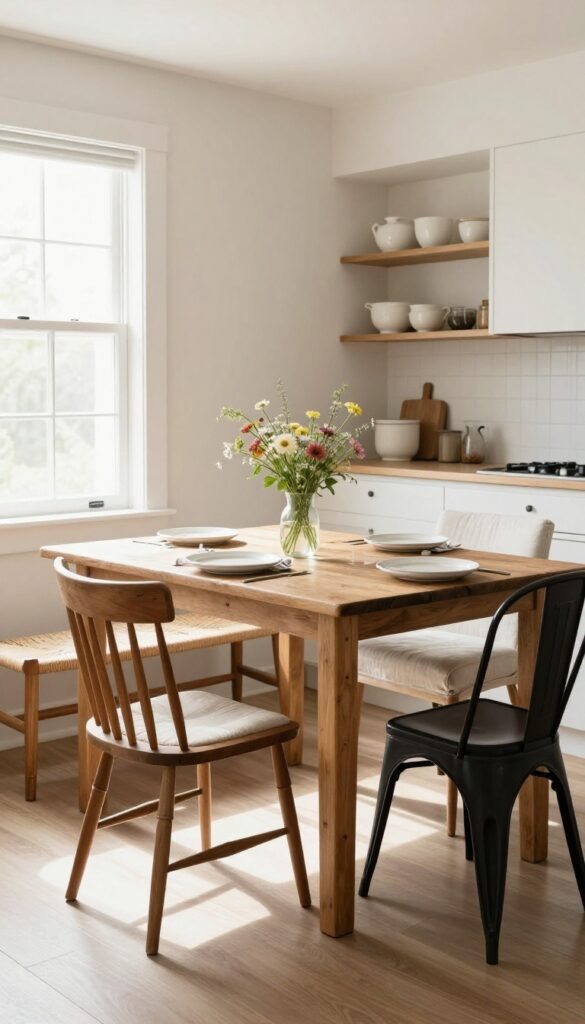
Forget the pressure of finding a perfect matching set. A dining table surrounded by identical chairs can feel a little stiff, especially in a home where real life happens. Mixing different chair styles around your table instantly gives the room a relaxed, collected-over-time feel—like you’ve been curating pieces for years, even if you just pulled it together over a weekend.
The trick to making mismatched chairs look intentional is to keep a few common threads, like color tone or material. Start with a sturdy bench on one side—great for kids or squeezing in extra guests. Then pair it with two or three different chairs: a classic wooden spindle, a cushioned upholstered seat, maybe even a sleek modern accent.
The contrast adds visual depth and makes the table the star of your kitchen or dining nook. This approach is especially forgiving if you’re thrifting or using pieces you already own. And because it’s so flexible, you can swap one chair out later without redoing the whole room.
Best Materials To Combine
- Stick to a palette of two or three materials to avoid chaos. Wood pairs beautifully with metal or cane—think a farmhouse table with black metal chairs and a woven bench. Upholstered seats add softness and are perfect for long meals.
- If you go with all wood, vary the finish: a dark walnut chair next to a light oak one keeps things interesting without clashing.
Layout Tip For Small Spaces
- In a tight kitchen, use a backless bench on one side to tuck under the table when not in use. Then choose armless chairs for the ends so they slide in easily. This combo saves floor space while still giving you that eclectic look.
- Just make sure the seat heights are similar—within an inch or two—so everyone sits comfortably.
Finishing Touch That Ties It Together
Add a unifying element like matching seat cushions in the same fabric but different chair styles, or paint the legs of all chairs the same color. A runner or centerpiece that echoes the chair materials (like a wooden bowl with linen napkins) also helps the whole setup feel cohesive, not haphazard.
3. A Low Centerpiece That Doesn't Block Views
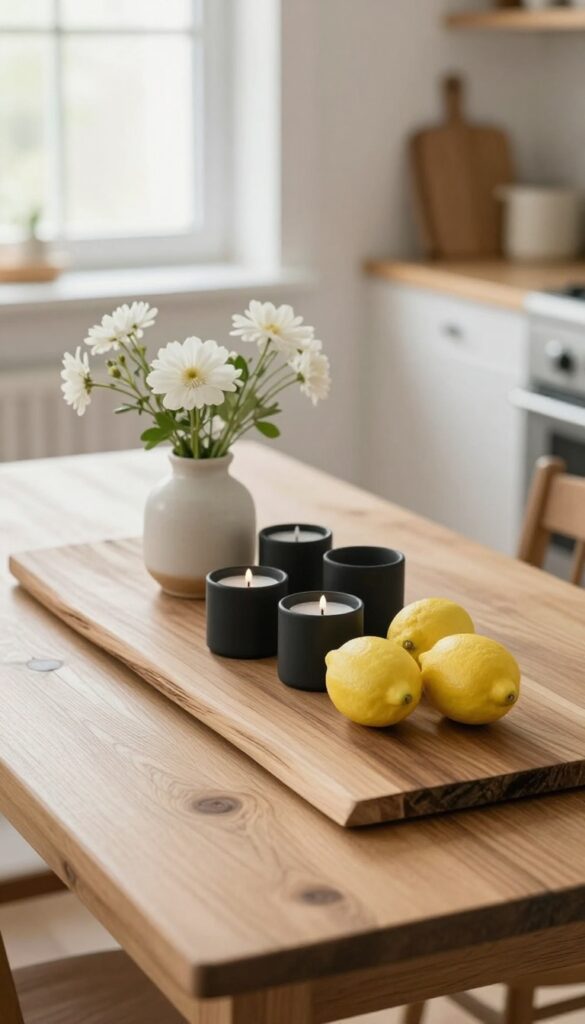
A dining table centerpiece should bring the table together, not turn into a visual roadblock. When it’s too tall or bulky, it interrupts sightlines and makes conversation feel awkward. A low arrangement keeps things open and connected, especially during busy weeknight dinners when everyone’s passing dishes and catching up.
Think of it as a gentle anchor—present enough to add charm, but low enough that you can still see the person across from you without leaning sideways.
A low centerpiece is all about balance. You want something that feels intentional but doesn’t demand center stage. A wooden board or a simple tray works as a base, then you can layer on a few candles, a small vase with seasonal blooms, or a cluster of fruit.
The key is keeping the height under about six inches—anything taller starts to block views. This idea works especially well on rectangular or round tables where the center is easy to reach across. For everyday meals, it keeps the table functional while still feeling styled.
Plus, it’s easy to swap out elements as the seasons change: citrus in winter, fresh herbs in spring, or a tiny pumpkin in fall. No need for elaborate florals—just a few well-chosen pieces that feel natural and unforced.
Best Materials
- Wood, ceramic, and natural stone are your friends here. A raw-edge wooden board adds warmth, while a ceramic platter brings a clean, modern touch. For the base, choose something with a bit of weight so it doesn’t slide around when you reach for the salt.
- Candle holders in matte metal or simple glass keep the look understated. Avoid anything too shiny or ornate—that can make the table feel cluttered rather than calm.
Seasonal Swap Tip
- Keep the base piece the same and rotate the accents. In summer, try a small vase with daisies or a bowl of lemons. Come fall, switch to mini gourds and cinnamon sticks.
- Winter calls for pine sprigs and a single pillar candle. This way, the centerpiece always feels fresh without requiring a full redesign. It’s a weekend-friendly tweak that takes about two minutes.
Finishing Touch
Add a single unexpected element—like a small ceramic animal, a smooth river stone, or a tiny framed photo—to give the arrangement personality. It doesn’t need to match perfectly; a little imperfection makes it feel lived-in and real. Just keep it low and leave enough empty space around it so the table still feels open.
4. Layered Lighting Over the Table
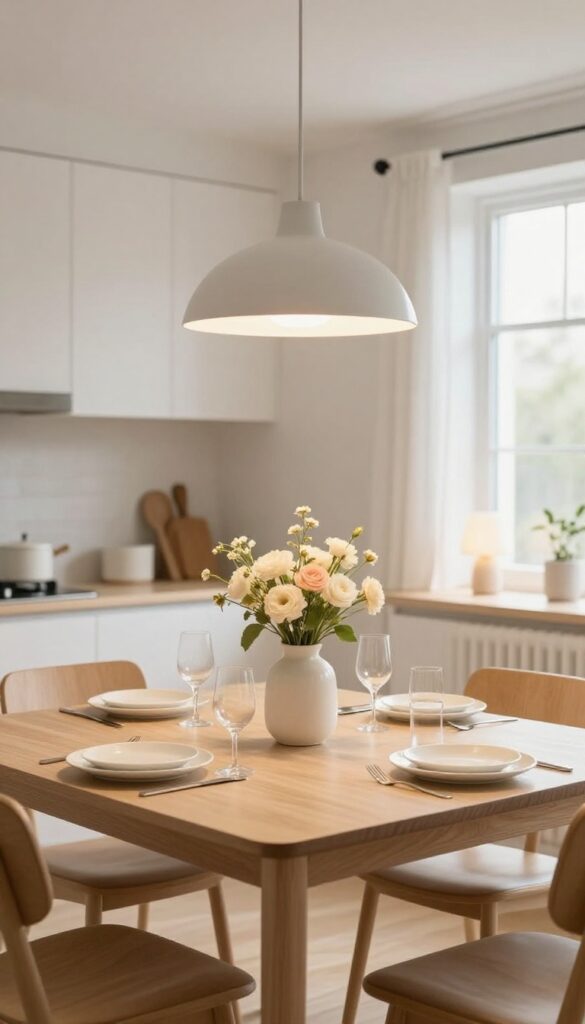
One overhead fixture can leave your dining table feeling flat and uninviting, especially during those darker winter evenings. By layering different light sources, you create depth and warmth that makes even a quick Tuesday dinner feel like a special occasion. The best part?
It’s a weekend-refresh project that instantly upgrades the whole room's mood.
Instead of relying on a single ceiling light, mix in a pendant with a dimmer or place a small table lamp on a nearby counter or sideboard. The combination of direct light over the table and softer ambient light around the room wraps your meals in a cozy glow. This approach works beautifully in open-plan kitchens or dedicated dining nooks, and it’s surprisingly easy to pull off without rewiring—just plug in a lamp or swap your existing fixture for one with a dimmer switch.
Best Fixture Pairings
A low-hanging pendant with a warm LED bulb (2700K–3000K) pairs perfectly with a small ceramic or metal table lamp on a nearby counter. For a more sculptural look, try a paper lantern pendant alongside a brass desk lamp. The key is to keep the color temperatures consistent so the light feels harmonious, not disjointed.
Placement Tips
Hang the pendant so the bottom is about 30–36 inches above the tabletop—low enough to feel intimate but high enough not to block sightlines. Position the table lamp at eye level when seated, about 24–30 inches from the table edge, to cast a soft glow across the surface without glare.
Budget-Friendly Swap
No budget for a new pendant? Add a dimmer switch to your existing light (a simple DIY swap) and bring in a thrifted table lamp with a linen shade. Even a plug-in wall sconce on a nearby wall can create that layered effect without major changes.
5. A Bench on One Side for Easy Seating
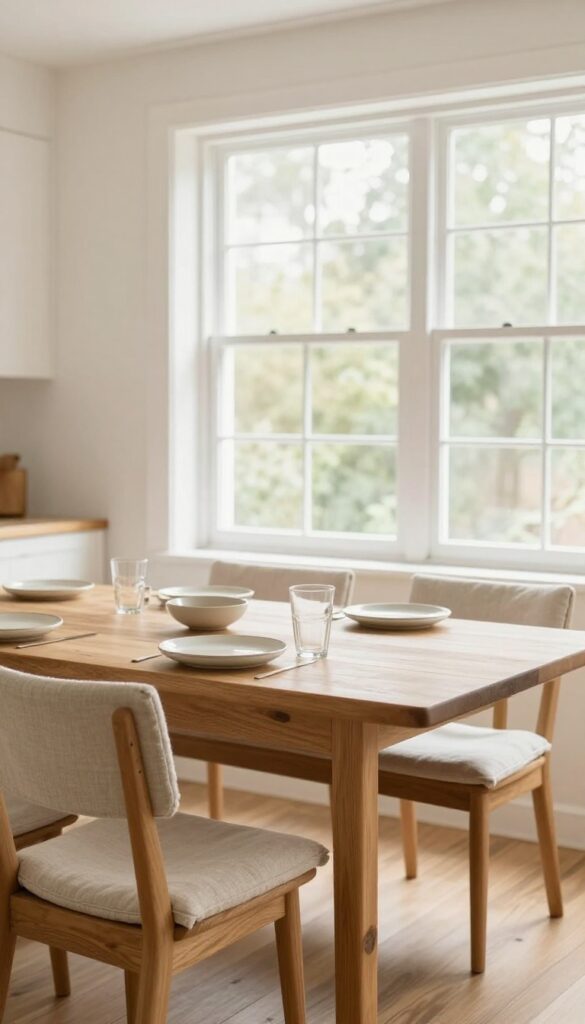
Swapping out chairs on one side of your dining table for a simple wooden bench instantly relaxes the whole setup. It’s a move that makes family dinners feel more casual and encourages everyone to slide in without fuss. Plus, when you have extra kids or guests, the bench lets you squeeze in a few more bodies without needing a separate chair.
A bench on one side of the table is a practical, space-saving choice that also adds a touch of farmhouse charm. It works especially well in narrow kitchens or breakfast nooks where pulling out chairs can feel cramped. The bench tucks neatly under the table when not in use, freeing up floor space and making the room feel more open.
For everyday family meals, it streamlines seating—kids can scoot in and out easily, and adults appreciate the relaxed vibe. Pair it with a few cushions for comfort, and you have a look that is both functional and inviting.
Best Materials
- Go for a solid wood bench in a finish that complements your table. Oak, pine, or acacia bring warmth and durability. If your table is dark, a lighter bench creates nice contrast; if your table is light, a darker bench adds depth.
- Avoid metal or plastic if you want that cozy, lived-in feel.
Layout Tip
Place the bench on the side of the table that faces the room or a window, not against a wall. This way, it visually extends the space and makes the dining area feel more open. Leave at least 12 inches of clearance under the table so the bench slides in easily.
Finishing Touch
Add a few lumbar pillows or a long cushion along the bench for comfort. Stick to fabrics like linen or cotton in neutral tones—they soften the wood and make the bench feel more like a cozy spot than a hard plank.
6. Placemats That Add Color and Protection
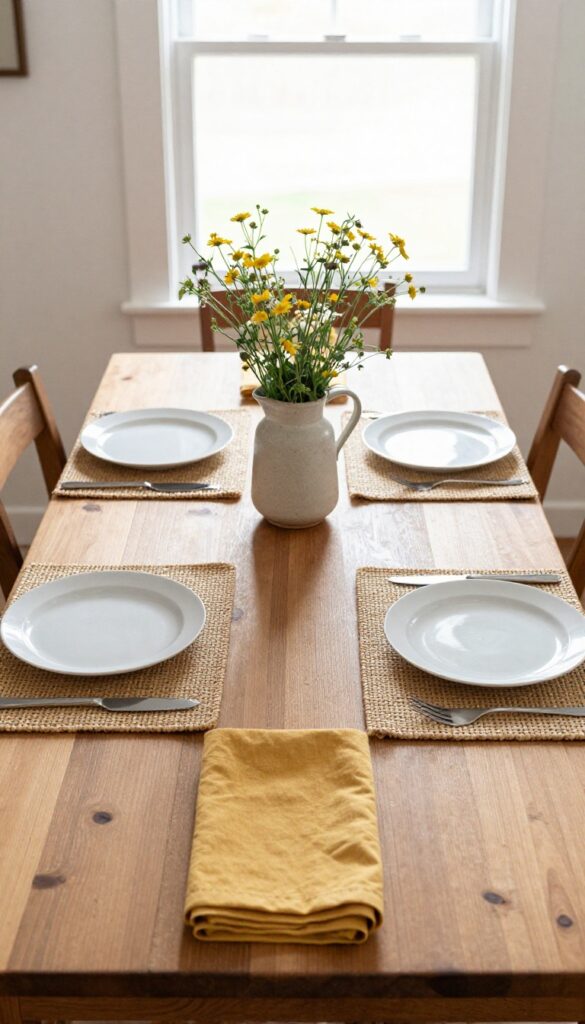
A simple switch like swapping in fresh placemats can instantly change the mood of your table without requiring a full decor overhaul. Woven styles bring texture, while bright cotton ones inject energy—and they all keep your table safe from spills and scratches. Since they're easy to store and swap, they're perfect for weekend refreshes that make everyday meals feel a little more special.
Placemats are one of those small details that quietly pull a dining setup together. They define each seat, add a layer of softness, and protect your table from heat marks and sticky messes. The best part?
You can change them with the seasons or your mood—no commitment required. For a relaxed, family-friendly look, mix natural textures like seagrass or bamboo with solid cotton napkins. Or go bold with a bright geometric print that adds personality without overwhelming the room.
Stick to machine-washable materials for easy cleanup, and consider layering a round placemat under a rectangular one for a modern, collected feel.
Best Materials For Everyday Use
Cotton and linen placemats are soft, absorbent, and easy to toss in the wash—ideal for homes with kids. Woven seagrass or jute adds organic texture and hides crumbs well, but they're best for dry spills. For a wipe-clean option, look for coated cotton or vinyl-backed styles that still look stylish.
Color And Pattern Pairing
Neutral placemats in beige, gray, or cream let your dinnerware shine, while bright hues like mustard or teal create a cheerful focal point. Mixing patterns—like a stripe with a subtle floral—works if you keep the color palette consistent. For a weekend refresh, swap out summer citrus tones for warm rust and olive in fall.
Finishing Touch: Napkin Rings
Add a simple napkin ring in wood, leather, or brass to each place setting. It elevates the look instantly and makes even paper napkins feel intentional. Choose rings that match your placemat texture for a cohesive, styled finish.
7. A Small Sideboard or Cart for Extra Storage
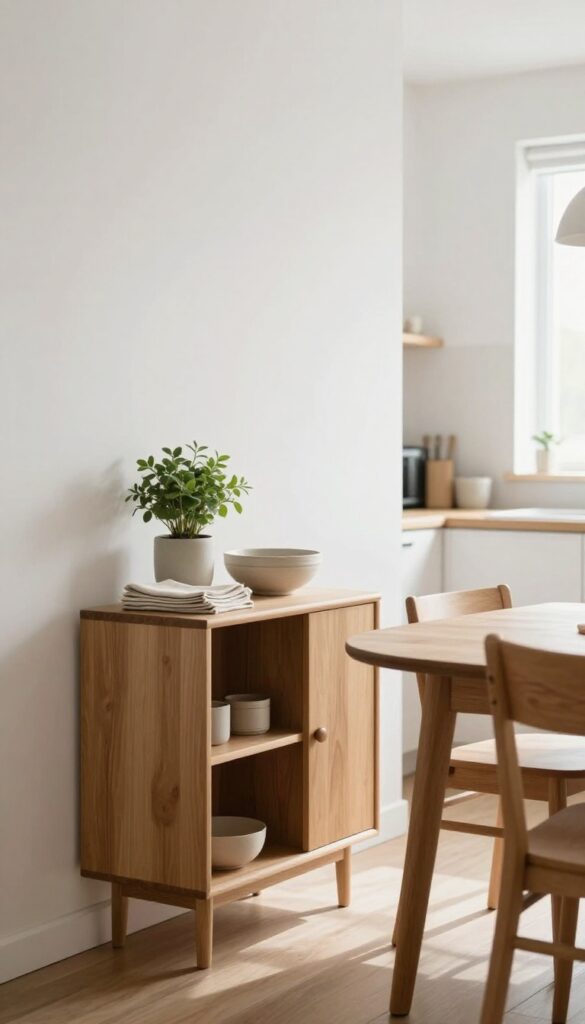
If your dining table often doubles as a catch-all for mail, keys, and random clutter, a slim sideboard or rolling cart can be a game-changer. It gives you a dedicated spot to stash all the meal-time essentials—plates, napkins, serving bowls—so your table stays clear for actual dining. Plus, it adds a nice layer of visual interest to the room, whether you go with a sleek modern piece or a vintage find.
Park a slim sideboard or a rolling cart nearby to hold dishes, napkins, or extra serving pieces. It keeps the table clutter-free and makes setting up meals quicker. For a weekend-refresh friendly update, look for a piece that matches your existing color palette and can be styled with a few decorative touches like a small plant or a stack of linen napkins.
Best Materials For A Sideboard Or Cart
- Wood is always a classic choice—think oak, walnut, or a painted finish that complements your table. For a lighter, airier feel, go with a metal cart in brass or matte black. Glass shelves can also work if you want to keep the space feeling open.
- The key is to pick something that blends with your current decor without competing for attention.
Layout Tip: Where To Position It
- Place the sideboard against a nearby wall or in a corner that's easy to reach from the table. If you're using a cart, tuck it next to the table or against an island. Make sure there's enough clearance for the cart to roll out when you need it.
- A good rule of thumb: leave at least 36 inches of walking space around the table and the storage piece.
Storage Tip: What To Keep Inside
Use the top for everyday items like a bread basket or a small vase, and reserve the drawers or shelves for things you use often—extra placemats, cloth napkins, or a set of everyday dishes. If you have a cart, use baskets or bins to corral smaller items so they don't look messy. This setup makes meal prep feel more organized and less frantic.
8. Fresh Herbs in Tiny Pots as a Living Centerpiece
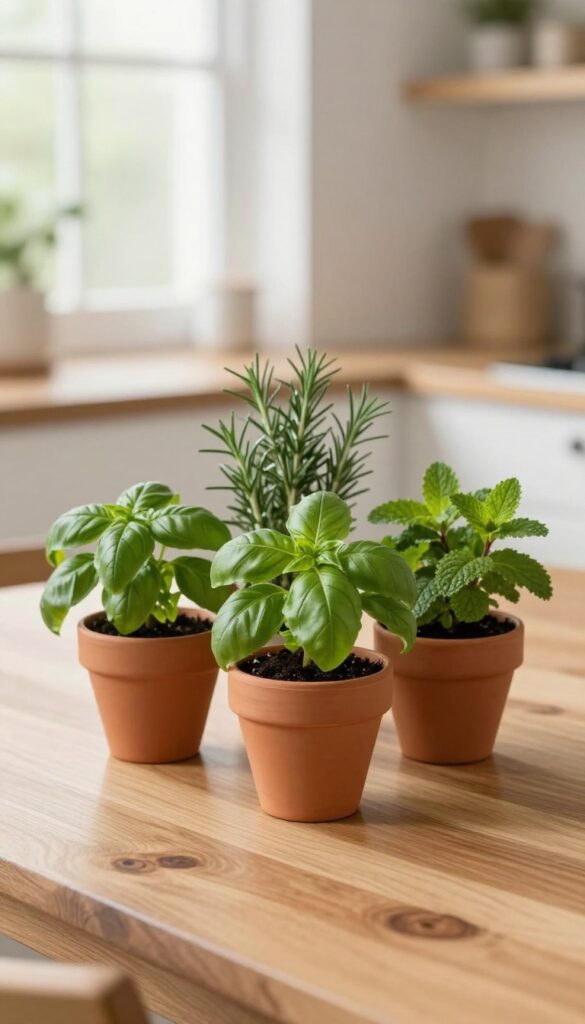
A centerpiece that does double duty as a cooking ingredient? Yes, please. Clustering small pots of basil, rosemary, or mint down the middle of the table adds instant greenery and a fresh, herbal scent.
It feels alive and intentional, not fussy. Plus, you can snip a few leaves right into your pasta or salad while you're sitting there. It's the kind of low-effort, high-reward decor that makes everyday meals feel a little more special.
This idea works especially well for weekend refreshes because it's quick to set up and easy to change. You don't need a green thumb—just grab a few small herb plants from the grocery store or farmers' market, pop them into tiny pots that match your table's vibe, and arrange them in a loose line or cluster. The herbs will keep growing for weeks if you water them lightly and give them some indirect light.
When they start looking tired, swap them out for new ones. It's an affordable way to keep your table feeling fresh and seasonal without committing to a permanent arrangement.
Best Pots And Colors
- Stick with simple, neutral pots like terracotta, matte white, or warm stone to let the herbs shine. If your table has a natural wood finish, terracotta adds a lovely earthy contrast. For a more modern look, use small concrete or ceramic pots in muted greens or soft grays.
- Avoid anything too glossy or ornate—the charm here is in the simplicity.
Arrangement And Layout Tip
- Instead of lining them up in a straight row, try a gentle zigzag or a loose cluster slightly off-center. This creates a more organic, relaxed feel. Mix heights by placing a taller rosemary plant next to low-growing thyme or mint.
- If your table is narrow, keep the pots small (2-3 inches wide) so they don't crowd out plates and glasses.
Finishing Touch
Scatter a few loose sprigs of rosemary or a couple of small river stones between the pots to tie the look together. This adds texture without clutter. For dinner, tuck a tea light candle into the cluster for a soft, warm glow that makes the herbs look even more inviting.
9. A Rug Under the Table for Warmth and Definition
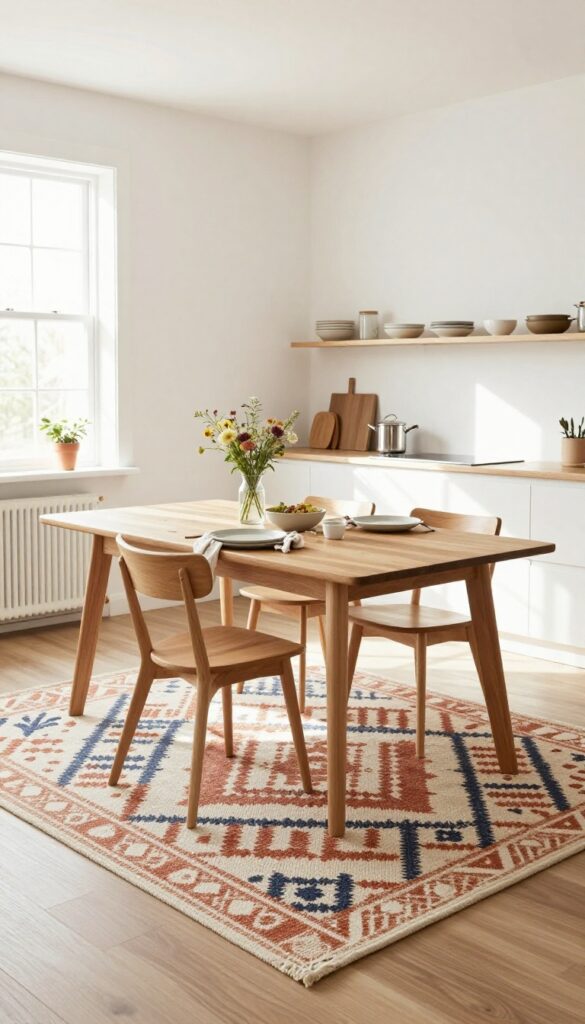
A rug under the dining table does more than just add color—it anchors the whole space and makes meals feel cozier. In a kitchen or dining area, it softens hard floors, defines the eating zone, and adds a layer of comfort underfoot. For busy families, a washable rug in a pattern that hides spills is a game-changer.
It keeps the room looking pulled together while handling the inevitable messes of everyday life.
Choosing the right rug for under the table is about balancing style and practicality. A flatweave or low-pile rug works best because it won't catch chair legs or trap crumbs. Patterns like geometric, striped, or abstract are great for disguising stains, and darker tones or multi-colored designs add visual interest without showing every drop.
Make sure the rug extends at least 24 inches beyond the table on all sides so chairs stay on the rug when pulled out. This creates a defined dining zone that feels intentional and inviting.
Best Materials For Dining Rugs
- Look for materials that are durable and easy to clean. Indoor-outdoor rugs are a top choice—they're made from polypropylene or other synthetic fibers that resist stains and can be hosed down. Wool rugs are naturally stain-resistant and soft, but they need more care.
- Cotton or cotton-blend flatweaves are budget-friendly and machine washable, perfect for high-traffic dining areas.
Size And Placement Tips
- Measure your table and allow at least 24–30 inches of rug extending past each edge. For a rectangular table, choose a rug that's at least 8×10 feet for a standard six-seater. Round tables work well with round rugs, but a square rug under a round table can also look fresh.
- Center the rug so it's evenly spaced around the table, and avoid placing it too close to walls or cabinets.
Pattern And Color Flow
- Use the rug to tie together your kitchen or dining room colors. If your space has neutral walls and wood tones, a rug with a pop of color or a bold pattern adds energy. For a calmer look, choose a tone-on-tone pattern in shades of your existing palette.
- A rug with a subtle border can also help define the dining area in an open floor plan without feeling busy.
10. Open Shelving Above for Display and Reach
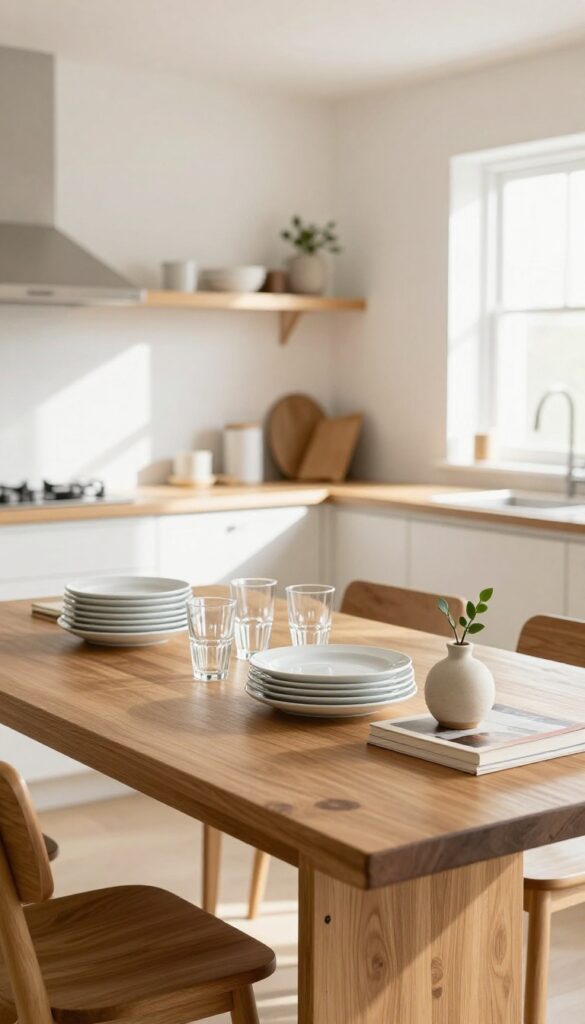
A simple shelf mounted above your dining table can transform how you use the space. It keeps everyday dishes, glassware, or a few cookbooks within easy reach while adding a lived-in, styled look. This idea works especially well in open-plan kitchens where the table doubles as a prep surface, or in small dining nooks where every inch counts.
The key is to keep it practical—not just pretty—so you actually use what’s on display.
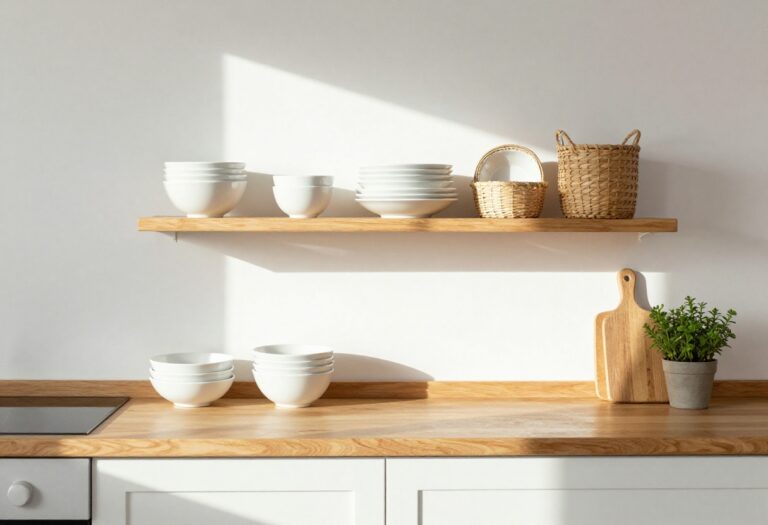
Open shelving above the dining table is a weekend-refresh friendly project that instantly adds character. Start with a sturdy floating shelf or a simple bracket shelf in a finish that complements your table and chairs. Paint-grade wood, warm oak, or black metal all work well, depending on your style.
The goal is to create a functional display that feels intentional, not cluttered. Stack a few dinner plates, set out everyday glasses, and lean a couple of cookbooks for texture. Add a small plant or a ceramic vase for a soft touch.
Keep the arrangement balanced—group items in odd numbers and leave some breathing room. This setup saves cabinet space and makes meal prep feel more connected to the dining area.
Best Materials
- For a relaxed look, choose natural wood like pine or oak that matches your table. If you want contrast, go with black metal or matte white. Avoid glossy finishes that show every fingerprint—this is a high-traffic zone.
- A shelf depth of 8–10 inches works well for plates and glasses without sticking out too far.
Shelf Styling Tip
- Mix function with decoration. Stack two or three dinner plates flat, then lean a small cutting board behind them. Place a low ceramic jar for utensils or napkins.
- Add a trailing plant like pothos on one end to soften the hard edges. Rotate items seasonally to keep it fresh.
Small-space Fix
If your table is against a wall, mount the shelf directly above it. For a table in the middle of the room, consider a narrow shelf on a nearby wall or a hanging shelf system that doesn’t block sightlines. Keep the shelf height low enough to reach comfortably—about 12–18 inches above the table surface.
11. A Chalkboard or Menu Board for Fun
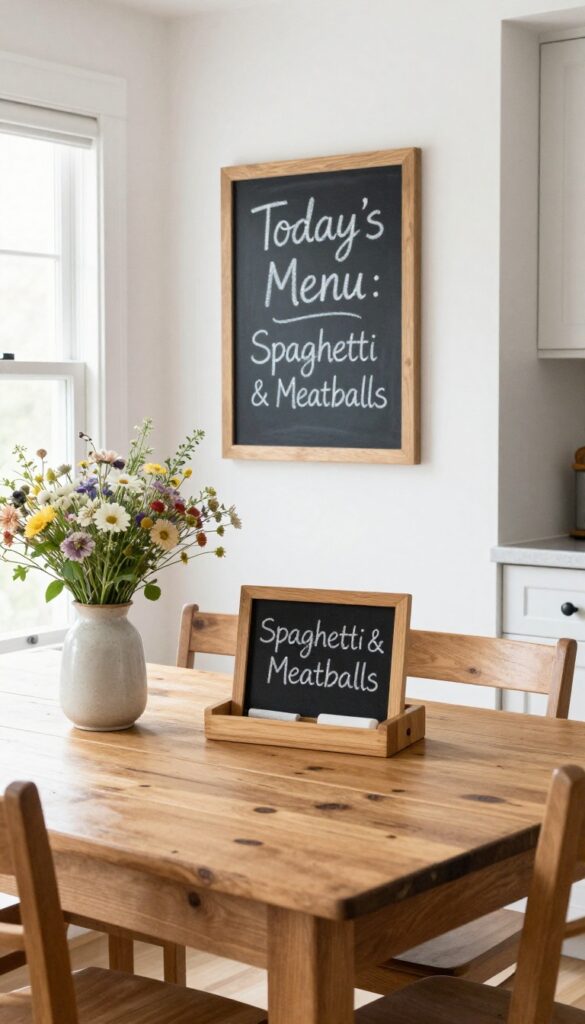
A chalkboard in the dining area turns mealtime into something a little more playful. It’s one of those low-effort additions that instantly makes the space feel more lived-in and personal. Whether you jot down the day’s menu, a funny family quote, or a weekly meal plan, it gives everyone something to smile about as they sit down to eat.
Hanging a small chalkboard on a nearby wall is an easy weekend project that doesn’t require any major renovation. It works especially well in kitchens with a casual, farmhouse, or eclectic vibe, but it can fit into almost any style with the right frame and placement. The best part?
You can change the message as often as you like, so the decor never feels stale.
Best Placement
Hang the chalkboard on a wall that’s visible from the dining table but not in the way of foot traffic. A spot near the kitchen entrance or beside a pantry door works great. If wall space is tight, lean a large framed chalkboard on a counter or buffet for a similar effect.
Styling Tip
Choose a frame that complements your existing decor—dark wood for a rustic look, white or black for modern, or a vintage ornate frame for a touch of charm. Keep the chalkboard clean and the writing neat with chalk markers for a crisp, polished appearance. Add a small tray below to hold chalk and an eraser.
Budget-Friendly Swap
If you don’t want to buy a new chalkboard, paint a section of wall with chalkboard paint. It costs under $20 and lets you create a custom size. You can even paint the back of a cabinet door or a small piece of plywood to hang up.
12. Napkins in a Basket for Easy Grab-and-Go
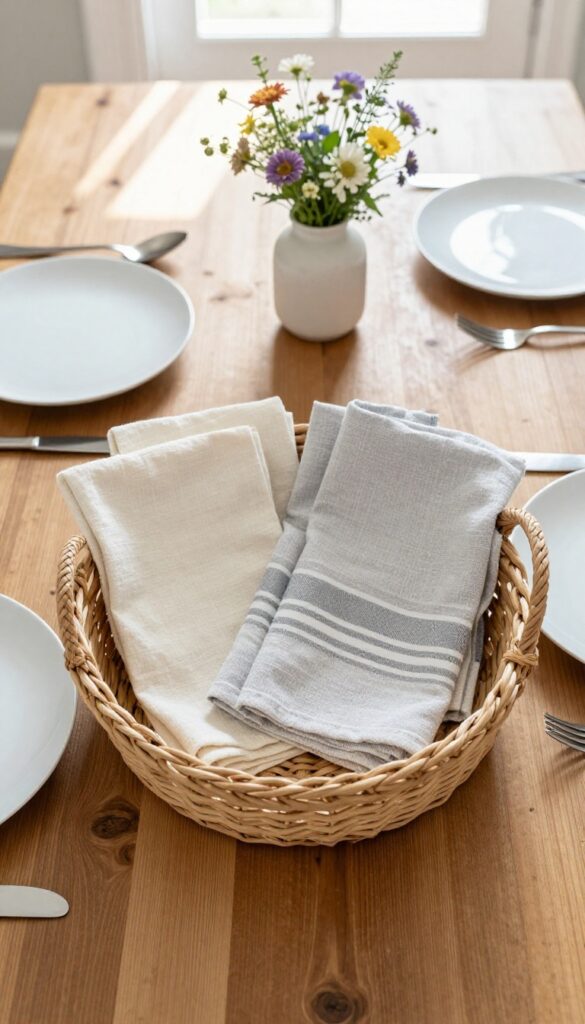
There’s something quietly satisfying about a basket of cloth napkins sitting right on the table. It makes setting the table feel effortless—just grab one and you’re done. Plus, it cuts down on paper waste and adds a relaxed, bistro-style charm that works for both weeknight dinners and casual get-togethers.
A woven basket filled with neatly folded cloth napkins is one of those small touches that makes a kitchen table feel more inviting. It’s practical too—no more rummaging through drawers or forgetting to set out napkins. Place the basket in the center of the table or on a nearby shelf or buffet for easy access.
The natural texture of the basket adds warmth, while the napkins bring a pop of color or pattern. For a weekend-refresh friendly update, swap out napkins seasonally or switch to linens in your current favorite hue. It’s a low-effort change that instantly updates the table’s look.
Best Basket Styles
Stick with natural materials like seagrass, rattan, or woven palm for a relaxed, organic feel. A round or oval basket works well on a round table, while a rectangular basket fits neatly on a console or shelf. Avoid anything too tall—you want the napkins to be easy to see and grab.
Napkin Folding Tip
Keep it simple: fold napkins into quarters or roll them loosely. A casual, slightly imperfect fold reinforces the grab-and-go vibe. If you want a little structure, use a napkin ring or a simple twine tie to keep each one tidy.
Color And Pattern Ideas
Stick with a neutral palette for a timeless look—cream, linen, or soft gray. Or go for a subtle pattern like a thin stripe or gingham for a touch of personality. If your tableware is neutral, a basket of colorful napkins can be the main accent.
13. A Statement Pendant Light as a Focal Point
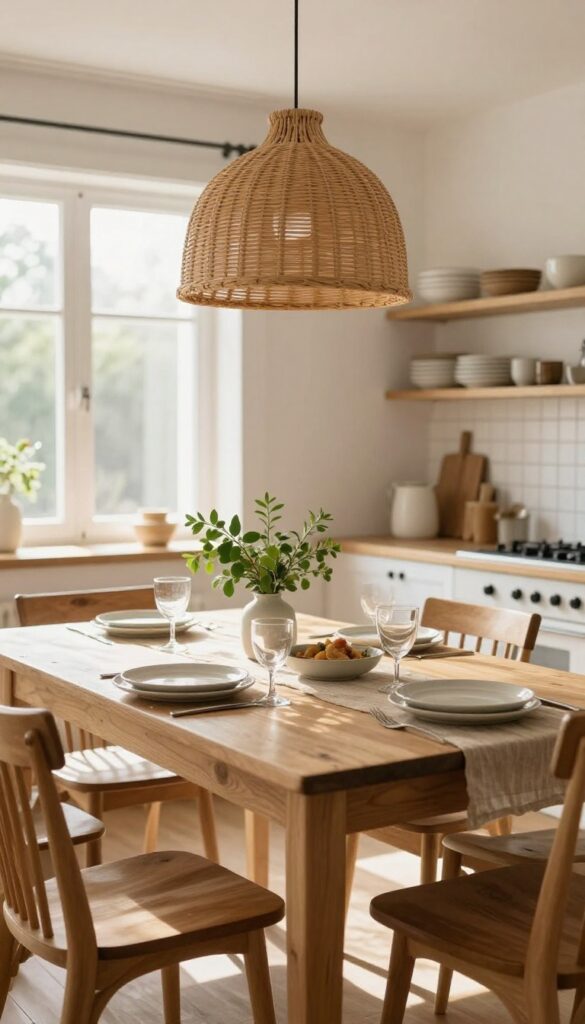
Swapping a basic light fixture for a pendant with personality is one of the quickest ways to give your dining table a designer feel. Think rattan for warmth, brass for a touch of glam, or a bold color to inject energy. The light becomes the star, drawing eyes upward and making the whole table area feel intentional.
A statement pendant doesn't just illuminate your meals—it sets the mood and anchors the room. Whether you choose a sculptural rattan shade for a boho vibe or a sleek brass cone for mid-century flair, the right fixture transforms the table into a curated focal point. Hang it low enough to feel intimate but high enough to avoid bumping heads (typically 30–36 inches above the tabletop).
This swap is weekend-refresh friendly: you can often install it yourself in an afternoon, and the visual payoff is instant.
Best Materials
- Rattan and woven fibers add organic texture and work well with farmhouse or boho styles. Brass and matte black offer a more modern, polished look. For a pop of personality, consider a painted metal pendant in a hue like deep teal or mustard yellow.
- The material should complement your existing decor—if your space leans warm, go with wood or brass; for cooler tones, try black or chrome.
Size And Placement Tip
- A common mistake is choosing a pendant that's too small. As a rule, the fixture's diameter should be about one-half to two-thirds the width of your table. For a 48-inch round table, aim for a 24- to 30-inch pendant.
- Hang it centered over the table, not the room. If you have a long rectangular table, consider two smaller pendants or a linear multi-light fixture for balanced coverage.
Lighting Tip
- Use a dimmer switch to control the ambiance. Bright light works for homework or game nights, while dimmed light creates a cozy dinner setting. Choose warm LED bulbs (2700–3000K) to keep the glow flattering and inviting.
- A pendant with an open bottom or translucent shade will cast a wider, softer light than a fully enclosed one.
14. Seasonal Touches That Change With the Year
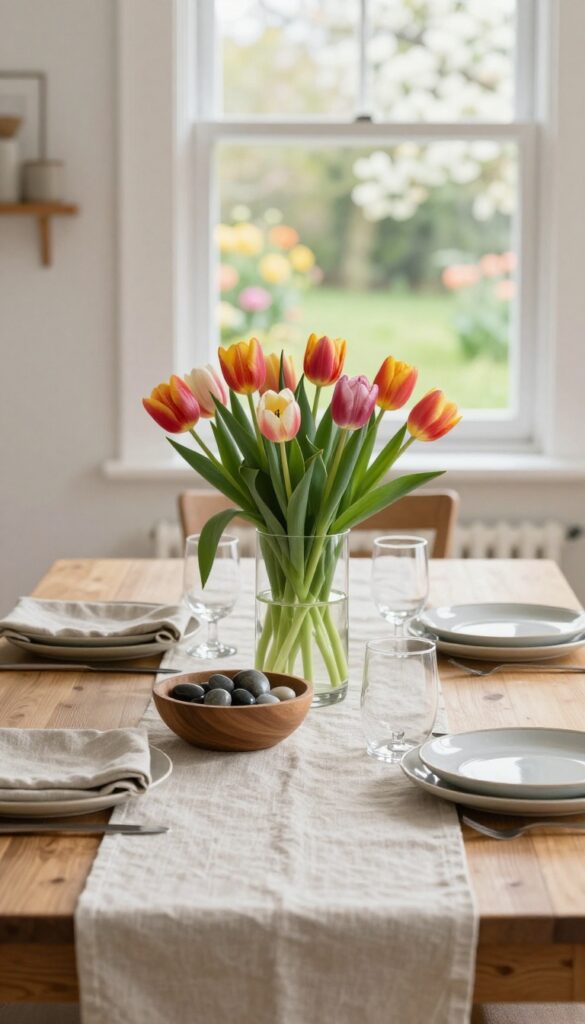
One of the simplest ways to keep your dining table from feeling stale is to let the seasons guide your decor. You don't need to redecorate the whole room—just swap out a few small items as the weather shifts. A bowl of pinecones in fall, fresh tulips in spring, or a cluster of seashells in summer can make the table feel current and connected to what's happening outside.
It's an approach that feels effortless but keeps the space lively all year long.
Seasonal touches are the ultimate weekend-refresh move because they require almost no commitment. You can change them out in minutes, and the visual payoff is huge. The key is to choose a few anchor pieces—like a wooden bowl, a ceramic vase, or a linen runner—that stay constant, then rotate the accents around them.
This way, your table always has a consistent base, but the seasonal details give it a fresh personality every few months. It's a relaxed way to decorate that doesn't demand a full overhaul, just a little attention to what's blooming or falling outside your window.
Best Materials For Seasonal Swaps
- Stick with natural materials that already feel connected to the outdoors. A simple wooden bowl works for pinecones, citrus, or polished stones. A clear glass vase lets tulips or branches take center stage without competing.
- Linen napkins in earthy tones can shift from warm rust in autumn to cool sage in spring. These materials age well and blend with almost any table style, from farmhouse to modern.
Color Flow Through The Year
- Let the season guide your palette without going overboard. In spring, think pale pinks, soft greens, and creamy whites. Summer calls for bright corals, sunny yellows, and ocean blues.
- Fall leans into burnt orange, deep burgundy, and warm brown. Winter can be crisp whites, silvers, and touches of evergreen. Keep the base neutral—like a natural wood table or white dinnerware—so the seasonal colors pop without clashing.
Weekend-refresh Styling Tip
- Set aside a small basket or bin in a closet where you store your seasonal decor items. When the season changes, just swap the contents of your table centerpiece. It takes less than ten minutes and costs nothing if you already have the items.
- For an extra touch, add a seasonal scent like a cinnamon stick bundle in fall or a small vase of lavender in summer. It engages another sense and makes the table feel even more intentional.
15. A Family Photo Wall Nearby for Personal Connection
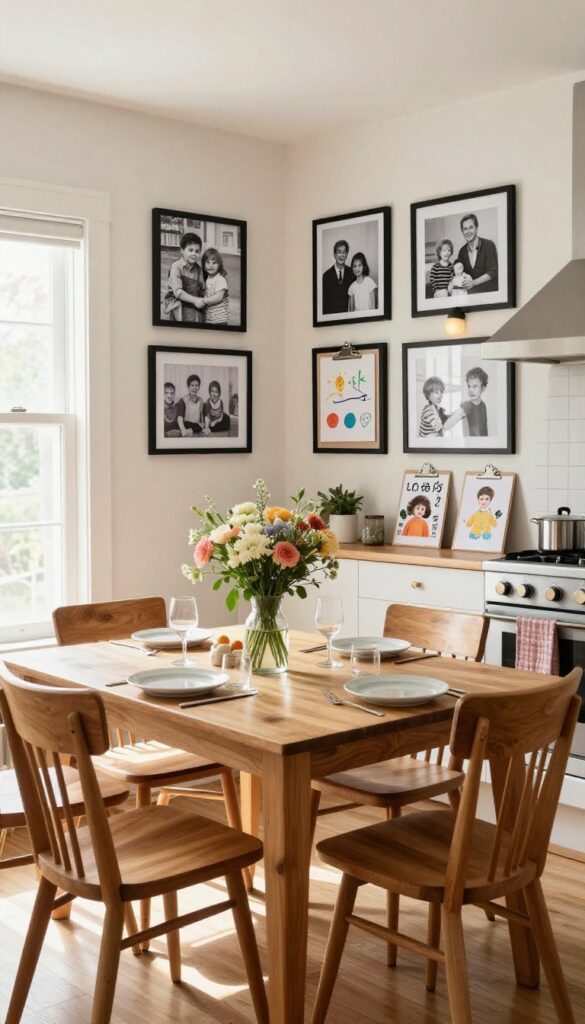
A dining table isn't just for eating—it's where stories get shared. Adding a gallery wall of family photos or kids' art right beside the table turns mealtime into a warm, nostalgic experience. It makes the space feel uniquely yours without costing much or requiring a big renovation.
This idea works because it personalizes your dining area instantly. A curated wall of memories draws the eye and sparks conversation, making everyday meals feel more special. It's also a weekend-friendly project: gather frames, print photos, and arrange them in a layout that complements your table shape and wall size.
Best Layout For A Gallery Wall
Start by laying frames on the floor to test arrangements. A grid works well for a clean, modern look, while a salon-style mix of sizes feels eclectic and lived-in. Keep the outer edges aligned with the table's width for visual balance.
Frame Material And Color Flow
Stick to a consistent frame color—black, white, or natural wood—to unify the display. If your dining room has warm wood tones, brass or gold frames add a nice contrast. Mixing in a few clipboards or wire hangers for kids' art keeps it flexible and budget-friendly.
Finishing Touch: Lighting
Add a small picture light above the gallery or position a nearby lamp to highlight the frames. Warm light makes photos feel cozy and prevents glare. This simple step elevates the wall from casual to intentional.
FAQ
How can I make a small kitchen table feel bigger?
Use a round or oval table to improve flow, and keep the surface clear of clutter. A mirror on a nearby wall can also create the illusion of more space.
What's the best material for a family dining table?
Solid wood is durable and ages well, but if you're worried about scratches, look for a distressed finish or a laminate that mimics wood. A wipe-clean surface is key for everyday meals.
How do I choose the right size rug for under the table?
Make sure the rug extends at least 24 inches beyond the table on all sides so chairs stay on the rug when pulled out. Measure your table and add 48 inches to both length and width.
Can I mix different chair styles without it looking messy?
Yes, stick to a common element like color or material. For example, all wooden chairs in different styles, or all chairs with a similar seat height. This creates cohesion while keeping it eclectic.
How often should I change my table decor?
There's no rule, but updating seasonally or whenever you feel like a refresh keeps things interesting. Small changes like a new runner or centerpiece can make a big difference without much effort.
Conclusion
Your kitchen table doesn't need a complete makeover to feel fresh and inviting. A few simple swaps—like a new runner, a low centerpiece, or mixed seating—can transform how the space looks and feels for everyday meals.
The best part is that most of these ideas are easy to tackle over a weekend, so you can enjoy the results right away. Pick one or two that speak to your style, and let your table become the cozy gathering spot your family deserves.